Hipotermia perioperatoria
Abstract
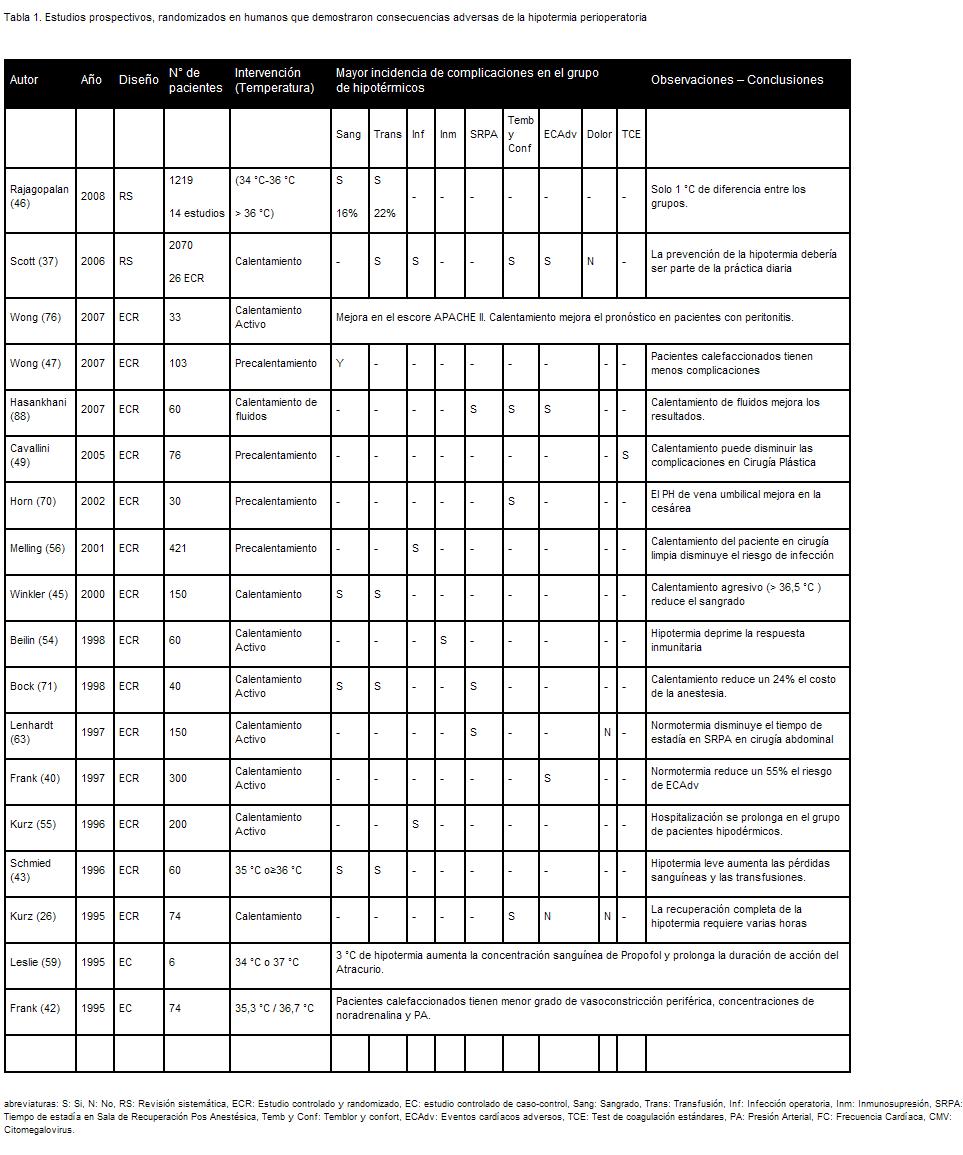
Anesthesia and surgery lead to a significant impact in body temperature balance. The mechanisms of this disturbance are the dysfunction of the normal thermoregulatory systems as well as heat loss during surgery (low operating room temperature, cold intravenous or surgical fluid infusions). Several studies have demonstrated that perioperative hypothermia increases adverse outcomes: major bleeding, impairment of quality of recovery after anesthesia, increases length of staying in postoperative recovery room. It has also been demonstrated that hypothermia influences long term outcomes in surgical patients by increasing rate of infections, length of hospitalization, myocardial ischemia and cardiac arrhythmias. These consequences might have important economical consequences for the health system and possibly social implications by delaying patient reinsertion in social life and jobs. Optimizing room temperature, heating intravenous fluids and active skin warming are necessary in the intraoperative setting to minimize hypothermia incidence. In this non-systematic review we aim to describe temperature monitoring, physiological mechanisms and intraoperative warming strategies to minimize hypothermia during surgery. Emphasizing this topic may help to improve outcomes and reduce costs in mayor surgeries in our country
Hypothermia; , anesthesia; thermoregulation; outcomes; warming systems; coagulation; , infection