<?xml version="1.0" encoding="ISO-8859-1"?><article xmlns:mml="http://www.w3.org/1998/Math/MathML" xmlns:xlink="http://www.w3.org/1999/xlink" xmlns:xsi="http://www.w3.org/2001/XMLSchema-instance">
<front>
<journal-meta>
<journal-id>1688-423X</journal-id>
<journal-title><![CDATA[Archivos de Medicina Interna]]></journal-title>
<abbrev-journal-title><![CDATA[Arch Med Int]]></abbrev-journal-title>
<issn>1688-423X</issn>
<publisher>
<publisher-name><![CDATA[Sociedad de Medicina Interna del Uruguay]]></publisher-name>
</publisher>
</journal-meta>
<article-meta>
<article-id>S1688-423X2009000200004</article-id>
<title-group>
<article-title xml:lang="es"><![CDATA[Utilidad de los Péptidos Natriuréticos de Tipo B en la Insuficiencia Cardíaca]]></article-title>
<article-title xml:lang="en"><![CDATA[Usefulness of the Type B Natriuretic Peptides in Heart Failure]]></article-title>
</title-group>
<contrib-group>
<contrib contrib-type="author">
<name>
<surname><![CDATA[Valverde]]></surname>
<given-names><![CDATA[Marcelo]]></given-names>
</name>
<xref ref-type="aff" rid="A01"/>
</contrib>
<contrib contrib-type="author">
<name>
<surname><![CDATA[Acle]]></surname>
<given-names><![CDATA[Santiago]]></given-names>
</name>
<xref ref-type="aff" rid="A01"/>
</contrib>
<contrib contrib-type="author">
<name>
<surname><![CDATA[Ormaechea]]></surname>
<given-names><![CDATA[Gabriela]]></given-names>
</name>
<xref ref-type="aff" rid="A01"/>
</contrib>
<contrib contrib-type="author">
<name>
<surname><![CDATA[Álvarez Rocha]]></surname>
<given-names><![CDATA[Alfredo]]></given-names>
</name>
<xref ref-type="aff" rid="A02"/>
</contrib>
<contrib contrib-type="author">
<name>
<surname><![CDATA[Lluberas]]></surname>
<given-names><![CDATA[Ricardo]]></given-names>
</name>
<xref ref-type="aff" rid="A01"/>
</contrib>
<contrib contrib-type="author">
<name>
<surname><![CDATA[Batista]]></surname>
<given-names><![CDATA[Ignacio]]></given-names>
</name>
<xref ref-type="aff" rid="A03"/>
</contrib>
<contrib contrib-type="author">
<name>
<surname><![CDATA[Marino]]></surname>
<given-names><![CDATA[Andrés]]></given-names>
</name>
<xref ref-type="aff" rid="A03"/>
</contrib>
<contrib contrib-type="author">
<name>
<surname><![CDATA[Álvarez]]></surname>
<given-names><![CDATA[Pablo]]></given-names>
</name>
<xref ref-type="aff" rid="A03"/>
</contrib>
<contrib contrib-type="author">
<name>
<surname><![CDATA[Rica]]></surname>
<given-names><![CDATA[Roberto]]></given-names>
</name>
<xref ref-type="aff" rid="A03"/>
</contrib>
<contrib contrib-type="author">
<name>
<surname><![CDATA[Silvera]]></surname>
<given-names><![CDATA[Gabriela]]></given-names>
</name>
<xref ref-type="aff" rid="A03"/>
</contrib>
<contrib contrib-type="author">
<name>
<surname><![CDATA[Antúnez]]></surname>
<given-names><![CDATA[Wilman]]></given-names>
</name>
<xref ref-type="aff" rid="A03"/>
</contrib>
<contrib contrib-type="author">
<name>
<surname><![CDATA[Barreiro]]></surname>
<given-names><![CDATA[Teresa]]></given-names>
</name>
<xref ref-type="aff" rid="A03"/>
</contrib>
<contrib contrib-type="author">
<name>
<surname><![CDATA[Chamorro]]></surname>
<given-names><![CDATA[Cristina]]></given-names>
</name>
<xref ref-type="aff" rid="A03"/>
</contrib>
<contrib contrib-type="author">
<name>
<surname><![CDATA[Estragó]]></surname>
<given-names><![CDATA[Virginia]]></given-names>
</name>
<xref ref-type="aff" rid="A03"/>
</contrib>
<contrib contrib-type="author">
<name>
<surname><![CDATA[Fernández]]></surname>
<given-names><![CDATA[Paola]]></given-names>
</name>
<xref ref-type="aff" rid="A03"/>
</contrib>
<contrib contrib-type="author">
<name>
<surname><![CDATA[Florio]]></surname>
<given-names><![CDATA[Lucía]]></given-names>
</name>
<xref ref-type="aff" rid="A03"/>
</contrib>
<contrib contrib-type="author">
<name>
<surname><![CDATA[Icasuriaga]]></surname>
<given-names><![CDATA[Lidia]]></given-names>
</name>
<xref ref-type="aff" rid="A03"/>
</contrib>
<contrib contrib-type="author">
<name>
<surname><![CDATA[Muñiz]]></surname>
<given-names><![CDATA[Patricia]]></given-names>
</name>
<xref ref-type="aff" rid="A03"/>
</contrib>
<contrib contrib-type="author">
<name>
<surname><![CDATA[Parma]]></surname>
<given-names><![CDATA[Gabriel]]></given-names>
</name>
<xref ref-type="aff" rid="A03"/>
</contrib>
<contrib contrib-type="author">
<name>
<surname><![CDATA[Rivara]]></surname>
<given-names><![CDATA[Orieta]]></given-names>
</name>
<xref ref-type="aff" rid="A03"/>
</contrib>
<contrib contrib-type="author">
<name>
<surname><![CDATA[Tejera]]></surname>
<given-names><![CDATA[Jonhatan]]></given-names>
</name>
<xref ref-type="aff" rid="A03"/>
</contrib>
<contrib contrib-type="author">
<name>
<surname><![CDATA[Pouso]]></surname>
<given-names><![CDATA[Marcos]]></given-names>
</name>
<xref ref-type="aff" rid="A03"/>
</contrib>
</contrib-group>
<aff id="A01">
<institution><![CDATA[,Universidad de la República UdelaR Facultad de Medicina Clínica Médica]]></institution>
<addr-line><![CDATA[Montevideo ]]></addr-line>
</aff>
<aff id="A02">
<institution><![CDATA[,Universidad de la República UdelaR Hospital de Clínicas Departamento Clínico de Medicina]]></institution>
<addr-line><![CDATA[ ]]></addr-line>
</aff>
<aff id="A03">
<institution><![CDATA[,Unidad Multidisciplinaria de Insuficiencia Cardíaca (UMIC)  ]]></institution>
<addr-line><![CDATA[ ]]></addr-line>
</aff>
<pub-date pub-type="pub">
<day>00</day>
<month>06</month>
<year>2009</year>
</pub-date>
<pub-date pub-type="epub">
<day>00</day>
<month>06</month>
<year>2009</year>
</pub-date>
<volume>31</volume>
<numero>2-3</numero>
<fpage>61</fpage>
<lpage>68</lpage>
<copyright-statement/>
<copyright-year/>
<self-uri xlink:href="http://www.scielo.edu.uy/scielo.php?script=sci_arttext&amp;pid=S1688-423X2009000200004&amp;lng=en&amp;nrm=iso"></self-uri><self-uri xlink:href="http://www.scielo.edu.uy/scielo.php?script=sci_abstract&amp;pid=S1688-423X2009000200004&amp;lng=en&amp;nrm=iso"></self-uri><self-uri xlink:href="http://www.scielo.edu.uy/scielo.php?script=sci_pdf&amp;pid=S1688-423X2009000200004&amp;lng=en&amp;nrm=iso"></self-uri><abstract abstract-type="short" xml:lang="es"><p><![CDATA[La Insuficiencia Cardíaca (IC) se perfila como una verdadera epidemia del siglo XXI. Su elevada incidencia y prevalencia, así como su notable impacto en términos de morbimortalidad poblacional hacen que los costos en salud destinados a dicha entidad sean cada vez mayores. Por tanto es claro que representa un verdadero problema de salud pública, sobre el cual se debe actuar precoz y oportunamente. A pesar de los notables avances que se han logrado respecto al conocimiento de esta enfermedad en las últimas décadas, sigue representando un verdadero desafío para el médico clínico establecer su diagnóstico, elaborar pautas de seguimiento evolutivo, de optimización terapéutica y lograr definir un adecuado perfil pronóstico sobre un paciente en particular. Todos y cada uno de los puntos mencionados serían útiles para la toma de decisiones en el desarrollo de nuestra profesión. Es así que en los últimos años, sustentados en el denominado &ldquo;perfil neurohumoral&rdquo; de la IC, los mediadores neuroendócrinos han abierto un vasto campo de investigación acerca de su utilidad al respecto. Dentro de dichos biomarcadores, los Péptidos Natriuréticos (PN), y particularmente los de Tipo B (PNB), se han perfilado como los de mayor aplicabilidad clínica. En el presente artículo se analizan su definición, propiedades biológicas, y utilidad en la práctica clínica, con el objetivo de establecer a futuro pautas de actuación en las cuales se les de un verdadero rol para el adecuado manejo de esta entidad.]]></p></abstract>
<abstract abstract-type="short" xml:lang="en"><p><![CDATA[Chronic Heart Failure (CHF) is arising as a real epidemic on the XXI century. Their high incidence and prevalence, and the notable impact on population morbidity and mortality, generates continuous growths of its costs. By the fact it is clear that it represents a really public health problem, in which opportunely interventions must be taken. Despite the notable advances made on the knowledge of this disease in the last decades, it still represents a real challenge for clinicians when diagnosis has to be made, and on the management of guidelines for follow-up, therapeutic adjustments, and prognosis for a particular patient. All this issues are useful for the decision-making process in clinical practice. Recently, based on the &ldquo;Neurohumoral profile&rdquo; of CHF, the neuroendocrine mediators have been studied extensively. A kind of these markers, the Natriuretic Peptides, and particularly B-Type Natriuretic Peptides (BNP), has been identified as the more applicable ones in clinical practice. On this paper the definition, biological properties and usefulness of BNP are reviewed, with the objective of delineating the future development of practice guidelines and integrating them on disease management.]]></p></abstract>
<kwd-group>
<kwd lng="es"><![CDATA[Marcadores neurohumorales]]></kwd>
<kwd lng="es"><![CDATA[Péptidos Natriuréticos]]></kwd>
<kwd lng="es"><![CDATA[Insuficiencia Cardíaca]]></kwd>
<kwd lng="en"><![CDATA[Neurohumoral Markers]]></kwd>
<kwd lng="en"><![CDATA[Natriuretic Peptides]]></kwd>
<kwd lng="en"><![CDATA[Chronic Heart Failure]]></kwd>
</kwd-group>
</article-meta>
</front><body><![CDATA[ <div class="Section1">     <p style="margin-bottom: 0.0001pt;"> <span style="font-size: 10pt; font-family: Verdana; color: black" lang="EN-US">Arch Med Interna 2009; XXXI; 2-3: 61-68</span><span style="" lang="EN-US"><o:p></o:p></span></p>        <p style="margin-bottom: 0.0001pt;"> <span style="font-size: 10pt; font-family: Verdana; color: black">&copy; Prensa M&eacute;dica Latinoamericana. </span> <span style="font-size: 10pt; font-family: Verdana; color: black" lang="EN-US">2009 ISSN 0250-3816 - Printed in </span><st1:country-region><st1:place> <span style="font-size: 10pt; font-family: Verdana; color: black" lang="EN-US">Uruguay</span></st1:place></st1:country-region><span style="font-size: 10pt; font-family: Verdana; color: black" lang="EN-US"> - All rights reserved.</span><span style="" lang="EN-US"><o:p></o:p></span></p>        <p style="margin-bottom: 0.0001pt;"><font face="Verdana" size="2"><span style="" lang="EN-US"><o:p>&nbsp;</o:p></span></font></p>        <p style="margin-bottom: 0.0001pt;"> <span style="font-family: Verdana; color: black"><font size="2">Actualizaciones</font></span></p>        <p style="margin-bottom: 0.0001pt;"><o:p></o:p></p>        <p style="margin-bottom: 0.0001pt; text-align: center; font-family: Arial"> <font face="Verdana"><b><i><span style="font-size: 13pt; color: black">Utilidad de los P&eacute;ptidos Natriur&eacute;ticos de Tipo B en la&nbsp;</span><span style="font-size: 13pt; color: black" lang="EN-US">Insuficiencia Card&iacute;aca</span></i></b></font><span style="" lang="EN-US"><o:p></o:p></span></p>        <div style="text-align: left; font-family: Arial;"></div>        <p style="margin-bottom: 0.0001pt; text-align: center; font-family: Arial"> <font face="Verdana"><b><span style="color: black;" lang="EN-US">Usefulness of the Type B Natriuretic Peptides in Heart Failure</span></b></font></p>        <p style="margin-bottom: 0.0001pt; text-align: center; font-family: Arial">&nbsp;</p>        ]]></body>
<body><![CDATA[<div style="text-align: left;"></div>        <p><font face="Verdana"><span style="" lang="EN-US"><o:p> <font size="2">&nbsp;</font></o:p></span><font size="2">    <br>    </font>    <b><span style="font-size: 10pt; font-family: Helvetica-Bold; color: black"><a name="1--"></a>Dr. Marcelo Valverde </span></b><a href="#1-"> <span style="font-size: 10pt; font-family: Helvetica-Bold; color: black">(1)</span></a><b><span style="font-size: 10pt; font-family: Helvetica-Bold; color: black">,&nbsp;Dr. Santiago Acle </span></b> <span style="font-size: 10pt; font-family: Helvetica-Bold; color: black"><a name="2--"></a>(<a href="#2-">2</a>)</span><b><span style="font-size: 10pt; font-family: Helvetica-Bold; color: black">,&nbsp;Dra. Gabriela Ormaechea<a name="3--"></a> </span></b> <span style="font-size: 10pt; font-family: Helvetica-Bold; color: black">(<a href="#3-">3</a>)</span><b><span style="font-size: 10pt; font-family: Helvetica-Bold; color: black">,&nbsp;Dr. Alfredo &Aacute;lvarez Rocha<a name="4--"></a> </span></b> <span style="font-size: 10pt; font-family: Helvetica-Bold; color: black">(<a href="#4-">4</a>)</span><b><span style="font-size: 10pt; font-family: Helvetica-Bold; color: black">,&nbsp;<a name="5--"></a>Dr. Ricardo Lluberas </span></b> <span style="font-size: 10pt; font-family: Helvetica-Bold; color: black"><a href="#5-">(5</a>)</span><b><span style="font-size: 10pt; font-family: Helvetica-Bold; color: black">. </span></b> </font></p>        <p style="margin-bottom: 0.0001pt;"><font face="Verdana"><b> <span style="font-size: 10pt; font-family: Helvetica-Bold; color: black">Grupo UMIC</span></b></font><span style="font-size: 10pt; font-family: Verdana; color: black">: Dr.Ignacio Batista, Dr. Andr&eacute;s Marino, &nbsp;Dr. Pablo &Aacute;lvarez, Dr. Roberto Rica, Dra. Gabriela Silvera, Dr. Wilman Ant&uacute;nez, Dra. Teresa Barreiro, Dra. Cristina Chamorro, Dra. Virginia Estrag&oacute;, Dra. Paola Fern&aacute;ndez, Dra. Luc&iacute;a Florio, Dra. Lidia Icasuriaga, Dra. Patricia Mu&ntilde;iz, Dr. Gabriel Parma, Dra. Orieta Rivara,Dr. Jonhatan Tejera, Dr. Marcos Pouso.</span></p>        <p style="margin-bottom: 0.0001pt;">&nbsp;</p>        <p style="margin-bottom: 0.0001pt; font-family: Verdana;"><small>&nbsp;</small></p>        <p style="font-family: Verdana;"><small><a name="1-"></a><a href="#1--">1</a>. Asistente de Cl&iacute;nica M&eacute;dica. Facultad de Medicina. UdelaR. Montevideo. <a style="color: rgb(51, 102, 255);" href="mailto:marvalve@adinet.com.uy">marvalve@adinet.com.uy</a></small></p>        <p style="font-family: Arial;">&nbsp;</p>        <p style="font-family: Verdana;"><small><a name="2-"></a><a href="#2--">2</a>. Residente de Medicina Interna. &nbsp;</small></p>        <p style="font-family: Arial;">&nbsp;</p>        ]]></body>
<body><![CDATA[<p style="font-family: Verdana;"><small><a name="3-"></a><a href="#3--">3</a>. Profesora Agregada de Cl&iacute;nica.&nbsp;</small></p>        <p style="font-family: Arial;">&nbsp;</p>        <p style="font-family: Verdana;"><small> <a name="4-"></a><a href="#4--">4</a>. Profesor de Cl&iacute;nica M&eacute;dica.&nbsp;Director del Departamento Cl&iacute;nico de Medicina del Hospital de Cl&iacute;nicas.&nbsp;Facultad de Medicina. UdelaR. &nbsp;Montevideo</small></p>        <p style="font-family: Arial;">&nbsp;</p>        <p style="font-family: Arial;"><small><font face="Verdana"><a name="5-"></a> </font><span style="font-family: Verdana;"><a href="#5--">5</a>. Profesor Director de la C&aacute;tedra de &nbsp;Cardiolog&iacute;a.</span></small><font face="Verdana"><small> </small> </font></p>        <p style="margin-bottom: 0.0001pt;"></p>    <span style="font-size: 10pt; font-family: Verdana; color: black">    <br>    </span>     <p style="margin-bottom: 0.0001pt; font-weight: bold; font-family: Verdana;"><small>RESUMEN</small></p>        <p style="margin-bottom: 0.0001pt; font-family: Verdana;"> <span style="font-size: 10pt; color: black">La Insuficiencia Card&iacute;aca (IC) se perfila como una verdadera epidemia del &nbsp;siglo XXI. Su elevada incidencia y prevalencia, as&iacute; como su notable impacto en t&eacute;rminos de morbimortalidad poblacional hacen que los costos en salud&nbsp;destinados a dicha entidad sean cada vez mayores. Por tanto es claro que representa un verdadero problema de salud p&uacute;blica, sobre el cual se debe actuar precoz y oportunamente. A pesar de los notables avances que se han&nbsp;logrado respecto al conocimiento de esta enfermedad en las &uacute;ltimas d&eacute;cadas, sigue representando un verdadero desaf&iacute;o para el m&eacute;dico cl&iacute;nico establecer su diagn&oacute;stico, elaborar pautas de seguimiento evolutivo, de optimizaci&oacute;n&nbsp;terap&eacute;utica y lograr definir un adecuado perfil pron&oacute;stico sobre un paciente en particular. Todos y cada uno de los puntos mencionados ser&iacute;an &uacute;tiles para     <br>    la toma de decisiones en el desarrollo de nuestra profesi&oacute;n. <span class="GramE">Es as&iacute; que</span> en los &uacute;ltimos a&ntilde;os, sustentados en el denominado &ldquo;perfil neurohumoral&rdquo; de la IC, los mediadores neuroend&oacute;crinos han abierto un vasto campo de investigaci&oacute;n acerca de su utilidad al respecto. Dentro de dichos biomarcadores, los P&eacute;ptidos Natriur&eacute;ticos (PN), y particularmente los de Tipo B (PNB), se han perfilado como los de mayor aplicabilidad cl&iacute;nica. En el presente art&iacute;culo se analizan su definici&oacute;n, propiedades biol&oacute;gicas, y utilidad en la pr&aacute;ctica cl&iacute;nica, con el     ]]></body>
<body><![CDATA[<br>    objetivo de establecer a futuro pautas de actuaci&oacute;n en las cuales se les <span class="GramE">de</span> un verdadero rol para el adecuado manejo de esta entidad.</span></p>        <p style="margin-bottom: 0.0001pt; font-family: Verdana;"> <span style="font-size: 10pt; color: black"><span style="font-weight: bold;">Palabras clave:</span> Marcadores neurohumorales, P&eacute;ptidos Natriur&eacute;ticos, Insuficiencia Card&iacute;aca</span></p>        <p style="margin-bottom: 0.0001pt; font-family: Verdana;"><o:p><font size="2">&nbsp;</font></o:p></p>        <p style="font-family: Arial;"><span style="" lang="EN-US"> <font face="Verdana"><small><span style="font-weight: bold;">SUMMARY</span></small><font size="2"> </font></font> <o:p></o:p></span></p>        <p style="margin-bottom: 0.0001pt; font-family: Arial;"><font face="Verdana"> <span style="font-size: 10pt; color: black" lang="EN-US">Chronic Heart Failure (CHF) is arising as a real epidemic on the XXI century.&nbsp;</span></font><span style="" lang="EN-US"><o:p></o:p></span></p>        <p style="margin-bottom: 0.0001pt; font-family: Arial;"><font face="Verdana"> <span style="font-size: 10pt; color: black" lang="EN-US">Their high incidence and prevalence, and the notable impact on population morbidity and mortality, generates continuous growths of its costs. By the fact it is clear that it represents a really public health problem, in which opportunely interventions must be taken. Despite the notable advances made on the knowledge of this disease in the last decades, it still represents a real challenge for clinicians when diagnosis has to be made, and on the management of guidelines for follow-up, therapeutic adjustments, and prognosis for a particular patient. All this issues are useful for the decision-making process in clinical practice. Recently, based on the &ldquo;Neurohumoral profile&rdquo; of CHF, the neuroendocrine mediators have been studied extensively. A kind of these markers, the Natriuretic Peptides, and particularly B-Type Natriuretic Peptides (BNP), has been identified as the more applicable ones in clinical practice. On this paper the definition, biological properties and usefulness of BNP are reviewed, with the objective of delineating the future development of practice guidelines and integrating them on disease management.</span></font><span style="" lang="EN-US"><o:p></o:p></span></p>        <p style="margin-bottom: 0.0001pt;"> <span style="font-size: 10pt; color: black; font-family: Verdana;" lang="EN-US"><span style="font-weight: bold;">Keywords:</span> Neurohumoral Markers, Natriuretic Peptides, Chronic Heart Failure.</span><span style="" lang="EN-US"><o:p></o:p></span></p>    <span style="font-size: 10pt; font-family: Verdana; color: black">    <br>        <br>    Recibido: 12.03.09 - Aceptado: 02.06.09    <br>    Trabajo de la Unidad Multidisciplinaria de Insuficiencia Card&iacute;aca (UMIC) Departamento Cl&iacute;nico de Medicina. Hospital de Cl&iacute;nicas &ldquo;Dr. Manuel Quintela&rdquo;. Facultad</span><span class="GramE"><span style="font-size: 10pt; font-family: Verdana; color: black"> de</span></span><span style="font-size: 10pt; font-family: Verdana; color: black"> Medicina. Universidad de la     ]]></body>
<body><![CDATA[<br>    Rep&uacute;blica.</span><font face="Verdana" size="2"> </font>     <p></p>        <p><font face="Verdana"><font size="2">    <br>    </font>    <b><span style="font-size: 10pt; font-family: Helvetica-Bold; color: black">INTRODUCCI&Oacute;N</span></b><font size="2"> </font></font> </p>        <p style="margin-bottom: 0.0001pt;"> <span style="font-size: 10pt; font-family: Verdana; color: black">La elevada incidencia y prevalencia, la morbi-mortalidad vinculada a la misma, as&iacute; como los elevados costos en salud que determina, hacen que la IC represente una verdadera epidemia del siglo XXI. </span></p>        <p style="margin-bottom: 0.0001pt;"> <span style="font-size: 10pt; font-family: Verdana; color: black">A pesar de los notables avances acerca del conocimiento de la IC, esta enfermedad sigue representando un importante desaf&iacute;o cl&iacute;nico, tanto en lo que se refiere a su diagn&oacute;stico correcto y oportuno, como en lo que respecta al control evolutivo, pron&oacute;stico y de respuesta terap&eacute;utica.<a name="1."></a><a href="#1">1</a> </span></p>        <p style="margin-bottom: 0.0001pt;"> <span style="font-size: 10pt; font-family: Verdana; color: black">De acuerdo a los conocimientos incorporados en las &uacute;ltimas d&eacute;cadas en cuanto a las caracter&iacute;sticas etiopatog&eacute;nicas y fisiopatol&oacute;gicas de la IC, la misma ha evolucionado desde los cl&aacute;sicos modelos cardiorrenal y hemodin&aacute;mico, a los actualmente aceptados modelos neurohumoral y biomolecular, de todas formas, los diferentes modelos planteados para intentar definir la IC m&aacute;s que excluyentes deber&iacute;an ser considerados complementarios. </span></p>        <p style="margin-bottom: 0.0001pt;"> <span style="font-size: 10pt; font-family: Verdana; color: black">El modelo neurohumoral (neurohormonal o neuroend&oacute;crino) es el que ha logrado mayores avances en cuanto a la interpretaci&oacute;n fisiopatol&oacute;gica de la IC. Sobre la base del mismo se han identificado varios marcadores humorales vinculados estrechamente con la enfermedad (noradrenalina, vasopresina, p&eacute;ptidos natriur&eacute;ticos, renina, endotelina). Dichos mediadores se activan en un intento inicial de compensar el deterioro hemodin&aacute;mico de la IC, pero su persistencia resulta delet&eacute;rea y se asocia a mala evoluci&oacute;n, complicaciones y muerte. </span></p>        <p style="margin-bottom: 0.0001pt;"> <span style="font-size: 10pt; font-family: Verdana; color: black">Por lo tanto, su presencia es de gran valor tanto para el diagn&oacute;stico como para el seguimiento evolutivo y pron&oacute;stico de esta enfermedad. </span></p>        <p style="margin-bottom: 0.0001pt;"> <span style="font-size: 10pt; font-family: Verdana; color: black">Dentro de los factores neurohumorales, los p&eacute;ptidos natriur&eacute;ticos (PN) se han perfilado como los mejores candidatos para establecer el perfil neuroend&oacute;crino de la IC. Por dicha raz&oacute;n resultar&iacute;an &uacute;tiles como marcadores diagn&oacute;sticos, para la monitorizaci&oacute;n, seguimiento y valoraci&oacute;n de la respuesta al tratamiento en estos pacientes. </span></p>        ]]></body>
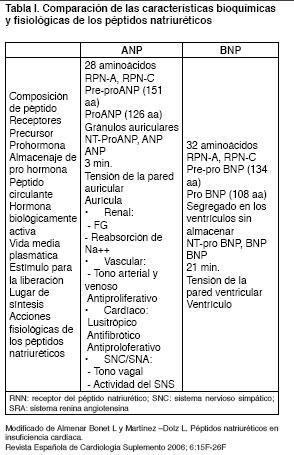
<body><![CDATA[<p style="margin-bottom: 0.0001pt;"> <span style="font-size: 10pt; font-family: Verdana; color: black">El rol de los PN de tipo B (PNB) ha sido profundamente estudiado en la &uacute;ltima d&eacute;cada por diversos investigadores, con resultados por dem&aacute;s alentadores.</span></p>        <p style="margin-bottom: 0.0001pt;"><font face="Verdana"><o:p><font size="2">&nbsp;    <br>    </font>    </o:p><b> <span style="font-size: 10pt; font-family: Helvetica-Bold; color: black">P&Eacute;PTIDOS NATRIUR&Eacute;TICOS DE TIPO B</span></b><font size="2">    <br>    </font>    <o:p><font size="2">&nbsp;</font></o:p></font></p>        <p style="margin-bottom: 0.0001pt;"><font face="Verdana"><b> <span style="font-size: 10pt; font-family: Helvetica-Bold; color: black">Definici&oacute;n y propiedades biol&oacute;gicas</span></b></font></p>        <p style="margin-bottom: 0.0001pt;"> <span style="font-size: 10pt; font-family: Verdana; color: black">Desde que De Bold et al<a name="2."></a><a href="#2">2</a> publicaron la primera descripci&oacute;n de los efectos diur&eacute;ticos y natriur&eacute;ticos de una infusi&oacute;n de extracto de tejido auricular en ratas, se han publicado un gran n&uacute;mero de trabajos en los que se ha puesto de manifiesto la funci&oacute;n del coraz&oacute;n como &oacute;rgano end&oacute;crino, con capacidad para sintetizar y liberar al torrente sangu&iacute;neo los denominados PN. </span></p>        <p style="margin-bottom: 0.0001pt;"> <span style="font-size: 10pt; font-family: Verdana; color: black">Estos pertenecen a un grupo de sustancias pept&iacute;dicas de estructura similar pero gen&eacute;ticamente distintas, que son producidas frente a diferentes tipos y grados de injuria mio-</span></p>        <p style="margin-bottom: 0.0001pt;"> <span style="font-size: 10pt; font-family: Verdana; color: black">c&aacute;rdica <span class="GramE">(<a href="#tabla_1">Tabla</a></span></span><a href="#tabla_1"><span class="MsoHyperlink"><span style="font-size: 10pt; font-family: Verdana;"> 1</span></span></a><font face="Verdana" size="2">)</font></p>        <p style="margin-bottom: 0.0001pt;"><font face="Verdana" size="2"><a name="tabla_1"></a> </font><span style="font-size: 10pt; font-family: Verdana; color: black"><a href="#tabla_1"><span style="color: black; text-decoration: none;"><img alt="" id="_x0000_i1025" src="/img/revistas/ami/v31n2-3/2-3a04t1.JPG" style="border: 0px solid ; width: 294px; height: 455px;">.</span></a></span></p>        <p style="margin-bottom: 0.0001pt;"><span style="color: windowtext; text-decoration: none;"><o:p></o:p></span> <span style="color: black; text-decoration: none; font-size:10pt"> <font face="Verdana">Al momento actual se han identificado cuatro tipos de p&eacute;ptidos natriur&eacute;ticos, de los cuales los m&aacute;s &uacute;tiles desde el punto de vista cl&iacute;nico son los PNB, inicialmente identificados <span class="GramE">a nivel</span> cerebral (origen de la denominaci&oacute;n &ldquo;Brain Natriuretic Peptide&rdquo;</font></span><span style="font-size: 10pt; font-family: Helvetica; color: black"><i><span style="font-family: Verdana; color: black; text-decoration: none">) </span></i></span> <span style="color: black; text-decoration: none; font-size:10pt"> <font face="Verdana">que posteriormente fue aislado a nivel mioc&aacute;rdico, principalmente ventricular. </font> </span></p>        ]]></body>
<body><![CDATA[<p style="margin-bottom: 0.0001pt;"> <span style="color: black; text-decoration: none; font-size:10pt; font-family:Verdana">El BNP es sintetizado en el miocito como una pro hormona: pre-pro BNP (134 amino&aacute;cidos), la cual es fraccionada previo a su secreci&oacute;n en un p&eacute;ptido se&ntilde;al (sin acci&oacute;n biol&oacute;gica) y en el pro-BNP (108 amino&aacute;cidos). Este &uacute;ltimo, una vez secretado, vuelve a escindirse en NT-proBNP (sin actividad biol&oacute;gica) y en la mol&eacute;cula activa BNP. </span></p>        <p style="margin-bottom: 0.0001pt;"> <span style="color: black; text-decoration: none; font-size:10pt; font-family:Verdana">El est&iacute;mulo principal para la secreci&oacute;n de los PNB es la sobrecarga de volumen y/o presi&oacute;n intra ventricular, lo que los hace m&aacute;s sensibles y espec&iacute;ficos para detectar disfunci&oacute;n ventricular respecto a otros p&eacute;ptidos natriur&eacute;ticos. </span></p>        <p style="margin-bottom: 0.0001pt;"> <span style="color: black; text-decoration: none; font-size:10pt; font-family:Verdana">Su principal rol fisiol&oacute;gico ocurre <span class="GramE">a nivel</span> renal, en el sector glomerular y ductal, donde produce modulaci&oacute;n neurohormonal de las acciones vasoconstrictoras y estimuladoras de la reabsorci&oacute;n de sodio y agua. </span></p>        <p style="margin-bottom: 0.0001pt;"> <span style="color: black; text-decoration: none; font-size:10pt; font-family:Verdana">Esta acci&oacute;n es mediada por la constricci&oacute;n a nivel glomerular de la arteriola eferente y la vasodilataci&oacute;n de la aferente, aumentando por tanto el &iacute;ndice de filtrado glomerular (IFG). </span></p>        <p style="margin-bottom: 0.0001pt;"> <span style="font-size: 10pt; font-family: Verdana; color: black"><span style="color: black; text-decoration: none;">A nivel del t&uacute;bulo colector, disminuye la reabsorci&oacute;n de sodio y aumenta su excreci&oacute;n. As&iacute; mismo inhibe el Eje Renina- Angiotensina-Aldosterona (ERAA), la secreci&oacute;n endotelial de sustancias vasoconstrictoras y la actividad simp&aacute;tica, tanto sist&eacute;mica como renal.</span><a href="../../../../../img/revistas/ami/v31n2-3/2-3a04t1.JPG"><span style="color: black; text-decoration: none;"> </span></a></span></p>        <p style="margin-bottom: 0.0001pt;"> <span style="color: black; text-decoration: none; font-size:10pt; font-family:Verdana">El resultado final de dicha regulaci&oacute;n neurohumoral conlleva al aumento de la natriuresis, diuresis y vasodilataci&oacute;n, con todo lo cu&aacute;l se obtiene una disminuci&oacute;n de la precarga y de la poscarga card&iacute;aca. </span></p>        <p style="margin-bottom: 0.0001pt;"> <span style="color: black; text-decoration: none; font-size:10pt; font-family:Verdana">La disminuci&oacute;n de la actividad simp&aacute;tica sist&eacute;mica, asociada a un incremento del tono vagal genera un aumento del lusitropismo y una disminuci&oacute;n del cronotropismo y del batmotropismo, con los consecuentes efectos beneficiosos a nivel cardiovascular. </span></p>        <p style="margin-bottom: 0.0001pt;"> <span style="color: black; text-decoration: none; font-size:10pt; font-family:Verdana">Como efecto adicional presenta propiedades antifibr&oacute;ticas y antiproliferativas lo cual evita la remodelaci&oacute;n tanto card&iacute;aca como vascular y la p&eacute;rdida de masa contr&aacute;ctil. </span></p>        <p style="margin-bottom: 0.0001pt;"> <span style="color: black; text-decoration: none; font-size:10pt; font-family:Verdana">Los valores considerados normales en pacientes &ldquo;sanos&rdquo; oscilan para el BNP entre 0.5 y 30 pg/ml; y entre 68 y 112 pg/ ml para el NT-proBNP. </span></p>        <p style="margin-bottom: 0.0001pt;"> <span style="color: black; text-decoration: none; font-size:10pt; font-family:Verdana">Como en cualquier prueba anal&iacute;tica, en la medida que se seleccionan niveles de corte m&aacute;s elevados, se gana en especificidad pero disminuye la sensibilidad. </span></p>        ]]></body>
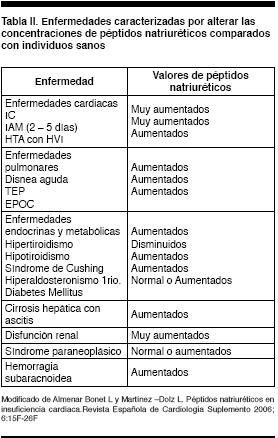
<body><![CDATA[<p style="margin-bottom: 0.0001pt;"> <span style="color: black; text-decoration: none; font-size:10pt; font-family:Verdana">En la actualidad se acepta la cifra de 100 pg/ml de BNP o de 125 pg/ml de NT-proBNP (450 pg/ml en &gt; 75 a&ntilde;os) para el diagn&oacute;stico de IC en aquellos pacientes con s&iacute;ntomas sugestivos, tanto en forma ambulatoria como en el contexto de urgencias y emergencias. </span></p>        <p style="margin-bottom: 0.0001pt;"> <span style="color: black; text-decoration: none; font-size:10pt"> <font face="Verdana">Se debe tener en cuenta que las concentraciones plasm&aacute;ticas </font> </span><span style="font-size: 9pt; color: black; text-decoration: none;"> <font face="Verdana"><span style="font-size: 10pt; color: black">de PNB aumentan no s&oacute;lo en los sujetos con IC, sino que presenta tambi&eacute;n modificaciones dependientes de otras variables como la edad y sexo, &iacute;ndice de masa corporal, funci&oacute;n renal, isquemia mioc&aacute;rdica, miocarditis, situaciones que aumenten la presi&oacute;n ventricular derecha (hipertensi&oacute;n arterial pulmonar, disfunci&oacute;n ventricular derecha, embolia pulmonar) </span></font></span> <span style="font-size: 10pt; color: black; text-decoration: none"> <font face="Verdana"><span class="GramE">(<a href="#tabla_2"><span style=""><u><span style="color: blue;">Tabla II</span></u></span></a></span>).</font></span></p>        <p style="margin-bottom: 0.0001pt;"><font face="Verdana" size="2"><a name="tabla_2"></a> </font><span style="font-size: 10pt; font-family: Verdana; color: black"><a href="#tabla_2"><span style="color: black; text-decoration: none;"><img alt="" id="_x0000_i1026" src="/img/revistas/ami/v31n2-3/2-3a04t2.JPG" style="border: 0px solid ; width: 278px; height: 438px;"></span></a></span></p>        <p style="margin-bottom: 0.0001pt;"> <span style="color: black; text-decoration: none; font-family:Verdana"> <font size="2">Por esta raz&oacute;n es esencial conocer dichas causas, con la finalidad de no incurrir en errores diagn&oacute;sticos y por ende, </font> </span> <span style="font-size: 10pt; color: black; text-decoration: none; font-family:Verdana">en protocolos de estudio y conductas terap&eacute;uticas injustifi</span><span style="color: black; text-decoration: none; font-family:Verdana"><font size="2">cadas. </font> </span></p>        <p style="margin-bottom: 0.0001pt;"> <span style="color: black; text-decoration: none; font-size:10pt; font-family:Verdana">Aunque procedentes de un precursor com&uacute;n, BNP y NtproBNP presentan diferencias en varios aspectos. El BNP tiene una vida media corta que se aproxima a los 18 minutos, y al ser la mol&eacute;cula biol&oacute;gicamente activa se elimina de la circulaci&oacute;n mediante receptores espec&iacute;ficos y degradaci&oacute;n plasm&aacute;tica. Los valores del BNP &ldquo;in vitro&rdquo; son inestables y descienden en las primeras 24 horas. </span></p>        <p style="margin-bottom: 0.0001pt;"> <span style="color: black; text-decoration: none; font-size:10pt; font-family:Verdana">Sin embargo, el NT- roBNP al ser una mol&eacute;cula biol&oacute;gicamente inactiva no tiene mecanismos de eliminaci&oacute;n espec&iacute;ficos, siendo su vida media cercana a los 60 a 120 minutos. Se elimina en su mayor parte <span class="GramE">a nivel</span> renal, siendo m&aacute;s estable que el BNP, con escasa variaci&oacute;n de su concentraci&oacute;n plasm&aacute;tica hasta luego de 72 horas de su extracci&oacute;n. </span></p>        <p style="margin-bottom: 0.0001pt;"> <span style="color: black; text-decoration: none; font-size:10pt; font-family:Verdana">Sobre la base de lo analizado, dada su mayor vida media y estabilidad in vitro (que facilita la obtenci&oacute;n y conservaci&oacute;n de la muestra), y el hecho de alcanzar mayores concentraciones s&eacute;ricas por aspectos a&uacute;n no bien conocidos, la determinaci&oacute;n del NT- roBNP ser&iacute;a de mayor utilidad que la del BNP como test anal&iacute;tico.</span></p>        <p style="margin-bottom: 0.0001pt;"><font face="Verdana"><span style="color: windowtext; text-decoration: none;"><o:p><span style="font-weight: bold;"> <font size="2">    <br>    </font>    </span></o:p></span><b> <span style="color: black; text-decoration: none; font-size:10pt; font-family:Helvetica-Bold">Utilidad en la pr&aacute;ctica cl&iacute;nica</span></b></font></p>        <p style="margin-bottom: 0.0001pt;"> <span style="font-family: Verdana; color: black"><span style="color: black; text-decoration: none;"> <font size="2">M&uacute;ltiples estudios internacionales han demostrado la utilidad del BNP y del NT-proBNP en el </font> </span><font size="2"><b><span style="font-family: Helvetica-Bold; color: black; text-decoration: none;">diagn&oacute;stico </span></b></font><span style="color: black; text-decoration: none;"> <font size="2">de IC,</font></span></span><span style="font-size: 10pt; color: black; text-decoration: none; font-family: Verdana"><u><span style="color: blue;"><a name="3."></a></span></u></span><font face="Verdana" size="2"><u><a name="4."></a></u></font><span style="color: black; text-decoration: none; font-size:10pt; font-family:Verdana"> </span> <span style="font-size: 10pt; color: black; text-decoration: none; font-family:Verdana"><a name="5."></a></span><u> <font face="Verdana" size="2"><a name="6."></a></font></u> <span style="color: black; text-decoration: none; font-size:10pt; font-family:Verdana">principalmente en pacientes que consultan por disnea de origen incierto en el departamento de</span><span style="color: black; text-decoration: none; font-family:Verdana"><font size="2"> emergencia.</font></span><span style="font-size: 10pt; color: black; text-decoration: none; font-family:Verdana"><span style=""><u><span style="color: blue;"><a href="#3">3</a>,</span></u></span><a href="#4"><span style=""><u><span style="color: blue;">4</span></u></span></a>,<a href="#5"><span style=""><u><span style="color: blue;">5</span></u></span></a><span style=""><span class="GramE"><u><span style="color: blue;">,</span></u></span><a href="#6"><u><span style="color: blue;">6</span></u></a></span> </span> <span style="color: black; text-decoration: none; font-family:Verdana"> <font size="2">La sensibilidad de este test es muy elevada, con valores predictivos (tanto positivos como negativos) significativos. </font> </span></p>        ]]></body>
<body><![CDATA[<p style="margin-bottom: 0.0001pt;"> <span style="color: black; text-decoration: none; font-size:10pt; font-family:Verdana">Es una prueba de screening de disfunci&oacute;n ventricular (tanto sist&oacute;lica como diast&oacute;lica, sintom&aacute;tica o asintom&aacute;tica) que se correlaciona estrechamente con hallazgos ecocardiogr&aacute;ficos y con diversos par&aacute;metros hemodin&aacute;micos. </span></p>        <p style="margin-bottom: 0.0001pt;"><span style="font-size: 10pt; color: black"><span style="color: black; text-decoration: none;"> <font face="Verdana">La evidencia actual les atribuye adem&aacute;s un rol fundamental en el </font> </span><font face="Verdana"><b><span style="font-family: Helvetica-Bold; color: black; text-decoration: none;">seguimiento de la situaci&oacute;n cl&iacute;nica </span></b></font> </span><span style="color: black; text-decoration: none;"> <font face="Verdana"><span style="font-size: 10pt; color: black">de pacientes con IC en consulta ambulatoria.</span></font></span><font face="Verdana"><span style="color: black"><a href="#7"><font size="2">7</font></a></span><font size="2"><span style="color: black"> </span> </font></font></p>        <p style="margin-bottom: 0.0001pt;"><span style="font-size: 10pt; color: black"><span style="color: black; text-decoration: none;"> <font face="Verdana">As&iacute; <span class="GramE">mismo</span> son de notable utilidad como </font> </span><font face="Verdana"><b><span style="font-family: Helvetica-Bold; color: black; text-decoration: none;">marcadores pron&oacute;sticos </span></b><span style="color: black; text-decoration: none;">y </span><b><span style="font-family: Helvetica-Bold; color: black; text-decoration: none;">predictores de eventos adversos </span></b><span style="color: black; text-decoration: none;">(mala evoluci&oacute;n, complicaciones, hospitalizaciones y muerte, incluyendo muerte s&uacute;bita card&iacute;aca)</span></font></span><span style="font-size: 10pt; color: black; text-decoration:none"><u><font face="Verdana"><a name="8."></a>8</font></u></span><font face="Verdana" size="2"><a name="9."></a>,<a href="#9"><span style=""><u><span style="color: blue;">9</span></u></span></a> </font> </p>        <p style="margin-bottom: 0.0001pt;"> <span style="font-family: Verdana; color: black"><span style="color: black; text-decoration: none;"> <font size="2">Debe jerarquizarse tambi&eacute;n su papel como </font> </span><font size="2"><b><span style="font-family: Helvetica-Bold; color: black; text-decoration: none;">herramienta gu&iacute;a para la toma de decisiones</span></b></font><span style="color: black; text-decoration: none;"><font size="2">, en lo que respecta al tratamiento farmacol&oacute;gico y/o para definir la utilidad de otras medidas terap&eacute;uticas no farmacol&oacute;gicas (resincronizaci&oacute;n card&iacute;aca, cardiodesfibrilador autom&aacute;tico implantable, transplante card&iacute;aco)</font></span></span><span style="font-size: 10pt; color: black; text-decoration: none; font-family:Verdana"><a name="10."></a><a href="#10">1</a><span style=""><u><span style="color: blue;"><a href="#10">0</a>,<a name="11."></a></span></u></span><a href="#11"><span style=""><u><span style="color: blue;">11</span></u></span></a> </span></p>        <p style="margin-bottom: 0.0001pt;"> <span style="font-family: Verdana; color: black"><span style="color: black; text-decoration: none;"> <font size="2">Por &uacute;ltimo, la formulaci&oacute;n de una mol&eacute;cula sint&eacute;tica BNP-s&iacute;mil (nesiritide) como droga para el </font> </span><font size="2"><b><span style="font-family: Helvetica-Bold; color: black; text-decoration: none;">tratamiento </span></b></font></span><span style="color: black; text-decoration: none;"> <font size="2"><span style="font-family: Verdana; color: black">de la IC podr&iacute;a cumplir un rol esencial en el <a name="12."></a>arsenal terap&eacute;utico de esta entidad.</span></font><span style="font-size: 9pt; font-family: Verdana; color: black"><a href="#12"><span style=""><u><span style="font-size: 10pt; color: blue">12</span></u></span></a></span></span></p>        <p style="margin-bottom: 0.0001pt;"><font face="Verdana"><span style="color: windowtext; text-decoration: none;"><o:p> <font size="2">&nbsp;</font></o:p></span><font size="2">    <br>    </font>    <b> <span style="color: black; text-decoration: none; font-size:10pt; font-family:Helvetica-Bold">P&Eacute;PTIDOS NATRIUR&Eacute;TICOS DE TIPO B EN EL DIAGN&Oacute;STICO DE INSUFICIENCIA CARD&Iacute;ACA:</span></b></font></p>        <p style="margin-bottom: 0.0001pt;"><font face="Verdana"><span style="color: windowtext; text-decoration: none;"><o:p> <font size="2">&nbsp;</font></o:p></span><font size="2">    <br>    </font>    <b> <span style="color: black; text-decoration: none; font-size:10pt; font-family:Helvetica-Bold">Insuficiencia Card&iacute;aca sintom&aacute;tica en el &aacute;mbito ambulatorio y hospitalario:</span></b></font></p>        <p style="margin-bottom: 0.0001pt;"> <span style="color: black; text-decoration: none; font-size:10pt; font-family:Verdana">Como fue analizado previamente, a pesar de los notables avances que se han producido en torno a la IC, en ocasiones</span></p>        ]]></body>
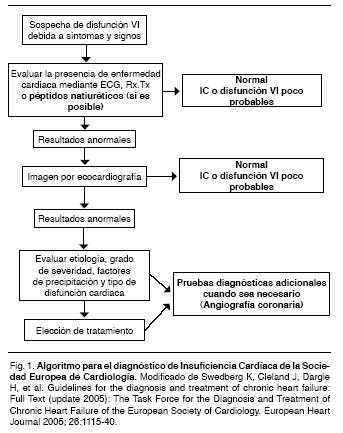
<body><![CDATA[<p style="margin-bottom: 0.0001pt;"> <span style="font-size: 10pt; font-family: Verdana; color: black"><span class="GramE"><span style="color: black; text-decoration: none;">sigue</span></span><span style="color: black; text-decoration: none;"> siendo dificultoso establecer su diagn&oacute;stico, principalmente en aquellos pacientes que acuden a un servicio de emergencia con disnea de origen incierto. </span></span></p>        <p style="margin-bottom: 0.0001pt;"> <span style="color: black; text-decoration: none; font-size:10pt; font-family:Verdana">Un diagn&oacute;stico incorrecto o tard&iacute;o podr&iacute;a ocasionar una elevada morbimortalidad. Por tanto, el diagn&oacute;stico de IC debe ser precoz y preciso. </span></p>        <p style="margin-bottom: 0.0001pt;"> <span style="color: black; text-decoration: none; font-size:10pt; font-family:Verdana">Lamentablemente los s&iacute;ntomas y signos de esta entidad, as&iacute; como los hallazgos electrocardiogr&aacute;ficos y radiol&oacute;gicos no son espec&iacute;ficos. Por otra parte se debe tener en cuenta que frecuentemente estos pacientes presentan comorbilidades que dificultan a&uacute;n m&aacute;s el diagn&oacute;stico. </span></p>        <p style="margin-bottom: 0.0001pt;"> <span style="font-size: 10pt; font-family: Verdana; color: black"><span style="color: black; text-decoration: none;">En el a&ntilde;o 2001 la European Society of Cardiology incor</span><span style="color: black; text-decoration: none">por&oacute; por primera vez en sus gu&iacute;as de pr&aacute;ctica cl&iacute;nica sobre</span></span></p>        <p style="margin-bottom: 0.0001pt;"> <span style="font-size: 10pt; font-family: Verdana; color: black"><span class="GramE"><span style="color: black; text-decoration: none;">IC, un algoritmo diagn&oacute;stico donde se incluye la utilizaci&oacute;n de la determinaci&oacute;n plasm&aacute;tica de los PNB, tanto en el &aacute;mbito hospitalario como en pacientes ambulatorios (<a href="#figura_1"><span style=""><u><span style="color: blue;">Figura 1</span></u></span></a>).</span></span></span></p>        <p style="margin-bottom: 0.0001pt;"><font face="Verdana" size="2"><a name="figura_1"></a> </font><span style="font-size: 10pt; font-family: Verdana; color: black"><a href="#figura_1"><span style="color: black; text-decoration: none;"><img alt="" id="_x0000_i1027" src="/img/revistas/ami/v31n2-3/2-3a04f1.JPG" style="border: 0px solid ; width: 343px; height: 433px;">.</span></a></span></p>        <p style="margin-bottom: 0.0001pt;"> <span style="color: black; text-decoration: none; font-size:10pt; font-family:Verdana">Dichos marcadores humorales, junto a la cl&iacute;nica, el trazado electrocardiogr&aacute;fico y la ecocardiograf&iacute;a constituyen los pilares para el diagn&oacute;stico de esta entidad. </span></p>        <p style="margin-bottom: 0.0001pt;"> <span style="color: black; text-decoration: none; font-family:Verdana"> <font size="2">Los resultados del Breathing Not <a name="13."></a>Properly Multinational Study</font></span><span style="font-size: 9pt; font-family: Verdana; color: black"><a href="#13"><span style="font-size: 10pt; color: black; text-decoration: none">13 </span></a></span> <span style="color: black; text-decoration: none; font-family:Verdana"> <font size="2">fueron realmente revolucionarios al respecto. Demostraron la utilidad de este test aplicado en la emergencia, para distinguir la disnea aguda de causa cardiog&eacute;nica de la respiratoria, con un valor predictivo negativo y positivo de 95% y 74% respectivamente. El estudio demostr&oacute; que la utilidad del test es a&uacute;n mayor cuando se analiza en conjunto con la interpretaci&oacute;n de los hallazgos cl&iacute;nicos. </font> </span></p>        <p style="margin-bottom: 0.0001pt;"> <span style="color: black; text-decoration: none; font-size:10pt; font-family:Verdana">Valores plasm&aacute;ticos de BNP superiores a 100 pg/ml fueron diagn&oacute;sticos de IC con una sensibilidad del 90% y una especificidad del 76% (mayor que la obtenida mediante la aplicaci&oacute;n de los criterios diagn&oacute;sticos de NHANES o el score de Framingham) y con valores predictivos superiores al de par&aacute;metros cl&iacute;nicos y radiol&oacute;gicos cl&aacute;sicos (historia cl&iacute;nica y examen f&iacute;sico compatibles, cardiomegalia y signolog&iacute;a radiol&oacute;gica de hipertensi&oacute;n venocapilar pulmonar). </span></p>        <p style="margin-bottom: 0.0001pt;"><span style="color: black; text-decoration: none;"> <font face="Verdana"><span style="font-size: 10pt; color: black">Finalmente se encontr&oacute; una correlaci&oacute;n directa entre los niveles de BNP y la clase funcional seg&uacute;n la New York Heart Association (NYHA) en aquellos pacientes sintom&aacute;ticos (244 pg/ml - 817 pg/ml de clases I a IV). Dichos hallazgos coinciden con los derivados de <span class="GramE">un</span> meta an&aacute;lisis posterior llevado a cabo por Wang y cols.</span></font></span><span style="font-size: 10pt; color: black; text-decoration: none"><font face="Verdana"><a href="#8">8</a> </font> </span></p>        ]]></body>
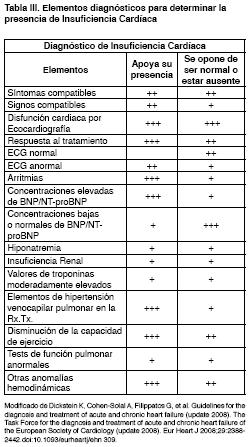
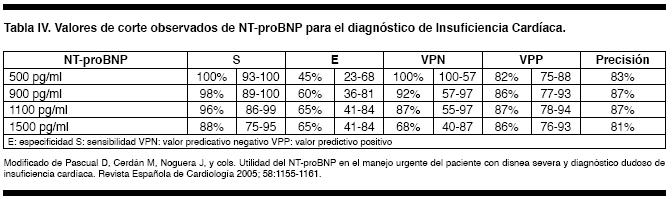
<body><![CDATA[<p style="margin-bottom: 0.0001pt;"> <span style="color: black; text-decoration: none; font-size:10pt; font-family:Verdana">Actualmente, tanto las gu&iacute;as de la American Heart Association/ American College of Cardiology, y de la European Society of Cardiology recomiendan su utilizaci&oacute;n en aquellos casos donde la presunci&oacute;n cl&iacute;nica de IC es moderada y la accesibilidad al ecocardiograma (gold standard) se torna dificultosa y/o tard&iacute;a. (<a href="/img/revistas/ami/v31n2-3/2-3a04f2.JPG"><span style=""><u><span style="color: blue;">Figura 2</span></u></span></a> y &nbsp;<a href="#tabla_3"><span style=""><u><span style="color: blue;">Tabla III</span></u></span></a>).</span></p>        <p style="margin-bottom: 0.0001pt;"><font face="Verdana" size="2"><a name="tabla_3"></a> </font><span style="font-size: 10pt; font-family: Verdana; color: black"><a href="#tabla_3"><span style="color: black; text-decoration: none;"><img alt="" id="_x0000_i1028" src="/img/revistas/ami/v31n2-3/2-3a04t3.JPG" style="border: 0px solid ; width: 251px; height: 447px;"></span></a></span></p>        <p style="margin-bottom: 0.0001pt;"> <span style="color: black; text-decoration: none; font-size:10pt; font-family:Verdana">De este modo, con valores de BNP negativos se deber&iacute;a buscar otra causa de la sintomatolog&iacute;a del paciente, evitando costos innecesarios (consultas con especialistas en cardiolog&iacute;a, ecocardiograf&iacute;a o derivaciones al paciente a centros asistenciales de mayor nivel). </span></p>        <p style="margin-bottom: 0.0001pt;"> <span style="color: black; text-decoration: none; font-size:10pt; font-family:Verdana">En los &uacute;ltimos a&ntilde;os, varios estudios han demostrado tambi&eacute;n la utilidad del NT-proBNP en el diagn&oacute;stico diferencial de la disnea en el &aacute;mbito de la urgencia hospitalaria. </span></p>        <p style="margin-bottom: 0.0001pt;"> <span style="color: black; text-decoration: none; font-size:10pt; font-family:Verdana">Al igual que para el BNP, ha mostrado tener m&aacute;s sensibilidad y especificidad que el juicio cl&iacute;nico aislado, aunque la aplicaci&oacute;n de ambos en forma combinada es de mayor rentabilidad diagn&oacute;stica que cualquiera de ellos tomados en forma individual. </span></p>        <p style="margin-bottom: 0.0001pt;"> <span style="color: black; text-decoration: none; font-family:Verdana"> <font size="2">El valor de corte para excluir o incluir el diagn&oacute;stico de IC seg&uacute;n el estudio PRIDE, fue definido en 300 pg/ml, independientemente de la edad o el sexo del paciente, con una elevada sensibilidad y valor <a name="14."></a>predictivo negativo (99%).</font></span><span style="font-size: 10pt; color: black; text-decoration: none; font-family:Verdana"><a href="#14"><span style=""><u><span style="color: blue;">14</span></u></span></a> </span><span style="color: black; text-decoration: none; font-family:Verdana"> <font size="2">Los valores de corte considerados de relevancia diagn&oacute;stica seg&uacute;n el proyecto ICON presentaron variaciones seg&uacute;n el rango etario de los pacientes, estableci&eacute;ndose en 450 pg/ ml en menores de 50 a&ntilde;os (s: 97%; e: 93%), 900 pg/ml para pacientes entre 50 y 75 a&ntilde;os (s: 90%; e: 82%), y 1.800 pg/ml para mayores de 75 a&ntilde;os (s: 85%;<a name="15."></a> e: 73%).</font></span><span style="font-size: 9pt; font-family: Verdana; color: black"><span style="font-size: 10pt; color: black; text-decoration: none"><a href="#15"><span style=""><u><span style="color: blue;">15</span></u></span></a> </span><span style="font-family: Verdana; color: black"><span class="GramE"><span style="color: black; text-decoration: none;"> <font size="2">(<a href="/img/revistas/ami/v31n2-3/2-3a04t4.JPG"><span style=""><u><span style="color: blue;">Tabla IV</span></u></span></a></font></span></span><span style="color: black; text-decoration: none;"><font size="2">)</font></span></span></span></p>        <p style="margin-bottom: 0.0001pt;"> <span style="color: black; text-decoration: none; font-size:10pt; font-family:Verdana">Como conclusi&oacute;n se podr&iacute;a afirmar que en aquellos pacientes sin diagn&oacute;stico previo de IC, la positividad de estas pruebas orienta firmemente al diagn&oacute;stico de dicha entidad; mientras que en aquellos pacientes con diagn&oacute;stico preestablecido de IC que consultan en emergencia por disnea, la elevaci&oacute;n de los niveles plasm&aacute;ticos de PNB por encima de los valores de corte esperados, sugiere el origen cardiog&eacute;nico de la misma. </span></p>        <p style="margin-bottom: 0.0001pt;"><font face="Verdana"><span style="color: windowtext; text-decoration: none;"><o:p> <font size="2">&nbsp;</font></o:p></span><font size="2">    <br>    </font>    <b> <span style="color: black; text-decoration: none; font-size:10pt; font-family:Helvetica-Bold">Disfunci&oacute;n ventricular sist&oacute;lica asintom&aacute;tica:</span></b></font></p>        <p style="margin-bottom: 0.0001pt;"><font size="2"> <span style="color: black; text-decoration: none; font-family:Verdana">La validez de realizar este test en forma rutinaria para detectar pacientes con disfunci&oacute;n ventricular asintom&aacute;tica es controvertida. Los rangos de valores plasm&aacute;ticos de PNB que presentan este grupo de pacientes son amplios y variables, e incluyen valores considerados normales en la poblaci&oacute;n general. No es claro hasta el momento el lugar que ocupar&iacute;a este test como screening de la poblaci&oacute;n general de bajo riesgo para IC. <a name="16."></a>Vasan RS y cols.</span></font><span style="color: black; text-decoration: none; font-size:9pt; font-family:Verdana"><a href="#16"><span style=""><u><span style="font-size: 10pt; color: blue">16</span></u></span></a></span><font size="2"><span style="color: black; text-decoration: none; font-family:Verdana">, tras la realizaci&oacute;n del MONICA Study, concluyen que es dif&iacute;cil establecer intervalos de valores de BNP &uacute;tiles para un tamizaje de disfunci&oacute;n ventricular asintom&aacute;tica en dicha poblaci&oacute;n. </span></font></p>        ]]></body>
<body><![CDATA[<p style="margin-bottom: 0.0001pt;"> <span style="color: black; text-decoration: none; font-family:Verdana"> <font size="2">Estudios recientes, como el llevado a cabo por Silver et al</font></span><span style="font-size: 10pt; color: black; text-decoration: none; font-family:Verdana"><a name="17."></a><a href="#17">17</a> </span><span style="color: black; text-decoration: none;"> <font size="2"><span style="font-family: Verdana; color: black">plantean que su lugar ser&iacute;a reservado para aquellos pacientes con factores de riesgo para desarrollar IC (poblaci&oacute;n de alto riesgo), pero que a&uacute;n no presentan cardiopat&iacute;a estructural ni s&iacute;ntomas de IC (estadio A). Respecto a los valores de corte del BNP para el cribado de disfunci&oacute;n ventricular en pacientes de alto riesgo para desarrollar IC se <span class="GramE">han</span> situado, seg&uacute;n diversos estudios, en 76.4 pg/ ml, con un &aacute;rea bajo la curva ROC de 0.96, un valor predictivo negativo del 98%, positivo del 70%, con una sensibilidad del 97% y<a name="18."></a> una especificidad del 84%.</span></font><span style="font-size: 9pt; font-family: Verdana; color: black"><a href="#18"><span style=""><u><span style="font-size: 10pt; color: blue">18</span></u></span></a></span></span></p>        <p style="margin-bottom: 0.0001pt;"><font face="Verdana"><span style="color: windowtext; text-decoration: none;"><o:p> <font size="2">&nbsp;</font></o:p></span><font size="2">    <br>    </font>    <b> <span style="color: black; text-decoration: none; font-size:10pt; font-family:Helvetica-Bold">Disfunci&oacute;n ventricular diast&oacute;lica asintom&aacute;tica:</span></b></font></p>        <p style="margin-bottom: 0.0001pt;"> <span style="color: black; text-decoration: none; font-family:Verdana"> <font size="2">En aquellos pacientes con disfunci&oacute;n diast&oacute;lica el test de PNB puede llegar a cumplir un rol fundamental, ya que es justamente en este grupo donde el diagn&oacute;stico de IC es <a name="19."></a>de mayor <a name="20."></a>complejidad.</font></span><span style="font-size: 10pt; color: black; text-decoration: none; font-family:Verdana"><a href="#19"><span style=""><u><span style="color: blue;">19</span></u></span></a>,<a href="#20"><span style=""><u><span style="color: blue;">20</span></u></span></a> </span></p>        <p style="margin-bottom: 0.0001pt;"> <span style="color: black; text-decoration: none; font-family:Verdana"> <font size="2">Seg&uacute;n concluyen diversos ensayos (BNP Multinational Study</font></span><span style="font-size: 10pt; color: black; text-decoration: none; font-family:Verdana">12</span><span style="color: black; text-decoration: none;"><font size="2"><span style="font-family: Verdana; color: black">; <a name="21."></a>Lubien et al.</span></font><span style="font-size: 9pt; font-family: Verdana; color: black"><a href="#21"><span style=""><u><span style="font-size: 10pt; color: blue">21</span></u></span></a><font size="2"><span style="font-family: Verdana; color: black">), las concentraciones de BNP en pacientes con disfunci&oacute;n diast&oacute;lica asintom&aacute;tica estuvieron aproximadamente en la mitad de los valores alcanzados en pacientes con disfunci&oacute;n sist&oacute;lica. </span></font></span> </span></p>        <p style="margin-bottom: 0.0001pt;"> <span style="color: black; text-decoration: none; font-size:10pt; font-family:Verdana">Sin embargo, a medida que la disfunci&oacute;n progresa, llegando a patrones de llenado ventricular restrictivo, y principalmente cuando la disfunci&oacute;n diast&oacute;lica se hace sintom&aacute;tica, dichos test presentan valores significativamente por encima de los puntos de corte, cobrando jerarqu&iacute;a diagn&oacute;stica.</span></p>        <p style="margin-bottom: 0.0001pt;"><span style="color: windowtext; text-decoration: none;"><o:p></o:p></span> <font face="Verdana"><font size="2">    <br>    </font>    <b> <span style="color: black; text-decoration: none; font-size:10pt; font-family:Helvetica-Bold">P&Eacute;PTIDOS NATRIUR&Eacute;TICOS DE TIPO B EN EL SEGUIMIENTO DE LA INSUFICIENCIA CARD&Iacute;ACA</span></b></font></p>        <p style="margin-bottom: 0.0001pt;"> <span style="color: black; text-decoration: none; font-size:10pt; font-family:Verdana">Monitorizaci&oacute;n del estado cl&iacute;nico, utilidad pron&oacute;stica y gu&iacute;a para la toma de decisiones terap&eacute;uticas.</span></p>        <p style="margin-bottom: 0.0001pt;"> <span style="color: black; text-decoration: none; font-size:10pt; font-family:Verdana">Diferentes ensayos avalan el papel del BNP y del NtproBNP en el seguimiento de pacientes con Insuficiencia Card&iacute;aca, atribuy&eacute;ndoles un rol incluso superior al de otras variables cl&aacute;sicas como <span class="GramE">la</span> CF, la FEVI y el test de consumo de O2.</span></p>        ]]></body>
<body><![CDATA[<p style="margin-bottom: 0.0001pt;"> <span style="color: black; text-decoration: none; font-size:10pt; font-family:Verdana">Estos PN se agregan a los factores de riesgo est&aacute;ndar y proveen una medida no invasiva para identificar una poblaci&oacute;n con alto riesgo de eventos adversos y mortalidad.</span></p>        <p style="margin-bottom: 0.0001pt;"><font face="Verdana"><span style="color: windowtext; text-decoration: none;"><o:p> <font size="2">&nbsp;</font></o:p></span><font size="2">    <br>    </font>    <b> <span style="color: black; text-decoration: none; font-size:10pt; font-family:Helvetica-Bold">Marcador del estado cl&iacute;nico</span></b></font></p>        <p style="margin-bottom: 0.0001pt;"> <span style="color: black; text-decoration: none; font-family:Verdana"> <font size="2">Diversos <a name="22-24."></a>ensayos cl&iacute;nicos</font></span><span style="font-size: 10pt; color: black; text-decoration: none; font-family:Verdana"><a href="#22"><span style=""><u><span style="color: blue;">22</span></u></span></a>-<a href="#24"><span style=""><u><span style="color: blue;">24</span></u></span></a> </span><span style="color: black; text-decoration: none; font-family:Verdana"> <font size="2">demostraron que la concentraci&oacute;n plasm&aacute;tica de BNP y/o de NT-proBNP como par&aacute;metros de control del estado cl&iacute;nico en pacientes ambulatorios portadores de IC predicen mala evoluci&oacute;n y por ende un pron&oacute;stico adverso con mayor sensibilidad respecto a la percepci&oacute;n cl&iacute;nica por parte de los pacientes evaluada mediante <span class="GramE">la</span> CF.</font></span></p>        <p style="margin-bottom: 0.0001pt;"><font face="Verdana"><span style="color: windowtext; text-decoration: none;"><o:p> <font size="2">&nbsp;</font></o:p></span><font size="2">    <br>    </font>    <b> <span style="color: black; text-decoration: none; font-size:10pt; font-family:Helvetica-Bold">Factor pron&oacute;stico y predictor de eventos adversos</span></b></font></p>        <p style="margin-bottom: 0.0001pt;"> <span style="color: black; text-decoration: none; font-size:10pt"> <font face="Verdana">M&uacute;ltiples autores en diferentes estudios evidenciaron que en pacientes con IC, concentraciones iniciales elevadas o variaciones plasm&aacute;ticas (con incremento de los valores) tanto de BNP como de NT-proBNP por encima de los puntos de corte considerados normales, durante diferentes per&iacute;odos observacionales, fueron predictores independientes de mala evoluci&oacute;n.<a name="25."></a></font></span><span style="font-size: 6pt; color: black; text-decoration: none;"><font face="Verdana"><span style="font-size: 10pt; color: black"><a href="#25"><span style=""><u><span style="color: blue;">25</span></u></span></a></span></font><span style=""><font face="Verdana"><span style="font-size: 10pt; color: black"><span class="GramE"><u><span style="color: blue;">,</span></u></span><u><a name="26."></a>2</u></span></font></span></span><font face="Verdana"><span style="font-size: 10pt; color: black"><a href="#26">6</a> </span><span style="color: black; text-decoration: none;"> <font size="2">Este grupo de pacientes present&oacute; una mayor tasa de ingresos y reingresos hospitalarios, eventos adversos y muerte de causa cardiovascular o de otras causas, tanto a corto como a <a name="27."></a>mediano<a name="28."></a> plazo.</font></span><span style="font-size: 10pt; color: black; text-decoration: none"><a href="#27"><span style=""><u><span style="color: blue;">27</span></u></span></a>,<a href="#28"><span style=""><u><span style="color: blue;">28</span></u></span></a> </span></font></p>        <p style="margin-bottom: 0.0001pt;"> <span style="color: black; text-decoration: none; font-family:Verdana"> <font size="2">Sobre la base de esto, parecer&iacute;a evidente que los valores plasm&aacute;ticos de PNB cumplen un importante<a name="29."></a> rol pron&oacute;stico,</font></span><span style="font-size: 10pt; color: black; text-decoration: none; font-family:Verdana"><a href="#29"><span style=""><u><span style="color: blue;">29</span></u></span></a>,<span style=""><u><span style="color: blue;"><a name="30."></a><a href="#30">3</a>0</span></u></span> </span><span style="color: black; text-decoration: none; font-family:Verdana"> <font size="2">tanto en sus determinaciones aisladas, como en las variaciones de las mismas durante el <a name="31-33."></a>seguimiento evolutivo.</font></span><span style="font-size: 10pt; color: black; text-decoration: none; font-family:Verdana"><a href="#31"><span style=""><u><span style="color: blue;">31</span></u></span></a>-<a href="#33"><span style=""><u><span style="color: blue;">33</span></u></span></a></span></p>        <p style="margin-bottom: 0.0001pt;"><font face="Verdana"><span style="color: windowtext; text-decoration: none;"><o:p> <font size="2">&nbsp;</font></o:p></span><font size="2">    <br>    </font>    <b> <span style="color: black; text-decoration: none; font-size:10pt; font-family:Helvetica-Bold">Riesgo de Muerte S&uacute;bita Card&iacute;aca:</span></b></font></p>        ]]></body>
<body><![CDATA[<p style="margin-bottom: 0.0001pt;"> <span style="color: black; text-decoration: none; font-family:Verdana"> <font size="2">En una cohorte de pacientes portadores de IC de etiolog&iacute;a diversa, la elevaci&oacute;n de la concentraci&oacute;n plasm&aacute;tica de BNP, con valores de corte por encima de 950 pg/ml, fue altamente predictora de riesgo de muerte s&uacute;bita card&iacute;aca (MSC).</font></span><span style="font-size: 10pt; color: black; text-decoration: none; font-family:Verdana"><a href="#34"><span style=""><u><span style="color: blue;">34</span></u></span></a> </span><span style="color: black; text-decoration: none; font-family:Verdana"> <font size="2">Berger et al</font></span><span style="font-size: 9pt; font-family: Verdana; color: black"><span style="font-size: 10pt; color: black; text-decoration: none"><a name="35."></a><a href="#35">35</a> </span><span style="color: black; text-decoration: none; font-family:Verdana"> <font size="2">demostraron que en el seguimiento de 452 pacientes ambulatorios con IC por disfunci&oacute;n sist&oacute;lica (FEVI &lt; 35%), los valores de BNP eran un marcador predictivo independiente de MSC. En dicho estudio, el valor de corte para diferenciar pacientes con bajo y alto riesgo de MSC se situ&oacute; en torno a los 130 pg/ml. La incidencia de MSC fue de 1% en pacientes por debajo de dicho punto de corte y de 19% en aquellos que presentaron concentraciones plasm&aacute;ticas de BNP por encima de dicho valor.</font></span></span></p>        <p style="margin-bottom: 0.0001pt;"><span style="color: windowtext; text-decoration: none;"><o:p></o:p></span> <font face="Verdana"><b> <span style="color: black; text-decoration: none; font-size:10pt; font-family:Helvetica-Bold">    <br>    Par&aacute;metro para control de respuesta al tratamiento farmacol&oacute;gico:</span></b></font></p>        <p style="margin-bottom: 0.0001pt;"> <span style="font-size: 10pt; color: black; text-decoration:none"><font face="Verdana">En cuanto al valor del <a name="37."></a>NT-proBNP como gu&iacute;a para control <a name="38."></a>del tratamiento y adopci&oacute;n<a name="39."></a> de conductas terap&eacute;uticas adicionales, <a name="40."></a>seg&uacute;n diversos ensayos (Richards</font><u><font face="Verdana">36</font></u></span><font face="Verdana" size="2">;&nbsp;Felker<a href="#37"><u>37</u></a>;&nbsp;Doust<a href="#38"><u>38</u></a>; y cols) y estudios randomizados&nbsp;(REDHOT</font><a href="#39"><span style="font-size: 10pt; color: black; text-decoration: none"><font face="Verdana"><u>39</u></font></span></a><font size="2" face="Verdana"> </font><font size="2"> <span style="color: black; text-decoration: none;"><font face="Verdana">y&nbsp;BASEL<a href="#40"><u>40</u></a></font></span></font><font size="2" face="Verdana">) basados en m&uacute;ltiples datos observacionales sustentados en s&oacute;lida evidencia, apoyan su valor como gu&iacute;a terap&eacute;utica en la IC. </font> </p>        <p style="margin-bottom: 0.0001pt;"><span style="color: black; text-decoration: none;"> <font face="Verdana"><span style="font-size: 10pt; color: black">El ajuste de la terapia de acuerdo a las medidas seriadas de NT-proBNP podr&iacute;a mejorar los resultados del tratamiento en comparaci&oacute;n con la titulaci&oacute;n de f&aacute;rmacos basada solamente<a name="41."></a> en el juicio cl&iacute;nico.</span></font></span><span style="font-size: 10pt; color: black"><a href="#41."><u><font face="Verdana">41</font></u></a></span><font face="Verdana" size="2"> </font> </p>        <p style="margin-bottom: 0.0001pt;"> <span style="color: black; text-decoration: none; font-size:10pt; font-family:Verdana">Numerosos ensayos cl&iacute;nicos randomizados han demostrado que la optimizaci&oacute;n terap&eacute;utica de la IC determina disminuciones significativas en la concentraci&oacute;n plasm&aacute;tica de dichos p&eacute;ptidos. </span></p>        <p style="margin-bottom: 0.0001pt;"><span style="color: black; text-decoration: none;"> <font face="Verdana"><span style="font-size: 10pt; color: black">Basados en estos resultados concluyen que la medida de los PNB puede ser utilizada como herramienta para la toma de decisiones.<a name="42."></a></span></font></span><span style="font-size: 9pt; color: black"><a href="#42"><span style="font-size: 10pt; color: black; text-decoration: none"><font face="Verdana"><span style=""><u><span style="color: blue;">42</span></u></span> </font> </span></a></span></p>        <p style="margin-bottom: 0.0001pt;"> <span style="color: black; text-decoration: none; font-size:10pt; font-family:Verdana">Se ha demostrado que los Inhibidores de la Enzima Conversora de Angiotensina (IECA), los Antagonistas de los Receptores de la Angiotensina II (ARAII), los Beta-bloqueantes, y los Antagonistas de la aldosterona, (f&aacute;rmacos que mejoran la sobrevida en la IC) disminuyen los valores plasm&aacute;ticos de BNP. </span></p>        <p style="margin-bottom: 0.0001pt;"> <span style="color: black; text-decoration: none; font-size:10pt; font-family:Verdana">Diferentes trabajos plantean que la reducci&oacute;n de los valores plasm&aacute;ticos de PNB de un 30% a un 50% respecto a los valores previos, o valores absolutos &lt; 200-300 pg/ml, deber&iacute;an considerarse objetivos terap&eacute;uticos, ya que dichos valores podr&iacute;an diferenciar grupos con diferente pron&oacute;stico luego de la estabilizaci&oacute;n terap&eacute;utica. </span></p>        <p style="margin-bottom: 0.0001pt;"> <span style="color: black; text-decoration: none; font-size:10pt"> <font face="Verdana">Por tanto, la estrecha correlaci&oacute;n entre el descenso de la concentraci&oacute;n plasm&aacute;tica de PNB y la mejor&iacute;a de los s&iacute;ntomas en estos pacientes, llevan a considerar esta prueba como de extrema utilidad en la evaluaci&oacute;n de la eficacia del tratamiento instituido, tanto en pacientes ambulatorios como durante su estad&iacute;a hospitalaria.</font></span><span style="font-size: 6pt; color: black; text-decoration: none;"><font face="Verdana"><span style="font-size: 10pt; color: black"><a name="43."></a><a href="#43">43</a>,</span></font><span style="font-size: 10pt; color: black"><font face="Verdana"><a name="44."></a></font><a href="#44."><font face="Verdana">44</font></a></span></span></p>        ]]></body>
<body><![CDATA[<p style="margin-bottom: 0.0001pt;"><font face="Verdana"><span style="color: windowtext; text-decoration: none;"><o:p> <font size="2">&nbsp;</font></o:p></span><font size="2">    <br>    </font>    <b> <span style="color: black; text-decoration: none; font-size:10pt; font-family:Helvetica-Bold">Gu&iacute;a para la adopci&oacute;n y control de conductas terap&eacute;uticas no farmacol&oacute;gicas:</span></b></font></p>        <p style="margin-bottom: 0.0001pt;"> <span style="color: black; text-decoration: none; font-family:Verdana"> <font size="2">Respecto a la adopci&oacute;n de medidas terap&eacute;uticas no farmacol&oacute;gicas y sus par&aacute;metros de control evolutivo, una reciente revisi&oacute;n</font></span><span style="font-size: 10pt; color: black; text-decoration: none; font-family:Verdana"><a href="#7">7</a> </span> <span style="color: black; text-decoration: none; font-family:Verdana"> <font size="2">plantea que la determinaci&oacute;n del BNP permite controlar de una forma objetiva la evoluci&oacute;n cl&iacute;nica de los pacientes bajo tratamiento con estimulaci&oacute;n biventricular mediante resincronizaci&oacute;n card&iacute;aca (RSC). </font> </span></p>        <p style="margin-bottom: 0.0001pt;"><span style="color: black; text-decoration: none;"> <font face="Verdana"><span style="font-size: 10pt; color: black">M&uacute;ltiples ensayos sostienen que es altamente probable, aunque a&uacute;n resten estudios para demostrarlo, que el BNP puede ser utilizado como gu&iacute;a para identificar aquellos pacientes que se beneficiar&iacute;an de la colocaci&oacute;n de un cardiodesfibrilador autom&aacute;tico implantable (CDAI) como profilaxis de MSC.</span></font></span><span style="font-size: 10pt; color: black"><u><font face="Verdana"><a name="45."></a></font><a href="#45"><font face="Verdana">45</font></a></u></span><font face="Verdana" size="2"> </font> </p>        <p style="margin-bottom: 0.0001pt;"><span style="color: black; text-decoration: none;"> <font face="Verdana"><span style="font-size: 10pt; color: black">Diversos autores (Burgu&eacute;s</span></font><span style="font-size: 10pt; color: black"><u><font face="Verdana"><a name="46."></a></font><a href="#46"><font face="Verdana">46</font></a></u></span></span><font face="Verdana" size="2">; Mehra<a name="47."></a><a href="#47">47</a><span style="color: black; text-decoration: none;">; Arnau</span><a name="48."></a><a href="#48">48</a><span style="color: black; text-decoration: none;">; et al) demostraron en sus respectivas series de pacientes la utilidad de los valores plasm&aacute;ticos de PNB como predictores de rechazo del transplante card&iacute;aco, independientemente de los factores pron&oacute;sticos y par&aacute;metros cl&aacute;sicamente utilizados. </span></font></p>        <p style="margin-bottom: 0.0001pt;"><span style="color: black; text-decoration: none;"> <font face="Verdana" size="2">Los resultados mencionados generaron la inclusi&oacute;n de dicho test como par&aacute;metro de control evolutivo de la IC en las Gu&iacute;as de Pr&aacute;ctica Cl&iacute;nica de la European Society of Cardiology<a name="49."></a></font></span><span style="font-size: 9pt; color: black"><font face="Verdana"><a style="color: rgb(51, 102, 255);" href="#49"><span style="font-size: 10pt; text-decoration: none">49 </span></a></font></span><span style="color: black; text-decoration: none;"> <font face="Verdana"><span style="font-size: 10pt; color: black">y de la American Heart Association (AHA)/American College of Cardiology (ACC).</span></font><span style="font-size: 10pt; color: black"><u><font face="Verdana"><a name="50."></a></font><a href="#50"><font face="Verdana">50</font></a></u></span></span></p>        <p>&nbsp;</p>        <p>&nbsp;</p>        <p><b><span style="font-family: Helvetica-Bold; color: black"> <font face="Verdana" size="2"><span style="color: black; text-decoration: none;">P&Eacute;PTIDOS NATRIUR&Eacute;TICOS DE TIPO B EN EL TRATAMIENTO DE LA INSUFICIENCIA CARD&Iacute;ACA.</span></font></span><span style="font-size: 10pt; font-family: &quot;Verdana&quot;; color: windowtext; font-weight: normal; text-decoration: none"> </span></b></p>        <p style="margin-bottom: 0.0001pt;"><font face="Verdana"><b> <span style="color: black; text-decoration: none; font-size:10pt; font-family:Helvetica-Bold">    ]]></body>
<body><![CDATA[<br>    Agonistas sint&eacute;ticos - Nesiritide</span></b></font></p>        <p style="margin-bottom: 0.0001pt;"><span style="color: black; text-decoration: none;"> <font face="Verdana"><span style="font-size: 10pt; color: black">Los efectos beneficiosos de los PN en la IC podr&iacute;an ser utilizados en forma terap&eacute;utica a trav&eacute;s de f&aacute;rmacos que mimeticen sus efectos. Por el momento el nesiritide es el &uacute;nico f&aacute;rmaco de este grupo que se ha utilizado en estudios en humanos y con el que se han obtenido resultados prometedores.</span></font></span><span style="font-size: 10pt; color: black"><font face="Verdana"><a name="51."></a></font><a href="#51"><font face="Verdana">51</font></a></span></p>        <p style="margin-bottom: 0.0001pt;"> <span style="color: black; text-decoration: none; font-size:10pt; font-family:Verdana">Este es un an&aacute;logo sint&eacute;tico del BNP que solo se encuentra disponible para su administraci&oacute;n por v&iacute;a intravenosa (por v&iacute;a oral sufrir&iacute;a degradaci&oacute;n enzim&aacute;tica, no alcanzando niveles plasm&aacute;ticos adecuados). Por esto su utilidad <span class="GramE">solo</span> se ha ensayado en pacientes hospitalizados para compensaci&oacute;n de su IC. </span></p>        <p style="margin-bottom: 0.0001pt;"> <span style="color: black; text-decoration: none; font-family:Verdana"> <font size="2">FUSION Study</font></span><span style="color: black; text-decoration: none; font-size:9pt; font-family:Verdana"><a href="#52"><span style=""><u><span style="font-size: 10pt; color: blue">52</span></u></span></a></span><font size="2"><span style="color: black; text-decoration: none; font-family:Verdana">, fue un ensayo cuyo objetivo fue valorar la utilidad del nesiritide en el tratamiento de la IC descompensada. El mismo evidenci&oacute; que la infusi&oacute;n semanal de dicho f&aacute;rmaco se asoci&oacute; a una mejor&iacute;a en el estado cl&iacute;nico, de <span class="GramE">la</span> CF seg&uacute;n la NYHA, a una reducci&oacute;n en el n&uacute;mero de ingresos hospitalarios y a una significativa disminuci&oacute;n de la mortalidad. </span></font></p>        <p style="margin-bottom: 0.0001pt;"> <span style="color: black; text-decoration: none; font-size:10pt; font-family:Verdana">Como efectos beneficiosos comprobaron una evidente mejor&iacute;a en los par&aacute;metros hemodin&aacute;micos y cl&iacute;nicos. </span></p>        <p style="margin-bottom: 0.0001pt;"> <span style="color: black; text-decoration: none; font-size:10pt; font-family:Verdana">A nivel hemodin&aacute;mico demostr&oacute; disminuir las presiones capilar pulmonar, venosa central, arterial pulmonar y sist&eacute;mica, las resistencias vasculares sist&eacute;micas, y mejorar el &iacute;ndice card&iacute;aco. </span></p>        <p style="margin-bottom: 0.0001pt;"> <span style="color: black; text-decoration: none; font-size:10pt; font-family:Verdana">En conclusi&oacute;n, el nesiritide puede ser una alternativa eficaz en el manejo de pacientes con IC descompensada, incluso con mayor impacto que el tratamiento convencional. </span></p>        <p style="margin-bottom: 0.0001pt;"> <span style="color: black; text-decoration: none; font-size:10pt; font-family:Verdana">De todas formas, este f&aacute;rmaco no parece haber alcanzado a&uacute;n niveles de seguridad y eficacia aceptables, por lo cual son necesarios estudios m&aacute;s amplios para definir su utilidad en la pr&aacute;ctica cl&iacute;nica habitual.</span></p>        <p style="margin-bottom: 0.0001pt;"><font face="Verdana"><span style="color: windowtext; text-decoration: none;"><o:p> <font size="2">&nbsp;</font></o:p></span><font size="2">    <br>    </font>    <b> <span style="color: black; text-decoration: none; font-size:10pt; font-family:Helvetica-Bold">CONCLUSIONES</span></b></font></p>        ]]></body>
<body><![CDATA[<p style="margin-bottom: 0.0001pt;"> <span style="color: black; text-decoration: none; font-size:10pt; font-family:Verdana">De acuerdo a los s&oacute;lidos argumentos planteados, tras una pormenorizada revisi&oacute;n del tema <span class="GramE">en base a</span> diferentes ensayos cl&iacute;nicos con un adecuado dise&ntilde;o estad&iacute;stico, se concluye que los PNB representan una herramienta de notable valor en el contexto de la IC.</span></p>        <p style="margin-bottom: 0.0001pt;"> <span style="color: black; text-decoration: none; font-size:10pt; font-family:Verdana">Como test diagn&oacute;stico y pron&oacute;stico cumple con las premisas b&aacute;sicas de ser una prueba no invasiva, exenta de riesgos, accesible, r&aacute;pida, aplicable en cualquier &aacute;mbito, relativamente econ&oacute;mica y con resultados reproducibles. </span></p>        <p style="margin-bottom: 0.0001pt;"> <span style="color: black; text-decoration: none; font-size:10pt; font-family:Verdana">Resta por responder definitivamente la interrogante de su utilizaci&oacute;n como recurso terap&eacute;utico, aunque los resultados de los estudios realizados hasta el momento actual son realmente alentadores.</span></p>        <p style="margin-bottom: 0.0001pt;"> <span style="font-size: 10pt; font-family: Verdana; color: black"><span class="GramE"><span style="color: black; text-decoration: none;">Es as&iacute; que</span></span><span style="color: black; text-decoration: none;"> deberemos familiarizarnos con este grupo de biomarcadores, e ir incorpor&aacute;ndolos en nuestra pr&aacute;ctica cl&iacute;nica, con la finalidad de utilizar modelos de buena pr&aacute;ctica asistencial basados en est&aacute;ndares internacionales, que nos propone -una vez m&aacute;s- la medicina basada en la evidencia.</span></span></p>        <p style="margin-bottom: 0.0001pt;"><font face="Verdana" size="2"><span style="color: windowtext; text-decoration: none;"><o:p>&nbsp;</o:p></span></font></p>        <p style="margin-bottom: 0.0001pt;"><font face="Verdana"><b> <span style="color: black; text-decoration: none; font-size:10pt; font-family:Helvetica-Bold">BIBLIOGRAF&Iacute;A</span></b></font></p>        <!-- ref --><p style="margin-bottom: 0.0001pt; font-family: Verdana;"><font size="2"><a href="#1.">1</a> Shamsham MD et al. Essencial of the diagnosis of Heart Failure. Am. Fam. Physician 2000; 61:1319.    </font></p>        <!-- ref --><p style="margin-bottom: 0.0001pt; font-family: Verdana;"><font size="2"><a href="#2.">2</a> De Bold AJ, Borenstein HB, Veress AT, Sonnenberg H. A rapid and potent natriuretic response to intravenous injection of atrial myocardial extract in rats. Life Sci. 1981; 28:89-94.    </font></p>        ]]></body>
<body><![CDATA[<p style="margin-bottom: 0.0001pt; font-family: Verdana;"><font size="2"><a href="#3.">3</a> Steg PG, Joubin L, McCord J, Abraham WT, Hollander JE, Omland T et al. B-type natriuretic peptide and echocardiographic</font></p>        <p style="margin-bottom: 0.0001pt; font-family: Verdana;"><font size="2">determination of ejection fraction in the diagnosis of congestive heart failure in patients with acute dyspnea. Chest. 2005 Jul; 128(1):21-9.</font></p>        <p style="margin-bottom: 0.0001pt; font-family: Verdana;"><font size="2"><a href="#4.">4</a> Thomas et al Echocardiographic features and brain natriuretic peptides in patients presenting with Heart failure and preserved systolic function. Heart 2005;13.</font></p>        <p style="margin-bottom: 0.0001pt; font-family: Verdana;"><font size="2"><a href="#5.">5</a> Aleman C, Chan SB, Kordick MF. Correlation between chest x-ray and B-type natriuretic peptide in congestive heart failure. Am J</font></p>        <p style="margin-bottom: 0.0001pt; font-family: Verdana;"><font size="2">Emerg Med 2005. Jul;23(4);501-3.</font></p>        <!-- ref --><p style="margin-bottom: 0.0001pt; font-family: Verdana;"><font size="2"><a href="#6.">6</a> Sanderson, J. BNP or echocardiography for monitoring heart failure? Eur Heart J 2004; 25:1763-1764.    </font></p>        <!-- ref --><p style="margin-bottom: 0.0001pt; font-family: Verdana;"><font size="2"><a href="#7.">7</a> Casado JM, D&iacute;az A, Su&aacute;rez C. Utilidad del NT-proBNP como marcador biol&oacute;gico de la situaci&oacute;n cl&iacute;nica en pacientes con insuficiencia card&iacute;aca cr&oacute;nica seguidos de forma ambulatoria. Rev Esp Cardiol 2008; 61(2):206-10.    </font></p>        <!-- ref --><p style="margin-bottom: 0.0001pt; font-family: Verdana;"><font size="2"><a href="#8.">8</a> Wang TJ, Levy D, et al. Plasma Natriuretic Peptide levels and the risk of cardiovascular events and death. N Engl J Med 2004; 350:655.    </font></p>        <!-- ref --><p style="margin-bottom: 0.0001pt; font-family: Verdana;"><font size="2"><a href="#9.">9</a> Anand IS, Fisher LD, Chiang YT, et al. Changes in brain natriuretic peptide and norepinephrine over time and mortality and morbidity in the Valsartan Heart Failure Trial (Val-HeFT). Circulation 2003;107:1278.    </font></p>        <!-- ref --><p style="margin-bottom: 0.0001pt; font-family: Verdana;"><font size="2"><a href="#10.">10</a> Hern&aacute;ndez Madrid A, Miguela&ntilde;ez D&iacute;az M, Escobar Cervantes C y cols. Utilidad del p&eacute;ptido natriur&eacute;tico BNP en la evaluaci&oacute;n de pacientes con Insuficiencia Card&iacute;aca tratados con resincronizaci&oacute;n card&iacute;aca. Rev Esp Cardiol 2004; 57: 299 - 305.    </font></p>        <!-- ref --><p style="margin-bottom: 0.0001pt; font-family: Verdana;"><font size="2"><a href="#11.">11</a> Li N, Wang JA. Brain natriuretic peptide and optimal management of heart failure. Zhejinang Univ Sci 2005 sep;6(9):877-84.    </font></p>        <!-- ref --><p style="margin-bottom: 0.0001pt; font-family: Verdana;"><font size="2"><a href="#12.">12</a> Sackner-Bernstein JD, Kowalski M, Fox M, Aaronson K. Short-term risk of death after treatment with nesiritide for decompensated heart failure: A pooled analysis of randomized controlled trials. JAMA 2005; 293:1900-1905.    </font></p>        <p style="margin-bottom: 0.0001pt; font-family: Verdana;"><font size="2"><a href="#13.">13</a> Maisel A, Krishnaswamy P, Nowak R. y cols., for the Breathing Not Properly Multinational Study Investigators. Rapid Measurement of</font></p>        ]]></body>
<body><![CDATA[<p style="margin-bottom: 0.0001pt; font-family: Verdana;"><font size="2">B-Type Natriuretic Peptide in the Emergency Diagnosis of Heart Failure. N Eng J Med. N3.Vol 347:161-167.</font></p>        <!-- ref --><p style="margin-bottom: 0.0001pt; font-family: Verdana;"><font size="2"><a href="#14.">14</a> Januzzi JL Jr, Camargo CA, Anwaruddin S, et al. The N-terminal Pro-BNP Investigation of Dyspnea in the Emergency Department (PRIDE) study. Am J Cardiol 2005; 95:948-954.    </font></p>        <!-- ref --><p style="margin-bottom: 0.0001pt; font-family: Verdana;"><font size="2"><a href="#15.">15</a> Pascual D, Cerd&aacute;n M, Noiguera J, y col. Utilidad del NTproBNP en el manejo urgente del paciente con disnea severa y diagn&oacute;stico dudoso de insuficiencia card&iacute;aca. Rev Esp Cardiol 2005; 58: 1155-1161.    </font></p>        <!-- ref --><p style="margin-bottom: 0.0001pt; font-family: Verdana;"><font size="2"><a href="#16.">16</a> Vasan RS, Benjam&iacute;n EJ, Larson MG, Leip EP, Wang TJ, Wilson PW, et al. Plasma natriuretic peptides for community screening for left ventricular hypertrophy and systolic dysfunction: the Framingham heart study. JAMA. 2002;288:1252-9.    </font></p>        <!-- ref --><p style="margin-bottom: 0.0001pt; font-family: Verdana;"><font size="2"><a href="#17.">17</a> Silver MA, Pisano C. High incidence of elevated B-type natriuretic peptide levels and risk factors for heart failure in an unselected at-risk population (stage A): implications for heart failure screening programs. Congest Heart Fail. 2003;9:127-32.    </font></p>        <!-- ref --><p style="margin-bottom: 0.0001pt; font-family: Verdana;"><font size="2"><a href="#18.">18</a> Cowie MR, Struthers AD, Wood DA, Coats AJ, Thompson SG, Poole-Wilson PA, et al. Value of natriuretic peptides in assessment of patients with possible new heart failure in primary care. Lancet. 1997;350:1349-53.    </font></p>        <!-- ref --><p style="margin-bottom: 0.0001pt; font-family: Verdana;"><font size="2"><a href="#19.">19</a> Bay&eacute;s Gewn&iacute;s, A. NT-proBNP circulante, un nuevo biomarcador para el diagn&oacute;stico del paciente con disnea aguda. Rev Esp Cardiol 2005, 58: 1142-1144.    </font></p>        <!-- ref --><p style="margin-bottom: 0.0001pt; font-family: Verdana;"><font size="2"><a href="#20.">20</a> Stiles S: NT-pro BNP assay found superior to BNP test for HF diagnosis in patients with preserved LVEF {heartwire} Heart Failure;2005;14.    </font></p>        <!-- ref --><p style="margin-bottom: 0.0001pt; font-family: Verdana;"><font size="2"><a href="#21.">21</a> Lubien E, De Mar&iacute;a A, Krishnaswamy P, Clopton P, Koon J, Kazanegra R, et al. Utility of B-natriuretic peptide in detecting diastolic dysfunction: comparison with Doppler velocity recordings. Circulation. 2002;105:595-601.    </font></p>        <!-- ref --><p style="margin-bottom: 0.0001pt; font-family: Verdana;"><font size="2"><a href="#22-24.">22</a> Luther SA, McCullough PA, Havranek EP, Rumsfeld JS, Jones PG, Heidenreich PA et al. The Relationship between B-type Natriuretic Peptide and Health Status in Patients with Heart Failure. J Card Fail. 2005 Aug 11(6):414-21.    </font></p>        <!-- ref --><p style="margin-bottom: 0.0001pt; font-family: Verdana;"><font size="2"><a href="#22-24.">23</a> Schou M, Gustafsson F, Kjaer A, Hildebrandt PR. Long-term clinical variation of NT-proBNP in stable chronic heart failure patients. Eur Heart J. 2007 Jan 11; {Epub ahead of print}</font><!-- ref --><p style="margin-bottom: 0.0001pt; font-family: Verdana;"><font size="2"><a href="#22-24.">24</a> Feola M, Aspromonte N, Canali C, Ceci V, Giovinazzo P, Milani L et al. Prognostic value of plasma brain natriuretic Peptide, urea nitrogen, and creatinine in outpatients &gt;70 years of age with heart failure. Am J Cardiol. 2005 Sep 1;96(5):705-9.    </font></p>        <!-- ref --><p style="margin-bottom: 0.0001pt; font-family: Verdana;"><font size="2"><a href="#22-24.">25</a> Gardner RS, Chong KS, Morton JJ, McDonagh TA: A change in N-terminal pro-brain natriuretic peptide is predictive of outcome in patients with advanced heart failure. Eur J Heart Fail. 2006 Oct 3; {Epub ahead of print}.    </font></p>        <!-- ref --><p style="margin-bottom: 0.0001pt; font-family: Verdana;"><font size="2"><a href="#26.">26</a> George J, Patal S, Wexler D, Abashidze A, Shmilovich H, Barak T et al. Circulating erythropoietin levels and prognosis in patients with congestive heart failure: comparison with neurohormonal and inflammatory markers. Arch Intern Med. 2005 Jun 13;165(11):1304-9.    </font></p>        <!-- ref --><p style="margin-bottom: 0.0001pt; font-family: Verdana;"><font size="2"><a href="#27.">27</a> Kistorp C, Raymond I, Pedersen F, Gustafsson F, Faber J, Hildebrandt P: N-terminal pro-brain natriuretic peptide, C-reactive protein, and urinary albumin levels as predictors of mortality and cardiovascular events in older adults. JAMA 2005 Apr 6;293(13):1609-16.    </font></p>        <!-- ref --><p style="margin-bottom: 0.0001pt; font-family: Verdana;"><font size="2"><a href="#28.">28</a> Bettencourt P, Azevedo A, Pimenta J, Frioes F, Ferreira S, Ferreira A: N-Terminal-Pro-Brain Natriuretic Peptide Predicts Outcome After Hospital Discharge in Heart Failure Patients. Circulation, 2004; 110:2168-2174 {Epub ahead of print 2004 Sep 27}</font><!-- ref --><p style="margin-bottom: 0.0001pt; font-family: Verdana;"><font size="2"><a href="#29.">29</a> Laukkanen JA, Kurl S, Ala-Kopsala M, Vuolteenaho O, Ruskoaho H, Nyyssonen K et al. Plasma N-terminal fragments of natriuretic propeptides predict the risk of cardiovascular events and mortality in middle-aged men. Eur Heart J. 2006 Apr 18; {Epub ahead of print}</font><!-- ref --><p style="margin-bottom: 0.0001pt; font-family: Verdana;"><font size="2"><a href="#30.">30</a> Barretto ACP, Oliveira MT, Jr., Cassaro-Strunz CM, Del Carlo CH, Scipioni AR, and Ramires JAF: NT-ProBNP serum levels are an excellent prognostic predictor in patients with advanced heart failure hospitalized for compensation. Journal of Cardiac Failure, Volume 10, Issue 4, Supplement 1, August 2004, Page S95.    </font></p>        <!-- ref --><p style="margin-bottom: 0.0001pt; font-family: Verdana;"><font size="2"><a href="#31-33.">31</a> Braunschweig F, Fahrleitner A, Ghio S, Manghiavacci M, Fotuhi P, Hoppe UC et al. Relationship Between Serial Measurements of N- erminal Pro-Brain Natriuretic Peptide and Ambulatory Cardiac Filling Pressures in Outpatients With Heart Failure JACC 2003;Suppl A:41:6:Abstract:1013-69.    </font></p>        <!-- ref --><p style="margin-bottom: 0.0001pt; font-family: Verdana;"><font size="2"><a href="#31-33.">32</a> Kragelund C, Gr&oslash;nning B, K&oslash;ber L, et al. N-terminal pro-B-type natriuretic peptide and long-term mortality in stable coronary heart disease. N Engl J Med 2005; 352:666-675.    </font></p>        <!-- ref --><p style="margin-bottom: 0.0001pt; font-family: Verdana;"><font size="2"><a href="#31-33.">33</a> Braunwald E, Domanski MJ, Fowler SE, et al. Angiotensinconverting-enzyme inhibition in stable coronary artery disease. N Engl J Med 2004; 351(20):2058-68.    </font></p>        <!-- ref --><p style="margin-bottom: 0.0001pt; font-family: Verdana;"><font size="2"><a href="#34.">34</a> Lensky M, Fonarow G, Horwich T. The Value of B-Type Natriuretic Peptide and Cardiac Troponin I as Predictors of Sudden Death in Patients with Advanced Heart Failure. JACC 2004, Volume 43, number 5, (Supple A):1049-115.    </font></p>        ]]></body>
<body><![CDATA[<!-- ref --><p style="margin-bottom: 0.0001pt; font-family: Verdana;"><font size="2"><a href="#35.">35</a> Berger, R, Huelsman, M, Strecker, K, et al. B-type natriuretic peptide predicts sudden death in patients with chronic heart failure. Circulation 2002; 105:2392-7.    </font></p>        <!-- ref --><p style="margin-bottom: 0.0001pt; font-family: Verdana;"><font size="2"><a href="#36.">36</a> Richards M, Troughton RW: NT-proBNP in heart failure: therapy decisions and monitoring. Eur J Heart Fail. 2004;6(3):351-4.    </font></p>        <p style="margin-bottom: 0.0001pt; font-family: Verdana;"><font size="2"><a href="#37.">37</a> Felker GM, Adams KF Jr, Konstam MA, O&rsquo;Connor CM, Gheorghiade M. The problem of decompensated heart failure: nomenclature, classification, and risk stratification. Am Heart J 2003;145 (2 Suppl):S18-25.</font></p>        <!-- ref --><p style="margin-bottom: 0.0001pt; font-family: Verdana;"><font size="2"><a href="#38.">38</a> Doust JA, Pietrzak E, Dobson A, Glasziou PP. Howwell does B-type natriuretic peptide predict death and cardiac events in patients with heart failure; systematic review. BMJ. 2005;330:625.    </font></p>        <!-- ref --><p style="margin-bottom: 0.0001pt; font-family: Verdana;"><font size="2"><a href="#39.">39</a> Maisel A, Hollander JE, Guss D, et al. Primary results of the Rapid Emergency Department Heart Failure Outpatient Trial (REDHOT): A multicenter study of B-type natriuretic peptide levels, emergency department decision making, and outcomes in patients presenting with shortness of breath. REDHOT Investigators. J. Am. Coll. Cardiol. 2004 44: 1328-1333. {Abstract} {Full Text} {PDF}.    </font></p>        <!-- ref --><p style="margin-bottom: 0.0001pt; font-family: Verdana;"><font size="2"><a href="#40.">40</a> Mueller C, Scholer A, Laule-Kilian K, et al. B-Type Natriuretic Peptide for Acute Shortness of Breath Evaluation (BASEL) Study - Private Practice. Use of B-type natriuretic peptide in the evaluation and management of acute dyspnea. N Engl J Med. 2004 Feb 12;350(7):647-54.    </font></p>        <!-- ref --><p style="margin-bottom: 0.0001pt; font-family: Verdana;"><font size="2"><a href="#41.">41</a> Richards AM, Troughton R, Lainchbury J, Doughty R, Wright S. Guiding and monitoring of heart failure therapy with NT-ProBNP: concepts and clinical studies. J Card Fail. 2005 Jun; 11(5 Suppl):S34-7.    </font></p>        <!-- ref --><p style="margin-bottom: 0.0001pt; font-family: Verdana;"><font size="2"><a href="#42.">42</a> Li N, Wang JA. Brain natriuretic peptide and optimal management of heart failure. J Zhejiang Univ Sci. 2005 Sep; 6(9):877-84.    &nbsp;</font></p>        <!-- ref --><p style="margin-bottom: 0.0001pt; font-family: Verdana;"><font size="2"><a href="#43.">43</a> Bettencourt P, Azevedo A, Pimenta J, Frioes F, Ferreira S, Ferreira A: N-Terminal-Pro-Brain Natriuretic Peptide Predicts Outcome After Hospital Discharge in Heart Failure Patients. Circulation, 2004; 110:2168-2174 {Epub ahead of print 2004 Sep 27}</font><!-- ref --><p style="margin-bottom: 0.0001pt; font-family: Verdana;"><font size="2"><a href="#44.">44</a> Richards AM, Troughton R, Lainchbury J, Doughty R, Wright S. Guiding and monitoring of heart failure therapy with NT-ProBNP: concepts and clinical studies. J Card Fail. 2005 Jun; 11(5 Suppl):S34-7.    </font></p>        <p style="margin-bottom: 0.0001pt; font-family: Verdana;"><font size="2"><a href="#45.">45</a> Mark M. Lensky, Gregg C. Fonarow, Tamara B. Horwich The Value of B-Type Natriuretic Peptide and Cardiac Troponin I as Predictors of Sudden Death in Patients With Advanced Heart Failure. JACC 2004; Vol 43, (5); Suppl A.</font></p>        <!-- ref --><p style="margin-bottom: 0.0001pt; font-family: Verdana;"><font size="2"><a href="#46.">46</a> Burgess MI, Bhattacharyya A, Ray SG. Echocardiography after cardiac transplantation. J Am Soc Echocardiogr. 2002;15:917-25. {Medline}</font><!-- ref --><p style="margin-bottom: 0.0001pt; font-family: Verdana;"><font size="2"><a href="#47.">47</a> Mehra MR, Uber PA, Potluri S, Ventura HO, Scott RL, Park MH. Usefulness of an elevated B-type natriuretic peptide to predict allograft failure, cardiac allograft vasculopathy, and survival after heart transplantation. Am J Cardiol. 2004;94:454-8.{Medline}</font><!-- ref --><p style="margin-bottom: 0.0001pt; font-family: Verdana;"><font size="2"><a href="#48.">48</a> Arnau MA, Almenar L, Herv&aacute;s I, Osa A, Mart&iacute;nez-Dolz L, Rueda J, et al. Predictive value of brain natriuretic peptide in the diagnosis of heart transplant rejection. J Heart Lung Transplant. 2004;23:850-6.{Medline}</font><!-- ref --><p style="margin-bottom: 0.0001pt; font-family: Verdana;"><font size="2"><a href="#48.">49</a> Dickstein K, Cohen-Solal A, Filippatos G, et al. Guidelines for the diagnosis and treatment of acute and chronic heart failure (update 2008). The Task Force for the diagnosis and treatment of acute and chronic heart failure of the European Society of Cardiology (update 2008). Eur Heart J 2008;29:2388-2442.doi:10.1093/ eurheartj/ehn 309.    </font></p>        <!-- ref --><p style="margin-bottom: 0.0001pt; font-family: Verdana;"><font size="2"><a href="#50.">50</a> Hunt SA, Abraham WT, Chin MH, et al. 2009 Focused Update Incorporated Into the ACC/AHA 2005. Guidelines for the American College of Cardiology Foundation/American Heart Association. The Task Force on Practice Guidelines, International Society for Heart and Lung Transplantation. J. Am. Coll. Cardiol. Published online Mar 26, 2009; doi:10.1016/j.jacc.2008.11.013. J. Am. Coll. Cardiol. published online Mar 26, 2009; located on the World Wide Web at: The online version of this article, along with updated information and services, is located on the WWW at: </font> <a href="http://content.onlinejacc.org/journal.aspx"><font size="2">http://content.onlinejacc.org/cgi/content/full/j.jacc.2008. 11.013v1.    </font></a></p>        <!-- ref --><p style="margin-bottom: 0.0001pt; font-family: Verdana;"><font size="2"><a href="#51.">51</a> Sackner-Bernstein JD, Skopicki HA, Aaronson KD. Risk of worsening renal function with nesiritide in patients with acutely decompensated heart failure. Circulation 2005; 111:1487-91.    </font></p>        <!-- ref --><p style="margin-bottom: 0.0001pt; font-family: Verdana;"><font size="2"><a href="#52.">52</a> Nancy CW. Treatment with B-type natriuretic peptide for chronic decompensated heart failure: insights learned from the followup serial infusion of nesiritide (FUSION) trial. Heart Fail Rev. 2004;9:209-16.    </font></p>        ]]></body>
<body><![CDATA[<p style="margin-bottom: 0.0001pt; font-family: Verdana;"><font size="2">&nbsp;</font></p>    </div>         ]]></body><back>
<ref-list>
<ref id="B1">
<label>1</label><nlm-citation citation-type="journal">
<person-group person-group-type="author">
<name>
<surname><![CDATA[Shamsham]]></surname>
<given-names><![CDATA[MD]]></given-names>
</name>
</person-group>
<article-title xml:lang="en"><![CDATA[Essencial of the diagnosis of Heart Failure]]></article-title>
<source><![CDATA[Am. Fam. Physician]]></source>
<year>2000</year>
<volume>61</volume>
<page-range>1319</page-range></nlm-citation>
</ref>
<ref id="B2">
<label>2</label><nlm-citation citation-type="journal">
<person-group person-group-type="author">
<name>
<surname><![CDATA[De Bold]]></surname>
<given-names><![CDATA[AJ]]></given-names>
</name>
<name>
<surname><![CDATA[Borenstein]]></surname>
<given-names><![CDATA[HB]]></given-names>
</name>
<name>
<surname><![CDATA[Veress]]></surname>
<given-names><![CDATA[AT]]></given-names>
</name>
<name>
<surname><![CDATA[Sonnenberg]]></surname>
<given-names><![CDATA[H]]></given-names>
</name>
</person-group>
<article-title xml:lang="en"><![CDATA[A rapid and potent natriuretic response to intravenous injection of atrial myocardial extract in rats]]></article-title>
<source><![CDATA[Life Sci]]></source>
<year>1981</year>
<volume>28</volume>
<page-range>89-94</page-range></nlm-citation>
</ref>
<ref id="B3">
<label>3</label><nlm-citation citation-type="journal">
<person-group person-group-type="author">
<name>
<surname><![CDATA[Steg]]></surname>
<given-names><![CDATA[PG]]></given-names>
</name>
<name>
<surname><![CDATA[Joubin]]></surname>
<given-names><![CDATA[L]]></given-names>
</name>
<name>
<surname><![CDATA[McCord]]></surname>
<given-names><![CDATA[J]]></given-names>
</name>
<name>
<surname><![CDATA[Abraham]]></surname>
<given-names><![CDATA[WT]]></given-names>
</name>
<name>
<surname><![CDATA[Hollander]]></surname>
<given-names><![CDATA[JE]]></given-names>
</name>
<name>
<surname><![CDATA[Omland]]></surname>
<given-names><![CDATA[T]]></given-names>
</name>
</person-group>
<article-title xml:lang="en"><![CDATA[B-type natriuretic peptide and echocardiographic determination of ejection fraction in the diagnosis of congestive heart failure in patients with acute dyspnea]]></article-title>
<source><![CDATA[Chest]]></source>
<year>2005</year>
<month> J</month>
<day>ul</day>
<volume>128</volume>
<numero>1</numero>
<issue>1</issue>
<page-range>21-9</page-range></nlm-citation>
</ref>
<ref id="B4">
<label>4</label><nlm-citation citation-type="journal">
<person-group person-group-type="author">
<name>
<surname><![CDATA[Thomas]]></surname>
<given-names><![CDATA[L]]></given-names>
</name>
</person-group>
<article-title xml:lang="en"><![CDATA[Echocardiographic features and brain natriuretic peptides in patients presenting with Heart failure and preserved systolic function]]></article-title>
<source><![CDATA[Heart]]></source>
<year>2005</year>
<page-range>13</page-range></nlm-citation>
</ref>
<ref id="B5">
<label>5</label><nlm-citation citation-type="journal">
<person-group person-group-type="author">
<name>
<surname><![CDATA[Aleman]]></surname>
<given-names><![CDATA[C]]></given-names>
</name>
<name>
<surname><![CDATA[Chan]]></surname>
<given-names><![CDATA[SB]]></given-names>
</name>
<name>
<surname><![CDATA[Kordick]]></surname>
<given-names><![CDATA[MF]]></given-names>
</name>
</person-group>
<article-title xml:lang="en"><![CDATA[Correlation between chest x-ray and B-type natriuretic peptide in congestive heart failure]]></article-title>
<source><![CDATA[Am J Emerg Med]]></source>
<year>2005</year>
<month>. </month>
<day>Ju</day>
<volume>23</volume>
<numero>4</numero>
<issue>4</issue>
<page-range>501-3</page-range></nlm-citation>
</ref>
<ref id="B6">
<label>6</label><nlm-citation citation-type="journal">
<person-group person-group-type="author">
<name>
<surname><![CDATA[Sanderson]]></surname>
<given-names><![CDATA[J]]></given-names>
</name>
</person-group>
<article-title xml:lang="en"><![CDATA[BNP or echocardiography for monitoring heart failure?]]></article-title>
<source><![CDATA[Eur Heart J]]></source>
<year>2004</year>
<volume>25</volume>
<page-range>1763-1764</page-range></nlm-citation>
</ref>
<ref id="B7">
<label>7</label><nlm-citation citation-type="journal">
<person-group person-group-type="author">
<name>
<surname><![CDATA[Casado]]></surname>
<given-names><![CDATA[JM]]></given-names>
</name>
<name>
<surname><![CDATA[Díaz]]></surname>
<given-names><![CDATA[A]]></given-names>
</name>
<name>
<surname><![CDATA[Suárez]]></surname>
<given-names><![CDATA[C]]></given-names>
</name>
</person-group>
<article-title xml:lang="es"><![CDATA[Utilidad del NT-proBNP como marcador biológico de la situación clínica en pacientes con insuficiencia cardíaca crónica seguidos de forma ambulatoria]]></article-title>
<source><![CDATA[Rev Esp Cardiol]]></source>
<year>2008</year>
<volume>61</volume>
<numero>2</numero>
<issue>2</issue>
<page-range>206-10</page-range></nlm-citation>
</ref>
<ref id="B8">
<label>8</label><nlm-citation citation-type="journal">
<person-group person-group-type="author">
<name>
<surname><![CDATA[Wang]]></surname>
<given-names><![CDATA[TJ]]></given-names>
</name>
<name>
<surname><![CDATA[Levy]]></surname>
<given-names><![CDATA[D]]></given-names>
</name>
</person-group>
<article-title xml:lang="en"><![CDATA[Plasma Natriuretic Peptide levels and the risk of cardiovascular events and death]]></article-title>
<source><![CDATA[N Engl J Med]]></source>
<year>2004</year>
<volume>350</volume>
<page-range>655</page-range></nlm-citation>
</ref>
<ref id="B9">
<label>9</label><nlm-citation citation-type="journal">
<person-group person-group-type="author">
<name>
<surname><![CDATA[Anand]]></surname>
<given-names><![CDATA[IS]]></given-names>
</name>
<name>
<surname><![CDATA[Fisher]]></surname>
<given-names><![CDATA[LD]]></given-names>
</name>
<name>
<surname><![CDATA[Chiang]]></surname>
<given-names><![CDATA[YT]]></given-names>
</name>
</person-group>
<article-title xml:lang="en"><![CDATA[Changes in brain natriuretic peptide and norepinephrine over time and mortality and morbidity in the Valsartan Heart Failure Trial (Val-HeFT)]]></article-title>
<source><![CDATA[Circulation]]></source>
<year>2003</year>
<volume>107</volume>
<page-range>1278</page-range></nlm-citation>
</ref>
<ref id="B10">
<label>10</label><nlm-citation citation-type="journal">
<person-group person-group-type="author">
<name>
<surname><![CDATA[Hernández Madrid]]></surname>
<given-names><![CDATA[A]]></given-names>
</name>
<name>
<surname><![CDATA[Miguelañez Díaz]]></surname>
<given-names><![CDATA[M]]></given-names>
</name>
<name>
<surname><![CDATA[Escobar Cervantes]]></surname>
<given-names><![CDATA[C]]></given-names>
</name>
</person-group>
<article-title xml:lang="es"><![CDATA[Utilidad del péptido natriurético BNP en la evaluación de pacientes con Insuficiencia Cardíaca tratados con resincronización cardíaca]]></article-title>
<source><![CDATA[Rev Esp Cardiol]]></source>
<year>2004</year>
<volume>57</volume>
<page-range>299 - 305</page-range></nlm-citation>
</ref>
<ref id="B11">
<label>11</label><nlm-citation citation-type="journal">
<person-group person-group-type="author">
<name>
<surname><![CDATA[Li]]></surname>
<given-names><![CDATA[N]]></given-names>
</name>
<name>
<surname><![CDATA[Wang]]></surname>
<given-names><![CDATA[JA]]></given-names>
</name>
</person-group>
<article-title xml:lang="en"><![CDATA[Brain natriuretic peptide and optimal management of heart failure]]></article-title>
<source><![CDATA[Zhejinang Univ Sci]]></source>
<year>2005</year>
<month> s</month>
<day>ep</day>
<volume>6</volume>
<numero>9</numero>
<issue>9</issue>
<page-range>877-84</page-range></nlm-citation>
</ref>
<ref id="B12">
<label>12</label><nlm-citation citation-type="journal">
<person-group person-group-type="author">
<name>
<surname><![CDATA[Sackner-Bernstein]]></surname>
<given-names><![CDATA[JD]]></given-names>
</name>
<name>
<surname><![CDATA[Kowalski]]></surname>
<given-names><![CDATA[M]]></given-names>
</name>
<name>
<surname><![CDATA[Fox]]></surname>
<given-names><![CDATA[M]]></given-names>
</name>
<name>
<surname><![CDATA[Aaronson]]></surname>
<given-names><![CDATA[K]]></given-names>
</name>
</person-group>
<article-title xml:lang="en"><![CDATA[Short-term risk of death after treatment with nesiritide for decompensated heart failure: A pooled analysis of randomized controlled trials]]></article-title>
<source><![CDATA[JAMA]]></source>
<year>2005</year>
<volume>293</volume>
<page-range>1900-1905</page-range></nlm-citation>
</ref>
<ref id="B13">
<label>13</label><nlm-citation citation-type="journal">
<person-group person-group-type="author">
<name>
<surname><![CDATA[Maisel]]></surname>
<given-names><![CDATA[A]]></given-names>
</name>
<name>
<surname><![CDATA[Krishnaswamy]]></surname>
<given-names><![CDATA[P]]></given-names>
</name>
<name>
<surname><![CDATA[Nowak]]></surname>
<given-names><![CDATA[R]]></given-names>
</name>
</person-group>
<article-title xml:lang="en"><![CDATA[Rapid Measurement of B-Type Natriuretic Peptide in the Emergency Diagnosis of Heart Failure]]></article-title>
<source><![CDATA[N Eng J Med.]]></source>
<year></year>
<volume>347</volume>
<numero>3</numero>
<issue>3</issue>
<page-range>161-167</page-range></nlm-citation>
</ref>
<ref id="B14">
<label>14</label><nlm-citation citation-type="journal">
<person-group person-group-type="author">
<name>
<surname><![CDATA[Januzzi]]></surname>
<given-names><![CDATA[JL Jr]]></given-names>
</name>
<name>
<surname><![CDATA[Camargo]]></surname>
<given-names><![CDATA[CA]]></given-names>
</name>
<name>
<surname><![CDATA[Anwaruddin]]></surname>
<given-names><![CDATA[S]]></given-names>
</name>
</person-group>
<article-title xml:lang="en"><![CDATA[The N-terminal Pro-BNP Investigation of Dyspnea in the Emergency Department (PRIDE) study]]></article-title>
<source><![CDATA[Am J Cardiol]]></source>
<year>2005</year>
<volume>95</volume>
<page-range>948-954</page-range></nlm-citation>
</ref>
<ref id="B15">
<label>15</label><nlm-citation citation-type="journal">
<person-group person-group-type="author">
<name>
<surname><![CDATA[Pascual]]></surname>
<given-names><![CDATA[D]]></given-names>
</name>
<name>
<surname><![CDATA[Cerdán]]></surname>
<given-names><![CDATA[M]]></given-names>
</name>
<name>
<surname><![CDATA[Noiguera]]></surname>
<given-names><![CDATA[J]]></given-names>
</name>
</person-group>
<article-title xml:lang="es"><![CDATA[Utilidad del NTproBNP en el manejo urgente del paciente con disnea severa y diagnóstico dudoso de insuficiencia cardíaca]]></article-title>
<source><![CDATA[Rev Esp Cardiol]]></source>
<year>2005</year>
<volume>58</volume>
<page-range>1155-1161</page-range></nlm-citation>
</ref>
<ref id="B16">
<label>16</label><nlm-citation citation-type="journal">
<person-group person-group-type="author">
<name>
<surname><![CDATA[Vasan]]></surname>
<given-names><![CDATA[RS]]></given-names>
</name>
<name>
<surname><![CDATA[Benjamín]]></surname>
<given-names><![CDATA[EJ]]></given-names>
</name>
<name>
<surname><![CDATA[Larson]]></surname>
<given-names><![CDATA[MG]]></given-names>
</name>
<name>
<surname><![CDATA[Leip]]></surname>
<given-names><![CDATA[EP]]></given-names>
</name>
<name>
<surname><![CDATA[Wang]]></surname>
<given-names><![CDATA[TJ]]></given-names>
</name>
<name>
<surname><![CDATA[Wilson]]></surname>
<given-names><![CDATA[PW]]></given-names>
</name>
</person-group>
<article-title xml:lang="en"><![CDATA[Plasma natriuretic peptides for community screening for left ventricular hypertrophy and systolic dysfunction: the Framingham heart study]]></article-title>
<source><![CDATA[JAMA]]></source>
<year>2002</year>
<volume>288</volume>
<page-range>1252-9</page-range></nlm-citation>
</ref>
<ref id="B17">
<label>17</label><nlm-citation citation-type="journal">
<person-group person-group-type="author">
<name>
<surname><![CDATA[Silver]]></surname>
<given-names><![CDATA[MA]]></given-names>
</name>
<name>
<surname><![CDATA[Pisano]]></surname>
<given-names><![CDATA[C]]></given-names>
</name>
</person-group>
<article-title xml:lang="en"><![CDATA[High incidence of elevated B-type natriuretic peptide levels and risk factors for heart failure in an unselected at-risk population (stage A): implications for heart failure screening programs]]></article-title>
<source><![CDATA[Congest Heart Fail]]></source>
<year>2003</year>
<volume>9</volume>
<page-range>127-32</page-range></nlm-citation>
</ref>
<ref id="B18">
<label>18</label><nlm-citation citation-type="journal">
<person-group person-group-type="author">
<name>
<surname><![CDATA[Cowie]]></surname>
<given-names><![CDATA[MR]]></given-names>
</name>
<name>
<surname><![CDATA[Struthers]]></surname>
<given-names><![CDATA[AD]]></given-names>
</name>
<name>
<surname><![CDATA[Wood]]></surname>
<given-names><![CDATA[DA]]></given-names>
</name>
<name>
<surname><![CDATA[Coats]]></surname>
<given-names><![CDATA[AJ]]></given-names>
</name>
<name>
<surname><![CDATA[Thompson]]></surname>
<given-names><![CDATA[SG]]></given-names>
</name>
<name>
<surname><![CDATA[Poole-Wilson]]></surname>
<given-names><![CDATA[PA]]></given-names>
</name>
</person-group>
<article-title xml:lang="en"><![CDATA[Value of natriuretic peptides in assessment of patients with possible new heart failure in primary care]]></article-title>
<source><![CDATA[Lancet]]></source>
<year>1997</year>
<volume>350</volume>
<page-range>1349-53</page-range></nlm-citation>
</ref>
<ref id="B19">
<label>19</label><nlm-citation citation-type="journal">
<person-group person-group-type="author">
<name>
<surname><![CDATA[Bayés Gewnís]]></surname>
<given-names><![CDATA[A]]></given-names>
</name>
</person-group>
<article-title xml:lang="es"><![CDATA[NT-proBNP circulante, un nuevo biomarcador para el diagnóstico del paciente con disnea aguda]]></article-title>
<source><![CDATA[Rev Esp Cardiol]]></source>
<year>2005</year>
<volume>58</volume>
<page-range>1142-1144</page-range></nlm-citation>
</ref>
<ref id="B20">
<label>20</label><nlm-citation citation-type="journal">
<person-group person-group-type="author">
<name>
<surname><![CDATA[Stiles]]></surname>
<given-names><![CDATA[S]]></given-names>
</name>
</person-group>
<article-title xml:lang="en"><![CDATA[NT-pro BNP assay found superior to BNP test for HF diagnosis in patients with preserved LVEF {heartwire}]]></article-title>
<source><![CDATA[Heart Failure]]></source>
<year>2005</year>
<page-range>14</page-range></nlm-citation>
</ref>
<ref id="B21">
<label>21</label><nlm-citation citation-type="journal">
<person-group person-group-type="author">
<name>
<surname><![CDATA[Lubien]]></surname>
<given-names><![CDATA[E]]></given-names>
</name>
<name>
<surname><![CDATA[De María]]></surname>
<given-names><![CDATA[A]]></given-names>
</name>
<name>
<surname><![CDATA[Krishnaswamy]]></surname>
<given-names><![CDATA[P]]></given-names>
</name>
<name>
<surname><![CDATA[Clopton]]></surname>
<given-names><![CDATA[P]]></given-names>
</name>
<name>
<surname><![CDATA[Koon]]></surname>
<given-names><![CDATA[J]]></given-names>
</name>
<name>
<surname><![CDATA[Kazanegra]]></surname>
<given-names><![CDATA[R]]></given-names>
</name>
</person-group>
<article-title xml:lang="en"><![CDATA[Utility of B-natriuretic peptide in detecting diastolic dysfunction: comparison with Doppler velocity recordings]]></article-title>
<source><![CDATA[Circulation]]></source>
<year>2002</year>
<volume>105</volume>
<page-range>595-601</page-range></nlm-citation>
</ref>
<ref id="B22">
<label>22</label><nlm-citation citation-type="journal">
<person-group person-group-type="author">
<name>
<surname><![CDATA[Luther]]></surname>
<given-names><![CDATA[SA]]></given-names>
</name>
<name>
<surname><![CDATA[McCullough]]></surname>
<given-names><![CDATA[PA]]></given-names>
</name>
<name>
<surname><![CDATA[Havranek]]></surname>
<given-names><![CDATA[EP]]></given-names>
</name>
<name>
<surname><![CDATA[Rumsfeld]]></surname>
<given-names><![CDATA[JS]]></given-names>
</name>
<name>
<surname><![CDATA[Jones]]></surname>
<given-names><![CDATA[PG]]></given-names>
</name>
<name>
<surname><![CDATA[Heidenreich]]></surname>
<given-names><![CDATA[PA]]></given-names>
</name>
</person-group>
<article-title xml:lang="en"><![CDATA[The Relationship between B-type Natriuretic Peptide and Health Status in Patients with Heart Failure]]></article-title>
<source><![CDATA[J Card Fail]]></source>
<year>2005</year>
<month> A</month>
<day>ug</day>
<volume>11</volume>
<numero>6</numero>
<issue>6</issue>
<page-range>414-21</page-range></nlm-citation>
</ref>
<ref id="B23">
<label>23</label><nlm-citation citation-type="journal">
<person-group person-group-type="author">
<name>
<surname><![CDATA[Schou]]></surname>
<given-names><![CDATA[M]]></given-names>
</name>
<name>
<surname><![CDATA[Gustafsson]]></surname>
<given-names><![CDATA[F]]></given-names>
</name>
<name>
<surname><![CDATA[Kjaer]]></surname>
<given-names><![CDATA[A]]></given-names>
</name>
<name>
<surname><![CDATA[Hildebrandt]]></surname>
<given-names><![CDATA[PR]]></given-names>
</name>
</person-group>
<article-title xml:lang="en"><![CDATA[Long-term clinical variation of NT-proBNP in stable chronic heart failure patients]]></article-title>
<source><![CDATA[Eur Heart J]]></source>
<year>2007</year>
<month> J</month>
<day>an</day>
</nlm-citation>
</ref>
<ref id="B24">
<label>24</label><nlm-citation citation-type="journal">
<person-group person-group-type="author">
<name>
<surname><![CDATA[Feola]]></surname>
<given-names><![CDATA[M]]></given-names>
</name>
<name>
<surname><![CDATA[Aspromonte]]></surname>
<given-names><![CDATA[N]]></given-names>
</name>
<name>
<surname><![CDATA[Canali]]></surname>
<given-names><![CDATA[C]]></given-names>
</name>
<name>
<surname><![CDATA[Ceci]]></surname>
<given-names><![CDATA[V]]></given-names>
</name>
<name>
<surname><![CDATA[Giovinazzo]]></surname>
<given-names><![CDATA[P]]></given-names>
</name>
<name>
<surname><![CDATA[Milani]]></surname>
<given-names><![CDATA[L]]></given-names>
</name>
</person-group>
<article-title xml:lang="en"><![CDATA[Prognostic value of plasma brain natriuretic Peptide, urea nitrogen, and creatinine in outpatients >70 years of age with heart failure]]></article-title>
<source><![CDATA[Am J Cardiol]]></source>
<year>2005</year>
<month> S</month>
<day>ep</day>
</nlm-citation>
</ref>
<ref id="B25">
<label>25</label><nlm-citation citation-type="journal">
<person-group person-group-type="author">
<name>
<surname><![CDATA[Gardner]]></surname>
<given-names><![CDATA[RS]]></given-names>
</name>
<name>
<surname><![CDATA[Chong]]></surname>
<given-names><![CDATA[KS]]></given-names>
</name>
<name>
<surname><![CDATA[Morton]]></surname>
<given-names><![CDATA[JJ]]></given-names>
</name>
<name>
<surname><![CDATA[McDonagh]]></surname>
<given-names><![CDATA[TA]]></given-names>
</name>
</person-group>
<article-title xml:lang="en"><![CDATA[A change in N-terminal pro-brain natriuretic peptide is predictive of outcome in patients with advanced heart failure]]></article-title>
<source><![CDATA[Eur J Heart Fail]]></source>
<year>2006</year>
<month> O</month>
<day>ct</day>
</nlm-citation>
</ref>
<ref id="B26">
<label>26</label><nlm-citation citation-type="journal">
<person-group person-group-type="author">
<name>
<surname><![CDATA[George]]></surname>
<given-names><![CDATA[J]]></given-names>
</name>
<name>
<surname><![CDATA[Patal]]></surname>
<given-names><![CDATA[S]]></given-names>
</name>
<name>
<surname><![CDATA[Wexler]]></surname>
<given-names><![CDATA[D]]></given-names>
</name>
<name>
<surname><![CDATA[Abashidze]]></surname>
<given-names><![CDATA[A]]></given-names>
</name>
<name>
<surname><![CDATA[Shmilovich]]></surname>
<given-names><![CDATA[H]]></given-names>
</name>
<name>
<surname><![CDATA[Barak]]></surname>
<given-names><![CDATA[T]]></given-names>
</name>
</person-group>
<article-title xml:lang="en"><![CDATA[Circulating erythropoietin levels and prognosis in patients with congestive heart failure: comparison with neurohormonal and inflammatory markers]]></article-title>
<source><![CDATA[Arch Intern Med]]></source>
<year>2005</year>
<month> J</month>
<day>un</day>
<volume>165</volume>
<numero>11</numero>
<issue>11</issue>
<page-range>1304-9</page-range></nlm-citation>
</ref>
<ref id="B27">
<label>27</label><nlm-citation citation-type="journal">
<person-group person-group-type="author">
<name>
<surname><![CDATA[Kistorp]]></surname>
<given-names><![CDATA[C]]></given-names>
</name>
<name>
<surname><![CDATA[Raymond]]></surname>
<given-names><![CDATA[I]]></given-names>
</name>
<name>
<surname><![CDATA[Pedersen]]></surname>
<given-names><![CDATA[F]]></given-names>
</name>
<name>
<surname><![CDATA[Gustafsson]]></surname>
<given-names><![CDATA[F]]></given-names>
</name>
<name>
<surname><![CDATA[Faber]]></surname>
<given-names><![CDATA[J]]></given-names>
</name>
<name>
<surname><![CDATA[Hildebrandt]]></surname>
<given-names><![CDATA[P]]></given-names>
</name>
</person-group>
<article-title xml:lang="en"><![CDATA[N-terminal pro-brain natriuretic peptide, C-reactive protein, and urinary albumin levels as predictors of mortality and cardiovascular events in older adults]]></article-title>
<source><![CDATA[JAMA]]></source>
<year>2005</year>
<month> A</month>
<day>pr</day>
<volume>293</volume>
<numero>13</numero>
<issue>13</issue>
<page-range>1609-16</page-range></nlm-citation>
</ref>
<ref id="B28">
<label>28</label><nlm-citation citation-type="journal">
<person-group person-group-type="author">
<name>
<surname><![CDATA[Bettencourt]]></surname>
<given-names><![CDATA[P]]></given-names>
</name>
<name>
<surname><![CDATA[Azevedo]]></surname>
<given-names><![CDATA[A]]></given-names>
</name>
<name>
<surname><![CDATA[Pimenta]]></surname>
<given-names><![CDATA[J]]></given-names>
</name>
<name>
<surname><![CDATA[Frioes]]></surname>
<given-names><![CDATA[F]]></given-names>
</name>
<name>
<surname><![CDATA[Ferreira]]></surname>
<given-names><![CDATA[S]]></given-names>
</name>
<name>
<surname><![CDATA[Ferreira]]></surname>
<given-names><![CDATA[A]]></given-names>
</name>
</person-group>
<article-title xml:lang="en"><![CDATA[N-Terminal-Pro-Brain Natriuretic Peptide Predicts Outcome After Hospital Discharge in Heart Failure Patients]]></article-title>
<source><![CDATA[Circulation]]></source>
<year>2004</year>
<volume>110</volume>
<page-range>2168-2174</page-range></nlm-citation>
</ref>
<ref id="B29">
<label>29</label><nlm-citation citation-type="journal">
<person-group person-group-type="author">
<name>
<surname><![CDATA[Laukkanen]]></surname>
<given-names><![CDATA[JA]]></given-names>
</name>
<name>
<surname><![CDATA[Kurl]]></surname>
<given-names><![CDATA[S]]></given-names>
</name>
<name>
<surname><![CDATA[Ala-Kopsala]]></surname>
<given-names><![CDATA[M]]></given-names>
</name>
<name>
<surname><![CDATA[Vuolteenaho]]></surname>
<given-names><![CDATA[O]]></given-names>
</name>
<name>
<surname><![CDATA[Ruskoaho]]></surname>
<given-names><![CDATA[H]]></given-names>
</name>
<name>
<surname><![CDATA[Nyyssonen]]></surname>
<given-names><![CDATA[K]]></given-names>
</name>
</person-group>
<article-title xml:lang="en"><![CDATA[Plasma N-terminal fragments of natriuretic propeptides predict the risk of cardiovascular events and mortality in middle-aged men]]></article-title>
<source><![CDATA[Eur Heart J]]></source>
<year>2006</year>
<month> A</month>
<day>pr</day>
</nlm-citation>
</ref>
<ref id="B30">
<label>30</label><nlm-citation citation-type="journal">
<person-group person-group-type="author">
<name>
<surname><![CDATA[Barretto]]></surname>
<given-names><![CDATA[ACP]]></given-names>
</name>
<name>
<surname><![CDATA[Oliveira]]></surname>
<given-names><![CDATA[MT, Jr]]></given-names>
</name>
<name>
<surname><![CDATA[Cassaro-Strunz]]></surname>
<given-names><![CDATA[CM]]></given-names>
</name>
<name>
<surname><![CDATA[Del Carlo]]></surname>
<given-names><![CDATA[CH]]></given-names>
</name>
<name>
<surname><![CDATA[Scipioni]]></surname>
<given-names><![CDATA[AR]]></given-names>
</name>
<name>
<surname><![CDATA[Ramires]]></surname>
<given-names><![CDATA[JAF]]></given-names>
</name>
</person-group>
<article-title xml:lang="en"><![CDATA[NT-ProBNP serum levels are an excellent prognostic predictor in patients with advanced heart failure hospitalized for compensation.]]></article-title>
<source><![CDATA[Journal of Cardiac Failure]]></source>
<year>Augu</year>
<month>st</month>
<day> 2</day>
<volume>10</volume>
<numero>4^s1</numero>
<issue>4^s1</issue>
<supplement>1</supplement>
<page-range>Page S95</page-range></nlm-citation>
</ref>
<ref id="B31">
<label>31</label><nlm-citation citation-type="">
<person-group person-group-type="author">
<name>
<surname><![CDATA[Braunschweig]]></surname>
<given-names><![CDATA[F]]></given-names>
</name>
<name>
<surname><![CDATA[Fahrleitner]]></surname>
<given-names><![CDATA[A]]></given-names>
</name>
<name>
<surname><![CDATA[Ghio]]></surname>
<given-names><![CDATA[S]]></given-names>
</name>
<name>
<surname><![CDATA[Manghiavacci]]></surname>
<given-names><![CDATA[M]]></given-names>
</name>
<name>
<surname><![CDATA[Fotuhi]]></surname>
<given-names><![CDATA[P]]></given-names>
</name>
<name>
<surname><![CDATA[Hoppe]]></surname>
<given-names><![CDATA[UC]]></given-names>
</name>
</person-group>
<source><![CDATA[Relationship Between Serial Measurements of N- erminal Pro-Brain Natriuretic Peptide and Ambulatory Cardiac Filling Pressures in Outpatients With Heart Failure JACC]]></source>
<year>2003</year>
</nlm-citation>
</ref>
<ref id="B32">
<label>32</label><nlm-citation citation-type="journal">
<person-group person-group-type="author">
<name>
<surname><![CDATA[Kragelund]]></surname>
<given-names><![CDATA[C]]></given-names>
</name>
<name>
<surname><![CDATA[Grønning]]></surname>
<given-names><![CDATA[B]]></given-names>
</name>
<name>
<surname><![CDATA[Køber]]></surname>
<given-names><![CDATA[L]]></given-names>
</name>
</person-group>
<article-title xml:lang="en"><![CDATA[N-terminal pro-B-type natriuretic peptide and long-term mortality in stable coronary heart disease]]></article-title>
<source><![CDATA[N Engl J Med]]></source>
<year>2005</year>
<volume>352</volume>
<page-range>666-675</page-range></nlm-citation>
</ref>
<ref id="B33">
<label>33</label><nlm-citation citation-type="journal">
<person-group person-group-type="author">
<name>
<surname><![CDATA[Braunwald]]></surname>
<given-names><![CDATA[E]]></given-names>
</name>
<name>
<surname><![CDATA[Domanski]]></surname>
<given-names><![CDATA[MJ]]></given-names>
</name>
<name>
<surname><![CDATA[Fowler]]></surname>
<given-names><![CDATA[SE]]></given-names>
</name>
</person-group>
<article-title xml:lang="en"><![CDATA[Angiotensinconverting-enzyme inhibition in stable coronary artery disease]]></article-title>
<source><![CDATA[N Engl J Med]]></source>
<year>2004</year>
<volume>351</volume>
<numero>20</numero>
<issue>20</issue>
<page-range>2058-68</page-range></nlm-citation>
</ref>
<ref id="B34">
<label>34</label><nlm-citation citation-type="journal">
<person-group person-group-type="author">
<name>
<surname><![CDATA[Lensky]]></surname>
<given-names><![CDATA[M]]></given-names>
</name>
<name>
<surname><![CDATA[Fonarow]]></surname>
<given-names><![CDATA[G]]></given-names>
</name>
<name>
<surname><![CDATA[Horwich]]></surname>
<given-names><![CDATA[T]]></given-names>
</name>
</person-group>
<article-title xml:lang="en"><![CDATA[The Value of B-Type Natriuretic Peptide and Cardiac Troponin I as Predictors of Sudden Death in Patients with Advanced Heart Failure]]></article-title>
<source><![CDATA[JACC]]></source>
<year>2004</year>
<volume>43</volume>
<numero>5^sA</numero>
<issue>5^sA</issue>
<supplement>A</supplement>
<page-range>1049-115</page-range></nlm-citation>
</ref>
<ref id="B35">
<label>35</label><nlm-citation citation-type="journal">
<person-group person-group-type="author">
<name>
<surname><![CDATA[Berger]]></surname>
<given-names><![CDATA[R]]></given-names>
</name>
<name>
<surname><![CDATA[Huelsman]]></surname>
<given-names><![CDATA[M]]></given-names>
</name>
<name>
<surname><![CDATA[Strecker]]></surname>
<given-names><![CDATA[K]]></given-names>
</name>
</person-group>
<article-title xml:lang="en"><![CDATA[B-type natriuretic peptide predicts sudden death in patients with chronic heart failure]]></article-title>
<source><![CDATA[Circulation]]></source>
<year>2002</year>
<volume>105</volume>
<page-range>2392-7</page-range></nlm-citation>
</ref>
<ref id="B36">
<label>36</label><nlm-citation citation-type="journal">
<person-group person-group-type="author">
<name>
<surname><![CDATA[Richards]]></surname>
<given-names><![CDATA[M]]></given-names>
</name>
<name>
<surname><![CDATA[Troughton]]></surname>
<given-names><![CDATA[RW]]></given-names>
</name>
</person-group>
<article-title xml:lang="en"><![CDATA[NT-proBNP in heart failure: therapy decisions and monitoring]]></article-title>
<source><![CDATA[Eur J Heart Fail]]></source>
<year>2004</year>
<volume>6</volume>
<numero>3</numero>
<issue>3</issue>
<page-range>351-4</page-range></nlm-citation>
</ref>
<ref id="B37">
<label>37</label><nlm-citation citation-type="journal">
<person-group person-group-type="author">
<name>
<surname><![CDATA[Felker]]></surname>
<given-names><![CDATA[GM]]></given-names>
</name>
<name>
<surname><![CDATA[Adams]]></surname>
<given-names><![CDATA[KF Jr]]></given-names>
</name>
<name>
<surname><![CDATA[Konstam]]></surname>
<given-names><![CDATA[MA]]></given-names>
</name>
<name>
<surname><![CDATA[O&rsquo;Connor]]></surname>
<given-names><![CDATA[CM]]></given-names>
</name>
<name>
<surname><![CDATA[Gheorghiade]]></surname>
<given-names><![CDATA[M]]></given-names>
</name>
</person-group>
<article-title xml:lang="en"><![CDATA[The problem of decompensated heart failure: nomenclature, classification, and risk stratification]]></article-title>
<source><![CDATA[Am Heart J]]></source>
<year>2003</year>
<volume>145</volume>
<numero>^s2</numero>
<issue>^s2</issue>
<supplement>2</supplement>
<page-range>S18-25</page-range></nlm-citation>
</ref>
<ref id="B38">
<label>38</label><nlm-citation citation-type="journal">
<person-group person-group-type="author">
<name>
<surname><![CDATA[Doust]]></surname>
<given-names><![CDATA[JA]]></given-names>
</name>
<name>
<surname><![CDATA[Pietrzak]]></surname>
<given-names><![CDATA[E]]></given-names>
</name>
<name>
<surname><![CDATA[Dobson]]></surname>
<given-names><![CDATA[A]]></given-names>
</name>
<name>
<surname><![CDATA[Glasziou]]></surname>
<given-names><![CDATA[PP]]></given-names>
</name>
</person-group>
<article-title xml:lang="en"><![CDATA[Howwell does B-type natriuretic peptide predict death and cardiac events in patients with heart failure: systematic review]]></article-title>
<source><![CDATA[BMJ.]]></source>
<year>2005</year>
<volume>330</volume>
<page-range>625</page-range></nlm-citation>
</ref>
<ref id="B39">
<label>39</label><nlm-citation citation-type="journal">
<person-group person-group-type="author">
<name>
<surname><![CDATA[Maisel]]></surname>
<given-names><![CDATA[A]]></given-names>
</name>
<name>
<surname><![CDATA[Hollander]]></surname>
<given-names><![CDATA[JE]]></given-names>
</name>
<name>
<surname><![CDATA[Guss]]></surname>
<given-names><![CDATA[D]]></given-names>
</name>
</person-group>
<article-title xml:lang="en"><![CDATA[Primary results of the Rapid Emergency Department Heart Failure Outpatient Trial (REDHOT): A multicenter study of B-type natriuretic peptide levels, emergency department decision making, and outcomes in patients presenting with shortness of breath. REDHOT Investigators]]></article-title>
<source><![CDATA[J. Am. Coll. Cardiol]]></source>
<year>2004</year>
<volume>44</volume>
<page-range>1328-1333</page-range></nlm-citation>
</ref>
<ref id="B40">
<label>40</label><nlm-citation citation-type="journal">
<person-group person-group-type="author">
<name>
<surname><![CDATA[Mueller]]></surname>
<given-names><![CDATA[C]]></given-names>
</name>
<name>
<surname><![CDATA[Scholer]]></surname>
<given-names><![CDATA[A]]></given-names>
</name>
<name>
<surname><![CDATA[Laule-Kilian]]></surname>
<given-names><![CDATA[K]]></given-names>
</name>
</person-group>
<article-title xml:lang="en"><![CDATA[B-Type Natriuretic Peptide for Acute Shortness of Breath Evaluation (BASEL) Study - Private Practice: Use of B-type natriuretic peptide in the evaluation and management of acute dyspnea]]></article-title>
<source><![CDATA[N Engl J Med]]></source>
<year>2004</year>
<month> F</month>
<day>eb</day>
<volume>350</volume>
<numero>7</numero>
<issue>7</issue>
<page-range>647-54</page-range></nlm-citation>
</ref>
<ref id="B41">
<label>41</label><nlm-citation citation-type="journal">
<person-group person-group-type="author">
<name>
<surname><![CDATA[Richards]]></surname>
<given-names><![CDATA[AM]]></given-names>
</name>
<name>
<surname><![CDATA[Troughton]]></surname>
<given-names><![CDATA[R]]></given-names>
</name>
<name>
<surname><![CDATA[Lainchbury]]></surname>
<given-names><![CDATA[J]]></given-names>
</name>
<name>
<surname><![CDATA[Doughty]]></surname>
<given-names><![CDATA[R]]></given-names>
</name>
<name>
<surname><![CDATA[Wright]]></surname>
<given-names><![CDATA[S]]></given-names>
</name>
</person-group>
<article-title xml:lang="en"><![CDATA[Guiding and monitoring of heart failure therapy with NT-ProBNP: concepts and clinical studies]]></article-title>
<source><![CDATA[J Card Fail.]]></source>
<year>2005</year>
<month> J</month>
<day>un</day>
<volume>11</volume>
<numero>^s5</numero>
<issue>^s5</issue>
<supplement>5</supplement>
<page-range>S34-7</page-range></nlm-citation>
</ref>
<ref id="B42">
<label>42</label><nlm-citation citation-type="journal">
<person-group person-group-type="author">
<name>
<surname><![CDATA[Li]]></surname>
<given-names><![CDATA[N]]></given-names>
</name>
<name>
<surname><![CDATA[Wang]]></surname>
<given-names><![CDATA[JA]]></given-names>
</name>
</person-group>
<article-title xml:lang="en"><![CDATA[Brain natriuretic peptide and optimal management of heart failure]]></article-title>
<source><![CDATA[J Zhejiang Univ Sci]]></source>
<year>2005</year>
<month> S</month>
<day>ep</day>
<volume>6</volume>
<numero>9</numero>
<issue>9</issue>
<page-range>877-84</page-range></nlm-citation>
</ref>
<ref id="B43">
<label>43</label><nlm-citation citation-type="journal">
<person-group person-group-type="author">
<name>
<surname><![CDATA[Bettencourt]]></surname>
<given-names><![CDATA[P]]></given-names>
</name>
<name>
<surname><![CDATA[Azevedo]]></surname>
<given-names><![CDATA[A]]></given-names>
</name>
<name>
<surname><![CDATA[Pimenta]]></surname>
<given-names><![CDATA[J]]></given-names>
</name>
<name>
<surname><![CDATA[Frioes]]></surname>
<given-names><![CDATA[F]]></given-names>
</name>
<name>
<surname><![CDATA[Ferreira]]></surname>
<given-names><![CDATA[S]]></given-names>
</name>
<name>
<surname><![CDATA[Ferreira]]></surname>
<given-names><![CDATA[A]]></given-names>
</name>
</person-group>
<article-title xml:lang="en"><![CDATA[N-Terminal-Pro-Brain Natriuretic Peptide Predicts Outcome After Hospital Discharge in Heart Failure Patients]]></article-title>
<source><![CDATA[Circulation]]></source>
<year>2004</year>
<volume>110</volume>
<page-range>2168-2174</page-range></nlm-citation>
</ref>
<ref id="B44">
<label>44</label><nlm-citation citation-type="journal">
<person-group person-group-type="author">
<name>
<surname><![CDATA[Richards]]></surname>
<given-names><![CDATA[AM]]></given-names>
</name>
<name>
<surname><![CDATA[Troughton]]></surname>
<given-names><![CDATA[R]]></given-names>
</name>
<name>
<surname><![CDATA[Lainchbury]]></surname>
<given-names><![CDATA[J]]></given-names>
</name>
<name>
<surname><![CDATA[Doughty]]></surname>
<given-names><![CDATA[R]]></given-names>
</name>
<name>
<surname><![CDATA[Wright]]></surname>
<given-names><![CDATA[S]]></given-names>
</name>
</person-group>
<article-title xml:lang="en"><![CDATA[Guiding and monitoring of heart failure therapy with NT-ProBNP: concepts and clinical studies]]></article-title>
<source><![CDATA[J Card Fail]]></source>
<year>2005</year>
<month> J</month>
<day>un</day>
<volume>11</volume>
<numero>^s5</numero>
<issue>^s5</issue>
<supplement>5</supplement>
<page-range>S34-7</page-range></nlm-citation>
</ref>
<ref id="B45">
<label>45</label><nlm-citation citation-type="journal">
<person-group person-group-type="author">
<name>
<surname><![CDATA[Mark]]></surname>
<given-names><![CDATA[M]]></given-names>
</name>
<name>
<surname><![CDATA[Lensky]]></surname>
<given-names><![CDATA[J]]></given-names>
</name>
<name>
<surname><![CDATA[Gregg]]></surname>
<given-names><![CDATA[C]]></given-names>
</name>
<name>
<surname><![CDATA[Fonarow]]></surname>
<given-names><![CDATA[A]]></given-names>
</name>
<name>
<surname><![CDATA[Tamara]]></surname>
<given-names><![CDATA[B]]></given-names>
</name>
</person-group>
<article-title xml:lang="en"><![CDATA[Horwich The Value of B-Type Natriuretic Peptide and Cardiac Troponin I as Predictors of Sudden Death in Patients With Advanced Heart Failure]]></article-title>
<source><![CDATA[JACC]]></source>
<year>2004</year>
<volume>43</volume>
<numero>5^sA</numero>
<issue>5^sA</issue>
<supplement>A</supplement>
</nlm-citation>
</ref>
<ref id="B46">
<label>46</label><nlm-citation citation-type="journal">
<person-group person-group-type="author">
<name>
<surname><![CDATA[Burgess]]></surname>
<given-names><![CDATA[MI]]></given-names>
</name>
<name>
<surname><![CDATA[Bhattacharyya]]></surname>
<given-names><![CDATA[A]]></given-names>
</name>
<name>
<surname><![CDATA[Ray]]></surname>
<given-names><![CDATA[SG]]></given-names>
</name>
</person-group>
<article-title xml:lang="en"><![CDATA[Echocardiography after cardiac transplantation]]></article-title>
<source><![CDATA[J Am Soc Echocardiogr]]></source>
<year>2002</year>
<volume>15</volume>
<page-range>917-25</page-range></nlm-citation>
</ref>
<ref id="B47">
<label>47</label><nlm-citation citation-type="journal">
<person-group person-group-type="author">
<name>
<surname><![CDATA[Mehra]]></surname>
<given-names><![CDATA[MR]]></given-names>
</name>
<name>
<surname><![CDATA[Uber]]></surname>
<given-names><![CDATA[PA]]></given-names>
</name>
<name>
<surname><![CDATA[Potluri]]></surname>
<given-names><![CDATA[S]]></given-names>
</name>
<name>
<surname><![CDATA[Ventura]]></surname>
<given-names><![CDATA[HO]]></given-names>
</name>
<name>
<surname><![CDATA[Scott]]></surname>
<given-names><![CDATA[RL]]></given-names>
</name>
<name>
<surname><![CDATA[Park]]></surname>
<given-names><![CDATA[MH]]></given-names>
</name>
</person-group>
<article-title xml:lang="en"><![CDATA[Usefulness of an elevated B-type natriuretic peptide to predict allograft failure, cardiac allograft vasculopathy, and survival after heart transplantation]]></article-title>
<source><![CDATA[Am J Cardiol]]></source>
<year>2004</year>
<volume>94</volume>
<page-range>454-8</page-range></nlm-citation>
</ref>
<ref id="B48">
<label>48</label><nlm-citation citation-type="journal">
<person-group person-group-type="author">
<name>
<surname><![CDATA[Arnau]]></surname>
<given-names><![CDATA[MA]]></given-names>
</name>
<name>
<surname><![CDATA[Almenar]]></surname>
<given-names><![CDATA[L]]></given-names>
</name>
<name>
<surname><![CDATA[Hervás]]></surname>
<given-names><![CDATA[I]]></given-names>
</name>
<name>
<surname><![CDATA[Osa]]></surname>
<given-names><![CDATA[A]]></given-names>
</name>
<name>
<surname><![CDATA[Martínez-Dolz]]></surname>
<given-names><![CDATA[L]]></given-names>
</name>
<name>
<surname><![CDATA[Rueda]]></surname>
<given-names><![CDATA[J]]></given-names>
</name>
</person-group>
<article-title xml:lang="en"><![CDATA[Predictive value of brain natriuretic peptide in the diagnosis of heart transplant rejection]]></article-title>
<source><![CDATA[J Heart Lung Transplant]]></source>
<year>2004</year>
<volume>23</volume>
<page-range>850-6</page-range></nlm-citation>
</ref>
<ref id="B49">
<label>49</label><nlm-citation citation-type="journal">
<person-group person-group-type="author">
<name>
<surname><![CDATA[Dickstein]]></surname>
<given-names><![CDATA[K]]></given-names>
</name>
<name>
<surname><![CDATA[Cohen-Solal]]></surname>
<given-names><![CDATA[A]]></given-names>
</name>
<name>
<surname><![CDATA[Filippatos]]></surname>
<given-names><![CDATA[G]]></given-names>
</name>
</person-group>
<article-title xml:lang="en"><![CDATA[Guidelines for the diagnosis and treatment of acute and chronic heart failure (update 2008): The Task Force for the diagnosis and treatment of acute and chronic heart failure of the European Society of Cardiology (update 2008)]]></article-title>
<source><![CDATA[Eur Heart J]]></source>
<year>2008</year>
<volume>29</volume>
<page-range>2388-2442</page-range></nlm-citation>
</ref>
<ref id="B50">
<label>50</label><nlm-citation citation-type="journal">
<person-group person-group-type="author">
<name>
<surname><![CDATA[Hunt]]></surname>
<given-names><![CDATA[SA]]></given-names>
</name>
<name>
<surname><![CDATA[Abraham]]></surname>
<given-names><![CDATA[WT]]></given-names>
</name>
<name>
<surname><![CDATA[Chin]]></surname>
<given-names><![CDATA[MH]]></given-names>
</name>
</person-group>
<source><![CDATA[J. Am. Coll. Cardiol]]></source>
<year>Mar </year>
<month>26</month>
<day>, </day>
</nlm-citation>
</ref>
<ref id="B51">
<label>51</label><nlm-citation citation-type="journal">
<person-group person-group-type="author">
<name>
<surname><![CDATA[Sackner-Bernstein]]></surname>
<given-names><![CDATA[JD]]></given-names>
</name>
<name>
<surname><![CDATA[Skopicki]]></surname>
<given-names><![CDATA[HA]]></given-names>
</name>
<name>
<surname><![CDATA[Aaronson]]></surname>
<given-names><![CDATA[KD]]></given-names>
</name>
</person-group>
<article-title xml:lang="en"><![CDATA[Risk of worsening renal function with nesiritide in patients with acutely decompensated heart failure]]></article-title>
<source><![CDATA[Circulation]]></source>
<year>2005</year>
<volume>111</volume>
<page-range>1487-91</page-range></nlm-citation>
</ref>
<ref id="B52">
<label>52</label><nlm-citation citation-type="journal">
<person-group person-group-type="author">
<name>
<surname><![CDATA[Nancy]]></surname>
<given-names><![CDATA[CW]]></given-names>
</name>
</person-group>
<article-title xml:lang="en"><![CDATA[Treatment with B-type natriuretic peptide for chronic decompensated heart failure: insights learned from the followup serial infusion of nesiritide (FUSION) trial]]></article-title>
<source><![CDATA[Heart Fail Rev]]></source>
<year>2004</year>
<volume>9</volume>
<page-range>209-16</page-range></nlm-citation>
</ref>
</ref-list>
</back>
</article>