<?xml version="1.0" encoding="ISO-8859-1"?><article xmlns:mml="http://www.w3.org/1998/Math/MathML" xmlns:xlink="http://www.w3.org/1999/xlink" xmlns:xsi="http://www.w3.org/2001/XMLSchema-instance">
<front>
<journal-meta>
<journal-id>1688-499X</journal-id>
<journal-title><![CDATA[Revista Uruguaya de Ciencia Política]]></journal-title>
<abbrev-journal-title><![CDATA[Rev. Urug. Cienc. Polít.]]></abbrev-journal-title>
<issn>1688-499X</issn>
<publisher>
<publisher-name><![CDATA[Universidad de la República. Facultad de Ciencias Sociales. Instituto de Ciencia Política.]]></publisher-name>
</publisher>
</journal-meta>
<article-meta>
<article-id>S1688-499X2016000100007</article-id>
<title-group>
<article-title xml:lang="es"><![CDATA[Las elecciones subnacionales de 2015 en Argentina: Estabilidad con cambio]]></article-title>
<article-title xml:lang="en"><![CDATA[2015 Subnational Elections in Argentina: Stability with Change]]></article-title>
</title-group>
<contrib-group>
<contrib contrib-type="author">
<name>
<surname><![CDATA[Del Cogliano]]></surname>
<given-names><![CDATA[Natalia]]></given-names>
</name>
<xref ref-type="aff" rid="A01"/>
</contrib>
<contrib contrib-type="author">
<name>
<surname><![CDATA[Varetto]]></surname>
<given-names><![CDATA[Carlos]]></given-names>
</name>
<xref ref-type="aff" rid="A01"/>
</contrib>
</contrib-group>
<aff id="A01">
<institution><![CDATA[,Universidad Nacional de San Martín Centro de Estudios Federales y Electorales, EPyG ]]></institution>
<addr-line><![CDATA[ ]]></addr-line>
<country>Argentina</country>
</aff>
<pub-date pub-type="pub">
<day>00</day>
<month>07</month>
<year>2016</year>
</pub-date>
<pub-date pub-type="epub">
<day>00</day>
<month>07</month>
<year>2016</year>
</pub-date>
<volume>25</volume>
<numero>1</numero>
<fpage>131</fpage>
<lpage>149</lpage>
<copyright-statement/>
<copyright-year/>
<self-uri xlink:href="http://www.scielo.edu.uy/scielo.php?script=sci_arttext&amp;pid=S1688-499X2016000100007&amp;lng=en&amp;nrm=iso"></self-uri><self-uri xlink:href="http://www.scielo.edu.uy/scielo.php?script=sci_abstract&amp;pid=S1688-499X2016000100007&amp;lng=en&amp;nrm=iso"></self-uri><self-uri xlink:href="http://www.scielo.edu.uy/scielo.php?script=sci_pdf&amp;pid=S1688-499X2016000100007&amp;lng=en&amp;nrm=iso"></self-uri><abstract abstract-type="short" xml:lang="es"><p><![CDATA[Resumen: El presente artículo explora las principales características del extenso año electoral que vivió Argentina a lo largo de 2015 para demostrar que la excepcionalidad del proceso no estuvo tanto en la magnitud del cambio en el orden subnacional, sino en la significancia para la política nacional de unos pocos hechos en ciertas provincias. Se analizan las elecciones de orden subnacional, buscando realizar una lectura dinámica que incorpore el plano de la carrera por la Presidencia de la Nación, sin el cual el análisis electoral subnacional resultaría insuficiente. A tal fin, en primer lugar se presentan las características del complejo federalismo electoral, y la dinámica de desdoblamiento del calendario electoral, los cuales constituyen importantes retos para la coordinación de las élites y del electorado. Seguidamente, se realiza una sintética descripción del desarrollo de los sistemas políticos provinciales argentinos utilizando una serie de indicadores de sistemas de partidos. Finalmente, se hace una lectura del año electoral en su dimensión fundamentalmente subnacional a partir de cuatro hitos centrales, y se concluye subrayando la centralidad en la definición de la política nacional de las provincias que constituyen la zona núcleo de producción agropecuaria del país]]></p></abstract>
<abstract abstract-type="short" xml:lang="en"><p><![CDATA[Abstract: The paper explores the main features of the long electoral year that took place in Argentina during 2015. It aims to demonstrate that the main feature of the electoral process was not so much the magnitude of the political change in the subnational level, but the relevance of the electoral outcomes in a few districts for national politics. The paper focuses on subnational elections but with a relational analysis that constantly considers the presidential race, without which any subnational politics’ analysis would be insufficient. For this purpose the main characteristics of Argentina’s complex electoral federalism are presented. Especial attention is paid to the dynamics of the splitting of the electoral calendar, one of the major challenges for the vertical coordination of the elites and the electorate. Next, a brief description of the provincial political systems are made, by employing a set of party systems’ indicators. Afterwards, a characterization of the electoral year is made, taking into account the main four subnational landmarks of the year. Finally, the paper briefly concludes by emphasizing the centrality of the provinces of the core agro productive area in the definition of national politics]]></p></abstract>
<kwd-group>
<kwd lng="es"><![CDATA[elecciones]]></kwd>
<kwd lng="es"><![CDATA[Argentina]]></kwd>
<kwd lng="es"><![CDATA[política subnacional]]></kwd>
<kwd lng="es"><![CDATA[calendario electoral]]></kwd>
<kwd lng="en"><![CDATA[elections]]></kwd>
<kwd lng="en"><![CDATA[Argentina]]></kwd>
<kwd lng="en"><![CDATA[subnational politics]]></kwd>
<kwd lng="en"><![CDATA[electoral calendar]]></kwd>
</kwd-group>
</article-meta>
</front><body><![CDATA[ <div class="Section1">      <p class="MsoNormal" style="text-align: justify;"><b><span style="font-size: 14pt; font-family: Verdana; text-transform: uppercase;" lang="ES-TRAD">Las elecciones subnacionales de 2015 en Argentina: Estabilidad con cambio</span></b><a href="#_ftn1" name="_ftnref1" title=""><span class="MsoFootnoteReference"><b><span style="font-size: 10pt; font-family: Symbol; text-transform: uppercase;" lang="ES-TRAD">*</span></b></span></a></p>        <p class="MsoNormal" style="text-align: justify;"><b><i><span style="font-size: 10pt; font-family: Verdana;" lang="ES-TRAD">&nbsp;</span></i></b></p>        <p class="MsoNormal" style="text-align: justify;"><b><i><span style="font-family: Verdana;" lang="EN-US">2015 Subnational Elections in </span></i></b><b><i><span style="font-family: Verdana;" lang="EN-US">Argentina</span></i></b><b><i><span style="font-family: Verdana;" lang="EN-US">: Stability with Change</span></i></b></p>        <p class="MsoNormal" style="text-align: justify;"><b><span style="font-size: 10pt; font-family: Verdana;" lang="EN-US">&nbsp;</span></b></p>        <p class="MsoNormal" style="text-align: right;" align="right"><span style="font-size: 10pt; font-family: Verdana;" lang="ES-CL">Natalia Del Cogliano</span><a href="#_ftn2" name="_ftnref2" title=""><sup><span style="font-size: 10pt; font-family: Symbol;" lang="ES-TRAD">*</span></sup></a><sup><span style="font-size: 10pt; font-family: Symbol;" lang="ES-TRAD">*</span></sup><span style="font-size: 10pt; font-family: Verdana;" lang="ES-CL"> y Carlos Varetto</span><a href="#_ftn3" name="_ftnref3" title=""><span class="MsoFootnoteReference"><b><span style="font-size: 10pt; font-family: Verdana;" lang="ES-AR">***</span></b></span></a><b><span style="font-size: 10pt; font-family: Verdana;" lang="ES-AR"> </span></b></p>        <p class="MsoNormal" style="text-align: justify;"><span style="font-size: 10pt; font-family: Verdana;" lang="ES-AR">&nbsp;</span></p>        <p class="MsoNormal" style="text-align: justify;"><b><span style="font-size: 10pt; font-family: Verdana;" lang="ES-TRAD">Resumen: </span></b><span style="font-size: 10pt; font-family: Verdana;" lang="ES-TRAD">El presente art&iacute;culo explora las principales caracter&iacute;sticas del extenso a&ntilde;o electoral que vivi&oacute; Argentina a lo largo de 2015 para demostrar que la excepcionalidad del proceso no estuvo tanto en la magnitud del cambio en el orden subnacional, sino en la significancia para la pol&iacute;tica nacional de unos pocos hechos en ciertas provincias. Se analizan las elecciones de orden subnacional, buscando realizar una lectura din&aacute;mica que incorpore el plano de la carrera por la Presidencia de la Naci&oacute;n, sin el cual el&nbsp; an&aacute;lisis electoral subnacional resultar&iacute;a insuficiente. A tal fin, en primer lugar se presentan las caracter&iacute;sticas del complejo federalismo electoral, y la din&aacute;mica de desdoblamiento del calendario electoral, los cuales constituyen importantes retos para la coordinaci&oacute;n de las &eacute;lites y del electorado. Seguidamente, se realiza una sint&eacute;tica descripci&oacute;n del desarrollo de los sistemas pol&iacute;ticos provinciales argentinos utilizando una serie de indicadores de sistemas de partidos. Finalmente, se hace una lectura del a&ntilde;o electoral en su dimensi&oacute;n fundamentalmente subnacional a partir de cuatro hitos centrales, y se concluye subrayando la centralidad en la definici&oacute;n de la pol&iacute;tica nacional de las provincias que constituyen la zona n&uacute;cleo de producci&oacute;n agropecuaria del pa&iacute;s.&nbsp;&nbsp;&nbsp;&nbsp; </span></p>        <p class="MsoNormal" style="text-align: justify;"><span style="font-size: 10pt; font-family: Verdana;" lang="ES-TRAD">&nbsp;</span></p>        <p class="MsoNormal" style="text-align: justify;"><b><span style="font-size: 10pt; font-family: Verdana;" lang="ES-TRAD">Palabras clave</span></b><span style="font-size: 10pt; font-family: Verdana;" lang="ES-TRAD">: elecciones, Argentina,&nbsp; pol&iacute;tica subnacional, calendario electoral</span></p>        ]]></body>
<body><![CDATA[<p class="MsoNormal" style="text-align: justify;"><span style="font-size: 10pt; font-family: Verdana;" lang="ES-TRAD">&nbsp;</span></p>        <p class="MsoNormal" style="text-align: justify;"><b><span style="font-size: 10pt; font-family: Verdana;" lang="EN-US">Abstract: </span></b><span style="font-size: 10pt; font-family: Verdana;" lang="EN-US">The paper explores the main features of the long electoral year that took place in </span><span style="font-size: 10pt; font-family: Verdana;" lang="EN-US">Argentina</span><span style="font-size: 10pt; font-family: Verdana;" lang="EN-US"> during 2015. It aims to demonstrate that the main feature of the electoral process was not so much the magnitude of the political change in the subnational level, but the relevance of the electoral outcomes in a few districts for national politics. The paper focuses on subnational elections but with a relational analysis that constantly considers the presidential race, without which any subnational politics&rsquo; analysis would be insufficient. For this purpose the main characteristics of </span><span style="font-size: 10pt; font-family: Verdana;" lang="EN-US">Argentina</span><span style="font-size: 10pt; font-family: Verdana;" lang="EN-US">&rsquo;s complex electoral federalism are presented. Especial attention is paid to the dynamics of the splitting of the electoral calendar, one of the major challenges for the vertical coordination of the elites and the electorate. Next, a brief description of the provincial political systems are made, by employing a set of party systems&rsquo; indicators. Afterwards, a characterization of the electoral year is made, taking into account the main four subnational landmarks of the year. Finally, the paper briefly concludes by emphasizing the centrality of the provinces of the core agro productive area in the definition of national politics.</span></p>        <p class="MsoNormal" style="text-align: justify;"><span style="font-size: 10pt; font-family: Verdana;" lang="EN-US">&nbsp;</span></p>        <p class="MsoNormal" style="text-align: justify;"><b><span style="font-size: 10pt; font-family: Verdana;" lang="EN-US">Keywords</span></b><span style="font-size: 10pt; font-family: Verdana;" lang="EN-US">: elections, </span><span style="font-size: 10pt; font-family: Verdana;" lang="EN-US">Argentina</span><span style="font-size: 10pt; font-family: Verdana;" lang="EN-US">, subnational politics, electoral calendar</span></p>        <p class="MsoNormal" style="text-align: justify;"><span style="font-size: 10pt; font-family: Verdana;" lang="EN-US">&nbsp;</span></p>        <p class="MsoNormal" style="text-align: justify;"><span style="font-size: 10pt; font-family: Verdana;" lang="EN-US">&nbsp;</span></p>        <p class="MsoNormal" style="margin-left: 18pt; text-align: justify; text-indent: -18pt;"><b><span style="font-size: 10pt; font-family: Verdana;" lang="ES-CL">1.<span style="font-family: &quot;Times New Roman&quot;; font-style: normal; font-variant: normal; font-weight: normal; font-size: 7pt; line-height: normal; font-size-adjust: none; font-stretch: normal;">&nbsp;&nbsp;&nbsp;&nbsp; </span></span></b><b><span style="font-size: 10pt; font-family: Verdana;" lang="ES-CL">Introducci&oacute;n </span></b></p>        <p class="MsoNormal" style="text-align: justify;"><span style="font-size: 10pt; font-family: Verdana;" lang="ES-TRAD">&nbsp;</span></p>        <p class="MsoNormal" style="text-align: justify;"><span style="font-size: 10pt; font-family: Verdana;" lang="ES-TRAD">Este art&iacute;culo pretende caracterizar el proceso electoral subnacional argentino de 2015. Al respecto, se da cuenta del funcionamiento <i>bimodal </i>del proceso pol&iacute;tico subnacional y nacional, esto es, se postula la existencia de l&oacute;gicas de competencia partidaria diferenciales pero interconectadas entre ambos niveles. En este sentido, el sistema de partidos argentino no puede ser entendido como un ente homog&eacute;neo y &uacute;nico <a name="_Rokkan_1970"></a><a href="#Rokkan_Stein_1970">(Rokkan 1970)</a> sino que se trata de un sistema con fases diferenciadas<a href="#_ftn4" name="_ftnref4" title=""><span class="MsoFootnoteReference"><span class="MsoFootnoteReference"><span style="font-size: 10pt; font-family: Verdana;" lang="ES-TRAD">[1]</span></span></span></a> que da lugar a un sistema de partidos federalizado <a name="_Gibson_y_Suarez_Cao_2010"></a><a href="#Gibson_Edward_y_Julieta_Suarez_Cao">(Gibson y Suarez Cao 2010)</a>.</span></p>        <p class="MsoNormal" style="text-align: justify;"><span style="font-size: 10pt; font-family: Verdana;" lang="ES-TRAD">&nbsp;&nbsp;&nbsp;&nbsp;&nbsp;&nbsp;&nbsp;&nbsp; La relativa independencia entre los sistemas partidarios subnacionales y el nacional, implica una interacci&oacute;n mutuamente condicionante. Por lo tanto, las transformaciones en el formato de competencia de un nivel afectan al otro y viceversa, aunque no de modo determinante <a href="#Gibson_Edward_y_Julieta_Suarez_Cao">(Gibson y Suarez Cao 2010)</a>. As&iacute;, no s&oacute;lo se resalta la importancia de la arena subnacional en contra de las perspectivas de sesgo nacional m&aacute;s tradicionales, sino que adem&aacute;s se exploran las interacciones multinivel <a name="_Suarez_Cao_y_Freidenberg_2014"></a><a href="#Suarez_Cao_Julieta_y_Freidenberg_">(Suarez Cao y Freidenberg 2014)</a>.</span></p>        ]]></body>
<body><![CDATA[<p class="MsoNormal" style="text-align: justify;"><span style="font-size: 10pt; font-family: Verdana;" lang="ES-TRAD">&nbsp;&nbsp;&nbsp;&nbsp;&nbsp;&nbsp;&nbsp;&nbsp; En primer lugar, se da cuenta del componente de estabilidad que ha caracterizado a la pol&iacute;tica provincial argentina. Como se ver&aacute;, este fen&oacute;meno se ha sostenido en gran medida por medio del desdoblamiento electoral provincial y por la permanencia a lo largo del territorio de dos partidos mayoritarios, el PJ y la UCR. Por otro lado, se observa que la din&aacute;mica provincial se encuentra en cierto modo regionalizada: por un lado las provincias perif&eacute;ricas de menor peso poblacional pero legislativamente sobrerrepresentadas y por otro las provincias centrales, m&aacute;s populosas pero subrepresentadas. En efecto, se observa que el recambio presidencial de 2015 fue posibilitado en buena medida por la conjunci&oacute;n de un partido metropolitano con expectativas presidenciales &mdash;el PRO&mdash; y un partido relativamente nacionalizado sin posibilidades de aspirar individualmente a la presidencia &mdash;la UCR&mdash; con apoyo electoral concentrado en las provincias centrales. </span></p>        <p class="MsoNormal" style="text-align: justify; text-indent: 35.4pt;"><span style="font-size: 10pt; font-family: Verdana;" lang="ES-TRAD">A partir del an&aacute;lisis de las 23 elecciones subnacionales<a href="#_ftn5" name="_ftnref5" title=""><span class="MsoFootnoteReference"><span class="MsoFootnoteReference"><span style="font-size: 10pt; font-family: Verdana;" lang="ES-TRAD">[2]</span></span></span></a> que tuvieron lugar a lo largo de 2015, se observa que, a pesar &nbsp;del proceso electoral nacional que afect&oacute; el destino de todas las instancias electorales provinciales o incluso municipales, en Argentina las provincias contin&uacute;an siendo refugio de la estabilidad partidaria. Como identificaran <a name="_Calvo_y_Escolar_2005"></a><a href="#Calvo_Ernesto_y_Escolar_Marcelo_2005">Calvo y Escolar (2005)</a>, persiste una mayor fluctuaci&oacute;n en el orden nacional, coincidente con un sistema de partidos m&aacute;s fragmentado y m&oacute;vil en ese orden antes que en el orden provincial, de &iacute;ndole m&aacute;s bipartidista y estructurado, donde la alternancia y la fragmentaci&oacute;n contin&uacute;an siendo bajas, a&uacute;n con un incremento de la competitividad. Dicha estabilidad subnacional se explica, en gran medida, por el elevado desdoblamiento electoral &mdash;esto es, la decisi&oacute;n de los ejecutivos provinciales de separar su calendario electoral del nacional&mdash; el cual permite a las elites provinciales resguardar a la pol&iacute;tica local de la nacional (<a name="_Su&aacute;rez_Cao_2013"></a><a href="#Su%E1rez_Cao_Julieta_2013">Su&aacute;rez Cao 2013</a></span><span style="font-size: 10pt; font-family: Verdana;" lang="CS">;</span><span style="font-size: 10pt; font-family: Verdana;" lang="ES-TRAD"> <a name="_Escolar_2014"></a><a href="#Escolar_Marcelo_2014">Escolar 2014</a>).</span></p>        <p class="MsoNormal" style="text-align: justify; text-indent: 35.4pt;"><span style="font-size: 10pt; font-family: Verdana;" lang="ES-TRAD">Una de las principales caracter&iacute;sticas de las elecciones subnacionales de 2015 fue que, tan pronto como se inici&oacute; el calendario electoral con la celebraci&oacute;n de primarias en la provincia de Salta, todos los resultados locales fueron le&iacute;dos como proyecci&oacute;n de lo que suceder&iacute;a el 25 de octubre del mismo </span><span style="font-size: 10pt; font-family: Verdana;">a&ntilde;o</span><span style="font-size: 10pt; font-family: Verdana;" lang="ES-TRAD"> en la contienda presidencial. Ello, en primer lugar, porque luego de 12 a&ntilde;os el apellido Kirchner no figurar&iacute;a en la boleta presidencial. Esto implic&oacute; un largo debate p&uacute;blico acerca de qui&eacute;n ser&iacute;a el depositario del apoyo oficialista, carente de un sucesor natural. Pero, en segundo lugar, y fundamentalmente, porque por primera vez el kirchnerismo deb&iacute;a enfrentarse a oposiciones competitivas. </span></p>        <p class="MsoNormal" style="text-align: justify; text-indent: 35.4pt;"><span style="font-size: 10pt; font-family: Verdana;" lang="ES-TRAD">Por un lado, un frente opositor entre el partido Propuesta Republicana (PRO) de Mauricio Macri, la Uni&oacute;n C&iacute;vica Radical (UCR), y la Coalici&oacute;n C&iacute;vica-ARI<a href="#_ftn6" name="_ftnref6" title=""><span class="MsoFootnoteReference"><span class="MsoFootnoteReference"><span style="font-size: 10pt; font-family: Verdana;" lang="ES-TRAD">[3]</span></span></span></a>; nacido en la Convenci&oacute;n Nacional de la UCR de marzo de 2015. El poder del nuevo frente &mdash;Cambiemos&mdash; que llevar&iacute;a a Macri como candidato presidencial, no radicaba tanto en la conjugaci&oacute;n de fuerzas, sino en su anclaje territorial. La UCR, sin proyecci&oacute;n nacional desde 2001, pero con considerables resabios de poder territorial en el orden provincial y municipal, se sub&iacute;a a un armado estrat&eacute;gico que girar&iacute;a en torno a la reproducci&oacute;n de coaliciones subnacionales donde podr&iacute;an sumarse otras fuerzas y donde, a diferencia del orden nacional, la UCR no resultaba subsidiaria del PRO, sino actor principal. Por otro lado, tambi&eacute;n participar&iacute;a de la contienda presidencial el peronista d&iacute;scolo Sergio Massa con el Frente Renovador<a href="#_ftn7" name="_ftnref7" title=""><span class="MsoFootnoteReference"><span class="MsoFootnoteReference"><span style="font-size: 10pt; font-family: Verdana;" lang="ES-TRAD">[4]</span></span></span></a>. Massa hab&iacute;a sido intendente de Tigre<a href="#_ftn8" name="_ftnref8" title=""><span class="MsoFootnoteReference"><span class="MsoFootnoteReference"><span style="font-size: 10pt; font-family: Verdana;" lang="ES-TRAD">[5]</span></span></span></a> y jefe de gabinete de Cristina Kirchner (CFK). Tras su salida del gobierno, en 2013 enfrent&oacute; y derrot&oacute; al kirchnerismo en las elecciones legislativas en la provincia de Buenos Aires. </span></p>        <p class="MsoNormal" style="text-align: justify; text-indent: 35.4pt;"><span style="font-size: 10pt; font-family: Verdana;" lang="ES-TRAD">Otro dato importante que incrementaba las expectativas de cambio provino de las provincias: un alto porcentaje de los gobernadores no estaba constitucionalmente habilitado para competir por su reelecci&oacute;n. En efecto, la gran mayor&iacute;a de las provincias limitan la reelecci&oacute;n a un solo mandato. Esto otorgaba al proceso electoral mayores perspectivas de cambio, dado que las figuras de los gobernadores suelen ser m&aacute;s relevantes que sus propios partidos. </span></p>        <p class="MsoNormal" style="text-align: justify; text-indent: 35.4pt;"><span style="font-size: 10pt; font-family: Verdana;" lang="ES-TRAD">As&iacute;, se trat&oacute; de uno de los a&ntilde;os electorales m&aacute;s extensos e intensos en la historia reciente. Fue un proceso electoral que, con el horizonte puesto en la renovaci&oacute;n presidencial, coloc&oacute; a las elecciones de orden provincial que le antecedieron en el centro de la pol&iacute;tica nacional reafirmando la centralidad de la pol&iacute;tica provincial para la articulaci&oacute;n de la pol&iacute;tica nacional (<a href="#Calvo_Ernesto_y_Escolar_Marcelo_2005">Calvo y Escolar 2005</a>; <a name="_Leiras_2007"></a><a href="#Leiras_Marcelo_2007">Leiras 2007</a>; <a name="_Su&aacute;rez_Cao_2011"></a><a href="#Su%E1rez_Cao_Julieta_2011">Su&aacute;rez Cao 2011</a>). El art&iacute;culo se estructura de la siguiente manera. Inicialmente se presentan las caracter&iacute;sticas del federalismo electoral y la din&aacute;mica de desdoblamiento del calendario electoral. Seguidamente, se realiza una sint&eacute;tica descripci&oacute;n del desarrollo de los sistemas pol&iacute;ticos provinciales utilizando una serie de indicadores de sistemas de partidos. Finalmente, se hace una lectura del a&ntilde;o electoral en su dimensi&oacute;n fundamentalmente subnacional a partir de cuatro hitos centrales, y se concluye brevemente subrayando la centralidad de las provincias que constituyen la zona n&uacute;cleo<a href="#_ftn9" name="_ftnref9" title=""><span class="MsoFootnoteReference"><span class="MsoFootnoteReference"><span style="font-size: 10pt; font-family: Verdana;" lang="ES-TRAD">[6]</span></span></span></a> de producci&oacute;n agropecuaria del pa&iacute;s en la definici&oacute;n de la pol&iacute;tica nacional.</span></p>        <p class="MsoNormal" style="text-align: justify;"><span style="font-size: 10pt; font-family: Verdana;" lang="ES-TRAD">&nbsp;</span></p>        <p class="MsoNormal" style="text-align: justify;"><span style="font-size: 10pt; font-family: Verdana;" lang="ES-TRAD">&nbsp;</span></p>        <p class="MsoNormal" style="margin-left: 18pt; text-align: justify; text-indent: -18pt;"><b><span style="font-size: 10pt; font-family: Verdana;" lang="ES-AR">2.<span style="font-family: &quot;Times New Roman&quot;; font-style: normal; font-variant: normal; font-weight: normal; font-size: 7pt; line-height: normal; font-size-adjust: none; font-stretch: normal;">&nbsp;&nbsp;&nbsp;&nbsp; </span></span></b><b><span style="font-size: 10pt; font-family: Verdana;" lang="ES-AR">R</span></b><b><span style="font-size: 10pt; font-family: Verdana;" lang="ES-TRAD">eglas electorales provinciales</span></b><b><span style="font-size: 10pt; font-family: Verdana;">: </span></b><b><span style="font-size: 10pt; font-family: Verdana;" lang="ES-TRAD">los retos para la coordinaci&oacute;n</span></b></p>        <p class="MsoNormal" style="text-align: justify;"><b><span style="font-size: 10pt; font-family: Verdana;" lang="ES-AR">&nbsp;</span></b></p>        ]]></body>
<body><![CDATA[<p class="MsoNormal" style="text-align: justify;"><span style="font-size: 10pt; font-family: Verdana;" lang="ES-TRAD">Argentina es un estado federal. Cada una de las 23 provincias y la Ciudad Aut&oacute;noma de Buenos Aires (Distrito Federal) poseen constituciones, instituciones pol&iacute;ticas, sistemas de partidos y sistemas electorales sustantivamente distintos. Se trata, por tanto, de un complejo federalismo electoral. Esta diversidad institucional, aun cuando no es nueva, se ha profundizado considerablemente en las dos &uacute;ltimas d&eacute;cadas, dando lugar a una competencia electoral territorialmente diferenciada en un nivel muy superior al observado en la mayor&iacute;a de las democracias modernas (<a name="_Jones_y_Mainwaring_2003"></a><a href="#Jones_Mark_y_Scott_Mainwaring_2003">Jones y Mainwaring 2003</a>; <a name="_Harbers_2010"></a><a href="#Harbers_Imke_2010">Harbers 2010</a>).</span></p>        <p class="MsoNormal" style="text-align: justify; text-indent: 35.4pt;"><span style="font-size: 10pt; font-family: Verdana;" lang="ES-TRAD">En lo que refiere a las f&oacute;rmulas para elegir representantes legislativos provinciales es posible encontrar: proporcionales de cociente Hare con residuo electoral (Buenos Aires, Entre R&iacute;os); proporcionales con sistema D&rsquo;Hondt sin umbral (Ciudad Aut&oacute;noma de Buenos Aires, Chaco, entre otras); proporcionales de cociente Hare; proporcionales de sistema D&rsquo;Hondt con umbral (la m&aacute;s utilizada, entre otras por Mendoza, La Pampa); mayoritario con doble voto simult&aacute;neo (Formosa); y variados sistemas de tipo mixto (C&oacute;rdoba, R&iacute;o Negro, Chubut y Santa Fe). Respecto del proceso de selecci&oacute;n de candidatos, los distritos se dividen en mitades: una mitad con <i>sistema de primarias</i>, las m&aacute;s de las veces abiertas simult&aacute;neas y obligatorias<a href="#_ftn10" name="_ftnref10" title=""><span class="MsoFootnoteReference"><span class="MsoFootnoteReference"><span style="font-size: 10pt; font-family: Verdana;" lang="ES-TRAD">[7]</span></span></span></a> &mdash;replicando la versi&oacute;n nacional&mdash; y otra donde el proceso no est&aacute; regulado y queda a criterio de &oacute;rganos y reglamentos partidarios. Finalmente, la gran mayor&iacute;a de las provincias utiliza el sistema de boleta partidaria por categor&iacute;as en concordancia con el sistema nacional, en tanto que cuatro provincias emplean la boleta &uacute;nica. De &eacute;stas &uacute;ltimas, C&oacute;rdoba y Santa Fe utilizan soporte papel, en tanto que Salta y la Ciudad de Buenos Aires (CABA) se valen de un modelo de boleta electr&oacute;nica. </span></p>        <p class="MsoNormal" style="text-align: justify; text-indent: 35.4pt;"><span style="font-size: 10pt; font-family: Verdana;" lang="ES-TRAD">La regulaci&oacute;n de colectoras<a href="#_ftn11" name="_ftnref11" title=""><span class="MsoFootnoteReference"><span class="MsoFootnoteReference"><span style="font-size: 10pt; font-family: Verdana;" lang="ES-TRAD">[8]</span></span></span></a> y listas espejo<a href="#_ftn12" name="_ftnref12" title=""><span class="MsoFootnoteReference"><span class="MsoFootnoteReference"><span style="font-size: 10pt; font-family: Verdana;" lang="ES-TRAD">[9]</span></span></span></a>, dos formas de emparentamiento de listas con larga trayectoria en Argentina, se encuentran permitidas o existen <i>de facto </i>por vac&iacute;o legal en 22<a href="#_ftn13" name="_ftnref13" title=""><span class="MsoFootnoteReference"><span class="MsoFootnoteReference"><span style="font-size: 10pt; font-family: Verdana;" lang="ES-TRAD">[10]</span></span></span></a> distritos y s&oacute;lo se encuentran prohibidas en Santa Fe y San Luis. En lo que refiere a la <i>Ley de Lemas</i> (Doble Voto Simult&aacute;neo) s&oacute;lo contin&uacute;an utiliz&aacute;ndose en Santa Cruz, Formosa y Misiones. Finalmente, tres distritos &mdash;Chaco, CABA y Tierra del Fuego&mdash; tienen expresamente reglamentado el desdoblamiento de las elecciones distritales respecto de las nacionales, a los cuales se podr&iacute;a sumar Salta que estableci&oacute; un r&eacute;gimen de fecha fija y las provincias de Corrientes y Santiago del Estero que luego de las intervenciones federales de las que fueran objeto quedaron desfasadas del calendario nacional. </span></p>        <p class="MsoNormal" style="text-align: justify; text-indent: 35.4pt;"><span style="font-size: 10pt; font-family: Verdana;" lang="ES-TRAD">As&iacute;, en un Estado federal asim&eacute;trico<a href="#_ftn14" name="_ftnref14" title=""><span class="MsoFootnoteReference"><span class="MsoFootnoteReference"><span style="font-size: 10pt; font-family: Verdana;" lang="ES-TRAD">[11]</span></span></span></a> y pol&iacute;ticamente descentralizado<a href="#_ftn15" name="_ftnref15" title=""><span class="MsoFootnoteReference"><span class="MsoFootnoteReference"><span style="font-size: 10pt; font-family: Verdana;" lang="ES-TRAD">[12]</span></span></span></a> como el argentino, los procesos de coordinaci&oacute;n del electorado entre niveles se ven dificultados no s&oacute;lo por la debilidad de las coaliciones partidarias de alcance nacional (las cuales var&iacute;an en su composici&oacute;n entre niveles y entre distritos), sino adem&aacute;s por la fortaleza de las entidades pol&iacute;ticas subnacionales para producir efectos identitarios regionales y aislar institucionalmente sus sistemas pol&iacute;ticos del entorno nacional <a href="#Escolar_Marcelo_2013">(Escolar 2013: 444)</a>. Esto porque las provincias se encuentran muy bien dotadas de recursos institucionales para controlar sus propios procesos electorales. De esta manera, quien quiera coordinarse nacionalmente deber&aacute;&#769; hacerlo primero en las arenas subnacionales. Este poder de origen exclusivamente institucional (electoral), y casi sin parang&oacute;n en el plano internacional, descansa s&oacute;lidamente en la amplia y legislativamente sobrerrepresentada pero despoblada periferia<a href="#_ftn16" name="_ftnref16" title=""><span class="MsoFootnoteReference"><span class="MsoFootnoteReference"><span style="font-size: 10pt; font-family: Verdana;" lang="ES-TRAD">[13]</span></span></span></a> frente a una provincia de Buenos Aires densamente poblada &mdash;por ende central para la disputa presidencial&mdash; pero subrepresentada<a href="#_ftn17" name="_ftnref17" title=""><span class="MsoFootnoteReference"><span class="MsoFootnoteReference"><span style="font-size: 10pt; font-family: Verdana;" lang="ES-TRAD">[14]</span></span></span></a>. En consecuencia, las grandes coaliciones partidarias o partidos federalizados nacionales que pretendan tener &eacute;xito y conseguir gobernabilidad deben ser verdaderas confederaciones partidarias provinciales (<a name="_Escolar_2013"></a><a href="#Escolar_Marcelo_2013">Escolar 2013</a>; <a href="#Gibson_Edward_y_Julieta_Suarez_Cao">Gibson y Su&aacute;rez Cao 2010</a>). He aqu&iacute; la centralidad que adquiere el destino electoral subnacional en Argentina.</span></p>        <p class="MsoNormal" style="text-align: justify; text-indent: 35.4pt;"><span style="font-size: 10pt; font-family: Verdana;" lang="ES-TRAD">&nbsp;</span></p>        <p class="MsoNormal" style="text-align: justify; text-indent: 35.4pt;"><span style="font-size: 10pt; font-family: Verdana;" lang="ES-TRAD">&nbsp;</span></p>        <p class="MsoNormal" style="margin-left: 18pt; text-align: justify; text-indent: -18pt;"><b><span style="font-size: 10pt; font-family: Verdana;" lang="ES-CL">3.<span style="font-family: &quot;Times New Roman&quot;; font-style: normal; font-variant: normal; font-weight: normal; font-size: 7pt; line-height: normal; font-size-adjust: none; font-stretch: normal;">&nbsp;&nbsp;&nbsp;&nbsp; </span></span></b><b><span style="font-size: 10pt; font-family: Verdana;" lang="ES-CL">El eterno desdoblamiento</span></b></p>        <p class="MsoNormal" style="text-align: justify; text-indent: 35.4pt;"><span style="font-size: 10pt; font-family: Verdana;" lang="ES-TRAD">&nbsp;</span></p>        <p class="MsoNormal" style="text-align: justify;"><span style="font-size: 10pt; font-family: Verdana;" lang="ES-TRAD">Dada la libertad para la administraci&oacute;n electoral de los distritos subnacionales y el formato de boleta partidaria de papel por categor&iacute;as que prima en el orden nacional<a href="#_ftn18" name="_ftnref18" title=""><span class="MsoFootnoteReference"><span class="MsoFootnoteReference"><span style="font-size: 10pt; font-family: Verdana;" lang="ES-TRAD">[15]</span></span></span></a> y en la mayor&iacute;a de los distritos, la regulaci&oacute;n de las fechas electorales ha sido el recurso por excelencia de los ejecutivos provinciales para la administraci&oacute;n de los arrastres electorales (<i>coattail effects<a href="#_ftn19" name="_ftnref19" title=""><span class="MsoFootnoteReference"><span class="MsoFootnoteReference"><b><span style="font-size: 10pt; font-family: Verdana;" lang="ES-TRAD">[16]</span></b></span></span></a></i>) entre la arena nacional y la provincial. La definici&oacute;n de la fecha electoral es una herramienta con la que cuentan los gobernadores, aunque en algunos casos el desdoblamiento es ley, como sucede en la Capital Federal, Chaco y Tierra del Fuego.</span></p>        <p class="MsoNormal" style="text-align: justify; text-indent: 35.4pt;"><span style="font-size: 10pt; font-family: Verdana;" lang="ES-TRAD">Ya en 2007 </span><span style="font-size: 10pt; font-family: Verdana;" lang="ES-TRAD">la caracter&iacute;stica m&aacute;s sobresaliente del calendario electoral fue el marcado desdoblamiento de las elecciones para gobernador. Este nivel de desdoblamiento, que no disminuir&iacute;a ni siquiera en 2011 cuando los gobernadores y los candidatos provinciales oficialistas pod&iacute;an beneficiarse del arrastre presidencial de Cristina Fern&aacute;ndez de Kirchner<a href="#_ftn20" name="_ftnref20" title=""><span class="MsoFootnoteReference"><span class="MsoFootnoteReference"><span style="font-size: 10pt; font-family: Verdana;" lang="ES-TRAD">[17]</span></span></span></a>, es un s&iacute;ntoma de la desnacionalizaci&oacute;n y fragmentaci&oacute;n pol&iacute;tica del sistema pol&iacute;tico argentino. El importante grado de desdoblamiento electoral de las &uacute;ltimas tres elecciones presidenciales, implica reconocer que existen fuertes incentivos estrat&eacute;gicos para que los ejecutivos provinciales decidan despegarse del calendario nacional. Por un lado, &eacute;stos tienen que ver con resguardar el juego pol&iacute;tico provincial de la injerencia del juego nacional, partiendo de la presunci&oacute;n&mdash;que las elecciones simult&aacute;neas de 2015 en gran medida se encargaron de cuestionar&mdash;<a href="#_ftn21" name="_ftnref21" title=""><span class="MsoFootnoteReference"><span class="MsoFootnoteReference"><span style="font-size: 10pt; font-family: Verdana;" lang="ES-TRAD">[18]</span></span></span></a> de que los electores no son tan sofisticados y no optar&aacute;n por apoyar a fuerzas distintas entre niveles en caso de simultaneidad<a href="#_ftn22" name="_ftnref22" title=""><span class="MsoFootnoteReference"><span class="MsoFootnoteReference"><span style="font-size: 10pt; font-family: Verdana;" lang="ES-TRAD">[19]</span></span></span></a>. </span></p>        ]]></body>
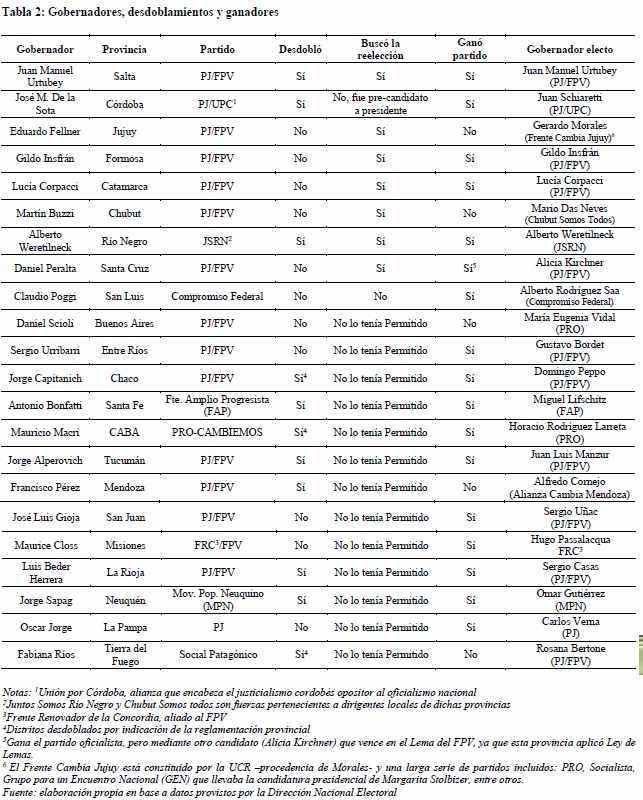
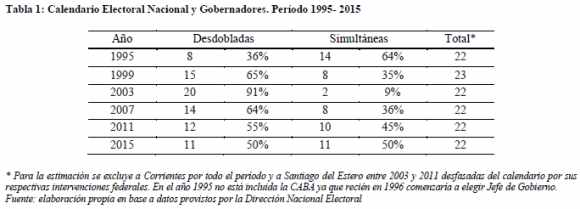
<body><![CDATA[<p class="MsoNormal" style="text-align: justify; text-indent: 35.4pt;"><span style="font-size: 10pt; font-family: Verdana;" lang="ES-TRAD">As&iacute;, los oficialismos provinciales se ven favorecidos maximizando los dispositivos y estructuras provinciales, limitando la injerencia de la competencia pol&iacute;tica nacional. Por otro lado, el desdoblamiento facilita la construcci&oacute;n de alianzas &ldquo;cruzadas&rdquo; o &ldquo;incongruentes&rdquo;, aquellas en las cuales los partidos integrantes de una alianza de un nivel apoyan a candidatos distintos o integran alianzas de diferente composici&oacute;n en otras categor&iacute;as de cargos <a name="_Clerici_2013"></a><a href="#Clerici_Paula._2013">(Clerici 2013)</a>. Esto permite disminuir los costos de incorporar actores a una coalici&oacute;n provincial que seguramente ser&aacute;n opositores en la nacional, o viceversa.</span></p>     <p class="MsoNormal" style="text-align: justify; text-indent: 35.4pt;"><span style="font-size: 10pt; font-family: Verdana;" lang="ES-TRAD">&nbsp; &nbsp; &nbsp; &nbsp; &nbsp; &nbsp; &nbsp; &nbsp; &nbsp; &nbsp; &nbsp; &nbsp; &nbsp; &nbsp; &nbsp; &nbsp; &nbsp; &nbsp; &nbsp; &nbsp; &nbsp; &nbsp; &nbsp; &nbsp; &nbsp; &nbsp; &nbsp; &nbsp; &nbsp; &nbsp; &nbsp; &nbsp; &nbsp; &nbsp; &nbsp; &nbsp; &nbsp; &nbsp; &nbsp; &nbsp; &nbsp; &nbsp; &nbsp; &nbsp; &nbsp; &nbsp; &nbsp; &nbsp; &nbsp; &nbsp; &nbsp; &nbsp; &nbsp; &nbsp; &nbsp; &nbsp; &nbsp; &nbsp; &nbsp;<a name="tabla1"></a></span></p>        <p class="MsoNormal" style="text-align: justify;"><span style="font-size: 10pt; font-family: Verdana;" lang="ES-TRAD">&nbsp; &nbsp; &nbsp; &nbsp; &nbsp; &nbsp; &nbsp; &nbsp; &nbsp; &nbsp; &nbsp; &nbsp; &nbsp; &nbsp; &nbsp; &nbsp; &nbsp; &nbsp; &nbsp; &nbsp; &nbsp; &nbsp; &nbsp; &nbsp; &nbsp; &nbsp; &nbsp; &nbsp; &nbsp; &nbsp; &nbsp; &nbsp; &nbsp; &nbsp; &nbsp; &nbsp; &nbsp; <img style="width: 580px; height: 209px;" alt="" src="/img/revistas/rucp/v25n1/1a07t1.jpg"></span>    <br> </p>     <p class="MsoNormal" style="text-align: justify;"><span style="font-size: 10pt; font-family: Verdana;" lang="ES-TRAD">&nbsp;</span></p>        <p class="MsoNormal" style="text-align: justify; text-indent: 35.4pt;"><span style="font-size: 10pt; font-family: Verdana;" lang="ES-TRAD">En las elecciones de 1983, luego de siete a&ntilde;os de dictadura militar, todas las gobernaciones se eligieron de manera simult&aacute;nea con la elecci&oacute;n presidencial. Luego, dado que los mandatos presidenciales hasta la reforma constitucional de 1994 duraban 6 a&ntilde;os, la elecci&oacute;n presidencial de 1989 no fue concurrente con la de gobernadores, que se eligieron en 1987 y en 1991. S&oacute;lo a partir de 1995, entonces, resulta posible determinar la opci&oacute;n de coordinar los calendarios electorales de gobernadores y presidentes (Tabla 1). Como se puede observar, la evoluci&oacute;n del desdoblamiento electoral es relativamente irregular. La l&iacute;nea de incremento fue notable entre 1995 y 2003, cuando la elecci&oacute;n presidencial fue adelantada dificultando la coincidencia con los calendarios provinciales<a href="#_ftn23" name="_ftnref23" title=""><span class="MsoFootnoteReference"><span class="MsoFootnoteReference"><span style="font-size: 10pt; font-family: Verdana;" lang="ES-TRAD">[20]</span></span></span></a>. A partir de all&iacute; el desdoblamiento se mantuvo estable entre un 50 y 60% de las provincias. </span></p>        <p class="MsoNormal" style="text-align: justify; text-indent: 35.4pt;"><span style="font-size: 10pt; font-family: Verdana;" lang="ES-TRAD">En este marco, 2015 se caracteriz&oacute; por la tard&iacute;a definici&oacute;n de desdoblamiento o simultaneidad de al menos siete provincias que todav&iacute;a en abril no hab&iacute;an definido su calendario electoral. Ello, por supuesto, no es un dato menor, dado que las posibilidades de previsi&oacute;n de las fuerzas opositoras se ven reducidas ante la incertidumbre del <i>timing </i>electoral. La negociaci&oacute;n de los oficialismos provinciales alineados con el gobierno nacional fue, en gran medida, conseguir que el ejecutivo nacional les permitiera desdoblar, en un contexto de divisiones al interior del Peronismo (PJ)/Frente para la Victoria (FPV) y ante un escenario que se vislumbraba por lo menos complejo para el candidato presidencial del gobierno de turno y del que, por tanto, era mejor despegarse. </span></p>        <p class="MsoNormal" style="text-align: justify; text-indent: 35.4pt;"><span style="font-size: 10pt; font-family: Verdana;" lang="ES-TRAD">En el listado de todas las provincias (las 22 que eligieron gobernador) se detalla cu&aacute;les desdoblaron y cu&aacute;les no lo hicieron (Tabla 2), indicando aquellas cuyos ejecutivos se pod&iacute;an reelegir y aquellas con ejecutivos sin posibilidades de reelecci&oacute;n, qui&eacute;nes buscaron la reelecci&oacute;n y, finalmente, el resultado, es decir, si triunf&oacute; el oficialismo o la oposici&oacute;n. </span></p>        <p class="MsoNormal" style="text-align: justify;"><span style="font-size: 10pt; font-family: Verdana;" lang="ES-TRAD">&nbsp;</span></p>     <div align="center"><a name="tabla2"></a>    ]]></body>
<body><![CDATA[<br> <img style="width: 643px; height: 800px;" alt="" src="/img/revistas/rucp/v25n1/1a07t2.jpg">    <br> </div>        <p class="MsoNormal" style="text-align: justify;"><b><span style="font-size: 10pt; font-family: Verdana;" lang="ES-TRAD">&nbsp;</span></b></p> <span style="font-size: 10pt; font-family: Verdana;" lang="ES-TRAD"></span>     <p class="MsoNormal" style="text-align: justify; text-indent: 35.4pt;"><span style="font-size: 10pt; font-family: Verdana;" lang="ES-TRAD">Lo m&aacute;s relevante de esta informaci&oacute;n (Tabla 2) es el hecho de que de los 11 distritos que celebraron elecciones simult&aacute;neas, 10 pertenec&iacute;an al oficialismo nacional. Esto reafirma la capacidad ordenadora de la presidente sobre su propia coalici&oacute;n, as&iacute; como el uso estrat&eacute;gico del desdoblamiento por parte de los gobernadores opositores para resguardarse de la incertidumbre y los costos de la coordinaci&oacute;n alrededor de la disputa presidencial. De estas diez provincias, seis quedaron en manos del FPV (Catamarca, Entre R&iacute;os, Formosa, Misiones, San Juan y Santa Cruz); dos para Cambiemos (Buenos Aires y Jujuy); y tres para el peronismo no kirchnerista (Chubut, La Pampa y San Luis). Otro rasgo relevante es que, como ya se mencion&oacute;, la mayor parte de los gobernadores no estaba en condiciones de buscar su reelecci&oacute;n (Tabla 2). De los 22 distritos que renovaban el poder ejecutivo, s&oacute;lo 9 gobernadores pod&iacute;an presentarse a la reelecci&oacute;n. De &eacute;stos, 7 se presentaron, pero s&oacute;lo 5 la consiguieron. </span></p>        <p class="MsoNormal" style="text-align: justify; text-indent: 35.4pt;"><span style="font-size: 10pt; font-family: Verdana;" lang="ES-TRAD">Finalmente, m&aacute;s dif&iacute;cil es realizar una lectura acerca del &eacute;xito de la estrategia de desdoblamiento. No s&oacute;lo por la dificultad de establecer escenarios contraf&aacute;cticos sino por el bajo grado de alternancia (s&oacute;lo 5 sobre 22). Lo cierto es que el oficialismo nacional perdi&oacute; tres provincias en simult&aacute;neo y una desdoblada, pero tambi&eacute;n que triunf&oacute; en otras siete simult&aacute;neas y cinco desdobladas. Por lo tanto no es posible encontrar un v&iacute;nculo general entre uso del calendario y resultado electoral. Como mostraran <a href="#Calvo_Ernesto_y_Escolar_Marcelo_2005">Calvo y Escolar (2005)</a>, en el contexto de crisis y realineamiento pol&iacute;tico nacional vivido entre 2001 y 2003, el sistema de partidos argentino se territorializ&oacute;, esto es, </span><span style="font-size: 10pt; font-family: Verdana;">el comportamiento de los partidos pol&iacute;ticos y sus votantes se volvi&oacute; m&aacute;s local</span><span style="font-size: 10pt; font-family: Verdana;" lang="ES-TRAD">. De esta manera, una creciente diferenciaci&oacute;n del voto en las distintas provincias (volatilidad inter-provincial), una mayor diferenciaci&oacute;n del voto entre elecciones (volatilidad intra-provincial) y la virtual desaparici&oacute;n del bipartidismo argentino (fragmentaci&oacute;n<a href="#_ftn24" name="_ftnref24" title=""><span class="MsoFootnoteReference"><span class="MsoFootnoteReference"><span style="font-size: 10pt; font-family: Verdana;" lang="ES-TRAD">[21]</span></span></span></a>) en el orden nacional, ten&iacute;an como contracara el fortalecimiento electoral e institucional de las estructuras pol&iacute;ticas provinciales. All&iacute; comenzaban a descansar los nuevos refugios de la estabilidad partidaria argentina.</span></p>        <p class="MsoNormal" style="text-align: justify; text-indent: 35.4pt;"><span style="font-size: 10pt; font-family: Verdana;" lang="ES-TRAD">En efecto, en un contexto de profunda crisis pol&iacute;tica caracterizado por la multiplicaci&oacute;n de candidaturas presidenciales, as&iacute; como una mayor transversalidad y fragmentaci&oacute;n partidaria nacional, la pol&iacute;tica subnacional en las provincias argentinas ha mostrado notables rasgos de continuidad pol&iacute;tica e institucional (<a href="#Calvo_Ernesto_y_Escolar_Marcelo_2005">Calvo y Escolar 2005: 92</a>).</span></p>        <p class="MsoNormal" style="text-align: justify;"><span style="font-size: 10pt; font-family: Verdana;" lang="ES-TRAD">&nbsp;</span></p>        <p class="MsoNormal" style="text-align: justify;"><span style="font-size: 10pt; font-family: Verdana;" lang="ES-TRAD">&nbsp;</span></p>        <p class="MsoNormal" style="text-align: justify;"><b><span style="font-size: 10pt; font-family: Verdana;" lang="ES-TRAD">&nbsp;</span></b></p>        <p class="MsoNormal" style="margin-left: 18pt; text-align: justify; text-indent: -18pt;"><b><span style="font-size: 10pt; font-family: Verdana;" lang="ES-TRAD">4.<span style="font-family: &quot;Times New Roman&quot;; font-style: normal; font-variant: normal; font-weight: normal; font-size: 7pt; line-height: normal; font-size-adjust: none; font-stretch: normal;">&nbsp;&nbsp;&nbsp;&nbsp; </span></span></b><b><span style="font-size: 10pt; font-family: Verdana;" lang="ES-TRAD">Las elecciones subnacionales en Argentina: 1983-2015</span></b></p>        ]]></body>
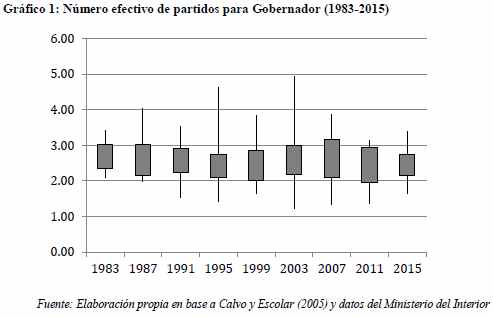
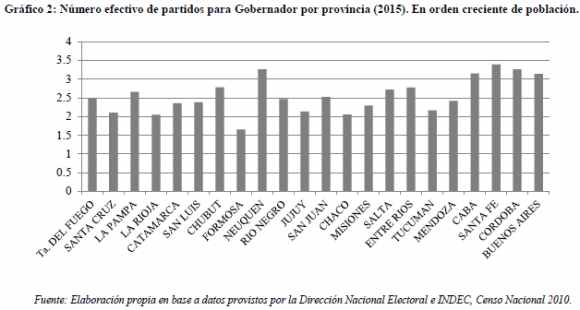
<body><![CDATA[<p class="MsoNormal" style="text-align: justify;"><b><span style="font-size: 10pt; font-family: Verdana;" lang="ES-TRAD">&nbsp;</span></b></p>        <p class="MsoNormal" style="text-align: justify;"><i><span style="font-size: 10pt; font-family: Verdana;" lang="ES-TRAD">Fragmentaci&oacute;n partidaria</span></i></p>        <p class="MsoNormal" style="text-align: justify;"><b><span style="font-size: 10pt; font-family: Verdana;" lang="ES-TRAD">&nbsp;</span></b></p>        <p class="MsoNormal" style="text-align: justify;"><span style="font-size: 10pt; font-family: Verdana;" lang="ES-TRAD">Para analizar la competencia subnacional argentina se presentan algunos de los indicadores tradicionalmente empleados por la Ciencia Pol&iacute;tica para la caracterizaci&oacute;n de los sistemas de partidos, tales como la fragmentaci&oacute;n (<a name="_Duverger_1981"></a><a href="#Duverger_Maurice_1981">Duverger 1981</a>; <a name="_Sartori_2000"></a><a href="#Sartori_Giovanni_2000_1976">Sartori 2000</a>) mediante n&uacute;mero efectivo de partidos (NEP) <a name="_Laakso_y_Taagepera_1979"></a><a href="#Laakso_Markku_y_Taagepera_Rein_1979_">(Laakso y Taagepera 1979)</a>, la competitividad <a name="_Dahl_1966"></a><a href="#Dahl_Robert_1966">(Dahl 1966)</a> y la alternancia en el gobierno <a name="_Mair_2002"></a><a href="#Mair_Peter_2002">(Mair 2002)</a>. A trav&eacute;s de su an&aacute;lisis se dar&aacute; cuenta de la estabilidad de los sistemas pol&iacute;ticos subnacionales, y de la diferenciaci&oacute;n entre distritos y entre niveles.</span></p>        <p class="MsoNormal" style="text-align: justify; text-indent: 35.4pt;"><span style="font-size: 10pt; font-family: Verdana;" lang="ES-TRAD">En t&eacute;rminos generales, una de las principales caracter&iacute;sticas de la pol&iacute;tica subnacional argentina en el per&iacute;odo considerado, refiere a la baja rotaci&oacute;n partidaria en los ejecutivos provinciales, factor que ha dado lugar a una profusa bibliograf&iacute;a acerca de la calidad de la democracia subnacional (<a name="_Gibson_2005"></a><a href="#Gibson_Edward_2005">Gibson 2005</a>; <a name="_Gervasoni_2009"></a><a href="#Gervasoni_Carlos_2009">Gervasoni 2009</a> y <a name="_Gervasoni_2011"></a><a href="#Gervasoni_Carlos_2011">2011</a>; <a name="_Behrend_2011"></a><a href="#Behrend_Jacqueline_2011">Behrend 2011</a>; <a name="_Giraudy_2010"></a><a href="#Giraudy_Agustina._2010">Giraudy 2010</a> y <a name="_Giraudy_2015"></a><a href="#Giraudy_Agustina_2015">2015</a>) evaluada fundamentalmente en t&eacute;rminos de poliarqu&iacute;a <a name="_Dahl_1992"></a><a href="#Dahl_Robert_1992">(Dahl 1992)</a>. </span></p>        <p class="MsoNormal" style="text-align: justify; text-indent: 35.4pt;"><span style="font-size: 10pt; font-family: Verdana;" lang="ES-TRAD">Tomando el per&iacute;odo en su totalidad, la caracter&iacute;stica sobresaliente ha sido la estabilidad: el promedio anual de los NEPs a gobernador ha oscilado entre 2,4 y 2,7 (Gr&aacute;fico 1). Aunque esto no implica que no hayan existido diferencias en la fragmentaci&oacute;n interprovincial o en cada provincia a lo largo del periodo: efectivamente la desviaci&oacute;n est&aacute;ndar muestra la existencia de una moderada variabilidad en ambos aspectos. En 2015, espec&iacute;ficamente, se identifica un peque&ntilde;o aumento de la fragmentaci&oacute;n partidaria. De todos modos, el &iacute;ndice de fragmentaci&oacute;n alcanza un valor apenas por debajo de la media de todo el per&iacute;odo, pues 2011 es precisamente el valor m&aacute;s bajo de la serie. Asimismo, cabe destacar que la fragmentaci&oacute;n provincial promedio en 2015, de 2,57, se encuentra por debajo de la presidencial que alcanza 3,49.</span></p>     <p class="MsoNormal" style="text-align: justify; text-indent: 35.4pt;"><span style="font-size: 10pt; font-family: Verdana;" lang="ES-TRAD">&nbsp; &nbsp; &nbsp; &nbsp; &nbsp; &nbsp; &nbsp; &nbsp; &nbsp; &nbsp; &nbsp; &nbsp; &nbsp; &nbsp; &nbsp; &nbsp; &nbsp; &nbsp; &nbsp; &nbsp; &nbsp; &nbsp; &nbsp; &nbsp; &nbsp; &nbsp; &nbsp; &nbsp; &nbsp; &nbsp; &nbsp; &nbsp; &nbsp; &nbsp; &nbsp; &nbsp; &nbsp; &nbsp; &nbsp; &nbsp; &nbsp; &nbsp; &nbsp; &nbsp; &nbsp; &nbsp; &nbsp; &nbsp; &nbsp; &nbsp; &nbsp; &nbsp; &nbsp; &nbsp; &nbsp; &nbsp; &nbsp; &nbsp; &nbsp;<a name="grafica1"></a></span></p>     <p class="MsoNormal" style="text-align: justify; text-indent: 35.4pt;"><span style="font-size: 10pt; font-family: Verdana;" lang="ES-TRAD">&nbsp; &nbsp; &nbsp; &nbsp; &nbsp; &nbsp; &nbsp; &nbsp; &nbsp; &nbsp; &nbsp; &nbsp; &nbsp; &nbsp; &nbsp; &nbsp; &nbsp; &nbsp; &nbsp; &nbsp; &nbsp; &nbsp; &nbsp; &nbsp; &nbsp; &nbsp; &nbsp; &nbsp; &nbsp; &nbsp; &nbsp; &nbsp; &nbsp; &nbsp; <img style="width: 493px; height: 317px;" alt="" src="/img/revistas/rucp/v25n1/1a07g1.jpg"> </span></p>        <p class="MsoNormal" style="text-align: justify;"><span style="font-size: 10pt; font-family: Verdana;" lang="ES-TRAD">&nbsp;</span></p> <span style="font-size: 10pt; font-family: Verdana;" lang="ES-TRAD"></span>     <p class="MsoNormal" style="text-align: justify; text-indent: 35.4pt;"><span style="font-size: 10pt; font-family: Verdana;" lang="ES-TRAD">En 2015 se confirma cierta tendencia de los distritos centrales y m&aacute;s poblados a una mayor fragmentaci&oacute;n. Como puede verse en el siguiente gr&aacute;fico, tal es el caso de Santa Fe, C&oacute;rdoba, Buenos Aires y CABA (con la excepci&oacute;n de Mendoza que se encuentra en la media), aunque la tendencia no es excluyente de otros casos de menor peso espec&iacute;fico donde tambi&eacute;n se identifica una relativamente alta fragmentaci&oacute;n como Neuqu&eacute;n, Chubut, Entre R&iacute;os y Salta.</span></p>     ]]></body>
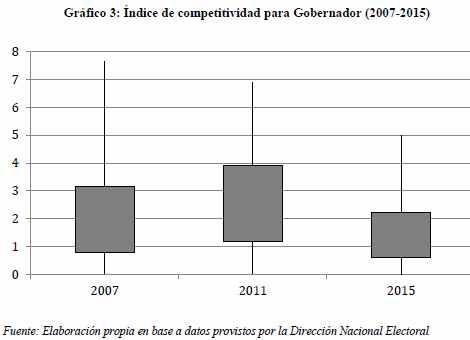
<body><![CDATA[<p class="MsoNormal" style="text-align: justify; text-indent: 35.4pt;"><span style="font-size: 10pt; font-family: Verdana;" lang="ES-TRAD">&nbsp; &nbsp; &nbsp; &nbsp; &nbsp; &nbsp; &nbsp; &nbsp; &nbsp; &nbsp; &nbsp; &nbsp; &nbsp; &nbsp; &nbsp; &nbsp; &nbsp; &nbsp; &nbsp; &nbsp; &nbsp; &nbsp; &nbsp; &nbsp; &nbsp; &nbsp; &nbsp; &nbsp; &nbsp; &nbsp; &nbsp; &nbsp; &nbsp; &nbsp; &nbsp; &nbsp; &nbsp; &nbsp; &nbsp; &nbsp; &nbsp; &nbsp; &nbsp; &nbsp; &nbsp; &nbsp; &nbsp; &nbsp; &nbsp; &nbsp; &nbsp; &nbsp; &nbsp; &nbsp; &nbsp; &nbsp; &nbsp; &nbsp; &nbsp;<a name="grafica2"></a></span></p>     <p class="MsoNormal" style="text-align: justify; text-indent: 35.4pt;"><span style="font-size: 10pt; font-family: Verdana;" lang="ES-TRAD">&nbsp; &nbsp; &nbsp; &nbsp; &nbsp; &nbsp; &nbsp; &nbsp; &nbsp; &nbsp; &nbsp; &nbsp; &nbsp; &nbsp; &nbsp; &nbsp; &nbsp; &nbsp; &nbsp; &nbsp; &nbsp; &nbsp; &nbsp; &nbsp; &nbsp; &nbsp; &nbsp; &nbsp; &nbsp; &nbsp; &nbsp; &nbsp; &nbsp; &nbsp;<img style="width: 580px; height: 310px;" alt="" src="/img/revistas/rucp/v25n1/1a07g2.jpg"> </span></p>        <p class="MsoNormal" style="text-align: justify;"><b><span style="font-size: 10pt; font-family: Verdana;" lang="ES-TRAD">&nbsp;</span></b></p>        <p class="MsoNormal" style="text-align: justify;"><b><span style="font-size: 10pt; font-family: Verdana;" lang="ES-TRAD">&nbsp;</span></b></p>                 <p class="MsoNormal" style="text-align: justify;"><b><span style="font-size: 10pt; font-family: Verdana;" lang="ES-TRAD">&nbsp;</span></b><i><span style="font-size: 10pt; font-family: Verdana;" lang="ES-TRAD"></span></i><i><span style="font-size: 10pt; font-family: Verdana;" lang="ES-TRAD">Competitividad&nbsp; y alternancia</span></i></p>        <p class="MsoNormal" style="text-align: justify; text-indent: 35.4pt;"><span style="font-size: 10pt; font-family: Verdana;" lang="ES-TRAD">&nbsp;</span></p>        <p class="MsoNormal" style="text-align: justify;"><span style="font-size: 10pt; font-family: Verdana;" lang="ES-TRAD">El proceso electoral subnacional de 2015 se caracteriza tambi&eacute;n por un incremento de la competitividad (Gr&aacute;fico 3) expresada en menores m&aacute;rgenes de victoria entre los primeros dos candidatos en la categor&iacute;a de gobernador, lo que posiblemente constituya el rasgo distintivo de esta elecci&oacute;n respecto a los comicios antecedentes. En efecto, la media del &iacute;ndice de competitividad provincial (Gr&aacute;fico 3), medido en base a la distancia entre la primera y segunda f&oacute;rmula a la gobernaci&oacute;n en cada distrito, se redujo alrededor de 11 puntos porcentuales entre 2011 y 2015. A su vez, las elecciones de 2015 contrajeron la variabilidad al interior de la serie (Gr&aacute;fico 3), esto es, los valores de competitividad resultan similares a lo largo de la mayor parte de las provincias.</span></p>        <p class="MsoNormal" style="text-align: justify;"><span style="font-size: 10pt; font-family: Verdana;" lang="ES-TRAD">&nbsp;</span></p>        <p class="MsoNormal" style="text-align: center;" align="center"><b><span style="font-size: 10pt; font-family: Verdana;" lang="ES-TRAD"><a name="grafico3"></a></span></b></p>     <p class="MsoNormal" style="text-align: center;" align="center"><b><span style="font-size: 10pt; font-family: Verdana;" lang="ES-TRAD"><img style="width: 470px; height: 340px;" alt="" src="/img/revistas/rucp/v25n1/1a07g3.jpg">    ]]></body>
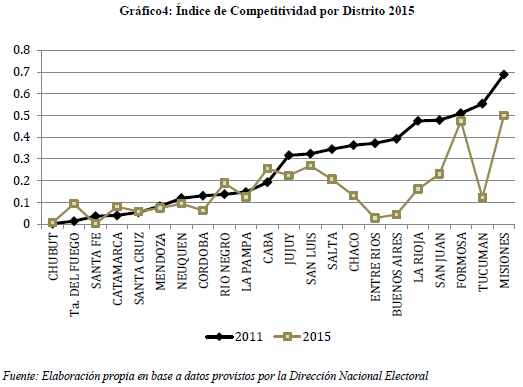
<body><![CDATA[<br> </span></b></p>        <p class="MsoNormal" style="text-align: justify;"><b><span style="font-size: 10pt; font-family: Verdana;" lang="ES-TRAD">&nbsp;</span></b></p> <b><span style="font-size: 10pt; font-family: Verdana;" lang="ES-TRAD"></span></b>     <p class="MsoNormal" style="text-align: justify;"><i><span style="font-size: 10pt; font-family: Verdana;" lang="ES-TRAD">&nbsp;&nbsp;&nbsp;&nbsp;&nbsp;&nbsp;&nbsp;&nbsp;&nbsp;&nbsp;&nbsp;&nbsp;&nbsp;&nbsp;&nbsp;&nbsp;&nbsp;&nbsp;&nbsp;&nbsp;&nbsp;&nbsp;&nbsp;&nbsp;&nbsp;&nbsp;&nbsp;&nbsp;&nbsp; </span></i></p>        <p class="MsoNormal" style="text-align: justify; text-indent: 35.4pt;"><span style="font-size: 10pt; font-family: Verdana;" lang="ES-TRAD">Solo seis provincias (CABA, Catamarca, Chubut, R&iacute;o Negro, Santa Cruz y Tierra del Fuego) incrementaron el margen de victoria, aunque dos de ellas (CABA y Tierra del Fuego) contemplan balotaje<a href="#_ftn25" name="_ftnref25" title=""><span class="MsoFootnoteReference"><span class="MsoFootnoteReference"><span style="font-size: 10pt; font-family: Verdana;" lang="ES-TRAD">[22]</span></span></span></a> y culminaron con resultados m&aacute;s re&ntilde;idos que en la primera vuelta. Al respecto, se destaca la reducci&oacute;n de la distancia en m&aacute;s de 20 puntos en Misiones, Chaco, San Juan y por m&aacute;s de 30 en La Rioja, Entre R&iacute;os, Buenos Aires y Tucum&aacute;n, lo cual demuestra un importante aumento de la competitividad provincial. Las razones de dicho ajuste de las distancias var&iacute;an entre provincias, pero se puede hipotetizar que tales ajustes se explican por la mayor competitividad de la carrera presidencial, que tuvo un efecto contagio sobre el orden provincial y por la ya mencionada imposibilidad de reelecci&oacute;n de gran parte de los gobernadores. De esta manera, la mayor parte de los distritos subnacionales han tenido elecciones competitivas para gobernador (Gr&aacute;fico 4). </span></p>        <p class="MsoNormal" style="text-align: justify; text-indent: 35.4pt;"><span style="font-size: 10pt; font-family: Verdana;" lang="ES-TRAD">&nbsp;</span></p>        <p class="MsoNormal" style="text-align: center;" align="center"><b><span style="font-size: 10pt; font-family: Verdana;" lang="ES-TRAD"><a name="grafico4"></a>    <br> </span></b></p>        <p class="MsoNormal" style="text-align: justify;"><span style="font-size: 10pt; font-family: Verdana;" lang="ES-TRAD">&nbsp;</span></p>        <p class="MsoNormal" style="text-align: center;" align="center"><span style="font-size: 10pt; font-family: Verdana;"><img style="width: 523px; height: 387px;" alt="" src="/img/revistas/rucp/v25n1/1a07g4.jpg">    <br> </span></p>        ]]></body>
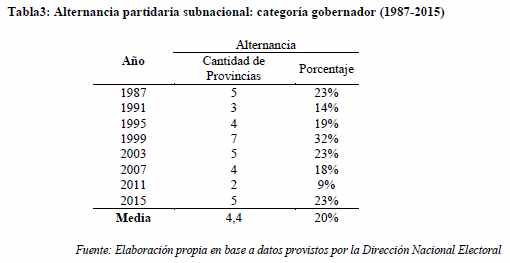
<body><![CDATA[<p class="MsoNormal" style="text-align: justify;"><i><span style="font-size: 10pt; font-family: Verdana;" lang="ES-TRAD">&nbsp;&nbsp;&nbsp;&nbsp;&nbsp;&nbsp;&nbsp;&nbsp;&nbsp;&nbsp;&nbsp;&nbsp;&nbsp;&nbsp;&nbsp;&nbsp;&nbsp;&nbsp;&nbsp;&nbsp;&nbsp; </span></i></p>           <p class="MsoNormal" style="text-align: justify;"><i><span style="font-size: 10pt; font-family: Verdana;" lang="ES-TRAD">&nbsp;&nbsp;&nbsp;&nbsp;&nbsp;&nbsp;&nbsp;&nbsp;&nbsp;&nbsp;&nbsp;&nbsp;&nbsp;&nbsp;&nbsp;&nbsp;&nbsp;&nbsp;&nbsp;&nbsp;&nbsp;&nbsp; &nbsp;&nbsp;&nbsp; </span></i><span style="font-size: 10pt; font-family: Verdana;" lang="ES-TRAD">&nbsp;</span></p>        <p class="MsoNormal" style="text-align: justify; text-indent: 35.4pt;"><span style="font-size: 10pt; font-family: Verdana;" lang="ES-TRAD">Finalmente, cabe revisar la alternancia subnacional. En general la media de alternancia partidaria para el per&iacute;odo en las gobernaciones provinciales ha sido de 20%, con un m&aacute;ximo de 32% en 1999 (Tabla 3), coincidente con el cambio en la presidencia del PJ (Menemismo) a la Alianza del FREPASO<a href="#_ftn26" name="_ftnref26" title=""><span class="MsoFootnoteReference"><span class="MsoFootnoteReference"><span style="font-size: 10pt; font-family: Verdana;" lang="ES-TRAD">[23]</span></span></span></a> y la UCR. El m&iacute;nimo de 9% se alcanz&oacute; en 2011, coincidente con la reelecci&oacute;n de Cristina Kirchner por un porcentaje hist&oacute;rico de votos superior al 54%.</span></p>        <p class="MsoNormal" style="text-align: justify; text-indent: 35.4pt;"><span style="font-size: 10pt; font-family: Verdana;" lang="ES-TRAD">La renovaci&oacute;n de 2015 s&iacute; fue cualitativamente distinta a la de a&ntilde;os anteriores, dado que la alternancia provincial estuvo vinculada con una mayor competitividad en la mayor&iacute;a de los distritos y a los resultados en dos distritos con efectos importantes sobre la pol&iacute;tica nacional: las novedosas alternancias en las provincias de Buenos Aires y Jujuy, y el recambio en el ejecutivo nacional luego de 12 a&ntilde;os.</span></p>     <p class="MsoNormal" style="text-align: justify; text-indent: 35.4pt;"><span style="font-size: 10pt; font-family: Verdana;" lang="ES-TRAD">&nbsp; &nbsp; &nbsp; &nbsp; &nbsp; &nbsp; &nbsp; &nbsp; &nbsp; &nbsp; &nbsp; &nbsp; &nbsp; &nbsp; &nbsp; &nbsp; &nbsp; &nbsp; &nbsp; &nbsp; &nbsp; &nbsp; &nbsp; &nbsp; &nbsp; &nbsp; &nbsp; &nbsp; &nbsp; &nbsp; &nbsp; &nbsp; &nbsp; &nbsp; &nbsp; &nbsp; &nbsp; &nbsp; &nbsp; &nbsp; &nbsp; &nbsp; &nbsp; &nbsp; &nbsp; &nbsp; &nbsp; &nbsp; &nbsp; &nbsp; &nbsp; &nbsp; &nbsp; &nbsp; &nbsp; &nbsp; &nbsp; &nbsp; <a name="tabla3"></a></span></p>     <p class="MsoNormal" style="text-align: justify; text-indent: 35.4pt;"><span style="font-size: 10pt; font-family: Verdana;" lang="ES-TRAD">&nbsp; &nbsp; &nbsp; &nbsp; &nbsp; &nbsp; &nbsp; &nbsp; &nbsp; &nbsp; &nbsp; &nbsp; &nbsp; &nbsp; &nbsp; &nbsp; &nbsp; &nbsp; &nbsp; &nbsp; &nbsp; &nbsp; &nbsp; &nbsp; &nbsp; &nbsp; &nbsp; &nbsp; &nbsp; &nbsp; &nbsp; &nbsp; &nbsp; &nbsp;<img style="width: 510px; height: 263px;" alt="" src="/img/revistas/rucp/v25n1/1a07t3.jpg"></span></p>        <p class="MsoNormal" style="text-align: justify; text-indent: 35.4pt;"><span style="font-size: 10pt; font-family: Verdana;" lang="ES-TRAD">&nbsp;</span></p>        <p class="MsoNormal" style="text-align: justify; text-indent: 35.4pt;"><span style="font-size: 10pt; font-family: Verdana;" lang="ES-TRAD">&nbsp;</span></p>              <p class="MsoNormal" style="text-align: justify;"><span style="font-size: 10pt; font-family: Verdana;" lang="ES-TRAD">&nbsp;    <br> </span></p>     ]]></body>
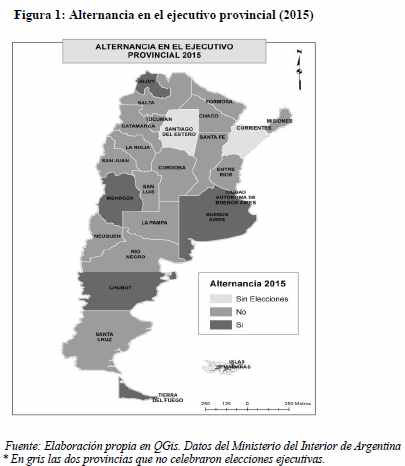
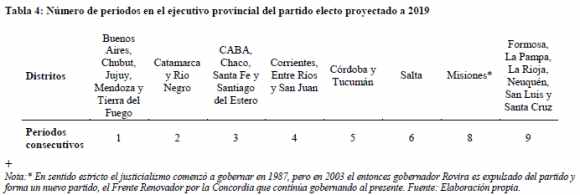
<body><![CDATA[<p class="MsoNormal" style="text-align: justify;"><span style="font-size: 10pt; font-family: Verdana;" lang="ES-TRAD"></span></p>        <p class="MsoNormal" style="text-align: justify;"><span style="font-size: 10pt; font-family: Verdana;" lang="ES-TRAD"></span></p>        <p class="MsoNormal" style="text-align: center;" align="center"><b><span style="font-size: 10pt; font-family: Verdana;" lang="ES-TRAD"><a name="figura1"></a>    <br> </span></b></p>        <p class="MsoNormal" style="text-align: justify;"><b><span style="font-size: 10pt; font-family: Verdana;" lang="ES-TRAD">&nbsp;</span></b></p>        <p class="MsoNormal" style="text-align: center;" align="center"><b><span style="font-size: 10pt; font-family: Verdana;"><img style="width: 405px; height: 466px;" alt="" src="/img/revistas/rucp/v25n1/1a07f1.jpg">    <br> </span></b></p>        <p class="MsoNormal" style="text-align: justify;"><b><span style="font-size: 10pt; font-family: Verdana;" lang="ES-TRAD">&nbsp;</span></b></p>        <p class="MsoNormal" style="text-align: justify;"><i><span style="font-size: 10pt; font-family: Verdana;" lang="ES-TRAD">&nbsp;&nbsp;&nbsp;&nbsp;&nbsp;&nbsp;&nbsp;&nbsp;&nbsp;&nbsp;&nbsp;&nbsp;&nbsp;&nbsp;&nbsp;&nbsp;&nbsp; &nbsp;&nbsp;&nbsp;&nbsp;&nbsp;&nbsp;&nbsp;&nbsp;&nbsp;&nbsp;&nbsp;&nbsp;&nbsp;&nbsp;&nbsp;&nbsp;&nbsp;&nbsp;&nbsp;&nbsp;&nbsp;&nbsp;&nbsp;&nbsp;&nbsp;&nbsp;&nbsp;&nbsp;&nbsp;&nbsp;&nbsp;&nbsp;&nbsp;&nbsp;&nbsp;&nbsp;&nbsp;&nbsp;&nbsp;&nbsp;&nbsp;&nbsp;&nbsp;</span></i></p> <span style="font-size: 10pt; font-family: Verdana;" lang="ES-TRAD">Los resultados electorales para las gobernaciones en 2015 (y 2013 para los casos de Santiago del Estero y Corrientes) implican que seis provincias no han cambiado de partido pol&iacute;tico en el gobierno desde 1983, otras siete no recambian al menos desde 2003 y las restantes seis tendr&aacute;n un gobierno de entre ocho y doce a&ntilde;os del mismo color. En otras palabras, m&aacute;s de la mitad de las provincias argentinas llegar&iacute;an a 2019 con un partido de gobierno con m&aacute;s de 16 a&ntilde;os en el poder (Tabla 4).    <br> &nbsp; &nbsp; &nbsp; &nbsp; &nbsp; &nbsp; &nbsp; &nbsp; &nbsp; &nbsp; &nbsp; &nbsp; &nbsp; &nbsp; &nbsp; &nbsp; &nbsp; &nbsp; &nbsp; &nbsp; &nbsp; &nbsp; &nbsp; &nbsp; &nbsp; &nbsp; &nbsp; &nbsp; &nbsp; &nbsp; &nbsp; &nbsp; &nbsp; &nbsp; &nbsp; &nbsp; &nbsp; &nbsp; &nbsp; &nbsp; &nbsp; &nbsp; &nbsp; &nbsp; &nbsp; &nbsp; &nbsp; &nbsp; &nbsp; &nbsp; &nbsp; &nbsp; &nbsp; &nbsp; &nbsp; &nbsp; &nbsp; &nbsp; &nbsp; &nbsp; &nbsp; &nbsp; &nbsp; <a name="tabla4"></a>    ]]></body>
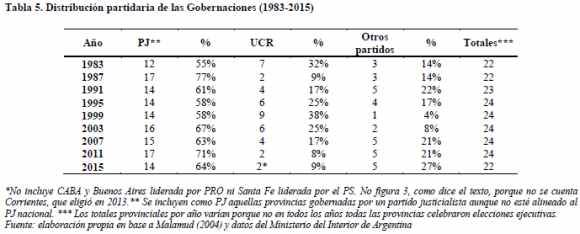
<body><![CDATA[<br> &nbsp; &nbsp; &nbsp; &nbsp; &nbsp; &nbsp; &nbsp; &nbsp; &nbsp; &nbsp; &nbsp; &nbsp; &nbsp; &nbsp; &nbsp; &nbsp; &nbsp; &nbsp; &nbsp; &nbsp; &nbsp; &nbsp; &nbsp; &nbsp; &nbsp; &nbsp; &nbsp; &nbsp; &nbsp; &nbsp; &nbsp; &nbsp; &nbsp; &nbsp; &nbsp; &nbsp; &nbsp; &nbsp; &nbsp;<img style="width: 580px; height: 195px;" alt="" src="/img/revistas/rucp/v25n1/1a07t4.jpg"></span>       <p class="MsoNormal" style="text-align: justify;"><span style="font-size: 10pt; font-family: Verdana;" lang="ES-TRAD">&nbsp;</span></p>        <p class="MsoNormal" style="text-align: justify;"><b><span style="font-size: 10pt; font-family: Verdana;" lang="ES-TRAD">&nbsp;</span></b></p>     <p class="MsoNormal" style="text-align: justify; text-indent: 35.4pt;"><span style="font-size: 10pt; font-family: Verdana;" lang="ES-TRAD"></span></p>        <p class="MsoNormal" style="text-align: justify; text-indent: 35.4pt;"><span style="font-size: 10pt; font-family: Verdana;" lang="ES-TRAD">Con relaci&oacute;n a la distribuci&oacute;n partidaria de las gobernaciones, se observa la preeminencia del PJ (PJ/FPV a partir de 2003). En este marco, es posible dar cuenta de la estabilidad y hasta de cierto crecimiento del peronismo en los ejecutivos provinciales durante la d&eacute;cada de 2000. Paralelamente un sostenido retroceso de la UCR &mdash;con una breve recuperaci&oacute;n en 1999&mdash; hasta 2011, a&ntilde;o en que s&oacute;lo conservaba dos gobernaciones, una de las cuales, Santiago del Estero, en manos del Frente C&iacute;vico por Santiago<a href="#_ftn27" name="_ftnref27" title=""><span class="MsoFootnoteReference"><span class="MsoFootnoteReference"><span style="font-size: 10pt; font-family: Verdana;" lang="ES-TRAD">[24]</span></span></span></a>, se encontraba alineada con el gobierno nacional. En 2015, la UCR conseguir&iacute;a revertir parcialmente la situaci&oacute;n, pasando a integrar el frente Cambiemos<a href="#_ftn28" name="_ftnref28" title=""><span class="MsoFootnoteReference"><span class="MsoFootnoteReference"><span style="font-size: 10pt; font-family: Verdana;" lang="ES-TRAD">[25]</span></span></span></a>. No obstante, y por esto &uacute;ltimo, s&oacute;lo tres provincias tienen gobiernos de impronta m&aacute;s puramente radical: Corrientes (que eligi&oacute; en 2013), Jujuy y Mendoza. Hoy Cambiemos cuenta con cinco ejecutivos distritales, incluidas las estrat&eacute;gicas Buenos Aires y CABA.</span></p>        <p class="MsoNormal" style="text-align: justify;"><span style="font-size: 10pt; font-family: Verdana;" lang="ES-TRAD">&nbsp;</span></p> <span style="font-family: Verdana;"><span style="font-style: italic;"> &nbsp; &nbsp; &nbsp; &nbsp; &nbsp; &nbsp; &nbsp; &nbsp; &nbsp; &nbsp; &nbsp; &nbsp; &nbsp; &nbsp; &nbsp; &nbsp; &nbsp; &nbsp; &nbsp; &nbsp; &nbsp; &nbsp; &nbsp; &nbsp; &nbsp; &nbsp; &nbsp; &nbsp; &nbsp; &nbsp; &nbsp; &nbsp; &nbsp; &nbsp; &nbsp; &nbsp; &nbsp; &nbsp; &nbsp; &nbsp; &nbsp; &nbsp; &nbsp; &nbsp; &nbsp; &nbsp; &nbsp; &nbsp; &nbsp; &nbsp; &nbsp; &nbsp; &nbsp; <a name="tabla5"></a>    <br> &nbsp; &nbsp; &nbsp; &nbsp; &nbsp; &nbsp; &nbsp; &nbsp; &nbsp; &nbsp; &nbsp; &nbsp; &nbsp; &nbsp; &nbsp; &nbsp; &nbsp; &nbsp; &nbsp; &nbsp; &nbsp; &nbsp; &nbsp; &nbsp; &nbsp; &nbsp; &nbsp; &nbsp; &nbsp; &nbsp; &nbsp; &nbsp; <img style="width: 580px; height: 234px;" alt="" src="/img/revistas/rucp/v25n1/1a07t5.jpg">    <br> </span></span>     <p class="MsoNormal" style="text-align: justify;"><i><span style="font-size: 10pt; font-family: Verdana;" lang="ES-TRAD">&nbsp;</span></i></p>        <p class="MsoNormal" style="text-align: justify;"><i><span style="font-size: 10pt; font-family: Verdana;" lang="ES-TRAD">&nbsp;</span></i></p>        ]]></body>
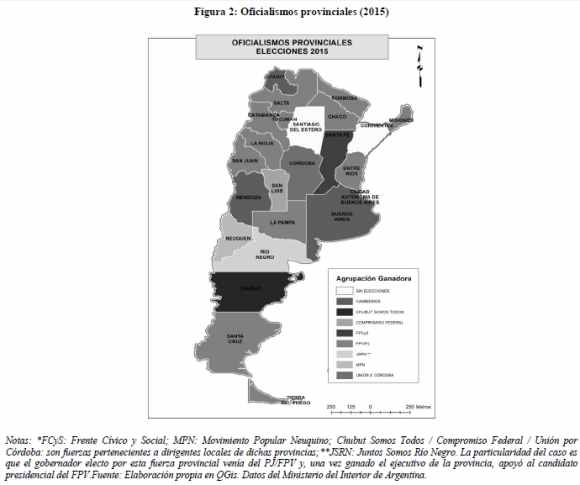
<body><![CDATA[<p class="MsoNormal" style="text-align: justify; text-indent: 35.4pt;"><span style="font-size: 10pt; font-family: Verdana;" lang="ES-TRAD">Finalmente, resulta conveniente realizar un breve balance sobre lo acontecido a nivel municipal. Si se toman los 130 municipios que superaban los 48.000 habitantes en el censo de 2010, de los 125 que celebraron elecciones durante 2015, en 56 (44,8%) hubo reelecci&oacute;n del intendente y en otras 28 (22,45%) reelecci&oacute;n del partido en el gobierno. Es decir, un total de 67,2% triunfos del <i>incumbent </i>o del partido oficialista. </span></p>        <p class="MsoNormal" style="text-align: justify;"><span style="font-size: 10pt; font-family: Verdana;" lang="ES-TRAD">&nbsp;</span></p>        <p class="MsoNormal" style="text-align: center;" align="center"><b><span style="font-size: 10pt; font-family: Verdana;" lang="ES-TRAD"><a name="figura2"></a>    <br> </span></b></p>        <p class="MsoNormal" style="text-align: center;" align="center"><span style="font-size: 10pt; font-family: Verdana;" lang="ES-TRAD">    <br>   </span><span style="font-size: 10pt; font-family: Verdana;"><img style="width: 580px; height: 485px;" alt="" src="/img/revistas/rucp/v25n1/1a07f2.jpg">    <br> </span></p>        <p class="MsoNormal" style="text-align: justify;"><i><span style="font-size: 10pt; font-family: Verdana;" lang="ES-TRAD">&nbsp;</span></i></p> <span style="font-size: 10pt; font-family: Verdana;" lang="ES-TRAD"></span>     <p class="MsoNormal" style="text-align: justify; text-indent: 35.4pt;"><span style="font-size: 10pt; font-family: Verdana;" lang="ES-TRAD">El recambio fue desfavorable para el FPV: en 2016 esta fuerza pas&oacute; a gobernar 66 de las 130 intendencias m&aacute;s populosas &mdash;5 de ellas no renovaron autoridades municipales durante 2015&mdash; contra las 84 que conduc&iacute;a a mayo de 2015. Tambi&eacute;n el Frente Renovador vio mermado su poder, pasando de gobernar 17 intendencias (fundamentalmente de la provincia de Buenos Aires) a 7. En cambio, los socios principales de Cambiemos incrementaron su poder local: PRO pas&oacute; de gobernar 4 a 20 municipios, mientras que la UCR<a href="#_ftn29" name="_ftnref29" title=""><span class="MsoFootnoteReference"><span class="MsoFootnoteReference"><span style="font-size: 10pt; font-family: Verdana;" lang="ES-TRAD">[26]</span></span></span></a>pas&oacute; de 19 a 27. Por otro lado, a pesar de que el FPV contin&uacute;a gobernando la mayor parte de los municipios en cuesti&oacute;n, si se concentra la mirada s&oacute;lo en los que cuentan con m&aacute;s de 250.000 habitantes (municipios grandes), el FPV y Cambiemos se reparten gobiernos de modo casi equitativo: 16 para el primero y 15 para el segundo. </span></p>        <p class="MsoNormal" style="text-align: justify; text-indent: 35.4pt;"><span style="font-size: 10pt; font-family: Verdana;" lang="ES-TRAD">En s&iacute;ntesis se ha dado cuenta de la estabilidad pol&iacute;tica a nivel subnacional, con baja alternancia partidaria y menor fragmentaci&oacute;n en comparaci&oacute;n con el orden nacional. Algo similar ocurre en el nivel municipal, a&uacute;n en un a&ntilde;o de recambio presidencial. Finalmente, en 2015 se destaca un leve incremento de la fragmentaci&oacute;n a nivel de la competencia por las gobernaciones, pero especialmente un incremento de la competitividad partidaria, probablemente por efecto del crecimiento de una opci&oacute;n pol&iacute;tica presidencial no peronista.</span></p>        ]]></body>
<body><![CDATA[<p class="MsoNormal" style="text-align: justify; text-indent: 35.4pt;"><span style="font-size: 10pt; font-family: Verdana;" lang="ES-TRAD">&nbsp;</span></p>        <p class="MsoNormal" style="margin-left: 18pt; text-align: justify; text-indent: -18pt;"><b><span style="font-size: 10pt; font-family: Verdana;" lang="ES-CL">5.<span style="font-family: &quot;Times New Roman&quot;; font-style: normal; font-variant: normal; font-weight: normal; font-size: 7pt; line-height: normal; font-size-adjust: none; font-stretch: normal;">&nbsp;&nbsp;&nbsp;&nbsp; </span></span></b><b><span style="font-size: 10pt; font-family: Verdana;" lang="ES-TRAD">Los hitos del proceso electoral de 2015</span></b><b><span style="font-size: 10pt; font-family: Verdana;" lang="ES-CL"> </span></b></p>        <p class="MsoNormal" style="text-align: justify;"><span style="font-size: 10pt; font-family: Verdana;" lang="ES-TRAD">&nbsp;</span></p>        <p class="MsoNormal" style="text-align: justify;"><span style="font-size: 10pt; font-family: Verdana;" lang="ES-TRAD">Consecuencia del desdoblamiento de elecciones provinciales y municipales con respecto al calendario nacional 2015 fue el a&ntilde;o electoral m&aacute;s largo en la reciente historia del pa</span><span style="font-size: 10pt; font-family: Verdana;" lang="CS">&iacute;s</span><span style="font-size: 10pt; font-family: Verdana;" lang="ES-TRAD">. As&iacute;, el proceso electoral de 2015 entra en la historia de las elecciones apote&oacute;ticas de la &ldquo;segmentaci&oacute;n estrat&eacute;gica&rdquo; <a href="#Escolar_Marcelo_2014">(Escolar 2014)</a>, junto a 2007 y 2011. Pero si bien en las dos elecciones anteriores hubo un mayor desdoblamiento efectivo, al proceso electoral reciente deben sumarse tanto los numerosos desdoblamientos municipales (municipios de distintas provincias que optaron por desdoblar sus elecciones tanto del calendario nacional como provincial), como las primarias nacionales y provinciales cuando correspondiera y, por &uacute;ltimo, las segundas vueltas.</span></p>        <p class="MsoNormal" style="text-align: justify; text-indent: 35.4pt;"><span style="font-size: 10pt; font-family: Verdana;" lang="ES-TRAD">Como se afirm&oacute; anteriormente, las elecciones subnacionales de 2015 fueron interpretadas en su capacidad para anticipar lo que suceder&iacute;a en la elecci&oacute;n presidencial, esto es, en qu&eacute; medida la suerte de las alianzas y candidatos provinciales pod&iacute;a incidir en el destino de los candidatos presidenciales. De all&iacute; que las alianzas electorales a nivel subnacional ocuparan gran parte de las energ&iacute;as de los candidatos presidenciales. Como corolario la UCR, que como ya se indic&oacute; contaba con poder territorial pero no con candidato presidencial, fue el principal eje de estas negociaciones. El presidente del partido debi&oacute; &nbsp;primero ceder autonom&iacute;a a los dirigentes provinciales concediendo libertad de alianza a nivel subnacional, para luego enhebrar la alianza nacional de centro-derecha CAMBIEMOS junto al PRO, abandonando la experiencia del Frente Amplio UNEN de perfil m&aacute;s progresista<a href="#_ftn30" name="_ftnref30" title=""><span class="MsoFootnoteReference"><span class="MsoFootnoteReference"><span style="font-size: 10pt; font-family: Verdana;" lang="ES-TRAD">[27]</span></span></span></a>. Esta estrategia permiti&oacute; que los candidatos a gobernador del radicalismo conformaran amplios frentes electorales que incluyeran incluso al Frente Renovador y el GEN &mdash;como fue el caso de Gerardo Morales en Jujuy&mdash; ausentes en la alianza nacional. Por otra parte, aquellos gobernadores del peronismo disidente o sin clara referencia nacional trabajaron por &ldquo;provincializar&rdquo; la elecci&oacute;n. Mayormente optaron por desdoblar la elecci&oacute;n y fortalecer un discurso orientado a tem&aacute;ticas locales. En lo que sigue se hace menci&oacute;n a una serie de hitos que marcar&iacute;an el calendario electoral de 2015. </span></p>        <p class="MsoNormal" style="text-align: justify; text-indent: 35.4pt;"><span style="font-size: 10pt; font-family: Verdana;" lang="ES-TRAD">En primer lugar, entre abril y julio, esto es, antes de que se celebraran las Primarias (PASO) nacionales de &nbsp;agosto, 11 provincias hab&iacute;an ya definido su nuevo gobierno. Entre ellos, los m&aacute;s importantes distritos despu&eacute;s de la provincia de Buenos Aires: Mendoza, Santa Fe, C&oacute;rdoba, y la Ciudad de Buenos Aires. En todas ellas, el gobierno provincial quedaba en manos de fuerzas opositoras al ejecutivo nacional habiendo alternancia s&oacute;lo en Mendoza, y el FPV se posicionaba en tercer o cuarto lugar, con la sola excepci&oacute;n de Mendoza donde consegu&iacute;a ubicarse en segundo lugar. </span></p>        <p class="MsoNormal" style="text-align: justify; text-indent: 35.4pt;"><span style="font-size: 10pt; font-family: Verdana;" lang="ES-TRAD">En segundo lugar, el a&ntilde;o estuvo marcado por la celebraci&oacute;n de las PASO nacionales que definir&iacute;a a los principales competidores a la carrera presidencial, momento en que seis provincias (Buenos Aires, Catamarca, Chubut, Entre R&iacute;os, San Juan y San Luis) celebrar&iacute;an sus PASO provinciales de forma concurrente. Las PASO nacionales y la de Buenos Aires volver&iacute;an a dar se&ntilde;ales de alarma para un oficialismo que parec&iacute;a subestimar las posibilidades de una victoria opositora.</span></p>        <p class="MsoNormal" style="text-align: justify; text-indent: 35.4pt;"><span style="font-size: 10pt; font-family: Verdana;" lang="ES-TRAD">&nbsp;Quince d&iacute;as despu&eacute;s, desacostumbrados a ser testigos de graves delitos electorales, los argentinos y su clase dirigente se consternaban ante la violencia, la quema y el relleno de urnas que afectara (aunque marginalmente) a las elecciones de la provincia de Tucum&aacute;n gobernada por el kirchnerismo. Lo ocurrido en Tucum&aacute;n no tardar&iacute;a en afectar la suerte del oficialismo nacional. Mientras que en las PASO presidenciales el FPV obtuvo un 57% de los votos en dicha provincia, dos meses despu&eacute;s, en la primera vuelta de las elecciones generales, su apoyo se ver&iacute;a reducido al 48%. Si bien no podemos afirmar que los hechos de la elecci&oacute;n tucumana hayan sido los responsables directos de tal ca&iacute;da en la performance del oficialismo en la provincia, es muy probable que lo hayan afectado negativamente, dado que sobre &eacute;ste recay&oacute; la mayor responsabilidad de lo ocurrido y los efectos de informaci&oacute;n sobre el electorado no pueden ser desde&ntilde;ados.</span></p>        <p class="MsoNormal" style="text-align: justify; text-indent: 35.4pt;"><span style="font-size: 10pt; font-family: Verdana;" lang="ES-TRAD">En tercer lugar, dos grandes hitos subnacionales marcaron el proceso electoral de 2015. El primero, la p&eacute;rdida de la gobernaci&oacute;n de la provincia de Buenos Aires por parte del PJ/FPV de manos del PRO (Cambiemos). El peronismo kirchnerista perd&iacute;a entonces no s&oacute;lo la gobernaci&oacute;n de la provincia &mdash;37% del electorado nacional&mdash; sino 39 de las 95 intendencias municipales que gobernaba<a href="#_ftn31" name="_ftnref31" title=""><span class="MsoFootnoteReference"><span class="MsoFootnoteReference"><span style="font-size: 10pt; font-family: Verdana;" lang="ES-TRAD">[28]</span></span></span></a>. Adicionalmente se produjo el triunfo de Cambiemos (Gerardo Morales) en la provincia de Jujuy, hasta ese momento gobernada de modo ininterrumpido por el PJ. &nbsp;El segundo hito provincial surgir&iacute;a del balotaje<i> </i>presidencial: la victoria de Macri sobre Scioli (678.774 votos de diferencia) no se explica sin la zona n&uacute;cleo y, particularmente, sin la provincia de C&oacute;rdoba. Esta provincia, que constituye el segundo distrito m&aacute;s grande del pa&iacute;s, result&oacute; decisiva en la definici&oacute;n de la elecci&oacute;n nacional a tal punto que si no se la considerara en el escrutinio, la presidencia habr&iacute;a quedado en manos de Scioli.</span></p>        <p class="MsoNormal" style="text-align: justify;"><b><span style="font-size: 10pt; font-family: Verdana;" lang="ES-TRAD">&nbsp;</span></b></p>        ]]></body>
<body><![CDATA[<p class="MsoNormal" style="margin-left: 18pt; text-align: justify; text-indent: -18pt;"><b><span style="font-size: 10pt; font-family: Verdana;" lang="ES-CL">6.<span style="font-family: &quot;Times New Roman&quot;; font-style: normal; font-variant: normal; font-weight: normal; font-size: 7pt; line-height: normal; font-size-adjust: none; font-stretch: normal;">&nbsp;&nbsp;&nbsp;&nbsp; </span></span></b><b><span style="font-size: 10pt; font-family: Verdana;" lang="ES-TRAD">El &ldquo;Cordobazo&rdquo; de 2015 y la hipn&oacute;tica zona n&uacute;cleo</span></b><b><span style="font-size: 10pt; font-family: Verdana;" lang="ES-CL"> </span></b></p>        <p class="MsoNormal" style="text-align: justify;"><b><span style="font-size: 10pt; font-family: Verdana;" lang="ES-CL">&nbsp;</span></b></p>        <p class="MsoNormal" style="text-align: justify;"><span style="font-size: 10pt; font-family: Verdana;" lang="ES-TRAD">El 14 de septiembre en las elecciones municipales<a href="#_ftn32" name="_ftnref32" title=""><span class="MsoFootnoteReference"><span class="MsoFootnoteReference"><span style="font-size: 10pt; font-family: Verdana;" lang="ES-TRAD">[29]</span></span></span></a> de la capital de C&oacute;rdoba, desdobladas de las provinciales, el hijo de un hist&oacute;rico dirigente radical, Ram&oacute;n Mestre, gan&oacute; la reelecci&oacute;n en la intendencia. La provincia de C&oacute;rdoba, en su calidad de segundo distrito electoral en peso demogr&aacute;fico del pa&iacute;s, estaba gestando, para Cambiemos, </span><span style="font-size: 10pt; font-family: Verdana;">el resultado m&aacute;s alto que haya alcanzado un candidato presidencial en esa provincia desde el retorno de la democracia en 1983.</span></p>        <p class="MsoNormal" style="text-align: justify; text-indent: 35.4pt;"><span style="font-size: 10pt; font-family: Verdana;" lang="ES-TRAD">Pero que </span><span style="font-size: 10pt; font-family: Verdana;">Cambiemos se alzara con el 72% de los votos en el balotaje &mdash;75% en la ciudad Capital&mdash; tal vez no deba sorprender. En la</span><span style="font-size: 10pt; font-family: Verdana;" lang="ES-TRAD"> principal regi&oacute;n agroproductiva del pa&iacute;s (la zona n&uacute;cleo) cierto clivaje regionalizado contin&uacute;a manifest&aacute;ndose en apoyos electorales diferenciados de la media nacional y dada su incidencia sobre el padr&oacute;n electoral nacional, puede ser incluso la responsable de un resultado presidencial. Como han demostrado <a href="#Calvo_Ernesto_y_Escolar_Marcelo_2005">Escolar y Calvo (2005)</a> y <a name="_Del_Cogliano_2014"></a><a href="#Del_Cogliano_Natalia_2014">Del Cogliano (2014)</a>, esta zona ha mostrado hist&oacute;ricamente un comportamiento electoral diferencial de apoyo a terceras fuerzas emergentes (ni puramente peronistas ni puramente radicales) y un voto muy vinculado a los intereses de una econom&iacute;a fundamentalmente agropecuaria y agroexportadora. </span><span style="font-size: 10pt; font-family: Verdana;">En este sentido, una de las principales novedades que la consolidaci&oacute;n del PRO y su alianza con la UCR en Cambiemos vendr&iacute;a a aportar, es la de dotar a los intereses agropecuarios de la zona central de una expresi&oacute;n pol&iacute;tica electoralmente viable.</span></p>        <p class="MsoNormal" style="text-align: justify; text-indent: 35.4pt;"><span style="font-size: 10pt; font-family: Verdana;" lang="ES-TRAD">As&iacute;, las elecciones de 2015 volvieron a poner de manifiesto el anclaje geogr&aacute;fico de la coalici&oacute;n Peronista/Kirchnerista en las provincias de la periferia del pa&iacute;s y de las posibilidades de anclaje de una nueva coalici&oacute;n opositora<a href="#_ftn33" name="_ftnref33" title=""><span class="MsoFootnoteReference"><span class="MsoFootnoteReference"><span style="font-size: 10pt; font-family: Verdana;" lang="ES-TRAD">[30]</span></span></span></a> &mdash;fuerza distinta del Peronismo y de la tradicional UCR&mdash; en la zona que siempre estuvo propensa a ello. En la primera vuelta general la regi&oacute;n centro del pa&iacute;s (Santa Fe, C&oacute;rdoba, Entre R&iacute;os), la CABA y las provincias de San Luis y Mendoza, concentran el voto opositor al FPV, sum&aacute;ndose en el balotaje, La Rioja, Jujuy y La Pampa</span><span style="font-size: 10pt; font-family: Verdana;">.&nbsp; Pero sobre todo la</span><span style="font-size: 10pt; font-family: Verdana;" lang="ES-TRAD">&nbsp;mayor concentraci&oacute;n del voto opositor en la primera vuelta<a name="m_-5829062575554288493__ftnref1"></a>&nbsp;presidencial (Cambiemos&ndash;Macri y UNA&ndash;Massa) se present&oacute; en los departamentos de la zona n&uacute;cleo (sur de C&oacute;rdoba, Santa Fe, Entre R&iacute;os, y norte de Buenos Aires).&nbsp;</span></p>        <p class="MsoNormal" style="text-align: justify; text-indent: 35.4pt;"><span style="font-size: 10pt; font-family: Verdana;" lang="ES-TRAD">&nbsp;</span></p>        <p class="MsoNormal" style="text-align: justify; text-indent: 35.4pt;"><span style="font-size: 10pt; font-family: Verdana;" lang="ES-TRAD">&nbsp;</span></p>        <p class="MsoNormalCxSpMiddle" style="margin-left: 18pt; text-indent: -18pt;"><b><span style="font-size: 10pt; font-family: Verdana;" lang="ES-CL">7.<span style="font-family: &quot;Times New Roman&quot;; font-style: normal; font-variant: normal; font-weight: normal; font-size: 7pt; line-height: normal; font-size-adjust: none; font-stretch: normal;">&nbsp;&nbsp;&nbsp;&nbsp; </span></span></b><b><span style="font-size: 10pt; font-family: Verdana;" lang="ES-CL">Conclusiones </span></b></p>        <p class="MsoNormal" style="text-align: justify;"><span style="font-size: 10pt; font-family: Verdana;" lang="ES-TRAD">&nbsp;</span></p>        <p class="MsoNormal" style="text-align: justify;"><span style="font-size: 10pt; font-family: Verdana;" lang="ES-TRAD">El juego pol&iacute;tico subnacional en Argentina evidencia importante variabilidad de los sistemas pol&iacute;tico institucionales en el orden provincial, as&iacute; como el marcado proceso de desdoblamiento electoral que ha caracterizado las decisiones de las elites pol&iacute;ticas subnacionales. El desdoblamiento de las elecciones provinciales en Argentina es persistente y sintom&aacute;tico de las dificultades de nacionalizaci&oacute;n partidaria y de integraci&oacute;n vertical del sistema, lo que deriva en el descrito proceso de &ldquo;segmentaci&oacute;n estrat&eacute;gica&rdquo; (<a href="#Escolar_Marcelo_2014">Escolar 2014</a>).</span></p>        ]]></body>
<body><![CDATA[<p class="MsoNormal" style="text-align: justify; text-indent: 35.4pt;"><span style="font-size: 10pt; font-family: Verdana;" lang="ES-TRAD">Las mencionadas condiciones institucionales, facilitan el desanclaje parcial entre los niveles subnacionales y el nacional. El proceso electoral subnacional de 2015 en Argentina tuvo como caracter&iacute;stica central su extensi&oacute;n temporal, pero tambi&eacute;n el alto voltaje generado por las expectativas de competencia que generaba la presencia de oposiciones competitivas al oficialismo nacional, sobre todo CAMBIEMOS. No obstante, el recambio presidencial que finalmente tendr&iacute;a lugar no fue acompa&ntilde;ado de alternancias cuantitativamente importantes a nivel subnacional, dado que la mayor parte de los oficialismos provinciales contin&uacute;an en el gobierno y son predominantemente peronistas. De este modo, se ratifica la l&oacute;gica diferencial de los procesos electorales subnacionales en relaci&oacute;n al nacional</span></p>        <p class="MsoNormal" style="text-align: justify; text-indent: 35.4pt;"><span style="font-size: 10pt; font-family: Verdana;" lang="ES-TRAD">Sin embargo, hubo dos fen&oacute;menos importantes que dan cuenta del proceso de interrelaci&oacute;n entre ambos niveles. En primer lugar, alternancias cualitativamente relevantes, especialmente en la Provincia de Buenos Aires, pero tambi&eacute;n en Jujuy. En segundo lugar, un incremento importante de la competitividad electoral por la gobernaci&oacute;n en una gran cantidad de distritos. Estos procesos no podr&iacute;an ser explicados sin la existencia de una vigorosa coalici&oacute;n nacional desafiante al peronismo.</span></p>        <p class="MsoNormal" style="text-align: justify; text-indent: 35.4pt;"><span style="font-size: 10pt; font-family: Verdana;" lang="ES-TRAD">Finalmente, el art&iacute;culo pone en relieve la re-edici&oacute;n de coaliciones presidenciales con diverso anclaje regional. El anclaje geogr&aacute;fico del voto a CAMBIEMOS ratifica lo expuesto por <a href="#Escolar_Marcelo_2013">Escolar (2013:444)</a> &ldquo;un partido competitivo pero no nacionalizado podr&aacute; surgir en el &ldquo;centro&rdquo;, la RMBA [Regi&oacute;n Metropolitana de Buenos Aires] y la regi&oacute;n pampeana, all&iacute;&#769; donde se encuentra el voto mediano geogr&aacute;fico<a href="#_ftn34" name="_ftnref34" title=""><span class="MsoFootnoteReference"><span class="MsoFootnoteReference"><span style="font-size: 10pt; font-family: Verdana;" lang="ES-TRAD">[31]</span></span></span></a> argentino&rdquo;. Pero, siguiendo a <a href="#Escolar_Marcelo_2013">Escolar (2013)</a>, aunque pueda ganar el gobierno, dif&iacute;cilmente podr&aacute; conquistar la gobernabilidad en el mediano plazo. Las dificultades para la gobernabilidad radican en la sobrerrepresentacio&#769;n legislativa de las provincias perif&eacute;ricas, producto del <i>malapportionment </i>provincial en diputados y de la representaci&oacute;n provincial igualitaria en el senado que resultan, como se ha configurado en esta &uacute;ltima elecci&oacute;n, en un gobierno dividido &mdash;actualmente el peronismo/kirchnerismo tiene la mayor&iacute;a absoluta de las bancas en el Senado&mdash;. No s&oacute;lo el pr&oacute;ximo presidente deber&aacute; gobernar con minor&iacute;a parlamentaria, sino que deber&aacute; entablar relaciones intergubernamentales con provincias que en su mayor&iacute;a est&aacute;n gobernadas por peronistas u otros partidos, siendo s&oacute;lo cinco las del propio frente CAMBIEMOS (y s&oacute;lo dos del partido del presidente, el PRO). Queda as&iacute; planteado un escenario donde la pol&iacute;tica subnacional ser&aacute; de vital importancia para el gobierno y la supervivencia electoral futura de la nueva coalici&oacute;n presidencial. </span></p>        <p class="MsoNormal" style="text-align: justify; text-indent: 35.4pt;"><span style="font-size: 10pt; font-family: Verdana;" lang="ES-TRAD">Finalmente, diversas agendas quedan abiertas al cierre de este art&iacute;culo. En tanto se ha destacado su estabilidad pol&iacute;tica y la tendencia a &ldquo;protegerse&rdquo; de los efectos nacionales, resta comprender cu&aacute;les son los factores que explican las divergencias entre los subsistemas. En este sentido, &iquest;es posible hallar un patr&oacute;n explicativo general a todos los distritos o cada provincia debe abordarse de manera independiente? Por otra parte, &iquest;es correcto que el an&aacute;lisis electoral aborde a la provincia como unidad de an&aacute;lisis? La identificaci&oacute;n de un votante de la &ldquo;zona n&uacute;cleo&rdquo; permite presumir que en algunos casos es conveniente superar el obst&aacute;culo anal&iacute;tico de las fronteras provinciales y comprender las coaliciones electorales en un marco geogr&aacute;fico m&aacute;s amplio. Por lo tanto, &iquest;estamos en presencia de comportamientos provincializados o regionalizados? Asimismo, se abren numerosos interrogantes sobre el nuevo proceso pol&iacute;tico que se abri&oacute; en 2015, &iquest;podr&aacute; el PRO suturar las debilidades en t&eacute;rminos de gobernabilidad con las que asume?, &iquest;ser&aacute; capaz de convertirse efectivamente en una coalici&oacute;n nacional desde la presidencia? Si lo logra, &iquest;cu&aacute;l ser&aacute; el destino de sus socios radicales?, &iquest;podr&aacute; CAMBIEMOS superar la tesis de que s&oacute;lo el peronismo puede gobernar la Argentina? Pero m&aacute;s importante a&uacute;n, &iquest;en qu&eacute; medida afectar&aacute; este nuevo ciclo la estabilidad de la pol&iacute;tica provincial?, &iquest;Se abren posibilidades de alterar incluso la din&aacute;mica de predominio peronista de la gran mayor&iacute;a de los distritos? Sin dudas, el sistema pol&iacute;tico argentino atraviesa importantes desaf&iacute;os en varios &oacute;rdenes. La evoluci&oacute;n y sus posibles resultados a&uacute;n deben esperarse. </span></p>        <p class="MsoNormal" style="text-align: justify; text-indent: 35.4pt;"><span style="font-size: 10pt; font-family: Verdana;" lang="ES-TRAD">&nbsp;</span></p>        <p class="MsoNormal" style="text-align: justify; text-indent: 35.4pt;"><span style="font-size: 10pt; font-family: Verdana;" lang="ES-TRAD">&nbsp;</span></p>        <p class="MsoNormal" style="text-align: justify;"><b><span style="font-size: 10pt; font-family: Verdana;" lang="ES-TRAD">BIBLIOGRAF&Iacute;A</span></b></p>        <p class="MsoNormal" style="margin-left: 70.9pt; text-align: justify; text-indent: -35.45pt;"><span style="font-size: 10pt; font-family: Verdana;" lang="ES-TRAD">&nbsp;</span></p>        <p class="MsoNormal" style="margin-left: 70.9pt; text-align: justify; text-indent: -35.45pt;"><span style="font-size: 10pt; font-family: Verdana;" lang="ES-TRAD"><a name="Behrend_Jacqueline_2011"></a><a href="#_Behrend_2011">Behrend, Jacqueline (2011)</a> &ldquo;The Unevenness of Democracy at the Subnational Level: Provincial Closed Games in Argentina&rdquo;. </span><i><span style="font-size: 10pt; font-family: Verdana;" lang="ES-AR">Latin American Research Review</span></i><span style="font-size: 10pt; font-family: Verdana;" lang="ES-AR"> 46(1): 150-176 </span></p>        <!-- ref --><p class="MsoNormal" style="margin-left: 70.9pt; text-align: justify; text-indent: -35.45pt;"><span style="font-size: 10pt; font-family: Verdana;" lang="ES-TRAD"><a name="Calvo_Ernesto_y_Escolar_Marcelo_2005"></a><a href="#_Calvo_y_Escolar_2005">Calvo, Ernesto y Escolar, Marcelo (2005)</a>. <i>La Nueva Pol&iacute;tica de Partidos en la Argentina: Crisis Pol&iacute;tica, Realineamientos Partidarios y Reforma Electoral. </i></span><span style="font-size: 10pt; font-family: Verdana;" lang="EN-US">Prometeo: </span><span style="font-size: 10pt; font-family: Verdana;" lang="EN-US">Buenos Aires</span><span style="font-size: 10pt;     font-family: Verdana;" lang="EN-US">.</span></p>        <p class="MsoNormal" style="margin-left: 70.9pt; text-align: justify; text-indent: -35.45pt;"><span style="font-size: 10pt; font-family: Verdana;" lang="EN-US"><a name="Calvo_Ernesto_y_Leiras_Marcelo_2012"></a><a href="#_Calvo_y_Leiras_2012">Calvo, Ernesto y Leiras, Marcelo (2012)</a> &ldquo;The nationalization of legislative collaboration: Territory, partisanship, and policymaking in </span><span style="font-size: 10pt; font-family: Verdana;" lang="EN-US">Argentina</span><span style="font-size: 10pt; font-family: Verdana;" lang="EN-US">&rdquo;. </span><i><span style="font-size: 10pt; font-family: Verdana;" lang="ES-AR">Revista Ibero-Americana de Estudios Legislativos</span></i><span style="font-size: 10pt; font-family: Verdana;" lang="ES-AR"> 1(2): 2-19.</span></p>        <p class="MsoNormal" style="margin-left: 70.9pt; text-align: justify; text-indent: -35.45pt;"><span style="background: white none repeat scroll 0% 50%; -moz-background-clip: initial; -moz-background-origin: initial; -moz-background-inline-policy: initial; font-size: 10pt; font-family: Verdana;" lang="ES-TRAD"> </span></p>        <p class="MsoNormal" style="margin-left: 70.9pt; text-align: justify; text-indent: -35.45pt;"><span style="background: white none repeat scroll 0% 50%; -moz-background-clip: initial; -moz-background-origin: initial; -moz-background-inline-policy: initial; font-size: 10pt; font-family: Verdana;" lang="ES-TRAD"><a name="Clerici_Paula._2013"></a><a href="#_Clerici_2013">Clerici, Paula. (2013)</a>. &ldquo;Alianzas cruzadas en Argentina. Una aproximaci&oacute;n causal desde la teor&iacute;a&rdquo;.<span class="apple-converted-space">&nbsp;</span><i>Ciencia Pol&iacute;tica</i> (16): 8-33.</span></p>        <p class="MsoNormal" style="margin-left: 70.9pt; text-align: justify; text-indent: -35.45pt;"><span style="font-size: 10pt; font-family: Verdana;" lang="ES-AR"><a name="Colomer_Josep_1999"></a><a href="#_Colomer_1999">Colomer, </a></span><span style="font-size: 10pt; font-family: Verdana;" lang="ES-TRAD"><a href="#_Colomer_1999">Josep (1999)</a> &ldquo;Las instituciones del federalismo&rdquo; <i>Revista espa&ntilde;ola de ciencia pol&iacute;tica</i> (1): 41-54</span></p>        <!-- ref --><p class="MsoNormal" style="margin-left: 70.9pt; text-align: justify; text-indent: -35.45pt;"><span style="font-size: 10pt; font-family: Verdana;" lang="EN-US"><a name="Dahl_Robert_1966"></a><a href="#_Dahl_1966">Dahl, Robert (1966)</a> <i>Political Opposition in Western Democracies</i>. </span><span style="font-size: 10pt; font-family: Verdana;">Yale University Press: New Haven.    </span></p>        <p class="MsoNormal" style="margin-left: 70.9pt; text-align: justify; text-indent: -35.45pt;"><span style="font-size: 10pt; font-family: Verdana;" lang="ES-AR"><a name="Dahl_Robert_1992"></a><a href="#_Dahl_1992">Dahl, Robert&nbsp; (1992)</a>. &ldquo;La poliarqu&iacute;a&rdquo;. En Albert Battle (Ed), <i>Diez textos b&aacute;sicos de ciencia pol&iacute;tica</i>. Ariel: Espa&ntilde;a.</span></p>        <p class="MsoNormal" style="margin-left: 70.9pt; text-align: justify; text-indent: -35.45pt;"><span style="font-size: 10pt; font-family: Verdana;" lang="ES-TRAD"><a name="Del_Cogliano_Natalia_2014"></a><a href="#_Del_Cogliano_2014">Del Cogliano, Natalia (2014)</a>. &ldquo;</span><i><span style="font-size: 10pt; font-family: Verdana;">Partidos Pol&iacute;ticos y Grupos de Inter&eacute;s en Argentina. Un Estudio sobre la Coordinaci&oacute;n Estrat&eacute;gica entre Entidades Rurales Agropecuarias y &Eacute;lites Partidarias a partir del Conflicto del a&ntilde;o 2008</span></i><span style="font-size: 10pt; font-family: Verdana;">&rdquo;<i>.</i> Tesis Doctoral. EPyG - UNSAM. </span></p>        <!-- ref --><p class="MsoNormal" style="margin-left: 70.9pt; text-align: justify; text-indent: -35.45pt;"><span style="font-size: 10pt; font-family: Verdana;" lang="ES-AR"><a name="Duverger_Maurice_1981"></a><a href="#_Duverger_1981">Duverger, Maurice (1981)</a>. <i>Los partidos pol&iacute;ticos</i>. Fondo de Cultura Econ&oacute;mica: Madrid.    </span></p>        <p class="MsoNormal" style="margin-left: 70.9pt; text-align: justify; text-indent: -35.45pt;"><span style="font-size: 10pt; font-family: Verdana;" lang="ES-TRAD"><a name="Escolar_Marcelo_2013"></a><a href="#_Escolar_2013">Escolar, Marcelo (2013)</a> &ldquo;La ilusi&oacute;n unitaria. Pol&iacute;tica territorial y nacionalizacio&#769;n poli&#769;tica en Argentina&rdquo;. <i>Revista SAAP</i> 7 (2): 441-451 </span></p>        <p class="MsoNormal" style="margin-left: 70.9pt; text-align: justify; text-indent: -35.45pt;"><span style="font-size: 10pt; font-family: Verdana; color: black;" lang="ES-TRAD"><a name="Escolar_Marcelo_2014"></a><a href="#_Escolar_2014">Escolar, Marcelo (2014)</a> &ldquo;Juntos pero no revueltos. Segmentaci&oacute;n estrat&eacute;gica y coaliciones ef&iacute;meras&rdquo;. En Escolar y Abal Medina (Coords), <i>Modus Vivendi. Pol&iacute;tica Multinivel y Estado Federal en Argentina</i>. Promete: Buenos Aires, pp. 217-254</span></p>        <p class="MsoNormal" style="margin-left: 70.9pt; text-align: justify; text-indent: -35.45pt;"><span style="font-size: 10pt; font-family: Verdana;" lang="ES-TRAD"><a name="Gervasoni_Carlos_2009"></a><a href="#_Gervasoni_2009">Gervasoni, Carlos (2009)</a> &ldquo;&iquest;Cu&aacute;n Democr&aacute;ticas son las Provincias Argentinas? Estrategias Objetivas y Subjetivas de Inferencia Descriptiva&rdquo;, <i>Bolet&iacute;n de Pol&iacute;tica Comparada</i> 1. </span></p>        <p class="MsoNormal" style="margin-left: 70.9pt; text-align: justify; text-indent: -35.45pt;"><span style="font-size: 10pt; font-family: Verdana;" lang="ES-TRAD"><a name="Gervasoni_Carlos_2011"></a><a href="#_Gervasoni_2011">Gervasoni, Carlos (2011)</a> &ldquo;Una teor&iacute;a rent&iacute;stica de los reg&iacute;menes subnacionales: federalismo fiscal, democracia y autoritarismo en las provincias argentinas&rdquo;. </span><i><span style="font-size: 10pt; font-family: Verdana;" lang="EN-US">Desarrollo Econ&oacute;mico</span></i><span style="font-size: 10pt; font-family: Verdana;" lang="EN-US"> 50 (200): 579-610.</span></p>        <p class="MsoNormal" style="margin-left: 70.9pt; text-align: justify; text-indent: -35.45pt;"><span style="font-size: 10pt; font-family: Verdana;" lang="EN-US"><a name="Gibson_Edward_2005"></a><a href="#_Gibson_2005">Gibson, Edward (2005)</a> &ldquo;Boundary Control: Subnational Authoritarianism in Democratic Countries&rdquo;, <i>World Politics</i> 58: 101-132.</span></p>        <p class="MsoNormal" style="margin-left: 70.9pt; text-align: justify; text-indent: -35.45pt;"><span style="font-size: 10pt; font-family: Verdana;" lang="ES-AR"><a name="Gibson_Edward_y_Ernesto_Calvo_2001"></a><a href="#_Gibson_y_Calvo_2001">Gibson, Edward y Ernesto Calvo (2001)</a>. &ldquo;Federalismo y sobrerrepresentaci&oacute;n: la dimensi&oacute;n territorial de la reforma econ&oacute;mica en la Argentina&rdquo;. En Ernesto Calvo y Juan Abal Medina (eds.), <i>El federalismo electoral argentino</i>. Eudeba: Buenos Aires. </span></p>        <p class="MsoNormal" style="margin-left: 70.9pt; text-align: justify; text-indent: -35.45pt;"><span style="font-size: 10pt; font-family: Verdana;" lang="ES-AR"><a name="Gibson_Edward_Ernesto_Calvo_y_Tulia"></a><a href="#_Gibson_et_al._1999">Gibson, Edward, Ernesto, Calvo y Tulia Falleti (1999)</a> &ldquo;Federalismo redistributivo: sobrerrepresentaci&oacute;n y transferencia de ingresos en el Hemisferio Occidental&rdquo;. </span><i><span style="font-size: 10pt; font-family: Verdana;" lang="EN-US">Pol&iacute;tica y Gobierno </span></i><span style="font-size: 10pt; font-family: Verdana;" lang="EN-US">VI (1): 15-44.</span></p>        <p class="MsoNormal" style="margin-left: 70.9pt; text-align: justify; text-indent: -35.45pt;"><span style="font-size: 10pt; font-family: Verdana;" lang="EN-US"><a name="Gibson_Edward_y_Julieta_Suarez_Cao"></a><a href="#_Gibson_y_Suarez_Cao_2010">Gibson, Edward y Julieta Suarez Cao (2010)</a> &ldquo;Federalized Party Systems and Subnational Party Competition. Theory and an Empirical Application to </span><span style="font-size: 10pt; font-family: Verdana;" lang="EN-US">Argentina</span><span style="font-size: 10pt; font-family: Verdana;" lang="EN-US">&rdquo;.<i><span style="background: white none repeat scroll 0% 50%; -moz-background-clip: initial; -moz-background-origin: initial; -moz-background-inline-policy: initial; color: rgb(34, 34, 34);"> </span><span style="background: white none repeat scroll 0% 50%; -moz-background-clip: initial; -moz-background-origin: initial; -moz-background-inline-policy: initial;">Comparative Politics</span></i><span style="background: white none repeat scroll 0% 50%; -moz-background-clip: initial; -moz-background-origin: initial; -moz-background-inline-policy: initial;"> 43 (1): 21-39</span></span></p>        <p class="MsoNormal" style="margin-left: 70.9pt; text-align: justify; text-indent: -35.45pt;"><span style="font-size: 10pt; font-family: Verdana;" lang="EN-US"><a name="Giraudy_Agustina._2010"></a><a href="#_Giraudy_2010">Giraudy, Agustina. (2010)</a>. &ldquo;The Politics of Subnational Undemocratic Regime Reproduction in </span><span style="font-size: 10pt; font-family: Verdana;" lang="EN-US">Argentina</span><span style="font-size: 10pt; font-family: Verdana;" lang="EN-US"> and </span><span style="font-size: 10pt; font-family: Verdana;" lang="EN-US">Mexico</span><span style="font-size: 10pt; font-family: Verdana;" lang="EN-US">&rdquo;. <i>Journal of Politics in </i></span><i><span style="font-size: 10pt; font-family: Verdana;" lang="EN-US">Latin America</span></i><i><span style="font-size: 10pt; font-family: Verdana;" lang="EN-US"> 2 (2):</span></i><span style="font-size: 10pt; font-family: Verdana;" lang="EN-US"> pp. 53-84.</span></p>        ]]></body>
<body><![CDATA[<!-- ref --><p class="MsoNormal" style="margin-left: 70.9pt; text-align: justify; text-indent: -35.45pt;"><span style="font-size: 10pt; font-family: Verdana;" lang="EN-US"><a name="Giraudy_Agustina_2015"></a><a href="#_Giraudy_2015">Giraudy, Agustina (2015)</a>. <i>Democrats and Autocrats: Pathways of Subnational Undemocratic Regime Continuity Within Democratic Countries</i>. </span><span style="font-size: 10pt; font-family: Verdana;" lang="EN-US">Oxford</span><span style="font-size: 10pt; font-family: Verdana;" lang="EN-US"> </span><span style="font-size: 10pt; font-family: Verdana;" lang="EN-US">University</span><span style="font-size: 10pt; font-family: Verdana;" lang="EN-US"> Press: </span><span style="font-size: 10pt; font-family: Verdana;" lang="EN-US">New York</span><span style="font-size: 10pt;     font-family: Verdana;" lang="EN-US">.</span></p>        <!-- ref --><p class="MsoNormal" style="margin-left: 70.9pt; text-align: justify; text-indent: -35.45pt;"><span style="font-size: 10pt; font-family: Verdana;" lang="EN-US"><a name="Harbers_Imke_2010"></a><a href="#_Harbers_2010">Harbers, Imke (2010)</a> <i>Political organization in multi-level settings: Mexican and Latin American parties and party systems after decentralization. </i>Tesis Doctoral. </span><span style="font-size: 10pt; font-family: Verdana;" lang="EN-US">Leiden</span><span style="font-size: 10pt; font-family: Verdana;" lang="EN-US"> </span><span style="font-size: 10pt; font-family: Verdana;" lang="EN-US">University</span><p class="MsoNormal" style="margin-left: 70.9pt; text-align: justify; text-indent: -35.45pt;"><span style="font-size: 10pt; font-family: Verdana;" lang="EN-US"><a name="Jones_Mark_y_Scott_Mainwaring_2003"></a><a href="#_Jones_y_Mainwaring_2003">Jones, Mark y Scott Mainwaring (2003)</a> &ldquo;The nationalization of parties and party systems an empirical measure and an application to the </span><span style="font-size: 10pt; font-family: Verdana;" lang="EN-US">Americas</span><span style="font-size: 10pt; font-family: Verdana;" lang="EN-US">&rdquo;. <i>Party politics</i>, 9 (2): 139-166.</span></p>        <p class="MsoNormal" style="margin-left: 70.9pt; text-align: justify; text-indent: -35.45pt;"><span style="font-size: 10pt; font-family: Verdana;" lang="EN-US"><a name="Laakso_Markku_y_Taagepera_Rein_1979_"></a><a href="#_Laakso_y_Taagepera_1979">Laakso, Markku y Taagepera, Rein (1979)</a> &ldquo;Effective Number of Parties: A Measure with Application to </span><span style="font-size: 10pt; font-family: Verdana;" lang="EN-US">West Europe</span><span style="font-size: 10pt; font-family: Verdana;" lang="EN-US">&rdquo;. </span><i><span style="font-size: 10pt; font-family: Verdana;">Comparative Political Studies</span></i><span style="font-size: 10pt; font-family: Verdana;"> 12 (1): 3-27.</span></p>        <!-- ref --><p class="MsoNormal" style="margin-left: 70.9pt; text-align: justify; text-indent: -35.45pt;"><span style="font-size: 10pt; font-family: Verdana;" lang="ES-AR"><a name="Leiras_Marcelo_2007"></a><a href="#_Leiras_2007">Leiras, Marcelo (2007)</a>.<i>Todos los Caballos del Rey</i>.</span><span style="font-size: 10pt; font-family: Verdana;" lang="ES-AR"> </span><span style="font-size: 10pt; font-family: Verdana;" lang="EN-US">Buenos Aires</span><span style="font-size: 10pt; font-family: Verdana;" lang="EN-US">: Prometeo.    </span></p>        <p class="MsoNormal" style="margin-left: 70.9pt; text-align: justify; text-indent: -35.45pt;"><span style="font-size: 10pt; font-family: Verdana;" lang="EN-US"><a name="Mair_Peter_2002"></a><a href="#_Mair_2002">Mair, Peter (2002)</a> &ldquo;Comparing party systems&rdquo;. &nbsp;En </span><span style="font-size: 10pt; font-family: Verdana;" lang="EN-US">Lawrence</span><span style="font-size: 10pt; font-family: Verdana;" lang="EN-US"> Le Duc, Richard Niemi y Pippa Norris, <i>Comparing Democracies</i> 2. Sage: </span><span style="font-size: 10pt; font-family: Verdana;" lang="EN-US">Thosand Oakes</span><span style="font-size: 10pt; font-family: Verdana;" lang="EN-US">, </span><span style="font-size: 10pt; font-family: Verdana;" lang="EN-US">CA</span><span style="font-size: 10pt; font-family: Verdana;" lang="EN-US">, pp. 88-107.</span></p>        <p class="MsoNormal" style="margin-left: 70.9pt; text-align: justify; text-indent: -35.45pt;"><span style="font-size: 10pt; font-family: Verdana;" lang="ES-AR"><a name="Malamud_Andr&eacute;s_2004"></a><a href="#_Malamud_2004">Malamud, Andr&eacute;s (2004)</a>. &ldquo;El bipartidismo argentino: evidencias y razones de una persistencia (1983-2003)&rdquo;. </span><i><span style="font-size: 10pt; font-family: Verdana;" lang="EN-US">Colecci&oacute;n</span></i><span style="font-size: 10pt; font-family: Verdana;" lang="EN-US"> 15: 13-43.</span></p>        <!-- ref --><p class="MsoNormal" style="margin-left: 70.9pt; text-align: justify; text-indent: -35.45pt;"><span style="font-size: 10pt; font-family: Verdana;" lang="EN-US"><a name="Rokkan_Stein_1970"></a><a href="#_Rokkan_1970">Rokkan, Stein (1970)</a> <i>Citizens, Elections, Parties: Approaches to the Comparative Study of the Processes of Development</i>. </span><span style="font-size: 10pt; font-family: Verdana;">Nueva York: </span><span style="font-size: 10pt; font-family: Verdana;" lang="ES-AR">David McKay Company.    </span></p>        <p class="MsoNormal" style="margin-left: 70.9pt; text-align: justify; text-indent: -35.45pt;"><span style="font-size: 10pt; font-family: Verdana;" lang="ES-TRAD"><a name="Sartori_Giovanni_2000_1976"></a><a href="#_Sartori_2000">Sartori, Giovanni (2000 [1976])</a> <i>Partidos y Sistema de Partidos</i>. </span><span style="font-size: 10pt; font-family: Verdana;" lang="EN-US">Alianza: </span><span style="font-size: 10pt; font-family: Verdana;" lang="EN-US">Madrid</span><span style="font-size: 10pt; font-family: Verdana;" lang="EN-US">.</span></p>        <p class="MsoNormal" style="margin-left: 70.9pt; text-align: justify; text-indent: -35.45pt;"><span style="font-size: 10pt; font-family: Verdana;" lang="EN-US"><a name="Suarez_Cao_Julieta_y_Freidenberg"></a><a href="#_Suarez-Cao_y_Freidenberg_2010">Suarez Cao, Julieta y Freidenberg, Flavia (2010)</a> &ldquo;Multilevel Party Systems and Democracy. A New Typology of Parties and Party Systems in </span><span style="font-size: 10pt; font-family: Verdana;" lang="EN-US">Latin  America</span><span style="font-size: 10pt; font-family: Verdana;" lang="EN-US">&rdquo;. <i>Annual Meeting of the American Political Science Association</i>. </span><span style="font-size: 10pt; font-family: Verdana;" lang="EN-US">Washington</span><span style="font-size: 10pt; font-family: Verdana;" lang="EN-US">.</span></p>        <p class="MsoNormal" style="margin-left: 70.9pt; text-align: justify; text-indent: -35.45pt;"><span style="font-size: 10pt; font-family: Verdana;" lang="EN-US"><a name="Su&aacute;rez_Cao_Julieta_2011"></a><a href="#_Su%E1rez_Cao_2011">Su&aacute;rez Cao, Julieta (2011)</a> &ldquo;&iquest;Federal en teor&iacute;a pero unitaria en la pr&aacute;ctica? </span><span style="font-size: 10pt; font-family: Verdana;" lang="ES-TRAD">Una discusi&oacute;n sobre el federalismo y la provincializaci&oacute;n de la pol&iacute;tica en Argentina&rdquo;. <i>Revista SAAP</i>, 5 (2): 305-321.</span></p>        <p class="MsoNormal" style="margin-left: 70.9pt; text-align: justify; text-indent: -35.45pt;"><span style="font-size: 10pt; font-family: Verdana;" lang="ES-TRAD"><a name="Su&aacute;rez_Cao_Julieta_2013"></a><a href="#_Su%E1rez_Cao_2013">Su&aacute;rez Cao, Julieta (2013)</a> &ldquo;Las transformaciones del sistema nacional de partidos: una visi&oacute;n federalista sobre la competencia partidaria argentina&rdquo;. En Falleti, Tulia, Lucas Gonz&aacute;lez y Mart&iacute;n Lardone (Eds): <i>El federalismo argentino en perspectiva comparada</i>. </span><span style="font-size: 10pt; font-family: Verdana;" lang="ES-AR">Educa: Buenos Aires. </span></p>        <!-- ref --><p class="MsoNormal" style="margin-left: 70.9pt; text-align: justify; text-indent: -35.45pt;"><span style="font-size: 10pt; font-family: Verdana;" lang="ES-AR"><a name="Suarez_Cao_Julieta_y_Freidenberg_"></a><a href="#_Suarez_Cao_y_Freidenberg_2014">Suarez Cao, Julieta y Freidenberg, Flavia (2014)</a>: "Introducci&oacute;n. Sistemas de partidos multinivel y la democracia: una tipolog&iacute;a de partidos y sistemas de partidos para Am&eacute;rica Latina". En Flavia Freidenberg y Julieta Su&aacute;rez-Cao (Eds.), <i>Territorio y Poder: Nuevos actores y competencia pol&iacute;tica en los sistemas de partidos multinivel en Am&eacute;rica Latina</i>, Ediciones Universidad de Salamanca: Salamanca, pp. 11-42.    </span></p>        <p class="MsoNormal" style="margin-left: 70.9pt; text-align: justify; text-indent: -35.45pt;"><span style="font-size: 10pt; font-family: Verdana;" lang="ES-AR"><a name="Varetto_Carlos_2014"></a><a href="#_Varetto_2014">Varetto, Carlos (2014)</a> &ldquo;&iquest;Sistema o sistemas de partidos? El enfoque de pluralidad de sistemas partidarios aplicado al caso argentino (1983-2011)&rdquo;. <i>Revista Mexicana de An&aacute;lisis Pol&iacute;tico y Administraci&oacute;n P&uacute;blica</i> 3(2): 37-70.</span></p>        <p class="MsoNormal" style="margin-left: 70.9pt; text-align: justify; text-indent: -35.45pt;"><span style="font-size: 10pt; font-family: Verdana;" lang="ES-AR">&nbsp;</span></p>        <p class="MsoNormal" style="text-align: justify;"><span style="font-size: 10pt; font-family: Verdana;" lang="ES-TRAD">&nbsp;</span></p>        ]]></body>
<body><![CDATA[<p class="MsoNormal" style="text-align: justify;"><span style="font-size: 10pt; font-family: Verdana;" lang="ES-TRAD">&nbsp;</span></p>        <p class="MsoNormal" style="text-align: justify;"><span style="font-size: 10pt; font-family: Verdana;" lang="ES-TRAD">&nbsp;</span></p>        <p class="MsoNormal" style="text-align: justify;"><span style="font-size: 10pt; font-family: Verdana;" lang="ES-TRAD">&nbsp;</span></p>        <p class="MsoNormal" style="text-align: justify;"><span style="font-size: 10pt; font-family: Verdana;" lang="ES-AR">&nbsp;</span></p>        <p class="MsoNormal" style="text-align: justify;"><span style="font-size: 10pt; font-family: Verdana;" lang="ES-TRAD">&nbsp;</span></p>    </div>        <div><br clear="all">    <hr align="left" size="1" width="33%">      <div id="ftn1">      <p class="MsoFootnoteText" style="text-align: justify;"><a href="#_ftnref1" name="_ftn1" title=""><span class="MsoFootnoteReference"><span style="font-family: Symbol;">*</span></span></a><span style="font-family: &quot;Times New Roman&quot;;"> Los autores agradecen los datos generosamente facilitados por el CEFE, Federico Quilici y Camila Silva, y la colaboraci&oacute;n en la elaboraci&oacute;n de gr&aacute;ficos de Mario Navarro</span></p>    </div>        <div id="ftn2">      <p class="MsoFootnoteText" style="text-align: justify;"><a href="#_ftnref2" name="_ftn2" title=""><span class="MsoFootnoteReference"><span style="font-family: Symbol;">*</span></span></a><span class="MsoFootnoteReference"><span style="font-family: Symbol;">*</span></span><span style="font-family: &quot;Times New Roman&quot;;"> Centro de Estudios Federales y Electorales, EPyG- Universidad Nacional de San Mart&iacute;n&ndash; Consejo Nacional de Investigaciones Cient&iacute;ficas y Tecnol&oacute;gicas (CONICET), Argentina. Universidad de Buenos Aires. Correo electr&oacute;nico: delcoglianon@gmail.com</span></p>    </div>        ]]></body>
<body><![CDATA[<div id="ftn3">      <p class="MsoFootnoteText" style="text-align: justify;"><a href="#_ftnref3" name="_ftn3" title=""><span class="MsoFootnoteReference"><span style="font-family: &quot;Times New Roman&quot;;">***</span></span></a><span style="font-family: &quot;Times New Roman&quot;;"> Centro de Estudios Federales y Electorales, EPyG- Universidad Nacional de San Mart&iacute;n &ndash; Consejo Nacional de Investigaciones Cient&iacute;ficas y Tecnol&oacute;gicas (CONICET), Argentina. Correo electr&oacute;nico: cvaretto@gmail.com</span></p>    </div>        <div id="ftn4">      <p class="MsoFootnoteText" style="text-align: justify;"><a href="#_ftnref4" name="_ftn4" title=""><span class="MsoFootnoteReference"><span style="font-family: &quot;Times New Roman&quot;;"><span class="MsoFootnoteReference"><span style="font-size: 10pt; font-family: &quot;Times New Roman&quot;;">[1]</span></span></span></span></a><span style="font-family: &quot;Times New Roman&quot;;">En el caso argentino apoyan esta imagen los trabajos de <a name="_Malamud_2004"></a><a href="#Malamud_Andr%E9s_2004">Malamud (2004)</a>; <a name="_Suarez-Cao_y_Freidenberg_2010"></a><a href="#Suarez_Cao_Julieta_y_Freidenberg">Suarez-Cao y Freidenberg (2010)</a>; <a name="_Calvo_y_Leiras_2012"></a><a href="#Calvo_Ernesto_y_Leiras_Marcelo_2012">Calvo y Leiras (2012)</a>; <a name="_Varetto_2014"></a><a href="#Varetto_Carlos_2014">Varetto (2014)</a></span></p>    </div>        <div id="ftn5">      <p class="MsoFootnoteText" style="text-align: justify;"><a href="#_ftnref5" name="_ftn5" title=""><span class="MsoFootnoteReference"><span style="font-family: &quot;Times New Roman&quot;;"><span class="MsoFootnoteReference"><span style="font-size: 10pt; font-family: &quot;Times New Roman&quot;;">[2]</span></span></span></span></a><span style="font-family: &quot;Times New Roman&quot;;" lang="ES-TRAD">De los 24 distritos subnacionales que componen la federaci&oacute;n argentina, s&oacute;lo uno &mdash;Santiago del Estero&mdash; no celebr&oacute; elecciones provinciales para ninguna categor&iacute;a. De los 24, dos &mdash;Santiago del Estero y Corrientes&mdash; fueron los &uacute;nicos distritos que no eligieron gobernador, dado que tienen elecciones diferidas con respecto al resto de las provincias por haber sido intervenidas federalmente por el gobierno nacional en distintas oportunidades.</span></p>    </div>        <div id="ftn6">      <p class="MsoFootnoteText" style="text-align: justify;"><a href="#_ftnref6" name="_ftn6" title=""><span class="MsoFootnoteReference"><span style="font-family: &quot;Times New Roman&quot;;"><span class="MsoFootnoteReference"><span style="font-size: 10pt; font-family: &quot;Times New Roman&quot;;">[3]</span></span></span></span></a><span style="font-family: &quot;Times New Roman&quot;;">Adem&aacute;s, dos agrupaciones menores integraron la alianza a nivel nacional: Partido Dem&oacute;crata Progresista y Partido Conservador Popular.</span></p>    </div>        <div id="ftn7">      <p class="MsoFootnoteText" style="text-align: justify;"><a href="#_ftnref7" name="_ftn7" title=""><span class="MsoFootnoteReference"><span style="font-family: &quot;Times New Roman&quot;;"><span class="MsoFootnoteReference"><span style="font-size: 10pt; font-family: &quot;Times New Roman&quot;;">[4]</span></span></span></span></a><span style="background: white none repeat scroll 0% 50%; -moz-background-clip: initial; -moz-background-origin: initial; -moz-background-inline-policy: initial; font-family: &quot;Times New Roman&quot;; color: rgb(37, 37, 37);">Alianza integrada por los partidos Fuerza Organizada Renovadora Democr&aacute;tica, Partido Renovador de la Provincia de Buenos Aires,<span class="apple-converted-space">&nbsp;</span></span><a href="https://es.wikipedia.org/wiki/Uni%C3%B3n_Popular_%28Argentina%29" title="Uni&oacute;n Popular (Argentina)"><span style="background: white none repeat scroll 0% 50%; -moz-background-clip: initial; -moz-background-origin: initial; -moz-background-inline-policy: initial; font-family: &quot;Times New Roman&quot;; color: windowtext; text-decoration: none;">Uni&oacute;n Popular</span></a><span style="background: white none repeat scroll 0% 50%; -moz-background-clip: initial; -moz-background-origin: initial; -moz-background-inline-policy: initial; font-family: &quot;Times New Roman&quot;; color: rgb(37, 37, 37);">, Nuevo Buenos Aires, Movimiento por la Equidad, la Justicia y la Organizaci&oacute;n Popular, Partido del Trabajo y la Equidad, el Partido Nacionalista Constitucional &ndash; UNIR y el Movimiento Argentina Unida.</span></p>    </div>        ]]></body>
<body><![CDATA[<div id="ftn8">      <p class="MsoFootnoteText" style="text-align: justify;"><a href="#_ftnref8" name="_ftn8" title=""><span class="MsoFootnoteReference"><span style="font-family: &quot;Times New Roman&quot;;"><span class="MsoFootnoteReference"><span style="font-size: 10pt; font-family: &quot;Times New Roman&quot;;">[5]</span></span></span></span></a><span style="font-family: &quot;Times New Roman&quot;;">Municipio bonaerense ubicado en la zona norte del Gran Buenos Aires. Cuenta con m&aacute;s de 300.000 habitantes seg&uacute;n el censo del a&ntilde;o 2010.</span></p>    </div>        <div id="ftn9">      <p class="MsoFootnoteText" style="text-align: justify;"><a href="#_ftnref9" name="_ftn9" title=""><span class="MsoFootnoteReference"><span style="font-family: &quot;Times New Roman&quot;;"><span class="MsoFootnoteReference"><span style="font-size: 10pt; font-family: &quot;Times New Roman&quot;;">[6]</span></span></span></span></a><span style="font-family: &quot;Times New Roman&quot;;">Se denomina zona n&uacute;cleo a la principal regi&oacute;n agroproductiva del pa&iacute;s. La misma contiene, en un espacio interprovincial que atraviesa los l&iacute;mites de C&oacute;rdoba, Santa Fe, Entre R&iacute;os y el norte de Buenos Aires, los mayores rindes productivos, y concentra las mejores tierras de la pampa h&uacute;meda. All&iacute; se concentra, asimismo, la producci&oacute;n sojera (principal oleaginosa de exportaci&oacute;n) del pa&iacute;s.</span></p>    </div>        <div id="ftn10">      <p class="MsoNormal" style="text-align: justify;"><a href="#_ftnref10" name="_ftn10" title=""><span class="MsoFootnoteReference"><span style="font-size: 10pt; font-family: &quot;Times New Roman&quot;;" lang="ES-TRAD"><span class="MsoFootnoteReference"><span style="font-size: 10pt; font-family: &quot;Times New Roman&quot;;" lang="ES-TRAD">[7]</span></span></span></span></a><span style="font-size: 10pt; font-family: &quot;Times New Roman&quot;;" lang="ES-TRAD">Una particularidad la constituye la provincia de La Pampa, donde existe un proceso de Internas Abiertas, Simult&aacute;neas y Obligatorias. A diferencia de las PASO nacionales, las IASO son obligatorias s&oacute;lo para aquellos partidos que se presenten a internas con dos o m&aacute;s listas. Si un partido tuviera una sola lista oficializada, la misma es proclamada sin necesidad de realizar comicios internos (Art. 1, Decreto 859). Tampoco son de participaci&oacute;n obligatoria para el electorado provincial.</span></p>    </div>        <div id="ftn11">      <p class="MsoFootnoteText" style="text-align: justify;"><a href="#_ftnref11" name="_ftn11" title=""><span class="MsoFootnoteReference"><span style="font-family: &quot;Times New Roman&quot;;"><span class="MsoFootnoteReference"><span style="font-size: 10pt; font-family: &quot;Times New Roman&quot;;">[8]</span></span></span></span></a><span style="font-family: &quot;Times New Roman&quot;;" lang="ES-TRAD">Se refiere a la posibilidad de que distintas agrupaciones que no conforman una misma alianza o coalici&oacute;n legalmente reconocida, decidan pegar sus listas de candidatos para distintas categor&iacute;as. As&iacute;, por ejemplo, el partido A puede llevar a un candidato a gobernador y su lista de candidatos a legisladores provinciales, pero tambi&eacute;n llevar una lista de legisladores del partido B pegada a su candidato a gobernador.</span></p>    </div>        <div id="ftn12">      <p class="MsoFootnoteText" style="text-align: justify;"><a href="#_ftnref12" name="_ftn12" title=""><span class="MsoFootnoteReference"><span style="font-family: &quot;Times New Roman&quot;;"><span class="MsoFootnoteReference"><span style="font-size: 10pt; font-family: &quot;Times New Roman&quot;;">[9]</span></span></span></span></a><span style="font-family: &quot;Times New Roman&quot;;" lang="ES-TRAD">Refiere a la posibilidad de que dos listas correspondientes a distintas agrupaciones lleven la misma lista de candidatos, eso es, que un candidato lo sea por m&aacute;s de una agrupaci&oacute;n.</span></p>    </div>        ]]></body>
<body><![CDATA[<div id="ftn13">      <p class="MsoFootnoteText" style="text-align: justify;"><a href="#_ftnref13" name="_ftn13" title=""><span class="MsoFootnoteReference"><span style="font-family: &quot;Times New Roman&quot;;"><span class="MsoFootnoteReference"><span style="font-size: 10pt; font-family: &quot;Times New Roman&quot;;">[10]</span></span></span></span></a><span style="font-family: &quot;Times New Roman&quot;;" lang="ES-TRAD">En el caso de C&oacute;rdoba, que emplea boleta &uacute;nica de sufragio, si bien las colectoras est&aacute;n permitidas de hecho por vac&iacute;o legal, el instrumento de emisi&oacute;n del voto dificulta el armado de emparentamientos de listas.</span></p>    </div>        <div id="ftn14">      <p class="MsoFootnoteText" style="text-align: justify;"><a href="#_ftnref14" name="_ftn14" title=""><span class="MsoFootnoteReference"><span style="font-family: &quot;Times New Roman&quot;;"><span class="MsoFootnoteReference"><span style="font-size: 10pt; font-family: &quot;Times New Roman&quot;;">[11]</span></span></span></span></a><span style="font-family: &quot;Times New Roman&quot;;" lang="ES-TRAD">Los sistemas federales pueden clasificarse, entre otros criterios, en sim&eacute;tricos y asim&eacute;tricos. Como sostienen <a name="_Gibson_et_al._1999"></a><a href="#Gibson_Edward_Ernesto_Calvo_y_Tulia">Gibson et al. (1999)</a>, </span><span style="font-family: &quot;Times New Roman&quot;;" lang="ES-AR">diversas asimetr&iacute;as caracterizan a los sistemas federales. Estas asimetr&iacute;as existen entre los territorios constituyentes de la uni&oacute;n federal en t&eacute;rminos de poblaci&oacute;n, tama&ntilde;o, poder econ&oacute;mico, derechos pol&iacute;ticos, obligaciones y representaci&oacute;n en los organismos gubernamentales nacionales (sobre y sub representaci&oacute;n). Otro tipo de asimetr&iacute;a</span><span style="font-family: &quot;Times New Roman&quot;;" lang="ES-TRAD"> se relaciona con el diverso status que las leyes supremas reconocen a los miembros de los Estados Federales. No obstante, aqu&iacute; se hace referencia a las asimetr&iacute;as del primer tipo, donde se destaca &nbsp;la asimetr&iacute;a poblacional extrema entre la regi&oacute;n metropolitana y su provincia primada, Buenos Aires, frente al resto del territorio.</span></p>    </div>        <div id="ftn15">      <p class="MsoFootnoteText" style="text-align: justify;"><a href="#_ftnref15" name="_ftn15" title=""><span class="MsoFootnoteReference"><span style="font-family: &quot;Times New Roman&quot;;"><span class="MsoFootnoteReference"><span style="font-size: 10pt; font-family: &quot;Times New Roman&quot;;">[12]</span></span></span></span></a><span style="font-family: &quot;Times New Roman&quot;;">La descentralizaci&oacute;n de competencias desde el estado central a las unidades subnacionales puede ser de tipo fiscal, administrativo o pol&iacute;tico. En Argentina priman los dos &uacute;ltimos tipos de descentralizaci&oacute;n, siendo que en t&eacute;rminos fiscales hay una considerable centralizaci&oacute;n de recursos. No obstante, aqu&iacute; nos interesa destacar la importante descentralizaci&oacute;n pol&iacute;tica, que hace referencia a la autonom&iacute;a de las provincias para darse su propia constituci&oacute;n, l</span><span style="font-family: &quot;Times New Roman&quot;;" lang="ES-TRAD">egislarse, administrarse y organizar sus tribunales, pero todo de acuerdo con los principios democr&aacute;ticos y republicanos establecidos en la constituci&oacute;n nacional.</span></p>    </div>        <div id="ftn16">      <p class="MsoFootnoteText" style="text-align: justify;"><a href="#_ftnref16" name="_ftn16" title=""><span class="MsoFootnoteReference"><span style="font-family: &quot;Times New Roman&quot;;"><span class="MsoFootnoteReference"><span style="font-size: 10pt; font-family: &quot;Times New Roman&quot;;">[13]</span></span></span></span></a><span style="font-family: &quot;Times New Roman&quot;;">Todas las provincias del pa&iacute;s, a excepci&oacute;n de las provincias de Buenos Aires, la Ciudad de Buenos Aires, Entre R&iacute;os, C&oacute;rdoba, Santa Fe y Mendoza. Se trata, por un lado, de las provincias de la franja norte del pa&iacute;s y del centro-oeste, caracterizadas por un menor nivel de ingreso per c&aacute;pita y los &iacute;ndices de mayor deterioro social del pa&iacute;s. Asimismo, dentro de la periferia se considera a las provincias del sur (Patagonia) del pa&iacute;s, de muy baja densidad poblacional. En t&eacute;rminos generales, toda la periferia se define por su baja densidad poblacional en comparaci&oacute;n con las provincias centrales.</span></p>    </div>        <div id="ftn17">      <p class="MsoFootnoteText"><a href="#_ftnref17" name="_ftn17" title=""><span class="MsoFootnoteReference"><span style="font-family: &quot;Times New Roman&quot;;"><span class="MsoFootnoteReference"><span style="font-size: 10pt; font-family: &quot;Times New Roman&quot;;">[14]</span></span></span></span></a><span style="font-family: &quot;Times New Roman&quot;;"> La provincia de Buenos Aires representa en t&eacute;rminos de poblaci&oacute;n el 38,9 % seg&uacute;n censo de poblaci&oacute;n (INDEC 2010) y sus 70 bancas en la C&aacute;mara de Diputados representan alrededor del 27% en tanto en el Senado de la Naci&oacute;n la representaci&oacute;n por provincia es igualitaria (3 bancas por distrito)</span></p>    </div>        ]]></body>
<body><![CDATA[<div id="ftn18">      <p class="MsoFootnoteText" style="text-align: justify;"><a href="#_ftnref18" name="_ftn18" title=""><span class="MsoFootnoteReference"><span style="font-family: &quot;Times New Roman&quot;;"><span class="MsoFootnoteReference"><span style="font-size: 10pt; font-family: &quot;Times New Roman&quot;;">[15]</span></span></span></span></a><span style="font-family: &quot;Times New Roman&quot;;">En Junio de 2016 el Poder Ejecutivo envi&oacute; al Congreso un proyecto de implementaci&oacute;n de un sistema de voto con boleta &uacute;nica electr&oacute;nica a fin de reemplazar el sistema de boletas en papel.</span></p>    </div>        <div id="ftn19">      <p class="MsoFootnoteText" style="text-align: justify;"><a href="#_ftnref19" name="_ftn19" title=""><span class="MsoFootnoteReference"><span style="font-family: &quot;Times New Roman&quot;;"><span class="MsoFootnoteReference"><span style="font-size: 10pt; font-family: &quot;Times New Roman&quot;;">[16]</span></span></span></span></a><span style="font-family: &quot;Times New Roman&quot;;">El efecto arrastre o <i>coattail effect</i> refiere a la medida en que la performance electoral de un candidato de nivel superior (Ej: nacional), puede afectar (positiva o negativamente) la performance de un candidato de orden inferior (Ej: provincial). Esto puede suceder siempre que exista simultaneidad temporal de las elecciones de ambos &oacute;rdenes.</span></p>    </div>        <div id="ftn20">      <p class="MsoFootnoteText" style="text-align: justify;"><a href="#_ftnref20" name="_ftn20" title=""><span class="MsoFootnoteReference"><span style="font-family: &quot;Times New Roman&quot;;"><span class="MsoFootnoteReference"><span style="font-size: 10pt; font-family: &quot;Times New Roman&quot;;">[17]</span></span></span></span></a><span style="font-family: &quot;Times New Roman&quot;;" lang="ES-TRAD">La presidenta fue entonces reelecta con el 54% de los votos y con una diferencia de 38 puntos porcentuales con respecto al segundo candidato, una cifra r&eacute;cord desde el retorno de la democracia.</span></p>    </div>        <div id="ftn21">      <p class="MsoFootnoteText" style="text-align: justify;"><a href="#_ftnref21" name="_ftn21" title=""><span class="MsoFootnoteReference"><span style="font-family: &quot;Times New Roman&quot;;"><span class="MsoFootnoteReference"><span style="font-size: 10pt; font-family: &quot;Times New Roman&quot;;">[18]</span></span></span></span></a><span style="font-family: &quot;Times New Roman&quot;;" lang="ES-TRAD">En las elecciones simult&aacute;neas de la provincia de Buenos Aires, que se convertir&iacute;an en la gran sorpresa del a&ntilde;o, se dio un corte de boleta sin precedentes convirti&eacute;ndola en un caso paradigm&aacute;tico. All&iacute; el electorado opt&oacute; por cortar boleta a favor de la candidata a la gobernaci&oacute;n de la alianza Cambiemos, de manera tal que su candidatura fue beneficiada con siete puntos porcentuales m&aacute;s (39.5%) que su candidato a la presidencia (Mauricio Macri) que obtuvo 32.9% de los votos (una diferencia de 447.000 votos). No obstante, el fen&oacute;meno tuvo lugar en otros distritos, as&iacute; en Formosa el candidato a gobernador del FPV (Insfran) obtuvo siete puntos m&aacute;s que el candidato presidencial (Scioli) y en un sentido inverso, en Santa Cruz el candidato presidencial del FPV obtuvo alrededor de ocho puntos m&aacute;s que el lema a la gobernaci&oacute;n</span></p>    </div>        <div id="ftn22">      <p class="MsoFootnoteText"><a href="#_ftnref22" name="_ftn22" title=""><span class="MsoFootnoteReference"><span style="font-family: &quot;Times New Roman&quot;;"><span class="MsoFootnoteReference"><span style="font-size: 10pt; font-family: &quot;Times New Roman&quot;;">[19]</span></span></span></span></a><span style="font-family: &quot;Times New Roman&quot;;">Esto va en contra de la tesis de <a name="_Colomer_1999"></a><a href="#Colomer_Josep_1999">Colomer (1999)</a> sobre el federalismo socialmente eficiente.</span></p>    </div>        ]]></body>
<body><![CDATA[<div id="ftn23">      <p class="MsoFootnoteText" style="text-align: justify;"><a href="#_ftnref23" name="_ftn23" title=""><span class="MsoFootnoteReference"><span style="font-family: &quot;Times New Roman&quot;;"><span class="MsoFootnoteReference"><span style="font-size: 10pt; font-family: &quot;Times New Roman&quot;;">[20]</span></span></span></span></a><span style="font-family: &quot;Times New Roman&quot;;">S&oacute;lo San Luis y La Rioja, que apostaron fuerte por Rodr&iacute;guez Sa&aacute; y Menem respectivamente, acompa&ntilde;aron la elecci&oacute;n presidencial.</span></p>    </div>        <div id="ftn24">      <p class="MsoFootnoteText" style="text-align: justify;"><a href="#_ftnref24" name="_ftn24" title=""><span class="MsoFootnoteReference"><span style="font-family: &quot;Times New Roman&quot;;"><span class="MsoFootnoteReference"><span style="font-size: 10pt; font-family: &quot;Times New Roman&quot;;">[21]</span></span></span></span></a><span style="font-family: &quot;Times New Roman&quot;;">&ldquo;Entre los a&ntilde;os 1983 y 2001, el n&uacute;mero efectivo de partidos electorales en la categor&iacute;a Diputados Nacionales aument&oacute; en el orden nacional de 2.69 a 4.01&rdquo; (<a href="#Calvo_Ernesto_y_Escolar_Marcelo_2005">Calvo y Escolar 2005: 74</a>). </span></p>    </div>        <div id="ftn25">      <p class="MsoFootnoteText" style="text-align: justify;"><a href="#_ftnref25" name="_ftn25" title=""><span class="MsoFootnoteReference"><span style="font-family: &quot;Times New Roman&quot;;"><span class="MsoFootnoteReference"><span style="font-size: 10pt; font-family: &quot;Times New Roman&quot;;">[22]</span></span></span></span></a><span style="font-family: &quot;Times New Roman&quot;;">A diferencia del modelo de balotaje atenuado que la constituci&oacute;n nacional establece para la elecci&oacute;n presidencial, estos dos distritos estipulan un mecanismo de balotaje tradicional, seg&uacute;n el cual toda vez que en la primera vuelta no haya un candidato que supere el 50% de los votos, se proceder&aacute; a celebrar una segunda vuelta entre los dos candidatos m&aacute;s votados.</span></p>    </div>        <div id="ftn26">      <p class="MsoFootnoteText"><a href="#_ftnref26" name="_ftn26" title=""><span class="MsoFootnoteReference"><span style="font-family: &quot;Times New Roman&quot;;"><span class="MsoFootnoteReference"><span style="font-size: 10pt; font-family: &quot;Times New Roman&quot;;">[23]</span></span></span></span></a><span style="font-family: &quot;Times New Roman&quot;;"> Frente Pa&iacute;s Solidario</span></p>    </div>        <div id="ftn27">      <p class="MsoFootnoteText" style="text-align: justify;"><a href="#_ftnref27" name="_ftn27" title=""><span class="MsoFootnoteReference"><span style="font-family: &quot;Times New Roman&quot;;"><span class="MsoFootnoteReference"><span style="font-size: 10pt; font-family: &quot;Times New Roman&quot;;">[24]</span></span></span></span></a><span style="font-family: &quot;Times New Roman&quot;;" lang="ES-TRAD">Este Frente se constituy&oacute; originalmente por la&nbsp;</span><a href="https://es.wikipedia.org/wiki/Uni%C3%B3n_C%C3%ADvica_Radical" title="Uni&oacute;n C&iacute;vica Radical"><span style="font-family: &quot;Times New Roman&quot;; color: windowtext; text-decoration: none;" lang="ES-TRAD">Uni&oacute;n C&iacute;vica Radical</span></a><span style="font-family: &quot;Times New Roman&quot;;" lang="ES-TRAD">, algunas agrupaciones peronistas provinciales y otros partidos pol&iacute;ticos menores, tras la </span><a href="https://es.wikipedia.org/wiki/Intervenci%C3%B3n_federal" title="Intervenci&oacute;n federal"><span style="font-family: &quot;Times New Roman&quot;; color: windowtext; text-decoration: none;" lang="ES-TRAD">intervenci&oacute;n federal</span></a><span style="font-family: &quot;Times New Roman&quot;;" lang="ES-TRAD">&nbsp;de la provincia que llev&oacute; adelante el entonces presidente&nbsp;</span><a href="https://es.wikipedia.org/wiki/N%C3%A9stor_Kirchner" title="N&eacute;stor Kirchner"><span style="font-family: &quot;Times New Roman&quot;; color: windowtext; text-decoration: none;" lang="ES-TRAD">N&eacute;stor Kirchner</span></a><span style="font-family: &quot;Times New Roman&quot;;" lang="ES-TRAD">&nbsp;en 2004, destituyendo al peronista&nbsp;</span><a href="https://es.wikipedia.org/wiki/Carlos_Arturo_Ju%C3%A1rez" title="Carlos Arturo Ju&aacute;rez"><span style="font-family: &quot;Times New Roman&quot;; color: windowtext; text-decoration: none;" lang="ES-TRAD">Carlos Arturo Ju&aacute;rez</span></a><span style="font-family: &quot;Times New Roman&quot;;" lang="ES-TRAD">, quien hab&iacute;a gobernado la provincia desde 1948.</span></p>    </div>        ]]></body>
<body><![CDATA[<div id="ftn28">      <p class="MsoFootnoteText" style="text-align: justify;"><a href="#_ftnref28" name="_ftn28" title=""><span class="MsoFootnoteReference"><span style="font-family: &quot;Times New Roman&quot;;"><span class="MsoFootnoteReference"><span style="font-size: 10pt; font-family: &quot;Times New Roman&quot;;">[25]</span></span></span></span></a><span style="font-family: &quot;Times New Roman&quot;;" lang="ES-TRAD">Cambiemos se conforma como alianza de distrito en 19 provincias y la centenaria UCR la integra en 17 de ellas.</span></p>    </div>        <div id="ftn29">      <p class="MsoFootnoteText" style="text-align: justify;"><a href="#_ftnref29" name="_ftn29" title=""><span class="MsoFootnoteReference"><span style="font-family: &quot;Times New Roman&quot;;"><span class="MsoFootnoteReference"><span style="font-size: 10pt; font-family: &quot;Times New Roman&quot;;">[26]</span></span></span></span></a><span style="font-family: &quot;Times New Roman&quot;;" lang="ES-TRAD">Si se considera la totalidad de los municipios del pa&iacute;s, 2015 signific&oacute; un importante avance para la UCR, la cual gan&oacute; 87 elecciones locales, pasando as&iacute; a controlar los ejecutivos de 448 municipios en todo el pa&iacute;s. Asimismo, la UCR pas&oacute; a gobernar 9 capitales provinciales, concentrando as&iacute; su gobierno sobre 4.458.000 ciudadanos (Fuente: partido radical).</span></p>    </div>        <div id="ftn30">      <p class="MsoFootnoteText" style="text-align: justify;"><a href="#_ftnref30" name="_ftn30" title=""><span class="MsoFootnoteReference"><span style="font-family: &quot;Times New Roman&quot;;"><span class="MsoFootnoteReference"><span style="font-size: 10pt; font-family: &quot;Times New Roman&quot;;">[27]</span></span></span></span></a><span style="font-family: &quot;Times New Roman&quot;;">Fue un frente electoral entre los partidos Coalici&oacute;n C&iacute;vica ARI, Proyecto Sur, Libres del Sur, el Partido Socialista, el Partido Socialista Aut&eacute;ntico, la Uni&oacute;n C&iacute;vica Radical y el partido GEN. Nacida en 2013, fue disuelta en 2015 como resultado de la con la Convenci&oacute;n Nacional de la UCR.</span></p>    </div>        <div id="ftn31">      <p class="MsoFootnoteText" style="text-align: justify;"><a href="#_ftnref31" name="_ftn31" title=""><span class="MsoFootnoteReference"><span style="font-family: &quot;Times New Roman&quot;;"><span class="MsoFootnoteReference"><span style="font-size: 10pt; font-family: &quot;Times New Roman&quot;;">[28]</span></span></span></span></a><span style="font-family: &quot;Times New Roman&quot;;">De los 135 municipios de la provincia, el FPV pon&iacute;a en juego 95 intendencias, Cambiemos 26, UNA 13 y vecinales opositores 1. De esta manera, el FPV perdi&oacute; 39 intendencias, reteniendo 56. Cambiemos gan&oacute; 38 intendencias. Y UNA perdi&oacute; 3 intendencias reteniendo 10.</span></p>    </div>        <div id="ftn32">      <p class="MsoFootnoteText" style="text-align: justify;"><a href="#_ftnref32" name="_ftn32" title=""><span class="MsoFootnoteReference"><span style="font-family: &quot;Times New Roman&quot;;"><span class="MsoFootnoteReference"><span style="font-size: 10pt; font-family: &quot;Times New Roman&quot;;">[29]</span></span></span></span></a><span style="font-family: &quot;Times New Roman&quot;;">En Argentina, los reg&iacute;menes municipales var&iacute;an de provincia en provincia. De esta manera, hay provincias, como la de Buenos Aires, donde los municipios no tienen la potestad de definir su calendario electoral, y provincia como la de C&oacute;rdoba, donde hay municipios que se dan sus propias cartas org&aacute;nicas (especie de constituciones municipales) y legislaci&oacute;n electoral, y pueden definir su calendario electoral. </span></p>    </div>        ]]></body>
<body><![CDATA[<div id="ftn33">      <p class="MsoFootnoteText" style="text-align: justify;"><a href="#_ftnref33" name="_ftn33" title=""><span class="MsoFootnoteReference"><span style="font-family: &quot;Times New Roman&quot;;"><span class="MsoFootnoteReference"><span style="font-size: 10pt; font-family: &quot;Times New Roman&quot;;">[30]</span></span></span></span></a><span style="font-family: &quot;Times New Roman&quot;;">Hace ya quince a&ntilde;os, al analizar el proceso de reformas neoliberales en Argentina, <a name="_Gibson_y_Calvo_2001"></a><a href="#Gibson_Edward_y_Ernesto_Calvo_2001">Gibson y Calvo (2001)</a> describieron c&oacute;mo el justicialismo-menemismo hab&iacute;a implementado una coalici&oacute;n reformista cuya base institucional descansaba en el poder de las provincias medianas y chicas mientras que la agenda p&uacute;blica estaba guiada por el conservadurismo metropolitano.</span></p>    </div>        <div id="ftn34">      <p class="MsoFootnoteText" style="text-align: justify;"><a href="#_ftnref34" name="_ftn34" title=""><span class="MsoFootnoteReference"><span style="font-family: &quot;Times New Roman&quot;;"><span class="MsoFootnoteReference"><span style="font-size: 10pt; font-family: &quot;Times New Roman&quot;;">[31]</span></span></span></span></a><span style="font-family: &quot;Times New Roman&quot;;">Refiere al conjunto de unidades geogr&aacute;ficas (departamentos) contiguos donde se concentra la mitad de los votos de una fuerza pol&iacute;tica.</span></p>    </div>    </div>         ]]></body><back>
<ref-list>
<ref id="B1">
<nlm-citation citation-type="journal">
<person-group person-group-type="author">
<name>
<surname><![CDATA[Behrend]]></surname>
<given-names><![CDATA[Jacqueline]]></given-names>
</name>
</person-group>
<article-title xml:lang="en"><![CDATA[The Unevenness of Democracy at the Subnational Level: Provincial Closed Games in Argentina]]></article-title>
<source><![CDATA[Latin American Research Review]]></source>
<year>2011</year>
<volume>46</volume>
<numero>1</numero>
<issue>1</issue>
<page-range>150-176</page-range></nlm-citation>
</ref>
<ref id="B2">
<nlm-citation citation-type="book">
<person-group person-group-type="author">
<name>
<surname><![CDATA[Calvo]]></surname>
<given-names><![CDATA[Ernesto]]></given-names>
</name>
<name>
<surname><![CDATA[Escolar]]></surname>
<given-names><![CDATA[Marcelo]]></given-names>
</name>
</person-group>
<source><![CDATA[La Nueva Política de Partidos en la Argentina: Crisis Política, Realineamientos Partidarios y Reforma Electoral]]></source>
<year>2005</year>
<publisher-loc><![CDATA[Buenos Aires ]]></publisher-loc>
<publisher-name><![CDATA[Prometeo]]></publisher-name>
</nlm-citation>
</ref>
<ref id="B3">
<nlm-citation citation-type="journal">
<person-group person-group-type="author">
<name>
<surname><![CDATA[Calvo]]></surname>
<given-names><![CDATA[Ernesto]]></given-names>
</name>
<name>
<surname><![CDATA[Leiras]]></surname>
<given-names><![CDATA[Marcelo]]></given-names>
</name>
</person-group>
<article-title xml:lang="en"><![CDATA[The nationalization of legislative collaboration: Territory, partisanship, and policymaking in Argentina]]></article-title>
<source><![CDATA[Revista Ibero-Americana de Estudios Legislativos]]></source>
<year>2012</year>
<volume>1</volume>
<numero>2</numero>
<issue>2</issue>
<page-range>2-19</page-range></nlm-citation>
</ref>
<ref id="B4">
<nlm-citation citation-type="journal">
<person-group person-group-type="author">
<name>
<surname><![CDATA[Clerici]]></surname>
<given-names><![CDATA[Paula]]></given-names>
</name>
</person-group>
<article-title xml:lang="es"><![CDATA[Alianzas cruzadas en Argentina: Una aproximación causal desde la teoría]]></article-title>
<source><![CDATA[Ciencia Política]]></source>
<year>2013</year>
<numero>16</numero>
<issue>16</issue>
<page-range>8-33</page-range></nlm-citation>
</ref>
<ref id="B5">
<nlm-citation citation-type="journal">
<person-group person-group-type="author">
<name>
<surname><![CDATA[Colomer]]></surname>
<given-names><![CDATA[Josep]]></given-names>
</name>
</person-group>
<article-title xml:lang="es"><![CDATA[Las instituciones del federalismo]]></article-title>
<source><![CDATA[Revista española de ciencia política]]></source>
<year>1999</year>
<numero>1</numero>
<issue>1</issue>
<page-range>41-54</page-range></nlm-citation>
</ref>
<ref id="B6">
<nlm-citation citation-type="book">
<person-group person-group-type="author">
<name>
<surname><![CDATA[Dahl]]></surname>
<given-names><![CDATA[Robert]]></given-names>
</name>
</person-group>
<source><![CDATA[Political Opposition in Western Democracies]]></source>
<year>1966</year>
<publisher-loc><![CDATA[New Haven ]]></publisher-loc>
<publisher-name><![CDATA[Yale University Press]]></publisher-name>
</nlm-citation>
</ref>
<ref id="B7">
<nlm-citation citation-type="book">
<person-group person-group-type="author">
<name>
<surname><![CDATA[Dahl]]></surname>
<given-names><![CDATA[Robert]]></given-names>
</name>
</person-group>
<article-title xml:lang="es"><![CDATA[La poliarquía]]></article-title>
<person-group person-group-type="editor">
<name>
<surname><![CDATA[Battle]]></surname>
<given-names><![CDATA[Albert]]></given-names>
</name>
</person-group>
<source><![CDATA[Diez textos básicos de ciencia política]]></source>
<year>1992</year>
<publisher-name><![CDATA[Ariel]]></publisher-name>
</nlm-citation>
</ref>
<ref id="B8">
<nlm-citation citation-type="">
<person-group person-group-type="author">
<name>
<surname><![CDATA[Del Cogliano]]></surname>
<given-names><![CDATA[Natalia]]></given-names>
</name>
</person-group>
<source><![CDATA[Partidos Políticos y Grupos de Interés en Argentina: Un Estudio sobre la Coordinación Estratégica entre Entidades Rurales Agropecuarias y Élites Partidarias a partir del Conflicto del año 2008]]></source>
<year>2014</year>
</nlm-citation>
</ref>
<ref id="B9">
<nlm-citation citation-type="book">
<person-group person-group-type="author">
<name>
<surname><![CDATA[Duverger]]></surname>
<given-names><![CDATA[Maurice]]></given-names>
</name>
</person-group>
<source><![CDATA[Los partidos políticos]]></source>
<year>1981</year>
<publisher-loc><![CDATA[Madrid ]]></publisher-loc>
<publisher-name><![CDATA[Fondo de Cultura Económica]]></publisher-name>
</nlm-citation>
</ref>
<ref id="B10">
<nlm-citation citation-type="journal">
<person-group person-group-type="author">
<name>
<surname><![CDATA[Escolar]]></surname>
<given-names><![CDATA[Marcelo]]></given-names>
</name>
</person-group>
<article-title xml:lang="es"><![CDATA[La ilusión unitaria: Política territorial y nacionalizacio&#769;n poli&#769;tica en Argentina]]></article-title>
<source><![CDATA[Revista SAAP]]></source>
<year>2013</year>
<volume>7</volume>
<numero>2</numero>
<issue>2</issue>
<page-range>441-451</page-range></nlm-citation>
</ref>
<ref id="B11">
<nlm-citation citation-type="book">
<person-group person-group-type="author">
<name>
<surname><![CDATA[Escolar]]></surname>
<given-names><![CDATA[Marcelo]]></given-names>
</name>
</person-group>
<article-title xml:lang="es"><![CDATA[Juntos pero no revueltos: Segmentación estratégica y coaliciones efímeras]]></article-title>
<person-group person-group-type="editor">
<name>
<surname><![CDATA[Escolar]]></surname>
<given-names><![CDATA[Marcelo]]></given-names>
</name>
<name>
<surname><![CDATA[Abal Medina]]></surname>
<given-names><![CDATA[Juan]]></given-names>
</name>
</person-group>
<source><![CDATA[Modus Vivendi. Política Multinivel y Estado Federal en Argentina]]></source>
<year>2014</year>
<page-range>217-254</page-range><publisher-loc><![CDATA[Buenos Aires ]]></publisher-loc>
<publisher-name><![CDATA[Promete]]></publisher-name>
</nlm-citation>
</ref>
<ref id="B12">
<nlm-citation citation-type="journal">
<person-group person-group-type="author">
<name>
<surname><![CDATA[Gervasoni]]></surname>
<given-names><![CDATA[Carlos]]></given-names>
</name>
</person-group>
<article-title xml:lang="es"><![CDATA[¿Cuán Democráticas son las Provincias Argentinas?: Estrategias Objetivas y Subjetivas de Inferencia Descriptiva]]></article-title>
<source><![CDATA[Boletín de Política Comparada]]></source>
<year>2009</year>
<numero>1</numero>
<issue>1</issue>
</nlm-citation>
</ref>
<ref id="B13">
<nlm-citation citation-type="journal">
<person-group person-group-type="author">
<name>
<surname><![CDATA[Gervasoni]]></surname>
<given-names><![CDATA[Carlos]]></given-names>
</name>
</person-group>
<article-title xml:lang="es"><![CDATA[Una teoría rentística de los regímenes subnacionales: federalismo fiscal, democracia y autoritarismo en las provincias argentinas]]></article-title>
<source><![CDATA[Desarrollo Económico]]></source>
<year>2011</year>
<volume>50</volume>
<numero>200</numero>
<issue>200</issue>
<page-range>579-610</page-range></nlm-citation>
</ref>
<ref id="B14">
<nlm-citation citation-type="journal">
<person-group person-group-type="author">
<name>
<surname><![CDATA[Gibson]]></surname>
<given-names><![CDATA[Edward]]></given-names>
</name>
</person-group>
<article-title xml:lang="en"><![CDATA[Boundary Control: Subnational Authoritarianism in Democratic Countries]]></article-title>
<source><![CDATA[World Politics]]></source>
<year>2005</year>
<numero>58</numero>
<issue>58</issue>
<page-range>101-132</page-range></nlm-citation>
</ref>
<ref id="B15">
<nlm-citation citation-type="book">
<person-group person-group-type="author">
<name>
<surname><![CDATA[Gibson]]></surname>
<given-names><![CDATA[Edward]]></given-names>
</name>
<name>
<surname><![CDATA[Calvo]]></surname>
<given-names><![CDATA[Ernesto]]></given-names>
</name>
</person-group>
<article-title xml:lang="es"><![CDATA[Federalismo y sobrerrepresentación: la dimensión territorial de la reforma económica en la Argentina]]></article-title>
<person-group person-group-type="editor">
<name>
<surname><![CDATA[Calvo]]></surname>
<given-names><![CDATA[Ernesto]]></given-names>
</name>
<name>
<surname><![CDATA[Abal Medina]]></surname>
<given-names><![CDATA[Juan]]></given-names>
</name>
</person-group>
<source><![CDATA[El federalismo electoral argentino]]></source>
<year>2001</year>
<publisher-loc><![CDATA[Buenos Aires ]]></publisher-loc>
<publisher-name><![CDATA[Eudeba]]></publisher-name>
</nlm-citation>
</ref>
<ref id="B16">
<nlm-citation citation-type="journal">
<person-group person-group-type="author">
<name>
<surname><![CDATA[Gibson]]></surname>
<given-names><![CDATA[Edward]]></given-names>
</name>
<name>
<surname><![CDATA[Calvo]]></surname>
<given-names><![CDATA[Ernesto]]></given-names>
</name>
<name>
<surname><![CDATA[Falleti]]></surname>
<given-names><![CDATA[Tulia]]></given-names>
</name>
</person-group>
<article-title xml:lang="es"><![CDATA[Federalismo redistributivo: sobrerrepresentación y transferencia de ingresos en el Hemisferio Occidental]]></article-title>
<source><![CDATA[Política y Gobierno]]></source>
<year>1999</year>
<volume>VI</volume>
<numero>1</numero>
<issue>1</issue>
<page-range>15-44</page-range></nlm-citation>
</ref>
<ref id="B17">
<nlm-citation citation-type="journal">
<person-group person-group-type="author">
<name>
<surname><![CDATA[Gibson]]></surname>
<given-names><![CDATA[Edward]]></given-names>
</name>
<name>
<surname><![CDATA[Suarez Cao]]></surname>
<given-names><![CDATA[Julieta]]></given-names>
</name>
</person-group>
<article-title xml:lang="en"><![CDATA[Federalized Party Systems and Subnational Party Competition: Theory and an Empirical Application to Argentina]]></article-title>
<source><![CDATA[Comparative Politics]]></source>
<year>2010</year>
<volume>43</volume>
<numero>1</numero>
<issue>1</issue>
<page-range>21-39</page-range></nlm-citation>
</ref>
<ref id="B18">
<nlm-citation citation-type="journal">
<person-group person-group-type="author">
<name>
<surname><![CDATA[Giraudy]]></surname>
<given-names><![CDATA[Agustina]]></given-names>
</name>
</person-group>
<article-title xml:lang="en"><![CDATA[The Politics of Subnational Undemocratic Regime Reproduction in Argentina and Mexico]]></article-title>
<source><![CDATA[Journal of Politics in Latin America]]></source>
<year>2010</year>
<volume>2</volume>
<numero>2</numero>
<issue>2</issue>
<page-range>53-84</page-range></nlm-citation>
</ref>
<ref id="B19">
<nlm-citation citation-type="book">
<person-group person-group-type="author">
<name>
<surname><![CDATA[Giraudy]]></surname>
<given-names><![CDATA[Agustina]]></given-names>
</name>
</person-group>
<source><![CDATA[Democrats and Autocrats: Pathways of Subnational Undemocratic Regime Continuity Within Democratic Countries]]></source>
<year>2015</year>
<publisher-loc><![CDATA[New York ]]></publisher-loc>
<publisher-name><![CDATA[Oxford University Press]]></publisher-name>
</nlm-citation>
</ref>
<ref id="B20">
<nlm-citation citation-type="">
<person-group person-group-type="author">
<name>
<surname><![CDATA[Harbers]]></surname>
<given-names><![CDATA[Imke]]></given-names>
</name>
</person-group>
<source><![CDATA[Political organization in multi-level settings: Mexican and Latin American parties and party systems after decentralization]]></source>
<year>2010</year>
</nlm-citation>
</ref>
<ref id="B21">
<nlm-citation citation-type="journal">
<person-group person-group-type="author">
<name>
<surname><![CDATA[Jones]]></surname>
<given-names><![CDATA[Mark]]></given-names>
</name>
<name>
<surname><![CDATA[Mainwaring]]></surname>
<given-names><![CDATA[Scott]]></given-names>
</name>
</person-group>
<article-title xml:lang="en"><![CDATA[The nationalization of parties and party systems an empirical measure and an application to the Americas]]></article-title>
<source><![CDATA[Party politics]]></source>
<year>2003</year>
<volume>9</volume>
<numero>2</numero>
<issue>2</issue>
<page-range>139-166</page-range></nlm-citation>
</ref>
<ref id="B22">
<nlm-citation citation-type="journal">
<person-group person-group-type="author">
<name>
<surname><![CDATA[Laakso]]></surname>
<given-names><![CDATA[Markku]]></given-names>
</name>
<name>
<surname><![CDATA[Taagepera]]></surname>
<given-names><![CDATA[Rein]]></given-names>
</name>
</person-group>
<article-title xml:lang="en"><![CDATA[Effective Number of Parties: A Measure with Application to West Europe]]></article-title>
<source><![CDATA[Comparative Political Studies]]></source>
<year>1979</year>
<volume>12</volume>
<numero>1</numero>
<issue>1</issue>
<page-range>3-27</page-range></nlm-citation>
</ref>
<ref id="B23">
<nlm-citation citation-type="book">
<person-group person-group-type="author">
<name>
<surname><![CDATA[Leiras]]></surname>
<given-names><![CDATA[Marcelo]]></given-names>
</name>
</person-group>
<source><![CDATA[Todos los Caballos del Rey]]></source>
<year>2007</year>
<publisher-loc><![CDATA[Buenos Aires ]]></publisher-loc>
<publisher-name><![CDATA[Prometeo]]></publisher-name>
</nlm-citation>
</ref>
<ref id="B24">
<nlm-citation citation-type="book">
<person-group person-group-type="author">
<name>
<surname><![CDATA[Mair]]></surname>
<given-names><![CDATA[Peter]]></given-names>
</name>
</person-group>
<article-title xml:lang="en"><![CDATA[Comparing party systems]]></article-title>
<person-group person-group-type="editor">
<name>
<surname><![CDATA[Le Duc]]></surname>
<given-names><![CDATA[Lawrence]]></given-names>
</name>
<name>
<surname><![CDATA[Niemi]]></surname>
<given-names><![CDATA[Richard]]></given-names>
</name>
<name>
<surname><![CDATA[Norris]]></surname>
<given-names><![CDATA[Pippa]]></given-names>
</name>
</person-group>
<source><![CDATA[Comparing Democracies]]></source>
<year>2002</year>
<volume>2</volume>
<page-range>88-107</page-range><publisher-loc><![CDATA[Thosand Oakes ]]></publisher-loc>
<publisher-name><![CDATA[Sage]]></publisher-name>
</nlm-citation>
</ref>
<ref id="B25">
<nlm-citation citation-type="journal">
<person-group person-group-type="author">
<name>
<surname><![CDATA[Malamud]]></surname>
<given-names><![CDATA[Andrés]]></given-names>
</name>
</person-group>
<article-title xml:lang="es"><![CDATA[El bipartidismo argentino: evidencias y razones de una persistencia (1983-2003)]]></article-title>
<source><![CDATA[Colección]]></source>
<year>2004</year>
<numero>15</numero>
<issue>15</issue>
<page-range>13-43</page-range></nlm-citation>
</ref>
<ref id="B26">
<nlm-citation citation-type="book">
<person-group person-group-type="author">
<name>
<surname><![CDATA[Rokkan]]></surname>
<given-names><![CDATA[Stein]]></given-names>
</name>
</person-group>
<source><![CDATA[Citizens, Elections, Parties: Approaches to the Comparative Study of the Processes of Development]]></source>
<year>1970</year>
<publisher-loc><![CDATA[Nueva York ]]></publisher-loc>
<publisher-name><![CDATA[David McKay Company]]></publisher-name>
</nlm-citation>
</ref>
<ref id="B27">
<nlm-citation citation-type="book">
<person-group person-group-type="author">
<name>
<surname><![CDATA[Sartori]]></surname>
<given-names><![CDATA[Giovanni]]></given-names>
</name>
</person-group>
<source><![CDATA[Partidos y Sistema de Partidos]]></source>
<year>2000</year>
<publisher-loc><![CDATA[Madrid ]]></publisher-loc>
<publisher-name><![CDATA[Alianza]]></publisher-name>
</nlm-citation>
</ref>
<ref id="B28">
<nlm-citation citation-type="confpro">
<person-group person-group-type="author">
<name>
<surname><![CDATA[Suarez Cao]]></surname>
<given-names><![CDATA[Julieta]]></given-names>
</name>
<name>
<surname><![CDATA[Freidenberg]]></surname>
<given-names><![CDATA[Flavia]]></given-names>
</name>
</person-group>
<article-title xml:lang="en"><![CDATA[Multilevel Party Systems and Democracy: A New Typology of Parties and Party Systems in Latin America]]></article-title>
<source><![CDATA[]]></source>
<year>2010</year>
<conf-name><![CDATA[ Annual Meeting of the American Political Science Association]]></conf-name>
<conf-loc>Washington </conf-loc>
</nlm-citation>
</ref>
<ref id="B29">
<nlm-citation citation-type="journal">
<person-group person-group-type="author">
<name>
<surname><![CDATA[Suárez Cao]]></surname>
<given-names><![CDATA[Julieta]]></given-names>
</name>
</person-group>
<article-title xml:lang="es"><![CDATA[¿Federal en teoría pero unitaria en la práctica?: Una discusión sobre el federalismo y la provincialización de la política en Argentina]]></article-title>
<source><![CDATA[Revista SAAP]]></source>
<year>2011</year>
<volume>5</volume>
<numero>2</numero>
<issue>2</issue>
<page-range>305-321</page-range></nlm-citation>
</ref>
<ref id="B30">
<nlm-citation citation-type="book">
<person-group person-group-type="author">
<name>
<surname><![CDATA[Suárez Cao]]></surname>
<given-names><![CDATA[Julieta]]></given-names>
</name>
</person-group>
<article-title xml:lang="es"><![CDATA[Las transformaciones del sistema nacional de partidos: una visión federalista sobre la competencia partidaria argentina]]></article-title>
<person-group person-group-type="editor">
<name>
<surname><![CDATA[Falleti]]></surname>
<given-names><![CDATA[Tulia]]></given-names>
</name>
<name>
<surname><![CDATA[González]]></surname>
<given-names><![CDATA[Lucas]]></given-names>
</name>
<name>
<surname><![CDATA[Lardone]]></surname>
<given-names><![CDATA[Martín]]></given-names>
</name>
</person-group>
<source><![CDATA[El federalismo argentino en perspectiva comparada]]></source>
<year>2013</year>
<publisher-loc><![CDATA[Buenos Aires ]]></publisher-loc>
<publisher-name><![CDATA[Educa]]></publisher-name>
</nlm-citation>
</ref>
<ref id="B31">
<nlm-citation citation-type="book">
<person-group person-group-type="author">
<name>
<surname><![CDATA[Suarez Cao]]></surname>
<given-names><![CDATA[Julieta]]></given-names>
</name>
<name>
<surname><![CDATA[Freidenberg]]></surname>
<given-names><![CDATA[Flavia]]></given-names>
</name>
</person-group>
<article-title xml:lang="es"><![CDATA[Introducción. Sistemas de partidos multinivel y la democracia: una tipología de partidos y sistemas de partidos para América Latina]]></article-title>
<person-group person-group-type="editor">
<name>
<surname><![CDATA[Freidenberg]]></surname>
<given-names><![CDATA[Flavia]]></given-names>
</name>
<name>
<surname><![CDATA[Suárez-Cao]]></surname>
<given-names><![CDATA[Julieta]]></given-names>
</name>
</person-group>
<source><![CDATA[Territorio y Poder: Nuevos actores y competencia política en los sistemas de partidos multinivel en América Latina]]></source>
<year>2014</year>
<page-range>11-42</page-range><publisher-loc><![CDATA[Salamanca ]]></publisher-loc>
<publisher-name><![CDATA[Ediciones Universidad de Salamanca]]></publisher-name>
</nlm-citation>
</ref>
<ref id="B32">
<nlm-citation citation-type="journal">
<person-group person-group-type="author">
<name>
<surname><![CDATA[Varetto]]></surname>
<given-names><![CDATA[Carlos]]></given-names>
</name>
</person-group>
<article-title xml:lang="es"><![CDATA[¿Sistema o sistemas de partidos?: El enfoque de pluralidad de sistemas partidarios aplicado al caso argentino (1983-2011)]]></article-title>
<source><![CDATA[Revista Mexicana de Análisis Político y Administración Pública]]></source>
<year>2014</year>
<volume>3</volume>
<numero>2</numero>
<issue>2</issue>
<page-range>37-70</page-range></nlm-citation>
</ref>
</ref-list>
</back>
</article>