<?xml version="1.0" encoding="ISO-8859-1"?><article xmlns:mml="http://www.w3.org/1998/Math/MathML" xmlns:xlink="http://www.w3.org/1999/xlink" xmlns:xsi="http://www.w3.org/2001/XMLSchema-instance">
<front>
<journal-meta>
<journal-id>1688-423X</journal-id>
<journal-title><![CDATA[Archivos de Medicina Interna]]></journal-title>
<abbrev-journal-title><![CDATA[Arch Med Int]]></abbrev-journal-title>
<issn>1688-423X</issn>
<publisher>
<publisher-name><![CDATA[Sociedad de Medicina Interna del Uruguay]]></publisher-name>
</publisher>
</journal-meta>
<article-meta>
<article-id>S1688-423X2015000300011</article-id>
<title-group>
<article-title xml:lang="es"><![CDATA[Primera experiencia de tratamiento con everolimus en un paciente con esclerosis tuberosa y astrocitoma subependimario de células gigantes en Uruguay]]></article-title>
<article-title xml:lang="en"><![CDATA[First experience of everolimus in patients with tuberous sclerosis and subependymal giant cell astrocytoma in Uruguay]]></article-title>
</title-group>
<contrib-group>
<contrib contrib-type="author">
<name>
<surname><![CDATA[Costales]]></surname>
<given-names><![CDATA[Diego]]></given-names>
</name>
<xref ref-type="aff" rid="A01"/>
</contrib>
<contrib contrib-type="author">
<name>
<surname><![CDATA[Medici]]></surname>
<given-names><![CDATA[Conrado]]></given-names>
</name>
<xref ref-type="aff" rid="A01"/>
</contrib>
<contrib contrib-type="author">
<name>
<surname><![CDATA[Cerisola]]></surname>
<given-names><![CDATA[Alfredo]]></given-names>
</name>
<xref ref-type="aff" rid="A01"/>
</contrib>
<contrib contrib-type="author">
<name>
<surname><![CDATA[Costa]]></surname>
<given-names><![CDATA[Gonzalo]]></given-names>
</name>
<xref ref-type="aff" rid="A02"/>
</contrib>
<contrib contrib-type="author">
<name>
<surname><![CDATA[Turcati]]></surname>
<given-names><![CDATA[Emilio]]></given-names>
</name>
<xref ref-type="aff" rid="A01"/>
</contrib>
<contrib contrib-type="author">
<name>
<surname><![CDATA[Dufort]]></surname>
<given-names><![CDATA[Gustavo]]></given-names>
</name>
<xref ref-type="aff" rid="A03"/>
</contrib>
<contrib contrib-type="author">
<name>
<surname><![CDATA[Gonzalez]]></surname>
<given-names><![CDATA[Gabriel]]></given-names>
</name>
<xref ref-type="aff" rid="A01"/>
</contrib>
</contrib-group>
<aff id="A01">
<institution><![CDATA[,Centro Hospitalario Pereira Rossell (CHPR) Cátedra de Neuropediatría ]]></institution>
<addr-line><![CDATA[Montevideo ]]></addr-line>
<country>Uruguay</country>
</aff>
<aff id="A02">
<institution><![CDATA[,Centro Hospitalario Pereira Rossell (CHPR) Cátedra de Neurocirugía ]]></institution>
<addr-line><![CDATA[Montevideo ]]></addr-line>
<country>Uruguay</country>
</aff>
<aff id="A03">
<institution><![CDATA[,Centro Hospitalario Pereira Rossell (CHPR) Cátedra de Hemato-Oncológico Pediátrico ]]></institution>
<addr-line><![CDATA[Montevideo ]]></addr-line>
<country>Uruguay</country>
</aff>
<pub-date pub-type="pub">
<day>00</day>
<month>11</month>
<year>2015</year>
</pub-date>
<pub-date pub-type="epub">
<day>00</day>
<month>11</month>
<year>2015</year>
</pub-date>
<volume>37</volume>
<numero>3</numero>
<fpage>150</fpage>
<lpage>153</lpage>
<copyright-statement/>
<copyright-year/>
<self-uri xlink:href="http://www.scielo.edu.uy/scielo.php?script=sci_arttext&amp;pid=S1688-423X2015000300011&amp;lng=en&amp;nrm=iso"></self-uri><self-uri xlink:href="http://www.scielo.edu.uy/scielo.php?script=sci_abstract&amp;pid=S1688-423X2015000300011&amp;lng=en&amp;nrm=iso"></self-uri><self-uri xlink:href="http://www.scielo.edu.uy/scielo.php?script=sci_pdf&amp;pid=S1688-423X2015000300011&amp;lng=en&amp;nrm=iso"></self-uri><abstract abstract-type="short" xml:lang="es"><p><![CDATA[Resumen: El complejo esclerosis tuberosa (CET) es una enfermedad genética multisistémica determinada por la pérdida de función del complejo hamartina/tuberina. Esto causa activación del m-TOR con formación de tumores como el astrocitoma subependimario de células gigantes (SEGA). El everolimus inhibe el m-TOR reduciendo el tamaño de los SEGA. El objetivo de este trabajo es mostrar la experiencia del primer caso de SEGA tratado con everolimus en Uruguay. Caso: Escolar de 6 años, con desarrollo normal, sin epilepsia y portador de CET. A los 5 años instala hipertensión intracraneana por hidrocefalia secundaria al SEGA. Se realiza cirugía lográndose resección parcial, con remanente tumoral de 14.3cm³. Se inició everolimus evidenciando las resonancias magnéticas de control una reducción del tamaño tumoral del 54.5% al mes, del 65.5% a los 3 meses y del 68.5% a los 6 meses de iniciado el tratamiento. Presentó efectos secundarios menores (aftas bucales, infecciones respiratorias altas). La buena respuesta obtenida aporta evidencia del uso del everolimus como tratamiento complementario a la cirugía en los pacientes con SEGA.]]></p></abstract>
<abstract abstract-type="short" xml:lang="en"><p><![CDATA[Abstract: Tuber sclerosis complex (TSC) is a multisystemic genetic disease caused by a loss of function of hamartin/tuberin complex. This results in an m-TOR activation with tumor formation, among which is subependymal giant cell astrocytoma (SEGA). Everolimus inhibits m-TOR reducing SEGA size. The objective of this work is to show the first experience of SEGA treatment with everolimus in Uruguay. Case: 6 years old boy with TSC, with normal development and no history of seizures. At the age of 5 he installed intracranial hypertension due to hydrocephalus secondary to a SEGA. With surgery tumor was partially resect, with a 14.3cm³ tumor remnant. Treatment with everolimus was iniciated with a tumor size reduction of 54.5% after the first month of treatment, 65.5% after 3 months and 68.5% after 6 months. He had minor secondary effects (mouth ulcerations and upper respiratory tract infections). Good response in this patient shows evidence of possible use of everolimus as an adjuvant terapy to surgery in SEGA]]></p></abstract>
<kwd-group>
<kwd lng="es"><![CDATA[Esclerosis Tuberosa]]></kwd>
<kwd lng="es"><![CDATA[Astrocitoma]]></kwd>
<kwd lng="es"><![CDATA[Everolimus]]></kwd>
<kwd lng="en"><![CDATA[Tuber Sclerosis]]></kwd>
<kwd lng="en"><![CDATA[Astrocytoma]]></kwd>
<kwd lng="en"><![CDATA[Everolimus]]></kwd>
</kwd-group>
</article-meta>
</front><body><![CDATA[ <div class="Section1">      <p class="Seccin"><i><span style="font-size: 10pt; font-family: Verdana;" lang="ES-TRAD">ARCHIVOS DEL INSTITUTO DE NEUROLOG&Iacute;A</span></i><span style="font-size: 10pt; font-family: Verdana;" lang="ES-TRAD"><o:p></o:p></span></p>         <p class="Seccin"><span style="font-size: 10pt; font-family: Verdana;" lang="ES-TRAD"><o:p>&nbsp;</o:p></span></p>         <p class="Seccin"><span style="font-size: 10pt; font-family: Verdana;" lang="ES-TRAD">Caso Cl&iacute;nico de Inter&eacute;s<o:p></o:p></span></p>         <p class="MsoNormal" style="text-align: center; line-height: 200%;" align="center"><b style=""><span style="font-size: 14pt; line-height: 200%; font-family: Verdana;" lang="ES-UY"><o:p>&nbsp;</o:p></span></b></p>         <p class="MsoNormal" style="text-align: center; line-height: 200%;" align="center"><b style=""><span style="font-size: 14pt; line-height: 200%; font-family: Verdana;" lang="ES-UY">Primera experiencia de tratamiento con everolimus en un paciente con esclerosis tuberosa y astrocitoma subependimario de c&eacute;lulas gigantes en Uruguay<o:p></o:p></span></b></p>         <p class="MsoNormal" style="text-align: center; line-height: 200%;" align="center"><span class="hps"><b style=""><span style="font-size: 12pt; line-height: 200%; font-family: Verdana; color: rgb(34, 34, 34);" lang="EN"><o:p>&nbsp;</o:p></span></b></span></p>         <p class="MsoNormal" style="text-align: center; line-height: 200%;" align="center"><span class="hps"><b style=""><span style="font-size: 12pt; line-height: 200%; font-family: Verdana; color: rgb(34, 34, 34);" lang="EN">First experience</span></b></span><b style=""><span style="font-size: 12pt; line-height: 200%; font-family: Verdana; color: rgb(34, 34, 34);" lang="EN"> <span class="hps">of</span> <span class="hps">everolimus</span> <span class="hps">in</span> <span class="hps">patients</span> <span class="hps">with tuberous</span> <span class="hps">sclerosis and</span> <span class="hps">subependymal</span> <span class="hps">giant cell astrocytoma</span> <span class="hps">in</span> <span class="hps">Uruguay<o:p></o:p></span></span></b></p>         <p class="MsoNormal" style="text-align: center; line-height: 200%;" align="center"><span style="font-size: 10pt; line-height: 200%; font-family: Verdana;" lang="EN-US"><o:p>&nbsp;</o:p></span></p>         <p class="MsoNormal" style="margin-bottom: 0.0001pt; text-align: center; line-height: 200%;" align="center"><b style=""><span style="font-size: 10pt; line-height: 200%; font-family: Verdana;">Dr. Diego Costales<o:p></o:p></span></b></p>         ]]></body>
<body><![CDATA[<p class="MsoNormal" style="margin-bottom: 0.0001pt; text-align: center; line-height: 200%;" align="center"><span style="font-size: 10pt; line-height: 200%; font-family: Verdana;">Residente de Neuropediatr&iacute;a.<span style="">&nbsp; </span>C&aacute;tedra de Neuropediatr&iacute;a. Centro Hospitalario Pereira Rossell. Montevideo, Uruguay<o:p></o:p></span></p>         <p class="MsoNormal" style="margin-bottom: 0.0001pt; text-align: center; line-height: 200%;" align="center"><span style="font-size: 10pt; line-height: 200%; font-family: Verdana;"><o:p>&nbsp;</o:p></span></p>         <p class="MsoNormal" style="margin-bottom: 0.0001pt; text-align: center; line-height: 200%;" align="center"><b style=""><span style="font-size: 10pt; line-height: 200%; font-family: Verdana;" lang="ES-UY">Dr. Conrado M</span></b><b style=""><span style="font-size: 10pt; line-height: 200%; font-family: Verdana;">edici<o:p></o:p></span></b></p>         <p class="MsoNormal" style="margin-bottom: 0.0001pt; text-align: center; line-height: 200%;" align="center"><span style="font-size: 10pt; line-height: 200%; font-family: Verdana;">Profesor Adjunto de Neuropediatr&iacute;a.<span style="">&nbsp; </span>C&aacute;tedra de Neuropediatr&iacute;a. Centro Hospitalario Pereira Rossell. Montevideo, Uruguay<o:p></o:p></span></p>         <p class="MsoNormal" style="margin-bottom: 0.0001pt; text-align: center; line-height: 200%;" align="center"><span style="font-size: 10pt; line-height: 200%; font-family: Verdana;"><o:p>&nbsp;</o:p></span></p>         <p class="MsoNormal" style="margin-bottom: 0.0001pt; text-align: center; line-height: 200%;" align="center"><b style=""><span style="font-size: 10pt; line-height: 200%; font-family: Verdana;">Dr. Alfredo Cerisola<o:p></o:p></span></b></p>         <p class="MsoNormal" style="margin-bottom: 0.0001pt; text-align: center; line-height: 200%;" align="center"><span style="font-size: 10pt; line-height: 200%; font-family: Verdana;">Profesor Agregado de Neuropediatr&iacute;a. C&aacute;tedra de Neuropediatr&iacute;a. Centro Hospitalario Pereira Rossell. Montevideo, Uruguay<o:p></o:p></span></p>         <p class="MsoNormal" style="margin-bottom: 0.0001pt; text-align: center; line-height: 200%;" align="center"><span style="font-size: 10pt; line-height: 200%; font-family: Verdana;"><o:p>&nbsp;</o:p></span></p>         <p class="MsoNormal" style="margin-bottom: 0.0001pt; text-align: center; line-height: 200%;" align="center"><b style=""><span style="font-size: 10pt; line-height: 200%; font-family: Verdana;">Dr. Gonzalo Costa<o:p></o:p></span></b></p>         <p class="MsoNormal" style="margin-bottom: 0.0001pt; text-align: center; line-height: 200%;" align="center"><span style="font-size: 10pt; line-height: 200%; font-family: Verdana;">Profesor Agregado de Neurocirug&iacute;a. C&aacute;tedra de Neurocirug&iacute;a. Centro Hospitalario Pereira Rossell. Montevideo, Uruguay<o:p></o:p></span></p>         ]]></body>
<body><![CDATA[<p class="MsoNormal" style="margin-bottom: 0.0001pt; text-align: center; line-height: 200%;" align="center"><span style="font-size: 10pt; line-height: 200%; font-family: Verdana;"><o:p>&nbsp;</o:p></span></p>         <p class="MsoNormal" style="margin-bottom: 0.0001pt; text-align: center; line-height: 200%;" align="center"><b style=""><span style="font-size: 10pt; line-height: 200%; font-family: Verdana;">Dr. Emilio Turcati<o:p></o:p></span></b></p>         <p class="MsoNormal" style="margin-bottom: 0.0001pt; text-align: center; line-height: 200%;" align="center"><span style="font-size: 10pt; line-height: 200%; font-family: Verdana;">Imagen&oacute;logo. Colaborador de la C&aacute;tedra de Neuropediatr&iacute;a. C&aacute;tedra de Neuropediatr&iacute;a. Centro Hospitalario Pereira Rossell. Montevideo, Uruguay<o:p></o:p></span></p>         <p class="MsoNormal" style="margin-bottom: 0.0001pt; text-align: center; line-height: 200%;" align="center"><span style="font-size: 10pt; line-height: 200%; font-family: Verdana;"><o:p>&nbsp;</o:p></span></p>         <p class="MsoNormal" style="margin-bottom: 0.0001pt; text-align: center; line-height: 200%;" align="center"><b style=""><span style="font-size: 10pt; line-height: 200%; font-family: Verdana;">Dr. Gustavo Dufort<o:p></o:p></span></b></p>         <p class="MsoNormal" style="margin-bottom: 0.0001pt; text-align: center; line-height: 200%;" align="center"><span style="font-size: 10pt; line-height: 200%; font-family: Verdana;">Coordinador del Centro Hemato-Onc&oacute;logo Pedi&aacute;trico. <span style="">&nbsp;</span>Centro de Hemato-Oncol&oacute;gico Pedi&aacute;trico. Centro Hospitalario Pereira Rossell. Montevideo, Uruguay<o:p></o:p></span></p>         <p class="MsoNormal" style="margin-bottom: 0.0001pt; text-align: center; line-height: 200%;" align="center"><span style="font-size: 10pt; line-height: 200%; font-family: Verdana;"><o:p>&nbsp;</o:p></span></p>         <p class="MsoNormal" style="margin-bottom: 0.0001pt; text-align: center; line-height: 200%;" align="center"><b style=""><span style="font-size: 10pt; line-height: 200%; font-family: Verdana;">Dr. Gabriel Gonzalez<o:p></o:p></span></b></p>         <p class="MsoNormal" style="margin-bottom: 0.0001pt; text-align: center; line-height: 200%;" align="center"><span style="font-size: 10pt; line-height: 200%; font-family: Verdana;">Profesor de Neuropediatr&iacute;a. C&aacute;tedra de Neuropediatr&iacute;a. Centro Hospitalario Pereira Rossell. Montevideo, Uruguay<o:p></o:p></span></p>         <p class="MsoNormal" style="text-align: justify; line-height: 200%;"><span style="font-size: 10pt; line-height: 200%; font-family: Verdana;"><o:p>&nbsp;</o:p></span></p>         ]]></body>
<body><![CDATA[<p class="MsoNormal" style="margin-bottom: 0.0001pt; text-align: justify; line-height: 200%;"><span style="font-size: 10pt; line-height: 200%; font-family: Verdana;"><o:p>&nbsp;</o:p></span></p>         <p class="Helve7"><b style=""><span style="font-size: 10pt; font-family: Verdana;" lang="ES-TRAD">Recibido: </span></b><span style="font-size: 10pt; font-family: Verdana;" lang="ES-TRAD">7/9<b style="">/</b>15 - <b style="">Aceptado:</b> 13/09/15</span></p>       <p class="Helve7"><span style="font-size: 10pt; font-family: Verdana;" lang="ES-TRAD"><o:p></o:p></span></p>         <p class="Helve7"><b style=""><span style="font-size: 10pt; font-family: Verdana;" lang="ES-TRAD">Instituci&oacute;n responsable:</span></b><span style="font-size: 10pt; font-family: Verdana;" lang="ES-TRAD"> Centro Hospitalario Pereira Rossell.</span></p>       <p class="Helve7"><span style="font-size: 10pt; font-family: Verdana;" lang="ES-TRAD"> <o:p></o:p></span></p>         <p class="Helve7"><b style=""><span style="font-size: 10pt; font-family: Verdana;" lang="ES-TRAD">Correspondencia:</span></b><span style="font-size: 10pt; font-family: Verdana;" lang="ES-TRAD"> Dr. Conrado Medici. Bulevar Artigas 1550. Montevideo, Uruguay.<span style="">&nbsp; </span>E-mail: </span><span style="font-size: 10pt; font-family: Verdana;" lang="ES-TRAD"><span style="">&nbsp;</span></span><span style="font-size: 10pt; font-family: Verdana;" lang="ES-TRAD"><a href="mailto:conrado.medici@gmail.com"><span style="" lang="ES">conrado.medici@gmail.com</span></a></span><span style="font-size: 10pt; font-family: Verdana;"><o:p></o:p></span></p>         <p class="Helve7"><span style="font-size: 10pt; font-family: Verdana;"><o:p>&nbsp;</o:p></span></p>         <p class="MsoNormal"><span style="font-size: 10pt; line-height: 115%; font-family: Verdana;" lang="ES-UY"><o:p>&nbsp;</o:p></span></p>         <p class="MsoNormal"><span style="font-size: 10pt; line-height: 115%; font-family: Verdana;" lang="ES-UY"><o:p>&nbsp;</o:p></span></p>         <p class="MsoNormal" style="line-height: normal;"><b style=""><span style="font-size: 10pt; font-family: Verdana;" lang="ES-UY">Resumen</span></b><span style="font-size: 10pt; font-family: Verdana;" lang="ES-UY">: Arch Med Interna 37(3):<o:p></o:p></span></p>         ]]></body>
<body><![CDATA[<p class="MsoNormal" style="text-align: justify; line-height: normal;"><span style="font-size: 10pt; font-family: Verdana;" lang="ES-UY">El complejo esclerosis tuberosa (CET) es una enfermedad gen&eacute;tica multisist&eacute;mica determinada por la p&eacute;rdida de funci&oacute;n del complejo hamartina/tuberina. Esto causa activaci&oacute;n del m-TOR con formaci&oacute;n de tumores como el astrocitoma subependimario de c&eacute;lulas gigantes (SEGA). El everolimus inhibe el m-TOR reduciendo el tama&ntilde;o de los SEGA. El objetivo de este trabajo es mostrar la experiencia del primer caso de SEGA tratado con everolimus en Uruguay. Caso: Escolar de 6 a&ntilde;os, con desarrollo normal, sin epilepsia y portador de CET. A los 5 a&ntilde;os instala hipertensi&oacute;n intracraneana por hidrocefalia secundaria al SEGA. Se realiza cirug&iacute;a logr&aacute;ndose resecci&oacute;n parcial, con remanente tumoral de 14.3cm<sup>3</sup>. Se inici&oacute; everolimus evidenciando las resonancias magn&eacute;ticas de control una reducci&oacute;n del tama&ntilde;o tumoral del 54.5% al mes, del 65.5% a los 3 meses y del 68.5% a los 6 meses de iniciado el tratamiento. Present&oacute; efectos secundarios menores (aftas bucales, infecciones respiratorias altas). La buena respuesta obtenida aporta evidencia del uso del everolimus como tratamiento complementario a la cirug&iacute;a en los pacientes con SEGA.<o:p></o:p></span></p>         <p class="MsoNormal" style="text-align: justify; line-height: normal;"><i style=""><span style="font-size: 10pt; font-family: Verdana;" lang="ES-UY">Palabras claves:</span></i><span style="font-size: 10pt; font-family: Verdana;" lang="ES-UY"> Esclerosis Tuberosa, Astrocitoma, Everolimus<o:p></o:p></span></p>         <p class="MsoNormal" style="line-height: normal;"><b style=""><span style="font-size: 10pt; font-family: Verdana;" lang="EN-US"><o:p>&nbsp;</o:p></span></b></p>         <p class="MsoNormal" style="line-height: normal;"><b style=""><span style="font-size: 10pt; font-family: Verdana;" lang="EN-US">Abstract</span></b><span style="font-size: 10pt; font-family: Verdana;" lang="EN-US">: </span><span style="font-size: 10pt; font-family: Verdana;" lang="EN-US"><span style="">&nbsp;</span>Arch Med Interna 37(3):<o:p></o:p></span></p>         <p class="MsoNormal" style="text-align: justify; line-height: normal;"><b style=""><span style="font-size: 10pt; font-family: Verdana;" lang="EN-US"><span style="">&nbsp;</span></span></b><span style="font-size: 10pt; font-family: Verdana;" lang="EN-US">Tuber sclerosis complex (TSC) is a multisystemic genetic disease caused by a loss of function of hamartin/tuberin complex. This results in an m-TOR activation with tumor formation, among which is subependymal giant cell astrocytoma (SEGA). Everolimus inhibits m-TOR reducing SEGA size. The objective of this work is to show the first experience of SEGA treatment with everolimus in Uruguay. Case: 6 years old boy with TSC, with normal development and no history of seizures. At the age of 5 he installed intracranial hypertension due to hydrocephalus secondary to a SEGA. With surgery tumor was partially resect, with a 14.3cm<sup>3</sup> tumor remnant. Treatment with everolimus was iniciated with a tumor size reduction of 54.5% after the first month of treatment, 65.5% after 3 months and 68.5% after 6 months. He had minor secondary effects (mouth ulcerations and upper respiratory tract infections). Good response in this patient shows evidence of possible use of everolimus as an adjuvant terapy to surgery in SEGA.<span style="">&nbsp; </span><o:p></o:p></span></p>         <p class="MsoNormal" style="text-align: justify; line-height: normal;"><i style=""><span style="font-size: 10pt; font-family: Verdana;" lang="EN-US">Key words:</span></i><b style=""><span style="font-size: 10pt; font-family: Verdana;" lang="EN-US"> </span></b><span style="font-size: 10pt; font-family: Verdana;" lang="EN-US">Tuber Sclerosis, Astrocytoma, Everolimus<o:p></o:p></span></p>         <p class="MsoNormal" style="text-align: justify; line-height: normal;"><span style="font-size: 10pt; font-family: Verdana;" lang="EN-US"><o:p>&nbsp;</o:p></span></p>         <p class="MsoNormal" style="text-align: justify; line-height: normal;"><b style=""><span style="font-size: 14pt; font-family: Verdana;" lang="ES-UY">Introducci&oacute;n<o:p></o:p></span></b></p>         <p class="MsoNormal" style="margin-bottom: 0.0001pt; text-align: justify; line-height: normal;"><span style="font-size: 10pt; font-family: Verdana;" lang="ES-UY">El complejo esclerosis tuberosa (CET) es una enfermedad gen&eacute;tica multisist&eacute;mica autos&oacute;mica dominante, de expresi&oacute;n variable <sup>(<a href="#1">1</a><a name="1."></a>,<a href="#2">2</a><a name="2."></a>)</sup>. Es causada por la mutaci&oacute;n inactivante de uno de los genes <i style="">TSC1</i> o <i style="">TSC2</i> <sup>(<a href="#1">1</a>-<a name="3."></a><a href="#4">4</a><a name="4."></a>)</sup>. El gen <i style="">TSC1</i> se ubica en el cromosoma 9q34 y codifica para la prote&iacute;na hamartina y el gen <i style="">TSC2</i> se ubica en el cromosoma 16p13.3 y codifica la prote&iacute;na tuberina <sup>(<a href="#1">1</a>-<a href="#4">4</a>)</sup>. Estas prote&iacute;nas conforman el complejo hamartina/tuberina, un supresor tumoral que inhibe la prote&iacute;na mammalian target of rapamycin (m-TOR) la que promueve la proliferaci&oacute;n, el crecimiento y el metabolismo celular <sup>(<a href="#2">2</a>,<a href="#5">5</a><a name="5."></a>)</sup>. La p&eacute;rdida de funci&oacute;n de <i style="">TSC1</i> o <i style="">TSC2</i> causa activaci&oacute;n constitucional de la m-TOR causando la formaci&oacute;n de tumores hamartomatosos en diferentes topograf&iacute;as, como el astrocitoma subependimario de c&eacute;lulas gigantes (SEGA) </span><sup><span style="font-size: 10pt; font-family: Verdana;">(<a href="#5">5</a>,<a href="#6">6</a><a name="6."></a>)</span></sup><span style="font-size: 10pt; font-family: Verdana;">.<o:p></o:p></span></p>         <p class="MsoNormal" style="margin-bottom: 0.0001pt; text-align: justify; line-height: normal;"><span style="font-size: 10pt; font-family: Verdana;" lang="ES-UY"><o:p>&nbsp;</o:p></span></p>         ]]></body>
<body><![CDATA[<p class="MsoNormal" style="margin-bottom: 0.0001pt; text-align: justify; line-height: normal;"><span style="font-size: 10pt; font-family: Verdana;" lang="ES-UY">La incidencia del CET es de 1/6000 a 1/10000 reci&eacute;n nacidos vivos con una prevalencia en la poblaci&oacute;n general de 1/20000, y de 1/12000 a 1/14000 en ni&ntilde;os menores de 10 a&ntilde;os </span><sup><span style="font-size: 10pt; font-family: Verdana;">(<a href="#1">1</a>,<a href="#2">2</a>,<a href="#7">7</a></span></sup><sup><span style="font-size: 10pt; font-family: Verdana;" lang="ES-UY"><a name="7."></a>)</span></sup><span style="font-size: 10pt; font-family: Verdana;" lang="ES-UY">. <o:p></o:p></span></p>         <p class="MsoNormal" style="margin-bottom: 0.0001pt; text-align: justify; line-height: normal;"><span style="font-size: 10pt; font-family: Verdana;" lang="ES-UY"><o:p>&nbsp;</o:p></span></p>         <p class="MsoNormal" style="margin-bottom: 0.0001pt; text-align: justify; line-height: normal;"><span style="font-size: 10pt; font-family: Verdana;" lang="ES-UY">El CET puede presentar compromiso variable del sistema nervioso central (SNC), piel, ojos, coraz&oacute;n, ri&ntilde;ones y pulm&oacute;n <sup>(<a href="#2">2</a>)</sup>. Estos &oacute;rganos se afectan en mayor o menor medida en los diferentes pacientes, apareciendo algunas lesiones a determinadas edades <sup>(<a href="#2">2</a>)</sup>. Un 85% de los ni&ntilde;os y adolescentes con CET presentan manifestaciones del sistema nervioso central, incluyendo epilepsia, discapacidad intelectual, dificultades de aprendizaje, trastorno por d&eacute;ficit atencional e hiperactividad, trastornos de conducta y trastorno del espectro autista <sup>(<a href="#1">1</a>,<a href="#2">2)</a>.</sup><o:p></o:p></span></p>         <p class="MsoNormal" style="margin-bottom: 0.0001pt; text-align: justify; line-height: normal;"><span style="font-size: 10pt; font-family: Verdana;" lang="ES-UY"><o:p>&nbsp;</o:p></span></p>         <p class="MsoNormal" style="margin-bottom: 0.0001pt; text-align: justify; line-height: normal;"><span style="font-size: 10pt; font-family: Verdana;" lang="ES-UY">Los primeros criterios diagn&oacute;sticos de CET fueron descriptos por G&oacute;mez en 1979 <sup>(<a href="#7">7</a>)</sup>. En 1998 se desarroll&oacute; el primer consenso internacional que defini&oacute; los criterios diagn&oacute;sticos <sup>(<a href="#8">8</a><a name="8."></a>)</sup>, los cuales se actualizaron mediante un nuevo consenso en 2012 <sup>(<a href="#9">9</a><a name="9."></a>)</sup>. A diferencia del primer consenso, el segundo define criterios diagn&oacute;sticos gen&eacute;ticos y criterios diagn&oacute;sticos cl&iacute;nicos mayores y menores. Los criterios diagn&oacute;sticos gen&eacute;ticos son la identificaci&oacute;n de mutaciones patog&eacute;nicas en los genes <i style="">TSC1</i> o <i style="">TSC2</i>. La presencia de dichas mutaciones es suficiente para hacer diagn&oacute;stico definitivo de CET, pero en un 10-25% de los pacientes no se identifica mutaci&oacute;n <sup>(<a href="#9">9</a>)</sup>. En ese mismo consenso se definieron criterios de seguimiento y manejo de los pacientes con CET <sup>(<a href="#10">10</a><a name="10."></a>)</sup>, y de diagn&oacute;sticos, de screening y tratamiento para el SEGA <sup>(<a href="#11">11</a><a name="11."></a>)</sup>.<o:p></o:p></span></p>         <p class="MsoNormal" style="margin-bottom: 0.0001pt; text-align: justify; line-height: normal;"><span style="font-size: 10pt; font-family: Verdana;" lang="ES-UY"><o:p>&nbsp;</o:p></span></p>         <p class="MsoNormal" style="margin-bottom: 0.0001pt; text-align: justify; line-height: normal;"><span style="font-size: 10pt; font-family: Verdana;" lang="ES-UY">Dentro del SNC se incluyen como criterios diagn&oacute;sticos mayores la presencia de displasias corticales (t&uacute;beres y/o l&iacute;neas de migraci&oacute;n neuronal en la sustancia blanca), n&oacute;dulos subependimarios o el SEGA <sup>(<a href="#9">9</a>)</sup>. Los SEGA se definen como lesiones tumorales en la regi&oacute;n de la ranura caudotal&aacute;mica con un tama&ntilde;o mayor a 1cm en cualquier direcci&oacute;n o lesiones subependimarias en cualquier localizaci&oacute;n que han demostrado crecimiento en las im&aacute;genes consecutivas sin importar el tama&ntilde;o de las mismas <sup>(<a href="#11">11)</a></sup>. En general los SEGA captan &aacute;vidamente el contraste pero cualquier lesi&oacute;n subependimaria en crecimiento aunque no capte contraste debe ser considerada SEGA </span><sup><span style="font-size: 10pt; font-family: Verdana;">(<a href="#11">11</a><span style="color: rgb(0, 32, 96);">)</span></span></sup><span style="font-size: 10pt; font-family: Verdana; color: rgb(0, 32, 96);">. </span><span style="font-size: 10pt; font-family: Verdana;">Su prevalencia se ha estimado hasta en un 5-20% de los pacientes con CET <sup>(<a href="#5">5</a>,<a href="#11">11</a>,<a href="#12">12</a><a name="12."></a>)</sup>. Se plantea que se desarrollan a partir de un n&oacute;dulo subependimario, en general son de lento crecimiento y al ubicarse a nivel del foramen de Monro pueden bloquear la circulaci&oacute;n del l&iacute;quido cefalorraqu&iacute;deo y producir hidrocefalia <sup>(<a href="#1">1</a>)</sup>.<span style="color: rgb(0, 32, 96);"><o:p></o:p></span></span></p>         <p class="MsoNormal" style="margin-bottom: 0.0001pt; text-align: justify; line-height: normal;"><span style="font-size: 10pt; font-family: Verdana;" lang="ES-UY"><o:p>&nbsp;</o:p></span></p>         <p class="MsoNormal" style="margin-bottom: 0.0001pt; text-align: justify; line-height: normal;"><span style="font-size: 10pt; font-family: Verdana;" lang="ES-UY">El tratamiento del SEGA hist&oacute;ricamente ha sido solamente quir&uacute;rgico dado la falta de respuesta de estas lesiones a la quimioterapia y a la radioterapia y a la posible malignizaci&oacute;n secundaria al usar estos tratamientos <sup>(<a href="#11">11</a>,<a href="#13">13</a><a name="13."></a><a href="#13">)</a></sup>. En el a&ntilde;o 2006 Franz y colaboradores describieron que la rapamicina, un inhibidor del m-TOR, era eficaz en el tratamiento de los SEGA, produciendo remisi&oacute;n de los mismos <sup>(<a href="#5">5</a>)</sup>. Luego se vio que el everolimus, otro inhibidor del m-TOR, derivado de la rapamicina, era eficaz y seguro para el tratamiento del SEGA <sup>(<a href="#14">14</a><a name="14."></a>)</sup>. A partir de esa fecha varios trabajos se han realizado intentando mostrar la eficacia y la seguridad de los inhibidores del m-TOR en el tratamiento del SEGA. En el consenso del 2012 se incluyeron como una opci&oacute;n terap&eacute;utica a la cirug&iacute;a en los SEGA asintom&aacute;ticos, en crecimiento, frente a la presencia de una enfermedad multisist&eacute;mica, de SEGA m&uacute;ltiples o infiltrantes o en los casos en que est&aacute; contraindicada la cirug&iacute;a o en que se plantea que en la misma no se va a obtener una resecci&oacute;n completa <sup>(<a href="#11">11</a>)</sup>. <span style="">&nbsp;</span><span style="">&nbsp;</span></span><span style="font-size: 10pt; font-family: Verdana; color: rgb(0, 112, 192);"><o:p></o:p></span></p>         <p class="MsoNormal" style="margin-bottom: 0.0001pt; text-align: justify; line-height: normal;"><span style="font-size: 10pt; font-family: Verdana;" lang="ES-UY"><o:p>&nbsp;</o:p></span></p>         ]]></body>
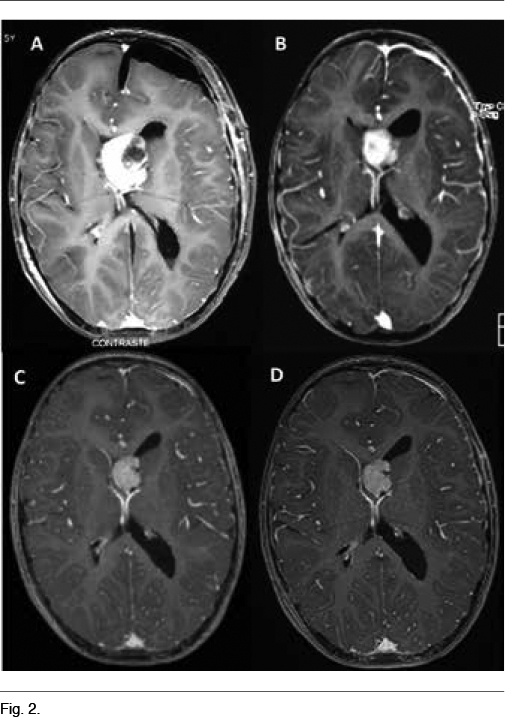
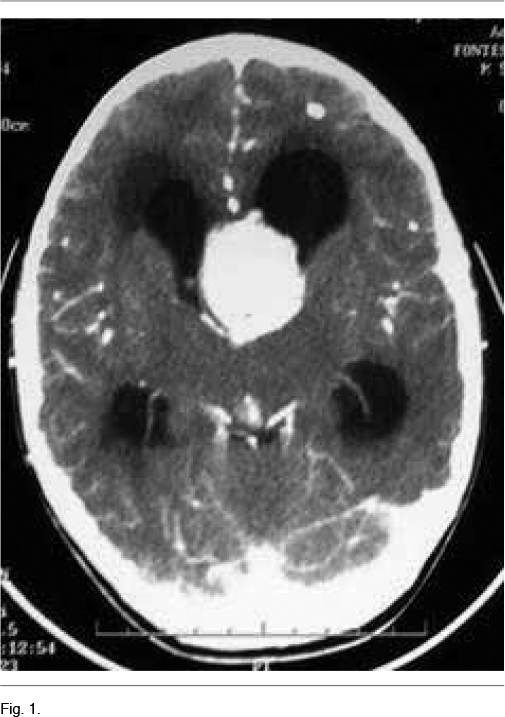
<body><![CDATA[<p class="MsoNormal" style="margin-bottom: 0.0001pt; text-align: justify; line-height: normal;"><span style="font-size: 10pt; font-family: Verdana;" lang="ES-UY">El objetivo de esta publicaci&oacute;n es mostrar la experiencia del primer caso de SEGA tratado con everolimus en Uruguay. <o:p></o:p></span></p>         <p class="MsoNormal" style="margin-bottom: 0.0001pt; text-align: justify; line-height: normal;"><span style="font-size: 10pt; font-family: Verdana;" lang="ES-UY"><o:p>&nbsp;</o:p></span></p>       <p class="MsoNormal" style="margin-bottom: 0.0001pt; text-align: justify; line-height: normal;"><span style="font-size: 10pt; font-family: Verdana;" lang="ES-UY"><o:p></o:p></span></p>         <p class="MsoNormal" style="margin-bottom: 0.0001pt; text-align: justify; line-height: normal;"><b style=""><span style="font-size: 14pt; font-family: Verdana;" lang="ES-UY"><o:p>&nbsp;</o:p></span></b></p>         <p class="MsoNormal" style="margin-bottom: 0.0001pt; text-align: justify; line-height: normal;"><b style=""><span style="font-size: 14pt; font-family: Verdana;" lang="ES-UY">Caso cl&iacute;nico<o:p></o:p></span></b></p>         <p class="MsoNormal" style="margin-bottom: 0.0001pt; text-align: justify; line-height: normal;"><span style="font-size: 14pt; font-family: Verdana;" lang="ES-UY"><o:p>&nbsp;</o:p></span></p>         <p class="MsoNormal" style="margin-bottom: 0.0001pt; text-align: justify; line-height: normal;"><span style="font-size: 10pt; font-family: Verdana;" lang="ES-UY">Escolar de 6 a&ntilde;os, con desarrollo normal, sin epilepsia y portador de CET diagnosticado a los 14 meses por presentar m&aacute;s de 3 m&aacute;culas hipopigmentadas, im&aacute;genes compatibles con t&uacute;beres corticales en la resonancia magn&eacute;tica (RM) de cr&aacute;neo y rabdomioma card&iacute;aco. No se evidenci&oacute; un SEGA al momento del diagn&oacute;stico ni en el control imagenol&oacute;gico realizado a los 2 a&ntilde;os y 7 meses. Luego de eso no se realizaron nuevos controles imagenol&oacute;gicos.<o:p></o:p></span></p>         <p class="MsoNormal" style="margin-bottom: 0.0001pt; text-align: justify; line-height: normal;"><span style="font-size: 10pt; font-family: Verdana;" lang="ES-UY"><o:p>&nbsp;</o:p></span></p>         <p class="MsoNormal" style="margin-bottom: 0.0001pt; text-align: justify; line-height: normal;"><span style="font-size: 10pt; font-family: Verdana;" lang="ES-UY">A los 5 a&ntilde;os instala un s&iacute;ndrome de hipertensi&oacute;n endocraneana dado por cefaleas que progresan en el correr de tres meses, llegando los d&iacute;as previos a la consulta a despertarlo en la noche y a acompa&ntilde;arse de v&oacute;mitos matinales que alivian las cefaleas. La tomograf&iacute;a computada de cr&aacute;neo de urgencia informa un proceso expansivo de tercer ventr&iacute;culo, que obstruye el agujero de Monro, determinando una hidrocefalia supratentorial de ambos ventr&iacute;culos laterales, mayor a izquierda, con desviaci&oacute;n de l&iacute;nea media a derecha de 12mm, edema transependimario e intensa captaci&oacute;n de contraste (<a href="#figura_1">Figura 1</a>). Con planteo de hidrocefalia secundaria a SEGA, se realiza en una primera instancia una derivaci&oacute;n ventr&iacute;culo-peritoneal de urgencia a nivel del ventr&iacute;culo lateral derecho, para tratamiento de su hipertensi&oacute;n endocraneana descompensada. El procedimiento no presenta complicaciones, quedando el paciente asintom&aacute;tico luego del mismo. En el fondo de ojo post-derivaci&oacute;n se observa edema de papila bilateral. La RM post-operatoria muestra el SEGA y la persistencia de una hidrocefalia a nivel del ventr&iacute;culo lateral izquierdo. En una segunda instancia se realiza la cirug&iacute;a del tumor logr&aacute;ndose una resecci&oacute;n parcial del mismo, con un remanente tumoral de 14.3cm<sup>3</sup> (<a href="#figura_2">Figura 2A</a>) La anatom&iacute;a patol&oacute;gica confirm&oacute; el diagn&oacute;stico de SEGA.</span></p>       <p class="MsoNormal" style="margin-bottom: 0.0001pt; text-align: justify; line-height: normal;"></p>             ]]></body>
<body><![CDATA[<p class="MsoNormal" style="margin-bottom: 0.0001pt; text-align: justify; line-height: normal;"><span style="font-size: 10pt; font-family: Verdana;" lang="ES-UY"><o:p>&nbsp;</o:p></span></p>       <p class="MsoNormal" style="margin-bottom: 0.0001pt; text-align: justify; line-height: normal;"><span style="font-size: 10pt; font-family: Verdana;" lang="ES-UY"><o:p></o:p></span></p>       <p class="MsoNormal" style="margin-bottom: 0.0001pt; text-align: justify; line-height: normal;"><span style="font-size: 10pt; font-family: Verdana;" lang="ES-UY"><o:p></o:p></span><a name="figura_1"></a><img style="width: 505px; height: 717px;" alt="" src="/img/revistas/ami/v37n3/3a11f1.jpg"></p>       <p class="MsoNormal" style="margin-bottom: 0.0001pt; text-align: justify; line-height: normal;"><span style="font-size: 10pt; font-family: Verdana;" lang="ES-UY"><o:p></o:p></span></p>       <p class="MsoNormal" style="margin-bottom: 0.0001pt; text-align: justify; line-height: normal;"><span style="font-size: 10pt; font-family: Verdana;" lang="ES-UY"><o:p></o:p></span></p>       <p class="MsoNormal" style="margin-bottom: 0.0001pt; text-align: justify; line-height: normal;"><span style="font-size: 10pt; font-family: Verdana;" lang="ES-UY"><o:p></o:p></span></p>       <p class="MsoNormal" style="margin-bottom: 0.0001pt; text-align: justify; line-height: normal;"><span style="font-size: 10pt; font-family: Verdana;" lang="ES-UY"><o:p></o:p></span><a name="figura_2"></a><img style="width: 505px; height: 717px;" alt="" src="/img/revistas/ami/v37n3/3a11f2.jpg"></p>       <p class="MsoNormal" style="margin-bottom: 0.0001pt; text-align: justify; line-height: normal;"><span style="font-size: 10pt; font-family: Verdana;" lang="ES-UY"><o:p></o:p></span></p>       <p class="MsoNormal" style="margin-bottom: 0.0001pt; text-align: justify; line-height: normal;"><span style="font-size: 10pt; font-family: Verdana;" lang="ES-UY"><o:p></o:p></span></p>         <p class="MsoNormal" style="margin-bottom: 0.0001pt; text-align: justify; line-height: normal;"><span style="font-size: 10pt; font-family: Verdana;" lang="ES-UY">Se decide iniciar everolimus, a pesar que su indicaci&oacute;n como tratamiento adyuvante es off-label <sup>(<a href="#11">11</a>)</sup>. Se inici&oacute; everolimus a 2.5mg/d&iacute;a (3mg/m<sup>2</sup>/d&iacute;a) aument&aacute;ndose la dosis a 5 mg/d&iacute;a por presentar dosificaci&oacute;n s&eacute;rica de 1.5ng/ml, por debajo del rango terap&eacute;utico (3-15ng/ml), logr&aacute;ndose una concentraci&oacute;n de 9.4ng/ml. En las RM de control se evidenci&oacute; una reducci&oacute;n del tama&ntilde;o tumoral del 54.5% al mes (6.5cm<sup>3</sup>) (Figura 2B), del 65.5% a los 3 meses (4.9cm<sup>3</sup>) (Figura 2C) y del 68.5% a los 6 meses (4.5cm<sup>3</sup>) (Figura 2D). Como efectos secundarios present&oacute; astenia al inicio del tratamiento, aftas bucales que no interfirieron con la alimentaci&oacute;n ni requirieron tratamiento y 3 episodios de infecci&oacute;n respiratoria alta que fueron bien toleradas y no requirieron modificaciones en la medicaci&oacute;n. Los controles paracl&iacute;nicos no evidenciaron alteraci&oacute;n en la funci&oacute;n renal, perfil lip&iacute;dico, glicemia, ionograma, funcional y enzimograma hep&aacute;tico, en el hemograma ni en la orina.<o:p></o:p></span></p>         ]]></body>
<body><![CDATA[<p class="MsoNormal" style="margin-bottom: 0.0001pt; text-align: justify; line-height: normal;"><span style="font-size: 10pt; font-family: Verdana;" lang="ES-UY"><o:p>&nbsp;</o:p></span></p>         <p class="MsoNormal" style="margin-bottom: 0.0001pt; text-align: justify; line-height: normal;"><span style="font-size: 10pt; font-family: Verdana;" lang="ES-UY">El paciente se mantiene asintom&aacute;tico desde el punto de vista neurol&oacute;gico y el fondo de ojo de control es normal. <o:p></o:p></span></p>         <p class="MsoNormal" style="margin-bottom: 0.0001pt; text-align: justify; line-height: normal;"><span style="font-size: 10pt; font-family: Verdana;" lang="ES-UY"><o:p>&nbsp;</o:p></span></p>         <p class="MsoNormal" style="margin-bottom: 0.0001pt; text-align: justify; line-height: normal;"><b style=""><span style="font-size: 14pt; font-family: Verdana;" lang="ES-UY"><o:p>&nbsp;</o:p></span></b></p>         <p class="MsoNormal" style="margin-bottom: 0.0001pt; text-align: justify; line-height: normal;"><b style=""><span style="font-size: 14pt; font-family: Verdana;" lang="ES-UY">Discusi&oacute;n</span></b><span style="font-size: 14pt; font-family: Verdana;" lang="ES-UY"><o:p></o:p></span></p>         <p class="MsoNormal" style="margin-bottom: 0.0001pt; text-align: justify; line-height: normal;"><span style="font-size: 10pt; font-family: Verdana;" lang="ES-UY"><o:p>&nbsp;</o:p></span></p>         <p class="MsoNormal" style="margin-bottom: 0.0001pt; text-align: justify; line-height: normal;"><span style="font-size: 10pt; font-family: Verdana;" lang="ES-UY">Presentamos el primer caso de un ni&ntilde;o con CET y SEGA tratado en Uruguay con everolimus en el cual se obtuvo una muy buena respuesta con importante reducci&oacute;n del tama&ntilde;o tumoral y buena tolerancia al tratamiento.<o:p></o:p></span></p>         <p class="MsoNormal" style="margin-bottom: 0.0001pt; text-align: justify; line-height: normal;"><span style="font-size: 10pt; font-family: Verdana;" lang="ES-UY"><o:p>&nbsp;</o:p></span></p>         <p class="MsoNormal" style="margin-bottom: 0.0001pt; text-align: justify; line-height: normal;"><span style="font-size: 10pt; font-family: Verdana;" lang="ES-UY">Se trata de un ni&ntilde;o de 6 a&ntilde;os que tiene la particularidad de no presentar epilepsia ni retraso del desarrollo. La epilepsia est&aacute; presente en aproximadamente un 85% de los pacientes con CET, iniciando generalmente en el primer a&ntilde;o de vida, pudiendo presentarse como un S&iacute;ndrome de West y ser f&aacute;rmacoresistente <sup>(<a href="#2">2</a>)</sup>. Hasta un 50% de los pacientes pueden presentar discapacidad intelectual, y los ni&ntilde;os con nivel intelectual promedio es frecuente que tengan d&eacute;ficit atencional, trastornos mn&eacute;sicos y que sean disejecutivos <sup>(<a href="#2">2)</a></sup>.<o:p></o:p></span></p>         <p class="MsoNormal" style="margin-bottom: 0.0001pt; text-align: justify; line-height: normal;"><span style="font-size: 10pt; font-family: Verdana;" lang="ES-UY"><o:p>&nbsp;</o:p></span></p>         ]]></body>
<body><![CDATA[<p class="MsoNormal" style="margin-bottom: 0.0001pt; text-align: justify; line-height: normal;"><span style="font-size: 10pt; font-family: Verdana;" lang="ES-UY">En este paciente el SEGA no estaba presente a los 18 meses ni a los 2 a&ntilde;os y 7 meses. Luego present&oacute; un r&aacute;pido crecimiento con desarrollo de hidrocefalia e hipertensi&oacute;n endocraneana. En general los SEGA son tumores de lento crecimiento <sup>(<a href="#1">1</a>)</sup>. En los pacientes con CET sin SEGA se recomienda realizar una RM de control cada 1 a 3 a&ntilde;os, independientemente que el paciente este asintom&aacute;tico, hasta los 25 a&ntilde;os, fecha a partir de la cual se sabe que excepcionalmente se va a desarrollar un nuevo SEGA <sup>(<a href="#10">10</a>,<a href="#11">11</a>)</sup>. Frente a la presencia de una SEGA que no est&aacute; en crecimiento, en un paciente asintom&aacute;tico, se recomienda realizar RM cada 6 meses a 1 a&ntilde;o. La neuroim&aacute;gen se debe adelantar frente a la presencia de nueva sintomatolog&iacute;a como cefaleas, alteraci&oacute;n visual, nauseas, v&oacute;mitos, aumento del per&iacute;metro cef&aacute;lico o frente a un aumento del n&uacute;mero de crisis en un paciente epil&eacute;ptico <sup>(<a href="#11">11</a>)</sup>.<o:p></o:p></span></p>         <p class="MsoNormal" style="margin-bottom: 0.0001pt; text-align: justify; line-height: normal;"><span style="font-size: 10pt; font-family: Verdana;" lang="ES-UY"><o:p>&nbsp;</o:p></span></p>         <p class="MsoNormal" style="margin-bottom: 0.0001pt; text-align: justify; line-height: normal;"><span style="font-size: 10pt; font-family: Verdana;" lang="ES-UY">En nuestro paciente se opt&oacute; por tratamiento quir&uacute;rgico en primera instancia, si bien a priori el volumen tumoral hac&iacute;a dif&iacute;cil la posibilidad de una resecci&oacute;n tumoral completa. Dado la presencia del remante tumoral post-quir&uacute;rgico y el riesgo de posibles secuelas neurol&oacute;gicas frente a una nueva intervenci&oacute;n, se decidi&oacute; iniciar tratamiento con everolimus. El mismo fue indicado off-label ya que hasta la fecha no se ha aprobado el uso de los inhibidores del m-TOR para el tratamiento post-quir&uacute;rgico de los pacientes con SEGA y remanente tumoral <sup>(<a href="#11">11</a>)</sup>.<o:p></o:p></span></p>         <p class="MsoNormal" style="margin-bottom: 0.0001pt; text-align: justify; line-height: normal;"><span style="font-size: 10pt; font-family: Verdana;" lang="ES-UY"><o:p>&nbsp;</o:p></span></p>         <p class="MsoNormal" style="margin-bottom: 0.0001pt; text-align: justify; line-height: normal;"><span style="font-size: 10pt; font-family: Verdana;" lang="ES-UY">El consenso internacional del a&ntilde;o 2012 define que<span style="">&nbsp; </span>los SEGA sintom&aacute;ticos o aquellos asociados a aumento del tama&ntilde;o ventricular, cambios inexplicados en el estado neurol&oacute;gico o s&iacute;ntomas de trastornos neuropsiquiatricos asociados a CET requieren intervenci&oacute;n quir&uacute;rgica o monitoreo cl&iacute;nico y realizaci&oacute;n de una nueva imagen <sup>(<a href="#11">11</a>)</sup>. En los SEGA con s&iacute;ntomas agudos recomienda que la intervenci&oacute;n sea quir&uacute;rgica <sup>(<a href="#11">11</a>)</sup>. En los SEGA asintom&aacute;ticos pero que est&aacute;n en crecimiento se recomienda resecci&oacute;n quir&uacute;rgica o inhibidores de la m-TOR. La decisi&oacute;n depender&aacute; del riesgo de complicaciones, efectos adversos, costos, duraci&oacute;n del tratamiento y presencia de comorbilidades <sup>(<a href="#11">11</a>)</sup>. Los SEGA &uacute;nicos, unilaterales, totalmente resecables sin factores de riesgo u otras comorbilidades se beneficiar&aacute;n de cirug&iacute;a <sup>(<a href="#11">11</a>)</sup>. Pacientes con enfermedad multisist&eacute;mica o con SEGA m&uacute;ltiples o infiltrantes, que no se plantea la resecci&oacute;n completa o si hay contraindicaci&oacute;n para la cirug&iacute;a se beneficiar&aacute;n de inhibidores de la m-TOR </span><sup><span style="font-size: 10pt; font-family: Verdana;">(<a href="#10">10</a>,<a href="#11">11</a>)</span></sup><span style="font-size: 10pt; font-family: Verdana;">.<o:p></o:p></span></p>         <p class="MsoNormal" style="margin-bottom: 0.0001pt; text-align: justify; line-height: normal;"><span style="font-size: 10pt; font-family: Verdana;" lang="ES-UY"><o:p>&nbsp;</o:p></span></p>         <p class="MsoNormal" style="margin-bottom: 0.0001pt; text-align: justify; line-height: normal;"><span style="font-size: 10pt; font-family: Verdana;" lang="ES-UY">Los inhibidores de la m-TOR imitan la acci&oacute;n inhibitoria del complejo hamartina/tuberina sobre la m-TOR lo que evita el exceso de proliferaci&oacute;n y crecimiento celulares que ocurre tras la p&eacute;rdida de funci&oacute;n de este complejo. En los pacientes con CET se ha demostrado que el uso de everolimus lleva a una reducci&oacute;n del tama&ntilde;o de los SEGA </span><sup><span style="font-size: 10pt; font-family: Verdana;">(<a href="#15">15</a><a name="15."></a>)</span></sup><span style="font-size: 10pt; font-family: Verdana;">. <o:p></o:p></span></p>         <p class="MsoNormal" style="margin-bottom: 0.0001pt; text-align: justify; line-height: normal;"><span style="font-size: 10pt; font-family: Verdana;" lang="ES-UY"><o:p>&nbsp;</o:p></span></p>         <p class="MsoNormal" style="margin-bottom: 0.0001pt; text-align: justify; line-height: normal;"><span style="font-size: 10pt; font-family: Verdana;" lang="ES-UY">Los estudios actuales sobre everolimus en tratamiento de SEGA han demostrado que es eficaz con reducciones del volumen tumoral del 50% o mayor en el 35% de los pacientes tratados vs 0% pacientes con placebo (p&lt;0.0001). Es un tratamiento seguro con efectos adversos leves frecuentes (infecciones respiratorias altas, aftas orales) pero con efectos adversos severos poco frecuentes. Como efecto adicional se encontr&oacute; que hubo disminuci&oacute;n significativa o estabilizaci&oacute;n en los angiomiolipomas que asociaban los pacientes <sup>(<a href="#15">15</a></sup></span><sup><span style="font-size: 10pt; font-family: Verdana;">)</span></sup><span style="font-size: 10pt; font-family: Verdana;">. </span><span style="font-size: 10pt; font-family: Verdana;" lang="ES-UY">El everolimus es tambi&eacute;n eficaz en el tratamiento de los angiomiolipomas renales y se ha descripto que produce reducci&oacute;n del n&uacute;mero y tama&ntilde;o de los n&oacute;dulos subependimarios, de los rabdomiomas card&iacute;acos, y que podr&iacute;a disminu&iacute;r la frecuencia de crisis epil&eacute;pticas en los pacientes con epilepsia, aunque faltan investigaciones en esta l&iacute;nea <sup>(<a href="#16">16</a><a name="16."></a>)</sup>. El tratamiento a largo plazo demostr&oacute; una reducci&oacute;n sostenida de los SEGA siendo mayor en los primeros meses de tratamiento y fue bien tolerado, no encontr&aacute;ndose aumento significativo de los efectos adversos <sup>(<a href="#16">16</a>,<a href="#17">17</a><a name="17."></a>)</sup>. A&uacute;n falta por definir por cu&aacute;nto tiempo puede ser necesario continuar el tratamiento y los posibles efectos adversos del tratamiento a largo plazo.<o:p></o:p></span></p>         <p class="MsoNormal" style="margin-bottom: 0.0001pt; text-align: justify; line-height: normal;"><span style="font-size: 10pt; font-family: Verdana;" lang="ES-UY"><o:p>&nbsp;</o:p></span></p>         ]]></body>
<body><![CDATA[<p class="MsoNormal" style="margin-bottom: 0.0001pt; text-align: justify; line-height: normal;"><span style="font-size: 10pt; font-family: Verdana;" lang="ES-UY">En conclusi&oacute;n mostramos la buena respuesta de nuestro paciente al tratamiento del SEGA con everolimus, con escasos efectos adversos que no implicaron una suspensi&oacute;n del mismo, lo que coincide con lo descripto en la literatura. La buena respuesta obtenida en este paciente aporta evidencia de su posible uso como tratamiento adyuvante a la cirug&iacute;a en los pacientes con SEGA.<o:p></o:p></span></p>         <p class="MsoNormal" style="text-align: justify; line-height: normal;"><b style=""><span style="font-size: 14pt; font-family: Verdana;" lang="ES-UY"><o:p>&nbsp;</o:p></span></b></p>         <p class="MsoNormal" style="text-align: justify; line-height: normal;"><b style=""><span style="font-size: 14pt; font-family: Verdana;" lang="ES-UY">Bibliograf&iacute;a</span></b><span style="font-size: 14pt; font-family: Verdana;" lang="ES-UY"><o:p></o:p></span></p>         <!-- ref --><p class="Prrafodelista" style="text-align: justify; text-indent: -18pt; line-height: normal;"><span style="font-size: 10pt; font-family: Arial;" lang="EN-US"><span style=""><a name="1"></a><a href="#1.">1</a>.<span style="font-family: &quot;Times New Roman&quot;; font-style: normal; font-variant: normal; font-weight: normal; font-size: 7pt; line-height: normal; font-size-adjust: none; font-stretch: normal;">&nbsp;&nbsp;&nbsp;&nbsp;&nbsp;&nbsp;</span></span></span><span style="font-size: 10pt; font-family: Verdana;" lang="ES-UY">Curatolo P, Bombardieri R, Jozwiak S. Tuberous sclerosis. Lancet. 2008;372:657-68.     <o:p></o:p></span></p>         <!-- ref --><p class="Prrafodelista" style="text-align: justify; text-indent: -18pt; line-height: normal;"><span style="font-size: 10pt; font-family: Arial;" lang="EN-US"><span style=""><a name="2"></a><a href="#2.">2</a>.<span style="font-family: &quot;Times New Roman&quot;; font-style: normal; font-variant: normal; font-weight: normal; font-size: 7pt; line-height: normal; font-size-adjust: none; font-stretch: normal;">&nbsp;&nbsp;&nbsp;&nbsp;&nbsp;&nbsp;&nbsp;&nbsp;&nbsp;&nbsp;&nbsp;&nbsp;&nbsp;&nbsp;&nbsp;&nbsp;&nbsp;&nbsp;&nbsp;&nbsp;&nbsp;</span></span></span><span style="font-size: 10pt; font-family: Verdana;" lang="ES-UY">Curatolo P, Maria BL. Tuberous sclerosis. Handb Clin Neurol. 2013; 111:323-31.    <o:p></o:p></span></p>         <!-- ref --><p class="Prrafodelista" style="text-align: justify; text-indent: -18pt; line-height: normal;"><span style="font-size: 10pt; font-family: Arial;" lang="EN-US"><span style=""><a name="3"></a><a href="#3.">3</a>.<span style="font-family: &quot;Times New Roman&quot;; font-style: normal; font-variant: normal; font-weight: normal; font-size: 7pt; line-height: normal; font-size-adjust: none; font-stretch: normal;">&nbsp;&nbsp;&nbsp;&nbsp;&nbsp;&nbsp;&nbsp;&nbsp;&nbsp;&nbsp;&nbsp;&nbsp;&nbsp;&nbsp;&nbsp;&nbsp;&nbsp;&nbsp;&nbsp;&nbsp;&nbsp;</span></span></span><span style="font-size: 10pt; font-family: Verdana;" lang="EN-US">The European chromosome 16 Tuber sclerosis consortium. Identification and characterization of the Tuberous sclerosis gene on chromosome 16. </span><span style="font-size: 10pt; font-family: Verdana;" lang="ES-UY">Cell </span><span style="font-size: 10pt; font-family: Verdana;" lang="EN-US">1993;75:1305-15.     <o:p></o:p></span></p>         <!-- ref --><p class="Prrafodelista" style="text-align: justify; text-indent: -18pt; line-height: normal;"><span style="font-size: 10pt; font-family: Arial;" lang="EN-US"><span style=""><a name="4"></a><a href="#4.">4</a>.<span style="font-family: &quot;Times New Roman&quot;; font-style: normal; font-variant: normal; font-weight: normal; font-size: 7pt; line-height: normal; font-size-adjust: none; font-stretch: normal;">&nbsp;&nbsp;&nbsp;&nbsp;&nbsp;&nbsp;&nbsp;&nbsp;&nbsp;&nbsp;&nbsp;&nbsp;&nbsp;&nbsp;&nbsp;&nbsp;&nbsp;&nbsp;&nbsp;&nbsp;&nbsp;</span></span></span><span style="font-size: 10pt; font-family: Verdana;" lang="EN-US">van Slegtenhorst M, de Hoogt R, Hermans C, Nellist M, Janssen B, Verhoef S, et al. Identification of the tuberous sclerosis gene TSC1 on chromosome 9q34. </span><span style="font-size: 10pt; font-family: Verdana;" lang="ES-UY">Science 1997;277:805-8.    <o:p></o:p></span></p>         <!-- ref --><p class="Prrafodelista" style="text-align: justify; text-indent: -18pt; line-height: normal;"><span style="font-size: 10pt; font-family: Arial;" lang="EN-US"><span style=""><a name="5"></a><a href="#5.">5</a>.<span style="font-family: &quot;Times New Roman&quot;; font-style: normal; font-variant: normal; font-weight: normal; font-size: 7pt; line-height: normal; font-size-adjust: none; font-stretch: normal;">&nbsp;&nbsp;&nbsp;&nbsp;&nbsp;&nbsp;&nbsp;&nbsp;&nbsp;&nbsp;&nbsp;&nbsp;&nbsp;&nbsp;&nbsp;&nbsp;&nbsp;&nbsp;&nbsp;&nbsp;&nbsp;</span></span></span><span style="font-size: 10pt; font-family: Verdana;" lang="EN-US">Franz DN, Leonard J, Tudor C, Chuck G, Care M, Sethuraman G. Rapamycin causes regression of astrocytomas in tuberous sclerosis complex. </span><span style="font-size: 10pt; font-family: Verdana;" lang="ES-UY">Ann Neurol. 2006;59:490-8 </span><span style="font-size: 10pt;     font-family: Verdana;" lang="EN-US">.<o:p></o:p></span></p>         <p class="Prrafodelista" style="text-align: justify; text-indent: -18pt; line-height: normal;"><span style="font-size: 10pt; font-family: Arial;" lang="EN-US"><span style=""><a name="6"></a><a href="#6.">6</a>.<span style="font-family: &quot;Times New Roman&quot;; font-style: normal; font-variant: normal; font-weight: normal; font-size: 7pt; line-height: normal; font-size-adjust: none; font-stretch: normal;">&nbsp;&nbsp;&nbsp;&nbsp;&nbsp;&nbsp;&nbsp;&nbsp;&nbsp;&nbsp;&nbsp;&nbsp;&nbsp;&nbsp;&nbsp;&nbsp;&nbsp;&nbsp;&nbsp;&nbsp;&nbsp;</span></span></span><span style="font-size: 10pt; font-family: Verdana;" lang="EN-US">Budde K, Gaedeke J. Tuberous sclerosis complex-associated angiomyolipomas: focus on mTOR Inhibition. <span style="">Am J Kidney Dis.<i> </i></span>2012;<span style="">59:</span>276&ndash;83 <o:p></o:p></span></p>         <!-- ref --><p class="Prrafodelista" style="text-align: justify; text-indent: -18pt; line-height: normal;"><span style="font-size: 10pt; font-family: Arial;" lang="EN-US"><span style=""><a name="7"></a><a href="#7.">7</a>.<span style="font-family: &quot;Times New Roman&quot;; font-style: normal; font-variant: normal; font-weight: normal; font-size: 7pt; line-height: normal; font-size-adjust: none; font-stretch: normal;">&nbsp;&nbsp;&nbsp;&nbsp;&nbsp;&nbsp;&nbsp;&nbsp;&nbsp;&nbsp;&nbsp;&nbsp;&nbsp;&nbsp;&nbsp;&nbsp;&nbsp;&nbsp;&nbsp;&nbsp;&nbsp;</span></span></span><span style="font-size: 10pt; font-family: Verdana;" lang="EN-US">Sampson JR, Scahill SJ, Stephenson JB, Mann L, Connor JM. Genetic aspects of tuberous sclerosis in the west of Scotland. </span><span style="font-size: 10pt; font-family: Verdana;" lang="ES-UY">J Med Genet.1989;26:28-31.     <o:p></o:p></span></p>         <!-- ref --><p class="Prrafodelista" style="text-align: justify; text-indent: -18pt; line-height: normal;"><span style="font-size: 10pt; font-family: Arial;" lang="EN-US"><span style=""><a name="8"></a><a href="#8.">8</a>.<span style="font-family: &quot;Times New Roman&quot;; font-style: normal; font-variant: normal; font-weight: normal; font-size: 7pt; line-height: normal; font-size-adjust: none; font-stretch: normal;">&nbsp;&nbsp;&nbsp;&nbsp;&nbsp;&nbsp;&nbsp;&nbsp;&nbsp;&nbsp;&nbsp;&nbsp;&nbsp;&nbsp;&nbsp;&nbsp;&nbsp;&nbsp;&nbsp;&nbsp;&nbsp;</span></span></span><span style="font-size: 10pt; font-family: Verdana;" lang="EN-US">Roach ES, G&oacute;mez MR, Northrup H. Tuberous sclerosis complex consensus conference: revised clinical diagnostic criteria J Child Neurol. </span><span style="font-size: 10pt; font-family: Verdana;" lang="ES-UY">1998;13:624-8 </span><span style="font-size: 10pt;     font-family: Verdana;" lang="EN-US">.<o:p></o:p></span></p>         <!-- ref --><p class="Prrafodelista" style="margin-bottom: 0.0001pt; text-align: justify; text-indent: -18pt; line-height: normal;"><span style="font-size: 10pt; font-family: Arial;" lang="EN-US"><span style=""><a name="9"></a><a href="#9.">9</a>.<span style="font-family: &quot;Times New Roman&quot;; font-style: normal; font-variant: normal; font-weight: normal; font-size: 7pt; line-height: normal; font-size-adjust: none; font-stretch: normal;">&nbsp;&nbsp;&nbsp;&nbsp;&nbsp;&nbsp;&nbsp;&nbsp;&nbsp;&nbsp;&nbsp;&nbsp;&nbsp;&nbsp;&nbsp;&nbsp;&nbsp;&nbsp;&nbsp;&nbsp;&nbsp;</span></span></span><span style="font-size: 10pt; font-family: Verdana;" lang="EN-US">Northrup H, Krueger DA, Roberds S, Smith K, Sampson J, Korf B, et al. Tuberous sclerosis complex diagnostic criteria update: Recommendations of the 2012 International Tuberous sclerosis complex consensus conference. Pediatr Neurol. 2013;49:243-54.     <o:p></o:p></span></p>         ]]></body>
<body><![CDATA[<p class="Prrafodelista" style="margin-bottom: 0.0001pt; text-align: justify; line-height: normal;"><span style="font-size: 10pt; font-family: Verdana;" lang="EN-US"><o:p>&nbsp;</o:p></span></p>         <!-- ref --><p class="Prrafodelista" style="margin-bottom: 0.0001pt; text-align: justify; text-indent: -18pt; line-height: normal;"><span style="font-size: 10pt; font-family: Arial;" lang="EN-US"><span style=""><a name="10"></a><a href="#10.">10</a>.<span style="font-family: &quot;Times New Roman&quot;; font-style: normal; font-variant: normal; font-weight: normal; font-size: 7pt; line-height: normal; font-size-adjust: none; font-stretch: normal;">&nbsp;&nbsp;&nbsp;&nbsp;&nbsp;&nbsp;&nbsp;&nbsp;&nbsp;&nbsp;&nbsp;&nbsp;&nbsp;&nbsp;&nbsp;&nbsp;&nbsp;&nbsp;</span></span></span><span style="font-size: 10pt; font-family: Verdana;" lang="EN-US">Krueger DA, Northrup H, Tuberous sclerosis complex surveillance and management: recommendations of the 2012 International Tuberous sclerosis complex consensus conference. Pediatr Neurol. 2013;49:255-65 <o:p></o:p></span><p class="PrrafodelistaCxSpMiddle"><span style="font-size: 10pt; line-height: 115%; font-family: Verdana;" lang="EN-US"><o:p>&nbsp;</o:p></span></p>         <!-- ref --><p class="Prrafodelista" style="margin-bottom: 0.0001pt; text-align: justify; text-indent: -18pt; line-height: normal;"><span style="font-size: 10pt; font-family: Arial;" lang="EN-US"><span style=""><a name="11"></a><a href="#11.">11</a>.<span style="font-family: &quot;Times New Roman&quot;; font-style: normal; font-variant: normal; font-weight: normal; font-size: 7pt; line-height: normal; font-size-adjust: none; font-stretch: normal;">&nbsp;&nbsp;&nbsp;&nbsp;&nbsp;&nbsp;&nbsp;&nbsp;&nbsp;&nbsp;&nbsp;&nbsp;&nbsp;&nbsp;&nbsp;&nbsp;&nbsp;&nbsp;</span></span></span><span style="font-size: 10pt; font-family: Verdana;" lang="EN-US">Roth J, Roach ES, Bartels U, J&oacute;&#378;wiak S, Koenig MK, Weiner HL, et al. Subependymal giant cell astrocytoma: diagnosis, screening, and treatment. Recommendations from the International Tuberous sclerosis complex consensus conference 2012. Pediatr Neurol. 2013;49:439-44.    </span><span style="font-size: 10pt; font-family: Verdana;" lang="ES-UY"><o:p></o:p></span></p>         <p class="PrrafodelistaCxSpMiddle"><span style="font-size: 10pt; line-height: 115%; font-family: Verdana;" lang="ES-UY"><o:p>&nbsp;</o:p></span></p>         <p class="Prrafodelista" style="margin-bottom: 0.0001pt; text-align: justify; text-indent: -18pt; line-height: normal;"><span style="font-size: 10pt; font-family: Arial;" lang="EN-US"><span style=""><a name="12"></a><a href="#12.">12</a>.<span style="font-family: &quot;Times New Roman&quot;; font-style: normal; font-variant: normal; font-weight: normal; font-size: 7pt; line-height: normal; font-size-adjust: none; font-stretch: normal;">&nbsp;&nbsp;&nbsp;&nbsp;&nbsp;&nbsp;&nbsp;&nbsp;&nbsp;&nbsp;&nbsp;&nbsp;&nbsp;&nbsp;&nbsp;&nbsp;&nbsp;&nbsp;</span></span></span><span style="font-size: 10pt; font-family: Verdana;" lang="EN-US">Adriaensen ME, Schaefer-Prokop CM, Stijnen T, Duyndam DA, Zonnenberg BA, Prokop M. Prevalence of subependymal giant cell tumors in patients with tuberous sclerosis and a review of the literature. Eur J Neurol. 2009;16:691-6 <o:p></o:p></span></p>         <p class="PrrafodelistaCxSpMiddle"><span style="font-size: 10pt; line-height: 115%; font-family: Verdana;" lang="EN-US"><o:p>&nbsp;</o:p></span></p>         <!-- ref --><p class="Prrafodelista" style="margin-bottom: 0.0001pt; text-align: justify; text-indent: -18pt; line-height: normal;"><span style="font-size: 10pt; font-family: Arial;" lang="EN-US"><span style=""><a name="13"></a><a href="#13.">13</a>.<span style="font-family: &quot;Times New Roman&quot;; font-style: normal; font-variant: normal; font-weight: normal; font-size: 7pt; line-height: normal; font-size-adjust: none; font-stretch: normal;">&nbsp;&nbsp;&nbsp;&nbsp;&nbsp;&nbsp;&nbsp;&nbsp;&nbsp;&nbsp;&nbsp;&nbsp;&nbsp;&nbsp;&nbsp;&nbsp;&nbsp;&nbsp;</span></span></span><span style="font-size: 10pt; font-family: Verdana;" lang="EN-US">Matsumura H, Takimoto H, Shimada N, Hirata M, Ohnishi T, Hayakawa T. Glioblastoma following radiotherapy in a patient with tuberous sclerosis. Neurol Med Chir (Tokyo). 1998;38:287-91.     <o:p></o:p></span></p>         ]]></body>
<body><![CDATA[<p class="PrrafodelistaCxSpMiddle"><span style="font-size: 10pt; line-height: 115%; font-family: Verdana;" lang="EN-US"><o:p>&nbsp;</o:p></span></p>         <!-- ref --><p class="Prrafodelista" style="margin-bottom: 0.0001pt; text-align: justify; text-indent: -18pt; line-height: normal;"><span style="font-size: 10pt; font-family: Arial;" lang="EN-US"><span style=""><a name="14"></a><a href="#14.">14</a>.<span style="font-family: &quot;Times New Roman&quot;; font-style: normal; font-variant: normal; font-weight: normal; font-size: 7pt; line-height: normal; font-size-adjust: none; font-stretch: normal;">&nbsp;&nbsp;&nbsp;&nbsp;&nbsp;&nbsp;&nbsp;&nbsp;&nbsp;&nbsp;&nbsp;&nbsp;&nbsp;&nbsp;&nbsp;&nbsp;&nbsp;&nbsp;</span></span></span><span style="font-size: 10pt; font-family: Verdana;" lang="EN-US">Krueger D, Care M, Holland K, Agricola K, Tudor C, Mangeshkar P, et al. Everolimus for subependymal giant cell astrocytoma in Tuberous sclerosis. N Eng J Med. 2012;363:1801-11.    <span style=""><o:p></o:p></span></span></p>         <p class="PrrafodelistaCxSpMiddle"><span style="font-size: 10pt; line-height: 115%; font-family: Verdana;" lang="EN-US"><o:p>&nbsp;</o:p></span></p>         <p class="Prrafodelista" style="margin-bottom: 0.0001pt; text-align: justify; text-indent: -18pt; line-height: normal;"><span style="font-size: 10pt; font-family: Arial;" lang="EN-US"><span style=""><a name="15"></a><a href="#15.">15</a>.<span style="font-family: &quot;Times New Roman&quot;; font-style: normal; font-variant: normal; font-weight: normal; font-size: 7pt; line-height: normal; font-size-adjust: none; font-stretch: normal;">&nbsp;&nbsp;&nbsp;&nbsp;&nbsp;&nbsp;&nbsp;&nbsp;&nbsp;&nbsp;&nbsp;&nbsp;&nbsp;&nbsp;&nbsp;&nbsp;&nbsp;&nbsp;</span></span></span><span style="font-size: 10pt; font-family: Verdana;" lang="EN-US">Franz DN, Belousova E, Sparagana S, Bebin EM, Frost M, Kuperman R, et al.<span style="">&nbsp; </span></span><span style="font-size: 10pt; font-family: Verdana;" lang="EN-US">Efficacy and safety of everolimus for subependymal giant cell astrocytomas associated with tuberous sclerosis complex (EXIST-1): a multicentre, randomised, placebo-controlled phase 3 trial. <span style="">Lancet. </span>2013;381:125&ndash;32.</span><span style="font-size: 10pt; font-family: Verdana;" lang="ES-UY"><o:p></o:p></span></p>         <p class="PrrafodelistaCxSpMiddle"><span style="font-size: 10pt; line-height: 115%; font-family: Verdana;" lang="ES-UY"><o:p>&nbsp;</o:p></span></p>         <!-- ref --><p class="Prrafodelista" style="margin-bottom: 0.0001pt; text-align: justify; text-indent: -18pt; line-height: normal;"><span style="font-size: 10pt; font-family: Arial;" lang="EN-US"><span style=""><a name="16"></a><a href="#16.">16</a>.<span style="font-family: &quot;Times New Roman&quot;; font-style: normal; font-variant: normal; font-weight: normal; font-size: 7pt; line-height: normal; font-size-adjust: none; font-stretch: normal;">&nbsp;&nbsp;&nbsp;&nbsp;&nbsp;&nbsp;&nbsp;&nbsp;&nbsp;&nbsp;&nbsp;&nbsp;&nbsp;&nbsp;&nbsp;&nbsp;&nbsp;&nbsp;</span></span></span><span style="font-size: 10pt; font-family: Verdana;" lang="EN-US">Tran LH, Zupanc ML. Long-term everolimus treatment in individuals with Tuberous sclerosis complex: a review of the current literatura. </span><span style="font-size: 10pt; font-family: Verdana;" lang="ES-UY">Pediatr Neurol. 2015;53:23-30.     </span><span style="font-size: 10pt; font-family: Verdana;" lang="EN-US"><o:p></o:p></span></p>         <!-- ref --><p class="Prrafodelista" style="margin-bottom: 0.0001pt; text-align: justify; text-indent: -18pt; line-height: normal;"><span style="font-size: 10pt; font-family: Arial;" lang="EN-US"><span style=""><a name="17"></a><a href="#17.">17</a>.<span style="font-family: &quot;Times New Roman&quot;; font-style: normal; font-variant: normal; font-weight: normal; font-size: 7pt; line-height: normal; font-size-adjust: none; font-stretch: normal;">&nbsp;&nbsp;&nbsp;&nbsp;&nbsp;&nbsp;&nbsp;&nbsp;&nbsp;&nbsp;&nbsp;&nbsp;&nbsp;&nbsp;&nbsp;&nbsp;&nbsp;&nbsp;</span></span></span><span style="font-size: 10pt; font-family: Verdana;" lang="EN-US">Franz DN, Belousova E, Sparagana S, Bebin EM, Frost M, Kuperman R, et al.<span style="">&nbsp; </span>E</span><span style="font-size: 10pt; font-family: Verdana;" lang="EN-US">verolimus for subependymal giant cell astrocytoma in patient with tuberous sclerosis complex: 2 year open-label extensi&oacute;n of the randomised EXIST-1 study. </span><span style="font-size: 10pt; font-family: Verdana;" lang="ES-UY">Lancet Oncol. 2014;15:1513-20</span><span style="font-size: 10pt;     font-family: Verdana;" lang="EN-US">.<o:p></o:p></span></p>         ]]></body>
<body><![CDATA[<p class="MsoNormal" style="text-align: justify; line-height: 200%;"><b style=""><span style="font-size: 10pt; line-height: 200%; font-family: Verdana;" lang="ES-UY"><o:p>&nbsp;</o:p></span></b></p>         <p class="MsoNormal" style="text-align: justify; line-height: 200%;"><b style=""><span style="font-size: 10pt; line-height: 200%; font-family: Verdana;" lang="ES-UY"><o:p>&nbsp;</o:p></span></b></p>         <p class="MsoNormal" style="margin-bottom: 0.0001pt; text-align: justify; line-height: 200%;"><span style="font-size: 10pt; line-height: 200%; font-family: Verdana;" lang="EN-US"><o:p>&nbsp;</o:p></span></p>         <p class="MsoNormal" style="margin-bottom: 0.0001pt; text-align: justify; line-height: 200%;"><span style="font-size: 10pt; line-height: 200%; font-family: Verdana;" lang="EN-US"><o:p>&nbsp;</o:p></span></p>         <p class="MsoNormal" style="margin-bottom: 0.0001pt; text-align: justify; line-height: 200%;"><span style="font-size: 10pt; line-height: 200%; font-family: Verdana;" lang="EN-US"><o:p>&nbsp;</o:p></span></p>     </div>          ]]></body><back>
<ref-list>
<ref id="B1">
<label>1</label><nlm-citation citation-type="journal">
<person-group person-group-type="author">
<name>
<surname><![CDATA[Curatolo]]></surname>
<given-names><![CDATA[P]]></given-names>
</name>
<name>
<surname><![CDATA[Bombardieri]]></surname>
<given-names><![CDATA[R]]></given-names>
</name>
<name>
<surname><![CDATA[Jozwiak]]></surname>
<given-names><![CDATA[S]]></given-names>
</name>
</person-group>
<article-title xml:lang="en"><![CDATA[Tuberous sclerosis]]></article-title>
<source><![CDATA[Lancet]]></source>
<year>2008</year>
<volume>372</volume>
<page-range>657-68</page-range></nlm-citation>
</ref>
<ref id="B2">
<label>2</label><nlm-citation citation-type="journal">
<person-group person-group-type="author">
<name>
<surname><![CDATA[Curatolo]]></surname>
<given-names><![CDATA[P]]></given-names>
</name>
<name>
<surname><![CDATA[Maria]]></surname>
<given-names><![CDATA[BL]]></given-names>
</name>
</person-group>
<article-title xml:lang="en"><![CDATA[Tuberous sclerosis]]></article-title>
<source><![CDATA[Handb Clin Neurol.]]></source>
<year>2013</year>
<volume>111</volume>
<page-range>323-31</page-range></nlm-citation>
</ref>
<ref id="B3">
<label>3</label><nlm-citation citation-type="journal">
<article-title xml:lang="en"><![CDATA[The European chromosome 16 Tuber sclerosis consortium: Identification and characterization of the Tuberous sclerosis gene on chromosome 16.]]></article-title>
<source><![CDATA[Cell]]></source>
<year>1993</year>
<volume>75</volume>
<page-range>1305-15</page-range></nlm-citation>
</ref>
<ref id="B4">
<label>4</label><nlm-citation citation-type="journal">
<person-group person-group-type="author">
<name>
<surname><![CDATA[van Slegtenhorst]]></surname>
<given-names><![CDATA[M]]></given-names>
</name>
<name>
<surname><![CDATA[de Hoogt]]></surname>
<given-names><![CDATA[R]]></given-names>
</name>
<name>
<surname><![CDATA[Hermans]]></surname>
<given-names><![CDATA[C]]></given-names>
</name>
<name>
<surname><![CDATA[Nellist]]></surname>
<given-names><![CDATA[M]]></given-names>
</name>
<name>
<surname><![CDATA[Janssen]]></surname>
<given-names><![CDATA[B]]></given-names>
</name>
<name>
<surname><![CDATA[Verhoef]]></surname>
<given-names><![CDATA[S]]></given-names>
</name>
</person-group>
<article-title xml:lang="en"><![CDATA[Identification of the tuberous sclerosis gene TSC1 on chromosome 9q34]]></article-title>
<source><![CDATA[Science]]></source>
<year>1997</year>
<volume>277</volume>
<page-range>805-8</page-range></nlm-citation>
</ref>
<ref id="B5">
<label>5</label><nlm-citation citation-type="journal">
<person-group person-group-type="author">
<name>
<surname><![CDATA[Franz]]></surname>
<given-names><![CDATA[DN]]></given-names>
</name>
<name>
<surname><![CDATA[Leonard]]></surname>
<given-names><![CDATA[J]]></given-names>
</name>
<name>
<surname><![CDATA[Tudor]]></surname>
<given-names><![CDATA[C]]></given-names>
</name>
<name>
<surname><![CDATA[Chuck]]></surname>
<given-names><![CDATA[G]]></given-names>
</name>
<name>
<surname><![CDATA[Care]]></surname>
<given-names><![CDATA[M]]></given-names>
</name>
</person-group>
<source><![CDATA[Ann Neurol.]]></source>
<year>2006</year>
<volume>59</volume>
<page-range>490-8</page-range></nlm-citation>
</ref>
<ref id="B6">
<label>6</label><nlm-citation citation-type="journal">
<person-group person-group-type="author">
<name>
<surname><![CDATA[Budde]]></surname>
<given-names><![CDATA[K]]></given-names>
</name>
<name>
<surname><![CDATA[Gaedeke]]></surname>
<given-names><![CDATA[J]]></given-names>
</name>
</person-group>
<article-title xml:lang="en"><![CDATA[Tuberous sclerosis complex-associated angiomyolipomas: focus on mTOR Inhibition.]]></article-title>
<source><![CDATA[Am J Kidney Dis.]]></source>
<year>2012</year>
<volume>59</volume>
<page-range>276-83</page-range></nlm-citation>
</ref>
<ref id="B7">
<label>7</label><nlm-citation citation-type="journal">
<person-group person-group-type="author">
<name>
<surname><![CDATA[Sampson]]></surname>
<given-names><![CDATA[JR]]></given-names>
</name>
<name>
<surname><![CDATA[Scahill]]></surname>
<given-names><![CDATA[SJ]]></given-names>
</name>
<name>
<surname><![CDATA[Stephenson]]></surname>
<given-names><![CDATA[JB]]></given-names>
</name>
<name>
<surname><![CDATA[Mann]]></surname>
<given-names><![CDATA[L]]></given-names>
</name>
<name>
<surname><![CDATA[Connor]]></surname>
<given-names><![CDATA[JM]]></given-names>
</name>
</person-group>
<article-title xml:lang="en"><![CDATA[Genetic aspects of tuberous sclerosis in the west of Scotland]]></article-title>
<source><![CDATA[J Med Genet]]></source>
<year>1989</year>
<volume>26</volume>
<page-range>28-31</page-range></nlm-citation>
</ref>
<ref id="B8">
<label>8</label><nlm-citation citation-type="journal">
<person-group person-group-type="author">
<name>
<surname><![CDATA[Roach]]></surname>
<given-names><![CDATA[ES]]></given-names>
</name>
<name>
<surname><![CDATA[Gómez]]></surname>
<given-names><![CDATA[MR]]></given-names>
</name>
<name>
<surname><![CDATA[Northrup]]></surname>
<given-names><![CDATA[H.]]></given-names>
</name>
</person-group>
<article-title xml:lang="en"><![CDATA[Tuberous sclerosis complex consensus conference: revised clinical diagnostic criteria]]></article-title>
<source><![CDATA[J Child Neurol.]]></source>
<year>1998</year>
<volume>13</volume>
<page-range>624-8</page-range></nlm-citation>
</ref>
<ref id="B9">
<label>9</label><nlm-citation citation-type="journal">
<person-group person-group-type="author">
<name>
<surname><![CDATA[Northrup]]></surname>
<given-names><![CDATA[H]]></given-names>
</name>
<name>
<surname><![CDATA[Krueger]]></surname>
<given-names><![CDATA[DA]]></given-names>
</name>
<name>
<surname><![CDATA[Roberds]]></surname>
<given-names><![CDATA[S]]></given-names>
</name>
<name>
<surname><![CDATA[Smith]]></surname>
<given-names><![CDATA[K]]></given-names>
</name>
<name>
<surname><![CDATA[Sampson]]></surname>
<given-names><![CDATA[J]]></given-names>
</name>
<name>
<surname><![CDATA[Korf]]></surname>
<given-names><![CDATA[B]]></given-names>
</name>
</person-group>
<article-title xml:lang="en"><![CDATA[Tuberous sclerosis complex diagnostic criteria update: Recommendations of the 2012 International Tuberous sclerosis complex consensus conference]]></article-title>
<source><![CDATA[Pediatr Neurol.]]></source>
<year>2013</year>
<volume>49</volume>
<page-range>243-54</page-range></nlm-citation>
</ref>
<ref id="B10">
<label>10</label><nlm-citation citation-type="journal">
<person-group person-group-type="author">
<name>
<surname><![CDATA[Krueger]]></surname>
<given-names><![CDATA[DA]]></given-names>
</name>
<name>
<surname><![CDATA[Northrup]]></surname>
<given-names><![CDATA[H]]></given-names>
</name>
</person-group>
<article-title xml:lang="en"><![CDATA[Tuberous sclerosis complex surveillance and management: recommendations of the 2012 International Tuberous sclerosis complex consensus conference]]></article-title>
<source><![CDATA[Pediatr Neurol.]]></source>
<year>2013</year>
<volume>49</volume>
<page-range>255-65</page-range></nlm-citation>
</ref>
<ref id="B11">
<label>11</label><nlm-citation citation-type="journal">
<person-group person-group-type="author">
<name>
<surname><![CDATA[Roth]]></surname>
<given-names><![CDATA[J]]></given-names>
</name>
<name>
<surname><![CDATA[Roach]]></surname>
<given-names><![CDATA[ES]]></given-names>
</name>
<name>
<surname><![CDATA[Bartels]]></surname>
<given-names><![CDATA[U]]></given-names>
</name>
<name>
<surname><![CDATA[Jó&#378;wiak]]></surname>
<given-names><![CDATA[S]]></given-names>
</name>
<name>
<surname><![CDATA[Koenig]]></surname>
<given-names><![CDATA[MK]]></given-names>
</name>
<name>
<surname><![CDATA[Weiner]]></surname>
<given-names><![CDATA[HL]]></given-names>
</name>
</person-group>
<article-title xml:lang="en"><![CDATA[Subependymal giant cell astrocytoma: diagnosis, screening, and treatment.]]></article-title>
<source><![CDATA[Pediatr Neurol]]></source>
<year>2013</year>
<volume>49</volume>
<page-range>439-44</page-range></nlm-citation>
</ref>
<ref id="B12">
<label>12</label><nlm-citation citation-type="journal">
<person-group person-group-type="author">
<name>
<surname><![CDATA[Adriaensen]]></surname>
<given-names><![CDATA[ME]]></given-names>
</name>
<name>
<surname><![CDATA[Schaefer-Prokop]]></surname>
<given-names><![CDATA[CM]]></given-names>
</name>
<name>
<surname><![CDATA[Stijnen]]></surname>
<given-names><![CDATA[T]]></given-names>
</name>
<name>
<surname><![CDATA[Duyndam]]></surname>
<given-names><![CDATA[DA]]></given-names>
</name>
<name>
<surname><![CDATA[Prokop]]></surname>
<given-names><![CDATA[M.]]></given-names>
</name>
</person-group>
<article-title xml:lang="en"><![CDATA[Prevalence of subependymal giant cell tumors in patients with tuberous sclerosis and a review of the literature]]></article-title>
<source><![CDATA[Eur J Neurol.]]></source>
<year>2009</year>
<volume>16</volume>
<page-range>691-6</page-range></nlm-citation>
</ref>
<ref id="B13">
<label>13</label><nlm-citation citation-type="journal">
<person-group person-group-type="author">
<name>
<surname><![CDATA[Matsumura]]></surname>
<given-names><![CDATA[H]]></given-names>
</name>
<name>
<surname><![CDATA[Takimoto]]></surname>
<given-names><![CDATA[H]]></given-names>
</name>
<name>
<surname><![CDATA[Shimada]]></surname>
<given-names><![CDATA[N]]></given-names>
</name>
<name>
<surname><![CDATA[Hirata]]></surname>
<given-names><![CDATA[M]]></given-names>
</name>
<name>
<surname><![CDATA[Ohnishi]]></surname>
<given-names><![CDATA[T]]></given-names>
</name>
<name>
<surname><![CDATA[Hayakawa]]></surname>
<given-names><![CDATA[T]]></given-names>
</name>
</person-group>
<article-title xml:lang="en"><![CDATA[Glioblastoma following radiotherapy in a patient with tuberous sclerosis]]></article-title>
<source><![CDATA[Neurol Med Chir (Tokyo)]]></source>
<year>1998</year>
<volume>38</volume>
<page-range>287-91</page-range></nlm-citation>
</ref>
<ref id="B14">
<label>14</label><nlm-citation citation-type="journal">
<person-group person-group-type="author">
<name>
<surname><![CDATA[Krueger]]></surname>
<given-names><![CDATA[D]]></given-names>
</name>
<name>
<surname><![CDATA[Care]]></surname>
<given-names><![CDATA[M]]></given-names>
</name>
<name>
<surname><![CDATA[Holland]]></surname>
<given-names><![CDATA[K]]></given-names>
</name>
<name>
<surname><![CDATA[Agricola]]></surname>
<given-names><![CDATA[K]]></given-names>
</name>
<name>
<surname><![CDATA[Tudor]]></surname>
<given-names><![CDATA[C]]></given-names>
</name>
<name>
<surname><![CDATA[Mangeshkar]]></surname>
<given-names><![CDATA[P]]></given-names>
</name>
</person-group>
<article-title xml:lang="en"><![CDATA[Everolimus for subependymal giant cell astrocytoma in Tuberous sclerosis]]></article-title>
<source><![CDATA[N Eng J Med.]]></source>
<year>2012</year>
<volume>363</volume>
<page-range>1801-11</page-range></nlm-citation>
</ref>
<ref id="B15">
<label>15</label><nlm-citation citation-type="journal">
<person-group person-group-type="author">
<name>
<surname><![CDATA[Franz]]></surname>
<given-names><![CDATA[DN]]></given-names>
</name>
<name>
<surname><![CDATA[Belousova]]></surname>
<given-names><![CDATA[E]]></given-names>
</name>
<name>
<surname><![CDATA[Sparagana]]></surname>
<given-names><![CDATA[S]]></given-names>
</name>
<name>
<surname><![CDATA[Bebin]]></surname>
<given-names><![CDATA[EM]]></given-names>
</name>
<name>
<surname><![CDATA[Frost]]></surname>
<given-names><![CDATA[M]]></given-names>
</name>
<name>
<surname><![CDATA[Kuperman]]></surname>
<given-names><![CDATA[R]]></given-names>
</name>
</person-group>
<article-title xml:lang="en"><![CDATA[Efficacy and safety of everolimus for subependymal giant cell astrocytomas associated with tuberous sclerosis complex (EXIST-1): a multicentre, randomised, placebo-controlled phase 3 trial]]></article-title>
<source><![CDATA[Lancet]]></source>
<year>2013</year>
<volume>381</volume>
<page-range>125-32</page-range></nlm-citation>
</ref>
<ref id="B16">
<label>16</label><nlm-citation citation-type="journal">
<person-group person-group-type="author">
<name>
<surname><![CDATA[Tran]]></surname>
<given-names><![CDATA[LH]]></given-names>
</name>
<name>
<surname><![CDATA[Zupanc]]></surname>
<given-names><![CDATA[ML]]></given-names>
</name>
</person-group>
<article-title xml:lang="en"><![CDATA[Long-term everolimus treatment in individuals with Tuberous sclerosis complex: a review of the current literatura]]></article-title>
<source><![CDATA[Pediatr Neurol.]]></source>
<year>2015</year>
<volume>53</volume>
<page-range>23-30</page-range></nlm-citation>
</ref>
<ref id="B17">
<label>17</label><nlm-citation citation-type="journal">
<person-group person-group-type="author">
<name>
<surname><![CDATA[Franz]]></surname>
<given-names><![CDATA[DN]]></given-names>
</name>
<name>
<surname><![CDATA[Belousova]]></surname>
<given-names><![CDATA[E]]></given-names>
</name>
<name>
<surname><![CDATA[Sparagana]]></surname>
<given-names><![CDATA[S]]></given-names>
</name>
<name>
<surname><![CDATA[Bebin]]></surname>
<given-names><![CDATA[EM]]></given-names>
</name>
<name>
<surname><![CDATA[Frost]]></surname>
<given-names><![CDATA[M]]></given-names>
</name>
<name>
<surname><![CDATA[Kuperman]]></surname>
<given-names><![CDATA[R]]></given-names>
</name>
</person-group>
<article-title xml:lang="en"><![CDATA[Everolimus for subependymal giant cell astrocytoma in patient with tuberous sclerosis complex: 2 year open-label extensión of the randomised EXIST-1 study]]></article-title>
<source><![CDATA[Lancet Oncol.]]></source>
<year>2014</year>
<volume>15</volume>
<page-range>1513-20</page-range></nlm-citation>
</ref>
</ref-list>
</back>
</article>