<?xml version="1.0" encoding="ISO-8859-1"?><article xmlns:mml="http://www.w3.org/1998/Math/MathML" xmlns:xlink="http://www.w3.org/1999/xlink" xmlns:xsi="http://www.w3.org/2001/XMLSchema-instance">
<front>
<journal-meta>
<journal-id>1688-423X</journal-id>
<journal-title><![CDATA[Archivos de Medicina Interna]]></journal-title>
<abbrev-journal-title><![CDATA[Arch Med Int]]></abbrev-journal-title>
<issn>1688-423X</issn>
<publisher>
<publisher-name><![CDATA[Sociedad de Medicina Interna del Uruguay]]></publisher-name>
</publisher>
</journal-meta>
<article-meta>
<article-id>S1688-423X2011000100002</article-id>
<title-group>
<article-title xml:lang="es"><![CDATA[Estudio prospectivo de trombofilia y gestación en el Hospital de Clínicas: Período abril 2004 - febrero 2010]]></article-title>
<article-title xml:lang="en"><![CDATA[Prospective Trial on Thrombophilia and Pregnancy at the Clinicas Hospital: April 2004 - February 2010]]></article-title>
</title-group>
<contrib-group>
<contrib contrib-type="author">
<name>
<surname><![CDATA[Sevrini]]></surname>
<given-names><![CDATA[Inés]]></given-names>
</name>
<xref ref-type="aff" rid="A01"/>
</contrib>
<contrib contrib-type="author">
<name>
<surname><![CDATA[Carrizo]]></surname>
<given-names><![CDATA[Cecilia]]></given-names>
</name>
<xref ref-type="aff" rid="A01"/>
</contrib>
<contrib contrib-type="author">
<name>
<surname><![CDATA[Robaina]]></surname>
<given-names><![CDATA[Ricardo]]></given-names>
</name>
<xref ref-type="aff" rid="A02"/>
</contrib>
<contrib contrib-type="author">
<name>
<surname><![CDATA[Monteiro]]></surname>
<given-names><![CDATA[Andrea]]></given-names>
</name>
<xref ref-type="aff" rid="A01"/>
</contrib>
<contrib contrib-type="author">
<name>
<surname><![CDATA[Giorgetta]]></surname>
<given-names><![CDATA[Rodrigo]]></given-names>
</name>
<xref ref-type="aff" rid="A01"/>
</contrib>
<contrib contrib-type="author">
<name>
<surname><![CDATA[Machín]]></surname>
<given-names><![CDATA[Víctor]]></given-names>
</name>
<xref ref-type="aff" rid="A01"/>
</contrib>
<contrib contrib-type="author">
<name>
<surname><![CDATA[Pérez]]></surname>
<given-names><![CDATA[Natalia]]></given-names>
</name>
<xref ref-type="aff" rid="A01"/>
</contrib>
<contrib contrib-type="author">
<name>
<surname><![CDATA[San Martín]]></surname>
<given-names><![CDATA[Rosario]]></given-names>
</name>
<xref ref-type="aff" rid="A01"/>
</contrib>
<contrib contrib-type="author">
<name>
<surname><![CDATA[De Agostini]]></surname>
<given-names><![CDATA[Marcelo]]></given-names>
</name>
<xref ref-type="aff" rid="A01"/>
</contrib>
<contrib contrib-type="author">
<name>
<surname><![CDATA[Lamela]]></surname>
<given-names><![CDATA[Karina]]></given-names>
</name>
<xref ref-type="aff" rid="A01"/>
</contrib>
<contrib contrib-type="author">
<name>
<surname><![CDATA[Taranto]]></surname>
<given-names><![CDATA[Fernando]]></given-names>
</name>
<xref ref-type="aff" rid="A01"/>
</contrib>
<contrib contrib-type="author">
<name>
<surname><![CDATA[López]]></surname>
<given-names><![CDATA[Pablo]]></given-names>
</name>
<xref ref-type="aff" rid="A01"/>
</contrib>
<contrib contrib-type="author">
<name>
<surname><![CDATA[García]]></surname>
<given-names><![CDATA[Natalia]]></given-names>
</name>
<xref ref-type="aff" rid="A01"/>
</contrib>
<contrib contrib-type="author">
<name>
<surname><![CDATA[Descia]]></surname>
<given-names><![CDATA[Mariela]]></given-names>
</name>
<xref ref-type="aff" rid="A01"/>
</contrib>
<contrib contrib-type="author">
<name>
<surname><![CDATA[Otero]]></surname>
<given-names><![CDATA[Ana María]]></given-names>
</name>
<xref ref-type="aff" rid="A01"/>
</contrib>
</contrib-group>
<aff id="A01">
<institution><![CDATA[,UdelaR Facultad de Medicina ]]></institution>
<addr-line><![CDATA[Montevideo ]]></addr-line>
</aff>
<aff id="A02">
<institution><![CDATA[,UdelaR Facultad de Medicina Departamento de Métodos Cuantitativos]]></institution>
<addr-line><![CDATA[Montevideo ]]></addr-line>
</aff>
<pub-date pub-type="pub">
<day>00</day>
<month>04</month>
<year>2011</year>
</pub-date>
<pub-date pub-type="epub">
<day>00</day>
<month>04</month>
<year>2011</year>
</pub-date>
<volume>33</volume>
<numero>1</numero>
<fpage>6</fpage>
<lpage>10</lpage>
<copyright-statement/>
<copyright-year/>
<self-uri xlink:href="http://www.scielo.edu.uy/scielo.php?script=sci_arttext&amp;pid=S1688-423X2011000100002&amp;lng=en&amp;nrm=iso"></self-uri><self-uri xlink:href="http://www.scielo.edu.uy/scielo.php?script=sci_abstract&amp;pid=S1688-423X2011000100002&amp;lng=en&amp;nrm=iso"></self-uri><self-uri xlink:href="http://www.scielo.edu.uy/scielo.php?script=sci_pdf&amp;pid=S1688-423X2011000100002&amp;lng=en&amp;nrm=iso"></self-uri><abstract abstract-type="short" xml:lang="es"><p><![CDATA[Antecedentes: el estado de hipercoagulabilidad fisiológica del embarazo asociado a una trombofilia, no sólo puede determinar enfermedad tromboembólica, sino que puede interferir en la circulación placentaria ocasionando manifestaciones obstétricas vinculables a trombofilia (MOV): pérdidas recurrentes del embarazo, desprendimiento prematuro de placenta (DPP), la restricción del crecimiento fetal intrauterino (RCIU), el óbito fetal y la preeclampsia. El tratamiento con heparinas de bajo peso molecular (HBPM) ha cambiado la evolución del embarazo de estas pacientes. Objetivo: conocer la prevalencia de las trombofilias en la población de embarazadas con sospecha de trombofilia y lograr recién nacidos vivos sanos. Material y métodos: Pacientes con trombofilia o con alta sospecha de trombofilia por sus antecedentes personales de trombosis o sus antecedentes obstétricos vinculables a trombofilia. Se realizaron estudios etiológicos para trombofilias adquiridas y congénitas y se indicó un tratamiento y seguimiento personalizado según un protocolo de seguimiento y tratamiento preestablecido. Resultados: De un total de 207 pacientes que culminaron el embarazo, se confirmó trombofilia en el 63,3% de las pacientes. Se logró obtener recién nacidos vivos en un 90,3% de las pacientes. Sólo en un 9,7% se presentaron abortos u óbitos fetales. Conclusión: Mediante controles clínicos y paraclínicos estrictos y con ajustes del tratamiento según la etiología y seguimiento, se obtuvo alto porcentaje de recién nacidos vivos y sanos en pacientes con trombofilia o con MOV.]]></p></abstract>
<abstract abstract-type="short" xml:lang="en"><p><![CDATA[Background: The physiological hypercoagulable state of pregnancy associated with thrombophilia can not only determine thromboembolic disease but may interfere with placental circulation causing obstetric events be linked to thrombophilia (MOV): recurrent pregnancy loss, premature separation of placenta, intrauterine fetal growth restriction, the stillbirth and preeclampsia. Treatment with low molecular weight heparins has changed the course of pregnancy in these patients. The objective of this program is to determine the prevalence of thrombophilia in the population of pregnant women with suspected thrombophilia and achieve healthy newborns. Methods: Patients with thrombophilia or high suspicion of thrombophilia by their personal history of thrombosis or obstetric history be linked with thrombophilia. Etiological studies were performed for acquired and congenital thrombophilia and prescribed a treatment and as a personal follow up and treatment protocol preset. Results: Of a total of 207 patients who completed the pregnancy, thrombophilia was confirmed in 63.3% of patients. It was possible to obtain healthy live births and in 81.3% of patients, only by 9.7% were abortions or stillbirths. Conclusion: With strict clinical and laboratory controls and settings according to the etiology and treatment monitoring, we obtained high percentage of healthy newborns and in patients with thrombophilia or MOV.]]></p></abstract>
<kwd-group>
<kwd lng="es"><![CDATA[trombofilia]]></kwd>
<kwd lng="es"><![CDATA[gestación]]></kwd>
<kwd lng="es"><![CDATA[pérdida recurrente de embarazo]]></kwd>
<kwd lng="en"><![CDATA[thrombophilia]]></kwd>
<kwd lng="en"><![CDATA[pregnancy]]></kwd>
<kwd lng="en"><![CDATA[recurrent pregnancy loss]]></kwd>
</kwd-group>
</article-meta>
</front><body><![CDATA[ <p  style="margin-bottom: 0cm; line-height: 0.49cm; widows: 0; orphans: 0; text-align: left;"  lang="es-ES"> <font size="2" face="Verdana">Art&iacute;culo original</font></p>     <div style="text-align: left;"></div>     <p  style="margin-bottom: 0cm; line-height: 0.64cm; widows: 0; orphans: 0; text-align: center;"  lang="es-ES"><font face="Verdana" style="font-size: 13pt"><i><b>Estudio prospectivo de trombofilia y gestaci&oacute;n en el Hospital de Cl&iacute;nicas. Per&iacute;odo abril 2004 - febrero 2010.</b></i></font></p>     <div style="text-align: center;"></div>     <div style="text-align: center;"><font size="3" face="Verdana">    <br> Prospective Trial on Thrombophilia and Pregnancy at the Clinicas Hospital. April 2004 - February 2010.</font></div>     <div style="text-align: left;"></div>     <p  style="margin-bottom: 0cm; font-weight: normal; line-height: 120%; widows: 0; orphans: 0; text-align: left;"  lang="es-ES"><font  style="font-size: 10pt;" size="2" face="Verdana"><span style="font-weight: bold;">Dra. In&eacute;s Sevrini</span>    <br> Profesora Adjunta de Cl&iacute;nica M&eacute;dica y Hemat&oacute;loga. Facultad de Medicina. UdelaR. E. Mail:<b> </b> </font><font face="Verdana"><a  href="mailto:isevrini@adinet.com.uy"><small>isevrini@adinet.com.uy</small></a><font  size="2"> Montevideo.</font></font></p>     <p  style="margin-bottom: 0cm; line-height: 120%; widows: 0; orphans: 0; text-align: left;"  lang="es-ES"><font  style="font-size: 10pt;" size="2" face="Verdana"><span style="font-weight: bold;">Dra. Cecilia Carrizo</span>    ]]></body>
<body><![CDATA[<br> Profesora Adjunta de Cl&iacute;nica M&eacute;dica y Hemat&oacute;loga. Facultad de Medicina. UdelaR. Montevideo.</font></p>     <p  style="margin-bottom: 0cm; line-height: 120%; widows: 0; orphans: 0; text-align: left;"  lang="es-ES"><font  style="font-size: 10pt;" size="2" face="Verdana"><span style="font-weight: bold;">Ricardo Robaina</span>    <br> Ayudante de Clase del Departamento de M&eacute;todos Cuantitativos. Facultad de Medicina. UdelaR. Montevideo.</font></p>     <p  style="margin-bottom: 0cm; line-height: 120%; widows: 0; orphans: 0; text-align: left;"  lang="es-ES"><font  style="font-size: 10pt;" size="2" face="Verdana"><span style="font-weight: bold;">Dra. Andrea Monteiro</span>    <br> Residente de Ginecotolog&iacute;a. Facultad de Medicina. UdelaR. Montevideo.</font></p>     <p  style="margin-bottom: 0cm; line-height: 120%; widows: 0; orphans: 0; text-align: left;"  lang="es-ES"><font  style="font-size: 10pt;" size="2" face="Verdana"><span style="font-weight: bold;">Lic. Natalia Tr&iacute;as</span>    <br> Licenciada en Laboratorio.</font></p>     <p  style="margin-bottom: 0cm; line-height: 120%; widows: 0; orphans: 0; text-align: left;"  lang="es-ES"><font  style="font-size: 10pt;" size="2" face="Verdana"><span style="font-weight: bold;">Dr. Rodrigo Giorgetta</span>    <br> Residente de Ginecotolog&iacute;a. Facultad de Medicina. UdelaR. Montevideo.</font></p>     <p  style="margin-bottom: 0cm; line-height: 120%; widows: 0; orphans: 0; text-align: left;"  lang="es-ES"><font  style="font-size: 10pt;" size="2" face="Verdana"><span style="font-weight: bold;">Dr. V&iacute;ctor Mach&iacute;n</span>    ]]></body>
<body><![CDATA[<br> Profesor Adjunto de Ginecotolog&iacute;a. Facultad de Medicina. UdelaR. Montevideo.</font></p>     <p  style="margin-bottom: 0cm; line-height: 120%; widows: 0; orphans: 0; text-align: left;"  lang="es-ES"><font  style="font-size: 10pt;" size="2" face="Verdana"><span style="font-weight: bold;">Dra. Natalia P&eacute;rez</span>    <br> Residente de Ginecotolog&iacute;a. Facultad de Medicina. UdelaR. Montevideo.</font></p>     <p  style="margin-bottom: 0cm; line-height: 120%; widows: 0; orphans: 0; text-align: left;"  lang="es-ES"><font  style="font-size: 10pt;" size="2" face="Verdana"><span style="font-weight: bold;">Dra. Rosario San Mart&iacute;n</span>    <br> Asistente de Laboratorio. Facultad de Medicina. UdelaR. Montevideo.</font></p>     <p  style="margin-bottom: 0cm; line-height: 120%; widows: 0; orphans: 0; text-align: left;"  lang="es-ES"><font  style="font-size: 10pt;" size="2" face="Verdana"><span style="font-weight: bold;">Dr. Marcelo De Agostini</span>    <br> Asistente de Ecograf&iacute;a de Ginecotocolog&iacute;a. Facultad de Medicina. UdelaR. Montevideo.</font></p>     <p  style="margin-bottom: 0cm; line-height: 120%; widows: 0; orphans: 0; text-align: left;"  lang="es-ES"><font  style="font-size: 10pt;" size="2" face="Verdana"><span style="font-weight: bold;">Dra. Karina Lamela</span>    <br> Hemat&oacute;loga. Facultad de Medicina. UdelaR. Montevideo.</font></p>     <p  style="margin-bottom: 0cm; line-height: 120%; widows: 0; orphans: 0; text-align: left;"  lang="es-ES"><font  style="font-size: 10pt;" size="2" face="Verdana"><span style="font-weight: bold;">Dr. Fernando Taranto</span>    ]]></body>
<body><![CDATA[<br> Residente de Ginecotolog&iacute;a. Facultad de Medicina. UdelaR. Montevideo.</font></p>     <p  style="margin-bottom: 0cm; line-height: 120%; widows: 0; orphans: 0; text-align: left;"  lang="es-ES"><font  style="font-size: 10pt;" size="2" face="Verdana"><span style="font-weight: bold;">Dr. Pablo L&oacute;pez</span>    <br> Residente de Laboratorio. Facultad de Medicina. UdelaR. Montevideo.</font></p>     <p  style="margin-bottom: 0cm; line-height: 120%; widows: 0; orphans: 0; text-align: left;"  lang="es-ES"><font  style="font-size: 10pt;" size="2" face="Verdana"><span style="font-weight: bold;">Dra. Natalia Garc&iacute;a</span>    <br> Residente de Laboratorio. Facultad de Medicina. UdelaR. Montevideo.</font></p>     <p  style="margin-bottom: 0cm; line-height: 120%; widows: 0; orphans: 0; text-align: left;"  lang="es-ES"><font  style="font-size: 10pt;" size="2" face="Verdana"><span style="font-weight: bold;">Dra. Mariela Descia</span>    <br> Residente de Laboratorio. Facultad de Medicina. UdelaR. Montevideo.</font></p>     <p  style="margin-bottom: 0cm; line-height: 120%; widows: 0; orphans: 0; text-align: left;"  lang="es-ES"><font  style="font-size: 10pt;" size="2" face="Verdana"><span style="font-weight: bold;">Dra. Ana Mar&iacute;a Otero</span>    <br> Profesora Agregada de Hematolog&iacute;a. Facultad de Medicina. UdelaR. Montevideo.</font></p>     <p style="margin-bottom: 0cm;" lang="es-ES"> <font face="Verdana" size="2">    ]]></body>
<body><![CDATA[<br> </font> </p>     <p style="margin-bottom: 0cm; font-weight: bold;"  lang="es-ES"><font face="Verdana" size="2">Resumen</font></p>     <p style="margin-bottom: 0cm; line-height: 120%; widows: 0; orphans: 0;"  align="justify" lang="es-ES"> <font face="Verdana" style="font-size: 10pt" size="2">Antecedentes<i>:</i> el estado de hipercoagulabilidad fisiol&oacute;gica del embarazo asociado a una trombofilia, no s&oacute;lo puede determinar enfermedad tromboemb&oacute;lica, sino que puede interferir en la circulaci&oacute;n placentaria ocasionando manifestaciones obst&eacute;tricas vinculables a trombofilia (MOV): p&eacute;rdidas recurrentes del embarazo, desprendimiento prematuro de placenta (DPP), la restricci&oacute;n del crecimiento fetal intrauterino (RCIU), el &oacute;bito fetal y la preeclampsia. El tratamiento con heparinas de bajo peso molecular (HBPM) ha cambiado la evoluci&oacute;n del embarazo de estas pacientes. <i>Objetivo:</i> conocer la prevalencia de las trombofilias en la poblaci&oacute;n de embarazadas con sospecha de trombofilia y lograr reci&eacute;n nacidos vivos sanos. Material y m&eacute;todos<i>: </i>Pacientes con trombofilia o con alta sospecha de trombofilia por sus antecedentes personales de trombosis o sus antecedentes obst&eacute;tricos vinculables a trombofilia. Se realizaron estudios etiol&oacute;gicos para trombofilias adquiridas y cong&eacute;nitas y se indic&oacute; un tratamiento y seguimiento personalizado seg&uacute;n un protocolo de seguimiento y tratamiento preestablecido. Resultados: De un total de 207 pacientes que culminaron el embarazo, se confirm&oacute; trombofilia en el 63,3% de las pacientes. Se logr&oacute; obtener reci&eacute;n nacidos vivos en un 90,3% de las pacientes. S&oacute;lo en un 9,7% se presentaron abortos u &oacute;bitos fetales.&nbsp;Conclusi&oacute;n: Mediante controles cl&iacute;nicos y paracl&iacute;nicos estrictos y con ajustes del tratamiento seg&uacute;n la etiolog&iacute;a y seguimiento, se obtuvo alto porcentaje de reci&eacute;n nacidos vivos y sanos en pacientes con trombofilia o con MOV.</font></p>     <p style="margin-bottom: 0cm; line-height: 120%; widows: 0; orphans: 0;"  align="justify" lang="es-ES"> <font  style="font-size: 10pt;" size="2" face="Verdana"><b>Palabra clave: </b>trombofilia, gestaci&oacute;n, p&eacute;rdida recurrente de embarazo.</font></p>     <p style="margin-bottom: 0cm;" lang="es-ES"> <font face="Verdana" size="2">    <br> </font> </p>     <p style="margin-bottom: 0cm;" lang="es-ES"> <font face="Verdana" size="2"><span  style="font-weight: bold;">Summary</span> </font> </p>     <p style="margin-bottom: 0cm; line-height: 120%; widows: 0; orphans: 0;"  align="justify" lang="es-ES"> <font face="Verdana" style="font-size: 10pt" size="2">Background: The physiological hypercoagulable state of pregnancy associated with thrombophilia can not only determine thromboembolic disease but may interfere with placental circulation causing obstetric events be linked to thrombophilia (MOV): recurrent pregnancy loss, premature separation of placenta, intrauterine fetal growth restriction, the stillbirth and preeclampsia. Treatment with low molecular weight heparins has changed the course of pregnancy in these patients. The objective of this program is to determine the prevalence of thrombophilia in the population of pregnant women with suspected thrombophilia and achieve healthy newborns.<i> </i>Methods:<i> </i>Patients with thrombophilia or high suspicion of thrombophilia by their personal history of thrombosis or obstetric history be linked with thrombophilia. Etiological studies were performed for acquired and congenital thrombophilia and prescribed a treatment and as a personal follow up and treatment protocol preset. Results:<i> </i>Of a total of 207 patients who completed the pregnancy, thrombophilia was confirmed in 63.3% of patients. It was possible to obtain healthy live births and in 81.3% of patients, only by 9.7% were abortions or stillbirths. <i>Conclusion:</i> With strict clinical and laboratory controls and settings according to the etiology and treatment monitoring, we obtained high percentage of healthy newborns and in patients with thrombophilia or MOV.</font></p>     <p style="margin-bottom: 0cm; line-height: 120%; widows: 0; orphans: 0;"  align="justify" lang="es-ES"> <font  style="font-size: 10pt;" size="2" face="Verdana"><b>Keywords: </b>thrombophilia, pregnancy, recurrent pregnancy loss.</font></p>     <p style="margin-bottom: 0cm; line-height: 120%; widows: 0; orphans: 0;"  align="justify" lang="es-ES"> <font size="2" face="Verdana">     ]]></body>
<body><![CDATA[<br> Recibido: 01/07/10 &ndash; Aceptado: 14/04/11    <br> </font> <small><font  style="font-size: 10pt;" size="2" face="Verdana">Correspondencia: Dra. In&eacute;s Sevrini, E. Mail: <a  href="mailto:isevrini@adinet.com.uy">isevrini@adinet.com.uy</a></font></small></p>     <p style="margin-bottom: 0cm; line-height: 120%; widows: 0; orphans: 0;"  align="justify" lang="es-ES"> <font face="Verdana" size="2">     <br> </font> </p>     <p style="margin-bottom: 0cm; line-height: 120%; widows: 0; orphans: 0;"  align="left" lang="es-ES"> <font  style="font-size: 10pt;" size="2" face="Verdana"><b>INTRODUCCI&Oacute;N</b></font></p>     <p  style="text-indent: 0.6cm; margin-bottom: 0cm; line-height: 120%; widows: 0; orphans: 0;"  align="justify" lang="en-US"> <font face="Verdana" size="2">     <br> </font> </p>     <p  style="text-indent: 0.6cm; margin-bottom: 0cm; line-height: 120%; widows: 0; orphans: 0;"  align="justify" lang="es-ES"> <font style="font-size: 10pt;"  size="2"> <font face="Verdana"><span lang="en-US">El sistema hemost&aacute;tico interviene de forma relevante durante el proceso reproductor. Durante la gestaci&oacute;n normal se produce un estado de hipercoagulabilidad fisiol&oacute;gica</span><sup><span  lang="en-US">(<a href="#1">1</a>)</span></sup><span lang="en-US">.</span></font><font face="ArialMT, Arial, sans-serif"><sup><font  face="Verdana"><span lang="en-US"><b> </b></span></font></sup></font> <font face="Verdana"><span lang="en-US">El buen desarrollo del embarazo depende entre otros factores, de una adecuada circulaci&oacute;n placentaria. </span></font> </font> </p>     <p  style="text-indent: 0.6cm; margin-bottom: 0cm; line-height: 120%; widows: 0; orphans: 0;"  align="justify" lang="es-ES"> <font style="font-size: 10pt;"  size="2" face="Verdana">La p&eacute;rdida recurrente de embarazo (PRE) de 2 o m&aacute;s embarazos consecutivos es causada por diferentes enfermedades bien conocidas y otras en estudio: 7% se debe a anormalidades cromos&oacute;micas, 10% a anormalidades anat&oacute;micas, 15% son de causa hormonal (estr&oacute;genos, progesterona, diabetes, hormona tiroidea) y un 53-62% se debe a anomal&iacute;as en la hemostasis<sup>(<a  href="#2">2</a>)</sup>. En la poblaci&oacute;n general, la PRE se ve en un 2% de mujeres en edad reproductiva mientras que en mujeres con trombofilia conocida previamente al embarazo, menos de un 25% llegan tener un embarazo a t&eacute;rmino con feto vivo<sup>(<a href="#3">3</a>)</sup>. La trombofilia puede ser de causa adquirida o gen&eacute;tica. La trombofiia adquirida es el s&iacute;ndrome antifosfolip&iacute;dicos (SAF) y las tromboflias gen&eacute;ticas m&aacute;s reconocidas son: por genes mutantes: Factor V Leyden (FVL), Protrombina G20210A (Prot.G20210A), metiltetrahidrofolatoreductasa (MTHFR)<sup> (<a href="#4">4</a>,<a  href="#5">5</a>)</sup>; por d&eacute;ficit de inhibidores de la coagulaci&oacute;n ATIII, Prote&iacute;na C y Prote&iacute;na S; por exceso de FVIII; por alteraciones de la fibrin&oacute;lisis: exceso de Inhibidor del activador del plasminogeno (PAI); aumento de la lipoprote&iacute;na &rdquo;a&rdquo; y aumento de la homocisteinemia. Cada vez se encuentran m&aacute;s evidencias que las pacientes con p&eacute;rdidas recurrentes de embarazo y trombofilia, se ven beneficiadas con el tratamiento y el seguimiento multidisciplinario para poder culminar su embarazo en forma satisfactoria con un reci&eacute;n nacido vivo y sano <sup>(<a  href="#6">6</a>,<a href="#7">7</a>)</sup>. La aparici&oacute;n de las heparinas de bajo peso molecular (HBPM) ha cambiado en forma notoria el manejo de las pacientes con riesgo tromb&oacute;tico o con trombosis durante el embarazo <sup>(<a  href="#8">8</a>)</sup>. La combinaci&oacute;n de defectos trombof&iacute;licos aumenta el riesgo de p&eacute;rdida fetal como la demostr&oacute; el estudio European Prospective Cohort on Thrombophilia (EPCOT) <sup>(<a href="#9">9</a>)</sup>. Datos emergentes en los &uacute;ltimos 5 a&ntilde;os, sugieren que la trombofilia manifiesta pueda corresponder entonces a un desorden multigenico <sup>(<a href="#9">9</a>)</sup>. El estudio EPCOT demostr&oacute; que el riesgo de p&eacute;rdidas fetales est&aacute; aumentado en las pacientes con trombofilia, siendo mayor para p&eacute;rdidas fetales con un riesgo relativo (RR) 3.6, que para abortos con RR 1.3, y mayor para defectos combinados que para defectos aislados (RR 14.3). La mutaci&oacute;n de la Protrombina 20210 tambi&eacute;n fue asociada a p&eacute;rdidas fetales tard&iacute;as (RR 3.3). </font> </p>     <p  style="text-indent: 0.6cm; margin-bottom: 0cm; line-height: 120%; widows: 0; orphans: 0;"  align="justify" lang="es-ES"> <font style="font-size: 10pt;"  size="2" face="Verdana">Existen diferencias entre los m&uacute;ltiples estudios, meta-an&aacute;lisis y revisiones realizadas en los &uacute;ltimos a&ntilde;os, por presentar variados criterios de inclusi&oacute;n, n&uacute;mero de embarazos perdidos previamente, dispersi&oacute;n en el &ldquo;N&rdquo; y en los tipos de trombofilia, as&iacute; como an&aacute;lisis de p&eacute;rdidas tempranas y/o tard&iacute;as del embarazo, con un espectro variado en los tratamientos y dosis. Esto dificulta el an&aacute;lisis de los datos y el poder concluir en recomendaciones basadas en evidencia cient&iacute;fica, si bien existen m&uacute;ltiples estudios internacionales y nacionales que avalan esta hip&oacute;tesis.</font></p>     ]]></body>
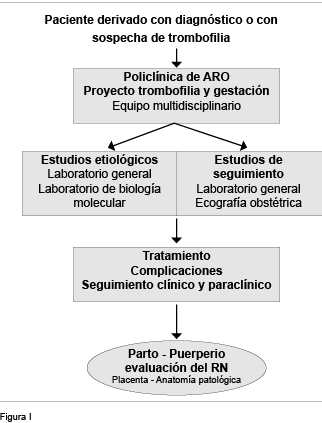
<body><![CDATA[<p  style="text-indent: 0.6cm; margin-bottom: 0cm; line-height: 120%; widows: 0; orphans: 0;"  align="justify" lang="es-ES"> <font style="font-size: 10pt;"  size="2" face="Verdana">En abril de 2004, se forma el grupo de &ldquo;Trombofilia y Gestaci&oacute;n&rdquo;. La meta, lograr reci&eacute;n nacidos vivos y sanos. Este grupo trabaj&oacute; como equipo multidisciplinario en el &aacute;mbito de la Policl&iacute;nica de Alto Riesgo Obst&eacute;trico (ARO) del Hospital de Cl&iacute;nicas, con m&eacute;dicos ginec&oacute;logos de la C&aacute;tedra de Ginecotocolog&iacute;a &ldquo;B&rdquo; Prof. Dr. Ra&uacute;l Medina e integrantes del Departamento de Medicina, internistas docentes de las Cl&iacute;nicas M&eacute;dicas &ldquo;A&rdquo; y &ldquo;B&rdquo;, hemat&oacute;logos, personal de enfermer&iacute;a, as&iacute; como colaboradores del Departamento de Laboratorio Cl&iacute;nico del Hospital de Cl&iacute;nicas y del Departamento B&aacute;sico de Medicina. Se crea un programa de trabajo (<a href="#fig1">Figura I</a>), integr&aacute;ndose al equipo docentes pertenecientes al Departamento de M&eacute;todos Cuantitativos de la Facultad de Medicina de la Universidad de la Rep&uacute;blica (UdelaR).</font></p>     <p style="margin-bottom: 0cm; line-height: 120%; widows: 0; orphans: 0;"  align="left" lang="es-ES"> <font face="Verdana" style="font-size: 10pt" size="2"><a name="fig1"></a><img  style="width: 322px; height: 423px;" alt=""  src="/img/revistas/ami/v33n1/1a02f1.jpg">    <br> </font></p>     <p style="margin-bottom: 0cm; line-height: 120%; widows: 0; orphans: 0;"  align="left" lang="es-ES">&nbsp;</p>     <p style="margin-bottom: 0cm; line-height: 120%; widows: 0; orphans: 0;"  align="left" lang="es-ES"> <font  style="font-size: 10pt;" size="2" face="Verdana"><b>Objetivos</b></font></p>     <p  style="text-indent: 0.6cm; margin-bottom: 0cm; line-height: 120%; widows: 0; orphans: 0;"  align="justify" lang="es-ES"> <font style="font-size: 10pt;"  size="2" face="Verdana">a) Determinar el tipo de trombofilia y su asociaci&oacute;n b) Evaluar complicaciones maternas y perinatales c) Evaluar la vitalidad y el peso de los reci&eacute;n nacidos d) Evaluar las fallas terap&eacute;uticas.</font></p>     <p  style="text-indent: 0.6cm; margin-bottom: 0cm; line-height: 120%; widows: 0; orphans: 0;"  align="justify" lang="es-ES"> <font face="Verdana" size="2">     <br> </font> </p>     <p style="margin-bottom: 0cm; line-height: 120%; widows: 0; orphans: 0;"  align="left" lang="es-ES"> <font  style="font-size: 10pt;" size="2" face="Verdana"><b>MATERIAL y M&Eacute;TODOS </b></font> </p>     <p  style="text-indent: 0.6cm; margin-bottom: 0cm; line-height: 120%; widows: 0; orphans: 0;"  align="justify" lang="es-ES"> <font face="Verdana" size="2">     ]]></body>
<body><![CDATA[<br> </font> </p>     <p  style="text-indent: 0.6cm; margin-bottom: 0cm; line-height: 120%; widows: 0; orphans: 0;"  align="justify" lang="es-ES"> <font style="font-size: 10pt;"  size="2" face="Verdana">Estudio longitudinal prospectivo, entre abril de 2004 y febrero de 2010. Las pacientes fueron asistidas en la policl&iacute;nica de ARO del Hospital de Cl&iacute;nicas los d&iacute;as mi&eacute;rcoles, por un equipo multidisciplinario integrado por obstetras, hemat&oacute;logas e internistas, personal de enfermer&iacute;a y de servicio, archivera y dama rosada que trabajan en la policl&iacute;nica. Control con el equipo de ecograf&iacute;a ginecotocol&oacute;gica, los ex&aacute;menes complementarios se realizaron por el Departamento de Laboratorio Cl&iacute;nico del Hospital de Cl&iacute;nicas y por Departamento B&aacute;sico de Medicina de la Facultad de Medicina. </font> </p>     <p  style="text-indent: 0.6cm; margin-bottom: 0cm; line-height: 120%; widows: 0; orphans: 0;"  align="justify" lang="es-ES"> <font style="font-size: 10pt;"  size="2" face="Verdana">Criterio de inclusi&oacute;n: 1) Antecedentes familiares de patolog&iacute;a tromb&oacute;tica con trombofilia conocida o alta sospecha de trombofilia. 2) Antecedentes personales de trombosis 3) Antecedentes personales de complicaciones obst&eacute;tricas, como las manifestaciones vinculables a trombofilia (MOV): PRE, preeclampsia, eclampsia, RCIU, abortos a repetici&oacute;n, &oacute;bito fetal, decolamientos placentarios (DPP). 4) Trombofilia diagnosticada. Se descartaron otras posibles causas de MOV.</font></p>     <p  style="text-indent: 0.6cm; margin-bottom: 0cm; line-height: 120%; widows: 0; orphans: 0;"  align="justify" lang="es-ES"> <font style="font-size: 10pt;"  size="2" face="Verdana">Se realizaron los estudios diagn&oacute;sticos para investigaci&oacute;n de tromboflia adquirida: anticuerpos anticardiolipinas (ACA), inhibidor l&uacute;pico (IL) y beta2 glicoprote&iacute;na I (&beta;2GPI) y de trombofilias cong&eacute;nitas MTHFR, FVL, Prot.G20210A; siendo las dosificaciones de ATIII, PC, PS, FVIII realizadas luego de finalizado el puerperio.</font></p>     <p  style="text-indent: 0.6cm; margin-bottom: 0cm; line-height: 120%; widows: 0; orphans: 0;"  align="justify" lang="es-ES"> <font style="font-size: 10pt;"  size="2" face="Verdana">Se realiz&oacute; seguimiento con d-d&iacute;meros, ecograf&iacute;a y ecodoppler obst&eacute;trico a partir de las 24 semanas de gestaci&oacute;n, en forma mensual o seg&uacute;n necesidad. No se realiz&oacute; dosificaci&oacute;n de lipoprote&iacute;na &ldquo;a&rdquo; ni de homocisteinemia. </font> </p>     <p  style="text-indent: 0.6cm; margin-bottom: 0cm; line-height: 120%; widows: 0; orphans: 0;"  align="justify" lang="es-ES"> <font style="font-size: 10pt;"  size="2" face="Verdana">Se realiz&oacute; tratamiento con HBPM a dosis 3.800 UI a 16.000 UI anti Xa, &aacute;cido acetil salic&iacute;lico y &aacute;cido f&oacute;lico, de acuerdo a pautas preestablecidas bas&aacute;ndose en consensos nacionales de trombofilias adquiridas y/o recomendaciones internacionales. </font> </p>     <p  style="text-indent: 0.6cm; margin-bottom: 0cm; line-height: 120%; widows: 0; orphans: 0;"  align="justify" lang="es-ES"> <font face="Verdana" size="2">     <br> </font> </p>     <p style="margin-bottom: 0cm; line-height: 120%; widows: 0; orphans: 0;"  align="left" lang="es-ES"> <font  style="font-size: 10pt;" size="2" face="Verdana"><b>RESULTADOS</b></font></p>     <p  style="text-indent: 0.6cm; margin-bottom: 0cm; line-height: 120%; widows: 0; orphans: 0;"  align="justify" lang="es-ES"> <font face="Verdana" size="2">     ]]></body>
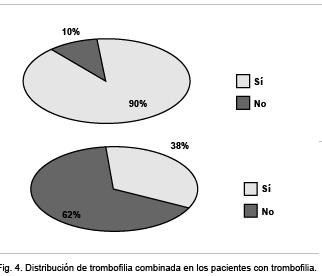
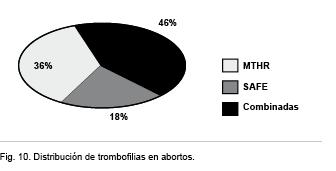
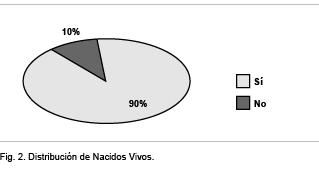
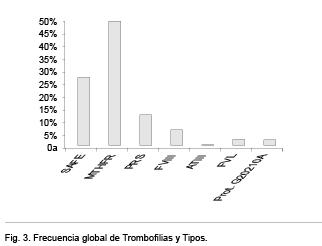
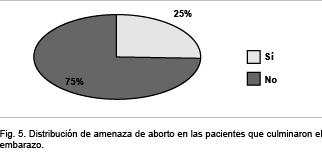
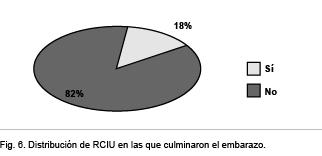
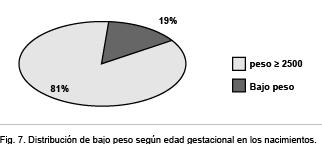
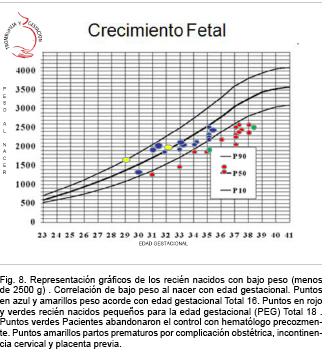
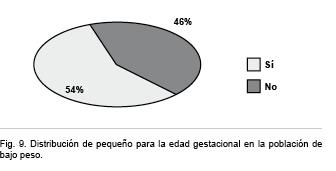
<body><![CDATA[<br> </font> </p>     <p  style="margin-left: 0.6cm; text-indent: -0.6cm; margin-bottom: 0cm; line-height: 120%; widows: 0; orphans: 0;"  align="justify" lang="es-ES"> <font style="font-size: 10pt;"  size="2" face="Verdana">a. De un total de 207 pacientes asistidas que terminaron el embarazo, 90,3% (187/207) tuvieron nacidos vivos. (<a href="#fig2">Figura 2</a>) </font> </p>     <p  style="margin-left: 0.6cm; text-indent: -0.6cm; margin-bottom: 0cm; line-height: 120%; widows: 0; orphans: 0;"  align="justify" lang="es-ES"> <font style="font-size: 10pt;"  size="2" face="Verdana">b. Se diagnostic&oacute; trombofilia en el 63,3% (131/207), teniendo en cuenta que puede presentarse m&aacute;s de una tipo de trombofilia en la misma paciente y que no se pudieron realizar los estudios etiol&oacute;gicos en todas las pacientes. Se encontr&oacute; que de las trombofilias estudiadas, las m&aacute;s frecuentes fueron: la SAF en el 27% (51): 15% (29) ACA IgG, 5% (9) ACA IgM, 4% (8) IL, 3% (5) &beta;2GPI y dentro de las trombofilias cong&eacute;nitas estudiadas: la MTHFR en 49,5% (91) (40% he y 9,5% ho), D&eacute;ficit de Prote&iacute;na S 12% (22 casos), aumento de FVIII 6% (11 casos), el FVL 2,5% (5) y la mutaci&oacute;n del gen de las Protrombina G 20210 A en 2,5% (5) ATIII 0,5% (1) (<a href="#fig3">Figura 3</a>). El 38,2% (50/131) de las pacientes presentaron trombofilia combinada (<a href="#fig4">Figura 4</a>). </font> </p>     <p  style="margin-left: 0.6cm; text-indent: -0.6cm; margin-bottom: 0cm; line-height: 120%; widows: 0; orphans: 0;"  align="justify" lang="es-ES"> <font style="font-size: 10pt;"  size="2" face="Verdana">c. De las pacientes que culminaron su embarazo, las complicaciones vinculadas a la presencia de una trombofilia fueron: 25% presentaron amenaza de aborto, 18% RCIU, 2,9% Preeclampsia/Eclampsia, 1% DPP. (Figuras <a href="#fig5">5</a> y <a href="#fig6">6</a>). No se presentaron complicaciones hemorr&aacute;gicas, trombocitopenia inducida por heparina, ni muerte materna. Una paciente que no cumpli&oacute; con el tratamiento indicado present&oacute; TVP en el puerperio. No existieron complicaciones por sangrados ni trombosis fetales y hubo 3 casos de malformaciones fetales no vinculable a la trombofilia ni al tratamiento. </font> </p>     <p  style="margin-left: 0.6cm; text-indent: -0.6cm; margin-bottom: 0cm; line-height: 120%; widows: 0; orphans: 0;"  align="justify" lang="es-ES"> <font style="font-size: 10pt;"  size="2" face="Verdana">d. Estado de salud del reci&eacute;n nacido. El 90,3% (187/207) fueron reci&eacute;n nacidos vivos. El 81,3% (152 /187) present&oacute; APGAR igual o mayor a 9/9. El peso de reci&eacute;n nacido fue entre 1.032 g y 4.284 g con una media de 2.960 g. Relacionando el peso con la semana gestacional se vi&oacute; que 81,3% (152/187) fueron &gt; o igual 2.500 g y que el 18,7% (35/187) tuvieron bajo peso al nacer. El 54,3% (18/35) de los de bajo peso fueron Peque&ntilde;os para la Edad Gestacional (PEG) (Figuras <a href="#fig7">7</a>, <a href="#fig8">8</a> y <a href="#fig9">9</a>). De los PEG, en dos casos se abandon&oacute; precozmente el control y tratamiento con el hemat&oacute;logo. Dentro de los reci&eacute;n nacidos de bajo peso pero no PEG, 2 fueron prematuros por causa obst&eacute;trica: uno por incontinencia de cuello uterino y otro por placenta previa, causas no vinculables a trombofilia. </font> </p>     <p  style="margin-left: 0.6cm; text-indent: -0.6cm; margin-bottom: 0cm; line-height: 120%; widows: 0; orphans: 0;"  align="justify" lang="es-ES"> <font style="font-size: 10pt;"  size="2" face="Verdana">e. El 9,7% (20/207) fueron resultados adversos: 7,7% (16/207) fueron abortos y 1,9% (4/207) &oacute;bitos fetales. </font> </p>     <p  style="margin-left: 0.6cm; text-indent: -0.6cm; margin-bottom: 0cm; line-height: 120%; widows: 0; orphans: 0;"  align="justify" lang="es-ES"> <font style="font-size: 10pt;"  size="2" face="Verdana"> - A 62,5% (10/16) de los abortos se les tipific&oacute; trombofilia: 36% (4) MTHR he, 18% (1) SAF, y a los 46% (5) restantes trombofilias combinadas (1 MTHFR con FVL; 2 MTHFR con d&eacute;ficit de PRS; 1 SAFE (IL) con d&eacute;ficit PRS; y 1 MTHFR he con Prot.G20210A) (<a href="#fig10">Figura 10</a>).</font></p>     <p  style="margin-left: 0.6cm; text-indent: -0.6cm; margin-bottom: 0cm; line-height: 120%; widows: 0; orphans: 0;"  align="justify" lang="es-ES"> <font style="font-size: 10pt;"  size="2" face="Verdana"> - En 100% (4/4) de los &oacute;bitos fetales se encontr&oacute; trombofilia (2 MTHR he; 1 MTHFR ho; y 1 SAF (ACA).</font></p>     <p  style="margin-left: 0.6cm; text-indent: -0.6cm; margin-bottom: 0cm; line-height: 120%; widows: 0; orphans: 0;"  align="justify" lang="es-ES"> <font  style="font-size: 10pt;" size="2" face="Verdana"><a name="fig2"></a><img  style="width: 319px; height: 170px;" alt=""  src="/img/revistas/ami/v33n1/1a02f2.jpg"></font></p>     <p  style="margin-left: 0.6cm; text-indent: -0.6cm; margin-bottom: 0cm; line-height: 120%; widows: 0; orphans: 0;"  align="justify" lang="es-ES"> <font  style="font-size: 10pt;" size="2" face="Verdana"><a name="fig3"></a><img  style="width: 322px; height: 246px;" alt=""  src="/img/revistas/ami/v33n1/1a02f3.jpg"></font></p>     ]]></body>
<body><![CDATA[<p  style="margin-left: 0.6cm; text-indent: -0.6cm; margin-bottom: 0cm; line-height: 120%; widows: 0; orphans: 0;"  align="justify" lang="es-ES"> <font  style="font-size: 10pt;" size="2" face="Verdana"><a name="fig4"></a><img  style="width: 322px; height: 276px;" alt=""  src="/img/revistas/ami/v33n1/1a02f4.jpg"></font></p>     <p  style="margin-left: 0.6cm; text-indent: -0.6cm; margin-bottom: 0cm; line-height: 120%; widows: 0; orphans: 0;"  align="justify" lang="es-ES"> <font  style="font-size: 10pt;" size="2" face="Verdana"><a name="fig5"></a><img  style="width: 322px; height: 156px;" alt=""  src="/img/revistas/ami/v33n1/1a02f5.jpg"></font></p>     <p  style="margin-left: 0.6cm; text-indent: -0.6cm; margin-bottom: 0cm; line-height: 120%; widows: 0; orphans: 0;"  align="justify" lang="es-ES"> <font  style="font-size: 10pt;" size="2" face="Verdana"><a name="fig6"></a><img  style="width: 322px; height: 156px;" alt=""  src="/img/revistas/ami/v33n1/1a02f6.JPG"></font></p>     <p  style="margin-left: 0.6cm; text-indent: -0.6cm; margin-bottom: 0cm; line-height: 120%; widows: 0; orphans: 0;"  align="justify" lang="es-ES"> <font  style="font-size: 10pt;" size="2" face="Verdana"><a name="fig7"></a><img  style="width: 322px; height: 151px;" alt=""  src="/img/revistas/ami/v33n1/1a02f7.JPG"></font></p>     <p  style="margin-left: 0.6cm; text-indent: -0.6cm; margin-bottom: 0cm; line-height: 120%; widows: 0; orphans: 0;"  align="justify" lang="es-ES"> <font  style="font-size: 10pt;" size="2" face="Verdana"><a name="fig8"></a><img  style="width: 331px; height: 364px;" alt=""  src="/img/revistas/ami/v33n1/1a02f8.JPG"></font></p>     <p  style="margin-left: 0.6cm; text-indent: -0.6cm; margin-bottom: 0cm; line-height: 120%; widows: 0; orphans: 0;"  align="justify" lang="es-ES"> <font  style="font-size: 10pt;" size="2" face="Verdana"><a name="fig9"></a><img  style="width: 336px; height: 171px;" alt=""  src="/img/revistas/ami/v33n1/1a02f9.JPG"></font></p>     <p  style="margin-left: 0.6cm; text-indent: -0.6cm; margin-bottom: 0cm; line-height: 120%; widows: 0; orphans: 0;"  align="justify" lang="es-ES"><font face="Verdana"><font size="2"><img  style="width: 336px; height: 171px;" alt=""  src="/img/revistas/ami/v33n1/1a02f10.JPG"></font><font style="font-size: 10pt;"  size="2"> </font></font> </p>     <p  style="text-indent: 0.6cm; margin-bottom: 0cm; line-height: 120%; widows: 0; orphans: 0;"  align="justify" lang="es-ES"> <font face="Verdana" size="2">     <br> </font> </p>     <p style="margin-bottom: 0cm; line-height: 120%; widows: 0; orphans: 0;"  align="left" lang="es-ES"> <font  style="font-size: 10pt;" size="2" face="Verdana"><b>DISCUSI&Oacute;N Y COMENTARIOS </b></font> </p>     ]]></body>
<body><![CDATA[<p  style="text-indent: 0.6cm; margin-bottom: 0cm; line-height: 120%; widows: 0; orphans: 0;"  align="justify" lang="es-ES"> <font face="Verdana" size="2">     <br> </font> </p>     <p  style="text-indent: 0.6cm; margin-bottom: 0cm; line-height: 120%; widows: 0; orphans: 0;"  align="justify" lang="es-ES"> <font style="font-size: 10pt;"  size="2" face="Verdana">Se diagnostic&oacute; trombofilia en 63,3% de las pacientes-; de &eacute;stas 38,2% fueron trombofilia combinada. De completarse los estudios etiol&oacute;gicos en todas las pacientes, el porcentaje seguramente ser&iacute;a a&uacute;n mayor. El dato que casi el 40 % de las pacientes presenten trombofilia combinada nos obliga a realizar una reflexi&oacute;n: cuando tenemos cl&iacute;nica acorde con compromiso vascular placentario es importante estudiar a las pacientes en forma completa pues puede presentar trombofilia combinada<sup>(<a href="#9">9</a>)</sup>. </font></p>     <p  style="text-indent: 0.6cm; margin-bottom: 0cm; line-height: 120%; widows: 0; orphans: 0;"  align="justify" lang="es-ES"> <font style="font-size: 10pt;"  size="2" face="Verdana">Tambi&eacute;n se diagnostic&oacute; trombofilia en todos los &oacute;bitos fetales y en el 62,5% de los abortos. Este dato es importante pues de presentarse pacientes con p&eacute;rdida de embarazo sin causa aparente, deben ser estudiadas en forma completa y as&iacute; prevenir nuevas p&eacute;rdidas de embarazo. Resultados similares se observaron en un estudio nacional publicado por la Dra Ana M. Otero en 2004, donde se diagnostic&oacute; trombofilia en 65% de la poblaci&oacute;n seleccionada y 20% en la poblaci&oacute;n control <sup>(<a href="#8">8</a>)</sup>.</font></p>     <p  style="text-indent: 0.6cm; margin-bottom: 0cm; line-height: 120%; widows: 0; orphans: 0;"  align="justify" lang="es-ES"> <font style="font-size: 10pt;"  size="2" face="Verdana">Consideramos como &eacute;xito terap&eacute;utico el haber logrado un 90,3% de reci&eacute;n nacidos vivos en una poblaci&oacute;n de pacientes seleccionadas por presentar complicaciones obst&eacute;tricas. El haber tenido 81,3% con buen peso al nacimiento y s&oacute;lo 18,7% con bajo peso al nacimiento, de los cuales s&oacute;lo la mitad fueron PEG, nos indica que la terape&uacute;tica tambi&eacute;n favorece el buen crecimiento fetal. </font> </p>     <p  style="text-indent: 0.6cm; margin-bottom: 0cm; line-height: 120%; widows: 0; orphans: 0;"  align="justify" lang="es-ES"> <font face="Verdana" size="2">     <br> </font> </p>     <p style="margin-bottom: 0cm; line-height: 120%; widows: 0; orphans: 0;"  align="left" lang="es-ES"> <font  style="font-size: 10pt;" size="2" face="Verdana"><b>CONCLUSIONES</b></font></p>     <p  style="text-indent: 0.6cm; margin-bottom: 0cm; line-height: 120%; widows: 0; orphans: 0;"  align="justify" lang="es-ES"> <font face="Verdana" size="2">     <br> </font> </p>     ]]></body>
<body><![CDATA[<p  style="text-indent: 0.6cm; margin-bottom: 0cm; line-height: 120%; widows: 0; orphans: 0;"  align="justify" lang="es-ES"> <font style="font-size: 10pt;"  size="2" face="Verdana">Se confirm&oacute; la alta sospecha cl&iacute;nica de trombofilia en m&aacute;s de la mitad de las pacientes. </font> </p>     <p  style="text-indent: 0.6cm; margin-bottom: 0cm; line-height: 120%; widows: 0; orphans: 0;"  align="justify" lang="es-ES"> <font style="font-size: 10pt;"  size="2" face="Verdana">El tratamiento instituido fue eficaz, lo que qued&oacute; demostrado por el elevado porcentaje de reci&eacute;n nacidos vivos con pesos adecuados para la edad gestacional. </font> </p>     <p  style="text-indent: 0.6cm; margin-bottom: 0cm; line-height: 120%; widows: 0; orphans: 0;"  align="justify" lang="es-ES"> <font style="font-size: 10pt;"  size="2" face="Verdana">Se puede concluir que con control y seguimiento estricto &ndash;tanto cl&iacute;nico como paracl&iacute;nico&ndash;, determinando los ajustes necesarios del tratamiento, se obtienen buenos resultados en pacientes con manifestaciones obst&eacute;tricas vinculables a trombofilia, independientemente de su confirmaci&oacute;n.</font></p>     <p  style="text-indent: 0.6cm; margin-bottom: 0cm; line-height: 120%; widows: 0; orphans: 0;"  align="justify" lang="es-ES"> <font face="Verdana" size="2">     <br> </font> </p>     <p style="margin-bottom: 0cm; line-height: 120%; widows: 0; orphans: 0;"  align="left" lang="es-ES"> <font  style="font-size: 10pt;" size="2" face="Verdana"><b>Agradecimientos </b></font></p>     <p  style="text-indent: 0.6cm; margin-bottom: 0cm; line-height: 120%; widows: 0; orphans: 0;"  align="justify" lang="es-ES"> <font style="font-size: 10pt;"  size="2" face="Verdana">Al personal de enfermer&iacute;a de la Policl&iacute;nica de Alto Riesgo Obst&eacute;trico: Lic. Rubita Neumachinow, Lic. Elida Hern&aacute;ndez y todas las licenciadas en enfermer&iacute;a que trabajan en la policl&iacute;nica, as&iacute; como las Sras. Magal&iacute; Mederos y Ang&eacute;lica Lasida (archivera), cuya colaboraci&oacute;n fue muy importante en controles, aspectos psicol&oacute;gicos y en la instrucci&oacute;n para la autoinyecci&oacute;n de las pacientes. </font> </p>     <p  style="text-indent: 0.6cm; margin-bottom: 0cm; line-height: 120%; widows: 0; orphans: 0;"  align="justify" lang="es-ES"> <font style="font-size: 10pt;"  size="2" face="Verdana">Al personal del laboratorio: Licenciados de laboratorio Alicia Olivera, Daniel Raposo y Carmen Trombotti y a las Dras. Rossana Rodriguez, Mitila Robatto, Florencia Sundberg, Prof. Adj. Cecilia Guillermo y Prof. Agda. Graciela Pedreira.</font></p>     <p  style="text-indent: 0.6cm; margin-bottom: 0cm; line-height: 120%; widows: 0; orphans: 0;"  align="justify" lang="es-ES"> <font style="font-size: 10pt;"  size="2" face="Verdana">A la Direcci&oacute;n del Hospital de Cl&iacute;nicas, en particular a la Dra. Graciela Ubach y al Dr. Daniel Alonso.</font></p>     <p  style="text-indent: 0.6cm; margin-bottom: 0cm; line-height: 120%; widows: 0; orphans: 0;"  align="justify" lang="es-ES"> <font face="Verdana" size="2">     ]]></body>
<body><![CDATA[<br> </font> </p>     <p style="margin-bottom: 0cm; line-height: 120%; widows: 0; orphans: 0;"  align="left" lang="es-ES"> <font  style="font-size: 10pt;" size="2" face="Verdana"><b>BIBLIOGRAF&Iacute;A</b></font></p>     <p  style="text-indent: 0.6cm; margin-bottom: 0cm; line-height: 120%; widows: 0; orphans: 0;"  align="justify" lang="es-ES"> <font face="Verdana" size="2">     <br> </font> </p>     <!-- ref --><p  style="margin-left: 0.6cm; text-indent: -0.6cm; margin-bottom: 0cm; line-height: 120%; widows: 0; orphans: 0;"  align="justify" lang="en-US"> <font style="font-size: 10pt;"  size="1" face="Verdana"><a name="1"></a>1. J. Gilabert, A. Estell&eacute;s, F. Espa&ntilde;a, S. Grancha, J. Aznar Modificaciones de la hemostasis en obstetricia. Cuaderno de Trombosis -1997.    </font></p>     <!-- ref --><p  style="margin-left: 0.6cm; text-indent: -0.6cm; margin-bottom: 0cm; line-height: 120%; widows: 0; orphans: 0;"  align="justify" lang="en-US"> <font style="font-size: 10pt;"  size="1" face="Verdana"><a name="2"></a>2. Stirrat GM. Recurrent miscarriage. Lancet 1990; 336(8716):673-675.    </font></p>     <!-- ref --><p  style="margin-left: 0.6cm; text-indent: -0.6cm; margin-bottom: 0cm; line-height: 120%; widows: 0; orphans: 0;"  align="justify" lang="en-US"> <font style="font-size: 10pt;"  size="1" face="Verdana"><a name="3"></a>3. E. Pons,AM Otero, R Pou. Consenso Uruguayo sobre SAF del embarazo.Montevideo. Agosto 2002;18-19.    </font></p>     ]]></body>
<body><![CDATA[<!-- ref --><p  style="margin-left: 0.6cm; text-indent: -0.6cm; margin-bottom: 0cm; line-height: 120%; widows: 0; orphans: 0;"  align="justify" lang="en-US"> <font style="font-size: 10pt;"  size="1" face="Verdana"><a name="4"></a>4. Lens D, Brugnini A, Tr&iacute;as N y col. Association between recurrent pregnancy loss and prothrombotic gene polymorphisms. 19th Congress of the International Society of Thrombosis and Haemostasis. Birmingham. UK. 15th July 2003. J Throm Haem 2003;1(Suppl 1 ): 0951.    </font></p>     <!-- ref --><p  style="margin-left: 0.6cm; text-indent: -0.6cm; margin-bottom: 0cm; line-height: 120%; widows: 0; orphans: 0;"  align="justify" lang="en-US"> <font style="font-size: 10pt;"  size="1" face="Verdana"><a name="5"></a>5. Lens D, Otero AM, Brugnini A y col. Prevalence of factor V Leiden, prothrombin 20210A and the thermolabile MTHFR in the uruguayan population. Poster presentado en el 18th Congress of the International Society of Thrombosis and Haemostasis. Par&iacute;s. J Throm Haem July 2001;668.    </font></p>     <!-- ref --><p  style="margin-left: 0.6cm; text-indent: -0.6cm; margin-bottom: 0cm; line-height: 120%; widows: 0; orphans: 0;"  align="justify" lang="en-US"> <font style="font-size: 10pt;"  size="1" face="Verdana"><a name="6"></a>6. Kupferminc M.,MD,Eldor A,MD, Steinman N,MD, Many A,MD,Bar-Am A, MD,Jaffa A, MD, Fait G, MD, and Lessing J,MD. Increased frequency of genetic thrombophilia in women with complications of pregnancy.January 7, NEJM 1999;340:9.    </font></p>     <!-- ref --><p  style="margin-left: 0.6cm; text-indent: -0.6cm; margin-bottom: 0cm; line-height: 120%; widows: 0; orphans: 0;"  align="justify" lang="en-US"> <font style="font-size: 10pt;"  size="1" face="Verdana"><a name="7"></a>7. Otero A.M, Pou Ferrari R, Dellepiane M, Muxi P,De Lisa E, Attarian D,Pierri S,Lens D. Pregnancy outcome in women with recurrent pregnant loss treated with enoxaparine. Trombosis and Haemostasis. Suppl. July 2001 SIN 0340-6245.    </font></p>     <!-- ref --><p  style="margin-left: 0.6cm; text-indent: -0.6cm; margin-bottom: 0cm; line-height: 120%; widows: 0; orphans: 0;"  align="justify" lang="en-US"> <font style="font-size: 10pt;"  size="1" face="Verdana"><a name="8"></a>8. Otero AM,Pou R,Pons E,Lens D y col.Trombofilia y p&eacute;rdida recurrente de embarazo. Rev.Med Uruguay 2004;20:106-113.    </font></p>     ]]></body>
<body><![CDATA[<!-- ref --><p  style="margin-left: 0.6cm; text-indent: -0.6cm; margin-bottom: 0cm; line-height: 120%; widows: 0; orphans: 0;"  align="justify" lang="en-US"> <font style="font-size: 10pt;"  size="1" face="Verdana"><a name="9"></a>9. Preston FE, Rosendaal FR et al Increased fetal loss in woman with heritable thrombophilia. Lancet 1996; 348:913.    </font></p>      ]]></body><back>
<ref-list>
<ref id="B1">
<label>1</label><nlm-citation citation-type="journal">
<person-group person-group-type="author">
<name>
<surname><![CDATA[Gilabert]]></surname>
<given-names><![CDATA[J]]></given-names>
</name>
<name>
<surname><![CDATA[Estellés]]></surname>
<given-names><![CDATA[A]]></given-names>
</name>
<name>
<surname><![CDATA[España]]></surname>
<given-names><![CDATA[F]]></given-names>
</name>
<name>
<surname><![CDATA[Grancha]]></surname>
<given-names><![CDATA[S]]></given-names>
</name>
<name>
<surname><![CDATA[Azna]]></surname>
<given-names><![CDATA[J]]></given-names>
</name>
</person-group>
<article-title xml:lang="es"><![CDATA[Modificaciones de la hemostasis en obstetricia]]></article-title>
<source><![CDATA[Cuaderno de Trombosis]]></source>
<year>1997</year>
</nlm-citation>
</ref>
<ref id="B2">
<label>2</label><nlm-citation citation-type="journal">
<person-group person-group-type="author">
<name>
<surname><![CDATA[Stirrat]]></surname>
<given-names><![CDATA[GM]]></given-names>
</name>
</person-group>
<article-title xml:lang="en"><![CDATA[Recurrent miscarriage]]></article-title>
<source><![CDATA[Lancet]]></source>
<year>1990</year>
<volume>336</volume>
<numero>8716</numero>
<issue>8716</issue>
<page-range>673-675</page-range></nlm-citation>
</ref>
<ref id="B3">
<label>3</label><nlm-citation citation-type="">
<person-group person-group-type="author">
<name>
<surname><![CDATA[Pons]]></surname>
<given-names><![CDATA[E]]></given-names>
</name>
<name>
<surname><![CDATA[Otero]]></surname>
<given-names><![CDATA[AM]]></given-names>
</name>
<name>
<surname><![CDATA[Pou]]></surname>
<given-names><![CDATA[R]]></given-names>
</name>
</person-group>
<source><![CDATA[Consenso Uruguayo sobre SAF del embarazo]]></source>
<year>Agos</year>
<month>to</month>
<day> 2</day>
<page-range>18-19</page-range><publisher-loc><![CDATA[Montevideo ]]></publisher-loc>
</nlm-citation>
</ref>
<ref id="B4">
<label>4</label><nlm-citation citation-type="journal">
<person-group person-group-type="author">
<name>
<surname><![CDATA[Lens]]></surname>
<given-names><![CDATA[D]]></given-names>
</name>
<name>
<surname><![CDATA[Brugnini]]></surname>
<given-names><![CDATA[A]]></given-names>
</name>
<name>
<surname><![CDATA[Trías]]></surname>
<given-names><![CDATA[N]]></given-names>
</name>
</person-group>
<article-title xml:lang="en"><![CDATA[Association between recurrent pregnancy loss and prothrombotic gene polymorphisms]]></article-title>
<source><![CDATA[J Throm Haem]]></source>
<year>2003</year>
<volume>1</volume>
<numero>^s1</numero>
<issue>^s1</issue>
<supplement>1</supplement>
<page-range>0951</page-range></nlm-citation>
</ref>
<ref id="B5">
<label>5</label><nlm-citation citation-type="journal">
<person-group person-group-type="author">
<name>
<surname><![CDATA[Lens]]></surname>
<given-names><![CDATA[D]]></given-names>
</name>
<name>
<surname><![CDATA[Otero]]></surname>
<given-names><![CDATA[AM]]></given-names>
</name>
<name>
<surname><![CDATA[Brugnini]]></surname>
<given-names><![CDATA[A]]></given-names>
</name>
</person-group>
<article-title xml:lang="en"><![CDATA[Prevalence of factor V Leiden, prothrombin 20210A and the thermolabile MTHFR in the uruguayan population]]></article-title>
<source><![CDATA[J Throm Haem]]></source>
<year>July</year>
<month> 2</month>
<day>00</day>
<volume>668</volume>
</nlm-citation>
</ref>
<ref id="B6">
<label>6</label><nlm-citation citation-type="journal">
<person-group person-group-type="author">
<name>
<surname><![CDATA[Kupferminc]]></surname>
<given-names><![CDATA[M]]></given-names>
</name>
<name>
<surname><![CDATA[Eldor]]></surname>
<given-names><![CDATA[A]]></given-names>
</name>
<name>
<surname><![CDATA[Steinman]]></surname>
<given-names><![CDATA[N]]></given-names>
</name>
<name>
<surname><![CDATA[Many]]></surname>
<given-names><![CDATA[A]]></given-names>
</name>
<name>
<surname><![CDATA[Bar-Am]]></surname>
<given-names><![CDATA[A]]></given-names>
</name>
<name>
<surname><![CDATA[Jaffa]]></surname>
<given-names><![CDATA[A]]></given-names>
</name>
<name>
<surname><![CDATA[Fait]]></surname>
<given-names><![CDATA[G]]></given-names>
</name>
<name>
<surname><![CDATA[Lessing]]></surname>
<given-names><![CDATA[J]]></given-names>
</name>
</person-group>
<article-title xml:lang="en"><![CDATA[Increased frequency of genetic thrombophilia in women with complications of pregnancy]]></article-title>
<source><![CDATA[NEJM]]></source>
<year>1999</year>
<volume>340</volume>
<page-range>9</page-range></nlm-citation>
</ref>
<ref id="B7">
<label>7</label><nlm-citation citation-type="journal">
<person-group person-group-type="author">
<name>
<surname><![CDATA[Otero]]></surname>
<given-names><![CDATA[A.M]]></given-names>
</name>
<name>
<surname><![CDATA[Pou Ferrari]]></surname>
<given-names><![CDATA[R]]></given-names>
</name>
<name>
<surname><![CDATA[Dellepiane]]></surname>
<given-names><![CDATA[M]]></given-names>
</name>
<name>
<surname><![CDATA[Muxi]]></surname>
<given-names><![CDATA[P]]></given-names>
</name>
<name>
<surname><![CDATA[De Lisa]]></surname>
<given-names><![CDATA[E]]></given-names>
</name>
<name>
<surname><![CDATA[Attarian]]></surname>
<given-names><![CDATA[D]]></given-names>
</name>
<name>
<surname><![CDATA[Pierri]]></surname>
<given-names><![CDATA[S]]></given-names>
</name>
<name>
<surname><![CDATA[Lens]]></surname>
<given-names><![CDATA[D]]></given-names>
</name>
</person-group>
<article-title xml:lang="en"><![CDATA[Pregnancy outcome in women with recurrent pregnant loss treated with enoxaparine]]></article-title>
<source><![CDATA[Trombosis and Haemostasis]]></source>
<year>July</year>
<month> 2</month>
<day>00</day>
<numero>^sSuppl</numero>
<issue>^sSuppl</issue>
<supplement>Suppl</supplement>
<page-range>0340-6245</page-range></nlm-citation>
</ref>
<ref id="B8">
<label>8</label><nlm-citation citation-type="journal">
<person-group person-group-type="author">
<name>
<surname><![CDATA[Otero]]></surname>
<given-names><![CDATA[AM]]></given-names>
</name>
<name>
<surname><![CDATA[Pou]]></surname>
<given-names><![CDATA[R]]></given-names>
</name>
<name>
<surname><![CDATA[Pons]]></surname>
<given-names><![CDATA[E]]></given-names>
</name>
<name>
<surname><![CDATA[Lens]]></surname>
<given-names><![CDATA[D]]></given-names>
</name>
</person-group>
<article-title xml:lang="en"><![CDATA[Trombofilia y pérdida recurrente de embarazo]]></article-title>
<source><![CDATA[Rev.Med Uruguay]]></source>
<year>2004</year>
<volume>20</volume>
<page-range>106-113</page-range></nlm-citation>
</ref>
<ref id="B9">
<label>9</label><nlm-citation citation-type="journal">
<person-group person-group-type="author">
<name>
<surname><![CDATA[Preston]]></surname>
<given-names><![CDATA[FE]]></given-names>
</name>
<name>
<surname><![CDATA[Rosendaal]]></surname>
<given-names><![CDATA[FR]]></given-names>
</name>
</person-group>
<article-title xml:lang="en"><![CDATA[Increased fetal loss in woman with heritable thrombophilia]]></article-title>
<source><![CDATA[Lancet]]></source>
<year>1996</year>
<page-range>348:913</page-range></nlm-citation>
</ref>
</ref-list>
</back>
</article>