<?xml version="1.0" encoding="ISO-8859-1"?><article xmlns:mml="http://www.w3.org/1998/Math/MathML" xmlns:xlink="http://www.w3.org/1999/xlink" xmlns:xsi="http://www.w3.org/2001/XMLSchema-instance">
<front>
<journal-meta>
<journal-id>1688-4221</journal-id>
<journal-title><![CDATA[Ciencias Psicológicas]]></journal-title>
<abbrev-journal-title><![CDATA[Cienc. Psicol.]]></abbrev-journal-title>
<issn>1688-4221</issn>
<publisher>
<publisher-name><![CDATA[Universidad Católica del Uruguay.]]></publisher-name>
</publisher>
</journal-meta>
<article-meta>
<article-id>S1688-42212014000100003</article-id>
<title-group>
<article-title xml:lang="es"><![CDATA[IMPACTO DE LA CALIDAD EDUCATIVA SOBRE EL DESEMPEÑO EN PRUEBAS DE INTELIGENCIA DE NIÑOS CON DIFICULTADES LECTORAS]]></article-title>
<article-title xml:lang="en"><![CDATA[IMPACT OF EDUCATIONAL QUALITY ON TRADITIONAL MEASURES OF INTELLIGENCE: THE CASE OF CHILDREN WITH READING DISABILITIES]]></article-title>
</title-group>
<contrib-group>
<contrib contrib-type="author">
<name>
<surname><![CDATA[Escobar]]></surname>
<given-names><![CDATA[José Pablo]]></given-names>
</name>
<xref ref-type="aff" rid="A01"/>
</contrib>
<contrib contrib-type="author">
<name>
<surname><![CDATA[Tenorio]]></surname>
<given-names><![CDATA[Marcela]]></given-names>
</name>
<xref ref-type="aff" rid="A02"/>
</contrib>
<contrib contrib-type="author">
<name>
<surname><![CDATA[Ceric]]></surname>
<given-names><![CDATA[Francisco]]></given-names>
</name>
<xref ref-type="aff" rid="A03"/>
</contrib>
<contrib contrib-type="author">
<name>
<surname><![CDATA[Rosas]]></surname>
<given-names><![CDATA[Ricardo]]></given-names>
</name>
<xref ref-type="aff" rid="A04"/>
</contrib>
</contrib-group>
<aff id="A01">
<institution><![CDATA[,Pontificia Universidad Católica de Chile  ]]></institution>
<addr-line><![CDATA[ ]]></addr-line>
</aff>
<aff id="A02">
<institution><![CDATA[,Pontificia Universidad Católica de Chile  ]]></institution>
<addr-line><![CDATA[ ]]></addr-line>
</aff>
<aff id="A03">
<institution><![CDATA[,Universidad del Desarrollo  ]]></institution>
<addr-line><![CDATA[ ]]></addr-line>
</aff>
<aff id="A04">
<institution><![CDATA[,Pontificia Universidad Católica de Chile  ]]></institution>
<addr-line><![CDATA[ ]]></addr-line>
</aff>
<pub-date pub-type="pub">
<day>00</day>
<month>05</month>
<year>2014</year>
</pub-date>
<pub-date pub-type="epub">
<day>00</day>
<month>05</month>
<year>2014</year>
</pub-date>
<volume>8</volume>
<numero>1</numero>
<fpage>17</fpage>
<lpage>29</lpage>
<copyright-statement/>
<copyright-year/>
<self-uri xlink:href="http://www.scielo.edu.uy/scielo.php?script=sci_arttext&amp;pid=S1688-42212014000100003&amp;lng=en&amp;nrm=iso"></self-uri><self-uri xlink:href="http://www.scielo.edu.uy/scielo.php?script=sci_abstract&amp;pid=S1688-42212014000100003&amp;lng=en&amp;nrm=iso"></self-uri><self-uri xlink:href="http://www.scielo.edu.uy/scielo.php?script=sci_pdf&amp;pid=S1688-42212014000100003&amp;lng=en&amp;nrm=iso"></self-uri><abstract abstract-type="short" xml:lang="es"><p><![CDATA[La relación entre inteligencia y educación es compleja. Aunque es una discusión no resuelta, hay modelos teóricos que consideran la inteligencia como producto de la educación, bajo mediación de las habilidades lectoras. La calidad educativa parece ejercer un efecto determinante sobre el desarrollo intelectual, con un impacto aún más importante cuando se trata de niños con dificultades lectoras. Este es un estudio longitudinal a tres años que evaluó el impacto de la calidad de la escuela sobre la evolución de coeficiente intelectual en niños con retraso lector. Los resultados muestran desempeños diferenciados en función de la calidad de la escuela (F [2, 112]= 4.310, p< 0.05). Se observa una disminución significativa en las habilidades verbales de los niños que asisten a la escuela de menor calidad (F [2, 112]= 4.184, p<0.05). Los resultados se discuten a la luz de la calidad en las oportunidades educativas y el papel que el desarrollo lector tiene en la relación entre educación e inteligencia]]></p></abstract>
<abstract abstract-type="short" xml:lang="en"><p><![CDATA[The relationship between intelligence and education is complex. While the matter has not been settled, there are theoretical models that consider intelligence as a product of education, closely related to reading skills. The quality of education plays a determinant effect upon intellectual development. This effect is even more important if the children have reading disabilities. We followed fifty-eight children of school age during three years. To analyze the data, the sample was purposely split according the quality of the educational institutions they attended. Results show differences in intellectual development as a function of school quality (F [2, 112] = 4.310, p< 0.05). We also observed a significant decrease of verbal abilities of children in the lesser quality school (F [2, 112] = 4.184, p<0.05). The discussion of these results focuses on the quality of educational opportunities and the role of reading development in the relationship between education and intelligence]]></p></abstract>
<kwd-group>
<kwd lng="es"><![CDATA[inteligencia]]></kwd>
<kwd lng="es"><![CDATA[educación]]></kwd>
<kwd lng="es"><![CDATA[calidad educativa]]></kwd>
<kwd lng="es"><![CDATA[desarrollo lector]]></kwd>
<kwd lng="en"><![CDATA[intelligence]]></kwd>
<kwd lng="en"><![CDATA[education]]></kwd>
<kwd lng="en"><![CDATA[educational quality]]></kwd>
<kwd lng="en"><![CDATA[reading development]]></kwd>
</kwd-group>
</article-meta>
</front><body><![CDATA[ <div class="Section1">      <p class="western" style="margin: 5pt 51.15pt 0.0001pt 1cm; text-align: center; line-height: 120%;" align="center"><b><span style="font-family: &quot;Arial&quot;,&quot;sans-serif&quot;;">IMPACTO DE LA CALIDAD EDUCATIVA SOBRE EL DESEMPE&Ntilde;O EN PRUEBAS DE INTELIGENCIA DE NI&Ntilde;OS CON DIFICULTADES LECTORAS</span></b></p>       <p class="western" style="margin: 5pt 51.15pt 0.0001pt 1cm; text-align: justify; line-height: 120%;"><span style="" lang="ES-UY"><o:p>&nbsp;</o:p></span></p>       <p class="western" style="margin: 5pt 51.15pt 0.0001pt 1cm; text-align: center; line-height: 120%;" align="center"><b><span style="font-size: 10pt; line-height: 120%; font-family: &quot;Arial&quot;,&quot;sans-serif&quot;;" lang="EN-US">IMPACT OF EDUCATIONAL QUALITY ON TRADITIONAL MEASURES OF INTELLIGENCE: THE CASE OF CHILDREN WITH READING DISABILITIES</span></b><span style="" lang="EN-US"><o:p></o:p></span></p>       <p class="western" style="margin: 5pt 51.15pt 0.0001pt 1cm; text-align: justify; line-height: 120%;"><span style="" lang="EN-US"><o:p>&nbsp;</o:p></span></p>       <p class="western" style="margin: 5pt 51.15pt 0.0001pt 1cm; text-align: center; line-height: 120%;" align="center"><b><i><span style="font-size: 10pt; line-height: 120%; font-family: &quot;Arial&quot;,&quot;sans-serif&quot;;">Jos&eacute; Pablo Escobar</span></i></b></p>       <p class="western" style="margin: 5pt 51.15pt 0.0001pt 1cm; text-align: center; line-height: 120%;" align="center"><i><span style="font-size: 9pt; line-height: 120%; font-family: &quot;Arial&quot;,&quot;sans-serif&quot;;">Pontificia Universidad Cat&oacute;lica de Chile</span></i></p>       <p class="western" style="margin: 5.65pt 51.15pt 0.0001pt 1cm; text-align: center; line-height: 120%;" align="center"><b><i><span style="font-size: 10pt; line-height: 120%; font-family: &quot;Arial&quot;,&quot;sans-serif&quot;;">Marcela Tenorio</span></i></b></p>       <p class="western" style="margin: 5pt 51.15pt 0.0001pt 1cm; text-align: center; line-height: 120%;" align="center"><i><span style="font-size: 9pt; line-height: 120%; font-family: &quot;Arial&quot;,&quot;sans-serif&quot;;">Pontificia Universidad Cat&oacute;lica de Chile</span></i></p>       <p class="western" style="margin: 5.65pt 51.15pt 0.0001pt 1cm; text-align: center; line-height: 120%;" align="center"><b><i><span style="font-size: 10pt; line-height: 120%; font-family: &quot;Arial&quot;,&quot;sans-serif&quot;;">Francisco Ceric</span></i></b></p>       ]]></body>
<body><![CDATA[<p class="western" style="margin: 5pt 51.15pt 0.0001pt 1cm; text-align: center; line-height: 120%;" align="center"><i><span style="font-size: 9pt; line-height: 120%; font-family: &quot;Arial&quot;,&quot;sans-serif&quot;;">Universidad del Desarrollo, Chile</span></i></p>       <p class="western" style="margin: 5.65pt 51.15pt 0.0001pt 1cm; text-align: center; line-height: 120%;" align="center"><b><i><span style="font-size: 10pt; line-height: 120%; font-family: &quot;Arial&quot;,&quot;sans-serif&quot;;">Ricardo Rosas</span></i></b></p>       <p class="western" style="margin: 5pt 51.15pt 0.0001pt 1cm; text-align: center; line-height: 120%;" align="center"><i><span style="font-size: 9pt; line-height: 120%; font-family: &quot;Arial&quot;,&quot;sans-serif&quot;;">Pontificia Universidad Cat&oacute;lica de Chile</span></i></p>       <p class="western" style="margin: 5pt 51.15pt 12pt 1cm; text-align: justify;"><o:p>&nbsp;</o:p></p>       <p style="margin: 5pt 51.15pt 0.0001pt 1cm; text-align: justify; line-height: 120%;"><b><i><span style="font-size: 9pt; line-height: 120%;" lang="ES-UY">Resumen: </span></i></b><span style="font-size: 9pt; line-height: 120%;" lang="ES-UY">La relaci&oacute;n entre inteligencia y educaci&oacute;n es compleja. Aunque es una discusi&oacute;n no resuelta, hay modelos te&oacute;ricos que consideran la inteligencia como producto de la educaci&oacute;n, bajo mediaci&oacute;n de las habilidades lectoras. La calidad educativa parece ejercer un efecto determinante sobre el desarrollo intelectual, con un impacto a&uacute;n m&aacute;s importante cuando se trata de ni&ntilde;os con dificultades lectoras. Este es un estudio longitudinal a tres a&ntilde;os que evalu&oacute; el impacto de la calidad de la escuela sobre la evoluci&oacute;n de coeficiente intelectual en ni&ntilde;os con retraso lector. Los resultados muestran desempe&ntilde;os diferenciados en funci&oacute;n de la calidad de la escuela (F [2, 112]= 4.310, p&lt; 0.05). Se observa una disminuci&oacute;n significativa en las habilidades verbales de los ni&ntilde;os que asisten a la escuela de menor calidad (F [2, 112]= 4.184, p&lt;0.05). Los resultados se discuten a la luz de la calidad en las oportunidades educativas y el papel que el desarrollo lector tiene en la relaci&oacute;n entre educaci&oacute;n e inteligencia.</span></p>       <p style="margin: 5pt 51.15pt 0.0001pt 1cm; text-align: justify; line-height: 120%;"><b><i><span style="font-size: 9pt; line-height: 120%;" lang="ES-UY">Palabras Clave: </span></i></b><i><span style="font-size: 9pt; line-height: 120%;" lang="ES-UY">inteligencia, educaci&oacute;n, calidad educativa, desarrollo lector</span></i></p>       <p style="margin: 5pt 51.15pt 0.0001pt 1cm; text-align: justify; line-height: 120%;"><b><i><span style="font-size: 9pt; line-height: 120%;" lang="EN-US">Abstract: </span></i></b><span style="font-size: 9pt; line-height: 120%;" lang="EN-US">The relationship between intelligence and education is complex. While the matter has not been settled, there are theoretical models that consider intelligence as a product of education, closely related to reading skills. The quality of education plays a determinant effect upon intellectual development. This effect is even more important if the children have reading disabilities. We followed fifty-eight children of school age during three years. To analyze the data, the sample was purposely split according the quality of the educational institutions they attended. Results show differences in intellectual development as a function of school quality (F [2, 112] = 4.310, p&lt; 0.05). We also observed a significant decrease of verbal abilities of children in the lesser quality school (F [2, 112] = 4.184, p&lt;0.05). The discussion of these results focuses on the quality of educational opportunities and the role of reading development in the relationship between education and intelligence.</span><span style="" lang="EN-US"><o:p></o:p></span></p>       <p class="western" style="margin: 5pt 51.15pt 9.9pt 1cm; text-align: justify;"><b><i><span style="font-size: 9pt; line-height: 115%; font-family: &quot;Times New Roman&quot;,&quot;serif&quot;;" lang="EN-US">Keywords: </span></i></b><i><span style="font-size: 9pt; line-height: 115%; font-family: &quot;Times New Roman&quot;,&quot;serif&quot;;" lang="EN-US">intelligence, education, educational quality, reading development</span></i><span style="" lang="EN-US"><o:p></o:p></span></p>       <p class="western" style="margin: 5pt 51.15pt 0.0001pt 1cm; text-align: justify; line-height: 120%;"><i><span style="font-size: 8pt; line-height: 120%; font-family: &quot;Times New Roman&quot;,&quot;serif&quot;;" lang="EN-US"><o:p>&nbsp;</o:p></span></i></p>       <p class="western" style="margin: 5pt 51.15pt 0.0001pt 1cm; text-align: justify; line-height: 120%;"><i><span style="font-size: 8pt; line-height: 120%; font-family: &quot;Times New Roman&quot;,&quot;serif&quot;;">Este estudio fue financiado por el Consejo Nacional de Ciencia y Tecnolog&iacute;a del Gobierno de Chile (CONICyT) a trav&eacute;s del proyecto FONDECYT 1085217. MT agradece el apoyo del FONDECYT v&iacute;a programa postdoctoral, proyecto 3130612. </span></i></p>       ]]></body>
<body><![CDATA[<p style="margin: 5pt 51.15pt 0.0001pt 1cm; text-align: justify; line-height: 120%;"><i><span style="font-size: 8pt; line-height: 120%;">Correspondencia: Jos&eacute; Pablo Escobar. Escuela de Psicolog&iacute;a. Pontificia Universidad Cat&oacute;lica de Chile. Correo Electr&oacute;nico: </span></i><u><span style="color: blue;"><a href="mailto:jpescobar@uc.cl"><i><span style="font-size: 8pt; line-height: 120%;">jpescobar@uc.cl</span></i></a></span></u></p>       <p style="margin: 5pt 51.15pt 0.0001pt 1cm; text-align: justify; line-height: 120%;"><i><span style="font-size: 8pt; line-height: 120%; font-family: &quot;Arial&quot;,&quot;sans-serif&quot;;">Recibido: 01/2014</span></i></p>       <p style="margin: 5pt 51.15pt 0.0001pt 1cm; text-align: justify; line-height: 120%;"><i><span style="font-size: 8pt; line-height: 120%; font-family: &quot;Arial&quot;,&quot;sans-serif&quot;;">Revisado: 03/2014</span></i></p>       <p style="margin: 5pt 51.15pt 0.0001pt 1cm; text-align: justify; line-height: 120%;"><i><span style="font-size: 8pt; line-height: 120%; font-family: &quot;Arial&quot;,&quot;sans-serif&quot;;">Aceptado: 04/2014</span></i></p>       <p style="margin: 5pt 51.15pt 0.0001pt 1cm; text-align: justify; line-height: 120%;"><o:p>&nbsp;</o:p></p>       <p class="western" style="margin: 5pt 51.15pt 0.0001pt 1cm; text-align: justify; line-height: 150%;"><b><span style="font-size: 10pt; line-height: 150%; font-family: &quot;Arial&quot;,&quot;sans-serif&quot;;">Introducci&oacute;n</span></b></p>       <p class="western" style="margin: 5pt 51.15pt 0.0001pt 1cm; text-align: justify; line-height: 150%;"><o:p>&nbsp;</o:p></p>       <p class="western" style="margin: 5pt 51.15pt 0.0001pt 1cm; text-align: justify; text-indent: 19.85pt; line-height: 150%;"><span style="font-size: 10pt; line-height: 150%; font-family: &quot;Arial&quot;,&quot;sans-serif&quot;;">La relaci&oacute;n entre educaci&oacute;n e inteligencia es compleja dados los m&uacute;ltiples factores participantes. Se ha planteado una relaci&oacute;n causal y directa entre inteligencia y desempe&ntilde;o escolar (<a name="Bartels_"></a><a href="#Bartels">Bartels</a>, Rietveld, Van Baal &amp; Boomsma, 2002; <a name="Deary007"></a><a href="#Deary07">Deary</a>, Strand, Smith &amp; Fernandes, 2007; <a name="Laidra_"></a><a href="#Laidra">Laidra</a>, Pullmann y Allik, 2007; <a name="Lynn_07"></a><a href="#Lynn07">Lynn</a> &amp; Mikk, 2007). Dicha relaci&oacute;n podr&iacute;a estar mediada por el nivel socio-econ&oacute;mico de los padres (<a name="Loehlin_"></a><a href="#Loehlin">Loehlin</a>, 2000; <a name="Najman_"></a><a href="#Najman">Najman</a> et al., 2004), pero la falta de evidencia conclusiva sobre esta relaci&oacute;n obliga la consideraci&oacute;n de otros factores (<a name="Kuncel_"></a><a href="#Kuncel">Kuncel</a>, Ones &amp; Sackett, 2010; <a name="Mackintosh_"></a><a href="#Mackintosh">Mackintosh</a>, 1998; <a name="Nagoshi_"></a><a href="#Nagoshi">Nagoshi</a> &amp; Johnson, 2004; <a name="Thienpont_"></a><a href="#Thienpont">Thienpont</a> &amp; Verleye, 2003). Dentro de estos factores, el nivel de competencia lectora de los ni&ntilde;os parece ser un punto crucial (<a name="Ramsden_"></a><a href="#Ramsden">Ramsden</a> et al., 2013; <a name="Stanovich_84"></a><a href="#Stanovich84">Stanovich</a>, Cunningham &amp; Feeman, 1984). </span></p>       <p class="western" style="margin: 5pt 51.15pt 0.0001pt 1cm; text-align: justify; text-indent: 19.85pt; line-height: 150%;"><span style="font-size: 10pt; line-height: 150%; font-family: &quot;Arial&quot;,&quot;sans-serif&quot;;">Bajo este contexto general, este estudio eval&uacute;a el impacto que tiene la calidad educativa sobre medidas estandarizadas de inteligencia, a partir del estudio longitudinal de ni&ntilde;os con problemas lectores. </span></p>       <p class="western" style="margin: 5pt 51.15pt 0.0001pt 1cm; text-align: justify; line-height: 150%;"><o:p>&nbsp;</o:p></p>       ]]></body>
<body><![CDATA[<p class="western" style="margin: 5pt 51.15pt 0.0001pt 1cm; text-align: justify; line-height: 150%;"><b><i><span style="font-size: 10pt; line-height: 150%; font-family: &quot;Arial&quot;,&quot;sans-serif&quot;;">&iquest;Qu&eacute; entender por inteligencia?</span></i></b></p>       <p class="western" style="margin: 5pt 51.15pt 0.0001pt 1cm; text-align: justify; text-indent: 19.85pt; line-height: 150%;"><o:p>&nbsp;</o:p></p>       <p class="western" style="margin: 5pt 51.15pt 0.0001pt 1cm; text-align: justify; text-indent: 19.85pt; line-height: 150%;"><span style="font-size: 10pt; line-height: 150%; font-family: &quot;Arial&quot;,&quot;sans-serif&quot;;">Los trabajos pioneros en inteligencia estuvieron centrados en la evaluaci&oacute;n del constructo y, en principio, tipificaron su relaci&oacute;n con la educaci&oacute;n en t&eacute;rminos de predicci&oacute;n. Se suger&iacute;a que a mayor inteligencia mejor desempe&ntilde;o escolar (<a name="Binet_"></a><a href="#Binet">Binet</a>, 1905; <a name="Spearman_"></a><a href="#Spearman">Spearman</a>, 1904). </span></p>       <p class="western" style="margin: 5pt 51.15pt 0.0001pt 1cm; text-align: justify; text-indent: 19.85pt; line-height: 150%;"><span style="font-size: 10pt; line-height: 150%; font-family: &quot;Arial&quot;,&quot;sans-serif&quot;;">En los modelos cl&aacute;sicos (<a name="Galton_"></a><a href="#Galton">Galton</a>, 1869; <a name="Cattell_"></a><a href="#Cattell">Cattell</a>, 1971) se estableci&oacute; un acuerdo parcial en torno a la idea del &ldquo;factor g&rdquo;, entendido como aquel valor &uacute;nico que, en teor&iacute;a, permit&iacute;a dar cuenta de la totalidad de las habilidades intelectuales de un sujeto. As&iacute;, inicialmente se atribuyeron tres caracter&iacute;sticas fundamentales a la inteligencia: (1) constitu&iacute;a el techo para el desempe&ntilde;o educativo, (2) representaba un concepto est&aacute;tico no sensible a la acci&oacute;n del medio exterior y (3) ocupaba el lugar de la variable independiente en los modelos comprensivos del logro escolar. </span></p>       <p class="western" style="margin: 5pt 51.15pt 0.0001pt 1cm; text-align: justify; text-indent: 19.85pt; line-height: 150%;"><span style="font-size: 10pt; line-height: 150%; font-family: &quot;Arial&quot;,&quot;sans-serif&quot;;">La teor&iacute;a del factor g gener&oacute; una comprensi&oacute;n est&aacute;tica de la inteligencia y con ello se ignor&oacute; que una buena parte de los m&eacute;todos de evaluaci&oacute;n est&aacute;n &iacute;ntimamente imbricados con la cultura (<a name="Sternberg_04"></a><a href="#Sternberg04">Sternberg</a>, 2004; <a name="Sternberg_05"></a><a href="#Sternberg05">Sternberg</a>, 2005). Sin embargo, con la incorporaci&oacute;n de nuevos m&eacute;todos de an&aacute;lisis estad&iacute;stico ha sido posible encontrar evidencia emp&iacute;rica que permite pensar la inteligencia como un constructo din&aacute;mico en estrecha relaci&oacute;n con factores sociales y culturales. </span></p>       <p class="western" style="margin: 5pt 51.15pt 0.0001pt 1cm; text-align: justify; text-indent: 19.85pt; line-height: 150%;"><span style="font-size: 10pt; line-height: 150%; font-family: &quot;Arial&quot;,&quot;sans-serif&quot;;">Bajo los marcos conceptuales modernos se entiende que la acci&oacute;n ejercida por la cultura, y espec&iacute;ficamente por la educaci&oacute;n, puede producir cambios significativos sobre el desempe&ntilde;o de los sujetos en tareas de evaluaci&oacute;n de inteligencia (<a name="Cliffordson_"></a><a href="#Cliffordson">Cliffordson</a> &amp; Gustafsson, 2008; <a name="Neisser_"></a><a href="#Neisser">Neisser</a> et al., 1996; <a name="Nickerson_"></a><a href="#Nickerson">Nickerson</a>, 2011). Adem&aacute;s se reconoce que los instrumentos para evaluaci&oacute;n de habilidades intelectuales dependen del bagaje cultural del sujeto (<a name="American_"></a><a href="#American">American</a> Educational Research Association, American Psychological Association y National Council on Meausurement in Education, [AERA, APA &amp; NCME],1999). Se ha sugerido tambi&eacute;n que una buena educaci&oacute;n potencia las habilidades intelectuales, mientras una mala educaci&oacute;n va en contra del desarrollo cognitivo (<a name="Burger_"></a><a href="#Burger">Burger</a>, 2010; <a name="Ceci_997"></a><a href="#Ceci_97">Ceci</a> &amp; <a name="Williams_"></a><a href="#Williams">Williams</a>, 1997). </span></p>       <p class="western" style="margin: 5pt 51.15pt 0.0001pt 1cm; text-align: justify; text-indent: 19.85pt; line-height: 150%;"><span style="font-size: 10pt; line-height: 150%; font-family: &quot;Arial&quot;,&quot;sans-serif&quot;;">Con esta transformaci&oacute;n conceptual tambi&eacute;n han cambiado las caracter&iacute;sticas atribuidas a la inteligencia: (1) se convierte en punto de inicio, la capacidad base con que cuenta un sujeto al momento de abordar los aprendizajes; (2) es posible asumir que se trata de un constructo din&aacute;mico en constante transformaci&oacute;n y; (3) entra a ubicar el lugar de la variable dependiente.</span></p>       <p class="western" style="margin: 5pt 51.15pt 0.0001pt 1cm; text-align: justify; text-indent: 19.85pt; line-height: 150%;"><o:p>&nbsp;</o:p></p>       <p class="western" style="margin: 5pt 51.15pt 0.0001pt 1cm; text-align: justify; line-height: 150%;"><b><i><span style="font-size: 10pt; line-height: 150%; font-family: &quot;Arial&quot;,&quot;sans-serif&quot;;">Relaciones entre educaci&oacute;n e inteligencia en ni&ntilde;os </span></i></b></p>       <p class="western" style="margin: 5pt 51.15pt 0.0001pt 1cm; text-align: justify; line-height: 150%;"><o:p>&nbsp;</o:p></p>       ]]></body>
<body><![CDATA[<p class="western" style="margin: 5pt 51.15pt 0.0001pt 1cm; text-align: justify; text-indent: 19.85pt; line-height: 150%;"><span style="font-size: 10pt; line-height: 150%; font-family: &quot;Arial&quot;,&quot;sans-serif&quot;;">La escuela promueve muchas de las habilidades y conocimientos que se encuentran a la base de las pruebas usadas para medir inteligencia. Por esta raz&oacute;n se afirma que la exploraci&oacute;n de inteligencia no es m&aacute;s que la evaluaci&oacute;n de la oportunidad educativa (<a name="Ceci_991"></a><a href="#Ceci">Ceci</a>, 1991; <a href="#Ceci_97">Ceci</a> &amp; <a href="#Williams">Williams</a>, 1997; <a href="#Neisser">Neisser</a> et al., 1996; <a name="Rosas_13"></a><a href="#Rosas13">Rosas</a> y Santacruz, 2013; <a href="#Sternberg04">Sternberg</a>, 2004). Se ha demostrado un efecto m&aacute;s fuerte de la escolaridad, en comparaci&oacute;n con la edad, en tareas de inteligencia al medir a ni&ntilde;os con desarrollo t&iacute;pico. Esto se considera evidencia a favor de la inteligencia como variable dependiente (<a name="Cahan_"></a><a href="#Cahan">Cahan</a> y Cohen, 1989; <a href="#Cliffordson">Cliffordson</a> &amp; Gustafsson, 2008; <a name="Herrnstein_"></a><a href="#Herrnstein">Herrnstein</a> &amp; Murray, 1994; <a name="Winship_"></a><a href="#Winship">Winship</a> &amp; Korenman, 1997; <a href="#Williams">Williams</a>, 1998). </span></p>       <p class="western" style="margin: 5pt 51.15pt 0.0001pt 1cm; text-align: justify; text-indent: 19.85pt; line-height: 150%;"><span style="font-size: 10pt; line-height: 150%; font-family: &quot;Arial&quot;,&quot;sans-serif&quot;;">Tambi&eacute;n hay evidencia que soporta la idea de que una educaci&oacute;n basada en el aprendizaje de contenidos espec&iacute;ficos se relaciona con mayores ganancias intelectuales (<a name="Harnqvist_"></a><a href="#Harnqvist">H&auml;rnqvist</a>, 1968), con una influencia que se mantiene constante a trav&eacute;s de los grados escolares (<a name="Campbell_"></a><a href="#Campbell">Campbell</a> &amp; Ramey, 1994). </span></p>       <p class="western" style="margin: 5pt 51.15pt 0.0001pt 1cm; text-align: justify; text-indent: 19.85pt; line-height: 150%;"><span style="font-size: 10pt; line-height: 150%; font-family: &quot;Arial&quot;,&quot;sans-serif&quot;;">Varias investigaciones han planteado una relaci&oacute;n directa entre la ganancia de puntos de coeficiente intelectual en evaluaci&oacute;n y las reformas implementadas en el sistema educativo con el objetivo de elevar la calidad (<a name="Barber_"></a><a href="#Barber">Barber</a>, 2005; <a name="Teasdale_"></a><a href="#Teasdale">Teasdale</a> &amp; Owen, 2000). Se ha establecido tambi&eacute;n una relaci&oacute;n indirecta, b&aacute;sicamente a trav&eacute;s de la hip&oacute;tesis de mediaci&oacute;n, ejercida por la calidad de vida que goza la familia a la cual pertenece el evaluado (<a href="#Ceci_97">Ceci</a> &amp; <a href="#Williams">Williams</a>, 1997). </span></p>       <p class="western" style="margin: 5pt 51.15pt 0.0001pt 1cm; text-align: justify; text-indent: 19.85pt; line-height: 150%;"><span style="font-size: 10pt; line-height: 150%; font-family: &quot;Arial&quot;,&quot;sans-serif&quot;;">El debate no est&aacute; zanjado y por ello se hace necesario aportar evidencia emp&iacute;rica adicional (<a name="Deary010"></a><a href="#Deary10">Deary</a>, Penke &amp; Jhonson, 2010; <a href="#Herrnstein">Herrnstein</a> y Murray, 1994; <a href="#Laidra">Laidra</a> et al., 2007; <a name="Lynn_09"></a><a href="#Lynn09">Lynn</a> y Mikk, 2009; <a href="#Harnqvist">H&auml;rnqvist</a>, 1968). En este papel que parece jugar la escuela a trav&eacute;s de la v&iacute;a de la calidad y la participaci&oacute;n, se ha sugerido que el alcance de las escuelas que atienden a ni&ntilde;os en situaci&oacute;n de vulnerabilidad social deber&iacute;a ser mayor, en tanto se requiere no solo compensar posibles d&eacute;ficits asociados a problemas del desarrollo observados en pobreza (<a name="Farah_"></a><a href="#Farah">Farah</a> et al., 2006), sino tambi&eacute;n las carencias contextuales de la poblaci&oacute;n atendida (<a name="Brunner_"></a><a href="#Brunner">Brunner</a> &amp; Elacqua, 2004; <a name="Zax_"></a><a href="#Zax">Zax</a> &amp; Rees, 2002). </span></p>       <p class="western" style="margin: 5pt 51.15pt 0.0001pt 1cm; text-align: justify; text-indent: 19.85pt; line-height: 150%;"><span style="font-size: 10pt; line-height: 150%; font-family: &quot;Arial&quot;,&quot;sans-serif&quot;;">Un punto relevante en este argumento es que, al aceptar la idea de que una escuela puede potenciar el coeficiente intelectual, tambi&eacute;n debe aceptarse que puede disminuirlo. Investigaciones han mostrado que variables como la continua y sistem&aacute;tica inasistencia a clase, la deserci&oacute;n escolar, el ingreso escolar tard&iacute;o, el egreso temprano y la mala calidad de los docentes que interact&uacute;an con los ni&ntilde;os, son variables que van a actuar en detrimento del desarrollo cognitivo (<a href="#Ceci_97">Ceci</a> &amp; <a href="#Williams">Williams</a>, 1997; <a name="Huttenlocher_"></a><a href="#Huttenlocher">Huttenlocher</a>, Levine &amp; Vevea, 1998). </span></p>       <p class="western" style="margin: 5pt 51.15pt 0.0001pt 1cm; text-align: justify; text-indent: 19.85pt; line-height: 150%;"><span style="font-size: 10pt; line-height: 150%; font-family: &quot;Arial&quot;,&quot;sans-serif&quot;;">No podemos obviar que las escalas de inteligencia tipo Wechsler se construyen en base al desempe&ntilde;o de ni&ntilde;os escolarizados y por ello, mantener el CI a lo largo del desarrollo, implica avanzar en los conocimientos adquiridos v&iacute;a educaci&oacute;n. En cambio, el desmedro en la calidad de la educaci&oacute;n traer&aacute; como consecuencia la adquisici&oacute;n de menos conocimientos y a la vuelta un menor puntaje en este tipo de escalas. </span></p>       <p class="western" style="margin: 5pt 51.15pt 0.0001pt 1cm; text-align: justify; text-indent: 19.85pt; line-height: 150%;"><o:p>&nbsp;</o:p></p>       <p class="western" style="margin: 5pt 51.15pt 0.0001pt 1cm; text-align: justify; line-height: 150%;"><b><i><span style="font-size: 10pt; line-height: 150%; font-family: &quot;Arial&quot;,&quot;sans-serif&quot;;">&iquest;Y el caso de los ni&ntilde;os con dificultades lectoras en vulnerabilidad social?</span></i></b></p>       <p class="western" style="margin: 5pt 51.15pt 0.0001pt 1cm; text-align: justify; line-height: 150%;"><o:p>&nbsp;</o:p></p>       <p class="western" style="margin: 5pt 51.15pt 0.0001pt 1cm; text-align: justify; text-indent: 19.85pt; line-height: 150%;"><span style="font-size: 10pt; line-height: 150%; font-family: &quot;Arial&quot;,&quot;sans-serif&quot;;">Varias investigaciones han reportado que las dificultades en el aprendizaje lector de ni&ntilde;os de bajo NSE, resultan de d&eacute;ficits cognitivos asociados a variables propias de la pobreza como baja nutrici&oacute;n o escaso capital cultural en los padres; pero tambi&eacute;n hay evidencia que sugiere que hay serios problemas instruccionales derivados de baja calidad educativa en estos ambientes (<a name="Alloway_"></a><a href="#Alloway">Alloway</a>, Alloway &amp; Wootan, 2014; <a name="Vellutino_08"></a><a href="#Vellutino08">Vellutino</a>, Scanlon, Zhang &amp; Schatschneider, 2008; <a name="Vellutino_96"></a><a href="#Vellutino96">Vellutino</a> et al., 1996). </span></p>       ]]></body>
<body><![CDATA[<p class="western" style="margin: 5pt 51.15pt 0.0001pt 1cm; text-align: justify; text-indent: 19.85pt; line-height: 150%;"><span style="font-size: 10pt; line-height: 150%; font-family: &quot;Arial&quot;,&quot;sans-serif&quot;;">En general, los ni&ntilde;os que viven en vulnerabilidad social inician su aprendizaje lector con problemas en los predictores, espec&iacute;ficamente se ha reportado escaso conocimiento de las letras, dificultades ling&uuml;&iacute;sticas y pobre conciencia fonol&oacute;gica (<a name="Noble_"></a><a href="#Noble">Noble</a>, Farah &amp; McCandliss, 2006; <a name="Tunmer_"></a><a href="#Tunmer">Tunmer</a>, Chapman &amp; Prochnow, 2006; <a name="Whitehurts_"></a><a href="#Whitehurts">Whitehurts</a> &amp; Lonigan, 1998). En t&eacute;rminos generales, los ni&ntilde;os de NSE bajo tienen m&aacute;s posibilidades de ser lectores de bajo desempe&ntilde;o y esto trae como consecuencia un impacto negativo, afecta su nivel lector y su desarrollo intelectual (<a name="Shaywitz_05"></a><a href="#Shaywitz05">Shaywitz</a> &amp; Shaywitz, 2005; <a href="#Neisser">Neisser</a> et al., 1996). </span></p>       <p class="western" style="margin: 5pt 51.15pt 0.0001pt 1cm; text-align: justify; text-indent: 19.85pt; line-height: 150%;"><span style="font-size: 10pt; line-height: 150%; font-family: &quot;Arial&quot;,&quot;sans-serif&quot;;">Cuando un ni&ntilde;o no consigue acceder a la informaci&oacute;n de material escrito, sea por fallas en la decodificaci&oacute;n o por problemas a nivel de comprensi&oacute;n de contenido, se produce un efecto poco deseable. Con el paso del tiempo, esta dificultad de acceso hace que se vaya produciendo una distancia de sus pares, en tanto los ni&ntilde;os con problemas no tendr&aacute;n la mismas probabilidad de adquirir el conocimiento presentado por v&iacute;a escrita (<a name="McNamara_"></a><a href="#McNamara">McNamara</a>, Scissons &amp; Gutknecth, 2011; <a name="Stanovich_86"></a><a href="#Stanovich86">Stanovich</a>, 1986). Esta distancia termina vi&eacute;ndose reflejada en los valores de coeficiente intelectual alcanzados en mediciones estandarizadas (<a href="#Ceci">Ceci</a>, 1991; <a href="#Neisser">Neisser</a> et al., 1996; <a href="#Sternberg04">Sternberg</a>, 2004). Vale decir, la evaluaci&oacute;n de la inteligencia, como se concibe actualmente en instrumentos como las Escalas Wechsler, exploran habilidades que dependen de las posibilidades de acceso que tienen los ni&ntilde;os a los conocimientos impartidos en el aula. Acceder a tales conocimientos depende, a su vez, de contar con las competencias acad&eacute;micas b&aacute;sicas que son en este caso, habilidades lectoras (<a name="Elosua_"></a><a href="#Elosua">Elos&uacute;a</a> et al., 2012; <a name="Martinez_"></a><a href="#Martinez">Mart&iacute;nez</a>, Mart&iacute;n y Mateos, 2011). Si un ni&ntilde;o no lee, no logra acceder a los conocimientos del mismo modo en que lo hacen sus compa&ntilde;eros y as&iacute; se construye una brecha que es dif&iacute;cil de superar. </span></p>       <p class="western" style="margin: 5pt 51.15pt 0.0001pt 1cm; text-align: justify; text-indent: 19.85pt; line-height: 150%;"><span style="font-size: 10pt; line-height: 150%; font-family: &quot;Arial&quot;,&quot;sans-serif&quot;;">Sabemos tambi&eacute;n que hay una alta incidencia de ni&ntilde;os con bajo desempe&ntilde;o lector dentro de los sectores m&aacute;s vulnerables (<a name="Sistema_10"></a><a href="#Sistema10">Sistema</a> de Medici&oacute;n de Calidad de la Educaci&oacute;n [SIMCE], 2010). &iquest;Qu&eacute; pasa cuando estas variables se encuentran?, &iquest;Hemos logrado una compensaci&oacute;n de los d&eacute;ficits cognitivos y contextuales en las escuelas urbanas que atienden ni&ntilde;os en vulnerabilidad social?</span></p>       <p class="western" style="margin: 5pt 51.15pt 0.0001pt 1cm; text-align: justify; text-indent: 19.85pt; line-height: 150%;"><span style="font-size: 10pt; line-height: 150%; font-family: &quot;Arial&quot;,&quot;sans-serif&quot;;">Una cosa es que estos ni&ntilde;os se distancien progresivamente de sus pares lectores y otra es que haya evidencia emp&iacute;rica, donde se demuestra que factores ambientales tales como la mala calidad escolar, tan frecuente en los sectores m&aacute;s vulnerables, genere p&eacute;rdidas estad&iacute;sticamente significativas en las medidas de coeficiente intelectual (<a href="#Neisser">Neisser</a> et al., 1996). </span></p>       <p class="western" style="margin: 5pt 51.15pt 9.9pt 1cm; text-align: justify; line-height: 150%;"><span style="font-size: 10pt; line-height: 150%; font-family: &quot;Arial&quot;,&quot;sans-serif&quot;;">En este sentido, el objetivo de este estudio fue explorar la existencia de diferencias en el desarrollo intelectual en ni&ntilde;os con dificultades lectoras, que asisten a colegios ubicados en zonas de vulnerabilidad social, con diferentes &iacute;ndices de calidad educativa. Como hip&oacute;tesis a la base de este estudio se esper&oacute; una disminuci&oacute;n en la inteligencia de los ni&ntilde;os con dificultades lectoras, v&iacute;a la calidad de la educaci&oacute;n del establecimiento al cual asisten. </span></p>       <p class="western" style="margin: 5pt 51.15pt 0.0001pt 1cm; text-align: justify; line-height: 150%;"><o:p>&nbsp;</o:p></p>       <p class="western" style="margin: 5pt 51.15pt 0.0001pt 1cm; text-align: justify; line-height: 150%;"><b><span style="font-size: 10pt; line-height: 150%; font-family: &quot;Arial&quot;,&quot;sans-serif&quot;;">Metodolog&iacute;a</span></b></p>       <p class="western" style="margin: 5pt 51.15pt 0.0001pt 1cm; text-align: justify; line-height: 150%;"><o:p>&nbsp;</o:p></p>       <p class="western" style="margin: 5pt 51.15pt 0.0001pt 1cm; text-align: justify; line-height: 150%;"><b><i><span style="font-size: 10pt; line-height: 150%; font-family: &quot;Arial&quot;,&quot;sans-serif&quot;;">M&eacute;todo</span></i></b></p>       <p class="western" style="margin: 5pt 51.15pt 0.0001pt 1cm; text-align: justify; text-indent: 19.85pt; line-height: 150%;"><o:p>&nbsp;</o:p></p>       ]]></body>
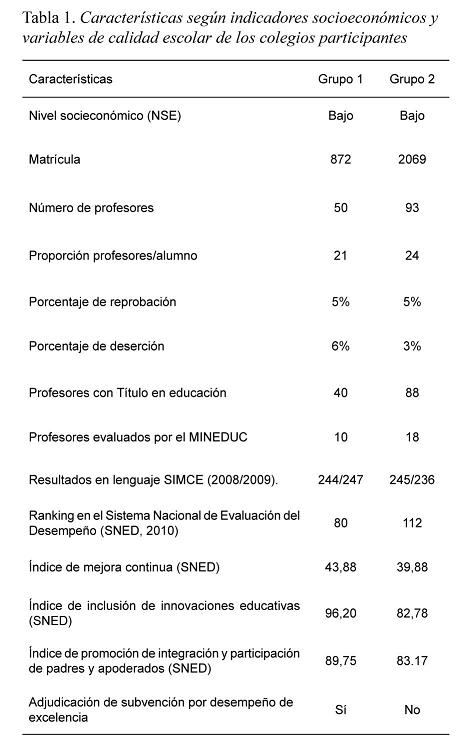
<body><![CDATA[<p class="western" style="margin: 5pt 51.15pt 0.0001pt 1cm; text-align: justify; text-indent: 19.85pt; line-height: 150%;"><span style="font-size: 10pt; line-height: 150%; font-family: &quot;Arial&quot;,&quot;sans-serif&quot;;">Presentamos un estudio cuasi-experimental de tipo longitudinal donde se incorporan tres mediciones con distancia de doce meses entre s&iacute;. Las mediciones fueron realizadas en dos grupos de inter&eacute;s que se diferencia en funci&oacute;n de la calidad del establecimiento educativo, seg&uacute;n par&aacute;metros del Gobierno de Chile. Dado que el objetivo de este estudio es evaluar el impacto de la calidad educativa sobre el curso de desarrollo de habilidades cognitivas en ni&ntilde;os que tiene retraso lector, representadas en mediciones est&aacute;ndar de coeficientes intelectuales, la exploraci&oacute;n longitudinal parece lo m&aacute;s adecuado pues permite analizar la variable de inter&eacute;s en funci&oacute;n del tiempo transcurrido. A nivel instrumental fueron escogidas pruebas de exploraci&oacute;n que tienen comprobada evidencia de confiabilidad y validez. </span></p>       <p class="western" style="margin: 5pt 51.15pt 0.0001pt 1cm; text-align: justify; text-indent: 19.85pt; line-height: 150%;"><o:p>&nbsp;</o:p></p>       <p class="western" style="margin: 5pt 51.15pt 0.0001pt 1cm; text-align: justify; line-height: 150%;"><b><i><span style="font-size: 10pt; line-height: 150%; font-family: &quot;Arial&quot;,&quot;sans-serif&quot;;">Participantes</span></i></b></p>       <p class="western" style="margin: 5pt 51.15pt 0.0001pt 1cm; text-align: justify; text-indent: 19.85pt; line-height: 150%;"><o:p>&nbsp;</o:p></p>       <p class="western" style="margin: 5pt 51.15pt 0.0001pt 1cm; text-align: justify; text-indent: 19.85pt; line-height: 150%;"><span style="font-size: 10pt; line-height: 150%; font-family: &quot;Arial&quot;,&quot;sans-serif&quot;;">El grupo inicial estuvo compuesto por noventa y dos (92) ni&ntilde;os y ni&ntilde;as residentes en la zona urbana de Santiago de Chile, en vulnerabilidad social y con dificultades lectoras; sin embargo, hubo una reducci&oacute;n muestral de treinta y cuatro participantes entre las tres mediciones a raz&oacute;n de cambios de colegio, retiros escolares y cambios de domicilio. </span></p>       <p class="western" style="margin: 5pt 51.15pt 0.0001pt 1cm; text-align: justify; text-indent: 19.85pt; line-height: 150%;"><span style="font-size: 10pt; line-height: 150%; font-family: &quot;Arial&quot;,&quot;sans-serif&quot;;">Para la comparaci&oacute;n entre los tres momentos se tomaron solo ni&ntilde;os con mediciones completas y por ello la muestra final de este estudio est&aacute; formado por cincuenta y ocho (58) ni&ntilde;os y ni&ntilde;as (M=8,93, DS= 0,98 a&ntilde;os; edad al inicio del estudio). Todos participaron voluntariamente en este estudio, son asistentes a colegios municipales ubicados en zonas de vulnerabilidad social en la regi&oacute;n urbana de Santiago de Chile y presentan problemas lectores. Se incluyeron ni&ntilde;os de primero a cuarto b&aacute;sico con una media de 1,6 a&ntilde;os de educaci&oacute;n cuando se tom&oacute; la primera medici&oacute;n. </span></p>       <p class="western" style="margin: 5pt 51.15pt 0.0001pt 1cm; text-align: justify; text-indent: 19.85pt; line-height: 150%;"><span style="font-size: 10pt; line-height: 150%; font-family: &quot;Arial&quot;,&quot;sans-serif&quot;;">La muestra fue dividida en dos grupos: (a) Grupo 1 formado por diecisiete ni&ntilde;os (M= 8,59, DS= ,87 a&ntilde;os; edad al inicio del estudio) quienes asisten a un colegio que cumple con el criterio de calidad de educaci&oacute;n en Chile (ver <a href="#Tabla_1">Tabla 1</a>) y (b) Grupo 2 compuesto por cuarenta y un ni&ntilde;os (M= 9,07, DS= 1,01 a&ntilde;os; edad al inicio del estudio) corresponde a los ni&ntilde;os que asisten a un colegio que no cumple con tal criterio. Los grupos son homog&eacute;neos en t&eacute;rminos de edad (F[1,57]=2,992, p=,089).</span><span style="" lang="ES-UY"><o:p></o:p></span></p>       <p class="western" style="margin: 5pt 51.15pt 0.0001pt 1cm; text-align: justify; line-height: 150%;"><o:p>&nbsp;</o:p></p>       <p class="western" style="margin: 5pt 51.15pt 0.0001pt 1cm; text-align: justify; line-height: 150%;"><b><i><span style="font-size: 10pt; line-height: 150%; font-family: &quot;Arial&quot;,&quot;sans-serif&quot;;">Instrumentos</span></i></b></p>       <p class="western" style="margin: 5pt 51.15pt 0.0001pt 1cm; text-align: justify; text-indent: 19.85pt; line-height: 150%;"><o:p>&nbsp;</o:p></p>       ]]></body>
<body><![CDATA[<p class="western" style="margin: 5pt 51.15pt 0.0001pt 1cm; text-align: justify; text-indent: 19.85pt; line-height: 150%;"><i><span style="font-size: 10pt; line-height: 150%; font-family: &quot;Arial&quot;,&quot;sans-serif&quot;;">Desempe&ntilde;o lector.</span></i><span style="font-size: 10pt; line-height: 150%; font-family: &quot;Arial&quot;,&quot;sans-serif&quot;;"> Se evalu&oacute; con el instrumento Jugando con las Letras (<a name="Rosas_09"></a><a href="#Rosas09">Rosas</a> y Bravo, 2009); el que opera en plataforma digital y permite evaluar precursores del proceso lector. En su estructura factorial tiene dos componentes: habilidades lectoras b&aacute;sicas (decodificaci&oacute;n y conciencia fonol&oacute;gica) y habilidades lectoras avanzadas (comprensi&oacute;n de oraciones y textos). Permite obtener tres indicadores: &iacute;ndice de habilidades b&aacute;sicas, &iacute;ndice de habilidades avanzadas y desempe&ntilde;o lectoral general. Su escala va de 0 a 1 y el puntaje m&iacute;nimo que debe obtener un ni&ntilde;o lector, dado el bajo nivel de complejidad de la prueba, es 0,8. Este es un instrumento que mostr&oacute; adecuado nivel de confiabilidad con un Alpha de Cronbach de.96.</span><span style="" lang="ES-UY"><o:p></o:p></span></p>       <p class="western" style="margin: 5pt 51.15pt 0.0001pt 1cm; text-align: justify; text-indent: 19.85pt; line-height: 150%;"><i><span style="font-size: 10pt; line-height: 150%; font-family: &quot;Arial&quot;,&quot;sans-serif&quot;;">Inteligencia.</span></i><span style="font-size: 10pt; line-height: 150%; font-family: &quot;Arial&quot;,&quot;sans-serif&quot;;"> La exploraci&oacute;n de las habilidades intelectuales se realiz&oacute; con la Escala Wechsler de Inteligencia para Ni&ntilde;os, tercera edici&oacute;n-versi&oacute;n chilena (WISC-IIIv.ch.) (<a name="Ramirez_07"></a><a href="#Ramirez">Ram&iacute;rez</a> y Rosas, 2007). Se trata de la escala considerada como gold standard para la evaluaci&oacute;n de la inteligencia de ni&ntilde;os en edad escolar (<a name="Kaufman_94"></a><a href="#Kaufman94">Kaufman</a>, 1994). Responde a un abordaje factorial de la inteligencia que, para el caso de la muestra chilena, est&aacute; representado por cuatro &iacute;ndices generales; estos son el &Iacute;ndice de Comprensi&oacute;n Verbal, el &Iacute;ndice de Organizaci&oacute;n Perceptual, el &Iacute;ndice de Velocidad de Procesamiento de Informaci&oacute;n y el &Iacute;ndice de Ausencia de Distractibilidad.</span><span style="" lang="ES-UY"><o:p></o:p></span></p>       <p class="western" style="margin: 5pt 51.15pt 0.0001pt 1cm; text-align: justify; text-indent: 19.85pt; line-height: 150%;"><o:p>&nbsp;</o:p></p>       <p class="western" style="margin: 5pt 51.15pt 0.0001pt 1cm; text-align: justify; line-height: 150%;"><b><i><span style="font-size: 10pt; line-height: 150%; font-family: &quot;Arial&quot;,&quot;sans-serif&quot;;">Procedimiento</span></i></b></p>       <p class="western" style="margin: 5pt 51.15pt 0.0001pt 1cm; text-align: justify; line-height: 150%;"><o:p>&nbsp;</o:p></p>       <p class="western" style="margin: 5pt 51.15pt 0.0001pt 1cm; text-align: justify; text-indent: 19.85pt; line-height: 150%;"><span style="font-size: 10pt; line-height: 150%; font-family: &quot;Arial&quot;,&quot;sans-serif&quot;;">Previo a la recolecci&oacute;n de datos, el proyecto de investigaci&oacute;n (FONDECYT 1085217), fue aprobado por el Comit&eacute; de &Eacute;tica de la Escuela de Psicolog&iacute;a de la Pontificia Universidad Cat&oacute;lica de Chile. El procedimiento tambi&eacute;n fue verificado y aprobado por el Comit&eacute; de &Eacute;tica del Fondo Nacional de Desarrollo Cient&iacute;fico y Tecnol&oacute;gico (FONDECyT). </span></p>       <p class="western" style="margin: 5pt 51.15pt 0.0001pt 1cm; text-align: justify; text-indent: 19.85pt; line-height: 150%;"><span style="font-size: 10pt; line-height: 150%; font-family: &quot;Arial&quot;,&quot;sans-serif&quot;;">El equipo de investigaci&oacute;n contact&oacute; inicialmente a las directivas de los establecimientos educativos a fin de presentar el proyecto y solicitar apoyo para llevar la iniciativa a los padres de familia. En reuniones ampliadas se presentaron los objetivos del estudio y se solicit&oacute; la firma de consentimiento informado. </span></p>       <p class="western" style="margin: 5pt 51.15pt 0.0001pt 1cm; text-align: justify; line-height: 150%;"><span style="font-size: 10pt; line-height: 150%; font-family: &quot;Arial&quot;,&quot;sans-serif&quot;;">Para la selecci&oacute;n de colegios, los establecimientos fueron igualados a raz&oacute;n del nivel socioecon&oacute;mico y del rendimiento en pruebas de desempe&ntilde;o lector nacional, pero diferenciados en funci&oacute;n de varios &iacute;ndices de calidad educativa (ver <a name="Tabla_1"></a><a href="/img/revistas/cp/v8n1/1a03t1.jpg">Tabla 1</a>)</span></p>       <p class="western" style="margin: 5pt 51.15pt 0.0001pt 1cm; text-align: justify; text-indent: 19.85pt; line-height: 150%;"><o:p>&nbsp;</o:p></p>       <p class="western" style="margin: 5pt 51.15pt 0.0001pt 1cm; text-align: justify; text-indent: 19.85pt; line-height: 150%;"><span style="font-size: 10pt; line-height: 150%; font-family: &quot;Arial&quot;,&quot;sans-serif&quot;;">El pareamiento por caracter&iacute;sticas socioecon&oacute;micas de los establecimientos se bas&oacute; en informaci&oacute;n entregada por el (SIMCE) que sigue el m&eacute;todo de conglomerados para establecer la homogeneidad de grupos. En este sistema, el procedimiento est&aacute; basado en el an&aacute;lisis del nivel educacional de la madre y el padre, el ingreso econ&oacute;mico mensual y el &Iacute;ndice de Vulnerabilidad Escolar (SIMCE, 2006). La similitud por rendimiento lector fue establecida seg&uacute;n los resultados en la prueba SIMCE 2007 (SIMCE, 2008).</span></p>       ]]></body>
<body><![CDATA[<p class="western" style="margin: 5pt 51.15pt 0.0001pt 1cm; text-align: justify; text-indent: 19.85pt; line-height: 150%;"><span style="font-size: 10pt; line-height: 150%; font-family: &quot;Arial&quot;,&quot;sans-serif&quot;;">La diferenciaci&oacute;n en t&eacute;rminos de la calidad institucional se realiz&oacute; seg&uacute;n la evaluaci&oacute;n del Sistema Nacional de Evaluaci&oacute;n del Desempe&ntilde;o (SNED). En &eacute;sta se consideran como factores la efectividad del colegio, superaci&oacute;n, iniciativa, mejoramiento, igualdad de oportunidades e integraci&oacute;n y participaci&oacute;n de padres y profesores (ver <a href="/img/revistas/cp/v8n1/1a03t2.jpg">Tabla 2</a>).</span></p>       <p class="western" style="margin: 5pt 51.15pt 0.0001pt 1cm; text-align: justify; text-indent: 19.85pt; line-height: 150%;">&nbsp;</p>       <p class="western" style="margin: 5pt 51.15pt 0.0001pt 1cm; text-align: justify; text-indent: 19.85pt; line-height: 150%;"><span style="font-size: 10pt; line-height: 150%; font-family: &quot;Arial&quot;,&quot;sans-serif&quot;;">Para selecci&oacute;n de los participantes se aplic&oacute; a todos los ni&ntilde;os entre primero y cuarto b&aacute;sico de los colegios seleccionados, el instrumento Jugando con las Letras (<a href="#Rosas09">Rosas</a> y Bravo, 2009). Todos los ni&ntilde;os que no lograron un puntaje m&iacute;nimo de 0,80 en los tres indicadores del instrumento, se clasificaron como ni&ntilde;os con problemas lectores y fueron invitados a participar de esta experiencia. En todos los casos se solicit&oacute; la firma de consentimiento informado a padres/apoderados.</span></p>       <p class="western" style="margin: 5pt 51.15pt 0.0001pt 1cm; text-align: justify; text-indent: 19.85pt; line-height: 150%;"><span style="font-size: 10pt; line-height: 150%; font-family: &quot;Arial&quot;,&quot;sans-serif&quot;;">En la muestra seleccionada se realizaron tres mediciones de habilidades intelectuales con distancia de doce meses entre ellas (a mediados del a&ntilde;o escolar 1, mediados del a&ntilde;o escolar 2 y mediados del a&ntilde;o escolar 3). Los participantes fueron evaluados de manera individual por estudiantes de postgrado con formaci&oacute;n certificada para el uso de estos instrumentos. La sesi&oacute;n de evaluaci&oacute;n tuvo una duraci&oacute;n promedio de una hora con treinta minutos.</span></p>       <p class="western" style="margin: 5pt 51.15pt 0.0001pt 1cm; text-align: justify; text-indent: 19.85pt; line-height: 150%;"><o:p>&nbsp;</o:p></p>       <p class="western" style="margin: 5pt 51.15pt 0.0001pt 1cm; text-align: justify; line-height: 150%;"><b><i><span style="font-size: 10pt; line-height: 150%; font-family: &quot;Arial&quot;,&quot;sans-serif&quot;;">An&aacute;lisis Estad&iacute;stico</span></i></b></p>       <p class="western" style="margin: 5pt 51.15pt 0.0001pt 1cm; text-align: justify; text-indent: 19.85pt; line-height: 150%;"><o:p>&nbsp;</o:p></p>       <p class="western" style="margin: 5pt 51.15pt 0.0001pt 1cm; text-align: justify; text-indent: 19.85pt; line-height: 150%;"><span style="font-size: 10pt; line-height: 150%; font-family: &quot;Arial&quot;,&quot;sans-serif&quot;;">En esta investigaci&oacute;n tomamos como variables dependientes los valores obtenidos por los ni&ntilde;os tras administraci&oacute;n de la Escala Wechsler de Inteligencia para Ni&ntilde;os, tercera edici&oacute;n-versi&oacute;n chilena (WISC-IIIv.ch.). Siguiendo la sugerencia de an&aacute;lisis de este test que proponen <a name="Kaufman_00"></a><a href="#Kaufman00">Kaufman</a> y Lichtenberger (2000), utilizamos un &ldquo;m&eacute;todo en forma de embudo&rdquo; caracterizado por un recorrido que parte desde lo m&aacute;s general (CIT en este caso) hacia lo m&aacute;s espec&iacute;fico (subpruebas). Siendo WISC-IIIv.ch. el est&aacute;ndar para evaluaci&oacute;n cognitiva en Chile, su uso es lo m&aacute;s apropiado en esta investigaci&oacute;n. </span></p>       <p class="western" style="margin: 5pt 51.15pt 9.9pt 1cm; text-align: justify; line-height: 150%;"><span style="font-size: 10pt; line-height: 150%; font-family: &quot;Arial&quot;,&quot;sans-serif&quot;;">Se realizaron an&aacute;lisis descriptivos con variables de inter&eacute;s, comparaci&oacute;n entre grupos por an&aacute;lisis de medias, ANOVA de mediciones repetidas para explorar el posible efecto del tipo de colegio sobre el coeficiente intelectual total (CIT), coeficiente intelectual verbal (CIV) y coeficiente intelectual de ejecuci&oacute;n (CIE). Se consideraron las tres mediciones longitudinales y se llevaron a cabo pruebas t-student para evaluar las diferencias con la informaci&oacute;n recolectada de las subpruebas del WISC-IIIv.ch. a fin de precisar con mejor detalle en el CI. Finalmente se llevaron a cabo an&aacute;lisis de correlaci&oacute;n tiempo-momento de Pearson para evaluar la asociaci&oacute;n entre las medidas de CI y las habilidades lectoras. Se utiliz&oacute; Statistical Package for Social Science -SPSS v.18- (<a name="IBM_"></a><a href="#IBM">IBM</a>, 2012) para el an&aacute;lisis de todos los resultados y se fij&oacute; como punto de significancia p&lt;0.05 (<a name="Fisher_"></a><a href="#Fisher">Fisher</a>, 1956). </span></p>       <p class="western" style="margin: 5pt 51.15pt 0.0001pt 1cm; text-align: justify; text-indent: 19.85pt; line-height: 150%;"><o:p>&nbsp;</o:p></p>       ]]></body>
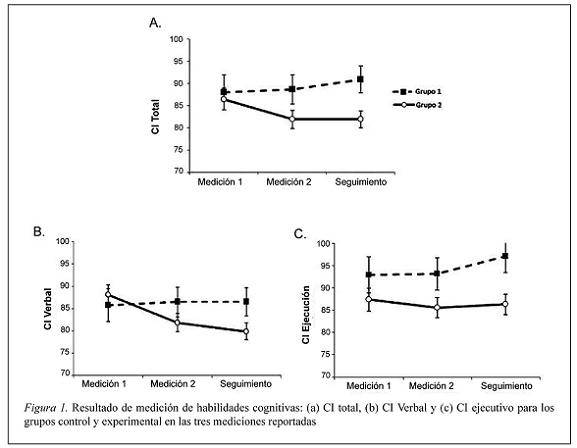
<body><![CDATA[<p class="western" style="margin: 5pt 51.15pt 0.0001pt 1cm; text-align: justify; line-height: 150%;"><b><span style="font-size: 10pt; line-height: 150%; font-family: &quot;Arial&quot;,&quot;sans-serif&quot;;">Resultados</span></b></p>       <p class="western" style="margin: 5pt 51.15pt 0.0001pt 1cm; text-align: justify; line-height: 150%;"><o:p>&nbsp;</o:p></p>       <p class="western" style="margin: 5pt 51.15pt 0.0001pt 1cm; text-align: justify; text-indent: 19.85pt; line-height: 150%;"><span style="font-size: 10pt; line-height: 150%; font-family: &quot;Arial&quot;,&quot;sans-serif&quot;;">Para el an&aacute;lisis del nivel lector se consider&oacute; como variable dependiente de seguimiento el Desempe&ntilde;o Lector General que arroja Jugando con las Letras. Tanto al inicio de la investigaci&oacute;n (M =0,49, DS=0,17) como al final (M=0,75, DS=0,20) se observan rendimientos bajo lo esperado, sin cambios significativos entre estas mediciones. Al realizar comparaci&oacute;n entre grupos para los tres indicadores de Jugando con las Letras, al inicio y al final del estudio, se encuentra homogeneidad en t&eacute;rminos de rendimiento lector. </span></p>       <p class="western" style="margin: 5pt 51.15pt 0.0001pt 1cm; text-align: justify; text-indent: 19.85pt; line-height: 150%;"><span style="font-size: 10pt; line-height: 150%; font-family: &quot;Arial&quot;,&quot;sans-serif&quot;;">Respecto a la medici&oacute;n de coeficiente intelectual, los resultados de la primera medici&oacute;n ponen en evidencia que los ni&ntilde;os tienen un coeficiente intelectual total que se ubica en el rango medio bajo (M=87,69, DS=14,69). Para este momento de la medici&oacute;n, el an&aacute;lisis de ANOVA muestra que no se registran diferencias entre los dos grupos (F [1,57]=.017, p=,896).</span></p>       <p class="western" style="margin: 5pt 51.15pt 0.0001pt 1cm; text-align: justify; text-indent: 19.85pt; line-height: 150%;"><span style="font-size: 10pt; line-height: 150%; font-family: &quot;Arial&quot;,&quot;sans-serif&quot;;">Al analizar los diferentes componentes cognitivos explorados en WISC-IIIv.ch., se observan caminos diferenciados para cada uno en el tiempo (ver <a href="#f1">Figura 1</a>). </span></p>       <p class="western" style="margin: 5pt 51.15pt 0.0001pt 1cm; text-align: justify; line-height: 150%;"><o:p>&nbsp;</o:p></p>       <p class="western" style="margin: 5pt 51.15pt 0.0001pt 1cm; text-align: justify; text-indent: 19.85pt; line-height: 150%;"><a name="f1"></a><img style="width: 577px; height: 448px;" alt="" src="/img/revistas/cp/v8n1/1a03f1.jpg"><span style=""></span></p>       <p class="western" style="margin: 5pt 51.15pt 0.0001pt 1cm; text-align: justify; line-height: 150%;"><o:p>&nbsp;</o:p></p>       <p class="western" style="margin: 5pt 51.15pt 0.0001pt 1cm; text-align: justify; line-height: 150%;"><o:p>&nbsp;</o:p></p>       <p class="western" style="margin: 5pt 51.15pt 0.0001pt 1cm; text-align: justify; text-indent: 19.85pt; line-height: 150%;"><span style="font-size: 10pt; line-height: 150%; font-family: &quot;Arial&quot;,&quot;sans-serif&quot;;">El valor total de coeficiente intelectual (CIT), evaluado a trav&eacute;s de un ANOVA de mediciones repetidas, sigue una transformaci&oacute;n que depende de la calidad del establecimiento educativo al cual se asiste (F [2, 112]= 4,310, p&lt; 0.05) (ver Figura 1A). En esta medici&oacute;n, los ni&ntilde;os del Grupo 1, que son aquellos que asisten al colegio que ha alcanzado adjudicaci&oacute;n de subvenci&oacute;n por desempe&ntilde;o de excelencia seg&uacute;n el reporte SNED por tres a&ntilde;os consecutivos (<a name="Ministerio_"></a><a href="#Ministerio">Ministerio</a> de Educaci&oacute;n, 2011), mantienen el valor de su CI total a lo largo de las tres mediciones. Por el contrario, los ni&ntilde;os del Grupo 2, que son aquellos que asisten al colegio con indicadores desfavorables de calidad, tienen una p&eacute;rdida estad&iacute;sticamente significativa en sus puntos de CI total. Con una disminuci&oacute;n de seis puntos de CI total en promedio, el resultado tiene una potencia observada de ,627 que merece atenci&oacute;n. </span></p>       ]]></body>
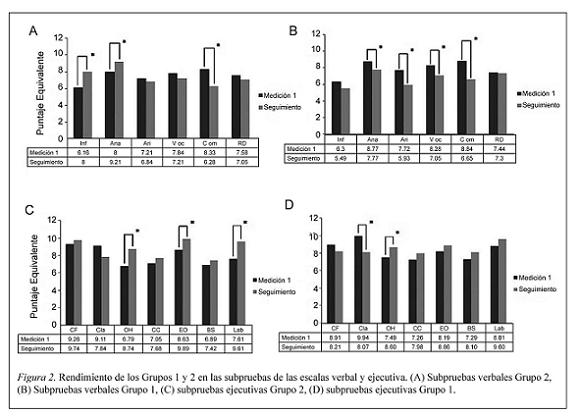
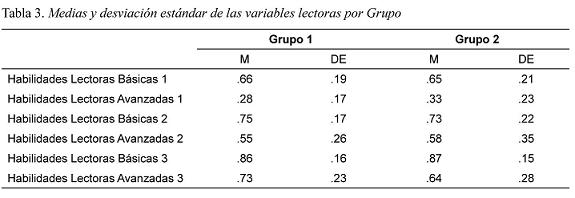
<body><![CDATA[<p class="western" style="margin: 5pt 51.15pt 0.0001pt 1cm; text-align: justify; text-indent: 19.85pt; line-height: 150%;"><span style="font-size: 10pt; line-height: 150%; font-family: &quot;Arial&quot;,&quot;sans-serif&quot;;">A trav&eacute;s del mismo ANOVA de mediciones repetidas, en el CI Ejecutivo no se registraron cambios en el tiempo para ninguno de los dos grupos (F [2, 112]= 1.291, p= 0.23). A diferencia de esto, el CI verbal mostr&oacute; el mismo patr&oacute;n del CI total; esto es, un descenso estad&iacute;sticamente significativo entre la primera y la segunda medici&oacute;n para el Grupo 2 (F [2, 112]= 4.184, p&lt;0.05) con tendencia hacia el declive. Este efecto se observa diferenciado entre los colegios (F [1, 56]=5.86, p&lt;0.01) con cambio significativo en el grupo 2. </span><span style="" lang="ES-UY"><o:p></o:p></span></p>       <p class="western" style="margin: 5pt 51.15pt 0.0001pt 1cm; text-align: justify; text-indent: 19.85pt; line-height: 150%;"><span style="font-size: 10pt; line-height: 150%; font-family: &quot;Arial&quot;,&quot;sans-serif&quot;;">El WISC-IIIv.ch. responde a una estructura de cuatro factores, aglomerados en dos grupos, uno que contiene el &Iacute;ndice de Comprensi&oacute;n Verbal y el &Iacute;ndice de Ausencia de Distractibilidad, y otro formado por el &Iacute;ndice de Organizaci&oacute;n Perceptual y el &Iacute;ndice de Velocidad de Procesamiento de informaci&oacute;n. Esta estructura est&aacute; soportada por un An&aacute;lisis Factorial Confirmatorio realizado con la muestra chilena de estandarizaci&oacute;n (<a href="#Ramirez">Ram&iacute;rez</a> y Rosas, 2007) y es similar a la que se observ&oacute; en su momento en la muestra norteamericana, y sobre la que se tiene evidencia de estabilidad para diferentes grupos cl&iacute;nicos (<a name="Hishinuma_"></a><a href="#Hishinuma">Hishinuma</a> y Yamakawa, 1993). En un an&aacute;lisis de medidas repetidas que consider&oacute; los tres momentos de medici&oacute;n y los dos grupos analizados, se encontraron diferencias estad&iacute;sticamente significativas para el &iacute;ndice de Comprensi&oacute;n Verbal y Organizaci&oacute;n Perceptual. Para el &Iacute;ndice de Comprensi&oacute;n Verbal se observ&oacute; un cambio significativo en el tiempo (F [2.108]= 3.29, p&lt;0.05) con tendencia hacia el declive. Sin embargo este efecto se observa diferenciado entre los colegios (F [1.54]=2374.316, p&lt;0.01) con cambio significativo en el grupo 2. Para el &Iacute;ndice de Organizaci&oacute;n Perceptual aparece tambi&eacute;n un efecto significativo del paso del tiempo sobre el rendimiento (F [2.108]=9.294, p&lt;0.01), esta vez con tendencia a la mejora. Las diferencias significativas entre los dos grupos estudiados (F [1. 54]=1732.7, p&lt;0.01), hacen evidente que el grupo 1 alcanza los mejores rendimientos. </span></p>       <p class="western" style="margin: 5pt 51.15pt 0.0001pt 1cm; text-align: justify; text-indent: 19.85pt; line-height: 150%;"><span style="font-size: 10pt; line-height: 150%; font-family: &quot;Arial&quot;,&quot;sans-serif&quot;;">Las trece subpruebas que forman el WISC-IIIv.ch. fueron analizadas y se observ&oacute; una marcada tendencia de cambio, hacia la baja, para las subpruebas que forman el CI Verbal en el Grupo 2 (ver <a href="#f2">Figura 2</a>). Espec&iacute;ficamente se observa una disminuci&oacute;n significativa para Analog&iacute;as (t [42]= 2.790, p= .008), Aritm&eacute;tica (t [42]= 3.648, p=.001), Vocabulario (t [42]= 2.688, p=.010) y Comprensi&oacute;n (t[42]= 4,552, p=.000). </span><span style="" lang="ES-UY"><o:p></o:p></span></p>       <p class="western" style="margin: 5pt 51.15pt 0.0001pt 1cm; text-align: justify; line-height: 150%;"><o:p>&nbsp;</o:p></p>       <p class="western" style="margin: 5pt 51.15pt 0.0001pt 1cm; text-align: justify; line-height: 150%;"><a name="f2"></a><img style="width: 580px; height: 416px;" alt="" src="/img/revistas/cp/v8n1/1a03f2.jpg"><span style=""></span></p>       <p class="western" style="margin: 5pt 51.15pt 0.0001pt 1cm; text-align: justify; text-indent: 19.85pt; line-height: 150%;"><o:p>&nbsp;</o:p></p>       <p class="western" style="margin: 5pt 51.15pt 0.0001pt 1cm; text-align: justify; text-indent: 19.85pt; line-height: 150%;"><o:p>&nbsp;</o:p></p>       <p class="western" style="margin: 5pt 51.15pt 0.0001pt 1cm; text-align: justify; text-indent: 19.85pt; line-height: 150%;"><span style="font-size: 10pt; line-height: 150%; font-family: &quot;Arial&quot;,&quot;sans-serif&quot;;">Para evaluar la asociaci&oacute;n entre la inteligencia y el nivel lector, la variable lectura se divide en Habilidades Lectoras B&aacute;sicas: conocimiento de las letras y conciencia fonol&oacute;gica; y Habilidades Lectoras Avanzadas: lectura de palabras y comprensi&oacute;n lectora (ver <a href="#t3">Tabla 3</a>). En relaci&oacute;n a la inteligencia, se consideran los puntajes del CI verbal.</span></p>       <p class="western" style="margin: 5pt 51.15pt 0.0001pt 1cm; text-align: justify; text-indent: 19.85pt; line-height: 150%;"><o:p>&nbsp;</o:p></p>       <p class="western" style="margin: 5pt 51.15pt 0.0001pt 1cm; text-align: justify; line-height: 150%;"><a name="t3"></a><img style="width: 575px; height: 198px;" alt="" src="/img/revistas/cp/v8n1/1a03t3.jpg"></p>     ]]></body>
<body><![CDATA[<p class="western" style="margin: 5pt 51.15pt 0.0001pt 1cm; text-align: justify; line-height: 150%;"><span style=""></span><span style="" lang="ES-UY"><o:p></o:p></span></p>       <p class="western" style="margin: 5pt 51.15pt 0.0001pt 1cm; text-align: justify; text-indent: 19.85pt; line-height: 150%;"><span style="font-size: 10pt; line-height: 150%; font-family: &quot;Arial&quot;,&quot;sans-serif&quot;;">Con el an&aacute;lisis de correlaci&oacute;n tiempo-momento (ver <a href="#t3">Tabla 3</a>) se identific&oacute; que en la medici&oacute;n 1, ninguna de las habilidades lectoras correlaciona con la medida de CI verbal en el Grupo 1, mientras que en el Grupo 2 (colegio de baja calidad) se encontr&oacute; una baja y negativa correlaci&oacute;n entre el CI verbal y las habilidades lectoras avanzadas (r=-.260, p=.05). Para la medici&oacute;n 2, en el Grupo 1 se identifica una positiva y moderada correlaci&oacute;n entre el CI verbal y las habilidades lectoras avanzadas (r=.442, p=.031). En ese mismo momento, en el Grupo 2, hay correlaciones positivas y moderadas entre las medidas de CI verbal y las habilidades lectoras b&aacute;sicas (r=.428, p=.005) y tambi&eacute;n entre el CI verbal y las habilidades lectoras avanzadas (r=-369, p=.017). Finalmente, en la medici&oacute;n 3, en el Grupo 1 no se encontr&oacute; ninguna correlaci&oacute;n estad&iacute;sticamente significativa, mientras que en el Grupo 2 se encontr&oacute; una correlaci&oacute;n moderada y positiva entre el CI verbal y las habilidades lectoras avanzadas (r=.312, p= .047).</span><span style="" lang="ES-UY"><o:p></o:p></span></p>       <p class="western" style="margin: 5pt 51.15pt 0.0001pt 1cm; text-align: justify; line-height: 150%;"><o:p>&nbsp;</o:p></p>       <p class="western" style="margin: 5pt 51.15pt 0.0001pt 1cm; text-align: justify; line-height: 150%;"><o:p>&nbsp;</o:p></p>       <p class="western" style="margin: 5pt 51.15pt 0.0001pt 1cm; text-align: justify; line-height: 150%;"><b><span style="font-size: 10pt; line-height: 150%; font-family: &quot;Arial&quot;,&quot;sans-serif&quot;;">Discusi&oacute;n</span></b></p>       <p class="western" style="margin: 5pt 51.15pt 0.0001pt 1cm; text-align: justify; line-height: 150%;"><o:p>&nbsp;</o:p></p>       <p class="western" style="margin: 5pt 51.15pt 0.0001pt 1cm; text-align: justify; text-indent: 19.85pt; line-height: 150%;"><span style="font-size: 10pt; line-height: 150%; font-family: &quot;Arial&quot;,&quot;sans-serif&quot;;">Este estudio aporta evidencia a favor de una perspectiva din&aacute;mica de la inteligencia. Ubica este constructo como variable dependiente de la calidad educativa y las oportunidades culturales ofrecidas. </span></p>       <p class="western" style="margin: 5pt 51.15pt 0.0001pt 1cm; text-align: justify; text-indent: 19.85pt; line-height: 150%;"><span style="font-size: 10pt; line-height: 150%; font-family: &quot;Arial&quot;,&quot;sans-serif&quot;;">Los resultados observados son coherentes con hallazgos previos (<a name="Siegel_"></a><a href="#Siegel">Siegel</a>, 1992; <a href="#Vellutino96">Vellutino</a> et al., 1996). Se ha mostrado que en ni&ntilde;os con problemas lectores hay un rendimiento m&aacute;s bajo, en comparaci&oacute;n con sus pares sin dificultad, en medidas de coeficiente intelectual. El m&aacute;s bajo rendimiento se ha observado asociado a tareas verbales (<a name="Bauman_"></a><a href="#Bauman">Bauman</a>, 1991; <a name="Van_"></a><a href="#van">Van</a> Bergen et al., 2013). </span></p>       <p class="western" style="margin: 5pt 51.15pt 0.0001pt 1cm; text-align: justify; text-indent: 19.85pt; line-height: 150%;"><span style="font-size: 10pt; line-height: 150%; font-family: &quot;Arial&quot;,&quot;sans-serif&quot;;">Este tipo de resultado tiene sentido al considerar que la adquisici&oacute;n de varios contenidos escolares se vehiculiza a trav&eacute;s de la lectura, en presentaciones que suceden de manera escrita tanto en la pizarra como en libros y otros documentos de apoyo pedag&oacute;gico. Cuando un ni&ntilde;o es lector competente logra adquirir estos conocimientos, pero cuando no lee se entorpece el proceso general de aprendizaje (<a name="Walczyk_"></a><a href="#Walczyk">Walczyk</a>, &amp; Griffith-Ross, 2007; <a name="Wolf_"></a><a href="#Wolf">Wolf</a> y Barzillai, 2009). En esta direcci&oacute;n, nuestros hallazgos sustentan esta idea dada la constante correlaci&oacute;n entre las variables lectoras avanzadas, en t&eacute;rminos de habilidades de tipo l&eacute;xico y de comprensi&oacute;n lectora, con la disminuci&oacute;n en el CI Verbal del grupo con baja calidad educativa. Ello en tanto dichas habilidades lectoras est&aacute;n m&aacute;s relacionadas con procesos metacognitivos tales como la generaci&oacute;n de inferencias y habilidades sem&aacute;nticas del lenguaje, las cuales son cruciales para lograr apropiarse de los contenidos y conocimientos escolares, mismos que est&aacute;n a la base del CI verbal evaluado a trav&eacute;s de escalas Wechsler.</span></p>       <p class="western" style="margin: 5pt 51.15pt 0.0001pt 1cm; text-align: justify; text-indent: 19.85pt; line-height: 150%;"><span style="font-size: 10pt; line-height: 150%; font-family: &quot;Arial&quot;,&quot;sans-serif&quot;;">Previo a esta investigaci&oacute;n est&aacute; disponible al menos otro estudio de tipo longitudinal, donde se explora la estabilidad en medidas de coeficiente intelectual a trav&eacute;s del tiempo en ni&ntilde;os con dificultades lectoras (<a href="#Bauman">Bauman</a>, 1991). Como resultado se reporta una p&eacute;rdida significativa en coeficiente intelectual verbal y coeficiente intelectual total. Espec&iacute;ficamente se reporta que, cuando la administraci&oacute;n de la primera prueba se realiza antes de los 8 a&ntilde;os, se observa esta p&eacute;rdida, pero no as&iacute; cuando la primera medida sucedes despu&eacute;s de esta edad. </span></p>       ]]></body>
<body><![CDATA[<p class="western" style="margin: 5pt 51.15pt 0.0001pt 1cm; text-align: justify; text-indent: 19.85pt; line-height: 150%;"><span style="font-size: 10pt; line-height: 150%; font-family: &quot;Arial&quot;,&quot;sans-serif&quot;;">Para la interpretaci&oacute;n de &eacute;ste, suma a lo anterior el descrito &ldquo;Efecto Mateo&rdquo; (<a href="#Stanovich86">Stanovich</a>, 1986). Se entiende como la tendencia en ni&ntilde;os con menos habilidades, tanto intelectuales como lectoras, a estar en ambientes escolares donde su pares se encuentran en la misma situaci&oacute;n. En este contexto se eleva la probabilidad de que ni&ntilde;os con dificultades no logren desarrollar las habilidades comprometidas y por tanto, mantengan una misma posici&oacute;n relativa al grupo.</span></p>       <p class="western" style="margin: 5pt 51.15pt 0.0001pt 1cm; text-align: justify; text-indent: 19.85pt; line-height: 150%;"><span style="font-size: 10pt; line-height: 150%; font-family: &quot;Arial&quot;,&quot;sans-serif&quot;;">Adem&aacute;s de reiterar hallazgos previos que dan cuenta de la relaci&oacute;n entre dificultades lectoras e inteligencia, este estudio muestra que las habilidades cognitivas sufren transformaciones en el curso del desarrollo y que est&aacute;n bajo la influencia de la calidad educativa. Los hallazgos sugieren que no solo hay una interacci&oacute;n entre educaci&oacute;n e inteligencia, sino que no parece tan arriesgado sugerir una relaci&oacute;n a&uacute;n m&aacute;s clara: escuelas de mala calidad act&uacute;an en detrimento de las habilidades intelectuales. </span></p>       <p class="western" style="margin: 5pt 51.15pt 0.0001pt 1cm; text-align: justify; text-indent: 19.85pt; line-height: 150%;"><span style="font-size: 10pt; line-height: 150%; font-family: &quot;Arial&quot;,&quot;sans-serif&quot;;">Varios estudios han ofrecido evidencia donde est&aacute; relacionada la calidad escolar con el desarrollo en la edad infantil (<a href="#Ceci">Ceci</a>, 1991; <a name="Stelz_"></a><a href="#Stelzl">Stelz</a>, Merz, Ehlers y Remer, 1995). Sin embargo, la investigaci&oacute;n previa est&aacute; centrada en la primera infancia. Se ha reportado un efecto, modesto pero sostenido a largo plazo, de la calidad de la experiencia del pre-escolar sobre el desarrollo cognitivo de ni&ntilde;os, report&aacute;ndose espec&iacute;ficamente impacto sobre el desarrollo de lenguaje y las habilidades escolares (<a name="Burchinal_"></a><a href="#Burchinal">Burchinal</a>, <a name="Peisner_"></a><a href="#Peisner">Peisner</a>-Feinberg, Bryant y Clifford, 2000; <a name="Burchinal_010"></a><a href="#Burchinal_10">Burchinal</a>, Vandergrift, Pianta y Mashburn, 2010; <a name="Camilli_"></a><a href="#Camilli">Camilli</a>, Vargas, Ryan y Barnett, 2010; <a href="#Peisner">Peisner</a>-Feinberg et al., 2001). </span></p>       <p class="western" style="margin: 5pt 51.15pt 0.0001pt 1cm; text-align: justify; text-indent: 19.85pt; line-height: 150%;"><span style="font-size: 10pt; line-height: 150%; font-family: &quot;Arial&quot;,&quot;sans-serif&quot;;">Adicionalmente la evidencia muestra que, en el grupo de ni&ntilde;os que asiste a jardines infantiles de baja calidad, hay retroceso en los logros del desarrollo cognitivo (<a name="INTEGRA_"></a><a href="#INTEGRA">INTEGRA</a>, 1994). En aquellos casos donde se presenta este retroceso, se reporta que las consecuencias son m&aacute;s prominentes en el grupo que tiene el m&aacute;s alto nivel de rendimiento al momento del ingreso. Los datos muestran que un 50% de los ni&ntilde;os que ingresan al jard&iacute;n de infantes con un rendimiento cognitivo general ubicado en rango sobre el promedio, tienen una p&eacute;rdida significativa en su rendimiento tras un a&ntilde;o; mientras que solo un 13% de los ni&ntilde;os que tiene rendimientos en los rangos m&aacute;s bajos, declina en sus funciones cognitivas (<a href="#INTEGRA">INTEGRA</a>, 1994). </span></p>       <p class="western" style="margin: 5pt 51.15pt 9.9pt 1cm; text-align: justify; line-height: 150%;"><span style="font-size: 10pt; line-height: 150%; font-family: &quot;Arial&quot;,&quot;sans-serif&quot;;">En el caso de los ni&ntilde;os en edad escolar hay un acuerdo general respecto a la fuerte y positiva relaci&oacute;n existente entre alta calidad educativa y participaci&oacute;n ciudadana responsable, posibilidades de empleabilidad, movilidad social y cohesi&oacute;n social (<a name="European_"></a><a href="#European">European</a> Communities, 2001).</span><span style="font-size: 10pt; line-height: 150%; font-family: &quot;Arial&quot;,&quot;sans-serif&quot;;" lang="ES-UY"> Para pa&iacute;ses en v&iacute;a de desarrollo como Chile, se ha demostrado que a los seis a&ntilde;os ya hay diferencias significativas entre los ni&ntilde;os a raz&oacute;n de su pertenencia social; y esta diferencia se mantiene sostenida e irremontable a lo largo del tiempo, correlacionando con la calidad de los establecimientos educativos a los cuales asisten (<a href="#Rosas13">Rosas</a> y Santacruz, 2013). </span><span style="" lang="ES-UY"><o:p></o:p></span></p>       <p class="western" style="margin: 5pt 51.15pt 9.9pt 1cm; text-align: justify; text-indent: 19.85pt; line-height: 150%;"><span style="font-size: 10pt; line-height: 150%; font-family: &quot;Arial&quot;,&quot;sans-serif&quot;;" lang="ES-UY">Es complejo llegar a establecer la v&iacute;a de influencia entre calidad educativa y desarrollo intelectual. Por un lado se sabe que hay mayor cantidad de escuelas con problemas de calidad en los lugares socialmente deprivados. Esto hace que con escasos recursos se deba lidiar, al menos, con dos grandes problemas: el impacto que produce la carencia social y los d&eacute;ficits cognitivos y conductuales que vienen relacionados con tales carencias (<a href="#Farah">Farah</a> et al., 2006). Muchas veces los recursos no alcanzan y, a&uacute;n en presencia de una buena gesti&oacute;n, no es posible modificar aspectos propios del ambiente social y familiar en que se desenvuelven los ni&ntilde;os.</span><span style="" lang="ES-UY"><o:p></o:p></span></p>       <p class="western" style="margin: 5pt 51.15pt 9.9pt 1cm; text-align: justify; text-indent: 19.85pt; line-height: 150%;"><span style="font-size: 10pt; line-height: 150%; font-family: &quot;Arial&quot;,&quot;sans-serif&quot;;" lang="ES-UY">La calidad docente se ha identificado como punto cr&iacute;tico de la relaci&oacute;n entre calidad educativa y desarrollo cognitivo. La presencia de buenos docentes es un factor fundamental para el desarrollo, sostenimiento y mejora de las competencias cognitivas y sociales en toda etapa de formaci&oacute;n (<a name="Oliver_"></a><a href="#Oliver">Oliver</a>, Venville y Adey, 2012). Se entiende que un docente efectivo involucra a sus estudiantes en un proceso activo de aprendizaje, adem&aacute;s de estar orientado a la formaci&oacute;n de altas expectativas en sus pupilos respecto a la calidad y logro de su trabajo, entreg&aacute;ndole modelos de trabajo. Provee tambi&eacute;n de una retroalimentaci&oacute;n constante al estudiante, de tal manera que lo acompa&ntilde;a en la mejora dirigida a alcanzar los est&aacute;ndares trazados. Construye un aula de clase que funciona bien, hay respeto y confianza entre sus integrantes. Por &uacute;ltimo, incluye a padres y cuidadores en el proceso (<a name="Darling_"></a><a href="#Darling">Darling</a>-Hammond y Baratz-Snowden, 2007).</span><span style="" lang="ES-UY"><o:p></o:p></span></p>       <p class="western" style="margin: 5pt 51.15pt 9.9pt 1cm; text-align: justify; text-indent: 19.85pt; line-height: 150%;"><span style="font-size: 10pt; line-height: 150%; font-family: &quot;Arial&quot;,&quot;sans-serif&quot;;" lang="ES-UY">La evaluaci&oacute;n &ldquo;DocenteM&aacute;s&rdquo; implementada por el Gobierno de Chile permite la evaluaci&oacute;n de la calidad de los docentes que participan en escuelas p&uacute;blicas, entregando los resultados en funci&oacute;n de cuatro categor&iacute;as: insatisfactorio, b&aacute;sico, competente y destacado. Los docentes ideales obtienen resultados que los ubican en los rangos competente y destacado (<a name="Docente_"></a><a href="#Docente">Docente</a> M&aacute;s, 2011). </span><span style="" lang="ES-UY"><o:p></o:p></span></p>       <p class="western" style="margin: 5pt 51.15pt 9.9pt 1cm; text-align: justify; text-indent: 19.85pt; line-height: 150%;"><span style="font-size: 10pt; line-height: 150%; font-family: &quot;Arial&quot;,&quot;sans-serif&quot;;" lang="ES-UY">Las diferencias respecto a la calidad de los docentes de los centros educativos que participaron en este estudio son elocuentes. En el colegio que recibi&oacute; la certificaci&oacute;n por calidad educativa hay un total de 31 docentes, de ellos un 25% se ubica en los rangos bajos de la evaluaci&oacute;n docente. En el colegio que no recibi&oacute; la certificaci&oacute;n hay 61 docentes y, de ellos, el 50% est&aacute; en los rangos bajos de desempe&ntilde;o. Una diferencia de estas proporciones llama la atenci&oacute;n y obliga a hipotetizar que parte de las dificultades en el rendimiento tiene relaci&oacute;n con fallas en las estrategias docentes de apoyo y sost&eacute;n que son implementadas en las aulas de clase. </span><span style="" lang="ES-UY"><o:p></o:p></span></p>       <p class="western" style="margin: 5pt 51.15pt 9.9pt 1cm; text-align: justify; text-indent: 19.85pt; line-height: 150%;"><span style="font-size: 10pt; line-height: 150%; font-family: &quot;Arial&quot;,&quot;sans-serif&quot;;" lang="ES-UY">Por &uacute;ltimo, vale la pena retomar la dificultad lectora que presentan los ni&ntilde;os evaluados como variable que merece especial consideraci&oacute;n en esta discusi&oacute;n. Hay varios estudios que sugieren que la relaci&oacute;n entre escuela y desarrollo cognitivo, est&aacute; mediada por el nivel de aprendizaje de lectura de los ni&ntilde;os (<a href="#Stanovich86">Stanovich</a>, 1986; <a name="Shaywitz_95"></a><a href="#Shaywitz95">Shaywitz</a> et al., 1995). Si se asumiera que la lectura es el &uacute;nico mediador, deber&iacute;a observarse un desarrollo similar en los dos grupos incluidos en este estudio y, contrario a esto, se distancian en las variables verbales. Si bien los ni&ntilde;os de alto nivel socioecon&oacute;mico pueden aparecer con problemas de decodificaci&oacute;n y acceso l&eacute;xico, sus patrones de comprensi&oacute;n lectora se ven enriquecidos desde la experiencia previa y los andamiajes impl&iacute;citos disponibles (<a name="Balbi_"></a><a href="#Balbi">Balbi</a>, Cuadro y Tr&iacute;as, 2009). Por el contrario, los ni&ntilde;os provenientes de niveles desaventajados presentan un patr&oacute;n de dificultades relacionadas al pobre desarrollo de habilidades fonol&oacute;gicas y ling&uuml;&iacute;sticas, con problemas comprensivos generales que van a impactar su desempe&ntilde;o cognitivo general (<a href="#Noble">Noble</a> et al., 2006; <a name="Strasser_"></a><a href="#Strasser">Strasser</a> y Lissi, 2009; <a href="#Tunmer">Tunmer</a> et al., 2006; <a name="Zhang_"></a><a href="#Zhang">Zhang</a> et al., 2013). </span><span style="" lang="ES-UY"><o:p></o:p></span></p>       ]]></body>
<body><![CDATA[<p class="western" style="margin: 5pt 51.15pt 9.9pt 1cm; text-align: justify; text-indent: 19.85pt; line-height: 150%;"><span style="font-size: 10pt; line-height: 150%; font-family: &quot;Arial&quot;,&quot;sans-serif&quot;;" lang="ES-UY">El n&uacute;cleo problem&aacute;tico de esta relaci&oacute;n es que los ni&ntilde;os de NSE bajo que presentan dificultades lectoras poco se benefician de la educaci&oacute;n m&aacute;xime cuando la calidad de sus establecimientos educativos es cuestionable. Los constantes fracasos en la tarea de aprendizaje de la lectura y con ello al acceso general de contenidos que se imparten en la escuela b&aacute;sica, generan patrones de desesperanza aprendida, con tendencia a abortar la tarea lectora sin siquiera intentar resolverla. Con ello, las oportunidades de potenciar su aprendizaje por medio de la lectura se limitan y quedan a la saga de los ni&ntilde;os sin dificultades, quienes s&iacute; logran beneficiarse de las experiencias lectoras. La consecuencia de esto se ve reflejada en las pruebas de medici&oacute;n intelectual. En s&iacute;ntesis, la evidencia que se ofrece en este estudio apunta a la relaci&oacute;n de dependencia entre escuela e inteligencia y abre un camino de posibilidades para la intervenci&oacute;n futura.</span><span style="" lang="ES-UY"><o:p></o:p></span></p>       <p class="western" style="margin: 5pt 51.15pt 9.9pt 1cm; text-align: justify; text-indent: 19.85pt; line-height: 150%;"><span style="font-size: 10pt; line-height: 150%; font-family: &quot;Arial&quot;,&quot;sans-serif&quot;;" lang="ES-UY">Finalmente, es necesario se&ntilde;alar que este estudio no est&aacute; libre de limitaciones y dificultades. El trabajo con ni&ntilde;os que residen en zonas urbanas vulnerables, pone de cara un n&uacute;mero significativo de factores que pueden estar contribuyendo a los resultados y que no fueron observados. Entre ellos vale contar la nutrici&oacute;n, la exposici&oacute;n a nuevas oportunidades culturales, el nivel educativo de los padres y la calidad de las experiencias lectoras en casa, entre muchas otras. Trabajos futuros deber&aacute;n incluir mediciones de estos aspectos con el fin de depurar mejor el modelo. </span><span style="" lang="ES-UY"><o:p></o:p></span></p>       <p class="western" style="margin: 5pt 51.15pt 9.9pt 1cm; text-align: justify; text-indent: 19.85pt; line-height: 150%;"><span style="font-size: 10pt; line-height: 150%; font-family: &quot;Arial&quot;,&quot;sans-serif&quot;;" lang="ES-UY">Por supuesto, es necesario mencionar que el alcance de las conclusiones de este estudio es limitado dado que se han tomado solo dos centros. Vale la pena replicar la exploraci&oacute;n incorporando otros centros educativos del pa&iacute;s.</span><span style="" lang="ES-UY"><o:p></o:p></span></p>       <p class="western" style="margin: 5pt 51.15pt 12pt 1cm; text-align: justify; text-indent: 19.85pt; line-height: 150%;"><span style="" lang="ES-UY"><o:p>&nbsp;</o:p></span></p>       <p class="western" style="margin: 5pt 51.15pt 9.9pt 1cm; text-align: justify; line-height: 150%;"><b><span style="font-size: 10pt; line-height: 150%; font-family: &quot;Arial&quot;,&quot;sans-serif&quot;;" lang="EN-US">Referencias</span></b><span style="" lang="EN-US"><o:p></o:p></span></p>       <p style="margin: 5pt 51.15pt 0.0001pt 1cm; text-align: justify; text-indent: -21.25pt; line-height: 150%;"><span style="" lang="EN-US"><o:p>&nbsp;</o:p></span></p>       <!-- ref --><p style="margin: 5pt 51.15pt 0.0001pt 1cm; text-align: justify; line-height: 150%;"><a name="Alloway"></a><span style="font-size: 8pt; line-height: 150%; font-family: &quot;Arial&quot;,&quot;sans-serif&quot;;" lang="EN-US"><a href="#Alloway_">Alloway</a>, T. P., Alloway, R. G., &amp; Wootan, S. (2014). Home sweet home: Does where you live matter to working memory and other cognitive skills?.&nbsp;<i>Journal of Experimental Child Psychology</i>.doi: 10.1016/j.jecp.2013.11.012</span><span style="" lang="EN-US"><o:p></o:p></span><!-- ref --><p style="margin: 5pt 51.15pt 0.0001pt 1cm; text-align: justify; line-height: 150%;"><a name="American"></a><a href="#American_"><span style="font-size: 8pt; line-height: 150%; font-family: &quot;Arial&quot;,&quot;sans-serif&quot;;" lang="EN-US">American</span></a><span style="font-size: 8pt; line-height: 150%; font-family: &quot;Arial&quot;,&quot;sans-serif&quot;;" lang="EN-US"> Educational Research Association, American Psychological Association &amp; National Council on Measurement in Education. (1999). <i>Standards for educational and psychological testing. </i>Washington, USA: American Educational Research Association.    </span><span style="" lang="EN-US"><o:p></o:p></span></p>       <!-- ref --><p style="margin: 5pt 51.15pt 0.0001pt 1cm; text-align: justify; line-height: 150%;"><a name="Balbi"></a><span style="font-size: 8pt; line-height: 150%; font-family: &quot;Arial&quot;,&quot;sans-serif&quot;;" lang="ES-UY"><a href="#Balbi_">Balbi</a>, A., Cuadro, A., &amp; Tr&iacute;as, D. (2009). Comprensi&oacute;n lectora y reconocimiento de palabras. </span><i><span style="font-size: 8pt; line-height: 150%; font-family: &quot;Arial&quot;,&quot;sans-serif&quot;;">Ciencias Psicol&oacute;gicas</span></i><span style="font-size: 8pt; line-height: 150%; font-family: &quot;Arial&quot;,&quot;sans-serif&quot;;">, <i>3</i>(2), 153-160.    </span></p>       <!-- ref --><p style="margin: 5pt 51.15pt 0.0001pt 1cm; text-align: justify; line-height: 150%;"><a name="Barber"></a><span style="font-size: 8pt; line-height: 150%; font-family: &quot;Arial&quot;,&quot;sans-serif&quot;;" lang="EN-US"><a href="#Barber_"><span style="" lang="ES">Barber</span></a></span><span style="font-size: 8pt; line-height: 150%; font-family: &quot;Arial&quot;,&quot;sans-serif&quot;;">, N. (2005). </span><span style="font-size: 8pt; line-height: 150%; font-family: &quot;Arial&quot;,&quot;sans-serif&quot;;" lang="EN-US">Educational and ecological correlates of IQ: A cross- national investigation. <i>Intelligence</i>, <i>33</i>(3), 273- 284. doi: 10.1016/j.bbr.2011.03.031</span><span style="" lang="EN-US"><o:p></o:p></span><!-- ref --><p style="margin: 5pt 51.15pt 0.0001pt 1cm; text-align: justify; line-height: 150%;"><a name="Bartels"></a><span style="font-size: 8pt; line-height: 150%; font-family: &quot;Arial&quot;,&quot;sans-serif&quot;;" lang="EN-US"><a href="#Bartels_">Bartels</a>, M., Rietveld, M., Van Baal, G., Boomsma, D. (2002). Heritability of educational achievement in 12 years olds and the overlap with cognitive ability. <i>Twin Research</i>, <i>5</i>(6), 544-553. doi: 10.1375/136905202762342017</span><span style="" lang="EN-US"><o:p></o:p></span><!-- ref --><p style="margin: 5pt 51.15pt 0.0001pt 1cm; text-align: justify; line-height: 150%;"><a name="Bauman"></a><a href="#Bauman_"><span style="font-size: 8pt; line-height: 150%; font-family: &quot;Arial&quot;,&quot;sans-serif&quot;;" lang="EN-US">Bauman</span></a><span style="font-size: 8pt; line-height: 150%; font-family: &quot;Arial&quot;,&quot;sans-serif&quot;;" lang="EN-US">, E. (1991). Stability of WISC-R scores in children with learning difficulties. <i>Psychology in the Schools</i>, 28, 95-100. doi:j,kjh,10.1002/1520-6807(199104)28:2&lt;95::AIDPITS2310280203&gt;3.0.CO;2-9</span><span style="" lang="EN-US"><o:p></o:p></span><p style="margin: 5pt 51.15pt 0.0001pt 1cm; text-align: justify; line-height: 150%;"><a name="Binet"></a><span style="font-size: 8pt; line-height: 150%; font-family: &quot;Arial&quot;,&quot;sans-serif&quot;;" lang="EN-US"><a href="#Binet_">Binet</a>, A. (1905). New Methods for the Diangnosis of the Intellectual Level of Subnormals. </span><i><span style="font-size: 8pt; line-height: 150%; font-family: &quot;Arial&quot;,&quot;sans-serif&quot;;" lang="ES-UY">L&rsquo;Ann&eacute;e Psychologique</span></i><span style="font-size: 8pt; line-height: 150%; font-family: &quot;Arial&quot;,&quot;sans-serif&quot;;" lang="ES-UY">, <i>12</i>, 191-244. </span><span style="" lang="ES-UY"><o:p></o:p></span></p>       <!-- ref --><p style="margin: 5pt 51.15pt 0.0001pt 1cm; text-align: justify; line-height: 150%;"><a name="Brunner"></a><span style="font-size: 8pt; line-height: 150%; font-family: &quot;Arial&quot;,&quot;sans-serif&quot;;" lang="ES-UY"><a href="#Brunner_">Brunner</a>, J.J., &amp; Elacqua, G. (2004). Factores que inciden en una educaci&oacute;n efectiva. </span><span style="font-size: 8pt; line-height: 150%; font-family: &quot;Arial&quot;,&quot;sans-serif&quot;;" lang="EN-US">Evidencia Internacional No. 139-140. <i>La Educaci&oacute;n</i>, 139.     </span><span style="" lang="EN-US"><o:p></o:p></span></p>       <!-- ref --><p style="margin: 5pt 51.15pt 0.0001pt 1cm; text-align: justify; line-height: 150%;"><a name="Burger"></a><span style="font-size: 8pt; line-height: 150%; font-family: &quot;Arial&quot;,&quot;sans-serif&quot;;" lang="EN-US"><a href="#Burger_">Burger</a>, K. (2010). How does early childhood care and education affect cognitive development? An international review of the effects of early interventions for children from different social backgrounds. <i>Early Childhood Research Quarterly</i>, <i>25</i>(2), 140-165. doi: 10.1016/j.ecresq.2009.11.001</span><span style="" lang="EN-US"><o:p></o:p></span><p style="margin: 5pt 51.15pt 0.0001pt 1cm; text-align: justify; line-height: 150%;"><a name="Burchinal"></a><span style="font-size: 8pt; line-height: 150%; font-family: &quot;Arial&quot;,&quot;sans-serif&quot;;" lang="EN-US"><a href="#Burchinal_">Burchinal</a>, M., Peisner-Feinberg, E., Bryant, D., &amp; Clifford, R. (2000). Children&rsquo;s social and cognitive development and child care quality: Testing for different associations related to poverty, gender, or ethnicity. <i>Journal of Applied Developmental Sciences</i>, <i>4</i>, 149-165. doi: 10.1207/S1532480XADS0403_4</span><span style="" lang="EN-US"><o:p></o:p></span></p>       <!-- ref --><p style="margin: 5pt 51.15pt 0.0001pt 1cm; text-align: justify; line-height: 150%;"><a name="Burchinal_10"></a><span style="font-size: 8pt; line-height: 150%; font-family: &quot;Arial&quot;,&quot;sans-serif&quot;;" lang="EN-US"><a href="#Burchinal_010">Burchinal</a>, M., Vandergrift, N., Pianta, R., &amp; Mashburn, A. (2010). Threshold analysis of association between child care quality and child outcomes for low income children in pre- kindergarten programs. <i>Early Childhood Research Quarterly</i>, <i>25</i>, 166-176. doi: 10.1016/j.ecresq.2009.10.004</span><span style="" lang="EN-US"><o:p></o:p></span><!-- ref --><p style="margin: 5pt 51.15pt 0.0001pt 1cm; text-align: justify; line-height: 150%;"><a name="Cahan"></a><span style="font-size: 8pt; line-height: 150%; font-family: &quot;Arial&quot;,&quot;sans-serif&quot;;" lang="EN-US"><a href="#Cahan_">Cahan</a>, S., &amp; Cohen, N. (1989). Age versus schooling effects on intelligence development. <i>Child Development</i>, <i>60</i>, 1239-1249. 10.1111/j.1467-8624.1989.tb03554.x</span><span style="" lang="EN-US"><o:p></o:p></span><p style="margin: 5pt 51.15pt 0.0001pt 1cm; text-align: justify; line-height: 150%;"><a name="Campbell"></a><span style="font-size: 8pt; line-height: 150%; font-family: &quot;Arial&quot;,&quot;sans-serif&quot;;" lang="EN-US"><a href="#Campbell_">Campbell</a>, F.A., &amp; Ramey, C.T. (1994). Effects of early intervention on intellectual and academic achievement: A follow-up study of children from low-income families. <i>Child Development</i>, <i>65</i>, 684&ndash;698. doi: 10.1111/j.1467-8624.1994.tb00777.x</span><span style="" lang="EN-US"><o:p></o:p></span></p>       <!-- ref --><p style="margin: 5pt 51.15pt 0.0001pt 1cm; text-align: justify; line-height: 150%;"><a name="Camilli"></a><span style="font-size: 8pt; line-height: 150%; font-family: &quot;Arial&quot;,&quot;sans-serif&quot;;" lang="EN-US"><a href="#Camilli_">Camilli</a>, G., Vargas,S., Ryan, S., &amp; Barnett, S. (2010). Meta analysis of the effects of earlyeducation interventions on cognitive and social interventions. <i>Teachers College Record</i>, <i>112</i>(3), 579-620.     </span><span style="" lang="EN-US"><o:p></o:p></span></p>       <!-- ref --><p style="margin: 5pt 51.15pt 0.0001pt 1cm; text-align: justify; line-height: 150%;"><a name="Cattell"></a><span style="font-size: 8pt; line-height: 150%; font-family: &quot;Arial&quot;,&quot;sans-serif&quot;;" lang="EN-US"><a href="#Cattell_">Cattell</a>, R. B. (1971). <i>Abilities: Their structure, growth, and action.</i> New York: Houghton Mifflin.    </span><span style="" lang="EN-US"><o:p></o:p></span></p>       <!-- ref --><p style="margin: 5pt 51.15pt 0.0001pt 1cm; text-align: justify; line-height: 150%;"><a name="Ceci"></a><span style="font-size: 8pt; line-height: 150%; font-family: &quot;Arial&quot;,&quot;sans-serif&quot;;" lang="EN-US"><a href="#Ceci_991">Ceci</a>, S. (1991). How much does schooling influence general intelligence and its cognitive components? A reassessment of evidence. <i>Developmental Psychology</i>, <i>27</i>, 703- 722. doi: 10.1037/0012-1649.27.5.703</span><span style="" lang="EN-US"><o:p></o:p></span><!-- ref --><p style="margin: 5pt 51.15pt 0.0001pt 1cm; text-align: justify; line-height: 150%;"><a name="Ceci_97"></a><span style="font-size: 8pt; line-height: 150%; font-family: &quot;Arial&quot;,&quot;sans-serif&quot;;" lang="EN-US"><a href="#Ceci_997">Ceci</a>, S., &amp; Williams, W. (1997). Schooling, intelligence and income. <i>American Psychologist</i>, 52 (<i>10</i>), 1051- 1058. doi: 10.1037/0003-066X.52.10.1051</span><span style="" lang="EN-US"><o:p></o:p></span><!-- ref --><p style="margin: 5pt 51.15pt 0.0001pt 1cm; text-align: justify; line-height: 150%;"><a name="Cliffordson"></a><span style="font-size: 8pt; line-height: 150%; font-family: &quot;Arial&quot;,&quot;sans-serif&quot;;" lang="EN-US"><a href="#Cliffordson_">Cliffordson</a>, C., &amp; Gustafsson, J. (2008). Effects of age and schooling on intellectual performance: Estimates obtained from analysis of continuous variation in age and length of schooling. <i>Intelligenc</i>e, <i>36</i>(2), 143-152. doi: 10.1016/j.intell.2007.03.006</span><span style="" lang="EN-US"><o:p></o:p></span><!-- ref --><p style="margin: 5pt 51.15pt 0.0001pt 1cm; text-align: justify; line-height: 150%;"><a name="Darling"></a><span style="font-size: 8pt; line-height: 150%; font-family: &quot;Arial&quot;,&quot;sans-serif&quot;;" lang="EN-US"><a href="#Darling_">Darling</a>-Hammond, L., &amp; Baratz-Snowden, J. (Eds.). (2007). A Good Teacher in Every Classroom: Preparing the Highly Qualified Teachers Our Children Deserve. <i>Educational Horizons,</i> <i>85</i>(2), 111-132.     </span><span style="" lang="EN-US"><o:p></o:p></span></p>       <!-- ref --><p style="margin: 5pt 51.15pt 0.0001pt 1cm; text-align: justify; line-height: 150%;"><a name="Deary10"></a><span style="font-size: 8pt; line-height: 150%; font-family: &quot;Arial&quot;,&quot;sans-serif&quot;;" lang="EN-US"><a href="#Deary010">Deary</a>, I., Penke, L., &amp; Jhonson, W. (2010). The neuroscience of human intelligence difference<i>. Nature Reviews Neuroscience</i>, <i>11</i>, 201-211. doi: 10.1038/nrn2793</span><span style="" lang="EN-US"><o:p></o:p></span><!-- ref --><p style="margin: 5pt 51.15pt 0.0001pt 1cm; text-align: justify; line-height: 150%;"><a name="Deary07"></a><span style="font-size: 8pt; line-height: 150%; font-family: &quot;Arial&quot;,&quot;sans-serif&quot;;" lang="EN-US"><a href="#Deary007">Deary</a>, I., Strand, S., Smith, P. &amp; Fernandes, C. (2007). Intelligence and educational achievement. <i>Intelligence,</i> <i>35</i>, 13- 21. doi: 10.1016/j.intell.2006.02.001</span><span style="" lang="EN-US"><o:p></o:p></span><!-- ref --><p style="margin: 5pt 51.15pt 0.0001pt 1cm; text-align: justify; line-height: 150%;"><a name="Docente"></a><span style="font-size: 8pt; line-height: 150%; font-family: &quot;Arial&quot;,&quot;sans-serif&quot;;" lang="ES-UY"><a href="#Docente_"><span style="" lang="EN-US">Docente</span></a></span><span style="font-size: 8pt; line-height: 150%; font-family: &quot;Arial&quot;,&quot;sans-serif&quot;;" lang="EN-US"> Mas. </span><span style="font-size: 8pt; line-height: 150%; font-family: &quot;Arial&quot;,&quot;sans-serif&quot;;" lang="ES-UY">(2011). Informes de resultados y consecuencias. Los Niveles de Desempe&ntilde;o. Recuperado de <a href="http://www.docentemas.cl/dm05_informes_niveles.php">http://www.docentemas.cl/dm05_informes_niveles.php</a></span><span style="" lang="ES-UY"><o:p></o:p></span><!-- ref --><p style="margin: 5pt 51.15pt 0.0001pt 1cm; text-align: justify; line-height: 150%;"><a name="Elosua"></a><span style="font-size: 8pt; line-height: 150%; font-family: &quot;Arial&quot;,&quot;sans-serif&quot;;" lang="ES-UY"><a href="#Elosua_">Elos&uacute;a</a>, M., Garc&iacute;a, J., G&oacute;mez, I., L&oacute;pez, C., P&eacute;rez, E. &amp; Orjales, I. (2012). Habilidades lectoras y rendimiento acad&eacute;mico en 3 y 6 de primaria: aspectos evolutivos y educativos. </span><i><span style="font-size: 8pt; line-height: 150%; font-family: &quot;Arial&quot;,&quot;sans-serif&quot;;" lang="EN-US">Estudios de Psicolog&iacute;a</span></i><span style="font-size: 8pt; line-height: 150%; font-family: &quot;Arial&quot;,&quot;sans-serif&quot;;" lang="EN-US">, <i>33</i>(2), 207- 218. doi: 10.1174/021093912800676411</span><span style="" lang="EN-US"><o:p></o:p></span><!-- ref --><p class="western" style="margin: 5pt 51.15pt 9.9pt 1cm; text-align: justify; line-height: normal;"><a name="European"></a><span style="font-size: 8pt; font-family: &quot;Arial&quot;,&quot;sans-serif&quot;;" lang="EN-US"><a href="#European_">European</a> Communities. (2001). <i>European report on the quality of school education sixteen quality indicators</i>. Luxembourg: Office for Official Publications of the European Communities.    </span><span style="" lang="EN-US"><o:p></o:p></span></p>       <p class="western" style="margin: 5pt 51.15pt 9.9pt 1cm; text-align: justify; line-height: normal;"><a name="Farah"></a><span style="font-size: 8pt; font-family: &quot;Arial&quot;,&quot;sans-serif&quot;;" lang="EN-US"><a href="#Farah_">Farah</a>, M.J. Shera, D.M., Savage, J.H., Betancourt, L., Giannetta, J.M., Brodsky, N.L., Malmud, E.K., &amp; Hurt, H. (2006). Childhood poverty: Specific associations with neurocognitive development. <i>Brain Research, 1110</i>(1), 166&ndash;174. doi:10.1016/j.brainres.2006.06.072</span><span style="" lang="EN-US"><o:p></o:p></span></p>       <!-- ref --><p class="western" style="margin: 5pt 51.15pt 0.0001pt 1cm; text-align: justify; line-height: 150%;"><a name="Fisher"></a><span style="font-size: 8pt; line-height: 150%; font-family: &quot;Arial&quot;,&quot;sans-serif&quot;;" lang="EN-US"><a href="#Fisher_">Fisher</a>, R. (1956). <i>Statistical Methods and Scientific Inference</i>. New York, NY: Hafner.    </span><span style="" lang="EN-US"><o:p></o:p></span></p>       ]]></body>
<body><![CDATA[<!-- ref --><p class="western" style="margin: 5pt 51.15pt 0.0001pt 1cm; text-align: justify; line-height: 150%;"><a name="Galton"></a><span style="font-size: 8pt; line-height: 150%; font-family: &quot;Arial&quot;,&quot;sans-serif&quot;;" lang="EN-US"><a href="#Galton_">Galton</a>, F. (1869). <i>Hereditary Genius: An Inquiry into its Laws and Consequences.</i> Macmillan/Fontana, London.    </span><span style="" lang="EN-US"><o:p></o:p></span></p>       <!-- ref --><p class="western" style="margin: 5pt 51.15pt 0.0001pt 1cm; text-align: justify; line-height: 150%;"><a name="Harnqvist"></a><span style="font-size: 8pt; line-height: 150%; font-family: &quot;Arial&quot;,&quot;sans-serif&quot;;" lang="EN-US"><a href="#Harnqvist_">H&auml;rnqvist</a>, K. (1968). Relative changes in intelligence from 13 to 18. <i>Scandinavian Journal of Psychology</i>, 9, 50-82. doi: 10.1111/j.1467-9450.1968.tb00518.x</span><span style="" lang="EN-US"><o:p></o:p></span><!-- ref --><p class="western" style="margin: 5pt 51.15pt 0.0001pt 1cm; text-align: justify; line-height: 150%;"><a name="Herrnstein"></a><span style="font-size: 8pt; line-height: 150%; font-family: &quot;Arial&quot;,&quot;sans-serif&quot;;" lang="EN-US"><a href="#Herrnstein_">Herrnstein</a>, R. &amp; Murray, C. (1994). <i>The bell curve. Intelligence and class structure in American life</i>. New York: Free Press PaperBack.    </span><span style="" lang="EN-US"><o:p></o:p></span></p>       <p class="western" style="margin: 5pt 51.15pt 0.0001pt 1cm; text-align: justify; line-height: 150%;"><a name="Hishinuma"></a><span style="font-size: 8pt; line-height: 150%; font-family: &quot;Arial&quot;,&quot;sans-serif&quot;;" lang="EN-US"><a href="#Hishinuma_">Hishinuma</a>, E.S. &amp; Yamakawa, R. (1993). Construct and criterion-related validity of the WISC-III for exceptional students and those who are &ldquo;at-risk<i>.&rdquo; Journal of Psychoeducational Assessment: Advances in Psychoeducational Assessment. </i>Monograph Series, <i>Wechsler Intelligence Scale for Children: Third Edition</i>, 94-104.</span><span style="" lang="EN-US"><o:p></o:p></span></p>       <!-- ref --><p class="western" style="margin: 5pt 51.15pt 0.0001pt 1cm; text-align: justify; line-height: 150%;"><a name="Huttenlocher"></a><span style="font-size: 8pt; line-height: 150%; font-family: &quot;Arial&quot;,&quot;sans-serif&quot;;" lang="EN-US"><a href="#Huttenlocher_">Huttenlocher</a>, J., Levine, S., &amp; Vevea, J. (1998). Environmental imput and cognitive growth: A study using time period comparisons. <i>Child Development</i>, <i>69</i>(4), 1012-1029. doi: 10.1111/j.1467-8624.1998.tb06158.x</span><span style="" lang="EN-US"><o:p></o:p></span><!-- ref --><p class="western" style="margin: 5pt 51.15pt 0.0001pt 1cm; text-align: justify; line-height: 150%;"><a name="IBM"></a><span style="font-size: 8pt; line-height: 150%; font-family: &quot;Arial&quot;,&quot;sans-serif&quot;;" lang="EN-US"><a href="#IBM_">IBM</a> (2012) Statistical Package for Social Science (18) [<i>Software </i>de computaci&oacute;n]. </span><span style="font-size: 8pt; line-height: 150%; font-family: &quot;Arial&quot;,&quot;sans-serif&quot;;">Chicago: SPSS Inc.    </span><span style="" lang="ES-UY"><o:p></o:p></span></p>       <!-- ref --><p class="western" style="margin: 5pt 51.15pt 0.0001pt 1cm; text-align: justify; line-height: 150%;"><a name="INTEGRA"></a><span style="font-size: 8pt; line-height: 150%; font-family: &quot;Arial&quot;,&quot;sans-serif&quot;;"><a href="#INTEGRA_">INTEGRA</a>. (1994). Impacto y efectividad del Programa de Desarrollo Integral del Menor. </span><span style="font-size: 8pt; line-height: 150%; font-family: &quot;Arial&quot;,&quot;sans-serif&quot;;" lang="EN-US">Santiago, RM: INTEGRA.    </span><span style="" lang="EN-US"><o:p></o:p></span></p>       <!-- ref --><p class="western" style="margin: 5pt 51.15pt 0.0001pt 1cm; text-align: justify; line-height: 150%;"><a name="Kaufman94"></a><span style="font-size: 8pt; line-height: 150%; font-family: &quot;Arial&quot;,&quot;sans-serif&quot;;" lang="EN-US"><a href="#Kaufman_94">Kaufman</a>, A.S. (1994). Intelligent testing with the WISC-III. Wiley series on personality processes. Oxford, England: John Wiley &amp; Sons,     Inc.</span><span style="" lang="EN-US"><o:p></o:p></span></p>       <!-- ref --><p class="western" style="margin: 5pt 51.15pt 0.0001pt 1cm; text-align: justify; line-height: 150%;"><a name="Kaufman00"></a><span style="font-size: 8pt; line-height: 150%; font-family: &quot;Arial&quot;,&quot;sans-serif&quot;;" lang="EN-US"><a href="#Kaufman_00">Kaufman</a>, A. S., &amp; Lichtenberger, E. (2000).&nbsp;Essentials of WISC-III and WPPSI-R assessment. New York: Wiley.    </span><span style="" lang="EN-US"><o:p></o:p></span></p>       <!-- ref --><p class="western" style="margin: 5pt 51.15pt 0.0001pt 1cm; text-align: justify; line-height: 150%;"><a name="Kuncel"></a><span style="font-size: 8pt; line-height: 150%; font-family: &quot;Arial&quot;,&quot;sans-serif&quot;;" lang="EN-US"><a href="#Kuncel_">Kuncel</a>, N., Ones, D., &amp; Sackett, P. (2010). Individual differences as predictors of work, educational, and broad life outcomes. <i>Personality and Individual Differences</i>, <i>49</i>, 331- 336. doi: 10.1016/j.paid.2010.03.042</span><span style="" lang="EN-US"><o:p></o:p></span><!-- ref --><p class="western" style="margin: 5pt 51.15pt 0.0001pt 1cm; text-align: justify; line-height: 150%;"><a name="Laidra"></a><span style="font-size: 8pt; line-height: 150%; font-family: &quot;Arial&quot;,&quot;sans-serif&quot;;" lang="EN-US"><a href="#Laidra_">Laidra</a>, K., Pullmann, H. &amp; Allik, J. (2007). Personality and intelligence as predictors of academic achievement: A cross-sectional study from elementary to secondary school. <i>Journal of Personality and Individual Differences,</i> <i>42</i>(3), 441- 451. doi: 10.1016/j.paid.2006.08.001</span><span style="" lang="EN-US"><o:p></o:p></span><p class="western" style="margin: 5pt 51.15pt 0.0001pt 1cm; text-align: justify; line-height: 150%;"><a name="Loehlin"></a><span style="font-size: 8pt; line-height: 150%; font-family: &quot;Arial&quot;,&quot;sans-serif&quot;;" lang="EN-US"><a href="#Loehlin_">Loehlin</a>, J.C. (2000). <i>Group differences in intelligence</i>. In R. J. Sternberg (Ed.), Handbook of intelligence (pp. 176&minus;193). Cambridge: Cambridge University Press.</span><span style="" lang="EN-US"><o:p></o:p></span></p>       <!-- ref --><p class="western" style="margin: 5pt 51.15pt 0.0001pt 1cm; text-align: justify; line-height: 150%;"><a name="Lynn09"></a><span style="font-size: 8pt; line-height: 150%; font-family: &quot;Arial&quot;,&quot;sans-serif&quot;;" lang="EN-US"><a href="#Lynn_09">Lynn</a>, R., &amp; Mikk, J. (2009). National IQs Predict Educational Attainment in Math, Reading and Science across 56 Nations. <i>Intelligence</i>, <i>37</i>(3), 305-310. doi: 10.1016/j.intell.2009.01.002</span><span style="" lang="EN-US"><o:p></o:p></span><!-- ref --><p class="western" style="margin: 5pt 51.15pt 0.0001pt 1cm; text-align: justify; line-height: 150%;"><a name="Lynn07"></a><span style="font-size: 8pt; line-height: 150%; font-family: &quot;Arial&quot;,&quot;sans-serif&quot;;" lang="EN-US"><a href="#Lynn_07">Lynn</a>, R. &amp; Mikk, J. (2007). National differences in intelligence and educational attainment. <i>Intelligence</i>, <i>35</i>, 115- 121. doi: 10.1016/j.intell.2006.06.001</span><span style="" lang="EN-US"><o:p></o:p></span><!-- ref --><p class="western" style="margin: 5pt 51.15pt 0.0001pt 1cm; text-align: justify; line-height: 150%;"><a name="Mackintosh"></a><span style="font-size: 8pt; line-height: 150%; font-family: &quot;Arial&quot;,&quot;sans-serif&quot;;" lang="EN-US"><a href="#Mackintosh_">Mackintosh</a>, N.J. (1998). <i>IQ and Human Intelligence</i>. Oxford: Oxford University Press.    </span><span style="" lang="EN-US"><o:p></o:p></span></p>       <!-- ref --><p class="western" style="margin: 5pt 51.15pt 0.0001pt 1cm; text-align: justify; line-height: 150%;"><a name="Martinez"></a><span style="font-size: 8pt; line-height: 150%; font-family: &quot;Arial&quot;,&quot;sans-serif&quot;;" lang="EN-US"><a href="#Martinez_">Mart&iacute;nez</a>, I., Mart&iacute;n, E., &amp; Mateos, M. (2011). </span><span style="font-size: 8pt; line-height: 150%; font-family: &quot;Arial&quot;,&quot;sans-serif&quot;;">Ense&ntilde;ar a leer y escribir para aprender en la educaci&oacute;n primaria. <i>Cultura y Educaci&oacute;n</i>, <i>23</i>(3), 399- 414. doi: 10.1174/113564011797330306</span><span style="" lang="ES-UY"><o:p></o:p></span><!-- ref --><p class="western" style="margin: 5pt 51.15pt 0.0001pt 1cm; text-align: justify; line-height: 150%;"><a name="McNamara"></a><span style="font-size: 8pt; line-height: 150%; font-family: &quot;Arial&quot;,&quot;sans-serif&quot;;"><a href="#McNamara_">McNamara</a>, J. K., Scissons, M., &amp; Gutknecth, N. (2011). </span><span style="font-size: 8pt; line-height: 150%; font-family: &quot;Arial&quot;,&quot;sans-serif&quot;;" lang="EN-US">A Longitudinal Study of Kindergarten Children At Risk for Reading Disabilities The Poor Really Are Getting Poorer.</span><span style="font-size: 8pt; line-height: 150%; font-family: &quot;Times New Roman&quot;,&quot;serif&quot;;" lang="EN-US">&nbsp;</span><i><span style="font-size: 8pt; line-height: 150%; font-family: &quot;Arial&quot;,&quot;sans-serif&quot;;">Journal of Learning Disabilities</span></i><span style="font-size: 8pt; line-height: 150%; font-family: &quot;Arial&quot;,&quot;sans-serif&quot;;">,</span><span style="font-size: 8pt; line-height: 150%; font-family: &quot;Times New Roman&quot;,&quot;serif&quot;;">&nbsp;</span><i><span style="font-size: 8pt; line-height: 150%; font-family: &quot;Arial&quot;,&quot;sans-serif&quot;;">44</span></i><span style="font-size: 8pt; line-height: 150%; font-family: &quot;Arial&quot;,&quot;sans-serif&quot;;">(5), 421-430. doi: 10.1177/0022219411410040</span><span style="" lang="ES-UY"><o:p></o:p></span><!-- ref --><p class="western" style="margin: 5pt 51.15pt 0.0001pt 1cm; text-align: justify; line-height: 150%;"><a name="Ministerio"></a><span style="font-size: 8pt; line-height: 150%; font-family: &quot;Arial&quot;,&quot;sans-serif&quot;;"><a href="#Ministerio_">Ministerio</a> de Educaci&oacute;n (2011). Resultados del Sistema Nacional de Evaluaci&oacute;n del Desempe&ntilde;o. </span><span style="font-size: 8pt; line-height: 150%; font-family: &quot;Arial&quot;,&quot;sans-serif&quot;;" lang="EN-US">Chile.    </span><span style="" lang="EN-US"><o:p></o:p></span></p>       <p class="western" style="margin: 5pt 51.15pt 0.0001pt 1cm; text-align: justify; line-height: 150%;"><a name="Nagoshi"></a><span style="font-size: 8pt; line-height: 150%; font-family: &quot;Arial&quot;,&quot;sans-serif&quot;;" lang="EN-US"><a href="#Nagoshi_">Nagoshi</a>, C.T., &amp; Johnson, R.C. (2004). Socioeconomic status does not moderate the familiality of cognitive abilities in the Hawaii Family Study of Cognition. <i>Journal of Biosocial Science</i>, 1&minus;9. doi: 10.1017/S0021932004007023</span><span style="" lang="EN-US"><o:p></o:p></span></p>       <!-- ref --><p class="western" style="margin: 5pt 51.15pt 0.0001pt 1cm; text-align: justify; line-height: 150%;"><a name="Najman"></a><span style="font-size: 8pt; line-height: 150%; font-family: &quot;Arial&quot;,&quot;sans-serif&quot;;" lang="EN-US"><a href="#Najman_">Najman</a>, J., Aird, R., Bor, W., O&acute;Callaghan, M., Williams, G. &amp; Shuttlewood, G. (2004). The generational transmission of socieconomic inequalities in child cognitive development and emotional health. <i>Social Science and Medicine</i>, <i>58</i>(6), 1147- 1158. doi: 10.1016/S0277-9536(03)00286-7</span><span style="" lang="EN-US"><o:p></o:p></span><!-- ref --><p class="western" style="margin: 5pt 51.15pt 0.0001pt 1cm; text-align: justify; line-height: 150%;"><a name="Neisser"></a><span style="font-size: 8pt; line-height: 150%; font-family: &quot;Arial&quot;,&quot;sans-serif&quot;;" lang="EN-US"><a href="#Neisser_">Neisser</a>, U., Boodoo, G., Bouchard, T., Wade, A., Brody, N., Ceci, S., ... Urbina, S. (1996). Intelligence: Knowns and unknowns. <i>American Psychologist</i>, <i>51</i>(2), 77- 101. doi: 10.1037/0003-066X.51.2.77</span><span style="" lang="EN-US"><o:p></o:p></span><!-- ref --><p class="western" style="margin: 5pt 51.15pt 0.0001pt 1cm; text-align: justify; line-height: 150%;"><a name="Nickerson"></a><span style="font-size: 8pt; line-height: 150%; font-family: &quot;Arial&quot;,&quot;sans-serif&quot;;" lang="EN-US"><a href="#Nickerson_">Nickerson</a>, R. (2011). Developing Intelligence through instruction. En Sternberg, R. &amp; Kaufman, B. The Cambridge handbook of intelligence. Cambridge, UK: Cambridge University Press</span><span style="" lang="EN-US"><o:p></o:p></span><!-- ref --><p class="western" style="margin: 5pt 51.15pt 0.0001pt 1cm; text-align: justify; line-height: 150%;"><a name="Noble"></a><span style="font-size: 8pt; line-height: 150%; font-family: &quot;Arial&quot;,&quot;sans-serif&quot;;" lang="EN-US"><a href="#Noble_">Noble</a>, K.G., Farah, M.J., &amp; McCandliss, B.D. (2006). Socioeconomic background modulates cognition achievement in reading. <i>Cognition Development</i>, <i>21</i>(3), 349-368. doi: 10.1016/j.cogdev.2006.01.007</span><span style="" lang="EN-US"><o:p></o:p></span><!-- ref --><p class="western" style="margin: 5pt 51.15pt 0.0001pt 1cm; text-align: justify; line-height: 150%;"><a name="Oliver"></a><span style="font-size: 8pt; line-height: 150%; font-family: &quot;Arial&quot;,&quot;sans-serif&quot;;" lang="EN-US"><a href="#Oliver_"><span style="" lang="ES">Oliver</span></a></span><span style="font-size: 8pt; line-height: 150%; font-family: &quot;Arial&quot;,&quot;sans-serif&quot;;">, M., Venville, G., &amp; Adey, P. (2012). </span><span style="font-size: 8pt; line-height: 150%; font-family: &quot;Arial&quot;,&quot;sans-serif&quot;;" lang="EN-US">Effects of a cognitive acceleration programme in a low socieconomic high school in regional Australia. <i>International Journal of Science Education</i>, <i>34</i>(9), 1393-1410. doi: 10.1080/09500693.2012.673241</span><span style="" lang="EN-US"><o:p></o:p></span><p class="western" style="margin: 5pt 51.15pt 0.0001pt 1cm; text-align: justify; line-height: 150%;"><a name="Peisner"></a><span style="font-size: 8pt; line-height: 150%; font-family: &quot;Arial&quot;,&quot;sans-serif&quot;;" lang="EN-US"><a href="#Peisner_">Peisner</a>-Feinberg, E. S., Burchinal, M., Clifford, R. M., Culkin, M., Howes, C., Kagan, S. L., &amp; Yazejian, N. (2001). The relation of preschool child care quality to children&rsquo;s cognitive and social developmental trajectories through second grade. <i>Child Development</i>, <i>72</i>(5), 1534-1553. doi: 10.1111/1467-8624.00364</span><span style="" lang="EN-US"><o:p></o:p></span></p>       <!-- ref --><p class="western" style="margin: 5pt 51.15pt 0.0001pt 1cm; text-align: justify; line-height: 150%;"><a name="Ramirez"></a><span style="font-size: 8pt; line-height: 150%; font-family: &quot;Arial&quot;,&quot;sans-serif&quot;;" lang="EN-US"><a href="#Ramirez_07">Ramirez</a>, V. &amp; Rosas, R. (2007). Standardization of WISC-III in Chile: Test description, factorial Structure, and internal consistency of the scales<i>. </i>Psykhe, 16(1), 91- 109.     </span><span style="" lang="EN-US"><o:p></o:p></span></p>       <!-- ref --><p class="western" style="margin: 5pt 51.15pt 0.0001pt 1cm; text-align: justify; line-height: 150%;"><a name="Ramsden"></a><span style="font-size: 8pt; line-height: 150%; font-family: &quot;Arial&quot;,&quot;sans-serif&quot;;" lang="EN-US"><a href="#Ramsden_">Ramsden</a>, S., Richardson, F. M., Josse, G., Shakeshaft, C., Seghier, M. L., &amp; Price, C. J. (2013). The influence of reading ability on subsequent changes in verbal IQ in the teenage years.&nbsp;Developmental Cognitive Neuroscience, 6, 30-39. doi: 10.1016/j.bbr.2011.03.031</span><span style="" lang="EN-US"><o:p></o:p></span><p class="western" style="margin: 5pt 51.15pt 0.0001pt 1cm; text-align: justify; line-height: 150%;"><a name="Rosas09"></a><span style="font-size: 8pt; line-height: 150%; font-family: &quot;Arial&quot;,&quot;sans-serif&quot;;" lang="EN-US"><a href="#Rosas_09">Rosas</a>, R., &amp; Bravo, T. (2009). </span><span style="font-size: 8pt; line-height: 150%; font-family: &quot;Arial&quot;,&quot;sans-serif&quot;;">Jugando con las letras: Validaci&oacute;n de un instrumento basado en computador para evaluar competencias lectoras iniciales. <i>Bolet&iacute;n de Investigaci&oacute;n Educacional</i>, <i>24</i>(1), 17- 34. </span><span style="" lang="ES-UY"><o:p></o:p></span></p>       <!-- ref --><p class="western" style="margin: 5pt 51.15pt 0.0001pt 1cm; text-align: justify; line-height: 150%;"><a name="Rosas13"></a><span style="font-size: 8pt; line-height: 150%; font-family: &quot;Arial&quot;,&quot;sans-serif&quot;;"><a href="#Rosas_13">Rosas</a>, R., &amp; Santacruz, C. (2013). <i>Dime en qu&eacute; colegio estudiaste y te dir&eacute; que CI tienes. Radiograf&iacute;a al desigual acceso al capital cognitivo en Chile.</i> Santiago, Chile: Ediciones UC.    </span><span style="" lang="ES-UY"><o:p></o:p></span></p>       <p class="western" style="margin: 5pt 51.15pt 0.0001pt 1cm; text-align: justify; line-height: 150%;"><a name="Shaywitz95"></a><span style="font-size: 8pt; line-height: 150%; font-family: &quot;Arial&quot;,&quot;sans-serif&quot;;" lang="EN-US"><a href="#Shaywitz_95">Shaywitz</a>, B., Holford, T., Holahan, J., Fletcher, J., Stuebing, K., Francis, D. &amp; Shaywitz, S. (1995). A Matthew effect for IQ but not for reading: Results from a longitudinal study. <i>Reading Research Quarterly</i>, 30: 894&ndash;906. doi: 10.2307/748203</span><span style="" lang="EN-US"><o:p></o:p></span></p>       ]]></body>
<body><![CDATA[<!-- ref --><p class="western" style="margin: 5pt 51.15pt 0.0001pt 1cm; text-align: justify; line-height: 150%;"><a name="Shaywitz05"></a><span style="font-size: 8pt; line-height: 150%; font-family: &quot;Arial&quot;,&quot;sans-serif&quot;;" lang="EN-US"><a href="#Shaywitz_05">Shaywitz</a>, S., &amp; Shaywitz, B. (2005). Dyslexia. <i>Biological Psychiatry</i>, 57, 1301- 1309. doi: 10.1016/j.biopsych.2005.01.043</span><span style="" lang="EN-US"><o:p></o:p></span><!-- ref --><p class="western" style="margin: 5pt 51.15pt 0.0001pt 1cm; text-align: justify; line-height: 150%;"><a name="Siegel"></a><span style="font-size: 8pt; line-height: 150%; font-family: &quot;Arial&quot;,&quot;sans-serif&quot;;" lang="EN-US"><a href="#Siegel_">Siegel</a>, L. (1992). An evaluation of the discrepancy definition of dislexia. </span><i><span style="font-size: 8pt; line-height: 150%; font-family: &quot;Arial&quot;,&quot;sans-serif&quot;;">Journal of Learning Disabilities</span></i><span style="font-size: 8pt; line-height: 150%; font-family: &quot;Arial&quot;,&quot;sans-serif&quot;;">, <i>25</i>(10), 618- 629. doi: 10.1177/002221949202501001</span><span style="" lang="ES-UY"><o:p></o:p></span><!-- ref --><p class="western" style="margin: 5pt 51.15pt 0.0001pt 1cm; text-align: justify; line-height: 150%;"><a name="Sistema06"></a><span style="font-size: 8pt; line-height: 150%; font-family: &quot;Arial&quot;,&quot;sans-serif&quot;;"><a href="#Sistema_10">Sistema</a> de Medici&oacute;n de Calidad de la Educaci&oacute;n (2006). <i>Resultados nacionales</i>. Santiago de Chile, Ministerio de Educaci&oacute;n.     </span><span style="" lang="ES-UY"><o:p></o:p></span></p>       <!-- ref --><p class="western" style="margin: 5pt 51.15pt 0.0001pt 1cm; text-align: justify; line-height: 150%;"><a name="Sistema08"></a><span style="font-size: 8pt; line-height: 150%; font-family: &quot;Arial&quot;,&quot;sans-serif&quot;;">Sistema de Medici&oacute;n de Calidad de la Educaci&oacute;n (2008). <i>Resultados nacionales</i>. Santiago de Chile, Ministerio de Educaci&oacute;n</span><span style="" lang="ES-UY"><o:p></o:p></span><!-- ref --><p class="western" style="margin: 5pt 51.15pt 0.0001pt 1cm; text-align: justify; line-height: 150%;"><a name="Sistema10"></a><span style="font-size: 8pt; line-height: 150%; font-family: &quot;Arial&quot;,&quot;sans-serif&quot;;">Sistema de Medici&oacute;n de Calidad de la Educaci&oacute;n (2010). <i>Resultados nacionales SIMCE 2009</i>. Santiago de Chile, Ministerio de Educaci&oacute;n.    </span><span style="" lang="ES-UY"><o:p></o:p></span></p>       <p class="western" style="margin: 5pt 51.15pt 0.0001pt 1cm; text-align: justify; line-height: 150%;"><a name="Spearman"></a><span style="font-size: 8pt; line-height: 150%; font-family: &quot;Arial&quot;,&quot;sans-serif&quot;;" lang="EN-US"><a href="#Spearman_">Spearman</a>, C. (1904). &ldquo;General intelligence,&rdquo; objectively determined and measured. <i>American Journal of Psychology,</i> 15, 201-293. </span><span style="" lang="EN-US"><o:p></o:p></span></p>       <!-- ref --><p class="western" style="margin: 5pt 51.15pt 0.0001pt 1cm; text-align: justify; line-height: 150%;"><a name="Stanovich86"></a><span style="font-size: 8pt; line-height: 150%; font-family: &quot;Arial&quot;,&quot;sans-serif&quot;;" lang="EN-US"><a href="#Stanovich_86">Stanovich</a>, K.E. (1986). Matthew effects in reading: Some consequences of individual differences in the acquisition of literacy. <i>Reading Research Quarterly</i>, <i>21</i>(<i>4</i>), 360- 406.     </span><span style="" lang="EN-US"><o:p></o:p></span></p>       ]]></body>
<body><![CDATA[<!-- ref --><p class="western" style="margin: 5pt 51.15pt 0.0001pt 1cm; text-align: justify; line-height: 150%;"><a name="Stanovich84"></a><span style="font-size: 8pt; line-height: 150%; font-family: &quot;Arial&quot;,&quot;sans-serif&quot;;" lang="EN-US"><a href="#Stanovich_84">Stanovich</a>, K.E., Cunningham, A.E., &amp; Feeman, D.J. (1984). Intelligence, cognitive skills and early Reading progress. <i>Reading Research Quarterly</i>, <i>19</i>(3), 278-303.     </span><span style="" lang="EN-US"><o:p></o:p></span></p>       <!-- ref --><p class="western" style="margin: 5pt 51.15pt 0.0001pt 1cm; text-align: justify; line-height: 150%;"><a name="Stelzl"></a><span style="font-size: 8pt; line-height: 150%; font-family: &quot;Arial&quot;,&quot;sans-serif&quot;;" lang="EN-US"><a href="#Stelz_">Stelzl</a>, I., Merz, F., Ehlers, T., &amp; Remer, H. (1995). The effect of schooling on the development of fluid and crystallized intelligence: A quasi experimental study. <i>Intelligence</i>, <i>21</i>(3), 279- 296. doi: 10.1016/0160-2896(95)90018-7</span><span style="" lang="EN-US"><o:p></o:p></span><!-- ref --><p class="western" style="margin: 5pt 51.15pt 0.0001pt 1cm; text-align: justify; line-height: 150%;"><a name="Sternberg04"></a><span style="font-size: 8pt; line-height: 150%; font-family: &quot;Arial&quot;,&quot;sans-serif&quot;;" lang="EN-US"><a href="#Sternberg_04">Sternberg</a>, R. (2004). Culture and Intelligence. <i>American Psychologist</i>, <i>59</i>(<i>5</i>), 325- 338. doi: 10.1037/0003-066X.59.5.325</span><span style="" lang="EN-US"><o:p></o:p></span><!-- ref --><p class="western" style="margin: 5pt 51.15pt 0.0001pt 1cm; text-align: justify; line-height: 150%;"><a name="Sternberg05"></a><span style="font-size: 8pt; line-height: 150%; font-family: &quot;Arial&quot;,&quot;sans-serif&quot;;" lang="EN-US"><a href="#Sternberg_05">Sternberg</a>, R. (2005). There are no public policy implications. A reply to Rushton and Jensen. <i>Psychology, Public Policy, and Law</i>. <i>11</i>(2), 295- 301. doi: 10.1037/1076-8971.11.2.295</span><span style="" lang="EN-US"><o:p></o:p></span><!-- ref --><p class="western" style="margin: 5pt 51.15pt 0.0001pt 1cm; text-align: justify; line-height: 150%;"><a name="Strasser"></a><span style="font-size: 8pt; line-height: 150%; font-family: &quot;Arial&quot;,&quot;sans-serif&quot;;" lang="EN-US"><a href="#Strasser_">Strasser</a>, K., &amp; Lissi, M. (2009). Home instruction effects on emergent literacy in a sample of Chilean Kindergarten Children.<i> Scientific Studies of Reading, 3</i>(2), 175- 204. doi: 10.1080/10888430902769525</span><span style="" lang="EN-US"><o:p></o:p></span><!-- ref --><p class="western" style="margin: 5pt 51.15pt 0.0001pt 1cm; text-align: justify; line-height: 150%;"><a name="Teasdale"></a><span style="font-size: 8pt; line-height: 150%; font-family: &quot;Arial&quot;,&quot;sans-serif&quot;;" lang="EN-US"><a href="#Teasdale_">Teasdale</a>, T., &amp; Owen, D. (2000). Forty- year secular trends in cognitive abilities. <i>Intelligence</i>, <i>28</i>(2), 115-120. doi: 10.1016/S0160-2896(99)00034-3</span><span style="" lang="EN-US"><o:p></o:p></span><!-- ref --><p class="western" style="margin: 5pt 51.15pt 0.0001pt 1cm; text-align: justify; line-height: 150%;"><a name="Tunmer"></a><span style="font-size: 8pt; line-height: 150%; font-family: &quot;Arial&quot;,&quot;sans-serif&quot;;" lang="EN-US"><a href="#Tunmer_">Tunmer</a>, W., Chapman, J., &amp; Prochow, J. (2006). Literate cultural at school entry predicts later reading achievement: A seven year longitudinal Study. <i>New Zealand Journal of Educational Studies</i>, <i>41</i>(2), 183- 2.     </span><span style="" lang="EN-US"><o:p></o:p></span></p>       <!-- ref --><p class="western" style="margin: 5pt 51.15pt 0.0001pt 1cm; text-align: justify; line-height: 150%;"><a name="Thienpont"></a><span style="font-size: 8pt; line-height: 150%; font-family: &quot;Arial&quot;,&quot;sans-serif&quot;;" lang="EN-US"><a href="#Thienpont_">Thienpont</a>, K., &amp; Verleye, G. (2003). Cognitive ability and occupational status in a British cohort. <i>Journal of Biosocial Science</i>, 36, 333- 349. doi: 10.1017/S0021932003006229</span><span style="" lang="EN-US"><o:p></o:p></span><!-- ref --><p class="western" style="margin: 5pt 51.15pt 0.0001pt 1cm; text-align: justify; line-height: 150%;"><a name="van"></a><span style="font-size: 8pt; line-height: 150%; font-family: &quot;Arial&quot;,&quot;sans-serif&quot;;" lang="EN-US"><a href="#Van_"><span style="" lang="ES">Van</span></a></span><span style="font-size: 8pt; line-height: 150%; font-family: &quot;Arial&quot;,&quot;sans-serif&quot;;"> Bergen, E., de Jong, P. F., Maassen, B., Krikhaar, E., Plakas, A., &amp; van der Leij, A. (2013). </span><span style="font-size: 8pt; line-height: 150%; font-family: &quot;Arial&quot;,&quot;sans-serif&quot;;" lang="EN-US">IQ of four-year-olds who go on to develop dyslexia.</span><span style="font-size: 8pt; line-height: 150%; font-family: &quot;Times New Roman&quot;,&quot;serif&quot;;" lang="EN-US">&nbsp;</span><i><span style="font-size: 8pt; line-height: 150%; font-family: &quot;Arial&quot;,&quot;sans-serif&quot;;" lang="EN-US">Journal of Learning Disabilities</span></i><span style="font-size: 8pt; line-height: 150%; font-family: &quot;Arial&quot;,&quot;sans-serif&quot;;" lang="EN-US">, doi: 0022219413479673.    </span><span style="" lang="EN-US"><o:p></o:p></span></p>       <!-- ref --><p class="western" style="margin: 5pt 51.15pt 0.0001pt 1cm; text-align: justify; line-height: 150%;"><a name="Vellutino96"></a><span style="font-size: 8pt; line-height: 150%; font-family: &quot;Arial&quot;,&quot;sans-serif&quot;;" lang="EN-US"><a href="#Vellutino_96">Vellutino</a>, F., Scanlon, D., Sipay, E., Small, S., Chen, R., Pratt, A. &amp; Denclay, M. (1996). Cognitive profiles of difficult to remediate and readly remediates poor readers: Early intervention as a vehicle for distinguishing between cognitive and experiential deficits as basic causes of specific reading disability. <i>Journal of Educational Psychology</i>, <i>88</i>(4), 601- 638. doi: 10.1037/0022-0663.88.4.601</span><span style="" lang="EN-US"><o:p></o:p></span><!-- ref --><p class="western" style="margin: 5pt 51.15pt 0.0001pt 1cm; text-align: justify; line-height: 150%;"><a name="Vellutino08"></a><span style="font-size: 8pt; line-height: 150%; font-family: &quot;Arial&quot;,&quot;sans-serif&quot;;" lang="EN-US"><a href="#Vellutino_08">Vellutino</a>, F., Scanlon, D., Zhang, H., &amp; Schatschneider, C. (2008). Using response to kindergarten and first grade intervention to identify children at risk for long term reading difficulties. <i>Reading and Writing</i>, <i>21</i>, 437-480. doi: 10.1177/00222194060390020401</span><span style="" lang="EN-US"><o:p></o:p></span><!-- ref --><p class="western" style="margin: 5pt 51.15pt 0.0001pt 1cm; text-align: justify; line-height: 150%;"><a name="Walczyk"></a><span style="font-size: 8pt; line-height: 150%; font-family: &quot;Arial&quot;,&quot;sans-serif&quot;;" lang="EN-US"><a href="#Walczyk_">Walczyk</a>, J., &amp; Griffith-Ross, D. (2007). How important is reading skill fluency for comprehension?. <i>The Reading Teacher</i>, <i>60</i>, 560-9. doi: 10.1598/RT.60.6.6</span><span style="" lang="EN-US"><o:p></o:p></span><!-- ref --><p class="western" style="margin: 5pt 51.15pt 0.0001pt 1cm; text-align: justify; line-height: 150%;"><a name="Williams"></a><span style="font-size: 8pt; line-height: 150%; font-family: &quot;Arial&quot;,&quot;sans-serif&quot;;" lang="EN-US"><a href="#Williams_">Williams</a>, W. (1998). Are we raising smarter children today? School and home related influences on IQ<i>.</i> En Neisser (Edit). <i>The rising curve: Long term gains in IQ and related measures</i>, pp 125- 154. American Psychological Association: Washington, DC.    </span><span style="" lang="EN-US"><o:p></o:p></span></p>       <!-- ref --><p class="western" style="margin: 5pt 51.15pt 0.0001pt 1cm; text-align: justify; line-height: 150%;"><a name="Winship"></a><span style="font-size: 8pt; line-height: 150%; font-family: &quot;Arial&quot;,&quot;sans-serif&quot;;" lang="EN-US"><a href="#Winship_">Winship</a>, C., &amp; Korenman, S. (1997). <i>Does staying in school make you smarter? The effect of education on IQ in the bell curve</i>. In B. Devlin, S.E. Fienberg, D.P. Resnick, &amp; K. Roeder (Eds.). Intelligence, genes, &amp; success. Scientist respond to the bell curve. New York: Springer- Verlag, Inc.    </span><span style="" lang="EN-US"><o:p></o:p></span></p>       <!-- ref --><p class="western" style="margin: 5pt 51.15pt 0.0001pt 1cm; text-align: justify; line-height: 150%;"><a name="Wolf"></a><span style="font-size: 8pt; line-height: 150%; font-family: &quot;Arial&quot;,&quot;sans-serif&quot;;" lang="EN-US"><a href="#Wolf_">Wolf</a>, M., &amp; Barzillai, M. (2009). The importance of deep reading. Educational Leadership. <i>Special Issue on Literacy 2.0</i>. <i>66</i>(6), 32-35.     </span><span style="" lang="EN-US"><o:p></o:p></span></p>       <!-- ref --><p class="western" style="margin: 5pt 51.15pt 0.0001pt 1cm; text-align: justify; line-height: 150%;"><a name="Whitehurts"></a><span style="font-size: 8pt; line-height: 150%; font-family: &quot;Arial&quot;,&quot;sans-serif&quot;;" lang="EN-US"><a href="#Whitehurts_">Whitehurts</a>, G., &amp; Lonigan, C. (1998). Child development and emergent literacy. <i>Child Development</i>, <i>69</i>(3), 848- 872. doi: 10.1111/j.1467-8624.1998.tb06247.x</span><span style="" lang="EN-US"><o:p></o:p></span><!-- ref --><p class="western" style="margin: 5pt 51.15pt 0.0001pt 1cm; text-align: justify; line-height: 150%;"><a name="Zax"></a><span style="font-size: 8pt; line-height: 150%; font-family: &quot;Arial&quot;,&quot;sans-serif&quot;;" lang="EN-US"><a href="#Zax_">Zax</a>, J., &amp; Rees, D. (2002). IQ, academic performance, environment and earnings. <i>Review of Economics and Statics</i>, <i>84</i>, 600- 614. doi: 10.1162/003465302760556440</span><span style="" lang="EN-US"><o:p></o:p></span><!-- ref --><p class="western" style="margin: 5pt 51.15pt 0.0001pt 1cm; text-align: justify; line-height: 150%;"><a name="Zhang"></a><span style="font-size: 8pt; line-height: 150%; font-family: &quot;Arial&quot;,&quot;sans-serif&quot;;" lang="EN-US"><a href="#Zhang_">Zhang</a>, Y., Tardif, T., Shu, H., Li, H., Liu, H., McBride-Chang, C., Liang, W., &amp; Zhang, Z. (2013). Phonological skills and vocabulary knowledge mediate socioeconomic status effects in predicting reading outcomes for Chinese children.Developmental psychology,</span><span style="font-size: 8pt; line-height: 150%; font-family: &quot;Times New Roman&quot;,&quot;serif&quot;;" lang="EN-US">&nbsp;</span><span style="font-size: 8pt; line-height: 150%; font-family: &quot;Arial&quot;,&quot;sans-serif&quot;;" lang="EN-US">49(4), 665 - 671. doi: 10.1037/a0028612</span><span style="" lang="EN-US"><o:p></o:p></span><p style="margin: 5pt 51.15pt 0.0001pt 1cm; text-align: justify; line-height: 120%;"><span style="font-size: 9pt; line-height: 120%; font-family: &quot;Arial&quot;,&quot;sans-serif&quot;;">Para citar este art&iacute;culo: </span></p>       <p style="margin: 5pt 51.15pt 0.0001pt 1cm; text-align: justify; line-height: 120%;"><span style="font-size: 9pt; line-height: 120%; font-family: &quot;Arial&quot;,&quot;sans-serif&quot;;">Escobar, J. P., Tenorio, M., Ceric, F., &amp; Rosas, R. (2014). Impacto de la calidad educativa sobre el desempe&ntilde;o en pruebas de inteligencia de ni&ntilde;os con dificultades lectoras. <i>Ciencias Psicol&oacute;gicas VIII </i>(1): 17 - 29.</span></p>       <p class="MsoNormal" style="margin-right: 51.15pt;"><span style="color: windowtext;"><o:p>&nbsp;</o:p></span></p>   </div>        ]]></body><back>
<ref-list>
<ref id="B1">
<nlm-citation citation-type="journal">
<person-group person-group-type="author">
<name>
<surname><![CDATA[Alloway]]></surname>
<given-names><![CDATA[T. P.]]></given-names>
</name>
<name>
<surname><![CDATA[Alloway]]></surname>
<given-names><![CDATA[R. G.]]></given-names>
</name>
<name>
<surname><![CDATA[Wootan]]></surname>
<given-names><![CDATA[S.]]></given-names>
</name>
</person-group>
<article-title xml:lang="en"><![CDATA[Home sweet home: Does where you live matter to working memory and other cognitive skills?]]></article-title>
<source><![CDATA[Journal of Experimental Child Psychology]]></source>
<year>2014</year>
</nlm-citation>
</ref>
<ref id="B2">
<nlm-citation citation-type="book">
<collab>American Educational Research Association, American Psychological Association & National Council on Measurement in Education</collab>
<source><![CDATA[Standards for educational and psychological testing]]></source>
<year>1999</year>
<publisher-loc><![CDATA[Washington ]]></publisher-loc>
<publisher-name><![CDATA[American Educational Research Association]]></publisher-name>
</nlm-citation>
</ref>
<ref id="B3">
<nlm-citation citation-type="journal">
<person-group person-group-type="author">
<name>
<surname><![CDATA[Balbi]]></surname>
<given-names><![CDATA[A.]]></given-names>
</name>
<name>
<surname><![CDATA[Cuadro]]></surname>
<given-names><![CDATA[A.]]></given-names>
</name>
<name>
<surname><![CDATA[Trías]]></surname>
<given-names><![CDATA[D.]]></given-names>
</name>
</person-group>
<article-title xml:lang="es"><![CDATA[Comprensión lectora y reconocimiento de palabras]]></article-title>
<source><![CDATA[Ciencias Psicológicas]]></source>
<year>2009</year>
<volume>3</volume>
<numero>2</numero>
<issue>2</issue>
<page-range>153-160</page-range></nlm-citation>
</ref>
<ref id="B4">
<nlm-citation citation-type="journal">
<person-group person-group-type="author">
<name>
<surname><![CDATA[Barber]]></surname>
<given-names><![CDATA[N.]]></given-names>
</name>
</person-group>
<article-title xml:lang="en"><![CDATA[Educational and ecological correlates of IQ: A cross- national investigation]]></article-title>
<source><![CDATA[Intelligence]]></source>
<year>2005</year>
<volume>33</volume>
<numero>3</numero>
<issue>3</issue>
<page-range>273- 284</page-range></nlm-citation>
</ref>
<ref id="B5">
<nlm-citation citation-type="journal">
<person-group person-group-type="author">
<name>
<surname><![CDATA[Bartels]]></surname>
<given-names><![CDATA[M.]]></given-names>
</name>
<name>
<surname><![CDATA[Rietveld]]></surname>
<given-names><![CDATA[M.]]></given-names>
</name>
<name>
<surname><![CDATA[Van Baal]]></surname>
<given-names><![CDATA[G.]]></given-names>
</name>
<name>
<surname><![CDATA[Boomsma]]></surname>
<given-names><![CDATA[D.]]></given-names>
</name>
</person-group>
<article-title xml:lang="en"><![CDATA[Heritability of educational achievement in 12 years olds and the overlap with cognitive ability]]></article-title>
<source><![CDATA[Twin Research]]></source>
<year>2002</year>
<volume>5</volume>
<numero>6</numero>
<issue>6</issue>
<page-range>544-553</page-range></nlm-citation>
</ref>
<ref id="B6">
<nlm-citation citation-type="journal">
<person-group person-group-type="author">
<name>
<surname><![CDATA[Bauman]]></surname>
<given-names><![CDATA[E.]]></given-names>
</name>
</person-group>
<article-title xml:lang="en"><![CDATA[Stability of WISC-R scores in children with learning difficulties]]></article-title>
<source><![CDATA[Psychology in the Schools]]></source>
<year>1991</year>
<volume>28</volume>
<page-range>95-100</page-range></nlm-citation>
</ref>
<ref id="B7">
<nlm-citation citation-type="journal">
<person-group person-group-type="author">
<name>
<surname><![CDATA[Binet]]></surname>
<given-names><![CDATA[A.]]></given-names>
</name>
</person-group>
<article-title xml:lang="en"><![CDATA[New Methods for the Diangnosis of the Intellectual Level of Subnormals]]></article-title>
<source><![CDATA[L&rsquo;Année Psychologique]]></source>
<year>1905</year>
<volume>12</volume>
<page-range>191-244</page-range></nlm-citation>
</ref>
<ref id="B8">
<nlm-citation citation-type="journal">
<person-group person-group-type="author">
<name>
<surname><![CDATA[Brunner]]></surname>
<given-names><![CDATA[J.J.]]></given-names>
</name>
<name>
<surname><![CDATA[Elacqua]]></surname>
<given-names><![CDATA[G.]]></given-names>
</name>
</person-group>
<article-title xml:lang="es"><![CDATA[Factores que inciden en una educación efectiva]]></article-title>
<source><![CDATA[Evidencia Internacional]]></source>
<year>2004</year>
<volume>139</volume>
<numero>139-140</numero>
<issue>139-140</issue>
</nlm-citation>
</ref>
<ref id="B9">
<nlm-citation citation-type="journal">
<person-group person-group-type="author">
<name>
<surname><![CDATA[Burger]]></surname>
<given-names><![CDATA[K.]]></given-names>
</name>
</person-group>
<article-title xml:lang="en"><![CDATA[How does early childhood care and education affect cognitive development?: An international review of the effects of early interventions for children from different social backgrounds]]></article-title>
<source><![CDATA[Early Childhood Research Quarterly]]></source>
<year>2010</year>
<volume>25</volume>
<numero>2</numero>
<issue>2</issue>
<page-range>140-165</page-range></nlm-citation>
</ref>
<ref id="B10">
<nlm-citation citation-type="journal">
<person-group person-group-type="author">
<name>
<surname><![CDATA[Burchinal]]></surname>
<given-names><![CDATA[M.]]></given-names>
</name>
<name>
<surname><![CDATA[Peisner-Feinberg]]></surname>
<given-names><![CDATA[E.]]></given-names>
</name>
<name>
<surname><![CDATA[Bryant]]></surname>
<given-names><![CDATA[D.]]></given-names>
</name>
<name>
<surname><![CDATA[Clifford]]></surname>
<given-names><![CDATA[R.]]></given-names>
</name>
</person-group>
<article-title xml:lang="en"><![CDATA[Children&rsquo;s social and cognitive development and child care quality: Testing for different associations related to poverty, gender, or ethnicity]]></article-title>
<source><![CDATA[Journal of Applied Developmental Sciences]]></source>
<year>2000</year>
<volume>4</volume>
<page-range>149-165</page-range></nlm-citation>
</ref>
<ref id="B11">
<nlm-citation citation-type="journal">
<person-group person-group-type="author">
<name>
<surname><![CDATA[Burchinal]]></surname>
<given-names><![CDATA[M.]]></given-names>
</name>
<name>
<surname><![CDATA[Vandergrift]]></surname>
<given-names><![CDATA[N.]]></given-names>
</name>
<name>
<surname><![CDATA[Pianta]]></surname>
<given-names><![CDATA[R.]]></given-names>
</name>
<name>
<surname><![CDATA[Mashburn]]></surname>
<given-names><![CDATA[A.]]></given-names>
</name>
</person-group>
<article-title xml:lang="en"><![CDATA[Threshold analysis of association between child care quality and child outcomes for low income children in pre- kindergarten programs]]></article-title>
<source><![CDATA[Early Childhood Research Quarterly]]></source>
<year>2010</year>
<volume>25</volume>
<page-range>166-176</page-range></nlm-citation>
</ref>
<ref id="B12">
<nlm-citation citation-type="journal">
<person-group person-group-type="author">
<name>
<surname><![CDATA[Cahan]]></surname>
<given-names><![CDATA[S.]]></given-names>
</name>
<name>
<surname><![CDATA[Cohen]]></surname>
<given-names><![CDATA[N.]]></given-names>
</name>
</person-group>
<article-title xml:lang="en"><![CDATA[Age versus schooling effects on intelligence development]]></article-title>
<source><![CDATA[Child Development]]></source>
<year>1989</year>
<volume>60</volume>
<page-range>1239-1249</page-range></nlm-citation>
</ref>
<ref id="B13">
<nlm-citation citation-type="journal">
<person-group person-group-type="author">
<name>
<surname><![CDATA[Campbell]]></surname>
<given-names><![CDATA[F.A.]]></given-names>
</name>
<name>
<surname><![CDATA[Ramey]]></surname>
<given-names><![CDATA[C.T.]]></given-names>
</name>
</person-group>
<article-title xml:lang="en"><![CDATA[Effects of early intervention on intellectual and academic achievement: A follow-up study of children from low-income families]]></article-title>
<source><![CDATA[Child Development]]></source>
<year>1994</year>
<volume>65</volume>
<page-range>684-698</page-range></nlm-citation>
</ref>
<ref id="B14">
<nlm-citation citation-type="journal">
<person-group person-group-type="author">
<name>
<surname><![CDATA[Camilli]]></surname>
<given-names><![CDATA[G.]]></given-names>
</name>
<name>
<surname><![CDATA[Vargas]]></surname>
<given-names><![CDATA[S.]]></given-names>
</name>
<name>
<surname><![CDATA[Ryan]]></surname>
<given-names><![CDATA[S.]]></given-names>
</name>
<name>
<surname><![CDATA[Barnett]]></surname>
<given-names><![CDATA[S.]]></given-names>
</name>
</person-group>
<article-title xml:lang="en"><![CDATA[Meta analysis of the effects of earlyeducation interventions on cognitive and social interventions]]></article-title>
<source><![CDATA[Teachers College Record]]></source>
<year>2010</year>
<volume>112</volume>
<numero>3</numero>
<issue>3</issue>
<page-range>579-620</page-range></nlm-citation>
</ref>
<ref id="B15">
<nlm-citation citation-type="book">
<person-group person-group-type="author">
<name>
<surname><![CDATA[Cattell]]></surname>
<given-names><![CDATA[R. B.]]></given-names>
</name>
</person-group>
<source><![CDATA[Abilities: Their structure, growth, and action]]></source>
<year>1971</year>
<publisher-loc><![CDATA[New York ]]></publisher-loc>
<publisher-name><![CDATA[Houghton Mifflin]]></publisher-name>
</nlm-citation>
</ref>
<ref id="B16">
<nlm-citation citation-type="journal">
<person-group person-group-type="author">
<name>
<surname><![CDATA[Ceci]]></surname>
<given-names><![CDATA[S.]]></given-names>
</name>
</person-group>
<article-title xml:lang="en"><![CDATA[How much does schooling influence general intelligence and its cognitive components?: A reassessment of evidence]]></article-title>
<source><![CDATA[Developmental Psychology]]></source>
<year>1991</year>
<volume>27</volume>
<page-range>703- 722</page-range></nlm-citation>
</ref>
<ref id="B17">
<nlm-citation citation-type="journal">
<person-group person-group-type="author">
<name>
<surname><![CDATA[Ceci]]></surname>
<given-names><![CDATA[S.]]></given-names>
</name>
<name>
<surname><![CDATA[Williams]]></surname>
<given-names><![CDATA[W.]]></given-names>
</name>
</person-group>
<article-title xml:lang="en"><![CDATA[Schooling, intelligence and income]]></article-title>
<source><![CDATA[American Psychologist]]></source>
<year>1997</year>
<volume>52</volume>
<numero>10</numero>
<issue>10</issue>
<page-range>1051- 1058</page-range></nlm-citation>
</ref>
<ref id="B18">
<nlm-citation citation-type="journal">
<person-group person-group-type="author">
<name>
<surname><![CDATA[Cliffordson]]></surname>
<given-names><![CDATA[C.]]></given-names>
</name>
<name>
<surname><![CDATA[Gustafsson]]></surname>
<given-names><![CDATA[J.]]></given-names>
</name>
</person-group>
<article-title xml:lang="en"><![CDATA[Effects of age and schooling on intellectual performance: Estimates obtained from analysis of continuous variation in age and length of schooling]]></article-title>
<source><![CDATA[Intelligence]]></source>
<year>2008</year>
<volume>36</volume>
<numero>2</numero>
<issue>2</issue>
<page-range>143-152</page-range></nlm-citation>
</ref>
<ref id="B19">
<nlm-citation citation-type="journal">
<person-group person-group-type="author">
<name>
<surname><![CDATA[Darling-Hammond]]></surname>
<given-names><![CDATA[L.]]></given-names>
</name>
<name>
<surname><![CDATA[Baratz-Snowden]]></surname>
<given-names><![CDATA[J.]]></given-names>
</name>
</person-group>
<article-title xml:lang="en"><![CDATA[A Good Teacher in Every Classroom: Preparing the Highly Qualified Teachers Our Children Deserve]]></article-title>
<source><![CDATA[Educational Horizons]]></source>
<year>2007</year>
<volume>85</volume>
<numero>2</numero>
<issue>2</issue>
<page-range>111-132</page-range></nlm-citation>
</ref>
<ref id="B20">
<nlm-citation citation-type="journal">
<person-group person-group-type="author">
<name>
<surname><![CDATA[Deary]]></surname>
<given-names><![CDATA[I.]]></given-names>
</name>
<name>
<surname><![CDATA[Penke]]></surname>
<given-names><![CDATA[L.]]></given-names>
</name>
<name>
<surname><![CDATA[Jhonson]]></surname>
<given-names><![CDATA[W.]]></given-names>
</name>
</person-group>
<article-title xml:lang="en"><![CDATA[The neuroscience of human intelligence difference]]></article-title>
<source><![CDATA[Nature Reviews Neuroscience]]></source>
<year>2010</year>
<volume>11</volume>
<page-range>201-211</page-range></nlm-citation>
</ref>
<ref id="B21">
<nlm-citation citation-type="journal">
<person-group person-group-type="author">
<name>
<surname><![CDATA[Deary]]></surname>
<given-names><![CDATA[I.]]></given-names>
</name>
<name>
<surname><![CDATA[Strand]]></surname>
<given-names><![CDATA[S.]]></given-names>
</name>
<name>
<surname><![CDATA[Smith]]></surname>
<given-names><![CDATA[P.]]></given-names>
</name>
<name>
<surname><![CDATA[Fernandes]]></surname>
<given-names><![CDATA[C.]]></given-names>
</name>
</person-group>
<article-title xml:lang="en"><![CDATA[Intelligence and educational achievement]]></article-title>
<source><![CDATA[Intelligence]]></source>
<year>2007</year>
<volume>35</volume>
<page-range>13- 21</page-range></nlm-citation>
</ref>
<ref id="B22">
<nlm-citation citation-type="">
<person-group person-group-type="author">
<name>
<surname><![CDATA[Docente Mas]]></surname>
</name>
</person-group>
<source><![CDATA[Informes de resultados y consecuencias: Los Niveles de Desempeño]]></source>
<year>2011</year>
</nlm-citation>
</ref>
<ref id="B23">
<nlm-citation citation-type="journal">
<person-group person-group-type="author">
<name>
<surname><![CDATA[Elosúa]]></surname>
<given-names><![CDATA[M.]]></given-names>
</name>
<name>
<surname><![CDATA[García]]></surname>
<given-names><![CDATA[J.]]></given-names>
</name>
<name>
<surname><![CDATA[Gómez]]></surname>
<given-names><![CDATA[I.]]></given-names>
</name>
<name>
<surname><![CDATA[López]]></surname>
<given-names><![CDATA[C.]]></given-names>
</name>
<name>
<surname><![CDATA[Pérez]]></surname>
<given-names><![CDATA[E.]]></given-names>
</name>
<name>
<surname><![CDATA[Orjales]]></surname>
<given-names><![CDATA[I.]]></given-names>
</name>
</person-group>
<article-title xml:lang="es"><![CDATA[Habilidades lectoras y rendimiento académico en 3 y 6 de primaria: aspectos evolutivos y educativos]]></article-title>
<source><![CDATA[Estudios de Psicología]]></source>
<year>2012</year>
<volume>33</volume>
<numero>2</numero>
<issue>2</issue>
<page-range>207- 218</page-range></nlm-citation>
</ref>
<ref id="B24">
<nlm-citation citation-type="book">
<collab>European Communities</collab>
<source><![CDATA[European report on the quality of school education sixteen quality indicators]]></source>
<year>2001</year>
<publisher-name><![CDATA[Office for Official Publications of the European Communities]]></publisher-name>
</nlm-citation>
</ref>
<ref id="B25">
<nlm-citation citation-type="journal">
<person-group person-group-type="author">
<name>
<surname><![CDATA[Farah]]></surname>
<given-names><![CDATA[M.J.]]></given-names>
</name>
<name>
<surname><![CDATA[Shera]]></surname>
<given-names><![CDATA[D.M.]]></given-names>
</name>
<name>
<surname><![CDATA[Savage]]></surname>
<given-names><![CDATA[J.H.]]></given-names>
</name>
<name>
<surname><![CDATA[Betancourt]]></surname>
<given-names><![CDATA[L.]]></given-names>
</name>
<name>
<surname><![CDATA[Giannetta]]></surname>
<given-names><![CDATA[J.M.]]></given-names>
</name>
<name>
<surname><![CDATA[Brodsky]]></surname>
<given-names><![CDATA[N.L.]]></given-names>
</name>
<name>
<surname><![CDATA[Malmud]]></surname>
<given-names><![CDATA[E.K.]]></given-names>
</name>
<name>
<surname><![CDATA[Hurt]]></surname>
<given-names><![CDATA[H.]]></given-names>
</name>
</person-group>
<article-title xml:lang="en"><![CDATA[Childhood poverty: Specific associations with neurocognitive development]]></article-title>
<source><![CDATA[Brain Research]]></source>
<year>2006</year>
<volume>1110</volume>
<numero>1</numero>
<issue>1</issue>
<page-range>166-174</page-range></nlm-citation>
</ref>
<ref id="B26">
<nlm-citation citation-type="book">
<person-group person-group-type="author">
<name>
<surname><![CDATA[Fisher]]></surname>
<given-names><![CDATA[R.]]></given-names>
</name>
</person-group>
<source><![CDATA[Statistical Methods and Scientific Inference]]></source>
<year>1956</year>
<publisher-loc><![CDATA[New York, NY ]]></publisher-loc>
<publisher-name><![CDATA[Hafner]]></publisher-name>
</nlm-citation>
</ref>
<ref id="B27">
<nlm-citation citation-type="book">
<person-group person-group-type="author">
<name>
<surname><![CDATA[Galton]]></surname>
<given-names><![CDATA[F.]]></given-names>
</name>
</person-group>
<source><![CDATA[Hereditary Genius: An Inquiry into its Laws and Consequences]]></source>
<year>1869</year>
<publisher-loc><![CDATA[London ]]></publisher-loc>
<publisher-name><![CDATA[Macmillan/Fontana]]></publisher-name>
</nlm-citation>
</ref>
<ref id="B28">
<nlm-citation citation-type="journal">
<person-group person-group-type="author">
<name>
<surname><![CDATA[Härnqvist]]></surname>
<given-names><![CDATA[K.]]></given-names>
</name>
</person-group>
<article-title xml:lang="en"><![CDATA[Relative changes in intelligence from 13 to 18]]></article-title>
<source><![CDATA[Scandinavian Journal of Psychology]]></source>
<year>1968</year>
<volume>9</volume>
<page-range>50-82</page-range></nlm-citation>
</ref>
<ref id="B29">
<nlm-citation citation-type="book">
<person-group person-group-type="author">
<name>
<surname><![CDATA[Herrnstein]]></surname>
<given-names><![CDATA[R.]]></given-names>
</name>
<name>
<surname><![CDATA[Murray]]></surname>
<given-names><![CDATA[C.]]></given-names>
</name>
</person-group>
<source><![CDATA[The bell curve: Intelligence and class structure in American life]]></source>
<year>1994</year>
<publisher-loc><![CDATA[New York ]]></publisher-loc>
<publisher-name><![CDATA[Free Press PaperBack]]></publisher-name>
</nlm-citation>
</ref>
<ref id="B30">
<nlm-citation citation-type="">
<person-group person-group-type="author">
<name>
<surname><![CDATA[Hishinuma]]></surname>
<given-names><![CDATA[E.S.]]></given-names>
</name>
<name>
<surname><![CDATA[Yamakawa]]></surname>
<given-names><![CDATA[R.]]></given-names>
</name>
</person-group>
<article-title xml:lang="en"><![CDATA[Construct and criterion-related validity of the WISC-III for exceptional students and those who are &ldquo;at-risk.&rdquo;]]></article-title>
<source><![CDATA[Journal of Psychoeducational Assessment: Advances in Psychoeducational Assessment]]></source>
<year>1993</year>
<edition>Third Edition</edition>
<page-range>94-104</page-range></nlm-citation>
</ref>
<ref id="B31">
<nlm-citation citation-type="journal">
<person-group person-group-type="author">
<name>
<surname><![CDATA[Huttenlocher]]></surname>
<given-names><![CDATA[J.]]></given-names>
</name>
<name>
<surname><![CDATA[Levine]]></surname>
<given-names><![CDATA[S.]]></given-names>
</name>
<name>
<surname><![CDATA[Vevea]]></surname>
<given-names><![CDATA[J.]]></given-names>
</name>
</person-group>
<article-title xml:lang="en"><![CDATA[Environmental imput and cognitive growth: A study using time period comparisons]]></article-title>
<source><![CDATA[Child Development]]></source>
<year>1998</year>
<volume>69</volume>
<numero>4</numero>
<issue>4</issue>
<page-range>1012-1029</page-range></nlm-citation>
</ref>
<ref id="B32">
<nlm-citation citation-type="book">
<collab>IBM</collab>
<source><![CDATA[Statistical Package for Social Science]]></source>
<year>2012</year>
<volume>18</volume>
<publisher-loc><![CDATA[Chicago ]]></publisher-loc>
<publisher-name><![CDATA[SPSS Inc.]]></publisher-name>
</nlm-citation>
</ref>
<ref id="B33">
<nlm-citation citation-type="book">
<collab>INTEGRA</collab>
<source><![CDATA[Impacto y efectividad del Programa de Desarrollo Integral del Menor]]></source>
<year>1994</year>
<publisher-loc><![CDATA[Santiago RM: ]]></publisher-loc>
<publisher-name><![CDATA[INTEGRA]]></publisher-name>
</nlm-citation>
</ref>
<ref id="B34">
<nlm-citation citation-type="book">
<person-group person-group-type="author">
<name>
<surname><![CDATA[Kaufman]]></surname>
<given-names><![CDATA[A.S.]]></given-names>
</name>
</person-group>
<source><![CDATA[Intelligent testing with the WISC-III: Wiley series on personality processes]]></source>
<year>1994</year>
<publisher-loc><![CDATA[Oxford ]]></publisher-loc>
<publisher-name><![CDATA[John Wiley & Sons, Inc.]]></publisher-name>
</nlm-citation>
</ref>
<ref id="B35">
<nlm-citation citation-type="book">
<person-group person-group-type="author">
<name>
<surname><![CDATA[Kaufman]]></surname>
<given-names><![CDATA[A. S.]]></given-names>
</name>
<name>
<surname><![CDATA[Lichtenberger]]></surname>
<given-names><![CDATA[E.]]></given-names>
</name>
</person-group>
<source><![CDATA[Essentials of WISC-III and WPPSI-R assessment]]></source>
<year>2000</year>
<publisher-loc><![CDATA[New York ]]></publisher-loc>
<publisher-name><![CDATA[Wiley]]></publisher-name>
</nlm-citation>
</ref>
<ref id="B36">
<nlm-citation citation-type="journal">
<person-group person-group-type="author">
<name>
<surname><![CDATA[Kuncel]]></surname>
<given-names><![CDATA[N.]]></given-names>
</name>
<name>
<surname><![CDATA[Ones]]></surname>
<given-names><![CDATA[D.]]></given-names>
</name>
<name>
<surname><![CDATA[Sackett]]></surname>
<given-names><![CDATA[P.]]></given-names>
</name>
</person-group>
<article-title xml:lang="en"><![CDATA[Individual differences as predictors of work, educational, and broad life outcomes]]></article-title>
<source><![CDATA[Personality and Individual Differences]]></source>
<year>2010</year>
<volume>49</volume>
<page-range>331- 336</page-range></nlm-citation>
</ref>
<ref id="B37">
<nlm-citation citation-type="journal">
<person-group person-group-type="author">
<name>
<surname><![CDATA[Laidra]]></surname>
<given-names><![CDATA[K.]]></given-names>
</name>
<name>
<surname><![CDATA[Pullmann]]></surname>
<given-names><![CDATA[H.]]></given-names>
</name>
<name>
<surname><![CDATA[Allik]]></surname>
<given-names><![CDATA[J.]]></given-names>
</name>
</person-group>
<article-title xml:lang="en"><![CDATA[Personality and intelligence as predictors of academic achievement: A cross-sectional study from elementary to secondary school]]></article-title>
<source><![CDATA[Journal of Personality and Individual Differences]]></source>
<year>2007</year>
<volume>42</volume>
<numero>3</numero>
<issue>3</issue>
<page-range>441- 451</page-range></nlm-citation>
</ref>
<ref id="B38">
<nlm-citation citation-type="book">
<person-group person-group-type="author">
<name>
<surname><![CDATA[Loehlin]]></surname>
<given-names><![CDATA[J.C.]]></given-names>
</name>
</person-group>
<article-title xml:lang="en"><![CDATA[Group differences in intelligence]]></article-title>
<person-group person-group-type="editor">
<name>
<surname><![CDATA[Sternberg]]></surname>
<given-names><![CDATA[R. J.]]></given-names>
</name>
</person-group>
<source><![CDATA[Handbook of intelligence]]></source>
<year>2000</year>
<page-range>176&minus;193</page-range><publisher-loc><![CDATA[Cambridge ]]></publisher-loc>
<publisher-name><![CDATA[Cambridge University Press]]></publisher-name>
</nlm-citation>
</ref>
<ref id="B39">
<nlm-citation citation-type="journal">
<person-group person-group-type="author">
<name>
<surname><![CDATA[Lynn]]></surname>
<given-names><![CDATA[R.]]></given-names>
</name>
<name>
<surname><![CDATA[Mikk]]></surname>
<given-names><![CDATA[J.]]></given-names>
</name>
</person-group>
<article-title xml:lang="en"><![CDATA[National IQs Predict Educational Attainment in Math, Reading and Science across 56 Nations]]></article-title>
<source><![CDATA[Intelligence]]></source>
<year>2009</year>
<volume>37</volume>
<numero>3</numero>
<issue>3</issue>
<page-range>305-310</page-range></nlm-citation>
</ref>
<ref id="B40">
<nlm-citation citation-type="journal">
<person-group person-group-type="author">
<name>
<surname><![CDATA[Lynn]]></surname>
<given-names><![CDATA[R.]]></given-names>
</name>
<name>
<surname><![CDATA[Mikk]]></surname>
<given-names><![CDATA[J.]]></given-names>
</name>
</person-group>
<article-title xml:lang="en"><![CDATA[National differences in intelligence and educational attainment]]></article-title>
<source><![CDATA[Intelligence]]></source>
<year></year>
<volume>35</volume>
<page-range>115- 121</page-range></nlm-citation>
</ref>
<ref id="B41">
<nlm-citation citation-type="book">
<person-group person-group-type="author">
<name>
<surname><![CDATA[Mackintosh]]></surname>
<given-names><![CDATA[N.J.]]></given-names>
</name>
</person-group>
<source><![CDATA[IQ and Human Intelligence]]></source>
<year>1998</year>
<publisher-loc><![CDATA[Oxford ]]></publisher-loc>
<publisher-name><![CDATA[Oxford University Press]]></publisher-name>
</nlm-citation>
</ref>
<ref id="B42">
<nlm-citation citation-type="journal">
<person-group person-group-type="author">
<name>
<surname><![CDATA[Martínez]]></surname>
<given-names><![CDATA[I.]]></given-names>
</name>
<name>
<surname><![CDATA[Martín]]></surname>
<given-names><![CDATA[E.]]></given-names>
</name>
<name>
<surname><![CDATA[Mateos]]></surname>
<given-names><![CDATA[M.]]></given-names>
</name>
</person-group>
<article-title xml:lang="es"><![CDATA[Enseñar a leer y escribir para aprender en la educación primaria]]></article-title>
<source><![CDATA[Cultura y Educación]]></source>
<year>2011</year>
<volume>23</volume>
<numero>3</numero>
<issue>3</issue>
<page-range>399- 414</page-range></nlm-citation>
</ref>
<ref id="B43">
<nlm-citation citation-type="journal">
<person-group person-group-type="author">
<name>
<surname><![CDATA[McNamara]]></surname>
<given-names><![CDATA[J. K.]]></given-names>
</name>
<name>
<surname><![CDATA[Scissons]]></surname>
<given-names><![CDATA[M.]]></given-names>
</name>
<name>
<surname><![CDATA[Gutknecth]]></surname>
<given-names><![CDATA[N.]]></given-names>
</name>
</person-group>
<article-title xml:lang="es"><![CDATA[A Longitudinal Study of Kindergarten Children At Risk for Reading Disabilities The Poor Really Are Getting Poorer]]></article-title>
<source><![CDATA[Journal of Learning Disabilities]]></source>
<year>2011</year>
<volume>44</volume>
<numero>5</numero>
<issue>5</issue>
<page-range>421-430</page-range></nlm-citation>
</ref>
<ref id="B44">
<nlm-citation citation-type="">
<collab>Ministerio de Educación</collab>
<source><![CDATA[Resultados del Sistema Nacional de Evaluación del Desempeño]]></source>
<year>2011</year>
</nlm-citation>
</ref>
<ref id="B45">
<nlm-citation citation-type="journal">
<person-group person-group-type="author">
<name>
<surname><![CDATA[Nagoshi]]></surname>
<given-names><![CDATA[C.T.]]></given-names>
</name>
<name>
<surname><![CDATA[Johnson]]></surname>
<given-names><![CDATA[R.C.]]></given-names>
</name>
</person-group>
<article-title xml:lang="es"><![CDATA[Socioeconomic status does not moderate the familiality of cognitive abilities in the Hawaii Family Study of Cognition]]></article-title>
<source><![CDATA[Journal of Biosocial Science]]></source>
<year>2004</year>
<volume>1&minus;9</volume>
</nlm-citation>
</ref>
<ref id="B46">
<nlm-citation citation-type="journal">
<person-group person-group-type="author">
<name>
<surname><![CDATA[Najman]]></surname>
<given-names><![CDATA[J.]]></given-names>
</name>
<name>
<surname><![CDATA[Aird]]></surname>
<given-names><![CDATA[R.]]></given-names>
</name>
<name>
<surname><![CDATA[Bor]]></surname>
<given-names><![CDATA[W.]]></given-names>
</name>
<name>
<surname><![CDATA[O´Callaghan]]></surname>
<given-names><![CDATA[M.]]></given-names>
</name>
<name>
<surname><![CDATA[Williams]]></surname>
<given-names><![CDATA[G.]]></given-names>
</name>
<name>
<surname><![CDATA[Shuttlewood]]></surname>
<given-names><![CDATA[G.]]></given-names>
</name>
</person-group>
<article-title xml:lang="en"><![CDATA[The generational transmission of socieconomic inequalities in child cognitive development and emotional health]]></article-title>
<source><![CDATA[Social Science and Medicine]]></source>
<year>2004</year>
<volume>58</volume>
<numero>6</numero>
<issue>6</issue>
<page-range>1147- 1158</page-range></nlm-citation>
</ref>
<ref id="B47">
<nlm-citation citation-type="journal">
<person-group person-group-type="author">
<name>
<surname><![CDATA[Neisser]]></surname>
<given-names><![CDATA[U.]]></given-names>
</name>
<name>
<surname><![CDATA[Boodoo]]></surname>
<given-names><![CDATA[G.]]></given-names>
</name>
<name>
<surname><![CDATA[Bouchard]]></surname>
<given-names><![CDATA[T.]]></given-names>
</name>
<name>
<surname><![CDATA[Wade]]></surname>
<given-names><![CDATA[A.]]></given-names>
</name>
<name>
<surname><![CDATA[Brody]]></surname>
<given-names><![CDATA[N.]]></given-names>
</name>
<name>
<surname><![CDATA[Ceci]]></surname>
<given-names><![CDATA[S.]]></given-names>
</name>
<name>
<surname><![CDATA[Urbina]]></surname>
<given-names><![CDATA[S.]]></given-names>
</name>
</person-group>
<article-title xml:lang="en"><![CDATA[Intelligence: Knowns and unknowns]]></article-title>
<source><![CDATA[American Psychologist]]></source>
<year>1996</year>
<volume>51</volume>
<numero>2</numero>
<issue>2</issue>
<page-range>77- 101</page-range></nlm-citation>
</ref>
<ref id="B48">
<nlm-citation citation-type="book">
<person-group person-group-type="author">
<name>
<surname><![CDATA[Nickerson]]></surname>
<given-names><![CDATA[R.]]></given-names>
</name>
</person-group>
<article-title xml:lang="en"><![CDATA[Developing Intelligence through instruction]]></article-title>
<person-group person-group-type="editor">
<name>
<surname><![CDATA[Sternberg]]></surname>
<given-names><![CDATA[R.]]></given-names>
</name>
<name>
<surname><![CDATA[Kaufman]]></surname>
<given-names><![CDATA[B.]]></given-names>
</name>
</person-group>
<source><![CDATA[The Cambridge handbook of intelligence]]></source>
<year>2011</year>
<publisher-loc><![CDATA[Cambridge, UK ]]></publisher-loc>
<publisher-name><![CDATA[Cambridge University Press]]></publisher-name>
</nlm-citation>
</ref>
<ref id="B49">
<nlm-citation citation-type="journal">
<person-group person-group-type="author">
<name>
<surname><![CDATA[Noble]]></surname>
<given-names><![CDATA[K.G.]]></given-names>
</name>
<name>
<surname><![CDATA[Farah]]></surname>
<given-names><![CDATA[M.J.]]></given-names>
</name>
<name>
<surname><![CDATA[McCandliss]]></surname>
<given-names><![CDATA[B.D.]]></given-names>
</name>
</person-group>
<article-title xml:lang="en"><![CDATA[Socioeconomic background modulates cognition achievement in reading]]></article-title>
<source><![CDATA[Cognition Development]]></source>
<year>2006</year>
<volume>21</volume>
<numero>3</numero>
<issue>3</issue>
<page-range>349-368</page-range></nlm-citation>
</ref>
<ref id="B50">
<nlm-citation citation-type="journal">
<person-group person-group-type="author">
<name>
<surname><![CDATA[Oliver]]></surname>
<given-names><![CDATA[M.]]></given-names>
</name>
<name>
<surname><![CDATA[Venville]]></surname>
<given-names><![CDATA[G.]]></given-names>
</name>
<name>
<surname><![CDATA[Adey]]></surname>
<given-names><![CDATA[P.]]></given-names>
</name>
</person-group>
<article-title xml:lang="en"><![CDATA[Effects of a cognitive acceleration programme in a low socieconomic high school in regional Australia]]></article-title>
<source><![CDATA[International Journal of Science Education]]></source>
<year>2012</year>
<volume>34</volume>
<numero>9</numero>
<issue>9</issue>
<page-range>1393-1410</page-range></nlm-citation>
</ref>
<ref id="B51">
<nlm-citation citation-type="journal">
<person-group person-group-type="author">
<name>
<surname><![CDATA[Peisner-Feinberg]]></surname>
<given-names><![CDATA[E. S.]]></given-names>
</name>
<name>
<surname><![CDATA[Burchinal]]></surname>
<given-names><![CDATA[M.]]></given-names>
</name>
<name>
<surname><![CDATA[Clifford]]></surname>
<given-names><![CDATA[R. M.]]></given-names>
</name>
<name>
<surname><![CDATA[Culkin]]></surname>
<given-names><![CDATA[M.]]></given-names>
</name>
<name>
<surname><![CDATA[Howes]]></surname>
<given-names><![CDATA[C.]]></given-names>
</name>
<name>
<surname><![CDATA[Kagan]]></surname>
<given-names><![CDATA[S. L.]]></given-names>
</name>
<name>
<surname><![CDATA[Yazejian]]></surname>
<given-names><![CDATA[N.]]></given-names>
</name>
</person-group>
<article-title xml:lang="en"><![CDATA[The relation of preschool child care quality to children&rsquo;s cognitive and social developmental trajectories through second grade]]></article-title>
<source><![CDATA[Child Development]]></source>
<year>2001</year>
<volume>72</volume>
<numero>5</numero>
<issue>5</issue>
<page-range>1534-1553</page-range></nlm-citation>
</ref>
<ref id="B52">
<nlm-citation citation-type="journal">
<person-group person-group-type="author">
<name>
<surname><![CDATA[Ramirez]]></surname>
<given-names><![CDATA[V.]]></given-names>
</name>
<name>
<surname><![CDATA[Rosas]]></surname>
<given-names><![CDATA[R.]]></given-names>
</name>
</person-group>
<article-title xml:lang="en"><![CDATA[Standardization of WISC-III in Chile: Test description, factorial Structure, and internal consistency of the scales]]></article-title>
<source><![CDATA[Psykhe]]></source>
<year>2007</year>
<volume>16</volume>
<numero>1</numero>
<issue>1</issue>
<page-range>91- 109</page-range></nlm-citation>
</ref>
<ref id="B53">
<nlm-citation citation-type="journal">
<person-group person-group-type="author">
<name>
<surname><![CDATA[Ramsden]]></surname>
<given-names><![CDATA[S.]]></given-names>
</name>
<name>
<surname><![CDATA[Richardson]]></surname>
<given-names><![CDATA[F. M.]]></given-names>
</name>
<name>
<surname><![CDATA[Josse]]></surname>
<given-names><![CDATA[G.]]></given-names>
</name>
<name>
<surname><![CDATA[Shakeshaft]]></surname>
<given-names><![CDATA[C.]]></given-names>
</name>
<name>
<surname><![CDATA[Seghier]]></surname>
<given-names><![CDATA[M. L.]]></given-names>
</name>
<name>
<surname><![CDATA[Price]]></surname>
<given-names><![CDATA[C. J.]]></given-names>
</name>
</person-group>
<article-title xml:lang="en"><![CDATA[The influence of reading ability on subsequent changes in verbal IQ in the teenage years]]></article-title>
<source><![CDATA[Developmental Cognitive Neuroscience]]></source>
<year>2013</year>
<volume>6</volume>
<page-range>30-39</page-range></nlm-citation>
</ref>
<ref id="B54">
<nlm-citation citation-type="journal">
<person-group person-group-type="author">
<name>
<surname><![CDATA[Rosas]]></surname>
<given-names><![CDATA[R.]]></given-names>
</name>
<name>
<surname><![CDATA[Bravo]]></surname>
<given-names><![CDATA[T.]]></given-names>
</name>
</person-group>
<article-title xml:lang="es"><![CDATA[Jugando con las letras: Validación de un instrumento basado en computador para evaluar competencias lectoras iniciales]]></article-title>
<source><![CDATA[Boletín de Investigación Educacional]]></source>
<year>2009</year>
<volume>24</volume>
<numero>1</numero>
<issue>1</issue>
<page-range>17- 34</page-range></nlm-citation>
</ref>
<ref id="B55">
<nlm-citation citation-type="book">
<person-group person-group-type="author">
<name>
<surname><![CDATA[Rosas]]></surname>
<given-names><![CDATA[R.]]></given-names>
</name>
<name>
<surname><![CDATA[Santacruz]]></surname>
<given-names><![CDATA[C.]]></given-names>
</name>
</person-group>
<source><![CDATA[Dime en qué colegio estudiaste y te diré que CI tienes: Radiografía al desigual acceso al capital cognitivo en Chile]]></source>
<year>2013</year>
<publisher-loc><![CDATA[Santiago ]]></publisher-loc>
<publisher-name><![CDATA[Ediciones UC]]></publisher-name>
</nlm-citation>
</ref>
<ref id="B56">
<nlm-citation citation-type="journal">
<person-group person-group-type="author">
<name>
<surname><![CDATA[Shaywitz]]></surname>
<given-names><![CDATA[B.]]></given-names>
</name>
<name>
<surname><![CDATA[Holford]]></surname>
<given-names><![CDATA[T.]]></given-names>
</name>
<name>
<surname><![CDATA[Holahan]]></surname>
<given-names><![CDATA[J.]]></given-names>
</name>
<name>
<surname><![CDATA[Fletcher]]></surname>
<given-names><![CDATA[J.]]></given-names>
</name>
<name>
<surname><![CDATA[Stuebing]]></surname>
<given-names><![CDATA[K.]]></given-names>
</name>
<name>
<surname><![CDATA[Francis]]></surname>
<given-names><![CDATA[D.]]></given-names>
</name>
<name>
<surname><![CDATA[Shaywitz]]></surname>
<given-names><![CDATA[S.]]></given-names>
</name>
</person-group>
<article-title xml:lang="en"><![CDATA[A Matthew effect for IQ but not for reading: Results from a longitudinal study]]></article-title>
<source><![CDATA[Reading Research Quarterly]]></source>
<year>1995</year>
<volume>30</volume>
<page-range>894-906</page-range></nlm-citation>
</ref>
<ref id="B57">
<nlm-citation citation-type="journal">
<person-group person-group-type="author">
<name>
<surname><![CDATA[Shaywitz]]></surname>
<given-names><![CDATA[S.]]></given-names>
</name>
<name>
<surname><![CDATA[Shaywitz]]></surname>
<given-names><![CDATA[B.]]></given-names>
</name>
</person-group>
<article-title xml:lang="en"><![CDATA[Dyslexia]]></article-title>
<source><![CDATA[Biological Psychiatry]]></source>
<year>2005</year>
<volume>57</volume>
<page-range>1301- 1309</page-range></nlm-citation>
</ref>
<ref id="B58">
<nlm-citation citation-type="journal">
<person-group person-group-type="author">
<name>
<surname><![CDATA[Siegel]]></surname>
<given-names><![CDATA[L.]]></given-names>
</name>
</person-group>
<article-title xml:lang="en"><![CDATA[An evaluation of the discrepancy definition of dislexia]]></article-title>
<source><![CDATA[Journal of Learning Disabilities]]></source>
<year>1992</year>
<volume>25</volume>
<numero>10</numero>
<issue>10</issue>
<page-range>618- 629</page-range></nlm-citation>
</ref>
<ref id="B59">
<nlm-citation citation-type="book">
<source><![CDATA[Sistema de Medición de Calidad de la Educación]]></source>
<year>2006</year>
<publisher-loc><![CDATA[Santiago de Chile ]]></publisher-loc>
<publisher-name><![CDATA[Ministerio de Educación]]></publisher-name>
</nlm-citation>
</ref>
<ref id="B60">
<nlm-citation citation-type="book">
<source><![CDATA[Sistema de Medición de Calidad de la Educación]]></source>
<year>2008</year>
<publisher-loc><![CDATA[Santiago de Chile ]]></publisher-loc>
<publisher-name><![CDATA[Ministerio de Educación]]></publisher-name>
</nlm-citation>
</ref>
<ref id="B61">
<nlm-citation citation-type="book">
<source><![CDATA[Sistema de Medición de Calidad de la Educación]]></source>
<year>2010</year>
<publisher-loc><![CDATA[Santiago de Chile ]]></publisher-loc>
<publisher-name><![CDATA[Ministerio de Educación]]></publisher-name>
</nlm-citation>
</ref>
<ref id="B62">
<nlm-citation citation-type="journal">
<person-group person-group-type="author">
<name>
<surname><![CDATA[Spearman]]></surname>
<given-names><![CDATA[C.]]></given-names>
</name>
</person-group>
<article-title xml:lang="en"><![CDATA[&ldquo;General intelligence,&rdquo; objectively determined and measured]]></article-title>
<source><![CDATA[American Journal of Psychology]]></source>
<year>1904</year>
<volume>15</volume>
<page-range>201-293</page-range></nlm-citation>
</ref>
<ref id="B63">
<nlm-citation citation-type="journal">
<person-group person-group-type="author">
<name>
<surname><![CDATA[Stanovich]]></surname>
<given-names><![CDATA[K.E.]]></given-names>
</name>
</person-group>
<article-title xml:lang="en"><![CDATA[Matthew effects in reading: Some consequences of individual differences in the acquisition of literacy]]></article-title>
<source><![CDATA[Reading Research Quarterly]]></source>
<year>1986</year>
<volume>21</volume>
<numero>4</numero>
<issue>4</issue>
<page-range>360- 406</page-range></nlm-citation>
</ref>
<ref id="B64">
<nlm-citation citation-type="journal">
<person-group person-group-type="author">
<name>
<surname><![CDATA[Stanovich]]></surname>
<given-names><![CDATA[K.E.]]></given-names>
</name>
<name>
<surname><![CDATA[Cunningham]]></surname>
<given-names><![CDATA[A.E.]]></given-names>
</name>
<name>
<surname><![CDATA[Feeman]]></surname>
<given-names><![CDATA[D.J.]]></given-names>
</name>
</person-group>
<article-title xml:lang="en"><![CDATA[Intelligence, cognitive skills and early Reading progress]]></article-title>
<source><![CDATA[Reading Research Quarterly]]></source>
<year>1984</year>
<volume>19</volume>
<numero>3</numero>
<issue>3</issue>
<page-range>278-303</page-range></nlm-citation>
</ref>
<ref id="B65">
<nlm-citation citation-type="journal">
<person-group person-group-type="author">
<name>
<surname><![CDATA[Stelzl]]></surname>
<given-names><![CDATA[I.]]></given-names>
</name>
<name>
<surname><![CDATA[Merz]]></surname>
<given-names><![CDATA[F.]]></given-names>
</name>
<name>
<surname><![CDATA[Ehlers]]></surname>
<given-names><![CDATA[T.]]></given-names>
</name>
<name>
<surname><![CDATA[Remer]]></surname>
<given-names><![CDATA[H.]]></given-names>
</name>
</person-group>
<article-title xml:lang="en"><![CDATA[The effect of schooling on the development of fluid and crystallized intelligence: A quasi experimental study]]></article-title>
<source><![CDATA[Intelligence]]></source>
<year>1995</year>
<volume>21</volume>
<numero>3</numero>
<issue>3</issue>
<page-range>279- 296</page-range></nlm-citation>
</ref>
<ref id="B66">
<nlm-citation citation-type="journal">
<person-group person-group-type="author">
<name>
<surname><![CDATA[Sternberg]]></surname>
<given-names><![CDATA[R.]]></given-names>
</name>
</person-group>
<article-title xml:lang="en"><![CDATA[Culture and Intelligence]]></article-title>
<source><![CDATA[American Psychologist]]></source>
<year>2004</year>
<volume>59</volume>
<numero>5</numero>
<issue>5</issue>
<page-range>325- 338</page-range></nlm-citation>
</ref>
<ref id="B67">
<nlm-citation citation-type="journal">
<person-group person-group-type="author">
<name>
<surname><![CDATA[Sternberg]]></surname>
<given-names><![CDATA[R.]]></given-names>
</name>
</person-group>
<article-title xml:lang="en"><![CDATA[There are no public policy implications: A reply to Rushton and Jensen]]></article-title>
<source><![CDATA[Psychology, Public Policy, and Law]]></source>
<year>2005</year>
<volume>11</volume>
<numero>2</numero>
<issue>2</issue>
<page-range>295- 301</page-range></nlm-citation>
</ref>
<ref id="B68">
<nlm-citation citation-type="journal">
<person-group person-group-type="author">
<name>
<surname><![CDATA[Strasser]]></surname>
<given-names><![CDATA[K.]]></given-names>
</name>
<name>
<surname><![CDATA[Lissi]]></surname>
<given-names><![CDATA[M.]]></given-names>
</name>
</person-group>
<article-title xml:lang="en"><![CDATA[Home instruction effects on emergent literacy in a sample of Chilean Kindergarten Children]]></article-title>
<source><![CDATA[Scientific Studies of Reading]]></source>
<year>2009</year>
<volume>3</volume>
<numero>2</numero>
<issue>2</issue>
<page-range>175- 204</page-range></nlm-citation>
</ref>
<ref id="B69">
<nlm-citation citation-type="journal">
<person-group person-group-type="author">
<name>
<surname><![CDATA[Teasdale]]></surname>
<given-names><![CDATA[T.]]></given-names>
</name>
<name>
<surname><![CDATA[Owen]]></surname>
<given-names><![CDATA[D.]]></given-names>
</name>
</person-group>
<article-title xml:lang="en"><![CDATA[Forty- year secular trends in cognitive abilities]]></article-title>
<source><![CDATA[Intelligence]]></source>
<year>2000</year>
<volume>28</volume>
<numero>2</numero>
<issue>2</issue>
<page-range>115-120</page-range></nlm-citation>
</ref>
<ref id="B70">
<nlm-citation citation-type="journal">
<person-group person-group-type="author">
<name>
<surname><![CDATA[Tunmer]]></surname>
<given-names><![CDATA[W.]]></given-names>
</name>
<name>
<surname><![CDATA[Chapman]]></surname>
<given-names><![CDATA[J.]]></given-names>
</name>
<name>
<surname><![CDATA[Prochow]]></surname>
<given-names><![CDATA[J.]]></given-names>
</name>
</person-group>
<article-title xml:lang="en"><![CDATA[Literate cultural at school entry predicts later reading achievement: A seven year longitudinal Study]]></article-title>
<source><![CDATA[New Zealand Journal of Educational Studies]]></source>
<year>2006</year>
<volume>41</volume>
<numero>2</numero>
<issue>2</issue>
<page-range>183- 2</page-range></nlm-citation>
</ref>
<ref id="B71">
<nlm-citation citation-type="journal">
<person-group person-group-type="author">
<name>
<surname><![CDATA[Thienpont]]></surname>
<given-names><![CDATA[K.]]></given-names>
</name>
<name>
<surname><![CDATA[Verleye]]></surname>
<given-names><![CDATA[G.]]></given-names>
</name>
</person-group>
<article-title xml:lang="en"><![CDATA[Cognitive ability and occupational status in a British cohort]]></article-title>
<source><![CDATA[Journal of Biosocial Science]]></source>
<year>2003</year>
<volume>36</volume>
<page-range>333- 349</page-range></nlm-citation>
</ref>
<ref id="B72">
<nlm-citation citation-type="journal">
<person-group person-group-type="author">
<name>
<surname><![CDATA[Van Bergen]]></surname>
<given-names><![CDATA[E.]]></given-names>
</name>
<name>
<surname><![CDATA[de Jong]]></surname>
<given-names><![CDATA[P. F.]]></given-names>
</name>
<name>
<surname><![CDATA[Maassen]]></surname>
<given-names><![CDATA[B.]]></given-names>
</name>
<name>
<surname><![CDATA[Krikhaar]]></surname>
<given-names><![CDATA[E.]]></given-names>
</name>
<name>
<surname><![CDATA[Plakas]]></surname>
<given-names><![CDATA[A.]]></given-names>
</name>
<name>
<surname><![CDATA[van der Leij]]></surname>
<given-names><![CDATA[A.]]></given-names>
</name>
</person-group>
<article-title xml:lang="en"><![CDATA[IQ of four-year-olds who go on to develop dyslexia]]></article-title>
<source><![CDATA[Journal of Learning Disabilities]]></source>
<year>2013</year>
</nlm-citation>
</ref>
<ref id="B73">
<nlm-citation citation-type="journal">
<person-group person-group-type="author">
<name>
<surname><![CDATA[Vellutino]]></surname>
<given-names><![CDATA[F.]]></given-names>
</name>
<name>
<surname><![CDATA[Scanlon]]></surname>
<given-names><![CDATA[D.]]></given-names>
</name>
<name>
<surname><![CDATA[Sipay]]></surname>
<given-names><![CDATA[E.]]></given-names>
</name>
<name>
<surname><![CDATA[Small]]></surname>
<given-names><![CDATA[S.]]></given-names>
</name>
<name>
<surname><![CDATA[Chen]]></surname>
<given-names><![CDATA[R.]]></given-names>
</name>
<name>
<surname><![CDATA[Pratt]]></surname>
<given-names><![CDATA[A.]]></given-names>
</name>
<name>
<surname><![CDATA[Denclay]]></surname>
<given-names><![CDATA[M.]]></given-names>
</name>
</person-group>
<article-title xml:lang="en"><![CDATA[Cognitive profiles of difficult to remediate and readly remediates poor readers: Early intervention as a vehicle for distinguishing between cognitive and experiential deficits as basic causes of specific reading disability]]></article-title>
<source><![CDATA[Journal of Educational Psychology]]></source>
<year>1996</year>
<volume>88</volume>
<numero>4</numero>
<issue>4</issue>
<page-range>601- 638</page-range></nlm-citation>
</ref>
<ref id="B74">
<nlm-citation citation-type="journal">
<person-group person-group-type="author">
<name>
<surname><![CDATA[Vellutino]]></surname>
<given-names><![CDATA[F.]]></given-names>
</name>
<name>
<surname><![CDATA[Scanlon]]></surname>
<given-names><![CDATA[D.]]></given-names>
</name>
<name>
<surname><![CDATA[Zhang]]></surname>
<given-names><![CDATA[H.]]></given-names>
</name>
<name>
<surname><![CDATA[Schatschneider]]></surname>
<given-names><![CDATA[C.]]></given-names>
</name>
</person-group>
<article-title xml:lang="en"><![CDATA[Using response to kindergarten and first grade intervention to identify children at risk for long term reading difficulties]]></article-title>
<source><![CDATA[Reading and Writing]]></source>
<year>2008</year>
<volume>21</volume>
<page-range>437-480</page-range></nlm-citation>
</ref>
<ref id="B75">
<nlm-citation citation-type="journal">
<person-group person-group-type="author">
<name>
<surname><![CDATA[Walczyk]]></surname>
<given-names><![CDATA[J.]]></given-names>
</name>
<name>
<surname><![CDATA[Griffith-Ross]]></surname>
<given-names><![CDATA[D.]]></given-names>
</name>
</person-group>
<article-title xml:lang="en"><![CDATA[How important is reading skill fluency for comprehension?]]></article-title>
<source><![CDATA[The Reading Teacher]]></source>
<year>2007</year>
<volume>60</volume>
<page-range>560-9</page-range></nlm-citation>
</ref>
<ref id="B76">
<nlm-citation citation-type="book">
<person-group person-group-type="author">
<name>
<surname><![CDATA[Williams]]></surname>
<given-names><![CDATA[W.]]></given-names>
</name>
</person-group>
<article-title xml:lang="en"><![CDATA[Are we raising smarter children today?: School and home related influences on IQ.]]></article-title>
<person-group person-group-type="editor">
<name>
<surname><![CDATA[Neisser]]></surname>
</name>
</person-group>
<source><![CDATA[The rising curve: Long term gains in IQ and related measures]]></source>
<year>1998</year>
<page-range>125- 154</page-range><publisher-loc><![CDATA[Washington, DC ]]></publisher-loc>
<publisher-name><![CDATA[American Psychological Association]]></publisher-name>
</nlm-citation>
</ref>
<ref id="B77">
<nlm-citation citation-type="book">
<person-group person-group-type="author">
<name>
<surname><![CDATA[Winship]]></surname>
<given-names><![CDATA[C.]]></given-names>
</name>
<name>
<surname><![CDATA[Korenman]]></surname>
<given-names><![CDATA[S.]]></given-names>
</name>
</person-group>
<article-title xml:lang="en"><![CDATA[Does staying in school make you smarter?: The effect of education on IQ in the bell curve]]></article-title>
<person-group person-group-type="editor">
<name>
<surname><![CDATA[Devlin]]></surname>
<given-names><![CDATA[B.]]></given-names>
</name>
<name>
<surname><![CDATA[Fienberg]]></surname>
<given-names><![CDATA[S.E.]]></given-names>
</name>
<name>
<surname><![CDATA[Resnick]]></surname>
<given-names><![CDATA[D.P.]]></given-names>
</name>
<name>
<surname><![CDATA[Roeder]]></surname>
<given-names><![CDATA[K.]]></given-names>
</name>
</person-group>
<source><![CDATA[Intelligence, genes, & success: Scientist respond to the bell curve]]></source>
<year>1997</year>
<publisher-loc><![CDATA[New York ]]></publisher-loc>
<publisher-name><![CDATA[Springer- Verlag, Inc]]></publisher-name>
</nlm-citation>
</ref>
<ref id="B78">
<nlm-citation citation-type="journal">
<person-group person-group-type="author">
<name>
<surname><![CDATA[Wolf]]></surname>
<given-names><![CDATA[M.]]></given-names>
</name>
<name>
<surname><![CDATA[Barzillai]]></surname>
<given-names><![CDATA[M.]]></given-names>
</name>
</person-group>
<article-title xml:lang="en"><![CDATA[The importance of deep reading: Educational Leadership]]></article-title>
<source><![CDATA[Special Issue on Literacy 2.0.]]></source>
<year>2009</year>
<volume>66</volume>
<numero>6</numero>
<issue>6</issue>
<page-range>32-35</page-range></nlm-citation>
</ref>
<ref id="B79">
<nlm-citation citation-type="journal">
<person-group person-group-type="author">
<name>
<surname><![CDATA[Whitehurts]]></surname>
<given-names><![CDATA[G.]]></given-names>
</name>
<name>
<surname><![CDATA[Lonigan]]></surname>
<given-names><![CDATA[C.]]></given-names>
</name>
</person-group>
<article-title xml:lang="en"><![CDATA[Child development and emergent literacy]]></article-title>
<source><![CDATA[Child Development]]></source>
<year>1998</year>
<volume>69</volume>
<numero>3</numero>
<issue>3</issue>
<page-range>848- 872</page-range></nlm-citation>
</ref>
<ref id="B80">
<nlm-citation citation-type="journal">
<person-group person-group-type="author">
<name>
<surname><![CDATA[Zax]]></surname>
<given-names><![CDATA[J.]]></given-names>
</name>
<name>
<surname><![CDATA[Rees]]></surname>
<given-names><![CDATA[D.]]></given-names>
</name>
</person-group>
<article-title xml:lang="en"><![CDATA[IQ, academic performance, environment and earnings]]></article-title>
<source><![CDATA[Review of Economics and Statics]]></source>
<year>2002</year>
<volume>84</volume>
<page-range>600- 614</page-range></nlm-citation>
</ref>
<ref id="B81">
<nlm-citation citation-type="journal">
<person-group person-group-type="author">
<name>
<surname><![CDATA[Zhang]]></surname>
<given-names><![CDATA[Y.]]></given-names>
</name>
<name>
<surname><![CDATA[Tardif]]></surname>
<given-names><![CDATA[T.]]></given-names>
</name>
<name>
<surname><![CDATA[Shu]]></surname>
<given-names><![CDATA[H.]]></given-names>
</name>
<name>
<surname><![CDATA[Li]]></surname>
<given-names><![CDATA[H.]]></given-names>
</name>
<name>
<surname><![CDATA[Liu]]></surname>
<given-names><![CDATA[H.]]></given-names>
</name>
<name>
<surname><![CDATA[McBride-Chang]]></surname>
<given-names><![CDATA[C.]]></given-names>
</name>
<name>
<surname><![CDATA[Liang]]></surname>
<given-names><![CDATA[W.]]></given-names>
</name>
<name>
<surname><![CDATA[Zhang]]></surname>
<given-names><![CDATA[Z.]]></given-names>
</name>
</person-group>
<article-title xml:lang="en"><![CDATA[Phonological skills and vocabulary knowledge mediate socioeconomic status effects in predicting reading outcomes for Chinese children]]></article-title>
<source><![CDATA[Developmental psychology]]></source>
<year>2013</year>
<volume>49</volume>
<numero>4</numero>
<issue>4</issue>
<page-range>665 - 671</page-range></nlm-citation>
</ref>
</ref-list>
</back>
</article>