<?xml version="1.0" encoding="ISO-8859-1"?><article xmlns:mml="http://www.w3.org/1998/Math/MathML" xmlns:xlink="http://www.w3.org/1999/xlink" xmlns:xsi="http://www.w3.org/2001/XMLSchema-instance">
<front>
<journal-meta>
<journal-id>1688-4221</journal-id>
<journal-title><![CDATA[Ciencias Psicológicas]]></journal-title>
<abbrev-journal-title><![CDATA[Cienc. Psicol.]]></abbrev-journal-title>
<issn>1688-4221</issn>
<publisher>
<publisher-name><![CDATA[Universidad Católica del Uruguay.]]></publisher-name>
</publisher>
</journal-meta>
<article-meta>
<article-id>S1688-42212010000100004</article-id>
<title-group>
<article-title xml:lang="es"><![CDATA[EFECTOS GENERALES DE LAS VARIABLES ACTITUD Y ANSIEDAD SOBRE EL RENDIMIENTO EN MATEMÁTICAS EN ALUMNOS DE EDUCACIÓN SECUNDARIA OBLIGATORIA: IMPLICACIONES PARA LA PRÁCTICA EDUCATIVA]]></article-title>
<article-title xml:lang="en"><![CDATA[ATTITUDE AND ANXIETY TOWARDS MATHEMATICS AND STUDENT ACHIEVEMENT IN SECONDARY EDUCATION: IMPLICATIONS FOR EDUCATIONAL PRACTICE]]></article-title>
</title-group>
<contrib-group>
<contrib contrib-type="author">
<name>
<surname><![CDATA[Mato Vázquez]]></surname>
<given-names><![CDATA[María Dorinda]]></given-names>
</name>
<xref ref-type="aff" rid="A01"/>
</contrib>
<contrib contrib-type="author">
<name>
<surname><![CDATA[Muñoz Cantero]]></surname>
<given-names><![CDATA[Jesús Miguel]]></given-names>
</name>
<xref ref-type="aff" rid="A02"/>
</contrib>
</contrib-group>
<aff id="A01">
<institution><![CDATA[,Universidad de A Coruña  ]]></institution>
<addr-line><![CDATA[ ]]></addr-line>
<country>España</country>
</aff>
<aff id="A02">
<institution><![CDATA[,Universidad de A Coruña  ]]></institution>
<addr-line><![CDATA[ ]]></addr-line>
<country>España</country>
</aff>
<pub-date pub-type="pub">
<day>00</day>
<month>05</month>
<year>2010</year>
</pub-date>
<pub-date pub-type="epub">
<day>00</day>
<month>05</month>
<year>2010</year>
</pub-date>
<volume>4</volume>
<numero>1</numero>
<fpage>27</fpage>
<lpage>40</lpage>
<copyright-statement/>
<copyright-year/>
<self-uri xlink:href="http://www.scielo.edu.uy/scielo.php?script=sci_arttext&amp;pid=S1688-42212010000100004&amp;lng=en&amp;nrm=iso"></self-uri><self-uri xlink:href="http://www.scielo.edu.uy/scielo.php?script=sci_abstract&amp;pid=S1688-42212010000100004&amp;lng=en&amp;nrm=iso"></self-uri><self-uri xlink:href="http://www.scielo.edu.uy/scielo.php?script=sci_pdf&amp;pid=S1688-42212010000100004&amp;lng=en&amp;nrm=iso"></self-uri><abstract abstract-type="short" xml:lang="es"><p><![CDATA[Los factores que influyen en el aprendizaje matemático son muy variados. Sin embargo, las actitudes son consideradas una de las variables que ejercen una influencia mayor en los resultados académicos de los estudiantes. Este artículo presenta una investigación sobre los efectos de las variables actitud y ansiedad en el rendimiento matemático de alumnos de Educación Secundaria Obligatoria. Para ello se aplica un cuestionario de actitud y otro de ansiedad a una muestra de 1220 alumnos de Educación Secundaria Obligatoria. Se analizan las asociaciones e influencias de las variables (ansiedad y actitud) respecto al rendimiento mediante la correlación de Pearson y el procedimiento de regresión múltiple. Son tres las conclusiones fundamentales: 1) La actitud tiene una correlación positiva con las calificaciones 2) Por el contrario, la ansiedad y el rendimiento tienen una correlación inversa y 3) Actitud y ansiedad correlacionan de forma negativa]]></p></abstract>
<abstract abstract-type="short" xml:lang="en"><p><![CDATA[Diverse factors affect the mathematical apprenticeship. However, attitudes are considered one of the most influential variables in student academic outcomes. This paper presents an investigation on the effects of attitude and anxiety on mathematical achievement among secondary education students. Attitude and anxiety were assessed through two different scales in a sample of 1220 students. Data collected were analyzed using Pearson correlation and multiple regression analysis. The authors came to three fundamental conclusions: 1) Attitude showed a positive correlation with grades 2) Anxiety and performance were inversely correlated and 3) Attitude and anxiety were negatively correlated]]></p></abstract>
<kwd-group>
<kwd lng="es"><![CDATA[Actitud]]></kwd>
<kwd lng="es"><![CDATA[ansiedad]]></kwd>
<kwd lng="es"><![CDATA[factores]]></kwd>
<kwd lng="es"><![CDATA[rendimiento]]></kwd>
<kwd lng="es"><![CDATA[matemáticas]]></kwd>
<kwd lng="en"><![CDATA[Attitude]]></kwd>
<kwd lng="en"><![CDATA[anxiety]]></kwd>
<kwd lng="en"><![CDATA[factors]]></kwd>
<kwd lng="en"><![CDATA[performance]]></kwd>
<kwd lng="en"><![CDATA[mathematics]]></kwd>
</kwd-group>
</article-meta>
</front><body><![CDATA[ <div class="Section1">     <p style="margin: 5pt 188.25pt 0.0001pt 0cm; text-align: center; line-height: 120%;" align="center"><b><span style="font-size: 14pt; line-height: 120%; font-family: Arial;" lang="ES-UY">EFECTOS GENERALES DE LAS VARIABLES ACTITUD Y ANSIEDAD</span></b><span style="font-size: 14pt; line-height: 120%;" lang="ES-UY"><o:p></o:p></span></p>       <p style="margin: 5pt 188.25pt 0.0001pt 0cm; text-align: center; line-height: 120%;" align="center"><b><span style="font-size: 14pt; line-height: 120%; font-family: Arial;" lang="ES-UY">SOBRE EL RENDIMIENTO EN MATEM&Aacute;TICAS EN ALUMNOS DE</span></b><span style="font-size: 14pt; line-height: 120%;" lang="ES-UY"><o:p></o:p></span></p>       <p style="margin: 5pt 188.25pt 0.0001pt 0cm; text-align: center; line-height: 120%;" align="center"><b><span style="font-size: 14pt; line-height: 120%; font-family: Arial;" lang="ES-UY">EDUCACI&Oacute;N SECUNDARIA OBLIGATORIA.</span></b><span style="font-size: 14pt; line-height: 120%;" lang="ES-UY"><o:p></o:p></span></p>       <p style="margin: 5pt 188.25pt 0.0001pt 0cm; text-align: center; line-height: 120%;" align="center"><b><span style="font-size: 14pt; line-height: 120%; font-family: Arial;" lang="ES-UY">IMPLICACIONES PARA LA PR&Aacute;CTICA EDUCATIVA</span></b><span style="font-size: 14pt; line-height: 120%;" lang="ES-UY"><o:p></o:p></span></p>       <p style="margin: 5pt 188.25pt 0.0001pt 0cm; text-align: center; line-height: 120%;" align="center"><span style="font-size: 14pt; line-height: 120%;" lang="ES-UY"><o:p>&nbsp;</o:p></span></p>       <p style="margin: 5pt 188.25pt 0.0001pt 0cm; text-align: center; line-height: 120%;" align="center"><span style="font-size: 14pt; line-height: 120%;" lang="ES-UY"><o:p>&nbsp;</o:p></span></p>       <p style="margin: 5pt 188.25pt 0.0001pt 0cm; text-align: center; line-height: 120%;" align="center"><span class="GramE"><b><span style="font-size: 14pt; line-height: 120%; font-family: Arial;" lang="EN-US">ATTITUDE AND ANXIETY TOWARDS MATHEMATICS AND STUDENT ACHIEVEMENT IN SECONDARY EDUCATION.</span></b></span><b><span style="font-size: 14pt; line-height: 120%; font-family: Arial;" lang="EN-US"> </span></b><b><span style="font-size: 14pt; line-height: 120%; font-family: Arial;" lang="ES-UY">IMPLICATIONS FOR EDUCATIONAL PRACTICE</span></b><span style="font-size: 14pt; line-height: 120%;" lang="ES-UY"><o:p></o:p></span></p>       <p style="margin: 5pt 188.25pt 0.0001pt 0cm; text-align: justify; line-height: 120%;"><span style="" lang="ES-UY"><o:p>&nbsp;</o:p></span></p>       <p style="margin: 5pt 188.25pt 0.0001pt 0cm; text-align: center; line-height: 120%;" align="center"><b><span style="font-family: Arial;" lang="ES-UY">Mar&iacute;a Dorinda Mato V&aacute;zquez</span></b><span style="" lang="ES-UY"><o:p></o:p></span></p>       ]]></body>
<body><![CDATA[<p style="margin: 5pt 188.25pt 0.0001pt 0cm; text-align: center; line-height: 120%;" align="center"><span style="font-family: Arial;" lang="ES-UY">Universidad de A Coru&ntilde;a, Espa&ntilde;a</span><span style="" lang="ES-UY"><o:p></o:p></span></p>       <p style="margin: 5.65pt 188.25pt 0.0001pt 0cm; text-align: center; line-height: 120%;" align="center"><b><span style="font-family: Arial;" lang="ES-UY">Jes&uacute;s Miguel Mu&ntilde;oz Cantero</span></b><span style="" lang="ES-UY"><o:p></o:p></span></p>       <p style="margin: 5pt 188.25pt 0.0001pt 0cm; text-align: center; line-height: 120%;" align="center"><span style="font-family: Arial;" lang="ES-UY">Universidad de A Coru&ntilde;a, Espa&ntilde;a</span><span style="" lang="ES-UY"><o:p></o:p></span></p>       <p style="margin: 5pt 188.25pt 0.0001pt 0cm; text-align: justify; line-height: 120%;"><span style="font-family: Arial;" lang="ES-UY"><o:p>&nbsp;</o:p></span></p>       <p style="margin: 5pt 188.25pt 0.0001pt 1cm; text-align: justify; line-height: 120%;"><b><span style="font-family: Arial;" lang="ES-UY">Resumen: </span></b><span style="font-family: Arial;" lang="ES-UY">Los factores que influyen en el aprendizaje matem&aacute;tico son muy variados. Sin embargo, las actitudes son consideradas una de las variables que ejercen una influencia mayor en los resultados acad&eacute;micos de los estudiantes. <o:p></o:p></span></p>       <p style="margin: 5pt 188.25pt 0.0001pt 1cm; text-align: justify; line-height: 120%;"><span style="font-family: Arial;" lang="ES-UY">Este art&iacute;culo presenta una investigaci&oacute;n sobre los efectos de las variables actitud y ansiedad en el rendimiento matem&aacute;tico de alumnos de Educaci&oacute;n Secundaria Obligatoria. Para ello se aplica un cuestionario de actitud y otro de ansiedad a una muestra de 1220 alumnos de Educaci&oacute;n Secundaria Obligatoria. Se analizan las asociaciones e influencias de las variables (ansiedad y actitud) respecto al rendimiento mediante la correlaci&oacute;n de Pearson y el procedimiento de regresi&oacute;n m&uacute;ltiple. <o:p></o:p></span></p>       <p style="margin: 5pt 188.25pt 0.0001pt 1cm; text-align: justify; line-height: 120%;"><span style="font-family: Arial;" lang="ES-UY">Son tres las conclusiones fundamentales: 1) La actitud tiene una correlaci&oacute;n positiva con las calificaciones 2) Por el contrario, la ansiedad y el rendimiento tienen una correlaci&oacute;n inversa y 3) Actitud y ansiedad correlacionan de forma negativa.<o:p></o:p></span></p>       <p style="margin: 5pt 188.25pt 0.0001pt 1cm; text-align: justify; line-height: 120%;"><b><span style="font-family: Arial;" lang="ES-UY">Palabras clave</span></b><span style="font-family: Arial;" lang="ES-UY">: Actitud, ansiedad, factores, rendimiento, matem&aacute;ticas.</span><span style="font-family: Arial;" lang="ES-UY"><o:p></o:p></span></p>       <p style="margin: 5pt 188.25pt 0.0001pt 1cm; text-align: justify; line-height: 120%;"><span style="font-family: Arial;" lang="ES-UY"><o:p>&nbsp;</o:p></span></p>       <p style="margin: 5pt 188.25pt 0.0001pt 1cm; text-align: justify; line-height: 120%;"><b><span style="font-family: Arial;" lang="EN-US">Abstract:</span></b><b><span style="font-family: Arial;" lang="EN-US"> </span></b><span style="font-family: Arial;" lang="EN-US">Diverse factors affect the mathematical apprenticeship. However, attitudes are considered one of the most influential variables in student academic outcomes. </span><span style="font-family: Arial;" lang="EN-GB"><o:p></o:p></span></p>       ]]></body>
<body><![CDATA[<p style="margin: 5pt 188.25pt 0.0001pt 1cm; text-align: justify; line-height: 120%;"><span style="font-family: Arial;" lang="EN-US">This paper presents an investigation on the effects of attitude and anxiety on mathematical achievement among secondary education students. Attitude and anxiety were assessed through two different scales in a sample of 1220 students. Data collected were analyzed using Pearson correlation and multiple regression analysis. </span><span style="font-family: Arial;" lang="EN-GB"><o:p></o:p></span></p>       <p style="margin: 5pt 188.25pt 0.0001pt 1cm; text-align: justify; line-height: 120%;"><span style="font-family: Arial;" lang="EN-US">The authors came to three fundamental conclusions: 1) Attitude showed a positive correlation with grades 2) Anxiety and performance were inversely correlated and 3) Attitude and anxiety were negatively correlated.</span><span style="font-family: Arial;" lang="EN-GB"><o:p></o:p></span></p>       <p style="margin: 5pt 188.25pt 0.0001pt 1cm; text-align: justify; line-height: 120%;"><b><span style="font-family: Arial;" lang="EN-US">Keywords:</span></b><span style="font-family: Arial;" lang="EN-US"> Attitude, anxiety, factors, performance, mathematics.</span><span style="font-family: Arial;" lang="EN-GB"><o:p></o:p></span></p>       <p style="margin: 5pt 188.25pt 0.0001pt 0cm; text-align: justify;"><span style="font-family: Arial;" lang="EN-GB"><o:p>&nbsp;</o:p></span></p>       <p style="margin: 5pt 188.25pt 0.0001pt 0cm; text-align: center; line-height: 150%;" align="center"><b><span style="font-family: Arial;" lang="ES-UY"><o:p>&nbsp;</o:p></span></b></p>       <p style="margin: 5pt 188.25pt 0.0001pt 0cm; text-align: center; line-height: 150%;" align="center"><b><span style="font-family: Arial;" lang="ES-UY">INTRODUCCI&Oacute;N</span></b></p>       <p style="margin: 5pt 188.25pt 0.0001pt 0cm; text-align: center; line-height: 150%;" align="center"><b><span style="font-family: Arial;" lang="ES-UY"></span></b><span style="font-family: Arial;" lang="ES-UY"><o:p></o:p></span></p>       <p style="margin: 5pt 188.25pt 0.0001pt 0cm; text-align: justify; text-indent: 14.2pt; line-height: 150%;"><span style="font-family: Arial;" lang="ES-UY">La matem&aacute;tica es considerada una asignatura fundamental en el curr&iacute;culum escolar, pese a ello, estudios recientes muestran que, en Espa&ntilde;a, los rendimientos matem&aacute;ticos son claramente insuficientes (<a name="U.M.C2005."></a><a href="#U.M.C.2">U.M.C.</a>, 2005). Muchos alumnos encuentran las matem&aacute;ticas dif&iacute;ciles y aburridas y les generan ansiedad e inseguridad. <o:p></o:p></span></p>       <p style="margin: 5pt 188.25pt 0.0001pt 0cm; text-align: justify; text-indent: 14.2pt; line-height: 150%;"><span style="font-family: Arial;" lang="ES-UY"><o:p>&nbsp;</o:p></span></p>       <p style="margin: 5pt 188.25pt 0.0001pt 0cm; text-align: justify; text-indent: 14.2pt; line-height: 150%;"><span style="font-family: Arial;" lang="ES-UY">Es conocido que altos niveles de ansiedad reducen la eficiencia en el aprendizaje, pues disminuyen la atenci&oacute;n, concentraci&oacute;n y retenci&oacute;n, con el consecuente deterioro en el rendimiento escolar (<a name="Zubeidat2007."></a><a href="#Zubeidat">Zubeidat</a>, et al, 2007). Una forma usual de evitar esa ansiedad es prescindir de las asignaturas y carreras cient&iacute;ficas (<a name="Ferrari2002."></a><a href="#Ferrari">Ferrari &amp; Scher</a>, 2002; <a name="Onwuegbuzie2004."></a><a href="#Onwuegbuzie2">Onwuegbuzie</a>, 2004; Scher &amp; Osterman, 2002; <a name="Van2003."></a><a href="#Van">Van Eerde</a>, 2003). <o:p></o:p></span></p>       ]]></body>
<body><![CDATA[<p style="margin: 5pt 188.25pt 0.0001pt 0cm; text-align: justify; line-height: 150%;"><span style="font-family: Arial;" lang="ES-UY"><o:p>&nbsp;</o:p></span></p>       <p style="margin: 5pt 188.25pt 0.0001pt 0cm; text-align: justify; text-indent: 14.2pt; line-height: 150%;"><span style="font-family: Arial;" lang="ES-UY">&iquest;Cu&aacute;l es la raz&oacute;n para que esta asignatura sea una de las menos atrayentes para los estudiantes? &iquest;C&oacute;mo se puede motivar a los alumnos en las clases de matem&aacute;ticas? <o:p></o:p></span></p>       <p style="margin: 5pt 188.25pt 0.0001pt 0cm; text-align: justify; line-height: 150%;"><span style="font-family: Arial;" lang="ES-UY">&iquest;Qu&eacute; papel puede jugar el profesor en el inter&eacute;s hacia la asignatura? &iquest;Existe relaci&oacute;n entre las actitudes y calificaciones matem&aacute;ticas? &iquest;Qu&eacute; grado de ansiedad sufren los alumnos ante los ex&aacute;menes de matem&aacute;ticas?<o:p></o:p></span></p>       <p style="margin: 5pt 188.25pt 0.0001pt 0cm; text-align: justify; text-indent: 14.2pt; line-height: 150%;"><span style="font-family: Arial;" lang="ES-UY"><o:p>&nbsp;</o:p></span></p>       <p style="margin: 5pt 188.25pt 0.0001pt 0cm; text-align: justify; text-indent: 14.2pt; line-height: 150%;"><span style="font-family: Arial;" lang="ES-UY">Se aprende mejor aquello que produce agrado (Auzmendi, 1992). Igualmente, las experiencias previas ofrecen una fuerte influencia en el aprendizaje y las actitudes pueden provocar efectos negativos y ansiedad. Todo ello hace que la realizaci&oacute;n de las tareas matem&aacute;ticas tienda a ser mala (<a name="Ashcraft2002."></a><a href="#Ashcraft">Ashcraft</a>, 2002). En cualquier caso, se sabe que los alumnos van tomando conciencia de sus capacidades, motivaci&oacute;n o frustraci&oacute;n hacia las matem&aacute;ticas desde los primeros a&ntilde;os y que, la ansiedad es mayor conformen avanzan los cursos (<a name="Opt2006."></a><a href="#Opteynde">Opt&rsquo;Eynde, DeCorte &amp; Verschaffel</a>, 2006; <a name="Broc2006."></a><a href="#Broc">Broc Cavero</a>, 2006). <o:p></o:p></span></p>       <p style="margin: 5pt 188.25pt 0.0001pt 0cm; text-align: justify; text-indent: 14.2pt; line-height: 150%;"><span style="font-family: Arial;" lang="ES-UY"><o:p>&nbsp;</o:p></span></p>       <p style="margin: 5pt 188.25pt 0.0001pt 0cm; text-align: justify; text-indent: 14.2pt; line-height: 150%;"><span style="font-family: Arial;" lang="ES-UY">La incidencia de las actitudes en el rendimiento de las matem&aacute;ticas en los estudiantes de Educaci&oacute;n Primaria (<a name="Ram&iacute;rez2005."></a><a href="#Ramirez">Ram&iacute;rez</a>, 2005), y en Educaci&oacute;n Secundaria (<a name="Akey2006."></a><a href="#Akey">Akey</a>, 2006) ha confirmado que estas variables tienen una correlaci&oacute;n positiva. Es m&aacute;s, muchos estudiantes no tienen problemas en otras materias y sin embargo se ponen nerviosos en las clases y sienten fuerte ansiedad ante los ex&aacute;menes de matem&aacute;ticas (<a name="Vigil2008."></a><a href="#Vigil">Vigil-Colet, Lorenzo-Seva &amp; Condon</a>, 2008). Por tanto, es necesario promover la implicaci&oacute;n de los profesores en el logro de habilidades matem&aacute;ticas que favorezcan la mejora de las actitudes y la prevenci&oacute;n de la ansiedad. Sin embargo, no todos los educadores est&aacute;n concienciados para valorarlas, pues, aunque se asume su importancia desde un punto de vista te&oacute;rico, en la pr&aacute;ctica, integrar los factores afectivos en los centros de ense&ntilde;anza est&aacute; por lograr (<a name="G&oacute;mez2000."></a><a href="#Gomez">G&oacute;mez Chac&oacute;n</a>, 2000). <o:p></o:p></span></p>       <p style="margin: 5pt 188.25pt 0.0001pt 0cm; text-align: justify; text-indent: 14.2pt; line-height: 150%;"><span style="font-family: Arial;" lang="ES-UY"><o:p>&nbsp;</o:p></span></p>       <p style="margin: 5pt 188.25pt 0.0001pt 0cm; text-align: justify; text-indent: 14.2pt; line-height: 150%;"><span style="font-family: Arial;" lang="ES-UY">La preocupaci&oacute;n por el estudio de los procesos de aprendizaje no es nueva. No obstante, esta cuesti&oacute;n adquiere un renovado inter&eacute;s en los &uacute;ltimos a&ntilde;os, dando lugar a numerosos trabajos (<a name="Barca2004."></a><a href="#Barca">Barca, Peralbo, &amp; Brenilla</a>, 2004; <a name="Bermejo2005."></a><a href="#Bermejo">Bermejo</a>, 2005; <a name="Carbonero2006."></a><a href="#Carbonero">Carbonero &amp; Navarro</a> 2006). <o:p></o:p></span></p>       <p style="margin: 5pt 188.25pt 0.0001pt 0cm; text-align: justify; text-indent: 14.2pt; line-height: 150%;"><span style="font-family: Arial;" lang="ES-UY"><o:p>&nbsp;</o:p></span></p>       ]]></body>
<body><![CDATA[<p style="margin: 5pt 188.25pt 0.0001pt 0cm; text-align: justify; text-indent: 14.2pt; line-height: 150%;"><span style="font-family: Arial;" lang="ES-UY">Los datos aportados por este estudio permiten reflexionar sobre la importancia de las relaciones afectivas en el proceso de aprendizaje matem&aacute;tico. <o:p></o:p></span></p>       <p style="margin: 5pt 188.25pt 0.0001pt 0cm; text-align: justify; line-height: 150%;"><span style="font-family: Arial;" lang="ES-UY"><o:p>&nbsp;</o:p></span></p>       <p style="margin: 5pt 188.25pt 0.0001pt 0cm; text-align: center; line-height: 150%;" align="center"><b><span style="font-family: Arial;" lang="ES-UY">FUNDAMENTACI&Oacute;N TE&Oacute;RICA</span></b><span style="font-family: Arial;" lang="ES-UY"><o:p></o:p></span></p>       <p style="margin: 5pt 188.25pt 0.0001pt 0cm; text-align: justify; line-height: 150%;"><span style="font-family: Arial;" lang="ES-UY"><o:p>&nbsp;</o:p></span></p>       <p style="margin: 5pt 188.25pt 0.0001pt 0cm; text-align: justify; text-indent: 14.2pt; line-height: 150%;"><span style="font-family: Arial;" lang="ES-UY">Desde hace d&eacute;cadas hay cierto consenso en admitir que los factores afectivos (actitudes, creencias y emociones) tienen una influencia destacable en el aprendizaje de las matem&aacute;ticas (<a name="Zan2006."></a><a href="#Zan">Zan, Brown, Evans &amp; Hannula</a> 2006). M&aacute;s en concreto, las actitudes constituyen uno de los factores m&aacute;s importantes y m&aacute;s ampliamente estudiados (<a name="Guerrero2006."></a><a href="#Guerrero">Guerrero, Blanco &amp; Gil</a>, 2006). <o:p></o:p></span></p>       <p style="margin: 5pt 188.25pt 0.0001pt 0cm; text-align: justify; text-indent: 14.2pt; line-height: 150%;"><span style="font-family: Arial;" lang="ES-UY"><o:p>&nbsp;</o:p></span></p>       <p style="margin: 5pt 188.25pt 0.0001pt 0cm; text-align: justify; text-indent: 14.2pt; line-height: 150%;"><span style="font-family: Arial;" lang="ES-UY">Vygostky (1991) plante&oacute; que uno de los principales defectos de la psicolog&iacute;a tradicional fue la separaci&oacute;n entre los aspectos intelectuales y los afectivos. Para <a name="Gargallo2007."></a><a href="#Gargallo">Gargallo, et al</a>. (2007) las actitudes son una predisposici&oacute;n aprendida, relativamente duradera, a evaluar de determinado modo a un objeto, persona, grupo, suceso o situaci&oacute;n. Esta evaluaci&oacute;n se hace a partir de las creencias disponibles en torno a los mismos, y produce actuaciones favorables o no sobre ese objeto, persona, grupo, suceso o situaci&oacute;n, de manera consecuente con dicha evaluaci&oacute;n. <o:p></o:p></span></p>       <p style="margin: 5pt 188.25pt 0.0001pt 0cm; text-align: justify; text-indent: 14.2pt; line-height: 150%;"><span style="font-family: Arial;" lang="ES-UY"><o:p>&nbsp;</o:p></span></p>       <p style="margin: 5pt 188.25pt 0.0001pt 0cm; text-align: justify; text-indent: 14.2pt; line-height: 150%;"><span style="font-family: Arial;" lang="ES-UY">As&iacute;, las actitudes expresan alg&uacute;n grado de aprobaci&oacute;n o desaprobaci&oacute;n para actuar sobre el objeto de la actitud (<a name="U.M.C2001."></a><a href="#U.M.C.">U.M.C.</a>, 2001). Por ejemplo, un estudiante ante las matem&aacute;ticas (objeto de actitud) puede mostrar una actitud favorable cuando afirma que le gustan las clases, hace sus tareas, cree que es importante o muestra inter&eacute;s por leer libros de matem&aacute;ticas.<o:p></o:p></span></p>       <p style="margin: 5pt 188.25pt 0.0001pt 0cm; text-align: justify; text-indent: 14.2pt; line-height: 150%;"><span style="font-family: Arial;" lang="ES-UY"><o:p>&nbsp;</o:p></span></p>       ]]></body>
<body><![CDATA[<p style="margin: 5pt 188.25pt 0.0001pt 0cm; text-align: justify; text-indent: 14.2pt; line-height: 150%;"><span style="font-family: Arial;" lang="ES-UY">Las actitudes tienen un car&aacute;cter multidimensional que integra componentes cognitivo, afectivo-evaluativo y conductuales. Para la mayor&iacute;a de los autores el componente afectivo-evaluativo es el elemento esencial de la actitud (<a name="Estrada2003."></a><a href="#Estrada">Estrada, Batanero &amp; Fortuny</a>, 2003; <a name="Gil2005."></a><a href="#Gil">Gil, Blanco &amp; Guerrero</a>, 2005). Es por esto que un profesor no debe centrarse &uacute;nicamente en conseguir que los alumnos aprendan conocimientos (componente cognitivo), sino que mejorar las actitudes y descubrir el placer matem&aacute;tico es, al menos, tan importante. Asimismo, en la interacci&oacute;n que el profesor y el alumno establecen en la escuela, los factores afectivos de ambos ejercen influencia decisiva (<a name="Baz&aacute;n2006."></a><a href="#Bazan">Baz&aacute;n</a>, et al, 2006).<o:p></o:p></span></p>       <p style="margin: 5pt 188.25pt 0.0001pt 0cm; text-align: justify; text-indent: 14.2pt; line-height: 150%;"><span style="font-family: Arial;" lang="ES-UY"><o:p>&nbsp;</o:p></span></p>       <p style="margin: 5pt 188.25pt 0.0001pt 0cm; text-align: justify; text-indent: 14.2pt; line-height: 150%;"><span style="font-family: Arial;" lang="ES-UY">En esta l&iacute;nea de investigaci&oacute;n basada en la relaci&oacute;n entre actitudes y rendimiento acad&eacute;mico, <a name="Aparicio2006."></a><a href="#Aparicio">Aparicio y Baz&aacute;n</a> (2006), se&ntilde;alaron que un mayor incremento de conocimientos produce un cambio favorable en las actitudes. <o:p></o:p></span></p>       <p style="margin: 5pt 188.25pt 0.0001pt 0cm; text-align: justify; text-indent: 14.2pt; line-height: 150%;"><span style="font-family: Arial;" lang="ES-UY">Igualmente, cuando se planifica un cambio en las actitudes, lo que se hace es una serie de tareas (actividades) encaminadas hacia un cambio en la predisposici&oacute;n de pensar (cognitivo) respecto del objeto, mediante sentimientos m&aacute;s positivos (afectividad).<o:p></o:p></span></p>       <p style="margin: 5pt 188.25pt 0.0001pt 0cm; text-align: justify; text-indent: 14.2pt; line-height: 150%;"><span style="font-family: Arial;" lang="ES-UY"><o:p>&nbsp;</o:p></span></p>       <p style="margin: 5pt 188.25pt 0.0001pt 0cm; text-align: justify; text-indent: 14.2pt; line-height: 150%;"><span style="font-family: Arial;" lang="ES-UY">Otros estudios han revelado que el desarrollo de actitudes positivas es importante para el conocimiento de la asignatura, para la autoeficacia, y para evitar la ansiedad y la frustraci&oacute;n (<a name="Relich1994."></a><a href="#Relich">Relich &amp; Way</a>, 1994). <o:p></o:p></span></p>       <p style="margin: 5pt 188.25pt 0.0001pt 0cm; text-align: justify; text-indent: 14.2pt; line-height: 150%;"><span style="font-family: Arial;" lang="ES-UY"><o:p>&nbsp;</o:p></span></p>       <p style="margin: 5pt 188.25pt 0.0001pt 0cm; text-align: justify; text-indent: 14.2pt; line-height: 150%;"><span style="font-family: Arial;" lang="ES-UY">La relaci&oacute;n entre las actitudes, la ansiedad y el rendimiento acad&eacute;mico en Matem&aacute;ticas ha sido revisada en diversas investigaciones, comprobando que las actitudes negativas correlacionan con un bajo rendimiento (<a name="Aliaga2000."></a><a href="#Aliaga">Aliaga &amp; Pecho</a>, 2000) y con niveles altos de ansiedad (<a name="Magalh&atilde;es2007."></a><a href="#Magalhaes">Magalh&atilde;es</a>, 2007).<o:p></o:p></span></p>       <p style="margin: 5pt 188.25pt 0.0001pt 0cm; text-align: justify; text-indent: 14.2pt; line-height: 150%;"><span style="font-family: Arial;" lang="ES-UY"><o:p>&nbsp;</o:p></span></p>       <p style="margin: 5pt 188.25pt 0.0001pt 0cm; text-align: justify; text-indent: 14.2pt; line-height: 150%;"><span style="font-family: Arial;" lang="ES-UY">Tambi&eacute;n los procesos de socializaci&oacute;n escolar son factores determinantes de ansiedad. La experiencia de fracasos reiterados, las interacciones punitivas con los adultos, la cr&iacute;tica mordaz en el aula o la ausencia de apoyo de los profesores, contribuyen a la instauraci&oacute;n de una percepci&oacute;n amenazadora de las tareas escolares. En estas circunstancias la motivaci&oacute;n de los alumnos se dirige &uacute;nicamente a evitar el fracaso en la asignatura, en detrimento del inter&eacute;s por aprender (<a name="Rosario2007."></a><a href="#Rosario">Rosario, Costa, Mourao, Gonz&aacute;lez-Pienda y N&uacute;&ntilde;ez</a>, 2007). La motivaci&oacute;n de los estudiantes es importante porque favorece patrones cognitivos cualitativamente diferentes y contribuye al desarrollo de la autorregulaci&oacute;n (<a name="Su&aacute;rez2005."></a><a href="#Suarez">Su&aacute;rez Riveiro, Anaya Nieto y Fern&aacute;ndez Su&aacute;rez</a>, 2005).<o:p></o:p></span></p>       ]]></body>
<body><![CDATA[<p style="margin: 5pt 188.25pt 0.0001pt 0cm; text-align: justify; text-indent: 14.2pt; line-height: 150%;"><span style="font-family: Arial;" lang="ES-UY"><o:p>&nbsp;</o:p></span></p>       <p style="margin: 5pt 188.25pt 0.0001pt 0cm; text-align: justify; text-indent: 14.2pt; line-height: 150%;"><span style="font-family: Arial;" lang="ES-UY">Un estudiante ansioso est&aacute; excesivamente preocupado por su progreso en clase, por no entender lo que su profesor est&aacute; explicando o lo que &eacute;ste espera de &eacute;l (Kazelskis, 2000); teme salir a la pizarra, se angustia antes y durante los ex&aacute;menes (<a name="Cassady2002."></a><a href="#Cassady">Cassady</a>, 2002) y, se inquieta cuando tiene que realizar operaciones aritm&eacute;ticas con un l&iacute;mite de tiempo o ante tareas complejas (<a name="Dutke2001."></a><a href="#Dutke">Dutke &amp; St&ouml;ber</a>, 2001). <o:p></o:p></span></p>       <p style="margin: 5pt 188.25pt 0.0001pt 0cm; text-align: justify; text-indent: 14.2pt; line-height: 150%;"><span style="font-family: Arial;" lang="ES-UY"><o:p>&nbsp;</o:p></span></p>       <p style="margin: 5pt 188.25pt 0.0001pt 0cm; text-align: justify; text-indent: 14.2pt; line-height: 150%;"><span style="font-family: Arial;" lang="ES-UY">Para <a name="Onwuegbuzie2003."></a><a href="#Onwuegbuzie1">Onwuegbuzie</a> (2003) la ansiedad hacia las matem&aacute;ticas no es s&oacute;lo un factor que causa una mala realizaci&oacute;n matem&aacute;tica en una persona ansiosa. Tampoco es el factor que interviene cuando hay una mala actitud hacia la asignatura. En muchas ocasiones, se convierte en un fen&oacute;meno intenso que provoca emociones poderosas de evitaci&oacute;n en cursos posteriores (<a name="Hancock2001."></a><a href="#Hancock">Hancock</a>, 2001).<o:p></o:p></span></p>       <p style="margin: 5pt 188.25pt 0.0001pt 0cm; text-align: justify; text-indent: 14.2pt; line-height: 150%;"><span style="font-family: Arial;" lang="ES-UY"><o:p>&nbsp;</o:p></span></p>       <p style="margin: 5pt 188.25pt 0.0001pt 0cm; text-align: justify; text-indent: 14.2pt; line-height: 150%;"><span style="font-family: Arial;" lang="ES-UY">Sin embargo, Gonz&aacute;lez Ordi y Tobal (2001), se preguntan si el alumno ansioso tiene un mal rendimiento porque est&aacute; demasiado preocupado o, por el contrario, est&aacute; preocupado porque no consigue un buen rendimiento y no sabe c&oacute;mo mejorarlo. Probablemente ninguna de las dos hip&oacute;tesis es v&aacute;lida para todos los casos. La ansiedad en funci&oacute;n de la situaci&oacute;n puede ser el desencadenante de un mal rendimiento, ser consecuencia de &eacute;l o ejercer ambos roles al mismo tiempo. <o:p></o:p></span></p>       <p style="margin: 5pt 188.25pt 0.0001pt 0cm; text-align: justify; text-indent: 14.2pt; line-height: 150%;"><span style="font-family: Arial;" lang="ES-UY"><o:p>&nbsp;</o:p></span></p>       <p style="margin: 5pt 188.25pt 0.0001pt 0cm; text-align: justify; text-indent: 14.2pt; line-height: 150%;"><span style="font-family: Arial;" lang="ES-UY">Tambi&eacute;n se debe considerar el hecho de que el profesor pueda presentar manifestaciones negativas o positivas de acuerdo con sus experiencias en el pasado. Las dificultades, tanto en el aprendizaje como en la ense&ntilde;anza, pueden estar relacionadas con esas actitudes. A este respecto, las investigaciones de <a name="Hofflich2006."></a><a href="#Hofflich">Hofflich, Hughes y Kendall</a> (2006) sugieren que existe una relaci&oacute;n entre actitudes, creencias del profesor y rendimiento, y entre las actitudes, las creencias y el rendimiento de sus alumnos. As&iacute;, por ejemplo, si un alumno llega a clase con una mala predisposici&oacute;n ante la Matem&aacute;tica, la soluci&oacute;n de factores externos no ayudar&aacute; en mucho a su rendimiento si antes no se intenta mejorar su disposici&oacute;n hacia el aprendizaje y sus actitudes frente a la asignatura.<o:p></o:p></span></p>       <p style="margin: 5pt 188.25pt 0.0001pt 0cm; text-align: justify; text-indent: 14.2pt; line-height: 150%;"><span style="font-family: Arial;" lang="ES-UY"><o:p>&nbsp;</o:p></span></p>       <p style="margin: 5pt 188.25pt 0.0001pt 0cm; text-align: justify; text-indent: 14.2pt; line-height: 150%;"><span style="font-family: Arial;" lang="ES-UY">Pero tambi&eacute;n hay investigaciones que no han encontrado asociaci&oacute;n entre las actitudes, la ansiedad y el rendimiento en Matem&aacute;ticas (<a name="Cueto2003."></a><a href="#Cueto">Cueto, Andrade &amp; Le&oacute;n</a>, 2003). Sin embargo, aunque algunos resultados discrepan, la mayor&iacute;a de los investigadores hallaron correlaciones significativas (<a name="T&aacute;rraga2008."></a><a href="#Tarraga">T&aacute;rraga</a>, 2008).<o:p></o:p></span></p>       ]]></body>
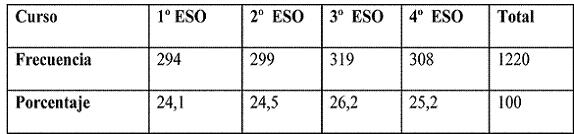
<body><![CDATA[<p style="margin: 5pt 188.25pt 0.0001pt 0cm; text-align: justify; line-height: 150%;"><span style="font-family: Arial;" lang="ES-UY"><o:p>&nbsp;</o:p></span></p>       <p style="margin: 5pt 188.25pt 0.0001pt 0cm; text-align: center; line-height: 150%;" align="center"><b><span style="font-family: Arial;" lang="ES-UY">OBJETIVOS</span></b><span style="font-family: Arial;" lang="ES-UY"><o:p></o:p></span></p>       <p style="margin: 5pt 188.25pt 0.0001pt 0cm; text-align: justify; line-height: 150%;"><span style="font-family: Arial;" lang="ES-UY"><o:p>&nbsp;</o:p></span></p>       <p style="margin: 5pt 188.25pt 0.0001pt 0cm; text-align: justify; text-indent: 14.2pt; line-height: 150%;"><span style="font-family: Arial;" lang="ES-UY">Los objetivos prioritarios de este estudio son dos: <o:p></o:p></span></p>       <p style="margin: 5pt 188.25pt 0.0001pt 18.15pt; text-align: justify; text-indent: -18.15pt; line-height: 150%;"><span style="font-family: Arial;" lang="ES-UY">Analizar la incidencia de las variables actitud y ansiedad en el rendimiento acad&eacute;mico en matem&aacute;ticas de los alumnos de ESO.<o:p></o:p></span></p>       <p style="margin: 5pt 188.25pt 0.0001pt 18.15pt; text-align: justify; text-indent: -18.15pt; line-height: 150%;"><span style="font-family: Arial;" lang="ES-UY">Analizar c&oacute;mo ambas variables se ven influenciadas entre s&iacute;.<o:p></o:p></span></p>       <p style="margin: 5pt 188.25pt 0.0001pt 0cm; text-align: center; line-height: 150%;" align="center"><b><span style="font-family: Arial;" lang="ES-UY"><o:p>&nbsp;</o:p></span></b></p>       <p style="margin: 5pt 188.25pt 0.0001pt 0cm; text-align: center; line-height: 150%;" align="center"><b><span style="font-family: Arial;" lang="ES-UY">M&Eacute;TODO</span></b><span style="font-family: Arial;" lang="ES-UY"><o:p></o:p></span></p>       <p style="margin: 5pt 188.25pt 0.0001pt 0cm; text-align: justify; line-height: 150%;"><b><span style="font-family: Arial;" lang="ES-UY">Muestra</span></b><span style="font-family: Arial;" lang="ES-UY"><o:p></o:p></span></p>       <p style="margin: 5pt 188.25pt 0.0001pt 0cm; text-align: justify; text-indent: 14.2pt; line-height: 150%;"><span style="font-family: Arial;" lang="ES-UY">La muestra est&aacute; constituida por un total de 1220 alumnos (586 chicos y 634 chicas) de 1&ordm; a 4&ordm; curso de Educaci&oacute;n Secundaria Obligatoria pertenecientes a diferentes colegios p&uacute;blicos y concertados, elegidos al azar, de la ciudad de A Coru&ntilde;a. La edad media de los alumnos de la muestra es de 13&acute;5 a&ntilde;os.<o:p></o:p></span></p>       ]]></body>
<body><![CDATA[<p style="margin: 5pt 188.25pt 0.0001pt 0cm; text-align: justify; text-indent: 14.2pt; line-height: 150%;"><span style="font-family: Arial;" lang="ES-UY"><o:p>&nbsp;</o:p></span></p>       <p style="margin: 5pt 188.25pt 0.0001pt 0cm; text-align: justify; text-indent: 14.2pt; line-height: 150%;"><span style="font-family: Arial;" lang="ES-UY">El hecho de centrarnos en este grupo de edad viene determinada por considerar que es en la ESO cuando los alumnos muestran una clara actitud (positiva o negativa) hacia las matem&aacute;ticas y manifiestan m&aacute;s ansiedad ante ellas. No en vano los estudios al respecto, reconocen que el 68% de los estudiantes de los 12 a los 16 a&ntilde;os que van a clase de matem&aacute;ticas experimentan altos niveles de ansiedad (<a name="Norwood1994."></a><a href="#Norwood">Norwood</a>, 1994). &Eacute;ste es un porcentaje alto si consideramos que esta asignatura es obligatoria para todos los alumnos hasta terminar la Educaci&oacute;n Secundaria. <o:p></o:p></span></p>       <p style="margin: 5pt 188.25pt 0.0001pt 0cm; text-align: justify; line-height: 150%;"><span style="font-family: Arial;" lang="ES-UY"><o:p>&nbsp;</o:p></span></p>       <p style="margin: 5pt 188.25pt 0.0001pt 0cm; text-align: justify; line-height: 150%;"><span style="font-family: Arial;" lang="ES-UY">La distribuci&oacute;n muestral queda reflejada en la Tabla 1. <o:p></o:p></span></p>       <p style="margin: 5pt 188.25pt 0.0001pt 0cm; text-align: justify; line-height: 150%;"><span style="font-family: Arial;" lang="ES-UY"><o:p>&nbsp;</o:p></span></p>       <p style="margin: 5pt 188.25pt 0.0001pt 0cm; text-align: justify; line-height: 150%;"><span style="font-family: Arial;" lang="ES-UY"><o:p></o:p></span><img style="border: 1px solid ; width: 574px; height: 134px;" alt="" src="/img/revistas/cp/v4n1/1a04t1.jpg"></p>       <p style="margin: 5pt 188.25pt 12pt 0cm; text-align: justify; line-height: 150%;"><span style="font-family: Arial;" lang="ES-UY"><o:p>&nbsp;</o:p></span></p>       <p style="margin: 5pt 188.25pt 0.0001pt 0cm; text-align: justify; line-height: 150%;"><b><span style="font-family: Arial;" lang="ES-UY"><o:p>&nbsp;</o:p>Procedimiento</span></b><span style="font-family: Arial;" lang="ES-UY"><o:p></o:p></span></p>       <p style="margin: 5pt 188.25pt 0.0001pt 0cm; text-align: justify; text-indent: 14.2pt; line-height: 150%;"><span style="font-family: Arial;" lang="ES-UY">Se utilizan dos cuestionarios, uno para evaluar las actitudes y otro para la ansiedad elaborados por <a name="Mato2006."></a><a href="#Mato">Mato</a> (2006). Ambos adoptan el formato de las escalas tipo Likert, con cinco opciones de respuesta, que van desde &ldquo;muy en desacuerdo&rdquo; hasta &ldquo;muy de acuerdo&rdquo;. La aplicaci&oacute;n se realiz&oacute; con la ayuda de los profesores de los distintos grupos. <o:p></o:p></span></p>       <p style="margin: 5pt 188.25pt 0.0001pt 0cm; text-align: justify; text-indent: 14.2pt; line-height: 150%;"><span style="font-family: Arial;" lang="ES-UY"><o:p>&nbsp;</o:p></span></p>       ]]></body>
<body><![CDATA[<p style="margin: 5pt 188.25pt 0.0001pt 0cm; text-align: justify; text-indent: 14.2pt; line-height: 150%;"><span style="font-family: Arial;" lang="ES-UY">El &ldquo;Cuestionario de Actitud&rdquo; tiene una fiabilidad &alpha; de Cronbach de .9706 y consta de 19 &iacute;tems repartidos en dos factores: &ldquo;actitud del profesor percibida por los alumnos&rdquo; &ldquo;agrado y utilidad de las matem&aacute;ticas en el futuro&rdquo;. <o:p></o:p></span></p>       <p style="margin: 5pt 188.25pt 0.0001pt 0cm; text-align: justify; text-indent: 14.2pt; line-height: 150%;"><span style="font-family: Arial;" lang="ES-UY"><o:p>&nbsp;</o:p></span></p>       <p style="margin: 5pt 188.25pt 0.0001pt 0cm; text-align: justify; text-indent: 14.2pt; line-height: 150%;"><span style="font-family: Arial;" lang="ES-UY">El primer factor comprende 11 &iacute;tems y describe la percepci&oacute;n que tienen los estudiantes sobre las actitudes de su profesor de matem&aacute;ticas. Hace referencia al trato que tiene el profesor con sus alumnos, c&oacute;mo los anima, si las clases son participativas, etc. <o:p></o:p></span></p>       <p style="margin: 5pt 188.25pt 0.0001pt 0cm; text-align: justify; text-indent: 14.2pt; line-height: 150%;"><span style="font-family: Arial;" lang="ES-UY"><o:p>&nbsp;</o:p></span></p>       <p style="margin: 5pt 188.25pt 0.0001pt 0cm; text-align: justify; text-indent: 14.2pt; line-height: 150%;"><span style="font-family: Arial;" lang="ES-UY">El segundo factor comprende 8 &iacute;tems y describe la satisfacci&oacute;n que siente el estudiante hacia el estudio de las matem&aacute;ticas y la confianza que tiene en s&iacute; mismo. Informa adem&aacute;s del valor que el estudiante da a las matem&aacute;ticas de cara al futuro.<o:p></o:p></span></p>       <p style="margin: 5pt 188.25pt 0.0001pt 0cm; text-align: justify; text-indent: 14.2pt; line-height: 150%;"><span style="font-family: Arial;" lang="ES-UY"><o:p>&nbsp;</o:p></span></p>       <p style="margin: 5pt 188.25pt 0.0001pt 0cm; text-align: justify; text-indent: 14.2pt; line-height: 150%;"><span style="font-family: Arial;" lang="ES-UY">El &ldquo;Cuestionario de ansiedad&rdquo; tiene una fiabilidad de 0,9504 y consta de 24 &iacute;tems repartidos en 5 factores: &ldquo;ansiedad ante la evaluaci&oacute;n de matem&aacute;ticas&rdquo;, &ldquo;ansiedad ante la temporalidad&rdquo;, &ldquo;ansiedad ante la comprensi&oacute;n de problemas&rdquo;, &ldquo;ansiedad frente a los n&uacute;meros y operaciones matem&aacute;ticas&rdquo; y &ldquo;ansiedad ante situaciones matem&aacute;ticas de la vida real&rdquo;.<o:p></o:p></span></p>       <p style="margin: 5pt 188.25pt 0.0001pt 0cm; text-align: justify; line-height: 150%;"><span style="font-family: Arial;" lang="ES-UY"><o:p>&nbsp;</o:p></span></p>       <p style="margin: 5pt 188.25pt 0.0001pt 0cm; text-align: justify; text-indent: 14.2pt; line-height: 150%;"><span style="font-family: Arial;" lang="ES-UY">El primer factor comprende 11 &iacute;tems y se refiere al sentimiento de ansiedad y temor que el alumno manifiesta al ser evaluado. <o:p></o:p></span></p>       <p style="margin: 5pt 188.25pt 0.0001pt 0cm; text-align: justify; text-indent: 14.2pt; line-height: 150%;"><span style="font-family: Arial;" lang="ES-UY"><o:p>&nbsp;</o:p></span></p>       ]]></body>
<body><![CDATA[<p style="margin: 5pt 188.25pt 0.0001pt 0cm; text-align: justify; text-indent: 14.2pt; line-height: 150%;"><span style="font-family: Arial;" lang="ES-UY">El segundo factor comprende 4 &iacute;tems y explica la ansiedad que sienten los alumnos ante el tiempo que le queda para hacer un examen o para llevar los ejercicios hechos para clase. <o:p></o:p></span></p>       <p style="margin: 5pt 188.25pt 0.0001pt 0cm; text-align: justify; text-indent: 14.2pt; line-height: 150%;"><span style="font-family: Arial;" lang="ES-UY"><o:p>&nbsp;</o:p></span></p>       <p style="margin: 5pt 188.25pt 0.0001pt 0cm; text-align: justify; text-indent: 14.2pt; line-height: 150%;"><span style="font-family: Arial;" lang="ES-UY">El tercer factor comprende 3 &iacute;tems y se refiere a si el alumno siente temor ante la comprensi&oacute;n de los problemas de matem&aacute;ticas.<o:p></o:p></span></p>       <p style="margin: 5pt 188.25pt 0.0001pt 0cm; text-align: justify; text-indent: 14.2pt; line-height: 150%;"><span style="font-family: Arial;" lang="ES-UY"><o:p>&nbsp;</o:p></span></p>       <p style="margin: 5pt 188.25pt 0.0001pt 0cm; text-align: justify; text-indent: 14.2pt; line-height: 150%;"><span style="font-family: Arial;" lang="ES-UY">El cuarto factor comprende 3 &iacute;tems y describe la ansiedad que el alumno manifiesta al hacer ejercicios, operaciones y, en general, al trabajar con n&uacute;meros. <o:p></o:p></span></p>       <p style="margin: 5pt 188.25pt 0.0001pt 0cm; text-align: justify; text-indent: 14.2pt; line-height: 150%;"><span style="font-family: Arial;" lang="ES-UY"><o:p>&nbsp;</o:p></span></p>       <p style="margin: 5pt 188.25pt 0.0001pt 0cm; text-align: justify; text-indent: 14.2pt; line-height: 150%;"><span style="font-family: Arial;" lang="ES-UY">Por &uacute;ltimo, el quinto factor comprende 3 &iacute;tems y describe a la ansiedad que siente el alumno al tener que enfrentarse a las matem&aacute;ticas en la vida real. <o:p></o:p></span></p>       <p style="margin: 5pt 188.25pt 0.0001pt 0cm; text-align: justify; text-indent: 14.2pt; line-height: 150%;"><span style="font-family: Arial;" lang="ES-UY"><o:p>&nbsp;</o:p></span></p>       <p style="margin: 5pt 188.25pt 0.0001pt 0cm; text-align: justify; text-indent: 14.2pt; line-height: 150%;"><span style="font-family: Arial;" lang="ES-UY">La aplicaci&oacute;n se realiz&oacute; a 1220 alumnos de ESO (586 chicos y 634 chicas), pertenecientes a siete centros (dos aulas de cada nivel escolar) resultando un total de 56 grupos. Los centros cubren las caracter&iacute;sticas propias de la poblaci&oacute;n: dos colegios p&uacute;blicos del centro y dos de la periferia de la ciudad, un centro de ense&ntilde;anza privada y dos centros de ense&ntilde;anza concertada. La raz&oacute;n de optar por uno o dos centros de ense&ntilde;anza privada, p&uacute;blica o concertada es para respetar la proporci&oacute;n de centros y de alumnos de cada tipo que hay en la ciudad, para que la investigaci&oacute;n resulte lo m&aacute;s representativa posible.<o:p></o:p></span></p>       <p style="margin: 5pt 188.25pt 0.0001pt 0cm; text-align: justify; text-indent: 14.2pt; line-height: 150%;"><span style="font-family: Arial;" lang="ES-UY"><o:p>&nbsp;</o:p></span></p>       ]]></body>
<body><![CDATA[<p style="margin: 5pt 188.25pt 0.0001pt 0cm; text-align: justify; text-indent: 14.2pt; line-height: 150%;"><span style="font-family: Arial;" lang="ES-UY">La puesta en contacto con los colegios se hace en un primer momento telef&oacute;nicamente con cada uno de los directores de los centros. Posteriormente hay una entrevista en la que participan el director del departamento de orientaci&oacute;n, el orientador y el investigador, en la cual se le explican los motivos de la investigaci&oacute;n y de qu&eacute; consta la misma. Se pide que sea el orientador del centro el que aplique los cuestionarios, de forma colectiva, solicitando que no estuviera presente en el aula el profesor de matem&aacute;ticas durante la aplicaci&oacute;n de las pruebas con el fin de no mediatizar las respuestas de los alumnos (algunas &iacute;tems se refieren a las relaciones entre el profesor y el alumno). Por lo tanto, los cuestionarios se aplican en cada centro por personal diferente, pero que previamente es preparado y entrenado, a fin de evitar que personas desconocidas para los alumnos les causaran alguna intranquilidad.<o:p></o:p></span></p>       <p style="margin: 5pt 188.25pt 0.0001pt 0cm; text-align: justify; text-indent: 14.2pt; line-height: 150%;"><span style="font-family: Arial;" lang="ES-UY"><o:p>&nbsp;</o:p></span></p>       <p style="margin: 5pt 188.25pt 0.0001pt 0cm; text-align: justify; text-indent: 14.2pt; line-height: 150%;"><span style="font-family: Arial;" lang="ES-UY">Para cumplimentar los cuestionarios se ofrecieron a los alumnos las siguientes instrucciones:<o:p></o:p></span></p>       <p style="margin: 5pt 188.25pt 0.0001pt 36pt; text-align: justify; text-indent: -18pt; line-height: 150%;"><span style="font-size: 10pt; line-height: 150%; font-family: Symbol;" lang="ES-UY"><span style="">&middot;<span style="font-family: &quot;Times New Roman&quot;; font-style: normal; font-variant: normal; font-weight: normal; font-size: 7pt; line-height: normal; font-size-adjust: none; font-stretch: normal;">&nbsp;&nbsp;&nbsp;&nbsp;&nbsp;&nbsp;</span></span></span><span style="font-family: Arial;" lang="ES-UY">Lo que vamos a realizar a continuaci&oacute;n nada tiene que ver con la escuela, es decir, los resultados de lo que hag&aacute;is no lo ver&aacute;n vuestros profesores y pod&eacute;is estar tranquilos porque no forma parte de la evaluaci&oacute;n acad&eacute;mica. Adem&aacute;s los datos s&oacute;lo los ver&aacute; el investigador.<o:p></o:p></span></p>       <p style="margin: 5pt 188.25pt 0.0001pt 36pt; text-align: justify; text-indent: -18pt; line-height: 150%;"><span style="font-size: 10pt; line-height: 150%; font-family: Symbol;" lang="ES-UY"><span style="">&middot;<span style="font-family: &quot;Times New Roman&quot;; font-style: normal; font-variant: normal; font-weight: normal; font-size: 7pt; line-height: normal; font-size-adjust: none; font-stretch: normal;">&nbsp;&nbsp;&nbsp;&nbsp;&nbsp;&nbsp;&nbsp;&nbsp;&nbsp;</span></span></span><span style="font-family: Arial;" lang="ES-UY">Es importante que se&aacute;is sinceros en vuestras contestaciones, que teng&aacute;is una actitud positiva y que est&eacute;is concentrados en lo que hac&eacute;is.<o:p></o:p></span></p>       <p style="margin: 5pt 188.25pt 0.0001pt 36pt; text-align: justify; text-indent: -18pt; line-height: 150%;"><span style="font-size: 10pt; line-height: 150%; font-family: Symbol;" lang="ES-UY"><span style="">&middot;<span style="font-family: &quot;Times New Roman&quot;; font-style: normal; font-variant: normal; font-weight: normal; font-size: 7pt; line-height: normal; font-size-adjust: none; font-stretch: normal;">&nbsp;&nbsp;&nbsp;&nbsp;&nbsp;&nbsp;&nbsp;&nbsp;&nbsp;</span></span></span><span style="font-family: Arial;" lang="ES-UY">Si hay alg&uacute;n alumno que no desee realizar las pruebas puede optar libremente por ello.<o:p></o:p></span></p>       <p style="margin: 5pt 188.25pt 0.0001pt 36pt; text-align: justify; text-indent: -18pt; line-height: 150%;"><span style="font-size: 10pt; line-height: 150%; font-family: Symbol;" lang="ES-UY"><span style="">&middot;<span style="font-family: &quot;Times New Roman&quot;; font-style: normal; font-variant: normal; font-weight: normal; font-size: 7pt; line-height: normal; font-size-adjust: none; font-stretch: normal;">&nbsp;&nbsp;&nbsp;&nbsp;&nbsp;</span></span></span><span style="font-family: Arial;" lang="ES-UY">Tambi&eacute;n es importante que no dej&eacute;is ninguna pregunta en blanco, hay que contestar todas las cuestiones. Si alguno/a no est&aacute; seguro, debe pensar un poco y responder lo que m&aacute;s se acerque a lo que piensa. Si despu&eacute;s de comenzar surgen algunas dudas permaneced en vuestra silla y levantad el brazo, nosotros iremos hasta all&iacute; y resolveremos en voz baja la duda, es decir si no sab&eacute;is contestarla nos aclar&aacute;is el motivo. &iexcl;Pod&eacute;is comenzar!.<o:p></o:p></span></p>       <p style="margin: 5pt 188.25pt 0.0001pt 0cm; text-align: justify; text-indent: 14.2pt; line-height: 150%;"><span style="font-family: Arial;" lang="ES-UY"><o:p>&nbsp;</o:p></span></p>       <p style="margin: 5pt 188.25pt 0.0001pt 0cm; text-align: justify; text-indent: 14.2pt; line-height: 150%;"><span style="font-family: Arial;" lang="ES-UY">No se impuso limitaci&oacute;n de tiempo; sin embargo, los alumnos tardaron en completar los cuestionarios entre 30 y 45 minutos en todos los grupos. Para evitar que aquellos estudiantes que no estaban interesados en dichos cuestionarios influyeran negativamente en los que s&iacute; lo estaban, convenimos que nadie saliera del aula hasta que todos hubiesen acabado. Los que iban finalizando pod&iacute;an dedicarse a cualquier otra tarea de su inter&eacute;s, lo que favoreci&oacute; que los cuestionarios no fueran contestados apresuradamente, influidos por los que hab&iacute;an concluido antes. <o:p></o:p></span></p>       <p style="margin: 5pt 188.25pt 0.0001pt 0cm; text-align: justify; text-indent: 14.2pt; line-height: 150%;"><span style="font-family: Arial;" lang="ES-UY"><o:p>&nbsp;</o:p></span></p>       ]]></body>
<body><![CDATA[<p style="margin: 5pt 188.25pt 0.0001pt 0cm; text-align: justify; text-indent: 14.2pt; line-height: 150%;"><span style="font-family: Arial;" lang="ES-UY">Elegimos tambi&eacute;n el horario lectivo para evitar esa desgana manifiesta que generalmente se tiene a contestar encuestas, de esta forma intercambi&aacute;bamos contenidos de otras asignaturas por cuestionarios.<o:p></o:p></span></p>       <p style="margin: 5pt 188.25pt 0.0001pt 0cm; text-align: justify; text-indent: 14.2pt; line-height: 150%;"><span style="font-family: Arial;" lang="ES-UY"><o:p>&nbsp;</o:p></span></p>       <p style="margin: 5pt 188.25pt 0.0001pt 0cm; text-align: justify; text-indent: 14.2pt; line-height: 150%;"><span style="font-family: Arial;" lang="ES-UY">Los cuestionarios se recogieron una vez que observamos que todos los alumnos hab&iacute;an finalizado.<o:p></o:p></span></p>       <p style="margin: 5pt 188.25pt 0.0001pt 0cm; text-align: justify; text-indent: 14.2pt; line-height: 150%;"><span style="font-family: Arial;" lang="ES-UY"><o:p>&nbsp;</o:p></span></p>       <p style="margin: 5pt 188.25pt 0.0001pt 0cm; text-align: justify; line-height: 150%;"><b><span style="font-family: Arial;" lang="ES-UY">Resultados</span></b><span style="font-family: Arial;" lang="ES-UY"><o:p></o:p></span></p>       <p style="margin: 5pt 188.25pt 0.0001pt 0cm; text-align: justify; line-height: 150%;"><span style="font-family: Arial;" lang="ES-UY"><o:p>&nbsp;</o:p></span></p>       <p style="margin: 5pt 188.25pt 0.0001pt 0cm; text-align: justify; text-indent: 14.2pt; line-height: 150%;"><span style="font-family: Arial;" lang="ES-UY">Se utiliz&oacute; un an&aacute;lisis de varianza (ANOVA) parSe utiliz&oacute; un an&aacute;lisis de varianza (ANOVA) para contrastar la existencia de diferencias significativas entre las variables actitud y ansiedad respecto al rendimiento de los alumnos en matem&aacute;ticas al finalizar el curso anterior (suspenso, aprobado, bien, notable, sobresaliente). La calificaci&oacute;n correspondiente es la obtenida por los sujetos mediante pruebas orales, escritas, trabajos en grupo, cuadernos, actitud en clase&hellip; <o:p></o:p></span></p>       <p style="margin: 5pt 188.25pt 0.0001pt 0cm; text-align: justify; text-indent: 14.2pt; line-height: 150%;"><span style="font-family: Arial;" lang="ES-UY"><o:p>&nbsp;</o:p></span></p>       <p style="margin: 5pt 188.25pt 0.0001pt 0cm; text-align: justify; text-indent: 14.2pt; line-height: 150%;"><span style="font-family: Arial;" lang="ES-UY">Para conocer los efectos generales y espec&iacute;ficos de las variables sobre el rendimiento se utiliz&oacute; la correlaci&oacute;n de Pearson y la regresi&oacute;n m&uacute;ltiple. <o:p></o:p></span></p>       <p style="margin: 5pt 188.25pt 0.0001pt 0cm; text-align: justify; text-indent: 14.2pt; line-height: 150%;"><span style="font-family: Arial;" lang="ES-UY"><o:p>&nbsp;</o:p></span></p>       ]]></body>
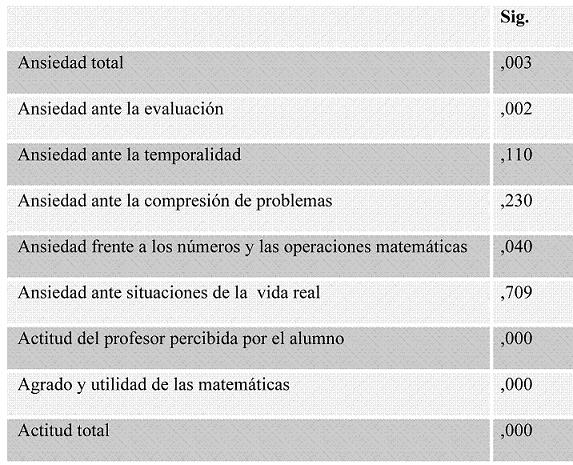
<body><![CDATA[<p style="margin: 5pt 188.25pt 0.0001pt 0cm; text-align: justify; text-indent: 14.2pt; line-height: 150%;"><span style="font-family: Arial;" lang="ES-UY">Para ello se plante&oacute; la ecuaci&oacute;n que maximiza la predicci&oacute;n de la variable rendimiento determinando el mayor agregado ponderado de las variables predictoras, actitud y ansiedad (<a name="Gardner2001."></a><a href="#Gardner">Gardner</a>, 2001). El m&eacute;todo utilizado es el de pasos sucesivos. <o:p></o:p></span></p>       <p style="margin: 5pt 188.25pt 0.0001pt 0cm; text-align: justify; text-indent: 14.2pt; line-height: 150%;"><span style="font-family: Arial;" lang="ES-UY"><o:p>&nbsp;</o:p></span></p>       <p style="margin: 5pt 188.25pt 0.0001pt 0cm; text-align: justify; text-indent: 14.2pt; line-height: 150%;"><span style="font-family: Arial;" lang="ES-UY">An&aacute;lisis de la relaci&oacute;n entre actitud, ansiedad y rendimiento en matem&aacute;ticas.</span><span style="font-family: Arial;" lang="ES-UY"><o:p></o:p></span></p>       <p style="margin: 5pt 188.25pt 0.0001pt 0cm; text-align: justify; text-indent: 14.2pt; line-height: 150%;"><span style="font-family: Arial;" lang="ES-UY">Los resultados del an&aacute;lisis de varianza indican que las diferencias en las puntuaciones obtenidas en valores de ansiedad total y de actitud, a nivel general, son significativas con valores de ,003 y ,000 respectivamente (<a href="#t2">Tabla 2</a>). En el caso de la variable ansiedad, estas diferencias no aparecen tomando por separado los factores &ldquo;ansiedad ante la temporalidad&rdquo;, &ldquo;ansiedad ante la comprensi&oacute;n de problemas&rdquo; y &ldquo;ansiedad ante situaciones de la vida real&rdquo; en funci&oacute;n de las calificaciones de los estudiantes. Sin embargo, estas diferencias s&iacute; se dan en los factores &ldquo;ansiedad ante la evaluaci&oacute;n&rdquo; y &ldquo;ansiedad frente a los n&uacute;meros y las operaciones matem&aacute;ticas&rdquo;. <o:p></o:p></span></p>       <p style="margin: 5pt 188.25pt 0.0001pt 0cm; text-align: justify; text-indent: 14.2pt; line-height: 150%;"><span style="font-family: Arial;" lang="ES-UY"><o:p>&nbsp;</o:p></span></p>       <p style="margin: 5pt 188.25pt 0.0001pt 0cm; text-align: justify; line-height: 120%;"><span style="font-family: Arial;" lang="ES-UY">Tabla 2. ANOVA. Actitud-ansiedad-rendimiento<o:p></o:p></span></p>       <p style="margin: 5pt 188.25pt 0.0001pt 0cm; text-align: justify; line-height: 120%;"><span style="font-family: Arial;" lang="ES-UY"><o:p>&nbsp;</o:p></span></p>       <p style="margin: 5pt 188.25pt 0.0001pt 0cm; text-align: justify; line-height: 150%;"><span style="font-family: Arial;" lang="ES-UY"><o:p></o:p></span><a name="t2"></a><img style="border: 1px solid ; width: 573px; height: 465px;" alt="" src="/img/revistas/cp/v4n1/1a04t2.jpg"></p>       <p style="margin: 5pt 188.25pt 0.0001pt 0cm; text-align: justify; text-indent: 14.2pt; line-height: 150%;"><span style="font-family: Arial;" lang="ES-UY"><o:p>&nbsp;</o:p></span></p>       <p style="margin: 5pt 188.25pt 0.0001pt 0cm; text-align: justify; text-indent: 14.2pt; line-height: 150%;"><span style="font-family: Arial;" lang="ES-UY">En el caso de la variable actitud hay diferencias significativas respecto a la calificaci&oacute;n de los estudiantes en cuanto a los factores &ldquo;actitud del profesor percibida por el alumno&rdquo; y &ldquo;agrado y utilidad de las matem&aacute;ticas&rdquo;.<o:p></o:p></span></p>       ]]></body>
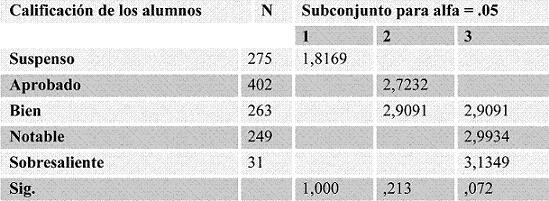
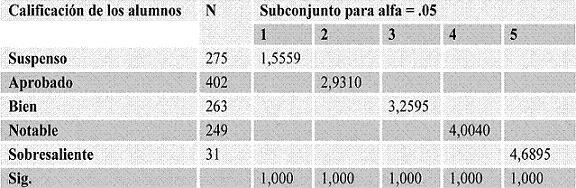
<body><![CDATA[<p style="margin: 5pt 188.25pt 0.0001pt 0cm; text-align: justify; text-indent: 14.2pt; line-height: 150%;"><span style="font-family: Arial;" lang="ES-UY"><o:p>&nbsp;</o:p></span></p>       <p style="margin: 5pt 188.25pt 0.0001pt 0cm; text-align: justify; text-indent: 14.2pt; line-height: 150%;"><span style="font-family: Arial;" lang="ES-UY">De las comparaciones entre los grupos, a fin de detectar a cu&aacute;l de ellos se deben las diferencias, se observaron diferencias de ansiedad entre aquellos sujetos con un rendimiento de suspenso y notable respecto a la &ldquo;ansiedad total&rdquo;; m&aacute;s concretamente, ante el factor &ldquo;ansiedad ante la evaluaci&oacute;n&rdquo;. No exist&iacute;an diferencias entre las otras categor&iacute;as del rendimiento.<o:p></o:p></span></p>       <p style="margin: 5pt 188.25pt 0.0001pt 0cm; text-align: justify; text-indent: 14.2pt; line-height: 150%;"><span style="font-family: Arial;" lang="ES-UY"><o:p>&nbsp;</o:p></span></p>       <p style="margin: 5pt 188.25pt 0.0001pt 0cm; text-align: justify; text-indent: 14.2pt; line-height: 150%;"><span style="font-family: Arial;" lang="ES-UY">De igual modo, respecto a la variable actitud, se observaron diferencias significativas en todas las categor&iacute;as de rendimiento respecto a la actitud general. <o:p></o:p></span></p>       <p style="margin: 5pt 188.25pt 0.0001pt 0cm; text-align: justify; text-indent: 14.2pt; line-height: 150%;"><span style="font-family: Arial;" lang="ES-UY"><o:p>&nbsp;</o:p></span></p>       <p style="margin: 5pt 188.25pt 0.0001pt 0cm; text-align: justify; text-indent: 14.2pt; line-height: 150%;"><span style="font-family: Arial;" lang="ES-UY">Por el contrario, no existen diferencias de rendimiento respecto al factor &ldquo;actitud del profesor percibida por el alumno&rdquo; cuando se cruzan las calificaciones superiores (bien, notable y sobresaliente). S&iacute; se observ&oacute; que exist&iacute;an diferencias significativas en cuanto al factor &ldquo;agrado y utilidad de las matem&aacute;ticas&rdquo; respecto a todas las categor&iacute;as del rendimiento.<o:p></o:p></span></p>       <p style="margin: 5pt 188.25pt 0.0001pt 0cm; text-align: justify; text-indent: 14.2pt; line-height: 150%;"><span style="font-family: Arial;" lang="ES-UY"><o:p>&nbsp;</o:p></span></p>       <p style="margin: 5pt 188.25pt 0.0001pt 0cm; text-align: justify; text-indent: 14.2pt; line-height: 150%;"><span style="font-family: Arial;" lang="ES-UY">En la variable ansiedad, dado que las diferencias no son significativas, todas las categor&iacute;as de la variable &ldquo;rendimiento&rdquo; forman un grupo. <o:p></o:p></span></p>       <p style="margin: 5pt 188.25pt 0.0001pt 0cm; text-align: justify; text-indent: 14.2pt; line-height: 150%;"><span style="font-family: Arial;" lang="ES-UY"><o:p>&nbsp;</o:p></span></p>       <p style="margin: 5pt 188.25pt 0.0001pt 0cm; text-align: justify; text-indent: 14.2pt; line-height: 150%;"><span style="font-family: Arial;" lang="ES-UY">Algo similar ocurre referente a la variable actitud, en el factor &ldquo;actitud del profesor percibida por el alumno&rdquo;, en el que la categor&iacute;a &ldquo;suspenso&rdquo; forma un grupo, las categor&iacute;as &ldquo;aprobado&rdquo; y &ldquo;bien&rdquo; forman otro y, las categor&iacute;as &ldquo;bien&rdquo;, &ldquo;notable&rdquo; y &ldquo;sobresaliente&rdquo;, un tercero (<a href="#t3">Tabla 3</a>). En el caso del factor &ldquo;agrado y utilidad de las matem&aacute;ticas&rdquo; cada una de las categor&iacute;as forma un grupo (<a href="#t4">Tabla 4</a>). <o:p></o:p></span></p>       ]]></body>
<body><![CDATA[<p style="margin: 5pt 188.25pt 0.0001pt 0cm; text-align: justify; text-indent: 14.2pt; line-height: 150%;"><span style="font-family: Arial;" lang="ES-UY"><o:p>&nbsp;</o:p></span></p>       <p style="margin: 5pt 188.25pt 0.0001pt 0cm; text-align: justify; line-height: 120%;"><span style="font-family: Arial;" lang="ES-UY">Tabla 3. Actitud del profesor percibida por el alumno-rendimiento<o:p></o:p></span></p>       <p style="margin: 5pt 188.25pt 0.0001pt 0cm; text-align: justify; line-height: 120%;"><span style="font-family: Arial;" lang="ES-UY"><o:p>&nbsp;</o:p></span></p>       <p style="margin: 5pt 188.25pt 0.0001pt 0cm; text-align: justify; line-height: 150%;"><span style="font-family: Arial;" lang="ES-UY"><o:p></o:p></span><a name="t3"></a><img style="border: 1px solid ; width: 549px; height: 201px;" alt="" src="/img/revistas/cp/v4n1/1a04t3.jpg"></p>       <p style="margin: 5pt 188.25pt 0.0001pt 0cm; text-align: justify; line-height: 150%;"><span style="font-family: Arial;" lang="ES-UY"><o:p>&nbsp;</o:p></span></p>       <p style="margin: 5pt 188.25pt 0.0001pt 0cm; text-align: justify; line-height: 120%;"><span style="font-family: Arial;" lang="ES-UY">Tabla 4. Agrado y utilidad de las matem&aacute;ticas-rendimiento<o:p></o:p></span></p>       <p style="margin: 5pt 188.25pt 0.0001pt 0cm; text-align: justify; line-height: 120%;"><span style="font-family: Arial;" lang="ES-UY"><o:p>&nbsp;</o:p></span></p>       <p style="margin: 5pt 188.25pt 0.0001pt 0cm; text-align: justify; line-height: 150%;"><span style="font-family: Arial;" lang="ES-UY"><o:p></o:p></span><a name="t4"></a><img style="border: 1px solid ; width: 576px; height: 188px;" alt="" src="/img/revistas/cp/v4n1/1a04t4.jpg"></p>       <p style="margin: 5pt 188.25pt 0.0001pt 0cm; text-align: justify; text-indent: 14.2pt; line-height: 150%;"><span style="font-family: Arial;" lang="ES-UY"><o:p>&nbsp;</o:p></span></p>       <p style="margin: 5pt 188.25pt 0.0001pt 0cm; text-align: justify; text-indent: 14.2pt; line-height: 150%;"><span style="font-family: Arial;" lang="ES-UY">Efectos generales de la variables actitud y ansiedad sobre el rendimiento.</span><span style="font-family: Arial;" lang="ES-UY"><o:p></o:p></span></p>       ]]></body>
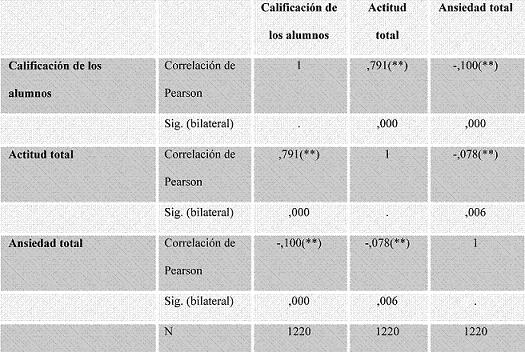
<body><![CDATA[<p style="margin: 5pt 188.25pt 0.0001pt 0cm; text-align: justify; text-indent: 14.2pt; line-height: 150%;"><span style="font-family: Arial;" lang="ES-UY"><o:p>&nbsp;</o:p></span></p>       <p style="margin: 5pt 188.25pt 0.0001pt 0cm; text-align: justify; text-indent: 14.2pt; line-height: 150%;"><span style="font-family: Arial;" lang="ES-UY">Para analizar las asociaciones e influencias entre las variables utilizadas se utiliz&oacute; la correlaci&oacute;n de Pearson entre las tres variables y los factores en que se descomponen. <o:p></o:p></span></p>       <p style="margin: 5pt 188.25pt 0.0001pt 0cm; text-align: justify; text-indent: 14.2pt; line-height: 150%;"><span style="font-family: Arial;" lang="ES-UY"><o:p>&nbsp;</o:p></span></p>       <p style="margin: 5pt 188.25pt 0.0001pt 0cm; text-align: justify; text-indent: 14.2pt; line-height: 150%;"><span style="font-family: Arial;" lang="ES-UY">Los resultados que se exponen en la Tabla 5 muestran la existencia de correlaciones significativas entre ellas. Se observ&oacute; que la actitud y la calificaci&oacute;n de los alumnos tiene una correlaci&oacute;n positiva y relativamente alta y significativa (,791); es decir que a medida que la actitud es m&aacute;s positiva los sujetos obtienen mayores calificaciones. <o:p></o:p></span></p>       <p style="margin: 5pt 188.25pt 0.0001pt 0cm; text-align: justify; text-indent: 14.2pt; line-height: 150%;"><span style="font-family: Arial;" lang="ES-UY"><o:p>&nbsp;</o:p></span></p>       <p style="margin: 5pt 188.25pt 0.0001pt 0cm; text-align: justify; line-height: 120%;"><span style="font-family: Arial;" lang="ES-UY">Tabla 5. Correlaciones actitud-ansiedad-rendimiento<o:p></o:p></span></p>       <p style="margin: 5pt 188.25pt 0.0001pt 0cm; text-align: justify; text-indent: 14.2pt; line-height: 150%;"><span style="font-family: Arial;" lang="ES-UY"><o:p>&nbsp;</o:p></span></p>       <p style="margin: 5pt 188.25pt 0.0001pt 0cm; text-align: justify; line-height: 150%;"><span style="font-family: Arial;" lang="ES-UY"><o:p></o:p></span><a name="t5"></a><img style="border: 1px solid ; width: 525px; height: 352px;" alt="" src="/img/revistas/cp/v4n1/1a04t5.jpg"></p>       <p style="margin: 5pt 188.25pt 0.0001pt 0cm; text-align: justify; line-height: 200%;"><span style="font-family: Arial;" lang="ES-UY">** La correlaci&oacute;n es significativa al nivel 0,01 (bilateral).<o:p></o:p></span></p>       <p style="margin: 5pt 188.25pt 0.0001pt 0cm; text-align: justify; text-indent: 14.2pt; line-height: 150%;"><span style="font-family: Arial;" lang="ES-UY">No ocurre lo mismo con la ansiedad y el rendimiento, donde se produce una relaci&oacute;n inversa, es decir, a medida que la ansiedad aumenta el rendimiento disminuye. <o:p></o:p></span></p>       ]]></body>
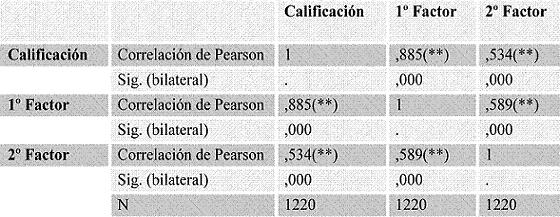
<body><![CDATA[<p style="margin: 5pt 188.25pt 0.0001pt 0cm; text-align: justify; text-indent: 14.2pt; line-height: 150%;"><span style="font-family: Arial;" lang="ES-UY"><o:p>&nbsp;</o:p></span></p>       <p style="margin: 5pt 188.25pt 0.0001pt 0cm; text-align: justify; text-indent: 14.2pt; line-height: 150%;"><span style="font-family: Arial;" lang="ES-UY">La actitud correlaciona as&iacute; mismo de manera negativa con la ansiedad, lo que implica que a medida que la actitud es menor (-,078) la ansiedad es mayor (en t&eacute;rminos generales) siendo significativas a ,005 y ,001.<o:p></o:p></span></p>       <p style="margin: 5pt 188.25pt 0.0001pt 0cm; text-align: justify; text-indent: 14.2pt; line-height: 150%;"><span style="font-family: Arial;" lang="ES-UY"><o:p>&nbsp;</o:p></span></p>       <p style="margin: 5pt 188.25pt 0.0001pt 0cm; text-align: justify; text-indent: 14.2pt; line-height: 150%;"><span style="font-family: Arial;" lang="ES-UY">Posteriormente se ha analizado la correlaci&oacute;n de las calificaciones obtenidas por los sujetos en matem&aacute;ticas con los factores de actitud. Los resultados muestran valores positivos y significativos en todos los casos, de forma que las calificaciones aumentan cuando es mayor el &ldquo;agrado y la utilidad de las matem&aacute;ticas&rdquo; y la &ldquo;actitud del profesor percibida por el alumno&rdquo;. <o:p></o:p></span></p>       <p style="margin: 5pt 188.25pt 0.0001pt 0cm; text-align: justify; text-indent: 14.2pt; line-height: 150%;"><span style="font-family: Arial;" lang="ES-UY"><o:p>&nbsp;</o:p></span></p>       <p style="margin: 5pt 188.25pt 0.0001pt 0cm; text-align: justify; text-indent: 14.2pt; line-height: 150%;"><span style="font-family: Arial;" lang="ES-UY">Estos valores se consideran altos, pues se obtienen correlaciones de ,885 entre la calificaci&oacute;n y la utilidad de las matem&aacute;ticas y de ,534 entre la calificaci&oacute;n y &ldquo;la actitud del profesor percibida por el alumno&rdquo; (<a href="#t6">Tabla 6</a>). <o:p></o:p></span></p>       <p style="margin: 5pt 188.25pt 0.0001pt 0cm; text-align: justify; text-indent: 14.2pt; line-height: 200%;"><span style="font-family: Arial;" lang="ES-UY"><o:p>&nbsp;</o:p></span></p>       <p style="margin: 5pt 188.25pt 0.0001pt 0cm; text-align: justify; line-height: 200%;"><span style="font-family: Arial;" lang="ES-UY">Tabla 6. Correlaciones calificaciones-factores de actitud<o:p></o:p></span></p>       <p style="margin: 5pt 188.25pt 0.0001pt 0cm; text-align: justify; line-height: 150%;"><span style="font-family: Arial;" lang="ES-UY"><o:p></o:p></span><a name="t6"></a><img style="border: 1px solid ; width: 560px; height: 217px;" alt="" src="/img/revistas/cp/v4n1/1a04t6.jpg"></p>       <p style="margin: 5pt 188.25pt 0.0001pt 0cm; text-align: justify; line-height: 150%;"><span style="font-family: Arial;" lang="ES-UY"><o:p>&nbsp;</o:p></span></p>       ]]></body>
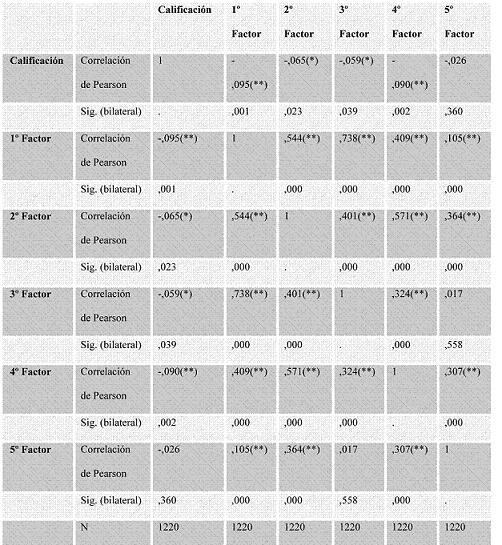
<body><![CDATA[<p style="margin: 5pt 188.25pt 0.0001pt 0cm; text-align: justify; text-indent: 14.2pt; line-height: 150%;"><span style="font-family: Arial;" lang="ES-UY">As&iacute; mismo, existe una correlaci&oacute;n negativa (significativa al 0.01), entre cada uno de los factores de la ansiedad y la calificaci&oacute;n obtenida en matem&aacute;ticas, para la &ldquo;ansiedad ante la evaluaci&oacute;n&rdquo; y &ldquo;ansiedad frente a los n&uacute;meros y las operaciones matem&aacute;ticas&rdquo; y al 0,05 en los factores referidos a &ldquo;ansiedad ante la temporalidad&rdquo; y &ldquo;ansiedad ante la comprensi&oacute;n de problemas&rdquo;. El &uacute;nico valor cuya correlaci&oacute;n no es significativa es ante el factor &ldquo;ansiedad ante situaciones de la vida real (-,026). <o:p></o:p></span></p>       <p style="margin: 5pt 188.25pt 0.0001pt 0cm; text-align: justify; text-indent: 14.2pt; line-height: 150%;"><span style="font-family: Arial;" lang="ES-UY"><o:p>&nbsp;</o:p></span></p>       <p style="margin: 5pt 188.25pt 0.0001pt 0cm; text-align: justify; text-indent: 14.2pt; line-height: 150%;"><span style="font-family: Arial;" lang="ES-UY">El signo (negativo) de los valores indica que a mayor ansiedad el rendimiento disminuye.<o:p></o:p></span></p>       <p style="margin: 5pt 188.25pt 0.0001pt 0cm; text-align: justify; text-indent: 14.2pt; line-height: 150%;"><span style="font-family: Arial;" lang="ES-UY"><o:p>&nbsp;</o:p></span></p>       <p style="margin: 5pt 188.25pt 0.0001pt 0cm; text-align: justify; text-indent: 14.2pt; line-height: 150%;"><span style="font-family: Arial;" lang="ES-UY">En lo que concierne a la relaci&oacute;n existente entre los diferentes factores de la ansiedad existe una correlaci&oacute;n significativa entre todos con la &uacute;nica excepci&oacute;n entre los factores &ldquo;ansiedad ante la comprensi&oacute;n de problemas&rdquo; y &ldquo;ansiedad ante situaciones de la vida real&rdquo; con un valor de ,017 (<a href="#t7">Tabla 7</a>).<o:p></o:p></span></p>       <p style="margin: 5pt 188.25pt 0.0001pt 0cm; text-align: justify; text-indent: 14.2pt; line-height: 200%;"><span style="font-family: Arial;" lang="ES-UY"><o:p>&nbsp;</o:p></span></p>       <p style="margin: 5pt 188.25pt 0.0001pt 0cm; text-align: justify; line-height: 200%;"><span style="font-family: Arial;" lang="ES-UY">Tabla 7. Correlaciones calificaciones-factores de ansiedad <o:p></o:p></span></p>       <p style="margin: 5pt 188.25pt 0.0001pt 0cm; text-align: justify; line-height: 200%;"><span style="font-family: Arial;" lang="ES-UY"><o:p>&nbsp;</o:p></span><a name="t7"></a><img style="border: 1px solid ; width: 502px; height: 545px;" alt="" src="/img/revistas/cp/v4n1/1a04t7.jpg"><span style="font-family: Arial;" lang="ES-UY"></span></p>       <p style="margin: 5pt 188.25pt 0.0001pt 0cm; text-align: justify; line-height: 200%;"><span style="font-family: Arial;" lang="ES-UY">** La correlaci&oacute;n es significativa al nivel 0,01 (bilateral).<o:p></o:p></span></p>       <p style="margin: 5pt 188.25pt 0.0001pt 0cm; text-align: justify; line-height: 150%;"><span style="font-family: Arial;" lang="ES-UY">* La correlaci&oacute;n es significante al nivel 0,05 (bilateral).<o:p></o:p></span></p>       ]]></body>
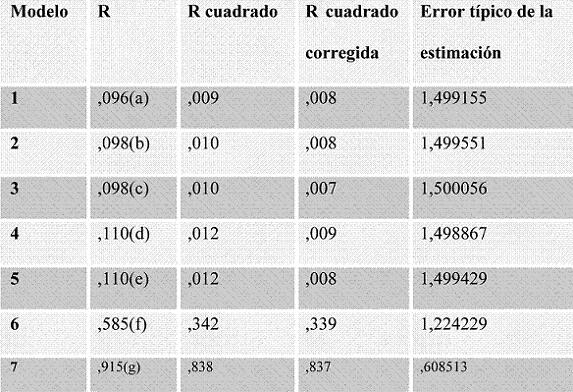
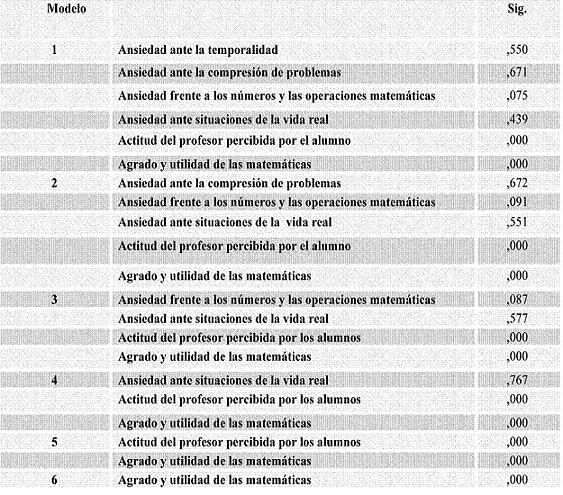
<body><![CDATA[<p style="margin: 5pt 188.25pt 0.0001pt 0cm; text-align: justify; text-indent: 14.2pt; line-height: 150%;"><span style="font-family: Arial;" lang="ES-UY"></span></p>       <p style="margin: 5pt 188.25pt 0.0001pt 0cm; text-align: justify; text-indent: 14.2pt; line-height: 150%;"><span style="font-family: Arial;" lang="ES-UY">Posteriormente, se realiz&oacute; un an&aacute;lisis de regresi&oacute;n m&uacute;ltiple con el fin de detectar la proporci&oacute;n de la variable &ldquo;rendimiento en matem&aacute;ticas&rdquo; (medida por la calificaci&oacute;n que obtuvieron los sujetos) que es explicada por los factores referidos a la actitud. La ecuaci&oacute;n de regresi&oacute;n obtenida y sus coeficientes ayudaron a determinar el poder predictivo de las variables independientes (actitud y ansiedad) sobre la dependiente (calificaci&oacute;n obtenida en matem&aacute;ticas).<o:p></o:p></span></p>       <p style="margin: 5pt 188.25pt 0.0001pt 0cm; text-align: justify; text-indent: 14.2pt; line-height: 150%;"><span style="font-family: Arial;" lang="ES-UY"><o:p>&nbsp;</o:p></span></p>       <p style="margin: 5pt 188.25pt 0.0001pt 0cm; text-align: justify; text-indent: 14.2pt; line-height: 150%;"><span style="font-family: Arial;" lang="ES-UY">Aunque los factores de ansiedad muestran correlaciones muy bajas se incorporan al an&aacute;lisis de correlaci&oacute;n m&uacute;ltiple. La interpretaci&oacute;n se realiz&oacute; a trav&eacute;s del coeficiente de determinaci&oacute;n (R2). Para ello se introdujo en el programa estad&iacute;stico SPSS como variable dependiente el rendimiento de los sujetos y como variables independientes la actitud y ansiedad. <o:p></o:p></span></p>       <p style="margin: 5pt 188.25pt 0.0001pt 0cm; text-align: justify; text-indent: 14.2pt; line-height: 150%;"><span style="font-family: Arial;" lang="ES-UY"><o:p>&nbsp;</o:p></span></p>       <p style="margin: 5.65pt 188.25pt 0.0001pt 0cm; text-align: justify; text-indent: 14.2pt; line-height: 150%;"><span style="font-family: Arial;" lang="ES-UY">La <a href="#t8">Tabla 8</a> muestra los dos modelos generados por el sistema donde las variables introducidas han sido los dos factores referidos a la actitud. La probabilidad asociada a F es la que por defecto da el sistema (0,05). <o:p></o:p></span></p>       <p style="margin: 5pt 188.25pt 0.0001pt 0cm; text-align: justify; line-height: 150%;"><span style="font-family: Arial;" lang="ES-UY"><o:p>&nbsp;</o:p></span></p>       <p style="margin: 5pt 188.25pt 0.0001pt 0cm; text-align: justify; line-height: 150%;"><span style="font-family: Arial;" lang="ES-UY">Tabla 8. Variables introducidas/eliminadas (b) <o:p></o:p></span></p>       <p style="margin: 5pt 188.25pt 0.0001pt 0cm; text-align: justify; line-height: 150%;"><span style="font-family: Arial;" lang="ES-UY"><o:p>&nbsp;</o:p>    <br>   <a name="t8"></a><img style="border: 1px solid ; width: 563px; height: 328px;" alt="" src="/img/revistas/cp/v4n1/1a04t8.jpg"><o:p></o:p></span></p>       ]]></body>
<body><![CDATA[<p style="margin: 5pt 188.25pt 0.0001pt 0cm; text-align: justify; line-height: 200%;"><span style="font-family: Arial;" lang="ES-UY">A: Todas las variables solicitadas introducidas. <o:p></o:p></span></p>       <p style="margin: 5pt 188.25pt 0.0001pt 0cm; text-align: justify; line-height: 150%;"><span style="font-family: Arial;" lang="ES-UY">B: Variable dependiente: Calificaci&oacute;n que obtuviste en matem&aacute;ticas en el curso pasado.<o:p></o:p></span></p>       <p style="margin: 5pt 188.25pt 0.0001pt 0cm; text-align: justify; line-height: 150%;"><span style="font-family: Arial;" lang="ES-UY"><o:p>&nbsp;</o:p></span></p>       <p style="margin: 5.65pt 188.25pt 0.0001pt 0cm; text-align: justify; text-indent: 14.2pt; line-height: 150%;"><span style="font-family: Arial;" lang="ES-UY">En la <a href="#t9">Tabla 9</a>, figuran los coeficientes de correlaci&oacute;n m&uacute;ltiple y los coeficientes de determinaci&oacute;n (corregido y no corregido) para cada uno de los dos modelos. <o:p></o:p></span></p>       <p style="margin: 5pt 188.25pt 0.0001pt 0cm; text-align: justify; text-indent: 14.2pt; line-height: 150%;"><span style="font-family: Arial;" lang="ES-UY"><o:p>&nbsp;</o:p></span></p>       <p style="margin: 5pt 188.25pt 0.0001pt 0cm; text-align: justify; text-indent: 14.2pt; line-height: 150%;"><span style="font-family: Arial;" lang="ES-UY">No obstante, no existen grandes diferencias entre ambos par&aacute;metros.<o:p></o:p></span></p>       <p style="margin: 5pt 188.25pt 0.0001pt 0cm; text-align: justify; text-indent: 14.2pt; line-height: 150%;"><span style="font-family: Arial;" lang="ES-UY"><o:p>&nbsp;</o:p></span></p>       <p style="margin: 5pt 188.25pt 0.0001pt 0cm; text-align: justify; text-indent: 14.2pt; line-height: 150%;"><span style="font-family: Arial;" lang="ES-UY">El valor de R cuadrado muestra que la proporci&oacute;n de la variable dependiente explicada por el modelo es bastante baja hasta la incorporaci&oacute;n de las variables referidas a la actitud (actitud del profesor percibida por el alumno y agrado y utilidad de las matem&aacute;ticas) aumentando de ,012 a ,342 cuando se incorpora &ldquo;actitud del profesor percibida por el alumno&rdquo; y ,838 cuando el factor a incorporar es el referido a &ldquo;agrado y utilidad de las matem&aacute;ticas&rdquo;. La diferencia entre el quinto modelo (que incorpora solo aquellas variables referidas a la ansiedad) y el sexto modelo es de ,330 y de &eacute;ste sobre el s&eacute;ptimo de ,496. (<a href="#t9">Tabla 9</a>).<o:p></o:p></span></p>       <p style="margin: 5pt 188.25pt 0.0001pt 0cm; text-align: justify; line-height: 200%;"><span style="font-family: Arial;" lang="ES-UY"><o:p>&nbsp;</o:p></span></p>       <p style="margin: 5pt 188.25pt 0.0001pt 0cm; text-align: justify; line-height: 200%;"><span style="font-family: Arial;" lang="ES-UY">Tabla 9. Resumen del modelo<o:p></o:p></span></p>       ]]></body>
<body><![CDATA[<p style="margin: 5pt 188.25pt 0.0001pt 0cm; text-align: justify; line-height: 150%;"><span style="font-family: Arial;" lang="ES-UY"><o:p></o:p></span><a name="t9"></a><img style="border: 1px solid ; width: 573px; height: 392px;" alt="" src="/img/revistas/cp/v4n1/1a04t9.jpg"></p>       <p style="margin: 5pt 188.25pt 0.0001pt 0cm; text-align: justify; line-height: 200%;"><span style="font-family: Arial;" lang="ES-UY">A: Variables predictoras: (Constante), ansiedad ante la evaluaci&oacute;n.<o:p></o:p></span></p>       <p style="margin: 5pt 188.25pt 0.0001pt 0cm; text-align: justify; line-height: 200%;"><span style="font-family: Arial;" lang="ES-UY">B: Variables predictoras: (Constante), ansiedad ante la evaluaci&oacute;n, ansiedad ante la temporalidad.<o:p></o:p></span></p>       <p style="margin: 5pt 188.25pt 0.0001pt 0cm; text-align: justify; line-height: 200%;"><span style="font-family: Arial;" lang="ES-UY">C: Variables predictoras: (Constante), ansiedad ante la evaluaci&oacute;n, ansiedad ante la temporalidad, ansiedad ante la compresi&oacute;n de problemas.<o:p></o:p></span></p>       <p style="margin: 5pt 188.25pt 0.0001pt 0cm; text-align: justify; line-height: 200%;"><span style="font-family: Arial;" lang="ES-UY">D: Variables predictoras: (Constante), ansiedad ante la evaluaci&oacute;n, ansiedad ante la temporalidad, ansiedad ante la compresi&oacute;n de problemas, ansiedad frente a los n&uacute;meros y las operaciones matem&aacute;ticas.<o:p></o:p></span></p>       <p style="margin: 5pt 188.25pt 0.0001pt 0cm; text-align: justify; line-height: 200%;"><span style="font-family: Arial;" lang="ES-UY">E: Variables predictoras: (Constante), ansiedad ante la evaluaci&oacute;n, ansiedad ante la temporalidad, ansiedad ante la compresi&oacute;n de problemas, ansiedad frente a los n&uacute;meros y las operaciones matem&aacute;ticas, ansiedad ante situaciones de la vida real.<o:p></o:p></span></p>       <p style="margin: 5pt 188.25pt 0.0001pt 0cm; text-align: justify; line-height: 200%;"><span style="font-family: Arial;" lang="ES-UY">F: Variables predictoras: (Constante), ansiedad ante la evaluaci&oacute;n, ansiedad ante la temporalidad, ansiedad ante la compresi&oacute;n de problemas, ansiedad frente a los n&uacute;meros y las operaciones matem&aacute;ticas, ansiedad ante situaciones de la vida real, actitud del profesor percibida por el alumno.<o:p></o:p></span></p>       <p style="margin: 5pt 188.25pt 0.0001pt 0cm; text-align: justify; line-height: 200%;"><span style="font-family: Arial;" lang="ES-UY">G: Variables predictoras: (Constante), ansiedad ante la evaluaci&oacute;n, ansiedad ante la temporalidad, ansiedad ante la compresi&oacute;n de problemas, ansiedad frente a los n&uacute;meros y las operaciones matem&aacute;ticas, ansiedad ante situaciones de la vida real, actitud del profesor percibida por el alumno, agrado y utilidad de las matem&aacute;ticas.<o:p></o:p></span></p>       <p style="margin: 5pt 188.25pt 0.0001pt 0cm; text-align: justify; line-height: 150%;"><span style="font-family: Arial;" lang="ES-UY"><o:p>&nbsp;</o:p></span></p>       <p style="margin: 5pt 188.25pt 0.0001pt 0cm; text-align: justify; text-indent: 14.2pt; line-height: 150%;"><span style="font-family: Arial;" lang="ES-UY">Las entradas de los coeficientes se han realizado paso a paso con sus correspondientes ecuaciones de regresi&oacute;n simple o m&uacute;ltiple. <o:p></o:p></span></p>       ]]></body>
<body><![CDATA[<p style="margin: 5pt 188.25pt 0.0001pt 0cm; text-align: justify; text-indent: 14.2pt; line-height: 150%;"><span style="font-family: Arial;" lang="ES-UY">Destaca que el &uacute;nico valor significativo de los referidos a la variable ansiedad es el de &ldquo;ansiedad ante la evaluaci&oacute;n&rdquo;, siendo de ,001 en el primer modelo y de ,012 en el segundo, donde su uni&oacute;n con la &ldquo;ansiedad ante la temporalidad&rdquo; coproduce esas diferencias.<o:p></o:p></span></p>       <p style="margin: 5pt 188.25pt 0.0001pt 0cm; text-align: justify; text-indent: 14.2pt; line-height: 150%;"><span style="font-family: Arial;" lang="ES-UY"><o:p>&nbsp;</o:p></span></p>       <p style="margin: 5pt 188.25pt 0.0001pt 0cm; text-align: justify; text-indent: 14.2pt; line-height: 150%;"><span style="font-family: Arial;" lang="ES-UY">Otros valores significativos son los referidos a la incorporaci&oacute;n de los factores referidos a la variable actitud (&ldquo;actitud del profesor percibida <o:p></o:p></span></p>       <p style="margin: 5pt 188.25pt 0.0001pt 0cm; text-align: justify; line-height: 150%;"><span style="font-family: Arial;" lang="ES-UY">por los alumnos&rdquo; y &ldquo;agrado y utilidad de las matem&aacute;ticas&rdquo;) obteni&eacute;ndose valores significativos en los modelos 6 y 7 establecidos (valor de significaci&oacute;n de ,000 en ambos casos). <o:p></o:p></span></p>       <p style="margin: 5pt 188.25pt 0.0001pt 0cm; text-align: justify; line-height: 150%;"><span style="font-family: Arial;" lang="ES-UY"><o:p>&nbsp;</o:p></span></p>       <p style="margin: 5pt 188.25pt 0.0001pt 0cm; text-align: justify; line-height: 150%;"><span style="font-family: Arial;" lang="ES-UY">Tambi&eacute;n aparecieron valores negativos en los coeficientes Beta para los factores referidos a la ansiedad. Esto indica una influencia negativa sobre el rendimiento en las matem&aacute;ticas, actuando como factor predictor negativo (solamente el factor referido a &ldquo;ansiedad ante la comprensi&oacute;n de problemas&rdquo; presenta valores positivos, aunque muy bajos para comportarse como factor predictor ,032). (<a href="/img/revistas/cp/v4n1/1a04t10.jpg">Tabla 10</a>).<o:p></o:p></span></p>       <p style="margin: 5pt 188.25pt 0.0001pt 0cm; text-align: justify; line-height: 150%;"><span style="font-family: Arial;" lang="ES-UY"><o:p>&nbsp;</o:p></span></p>   <span style="font-family: Arial;" lang="ES-UY"><o:p></o:p></span>     <p style="margin: 5pt 188.25pt 0.0001pt 0cm; text-align: justify; line-height: 150%;"><span style="font-family: Arial;" lang="ES-UY">A: Variable dependiente: Calificaci&oacute;n que obtuviste en matem&aacute;ticas en el curso pasado.<o:p></o:p></span></p>       <p style="margin: 5pt 188.25pt 0.0001pt 0cm; text-align: justify; text-indent: 14.2pt; line-height: 150%;"><span style="font-family: Arial;" lang="ES-UY">Por &uacute;ltimo se hall&oacute; el coeficiente de regresi&oacute;n estandarizado. Los valores m&aacute;s altos se encontraron en las variables referidas a los factores de actitud. <o:p></o:p></span></p>       <p style="margin: 5pt 188.25pt 0.0001pt 0cm; text-align: justify; text-indent: 14.2pt; line-height: 150%;"><span style="font-family: Arial;" lang="ES-UY"><o:p>&nbsp;</o:p></span></p>       ]]></body>
<body><![CDATA[<p style="margin: 5pt 188.25pt 0.0001pt 0cm; text-align: justify; text-indent: 14.2pt; line-height: 150%;"><span style="font-family: Arial;" lang="ES-UY">El factor referido a &ldquo;agrado y utilidad de las matem&aacute;ticas&rdquo; es el que mejor predice la variable dependiente. Los valores altos de colinealidad entre las variables mostraron que la combinaci&oacute;n de las variables independientes, especialmente de los valores referidos a la actitud, influyen mucho para explicar la variable dependiente. <o:p></o:p></span></p>       <p style="margin: 5pt 188.25pt 0.0001pt 0cm; text-align: justify; text-indent: 14.2pt; line-height: 150%;"><span style="font-family: Arial;" lang="ES-UY"><o:p>&nbsp;</o:p></span></p>       <p style="margin: 5pt 188.25pt 0.0001pt 0cm; text-align: justify; text-indent: 14.2pt; line-height: 150%;"><span style="font-family: Arial;" lang="ES-UY">Solamente el valor referido a &ldquo;ansiedad ante la comprensi&oacute;n de problemas&rdquo; present&oacute; valores m&aacute;s bajos que el resto (,456). (<a href="#t11">Tabla 11</a>).<o:p></o:p></span></p>       <p style="margin: 5pt 188.25pt 0.0001pt 0cm; text-align: justify; text-indent: 14.2pt; line-height: 150%;"><span style="font-family: Arial;" lang="ES-UY"><o:p>&nbsp;</o:p></span></p>       <p style="margin: 5pt 188.25pt 0.0001pt 0cm; text-align: justify; line-height: 150%;"><span style="font-family: Arial;" lang="ES-UY">Tabla 11. Variables excluidas (g)<o:p></o:p></span></p>       <p style="margin: 5pt 188.25pt 0.0001pt 0cm; text-align: justify; text-indent: 14.2pt; line-height: 150%;"><span style="font-family: Arial;" lang="ES-UY"><o:p>&nbsp;</o:p></span></p>       <p style="margin: 5pt 188.25pt 0.0001pt 0cm; text-align: justify; text-indent: 14.2pt; line-height: 200%;"><span style="font-family: Arial;" lang="ES-UY"><o:p></o:p></span><a name="t11"></a><img style="border: 1px solid ; width: 563px; height: 495px;" alt="" src="/img/revistas/cp/v4n1/1a04t11.jpg"></p>       <p style="margin: 5pt 188.25pt 0.0001pt 0cm; text-align: justify; line-height: 150%;"><span style="font-family: Arial;" lang="ES-UY">A: Variables predictoras en el modelo: (Constante), ansiedad ante la evaluaci&oacute;n.<o:p></o:p></span></p>       <p style="margin: 5pt 188.25pt 0.0001pt 0cm; text-align: justify; line-height: 150%;"><span style="font-family: Arial;" lang="ES-UY">B: Variables predictoras en el modelo: (Constante), ansiedad ante la evaluaci&oacute;n, ansiedad ante la temporalidad.<o:p></o:p></span></p>       <p style="margin: 5pt 188.25pt 0.0001pt 0cm; text-align: justify; line-height: 150%;"><span style="font-family: Arial;" lang="ES-UY">C: Variables predictoras en el modelo: (Constante), ansiedad ante la evaluaci&oacute;n, ansiedad ante la temporalidad, ansiedad ante la compresi&oacute;n de problemas.<o:p></o:p></span></p>       ]]></body>
<body><![CDATA[<p style="margin: 5pt 188.25pt 0.0001pt 0cm; text-align: justify; line-height: 150%;"><span style="font-family: Arial;" lang="ES-UY">D: Variables predictoras en el modelo: (Constante), ansiedad ante la evaluaci&oacute;n, ansiedad ante la temporalidad, ansiedad ante la compresi&oacute;n de problemas, ansiedad frente a los n&uacute;meros y las operaciones matem&aacute;ticas.<o:p></o:p></span></p>       <p style="margin: 5pt 188.25pt 0.0001pt 0cm; text-align: justify; line-height: 150%;"><span style="font-family: Arial;" lang="ES-UY">E: Variables predictoras en el modelo: (Constante), ansiedad ante la evaluaci&oacute;n, ansiedad ante la temporalidad, alos n&uacute;meros y las operaciones matem&aacute;ticas, ansiedad ante situaciones de la vida real.<o:p></o:p></span></p>       <p style="margin: 5pt 188.25pt 0.0001pt 0cm; text-align: justify; line-height: 150%;"><span style="font-family: Arial;" lang="ES-UY">F: Variables predictoras en el modelo: (Constante), ansiedad ante la evaluaci&oacute;n, ansiedad ante la temporalidad, ansiedad ante la compresi&oacute;n de problemas, ansiedad frente a los n&uacute;meros y las operaciones matem&aacute;ticas, ansiedad ante situaciones de la vida real, actitud del profesor percibida por el alumno.<o:p></o:p></span></p>       <p style="margin: 5pt 188.25pt 0.0001pt 0cm; text-align: justify; line-height: 150%;"><span style="font-family: Arial;" lang="ES-UY">G: Variable dependiente: Calificaci&oacute;n que obtuviste en matem&aacute;ticas en el curso pasado.<o:p></o:p></span></p>       <p style="margin: 5pt 188.25pt 0.0001pt 0cm; text-align: justify; line-height: 150%;"><span style="font-family: Arial;" lang="ES-UY"><o:p>&nbsp;</o:p></span></p>       <p style="margin: 5pt 188.25pt 0.0001pt 0cm; text-align: justify; text-indent: 14.2pt; line-height: 150%;"><span style="font-family: Arial;" lang="ES-UY">Estas coincidencias nos estimulan a proponer la implementaci&oacute;n de metodolog&iacute;as de ense&ntilde;anza que eviten la desmotivaci&oacute;n por el aprendizaje, el fracaso en la resoluci&oacute;n de problemas, las reacciones negativas ante los problemas que se le presentan en la vida cotidiana y el p&aacute;nico a la hora de ser evaluados en matem&aacute;ticas. <o:p></o:p></span></p>       <p style="margin: 5pt 188.25pt 0.0001pt 0cm; text-align: justify; text-indent: 14.2pt; line-height: 150%;"><span style="font-family: Arial;" lang="ES-UY"><o:p>&nbsp;</o:p></span></p>       <p style="margin: 5pt 188.25pt 0.0001pt 0cm; text-align: justify; text-indent: 14.2pt; line-height: 150%;"><span style="font-family: Arial;" lang="ES-UY">Las aportaciones tambi&eacute;n permiten reflexionar sobre la necesidad de mejorar la interacci&oacute;n entre el profesor y el alumno con el fin de desarrollar buenas actitudes hacia el aprendizaje matem&aacute;tico (<a href="#Ramirez">Ram&iacute;rez</a>, 2005, <a href="#Akey">Akey</a>, 2006, <a href="#Bazan">Baz&aacute;n, et al</a>., 2006; <a href="#Broc">Broc Cavero</a>, 2006; <a name="Fierro2006."></a><a href="#Fierro">Fierro-Hern&aacute;ndez</a>, 2006; <a href="#Gargallo">Gargallo</a>, et al, 2007). <o:p></o:p></span></p>       <p style="margin: 5pt 188.25pt 0.0001pt 0cm; text-align: justify; text-indent: 14.2pt; line-height: 150%;"><span style="font-family: Arial;" lang="ES-UY"><o:p>&nbsp;</o:p></span></p>       <p style="margin: 5pt 188.25pt 0.0001pt 0cm; text-align: justify; text-indent: 14.2pt; line-height: 150%;"><span style="font-family: Arial;" lang="ES-UY">Sin embargo, queremos llamar la atenci&oacute;n sobre la falta de estudios acerca de la correlaci&oacute;n entre cada uno de los factores de actitud y el rendimiento, los factores de ansiedad y rendimiento y la correlaci&oacute;n actitud-ansiedad-rendimiento. <o:p></o:p></span></p>       ]]></body>
<body><![CDATA[<p style="margin: 5pt 188.25pt 0.0001pt 0cm; text-align: justify; text-indent: 14.2pt; line-height: 150%;"><span style="font-family: Arial;" lang="ES-UY"><o:p>&nbsp;</o:p></span></p>       <p style="margin: 5pt 188.25pt 0.0001pt 0cm; text-align: justify; text-indent: 14.2pt; line-height: 150%;"><span style="font-family: Arial;" lang="ES-UY">Es cierto que no es s&oacute;lo cuesti&oacute;n de actitudes y de ansiedad, ser&iacute;a necesario profundizar en las caracter&iacute;sticas que acompa&ntilde;an a los grupos de estudiantes para completar su perfil, nivel de estrategias que utilizan, enfoques de aprendizaje, autoconcepto, variables sociofamiliares, etc. Ello desborda los l&iacute;mites de este trabajo y es tarea a abordar en futuras investigaciones que permitan hacer los patrones de intervenci&oacute;n m&aacute;s completos. Sin embargo se tiene claro que la reducci&oacute;n de la ansiedad y la mejora de las actitudes hacia las matem&aacute;ticas, se constituye como un objetivo relevante pues los aspectos afectivos positivos no s&oacute;lo ayudan a explicar el rendimiento de los alumnos, sino que tambi&eacute;n son por s&iacute; mismos un resultado importante de la educaci&oacute;n. <o:p></o:p></span></p>       <p style="margin: 5pt 188.25pt 0.0001pt 0cm; text-align: justify; line-height: 150%;"><span style="font-family: Arial;" lang="ES-UY"><o:p>&nbsp;</o:p></span></p>       <p style="margin: 5pt 188.25pt 0.0001pt 0cm; text-align: justify; line-height: 150%;"><span style="font-family: Arial;" lang="ES-UY"><o:p></o:p></span></p>       <p style="margin: 2.85pt 188.25pt 0.0001pt 0cm; text-align: center; text-indent: 2.85pt; line-height: 150%;" align="center"><b><span style="font-family: Arial;" lang="ES-UY">REFERENCIAS</span></b></p>       <p style="margin: 2.85pt 188.25pt 0.0001pt 0cm; text-align: center; text-indent: 2.85pt; line-height: 150%;" align="center"><b><span style="font-family: Arial;" lang="ES-UY"></span></b></p>       <p style="margin: 2.85pt 188.25pt 0.0001pt 0cm; text-align: center; text-indent: 2.85pt; line-height: 150%;" align="center"><b><span style="font-family: Arial;" lang="ES-UY"></span></b><span style="font-family: Arial;" lang="ES-UY"><o:p></o:p></span></p>       <!-- ref --><p style="margin: 5pt 188.25pt 0.0001pt 14.2pt; text-align: justify; text-indent: -14.2pt; line-height: 120%;"><span style="font-family: Arial;" lang="ES-UY"><a name="Aliaga"></a><a href="#Aliaga2000.">Aliaga</a><a href="#Aliaga2000.">, J. y Pecho J. (2000)</a>. Evaluaci&oacute;n de la actitud hacia la Matem&aacute;tica en estudiantes secundarios. <span style="">Revista Paradigmas</span>, 1(1-2), 61-78.    <o:p></o:p></span></p>       <!-- ref --><p style="margin: 5pt 188.25pt 0.0001pt 14.2pt; text-align: justify; text-indent: -14.2pt; line-height: 120%;"><span style="font-family: Arial;" lang="ES-UY"><a name="Aparicio"></a><a href="#Aparicio2006.">Aparicio, A. y Baz&aacute;n, J. L. (2006)</a>. Actitudes hacia la estad&iacute;stica en profesores de nivel primario. En Gonz&aacute;lez, M., Baz&aacute;n, J., S&aacute;nchez, R. (Editores). Coloquios de Matem&aacute;tica Educativa. </span><span class="SpellE"><span style="font-family: Arial;" lang="EN-US">Reportes</span></span><span style="font-family: Arial;" lang="EN-US"> de <span class="SpellE">Investigaci&oacute;n</span></span><span style="font-family: Arial;" lang="EN-US">. <span class="SpellE">Serie</span> C, 18, <span class="SpellE">Parte</span> 2, 125-131. <span class="GramE">PUCP.    </span></span><span style="font-family: Arial;" lang="EN-GB"><o:p></o:p></span></p>       <!-- ref --><p style="margin: 5pt 188.25pt 0.0001pt 14.2pt; text-align: justify; text-indent: -14.2pt; line-height: 120%;"><span class="SpellE"><span class="GramE"><span style="font-family: Arial;" lang="EN-US"><a name="Akey"></a><a href="#Akey2006.">Akey</a></span></span></span><span class="GramE"><span style="font-family: Arial;" lang="EN-US"><a href="#Akey2006.">, T. (2006)</a>.</span></span><span style="font-family: Arial;" lang="EN-US"> School context, student attitudes and <span class="SpellE">behaviour</span>, and academic achievement: An exploratory analysis. </span><span style="font-family: Arial;" lang="ES-UY">Informe de investigaci&oacute;n. Recuperado en 2006, en <a href="http://www.eric.ed.gov/ERICDocs/data/ericdocs2/content_storage_">http://www.eric.ed.gov/ERICDocs/data/ericdocs2/content_storage_</a><o:p></o:p></span><!-- ref --><p style="margin: 5pt 188.25pt 0.0001pt 14.2pt; text-align: justify; text-indent: -14.2pt; line-height: 120%;"><span style="font-family: Arial;" lang="EN-US"><a name="Ashcraft"></a><a href="#Ashcraft2002.">Ashcraft, M. H. (2002)</a>. Math Anxiety: Personal, Educational, and Cognitive Consequences. </span><span style="font-family: Arial;" lang="ES-UY">Current Directions in Psychological Sciences</span><span style="font-family: Arial;" lang="ES-UY">, 11, 5, 181-185. AUZMENDI, E. (1992). <span style="">Las actitudes hacia la matem&aacute;tica-estad&iacute;stica en las ense&ntilde;anzas medias y universitaria. Caracter&iacute;sticas y medici&oacute;n. </span>Bilbao. Mensajero.    <o:p></o:p></span></p>       <p style="margin: 5pt 188.25pt 0.0001pt 14.2pt; text-align: justify; text-indent: -14.2pt; line-height: 120%;"><span style="font-family: Arial;" lang="ES-UY"><a name="Barca"></a><a href="#Barca2004.">Barca, A., Peralbo, M. y Brenilla, J. C. (2004)</a>. Atribuciones causales y enfoques de aprendizaje<span style="">.</span> La escala Siacepa. <span style="">Psicothema, 16 </span>(1), 94 &ndash; 103.<o:p></o:p></span></p>       <!-- ref --><p style="margin: 5pt 188.25pt 0.0001pt 14.2pt; text-align: justify; text-indent: -14.2pt; line-height: 120%;"><span style="font-family: Arial;" lang="ES-UY"><a name="Bazan"></a><a href="#Baz%E1n2006.">Baz&aacute;n, J. L. y Aparicio A. S. (2006)</a>. Las actitudes hacia la Matem&aacute;tica-Estad&iacute;stica dentro de un modelo de aprendizaje<span style="">.</span> <span style="">Revista Semestral del Departamento de Educaci&oacute;n</span>, XV, 28, 1-12.     <o:p></o:p></span></p>       <!-- ref --><p style="margin: 5pt 188.25pt 0.0001pt 14.2pt; text-align: justify; text-indent: -14.2pt; line-height: 120%;"><span style="font-family: Arial;" lang="ES-UY"><a name="Bermejo"></a><a href="#Bermejo2005.">Bermejo, V. (2005)</a>. Microg&eacute;nesis y cambio cognitivo: adquisici&oacute;n del cardinal num&eacute;rico. <span style="">Psicothema, 17</span>(4), 559-562.    <o:p></o:p></span></p>       <!-- ref --><p style="margin: 5pt 188.25pt 0.0001pt 14.2pt; text-align: justify; text-indent: -14.2pt; line-height: 120%;"><span style="font-family: Arial;" lang="ES-UY"><a name="Broc"></a><a href="#Broc2006.">Broc Cavero, M. A. (2006)</a> Motivaci&oacute;n y rendimiento acad&eacute;mico en alumnos de Educaci&oacute;n Secundaria Obligatoria y Bachillerato LOGSE. <span style="">Revista de Educaci&oacute;n</span> 340, 379-414.    <o:p></o:p></span></p>       <!-- ref --><p style="margin: 5pt 188.25pt 0.0001pt 14.2pt; text-align: justify; text-indent: -14.2pt; line-height: 120%;"><span style="font-family: Arial;" lang="ES-UY"><a name="Carbonero"></a><a href="#Carbonero2006.">Carbonero, M. A. y Navarro, J.C. (2006)</a>. Entrenamiento de alumnos de Educaci&oacute;n superior en estrategias de aprendizaje en Matem&aacute;ticas. </span><span style="font-family: Arial;" lang="EN-US">Psicothema<span class="GramE">,18</span></span><span style="font-family: Arial;" lang="EN-US">(3), 348-352.    </span><span style="font-family: Arial;" lang="EN-GB"><o:p></o:p></span></p>       <!-- ref --><p style="margin: 5pt 188.25pt 0.0001pt 14.2pt; text-align: justify; text-indent: -14.2pt; line-height: 120%;"><span class="SpellE"><span style="font-family: Arial;" lang="EN-US"><a name="Cassady"></a><a href="#Cassady2002.">Cassady</a></span></span><span style="font-family: Arial;" lang="EN-US"><a href="#Cassady2002.">, J. (2002)</a>. <span class="GramE">Cognitive Test Anxiety and Academic Performance<span style="">.</span></span><span style=""> Contemporary Educational Psychology</span>, <span style="">27</span>(2), 270-295.    </span><span style="font-family: Arial;" lang="EN-GB"><o:p></o:p></span></p>       <!-- ref --><p style="margin: 5pt 188.25pt 0.0001pt 14.2pt; text-align: justify; text-indent: -14.2pt; line-height: 120%;"><span style="font-family: Arial;" lang="ES-UY"><a name="Cueto"></a><a href="#Cueto2003.">Cueto, S., Andrade, F. y Le&oacute;n, J. (2003</a>). Las actitudes de los estudiantes peruanos hacia la lectura, la escritura, la matem&aacute;tica y las lenguas ind&iacute;genas. Lima. GRADE, 2003. 75 P. (Documento de Trabajo, 44).    <o:p></o:p></span></p>       <!-- ref --><p style="margin: 5pt 188.25pt 0.0001pt 14.2pt; text-align: justify; text-indent: -14.2pt; line-height: 120%;"><span style="font-family: Arial;" lang="ES-UY"><a name="Dutke"></a><a href="#Dutke2001.">Dutke, S. y St&ouml;ber, J. (2001)</a>. </span><span style="font-family: Arial;" lang="EN-US">Test anxiety, working memory and cognitive performance: Supportive effects of sequential demands. </span><span style="font-family: Arial;" lang="ES-UY">Cognition &amp; Emotion, 15</span><span style="font-family: Arial;" lang="ES-UY">(3), 381-389.    <o:p></o:p></span></p>       <!-- ref --><p style="margin: 5pt 188.25pt 0.0001pt 14.2pt; text-align: justify; text-indent: -14.2pt; line-height: 120%;"><span style="font-family: Arial;" lang="ES-UY"><a name="Estrada"></a><a href="#Estrada2003.">Estrada, A., Batanero, C. y Fortuny, J. M. (2003</a>). Actitudes y Estadistica en profesores en formaci&oacute;n y en ejercicio. En: <span style="">Edicions de la Universitat de Lleida </span>Actas del 27 Congreso Nacional de Estad&iacute;stica e Investigaci&oacute;n Operativa. Universidad de Lleida. CD ROM.    <o:p></o:p></span></p>       <!-- ref --><p style="margin: 5pt 188.25pt 0.0001pt 14.2pt; text-align: justify; text-indent: -14.2pt; line-height: 120%;"><span style="font-family: Arial;" lang="ES-UY"><a name="Ferrari"></a><a href="#Ferrari2002.">Ferrari, J., y Scher, S. (2002)</a>. </span><span class="GramE"><span style="font-family: Arial;" lang="EN-US">Toward an understanding of academic and non academic tasks procrastinated by students: The use of daily logs<span style="">.</span></span></span><span style="font-family: Arial;" lang="EN-US"> </span><span style="font-family: Arial;" lang="ES-UY">Psychology in the Schools,</span><span style="font-family: Arial;" lang="ES-UY"> 37(4), 359-366.    <o:p></o:p></span></p>       <!-- ref --><p style="margin: 5pt 188.25pt 0.0001pt 14.2pt; text-align: justify; text-indent: -14.2pt; line-height: 120%;"><span style="font-family: Arial;" lang="ES-UY"><a name="Fierro"></a><a href="#Fierro2006.">Fierro-Hern&aacute;ndez, C. (2006)</a>. Valoraci&oacute;n del impacto de un programa de educaci&oacute;n en valores en el &uacute;ltimo curso de Educaci&oacute;n Secundaria obligatoria. </span><span class="SpellE"><span style="font-family: Arial;" lang="EN-US">Revista</span></span><span style="font-family: Arial;" lang="EN-US"> de <span class="SpellE">Educaci&oacute;n</span>, </span><span style="font-family: Arial;" lang="EN-US">339, 455-466.    </span><span style="font-family: Arial;" lang="EN-GB"><o:p></o:p></span></p>       <!-- ref --><p style="margin: 5pt 188.25pt 0.0001pt 14.2pt; text-align: justify; text-indent: -14.2pt; line-height: 120%;"><span style="font-family: Arial;" lang="EN-US"><a name="Gardner"></a><a href="#Gardner2001.">Gardner, R. C. (2001)</a>. <span class="GramE">Psychological Statistics Using SPSS for Windows.</span> </span><span style="font-family: Arial;" lang="ES-UY">Upper Saddle River, NJ: Prentice Hall. [Trad. Esp. (2003): Estad&iacute;stica para Pssicolog&iacute;a usando SPSS para Windows. Naucalpan de Ju&aacute;rez, Edo. De M&eacute;xico: Pearson Education/ Prentice Hall].     <o:p></o:p></span></p>       <!-- ref --><p style="margin: 5pt 188.25pt 0.0001pt 14.2pt; text-align: justify; text-indent: -14.2pt; line-height: 120%;"><span style="font-family: Arial;" lang="ES-UY"><a name="Gargallo"></a><a href="#Gargallo2007.">Gargallo, B., P&eacute;rez, C., S&aacute;nchez, F., Serra, B., Ros,I. (2007)</a>. Actitudes ante el aprendizaje y rendimiento acad&eacute;mico en los estudiantes universitarios. Revista Iberoamericana de Educaci&oacute;n, 42/1. OEI.    <o:p></o:p></span></p>       <!-- ref --><p style="margin: 5pt 188.25pt 0.0001pt 14.2pt; text-align: justify; text-indent: -14.2pt; line-height: 120%;"><span style="font-family: Arial;" lang="ES-UY"><a name="Gil"></a><a href="#Gil2005.">Gil, N., Blanco, L. y Guerrero, E. (2005)</a>. El dominio afectivo en el aprendizaje de las matem&aacute;ticas. Una revisi&oacute;n de de sus descriptores b&aacute;sicos. Uni&oacute;n Revista Iberoamericana de Educaci&oacute;n Matem&aacute;tica. 2, 15-32.     <o:p></o:p></span></p>       <!-- ref --><p style="margin: 5pt 188.25pt 0.0001pt 14.2pt; text-align: justify; text-indent: -14.2pt; line-height: 120%;"><span style="font-family: Arial;" lang="ES-UY"><a name="Gomez"></a><a href="#G%F3mez2000.">G&oacute;mez Chac&oacute;n, I. M. (2000)</a>. Matem&aacute;tica emocional. Los afectos en el aprendizaje matem&aacute;tico. Madrid. Narcea.    <!-- ref --> Gonz&aacute;lez Ordi, H. y Tobal, J. J. (2001). La sugestionabilidad como variable moduladora en la imaginaci&oacute;n de escenas ansi&oacute;genas. Ansiedad y Estr&eacute;s, 7 (1), 89-110.    <o:p></o:p></span></p>       <!-- ref --><p style="margin: 5pt 188.25pt 0.0001pt 14.2pt; text-align: justify; text-indent: -14.2pt; line-height: 120%;"><span style="font-family: Arial;" lang="ES-UY"><a name="Guerrero"></a><a href="#Guerrero2006.">Guerrero, E. Blanco, L. y Gil, N. (2006)</a>. El papel de la afectividad en la resoluci&oacute;n de problemas matem&aacute;ticos. </span><span class="SpellE"><span style="font-family: Arial;" lang="EN-US">Revista</span></span><span style="font-family: Arial;" lang="EN-US"> de <span class="SpellE">Educaci&oacute;n</span>, 340,</span><span style="font-family: Arial;" lang="EN-US"> 551-569 </span><span style="font-family: Arial;    " lang="EN-GB"><o:p></o:p></span></p>       <p style="margin: 5pt 188.25pt 0.0001pt 14.2pt; text-align: justify; text-indent: -14.2pt; line-height: 120%;"><span style="font-family: Arial;" lang="EN-US"><a name="Hancock"></a><a href="#Hancock2001.">Hancock, D. (2001)</a>. <span class="GramE">Effects of Test Anxiety and Evaluative Threat on Students&rsquo; Achievement and Motivation.</span> <span class="GramE">Journal of Educational Research, 94 (5), 284-90.</span></span><span style="font-family: Arial;" lang="EN-GB"><o:p></o:p></span></p>       <!-- ref --><p style="margin: 5pt 188.25pt 0.0001pt 14.2pt; text-align: justify; text-indent: -14.2pt; line-height: 120%;"><span class="SpellE"><span style="font-family: Arial;" lang="EN-US"><a name="Hofflich"></a><a href="#Hofflich2006.">Hofflich</a></span></span><span style="font-family: Arial;" lang="EN-US"><a href="#Hofflich2006.">, A., Hughes, A., y Kendall, P. (2006)</a>. <span class="GramE">Somatic complaints and childhood anxiety disorders.</span> International Journal of Clinical and Health Psychology, 6, 229-242.    <!-- ref --> KAZELSKIS, R. (2000). Mathematics Anxiety and Test Anxiety: Separate constructs? </span><span style="font-family: Arial;" lang="ES-UY">Journal of Experimental Education, v. 68 (2), 137-146.     <o:p></o:p></span></p>       ]]></body>
<body><![CDATA[<!-- ref --><p style="margin: 5pt 188.25pt 0.0001pt 14.2pt; text-align: justify; text-indent: -14.2pt; line-height: 120%;"><span style="font-family: Arial;" lang="ES-UY"><a name="Magalhaes"></a><a href="#Magalh%E3es2007.">Magalhaes, A. (2007)</a>. Ansiedade face aos Testes, G&eacute;nero e Rendimento Acad&eacute;mico: um estudo no Ensino B&aacute;sico. Tese de mestrado, Faculdade de Psicologia e Ci&ecirc;ncias da Educa&ccedil;&atilde;o, Universidade do Minho.    <o:p></o:p></span></p>       <!-- ref --><p style="margin: 5pt 188.25pt 0.0001pt 14.2pt; text-align: justify; text-indent: -14.2pt; line-height: 120%;"><span style="font-family: Arial;" lang="ES-UY"><a name="Mato"></a><a href="#Mato2006.">Mato, M. D. (2006)</a>. Dise&ntilde;o y validaci&oacute;n de dos cuestionarios para evaluar las actitudes y la ansiedad hacia las matem&aacute;ticas en alumnos de Educaci&oacute;n Secundaria Obligatoria. </span><span class="SpellE"><span class="GramE"><span style="font-family: Arial;" lang="EN-US">Tesis</span></span></span><span class="GramE"><span style="font-family: Arial;" lang="EN-US"> <span class="SpellE">in&eacute;dita</span>.</span></span><span style="font-family: Arial;" lang="EN-US"> Universidad de La <span class="SpellE">Coru&ntilde;a</span>.     </span><span style="font-family: Arial;" lang="EN-GB"><o:p></o:p></span></p>       <!-- ref --><p style="margin: 5pt 188.25pt 0.0001pt 14.2pt; text-align: justify; text-indent: -14.2pt; line-height: 120%;"><st1:city><st1:place><span style="font-family: Arial;" lang="EN-US"><a name="Norwood"></a><a href="#Norwood1994.">Norwood</a></span></st1:place></st1:city><span style="font-family: Arial;" lang="EN-US"><a href="#Norwood1994.">, K. S. (1994)</a>. <span class="GramE">The Effect of Instructional Approach on Mathematics Anxiety and Achievement.</span> School Science and Mathematics, 94, 248-254.    </span><span style="font-family: Arial;" lang="EN-GB"><o:p></o:p></span></p>       <!-- ref --><p style="margin: 5pt 188.25pt 0.0001pt 14.2pt; text-align: justify; text-indent: -14.2pt; line-height: 120%;"><span class="SpellE"><span style="font-family: Arial;" lang="EN-US"><a name="Onwuegbuzie1"></a><a href="#Onwuegbuzie2003.">Onwuegbuzie</a></span></span><span style="font-family: Arial;" lang="EN-US"><a href="#Onwuegbuzie2003.">, A. J. (2003)</a>. <span class="GramE">Modeling statistics achievement among graduate students.</span> <span class="GramE">Educational and Psychological measurement, 63 (6), 1020-1038.    </span></span><span style="font-family: Arial;" lang="EN-GB"><o:p></o:p></span></p>       <!-- ref --><p style="margin: 5pt 188.25pt 0.0001pt 14.2pt; text-align: justify; text-indent: -14.2pt; line-height: 120%;"><span class="SpellE"><span style="font-family: Arial;" lang="EN-US"><a name="Onwuegbuzie2"></a><a href="#Onwuegbuzie2004.">Onwuegbuzie</a></span></span><span style="font-family: Arial;" lang="EN-US"><a href="#Onwuegbuzie2004.">, A. J. (2004)</a>. <span class="GramE">Academic procrastination and statistics anxiety.</span> </span><span style="font-family: Arial;" lang="EN-GB">Assessment &amp; Evaluation in Higher Education, 29(1), 3-19.     <o:p></o:p></span></p>       ]]></body>
<body><![CDATA[<p style="margin: 5pt 188.25pt 0.0001pt 14.2pt; text-align: justify; text-indent: -14.2pt; line-height: 120%;"><span class="SpellE"><span style="font-family: Arial;" lang="EN-GB"><a name="Opteynde"></a><a href="#Opt2006.">Opt&rsquo;eynde</a></span></span><span style="font-family: Arial;" lang="EN-GB"><a href="#Opt2006.">, <span class="SpellE">Decorte</span>, E. y <span class="SpellE">Verschaffel</span>, L. (2006)</a>. </span><span style="font-family: Arial;" lang="EN-US">Accepting emotional <span class="SpellE">complexity<span class="GramE">:a</span></span> socio-constructivist perspective on the role of emotions in the mathematics classroom. </span><span style="font-family: Arial;" lang="ES-UY">Educational Studies in Mathematics, 63, 193-207.<o:p></o:p></span></p>       <!-- ref --><p style="margin: 5pt 188.25pt 0.0001pt 14.2pt; text-align: justify; text-indent: -14.2pt; line-height: 120%;"><span style="font-family: Arial;" lang="ES-UY"><a name="Ramirez"></a><a href="#Ram%EDrez2005.">Ram&iacute;rez, M. J. (2005)</a>. Actitudes hacia las matem&aacute;ticas y rendimiento acad&eacute;mico entre estudiantes de octavo b&aacute;sico. </span><span class="SpellE"><span class="GramE"><span style="font-family: Arial;" lang="EN-US">Estudios</span></span></span><span class="GramE"><span style="font-family: Arial;" lang="EN-US"> <span class="SpellE">pedag&oacute;gicos</span>, 31 (1), 97-112.    </span></span><span style="font-family: Arial;" lang="EN-US"> </span><span style="font-family: Arial;" lang="EN-GB"><o:p></o:p></span></p>       <!-- ref --><p style="margin: 5pt 188.25pt 0.0001pt 14.2pt; text-align: justify; text-indent: -14.2pt; line-height: 120%;"><span class="SpellE"><span style="font-family: Arial;" lang="EN-US"><a name="Relich"></a><a href="#Relich1994.">Relich</a></span></span><span style="font-family: Arial;" lang="EN-US"><a href="#Relich1994.">, <span class="GramE">J..</span> <span class="GramE">y</span> Way, J. (1994)</a>. <span class="GramE">Measuring pre-Service Teachers Attitudes to Mathematics: Further Developments of a Questionnaire.</span> In <span class="SpellE">Da</span> Ponte, J. P. y Matos, J. F. Proceedings of the Eighteenth International Conference for the psychology of Mathematics Education, 4, 105-112. </span><span style="font-family: Arial;" lang="ES-UY">Lisbon. Portugal.    <o:p></o:p></span></p>       <!-- ref --><p style="margin: 5pt 188.25pt 0.0001pt 14.2pt; text-align: justify; text-indent: -14.2pt; line-height: 120%;"><span style="font-family: Arial;" lang="ES-UY"><a name="Rosario"></a><a href="#Rosario2007.">Rosario, P., Costa, M., Mourao, R., N&uacute;&ntilde;ez, J.C., Gonz&aacute;lez-Pienda, J.A., y Valle, A. (2007)</a>. </span><span class="SpellE"><span class="GramE"><span style="font-family: Arial;" lang="EN-US">Procastination</span></span></span><span class="GramE"><span style="font-family: Arial;" lang="EN-US">, SRL and Math achievement.</span></span><span style="font-family: Arial;" lang="EN-US"> Academic Exchange Quarterly, 11(4), 23-28.    </span><span style="font-family: Arial;" lang="EN-GB"><o:p></o:p></span></p>       <!-- ref --><p style="margin: 5pt 188.25pt 0.0001pt 14.2pt; text-align: justify; text-indent: -14.2pt; line-height: 120%;"><span class="SpellE"><span class="GramE"><span style="font-family: Arial;" lang="EN-US">Schier</span></span></span><span class="GramE"><span style="font-family: Arial;" lang="EN-US">, S., y <span class="SpellE">Osterman</span>, N. (2002).</span></span><span style="font-family: Arial;" lang="EN-US"> Procrastination, conscientiousness, anxiety, and goals: Exploring the measurement and correlates of procrastination among school-aged children. Psychology in the Schools, 39(4), 385-398.     </span><span style="font-family: Arial;" lang="EN-GB"><o:p></o:p></span></p>       <!-- ref --><p style="margin: 5pt 188.25pt 0.0001pt 14.2pt; text-align: justify; text-indent: -14.2pt; line-height: 120%;"><span class="SpellE"><span style="font-family: Arial;" lang="EN-US"><a name="Suarez"></a><a href="#Su%E1rez2005.">Su&aacute;rez</a></span></span><span style="font-family: Arial;" lang="EN-US"><a href="#Su%E1rez2005."> <span class="SpellE">Riveiro</span>, J. M., Anaya Nieto, D. y <span class="SpellE">Fern&aacute;ndez</span> <span class="SpellE">Su&aacute;rez</span>, A. P. (2005)</a>. </span><span style="font-family: Arial;" lang="ES-UY">Sobre la determinaci&oacute;n motivacional del aprendizaje autorregulado. <span style="">Revista de Educaci&oacute;n, 338</span>, 295-308.     <o:p></o:p></span></p>       <!-- ref --><p style="margin: 5pt 188.25pt 0.0001pt 14.2pt; text-align: justify; text-indent: -14.2pt; line-height: 120%;"><span style="font-family: Arial;" lang="ES-UY"><a name="Tarraga"></a><a href="#T%E1rraga2008.">T&aacute;rraga, R. (2008)</a>. Relaci&oacute;n entre rendimiento en soluci&oacute;n de problemas y factores afectivo-motivacionales en alumnos con y sin dificultades del aprendizaje. Apuntes de Psicolog&iacute;a, 2008, 26, 1, 143-148.    <o:p></o:p></span></p>       <!-- ref --><p style="margin: 5pt 188.25pt 0.0001pt 14.2pt; text-align: justify; text-indent: -14.2pt; line-height: 120%;"><span style="font-family: Arial;" lang="ES-UY"><a name="U.M.C."></a><a href="#U.M.C2001.">U.M.C. (Unidad de Medici&oacute;n de Calidad Educativa). Fundamentaci&oacute;n de la Evaluaci&oacute;n de Actitudes en la Evaluaci&oacute;n Nacional del 2001</a>. Ministerio de Educaci&oacute;n de Per&uacute;. Recuperado de (<a href="http://www.minedu.gob.pe/umc/2001/doctec/evanac2001_fundamentacion.pdf">www.minedu.gob.pe/umc/2001/doctec/evanac2001_fundamentacion.pdf</a>)<o:p></o:p></span><!-- ref --><p style="margin: 5pt 188.25pt 0.0001pt 14.2pt; text-align: justify; text-indent: -14.2pt; line-height: 120%;"><span style="font-family: Arial;" lang="ES-UY"><a name="U.M.C.2"></a><a href="#U.M.C2005.">U.M.C. (Unidad de Medici&oacute;n de Calidad Educativa) (2005)</a>. Evaluaci&oacute;n del rendimiento estudiantil 2004. Lima. Ministerio de Educaci&oacute;n.     <o:p></o:p></span></p>       <!-- ref --><p style="margin: 5pt 188.25pt 0.0001pt 14.2pt; text-align: justify; text-indent: -14.2pt; line-height: 120%;"><span style="font-family: Arial;" lang="ES-UY"><a name="Van"></a><a href="#Van2003.">Van Eerde, W. (2003)</a>. A meta-analytically derived nomological network of procrastination. Personality and Individual Differences, 35, 1401- 1418.    <o:p></o:p></span></p>       <!-- ref --><p style="margin: 5pt 188.25pt 0.0001pt 14.2pt; text-align: justify; text-indent: -14.2pt; line-height: 120%;"><span style="font-family: Arial;" lang="ES-UY"><a name="Vigil"></a><a href="#Vigil2008.">Vigil-Colet, A., Lorenzo-Seva, U., y Condon, L. (2008)</a>. </span><span style="font-family: Arial;" lang="EN-US">Development and validation of the statistical anxiety scale. </span><span style="font-family: Arial;" lang="ES-UY">Psicothema, 20(1), 174-186.    <o:p></o:p></span></p>       ]]></body>
<body><![CDATA[<!-- ref --><p style="margin: 5pt 188.25pt 0.0001pt 14.2pt; text-align: justify; text-indent: -14.2pt; line-height: 120%;"><span style="font-family: Arial;" lang="ES-UY">Vygotsky, L. S. (1991). A Forma&ccedil;&atilde;o Social da Mente. S&atilde;o Paulo. </span><span class="GramE"><span style="font-family: Arial;" lang="EN-US">Martins <span class="SpellE">Fontes</span>.    </span></span><span style="font-family: Arial;" lang="EN-GB"><o:p></o:p></span></p>       <!-- ref --><p style="margin: 5pt 188.25pt 0.0001pt 14.2pt; text-align: justify; text-indent: -14.2pt; line-height: 120%;"><span class="SpellE"><span style="font-family: Arial;" lang="EN-US"><a name="Zan"></a><a href="#Zan2006.">Zan</a></span></span><span style="font-family: Arial;" lang="EN-US"><a href="#Zan2006.">, R., Brown, L., Evans, J. y <span class="SpellE">Hannula</span>, M.S. (2006)</a>. Affect in mathematics education: an introduction. </span><span style="font-family: Arial;" lang="ES-UY">Educational Studies in Mathematics, 63, 113-121.    <o:p></o:p></span></p>       <!-- ref --><p style="margin: 5pt 188.25pt 0.0001pt 14.2pt; text-align: justify; text-indent: -14.2pt; line-height: 120%;"><span style="font-family: Arial;" lang="ES-UY"><a name="Zubeidat"></a><a href="#Zubeidat2007.">Zubeidat, I., Fern&aacute;ndez-Parra, A., Sierra, C., Salinas, J.M. (2007)</a>. Comorbilidad de la ansiedad social espec&iacute;fica y generalizada en adolescentes espa&ntilde;oles. Psicothema, 19(4), 654-660.     <o:p></o:p></span></p>       <p style="margin: 5pt 188.25pt 0.0001pt 14.2pt; text-align: justify; text-indent: -14.2pt; line-height: 120%;"><span style="font-family: Arial;" lang="ES-UY"><o:p>&nbsp;</o:p></span></p>       <p style="margin: 5pt 188.25pt 0.0001pt 14.2pt; text-align: justify; text-indent: -14.2pt; line-height: 120%;"><span style="" lang="ES-UY"><o:p>&nbsp;</o:p></span></p>       <p style="margin: 5pt 188.25pt 0.0001pt 0cm; text-align: justify; line-height: 150%;"><span style="" lang="ES-UY"><o:p>&nbsp;</o:p></span></p>   </div>        ]]></body><back>
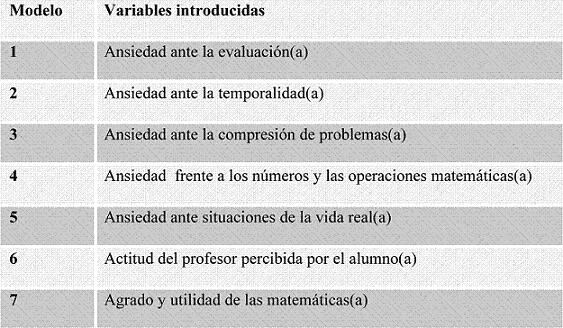
<ref-list>
<ref id="B1">
<nlm-citation citation-type="journal">
<person-group person-group-type="author">
<name>
<surname><![CDATA[Aliaga]]></surname>
<given-names><![CDATA[J]]></given-names>
</name>
<name>
<surname><![CDATA[Pecho]]></surname>
<given-names><![CDATA[J]]></given-names>
</name>
</person-group>
<article-title xml:lang="es"><![CDATA[Evaluación de la actitud hacia la Matemática en estudiantes secundarios]]></article-title>
<source><![CDATA[Revista Paradigmas]]></source>
<year>2000</year>
<volume>1</volume>
<numero>1-2</numero>
<issue>1-2</issue>
<page-range>61-78</page-range></nlm-citation>
</ref>
<ref id="B2">
<nlm-citation citation-type="book">
<person-group person-group-type="author">
<name>
<surname><![CDATA[Aparicio]]></surname>
<given-names><![CDATA[A]]></given-names>
</name>
<name>
<surname><![CDATA[Bazán]]></surname>
<given-names><![CDATA[J. L.]]></given-names>
</name>
</person-group>
<article-title xml:lang="es"><![CDATA[Actitudes hacia la estadística en profesores de nivel primario]]></article-title>
<person-group person-group-type="editor">
<name>
<surname><![CDATA[González]]></surname>
<given-names><![CDATA[M]]></given-names>
</name>
<name>
<surname><![CDATA[Bazán]]></surname>
<given-names><![CDATA[J]]></given-names>
</name>
<name>
<surname><![CDATA[Sánchez]]></surname>
<given-names><![CDATA[R]]></given-names>
</name>
</person-group>
<source><![CDATA[Coloquios de Matemática Educativa: Reportes de Investigación]]></source>
<year>2006</year>
<page-range>125-131</page-range><publisher-name><![CDATA[PUCP]]></publisher-name>
</nlm-citation>
</ref>
<ref id="B3">
<nlm-citation citation-type="">
<person-group person-group-type="author">
<name>
<surname><![CDATA[Akey]]></surname>
<given-names><![CDATA[T]]></given-names>
</name>
</person-group>
<source><![CDATA[School context, student attitudes and behaviour, and academic achievement: An exploratory analysis]]></source>
<year>2006</year>
</nlm-citation>
</ref>
<ref id="B4">
<nlm-citation citation-type="book">
<person-group person-group-type="author">
<name>
<surname><![CDATA[Ashcraft]]></surname>
<given-names><![CDATA[M. H.]]></given-names>
</name>
</person-group>
<article-title xml:lang="en"><![CDATA[Math Anxiety: Personal, Educational, and Cognitive Consequences Current Directions in Psychological Sciences, 11, 5]]></article-title>
<person-group person-group-type="editor">
<name>
<surname><![CDATA[AUZMENDI]]></surname>
<given-names><![CDATA[E]]></given-names>
</name>
</person-group>
<source><![CDATA[Las actitudes hacia la matemática-estadística en las enseñanzas medias y universitaria: Características y medición]]></source>
<year>2002</year>
<month>19</month>
<day>92</day>
<page-range>181-185</page-range><publisher-loc><![CDATA[Bilbao ]]></publisher-loc>
<publisher-name><![CDATA[Mensajero]]></publisher-name>
</nlm-citation>
</ref>
<ref id="B5">
<nlm-citation citation-type="journal">
<person-group person-group-type="author">
<name>
<surname><![CDATA[Barca]]></surname>
<given-names><![CDATA[A]]></given-names>
</name>
<name>
<surname><![CDATA[Peralbo]]></surname>
<given-names><![CDATA[M]]></given-names>
</name>
<name>
<surname><![CDATA[Brenilla]]></surname>
<given-names><![CDATA[J. C.]]></given-names>
</name>
</person-group>
<article-title xml:lang="es"><![CDATA[Atribuciones causales y enfoques de aprendizaje]]></article-title>
<source><![CDATA[La escala Siacepa]]></source>
<year>2004</year>
<volume>16</volume>
<numero>1</numero>
<issue>1</issue>
<page-range>94 - 103</page-range></nlm-citation>
</ref>
<ref id="B6">
<nlm-citation citation-type="journal">
<person-group person-group-type="author">
<name>
<surname><![CDATA[Bazán]]></surname>
<given-names><![CDATA[J. L.]]></given-names>
</name>
<name>
<surname><![CDATA[Aparicio]]></surname>
<given-names><![CDATA[A. S.]]></given-names>
</name>
</person-group>
<article-title xml:lang="es"><![CDATA[Las actitudes hacia la Matemática-Estadística dentro de un modelo de aprendizaje]]></article-title>
<source><![CDATA[Revista Semestral del Departamento de Educación]]></source>
<year>2006</year>
<volume>XV</volume>
<numero>28</numero>
<issue>28</issue>
<page-range>1-12</page-range></nlm-citation>
</ref>
<ref id="B7">
<nlm-citation citation-type="journal">
<person-group person-group-type="author">
<name>
<surname><![CDATA[Bermejo]]></surname>
<given-names><![CDATA[V]]></given-names>
</name>
</person-group>
<article-title xml:lang="es"><![CDATA[Microgénesis y cambio cognitivo: adquisición del cardinal numérico]]></article-title>
<source><![CDATA[Psicothema]]></source>
<year>2005</year>
<volume>17</volume>
<numero>4</numero>
<issue>4</issue>
<page-range>559-562</page-range></nlm-citation>
</ref>
<ref id="B8">
<nlm-citation citation-type="journal">
<person-group person-group-type="author">
<name>
<surname><![CDATA[Broc Cavero]]></surname>
<given-names><![CDATA[M. A.]]></given-names>
</name>
</person-group>
<article-title xml:lang="es"><![CDATA[Motivación y rendimiento académico en alumnos de Educación Secundaria Obligatoria y Bachillerato LOGSE]]></article-title>
<source><![CDATA[Revista de Educación]]></source>
<year>2006</year>
<volume>340</volume>
<page-range>379-414</page-range></nlm-citation>
</ref>
<ref id="B9">
<nlm-citation citation-type="journal">
<person-group person-group-type="author">
<name>
<surname><![CDATA[Carbonero]]></surname>
<given-names><![CDATA[M. A.]]></given-names>
</name>
<name>
<surname><![CDATA[Navarro]]></surname>
<given-names><![CDATA[J.C.]]></given-names>
</name>
</person-group>
<article-title xml:lang="es"><![CDATA[Entrenamiento de alumnos de Educación superior en estrategias de aprendizaje en Matemáticas]]></article-title>
<source><![CDATA[Psicothema]]></source>
<year>2006</year>
<volume>18</volume>
<numero>3</numero>
<issue>3</issue>
<page-range>348-352</page-range></nlm-citation>
</ref>
<ref id="B10">
<nlm-citation citation-type="journal">
<person-group person-group-type="author">
<name>
<surname><![CDATA[Cassady]]></surname>
<given-names><![CDATA[J.]]></given-names>
</name>
</person-group>
<article-title xml:lang="en"><![CDATA[Cognitive Test Anxiety and Academic Performance]]></article-title>
<source><![CDATA[Contemporary Educational Psychology]]></source>
<year>2002</year>
<volume>27</volume>
<numero>2</numero>
<issue>2</issue>
<page-range>270-295</page-range></nlm-citation>
</ref>
<ref id="B11">
<nlm-citation citation-type="book">
<person-group person-group-type="author">
<name>
<surname><![CDATA[Cueto]]></surname>
<given-names><![CDATA[S]]></given-names>
</name>
<name>
<surname><![CDATA[Andrade]]></surname>
<given-names><![CDATA[F]]></given-names>
</name>
<name>
<surname><![CDATA[León]]></surname>
<given-names><![CDATA[J]]></given-names>
</name>
</person-group>
<source><![CDATA[Las actitudes de los estudiantes peruanos hacia la lectura, la escritura, la matemática y las lenguas indígenas]]></source>
<year>2003</year>
<page-range>75 P</page-range><publisher-loc><![CDATA[Lima ]]></publisher-loc>
<publisher-name><![CDATA[GRADE]]></publisher-name>
</nlm-citation>
</ref>
<ref id="B12">
<nlm-citation citation-type="journal">
<person-group person-group-type="author">
<name>
<surname><![CDATA[Dutke]]></surname>
<given-names><![CDATA[S]]></given-names>
</name>
<name>
<surname><![CDATA[Stöber]]></surname>
<given-names><![CDATA[J]]></given-names>
</name>
</person-group>
<article-title xml:lang="en"><![CDATA[Test anxiety, working memory and cognitive performance: Supportive effects of sequential demands]]></article-title>
<source><![CDATA[Cognition & Emotion]]></source>
<year>2001</year>
<volume>15</volume>
<numero>3</numero>
<issue>3</issue>
<page-range>381-389</page-range></nlm-citation>
</ref>
<ref id="B13">
<nlm-citation citation-type="confpro">
<person-group person-group-type="author">
<name>
<surname><![CDATA[Estrada]]></surname>
<given-names><![CDATA[A]]></given-names>
</name>
<name>
<surname><![CDATA[Batanero]]></surname>
<given-names><![CDATA[C]]></given-names>
</name>
<name>
<surname><![CDATA[Fortuny]]></surname>
<given-names><![CDATA[J. M.]]></given-names>
</name>
</person-group>
<article-title xml:lang="es"><![CDATA[Actitudes y Estadistica en profesores en formación y en ejercicio]]></article-title>
<source><![CDATA[Edicions de la Universitat de Lleida]]></source>
<year>2003</year>
<conf-name><![CDATA[27 Congreso Nacional de Estadística e Investigación Operativa]]></conf-name>
<conf-loc> </conf-loc>
</nlm-citation>
</ref>
<ref id="B14">
<nlm-citation citation-type="journal">
<person-group person-group-type="author">
<name>
<surname><![CDATA[Ferrari]]></surname>
<given-names><![CDATA[J]]></given-names>
</name>
<name>
<surname><![CDATA[Scher]]></surname>
<given-names><![CDATA[S]]></given-names>
</name>
</person-group>
<article-title xml:lang="en"><![CDATA[Toward an understanding of academic and non academic tasks procrastinated by students: The use of daily logs]]></article-title>
<source><![CDATA[Psychology in the Schools]]></source>
<year>2002</year>
<volume>37</volume>
<numero>4</numero>
<issue>4</issue>
<page-range>359-366</page-range></nlm-citation>
</ref>
<ref id="B15">
<nlm-citation citation-type="journal">
<person-group person-group-type="author">
<name>
<surname><![CDATA[Fierro-Hernández]]></surname>
<given-names><![CDATA[C]]></given-names>
</name>
</person-group>
<article-title xml:lang="es"><![CDATA[Valoración del impacto de un programa de educación en valores en el último curso de Educación Secundaria obligatoria]]></article-title>
<source><![CDATA[Revista de Educación]]></source>
<year>2006</year>
<volume>339</volume>
<page-range>455-466</page-range></nlm-citation>
</ref>
<ref id="B16">
<nlm-citation citation-type="book">
<person-group person-group-type="author">
<name>
<surname><![CDATA[Gardner]]></surname>
<given-names><![CDATA[R. C.]]></given-names>
</name>
</person-group>
<source><![CDATA[Psychological Statistics Using SPSS for Windows]]></source>
<year>2001</year>
<publisher-loc><![CDATA[Upper Saddle River, NJ ]]></publisher-loc>
<publisher-name><![CDATA[Prentice Hall]]></publisher-name>
</nlm-citation>
</ref>
<ref id="B17">
<nlm-citation citation-type="journal">
<person-group person-group-type="author">
<name>
<surname><![CDATA[Gargallo]]></surname>
<given-names><![CDATA[B]]></given-names>
</name>
<name>
<surname><![CDATA[Pérez]]></surname>
<given-names><![CDATA[C]]></given-names>
</name>
<name>
<surname><![CDATA[Sánchez]]></surname>
<given-names><![CDATA[F]]></given-names>
</name>
<name>
<surname><![CDATA[Serra]]></surname>
<given-names><![CDATA[B]]></given-names>
</name>
<name>
<surname><![CDATA[Ros]]></surname>
<given-names><![CDATA[I.]]></given-names>
</name>
</person-group>
<article-title xml:lang="es"><![CDATA[Actitudes ante el aprendizaje y rendimiento académico en los estudiantes universitarios]]></article-title>
<source><![CDATA[Revista Iberoamericana de Educación]]></source>
<year>2007</year>
<volume>42/1</volume>
<publisher-name><![CDATA[OEI]]></publisher-name>
</nlm-citation>
</ref>
<ref id="B18">
<nlm-citation citation-type="journal">
<person-group person-group-type="author">
<name>
<surname><![CDATA[Gil]]></surname>
<given-names><![CDATA[N]]></given-names>
</name>
<name>
<surname><![CDATA[Blanco]]></surname>
<given-names><![CDATA[L]]></given-names>
</name>
<name>
<surname><![CDATA[Guerrero]]></surname>
<given-names><![CDATA[E]]></given-names>
</name>
</person-group>
<article-title xml:lang="es"><![CDATA[El dominio afectivo en el aprendizaje de las matemáticas: Una revisión de de sus descriptores básicos]]></article-title>
<source><![CDATA[Unión Revista Iberoamericana de Educación Matemática]]></source>
<year>2005</year>
<volume>2</volume>
<page-range>15-32</page-range></nlm-citation>
</ref>
<ref id="B19">
<nlm-citation citation-type="book">
<person-group person-group-type="author">
<name>
<surname><![CDATA[Gómez Chacón]]></surname>
<given-names><![CDATA[I. M.]]></given-names>
</name>
</person-group>
<source><![CDATA[Matemática emocional: Los afectos en el aprendizaje matemático]]></source>
<year>2000</year>
<publisher-loc><![CDATA[Madrid ]]></publisher-loc>
<publisher-name><![CDATA[Narcea]]></publisher-name>
</nlm-citation>
</ref>
<ref id="B20">
<nlm-citation citation-type="journal">
<person-group person-group-type="author">
<name>
<surname><![CDATA[González Ordi]]></surname>
<given-names><![CDATA[H]]></given-names>
</name>
<name>
<surname><![CDATA[Tobal]]></surname>
<given-names><![CDATA[J. J.]]></given-names>
</name>
</person-group>
<article-title xml:lang="es"><![CDATA[La sugestionabilidad como variable moduladora en la imaginación de escenas ansiógenas]]></article-title>
<source><![CDATA[Ansiedad y Estrés]]></source>
<year>2001</year>
<volume>7</volume>
<numero>1</numero>
<issue>1</issue>
<page-range>89-110</page-range></nlm-citation>
</ref>
<ref id="B21">
<nlm-citation citation-type="journal">
<person-group person-group-type="author">
<name>
<surname><![CDATA[Guerrero]]></surname>
<given-names><![CDATA[E]]></given-names>
</name>
<name>
<surname><![CDATA[Blanco]]></surname>
<given-names><![CDATA[L]]></given-names>
</name>
<name>
<surname><![CDATA[Gil]]></surname>
<given-names><![CDATA[N]]></given-names>
</name>
</person-group>
<article-title xml:lang="es"><![CDATA[El papel de la afectividad en la resolución de problemas matemáticos]]></article-title>
<source><![CDATA[Revista de Educación]]></source>
<year>2006</year>
<volume>340</volume>
<page-range>551-569</page-range></nlm-citation>
</ref>
<ref id="B22">
<nlm-citation citation-type="journal">
<person-group person-group-type="author">
<name>
<surname><![CDATA[Hancock]]></surname>
<given-names><![CDATA[D]]></given-names>
</name>
</person-group>
<article-title xml:lang="en"><![CDATA[Effects of Test Anxiety and Evaluative Threat on Students&rsquo; Achievement and Motivation]]></article-title>
<source><![CDATA[Journal of Educational Research]]></source>
<year>2001</year>
<volume>94</volume>
<numero>5</numero>
<issue>5</issue>
<page-range>284-90</page-range></nlm-citation>
</ref>
<ref id="B23">
<nlm-citation citation-type="journal">
<person-group person-group-type="author">
<name>
<surname><![CDATA[Hofflich]]></surname>
<given-names><![CDATA[A.]]></given-names>
</name>
<name>
<surname><![CDATA[Hughes]]></surname>
<given-names><![CDATA[A.]]></given-names>
</name>
<name>
<surname><![CDATA[Kendall]]></surname>
<given-names><![CDATA[P.]]></given-names>
</name>
</person-group>
<article-title xml:lang="en"><![CDATA[Somatic complaints and childhood anxiety disorders.]]></article-title>
<source><![CDATA[International Journal of Clinical and Health Psychology]]></source>
<year>2006</year>
<volume>6</volume>
<page-range>229-242</page-range></nlm-citation>
</ref>
<ref id="B24">
<nlm-citation citation-type="journal">
<person-group person-group-type="author">
<name>
<surname><![CDATA[KAZELSKIS]]></surname>
<given-names><![CDATA[R]]></given-names>
</name>
</person-group>
<article-title xml:lang="en"><![CDATA[Mathematics Anxiety and Test Anxiety: Separate constructs?]]></article-title>
<source><![CDATA[Journal of Experimental Education]]></source>
<year>2000</year>
<volume>68</volume>
<numero>2</numero>
<issue>2</issue>
<page-range>137-146</page-range></nlm-citation>
</ref>
<ref id="B25">
<nlm-citation citation-type="">
<person-group person-group-type="author">
<name>
<surname><![CDATA[Magalhaes]]></surname>
<given-names><![CDATA[A]]></given-names>
</name>
</person-group>
<source><![CDATA[Ansiedade face aos Testes, Género e Rendimento Académico: um estudo no Ensino Básico]]></source>
<year>2007</year>
</nlm-citation>
</ref>
<ref id="B26">
<nlm-citation citation-type="">
<person-group person-group-type="author">
<name>
<surname><![CDATA[Mato]]></surname>
<given-names><![CDATA[M. D.]]></given-names>
</name>
</person-group>
<source><![CDATA[Diseño y validación de dos cuestionarios para evaluar las actitudes y la ansiedad hacia las matemáticas en alumnos de Educación Secundaria Obligatoria]]></source>
<year>2006</year>
</nlm-citation>
</ref>
<ref id="B27">
<nlm-citation citation-type="journal">
<person-group person-group-type="author">
<name>
<surname><![CDATA[Norwood]]></surname>
<given-names><![CDATA[K. S.]]></given-names>
</name>
</person-group>
<article-title xml:lang="en"><![CDATA[The Effect of Instructional Approach on Mathematics Anxiety and Achievement]]></article-title>
<source><![CDATA[School Science and Mathematics]]></source>
<year>1994</year>
<volume>94</volume>
<page-range>248-254</page-range></nlm-citation>
</ref>
<ref id="B28">
<nlm-citation citation-type="journal">
<person-group person-group-type="author">
<name>
<surname><![CDATA[Onwuegbuzie]]></surname>
<given-names><![CDATA[A. J.]]></given-names>
</name>
</person-group>
<article-title xml:lang="en"><![CDATA[Modeling statistics achievement among graduate students]]></article-title>
<source><![CDATA[Educational and Psychological measurement]]></source>
<year>2003</year>
<volume>63</volume>
<numero>6</numero>
<issue>6</issue>
<page-range>1020-1038</page-range></nlm-citation>
</ref>
<ref id="B29">
<nlm-citation citation-type="journal">
<person-group person-group-type="author">
<name>
<surname><![CDATA[Onwuegbuzie]]></surname>
<given-names><![CDATA[A. J.]]></given-names>
</name>
</person-group>
<article-title xml:lang="en"><![CDATA[Academic procrastination and statistics anxiety]]></article-title>
<source><![CDATA[Assessment & Evaluation in Higher Education]]></source>
<year>2004</year>
<volume>29</volume>
<numero>1</numero>
<issue>1</issue>
<page-range>3-19</page-range></nlm-citation>
</ref>
<ref id="B30">
<nlm-citation citation-type="journal">
<person-group person-group-type="author">
<name>
<surname><![CDATA[Opt&rsquo;eynde]]></surname>
</name>
<name>
<surname><![CDATA[Decorte]]></surname>
<given-names><![CDATA[E]]></given-names>
</name>
<name>
<surname><![CDATA[Verschaffel]]></surname>
<given-names><![CDATA[L]]></given-names>
</name>
</person-group>
<article-title xml:lang="en"><![CDATA[Accepting emotional complexity:a socio-constructivist perspective on the role of emotions in the mathematics classroom]]></article-title>
<source><![CDATA[Educational Studies in Mathematics]]></source>
<year>2006</year>
<volume>63</volume>
<page-range>193-207</page-range></nlm-citation>
</ref>
<ref id="B31">
<nlm-citation citation-type="journal">
<person-group person-group-type="author">
<name>
<surname><![CDATA[Ramírez]]></surname>
<given-names><![CDATA[M. J.]]></given-names>
</name>
</person-group>
<article-title xml:lang="es"><![CDATA[Actitudes hacia las matemáticas y rendimiento académico entre estudiantes de octavo básico]]></article-title>
<source><![CDATA[Estudios pedagógicos]]></source>
<year>2005</year>
<volume>31</volume>
<numero>1</numero>
<issue>1</issue>
<page-range>97-112</page-range></nlm-citation>
</ref>
<ref id="B32">
<nlm-citation citation-type="">
<person-group person-group-type="author">
<name>
<surname><![CDATA[Relich]]></surname>
<given-names><![CDATA[J.]]></given-names>
</name>
<name>
<surname><![CDATA[Way]]></surname>
<given-names><![CDATA[J]]></given-names>
</name>
</person-group>
<article-title xml:lang="en"><![CDATA[Measuring pre-Service Teachers Attitudes to Mathematics: Further Developments of a Questionnaire]]></article-title>
<person-group person-group-type="editor">
<name>
<surname><![CDATA[Da Ponte]]></surname>
<given-names><![CDATA[J. P.]]></given-names>
</name>
<name>
<surname><![CDATA[Matos]]></surname>
<given-names><![CDATA[J. F.]]></given-names>
</name>
</person-group>
<source><![CDATA[Proceedings of the Eighteenth International Conference for the psychology of Mathematics Education]]></source>
<year>1994</year>
<volume>4</volume>
<page-range>105-112</page-range><publisher-loc><![CDATA[Lisbon ]]></publisher-loc>
</nlm-citation>
</ref>
<ref id="B33">
<nlm-citation citation-type="journal">
<person-group person-group-type="author">
<name>
<surname><![CDATA[Rosario]]></surname>
<given-names><![CDATA[P]]></given-names>
</name>
<name>
<surname><![CDATA[Costa]]></surname>
<given-names><![CDATA[M]]></given-names>
</name>
<name>
<surname><![CDATA[Mourao]]></surname>
<given-names><![CDATA[R]]></given-names>
</name>
<name>
<surname><![CDATA[Núñez]]></surname>
<given-names><![CDATA[J.C.]]></given-names>
</name>
<name>
<surname><![CDATA[González-Pienda]]></surname>
<given-names><![CDATA[J.A]]></given-names>
</name>
<name>
<surname><![CDATA[Valle]]></surname>
<given-names><![CDATA[A]]></given-names>
</name>
</person-group>
<article-title xml:lang="en"><![CDATA[Procastination, SRL and Math achievement]]></article-title>
<source><![CDATA[Academic Exchange Quarterly]]></source>
<year>2007</year>
<volume>11</volume>
<numero>4</numero>
<issue>4</issue>
<page-range>23-28</page-range></nlm-citation>
</ref>
<ref id="B34">
<nlm-citation citation-type="journal">
<person-group person-group-type="author">
<name>
<surname><![CDATA[Schier]]></surname>
<given-names><![CDATA[S]]></given-names>
</name>
<name>
<surname><![CDATA[Osterman]]></surname>
<given-names><![CDATA[N]]></given-names>
</name>
</person-group>
<article-title xml:lang="en"><![CDATA[Procrastination, conscientiousness, anxiety, and goals: Exploring the measurement and correlates of procrastination among school-aged children]]></article-title>
<source><![CDATA[Psychology in the Schools]]></source>
<year>2002</year>
<volume>39</volume>
<numero>4</numero>
<issue>4</issue>
<page-range>385-398</page-range></nlm-citation>
</ref>
<ref id="B35">
<nlm-citation citation-type="journal">
<person-group person-group-type="author">
<name>
<surname><![CDATA[Suárez Riveiro]]></surname>
<given-names><![CDATA[J. M.]]></given-names>
</name>
<name>
<surname><![CDATA[Anaya Nieto]]></surname>
<given-names><![CDATA[D]]></given-names>
</name>
<name>
<surname><![CDATA[Fernández Suárez]]></surname>
<given-names><![CDATA[A. P.]]></given-names>
</name>
</person-group>
<article-title xml:lang="es"><![CDATA[Sobre la determinación motivacional del aprendizaje autorregulado]]></article-title>
<source><![CDATA[Revista de Educación]]></source>
<year>2005</year>
<volume>338</volume>
<page-range>295-308</page-range></nlm-citation>
</ref>
<ref id="B36">
<nlm-citation citation-type="journal">
<person-group person-group-type="author">
<name>
<surname><![CDATA[Tárraga]]></surname>
<given-names><![CDATA[R]]></given-names>
</name>
</person-group>
<article-title xml:lang="es"><![CDATA[Relación entre rendimiento en solución de problemas y factores afectivo-motivacionales en alumnos con y sin dificultades del aprendizaje]]></article-title>
<source><![CDATA[Apuntes de Psicología]]></source>
<year>2008</year>
<month>20</month>
<day>08</day>
<volume>26</volume>
<numero>1</numero>
<issue>1</issue>
<page-range>143-148</page-range></nlm-citation>
</ref>
<ref id="B37">
<nlm-citation citation-type="book">
<collab>^dU.M.C. (Unidad de Medición de Calidad Educativa)</collab>
<source><![CDATA[Fundamentación de la Evaluación de Actitudes en la Evaluación Nacional del 2001]]></source>
<year></year>
<publisher-name><![CDATA[Ministerio de Educación de Perú]]></publisher-name>
</nlm-citation>
</ref>
<ref id="B38">
<nlm-citation citation-type="book">
<collab>^dU.M.C. (Unidad de Medición de Calidad Educativa)</collab>
<source><![CDATA[Evaluación del rendimiento estudiantil 2004]]></source>
<year>2005</year>
<publisher-loc><![CDATA[Lima ]]></publisher-loc>
<publisher-name><![CDATA[Ministerio de Educación]]></publisher-name>
</nlm-citation>
</ref>
<ref id="B39">
<nlm-citation citation-type="journal">
<person-group person-group-type="author">
<name>
<surname><![CDATA[Van Eerde]]></surname>
<given-names><![CDATA[W]]></given-names>
</name>
</person-group>
<article-title xml:lang="en"><![CDATA[A meta-analytically derived nomological network of procrastination]]></article-title>
<source><![CDATA[Personality and Individual Differences]]></source>
<year>2003</year>
<volume>35</volume>
<page-range>1401- 1418</page-range></nlm-citation>
</ref>
<ref id="B40">
<nlm-citation citation-type="journal">
<person-group person-group-type="author">
<name>
<surname><![CDATA[Vigil-Colet]]></surname>
<given-names><![CDATA[A]]></given-names>
</name>
<name>
<surname><![CDATA[Lorenzo-Seva]]></surname>
<given-names><![CDATA[U]]></given-names>
</name>
<name>
<surname><![CDATA[Condon]]></surname>
<given-names><![CDATA[L]]></given-names>
</name>
</person-group>
<article-title xml:lang="en"><![CDATA[Development and validation of the statistical anxiety scale]]></article-title>
<source><![CDATA[Psicothema]]></source>
<year>2008</year>
<volume>20</volume>
<numero>1</numero>
<issue>1</issue>
<page-range>174-186</page-range></nlm-citation>
</ref>
<ref id="B41">
<nlm-citation citation-type="book">
<person-group person-group-type="author">
<name>
<surname><![CDATA[Vygotsky]]></surname>
<given-names><![CDATA[L. S.]]></given-names>
</name>
</person-group>
<source><![CDATA[A Formação Social da Mente]]></source>
<year>1991</year>
<publisher-loc><![CDATA[São Paulo ]]></publisher-loc>
<publisher-name><![CDATA[Martins Fontes]]></publisher-name>
</nlm-citation>
</ref>
<ref id="B42">
<nlm-citation citation-type="journal">
<person-group person-group-type="author">
<name>
<surname><![CDATA[Zan]]></surname>
<given-names><![CDATA[R]]></given-names>
</name>
<name>
<surname><![CDATA[Brown]]></surname>
<given-names><![CDATA[L]]></given-names>
</name>
<name>
<surname><![CDATA[Evans]]></surname>
<given-names><![CDATA[J]]></given-names>
</name>
<name>
<surname><![CDATA[Hannula]]></surname>
<given-names><![CDATA[M.S.]]></given-names>
</name>
</person-group>
<article-title xml:lang="en"><![CDATA[Affect in mathematics education: an introduction]]></article-title>
<source><![CDATA[Educational Studies in Mathematics]]></source>
<year>2006</year>
<volume>63</volume>
<page-range>113-121</page-range></nlm-citation>
</ref>
<ref id="B43">
<nlm-citation citation-type="journal">
<person-group person-group-type="author">
<name>
<surname><![CDATA[Zubeidat]]></surname>
<given-names><![CDATA[I]]></given-names>
</name>
<name>
<surname><![CDATA[Fernández-Parra]]></surname>
<given-names><![CDATA[A]]></given-names>
</name>
<name>
<surname><![CDATA[Sierra]]></surname>
<given-names><![CDATA[C]]></given-names>
</name>
<name>
<surname><![CDATA[Salinas]]></surname>
<given-names><![CDATA[J.M.]]></given-names>
</name>
</person-group>
<article-title xml:lang="es"><![CDATA[Comorbilidad de la ansiedad social específica y generalizada en adolescentes españoles]]></article-title>
<source><![CDATA[Psicothema]]></source>
<year>2007</year>
<volume>19</volume>
<numero>4</numero>
<issue>4</issue>
<page-range>654-660</page-range></nlm-citation>
</ref>
</ref-list>
</back>
</article>