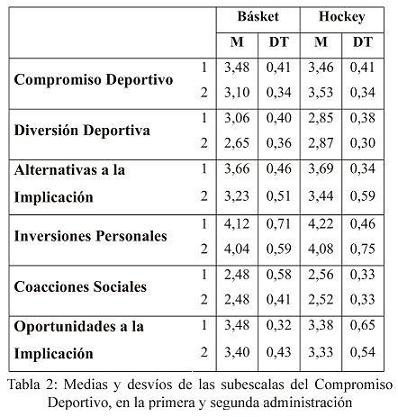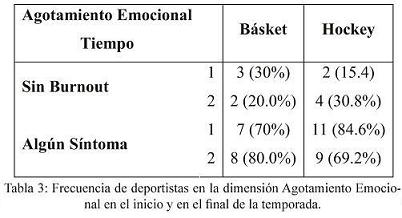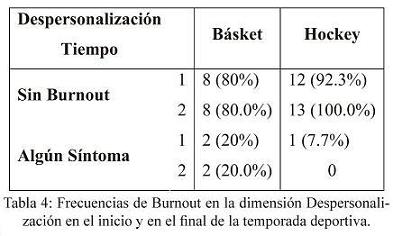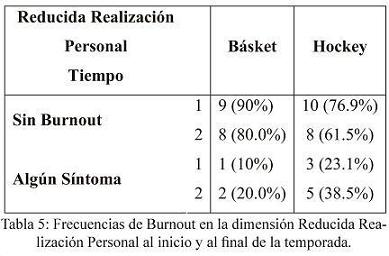
<?xml version="1.0" encoding="ISO-8859-1"?><article xmlns:mml="http://www.w3.org/1998/Math/MathML" xmlns:xlink="http://www.w3.org/1999/xlink" xmlns:xsi="http://www.w3.org/2001/XMLSchema-instance">
<front>
<journal-meta>
<journal-id>1688-4221</journal-id>
<journal-title><![CDATA[Ciencias Psicológicas]]></journal-title>
<abbrev-journal-title><![CDATA[Cienc. Psicol.]]></abbrev-journal-title>
<issn>1688-4221</issn>
<publisher>
<publisher-name><![CDATA[Universidad Católica del Uruguay.]]></publisher-name>
</publisher>
</journal-meta>
<article-meta>
<article-id>S1688-42212009000100003</article-id>
<title-group>
<article-title xml:lang="es"><![CDATA[Compromiso deportivo, juicio de control y burnout en dos equipos deportivos femeninos]]></article-title>
<article-title xml:lang="en"><![CDATA[Sort commitment, perceived control and burnout in two female sports teams]]></article-title>
</title-group>
<contrib-group>
<contrib contrib-type="author">
<name>
<surname><![CDATA[Tutte Vallarino]]></surname>
<given-names><![CDATA[Verónica]]></given-names>
</name>
<xref ref-type="aff" rid="A01"/>
</contrib>
<contrib contrib-type="author">
<name>
<surname><![CDATA[Suero Girardi]]></surname>
<given-names><![CDATA[Margarita]]></given-names>
</name>
<xref ref-type="aff" rid="A02"/>
</contrib>
</contrib-group>
<aff id="A01">
<institution><![CDATA[,Universidad Católica del Uruguay  ]]></institution>
<addr-line><![CDATA[ ]]></addr-line>
<country>Uruguay</country>
</aff>
<aff id="A02">
<institution><![CDATA[,Universidad Católica del Uruguay  ]]></institution>
<addr-line><![CDATA[ ]]></addr-line>
<country>Uruguay</country>
</aff>
<pub-date pub-type="pub">
<day>00</day>
<month>05</month>
<year>2009</year>
</pub-date>
<pub-date pub-type="epub">
<day>00</day>
<month>05</month>
<year>2009</year>
</pub-date>
<volume>3</volume>
<numero>1</numero>
<fpage>17</fpage>
<lpage>28</lpage>
<copyright-statement/>
<copyright-year/>
<self-uri xlink:href="http://www.scielo.edu.uy/scielo.php?script=sci_arttext&amp;pid=S1688-42212009000100003&amp;lng=en&amp;nrm=iso"></self-uri><self-uri xlink:href="http://www.scielo.edu.uy/scielo.php?script=sci_abstract&amp;pid=S1688-42212009000100003&amp;lng=en&amp;nrm=iso"></self-uri><self-uri xlink:href="http://www.scielo.edu.uy/scielo.php?script=sci_pdf&amp;pid=S1688-42212009000100003&amp;lng=en&amp;nrm=iso"></self-uri><abstract abstract-type="short" xml:lang="es"><p><![CDATA[El aumento en los casos de bajas deportivas debidas al burnout, así como la disminución del rendimiento, el agotamiento emocional y el abandono en deportistas, han sido algunas de las razones que motivaron nuestro estudio. Nuestro objetivo es determinar si existen diferencias entre 2 equipos deportivos femeninos a lo largo de una temporada, en función de dos variables (Compromiso Deportivo y Juicio de Control), que podrían predecir la aparición anticipada del burnout. En este sentido, estudiaremos si se producen diferencias entre dichas variables, y si las mismas pueden ser utilizadas como medidas profilácticas para prevenir la posibilidad de desarrollar el síndrome de burnout. Las muestras estudiadas se componen por 2 equipos de mujeres deportistas de Alto Rendimiento, correspondientes a 10 deportistas de un equipo de básquet profesional de la Liga Femenina de Básquet Española y a 13 deportistas del Seleccionado Nacional de Hockey sobre Césped de Uruguay, ambas entre 18 a 33 años. Todas las participantes fueron evaluadas utilizando el Inventario de Burnout para Deportistas (IBD), las Escalas análogo visuales de Juicio de Control (VAS) y el Cuestionario de Compromiso Deportivo (SCQ). No se encontraron diferencias significativas en la mayoría de las dimensiones evaluadas entre ambos grupos y en ambas administraciones]]></p></abstract>
<abstract abstract-type="short" xml:lang="en"><p><![CDATA[The increase in dropout cases in sports due to burnout, declining performance, emotional exhaustion and neglect in athletes were some of the reasons for our study. Our aim is to determine whether differences exist between two female sports teams throughout a season, depending on two variables (Sport Commitment and Perceived Control), which could predict the early-onset of burnout. In this course of action, we will study if there are differences between these variables, and whether they may be used as prophylactic measures to guard against the possibility of developing burnout syndrome. The samples are composed by two teams of high performance women athletes, 10 of which integrated a professional basketball team of the Spanish Female Basketball League, and 13 belonged to the Uruguayan National Select Hockey Team, both samples composed by participants between 18 and 33 years of age. All participants were assessed using the Burnout Inventory for Athletes (IBD), the visual analogue scale Perceived Control (VAS) and Sport Commitment Questionnaire (SCQ). There were no significant differences between the two groups or the two administrations in most dimensions assessed]]></p></abstract>
<kwd-group>
<kwd lng="es"><![CDATA[Compromiso Deportivo]]></kwd>
<kwd lng="es"><![CDATA[Juicio de Control]]></kwd>
<kwd lng="es"><![CDATA[Burnout]]></kwd>
<kwd lng="es"><![CDATA[mujeres deportistas]]></kwd>
<kwd lng="en"><![CDATA[Sport Commitment]]></kwd>
<kwd lng="en"><![CDATA[Perceived Control]]></kwd>
<kwd lng="en"><![CDATA[Burnout]]></kwd>
<kwd lng="en"><![CDATA[sportswomen]]></kwd>
</kwd-group>
</article-meta>
</front><body><![CDATA[ <div class="Section1">      <p style="margin: 5.65pt 134.25pt 0.0001pt 27pt; text-align: center; line-height: 120%;" align="center"><b><span style="font-size: 16pt; line-height: 120%; font-family: Arial;" lang="ES-UY">COMPROMISO DEPORTIVO, JUICIO DE CONTROL Y BURNOUT EN DOS EQUIPOS DEPORTIVOS FEMENINOS</span></b><span style="font-size: 16pt; line-height: 120%; font-family: Arial;" lang="ES-UY"><o:p></o:p></span></p>        <p style="margin: 5pt 134.25pt 0.0001pt 27pt; text-align: center; line-height: 120%;" align="center"><span style="font-size: 16pt; line-height: 120%; font-family: Arial;" lang="ES-UY"><o:p>&nbsp;</o:p></span></p>        <p style="margin: 5pt 134.25pt 0.0001pt 27pt; text-align: center; line-height: 120%;" align="center"><b><span style="font-size: 16pt; line-height: 120%; font-family: Arial;" lang="EN-US">SPORT COMMITMENT, PERCEIVED CONTROL AND BURNOUT IN TWO FEMALE SPORTS TEAMS</span></b><span style="font-family: Arial;" lang="EN-US"><o:p></o:p></span></p>        <p style="margin: 5pt 134.25pt 0.0001pt 27pt; text-align: center; line-height: 120%;" align="center"><span style="font-family: Arial;" lang="EN-US"><o:p>&nbsp;</o:p></span></p>        <p style="margin: 5pt 134.25pt 0.0001pt 27pt; text-align: center; line-height: 120%;" align="center"><b><span style="font-family: Arial;" lang="ES-UY">Ver&oacute;nicaTutte Vallarino</span></b><span style="font-family: Arial;" lang="ES-UY"><o:p></o:p></span></p>        <p style="margin: 5pt 134.25pt 0.0001pt 27pt; text-align: center; line-height: 120%;" align="center"><span style="font-family: Arial;" lang="ES-UY">Universidad Cat&oacute;lica del Uruguay, Uruguay<o:p></o:p></span></p>        <p style="margin: 2.85pt 134.25pt 0.0001pt 27pt; text-align: center; line-height: 120%;" align="center"><b><span style="font-family: Arial;" lang="ES-UY"><o:p>&nbsp;</o:p></span></b></p>        <p style="margin: 2.85pt 134.25pt 0.0001pt 27pt; text-align: center; line-height: 120%;" align="center"><b><span style="font-family: Arial;" lang="ES-UY">Margarita Suero Girardi</span></b><span style="font-family: Arial;" lang="ES-UY"><o:p></o:p></span></p>        <p style="margin: 5pt 134.25pt 0.0001pt 27pt; text-align: center; line-height: 120%;" align="center"><span style="font-family: Arial;" lang="ES-UY">Universidad Cat&oacute;lica del Uruguay, Uruguay<o:p></o:p></span></p>        ]]></body>
<body><![CDATA[<p style="margin: 5pt 134.25pt 0.0001pt 27pt; text-align: center; line-height: 120%;" align="center"><span style="font-family: Arial;" lang="ES-UY"><o:p>&nbsp;</o:p></span></p>        <p style="margin: 5pt 134.25pt 0.0001pt 27pt; text-align: center; line-height: 120%;" align="center"><span style="font-family: Arial;" lang="ES-UY"><o:p>&nbsp;</o:p></span></p>        <p style="margin: 5pt 134.25pt 0.0001pt 27pt; text-align: justify; line-height: 120%;"><b><span style="font-family: Arial;" lang="ES-UY">Resumen: </span></b><span style="font-family: Arial;" lang="ES-UY">El aumento en los casos de bajas deportivas debidas al burnout, as&iacute; como la disminuci&oacute;n del rendimiento, el agotamiento emocional y el abandono en deportistas, han sido algunas de las razones que motivaron nuestro estudio. <o:p></o:p></span></p>        <p style="margin: 5pt 134.25pt 0.0001pt 27pt; text-align: justify; line-height: 120%;"><span style="font-family: Arial;" lang="ES-UY">Nuestro objetivo es determinar si existen diferencias entre 2 equipos deportivos femeninos a lo largo de una temporada, en funci&oacute;n de dos variables (Compromiso Deportivo y Juicio de Control), que podr&iacute;an predecir la aparici&oacute;n anticipada del burnout. En este sentido, estudiaremos si se producen diferencias entre dichas variables, y si las mismas pueden ser utilizadas como medidas profil&aacute;cticas para prevenir la posibilidad de desarrollar el s&iacute;ndrome de burnout. <o:p></o:p></span></p>        <p style="margin: 5pt 134.25pt 0.0001pt 27pt; text-align: justify; line-height: 120%;"><span style="font-family: Arial;" lang="ES-UY">Las muestras estudiadas se componen por 2 equipos de mujeres deportistas de Alto Rendimiento, correspondientes a 10 deportistas de un equipo de b&aacute;squet profesional de la Liga Femenina de B&aacute;squet Espa&ntilde;ola y a 13 deportistas del Seleccionado Nacional de Hockey sobre C&eacute;sped de Uruguay, ambas entre 18 a 33 a&ntilde;os. Todas las participantes fueron evaluadas utilizando el Inventario de Burnout para Deportistas (IBD), las Escalas an&aacute;logo visuales de Juicio de Control (VAS) y el Cuestionario de Compromiso Deportivo (SCQ).<o:p></o:p></span></p>        <p style="margin: 5pt 134.25pt 0.0001pt 27pt; text-align: justify; line-height: 120%;"><span style="font-family: Arial;" lang="ES-UY">No se encontraron diferencias significativas en la mayor&iacute;a de las dimensiones evaluadas entre ambos grupos y en ambas administraciones. <o:p></o:p></span></p>        <p style="margin: 5pt 134.25pt 0.0001pt 27pt; text-align: justify; line-height: 120%;"><b><span style="font-family: Arial;" lang="ES-UY">Palabras clave:</span></b><span style="font-family: Arial;" lang="ES-UY"> Compromiso Deportivo, Juicio de Control, Burnout, mujeres deportistas.<o:p></o:p></span></p>        <p style="margin: 5pt 134.25pt 0.0001pt 27pt; text-align: justify; line-height: 120%;"><span style="font-family: Arial;" lang="ES-UY"><o:p>&nbsp;</o:p></span></p>        <p style="margin: 5pt 134.25pt 0.0001pt 27pt; text-align: justify; line-height: 120%;"><b><span style="font-family: Arial;" lang="EN-US">Abstract: </span></b><span style="font-family: Arial;" lang="EN-US">The increase in dropout cases in sports due to burnout, declining performance, emotional exhaustion and neglect in athletes were some of the reasons for our study. </span><span style="font-family: Arial;" lang="EN-GB"><o:p></o:p></span></p>        <p style="margin: 5pt 134.25pt 0.0001pt 27pt; text-align: justify; line-height: 120%;"><span style="font-family: Arial;" lang="EN-US">Our aim is to determine whether differences exist between two female sports teams throughout a season, depending on two variables (Sport Commitment and Perceived Control), which could predict the early-onset of burnout. In this course of action, we will study if there are differences between these variables, and whether they may be used as prophylactic measures to guard against the possibility of developing burnout syndrome. <o:p></o:p></span></p>        ]]></body>
<body><![CDATA[<p style="margin: 5pt 134.25pt 0.0001pt 27pt; text-align: justify; line-height: 120%;"><span style="font-family: Arial;" lang="EN-US">The samples are composed by two teams of high performance women athletes, 10 of which integrated a professional basketball team of the Spanish Female Basketball League, and 13 belonged to the Uruguayan National Select Hockey Team, both samples composed by participants between 18 and 33 years of age. All participants were assessed using the Burnout Inventory for Athletes (IBD), the visual analogue scale Perceived Control (VAS) and Sport Commitment Questionnaire (SCQ). <o:p></o:p></span></p>        <p style="margin: 5pt 134.25pt 0.0001pt 27pt; text-align: justify; line-height: 120%;"><span style="font-family: Arial;" lang="EN-US">There were no significant differences between the two groups or the two administrations in most dimensions assessed.<o:p></o:p></span></p>        <p style="margin: 5pt 134.25pt 0.0001pt 27pt; text-align: justify; line-height: 120%;"><b><span style="font-family: Arial;" lang="EN-US">Keywords:</span></b><span style="font-family: Arial;" lang="EN-US"> Sport Commitment, Perceived Control, Burnout, sportswomen.</span><span style="font-family: Arial;" lang="EN-GB"><o:p></o:p></span></p>        <p style="margin: 5pt 134.25pt 0.0001pt 27pt; text-align: justify; line-height: 120%;"><span style="font-family: Arial;" lang="EN-GB"><o:p>&nbsp;</o:p></span></p>        <p style="margin: 5pt 134.25pt 0.0001pt 27pt; text-align: justify; line-height: 120%;"><span style="font-size: 11pt; line-height: 120%; font-family: Arial;" lang="ES-UY">La publicaci&oacute;n de este art&iacute;culo ha sido posible gracias a una parte de la subvenci&oacute;n recibida del Fondo Clemente Estable (Proyecto 71/2008- Modalidad III-Joven Investigador) la que sustent&oacute; el desarrollo de la metodolog&iacute;a de estudio. <o:p></o:p></span></p>        <p style="margin: 5pt 134.25pt 0.0001pt 27pt; text-align: justify; line-height: 120%;"><span style="font-size: 11pt; line-height: 120%; font-family: Arial;" lang="ES-UY"><o:p>&nbsp;</o:p></span></p>        <p style="margin: 5pt 134.25pt 0.0001pt 27pt; text-align: justify; line-height: 120%;"><span style="font-size: 11pt; line-height: 120%; font-family: Arial;" lang="ES-UY">Correspondencia: Ver&oacute;nica Tutte, Departamento de Ciencias Cognitivas y de la Salud, Facultad de Psicolog&iacute;a, Universidad Cat&oacute;lica del Uruguay. Correo Electr&oacute;nico: <a href="mailto:vtutte@ucu.edu.uy">vtutte@ucu.edu.uy</a><o:p></o:p></span></p>        <p class="western" style="margin: 5pt 134.25pt 0.0001pt 27pt; text-align: justify; text-indent: 14.2pt; line-height: 200%;"><span style="font-size: 12pt; line-height: 200%; font-family: Arial;" lang="ES-UY"><o:p>&nbsp;</o:p></span></p>        <p class="western" style="margin: 5pt 134.25pt 0.0001pt 27pt; text-align: justify; text-indent: 14.2pt; line-height: 200%;"><span style="font-size: 12pt; line-height: 200%; font-family: Arial;" lang="ES-UY"><o:p>&nbsp;</o:p></span></p>        <p class="western" style="margin: 5pt 134.25pt 0.0001pt 27pt; text-align: center; text-indent: 14.2pt; line-height: 200%;" align="center"><b><span style="font-size: 12pt; line-height: 200%; font-family: Arial;" lang="ES-UY">INTRODUCCI&Oacute;N</span></b></p>        ]]></body>
<body><![CDATA[<p class="western" style="margin: 5pt 134.25pt 0.0001pt 27pt; text-align: center; text-indent: 14.2pt; line-height: 200%;" align="center"><span style="font-size: 12pt; line-height: 200%; font-family: Arial;" lang="ES-UY"><o:p>&nbsp;</o:p></span></p>        <p class="western" style="margin: 5pt 134.25pt 0.0001pt 27pt; text-align: justify; text-indent: 14.2pt; line-height: 150%;"><span style="font-size: 12pt; line-height: 150%; font-family: Arial;" lang="ES-UY">Los estudios sobre el burnout en general comenzaron hace a&ntilde;os, pero en la actualidad la frecuencia de este s&iacute;ndrome hace que cada d&iacute;a haya un mayor n&uacute;mero de investigaciones al respecto.<o:p></o:p></span></p>        <p class="western" style="margin: 5pt 134.25pt 0.0001pt 27pt; text-align: justify; text-indent: 14.2pt; line-height: 150%;"><span style="font-size: 12pt; line-height: 150%; font-family: Arial;" lang="ES-UY"><o:p>&nbsp;</o:p></span></p>        <p class="western" style="margin: 5pt 134.25pt 0.0001pt 27pt; text-align: justify; text-indent: 14.2pt; line-height: 150%;"><span style="font-size: 12pt; line-height: 150%; font-family: Arial;" lang="ES-UY">El burnout fue definido por distintos autores (<a name="Freudenberger1974."></a><a href="#Freudenberger">Freudenberger</a>, 1974; <a name="MaslachyJackson1981."></a><a href="#Maslach1">Maslach y Jackson</a>, 1981; <a name="Fender1989."></a><a href="#Fender">Fender</a>, 1989). Uno de los primeros fue <a href="#Freudenberger">Freudenberger</a> (1974), y se refiere a &eacute;l como: el sentimiento de fracaso, el agotamiento o la sensaci&oacute;n de &ldquo;volverse exhausto&rdquo; ante excesivas demandas de energ&iacute;a, fuerza espiritual o recursos personales. <a href="#Maslach1">Maslach y Jackson</a> (1981), lo entienden como un s&iacute;ndrome tridimensional caracterizado por agotamiento emocional, despersonalizaci&oacute;n y reducida realizaci&oacute;n personal.<o:p></o:p></span></p>        <p class="western" style="margin: 5pt 134.25pt 0.0001pt 27pt; text-align: justify; text-indent: 14.2pt; line-height: 150%;"><span style="font-size: 12pt; line-height: 150%; font-family: Arial;" lang="ES-UY"><o:p>&nbsp;</o:p></span></p>        <p class="western" style="margin: 5pt 134.25pt 0.0001pt 27pt; text-align: justify; text-indent: 14.2pt; line-height: 150%;"><span style="font-size: 12pt; line-height: 150%; font-family: Arial;" lang="ES-UY">Los deportistas no son una excepci&oacute;n frente a este fen&oacute;meno que aparece casi a diario. La intensidad de los entrenamientos y la presi&oacute;n a la que est&aacute;n expuestos los distintos deportistas los convierten en sujetos vulnerables. <o:p></o:p></span></p>        <p class="western" style="margin: 5pt 134.25pt 0.0001pt 27pt; text-align: justify; text-indent: 14.2pt; line-height: 150%;"><span style="font-size: 12pt; line-height: 150%; font-family: Arial;" lang="ES-UY"><o:p>&nbsp;</o:p></span></p>        <p class="western" style="margin: 5pt 134.25pt 0.0001pt 27pt; text-align: justify; text-indent: 14.2pt; line-height: 150%;"><span style="font-size: 12pt; line-height: 150%; font-family: Arial;" lang="ES-UY">Entre los pioneros en la investigaci&oacute;n en el deporte est&aacute; <a href="#Fender">Fender</a> (1989), quien propuso definir el burnout en el deporte como una reacci&oacute;n al estr&eacute;s de las competencias cuyos s&iacute;ntomas principales son: agotamiento emocional, actitud impersonal hacia los dem&aacute;s y disminuci&oacute;n del rendimiento.<o:p></o:p></span></p>        <p class="western" style="margin: 5pt 134.25pt 0.0001pt 27pt; text-align: justify; text-indent: 14.2pt; line-height: 150%;"><span style="font-size: 12pt; line-height: 150%; font-family: Arial;" lang="ES-UY"><o:p>&nbsp;</o:p></span></p>        <p class="western" style="margin: 5pt 134.25pt 0.0001pt 27pt; text-align: justify; text-indent: 14.2pt; line-height: 150%;"><span style="font-size: 12pt; line-height: 150%; font-family: Arial;" lang="ES-UY">Los casos de las bajas deportivas por burnout, la disminuci&oacute;n del rendimiento deportivo y el n&uacute;mero de abandonos que se producen, son motivo de inter&eacute;s de estudio tanto para el mundo deportivo como para la sociedad en general.<o:p></o:p></span></p>        ]]></body>
<body><![CDATA[<p class="western" style="margin: 5pt 134.25pt 0.0001pt 27pt; text-align: justify; text-indent: 14.2pt; line-height: 150%;"><span style="font-size: 12pt; line-height: 150%; font-family: Arial;" lang="ES-UY"><o:p>&nbsp;</o:p></span></p>        <p class="western" style="margin: 5pt 134.25pt 0.0001pt 27pt; text-align: justify; text-indent: 14.2pt; line-height: 150%;"><span style="font-size: 12pt; line-height: 150%; font-family: Arial;" lang="ES-UY">El juicio de control de los distintos deportistas frente a estos eventos estresantes y el compromiso deportivo podr&iacute;an pronosticar la capacidad de adaptaci&oacute;n a la situaci&oacute;n o por el contrario de la aparici&oacute;n de diferentes sintomatolog&iacute;as como el burnout, depresi&oacute;n o cualquier otro trastorno. <o:p></o:p></span></p>        <p class="western" style="margin: 5pt 134.25pt 0.0001pt 27pt; text-align: justify; text-indent: 14.2pt; line-height: 150%;"><span style="font-size: 12pt; line-height: 150%; font-family: Arial;" lang="ES-UY"><o:p>&nbsp;</o:p></span></p>        <p class="western" style="margin: 5pt 134.25pt 0.0001pt 27pt; text-align: justify; text-indent: 14.2pt; line-height: 150%;"><span style="font-size: 12pt; line-height: 150%; font-family: Arial;" lang="ES-UY">Otros estudios realizados (<a name="MaslachyJackson1986."></a><a href="#Maslach2">Maslach y Jackson</a>, 1986) con deportistas han profundizado en la relaci&oacute;n entre el estr&eacute;s y el burnout, los estados de &aacute;nimo negativos y la baja motivaci&oacute;n en deportistas que padecen burnout, depresi&oacute;n, inmunidad, entre otros.<o:p></o:p></span></p>        <p class="western" style="margin: 5pt 134.25pt 0.0001pt 27pt; text-align: justify; text-indent: 14.2pt; line-height: 150%;"><span style="font-size: 12pt; line-height: 150%; font-family: Arial;" lang="ES-UY"><o:p>&nbsp;</o:p></span></p>        <p class="western" style="margin: 5pt 134.25pt 0.0001pt 27pt; text-align: justify; text-indent: 14.2pt; line-height: 150%;"><span style="font-size: 12pt; line-height: 150%; font-family: Arial;" lang="ES-UY">Como hemos podido observar hay muchos trabajos relacionados al burnout, pero ninguno de ellos hace referencia al juicio de control y el compromiso deportivo como factores que podr&iacute;an influir en la posibilidad de desarrollar burnout.<o:p></o:p></span></p>        <p class="western" style="margin: 5pt 134.25pt 0.0001pt 27pt; text-align: justify; text-indent: 14.2pt; line-height: 150%;"><span style="font-size: 12pt; line-height: 150%; font-family: Arial;" lang="ES-UY"><o:p>&nbsp;</o:p></span></p>        <p class="western" style="margin: 5pt 134.25pt 0.0001pt 27pt; text-align: justify; text-indent: 14.2pt; line-height: 150%;"><span style="font-size: 12pt; line-height: 150%; font-family: Arial;" lang="ES-UY">De ah&iacute; que consideremos importante continuar y ampliar las investigaciones que ya han sido realizadas, para aportar nuevos conocimientos y herramientas para prevenir la aparici&oacute;n del burnout.<o:p></o:p></span></p>        <p class="western" style="margin: 5pt 134.25pt 0.0001pt 27pt; text-align: justify; text-indent: 14.2pt; line-height: 150%;"><span style="font-size: 12pt; line-height: 150%; font-family: Arial;" lang="ES-UY"><o:p>&nbsp;</o:p></span></p>        <p class="western" style="margin: 5pt 134.25pt 0.0001pt 27pt; text-align: justify; text-indent: 14.2pt; line-height: 150%;"><span style="font-size: 12pt; line-height: 150%; font-family: Arial;" lang="ES-UY"><a href="#Maslach2">Maslach y Jackson</a> (1986), lograron definir el burnout a partir de los s&iacute;ntomas que lo acompa&ntilde;an, destacando actitudes negativas, insensibilizaci&oacute;n, culpa, fatiga, insomnio, dolores de cabeza, incremento de la vulnerabilidad a las enfermedades virales, problemas digestivos, abuso de alcohol, drogas, problemas de sociabilidad, falta de deseos de trabajar, autoestima reducida y deterioro de los procesos cognitivos, donde resalta la dificultad para la concentraci&oacute;n de la atenci&oacute;n.<o:p></o:p></span></p>        ]]></body>
<body><![CDATA[<p class="western" style="margin: 5pt 134.25pt 0.0001pt 27pt; text-align: justify; text-indent: 14.2pt; line-height: 150%;"><span style="font-size: 12pt; line-height: 150%; font-family: Arial;" lang="ES-UY"><o:p>&nbsp;</o:p></span></p>        <p class="western" style="margin: 5pt 134.25pt 0.0001pt 27pt; text-align: justify; text-indent: 14.2pt; line-height: 150%;"><span style="font-size: 12pt; line-height: 150%; font-family: Arial;" lang="ES-UY">Siguiendo este planteamiento es que se puede entender las tres dimensiones que caracterizan a este s&iacute;ndrome y es <a name="Sarros1988."></a><a href="#Sarros">Sarros</a> (1988) quien logra hacer una descripci&oacute;n detallada de las mismas:<o:p></o:p></span></p>        <p class="western" style="margin: 5pt 134.25pt 0.0001pt 27pt; text-align: justify; text-indent: 14.2pt; line-height: 150%;"><span style="font-size: 12pt; line-height: 150%; font-family: Arial;" lang="ES-UY"><o:p>&nbsp;</o:p></span></p>        <p class="western" style="margin: 5pt 134.25pt 0.0001pt 27pt; text-align: justify; line-height: 150%;"><span style="font-size: 12pt; line-height: 150%; font-family: Arial;" lang="ES-UY">&bull; Agotamiento emocional: har&iacute;a referencia a las sensaciones de sobreesfuerzo f&iacute;sico y hast&iacute;o emocional que se produce y como consecuencia de las continuas interacciones que los trabajadores deben mantener entre ellos, as&iacute; como con los clientes. <o:p></o:p></span></p>        <p class="western" style="margin: 5pt 134.25pt 0.0001pt 27pt; text-align: justify; line-height: 150%;"><span style="font-size: 12pt; line-height: 150%; font-family: Arial;" lang="ES-UY">&bull; Despersonalizaci&oacute;n: supondr&iacute;a el desarrollo de actitudes y respuestas c&iacute;nicas hacia las personas a quienes los trabajadores prestan sus servicios. <o:p></o:p></span></p>        <p class="western" style="margin: 5pt 134.25pt 0.0001pt 27pt; text-align: justify; line-height: 150%;"><span style="font-size: 12pt; line-height: 150%; font-family: Arial;" lang="ES-UY">&bull; Reducida realizaci&oacute;n personal: conllevar&iacute;a la p&eacute;rdida de confianza en la realizaci&oacute;n personal y la presencia de un autoconcepto negativo como resultado de las situaciones ingratas. <o:p></o:p></span></p>        <p class="western" style="margin: 5pt 134.25pt 0.0001pt 27pt; text-align: justify; text-indent: 14.2pt; line-height: 150%;"><span style="font-size: 12pt; line-height: 150%; font-family: Arial;" lang="ES-UY"><o:p>&nbsp;</o:p></span></p>        <p class="western" style="margin: 5pt 134.25pt 0.0001pt 27pt; text-align: justify; text-indent: 14.2pt; line-height: 150%;"><span style="font-size: 12pt; line-height: 150%; font-family: Arial;" lang="ES-UY">Muchos autores han realizado una b&uacute;squeda exhaustiva que logre aclarar las caracter&iacute;sticas y s&iacute;ntomas que presenta el burnout, mientras que otros como <a name="Garc&eacute;s2007."></a><a href="#Garces3">Garc&eacute;s de los Fayos y Cant&oacute;n</a>, (2007) proponen un nuevo modelo para describir el constructo de burnout en deportistas, con la finalidad de proponer estrategias de actuaci&oacute;n que incidan de manera adecuada en la potencial soluci&oacute;n de este s&iacute;ndrome, tanto en la prevenci&oacute;n como en la intervenci&oacute;n post-s&iacute;ndrome. Esto es de relevancia puesto que hasta el momento los modelos planteaban las variables que podr&iacute;an incidir en la aparici&oacute;n del burnout, pero no propon&iacute;an ni planteaban acciones que podr&iacute;an resultar efectivas para evitar la aparici&oacute;n de este s&iacute;ndrome.<o:p></o:p></span></p>        <p class="western" style="margin: 5pt 134.25pt 0.0001pt 27pt; text-align: justify; text-indent: 14.2pt; line-height: 150%;"><span style="font-size: 12pt; line-height: 150%; font-family: Arial;" lang="ES-UY"><o:p>&nbsp;</o:p></span></p>        <p class="western" style="margin: 5pt 134.25pt 0.0001pt 27pt; text-align: justify; text-indent: 14.2pt; line-height: 150%;"><span style="font-size: 12pt; line-height: 150%; font-family: Arial;" lang="ES-UY">Por su parte, <a name="NagyyNagy1992."></a><a href="#Nagy">Nagy y Nagy </a>(1992) y Sandoval (1993) describen las variables predictoras del burnout a trav&eacute;s de tres categor&iacute;as:<o:p></o:p></span></p>        ]]></body>
<body><![CDATA[<p class="western" style="margin: 5pt 134.25pt 0.0001pt 27pt; text-align: justify; line-height: 150%;"><span style="font-size: 12pt; line-height: 150%; font-family: Arial;" lang="ES-UY">&bull; Profesionales u organizacionales: son variables intr&iacute;nsecas a la organizaci&oacute;n que pueden por s&iacute; mismas generar situaciones aversivas, o bien juegan un papel importante en la interacci&oacute;n continua trabajador &ndash; puesto de trabajo.<o:p></o:p></span></p>        <p class="western" style="margin: 5pt 134.25pt 0.0001pt 27pt; text-align: justify; line-height: 150%;"><span style="font-size: 12pt; line-height: 150%; font-family: Arial;" lang="ES-UY">&bull; Intrapersonales: son variables propias del individuo y hacen referencia a aspectos de su personalidad, sus sentimientos y pensamientos, sus emociones, sus actitudes, etc.<o:p></o:p></span></p>        <p class="western" style="margin: 5pt 134.25pt 0.0001pt 27pt; text-align: justify; line-height: 150%;"><span style="font-size: 12pt; line-height: 150%; font-family: Arial;" lang="ES-UY">&bull; Interpersonales o ambientales: son variables no relacionadas con el contexto laboral y s&iacute; con otros &aacute;mbitos que pueden originar fricciones importantes: familia, amistades, estilo de vida, etc.<o:p></o:p></span></p>        <p class="western" style="margin: 5pt 134.25pt 0.0001pt 27pt; text-align: justify; line-height: 150%;"><span style="font-size: 12pt; line-height: 150%; font-family: Arial;" lang="ES-UY"><o:p>&nbsp;</o:p></span></p>        <p class="western" style="margin: 5pt 134.25pt 0.0001pt 27pt; text-align: justify; text-indent: 14.2pt; line-height: 150%;"><span style="font-size: 12pt; line-height: 150%; font-family: Arial;" lang="ES-UY">Estas variables predictoras del burnout son utilizadas para comprender el desarrollo de este s&iacute;ndrome sin discriminar el entorno donde se enmarque esta situaci&oacute;n y aunque puedan ser aplicables al deporte hay otras que son consideradas m&aacute;s espec&iacute;ficas para este &aacute;mbito.<o:p></o:p></span></p>        <p class="western" style="margin: 5pt 134.25pt 0.0001pt 27pt; text-align: justify; text-indent: 14.2pt; line-height: 150%;"><span style="font-size: 12pt; line-height: 150%; font-family: Arial;" lang="ES-UY"><o:p>&nbsp;</o:p></span></p>        <p class="western" style="margin: 5pt 134.25pt 0.0001pt 27pt; text-align: justify; text-indent: 14.2pt; line-height: 150%;"><span style="font-size: 12pt; line-height: 150%; font-family: Arial;" lang="ES-UY">A continuaci&oacute;n les detallaremos algunas de las variables predictoras del Burnout identificadas como m&aacute;s apropiadas y ocurrentes en el contexto deportivo:<o:p></o:p></span></p>        <p class="western" style="margin: 5pt 134.25pt 0.0001pt 27pt; text-align: justify; line-height: 150%;"><span style="font-size: 12pt; line-height: 150%; font-family: Arial;" lang="ES-UY">&bull; Dificultades que el deportista encuentra con el entrenador<o:p></o:p></span></p>        <p class="western" style="margin: 5pt 134.25pt 0.0001pt 27pt; text-align: justify; line-height: 150%;"><span style="font-size: 12pt; line-height: 150%; font-family: Arial;" lang="ES-UY">&bull; Altas demandas competitivas<o:p></o:p></span></p>        <p class="western" style="margin: 5pt 134.25pt 0.0001pt 27pt; text-align: justify; line-height: 150%;"><span style="font-size: 12pt; line-height: 150%; font-family: Arial;" lang="ES-UY">&bull; Excesivas demandas de energ&iacute;a y de tiempo<o:p></o:p></span></p>        ]]></body>
<body><![CDATA[<p class="western" style="margin: 5pt 134.25pt 0.0001pt 27pt; text-align: justify; line-height: 150%;"><span style="font-size: 12pt; line-height: 150%; font-family: Arial;" lang="ES-UY">&bull; Monoton&iacute;a en el entrenamiento<o:p></o:p></span></p>        <p class="western" style="margin: 5pt 134.25pt 0.0001pt 27pt; text-align: justify; line-height: 150%;"><span style="font-size: 12pt; line-height: 150%; font-family: Arial;" lang="ES-UY">&bull; Sentimiento de estar apartado<o:p></o:p></span></p>        <p class="western" style="margin: 5pt 134.25pt 0.0001pt 27pt; text-align: justify; line-height: 150%;"><span style="font-size: 12pt; line-height: 150%; font-family: Arial;" lang="ES-UY">&bull; Carencia de refuerzos positivos<o:p></o:p></span></p>        <p class="western" style="margin: 5pt 134.25pt 0.0001pt 27pt; text-align: justify; line-height: 150%;"><span style="font-size: 12pt; line-height: 150%; font-family: Arial;" lang="ES-UY">&bull; Aburrimiento<o:p></o:p></span></p>        <p class="western" style="margin: 5pt 134.25pt 0.0001pt 27pt; text-align: justify; line-height: 150%;"><span style="font-size: 12pt; line-height: 150%; font-family: Arial;" lang="ES-UY">&bull; Falta de habilidades<o:p></o:p></span></p>        <p class="western" style="margin: 5pt 134.25pt 0.0001pt 27pt; text-align: justify; line-height: 150%;"><span style="font-size: 12pt; line-height: 150%; font-family: Arial;" lang="ES-UY">&bull; Estrategias de afrontamiento poco adaptativas<o:p></o:p></span></p>        <p class="western" style="margin: 5pt 134.25pt 0.0001pt 27pt; text-align: justify; line-height: 150%;"><span style="font-size: 12pt; line-height: 150%; font-family: Arial;" lang="ES-UY">&bull; Inadaptaci&oacute;n entre expectativas originales y logros finales obtenidos<o:p></o:p></span></p>        <p class="western" style="margin: 5pt 134.25pt 0.0001pt 27pt; text-align: justify; line-height: 150%;"><span style="font-size: 12pt; line-height: 150%; font-family: Arial;" lang="ES-UY">&bull; Falta de apoyo en su grupo de referencia<o:p></o:p></span></p>        <p class="western" style="margin: 5pt 134.25pt 0.0001pt 27pt; text-align: justify; line-height: 150%;"><span style="font-size: 12pt; line-height: 150%; font-family: Arial;" lang="ES-UY">&bull; Intereses mercenarios de los padres<o:p></o:p></span></p>        <p class="western" style="margin: 5pt 134.25pt 0.0001pt 27pt; text-align: justify; line-height: 150%;"><span style="font-size: 12pt; line-height: 150%; font-family: Arial;" lang="ES-UY">&bull; Estilo de vida externo<o:p></o:p></span></p>        ]]></body>
<body><![CDATA[<p class="western" style="margin: 5pt 134.25pt 0.0001pt 27pt; text-align: justify; line-height: 150%;"><span style="font-size: 12pt; line-height: 150%; font-family: Arial;" lang="ES-UY"><o:p>&nbsp;</o:p></span></p>        <p class="western" style="margin: 2.85pt 134.25pt 0.0001pt 27pt; text-align: justify; text-indent: 14.2pt; line-height: 150%;"><span style="font-size: 12pt; line-height: 150%; font-family: Arial;" lang="ES-UY">El burnout por tanto, podr&iacute;a aparecer como causa de estas variables. A su vez, dentro de ellas, encontramos algunas como estrategias de afrontamiento poco adaptativas e inadaptaci&oacute;n entre las expectativas originales y logros finales obtenidos. Estos conceptos pueden ser desarrollados y comprendidos tanto por el Modelo de Compromiso Deportivo como por la Psicolog&iacute;a del Control.<o:p></o:p></span></p>        <p class="western" style="margin: 2.85pt 134.25pt 0.0001pt 27pt; text-align: justify; text-indent: 14.2pt; line-height: 150%;"><span style="font-size: 12pt; line-height: 150%; font-family: Arial;" lang="ES-UY"><o:p>&nbsp;</o:p></span></p>        <p class="western" style="margin: 5pt 134.25pt 0.0001pt 27pt; text-align: justify; text-indent: 14.2pt; line-height: 150%;"><span style="font-size: 12pt; line-height: 150%; font-family: Arial;" lang="ES-UY">El Compromiso Deportivo es un constructo que pretende identificar los factores que llevan a que alguien persista en una relaci&oacute;n interpersonal, organizacional o se mantenga en la actividad deportiva que desarrolla con la finalidad de conocer cu&aacute;les son las razones y/o motivos que llevan a un deportista continuar practicando el deporte (<a name="Sousa2008."></a><a href="#Sousa1">Sousa</a>, 2008). Entendemos que el Compromiso Deportivo es un &ldquo;constructor psicol&oacute;gico que representa el deseo y el prop&oacute;sito de continuar participando en el deporte&rdquo; (<a name="ScanlanySimons1992."></a><a href="#Scanlan3">Scanlan y Simons</a>, 1992, pp.6). As&iacute;, el abandono podr&iacute;a entenderse como disminuci&oacute;n en el Compromiso Deportivo (<a name="Schmidt1991."></a><a href="#Schmidt">Schmidt y Stein</a>, 1991).<o:p></o:p></span></p>        <p class="western" style="margin: 5pt 134.25pt 0.0001pt 27pt; text-align: justify; text-indent: 14.2pt; line-height: 150%;"><span style="font-size: 12pt; line-height: 150%; font-family: Arial;" lang="ES-UY"><o:p>&nbsp;</o:p></span></p>        <p class="western" style="margin: 5pt 134.25pt 0.0001pt 27pt; text-align: justify; text-indent: 14.2pt; line-height: 150%;"><span style="font-size: 12pt; line-height: 150%; font-family: Arial;" lang="ES-UY">Para explicar el modelo de Compromiso Deportivo haremos referencia a los trabajos de <a href="#Scanlan3">Scanlan y Simons</a> (1992), ya que creemos que a partir de sus investigaciones podr&iacute;amos conocer y describir los factores que hacen que una persona se mantenga vinculada a una actividad deportiva.<o:p></o:p></span></p>        <p class="western" style="margin: 5pt 134.25pt 0.0001pt 27pt; text-align: justify; text-indent: 14.2pt; line-height: 150%;"><span style="font-size: 12pt; line-height: 150%; font-family: Arial;" lang="ES-UY"><o:p>&nbsp;</o:p></span></p>        <p class="western" style="margin: 5pt 134.25pt 0.0001pt 27pt; text-align: justify; text-indent: 14.2pt; line-height: 150%;"><span style="font-size: 12pt; line-height: 150%; font-family: Arial;" lang="ES-UY">El modelo que plantean <a name="Scanlan1993"></a><a href="#Scanlan4">Scanlan, Carpenter, Schmidt, Simons, y Keeler</a> (1993), adaptado de la literatura cient&iacute;fica sobre las relaciones amorosas (<a name="Rusbult1980"></a><a href="#Rusbult">Rusbult</a>, 1980), propone que el compromiso con la participaci&oacute;n deportiva es funci&oacute;n del placer individual por el deporte, es decir diversi&oacute;n deportiva, del atractivo de las alternativas fuera del deporte, de la inversi&oacute;n personal en la participaci&oacute;n, de las oportunidades de la implicaci&oacute;n disponibles por la participaci&oacute;n continuada, de las coacciones sociales para continuar participando en el deporte y del apoyo social con el que cuenta el deportista. Este &uacute;ltimo factor fue posteriormente a&ntilde;adido por los autores al modelo (<a name="Scanlan2003."></a><a href="#Scanlan2">Scanlan, Russell, Beals, y Scanlan</a>, 2003; <a href="#Scanlan1">Scanlan, Russell, Wilson y Scanlan</a>, 2003).<o:p></o:p></span></p>        <p class="western" style="margin: 5pt 134.25pt 0.0001pt 27pt; text-align: justify; text-indent: 14.2pt; line-height: 150%;"><span style="font-size: 12pt; line-height: 150%; font-family: Arial;" lang="ES-UY"><o:p>&nbsp;</o:p></span></p>        <p class="western" style="margin: 5pt 134.25pt 0.0001pt 27pt; text-align: justify; text-indent: 14.2pt; line-height: 150%;"><span style="font-size: 12pt; line-height: 150%; font-family: Arial;" lang="ES-UY">El Compromiso Deportivo es evaluado en espa&ntilde;ol con el Cuestionario de Compromiso Deportivo (SCQe), adaptaci&oacute;n del original Sport Commitment Questionnaire (SCQ) creado por&nbsp;<a href="#Scanlan2003.">Scanlan et al. (1993)</a>, que ha sido adaptado y validado en un estudio previo realizado por <a name="Sousa2007."></a><a href="#Sousa2">Sousa et al.</a> (2007).<o:p></o:p></span></p>        ]]></body>
<body><![CDATA[<p class="western" style="margin: 5pt 134.25pt 0.0001pt 27pt; text-align: justify; text-indent: 14.2pt; line-height: 150%;"><span style="font-size: 12pt; line-height: 150%; font-family: Arial;" lang="ES-UY"><o:p>&nbsp;</o:p></span></p>        <p class="western" style="margin: 5pt 134.25pt 0.0001pt 27pt; text-align: justify; text-indent: 14.2pt; line-height: 150%;"><span style="font-size: 12pt; line-height: 150%; font-family: Arial;" lang="ES-UY">Mediante una escala de 32 &iacute;tems se pretende evaluar los constructos que antes mencionamos: Compromiso Deportivo (6 &iacute;tems), Diversi&oacute;n Deportiva (4 &iacute;tems), Alternativas de la Implicaci&oacute;n (4&iacute;tems), Inversiones Personales (3 &iacute;tems), Coacciones Sociales (7 &iacute;tems) y Oportunidades de la Implicaci&oacute;n (4 &iacute;tems). Posteriormente, se ha a&ntilde;adido un nuevo constructo, que es el de Apoyo Social (4 &iacute;tems), a partir de un estudio cualitativo realizado con un equipo profesional de rugby a trav&eacute;s de un sistema de entrevista (<a name="ScanlanCollaborativeInterviewMethod"></a><a href="#Scanlan2">Scanlan Collaborative Interview Method, Scanlan, Russell, Wilson, et al.</a>, 2003) que ha aportado la introducci&oacute;n de este factor que influye en el compromiso de forma positiva (<a href="#Sousa1">Sousa</a>, 2008), pero no lo hemos tomado en cuenta en nuestro trabajo.<o:p></o:p></span></p>        <p class="western" style="margin: 5pt 134.25pt 0.0001pt 27pt; text-align: justify; text-indent: 14.2pt; line-height: 150%;"><span style="font-size: 12pt; line-height: 150%; font-family: Arial;" lang="ES-UY"><o:p>&nbsp;</o:p></span></p>        <p class="western" style="margin: 5pt 134.25pt 0.0001pt 27pt; text-align: justify; text-indent: 14.2pt; line-height: 150%;"><span style="font-size: 12pt; line-height: 150%; font-family: Arial;" lang="ES-UY">Consideramos, por tanto, que este instrumento de medida es el m&aacute;s adecuado para nuestro estudio, pues ha sido creado de acuerdo con el modelo de compromiso deportivo, construido por las mismas autoras (<a name="Scanlanetal1993."></a><a href="#Scanlan5">Scanlan et al.</a>, 1993) y adaptado al castellano presentando un potencial psicom&eacute;trico adecuado. As&iacute; mismo, no encontramos modelos alternativos que permitan entender y evaluar este constructo, por lo que la &uacute;nica opci&oacute;n es la utilizaci&oacute;n del SCQe.<o:p></o:p></span></p>        <p class="western" style="margin: 5pt 134.25pt 0.0001pt 27pt; text-align: justify; text-indent: 14.2pt; line-height: 150%;"><span style="font-size: 12pt; line-height: 150%; font-family: Arial;" lang="ES-UY"><o:p>&nbsp;</o:p></span></p>        <p class="western" style="margin: 5pt 134.25pt 0.0001pt 27pt; text-align: justify; text-indent: 14.2pt; line-height: 150%;"><span style="font-size: 12pt; line-height: 150%; font-family: Arial;" lang="ES-UY">Por tanto, a trav&eacute;s de este modelo pretendemos ahondar y profundizar en los factores que llevan al mantenimiento de la pr&aacute;ctica deportiva y de esta forma predecir por qu&eacute; algunos deportistas contin&uacute;an con la actividad deportiva, mientras que otros abandonan y/o sufren burnout.<o:p></o:p></span></p>        <p class="western" style="margin: 5pt 134.25pt 0.0001pt 27pt; text-align: justify; text-indent: 14.2pt; line-height: 150%;"><span style="font-size: 12pt; line-height: 150%; font-family: Arial;" lang="ES-UY"><o:p>&nbsp;</o:p></span></p>        <p class="western" style="margin: 5pt 134.25pt 0.0001pt 27pt; text-align: justify; text-indent: 14.2pt; line-height: 150%;"><span style="font-size: 12pt; line-height: 150%; font-family: Arial;" lang="ES-UY">Por su parte, la Psicolog&iacute;a del Control es entendida como el conjunto de implicaciones derivadas del control conductual, es decir, de la existencia de contingencias entre la conducta del sujeto o de otros individuos y la obtenci&oacute;n de determinados resultados (<a name="Fern&aacute;ndez1998."></a><a href="#Fernandez1">Fern&aacute;ndez, &Aacute;lvarez, Blasco, Doval, Sanz</a>, 1998). El control se refiere a la medida en que un agente provoca, a trav&eacute;s de unos medios, de manera intencionada, un resultado deseado y previene o evita resultados no deseados.<o:p></o:p></span></p>        <p class="western" style="margin: 5pt 134.25pt 0.0001pt 27pt; text-align: justify; text-indent: 14.2pt; line-height: 150%;"><span style="font-size: 12pt; line-height: 150%; font-family: Arial;" lang="ES-UY"><o:p>&nbsp;</o:p></span></p>        <p class="western" style="margin: 5pt 134.25pt 0.0001pt 27pt; text-align: justify; text-indent: 14.2pt; line-height: 150%;"><span style="font-size: 12pt; line-height: 150%; font-family: Arial;" lang="ES-UY">Por tanto se podr&iacute;a decir que la sensaci&oacute;n de control se asocia a saber lo que se quiere, ser capaz de identificar los modos para conseguirlo, cambiar los objetivos cuando los iniciales no son factibles, ser capaz de reconocer las propias habilidades, saber incrementarlas si son necesarias y decidir cu&aacute;ndo merece la pena ejercer control y cu&aacute;ndo no (<a name="B&aacute;rez2002."></a><a href="#Barez1">B&aacute;rez</a>, 2002).<o:p></o:p></span></p>        ]]></body>
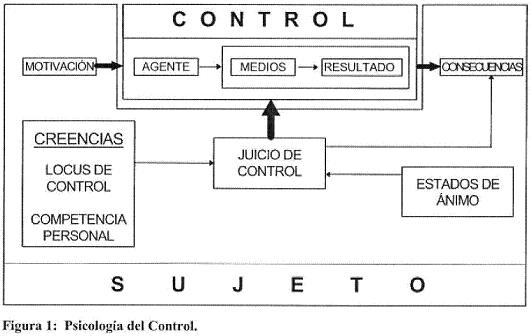
<body><![CDATA[<p class="western" style="margin: 5pt 134.25pt 0.0001pt 27pt; text-align: justify; text-indent: 14.2pt; line-height: 150%;"><span style="font-size: 12pt; line-height: 150%; font-family: Arial;" lang="ES-UY"><o:p>&nbsp;</o:p></span></p>        <p class="western" style="margin: 5pt 134.25pt 0.0001pt 27pt; text-align: justify; text-indent: 14.2pt; line-height: 150%;"><span style="font-size: 12pt; line-height: 150%; font-family: Arial;" lang="ES-UY">Siguiendo esta l&iacute;nea y traslad&aacute;ndola al contexto deportivo, podr&iacute;amos decir que un deportista a trav&eacute;s del control podr&iacute;a evitar la aparici&oacute;n del burnout y de sus consecuencias frente a una competici&oacute;n o evento que por su importancia genere altos niveles de ansiedad y estr&eacute;s. <o:p></o:p></span></p>        <p class="western" style="margin: 5pt 134.25pt 0.0001pt 27pt; text-align: justify; text-indent: 14.2pt; line-height: 150%;"><span style="font-size: 12pt; line-height: 150%; font-family: Arial;" lang="ES-UY"><o:p>&nbsp;</o:p></span></p>        <p class="western" style="margin: 5pt 134.25pt 0.0001pt 27pt; text-align: justify; text-indent: 14.2pt; line-height: 150%;"><span style="font-size: 12pt; line-height: 150%; font-family: Arial;" lang="ES-UY">La <a href="#f1">Figura 1</a>, Esquema de Psicolog&iacute;a del Control, (<a name="Blasco2004."></a><a href="#Blasco">Blasco</a>, 2004) nos presenta el modelo de la Psicolog&iacute;a del Control con los factores que lo integran.</span></p>        <p class="western" style="margin: 5pt 134.25pt 0.0001pt 27pt; text-align: justify; text-indent: 14.2pt; line-height: 150%;"><span style="font-size: 12pt; line-height: 150%; font-family: Arial;" lang="ES-UY"><o:p>&nbsp;</o:p></span></p>        <p class="western" style="margin: 5pt 134.25pt 0.0001pt 27pt; text-align: justify; text-indent: 14.2pt; line-height: 150%;"><span style="font-size: 12pt; line-height: 150%; font-family: Arial;" lang="ES-UY"><o:p>&nbsp;</o:p></span></p>        <p class="western" style="margin: 5pt 134.25pt 0.0001pt 27pt; text-align: justify; text-indent: 14.2pt; line-height: 150%;"><a name="f1"></a><span style="font-size: 12pt; line-height: 150%; font-family: Arial;" lang="ES-UY"><img id="_x0000_i1025" src="../../../../../img/revistas/cp/v3n1/1a03f1.jpg" style="border-style: solid; border-width: 1px; height: 336px; width: 530px;" border="0" height="32" width="32"><o:p></o:p></span></p>        <p class="western" style="margin: 5pt 134.25pt 0.0001pt 27pt; text-align: justify; text-indent: 14.2pt; line-height: 150%;"><span style="font-size: 12pt; line-height: 150%; font-family: Arial;" lang="ES-UY"><o:p>&nbsp;</o:p></span></p>        <p class="western" style="margin: 8.5pt 134.25pt 0.0001pt 27pt; text-align: justify; text-indent: 14.2pt; line-height: 150%;"><span style="font-size: 12pt; line-height: 150%; font-family: Arial;" lang="ES-UY"><o:p>&nbsp;</o:p></span></p>        <p class="western" style="margin: 8.5pt 134.25pt 0.0001pt 27pt; text-align: justify; text-indent: 14.2pt; line-height: 150%;"><span style="font-size: 12pt; line-height: 150%; font-family: Arial;" lang="ES-UY">El esquema de este modelo puede servirnos para comprender por qu&eacute; un individuo experimenta una determinada consecuencia (Burnout), y al mismo tiempo evaluar en qu&eacute; medida el juicio de control puede modular directa o indirectamente el burnout. <o:p></o:p></span></p>        ]]></body>
<body><![CDATA[<p class="western" style="margin: 8.5pt 134.25pt 0.0001pt 27pt; text-align: justify; text-indent: 14.2pt; line-height: 150%;"><span style="font-size: 12pt; line-height: 150%; font-family: Arial;" lang="ES-UY"><o:p>&nbsp;</o:p></span></p>        <p class="western" style="margin: 5pt 134.25pt 0.0001pt 27pt; text-align: justify; text-indent: 14.2pt; line-height: 150%;"><span style="font-size: 12pt; line-height: 150%; font-family: Arial;" lang="ES-UY">El Juicio de Control juega un papel fundamental dentro de este modelo y se refiere a un juicio, opini&oacute;n o dictamen que el sujeto realiza sobre la contingencia entre sus acciones o las de otros (es decir, entre el agente y los medios) y los resultados.<o:p></o:p></span></p>        <p class="western" style="margin: 5pt 134.25pt 0.0001pt 27pt; text-align: justify; text-indent: 14.2pt; line-height: 150%;"><span style="font-size: 12pt; line-height: 150%; font-family: Arial;" lang="ES-UY"><o:p>&nbsp;</o:p></span></p>        <p class="western" style="margin: 5pt 134.25pt 0.0001pt 27pt; text-align: justify; text-indent: 14.2pt; line-height: 150%;"><span style="font-size: 12pt; line-height: 150%; font-family: Arial;" lang="ES-UY">El Juicio de Control puede ser positivo, es decir se percibe control, con lo que hablar&iacute;amos de Control Percibido o Percepci&oacute;n de Control, o puede ser nulo, o lo que es lo mismo: se percibe que no hay control, el individuo cree que un determinado resultado no puede conseguirse porque no existe un agente capaz de desarrollar los medios que dan lugar a dicho resultado (<a name="B&aacute;rez2003."></a><a href="#Barez2">B&aacute;rez, Blasco, Fern&aacute;ndez &ndash; Castro</a>, 2003).<o:p></o:p></span></p>        <p class="western" style="margin: 5pt 134.25pt 0.0001pt 27pt; text-align: justify; text-indent: 14.2pt; line-height: 150%;"><span style="font-size: 12pt; line-height: 150%; font-family: Arial;" lang="ES-UY"><o:p>&nbsp;</o:p></span></p>        <p class="western" style="margin: 5pt 134.25pt 0.0001pt 27pt; text-align: justify; text-indent: 14.2pt; line-height: 150%;"><span style="font-size: 12pt; line-height: 150%; font-family: Arial;" lang="ES-UY">Consideramos importante para clarificar el concepto de Juicio de Control, hacer referencia tambi&eacute;n a uno de sus componentes: la autoeficacia, que indica que el sujeto valora que el agente (&eacute;l mismo), es capaz de desarrollar unos medios, que se presupone que permiten conseguir unos determinados resultados deseados por el individuo.<o:p></o:p></span></p>        <p class="western" style="margin: 5pt 134.25pt 0.0001pt 27pt; text-align: justify; text-indent: 14.2pt; line-height: 150%;"><span style="font-size: 12pt; line-height: 150%; font-family: Arial;" lang="ES-UY"><o:p>&nbsp;</o:p></span></p>        <p class="western" style="margin: 5pt 134.25pt 0.0001pt 27pt; text-align: justify; text-indent: 14.2pt; line-height: 150%;"><span style="font-size: 12pt; line-height: 150%; font-family: Arial;" lang="ES-UY">La autoeficacia es una valoraci&oacute;n de capacidades de ejecuci&oacute;n, es decir una predicci&oacute;n del &eacute;xito conductual, mientras que el juicio de control es una valoraci&oacute;n de contingencias entre conductas y consecuencias (<a name="Bandura1982."></a><a href="#Bandura">Bandura</a>, 1982). <o:p></o:p></span></p>        <p class="western" style="margin: 5pt 134.25pt 0.0001pt 27pt; text-align: justify; text-indent: 14.2pt; line-height: 150%;"><span style="font-size: 12pt; line-height: 150%; font-family: Arial;" lang="ES-UY"><o:p>&nbsp;</o:p></span></p>        <p class="western" style="margin: 5pt 134.25pt 0.0001pt 27pt; text-align: justify; text-indent: 14.2pt; line-height: 150%;"><span style="font-size: 12pt; line-height: 150%; font-family: Arial;" lang="ES-UY">Por tanto, la autoeficacia lleva impl&iacute;cito el control sobre la ejecuci&oacute;n de la conducta, pero no sobre sus consecuencias, mientras que el control percibido o juicio de control incluye tanto el control de est&iacute;mulos consecuentes como el control que ejerce el individuo sobre la ejecuci&oacute;n conductual.<o:p></o:p></span></p>        ]]></body>
<body><![CDATA[<p class="western" style="margin: 5pt 134.25pt 0.0001pt 27pt; text-align: justify; text-indent: 14.2pt; line-height: 150%;"><span style="font-size: 12pt; line-height: 150%; font-family: Arial;" lang="ES-UY"><o:p>&nbsp;</o:p></span></p>        <p class="western" style="margin: 5pt 134.25pt 0.0001pt 27pt; text-align: justify; text-indent: 14.2pt; line-height: 150%;"><span style="font-size: 12pt; line-height: 150%; font-family: Arial;" lang="ES-UY">El individuo con Juicio de control valora que el agente (que puede ser &eacute;l u otra persona), a trav&eacute;s de determinados medios, conseguir&aacute; determinados resultados. La consecuencia de este razonamiento determinar&aacute; lo que realmente haga el sujeto ante una situaci&oacute;n en concreto y la reacci&oacute;n emocional que expresar&aacute;. En general se relaciona el Juicio de Control con la manera de afrontar (<a name="Carveret2000."></a><a href="#Carver">Carver et al</a>., 2000). De esta manera se mantiene la hip&oacute;tesis de que en situaciones percibidas como controlables se pondr&aacute;n en marcha estrategias de afrontamiento activas, que se centrar&aacute;n en el problema. <o:p></o:p></span></p>        <p class="western" style="margin: 5pt 134.25pt 0.0001pt 27pt; text-align: justify; text-indent: 14.2pt; line-height: 150%;"><span style="font-size: 12pt; line-height: 150%; font-family: Arial;" lang="ES-UY"><o:p>&nbsp;</o:p></span></p>        <p class="western" style="margin: 5pt 134.25pt 0.0001pt 27pt; text-align: justify; text-indent: 14.2pt; line-height: 150%;"><span style="font-size: 12pt; line-height: 150%; font-family: Arial;" lang="ES-UY">Seg&uacute;n este esquema el Juicio de Control, en el &aacute;mbito del deporte y del burnout jugar&iacute;a un papel de mediador entre la situaci&oacute;n de estr&eacute;s y el grado de adaptaci&oacute;n a la misma y como consecuencia de esto cabr&iacute;a esperar que los individuos con un Juicio de Control alto obtendr&iacute;an un mayor grado de adaptaci&oacute;n frente al evento estresante.<o:p></o:p></span></p>        <p class="western" style="margin: 5pt 134.25pt 0.0001pt 27pt; text-align: justify; text-indent: 14.2pt; line-height: 150%;"><span style="font-size: 12pt; line-height: 150%; font-family: Arial;" lang="ES-UY"><o:p>&nbsp;</o:p></span></p>        <p class="western" style="margin: 5pt 134.25pt 0.0001pt 27pt; text-align: justify; text-indent: 14.2pt; line-height: 150%;"><span style="font-size: 12pt; line-height: 150%; font-family: Arial;" lang="ES-UY">Para que el Juicio de Control pueda ser considerado certero y pueda cumplir esta funci&oacute;n de modulador del burnout es necesario que las situaciones que se les presenten a los deportistas sean consideradas motivantes por &eacute;stos. Si el acontecimiento al que se enfrenta el atleta no le resulta interesante y estimulante, &eacute;ste no pondr&aacute; en marcha ninguna estrategia ni acci&oacute;n con el fin de ejercer control de la situaci&oacute;n. <o:p></o:p></span></p>        <p class="western" style="margin: 5pt 134.25pt 0.0001pt 27pt; text-align: justify; text-indent: 14.2pt; line-height: 150%;"><span style="font-size: 12pt; line-height: 150%; font-family: Arial;" lang="ES-UY"><o:p>&nbsp;</o:p></span></p>        <p class="western" style="margin: 5pt 134.25pt 0.0001pt 27pt; text-align: justify; text-indent: 14.2pt; line-height: 150%;"><span style="font-size: 12pt; line-height: 150%; font-family: Arial;" lang="ES-UY">Por tanto para poder evaluar el Juicio de Control y la relaci&oacute;n que &eacute;ste podr&iacute;a tener con el burnout es que tomaremos en cuenta las variables predictoras del burnout en deportistas (<a name="Garc&eacute;sdelosFayos2004."></a><a href="#Garces2">Garc&eacute;s de los Fayos</a>, 2004), quitando alguna de ellas por considerar que eran reiterativas, resultando de tal modificaci&oacute;n 10 variables (de 12 iniciales) consideradas predictoras. Estas variables cumplir&iacute;an la condici&oacute;n &ndash;antes se&ntilde;alada&ndash; de implicar motivacionalmente a los individuos y son las siguientes:</span></p>        <p class="western" style="margin: 5pt 134.25pt 0.0001pt 27pt; text-align: justify; text-indent: 14.2pt; line-height: 150%;"><span style="font-size: 12pt; line-height: 150%; font-family: Arial;" lang="ES-UY"><o:p>&nbsp;</o:p></span></p>        <p class="western" style="margin: 5pt 134.25pt 0.0001pt 27pt; text-align: justify; line-height: 150%;"><span style="font-size: 12pt; line-height: 150%; font-family: Arial;" lang="ES-UY">&bull; Dificultades que el deportista encuentra con el entrenador<o:p></o:p></span></p>        ]]></body>
<body><![CDATA[<p class="western" style="margin: 5pt 134.25pt 0.0001pt 27pt; text-align: justify; line-height: 150%;"><span style="font-size: 12pt; line-height: 150%; font-family: Arial;" lang="ES-UY">&bull; Demandas competitivas y de tiempo<o:p></o:p></span></p>        <p class="western" style="margin: 5pt 134.25pt 0.0001pt 27pt; text-align: justify; line-height: 150%;"><span style="font-size: 12pt; line-height: 150%; font-family: Arial;" lang="ES-UY">&bull; Sentimiento de estar apartado<o:p></o:p></span></p>        <p class="western" style="margin: 5pt 134.25pt 0.0001pt 27pt; text-align: justify; line-height: 150%;"><span style="font-size: 12pt; line-height: 150%; font-family: Arial;" lang="ES-UY">&bull; Carencia de refuerzos positivos<o:p></o:p></span></p>        <p class="western" style="margin: 5pt 134.25pt 0.0001pt 27pt; text-align: justify; line-height: 150%;"><span style="font-size: 12pt; line-height: 150%; font-family: Arial;" lang="ES-UY">&bull; Aburrimiento<o:p></o:p></span></p>        <p class="western" style="margin: 5pt 134.25pt 0.0001pt 27pt; text-align: justify; line-height: 150%;"><span style="font-size: 12pt; line-height: 150%; font-family: Arial;" lang="ES-UY">&bull; Falta de habilidades<o:p></o:p></span></p>        <p class="western" style="margin: 5pt 134.25pt 0.0001pt 27pt; text-align: justify; line-height: 150%;"><span style="font-size: 12pt; line-height: 150%; font-family: Arial;" lang="ES-UY">&bull; Estrategias de afrontamiento negativas<o:p></o:p></span></p>        <p class="western" style="margin: 5pt 134.25pt 0.0001pt 27pt; text-align: justify; line-height: 150%;"><span style="font-size: 12pt; line-height: 150%; font-family: Arial;" lang="ES-UY">&bull; Falta de apoyo<o:p></o:p></span></p>        <p class="western" style="margin: 5pt 134.25pt 0.0001pt 27pt; text-align: justify; line-height: 150%;"><span style="font-size: 12pt; line-height: 150%; font-family: Arial;" lang="ES-UY">&bull; Intereses mercenarios de los padres<o:p></o:p></span></p>        <p class="western" style="margin: 5pt 134.25pt 0.0001pt 27pt; text-align: justify; line-height: 150%;"><span style="font-size: 12pt; line-height: 150%; font-family: Arial;" lang="ES-UY">&bull; Estilo de vida externo<o:p></o:p></span></p>        <p class="western" style="margin: 5pt 134.25pt 0.0001pt 27pt; text-align: justify; line-height: 150%;"><span style="font-size: 12pt; line-height: 150%; font-family: Arial;" lang="ES-UY"><o:p>&nbsp;</o:p></span></p>        ]]></body>
<body><![CDATA[<p class="western" style="margin: 5.65pt 134.25pt 0.0001pt 27pt; text-align: justify; text-indent: 14.2pt; line-height: 150%;"><span style="font-size: 12pt; line-height: 150%; font-family: Arial;" lang="ES-UY">Para la evaluaci&oacute;n del burnout, la mayor&iacute;a de los autores utilizan el Maslach Burnout Inventory: MBI (<a href="#Maslach1">Maslach y Jackson</a>, 1981). Son numerosas las investigaciones que apoyan la validez, fiabilidad y estructura factorial del MBI, consolid&aacute;ndose como el instrumento de elecci&oacute;n para las distintas investigaciones que procuran profundizar en este s&iacute;ndrome. Autores como Cherniss (1992), <a name="Leiter1991."></a><a href="#Leiter">Leiter</a> (1991), <a name="Golembiewski1993.."></a><a href="#Golembiewski">Golembiewski</a> (1993) y otros no s&oacute;lo aceptan la fiabilidad y validez del MBI, sino que tambi&eacute;n concluyen que la estructura factorial queda confirmada. <o:p></o:p></span></p>        <p class="western" style="margin: 5pt 134.25pt 0.0001pt 27pt; text-align: justify; text-indent: 14.2pt; line-height: 150%;"><span style="font-size: 12pt; line-height: 150%; font-family: Arial;" lang="ES-UY">El MBI es un inventario de 22 &iacute;tems que se divide en tres subescalas, cada una de las cuales eval&uacute;a las tres dimensiones que supuestamente configuran el constructo burnout: Agotamiento Emocional (9 &iacute;tems), Despersonalizaci&oacute;n (5 &iacute;tems) y Reducida Realizaci&oacute;n Personal (8 &iacute;tems). De cada una de estas escalas se obtiene una puntuaci&oacute;n baja, media o alta (que coincide con los tres tercios en los que se distribuye la poblaci&oacute;n normativa) que permite caracterizar la mayor o menor frecuencia del burnout.<o:p></o:p></span></p>        <p class="western" style="margin: 5pt 134.25pt 0.0001pt 27pt; text-align: justify; text-indent: 14.2pt; line-height: 150%;"><span style="font-size: 12pt; line-height: 150%; font-family: Arial;" lang="ES-UY">Para nuestro estudio concretamente, nos vamos a referir al Inventario de Burnout en Deportistas (IBD) que (1999) adapta a partir de una modificaci&oacute;n de la estructura te&oacute;rica del Maslach Burnout Inventory (<a name="Maslach1981."></a><a href="#Maslach1">Maslach y Jackson</a>, 1981), partiendo de un inventario con 22 &iacute;tems a los que la persona debe responder mediante una puntuaci&oacute;n de frecuencia seg&uacute;n una escala Likert de cinco opciones. <o:p></o:p></span></p>        <p class="western" style="margin: 5pt 134.25pt 0.0001pt 27pt; text-align: justify; text-indent: 14.2pt; line-height: 150%;"><span style="font-size: 12pt; line-height: 150%; font-family: Arial;" lang="ES-UY"><a name="Garc&eacute;s2004."></a><a href="#Garces2">Garc&eacute;s de los Fayos</a> (2004) comprob&oacute; que, debido a que la forma de agruparse de los &iacute;tems, se confirma el mantenimiento de los principios te&oacute;ricos y emp&iacute;ricos de <a href="#Maslach1">Maslach y Jackson</a> (1981) para la creaci&oacute;n y desarrollo del Inventario de Burnout en Deportistas, como un instrumento adecuado para medir burnout en esta poblaci&oacute;n.<o:p></o:p></span></p>        <p class="western" style="margin: 5pt 134.25pt 0.0001pt 27pt; text-align: justify; text-indent: 14.2pt; line-height: 150%;"><span style="font-size: 12pt; line-height: 150%; font-family: Arial;" lang="ES-UY">La fiabilidad del IBD (<a name="Garc&eacute;s1999."></a><a href="#Garces1">Garc&eacute;s de los Fayos</a>, 1999) medida mediante el coeficiente alfa es de 0.65. En cuanto a su validez factorial y consistencia interna, queda demostrada en Garc&eacute;s de los Fayos, Garc&iacute;a y Mart&iacute;nez (1998).<o:p></o:p></span></p>        <p class="western" style="margin: 2.85pt 134.25pt 0.0001pt 27pt; text-align: justify; text-indent: 14.2pt; line-height: 150%;"><span style="font-size: 12pt; line-height: 150%; font-family: Arial;" lang="ES-UY"><o:p>&nbsp;</o:p></span></p>        <p class="western" style="margin: 2.85pt 134.25pt 0.0001pt 27pt; text-align: justify; text-indent: 14.2pt; line-height: 150%;"><span style="font-size: 12pt; line-height: 150%; font-family: Arial;" lang="ES-UY">Garc&iacute;a Ucha (2002), utiliz&oacute; el IBD, con deportistas cubanos, confirmando la fiabilidad y validez de esta herramienta. <o:p></o:p></span></p>        <p class="western" style="margin: 5pt 134.25pt 0.0001pt 27pt; text-align: justify; text-indent: 14.2pt; line-height: 150%;"><span style="font-size: 12pt; line-height: 150%; font-family: Arial;" lang="ES-UY">Un deportista padece burnout cuando sus puntuaciones se sit&uacute;an en Agotamiento Emocional y Despersonalizaci&oacute;n a partir del percentil 66 y por debajo del percentil 33 en Reducida Realizaci&oacute;n Personal, que se corresponden con las calificaciones de burnout severo de <a href="#Maslach1">Maslach y Jackson</a> (1981). Puntuaciones en Agotamiento Emocional y Despersonalizaci&oacute;n por debajo del percentil 33, y por encima del percentil 66 en Reducida Realizaci&oacute;n Personal fueron consideradas como representativas de deportistas sin burnout (<a href="#Garces2">Garc&eacute;s de los Fayos</a>, 2004), dejando el resto de las puntuaciones en una zona ambigua que no permite hacer predicciones claras sobre c&oacute;mo evolucionar&aacute;n los atletas. <o:p></o:p></span></p>        <p class="western" style="margin: 5pt 134.25pt 0.0001pt 27pt; text-align: justify; text-indent: 14.2pt; line-height: 150%;"><span style="font-size: 12pt; line-height: 150%; font-family: Arial;" lang="ES-UY">Creemos entonces que tomando en cuenta las variables predictoras, que son elementos clave para un deportista de elite y por tanto consideradas importantes para &eacute;l, podr&iacute;amos llegar a estimar una posible relaci&oacute;n entre el Juicio de Control, el Compromiso Deportivo y el Burnout evaluado a partir del IBD, en la cual dependiendo del control que una persona crea tener frente a situaciones ambiguas, dif&iacute;ciles o novedosas tendr&aacute; as&iacute;, mayor o menor posibilidad de que aparezca el s&iacute;ndrome (Garc&iacute;a Ucha, 2002)<o:p></o:p></span></p>        <p class="western" style="margin: 5pt 134.25pt 0.0001pt 27pt; text-align: justify; line-height: 150%;"><span style="font-size: 12pt; line-height: 150%; font-family: Arial;" lang="ES-UY"><o:p>&nbsp;</o:p></span></p>        ]]></body>
<body><![CDATA[<p class="western" style="margin: 5pt 134.25pt 0.0001pt 27pt; text-align: center; line-height: 150%;" align="center"><b><span style="font-size: 12pt; line-height: 150%; font-family: Arial;" lang="ES-UY">M&Eacute;TODO</span></b><span style="font-size: 12pt; line-height: 150%; font-family: Arial;" lang="ES-UY"><o:p></o:p></span></p>        <p class="western" style="margin: 5pt 134.25pt 0.0001pt 27pt; text-align: justify; line-height: 150%;"><span style="font-size: 12pt; line-height: 150%; font-family: Arial;" lang="ES-UY"><o:p>&nbsp;</o:p></span></p>        <p class="western" style="margin: 5pt 134.25pt 0.0001pt 27pt; text-align: justify; line-height: 150%;"><b><span style="font-size: 12pt; line-height: 150%; font-family: Arial;" lang="ES-UY">PARTICIPANTES</span></b></p>        <p class="western" style="margin: 5pt 134.25pt 0.0001pt 27pt; text-align: justify; line-height: 150%;"><span style="font-size: 12pt; line-height: 150%; font-family: Arial;" lang="ES-UY"><o:p>&nbsp;</o:p></span></p>        <p class="western" style="margin: 5pt 134.25pt 0.0001pt 27pt; text-align: justify; text-indent: 14.2pt; line-height: 150%;"><span style="font-size: 12pt; line-height: 150%; font-family: Arial;" lang="ES-UY">Este estudio cuenta con dos muestras distintas de mujeres deportistas de Alto Rendimiento. La muestra 1 corresponde a diez deportistas que integran un equipo de b&aacute;sket profesional de la Liga Femenina de B&aacute;squet Espa&ntilde;ola, de edades comprendidas entre los 18 y 33 a&ntilde;os. La muestra 2 abarca trece deportistas que integran el Seleccionado Nacional de Hockey sobre C&eacute;sped de Uruguay. Las edades de estas participantes comprenden entre los 18 y 32 a&ntilde;os.<o:p></o:p></span></p>        <p class="western" style="margin: 5pt 134.25pt 0.0001pt 27pt; text-align: justify; text-indent: 14.2pt; line-height: 150%;"><span style="font-size: 12pt; line-height: 150%; font-family: Arial;" lang="ES-UY">La actividad semanal promedio para ambos grupos es de 20 horas de entrenamiento y dos horas de partido.<o:p></o:p></span></p>        <p class="western" style="margin: 5pt 134.25pt 0.0001pt 27pt; text-align: justify; text-indent: 14.2pt; line-height: 150%;"><span style="font-size: 12pt; line-height: 150%; font-family: Arial;" lang="ES-UY"><o:p>&nbsp;</o:p></span></p>        <p class="western" style="margin: 5pt 134.25pt 0.0001pt 27pt; text-align: justify; line-height: 150%;"><b><span style="font-size: 12pt; line-height: 150%; font-family: Arial;" lang="ES-UY">MATERIALES</span></b></p>        <p class="western" style="margin: 5pt 134.25pt 0.0001pt 27pt; text-align: justify; line-height: 150%;"><span style="font-size: 12pt; line-height: 150%; font-family: Arial;" lang="ES-UY"><o:p>&nbsp;</o:p></span></p>        <p class="western" style="margin: 5pt 134.25pt 0.0001pt 27pt; text-align: justify; text-indent: 14.2pt; line-height: 150%;"><span style="font-size: 12pt; line-height: 150%; font-family: Arial;" lang="ES-UY">Se utilizaron tres escalas para obtener la informaci&oacute;n requerida acorde con los objetivos propuestos.<o:p></o:p></span></p>        ]]></body>
<body><![CDATA[<p class="western" style="margin: 2.85pt 134.25pt 0.0001pt 27pt; text-align: justify; text-indent: 14.2pt; line-height: 150%;"><span style="font-size: 12pt; line-height: 150%; font-family: Arial;" lang="ES-UY"><o:p>&nbsp;</o:p></span></p>        <p class="western" style="margin: 2.85pt 134.25pt 0.0001pt 27pt; text-align: justify; text-indent: 14.2pt; line-height: 150%;"><span style="font-size: 12pt; line-height: 150%; font-family: Arial;" lang="ES-UY">1-Inventario de Burnout para Deportistas (IBD): Adaptaci&oacute;n realizada por <a href="#Garces1">Garc&eacute;s de los Fayos</a> (1999) del Maslach Burnout Inventory (<a href="#Maslach1">Maslach y Jackson</a>, 1981). <o:p></o:p></span></p>        <p class="western" style="margin: 2.85pt 134.25pt 0.0001pt 27pt; text-align: justify; text-indent: 14.2pt; line-height: 150%;"><span style="font-size: 12pt; line-height: 150%; font-family: Arial;" lang="ES-UY"><o:p>&nbsp;</o:p></span></p>        <p class="western" style="margin: 2.85pt 134.25pt 0.0001pt 27pt; text-align: justify; text-indent: 14.2pt; line-height: 150%;"><span style="font-size: 12pt; line-height: 150%; font-family: Arial;" lang="ES-UY">Dicho cuestionario consta de 30 &iacute;tems, que se subdividen en tres dimensiones: Agotamiento Emocional, Despersonalizaci&oacute;n y Reducida Realizaci&oacute;n Personal. Se utiliza una escala del tipo Likert que va del 1 &ldquo;nunca lo he pensado o sentido&rdquo; a 5 &ldquo;lo pienso o siento todos los d&iacute;as&rdquo;. La interpretaci&oacute;n de las puntuaciones de la escala se realiza a partir de los percentiles establecidos: un deportista padece burnout cuando sus puntuaciones se sit&uacute;an en Agotamiento Emocional y Despersonalizaci&oacute;n a partir del percentil 66 y por debajo del percentil 33 en Reducida Realizaci&oacute;n Personal, que se corresponden con las calificaciones de burnout severo de <a href="#Maslach1">Maslach y Jackson</a> (1981). Puntuaciones en Agotamiento Emocional y Despersonalizaci&oacute;n por debajo del percentil 33, y por encima del percentil 66 en Reducida Realizaci&oacute;n Personal fueron consideradas como representativas de deportistas sin burnout (<a href="#Garces2">Garc&eacute;s de los Fayos</a>, 2004), dejando el resto de las puntuaciones en una zona ambigua que no permite hacer predicciones claras sobre c&oacute;mo evolucionar&aacute;n los atletas.<o:p></o:p></span></p>        <p class="western" style="margin: 2.85pt 134.25pt 0.0001pt 27pt; text-align: justify; text-indent: 14.2pt; line-height: 150%;"><span style="font-size: 12pt; line-height: 150%; font-family: Arial;" lang="ES-UY"><o:p>&nbsp;</o:p></span></p>        <p class="western" style="margin: 2.85pt 134.25pt 0.0001pt 27pt; text-align: justify; text-indent: 14.2pt; line-height: 150%;"><span style="font-size: 12pt; line-height: 150%; font-family: Arial;" lang="ES-UY">2-Escalas an&aacute;logo visuales de Juicio de Control: Diez &iacute;tems que eval&uacute;an la percepci&oacute;n de control que el sujeto tiene frente a distintas situaciones a las que se tiene que enfrentar en el contexto deportivo. Se contesta a trav&eacute;s de escalas que van del 0 &ldquo;poco capaz&rdquo; al 100 &ldquo;muy capaz&rdquo;. Estos &iacute;tems se han elaborado para esta investigaci&oacute;n a partir de la experiencia obtenida en un trabajo anterior (<a name="Tutte2005."></a><a href="#Tutte">Tutte</a>, 2005). No existe baremaci&oacute;n para los juicios y por tanto hemos creado tres niveles para comprender si existe un adecuado, bajo o alto nivel de control. Para ellos tomamos como referente los estudios realizados por el GIES (Grupo de Investigaci&oacute;n en Estr&eacute;s y Salud) y que hemos aplicado tambi&eacute;n en un trabajo anterior (<a href="#Tutte">Tutte</a>, 2005). Estos criterios que propon&iacute;an un valor entre 60 y 70 como adecuado, &gt;70 como un valor alto de control y &lt; de 60 como un valor bajo de control.<o:p></o:p></span></p>        <p class="western" style="margin: 2.85pt 134.25pt 0.0001pt 27pt; text-align: justify; text-indent: 14.2pt; line-height: 150%;"><span style="font-size: 12pt; line-height: 150%; font-family: Arial;" lang="ES-UY"><o:p>&nbsp;</o:p></span></p>        <p class="western" style="margin: 2.85pt 134.25pt 0.0001pt 27pt; text-align: justify; text-indent: 14.2pt; line-height: 150%;"><span style="font-size: 12pt; line-height: 150%; font-family: Arial;" lang="ES-UY">3-Cuestionario de Compromiso Deportivo (SCQ): Utilizaremos la versi&oacute;n traducida al castellano (<a name="SousaTorregrosaViladrich2007"></a><a href="#Sousa2">Sousa, Torregrosa, Viladrich, Villamar&iacute;n, Cruz</a>, 2007) del Sport Commitment Questionnaire (<a href="#Scanlan5">Scanlan, Carpenter, Schmidt, Simons, Keeler</a>, 1993). Dicho cuestionario consta de 32 &iacute;tems, que se subdividen en 7 dimensiones distintas (<a href="#Scanlan5">Scanlan et al.</a>,1993). Cada &iacute;tem se contesta en una escala del tipo Likert del 1 al 5, que fluct&uacute;a desde la valoraci&oacute;n &ldquo;muy en desacuerdo&rdquo; hasta &ldquo;muy de acuerdo&rdquo;. <o:p></o:p></span></p>        <p class="western" style="margin: 2.85pt 134.25pt 0.0001pt 27pt; text-align: justify; text-indent: 14.2pt; line-height: 150%;"><span style="font-size: 12pt; line-height: 150%; font-family: Arial;" lang="ES-UY"><o:p>&nbsp;</o:p></span></p>        <p class="western" style="margin: 2.85pt 134.25pt 0.0001pt 27pt; text-align: justify; text-indent: 14.2pt; line-height: 150%;"><span style="font-size: 12pt; line-height: 150%; font-family: Arial;" lang="ES-UY">La fiabilidad de cada una de estas dimensiones es de alfa = .76 para compromiso deportivo, alfa = .88 en diversi&oacute;n deportiva. Alfa = .66 en alternativas a la implicaci&oacute;n, alfa = .41 en inversiones personales, alfa =.80 en coacciones sociales y alfa = .52 en oportunidades a la implicaci&oacute;n, aludiendo a una adecuada consistencia interna en tres de las seis dimensiones: compromiso, diversi&oacute;n, coacciones sociales y alternativas a la implicaci&oacute;n que fue considerada aceptable aunque marginal (<a href="#Sousa2">Sousa, Torregrosa, Viladrich, Villamar&iacute;n y Cruz</a>, 2007). <o:p></o:p></span></p>        ]]></body>
<body><![CDATA[<p class="western" style="margin: 5pt 134.25pt 0.0001pt 27pt; text-align: justify; line-height: 150%;"><span style="font-size: 12pt; line-height: 150%; font-family: Arial;" lang="ES-UY"><o:p>&nbsp;</o:p></span></p>        <p class="western" style="margin: 5pt 134.25pt 0.0001pt 27pt; text-align: justify; line-height: 150%;"><b><span style="font-size: 12pt; line-height: 150%; font-family: Arial;" lang="ES-UY">PROCEDIMIENTO</span></b></p>        <p class="western" style="margin: 5pt 134.25pt 0.0001pt 27pt; text-align: justify; line-height: 150%;"><span style="font-size: 12pt; line-height: 150%; font-family: Arial;" lang="ES-UY"><o:p>&nbsp;</o:p></span></p>        <p class="western" style="margin: 5pt 134.25pt 0.0001pt 27pt; text-align: justify; text-indent: 14.2pt; line-height: 150%;"><span style="font-size: 12pt; line-height: 150%; font-family: Arial;" lang="ES-UY">Esta investigaci&oacute;n se desarroll&oacute; para cada uno de los equipos en per&iacute;odos diferentes, tomando en cuenta el comienzo de la temporada deportiva.<o:p></o:p></span></p>        <p class="western" style="margin: 5pt 134.25pt 0.0001pt 27pt; text-align: justify; text-indent: 14.2pt; line-height: 150%;"><span style="font-size: 12pt; line-height: 150%; font-family: Arial;" lang="ES-UY">En Octubre del 2004 nos pusimos en contacto con un club profesional de b&aacute;sket femenino de la Liga Espa&ntilde;ola de B&aacute;sket, a quien le presentamos nuestro trabajo.<o:p></o:p></span></p>        <p class="western" style="margin: 2.85pt 134.25pt 0.0001pt 27pt; text-align: justify; text-indent: 14.2pt; line-height: 150%;"><span style="font-size: 12pt; line-height: 150%; font-family: Arial;" lang="ES-UY"><o:p>&nbsp;</o:p></span></p>        <p class="western" style="margin: 2.85pt 134.25pt 0.0001pt 27pt; text-align: justify; text-indent: 14.2pt; line-height: 150%;"><span style="font-size: 12pt; line-height: 150%; font-family: Arial;" lang="ES-UY">Las jugadoras decidieron colaborar firmando un consentimiento en donde aceptaban participar de esta investigaci&oacute;n. Al tratarse de un estudio longitudinal se paut&oacute; con las deportistas dos instancias distintas para poder administrar las t&eacute;cnicas, un per&iacute;odo inicial a comienzo de temporada (noviembre y diciembre de 2004) y un segundo per&iacute;odo al cabo de tres meses (febrero y marzo de 2005).<o:p></o:p></span></p>        <p class="western" style="margin: 2.85pt 134.25pt 0.0001pt 27pt; text-align: justify; text-indent: 14.2pt; line-height: 150%;"><span style="font-size: 12pt; line-height: 150%; font-family: Arial;" lang="ES-UY"><o:p>&nbsp;</o:p></span></p>        <p class="western" style="margin: 5pt 134.25pt 0.0001pt 27pt; text-align: justify; text-indent: 14.2pt; line-height: 150%;"><span style="font-size: 12pt; line-height: 150%; font-family: Arial;" lang="ES-UY">Mientras que con nuestra segunda muestra nos contactamos en diciembre de 2006 y luego de informar las caracter&iacute;sticas del trabajo al cuerpo t&eacute;cnico y las jugadoras, integrantes de un seleccionado nacional de Hockey sobre C&eacute;sped, ellas tambi&eacute;n aceptaron ser parte de este trabajo.<o:p></o:p></span></p>        <p class="western" style="margin: 5pt 134.25pt 0.0001pt 27pt; text-align: justify; text-indent: 14.2pt; line-height: 150%;"><span style="font-size: 12pt; line-height: 150%; font-family: Arial;" lang="ES-UY"><o:p>&nbsp;</o:p></span></p>        ]]></body>
<body><![CDATA[<p class="western" style="margin: 5pt 134.25pt 0.0001pt 27pt; text-align: justify; text-indent: 14.2pt; line-height: 150%;"><span style="font-size: 12pt; line-height: 150%; font-family: Arial;" lang="ES-UY">En este sentido, se elabor&oacute; un calendario respetando las caracter&iacute;sticas del procedimiento que antes hab&iacute;amos realizado con el equipo espa&ntilde;ol. Se llev&oacute; a cabo una primera administraci&oacute;n a comienzos de la temporada (febrero de 2007) y una segunda instancia tres meses m&aacute;s tarde, a finales de temporada (mayo de 2007).<o:p></o:p></span></p>        <p class="western" style="margin: 5pt 134.25pt 0.0001pt 27pt; text-align: justify; text-indent: 14.2pt; line-height: 150%;"><span style="font-size: 12pt; line-height: 150%; font-family: Arial;" lang="ES-UY">Una vez obtenida la informaci&oacute;n a partir de las t&eacute;cnicas empleadas es que procedimos a la correcci&oacute;n y al an&aacute;lisis de dichos datos. <o:p></o:p></span></p>        <p class="western" style="margin: 5pt 134.25pt 0.0001pt 27pt; text-align: justify; text-indent: 14.2pt; line-height: 150%;"><span style="font-size: 12pt; line-height: 150%; font-family: Arial;" lang="ES-UY"><o:p>&nbsp;</o:p></span></p>        <p class="western" style="margin: 5pt 134.25pt 0.0001pt 27pt; text-align: justify; line-height: 150%;"><b><span style="font-size: 12pt; line-height: 150%; font-family: Arial;" lang="ES-UY">DISE&Ntilde;O</span></b></p>        <p class="western" style="margin: 5pt 134.25pt 0.0001pt 27pt; text-align: justify; line-height: 150%;"><span style="font-size: 12pt; line-height: 150%; font-family: Arial;" lang="ES-UY"><o:p>&nbsp;</o:p></span></p>        <p class="western" style="margin: 5.65pt 134.25pt 0.0001pt 27pt; text-align: justify; text-indent: 14.2pt; line-height: 150%;"><span style="font-size: 12pt; line-height: 150%; font-family: Arial;" lang="ES-UY">Este estudio responde a un dise&ntilde;o no experimental, descriptivo, longitudinal, de grupos comparativos.<o:p></o:p></span></p>        <p class="western" style="margin: 5pt 134.25pt 0.0001pt 27pt; text-align: justify; line-height: 150%;"><span style="font-size: 12pt; line-height: 150%; font-family: Arial;" lang="ES-UY"><o:p>&nbsp;</o:p></span></p>        <p class="western" style="margin: 5pt 134.25pt 0.0001pt 27pt; text-align: justify; line-height: 150%;"><span style="font-size: 12pt; line-height: 150%; font-family: Arial;" lang="ES-UY"><o:p>&nbsp;</o:p></span></p>        <p class="western" style="margin: 5pt 134.25pt 0.0001pt 27pt; text-align: justify; line-height: 150%;"><b><span style="font-size: 12pt; line-height: 150%; font-family: Arial;" lang="ES-UY">AN&Aacute;LISIS DE RESULTADOS</span></b></p>        <p class="western" style="margin: 5pt 134.25pt 0.0001pt 27pt; text-align: justify; line-height: 150%;"><span style="font-size: 12pt; line-height: 150%; font-family: Arial;" lang="ES-UY"><o:p>&nbsp;</o:p></span></p>        ]]></body>
<body><![CDATA[<p class="western" style="margin: 5pt 134.25pt 0.0001pt 27pt; text-align: justify; text-indent: 14.2pt; line-height: 150%;"><span style="font-size: 12pt; line-height: 150%; font-family: Arial;" lang="ES-UY">Para poder analizar s&iacute; existen diferencias a lo largo del tiempo dentro de cada deporte y entre los mismos, es que procedimos a realizar un an&aacute;lisis de la varianza de medidas repetidas (MANOVA), (Pardo, Ruiz-D&iacute;az, 2002), 2inter (deportes: B&aacute;sket y Hockey) x 2 intra (tiempo: inicio-final). En el caso de la variable dependiente Burnout, se utiliz&oacute; tablas de contingencia y Chi cuadrado para poder analizar si exist&iacute;an o no diferencias significativas entre el inicio y el final de la temporada.<o:p></o:p></span></p>        <p class="western" style="margin: 5pt 134.25pt 0.0001pt 27pt; line-height: 150%;"><b><span style="font-size: 12pt; line-height: 150%; font-family: Arial;" lang="ES-UY"><o:p>&nbsp;</o:p></span></b></p>        <p class="western" style="margin: 5pt 134.25pt 0.0001pt 27pt; line-height: 150%;"><b><span style="font-size: 12pt; line-height: 150%; font-family: Arial;" lang="ES-UY"><o:p>&nbsp;</o:p></span></b></p>        <p class="western" style="margin: 5pt 134.25pt 0.0001pt 27pt; line-height: 150%;"><b><span style="font-size: 12pt; line-height: 150%; font-family: Arial;" lang="ES-UY">RESULTADOS</span></b></p>        <p class="western" style="margin: 5pt 134.25pt 0.0001pt 27pt; line-height: 150%;"><span style="font-size: 12pt; line-height: 150%; font-family: Arial;" lang="ES-UY"><o:p>&nbsp;</o:p></span></p>        <p class="western" style="margin: 2.85pt 134.25pt 0.0001pt 27pt; text-align: justify; text-indent: 14.2pt; line-height: 150%;"><span style="font-size: 12pt; line-height: 150%; font-family: Arial;" lang="ES-UY">Los resultados indican que en el inicio de la temporada deportiva, la gran mayor&iacute;a de los JC han obtenido puntuaciones adecuadas (&gt; de 70 puntos, y &lt;40 para el JC1) en ambos deportes a excepci&oacute;n de JC1 &ldquo;relaci&oacute;n con el entrenador&rdquo; para las balocentistas que presentan puntuaciones ligeramente m&aacute;s elevadas a lo esperado, indicando una menor capacidad para manejar la influencia negativa que el entrenador puede ejercer sobre su rendimiento deportivo, mientras que no sucede lo mismo con las jugadoras de Hockey, pues se encuentran dentro del l&iacute;mite adecuado. Lo mismo ocurre con el JC4 &ldquo;Aislamiento&rdquo; y en el JC5 &ldquo;Carencia de reforzamientos&rdquo; que presenta descendidas puntuaciones (&lt;60) en ambos deportes. <o:p></o:p></span></p>        <p class="western" style="margin: 2.85pt 134.25pt 0.0001pt 27pt; text-align: justify; text-indent: 14.2pt; line-height: 150%;"><span style="font-size: 12pt; line-height: 150%; font-family: Arial;" lang="ES-UY"><o:p>&nbsp;</o:p></span></p>        <p class="western" style="margin: 0.85pt 134.25pt 0.0001pt 27pt; text-align: justify; text-indent: 14.2pt; line-height: 150%;"><span style="font-size: 12pt; line-height: 150%; font-family: Arial;" lang="ES-UY">El JC10 &ldquo;Estilo de vida externo&rdquo; presenta elevadas puntuaciones en ambos deportes, sin embargo son las jugadores de b&aacute;sket (M= 93,62; DS=5,25) las que presentan una puntuaci&oacute;n m&aacute;s elevada y significativa.<o:p></o:p></span></p>        <p class="western" style="margin: 5pt 134.25pt 0.0001pt 27pt; text-align: justify; text-indent: 14.2pt; line-height: 150%;"><span style="font-size: 12pt; line-height: 150%; font-family: Arial;" lang="ES-UY"><o:p>&nbsp;</o:p></span></p>        <p class="western" style="margin: 5pt 134.25pt 0.0001pt 27pt; text-align: justify; text-indent: 14.2pt; line-height: 150%;"><span style="font-size: 12pt; line-height: 150%; font-family: Arial;" lang="ES-UY">El an&aacute;lisis de la varianza de medidas repetidas (MANOVA), fue significativo para el JC3 &ldquo;Aburrimiento&rdquo; que presenta diferencias en los resultados a partir de la interacci&oacute;n del tiempo y el deporte. <o:p></o:p></span></p>        ]]></body>
<body><![CDATA[<p class="western" style="margin: 5pt 134.25pt 0.0001pt 27pt; text-align: justify; text-indent: 14.2pt; line-height: 150%;"><span style="font-size: 12pt; line-height: 150%; font-family: Arial;" lang="ES-UY"><o:p>&nbsp;</o:p></span></p>        <p class="western" style="margin: 5pt 134.25pt 0.0001pt 27pt; text-align: justify; text-indent: 14.2pt; line-height: 150%;"><span style="font-size: 12pt; line-height: 150%; font-family: Arial;" lang="ES-UY">El valor de Lambda de Wilks=.816 F (Sig=.036) revela que el efecto del tiempo y el deporte obtienen niveles cr&iacute;ticos por debajo de 0.05 por lo que puede concluirse que existe un efecto significativo de la interacci&oacute;n, siendo que en el inicio (pre) de la temporada no exist&iacute;an diferencias estad&iacute;sticamente significativas entre el b&aacute;sket y el hockey, mientras que s&iacute; se presentan diferencias en el final (post) de la misma, obteniendo las balocentistas puntuaciones menores en relaci&oacute;n a las jugadoras de hockey. <o:p></o:p></span></p>        <p class="western" style="margin: 5pt 134.25pt 0.0001pt 27pt; text-align: justify; text-indent: 14.2pt; line-height: 150%;"><span style="font-size: 12pt; line-height: 150%; font-family: Arial;" lang="ES-UY"><o:p>&nbsp;</o:p></span></p>        <p class="western" style="margin: 2.85pt 134.25pt 0.0001pt 27pt; text-align: justify; text-indent: 14.2pt; line-height: 150%;"><span style="font-size: 12pt; line-height: 150%; font-family: Arial;" lang="ES-UY">En el JC10 &ldquo;Estilo de vida externo&rdquo; tambi&eacute;n aparecen diferencias estad&iacute;sticamente significativas que revelan los efectos de la interacci&oacute;n del tiempo y el deporte, a partir del valor Lambda de Wilks=.824 F (Sig=.041; p&lt;.05). Al inicio encontramos diferencias entre los deportes: b&aacute;sket y hockey, mientras que esas diferencias desaparecen en el final de la temporada deportiva.<o:p></o:p></span></p>        <p class="western" style="margin: 2.85pt 134.25pt 0.0001pt 27pt; text-align: justify; text-indent: 14.2pt; line-height: 150%;"><span style="font-size: 12pt; line-height: 150%; font-family: Arial;" lang="ES-UY"><o:p>&nbsp;</o:p></span></p>        <p class="western" style="margin: 5pt 134.25pt 0.0001pt 27pt; text-align: justify; text-indent: 14.2pt; line-height: 150%;"><span style="font-size: 12pt; line-height: 150%; font-family: Arial;" lang="ES-UY">Les presentamos la <a href="#t1">Tabla 1</a>: que presenta la media obtenida en los 10 Juicios de Control en el inicio y el final de la temporada deportiva.<o:p></o:p></span></p>        <p class="western" style="margin: 5pt 134.25pt 0.0001pt 27pt; text-align: justify; text-indent: 14.2pt; line-height: 150%;"><span style="font-size: 12pt; line-height: 150%; font-family: Arial;" lang="ES-UY"><o:p>&nbsp;</o:p></span></p>        <p class="western" style="margin: 5pt 134.25pt 0.0001pt 27pt; text-align: justify; text-indent: 14.2pt; line-height: 150%;"><o:p>&nbsp;</o:p></p>        <p class="western" style="margin: 5pt 134.25pt 0.0001pt 27pt; text-align: justify; text-indent: 14.2pt; line-height: 150%;"><a name="t1"></a><span style="font-size: 12pt; line-height: 150%; font-family: Arial;" lang="ES-UY"><img id="_x0000_i1030" src="../../../../../img/revistas/cp/v3n1/1a03t1.jpg" style="border-style: solid; border-width: 1px; height: 540px; width: 383px;" border="0" height="32" width="32">&nbsp;<o:p></o:p></span></p>        <p class="western" style="margin: 24.1pt 134.25pt 0.0001pt 27pt; text-align: justify; text-indent: 14.2pt; line-height: 150%;"><span style="font-size: 12pt; line-height: 150%; font-family: Arial;" lang="ES-UY"><o:p>&nbsp;</o:p></span></p>        ]]></body>
<body><![CDATA[<p class="western" style="margin: 24.1pt 134.25pt 0.0001pt 27pt; text-align: justify; text-indent: 14.2pt; line-height: 150%;"><span style="font-size: 12pt; line-height: 150%; font-family: Arial;" lang="ES-UY">La siguiente <a href="#t2">Tabla 2</a>, presenta los valores medios obtenidos a partir del Cuestionario de Compromiso Deportivo (SCQe) tanto en el inicio como en el final de la temporada.<o:p></o:p></span></p>        <p class="western" style="margin: 5pt 134.25pt 0.0001pt 27pt; text-align: justify; text-indent: 14.2pt; line-height: 150%;"><span style="font-size: 12pt; line-height: 150%; font-family: Arial;" lang="ES-UY"><o:p>&nbsp;</o:p></span></p>        <p class="western" style="margin: 5pt 134.25pt 0.0001pt 27pt; text-align: justify; text-indent: 14.2pt; line-height: 150%;"><span style="font-size: 12pt; line-height: 150%; font-family: Arial;" lang="ES-UY">Ambos equipos deportivos presentan en el inicio de la temporada deportiva elevadas puntuaciones (&gt;3.5) en la subescala de Compromiso Deportivo, Alternativas a la Implicaci&oacute;n, Inversiones Personales y en Oportunidades a la Implicaci&oacute;n. As&iacute; mismo, tanto las balocentistas como las jugadoras de hockey presentan puntuaciones adecuadas (entre 2.5 y 3.5) en Diversi&oacute;n Deportiva y bajas puntuaciones en Coacciones Sociales (&lt;2.5), siendo los resultados similares para los dos equipo deportivos. <o:p></o:p></span></p>        <p class="western" style="margin: 5pt 134.25pt 0.0001pt 27pt; text-align: justify; text-indent: 14.2pt; line-height: 150%;"><span style="font-size: 12pt; line-height: 150%; font-family: Arial;" lang="ES-UY"><o:p>&nbsp;</o:p></span></p>        <p class="MsoNormal" style="margin-right: 134.25pt;"><span style="font-family: Arial; color: windowtext;" lang="ES-UY"><o:p>&nbsp;</o:p></span></p>        <p class="western" style="margin: 5pt 134.25pt 0.0001pt 27pt; text-align: justify; text-indent: 14.2pt; line-height: 150%;"><span style="font-size: 12pt; line-height: 150%; font-family: Arial;" lang="ES-UY"><o:p>&nbsp;</o:p></span></p>        <p class="western" style="margin: 5pt 134.25pt 0.0001pt 27pt; text-align: justify; text-indent: 14.2pt; line-height: 150%;"><span style="font-size: 12pt; line-height: 150%; font-family: Arial;" lang="ES-UY">Sin embargo el paso del tiempo produce modificaciones dentro de cada deporte y entre ellos. <o:p></o:p></span></p>        <p class="western" style="margin: 5pt 134.25pt 0.0001pt 27pt; text-align: justify; text-indent: 14.2pt; line-height: 150%;"><span style="font-size: 12pt; line-height: 150%; font-family: Arial;" lang="ES-UY">As&iacute; lo indica el an&aacute;lisis de la varianza de medidas repetidas (MANOVA). <o:p></o:p></span></p>        <p class="western" style="margin: 5pt 134.25pt 0.0001pt 27pt; text-align: justify; text-indent: 14.2pt; line-height: 150%;"><span style="font-size: 12pt; line-height: 150%; font-family: Arial;" lang="ES-UY">Dentro del Modelo de Compromiso Deportivo, las subescalas Compromiso Deportivo y Diversi&oacute;n Deportiva presentan diferencias significativas en la interacci&oacute;n tiempo y deporte. <o:p></o:p></span></p>        <p class="western" style="margin: 5pt 134.25pt 0.0001pt 27pt; text-align: justify; text-indent: 14.2pt; line-height: 150%;"><span style="font-size: 12pt; line-height: 150%; font-family: Arial;" lang="ES-UY">En el compromiso deportivo el valor Lambda de Wilks=.799 F (Sig=.032; p&lt;.05) indica que el efecto de la interacci&oacute;n tiempo y deporte es significativa. <o:p></o:p></span></p>        ]]></body>
<body><![CDATA[<p class="western" style="margin: 5pt 134.25pt 0.0001pt 27pt; text-align: justify; line-height: 150%;"><span style="font-size: 12pt; line-height: 150%; font-family: Arial;" lang="ES-UY"><o:p>&nbsp;</o:p></span></p>        <p class="western" style="margin: 5pt 134.25pt 0.0001pt 27pt; text-align: justify; line-height: 150%;"><span style="font-size: 12pt; line-height: 150%; font-family: Arial;" lang="ES-UY"><o:p>&nbsp;</o:p></span></p>        <p class="western" style="margin: 5pt 134.25pt 0.0001pt 27pt; text-align: justify; line-height: 150%;"><a name="t2"></a><img id="_x0000_i1026" src="../../../../../img/revistas/cp/v3n1/1a03t2.jpg" style="border-style: solid; border-width: 1px; height: 417px; width: 398px;" border="0" height="32" width="32"><span style="font-size: 12pt; line-height: 150%; font-family: Arial;" lang="ES-UY"><o:p></o:p></span></p>        <p class="western" style="margin: 5pt 134.25pt 0.0001pt 27pt; text-align: justify; line-height: 150%;"><span style="font-size: 12pt; line-height: 150%; font-family: Arial;" lang="ES-UY"><o:p>&nbsp;</o:p></span></p>        <p class="western" style="margin: 5pt 134.25pt 0.0001pt 27pt; text-align: justify; line-height: 150%;"><span style="font-size: 12pt; line-height: 150%; font-family: Arial;" lang="ES-UY"><o:p>&nbsp;</o:p></span></p>        <p class="western" style="margin: 2.85pt 134.25pt 0.0001pt 27pt; text-align: justify; text-indent: 14.2pt; line-height: 150%;"><span style="font-size: 12pt; line-height: 150%; font-family: Arial;" lang="ES-UY">En el inicio de la temporada no exist&iacute;an diferencias entre los valores obtenidos por las jugadoras de b&aacute;sket y por las jugadoras de hockey. <o:p></o:p></span></p>        <p class="western" style="margin: 2.85pt 134.25pt 0.0001pt 27pt; text-align: justify; text-indent: 14.2pt; line-height: 150%;"><span style="font-size: 12pt; line-height: 150%; font-family: Arial;" lang="ES-UY"><o:p>&nbsp;</o:p></span></p>        <p class="western" style="margin: 5pt 134.25pt 0.0001pt 27pt; text-align: justify; text-indent: 14.2pt; line-height: 150%;"><span style="font-size: 12pt; line-height: 150%; font-family: Arial;" lang="ES-UY">Sin embargo s&iacute; se presentan diferencias entre las mismas al final de la temporada, siendo las jugadoras de hockey las que presentan puntuaciones m&aacute;s elevadas en relaci&oacute;n al compromiso. <o:p></o:p></span></p>        <p class="western" style="margin: 5pt 134.25pt 0.0001pt 27pt; text-align: justify; text-indent: 14.2pt; line-height: 150%;"><span style="font-size: 12pt; line-height: 150%; font-family: Arial;" lang="ES-UY">Por su parte, la diversi&oacute;n deportiva presenta tambi&eacute;n diferencias significativas a partir del valor de Lambda de Wilks=.840 F (Sig=.059) y un nivel cr&iacute;tico asociado pr&oacute;ximo a la significaci&oacute;n p=.05, indicando que el efecto de la interacci&oacute;n tiempo y deporte es significativo. <o:p></o:p></span></p>        <p class="western" style="margin: 5pt 134.25pt 0.0001pt 27pt; text-align: justify; text-indent: 14.2pt; line-height: 150%;"><span style="font-size: 12pt; line-height: 150%; font-family: Arial;" lang="ES-UY">En el inicio no exist&iacute;an diferencias entre el b&aacute;sket y el hockey, pero s&iacute; existen en el final, donde las jugadoras de hockey obtienen puntuaciones m&aacute;s elevadas en relaci&oacute;n al inicio de la temporada y en relaci&oacute;n a las balocentistas. <o:p></o:p></span></p>        ]]></body>
<body><![CDATA[<p class="western" style="margin: 5pt 134.25pt 0.0001pt 27pt; text-align: justify; text-indent: 14.2pt; line-height: 150%;"><span style="font-size: 12pt; line-height: 150%; font-family: Arial;" lang="ES-UY">Por &uacute;ltimo, la subescala Alternativas a la Implicaci&oacute;n presenta diferencias estad&iacute;sticamente significativas en el tiempo, en el inicio (pre) y en el final (post) de la temporada, dentro de cada deporte. El valor Lambda de Wilks=.782 F (Sig=.025; p&lt;.05) indica que el efecto del tiempo es significativo, logrando puntuaciones m&aacute;s bajas al final de la temporada en ambos equipos. <o:p></o:p></span></p>        <p class="western" style="margin: 5pt 134.25pt 0.0001pt 27pt; text-align: justify; text-indent: 14.2pt; line-height: 150%;"><span style="font-size: 12pt; line-height: 150%; font-family: Arial;" lang="ES-UY">La <a href="#t3">Tabla 3</a>, presenta la distribuci&oacute;n de la frecuencia de casos en los tres niveles de Burnout para cada deporte y en las dos administraciones (inicio y final de la temporada deportiva).</span></p>        <p class="western" style="margin: 5pt 134.25pt 0.0001pt 27pt; text-align: justify; text-indent: 14.2pt; line-height: 150%;"><span style="font-size: 12pt; line-height: 150%; font-family: Arial;" lang="ES-UY"><o:p>&nbsp;</o:p></span></p>        <p class="western" style="margin: 5pt 134.25pt 0.0001pt 27pt; text-align: justify; text-indent: 14.2pt; line-height: 150%;"><span style="font-size: 12pt; line-height: 150%; font-family: Arial;" lang="ES-UY"><o:p>&nbsp;</o:p></span></p>        <p class="western" style="margin: 5pt 134.25pt 0.0001pt 27pt; text-align: justify; line-height: 150%;"><a name="t3"></a><span style="font-size: 12pt; line-height: 150%; font-family: Arial;" lang="ES-UY"><img id="_x0000_i1027" src="../../../../../img/revistas/cp/v3n1/1a03t3.jpg" style="border-style: solid; border-width: 1px; height: 218px; width: 402px;" border="0" height="32" width="32"><o:p></o:p></span></p>        <p class="western" style="margin: 5pt 134.25pt 0.0001pt 27pt; text-align: justify; text-indent: 14.2pt; line-height: 150%;"><span style="font-size: 12pt; line-height: 150%; font-family: Arial;" lang="ES-UY"><o:p>&nbsp;</o:p></span></p>        <p class="western" style="margin: 5pt 134.25pt 0.0001pt 27pt; text-align: justify; line-height: 150%;"><span style="font-size: 12pt; line-height: 150%; font-family: Arial;" lang="ES-UY"><o:p>&nbsp;</o:p></span></p>        <p class="western" style="margin: 5pt 134.25pt 0.0001pt 27pt; text-align: justify; text-indent: 14.2pt; line-height: 150%;"><span style="font-size: 12pt; line-height: 150%; font-family: Arial;" lang="ES-UY">En el inicio de la temporada deportiva el 70 % de las balocentistas y el 85% de las jugadoras de hockey presentaban alg&uacute;n s&iacute;ntoma de burnout, indicando que en ambos deportes solo un porcentaje menor se encontraba sin s&iacute;ntomas de burnout. No encontramos diferencias estad&iacute;sticamente significativas entre los deportes y los niveles de burnout (sin s&iacute;ntomas y con s&iacute;ntomas de burnout).<o:p></o:p></span></p>        <p class="western" style="margin: 5pt 134.25pt 0.0001pt 27pt; text-align: justify; text-indent: 14.2pt; line-height: 150%;"><span style="font-size: 12pt; line-height: 150%; font-family: Arial;" lang="ES-UY"><o:p>&nbsp;</o:p></span></p>        <p class="western" style="margin: 5pt 134.25pt 0.0001pt 27pt; text-align: justify; text-indent: 14.2pt; line-height: 150%;"><span style="font-size: 12pt; line-height: 150%; font-family: Arial;" lang="ES-UY">Sin embargo, en el final de la temporada se observa una evoluci&oacute;n distinta para cada uno de los deportes. El b&aacute;sket presenta un aumento en el porcentaje de casos con s&iacute;ntomas de burnout (aumenta un 10%), mientras que el hockey presenta una mejora hacia el final de la temporada deportiva, a partir de un menor n&uacute;mero de casos con s&iacute;ntomas de burnout (un 15% menos). <o:p></o:p></span></p>        ]]></body>
<body><![CDATA[<p class="western" style="margin: 5pt 134.25pt 0.0001pt 27pt; text-align: justify; text-indent: 14.2pt; line-height: 150%;"><span style="font-size: 12pt; line-height: 150%; font-family: Arial;" lang="ES-UY"><o:p>&nbsp;</o:p></span></p>        <p class="western" style="margin: 5pt 134.25pt 0.0001pt 27pt; text-align: justify; text-indent: 14.2pt; line-height: 150%;"><span style="font-size: 12pt; line-height: 150%; font-family: Arial;" lang="ES-UY">A pesar de la distinta evoluci&oacute;n que presenta los dos equipos no encontramos diferencias estad&iacute;sticamente significativas entre los resultados obtenidos en ambos deportes y entre el inicio y el final de la temporada.<o:p></o:p></span></p>        <p class="western" style="margin: 5pt 134.25pt 0.0001pt 27pt; text-align: justify; text-indent: 14.2pt; line-height: 150%;"><span style="font-size: 12pt; line-height: 150%; font-family: Arial;" lang="ES-UY"><o:p>&nbsp;</o:p></span></p>        <p class="western" style="margin: 5pt 134.25pt 0.0001pt 27pt; text-align: justify; text-indent: 14.2pt; line-height: 150%;"><span style="font-size: 12pt; line-height: 150%; font-family: Arial;" lang="ES-UY">En la siguiente <a href="#t4">Tabla 4</a>: presentaremos la frecuencia de casos que se encuentra en la dimensi&oacute;n Despersonalizaci&oacute;n para ambos deportes y en las dos instancias en que fueron administrados los cuestionarios.</span></p>        <p class="western" style="margin: 5pt 134.25pt 0.0001pt 27pt; text-align: justify; text-indent: 14.2pt; line-height: 150%;"><span style="font-size: 12pt; line-height: 150%; font-family: Arial;" lang="ES-UY"><o:p>&nbsp;</o:p></span></p>        <p class="western" style="margin: 5pt 134.25pt 0.0001pt 27pt; text-align: justify; text-indent: 14.2pt; line-height: 150%;"><span style="font-size: 12pt; line-height: 150%; font-family: Arial;" lang="ES-UY"><o:p>&nbsp;</o:p></span></p>        <p class="western" style="margin: 5pt 134.25pt 0.0001pt 27pt; text-align: justify; text-indent: 14.2pt; line-height: 150%;"><a name="t4"></a><span style="font-size: 12pt; line-height: 150%; font-family: Arial;" lang="ES-UY"><img id="_x0000_i1028" src="../../../../../img/revistas/cp/v3n1/1a03t4.jpg" style="border-style: solid; border-width: 1px; height: 236px; width: 393px;" border="0" height="32" width="32"><o:p></o:p></span></p>        <p class="western" style="margin: 5pt 134.25pt 0.0001pt 27pt; text-align: justify; text-indent: 14.2pt; line-height: 150%;"><span style="font-size: 12pt; line-height: 150%; font-family: Arial;" lang="ES-UY"><o:p>&nbsp;</o:p></span></p>        <p class="western" style="margin: 5pt 134.25pt 0.0001pt 27pt; text-align: justify; text-indent: 14.2pt; line-height: 150%;"><span style="font-size: 12pt; line-height: 150%; font-family: Arial;" lang="ES-UY"><o:p>&nbsp;</o:p></span></p>        <p class="western" style="margin: 5pt 134.25pt 0.0001pt 27pt; text-align: justify; text-indent: 14.2pt; line-height: 150%;"><span style="font-size: 12pt; line-height: 150%; font-family: Arial;" lang="ES-UY">A diferencia de lo ocurrido con la dimensi&oacute;n Agotamiento Emocional, aqu&iacute; encontramos que la mayor&iacute;a de las deportistas de ambos equipos no presentan s&iacute;ntomas de burnout para la dimensi&oacute;n Despersonalizaci&oacute;n. Los casos que punt&uacute;an alg&uacute;n s&iacute;ntoma se encuentran entre un 8% para el hockey y un 20% para el b&aacute;sket.<o:p></o:p></span></p>        ]]></body>
<body><![CDATA[<p class="western" style="margin: 5pt 134.25pt 0.0001pt 27pt; text-align: justify; text-indent: 14.2pt; line-height: 150%;"><span style="font-size: 12pt; line-height: 150%; font-family: Arial;" lang="ES-UY"><o:p>&nbsp;</o:p></span></p>        <p class="western" style="margin: 5pt 134.25pt 0.0001pt 27pt; text-align: justify; text-indent: 14.2pt; line-height: 150%;"><span style="font-size: 12pt; line-height: 150%; font-family: Arial;" lang="ES-UY">Hacia el final de la temporada deportiva, observamos que el porcentaje de casos con s&iacute;ntomas de burnout para la dimensi&oacute;n despersonalizaci&oacute;n se mantiene (20%), mientras que no existen casos de burnout en esta dimensi&oacute;n para el hockey, indicando una mejora que las coloca en una situaci&oacute;n sin riesgo de burnout. No existen diferencias significativas entre los deportes, ni entre el inicio y el final de la temporada deportiva.<o:p></o:p></span></p>        <p class="western" style="margin: 5pt 134.25pt 0.0001pt 27pt; text-align: justify; text-indent: 14.2pt; line-height: 150%;"><span style="font-size: 12pt; line-height: 150%; font-family: Arial;" lang="ES-UY"><o:p>&nbsp;</o:p></span></p>        <p class="western" style="margin: 5pt 134.25pt 0.0001pt 27pt; text-align: justify; text-indent: 14.2pt; line-height: 150%;"><span style="font-size: 12pt; line-height: 150%; font-family: Arial;" lang="ES-UY">Por &uacute;ltimo, presentamos la <a href="#t5">Tabla 5</a>: que presenta la frecuencia de casos con y sin s&iacute;ntomas de burnout para la dimensi&oacute;n Reducida Realizaci&oacute;n Personal, en ambos deportes y en el inicio y final de la temporada deportiva.<o:p></o:p></span></p>        <p class="western" style="margin: 5pt 134.25pt 0.0001pt 27pt; text-align: justify; text-indent: 14.2pt; line-height: 150%;"><span style="font-size: 12pt; line-height: 150%; font-family: Arial;" lang="ES-UY"><o:p>&nbsp;</o:p></span></p>        <p class="western" style="margin: 5pt 134.25pt 0.0001pt 27pt; text-align: justify; text-indent: 14.2pt; line-height: 150%;"><span style="font-size: 12pt; line-height: 150%; font-family: Arial;" lang="ES-UY">En ambas administraciones, la mayor&iacute;a de las deportistas no presentan s&iacute;ntomas de burnout en esta dimensi&oacute;n. <o:p></o:p></span></p>        <p class="western" style="margin: 5pt 134.25pt 0.0001pt 27pt; text-align: justify; text-indent: 14.2pt; line-height: 150%;"><span style="font-size: 12pt; line-height: 150%; font-family: Arial;" lang="ES-UY"><o:p>&nbsp;</o:p></span></p>        <p class="western" style="margin: 5pt 134.25pt 0.0001pt 27pt; text-align: justify; text-indent: 14.2pt; line-height: 150%;"><span style="font-size: 12pt; line-height: 150%; font-family: Arial;" lang="ES-UY">En el caso de las balocentistas un 90% no tiene s&iacute;ntomas de burnout, mientras que un 77% de las jugadoras de hockey se encuentran libres de la presencia de s&iacute;ntomas.<o:p></o:p></span></p>        <p class="western" style="margin: 5pt 134.25pt 0.0001pt 27pt; text-align: justify; text-indent: 14.2pt; line-height: 150%;"><span style="font-size: 12pt; line-height: 150%; font-family: Arial;" lang="ES-UY"><o:p>&nbsp;</o:p></span></p>        <p class="western" style="margin: 5pt 134.25pt 0.0001pt 27pt; text-align: justify; text-indent: 14.2pt; line-height: 150%;"><span style="font-size: 12pt; line-height: 150%; font-family: Arial;" lang="ES-UY">En la segunda administraci&oacute;n aumenta el n&uacute;mero de casos con s&iacute;ntomas de burnout para la dimensi&oacute;n Reducida Realizaci&oacute;n Personal, en ambos equipos, pues observamos que al final de la temporada un 20% de jugadoras de b&aacute;sket desarrolla alg&uacute;n s&iacute;ntoma, al igual que un 38.5% de las jugadoras de hockey.</span></p>        ]]></body>
<body><![CDATA[<p class="western" style="margin: 5pt 134.25pt 0.0001pt 27pt; text-align: justify; text-indent: 14.2pt; line-height: 150%;"><span style="font-size: 12pt; line-height: 150%; font-family: Arial;" lang="ES-UY"><o:p>&nbsp;</o:p></span></p>        <p class="western" style="margin: 5pt 134.25pt 0.0001pt 27pt; text-align: justify; text-indent: 14.2pt; line-height: 150%;"><span style="font-size: 12pt; line-height: 150%; font-family: Arial;" lang="ES-UY"><o:p>&nbsp;</o:p></span></p>        <p class="western" style="margin: 5pt 134.25pt 0.0001pt 27pt; text-align: justify; text-indent: 14.2pt; line-height: 150%;"><a name="t5"></a><span style="font-size: 12pt; line-height: 150%; font-family: Arial;" lang="ES-UY"><img id="_x0000_i1029" src="../../../../../img/revistas/cp/v3n1/1a03t5.jpg" style="border-style: solid; border-width: 1px; height: 256px; width: 389px;" border="0" height="32" width="32"><o:p></o:p></span></p>        <p class="western" style="margin: 5pt 134.25pt 0.0001pt 27pt; text-align: justify; text-indent: 14.2pt; line-height: 150%;"><span style="font-size: 12pt; line-height: 150%; font-family: Arial;" lang="ES-UY"><o:p>&nbsp;</o:p></span></p>        <p class="western" style="margin: 5pt 134.25pt 0.0001pt 27pt; text-align: justify; text-indent: 14.2pt; line-height: 150%;"><span style="font-size: 12pt; line-height: 150%; font-family: Arial;" lang="ES-UY"><o:p>&nbsp;</o:p></span></p>        <p class="western" style="margin: 5pt 134.25pt 0.0001pt 27pt; text-align: justify; text-indent: 14.2pt; line-height: 150%;"><span style="font-size: 12pt; line-height: 150%; font-family: Arial;" lang="ES-UY">S&iacute; bien hay un aumento en el porcentaje de casos con s&iacute;ntomas de burnout hacia el final de la temporada, esas diferencias no son significativas ni entre el inicio y el final, ni tampoco entre ambos deportes.<o:p></o:p></span></p>        <p class="western" style="margin: 5pt 134.25pt 0.0001pt 27pt; text-align: justify; text-indent: 14.2pt; line-height: 150%;"><span style="font-size: 12pt; line-height: 150%; font-family: Arial;" lang="ES-UY"><o:p>&nbsp;</o:p></span></p>        <p class="western" style="margin: 5pt 134.25pt 0.0001pt 27pt; text-align: center; line-height: 150%;" align="center"><b><span style="font-size: 12pt; line-height: 150%; font-family: Arial;" lang="ES-UY"><o:p>&nbsp;</o:p></span></b></p>        <p class="western" style="margin: 5pt 134.25pt 0.0001pt 27pt; text-align: center; line-height: 150%;" align="center"><b><span style="font-size: 12pt; line-height: 150%; font-family: Arial;" lang="ES-UY">DISCUSI&Oacute;N Y CONCLUSIONES</span></b><span style="font-size: 12pt; line-height: 150%; font-family: Arial;" lang="ES-UY"><o:p></o:p></span></p>        <p class="western" style="margin: 5pt 134.25pt 0.0001pt 27pt; text-align: justify; line-height: 150%;"><span style="font-size: 12pt; line-height: 150%; font-family: Arial;" lang="ES-UY"><o:p>&nbsp;</o:p></span></p>        ]]></body>
<body><![CDATA[<p class="western" style="margin: 2.85pt 134.25pt 0.0001pt 27pt; text-align: justify; text-indent: 14.2pt; line-height: 150%;"><span style="font-size: 12pt; line-height: 150%; font-family: Arial;" lang="ES-UY">Comenzando por el burnout, podemos observar que al inicio de la temporada no hay ning&uacute;n caso que cumpla los criterios de burnout, a&uacute;n cuando una gran mayor&iacute;a de casos se encuentran dentro de la zona ambigua, principalmente en la dimensi&oacute;n de Agotamiento Emocional. Esto est&aacute; de acuerdo, en l&iacute;neas generales, con los resultados que muestra la literatura. No obstante, lo que s&iacute; es interesante es la posibilidad de constatar los cambios a lo largo de la temporada, ya que al final de la misma aparece una leve mejora en la dimensi&oacute;n Agotamiento Emocional en el equipo de hockey no as&iacute; en las balocentistas, pues aumenta el n&uacute;mero de casos con burnout. Si bien podemos observar una evoluci&oacute;n distinta en los dos equipos a lo largo de la temporada, la diferencia encontrada no llega a ser significativa. Lo mismo ocurre con la dimensi&oacute;n Despersonalizaci&oacute;n, donde nuevamente encontramos una mejora en las jugadoras de hockey hacia el final de la temporada mientras que las jugadoras de basket mantienen el mismo porcentaje que en el inicio. Sin embargo en el final de la temporada deportiva ambos equipos presentan un mayor n&uacute;mero de casos que punt&uacute;an burnout para la dimensi&oacute;n Reducida Realizaci&oacute;n Personal. Esto podr&iacute;a indicar que la aparici&oacute;n de s&iacute;ntomas de burnout no necesariamente conduce a una situaci&oacute;n cr&oacute;nica o a un empeoramiento, sino que puede darse un retorno a niveles normales.<o:p></o:p></span></p>        <p class="western" style="margin: 2.85pt 134.25pt 0.0001pt 27pt; text-align: justify; text-indent: 14.2pt; line-height: 150%;"><span style="font-size: 12pt; line-height: 150%; font-family: Arial;" lang="ES-UY"><o:p>&nbsp;</o:p></span></p>        <p class="western" style="margin: 5pt 134.25pt 0.0001pt 27pt; text-align: justify; text-indent: 14.2pt; line-height: 150%;"><span style="font-size: 12pt; line-height: 150%; font-family: Arial;" lang="ES-UY">A trav&eacute;s del an&aacute;lisis de la varianza de medidas repetidas (MANOVA) observamos que se encuentran algunas diferencias estad&iacute;sticamente significativas a lo largo de la temporada deportiva, dentro de cada categor&iacute;a o entre las mismas, ya sea por el efecto del tiempo, es decir en el inicio de la temporada o al final, y/o por el efecto de la interacci&oacute;n tiempo-deporte.<o:p></o:p></span></p>        <p class="western" style="margin: 5pt 134.25pt 0.0001pt 27pt; text-align: justify; text-indent: 14.2pt; line-height: 150%;"><span style="font-size: 12pt; line-height: 150%; font-family: Arial;" lang="ES-UY"><o:p>&nbsp;</o:p></span></p>        <p class="western" style="margin: 5pt 134.25pt 0.0001pt 27pt; text-align: justify; text-indent: 14.2pt; line-height: 150%;"><span style="font-size: 12pt; line-height: 150%; font-family: Arial;" lang="ES-UY">El JC3 &ldquo;Aburrimiento&rdquo; presenta diferencias en la interacci&oacute;n tiempo y deporte, pues al inicio de la temporada no se encontraban diferencias significativas y s&iacute; aparecen en el final de la misma, resultando ser las mujeres balocentistas las que obtienen una puntuaci&oacute;n mayor, indicando as&iacute; que a medida que trascurre la temporada las jugadoras de b&aacute;sket se sienten menos capaces de sobrellevar el aburrimiento de las pr&aacute;cticas y partidos que antes, mientras que sucede lo contrario con las jugadoras de hockey, que sienten m&aacute;s capaces hacia el final de la temporada.<o:p></o:p></span></p>        <p class="western" style="margin: 5pt 134.25pt 0.0001pt 27pt; text-align: justify; text-indent: 14.2pt; line-height: 150%;"><span style="font-size: 12pt; line-height: 150%; font-family: Arial;" lang="ES-UY"><o:p>&nbsp;</o:p></span></p>        <p class="western" style="margin: 5pt 134.25pt 0.0001pt 27pt; text-align: justify; text-indent: 14.2pt; line-height: 150%;"><span style="font-size: 12pt; line-height: 150%; font-family: Arial;" lang="ES-UY">Por su parte, tambi&eacute;n encontramos diferencias en el JC10 &ldquo;Estilo de Vida Externo&rdquo;. Si bien en el inicio de la temporada ambos equipos presentaban elevadas puntuaciones, son las balocentistas la que obtienen una mayor puntuaci&oacute;n generando as&iacute; diferencias significativas con las jugadoras de hockey. Estas diferencias dejan de existir hacia el final de la temporada, pues las jugadoras de b&aacute;sket descienden sus puntuaciones mientras que las jugadoras de hockey aumentan las mismas. Una alta puntuaci&oacute;n en este juicio indicar&iacute;a que los deportistas de alto rendimiento, independientemente del nivel y experiencia que tengan, saben que la profesionalizaci&oacute;n obliga a restringir la vida social en todo aquello que pueda afectar negativamente al rendimiento. Sin embargo, observamos que la percepci&oacute;n de control de este juicio en ambos deportes es distinta a lo largo de la temporada, pues las balocentistas sienten una menor capacidad para limitar su vida social en el final de la temporada, mientras que las jugadoras de hockey mejoran, presentando una mayor capacidad hacia el final.<o:p></o:p></span></p>        <p class="western" style="margin: 5pt 134.25pt 0.0001pt 27pt; text-align: justify; text-indent: 14.2pt; line-height: 150%;"><span style="font-size: 12pt; line-height: 150%; font-family: Arial;" lang="ES-UY"><o:p>&nbsp;</o:p></span></p>        <p class="western" style="margin: 5pt 134.25pt 0.0001pt 27pt; text-align: justify; text-indent: 14.2pt; line-height: 150%;"><span style="font-size: 12pt; line-height: 150%; font-family: Arial;" lang="ES-UY">Respecto a los aspectos valorados dentro de la escala de Compromiso Deportivo, debe destacarse que hay peque&ntilde;as diferencias entre la muestra de hockey uruguaya y la muestra catalana de baloncesto en el sentido de que el compromiso aumenta a lo largo de la temporada en las jugadoras de hockey pero no sucede lo mismo con la balocentistas. A su vez la diversi&oacute;n deportiva no disminuye, o lo hace muy ligeramente, en el caso de las jugadoras de basket. Esto podr&iacute;a estar evidenciando la existencia de diferencias culturales o bien una situaci&oacute;n particular debida a las caracter&iacute;sticas de la din&aacute;mica de una instituci&oacute;n deportiva concreta (protocolo de actividades a realizar, posibilidades de promoci&oacute;n, caracter&iacute;sticas del entrenador). Ser&iacute;an necesarios m&aacute;s trabajos que analizasen las posibles causas de estas diferencias. No obstante, parece importante considerar que compromiso y diversi&oacute;n son dos facetas complementarias en la prevenci&oacute;n del s&iacute;ndrome de burnout.<o:p></o:p></span></p>        <p class="western" style="margin: 5pt 134.25pt 0.0001pt 27pt; text-align: justify; text-indent: 14.2pt; line-height: 150%;"><span style="font-size: 12pt; line-height: 150%; font-family: Arial;" lang="ES-UY"><o:p>&nbsp;</o:p></span></p>        ]]></body>
<body><![CDATA[<p class="western" style="margin: 5pt 134.25pt 0.0001pt 27pt; text-align: justify; text-indent: 14.2pt; line-height: 150%;"><span style="font-size: 12pt; line-height: 150%; font-family: Arial;" lang="ES-UY">En cuanto a las Alternativas para estar implicado con la actividad deportiva, encontramos que disminuyen en ambos grupos hacia el final de la temporada deportiva, lo que podr&iacute;a estar evidenciando cierto cansancio y agotamiento que no permite valorar las opciones no deportivas de igual forma que en el inicio de la temporada.<o:p></o:p></span></p>        <p class="western" style="margin: 5pt 134.25pt 0.0001pt 27pt; text-align: justify; text-indent: 14.2pt; line-height: 150%;"><span style="font-size: 12pt; line-height: 150%; font-family: Arial;" lang="ES-UY"><o:p>&nbsp;</o:p></span></p>        <p class="western" style="margin: 5pt 134.25pt 0.0001pt 27pt; text-align: justify; text-indent: 14.2pt; line-height: 150%;"><span style="font-size: 12pt; line-height: 150%; font-family: Arial;" lang="ES-UY">Finalmente consideramos importante se&ntilde;alar dentro de las limitaciones de nuestro estudio algunas de las desigualdades encontradas, a varios niveles, que podr&iacute;an incidir en las inferencias realizadas a partir de los resultados. En principio, las desigualdades propias de las muestras comparadas, debido a que si bien ambas eran muestras de mujeres deportistas de alto rendimiento, los deportes practicados eran distintos. Segundo, los diferentes per&iacute;odos de tiempo en los cuales fueron realizadas las administraciones tambi&eacute;n pudieron haber afectado los resultados. Tercero, la ubicaci&oacute;n geogr&aacute;fica distinta, trat&aacute;ndose de pa&iacute;ses completamente diferentes.<o:p></o:p></span></p>        <p class="western" style="margin: 5pt 134.25pt 0.0001pt 27pt; text-align: justify; line-height: 120%;"><span style="font-size: 12pt; line-height: 120%; font-family: Arial;" lang="ES-UY"><o:p>&nbsp;</o:p></span></p>        <p class="western" style="margin: 5pt 134.25pt 0.0001pt 27pt; text-align: center; line-height: 120%;" align="center"><b><span style="font-size: 12pt; line-height: 120%; font-family: Arial;" lang="EN-US"><o:p>&nbsp;</o:p></span></b></p>        <p class="western" style="margin: 5pt 134.25pt 0.0001pt 27pt; text-align: center; line-height: 120%;" align="center"><b><span style="font-size: 12pt; line-height: 120%; font-family: Arial;" lang="EN-US">REFERENCIAS</span></b><span style="font-size: 12pt; line-height: 120%; font-family: Arial;" lang="EN-US"><o:p></o:p></span></p>        <p class="western" style="margin: 5pt 134.25pt 0.0001pt 27pt; text-align: justify; line-height: 120%;"><span style="font-size: 12pt; line-height: 120%; font-family: Arial;" lang="EN-US"><o:p>&nbsp;</o:p></span></p>        <p class="western" style="margin: 5pt 134.25pt 0.0001pt 27pt; text-align: justify; text-indent: -14.2pt; line-height: 120%;"><a name="Bandura"></a><a href="#Bandura1982."><span class="SpellE"><span class="GramE"><span style="font-size: 12pt; line-height: 120%; font-family: Arial;" lang="EN-US">Bandura</span></span></span></a><span class="GramE"><span style="font-size: 12pt; line-height: 120%; font-family: Arial;" lang="EN-US"><a href="#Bandura1982.">, A. (1982)</a> Self &ndash; efficacy mechanism in human agency.</span></span><span style="font-size: 12pt; line-height: 120%; font-family: Arial;" lang="EN-US"> </span><span style="font-size: 12pt; line-height: 120%; font-family: Arial;" lang="ES-UY">American Psychologist, 37 (2), 122-147.<o:p></o:p></span></p>        <!-- ref --><p class="western" style="margin: 5pt 134.25pt 0.0001pt 27pt; text-align: justify; text-indent: -14.2pt; line-height: 120%;"><a name="Barez1"></a><span style="font-size: 12pt; line-height: 120%; font-family: Arial;" lang="ES-UY"><a href="#B%E1rez2002.">B&aacute;rez, M. (2002)</a> Relaci&oacute;n entre la percepci&oacute;n de control y adaptaci&oacute;n a la enfermedad en pacientes con c&aacute;ncer de mama. Tesis Doctoral no publicada. Universitat Aut&oacute;noma de Barcelona. Bellaterra: Barcelona.    <o:p></o:p></span></p>        ]]></body>
<body><![CDATA[<p class="western" style="margin: 5pt 134.25pt 0.0001pt 27pt; text-align: justify; text-indent: -14.2pt; line-height: 120%;"><a name="Barez2"></a><span style="font-size: 12pt; line-height: 120%; font-family: Arial;" lang="ES-UY"><a href="#B%E1rez2003.">B&aacute;rez, M., Blasco, T., Fern&aacute;ndez &ndash; Castro, J. (2003)</a> La inducci&oacute;n de sensaci&oacute;n de control como elemento fundamental de la eficacia de las terapias psicol&oacute;gicas en pacientes de c&aacute;ncer. Anales de Psicolog&iacute;a, 19 (2), 235-246.<o:p></o:p></span></p>        <!-- ref --><p class="western" style="margin: 5pt 134.25pt 0.0001pt 27pt; text-align: justify; text-indent: -14.2pt; line-height: 120%;"><a name="Blasco"></a><span style="font-size: 12pt; line-height: 120%; font-family: Arial;" lang="ES-UY"><a href="#Blasco2004.">Blasco, T. (2004)</a> Asignatura: Avances en Psicolog&iacute;a de la Salud. Apuntes de clase. Programa de Doctorado Psicolog&iacute;a del Aprendizaje Humano. Universitat Aut&oacute;noma de Barcelona, Barcelona.    <o:p></o:p></span></p>        <!-- ref --><p class="western" style="margin: 5pt 134.25pt 0.0001pt 27pt; text-align: justify; text-indent: -14.2pt; line-height: 120%;"><a name="Carver"></a><span style="font-size: 12pt; line-height: 120%; font-family: Arial;" lang="ES-UY"><a href="#Carveret2000.">Carver, C., Harris, S., Lehman, J. M., Durel, L. A., Antoni, M. N., Spencer, S. M. y Pozo, C. (2000)</a> How important is the perception of personal control? </span><span style="font-size: 12pt; line-height: 120%; font-family: Arial;" lang="EN-US">Studies of early stage breast cancer patient. Personality and Social Psychology Bulletin, 26, 139-149.    </span><span style="font-size: 12pt; line-height: 120%; font-family: Arial;" lang="EN-GB"><o:p></o:p></span></p>        <!-- ref --><p class="western" style="margin: 5pt 134.25pt 0.0001pt 27pt; text-align: justify; text-indent: -14.2pt; line-height: 120%;"><span class="SpellE"><span class="GramE"><span style="font-size: 12pt; line-height: 120%; font-family: Arial;" lang="EN-US">Cherniss</span></span></span><span class="GramE"><span style="font-size: 12pt; line-height: 120%; font-family: Arial;" lang="EN-US">, C. (1980) Professional burnout in human service organizations.</span></span><span style="font-size: 12pt; line-height: 120%; font-family: Arial;" lang="EN-US"> <span class="SpellE">Nueva</span> York: <span class="SpellE">Praeger</span>.    </span><span style="font-size: 12pt; line-height: 120%; font-family: Arial;" lang="EN-GB"><o:p></o:p></span></p>        <!-- ref --><p class="western" style="margin: 5pt 134.25pt 0.0001pt 27pt; text-align: justify; text-indent: -14.2pt; line-height: 120%;"><a name="Fender"></a><span style="font-size: 12pt; line-height: 120%; font-family: Arial;" lang="EN-US"><a href="#Fender1989.">Fender, L. K. (1989)</a> Athlete burnout: Potential for research and intervention strategies. </span><span style="font-size: 12pt; line-height: 120%; font-family: Arial;" lang="ES-UY">Sport Psychologist, 3 (1), 63-71.    <o:p></o:p></span></p>        <p class="western" style="margin: 5pt 134.25pt 0.0001pt 27pt; text-align: justify; text-indent: -14.2pt; line-height: 120%;"><a name="Fernandez1"></a><span style="font-size: 12pt; line-height: 120%; font-family: Arial;" lang="ES-UY"><a href="#Fern%E1ndez1998.">Fern&aacute;ndez &ndash; Castro, J., &Aacute;lvarez, M., Blasco, T., Doval, E y Sanz, A. (1998)</a> Validaci&oacute;n de la Escala de Competencia Personal de Wallston: Implicaciones en el estudio del estr&eacute;s. Ansiedad y estr&eacute;s, 4, 31-41. <o:p></o:p></span></p>        ]]></body>
<body><![CDATA[<p class="western" style="margin: 5pt 134.25pt 0.0001pt 27pt; text-align: justify; text-indent: -14.2pt; line-height: 120%;"><span style="font-size: 12pt; line-height: 120%; font-family: Arial;" lang="ES-UY">Fern&aacute;ndez &ndash; Castro, J., Doval, E., Edo, S. y Santiago, M. (1992) L &acute;estr&eacute;s docent del mestres de Catalunya. </span><st1:city><st1:place><span style="font-size: 12pt; line-height: 120%; font-family: Arial;" lang="EN-US">Barcelona</span></st1:place></st1:city><span style="font-size: 12pt; line-height: 120%; font-family: Arial;" lang="EN-US">. <span class="SpellE">Informe</span> <span class="GramE">del</span> <span class="SpellE">Departament</span> <span class="SpellE">d&acute;Ensenyament</span>.</span><span style="font-size: 12pt; line-height: 120%; font-family: Arial;" lang="EN-GB"><o:p></o:p></span></p>        <p class="western" style="margin: 5pt 134.25pt 0.0001pt 27pt; text-align: justify; text-indent: -14.2pt; line-height: 120%;"><a name="Freudenberger"></a><a href="#Freudenberger1974."><span class="SpellE"><span style="font-size: 12pt; line-height: 120%; font-family: Arial;" lang="EN-US">Freudenberger</span></span></a><span style="font-size: 12pt; line-height: 120%; font-family: Arial;" lang="EN-US"><a href="#Freudenberger1974.">, H. J. (1974)</a>. Staff burnout. The Journal of Social Issues, 30 (1), 159 &ndash;166.</span><span style="font-size: 12pt; line-height: 120%; font-family: Arial;" lang="EN-GB"><o:p></o:p></span></p>        <!-- ref --><p class="western" style="margin: 5pt 134.25pt 0.0001pt 27pt; text-align: justify; text-indent: -14.2pt; line-height: 120%;"><a name="Garces1"></a><span style="font-size: 12pt; line-height: 120%; font-family: Arial;" lang="ES-UY"><a href="#Garc%E9s1999.">Garc&eacute;s de los Fayos, E. J. (1999)</a> Burnout en deportistas: un estudio de la influencia de variables de personalidad, sociodemogr&aacute;ficas y deportivas en el s&iacute;ndrome. Tesis Doctoral no publicada. Murcia: Universidad de Murcia.    <o:p></o:p></span></p>        <!-- ref --><p class="western" style="margin: 5pt 134.25pt 0.0001pt 27pt; text-align: justify; text-indent: -14.2pt; line-height: 120%;"><a name="Garces2"></a><span style="font-size: 12pt; line-height: 120%; font-family: Arial;" lang="ES-UY"><a href="#Garc%E9s2004.">Garc&eacute;s de los Fayos, E. J. (2004)</a> Burnout en deportistas. Propuesta de un sistema de evaluaci&oacute;n integral. Madrid: EOS.    <o:p></o:p></span></p>        <!-- ref --><p class="western" style="margin: 5pt 134.25pt 0.0001pt 27pt; text-align: justify; text-indent: -14.2pt; line-height: 120%;"><a name="Garces3"></a><span style="font-size: 12pt; line-height: 120%; font-family: Arial;" lang="ES-UY"><a href="#Garc%E9s2007.">Garc&eacute;s de los Fayos, E. J. y Cant&oacute;n, E. (2007)</a> Burnout en deportistas. Un modelo te&oacute;rico-descriptivo del burnout en deportistas: Una propuesta tentativa. Revista Psicol&oacute;gica, 91, pp. 12-22.    <o:p></o:p></span></p>        <!-- ref --><p class="western" style="margin: 5pt 134.25pt 0.0001pt 27pt; text-align: justify; text-indent: -14.2pt; line-height: 120%;"><span style="font-size: 12pt; line-height: 120%; font-family: Arial;" lang="ES-UY">Garc&eacute;s de los Fayos, E. J. y Vives Benedicto, L. (2003) Hacia un modelo te&oacute;rico explicativo del burnout en deportistas: Una propuesta integradora. Edupsykh&eacute;, 2, 221-242.     <o:p></o:p></span></p>        ]]></body>
<body><![CDATA[<!-- ref --><p class="western" style="margin: 5pt 134.25pt 0.0001pt 27pt; text-align: justify; text-indent: -14.2pt; line-height: 120%;"><a name="Garces5"></a><span style="font-size: 12pt; line-height: 120%; font-family: Arial;" lang="ES-UY"><a href="#Garc%E9s2004.">Garc&eacute;s de los Fayos, E. J. y Vives Benedicto, L. (2004)</a> Incidencia del s&iacute;ndrome de burnout en el perfil cognitivo en j&oacute;venes deportistas de alto rendimiento. Cuadernos de Psicolog&iacute;a del Deporte, 4 (1-2), 30-43.    <o:p></o:p></span></p>        <!-- ref --><p class="western" style="margin: 5pt 134.25pt 0.0001pt 27pt; text-align: justify; text-indent: -14.2pt; line-height: 120%;"><a name="Golembiewski"></a><span style="font-size: 12pt; line-height: 120%; font-family: Arial;" lang="ES-UY"><a href="#Golembiewski1993..">Golembiewski, R. T et al (1993)</a> Transnacional perspectivas on job burnout: Replication of phase model results among Japanese respondents. </span><span style="font-size: 12pt; line-height: 120%; font-family: Arial;" lang="EN-US">The International Journal of Organizational Analysis, 1 (1), 7-27.    </span><span style="font-size: 12pt; line-height: 120%; font-family: Arial;" lang="EN-GB"><o:p></o:p></span></p>        <!-- ref --><p class="western" style="margin: 5pt 134.25pt 0.0001pt 27pt; text-align: justify; text-indent: -14.2pt; line-height: 120%;"><a name="Leiter"></a><a href="#Leiter1991."><span class="SpellE"><span style="font-size: 12pt; line-height: 120%; font-family: Arial;" lang="EN-US">Leiter</span></span></a><span style="font-size: 12pt; line-height: 120%; font-family: Arial;" lang="EN-US"><a href="#Leiter1991.">, M. P. (1991)</a> The dream denied: Professional burnout and the <span class="SpellE">contraints</span> of human services organizations. Canadian Psychology, 32 (4), 547-558.    </span><span style="font-size: 12pt; line-height: 120%; font-family: Arial;" lang="EN-GB"><o:p></o:p></span></p>        <!-- ref --><p class="western" style="margin: 5pt 134.25pt 0.0001pt 27pt; text-align: justify; text-indent: -14.2pt; line-height: 120%;"><a name="Maslach1"></a><a href="#MaslachyJackson1981."><span class="SpellE"><span style="font-size: 12pt; line-height: 120%; font-family: Arial;" lang="EN-US">Maslach</span></span></a><span style="font-size: 12pt; line-height: 120%; font-family: Arial;" lang="EN-US"><a href="#MaslachyJackson1981.">, C. y Jackson, S. E. (1981)</a> MBI: <span class="SpellE">Maslach</span> Burnout Inventory. Manual. </span><st1:city><st1:place><span style="font-size: 12pt; line-height: 120%; font-family: Arial;" lang="EN-US">Palo Alto</span></st1:place></st1:city><span style="font-size: 12pt; line-height: 120%; font-family: Arial;" lang="EN-US">: </span><st1:place><st1:placetype><span style="font-size: 12pt; line-height: 120%; font-family: Arial;" lang="EN-US">University</span></st1:placetype><span style="font-size: 12pt; line-height: 120%; font-family: Arial;" lang="EN-US"> of </span><st1:placename><span style="font-size: 12pt; line-height: 120%; font-family: Arial;" lang="EN-US">California</span></st1:placename></st1:place><span style="font-size: 12pt; line-height: 120%; font-family: Arial;" lang="EN-US">. <span class="GramE">Consulting Psychologists Press.    </span><o:p></o:p></span></p>        <!-- ref --><p class="western" style="margin: 5pt 134.25pt 0.0001pt 27pt; text-align: justify; text-indent: -14.2pt; line-height: 120%;"><a name="Maslach2"></a><a href="#MaslachyJackson1986."><span class="SpellE"><span class="GramE"><span style="font-size: 12pt; line-height: 120%; font-family: Arial;" lang="EN-US">Maslach</span></span></span></a><span class="GramE"><span style="font-size: 12pt; line-height: 120%; font-family: Arial;" lang="EN-US"><a href="#MaslachyJackson1986.">, C. y Jackson, S. E. (1986)</a> MBI: <span class="SpellE">Maslach</span> Burnout Inventory.</span></span><span style="font-size: 12pt; line-height: 120%; font-family: Arial;" lang="EN-US"> Manual Research Edition. </span><st1:city><st1:place><span style="font-size: 12pt; line-height: 120%; font-family: Arial;" lang="EN-US">Palo <span class="SpellE">Alto</span></span></st1:place></st1:city><span class="SpellE"><span class="GramE"><span style="font-size: 12pt; line-height: 120%; font-family: Arial;" lang="EN-US">:</span></span></span><st1:place><st1:placetype><span class="SpellE"><span class="GramE"><span style="font-size: 12pt; line-height: 120%; font-family: Arial;" lang="EN-US">University</span></span></span></st1:placetype><span style="font-size: 12pt; line-height: 120%; font-family: Arial;" lang="EN-US"> of </span><st1:placename><span style="font-size: 12pt; line-height: 120%; font-family: Arial;" lang="EN-US">California</span></st1:placename></st1:place><span style="font-size: 12pt; line-height: 120%; font-family: Arial;" lang="EN-US">, Consulting Psychologists Press.    </span><span style="font-size: 12pt; line-height: 120%; font-family: Arial;" lang="EN-GB"><o:p></o:p></span></p>        ]]></body>
<body><![CDATA[<!-- ref --><p class="western" style="margin: 5pt 134.25pt 0.0001pt 27pt; text-align: justify; text-indent: -14.2pt; line-height: 120%;"><a name="Nagy"></a><span style="font-size: 12pt; line-height: 120%; font-family: Arial;" lang="EN-US"><a href="#NagyyNagy1992.">Nagy, S. y Nagy, M.C. (1992)</a> <span class="GramE">Longitudinal</span> examination of teachers burnout in a school district. </span><span style="font-size: 12pt; line-height: 120%; font-family: Arial;" lang="ES-UY">Psychological Reports, 7 (2), 523-531.    <o:p></o:p></span></p>        <!-- ref --><p class="western" style="margin: 5pt 134.25pt 0.0001pt 27pt; text-align: justify; text-indent: -14.2pt; line-height: 120%;"><span style="font-size: 12pt; line-height: 120%; font-family: Arial;" lang="ES-UY">Pardo, A. (2008). Modelos Lineales: Gu&iacute;a docente. Manuscrito no publicado, Universidad Aut&oacute;noma de Madrid, Facultad de Psicolog&iacute;a, Madrid: Espa&ntilde;a.    <o:p></o:p></span></p>        <!-- ref --><p class="western" style="margin: 5pt 134.25pt 0.0001pt 27pt; text-align: justify; text-indent: -14.2pt; line-height: 120%;"><a name="Rusbult"></a><a href="#Rusbult1980"><span class="SpellE"><span style="font-size: 12pt; line-height: 120%; font-family: Arial;" lang="EN-US">Rusbult</span></span></a><span style="font-size: 12pt; line-height: 120%; font-family: Arial;" lang="EN-US"><a href="#Rusbult1980">, C. E. (1980)</a> Commitment and satisfaction in romantic associations: A test of the investment <span class="SpellE">model.Journal</span> of Experimental Social Psychology, 16, 172-186.    <!-- ref --> Sandoval, J. (1993) Personality and burnout school psychologists. Psychology in the schools, 30 (4), 321-326.    </span><span style="font-size: 12pt; line-height: 120%; font-family: Arial;" lang="EN-GB"><o:p></o:p></span></p>        <!-- ref --><p style="margin: 5pt 134.25pt 0.0001pt 12pt; text-align: justify; line-height: 120%;"><a name="Sarros"></a><a href="#Sarros1988."><span class="SpellE"><span style="font-family: Arial;" lang="EN-US">Sarros</span></span></a><span style="font-family: Arial;" lang="EN-US"><a href="#Sarros1988.">, J. C. (1988)</a> Administrator burnout: Finding and future directions. The Journal of Educational Administration, 26 (2), 184-196.    </span><span style="font-family: Arial;" lang="EN-GB"><o:p></o:p></span></p>        <!-- ref --><p style="margin: 5pt 134.25pt 0.0001pt 27pt; text-align: justify; text-indent: -14.2pt; line-height: 120%;"><a name="Scanlan1"></a><a href="#Scanlan2003."><span class="SpellE"><span style="font-family: Arial;" lang="EN-US">Scanlan</span></span></a><span style="font-family: Arial;" lang="EN-US"><a href="#Scanlan2003.">, T. K, Russell, D. G., <span class="SpellE">Beals</span>, K. P. y <span class="SpellE">Scanlan</span>, L. A. (2003)</a> Project on elite athlete commitment (PEAK) : II. A direct test and expansion of the Sport Commitment model with elite amateur sportsmen. Journal of Sport and Exercise Psychology, 25, 377-401.     </span><span style="font-family: Arial;" lang="EN-GB"><o:p></o:p></span></p>        <!-- ref --><p style="margin: 5pt 134.25pt 0.0001pt 27pt; text-align: justify; text-indent: -14.2pt; line-height: 120%;"><a name="Scanlan2"></a><a href="#Scanlan2003."><span class="SpellE"><span style="font-family: Arial;" lang="EN-US">Scanlan</span></span></a><span style="font-family: Arial;" lang="EN-US"><a href="#Scanlan2003.">, T. K, Russell, D. G., Wilson, N. C. y <span class="SpellE">Scanlan</span>, L. A. (2003)</a> Project on elite athlete commitment (PEAK) I. Introduction and Methodology. Journal of Sport and Exercise Psychology, 25, 360-376.    <!-- ref --> Smith, R. E. y <span class="SpellE">Smoll</span>, F. L. (1997&ordf;). Coaching the coaches: Youth Sports as a scientific and applied <span class="SpellE">behavioural</span> setting. Current Directions in Psychological Science, 6, 16-21.     </span><span style="font-family: Arial;" lang="EN-GB"><o:p></o:p></span></p>        <!-- ref --><p style="margin: 5pt 134.25pt 0.0001pt 27pt; text-align: justify; text-indent: -14.2pt; line-height: 120%;"><a name="Scanlan3"></a><a href="#ScanlanySimons1992."><span class="SpellE"><span style="font-family: Arial;" lang="EN-US">Scanlan</span></span></a><span style="font-family: Arial;" lang="EN-US"><a href="#ScanlanySimons1992.">, T. K. y Simons, J. P. (1992)</a> The construct of sport enjoyment. In G.C. Roberts (Ed). Motivation in Sport and Exercise (pp. 199-215). </span><st1:place><st1:city><span style="font-family: Arial;" lang="EN-US">Champaign</span></st1:city><span style="font-family: Arial;" lang="EN-US">, </span><st1:state><span style="font-family: Arial;" lang="EN-US">IL</span></st1:state></st1:place><span style="font-family: Arial;" lang="EN-US">: Human Kinetics.    </span><span style="font-family: Arial;" lang="EN-GB"><o:p></o:p></span></p>        <!-- ref --><p style="margin: 5pt 134.25pt 0.0001pt 27pt; text-align: justify; text-indent: -14.2pt; line-height: 120%;"><a name="Scanlan4"></a><a href="#Scanlan1993"><span class="SpellE"><span style="font-family: Arial;" lang="EN-US">Scanlan</span></span></a><span style="font-family: Arial;" lang="EN-US"><a href="#Scanlan1993">, T. K., Carpenter, P. S., Schmidt, G. W., Simons, J. P. y Keeler, B. (1993)</a> An introduction to the Sport Commitment Model. Journal of Sport and Exercise, 15, 1-15.    </span><span style="font-family: Arial;" lang="EN-GB"><o:p></o:p></span></p>        <p style="margin: 5pt 134.25pt 0.0001pt 27pt; text-align: justify; text-indent: -14.2pt; line-height: 120%;"><a name="Scanlan5"></a><a href="#Scanlanetal1993."><span class="SpellE"><span style="font-family: Arial;" lang="EN-US">Scanlan</span></span></a><span style="font-family: Arial;" lang="EN-US"><a href="#Scanlanetal1993.">, T. K., Simons, J. P., Carpenter, P. S., y Schmidt, G. W. (1993)</a> The Sport Commitment Model: Measurement development for the young &ndash; sport domain. Journal of Sport and Exercise Psychology, 15, 16.38.</span><span style="font-family: Arial;" lang="EN-GB"><o:p></o:p></span></p>        <!-- ref --><p style="margin: 5pt 134.25pt 0.0001pt 27pt; text-align: justify; text-indent: -14.2pt; line-height: 120%;"><span class="SpellE"><span style="font-family: Arial;" lang="EN-US">Scanlan</span></span><span style="font-family: Arial;" lang="EN-US">, T.K., (1986) Competitive stress in children. In M.R. Weiss, &amp; D. Gould (Eds.), Sport for children and youth (pp. 113-118). </span><st1:place><st1:city><span style="font-family: Arial;" lang="EN-US">Champaign</span></st1:city><span style="font-family: Arial;" lang="EN-US">, </span><st1:state><span style="font-family: Arial;" lang="EN-US">IL</span></st1:state></st1:place><span style="font-family: Arial;" lang="EN-US">: Human Kinetics.    </span><span style="font-family: Arial;" lang="EN-GB"><o:p></o:p></span></p>        <!-- ref --><p style="margin: 5pt 134.25pt 0.0001pt 27pt; text-align: justify; text-indent: -14.2pt; line-height: 120%;"><a name="Schmidt"></a><span style="font-family: Arial;" lang="EN-US"><a href="#Schmidt1991.">Schmidt, G. W. y Stein, G. L. (1991)</a> Sport Commitment: A model integrating enjoyment, dropout, and burnout. Journal of Sport and Exercise Psychology, 13 (3), 254-265.    </span><span style="font-family: Arial;" lang="EN-GB"><o:p></o:p></span></p>        <!-- ref --><p style="margin: 5pt 134.25pt 0.0001pt 27pt; text-align: justify; text-indent: -14.2pt; line-height: 120%;"><a name="Sousa1"></a><span style="font-family: Arial;" lang="EN-US"><a href="#Sousa2008.">Sousa, C., Smith, R. y Cruz, J. (2008)</a> An individualized behavioral goal-setting program for coaches. Journal of Clinical Sport Psychology, 2, 258-277.    </span><span style="font-family: Arial;" lang="EN-GB"><o:p></o:p></span></p>        <!-- ref --><p style="margin: 5pt 134.25pt 0.0001pt 27pt; text-align: justify; text-indent: -14.2pt; line-height: 120%;"><a name="Sousa2"></a><a href="#Sousa2007."><span style="font-family: Arial;" lang="EN-GB">Sousa, C., <span class="SpellE">Torregrosa</span>, M.., <span class="SpellE">Viladrch</span>, C., <span class="SpellE">Villamar&iacute;n</span>, F. </span></a><span style="font-family: Arial;" lang="EN-US"><a href="#Sousa2007.">y Cruz, J. (2007)</a> The commitment of young soccer players. </span><span style="font-family: Arial;" lang="ES-UY">Psicothema, 19 (2), 256-262.    <o:p></o:p></span></p>        <!-- ref --><p style="margin: 5pt 134.25pt 0.0001pt 27pt; text-align: justify; text-indent: -14.2pt; line-height: 120%;"><a name="Tutte"></a><span style="font-family: Arial;" lang="ES-UY"><a href="#Tutte2005.">Tutte, V. (2005)</a> Factores que inciden en la aparici&oacute;n del burnout en un equipo femenino de baloncesto. Trabajo de investigaci&oacute;n no publicado. Universitat Aut&oacute;noma de Barcelona. Bellaterra, Barcelona.    </span></p>        <p style="margin: 5pt 134.25pt 0.0001pt 27pt; text-align: justify; text-indent: -14.2pt; line-height: 120%;"><span style="" lang="ES-UY"><o:p>&nbsp;</o:p></span></p>    </div>        ]]></body>
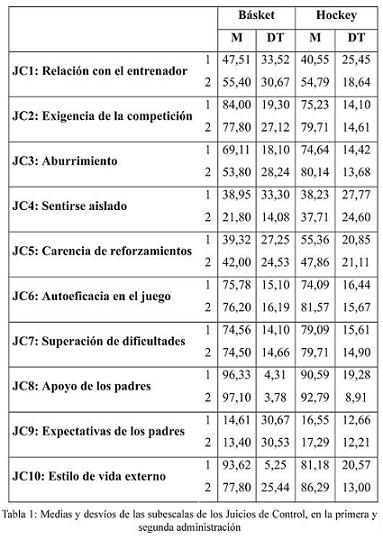
<body><![CDATA[ ]]></body><back>
<ref-list>
<ref id="B1">
<nlm-citation citation-type="journal">
<person-group person-group-type="author">
<name>
<surname><![CDATA[Bandura]]></surname>
<given-names><![CDATA[A.]]></given-names>
</name>
</person-group>
<article-title xml:lang="en"><![CDATA[Self - efficacy mechanism in human agency]]></article-title>
<source><![CDATA[American Psychologist]]></source>
<year>1982</year>
<volume>37</volume>
<numero>2</numero>
<issue>2</issue>
<page-range>122-147</page-range></nlm-citation>
</ref>
<ref id="B2">
<nlm-citation citation-type="">
<person-group person-group-type="author">
<name>
<surname><![CDATA[Bárez]]></surname>
<given-names><![CDATA[M.]]></given-names>
</name>
</person-group>
<source><![CDATA[Relación entre la percepción de control y adaptación a la enfermedad en pacientes con cáncer de mama]]></source>
<year>2002</year>
</nlm-citation>
</ref>
<ref id="B3">
<nlm-citation citation-type="journal">
<person-group person-group-type="author">
<name>
<surname><![CDATA[Bárez]]></surname>
<given-names><![CDATA[M.]]></given-names>
</name>
<name>
<surname><![CDATA[Blasco]]></surname>
<given-names><![CDATA[T.]]></given-names>
</name>
<name>
<surname><![CDATA[Fernández - Castro]]></surname>
<given-names><![CDATA[J.]]></given-names>
</name>
</person-group>
<article-title xml:lang="es"><![CDATA[La inducción de sensación de control como elemento fundamental de la eficacia de las terapias psicológicas en pacientes de cáncer]]></article-title>
<source><![CDATA[Anales de Psicología]]></source>
<year>2003</year>
<volume>19</volume>
<numero>2</numero>
<issue>2</issue>
<page-range>235-246</page-range></nlm-citation>
</ref>
<ref id="B4">
<nlm-citation citation-type="">
<person-group person-group-type="author">
<name>
<surname><![CDATA[Blasco]]></surname>
<given-names><![CDATA[T.]]></given-names>
</name>
</person-group>
<source><![CDATA[Asignatura: Avances en Psicología de la Salud]]></source>
<year>2004</year>
</nlm-citation>
</ref>
<ref id="B5">
<nlm-citation citation-type="journal">
<person-group person-group-type="author">
<name>
<surname><![CDATA[Carver]]></surname>
<given-names><![CDATA[C.]]></given-names>
</name>
<name>
<surname><![CDATA[Harris]]></surname>
<given-names><![CDATA[S.]]></given-names>
</name>
<name>
<surname><![CDATA[Lehman]]></surname>
<given-names><![CDATA[J. M.]]></given-names>
</name>
<name>
<surname><![CDATA[Durel]]></surname>
<given-names><![CDATA[L. A.]]></given-names>
</name>
<name>
<surname><![CDATA[Antoni]]></surname>
<given-names><![CDATA[M. N.]]></given-names>
</name>
<name>
<surname><![CDATA[Spencer]]></surname>
<given-names><![CDATA[S. M.]]></given-names>
</name>
<name>
<surname><![CDATA[Pozo]]></surname>
<given-names><![CDATA[C.]]></given-names>
</name>
</person-group>
<article-title xml:lang="en"><![CDATA[How important is the perception of personal control?: Studies of early stage breast cancer patient]]></article-title>
<source><![CDATA[Personality and Social Psychology Bulletin]]></source>
<year>2000</year>
<volume>26</volume>
<page-range>139-149</page-range></nlm-citation>
</ref>
<ref id="B6">
<nlm-citation citation-type="book">
<person-group person-group-type="author">
<name>
<surname><![CDATA[Cherniss]]></surname>
<given-names><![CDATA[C.]]></given-names>
</name>
</person-group>
<source><![CDATA[Professional burnout in human service organizations]]></source>
<year>1980</year>
<publisher-loc><![CDATA[Nueva York ]]></publisher-loc>
<publisher-name><![CDATA[Praeger]]></publisher-name>
</nlm-citation>
</ref>
<ref id="B7">
<nlm-citation citation-type="journal">
<person-group person-group-type="author">
<name>
<surname><![CDATA[Fender]]></surname>
<given-names><![CDATA[L. K.]]></given-names>
</name>
</person-group>
<article-title xml:lang="en"><![CDATA[Athlete burnout: Potential for research and intervention strategies]]></article-title>
<source><![CDATA[Sport Psychologist]]></source>
<year>1989</year>
<volume>3</volume>
<numero>1</numero>
<issue>1</issue>
<page-range>63-71</page-range></nlm-citation>
</ref>
<ref id="B8">
<nlm-citation citation-type="journal">
<person-group person-group-type="author">
<name>
<surname><![CDATA[Fernández - Castro]]></surname>
<given-names><![CDATA[J.]]></given-names>
</name>
<name>
<surname><![CDATA[Álvarez]]></surname>
<given-names><![CDATA[M.]]></given-names>
</name>
<name>
<surname><![CDATA[Blasco]]></surname>
<given-names><![CDATA[T.]]></given-names>
</name>
<name>
<surname><![CDATA[Doval]]></surname>
<given-names><![CDATA[E.]]></given-names>
</name>
<name>
<surname><![CDATA[Sanz]]></surname>
<given-names><![CDATA[A.]]></given-names>
</name>
</person-group>
<article-title xml:lang="es"><![CDATA[Validación de la Escala de Competencia Personal de Wallston: Implicaciones en el estudio del estrés]]></article-title>
<source><![CDATA[Ansiedad y estrés]]></source>
<year>1998</year>
<volume>4</volume>
<page-range>31-41</page-range></nlm-citation>
</ref>
<ref id="B9">
<nlm-citation citation-type="">
<person-group person-group-type="author">
<name>
<surname><![CDATA[Fernández - Castro]]></surname>
<given-names><![CDATA[J.]]></given-names>
</name>
<name>
<surname><![CDATA[Doval]]></surname>
<given-names><![CDATA[E.]]></given-names>
</name>
<name>
<surname><![CDATA[Edo]]></surname>
<given-names><![CDATA[S.]]></given-names>
</name>
<name>
<surname><![CDATA[Santiago]]></surname>
<given-names><![CDATA[M.]]></given-names>
</name>
</person-group>
<source><![CDATA[L ´estrés docent del mestres de Catalunya]]></source>
<year>1992</year>
<publisher-loc><![CDATA[Barcelona ]]></publisher-loc>
</nlm-citation>
</ref>
<ref id="B10">
<nlm-citation citation-type="journal">
<person-group person-group-type="author">
<name>
<surname><![CDATA[Freudenberger]]></surname>
<given-names><![CDATA[H. J.]]></given-names>
</name>
</person-group>
<article-title xml:lang="en"><![CDATA[Staff burnout]]></article-title>
<source><![CDATA[The Journal of Social Issues]]></source>
<year>1974</year>
<volume>30</volume>
<numero>1</numero>
<issue>1</issue>
<page-range>159 -166</page-range></nlm-citation>
</ref>
<ref id="B11">
<nlm-citation citation-type="">
<person-group person-group-type="author">
<name>
<surname><![CDATA[Garcés de los Fayos]]></surname>
<given-names><![CDATA[E. J.]]></given-names>
</name>
</person-group>
<source><![CDATA[Burnout en deportistas: un estudio de la influencia de variables de personalidad, sociodemográficas y deportivas en el síndrome]]></source>
<year>1999</year>
</nlm-citation>
</ref>
<ref id="B12">
<nlm-citation citation-type="book">
<person-group person-group-type="author">
<name>
<surname><![CDATA[Garcés de los Fayos]]></surname>
<given-names><![CDATA[E. J.]]></given-names>
</name>
</person-group>
<source><![CDATA[Burnout en deportistas: Propuesta de un sistema de evaluación integral]]></source>
<year>2004</year>
<publisher-loc><![CDATA[Madrid ]]></publisher-loc>
<publisher-name><![CDATA[EOS]]></publisher-name>
</nlm-citation>
</ref>
<ref id="B13">
<nlm-citation citation-type="journal">
<person-group person-group-type="author">
<name>
<surname><![CDATA[Garcés de los Fayos]]></surname>
<given-names><![CDATA[E. J.]]></given-names>
</name>
<name>
<surname><![CDATA[Cantón]]></surname>
<given-names><![CDATA[E.]]></given-names>
</name>
</person-group>
<article-title xml:lang="es"><![CDATA[Burnout en deportistas: Un modelo teórico-descriptivo del burnout en deportistas: Una propuesta tentativa]]></article-title>
<source><![CDATA[Revista Psicológica]]></source>
<year>2007</year>
<volume>91</volume>
<page-range>12-22</page-range></nlm-citation>
</ref>
<ref id="B14">
<nlm-citation citation-type="journal">
<person-group person-group-type="author">
<name>
<surname><![CDATA[Garcés de los Fayos]]></surname>
<given-names><![CDATA[E. J.]]></given-names>
</name>
<name>
<surname><![CDATA[Vives Benedicto]]></surname>
<given-names><![CDATA[L.]]></given-names>
</name>
</person-group>
<article-title xml:lang="es"><![CDATA[Hacia un modelo teórico explicativo del burnout en deportistas: Una propuesta integradora]]></article-title>
<source><![CDATA[Edupsykhé]]></source>
<year>2003</year>
<volume>2</volume>
<page-range>221-242</page-range></nlm-citation>
</ref>
<ref id="B15">
<nlm-citation citation-type="journal">
<person-group person-group-type="author">
<name>
<surname><![CDATA[Garcés de los Fayos]]></surname>
<given-names><![CDATA[E. J.]]></given-names>
</name>
<name>
<surname><![CDATA[Vives Benedicto]]></surname>
<given-names><![CDATA[L.]]></given-names>
</name>
</person-group>
<article-title xml:lang="es"><![CDATA[Incidencia del síndrome de burnout en el perfil cognitivo en jóvenes deportistas de alto rendimiento]]></article-title>
<source><![CDATA[Cuadernos de Psicología del Deporte]]></source>
<year>2004</year>
<volume>4</volume>
<numero>1-2</numero>
<issue>1-2</issue>
<page-range>30-43</page-range></nlm-citation>
</ref>
<ref id="B16">
<nlm-citation citation-type="journal">
<person-group person-group-type="author">
<name>
<surname><![CDATA[Golembiewski]]></surname>
<given-names><![CDATA[R. T.]]></given-names>
</name>
</person-group>
<source><![CDATA[The International Journal of Organizational Analysis]]></source>
<year>1993</year>
<volume>1</volume>
<numero>1</numero>
<issue>1</issue>
<page-range>7-27</page-range></nlm-citation>
</ref>
<ref id="B17">
<nlm-citation citation-type="journal">
<person-group person-group-type="author">
<name>
<surname><![CDATA[Leiter]]></surname>
<given-names><![CDATA[M. P.]]></given-names>
</name>
</person-group>
<article-title xml:lang="en"><![CDATA[The dream denied: Professional burnout and the contraints of human services organizations]]></article-title>
<source><![CDATA[Canadian Psychology]]></source>
<year>1991</year>
<volume>32</volume>
<numero>4</numero>
<issue>4</issue>
<page-range>547-558</page-range></nlm-citation>
</ref>
<ref id="B18">
<nlm-citation citation-type="book">
<person-group person-group-type="author">
<name>
<surname><![CDATA[Maslach]]></surname>
<given-names><![CDATA[C.]]></given-names>
</name>
<name>
<surname><![CDATA[Jackson]]></surname>
<given-names><![CDATA[S. E.]]></given-names>
</name>
</person-group>
<source><![CDATA[MBI: Maslach Burnout Inventory]]></source>
<year>1981</year>
<publisher-loc><![CDATA[Palo Alto ]]></publisher-loc>
<publisher-name><![CDATA[University of California, Consulting Psychologists Press]]></publisher-name>
</nlm-citation>
</ref>
<ref id="B19">
<nlm-citation citation-type="book">
<person-group person-group-type="author">
<name>
<surname><![CDATA[Maslach]]></surname>
<given-names><![CDATA[C.]]></given-names>
</name>
<name>
<surname><![CDATA[Jackson]]></surname>
<given-names><![CDATA[S. E.]]></given-names>
</name>
</person-group>
<source><![CDATA[MBI: Maslach Burnout Inventory]]></source>
<year>1986</year>
<publisher-loc><![CDATA[Palo Alto ]]></publisher-loc>
<publisher-name><![CDATA[University of California, Consulting Psychologists Press]]></publisher-name>
</nlm-citation>
</ref>
<ref id="B20">
<nlm-citation citation-type="journal">
<person-group person-group-type="author">
<name>
<surname><![CDATA[Nagy]]></surname>
<given-names><![CDATA[S.]]></given-names>
</name>
<name>
<surname><![CDATA[Nagy]]></surname>
<given-names><![CDATA[M.C.]]></given-names>
</name>
</person-group>
<article-title xml:lang="en"><![CDATA[Longitudinal examination of teachers burnout in a school district]]></article-title>
<source><![CDATA[Psychological Reports]]></source>
<year>1992</year>
<volume>7</volume>
<numero>2</numero>
<issue>2</issue>
<page-range>523-531</page-range></nlm-citation>
</ref>
<ref id="B21">
<nlm-citation citation-type="book">
<person-group person-group-type="author">
<name>
<surname><![CDATA[Pardo]]></surname>
<given-names><![CDATA[A.]]></given-names>
</name>
</person-group>
<source><![CDATA[Modelos Lineales: Guía docente]]></source>
<year>2008</year>
<publisher-loc><![CDATA[Madrid ]]></publisher-loc>
<publisher-name><![CDATA[Universidad Autónoma de Madrid, Facultad de Psicología]]></publisher-name>
</nlm-citation>
</ref>
<ref id="B22">
<nlm-citation citation-type="journal">
<person-group person-group-type="author">
<name>
<surname><![CDATA[Rusbult]]></surname>
<given-names><![CDATA[C. E.]]></given-names>
</name>
</person-group>
<article-title xml:lang="en"><![CDATA[Commitment and satisfaction in romantic associations: A test of the investment model]]></article-title>
<source><![CDATA[Journal of Experimental Social Psychology]]></source>
<year>1980</year>
<volume>16</volume>
<page-range>172-186</page-range></nlm-citation>
</ref>
<ref id="B23">
<nlm-citation citation-type="journal">
<person-group person-group-type="author">
<name>
<surname><![CDATA[Sandoval]]></surname>
<given-names><![CDATA[J.]]></given-names>
</name>
</person-group>
<article-title xml:lang="en"><![CDATA[Personality and burnout school psychologists]]></article-title>
<source><![CDATA[Psychology in the schools]]></source>
<year>1993</year>
<volume>30</volume>
<numero>4</numero>
<issue>4</issue>
<page-range>321-326</page-range></nlm-citation>
</ref>
<ref id="B24">
<nlm-citation citation-type="journal">
<person-group person-group-type="author">
<name>
<surname><![CDATA[Sarros]]></surname>
<given-names><![CDATA[J. C.]]></given-names>
</name>
</person-group>
<article-title xml:lang="en"><![CDATA[Administrator burnout: Finding and future directions]]></article-title>
<source><![CDATA[The Journal of Educational Administration]]></source>
<year>1988</year>
<volume>26</volume>
<numero>2</numero>
<issue>2</issue>
<page-range>184-196</page-range></nlm-citation>
</ref>
<ref id="B25">
<nlm-citation citation-type="journal">
<person-group person-group-type="author">
<name>
<surname><![CDATA[Scanlan]]></surname>
<given-names><![CDATA[T. K]]></given-names>
</name>
<name>
<surname><![CDATA[Russell]]></surname>
<given-names><![CDATA[D. G.]]></given-names>
</name>
<name>
<surname><![CDATA[Beals]]></surname>
<given-names><![CDATA[K. P.]]></given-names>
</name>
<name>
<surname><![CDATA[Scanlan]]></surname>
<given-names><![CDATA[L. A.]]></given-names>
</name>
</person-group>
<article-title xml:lang="en"><![CDATA[Project on elite athlete commitment (PEAK): II: A direct test and expansion of the Sport Commitment model with elite amateur sportsmen]]></article-title>
<source><![CDATA[Journal of Sport and Exercise Psychology]]></source>
<year>2003</year>
<volume>25</volume>
<page-range>377-401</page-range></nlm-citation>
</ref>
<ref id="B26">
<nlm-citation citation-type="journal">
<person-group person-group-type="author">
<name>
<surname><![CDATA[Scanlan]]></surname>
<given-names><![CDATA[T. K]]></given-names>
</name>
<name>
<surname><![CDATA[Russell]]></surname>
<given-names><![CDATA[D. G.]]></given-names>
</name>
<name>
<surname><![CDATA[Wilson]]></surname>
<given-names><![CDATA[N. C.]]></given-names>
</name>
<name>
<surname><![CDATA[Scanlan]]></surname>
<given-names><![CDATA[L. A.]]></given-names>
</name>
</person-group>
<article-title xml:lang="en"><![CDATA[Project on elite athlete commitment (PEAK) I: Introduction and Methodology.]]></article-title>
<source><![CDATA[Journal of Sport and Exercise Psychology]]></source>
<year>2003</year>
<volume>25</volume>
<page-range>360-376</page-range></nlm-citation>
</ref>
<ref id="B27">
<nlm-citation citation-type="journal">
<person-group person-group-type="author">
<name>
<surname><![CDATA[Smith]]></surname>
<given-names><![CDATA[R. E.]]></given-names>
</name>
<name>
<surname><![CDATA[Smoll]]></surname>
<given-names><![CDATA[F. L.]]></given-names>
</name>
</person-group>
<article-title xml:lang="en"><![CDATA[Coaching the coaches: Youth Sports as a scientific and applied behavioural setting]]></article-title>
<source><![CDATA[Current Directions in Psychological Science]]></source>
<year>1997</year>
<volume>6</volume>
<page-range>16-21</page-range></nlm-citation>
</ref>
<ref id="B28">
<nlm-citation citation-type="book">
<person-group person-group-type="author">
<name>
<surname><![CDATA[Scanlan]]></surname>
<given-names><![CDATA[T. K.]]></given-names>
</name>
<name>
<surname><![CDATA[Simons]]></surname>
<given-names><![CDATA[J. P.]]></given-names>
</name>
</person-group>
<article-title xml:lang="en"><![CDATA[The construct of sport enjoyment]]></article-title>
<person-group person-group-type="editor">
<name>
<surname><![CDATA[Roberts]]></surname>
<given-names><![CDATA[G.C.]]></given-names>
</name>
</person-group>
<source><![CDATA[Motivation in Sport and Exercise]]></source>
<year>1992</year>
<page-range>199-215</page-range><publisher-loc><![CDATA[Champaign, IL ]]></publisher-loc>
<publisher-name><![CDATA[Human Kinetics]]></publisher-name>
</nlm-citation>
</ref>
<ref id="B29">
<nlm-citation citation-type="journal">
<person-group person-group-type="author">
<name>
<surname><![CDATA[Scanlan]]></surname>
<given-names><![CDATA[T. K.]]></given-names>
</name>
<name>
<surname><![CDATA[Carpenter]]></surname>
<given-names><![CDATA[P. S.]]></given-names>
</name>
<name>
<surname><![CDATA[Schmidt]]></surname>
<given-names><![CDATA[G. W.]]></given-names>
</name>
<name>
<surname><![CDATA[Simons]]></surname>
<given-names><![CDATA[J. P.]]></given-names>
</name>
<name>
<surname><![CDATA[Keeler]]></surname>
<given-names><![CDATA[B.]]></given-names>
</name>
</person-group>
<article-title xml:lang="en"><![CDATA[An introduction to the Sport Commitment Model]]></article-title>
<source><![CDATA[Journal of Sport and Exercise]]></source>
<year>1993</year>
<volume>15</volume>
<page-range>1-15</page-range></nlm-citation>
</ref>
<ref id="B30">
<nlm-citation citation-type="journal">
<person-group person-group-type="author">
<name>
<surname><![CDATA[Scanlan]]></surname>
<given-names><![CDATA[T. K.]]></given-names>
</name>
<name>
<surname><![CDATA[Simons]]></surname>
<given-names><![CDATA[J. P.]]></given-names>
</name>
<name>
<surname><![CDATA[Carpenter]]></surname>
<given-names><![CDATA[P. S]]></given-names>
</name>
<name>
<surname><![CDATA[Schmidt]]></surname>
<given-names><![CDATA[G. W]]></given-names>
</name>
</person-group>
<article-title xml:lang="en"><![CDATA[The Sport Commitment Model: Measurement development for the young - sport domain]]></article-title>
<source><![CDATA[Journal of Sport and Exercise Psychology]]></source>
<year>1993</year>
<volume>15</volume>
<page-range>16-38</page-range></nlm-citation>
</ref>
<ref id="B31">
<nlm-citation citation-type="book">
<person-group person-group-type="author">
<name>
<surname><![CDATA[Scanlan]]></surname>
<given-names><![CDATA[T.K]]></given-names>
</name>
</person-group>
<article-title xml:lang="en"><![CDATA[Competitive stress in children]]></article-title>
<person-group person-group-type="editor">
<name>
<surname><![CDATA[Weiss]]></surname>
<given-names><![CDATA[M.R.]]></given-names>
</name>
<name>
<surname><![CDATA[Gould]]></surname>
<given-names><![CDATA[D.]]></given-names>
</name>
</person-group>
<source><![CDATA[Sport for children and youth]]></source>
<year>1986</year>
<page-range>113-118</page-range><publisher-loc><![CDATA[Champaign, IL ]]></publisher-loc>
<publisher-name><![CDATA[Human Kinetics]]></publisher-name>
</nlm-citation>
</ref>
<ref id="B32">
<nlm-citation citation-type="journal">
<person-group person-group-type="author">
<name>
<surname><![CDATA[Schmidt]]></surname>
<given-names><![CDATA[G. W.]]></given-names>
</name>
<name>
<surname><![CDATA[Stein]]></surname>
<given-names><![CDATA[G. L.]]></given-names>
</name>
</person-group>
<article-title xml:lang="en"><![CDATA[Sport Commitment: A model integrating enjoyment, dropout, and burnout]]></article-title>
<source><![CDATA[Journal of Sport and Exercise Psychology]]></source>
<year>1991</year>
<volume>13</volume>
<numero>3</numero>
<issue>3</issue>
<page-range>254-265</page-range></nlm-citation>
</ref>
<ref id="B33">
<nlm-citation citation-type="journal">
<person-group person-group-type="author">
<name>
<surname><![CDATA[Sousa]]></surname>
<given-names><![CDATA[C.]]></given-names>
</name>
<name>
<surname><![CDATA[Smith]]></surname>
<given-names><![CDATA[R.]]></given-names>
</name>
<name>
<surname><![CDATA[Cruz]]></surname>
<given-names><![CDATA[J.]]></given-names>
</name>
</person-group>
<article-title xml:lang="en"><![CDATA[An individualized behavioral goal-setting program for coaches]]></article-title>
<source><![CDATA[Journal of Clinical Sport Psychology]]></source>
<year>2008</year>
<volume>2</volume>
<page-range>258-277</page-range></nlm-citation>
</ref>
<ref id="B34">
<nlm-citation citation-type="journal">
<person-group person-group-type="author">
<name>
<surname><![CDATA[Sousa]]></surname>
<given-names><![CDATA[C.]]></given-names>
</name>
<name>
<surname><![CDATA[Torregrosa]]></surname>
<given-names><![CDATA[M.]]></given-names>
</name>
<name>
<surname><![CDATA[Viladrch]]></surname>
<given-names><![CDATA[C.]]></given-names>
</name>
<name>
<surname><![CDATA[Villamarín]]></surname>
<given-names><![CDATA[F.]]></given-names>
</name>
<name>
<surname><![CDATA[Cruz]]></surname>
<given-names><![CDATA[J.]]></given-names>
</name>
</person-group>
<article-title xml:lang="en"><![CDATA[The commitment of young soccer players]]></article-title>
<source><![CDATA[Psicothema]]></source>
<year>2007</year>
<volume>19</volume>
<numero>2</numero>
<issue>2</issue>
<page-range>256-262</page-range></nlm-citation>
</ref>
<ref id="B35">
<nlm-citation citation-type="">
<person-group person-group-type="author">
<name>
<surname><![CDATA[Tutte]]></surname>
<given-names><![CDATA[V.]]></given-names>
</name>
</person-group>
<source><![CDATA[Factores que inciden en la aparición del burnout en un equipo femenino de baloncesto]]></source>
<year>2005</year>
</nlm-citation>
</ref>
</ref-list>
</back>
</article>