<?xml version="1.0" encoding="ISO-8859-1"?><article xmlns:mml="http://www.w3.org/1998/Math/MathML" xmlns:xlink="http://www.w3.org/1999/xlink" xmlns:xsi="http://www.w3.org/2001/XMLSchema-instance">
<front>
<journal-meta>
<journal-id>0717-5000</journal-id>
<journal-title><![CDATA[CLEI Electronic Journal]]></journal-title>
<abbrev-journal-title><![CDATA[CLEIej]]></abbrev-journal-title>
<issn>0717-5000</issn>
<publisher>
<publisher-name><![CDATA[Centro Latinoamericano de Estudios en Informática]]></publisher-name>
</publisher>
</journal-meta>
<article-meta>
<article-id>S0717-50002016000100004</article-id>
<title-group>
<article-title xml:lang="en"><![CDATA[PICTOAPRENDE: Design and evaluation of a tool that contributes to the personal autonomy of children and youth diagnosed with autism spectrum disorder in Ecuador]]></article-title>
</title-group>
<contrib-group>
<contrib contrib-type="author">
<name>
<surname><![CDATA[Cárdenas]]></surname>
<given-names><![CDATA[Andrea]]></given-names>
</name>
<xref ref-type="aff" rid="A01"/>
</contrib>
<contrib contrib-type="author">
<name>
<surname><![CDATA[Segovia]]></surname>
<given-names><![CDATA[Edison]]></given-names>
</name>
<xref ref-type="aff" rid="A01"/>
</contrib>
<contrib contrib-type="author">
<name>
<surname><![CDATA[De la Cruz]]></surname>
<given-names><![CDATA[Danni]]></given-names>
</name>
<xref ref-type="aff" rid="A01"/>
</contrib>
<contrib contrib-type="author">
<name>
<surname><![CDATA[Mejía]]></surname>
<given-names><![CDATA[Paúl]]></given-names>
</name>
<xref ref-type="aff" rid="A01"/>
</contrib>
<contrib contrib-type="author">
<name>
<surname><![CDATA[Paredes]]></surname>
<given-names><![CDATA[Nancy]]></given-names>
</name>
<xref ref-type="aff" rid="A01"/>
</contrib>
<contrib contrib-type="author">
<name>
<surname><![CDATA[Tobar]]></surname>
<given-names><![CDATA[Johanna]]></given-names>
</name>
<xref ref-type="aff" rid="A01"/>
</contrib>
</contrib-group>
<aff id="A01">
<institution><![CDATA[,Universidad de las Fuerzas Armadas Departamento de Ciencias de la Energía ]]></institution>
<addr-line><![CDATA[Sangolquí ]]></addr-line>
<country>Ecuador</country>
</aff>
<pub-date pub-type="pub">
<day>00</day>
<month>04</month>
<year>2016</year>
</pub-date>
<pub-date pub-type="epub">
<day>00</day>
<month>04</month>
<year>2016</year>
</pub-date>
<volume>19</volume>
<numero>1</numero>
<fpage>4</fpage>
<lpage>4</lpage>
<copyright-statement/>
<copyright-year/>
<self-uri xlink:href="http://www.scielo.edu.uy/scielo.php?script=sci_arttext&amp;pid=S0717-50002016000100004&amp;lng=en&amp;nrm=iso"></self-uri><self-uri xlink:href="http://www.scielo.edu.uy/scielo.php?script=sci_abstract&amp;pid=S0717-50002016000100004&amp;lng=en&amp;nrm=iso"></self-uri><self-uri xlink:href="http://www.scielo.edu.uy/scielo.php?script=sci_pdf&amp;pid=S0717-50002016000100004&amp;lng=en&amp;nrm=iso"></self-uri><abstract abstract-type="short" xml:lang="en"><p><![CDATA[This paper presents the development and evaluation of PICTOAPRENDE, which is an interactive software designed to improve oral communication. Additionally, it contributes to the development of children and youth who are diagnosed with autism spectrum disorder (ASD) in Ecuador. To fulfill this purpose initially analyzes the intervention area where the general characteristics of people with ASD and their status in Ecuador is described. Statistical techniques used for this evaluation constitutes the basis of this study. A section that presents the development of research-based cognitive and social parameters of the area of intervention is also shown. Finally, the algorithms to obtain the measurements and experimental results along with the analysis of them are presented.]]></p></abstract>
<abstract abstract-type="short" xml:lang="es"><p><![CDATA[En este trabajo se presenta el desarrollo y evaluación de Pictoaprende un software interactivo diseñado para mejorar la comunicación oral y contribuir al desarrollo personal de niños y jóvenes con diagnóstico de trastorno del espectro autista (TEA) en Ecuador. Para cumplir con este propósito inicialmente se analiza el área de intervención que describe las características generales de las personas con TEA y su situación en el Ecuador. Las técnicas estadísticas utilizadas para esta evaluación constituye la base de este estudio. También se muestra una sección que presenta el desarrollo de parámetros cognitivos y sociales basadas en la investigación de la zona de intervención. Finalmente, se presentan los algoritmos para obtener las medidas y los resultados experimentales, junto con el análisis de los mismos.]]></p></abstract>
<kwd-group>
<kwd lng="en"><![CDATA[Digital communicators]]></kwd>
<kwd lng="en"><![CDATA[repetitive behavior]]></kwd>
<kwd lng="en"><![CDATA[pictograms]]></kwd>
<kwd lng="en"><![CDATA[brain disorder]]></kwd>
<kwd lng="en"><![CDATA[autism spectrum]]></kwd>
<kwd lng="en"><![CDATA[bootstrap]]></kwd>
<kwd lng="en"><![CDATA[population sample]]></kwd>
<kwd lng="en"><![CDATA[hypothesis]]></kwd>
<kwd lng="es"><![CDATA[Comunicadores Digitales]]></kwd>
<kwd lng="es"><![CDATA[comportamiento repetitivo]]></kwd>
<kwd lng="es"><![CDATA[pictogramas]]></kwd>
<kwd lng="es"><![CDATA[desorden mental]]></kwd>
<kwd lng="es"><![CDATA[espectro autista]]></kwd>
<kwd lng="es"><![CDATA[remuestreo]]></kwd>
<kwd lng="es"><![CDATA[muestra poblacional]]></kwd>
<kwd lng="es"><![CDATA[hipotesis]]></kwd>
</kwd-group>
</article-meta>
</front><body><![CDATA[ <div class="maketitle">                                                                                            <h2 class="titleHead" style="font-size: 14pt;">PICTOAPRENDE: Design and evaluation of a tool that contributes to the personal autonomy of children and youth diagnosed with autism spectrum disorder in Ecuador</h2>                    <div class="author"> <span class="cmbx-12">Andrea C</span><span class="cmbx-12">&aacute;rdenas, Edison Segovia, Danni De la Cruz</span>     <br>                            <span class="cmbx-12">Pa</span><span class="cmbx-12">&uacute;l Mej</span><span class="cmbx-12">&iacute;a, Nancy Paredes</span>     <br>  <span class="cmr-12">Universidad de las Fuerzas Armadas-ESPE, Departamento de El</span><span class="cmr-12">&eacute;ctrica y Electr</span><span class="cmr-12">&oacute;nica</span>     <br>                              <span class="cmr-12">Sangolqu</span><span class="cmr-12">&iacute;, Ecuador, 170501,</span>     <br>    <span class="cmsy-10x-x-120">{</span><span class="cmr-12"><a href="mailto:macardenas6@espe.edu.ec">macardenas6</a>, <a href="mailto:ersegovia@espe.edu.ec">ersegovia</a>, <a href="mailto:drde@espe.edu.ec">drde</a>, <a href="mailto:phmejia@espe.edu.ec">phmejia</a>, <a href="mailto:niparedes@espe.edu.ec">niparedes</a></span><span class="cmsy-10x-x-120">}</span><span class="cmr-12">@espe.edu.ec </span><br class="and"> <span class="cmbx-12">Johanna Tobar</span>     <br>  <span class="cmr-12">Universidad de las Fuerzas Armadas-ESPE, Departamento de Ciencias de la Energ</span><span class="cmr-12">&iacute;a</span>     <br>                        <span class="cmr-12">y Mec</span><span class="cmr-12">&aacute;nica, Sangolqu</span><span class="cmr-12">&iacute;, Ecuador, 170501,</span>     <br>                                 <span class="cmr-12">&nbsp;<a href="mailto:jbtobar@espe.edu.ec">jbtobar@espe.edu.ec</a> </span></div>     <br>      ]]></body>
<body><![CDATA[<div class="date"></div>     </div>          <div class="abstract">     <div class="center"> <!--l. 26-->     <p class="noindent"> </p>     <div class="minipage">     <div class="center"> <!--l. 26-->     <p class="noindent"> <!--l. 26--></p>     <p class="noindent"><span class="cmbx-10">Abstract</span></p> </div>  <!--l. 28-->     <p class="noindent">This paper presents the development and evaluation of PICTOAPRENDE, which is an interactive software designed to improve oral communication. Additionally, it contributes to the development of children and youth who are diagnosed with autism spectrum disorder (ASD) in Ecuador. To fulfill this purpose initially analyzes the intervention area where the general characteristics of people with ASD and their status in Ecuador is described. Statistical techniques used for this evaluation constitutes the basis of this study. A section that presents the development of research-based cognitive and social parameters of the area of intervention is also shown. Finally, the algorithms to obtain the measurements and experimental results along with the analysis of them are presented. <br class="newline">  <!--l. 31--></p>     <p class="noindent">Abstract in Spanish:<br class="newline"> En este trabajo se presenta el desarrollo y evaluaci&oacute;n de Pictoaprende un software interactivo dise&ntilde;ado para mejorar la comunicaci&oacute;n oral y contribuir al desarrollo personal de ni&ntilde;os y j&oacute;venes con diagn&oacute;stico de trastorno del espectro autista (TEA) en Ecuador. Para cumplir con este prop&oacute;sito inicialmente se analiza el &aacute;rea de intervenci&oacute;n que describe las caracter&iacute;sticas generales de las personas con TEA y su situaci&oacute;n en el Ecuador. Las t&eacute;cnicas estad&iacute;sticas utilizadas para esta evaluaci&oacute;n constituye la base de este estudio. Tambi&eacute;n se muestra una secci&oacute;n que presenta el desarrollo de par&aacute;metros cognitivos y sociales basadas en la investigaci&oacute;n de la zona de intervenci&oacute;n. Finalmente, se presentan los algoritmos para obtener las medidas y los resultados experimentales, junto con el an&aacute;lisis de los mismos.</p> </div> </div>  </div>                                                                                                                                                                                      <!--l. 40-->     ]]></body>
<body><![CDATA[<p class="noindent"><span class="cmbx-10">Keywords: </span>Digital communicators, repetitive behavior, pictograms, brain disorder, autism spectrum, bootstrap, population sample, hypothesis.<br class="newline"> Keywords in Spanish: Comunicadores Digitales, comportamiento repetitivo, pictogramas, desorden mental, espectro autista, remuestreo, muestra poblacional, hipotesis. <br class="newline"> Received: 2015-10-31 Revised: 2016-02-16 Accepted: 2016-03-08<br class="newline"> DOI: http://dx.doi.org/10.19153/cleiej.19.1.4    </p> <h3 class="sectionHead"><span class="titlemark">1   </span> <a id="x1-10001"></a>Introduction</h3>  <!--l. 49-->     <p class="noindent">The Autism Spectrum Disorder(ASD), present in childhood, is identified due to a person&rsquo;s difficulties, changes or delays to develop social relations and communication. It also affects his/her behavior, which ends up attempting against his/her independence and ability to get into social relationships. <span class="cite">[<a href="#X0">1</a><a id="br1">]</a></span> <br class="newline"> Verbal communication is very low or almost null on these people. They present lack of attention and interest in daily activities, thus this situation becomes a great challenge for the common learning process.<span class="cite">[<a href="#X1">2</a><a id="br2">]</a></span> <br class="newline"> The most common communication methods for people diagnosed with ASD have been based on the use of pictograms - graphic representations of words or actions to learn interactively, formulate sentences or perform various routines. Daily activities are described by sequential graphics to be accomplished by these people. For example, activities such as brushing their teeth or taking a shower were proposed to be performed in their cleaning places so that the activities can be imitated. <br class="newline"> Nowadays, mobile devices like smartphones and tablets are widely used for teaching purposes because children and adolescents diagnosed with ASD present a great deal of interest on them. These technologies allow to develop therapeutic games to stimulate and help the educational cognitive development in an enjoyable manner.<span class="cite">[<a href="#X2">3</a><a id="br3">]</a></span> They also permit to assess the learning process by using statistical methods such as Bootstrap, hence realizing the Android application PICTOAPRENDE. This is an interactive software for children and young people who were diagnosed with ASD. The cognitive process is improved by using this method as well as it helps to ensure the independence of the users. <br class="newline"> Research for creating PICTOAPRENDE and the analysis of results was performed during a period of time of one year and six months. A sample of 20 children between 10 and 17 years old was identified for this study and they belong to the Foundation that was taken for the analysis. <br class="newline"> This application has incorporated pictograms by taking advantage of the wide spread use of electronic communication media through a series of messages and sounds that ease the daily interaction with this segment of population, which has been historically invisible. <br class="newline"> The development of this application is very important due to the lack of such tools that contain requirements and parameters within the Ecuadorian region such as lexicon, the use of images known by them, valid emergency numbers, data base containing telephone numbers. <span class="cite">[<a href="#X3">4</a><a id="br4">]</a></span> <br class="newline"> The use of the Ecuadorian dialect within the application is very important to consider since the utilization of countless words and phrases typical of the region are present. Foreign dialects bewilders and fool the learning process for people that suffer this kind of disorder. <span class="cite">[<a href="#X4">5</a><a id="br5">]</a></span> <br class="newline"> The results obtained by the use of this tool were analyzed through the application of statistical techniques such as bootstrap, hypothesis validation, confidence interval and descriptive statistics, obtaining satisfactory results. <!--l. 60--></p>     <p class="noindent">    </p> <h3 class="sectionHead"><span class="titlemark">2   </span> <a id="x1-20002"></a>Intervention area</h3>  <!--l. 61-->     <p class="noindent">    </p> <h4 class="subsectionHead"><span class="titlemark">2.1   </span> <a id="x1-30002.1"></a>General characteristics of people diagnosed with Autism Spectrum Disorder.</h4>  <!--l. 62-->     <p class="noindent">Within the characteristics of autistic children, it is not odd that it comes accompanied with a certain mental retard degree, which consists of the existence of a great difficulty towards oral communication when expressing their feelings and needs.<br class="newline"> Children and young people with autism have an inflexible behavior. In other words they do not take the changes in routine, sudden facts or last time modifications adequately. <span class="cite">[<a href="#X5">6</a><a id="br6">]</a></span><br class="newline"> Another feature of these children is the fact that they are obsessed with a certain behavior or one of their objects (toys). This added up to their lack of capacity of communication could result in a really difficult behavior and even somewhat aggressive when integrating the toddler with the rest of society. <span class="cite">[<a href="#X6">7</a><a id="br7">]</a></span><br class="newline"> Eye contact and attention are deficient. They are not often able to use gestures as a manner of communication. They speak aloud or like automatons or robots. Commonly, they do not pay attention when other people speak, they are not receptive and cannot even respond to their own names.<br class="newline"> It is possible that they spend too much time sorting things before they can pay attention or they have to say the same phrase over and over again to calm down. It seems somehow that they are in their &ldquo;own world&rdquo;. <span class="cite">[<a href="#X7">8</a><a id="br8">]</a></span><br class="newline"> Particularly in Ecuador, there are no formal statistics of people diagnosed with autism and neither there are devices or applications to treat this problem. <!--l. 70--></p>     <p class="noindent">    </p> <h4 class="subsectionHead"><span class="titlemark">2.2   </span> <a id="x1-40002.2"></a>Status of ASD in Ecuador.</h4>  <!--l. 71-->     <p class="noindent">The status of ASD in the country regarding the attention to autism can be summarized as follows:      </p> <ul class="itemize1">       <li class="itemize">It is estimated that there are about 180 thousand children with autism in Ecuador and there are few      institutions dedicated to tackle this problem, since the Government has made visible this segment of      people. Therefore, there are no public institutions specialized for care of the autistic population in      Ecuador. <span class="cite">[<a href="#X16">9</a><a id="br9">]</a></span>      </li>       <li class="itemize">Inclusion of people with ASD into formal schools or institutions that are not properly equipped to      treat them. This integration is not considered adequate because people with ASD requires a biological      and psycho-educational intervention that is far from that required by persons with mental retardation      or other mental disabilities. This difficulty leads to halt the growth of people with ASD.      </li>       <li class="itemize">The cost for diagnosis and treatment of ASD is very high. It is only a matter of considering the access      to the essential services, not only for diagnosis but also for the long and intense treatment to realize      that this leads to affect any family&Acirc;&acute;s budget. Families cannot access to these resources because there      are not specialized public schools available in Ecuador. <span class="cite">[<a href="#X8">10</a><a id="br10">]</a></span></li>     </ul>  <!--l. 81-->     <p class="noindent">    </p> <h3 class="sectionHead"><span class="titlemark">3   </span> <a id="x1-50003"></a>Statistical techniques for data evaluation</h3>  <!--l. 82-->     <p class="noindent">    </p> <h4 class="subsectionHead"><span class="titlemark">3.1   </span> <a id="x1-60003.1"></a>Descriptive Statistics.</h4>  <!--l. 83-->     ]]></body>
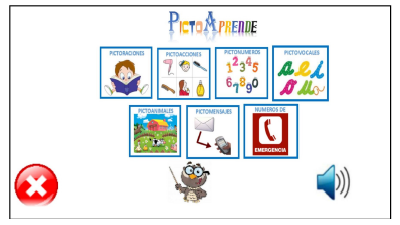
<body><![CDATA[<p class="noindent">Records or observations provide a series of data which necessarily must be ordered and presented in an intelligible manner. Descriptive statistics develops a set of techniques which aim is to present and reduce the different observed data.<br class="newline"> The presentation of data is realized by sorting tables, process called tabulation, and subsequent graphical representation by using histograms, bars, pie charts, and others. Using this statistical average allows to share different sets of data obtained from different observations. <span class="cite">[<a href="#X16">9</a><a id="br9">]</a></span> <!--l. 87--></p>     <p class="noindent">    </p> <h4 class="subsectionHead"><span class="titlemark">3.2   </span> <a id="x1-70003.2"></a>Bootstrap.</h4>  <!--l. 88-->     <p class="noindent">It is the most versatile and well-known sampling technique. The basic idea is to treat samples as they were population and extract with replacement a large number of resamples of size n. Thus, although each resample has the same number of elements as the original sample, each one could include some of the original data more than once. As a result each resample will probably be different from the original sample; whereby a statistical <img src="/img/revistas/cleiej/v19n1/1a040x.png" alt="x  " class="math">, calculated from one of those resamples will take a different value from the one that produces another resample. The fundamental affirmation of bootstrap is that a frequency distribution of statistics calculated from the resamples is an estimate of the sampling distribution of population.<span class="cite">[<a href="#X14">11</a><a id="br11">]</a></span><br class="newline"> Three practical applications are derived as a result of this process:                                                                                                                                                                                          </p> <ul class="itemize1">       <li class="itemize">Assess bias and sampling error of a statistic calculated from a sample.      </li>       <li class="itemize">Establish a confidence interval for an estimated parameter.      </li>       <li class="itemize">Testing hypotheses for one or more population parameters.</li>     </ul>  <!--l. 99-->     <p class="noindent">    </p> <h3 class="sectionHead"><span class="titlemark">4   </span> <a id="x1-80004"></a>Application development.</h3>  <!--l. 100-->     <p class="noindent">    </p> <h4 class="subsectionHead"><span class="titlemark">4.1   </span> <a id="x1-90004.1"></a>Research of cognitive and social parameters.</h4>  <!--l. 101-->     <p class="noindent">PICTOAPRENDE is an interactive software oriented to children and young people with autism spectrum disorder. It aims to improve the verbal process and interaction with the environment. <span class="cite">[<a href="#X0">1</a><a id="br1">]</a></span> <br class="newline"> This study was performed in Quito - Ecuador thanks to the proposed requirements by a number of foundations dedicated to the treatment of this disorder as follows:      </p> <ul class="itemize1">       <li class="itemize">The generation of an interactive application.      </li>       <li class="itemize">An application based on pictograms.      </li>       <li class="itemize">The application must use clear icons, limited language and evident gestures.      </li>       <li class="itemize">The predominant color in the application should be blue or dark blue.      </li>       <li class="itemize">It should focus positively on education and treatment of autism.      </li>       <li class="itemize">Provide means to communicate by the use of movements, gestures, signs and sounds.      </li>       <li class="itemize">Avoid overuse of images, colors and specially noisy, complex and hyper-stimulant environments.      </li>       <li class="itemize">The application must be made in full Ecuadorian dialect.</li>     </ul>  <!--l. 115-->     <p class="noindent">    </p> <h4 class="subsectionHead"><span class="titlemark">4.2   </span> <a id="x1-100004.2"></a>Generation of the application</h4>  <!--l. 116-->     <p class="noindent">Due to the delay or partial lack of oral language that children with autism possess, the need to compensate this deficiency is generated through alternative modes of communication such as pictograms - systems that allow represent a real object or figure schematically, thus developing their social and communication skills.<br class="newline"> PICTOAPRENDE has seven options available, as shown in Figure 1. These help to learn daily sequences, common and basic phrases that express basic needs. It also teaches digits, sounds that are associated with different pets, and the correct pronunciation of vowels. <br class="newline"> Through logic and memory game, it teaches emergency numbers and allows users to send e-mails and text messages expressing needs and possibly emergency.<br class="newline"> This application incorporates lexicon and Ecuadorian dialect deployed into an amicable voice for users as well as the integration of images and clear symbols, thus making it attractive for children and young people with Autism Spectrum Disorder.<span class="cite">[<a href="#X0">1</a><a id="br1">]</a></span> <br class="newline">                                                                                                                                                                                      </p>     ]]></body>
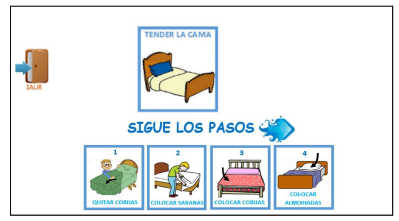
<body><![CDATA[<div class="center"> <!--l. 122-->     <p class="noindent">  <!--l. 123--></p>     <p class="noindent"><img src="/img/revistas/cleiej/v19n1/1a04f1.png" alt="PIC"> <a id="x1-10001r1"></a>     <br>  </p>     <div class="caption"><span class="id">Figure&nbsp;1: </span><span class="content">PICTOAPRENDE main menu</span></div> <!--tex4ht:label?: x1-10001r1 --> </div>        <ul class="itemize1">       <li class="itemize"><span class="cmbx-10">PictoActions: </span>They teach sequences of daily personal care such as going to the bathroom, bathing,      teeth  brushing  and  doing  the  bed.  These  activities  are  represented  by  pictograms,  method  that      encourages most people with autism in a variety of situations, including both expressive communication      as well as the use of schedules and other visual aids <span class="cite">[<a href="#X9">12</a><a id="br12">]</a></span>. See figure 2.</li>     </ul>      <div class="center"> <!--l. 136-->     <p class="noindent">  <!--l. 137--></p>     <p class="noindent"><img src="/img/revistas/cleiej/v19n1/1a04f2.png" alt="PIC"> <a id="x1-10002r2"></a>     <br>  </p>     ]]></body>
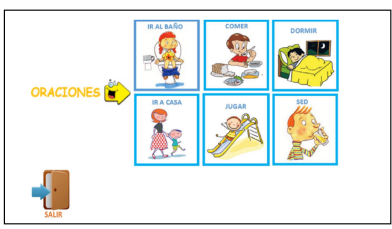
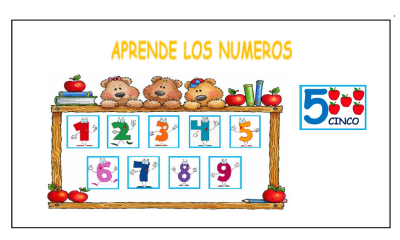
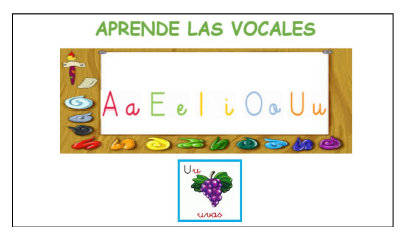
<body><![CDATA[<div class="caption"><span class="id">Figure&nbsp;2: </span><span class="content">Sequence for making the bed</span></div> <!--tex4ht:label?: x1-10002r2 --> </div>        <ul class="itemize1">       <li class="itemize"><span class="cmbx-10">PictoSentences:  </span>They help to reduce the lack of oral communication with the deployment of daily      phrases such as I want to go home and I am hungry or sleepy. Simple and well-known sentences that      are fundamental towards interaction and proper development of children and young people diagnosed      with ASD. See Figure 3</li>     </ul>      <div class="center"> <!--l. 152-->     <p class="noindent">  <!--l. 153--></p>     <p class="noindent"><img src="/img/revistas/cleiej/v19n1/1a04f3.png" alt="PIC"> <a id="x1-10003r3"></a>     <br>  </p>     <div class="caption"><span class="id">Figure&nbsp;3: </span><span class="content">PictoSentences menu</span></div> <!--tex4ht:label?: x1-10003r3 --> </div>        <ul class="itemize1">       <li class="itemize"><span class="cmbx-10">PictoNumbers:   </span>It  is  an  option  that  teaches  natural  numbers  from  0  to  9  along  with  their      pronunciation in Spanish. Taking into account that they are the basis to do math operations.<br class="newline"> This alternative aims to help memorization and through repetition seeks to achieve the identification      of each number as well as its correct pronunciation as shown in Figure 4.</li>     </ul>      <div class="center"> <!--l. 167-->     <p class="noindent"> <!--l. 168--></p>     ]]></body>
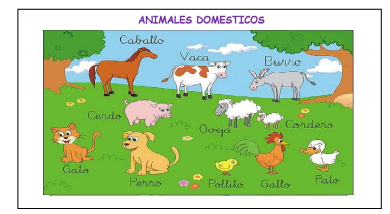
<body><![CDATA[<p class="noindent"><img src="/img/revistas/cleiej/v19n1/1a04f4.png" alt="PIC" class="graphics"><!--tex4ht:graphics   name="/img/revistas/cleiej/v19n1/1a041x.png" src="/img/revistas/cleiej/v19n1/1a04f4.png"   --> <a id="x1-10004r4"></a>     <br>  </p>     <div class="caption"><span class="id">Figure&nbsp;4: </span><span class="content">Screen of PictoNumbers</span></div> <!--tex4ht:label?: x1-10004r4 --> </div>                                                                                                                                                                                            <ul class="itemize1">       <li class="itemize"><span class="cmbx-10">PictoVowels: </span>Vowels are an integral part of the learning process for reading and writing. Since children      and young people with ASD possess limited oral abilities, they do not achieve an interaction between      vowels and consonants, therefore articulating words and phrases becomes difficult. <br class="newline"> For this reason the option PictoVowels was created as shown in Figure 5. It reproduces the sound of      each vowel including an illustrative image.</li>     </ul>      <div class="center"> <!--l. 181-->     <p class="noindent">  <!--l. 182--></p>     <p class="noindent"><img src="/img/revistas/cleiej/v19n1/1a04f5.png" alt="PIC"> <a id="x1-10005r5"></a>     <br>  </p>     <div class="caption"><span class="id">Figure&nbsp;5: </span><span class="content">Screen PictoVowels</span></div> <!--tex4ht:label?: x1-10005r5 --> </div>        <ul class="itemize1">       <li class="itemize"><span class="cmbx-10">PictoAnimals: </span>A research developed by the Institute of Neurosciences of Castilla and Leon has shown      the importance of exposing children to certain sounds in order to stimulate their hearing sensitivity      and facilitate the learning process. <span class="cite">[<a href="#X9">12</a><a id="br12">]</a></span> Therefore, the PictoAnimals option was created to encourage      children and young people with ASD.<br class="newline"> The sounds produced by animals can be relatively fun and even more if you learn in an easy and      enjoyable  manner.  This  application  includes  10  different  pet  sounds  and  they  are  reproduced  by      touching the screen. See Figure 6.</li>     </ul>      ]]></body>
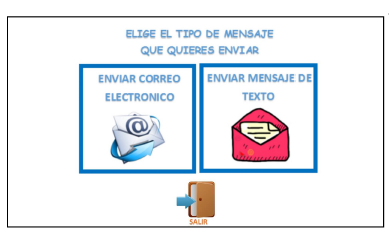
<body><![CDATA[<div class="center"> <!--l. 197-->     <p class="noindent">  <!--l. 198--></p>     <p class="noindent"><img src="/img/revistas/cleiej/v19n1/1a04f6.png" alt="PIC"> <a id="x1-10006r6"></a>     <br>  </p>     <div class="caption"><span class="id">Figure&nbsp;6: </span><span class="content">Screen PictoAnimals</span></div> <!--tex4ht:label?: x1-10006r6 --> </div>        <ul class="itemize1">       <li class="itemize"><span class="cmbx-10">PictoMessages: </span>This is one of the most representative options of the application, since it allows the      user to communicate with family members, teachers or people who are in charge of their care and      education.<br class="newline"> Raise warnings of the need or existence of any kind of emergency that the user might be involved. <br class="newline"> The user can ask for help by sending pre-stablished text messages or emails. See Figure 7.</li>     </ul>      <div class="center"> <!--l. 213-->     <p class="noindent">  <!--l. 214--></p>     <p class="noindent"><img src="/img/revistas/cleiej/v19n1/1a04f7.png" alt="PIC"> <a id="x1-10007r7"></a>     <br>  </p>     ]]></body>
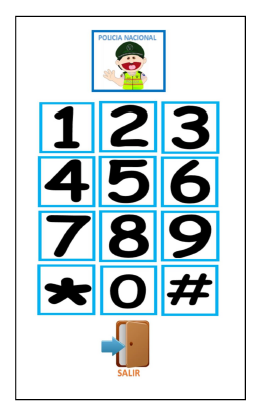
<body><![CDATA[<div class="caption"><span class="id">Figure&nbsp;7: </span><span class="content">Menu to send a text message or an e-mail</span></div> <!--tex4ht:label?: x1-10007r7 --> </div>        <ul class="itemize1">       <li class="itemize"><span class="cmbx-10">Emergency numbers: </span>This teaches the users the most important phone numbers that can help in      the case there is a problem or emergency in Ecuador. All this through an interactive game. <br class="newline"> First of all, the 911, police phone number, is thought as well as Red Cross and fire station contacts.      The user is expected to repeat the number correctly, when this happens a sound showing approval will      be activated, otherwise the sound will warn the user that something is not correct. <br class="newline"> When dealing with children that are not able to maintain verbal communication, it is necessary to      teach them what to do in the case an emergency arises. <br class="newline"> It is relevant to consider that calling to the phone numbers mentioned above without facing a real      emergency is consider a felony; this according to the organic code article 396. People who fail to do      this could end up receiving a punishment between 15 and 30 days in prison. For example, individuals      who make false warn calls to the Safety Integrated System ECU 911 can fall in this case. <br class="newline"> This is consider a fourth class violation, which was incorporated in the legislation due to a high rate      of malicious calls. The third part of this article states that the penalty applies to &ldquo;any person who      improperly makes de use of the emergency number to give false warnings of emergencies, and this      involves displacement, mobilization or unnecessary use of resources of the emergency institutions.&rdquo; <span class="cite">[<a href="#X10">13</a><a id="br13">]</a></span>      <br class="newline"> Thus, this option allows the user to get trained without making any call. See Figure 8.</li>     </ul>      <div class="center"> <!--l. 232-->     <p class="noindent">  <!--l. 233--></p>     <p class="noindent"><img src="/img/revistas/cleiej/v19n1/1a04f8.png" alt="PIC"> <a id="x1-10008r8"></a>     <br>  </p>     <div class="caption"><span class="id">Figure&nbsp;8: </span><span class="content">Screen of the number of the national policel</span></div> <!--tex4ht:label?: x1-10008r8 --> </div>  <!--l. 239-->     <p class="noindent">    </p> <h3 class="sectionHead"><span class="titlemark">5   </span> <a id="x1-110005"></a>Algorithms to measure the results</h3>  <!--l. 240-->     <p class="noindent">PICTOAPRENDE was tested on the target population for six months through monthly evaluation on each option of the application.<br class="newline"> A scale of skills assessment was utilized; this consisted of the tabulation of 10 tries in each option. The assessment was applied before and after using the tool so that it can be seen how the aptitudes of the population sample changed. <br class="newline"> Finally, the results were analyzed by using the following algorithms: <!--l. 244--></p>     <p class="noindent">    </p> <h4 class="subsectionHead"><span class="titlemark">5.1   </span> <a id="x1-120005.1"></a>Algorithm using descriptive statistics </h4>  <!--l. 245-->     ]]></body>
<body><![CDATA[<p class="noindent">This algorithm uses polygonal graphs and pie charts according to the learning data obtained at the end of the evaluation process for each of the options. The following steps were applied: <!--l. 247--></p>     <p class="indent">      </p> <ol class="enumerate1">       <li class="enumerate" id="x1-12002x1">Definition of variables (variables which values are under study): learning percentage in each option of      the PICTOAPRENDE tool.      </li>       <li class="enumerate" id="x1-12004x2">Selection of the sample to be studied: twenty children and young people ranging from 10 to 17 years      old diagnosed with ASD were chosen.      </li>       <li class="enumerate" id="x1-12006x3">Data collection: results obtained from the assessments that were applied to the sample by the use of      the proposed scale of skills.      </li>       <li class="enumerate" id="x1-12008x4">Tabulation of results: Obtained data from the test was sorted through the utilization of tables. It was      assumed that the user effectively learnt when he/she scored more or equal to 6 out of 10 in the step      3.      </li>       <li class="enumerate" id="x1-12010x5">Graphic representation: use of pie charts presenting the results after the evaluation process. <br class="newline">   </li>     </ol>                                                                                                                                                                                      <!--l. 259-->     <p class="noindent">    </p> <h4 class="subsectionHead"><span class="titlemark">5.2   </span> <a id="x1-130005.2"></a>Bootstrap Algorithm for Hypothesis Testing</h4>  <!--l. 260-->     <p class="noindent">The number of samples in the research is limited due to the size of population, thus data could be compromised. For this reason bootstrap technique was implemented to assess the difference between the initial vs final learning data; this according to the following algorithm. <span class="cite">[<a href="#X15">14</a><a id="br14">]</a></span> <!--l. 262--></p>     <p class="indent">      </p> <ol class="enumerate1">       <li class="enumerate" id="x1-13002x1">Consider that both samples, initial and final come from different populations <img src="/img/revistas/cleiej/v19n1/1a042x.png" alt="(A,B)  " class="math">.      </li>       <li class="enumerate" id="x1-13004x2">Determine the data validation by applying null hypothesis testing, where <img src="/img/revistas/cleiej/v19n1/1a043x.png" alt="H : A = B  " class="math">.      </li>       <li class="enumerate" id="x1-13006x3">Use the media differences as statistics.      </li>       <li class="enumerate" id="x1-13008x4">Combine the elements of both samples and a single set is obtained <img src="/img/revistas/cleiej/v19n1/1a044x.png" alt="X = [initial,final]  " class="math"> consists of 40      elements.      </li>       <li class="enumerate" id="x1-13010x5">Draw with replacement a resample of size <img src="/img/revistas/cleiej/v19n1/1a045x.png" alt="n = 40  " class="math">, where the first 20 values will be called <img src="/img/revistas/cleiej/v19n1/1a046x.png" alt="Initial&prime; " class="math">      and the remaining ones <img src="/img/revistas/cleiej/v19n1/1a047x.png" alt="final&prime; " class="math">; these based on <img src="/img/revistas/cleiej/v19n1/1a048x.png" alt="X  " class="math">.      </li>       <li class="enumerate" id="x1-13012x6">For the taken sample, compute the statistics value <img src="/img/revistas/cleiej/v19n1/1a049x.png" alt="final&prime; - initial&prime; " class="math">. The hypothesis will be based on      this.      </li>       <li class="enumerate" id="x1-13014x7">Repeat at least 1000 times the previous steps.      </li>       <li class="enumerate" id="x1-13016x8">Build the frequency distribution for the statistics <img src="/img/revistas/cleiej/v19n1/1a0410x.png" alt="final&prime; - initial&prime; " class="math">.</li>     </ol>  <!--l. 274-->     <p class="indent">   The obtained distribution constitutes a Bootstrap estimation of the sample distribution for the media difference statistics. <br class="newline"> If we count the number of times that the difference in Medias exceeds or equals the observed value in the original samples, we can obtain the relative frequency; this will be considered as an approximation of the probability to find, accepting the null hypothesis as true, a difference of Medias more or equal to the one observed. See equation 1:    </p> <table class="equation">   <tbody>     <tr>       <td>           <center class="math-display">       <img src="/img/revistas/cleiej/v19n1/1a0411x.png" alt="                                                            &prime;        &prime; ProbH(final&prime; - initial&prime;) &ge; (final - initial) =-Number-of times-[(final--initial)-&ge;-(final--initial)]                                                           #repetitions" class="math-display"><a id="x1-13017r1"></a></center>       </td>       <td class="equation-label">(1)</td>     </tr>   </tbody> </table>  <!--l. 279-->     <p class="nopar"> <!--l. 281--></p>     <p class="indent">   If the result of the probability is less than 0,05 significance level, we reject the null hypothesis and it is asserted that the obtained data with the sample population is 95%.                                                                                                                                                                                     <!--l. 285--></p>     ]]></body>

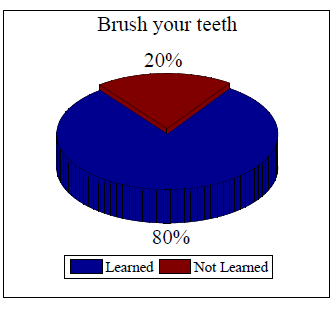
<body><![CDATA[<p class="noindent">    </p> <h4 class="subsectionHead"><span class="titlemark">5.3   </span> <a id="x1-140005.3"></a>Bootstrap algorithm for confidence intervals </h4>  <!--l. 287-->     <p class="noindent">Confidence intervals were implemented by the method of percentiles, which determines the more likely range of learning with the use of PICTOAPRENDE. Considering that the values can be represented visually as a normal distribution or commonly called Gaussian distribution, it is determined that according to the media value, the learning percentage is estimated. <br class="newline"> To develop the Bootstrap confidence intervals, it was used the percentiles method where <img src="/img/revistas/cleiej/v19n1/1a0412x.png" alt="F &prime;(&theta;&prime;)  " class="math"> approximates to <img src="/img/revistas/cleiej/v19n1/1a0413x.png" alt="F (&theta;)  " class="math">. The idea is that an interval with a confidence level of <img src="/img/revistas/cleiej/v19n1/1a0414x.png" alt="1- &alpha;  " class="math"> includes all the values of <img src="/img/revistas/cleiej/v19n1/1a0415x.png" alt="&theta;&prime; " class="math"> between percentiles <img src="/img/revistas/cleiej/v19n1/1a0416x.png" alt="&alpha;&#8725;2  " class="math"> and <img src="/img/revistas/cleiej/v19n1/1a0417x.png" alt="(1 - &alpha; &#8725;2)  " class="math"> of the distribution of <img src="/img/revistas/cleiej/v19n1/1a0418x.png" alt="F &prime;(&theta;&prime;)  " class="math">. <span class="cite">[<a href="#X13">15</a><a id="br15">]</a></span> <br class="newline"> To develop the confidence intervals we will work separately with the initial and final data, obtaining thus independent results of CI for the learning media of each option of the application. The following algorithm was set as pattern: <!--l. 291--></p>     <p class="indent">      </p> <ol class="enumerate1">       <li class="enumerate" id="x1-14002x1">Save initial data obtained from the sample of 20 children and young people with ASD in a set <img src="/img/revistas/cleiej/v19n1/1a0419x.png" alt="X  " class="math">.      </li>       <li class="enumerate" id="x1-14004x2">Select randomly and with replacement 20 data from set <img src="/img/revistas/cleiej/v19n1/1a0420x.png" alt="X  " class="math">.      </li>       <li class="enumerate" id="x1-14006x3">Calculate the average of the taken resample.      </li>       <li class="enumerate" id="x1-14008x4">Repeat steps 2 and 3 at least 1000 times.      </li>       <li class="enumerate" id="x1-14010x5">Estimate the 2.5 and 97.5 percentiles of the distribution of the media based on the mean values obtained      by the previous step. These would become the limits of a bootstrap confidence interval of 95%.      </li>       <li class="enumerate" id="x1-14012x6">Perform steps 1 to 5 with the final data of the sample in order to obtain the confidence interval.      </li>     </ol>  <!--l. 303-->     <p class="noindent">    </p> <h3 class="sectionHead"><span class="titlemark">6   </span> <a id="x1-150006"></a>Experimental results </h3>  <!--l. 304-->     <p class="noindent">The following section describes the findings along with the technical differences. All data went through hypothesis testing for validation purposes; a value of 0,05 was yielded for all options of PICTOAPRENDE, thus claiming 95% of certainty on the data. Furthermore, this allows the realization of confidence intervals to determine the most probable learning range. <br class="newline"> Next, the results are displayed according to the classical statistics by using pie charts, which represent the final percentage of learning. Then this is compared with the results obtained by using bootstrap technique, which is based on confidence intervals. This was done for every single option of the application. <!--l. 310--></p>     <p class="noindent">    </p> <h4 class="subsectionHead"><span class="titlemark">6.1   </span> <a id="x1-160006.1"></a>PictoActions </h4>  <!--l. 311-->     <p class="noindent">During the period of evaluation, visual and aural memory were improved. It has to be consider that several of this actions were realized by users with almost no difficulty, thus getting better interaction in his/her daily life. <br class="newline"> The percentages achieved by users at the end of the learning process on each activity is presented by measuring the aptitudes on the skills performance scale set before.      </p> <ul class="itemize1">       <li class="itemize"><span class="cmbx-10">Brush your teeth: </span>Of a total of 20 students, 16 of them succeeded at learning the sequence of      brushing their teeth without difficulty. This corresponds to 80% of the total sample. The remaining      20% failed to learn this routine due to lack of attendance, as it is shown in Figure 9.</li>     </ul>                                                                                                                                                                                          <div class="center"> <!--l. 322-->     ]]></body>
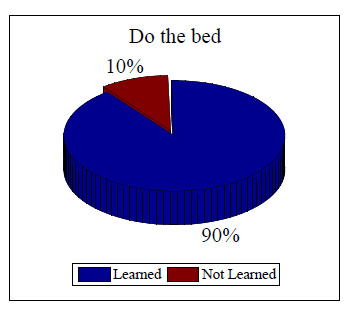
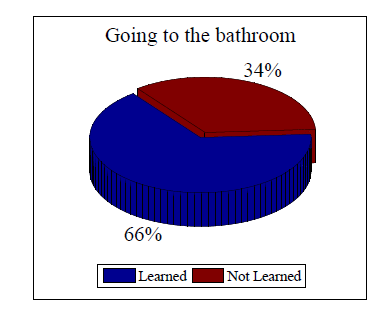
<body><![CDATA[<p class="noindent">  <!--l. 323--></p>     <p class="noindent"><img src="/img/revistas/cleiej/v19n1/1a04f9.png" alt="PIC"> <a id="x1-16001r9"></a>     <br>  </p>     <div class="caption"><span class="id">Figure&nbsp;9: </span><span class="content">Analysis of brush my teeth option</span></div> <!--tex4ht:label?: x1-16001r9 --> </div>        <ul class="itemize1">       <li class="itemize"><span class="cmbx-10">Do the bed: </span>Of a total of 20 students, 18 of them succeeded at learning the sequence of making the      bed without difficulty. This corresponds to 90% of the total sample. The remaining 10% do not carry      out this daily activity, hence they have no need to learn it. See Figure 10.</li>     </ul>      <div class="center"> <!--l. 335-->     <p class="noindent">  <!--l. 336--></p>     <p class="noindent"><img src="/img/revistas/cleiej/v19n1/1a04f10.png" alt="PIC"> <a id="x1-16002r10"></a>     <br>  </p>     <div class="caption"><span class="id">Figure&nbsp;10: </span><span class="content">Analysis of making the bed option.</span></div> <!--tex4ht:label?: x1-16002r10 --> </div>        <ul class="itemize1">       <li class="itemize"><span class="cmbx-10">Go to the bathroom: </span>From a total of 20 students 19 of them succeeded in learning the sequence to      go to the bathroom without difficulty, which corresponds to 60% of the total sample.      <!--l. 346-->         ]]></body>
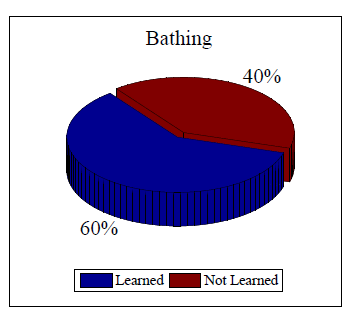
<body><![CDATA[<p class="noindent">The remaining 5% due to physiological defects may not go to the bathroom by themselves. See Figure      11.</p>   </li>     </ul>      <div class="center"> <!--l. 350-->     <p class="noindent">  <!--l. 351--></p>     <p class="noindent"><img src="/img/revistas/cleiej/v19n1/1a04f11.png" alt="PIC"> <a id="x1-16003r11"></a>     <br>  </p>     <div class="caption"><span class="id">Figure&nbsp;11: </span><span class="content">Analysis of the option of going to the bathroom</span></div> <!--tex4ht:label?: x1-16003r11 --> </div>        <ul class="itemize1">       <li class="itemize"><span class="cmbx-10">Bathing: </span>From a total of 20 students, 12 of them succeeded in learning the bathing sequence without      any difficulty. This corresponds to 60% of the total sample, and the remaining 40% cannot bathe by      themselves due to motor disabilities, since help and supervision are needed.</li>     </ul>      <div class="center"> <!--l. 361-->     <p class="noindent">  <!--l. 362--></p>     ]]></body>
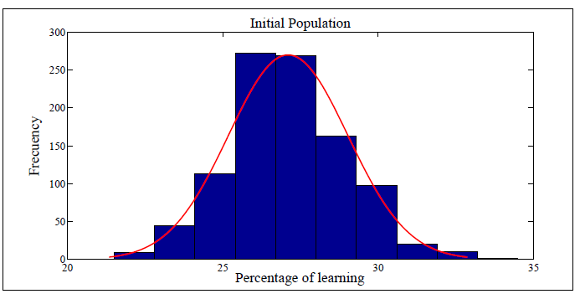
<body><![CDATA[<p class="noindent"><img src="/img/revistas/cleiej/v19n1/1a04f12.png" alt="PIC"> <a id="x1-16004r12"></a>     <br>  </p>     <div class="caption"><span class="id">Figure&nbsp;12: </span><span class="content">Analysis of the take a shower option</span></div> <!--tex4ht:label?: x1-16004r12 --> </div>  <!--l. 368-->     <p class="indent">   Figure 13 shows the confidence interval of the population sampling. It ranges from 23.5 to 30.5 percent; this shows a deficient knowledge before the use of PICTOAPRENDE because the starting point corresponds to 27% of the knowledge, which was acquired by using traditional methods. <br class="newline">                                                                                                                                                                                      </p>     <div class="center"> <!--l. 371-->     <p class="noindent">  <!--l. 372--></p>     <p class="noindent"><img src="/img/revistas/cleiej/v19n1/1a04f13.png" alt="PIC"> <a id="x1-16005r13"></a>     <br>  </p>     <div class="caption"><span class="id">Figure&nbsp;13: </span><span class="content">Normal distribution with initial data of PictoActions</span></div> <!--tex4ht:label?: x1-16005r13 --> </div>  <!--l. 380-->     <p class="indent">   Figure 14 presents the learning evolution within the population, since the media has a value of 69%. Additionally, this percentage determines an optimal learning average, which is taken with this option and considering that the learning percentage for hygiene sequences was raised by 42%. The confidence interval was obtained as 62-75 percent. This range guarantees 95% of certainty for the learning process of the sequences. A slow improvement was reflected, consequently the target was not achieved with some of the users, and this could be visualized through non-verbal communication, eye contact, facial expression, and social interaction regulatory gestures.<span class="cite">[<a href="#X12">16</a><a id="br16">]</a></span> </p>     ]]></body>
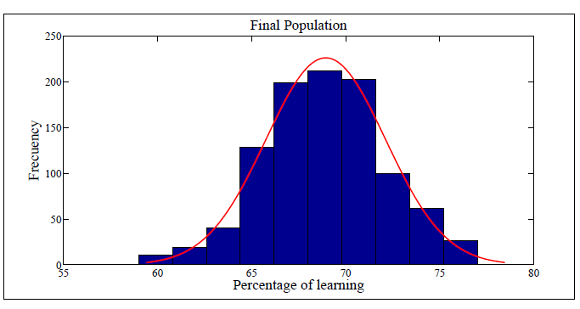
<body><![CDATA[<div class="center"> <!--l. 384-->     <p class="noindent">  <!--l. 385--></p>     <p class="noindent"><img src="/img/revistas/cleiej/v19n1/1a04f14.png" alt="PIC"> <a id="x1-16006r14"></a>     <br>  </p>     <div class="caption"><span class="id">Figure&nbsp;14: </span><span class="content">Normal distribution with final data of PictoAcciones</span></div> <!--tex4ht:label?: x1-16006r14 --> </div>  <!--l. 391-->     <p class="noindent">    </p> <h4 class="subsectionHead"><span class="titlemark">6.2   </span> <a id="x1-170006.2"></a>PictoSentences.</h4>  <!--l. 392-->     <p class="noindent">It is an option that provides users with phrases that are used daily such as I want to go to the bathroom, I am hungry, I am thirsty and others. This options helps to encourage people&rsquo;s attention and concentration as well as their bond with the surrounding environment. Vocalization of words through repletion is also stimulated. <br class="newline">  </p>     <div class="center"> <!--l. 395-->     <p class="noindent">  <!--l. 396--></p>     <p class="noindent"><img src="/img/revistas/cleiej/v19n1/1a04f15.png" alt="PIC"> <a id="x1-17001r15"></a>     ]]></body>
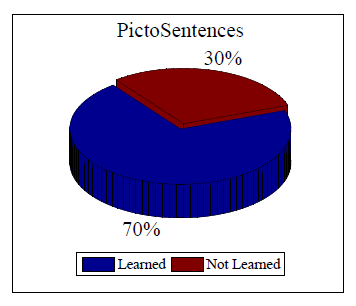
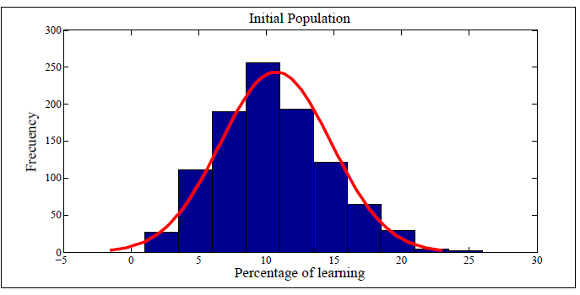
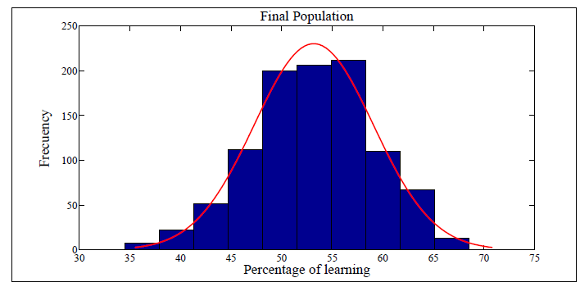
<body><![CDATA[<br>  </p>     <div class="caption"><span class="id">Figure&nbsp;15: </span><span class="content">Analysis of the PictoSentences option</span></div> <!--tex4ht:label?: x1-17001r15 --> </div>  <!--l. 403-->     <p class="indent">   Figure 15 shows that 70% of beneficiaries got to pronounce phrases formed by two or three words. This represents a big step ahead due to the users of this application were monosyllables at the beginning and in some cases they were non-verbal. <br class="newline"> The use of bootstrap initially yields a confidence interval of 3-19.25 percent; this shows a low concatenation of words to form phrases as it can be seen in Figure 16, where the corresponding media is 10.5 %. </p>     <div class="center"> <!--l. 407-->     <p class="noindent">  <!--l. 408--></p>     <p class="noindent"><img src="/img/revistas/cleiej/v19n1/1a04f16.png" alt="PIC"> <a id="x1-17002r16"></a>     <br>  </p>     <div class="caption"><span class="id">Figure&nbsp;16: </span><span class="content">Normal distribution with initial data of PictoSentences</span></div> <!--tex4ht:label?: x1-17002r16 --> </div>  <!--l. 412-->     <p class="indent">   Figure 17 shows an average of 53% and a confidence interval of 40.5 - 64 percent; range in which we can state a significant advance in oral communication of children and young people with ASD. The obtained results were very close compared to the ones gotten with descriptive statistics. <br class="newline">                                                                                                                                                                                      </p>     <div class="center"> <!--l. 414-->     ]]></body>
<body><![CDATA[<p class="noindent">  <!--l. 415--></p>     <p class="noindent"><img src="/img/revistas/cleiej/v19n1/1a04f17.png" alt="PIC"> <a id="x1-17003r17"></a>     <br>  </p>     <div class="caption"><span class="id">Figure&nbsp;17: </span><span class="content">Normal distribution with final data of PictoSentences</span></div> <!--tex4ht:label?: x1-17003r17 --> </div>  <!--l. 422-->     <p class="noindent">    </p> <h4 class="subsectionHead"><span class="titlemark">6.3   </span> <a id="x1-180006.3"></a>PictoNumbers</h4>  <!--l. 423-->     <p class="noindent">Memorization and repetition exercises were realized by the use of this option. Thus, getting the right pronunciation and identification of the natural numbers, which shows the numbers from 0 to 9 along with their pronunciation in Spanish. </p>     <div class="center"> <!--l. 426-->     <p class="noindent">  <!--l. 427--></p>     <p class="noindent"><img src="/img/revistas/cleiej/v19n1/1a04f18.png" alt="PIC"> <a id="x1-18001r18"></a>     <br>  </p>     ]]></body>
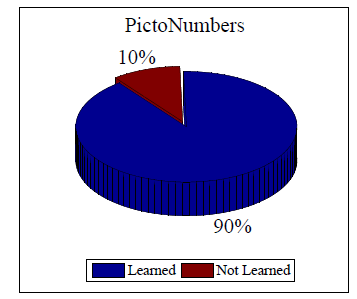
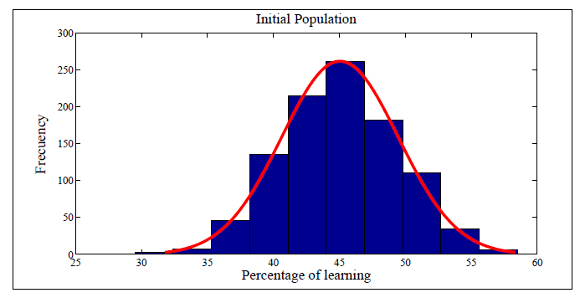
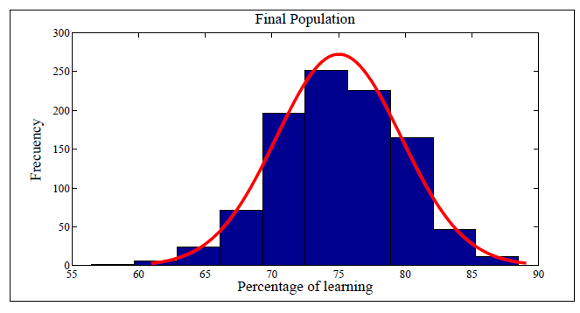
<body><![CDATA[<div class="caption"><span class="id">Figure&nbsp;18: </span><span class="content">Analysis of the PictoNumbers option</span></div> <!--tex4ht:label?: x1-18001r18 --> </div>  <!--l. 432-->     <p class="indent">   A high percentage was gotten by using pictonumbers, as shown in Figure 18. This was achieved due to the majority of children and young people already had a basic knowledge about digits, thus getting reinforcement and sound knowledge on this topic. <br class="newline"> Utilizing bootstrap allowed to determine that people already had a prior knowledge about this actions, hence obtaining a media of 45% and a confidence interval of 36-54 percent. This shows an acceptable knowledge of the numbers from 1 to 9 before running the PICTOAPRENDE study. See Figure 19.<br class="newline">  </p>     <div class="center"> <!--l. 436-->     <p class="noindent">  <!--l. 437--></p>     <p class="noindent"><img src="/img/revistas/cleiej/v19n1/1a04f19.png" alt="PIC"> <a id="x1-18002r19"></a>     <br>  </p>     <div class="caption"><span class="id">Figure&nbsp;19: </span><span class="content">Normal distribution with initial data of PictoNumbers</span></div> <!--tex4ht:label?: x1-18002r19 --> </div>  <!--l. 443-->     <p class="indent">   Using the final data, a media of 75% was obtained. This shows that the population under study possesses a good knowledge about this topic. The confidence interval ranges from 64 to 84 percent; this range guarantee the learning process with a certainty of 95%. See Figure 20.<br class="newline">  </p>     <div class="center"> <!--l. 446-->     <p class="noindent">  <!--l. 447--></p>     ]]></body>
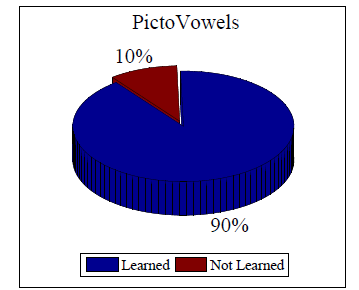
<body><![CDATA[<p class="noindent"><img src="/img/revistas/cleiej/v19n1/1a04f20.png" alt="PIC"> <a id="x1-18003r20"></a>     <br>  </p>     <div class="caption"><span class="id">Figure&nbsp;20: </span><span class="content">Normal distribution with final data of PictoNumbers</span></div> <!--tex4ht:label?: x1-18003r20 --> </div>  <!--l. 454-->     <p class="noindent">    </p> <h4 class="subsectionHead"><span class="titlemark">6.4   </span> <a id="x1-190006.4"></a>PictoVowels</h4>  <!--l. 455-->     <p class="noindent">By the deployment of didactic methods for learning embedded in the PICTOAPRENDE application, the five Spanish vowels were recognized in the 90% of users as shown in Figure 21.                                                                                                                                                                                     </p>     <div class="center"> <!--l. 458-->     <p class="noindent">  <!--l. 459--></p>     <p class="noindent"><img src="/img/revistas/cleiej/v19n1/1a04f21.png" alt="PIC"> <a id="x1-19001r21"></a>     <br>  </p>     <div class="caption"><span class="id">Figure&nbsp;21: </span><span class="content">Analysis of the PictoVowels option</span></div> <!--tex4ht:label?: x1-19001r21 --> </div>  <!--l. 464-->     ]]></body>
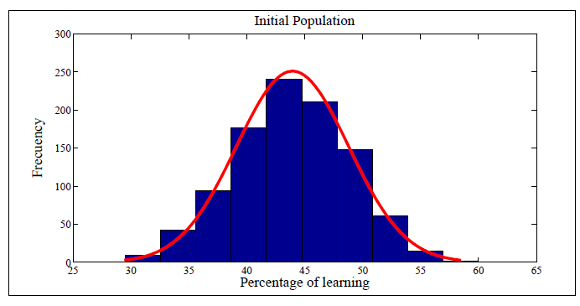
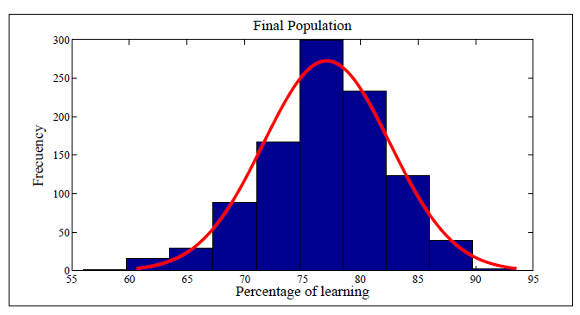
<body><![CDATA[<p class="indent">   Because of the previous job realized by the foundation when learning vowels, the obtained results regarding reinforcement and learning are considered optimum.<br class="newline"> The 10% left are consider cases of severe autism, where a verbal auditory agnosia exists accompanied by a phonological language code. In this cases children and young are able of learning through visual language (gestures, signs, writing). <br class="newline"> The bootstrap technique as well as the one aforementioned showed a high percentage of knowledge, and this was also considered before working with the application. A media of 44% as shown in Figure 22. <br class="newline">  </p>     <div class="center"> <!--l. 469-->     <p class="noindent">  <!--l. 470--></p>     <p class="noindent"><img src="/img/revistas/cleiej/v19n1/1a04f22.png" alt="PIC"> <a id="x1-19002r22"></a>     <br>  </p>     <div class="caption"><span class="id">Figure&nbsp;22: </span><span class="content">Normal distribution with initial data of PictoVowels</span></div> <!--tex4ht:label?: x1-19002r22 --> </div>  <!--l. 476-->     <p class="indent">   Once the learning process was finished, this option was mastered and it is confirmed by the utilization of bootstrap from where the confidence interval, 65 - 86.5 percent, is expected to receive the 95% of the population under study. The obtained media is 77%. See Figure 23<br class="newline">  </p>     <div class="center"> <!--l. 479-->     <p class="noindent">  <!--l. 480--></p>     <p class="noindent"><img src="/img/revistas/cleiej/v19n1/1a04f23.png" alt="PIC"> <a id="x1-19003r23"></a>     ]]></body>
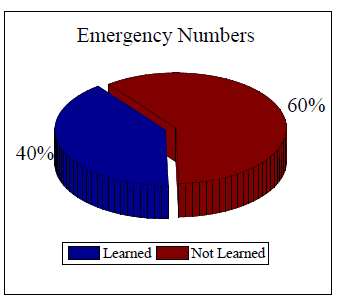
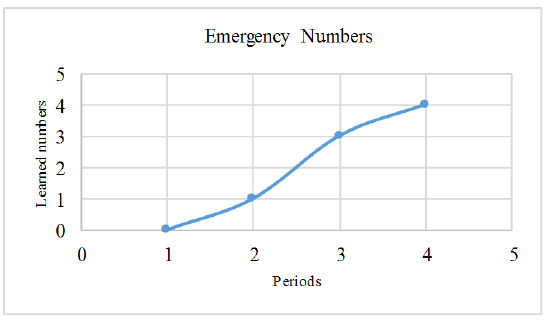
<body><![CDATA[<br>  </p>     <div class="caption"><span class="id">Figure&nbsp;23: </span><span class="content">Normal distribution with final data of PictoVowels</span></div> <!--tex4ht:label?: x1-19003r23 --> </div>  <!--l. 486-->     <p class="noindent">    </p> <h4 class="subsectionHead"><span class="titlemark">6.5   </span> <a id="x1-200006.5"></a>Emergency Numbers </h4>  <!--l. 487-->     <p class="noindent">PictoAprende was used to perform memorization and repetition exercises so that children can get trained with the available emergency numbers in Ecuador, this in the case a real event may happen. <br class="newline"> The application includes Police Station, Firefighters Department, Red Cross and emergency numbers. It also teaches in an interactive and didactic way, thus getting a permanent attention during the learning process. As result 8 out of 20 users recognize and are able to use the application in the case an emergency arises. See Figure 24.<br class="newline">  </p>     <div class="center"> <!--l. 493-->     <p class="noindent">  <!--l. 494--></p>     <p class="noindent"><img src="/img/revistas/cleiej/v19n1/1a04f24.png" alt="PIC"> <a id="x1-20001r24"></a>     <br>  </p>     <div class="caption"><span class="id">Figure&nbsp;24: </span><span class="content">Analysis of option emergency numbers</span></div> <!--tex4ht:label?: x1-20001r24 --> </div>                                                                                                                                                                                          <div class="center"> <!--l. 500-->     ]]></body>
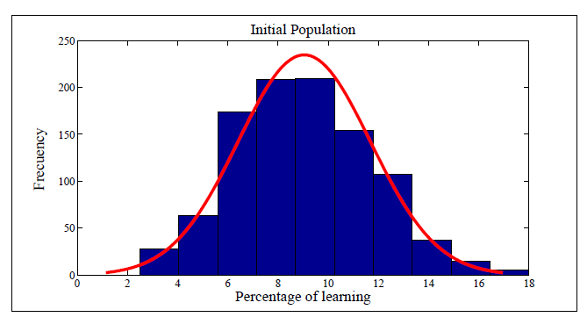
<body><![CDATA[<p class="noindent">  <!--l. 501--></p>     <p class="noindent"><img src="/img/revistas/cleiej/v19n1/1a04f25.png" alt="PIC"> <a id="x1-20002r25"></a>     <br>  </p>     <div class="caption"><span class="id">Figure&nbsp;25: </span><span class="content">Analysis of the trend of learning of emergency numbers</span></div> <!--tex4ht:label?: x1-20002r25 --> </div>  <!--l. 506-->     <p class="indent">   From a sample of 8 children, who learned to manage correctly the emergency numbers application, a gradual progress is showed. It has to be considered that a familiarization stage was done at the beginning as well. <br class="newline"> During the second stage, one of the emergency numbers which corresponds to 911 was memorized.<br class="newline"> During the last two stages, 100% of the proposed numbers was learned. See Figure 25. <br class="newline"> This process was carried out over a long period of time and a low overall rate in user performance. <br class="newline"> The memory is not affected by these disorders although this accompanied by a mental retard, it edges the use of the semantic memory, which is in charge of coding and storing general and specific information in a very structured way. <span class="cite">[<a href="#X11">17</a><a id="br17">]</a></span><br class="newline"> In order to establish a 95% certainty for the results, confidence intervals were obtained at the beginning as well as the end of the use of this option, thus determining a 9% media before the use of PICTOAPRENDE. See Figure 26.<br class="newline">  </p>     <div class="center"> <!--l. 515-->     <p class="noindent">  <!--l. 516--></p>     <p class="noindent"><img src="/img/revistas/cleiej/v19n1/1a04f26.png" alt="PIC"> <a id="x1-20003r26"></a>     <br>  </p>     <div class="caption"><span class="id">Figure&nbsp;26: </span><span class="content">Normal distribution with initial data of Emergency Numbers</span></div> <!--tex4ht:label?: x1-20003r26 --> </div>  <!--l. 521-->     ]]></body>
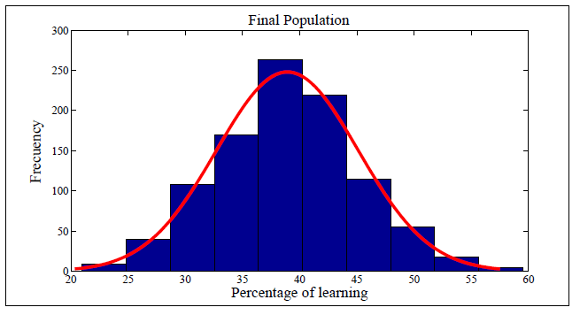
<body><![CDATA[<p class="indent">   Upon completion of the training process, an average of 39%. Although this do not represents an important improvement, it determines a pattern for a next stage of learning, since the confidence interval is between 27.5% and 51.25% as shown in Figure 27. </p>     <div class="center"> <!--l. 524-->     <p class="noindent">  <!--l. 525--></p>     <p class="noindent"><img src="/img/revistas/cleiej/v19n1/1a04f27.png" alt="PIC"> <a id="x1-20004r27"></a>     <br>  </p>     <div class="caption"><span class="id">Figure&nbsp;27: </span><span class="content">Normal distribution with final data of Emergency Numbers</span></div> <!--tex4ht:label?: x1-20004r27 --> </div>  <!--l. 531-->     <p class="noindent">    </p> <h4 class="subsectionHead"><span class="titlemark">6.6   </span> <a id="x1-210006.6"></a>PictoMessages </h4>  <!--l. 532-->     <p class="noindent">By using PictoMessages, users were able to interact with their surrounding environment and showing their needs and emergencies by sending text messages and emails.<br class="newline">  </p>     <div class="center"> <!--l. 535-->     <p class="noindent">  <!--l. 536--></p>     ]]></body>
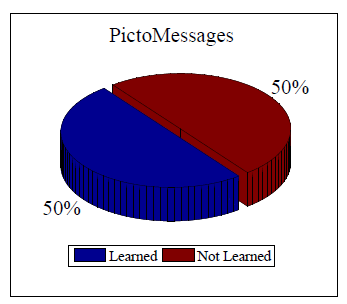
<body><![CDATA[<p class="noindent"><img src="/img/revistas/cleiej/v19n1/1a04f28.png" alt="PIC"> <a id="x1-21001r28"></a>     <br>  </p>     <div class="caption"><span class="id">Figure&nbsp;28: </span><span class="content">Analysis of the PictoMessages option</span></div> <!--tex4ht:label?: x1-21001r28 --> </div>                                                                                                                                                                                      <!--l. 541-->     <p class="indent">   As it can be seen in Figure 28, 50% of the sample was able to understand the functioning of this option and the remaining 50% did not achieve the desired results because they did not realized that at selecting a different option, a message is sent to family&rsquo;s pre-established phone number.<br class="newline"> The study showed null knowledge before the use of this application. This due to this option is uniquely presented in PICTOAPRENDE. An initial media of 1.5% was determined by using bootstrap technique. See figure 29.<br class="newline">  </p>     <div class="center"> <!--l. 545-->     <p class="noindent">  <!--l. 546--></p>     <p class="noindent"><img src="/img/revistas/cleiej/v19n1/1a04f29.png" alt="PIC"> <a id="x1-21002r29"></a>     <br>  </p>     <div class="caption"><span class="id">Figure&nbsp;29: </span><span class="content">Normal distribution with initial data of PictoMessages</span></div> <!--tex4ht:label?: x1-21002r29 --> </div>  <!--l. 551-->     <p class="indent">   Once completed the learning period, a average of 43% was obtained, thus determining a confidence interval of 30.5% to 54.5%. This range guarantees the learning with 95% certainty. See Figure 30.<br class="newline"> Because of the percentages obtained by the two techniques, a progressive advancement and a good reaction towards this option were demonstrated. Therefore, it is recommended to perform studies and test for longer periods of time. <br class="newline">  </p>     ]]></body>
<body><![CDATA[<div class="center"> <!--l. 555-->     <p class="noindent">  <!--l. 556--></p>     <p class="noindent"><img src="/img/revistas/cleiej/v19n1/1a04f30.png" alt="PIC"> <a id="x1-21003r30"></a>     <br>  </p>     <div class="caption"><span class="id">Figure&nbsp;30: </span><span class="content">Normal distribution with final data of PictoMessages</span></div> <!--tex4ht:label?: x1-21003r30 --> </div>  <!--l. 564-->     <p class="noindent">    </p> <h3 class="sectionHead"><span class="titlemark">7   </span> <a id="x1-220007"></a>Analysis of results</h3>  <!--l. 566-->     <p class="noindent">As it was determined in the former paragraph, the learning results, obtained with the PICTOAPRENDE tool, were satisfactory. This considering that the data was validated through statistical techniques such as descriptive statistics and bootstrap. The first one tries to summarize the data in a quantitative manner, thus getting learning percentages after the study of the tabulated data once the tool was utilized. The second one is applied to support the learning affirmations as well as make decisions and come up with conclusions from the collected data of the population. It has to be considered that the earning process of the population with ASD is closer to reality, since a great number of random samples is generated, hence emulating a wider population sample. <br class="newline"> Table 1 shows the obtained results after processing the information. For instance, considering the PictoActions option and descriptive statistics, it can be observed that 14 out of 20 children learnt this option. Additionally, through the use of confidence intervals, it can be assured that the learning process of the users would be placed in a range between 62 and 72% with a certainty of 95%. Based on this, it can be reflected that between 2 and 3 out of 4 actions were mastered by using this option and this after the continuous use of the tool for at least six months.<br class="newline"> Grounded on the yielded results with PICTOAPRENDE, it can be said that the application is versatile and usefulness for people diagnosed with ASD; this considering that in modern times people are opting for &ldquo;mobile learning&rdquo;. Furthermore, it has to be mentioned that this tendency is modifying the educational habits. Technological breakthroughs during the last decades are making possible the development of studying methods that are more dynamic, complementary, and interactive; they are usually wireless, therefore catching the attention of children and people with ASD. <span class="cite">[<a href="#X17">18</a><a id="br18">]</a></span><br class="newline"> A drawback of this tools is the fact that it cannot be assured that the user is able to alert when an emergency situation may arise. This due to the low learning indexes shown with the PictoMessages and Emergency numbers options. Also, users tend to develop a tendency to depend on the device, consequently they end up in a lack of concentration and attention of their surrounding environment. This fool the objective of the tool, which is the insertion of the user into society. As a contrast this would foster the lack of capacity to communicate and develop                                                                                                                                                                                     social interaction skills. This application shall be used under the supervision and responsibility of adults. </p>     <div class="center"> <!--l. 572-->     <p class="noindent"> </p>     <div class="table"> <!--l. 573-->     ]]></body>
<body><![CDATA[<p class="noindent"><a id="x1-22001r1"></a></p> <hr class="float">     <div class="float">      <div class="pic-tabular"><img src="/img/revistas/cleiej/v19n1/1a0421x.png" alt="|-----------------|------------------|----------------------------------------------------| |                 |                  |                                                    | |                 |                  |                                                    | |                 |                  |                  Trust intervals                   | |                 |                  |                                                    | |                 |                  |------------|------------|-------------|------------| |                 |     Learning     |            |            |             |            | |Analysis      of |   outcomes  of   |   Initial   |   Initial   |    Final    |   Final    | |data/Options     |    descriptive    |  media %   | confidence  |  media %    |con fidence  | ----------------------statistics %-------------------interval-%-----------------interval %--- |PictoActions-----|-81---------------|27----------|23,5--30.5---|-69----------|62----75----| |PictoSentences---|-70---------------|10.5--------|3-----19.25--|-53----------|40.5---64----| |PictoNumbers-----|-90---------------|45----------|36----54----|-75----------|64----84----| |PictoVowels------|-90---------------|44----------|34,5--53.5--|-77----------|65----86.5---| |PictoMessages----|-50---------------|1.5---------|2,5---10----|-43----------|30.5---54.5---| |Emergency--num---|------------------|------------|------------|-------------|------------| |bers             | 40               |9           |4,5  -14.5   | 39          |27.5 - 51.25  | ------------------------------------------------------------------------------------------- "></div>      <br>       <div class="caption"><span class="id">Table&nbsp;1: </span><span class="content">Results obtained</span></div> <!--tex4ht:label?: x1-22001r1 --> </div> <hr class="endfloat"> </div>  </div>  <!--l. 596-->     <p class="noindent">    </p> <h3 class="sectionHead"><span class="titlemark">8   </span> <a id="x1-230008"></a>Conclusions</h3>  <!--l. 597-->     <p class="noindent">PICTOAPRENDE is an interactive application which is oriented to children and young people diagnosed with moderate ASD in Ecuador. The application counts with a series of options that aims to help people during the learning process. This helps to people&rsquo;s reinsertion into society by improving their communication skills. PICTOAPRENDE can be run in electronic devices such as tablets and cell phones, since technology arises interest on children and young people with ASD, this has allowed to obtain satisfactory results. Therefore, it can be also concluded that specialized education since a very early stage in life helps to achieve significant indexes of independence on people diagnosed with ASD. After the study, it can be asserted with a 95% certainty that users are able to achieve high memorizing rates. However, although good results are obtained after the evaluation, it is recommended to realize more trials and studies for longer periods of time. <!--l. 2--></p>     <p class="noindent">    </p> <h3 class="likesectionHead"><a id="x1-240008"></a>References</h3>  <!--l. 2-->     <p class="noindent">     </p>     <div class="thebibliography">          ]]></body>
<body><![CDATA[<p class="bibitem"><span class="biblabel">   [<a href="#br1">1</a>]<span class="bibsp">&nbsp;&nbsp;&nbsp;</span></span><a id="X0"></a>A.&nbsp;C&aacute;rdenas, E.&nbsp;Segovia, J.&nbsp;Tobar, D.&nbsp;De&nbsp;la Cruz, P.&nbsp;Mej&iacute;a, and N.&nbsp;Paredes, &ldquo;Pictoaprende: Application that contributes to the personal autonomy of children and youth with autism spectrum disorder in ecuador,&rdquo; <span class="cmti-10">Computing Conference (CLEI), 2015 Latin American</span>, pp. 1&ndash;8, 2015. [Online].     Available: <a href="http://dx.doi.org/10.1109/clei.2015.7360023" class="url">http://dx.doi.org/10.1109/clei.2015.7360023</a>                                                                                                                                                                                         </p>           <!-- ref --><p class="bibitem"><span class="biblabel">   [<a href="#br2">2</a>]<span class="bibsp">&nbsp;&nbsp;&nbsp;</span></span><a id="X1"></a>M.&nbsp;Bernardos and A.&nbsp;R. G&oacute;mez, <span class="cmti-10">Autismo</span>, 2nd&nbsp;ed.   Espa&ntilde;a: Alianza Editorial, 2004.         </p>           <p class="bibitem"><span class="biblabel">   [<a href="#br3">3</a>]<span class="bibsp">&nbsp;&nbsp;&nbsp;</span></span><a id="X2"></a>L.&nbsp;M.   Josefina,   &ldquo;Software   para   ense&ntilde;ar   emociones   al   alumnado   con   trastorno   del     espectro  autista,&rdquo;  <span class="cmti-10">Revista  Comunicar</span>,  vol.&nbsp;18,  no.&nbsp;36,  pp.  139&ndash;148,  2011.  [Online].  Available:     <a href="http://www.redalyc.org/articulo.oa?id=15817007017" class="url">http://www.redalyc.org/articulo.oa?id=15817007017</a>     </p>           <p class="bibitem"><span class="biblabel">   [<a href="#br4">4</a>]<span class="bibsp">&nbsp;&nbsp;&nbsp;</span></span><a id="X3"></a>D.&nbsp;Avil&eacute;s, &ldquo;Dise&ntilde;o de un centro recreacional para ni&ntilde;os con autismo en el valle de cumbaya, quito,&rdquo; <span class="cmti-10">Universidad   Internacional   SEK</span>,    2014.    [Online].    Available:     <a href="http://repositorio.uisek.edu.ec/jspui/handle/123456789/910" class="url">http://repositorio.uisek.edu.ec/jspui/handle/123456789/910</a>     </p>           <!-- ref --><p class="bibitem"><span class="biblabel">   [<a href="#br5">5</a>]<span class="bibsp">&nbsp;&nbsp;&nbsp;</span></span><a id="X4"></a>K.&nbsp;Tutiv&eacute;n,  <span class="cmti-10">Propuesta  operativa  para  la  inclusi</span><span class="cmti-10">&oacute;n  educativa  de  ni</span><span class="cmti-10">&ntilde;os  y  ni</span><span class="cmti-10">&ntilde;as  con  necesidades</span>     <span class="cmti-10">educativas especiales derivadas de la discapacidad intelectual de 3 a 5 a</span><span class="cmti-10">&ntilde;os de edad en los centros</span>     <span class="cmti-10">de  desarrollo  infantil  municipales  de  la  ciudad  de  Cuenca</span>,  Cuenca,  2012.  [Online].  Available:     <a href="http://dspace.uazuay.edu.ec/handle/datos/3040" class="url">http://dspace.uazuay.edu.ec/handle/datos/3040</a>     <p class="bibitem"><span class="biblabel">   [<a href="#br6">6</a>]<span class="bibsp">&nbsp;&nbsp;&nbsp;</span></span><a id="X5"></a>G.&nbsp;Herrera, X.&nbsp;Casas, J.&nbsp;Sevilla, L.&nbsp;Rosa, C.&nbsp;Pardo, J.&nbsp;Plaza, and R.&nbsp;S.&nbsp;G. Jordan, &ldquo;Pictogram room : Aplicaci&oacute;n de tecnolog&iacute;as de interacci&oacute;n natural para el desarrollo del ni&ntilde;o con autismo,&rdquo; <span class="cmti-10">Anuario  de  Psicolog</span><span class="cmti-10">&iacute;a  Cl</span><span class="cmti-10">&iacute;nica  y  de  la  Salud</span>,  vol.&nbsp;08,  pp.  41&ndash;46,  2011.  [Online].  Available:     <a href="https://dialnet.unirioja.es/servlet/articulo?codigo=4620745" class="url">https://dialnet.unirioja.es/servlet/articulo?codigo=4620745</a>     </p>           <p class="bibitem"><span class="biblabel">   [<a href="#br7">7</a>]<span class="bibsp">&nbsp;&nbsp;&nbsp;</span></span><a id="X6"></a>A.&nbsp;Riviere,  &ldquo;Modificaci&oacute;n  de  conducta  en  el  autismo  infantil,&rdquo;  <span class="cmti-10">Revista Espa</span><span class="cmti-10">&ntilde;ola de Pedagog</span><span class="cmti-10">&iacute;a</span>,     vol.&nbsp;42, no. 164, pp. 283&ndash;316, 1984. [Online]. Available: <a href="http://www.jstor.org/stable/23764136" class="url">http://www.jstor.org/stable/23764136</a>     </p>           <p class="bibitem"><span class="biblabel">   [<a href="#br8">8</a>]<span class="bibsp">&nbsp;&nbsp;&nbsp;</span></span><a id="X7"></a>A.&nbsp;D&iacute;ez-Cuervo, J.&nbsp;Mu&ntilde;oz-Yunta, J.&nbsp;Fuentes-Biggi, R.&nbsp;Canal-Bedia, M.&nbsp;Idiaz&aacute;bal-Aletxa, M.&nbsp;Ferrari-Arroyo, F.&nbsp;Mulas, J.&nbsp;Tamarit, J.&nbsp;Valdiz&aacute;n, A.&nbsp;Herv&aacute;s-Z&uacute;&ntilde;iga <span class="cmti-10">et</span><span class="cmti-10">&nbsp;al.</span>,     &ldquo;Gu&iacute;a de buena pr&aacute;ctica para el diagn&oacute;stico de los trastornos del espectro autistal,&rdquo; <span class="cmti-10">Rev Neurol</span>, vol.&nbsp;41,     no.&nbsp;5, pp. 299&ndash;310, 2005.     </p>           <!-- ref --><p class="bibitem"><span class="biblabel">   [<a href="#br9">9</a>]<span class="bibsp">&nbsp;&nbsp;&nbsp;</span></span><a id="X16"></a>S.&nbsp;F. Fern&aacute;ndez, J.&nbsp;M.&nbsp;C. S&aacute;nchez, A.&nbsp;C&oacute;rdoba, J.&nbsp;M. Cordero, and A.&nbsp;C. Largo, <span class="cmti-10">Estad</span><span class="cmti-10">&iacute;stica</span>     <span class="cmti-10">descriptiva</span>.   Madrid: ESIC Editorial, 2002.         </p>           <p class="bibitem"><span class="biblabel">  [<a href="#br10">10</a>]<span class="bibsp">&nbsp;&nbsp;&nbsp;</span></span><a id="X8"></a>L.&nbsp;Margulis,  &ldquo;Funcionamiento  de  los  sistemas  de  memoria  en  ni&ntilde;os  con  trastorno  autista  y     trastorno  de  asperger,&rdquo;  <span class="cmti-10">Revista  Argentina  de  Neuropsicolog</span><span class="cmti-10">&iacute;a</span>,  vol.&nbsp;13,  pp.  29&ndash;48,  2009.  [Online].     Available: <a href="http://revneuropsi.com.ar/pdf/numero13/Margulis.pdf" class="url">http://revneuropsi.com.ar/pdf/numero13/Margulis.pdf</a>     </p>           <!-- ref --><p class="bibitem"><span class="biblabel">  [<a href="#br11">11</a>]<span class="bibsp">&nbsp;&nbsp;&nbsp;</span></span><a id="X14"></a>C.&nbsp;Z. Mooney, R.&nbsp;D. Duval, and R.&nbsp;Duval, <span class="cmti-10">Bootstrapping: A nonparametric approach to statistical</span>     <span class="cmti-10">inference</span>.   Sage, 1993, no. 94-95.                                                                                                                                                                                             </p>           <p class="bibitem"><span class="biblabel">  [<a href="#br12">12</a>]<span class="bibsp">&nbsp;&nbsp;&nbsp;</span></span><a id="X9"></a>A.&nbsp;Rodr&iacute;guez-Barrionuevo and M.&nbsp;Rodr&iacute;guez-Vives, &ldquo;Diagn&oacute;stico cl&iacute;nico del autismo,&rdquo; <span class="cmti-10">Revista     de     Neurolog</span><span class="cmti-10">&iacute;a</span>,     vol.&nbsp;34,     no.&nbsp;1,     pp.     72&ndash;77,     2002.     [Online].     Available:     <a href="http://www.neurologia.com/pdf/web/34s1/ms10072.pdf" class="url">http://www.neurologia.com/pdf/web/34s1/ms10072.pdf</a>     </p>           <!-- ref --><p class="bibitem"><span class="biblabel">  [<a href="#br13">13</a>]<span class="bibsp">&nbsp;&nbsp;&nbsp;</span></span><a id="X10"></a>J.&nbsp;Ortega,  <span class="cmti-10">Hasta  30  d</span><span class="cmti-10">&iacute;as  de  c</span><span class="cmti-10">&aacute;rcel  por  llamadas  falsas  al  ECU  911</span>,  Ecuador,  2014.  [Online].     Available: <a href="http://www.elcomercio.com/actualidad/carcel-llamadas-ecu911-codigo-penal.html" class="url">http://www.elcomercio.com/actualidad/carcel-llamadas-ecu911-codigo-penal.html</a>     <!-- ref --><p class="bibitem"><span class="biblabel">  [<a href="#br14">14</a>]<span class="bibsp">&nbsp;&nbsp;&nbsp;</span></span><a id="X15"></a>A.&nbsp;M.    Moles    and    T.&nbsp;D.    L.    C.&nbsp;S.    Ay&ccedil;aguer,    <span class="cmti-10">El    M</span><span class="cmti-10">&eacute;todo    de    Remuestreo    y</span>     <span class="cmti-10">su    Aplicaci</span><span class="cmti-10">&oacute;n    en    la    Investigaci</span><span class="cmti-10">&oacute;n    Biom</span><span class="cmti-10">&eacute;dica</span>,    Habana,    2003.    [Online].    Available:     <a href="http://www.sld.cu/galerias/pdf/sitios/revsalud/tesis_de_resampling.pdf" class="url">http://www.sld.cu/galerias/pdf/sitios/revsalud/tesis_de_resampling.pdf</a>     <p class="bibitem"><span class="biblabel">  [<a href="#br15">15</a>]<span class="bibsp">&nbsp;&nbsp;&nbsp;</span></span><a id="X13"></a>J.&nbsp;Gil-Flores, &ldquo;Aplicaci&oacute;n del m&eacute;todo bootstrap al contraste de hip&oacute;tesis en la investigaci&oacute;n educativa,&rdquo; <span class="cmti-10">Revista  de  educaci</span><span class="cmti-10">&oacute;n</span>,  no.  336,  pp.  251&ndash;265,  2005.  [Online].  Available:     <a href="https://dialnet.unirioja.es/servlet/articulo?codigo=1195518" class="url">https://dialnet.unirioja.es/servlet/articulo?codigo=1195518</a>     </p>           <p class="bibitem"><span class="biblabel">  [<a href="#br16">16</a>]<span class="bibsp">&nbsp;&nbsp;&nbsp;</span></span><a id="X12"></a>A.&nbsp;NAVARRO, &ldquo;Nuevas tecnolog&iacute;as aplicadas a la discapacidad,&rdquo; <span class="cmti-10">IMSERSO, Madrid</span>, pp. 391&ndash;397,     1995.     </p>           <p class="bibitem"><span class="biblabel">  [<a href="#br17">17</a>]<span class="bibsp">&nbsp;&nbsp;&nbsp;</span></span><a id="X11"></a>L.&nbsp;P&eacute;rez, &ldquo;Aplicaciones inform&aacute;ticas para personas con trastornos del espectro autista,&rdquo; <span class="cmti-10">Congreso      Regional      Las      Necesidades      Educativas      Especiales:</span>     <span class="cmti-10">Situaci</span><span class="cmti-10">&oacute;n     actual     y     retos     de     futuro</span>,     pp.     391&ndash;397,     2013.     [Online].     Available:     <a href="https://www.researchgate.net/publication/39208688_Aplicaciones_informaticas_para_personas_con_trastornos_del_espectro_autista" class="url">https://www.researchgate.net/publication/39208688_Aplicaciones_informaticas_para_personas_con_trastornos_del_espectro_autista</a>     </p>           ]]></body>
<body><![CDATA[<p class="bibitem"><span class="biblabel">  [<a href="#br18">18</a>]<span class="bibsp">&nbsp;&nbsp;&nbsp;</span></span><a id="X17"></a>J.&nbsp;Vila&nbsp;Rosas, &ldquo;El tel&eacute;fono m&oacute;vil como herramienta educativa: el m-learning.. repaso a iniciativas     y proyectos de investigaci&oacute;n para conocer las posibilidades que ofrece el uso en los sistemas educativos     de peque&ntilde;os dispositivos m&oacute;viles.&rdquo; <span class="cmti-10">Primeras Noticias: Comunicaci</span><span class="cmti-10">&oacute;n y Pedagog</span><span class="cmti-10">&iacute;a</span>, no. 226, pp. 52&ndash;55,     2008. </p>      </div>            ]]></body><back>
<ref-list>
<ref id="B1">
<label>1</label><nlm-citation citation-type="">
<person-group person-group-type="author">
<name>
<surname><![CDATA[Cárdenas]]></surname>
<given-names><![CDATA[A]]></given-names>
</name>
<name>
<surname><![CDATA[Segovia]]></surname>
<given-names><![CDATA[E]]></given-names>
</name>
<name>
<surname><![CDATA[Tobar]]></surname>
<given-names><![CDATA[J]]></given-names>
</name>
<name>
<surname><![CDATA[De la Cruz]]></surname>
<given-names><![CDATA[D.]]></given-names>
</name>
<name>
<surname><![CDATA[Mejía]]></surname>
<given-names><![CDATA[P.]]></given-names>
</name>
<name>
<surname><![CDATA[Paredes]]></surname>
<given-names><![CDATA[N]]></given-names>
</name>
</person-group>
<article-title xml:lang="en"><![CDATA[Pictoaprende: Application that contributes to the personal autonomy of children and youth with autism spectrum disorder in ecuador]]></article-title>
<source><![CDATA[Computing Conference]]></source>
<year>2015</year>
<page-range>1-8</page-range></nlm-citation>
</ref>
<ref id="B2">
<label>2</label><nlm-citation citation-type="book">
<person-group person-group-type="author">
<name>
<surname><![CDATA[Bernardos]]></surname>
<given-names><![CDATA[M]]></given-names>
</name>
<name>
<surname><![CDATA[Gómez]]></surname>
<given-names><![CDATA[A. R]]></given-names>
</name>
</person-group>
<source><![CDATA[Autismo]]></source>
<year>2004</year>
<edition>2</edition>
<publisher-name><![CDATA[Alianza Editorial]]></publisher-name>
</nlm-citation>
</ref>
<ref id="B3">
<label>3</label><nlm-citation citation-type="journal">
<person-group person-group-type="author">
<name>
<surname><![CDATA[Josefina]]></surname>
<given-names><![CDATA[L. M.]]></given-names>
</name>
</person-group>
<article-title xml:lang="es"><![CDATA[Software para enseñar emociones al alumnado con trastorno del espectro autista]]></article-title>
<source><![CDATA[Revista Comunicar]]></source>
<year>2011</year>
<volume>18</volume>
<numero>36</numero>
<issue>36</issue>
<page-range>139-148</page-range></nlm-citation>
</ref>
<ref id="B4">
<label>4</label><nlm-citation citation-type="book">
<person-group person-group-type="author">
<name>
<surname><![CDATA[Avilés]]></surname>
<given-names><![CDATA[D]]></given-names>
</name>
</person-group>
<source><![CDATA[Diseño de un centro recreacional para niños con autismo en el valle de cumbaya, quito]]></source>
<year>2014</year>
<publisher-name><![CDATA[Universidad Internacional SEK]]></publisher-name>
</nlm-citation>
</ref>
<ref id="B5">
<label>5</label><nlm-citation citation-type="">
<person-group person-group-type="author">
<name>
<surname><![CDATA[Tutivén]]></surname>
<given-names><![CDATA[K]]></given-names>
</name>
</person-group>
<source><![CDATA[Propuesta operativa para la inclusión educativa de niños y niñas con necesidades educativas especiales derivadas de la discapacidad intelectual de 3 a 5 años de edad en los centros de desarrollo infantil municipales de la ciudad de Cuenca]]></source>
<year>2012</year>
<publisher-loc><![CDATA[Cuenca ]]></publisher-loc>
</nlm-citation>
</ref>
<ref id="B6">
<label>6</label><nlm-citation citation-type="journal">
<person-group person-group-type="author">
<name>
<surname><![CDATA[Herrera]]></surname>
<given-names><![CDATA[G]]></given-names>
</name>
<name>
<surname><![CDATA[Casas]]></surname>
<given-names><![CDATA[X]]></given-names>
</name>
<name>
<surname><![CDATA[Sevilla]]></surname>
<given-names><![CDATA[J]]></given-names>
</name>
<name>
<surname><![CDATA[Rosa]]></surname>
<given-names><![CDATA[L]]></given-names>
</name>
<name>
<surname><![CDATA[Pardo]]></surname>
<given-names><![CDATA[C]]></given-names>
</name>
<name>
<surname><![CDATA[Plaza]]></surname>
<given-names><![CDATA[J]]></given-names>
</name>
<name>
<surname><![CDATA[Jordan]]></surname>
<given-names><![CDATA[R. S. G.]]></given-names>
</name>
</person-group>
<article-title xml:lang="en"><![CDATA[Pictogram room: Aplicación de tecnologías de interacción natural para el desarrollo del niño con autismo]]></article-title>
<source><![CDATA[Anuario de Psicología Clínica y de la Salud]]></source>
<year>2011</year>
<volume>08</volume>
<page-range>41-46</page-range></nlm-citation>
</ref>
<ref id="B7">
<label>7</label><nlm-citation citation-type="journal">
<person-group person-group-type="author">
<name>
<surname><![CDATA[Riviere]]></surname>
<given-names><![CDATA[A]]></given-names>
</name>
</person-group>
<article-title xml:lang="es"><![CDATA[Modificación de conducta en el autismo infantil]]></article-title>
<source><![CDATA[Revista Española de Pedagogía]]></source>
<year>1984</year>
<volume>42</volume>
<numero>164</numero>
<issue>164</issue>
<page-range>283-316</page-range></nlm-citation>
</ref>
<ref id="B8">
<label>8</label><nlm-citation citation-type="journal">
<person-group person-group-type="author">
<name>
<surname><![CDATA[Díez-Cuervo]]></surname>
<given-names><![CDATA[A]]></given-names>
</name>
<name>
<surname><![CDATA[Muñoz-Yunta]]></surname>
<given-names><![CDATA[J]]></given-names>
</name>
<name>
<surname><![CDATA[Fuentes-Biggi]]></surname>
<given-names><![CDATA[J]]></given-names>
</name>
<name>
<surname><![CDATA[Canal-Bedia]]></surname>
<given-names><![CDATA[R]]></given-names>
</name>
<name>
<surname><![CDATA[Idiazábal-Aletxa]]></surname>
<given-names><![CDATA[M]]></given-names>
</name>
<name>
<surname><![CDATA[Ferrari-Arroyo]]></surname>
<given-names><![CDATA[M]]></given-names>
</name>
<name>
<surname><![CDATA[Mulas]]></surname>
<given-names><![CDATA[F]]></given-names>
</name>
<name>
<surname><![CDATA[Tamarit]]></surname>
<given-names><![CDATA[J]]></given-names>
</name>
<name>
<surname><![CDATA[Valdizán]]></surname>
<given-names><![CDATA[J]]></given-names>
</name>
<name>
<surname><![CDATA[Hervás-Zúñiga]]></surname>
<given-names><![CDATA[A]]></given-names>
</name>
</person-group>
<article-title xml:lang="es"><![CDATA[Guía de buena práctica para el diagnóstico de los trastornos del espectro autistal]]></article-title>
<source><![CDATA[Rev Neurol]]></source>
<year>2005</year>
<volume>41</volume>
<numero>5</numero>
<issue>5</issue>
<page-range>299-310</page-range></nlm-citation>
</ref>
<ref id="B9">
<label>9</label><nlm-citation citation-type="book">
<person-group person-group-type="author">
<name>
<surname><![CDATA[Fernández]]></surname>
<given-names><![CDATA[S. F]]></given-names>
</name>
<name>
<surname><![CDATA[Sánchez]]></surname>
<given-names><![CDATA[J. M. C.]]></given-names>
</name>
<name>
<surname><![CDATA[Córdoba]]></surname>
<given-names><![CDATA[A]]></given-names>
</name>
<name>
<surname><![CDATA[Cordero]]></surname>
<given-names><![CDATA[J. M.]]></given-names>
</name>
<name>
<surname><![CDATA[Largo]]></surname>
<given-names><![CDATA[A. C.]]></given-names>
</name>
</person-group>
<source><![CDATA[Estadística descriptiva]]></source>
<year>2002</year>
<publisher-loc><![CDATA[Madrid ]]></publisher-loc>
<publisher-name><![CDATA[ESIC Editorial]]></publisher-name>
</nlm-citation>
</ref>
<ref id="B10">
<label>10</label><nlm-citation citation-type="journal">
<person-group person-group-type="author">
<name>
<surname><![CDATA[Margulis]]></surname>
<given-names><![CDATA[L]]></given-names>
</name>
</person-group>
<article-title xml:lang="es"><![CDATA[Funcionamiento de los sistemas de memoria en niños con trastorno autista y trastorno de asperger]]></article-title>
<source><![CDATA[Revista Argentina de Neuropsicología]]></source>
<year>2009</year>
<volume>13</volume>
<page-range>29-48</page-range><page-range>http://revneuropsi.com.ar/pdf/numero13/Margulis.pdf</page-range></nlm-citation>
</ref>
<ref id="B11">
<label>11</label><nlm-citation citation-type="book">
<person-group person-group-type="author">
<name>
<surname><![CDATA[Mooney]]></surname>
<given-names><![CDATA[C. Z]]></given-names>
</name>
<name>
<surname><![CDATA[Duval]]></surname>
<given-names><![CDATA[R. D.]]></given-names>
</name>
<name>
<surname><![CDATA[Duval]]></surname>
<given-names><![CDATA[R]]></given-names>
</name>
</person-group>
<source><![CDATA[Bootstrapping: A nonparametric approach to statistical inference]]></source>
<year>1993</year>
<page-range>94-95</page-range><publisher-name><![CDATA[Sage]]></publisher-name>
</nlm-citation>
</ref>
<ref id="B12">
<label>12</label><nlm-citation citation-type="journal">
<person-group person-group-type="author">
<name>
<surname><![CDATA[Rodríguez-Barrionuevo]]></surname>
<given-names><![CDATA[A]]></given-names>
</name>
<name>
<surname><![CDATA[Rodríguez-Vives]]></surname>
<given-names><![CDATA[M]]></given-names>
</name>
</person-group>
<article-title xml:lang="es"><![CDATA[Diagnóstico clínico del autismo]]></article-title>
<source><![CDATA[Revista de Neurología]]></source>
<year>2002</year>
<volume>34</volume>
<numero>1</numero>
<issue>1</issue>
<page-range>72-77</page-range></nlm-citation>
</ref>
<ref id="B13">
<label>13</label><nlm-citation citation-type="">
<person-group person-group-type="author">
<name>
<surname><![CDATA[Ortega]]></surname>
<given-names><![CDATA[J]]></given-names>
</name>
</person-group>
<source><![CDATA[Hasta 30 días de cárcel por llamadas falsas al ECU 911]]></source>
<year>2014</year>
</nlm-citation>
</ref>
<ref id="B14">
<label>14</label><nlm-citation citation-type="">
<person-group person-group-type="author">
<name>
<surname><![CDATA[Moles]]></surname>
<given-names><![CDATA[A. M]]></given-names>
</name>
<name>
<surname><![CDATA[Ayçaguer]]></surname>
<given-names><![CDATA[T. D. L. C. S.]]></given-names>
</name>
</person-group>
<source><![CDATA[El Método de Remuestreo y su Aplicación en la Investigación Biomédica]]></source>
<year>2003</year>
<publisher-loc><![CDATA[Habana ]]></publisher-loc>
</nlm-citation>
</ref>
<ref id="B15">
<label>15</label><nlm-citation citation-type="journal">
<person-group person-group-type="author">
<name>
<surname><![CDATA[Gil-Flores]]></surname>
<given-names><![CDATA[J]]></given-names>
</name>
</person-group>
<article-title xml:lang="es"><![CDATA[Aplicación del método bootstrap al contraste de hipótesis en la investigación educativa]]></article-title>
<source><![CDATA[Revista de educación]]></source>
<year>2005</year>
<volume>336</volume>
<page-range>251-265</page-range></nlm-citation>
</ref>
<ref id="B16">
<label>16</label><nlm-citation citation-type="book">
<person-group person-group-type="author">
<name>
<surname><![CDATA[NAVARRO]]></surname>
<given-names><![CDATA[A]]></given-names>
</name>
</person-group>
<source><![CDATA[Nuevas tecnologías aplicadas a la discapacidad]]></source>
<year>1995</year>
<page-range>391-397</page-range><publisher-loc><![CDATA[Madrid ]]></publisher-loc>
<publisher-name><![CDATA[IMSERSO]]></publisher-name>
</nlm-citation>
</ref>
<ref id="B17">
<label>17</label><nlm-citation citation-type="">
<person-group person-group-type="author">
<name>
<surname><![CDATA[Pérez]]></surname>
<given-names><![CDATA[L]]></given-names>
</name>
</person-group>
<article-title xml:lang="es"><![CDATA[Aplicaciones informáticas para personas con trastornos del espectro autista]]></article-title>
<source><![CDATA[Congreso Regional Las Necesidades Educativas Especiales: Situación actual y retos de futuro]]></source>
<year>2013</year>
<page-range>391-397</page-range></nlm-citation>
</ref>
<ref id="B18">
<label>18</label><nlm-citation citation-type="">
<person-group person-group-type="author">
<name>
<surname><![CDATA[Vila Rosas]]></surname>
<given-names><![CDATA[J]]></given-names>
</name>
</person-group>
<article-title xml:lang="es"><![CDATA[El teléfono móvil como herramienta educativa: el m-learning.. repaso a iniciativas y proyectos de investigación para conocer las posibilidades que ofrece el uso en los sistemas educativos de pequeños dispositivos móviles]]></article-title>
<source><![CDATA[Primeras Noticias: Comunicación y Pedagogía]]></source>
<year>2008</year>
<volume>226</volume>
<page-range>52-55</page-range></nlm-citation>
</ref>
</ref-list>
</back>
</article>