<?xml version="1.0" encoding="ISO-8859-1"?><article xmlns:mml="http://www.w3.org/1998/Math/MathML" xmlns:xlink="http://www.w3.org/1999/xlink" xmlns:xsi="http://www.w3.org/2001/XMLSchema-instance">
<front>
<journal-meta>
<journal-id>0717-5000</journal-id>
<journal-title><![CDATA[CLEI Electronic Journal]]></journal-title>
<abbrev-journal-title><![CDATA[CLEIej]]></abbrev-journal-title>
<issn>0717-5000</issn>
<publisher>
<publisher-name><![CDATA[Centro Latinoamericano de Estudios en Informática]]></publisher-name>
</publisher>
</journal-meta>
<article-meta>
<article-id>S0717-50002015000200009</article-id>
<title-group>
<article-title xml:lang="en"><![CDATA[Generalization of the MOACS algorithm for Many Objectives: An application to motorcycle distribution]]></article-title>
</title-group>
<contrib-group>
<contrib contrib-type="author">
<name>
<surname><![CDATA[Barán]]></surname>
<given-names><![CDATA[Benjamín]]></given-names>
</name>
<xref ref-type="aff" rid="A01"/>
</contrib>
<contrib contrib-type="author">
<name>
<surname><![CDATA[Laufer]]></surname>
<given-names><![CDATA[Melissa]]></given-names>
</name>
<xref ref-type="aff" rid="A01"/>
</contrib>
</contrib-group>
<aff id="A01">
<institution><![CDATA[,Universidad Católica 'Nuestra Señora de la Asunción'  ]]></institution>
<addr-line><![CDATA[Asuncion ]]></addr-line>
<country>Paraguay</country>
</aff>
<pub-date pub-type="pub">
<day>00</day>
<month>08</month>
<year>2015</year>
</pub-date>
<pub-date pub-type="epub">
<day>00</day>
<month>08</month>
<year>2015</year>
</pub-date>
<volume>18</volume>
<numero>2</numero>
<fpage>9</fpage>
<lpage>9</lpage>
<copyright-statement/>
<copyright-year/>
<self-uri xlink:href="http://www.scielo.edu.uy/scielo.php?script=sci_arttext&amp;pid=S0717-50002015000200009&amp;lng=en&amp;nrm=iso"></self-uri><self-uri xlink:href="http://www.scielo.edu.uy/scielo.php?script=sci_abstract&amp;pid=S0717-50002015000200009&amp;lng=en&amp;nrm=iso"></self-uri><self-uri xlink:href="http://www.scielo.edu.uy/scielo.php?script=sci_pdf&amp;pid=S0717-50002015000200009&amp;lng=en&amp;nrm=iso"></self-uri><abstract abstract-type="short" xml:lang="en"><p><![CDATA[To solve many-objective routing problems, this paper generalizes the Multi-Objective Ant Colony System (MOACS) algorithm, a well-known Multi-Objective Ant Colony Optimization (MOACO) metaheuristic proposed in 2003. This Generalized MOACS algorithm is used to solve a Split-Delivery/Mixed-Fleet Vehicle Routing Problem (SD/MF-VRP) under different constraints, resulting from the mathematical modeling of a logistic problem: the distribution of motorcycles by a Paraguayan factory, considering several objective functions as: (1) total distribution cost, (2) total traveled distance, (3) total traveled time, and (4) unsatisfied demand. Experimental results using the proposed algorithm in weekly operations of the motorcycle factory prove the advantages of using the proposed algorithm, facilitating the work of the logistic planner, reducing the distribution cost and minimizing the time needed to satisfy customers.]]></p></abstract>
<abstract abstract-type="short" xml:lang="es"><p><![CDATA[Para resolver problemas de enrutamiento con muchos objetivo simultáneos, este trabajo generaliza un algoritmo multi-objetivo por Colonia de Hormigas (MOACS), propuesto en 2003. Este algoritmo “MOACS Generalizado” se utiliza para resolver el Problema de Ruteo con Entregas Parciales utilizando una flota heterogénea de vehículos, considerando restricciones no habituales que resultan del modelado matemático de un problema logístico: la distribución de motocicletas por parte de una fábrica en Paraguay, considerando varias funciones objetivo como: (1) el costo total de distribución, (2) la distancia total recorrida, (3) el tiempo total requerido, y (4) la demanda insatisfecha. Resultados experimentales utilizando el algoritmo propuesto en las operaciones semanales de la fábrica de motocicletas demuestran las ventajas de utilizar el algoritmo propuesto, lo que facilita el trabajo del planificador de logística de la fábrica, reduciendo el costo de distribución y el tiempo necesario para satisfacer a los clientes.]]></p></abstract>
<kwd-group>
<kwd lng="en"><![CDATA[Multiobjective Optimization]]></kwd>
<kwd lng="en"><![CDATA[Many-Objective Optimization]]></kwd>
<kwd lng="en"><![CDATA[Vehicle Routing Problem]]></kwd>
<kwd lng="en"><![CDATA[Ant Colony Optimization]]></kwd>
<kwd lng="en"><![CDATA[Distribution]]></kwd>
<kwd lng="es"><![CDATA[Optimización Multiobjetivo]]></kwd>
<kwd lng="es"><![CDATA[Optimización de Muchos Objetivos]]></kwd>
<kwd lng="es"><![CDATA[Problema de Ruteo de Vehículos]]></kwd>
<kwd lng="es"><![CDATA[Optimización por Colonias de Hormigas]]></kwd>
<kwd lng="es"><![CDATA[Distribución]]></kwd>
</kwd-group>
</article-meta>
</front><body><![CDATA[ <p lang="en-US" align="center" style="margin-bottom: 0cm; font-variant: normal; font-style: normal; line-height: 100%"> <font face="Verdana, sans-serif"><font size="4" style="font-size: 14pt">Generalization of the MOACS algorithm for Many Objectives </font></font> </p>     <p lang="es-PY" align="center" style="margin-bottom: 0cm; font-variant: normal; font-style: normal; line-height: 100%"> <font face="Verdana, sans-serif"><font size="4" style="font-size: 14pt">An application to motorcycle distribution</font></font></p>     <p align="center" style="margin-bottom: 0cm; line-height: 100%"><br/>  </p>     <p lang="es-PY" align="center" style="margin-bottom: 0cm; line-height: 100%"> <font face="Verdana, sans-serif"><font size="2" style="font-size: 10pt">Benjam&iacute;n Bar&aacute;n</font></font></p>     <p align="center" style="margin-bottom: 0cm; line-height: 100%; orphans: 0; widows: 0"> <font face="Verdana, sans-serif"><font size="2" style="font-size: 10pt"><span lang="es-PY">Universidad Cat&oacute;lica &ldquo;</span><span lang="es-PY"><i>Nuestra Se&ntilde;ora de la Asunci&oacute;n</i></span>&rdquo;</font></font></p>     <p lang="es-PY" align="center" style="margin-bottom: 0cm; line-height: 100%; orphans: 0; widows: 0"> <font face="Verdana, sans-serif"><font size="2" style="font-size: 10pt">Universidad Nacional del Este</font></font></p>     <p lang="es-PY" align="center" style="margin-bottom: 0cm; line-height: 100%; orphans: 0; widows: 0"> <font face="Verdana, sans-serif"><font size="2" style="font-size: 10pt">Asuncion &ndash; Paraguay</font></font></p>     <p lang="es-PY" align="center" style="margin-bottom: 0cm; line-height: 100%"> <font face="Verdana, sans-serif"><font size="2" style="font-size: 10pt">Melissa Laufer</font></font></p>     <p align="center" style="margin-bottom: 0cm; line-height: 100%; orphans: 0; widows: 0"> <font face="Verdana, sans-serif"><font size="2" style="font-size: 10pt"><span lang="es-PY">Universidad Cat&oacute;lica &ldquo;</span><span lang="es-PY"><i>Nuestra Se&ntilde;ora de la Asunci&oacute;n</i></span>&rdquo;</font></font></p>     <p lang="es-PY" align="center" style="margin-bottom: 0cm; line-height: 100%; orphans: 0; widows: 0"> <font face="Verdana, sans-serif"><font size="2" style="font-size: 10pt">Asuncion &ndash; Paraguay</font></font></p>     ]]></body>
<body><![CDATA[<p lang="es-PY" align="center" style="margin-bottom: 0cm; line-height: 100%"> <font face="Verdana, sans-serif"><font size="2" style="font-size: 10pt">Mar&iacute;a Gabriela Insaurralde</font></font></p>     <p align="center" style="margin-bottom: 0cm; line-height: 100%; orphans: 0; widows: 0"> <font face="Verdana, sans-serif"><font size="2" style="font-size: 10pt"><span lang="es-PY">Universidad Cat&oacute;lica &ldquo;</span><span lang="es-PY"><i>Nuestra Se&ntilde;ora de la Asunci&oacute;n</i></span>&rdquo;</font></font></p>     <p lang="es-PY" align="center" style="margin-bottom: 0cm; line-height: 100%; orphans: 0; widows: 0"> <font face="Verdana, sans-serif"><font size="2" style="font-size: 10pt">Asuncion &ndash; Paraguay</font></font></p>     <p align="center" style="margin-bottom: 0cm; line-height: 100%; orphans: 0; widows: 0"> <br/>  </p>     <p align="center" style="margin-bottom: 0cm; line-height: 100%; orphans: 0; widows: 0"> <br/>  </p>     <div id="TextSection" dir="ltr"> 	    <p align="justify" style="text-indent: 0.51cm; margin-bottom: 0.21cm; font-weight: normal; line-height: 100%"> 	<font face="Verdana, sans-serif"><font size="2" style="font-size: 10pt"><span lang="en-US"><i>Abstract:</i></span> 	</font></font> 	</p> 	    <p lang="en-US" align="justify" style="text-indent: 0.51cm; margin-bottom: 0.21cm; font-weight: normal; line-height: 100%"> 	<font color="#000000"><font face="Verdana, sans-serif"><font size="2" style="font-size: 10pt">To 	solve many-objective routing problems, this paper generalizes the 	Multi-Objective Ant Colony System (MOACS) algorithm, a well-known 	Multi-Objective Ant Colony Optimization (MOACO) metaheuristic 	proposed in 2003. This Generalized MOACS algorithm is used to solve 	a Split-Delivery/Mixed-Fleet Vehicle Routing Problem (SD/MF-VRP) 	under different constraints, resulting from the mathematical 	modeling of a logistic problem: the distribution of motorcycles by a 	Paraguayan factory, considering several objective functions as: (1) 	total distribution cost, (2) total traveled distance, (3) total 	traveled time, and (4) unsatisfied demand. Experimental results 	using the proposed algorithm in weekly operations of the motorcycle 	factory prove the advantages of using the proposed algorithm, 	facilitating the work of the logistic planner, reducing the 	distribution cost and minimizing the time needed to satisfy 	customers. </font></font></font> 	</p> 	    <p lang="en-US" align="justify" style="text-indent: 0.51cm; margin-bottom: 0.21cm; font-weight: normal; line-height: 100%"> 	<font color="#000000"><font face="Verdana, sans-serif"><font size="2" style="font-size: 10pt">Abstract 	in Spanish:</font></font></font></p> 	    <p lang="en-US" align="justify" style="text-indent: 0.51cm; margin-bottom: 0.21cm; font-weight: normal; line-height: 100%"> 	<font color="#000000"><font face="Verdana, sans-serif"><font size="2" style="font-size: 10pt">Para 	resolver problemas de enrutamiento con muchos objetivo simult&aacute;neos, 	este trabajo generaliza un algoritmo multi-objetivo por Colonia de 	Hormigas (MOACS), propuesto en 2003. Este algoritmo &ldquo;MOACS 	Generalizado&rdquo; se utiliza para resolver el Problema de Ruteo 	con Entregas Parciales utilizando una flota heterog&eacute;nea de 	veh&iacute;culos, considerando restricciones no habituales que 	resultan del modelado matem&aacute;tico de un problema log&iacute;stico: 	la distribuci&oacute;n de motocicletas por parte de una f&aacute;brica 	en Paraguay, considerando varias funciones objetivo como: (1) el 	costo total de distribuci&oacute;n, (2) la distancia total 	recorrida, (3) el tiempo total requerido, y (4) la demanda 	insatisfecha. </font></font></font> 	</p> 	    ]]></body>
<body><![CDATA[<p lang="en-US" align="justify" style="text-indent: 0.51cm; margin-bottom: 0.21cm; font-weight: normal; line-height: 100%"> 	<font color="#000000"><font face="Verdana, sans-serif"><font size="2" style="font-size: 10pt">Resultados 	experimentales utilizando el algoritmo propuesto en las operaciones 	semanales de la f&aacute;brica de motocicletas demuestran las 	ventajas de utilizar el algoritmo propuesto, lo que facilita el 	trabajo del planificador de log&iacute;stica de la f&aacute;brica, 	reduciendo el costo de distribuci&oacute;n y el tiempo necesario 	para satisfacer a los clientes.</font></font></font></p> 	    <p lang="en-US" align="justify" style="text-indent: 0.51cm; margin-bottom: 0.21cm; font-weight: normal; line-height: 100%"> 	<font face="Verdana, sans-serif"><font size="2" style="font-size: 10pt"><i>Key 	Words - Multiobjective Optimization; Many-Objective Optimization, 	Vehicle Routing Problem; Ant Colony Optimization; Distribution.</i></font></font></p> 	    <p lang="en-US" align="justify" style="text-indent: 0.51cm; margin-bottom: 0.21cm; font-weight: normal; line-height: 100%"> 	<font face="Verdana, sans-serif"><font size="2" style="font-size: 10pt"><i>Keywords 	in Spanish: Optimizaci&oacute;n Multiobjetivo; Optimizaci&oacute;n 	de Muchos Objetivos, Problema de Ruteo de Veh&iacute;culos; 	Optimizaci&oacute;n por Colonias de Hormigas; Distribuci&oacute;n.</i></font></font></p> 	    <p lang="en-US" align="justify" style="text-indent: 0.51cm; margin-bottom: 0.21cm; font-weight: normal; line-height: 100%"> 	<font face="Verdana, sans-serif"><font size="2" style="font-size: 10pt"><i>Submitted: 	2014-11-11. Revised: 2015-04-07. Accepted: 2015-07-12. </i></font></font> 	</p> 	<h1 lang="en-US"><font face="Verdana, sans-serif"><font size="2" style="font-size: 10pt">1. 	INTRODUCTION</font></font></h1> 	    <p align="justify" style="text-indent: 0.51cm; margin-bottom: 0.21cm; line-height: 95%"> 	<font face="Verdana, sans-serif"><font size="2" style="font-size: 10pt"><span lang="en-US">The 	</span><span lang="en-US"><i>Vehicle Routing Problem </i></span><span lang="en-US">(VRP) 	was initially proposed by Dantzig and Ramser <a id="br1">[</a><a href="#r1">1</a>]</span> <span lang="en-US">in 	1959. This problem has been extensively studied due to its enormous 	importance and its diverse applications in a wide range of practical 	logistical problems, garbage collection, merchandise distribution, 	and many other problems that require determining efficient 	strategies with the objective of minimizing operating costs, or 	improving the efficiency of the various industrial and commercial 	processes <a id="br2">[</a><a href="#r2">2</a>] <a id="br3">[</a><a href="#r3">3</a>] <a id="br4">[</a><a href="#r4">4</a>] <a id="br5">[</a><a href="#r5">5</a>] <a id="br6">[</a><a href="#r6">6</a>] <a id="br7">[</a><a href="#r7">7</a>].</span></font></font></p> 	    <p lang="en-US" align="justify" style="text-indent: 0.51cm; margin-bottom: 0.21cm; line-height: 95%"> 	<font face="Verdana, sans-serif"><font size="2" style="font-size: 10pt">There 	are numerous variants of this paradigmatic problem, arising from the 	various needs and concrete restrictions of the diverse distribution 	problems found in real world applications, especially in logistic 	applications. These variations have been extensively studied in the 	literature (a complete review may be found in Subramanian thesis 	<a id="br8">[</a><a href="#r8">8</a>]). Of all the VRP variants, this article will study a combination 	of two variants; (1) the Split Delivery VRP (SDVRP), and (2) the 	Mixed Fleet VRP (MFVRP). </font></font> 	</p> 	    <p align="justify" style="text-indent: 0.51cm; margin-bottom: 0.21cm; line-height: 95%"> 	<font face="Verdana, sans-serif"><font size="2" style="font-size: 10pt"><span lang="en-US">The 	Split Delivery VRP (SDVRP) generally occurs when the amount of 	merchandise demanded by a client exceeds the vehicle&rsquo;s 	capacity. In this case, the client&rsquo;s request is satisfied 	through various vehicles in an attempt to reduce costs, minimize 	travel time, and/or utilize the fewest number of vehicles <a id="br9">[</a><a href="#r9">9</a>]. The 	SDVRP was initially studied by Dror and Trudeau <a id="br10">[</a><a href="#r10">10</a>], who defined 	the problem and demonstrated the potential costs savings associated 	with split deliveries. Archetti, Savelsbergh and Speranza analyze in 	<a id="br9">[</a><a href="#r9">9</a>]</span> <span lang="en-US">the maximum achievable cost savings 	that can be accomplished when utilizing split deliveries. They would 	later present in <a id="br11">[</a><a href="#r11">11</a>] a computational study demonstrating that said 	cost savings depends on the characteristics of each particular case. 	Some studies demonstrate practical applications of the SDVRP to 	solve diverse problems ranging from food distribution in a farm 	<a id="br12">[</a><a href="#r12">12</a>], helicopter flight schedules <a id="br13">[</a><a href="#r13">13</a>], or the aforementioned, 	garbage collection problem <a id="br9">[</a><a href="#r9">9</a>]. Archetti, Savelsbergh y Speranza in 	<a id="br9">[</a><a href="#r9">9</a>] propose a Tabu search algorithm to solve the SDVRP, while in 	Sui, Tang, and Liu&rsquo;s article <a id="br14">[</a><a href="#r14">14</a>], it is demonstrated that the 	split delivery problem can be efficiently solved through an Ant 	Colony Optimization (ACO) algorithm, which will also be used in this 	work .</span></font></font></p> 	    <p lang="en-US" align="justify" style="text-indent: 0.51cm; margin-bottom: 0.21cm; line-height: 95%"> 	<font face="Verdana, sans-serif"><font size="2" style="font-size: 10pt">The 	Mixed Fleet VRP (MFVRP), implies vehicles with different 	capabilities (or heterogeneous capabilities), with known fixed and 	variable costs related to each vehicle in a fleet that must serve a 	series of consumers with known demands. In <a id="br15">[</a><a href="#r15">15</a>], Golden, Assad, Levy 	and Gheysens describe a series of effective heuristic procedures for 	the problem of routing with a heterogeneous fleet, with the 	objective of determining the optimal truck fleet size and its 	capabilities, minimizing a cost function. The authors, Subramanian, 	Penna, Uchoa, and Ochi <a id="br16">[</a><a href="#r16">16</a>] studied the optimal composition of a 	fleet of vehicles through a hybrid algorithm, as well as determining 	the routes that would minimize travel expenses. Similarly, Salhi and 	Rand, in <a id="br17">[</a><a href="#r17">17</a>], and Taillard in <a id="br18">[</a><a href="#r18">18</a>], also attempt to find the ideal 	composition for a fleet of vehicles by solving the MFVRP. The 	authors of <a id="br19">[</a><a href="#r19">19</a>], Wassan and Osman, developed new Tabu Search (TS) 	variants in order to solve the heterogeneous fleet problem. At the 	same time, the article by Chen and Ching <a id="br20">[</a><a href="#r20">20</a>] suggests the 	alternative of employing an Ant Colony Optimization algorithm in 	order to solve the heterogeneous fleet routing problem, proving that 	ACO is a competitive algorithm for this VRP variant; another factor 	influencing its adoption for this work. </font></font> 	</p> 	    <p align="justify" style="text-indent: 0.51cm; margin-bottom: 0.21cm; line-height: 95%"> 	<font face="Verdana, sans-serif"><font size="2" style="font-size: 10pt"><span lang="en-US">The 	present study is set upon solving a merchandise distribution 	problem, in which </span><span lang="en-US"><i>m </i></span><span lang="en-US">establishments 	must be supplied from a central warehouse, utilizing a heterogeneous 	fleet consisting of </span><span lang="en-US"><i>k </i></span><span lang="en-US">vehicles 	always leaving from the same central warehouse, where orders can be 	fulfilled in more than just one trip (split delivery). This 	particular problem is called SD/MF-VRP, and it has already been 	studied in the specialized literature, for instance, by Belfiore and 	Yoshizaki <a id="br21">[</a><a href="#r21">21</a>] and <a id="br22">[</a><a href="#r22">22</a>], in a mono-objective context; i.e., 	optimizing a single objective function at a time. However, this work 	proposes to solve for the first time, an SD/MF-VRP variant, taking 	into consideration the simultaneous optimization of several 	objective functions in a purely multi-objective context, where no 	objective function is necessarily more important than the others, 	facing a variant of the SD/MF-VRP problem with a concrete utility in 	a motorcycle factory in Paraguay, considering specific third-world 	restriction, for example, that not all vehicles may transit on any 	road due to the condition of the various routes, or because of 	limitations related to weight and/or height. </span></font></font> 	</p> 	    <p align="justify" style="margin-top: 0.21cm; margin-bottom: 0cm; line-height: 100%"> 	<font face="Verdana, sans-serif"><font size="2" style="font-size: 10pt"><span lang="en-US">In 	order to solve the aforementioned SD/MF-VRP multi-objective problem, 	we propose utilizing one of the most successful metaheuristics to 	solve routing problems <a id="br23">[</a><a href="#r23">23</a>], the Ant Colony Optimization (ACO), 	which consists of a technique that simulates the indirect 	communication utilized by ants to establish the shortest path from 	their nest to its food source and back. Said metaheuristic was first 	introduced with the name of </span><span lang="en-US"><i>Ant System 	</i></span><span lang="en-US">(AS), by Dorigo, Maniezzo, and Colomi 	<a id="br24">[</a><a href="#r24">24</a>], contributing to a great extent in the development of new 	computational techniques in the optimization area. Subsequently, in 	<a id="br25">[</a><a href="#r25">25</a>], Dorigo and Gambardella presented the </span><span lang="en-US"><i>Ant 	Colony System </i></span><span lang="en-US">(ACS), applying it to 	the </span><span lang="en-US"><i>Traveling Salesman Problem </i></span><span lang="en-US">(TSP), 	proving that this technique turns out to be very competitive and 	even exceeds other bio-inspired algorithms, such as generic 	algorithms and other evolutionary variants <a id="br23">[</a><a href="#r23">23</a>].</span></font></font></p> 	    ]]></body>
<body><![CDATA[<p align="justify" style="text-indent: 0.5cm; margin-bottom: 0.21cm; line-height: 100%"> 	<font face="Verdana, sans-serif"><font size="2" style="font-size: 10pt"><span lang="en-US">When 	considering a multi-objective VRP approach, it is worth mentioning 	the proposal put forth by Baran and Schaerer <a id="br26">[</a><a href="#r26">26</a>], inspired in the 	Multiple Ant Colony System (MACS) for the Vehicular Routing Problem 	with Time Windows (VRPTW). Indeed, while the MACS algorithm utilized 	two ant colonies to minimize two different objective functions 	(number of vehicles and total travel distance), Baran and Schaerer 	presented in <a id="br26">[</a><a href="#r26">26</a>] a </span><span lang="en-US"><i>Multi-Objective Ant 	Colony System </i></span><span lang="en-US">(MOACS), which utilized 	a single colony and considers a differentiated &ldquo;visibility&rdquo; 	scheme for each ant in order to improve the exploration by way of 	making each ant focused its search in different areas of the 	definition of the problem domain. This first proposal by Baran and 	Schaerer <a id="br26">[</a><a href="#r26">26</a>] considered only 2 objectives, solving the 	</span><span lang="en-US"><i>Biojective-</i></span><span lang="en-US">TSP; 	therefore, in what follows the MOACS will be generalized to a larger 	number of objectives.</span></font></font></p> 	    <p lang="en-US" align="justify" style="text-indent: 0.5cm; margin-bottom: 0cm; line-height: 100%"> 	<font face="Verdana, sans-serif"><font size="2" style="font-size: 10pt">Other 	articles propose the utilization of ACO to solve variations of the 	VRP. Lezcano, Pinto, and Baran <a id="br27">[</a><a href="#r27">27</a>], present experimental results on 	a test bed of three different families of problems: the (1) 	Traveling Salesman Problem (TSP), (2) Quadratic Assignment Problem 	(QAP), and (3) Vehicle Routing Problem with Time Windows (VRPTW), 	proposing a new approach known as <i>Distributed Team Ant Algorithms</i> 	for the solution of optimization problems considering various 	objectives. On the other hand, Hermosilla and Baran <a id="br23">[</a><a href="#r23">23</a>] performed a 	comparison between an Ant Colony System, and an evolutionary 	strategy for the resolution <font color="#212121">of multi-objective 	vehicle routing problem with time windows, evidencing that the Ant 	Colony System has in general a better performance when compared to 	other evolutionary strategies, especially for large problems.</font></font></font></p> 	    <p align="justify" style="text-indent: 0.5cm; margin-bottom: 0.21cm; line-height: 100%"> 	<font face="Verdana, sans-serif"><font size="2" style="font-size: 10pt"><span lang="en-US">It 	is worth mentioning that there are many other proposals of 	</span><span lang="en-US"><i>Multi-Objective Ant Colony Optimization</i></span> 	<span lang="en-US">(MOACO), such as <a id="br27">[</a><a href="#r27">27</a>], <a id="br28">[</a><a href="#r28">28</a>], <a id="br29">[</a><a href="#r29">29</a>], <a id="br30">[</a><a href="#r30">30</a>], <a id="br31">[</a><a href="#r31">31</a>] and 	<a id="br32">[</a><a href="#r32">32</a>], but this particular work will be based on the MOACS <a id="br26">[</a><a href="#r26">26</a>], 	given its clearly competitive characteristics when compared to other 	known alternatives <a id="br33">[</a><a href="#r33">33</a>].</span></font></font></p> 	    <p align="justify" style="text-indent: 0.5cm; margin-bottom: 0.21cm; line-height: 100%"> 	<font face="Verdana, sans-serif"><font size="2" style="font-size: 10pt"><span lang="en-US">Finally, 	it is worth mentioning that this work proposes for the first time to 	solve the SD/MF-VRP considering four simultaneous objective 	functions: the (1) number of vehicles, (2) total travel time, (3) 	total delivery time, and (4) unsatisfied demand, making the problem 	especially complex, given that it is already known that increasing 	the number of objective functions will also considerably increase 	the problem complexity <a id="br34">[</a><a href="#r34">34</a>]. In particular, it is worth mentioning 	that mainly because of this increasing complexity, when the number 	of objectives is larger than three (as it is the case with the 	problem at hand), the multi-objective optimization problem even 	receives a special name: </span><span lang="en-US"><i>Many-objective 	Optimization Problem </i></span><span lang="en-US"><a id="br34">[</a><a href="#r34">34</a>]. This 	special consideration entails the need of rethinking the MOACS 	algorithm to be implemented when 4 or more objectives are 	considered, giving rise to a need of generalizing the proposed 	algorithm <a id="br26">[</a><a href="#r26">26</a>], as presented in Section IV.</span></font></font></p> 	    <p align="justify" style="text-indent: 0.5cm; margin-bottom: 0.21cm; line-height: 100%"> 	<font face="Verdana, sans-serif"><font size="2" style="font-size: 10pt"><span lang="en-US">In 	conclusion, this work studies the resolution of a variant to the 	SD/MF-VRP problem, emerging from a practical, real case in a 	motorcycle factory, taking into account four simultaneous objective 	functions (i.e., considering a </span><span lang="en-US"><i>many-objective 	problem</i></span><span lang="en-US">), proposing a generalized 	version of the MOACS algorithm which is able to deal with any number 	of objective functions (even 4 or more objectives). The rest of the 	article is organized in the following manner: next section very 	briefly presents the multi-objective optimization problem, whereas 	the Mathematical Model of the problem to be explored is described in 	section </span><span lang="en-US">3</span><span lang="en-US">. 	Section </span><span lang="en-US">4</span><span lang="en-US"> 	presents the optimization technique using an ant colony 	optimization, leaving the specific algorithm proposed for this work 	to Section </span><span lang="en-US">5</span><span lang="en-US">. 	The application of the algorithm to the distribution of motorcycles 	in a factory in Paraguay is found in section </span><span lang="en-US">6</span><span lang="en-US">, 	while the experimental results are found in section </span><span lang="en-US">7</span><span lang="en-US">, 	leaving conclusions to section </span><span lang="en-US">8</span><span lang="en-US">.</span></font></font></p> 	<h1 lang="en-US"><font face="Verdana, sans-serif"><font size="2" style="font-size: 10pt">2. 	MULTIOBJECTIVE OPTIMIZATION</font></font></h1> 	    <p align="justify" style="text-indent: 0.64cm; margin-bottom: 0.21cm; line-height: 100%"> 	<font face="Verdana, sans-serif"><font size="2" style="font-size: 10pt"><span lang="en-US">As 	its name suggests, in a multiobjective optimization problem, each 	solution is compared considering more than one objective function. 	Each of these objective functions must be minimized or maximized. 	One general multiobjective optimization problem includes a series of 	</span><span lang="en-US"><i>n </i></span><span lang="en-US">decision 	variable (</span><span lang="en-US"><i>n &ge; 1</i></span><span lang="en-US">), 	</span><span lang="en-US"><i>u </i></span><span lang="en-US">objective 	functions (</span><span lang="en-US"><i>u &ge; 2</i></span><span lang="en-US">), 	and </span><span lang="en-US"><i>l</i></span> <span lang="en-US">restrictions 	(</span><span lang="en-US"><i>l &ge; 0</i></span><span lang="en-US">). 	The objective functions and restrictions are functions of the 	decision variables. This can be expressed as follows: </span></font></font> 	</p> 	    <p lang="en-US" align="justify" style="text-indent: 0.64cm; margin-bottom: 0.21cm; line-height: 100%"> 	<font face="Verdana, sans-serif"><font size="2" style="font-size: 10pt"><a name="z1"><img src="/img/revistas/cleiej/v18n2/2a09z1.jpg"></a></font></font></p> 	    <p lang="en-US" style="margin-bottom: 0.21cm; line-height: 100%"><font face="Verdana, sans-serif"><font size="2" style="font-size: 10pt">where 	<a name="z2"><img src="/img/revistas/cleiej/v18n2/2a09z2.jpg"></a> is the decision vector (independent variable), while 	<a name="z12"><img src="/img/revistas/cleiej/v18n2/2a09z12.jpg"></a> is the objective vector. </font></font> 	</p> 	    <p lang="en-US" align="justify" style="text-indent: 0.64cm; margin-bottom: 0.21cm; line-height: 100%"> 	<font face="Verdana, sans-serif"><font size="2" style="font-size: 10pt">Depending 	on the type of problem, optimizing can mean minimizing or 	maximizing. Moreover, some objective functions may be minimized 	while the rest of the objective functions are maximized. Without 	loss of generality, a pure minimization context will be assumed in 	the rest of this article.</font></font></p> 	    <p lang="en-US" align="justify" style="text-indent: 0.61cm; margin-bottom: 0.21cm; line-height: 100%"> 	<font face="Verdana, sans-serif"><font size="2" style="font-size: 10pt">In 	general, there is no one unique optimal solution for a 	multiobjective problem considering various objectives; rather, there 	may be a set of compromise solutions that cannot be considered 	neither better nor worse than the other solutions in this set when 	all objectives are considered simultaneously. Because of this, in a 	multiobjective optimization context, the concept of dominance is 	used. This way, it is said that one solution dominates another if it 	is not worse in any objective function and it is strictly better in 	at least one objective. The set of all feasible solutions (meeting 	all restrictions) not dominated by other feasible solutions, make up 	the optimal solution set of a multiobjective problem and it is known 	as a Pareto set. The projection of a Pareto set to its corresponding 	objective space is known as the Pareto front <a id="br26">[</a><a href="#r26">26</a>]. </font></font> 	</p> 	<h1><font face="Verdana, sans-serif"><font size="2" style="font-size: 10pt"><span lang="en-US">3. 	</span></font></font><font face="Verdana, sans-serif"><font size="2" style="font-size: 10pt"><span lang="en-US">MATHEMATICAL 	MODEL</span></font></font></h1> 	    ]]></body>

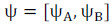
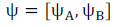
<body><![CDATA[<p lang="en-US" style="margin-bottom: 0.21cm; line-height: 100%"><font face="Verdana, sans-serif"><font size="2" style="font-size: 10pt">Let, 	</font></font> 	</p> 	    <p style="margin-bottom: 0.21cm; line-height: 100%"><font face="Verdana, sans-serif"><font size="2" style="font-size: 10pt"><span lang="en-US"><a name="z3"><img src="/img/revistas/cleiej/v18n2/2a09z3.jpg"></a> 	be the set of branches, where </span><span lang="en-US"><i>s</i></span><sub><span lang="en-US"><i>0</i></span></sub> 	<span lang="en-US">stands for the warehouse and s</span><sub><span lang="en-US">i</span></sub> 	<span lang="en-US">represents branch </span><span lang="en-US"><i>i</i></span></font></font></p> 	    <p><font face="Verdana, sans-serif"><font size="2" style="font-size: 10pt"><span lang="en-US"><a name="z4"><img src="/img/revistas/cleiej/v18n2/2a09z4.jpg"></a> 	the set of total capacities of each of the </span></font></font><font face="Verdana, sans-serif"><font size="2" style="font-size: 10pt"><span lang="en-US"><i>v 	</i></span></font></font><font face="Verdana, sans-serif"><font size="2" style="font-size: 10pt"><span lang="en-US">vehicles 	available, where </span></font></font><font face="Verdana, sans-serif"><font size="2" style="font-size: 10pt"><span lang="en-US"><i>Q</i></span></font></font><sub><font face="Verdana, sans-serif"><font size="2" style="font-size: 10pt"><span lang="en-US">k</span></font></font></sub> 	<font face="Verdana, sans-serif"><font size="2" style="font-size: 10pt"><span lang="en-US">is 	the capacity of vehicle </span></font></font><font face="Verdana, sans-serif"><font size="2" style="font-size: 10pt"><span lang="en-US"><i>k</i></span></font></font></p> 	    <p><font face="Verdana, sans-serif"><font size="2" style="font-size: 10pt"><span lang="en-US"><i>Z</i></span></font></font> 	<font face="Verdana, sans-serif"><font size="2" style="font-size: 10pt"><span lang="en-US">= 	{</span></font></font><font face="Verdana, sans-serif"><font size="2" style="font-size: 10pt"><span lang="en-US"><i>z</i></span></font></font><sub><font face="Verdana, sans-serif"><font size="2" style="font-size: 10pt"><span lang="en-US"><i>kij</i></span></font></font></sub><font face="Verdana, sans-serif"><font size="2" style="font-size: 10pt"><span lang="en-US">} 	indicates if vehicle </span></font></font><font face="Verdana, sans-serif"><font size="2" style="font-size: 10pt"><span lang="en-US"><i>k 	</i></span></font></font><font face="Verdana, sans-serif"><font size="2" style="font-size: 10pt"><span lang="en-US">can 	transit from </span></font></font><font face="Verdana, sans-serif"><font size="2" style="font-size: 10pt"><span lang="en-US"><i>s</i></span></font></font><sub><font face="Verdana, sans-serif"><font size="2" style="font-size: 10pt"><span lang="en-US">i</span></font></font></sub> 	<font face="Verdana, sans-serif"><font size="2" style="font-size: 10pt"><span lang="en-US">to 	</span></font></font><font face="Verdana, sans-serif"><font size="2" style="font-size: 10pt"><span lang="en-US"><i>s</i></span></font></font><sub><font face="Verdana, sans-serif"><font size="2" style="font-size: 10pt"><span lang="en-US">j</span></font></font></sub> 	<font face="Verdana, sans-serif"><font size="2" style="font-size: 10pt"><span lang="en-US">(in 	which case </span></font></font><font face="Verdana, sans-serif"><font size="2" style="font-size: 10pt"><span lang="en-US"><i>z</i></span></font></font><sub><font face="Verdana, sans-serif"><font size="2" style="font-size: 10pt"><span lang="en-US">kij</span></font></font></sub> 	<font face="Verdana, sans-serif"><font size="2" style="font-size: 10pt"><span lang="en-US">= 	1) or it cannot (</span></font></font><font face="Verdana, sans-serif"><font size="2" style="font-size: 10pt"><span lang="en-US"><i>z</i></span></font></font><sub><font face="Verdana, sans-serif"><font size="2" style="font-size: 10pt"><span lang="en-US">kij</span></font></font></sub> 	<font face="Verdana, sans-serif"><font size="2" style="font-size: 10pt"><span lang="en-US">= 	0)</span></font></font></p> 	    <p><font face="Verdana, sans-serif"><font size="2" style="font-size: 10pt"><span lang="en-US"><i>d</i></span></font></font><sub><font face="Verdana, sans-serif"><font size="2" style="font-size: 10pt"><span lang="en-US">ij</span></font></font></sub> 	<font face="Verdana, sans-serif"><font size="2" style="font-size: 10pt"><span lang="en-US">the 	distance from </span></font></font><font face="Verdana, sans-serif"><font size="2" style="font-size: 10pt"><span lang="en-US"><i>s</i></span></font></font><sub><font face="Verdana, sans-serif"><font size="2" style="font-size: 10pt"><span lang="en-US">i</span></font></font></sub> 	<font face="Verdana, sans-serif"><font size="2" style="font-size: 10pt"><span lang="en-US">to 	</span></font></font><font face="Verdana, sans-serif"><font size="2" style="font-size: 10pt"><span lang="en-US"><i>s</i></span></font></font><sub><font face="Verdana, sans-serif"><font size="2" style="font-size: 10pt"><span lang="en-US">j. 	</span></font></font></sub><font face="Verdana, sans-serif"><font size="2" style="font-size: 10pt"><span lang="en-US">Only 	the symmetric case is considered in what follows, i.e., </span></font></font><font face="Verdana, sans-serif"><font size="2" style="font-size: 10pt"><span lang="en-US"><i>d</i></span></font></font><sub><font face="Verdana, sans-serif"><font size="2" style="font-size: 10pt"><span lang="en-US">ij 	</span></font></font></sub><font face="Verdana, sans-serif"><font size="2" style="font-size: 10pt"><span lang="en-US">= 	</span></font></font><font face="Verdana, sans-serif"><font size="2" style="font-size: 10pt"><span lang="en-US"><i>d</i></span></font></font><sub><font face="Verdana, sans-serif"><font size="2" style="font-size: 10pt"><span lang="en-US">ji 	</span></font></font></sub> 	</p> 	    <p><font face="Verdana, sans-serif"><font size="2" style="font-size: 10pt"><span lang="en-US"><i>t</i></span></font></font><sub><font face="Verdana, sans-serif"><font size="2" style="font-size: 10pt"><span lang="en-US">ij</span></font></font></sub> 	<font face="Verdana, sans-serif"><font size="2" style="font-size: 10pt"><span lang="en-US">travel 	time from branch s</span></font></font><sub><font face="Verdana, sans-serif"><font size="2" style="font-size: 10pt"><span lang="en-US">i 	</span></font></font></sub><font face="Verdana, sans-serif"><font size="2" style="font-size: 10pt"><span lang="en-US">to 	s</span></font></font><sub><font face="Verdana, sans-serif"><font size="2" style="font-size: 10pt"><span lang="en-US">j</span></font></font></sub><font face="Verdana, sans-serif"><font size="2" style="font-size: 10pt"><span lang="en-US">. 	This work assumes </span></font></font><font face="Verdana, sans-serif"><font size="2" style="font-size: 10pt"><span lang="en-US"><i>t</i></span></font></font><sub><font face="Verdana, sans-serif"><font size="2" style="font-size: 10pt"><span lang="en-US">ij</span></font></font></sub> 	<font face="Verdana, sans-serif"><font size="2" style="font-size: 10pt"><span lang="en-US">= 	</span></font></font><font face="Verdana, sans-serif"><font size="2" style="font-size: 10pt"><span lang="en-US"><i>t</i></span></font></font><sub><font face="Verdana, sans-serif"><font size="2" style="font-size: 10pt"><span lang="en-US">ji 	</span></font></font></sub> 	</p> 	    <p><font face="Verdana, sans-serif"><font size="2" style="font-size: 10pt"><span lang="en-US"><i>q</i></span></font></font><sub><font face="Verdana, sans-serif"><font size="2" style="font-size: 10pt"><span lang="en-US">i</span></font></font></sub> 	<font face="Verdana, sans-serif"><font size="2" style="font-size: 10pt"><span lang="en-US">demand 	of branch </span></font></font><font face="Verdana, sans-serif"><font size="2" style="font-size: 10pt"><span lang="en-US"><i>s</i></span></font></font><sub><font face="Verdana, sans-serif"><font size="2" style="font-size: 10pt"><span lang="en-US">i</span></font></font></sub> 	<font face="Verdana, sans-serif"><font size="2" style="font-size: 10pt"><span lang="en-US">for 	1&le; </span></font></font><font face="Verdana, sans-serif"><font size="2" style="font-size: 10pt"><span lang="en-US"><i>i</i></span></font></font> 	&le; <font face="Verdana, sans-serif"><font size="2" style="font-size: 10pt"><span lang="en-US"><i>m</i></span></font></font><font face="Verdana, sans-serif"><font size="2" style="font-size: 10pt"><span lang="en-US">. 	It is assumed </span></font></font><font face="Verdana, sans-serif"><font size="2" style="font-size: 10pt"><span lang="en-US"><i>q</i></span></font></font><sub><font face="Verdana, sans-serif"><font size="2" style="font-size: 10pt"><span lang="en-US">0</span></font></font></sub> 	<font face="Verdana, sans-serif"><font size="2" style="font-size: 10pt"><span lang="en-US">= 	0</span></font></font></p> 	    <p align="justify" style="margin-bottom: 0.21cm; line-height: 100%"><font face="Verdana, sans-serif"><font size="2" style="font-size: 10pt"><span lang="en-US"><i>C</i></span></font></font> 	<font face="Verdana, sans-serif"><font size="2" style="font-size: 10pt"><span lang="en-US">(</span></font></font><font face="Verdana, sans-serif"><font size="2" style="font-size: 10pt"><span lang="en-US"><i>k</i></span></font></font><font face="Verdana, sans-serif"><font size="2" style="font-size: 10pt"><span lang="en-US">, 	</span></font></font><font face="Verdana, sans-serif"><font size="2" style="font-size: 10pt"><span lang="en-US"><i>i</i></span></font></font><font face="Verdana, sans-serif"><font size="2" style="font-size: 10pt"><span lang="en-US">, 	</span></font></font><font face="Verdana, sans-serif"><font size="2" style="font-size: 10pt"><span lang="en-US"><i>j</i></span></font></font><font face="Verdana, sans-serif"><font size="2" style="font-size: 10pt"><span lang="en-US">) 	the cost of using the vehicle </span></font></font><font face="Verdana, sans-serif"><font size="2" style="font-size: 10pt"><span lang="en-US"><i>k</i></span></font></font> 	<font face="Verdana, sans-serif"><font size="2" style="font-size: 10pt"><span lang="en-US">to 	go from </span></font></font><font face="Verdana, sans-serif"><font size="2" style="font-size: 10pt"><span lang="en-US"><i>s</i></span></font></font><sub><font face="Verdana, sans-serif"><font size="2" style="font-size: 10pt"><span lang="en-US">i 	</span></font></font></sub><font face="Verdana, sans-serif"><font size="2" style="font-size: 10pt"><span lang="en-US">to 	</span></font></font><font face="Verdana, sans-serif"><font size="2" style="font-size: 10pt"><span lang="en-US"><i>s</i></span></font></font><sub><font face="Verdana, sans-serif"><font size="2" style="font-size: 10pt"><span lang="en-US">j</span></font></font></sub></p> 	    <p align="justify" style="margin-bottom: 0.21cm; line-height: 100%"><font face="Verdana, sans-serif"><font size="2" style="font-size: 10pt"><span lang="en-US"><a name="z5"><img src="/img/revistas/cleiej/v18n2/2a09z5.jpg"></a> 	a solution to the problem, whose elements are the matrices 	<a name="z6"><img src="/img/revistas/cleiej/v18n2/2a09z6.jpg"></a>; i.e. <a name="z7"><img src="/img/revistas/cleiej/v18n2/2a09z7.jpg"></a> explained later.</span></font></font></p> 	    <p align="justify" style="text-indent: -4.27cm; margin-bottom: 0.21cm; line-height: 100%"> 	<br/> <br/>  	</p> 	    ]]></body>
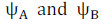
<body><![CDATA[<p lang="en-US" align="justify" style="text-indent: 0.61cm; margin-bottom: 0.21cm; line-height: 100%"> 	<font face="Verdana, sans-serif"><font size="2" style="font-size: 10pt">The 	studied problem considering four objective functions can be stated 	as:</font></font></p> 	    <p align="center" style="margin-bottom: 0.21cm; line-height: 100%"><font face="Verdana, sans-serif"><font size="2" style="font-size: 10pt"><span lang="en-US"><i>Minimize 	the vector</i></span> <span lang="en-US"><i>F</i></span><span lang="en-US">(&psi;) 	= [</span><span lang="en-US"><i>F</i></span><sub><span lang="en-US">1</span></sub><span lang="en-US">(&psi;), 	</span><span lang="en-US"><i>F</i></span><sub><span lang="en-US">2</span></sub><span lang="en-US">(&psi;), 	</span><span lang="en-US"><i>F</i></span><sub><span lang="en-US">3</span></sub><span lang="en-US">(&psi;), 	F</span><sub><span lang="en-US">4</span></sub><span lang="en-US">(&psi;)]</span><sup><span lang="en-US">T</span></sup></font></font></p> 	    <p align="justify" style="margin-bottom: 0.21cm; line-height: 100%"><font face="Verdana, sans-serif"><font size="2" style="font-size: 10pt"><span lang="en-US">where 	</span><span lang="en-US"><i>F</i></span><sub><span lang="en-US">1</span></sub><span lang="en-US">(&psi;), 	</span><span lang="en-US"><i>F</i></span><sub><span lang="en-US">2</span></sub><span lang="en-US">(&psi;), 	</span><span lang="en-US"><i>F</i></span><sub><span lang="en-US">3</span></sub><span lang="en-US">(&psi;) 	and </span><span lang="en-US"><i>F</i></span><sub><span lang="en-US">4</span></sub><span lang="en-US">(&psi;) 	represent the four objective functions that are next defined. </span></font></font> 	</p> 	<ol> 		<li/>     <p align="justify" style="margin-bottom: 0.21cm; line-height: 100%"> 		<font face="Verdana, sans-serif"><font size="2" style="font-size: 10pt"><span lang="en-US"><i>Total 		Cost</i></span> <span lang="en-US"><i>F</i></span><sub><span lang="en-US">1</span></sub><span lang="en-US">(&psi;)</span></font></font></p> 	    </ol> 	    <p align="justify" style="text-indent: 1.25cm; margin-bottom: 0.21cm; line-height: 100%"> 	<font face="Verdana, sans-serif"><font size="2" style="font-size: 10pt"><span lang="en-US"><a name="z8"><img src="/img/revistas/cleiej/v18n2/2a09z8.jpg"></a></span> 	<span lang="en-US">(1)</span></font></font></p> 	<ol start="2"> 		<li/>     <p align="justify" style="margin-bottom: 0.21cm; line-height: 100%"> 		<font face="Verdana, sans-serif"><font size="2" style="font-size: 10pt"><span lang="en-US"><i>Total 		travel time</i></span> <span lang="en-US"><i>F</i></span><sub><span lang="en-US">2</span></sub><span lang="en-US">(&psi;)</span></font></font></p> 	    </ol> 	    <p align="justify" style="text-indent: 1.25cm; margin-bottom: 0.21cm; line-height: 100%"> 	<font face="Verdana, sans-serif"><font size="2" style="font-size: 10pt"><span lang="en-US"><a name="z9"><img src="/img/revistas/cleiej/v18n2/2a09z9.jpg"></a></span> 	<span lang="en-US">(2)</span></font></font></p> 	<ol start="3"> 		<li/>     <p align="justify" style="margin-bottom: 0.21cm; line-height: 100%"> 		<font face="Verdana, sans-serif"><font size="2" style="font-size: 10pt"><span lang="en-US"><i>Total 		distance traveled</i></span> <span lang="en-US"><i>F</i></span><sub><span lang="en-US">3</span></sub><span lang="en-US">(&psi;)</span></font></font></p> 	    ]]></body>
<body><![CDATA[</ol> 	    <p align="justify" style="text-indent: 1.25cm; margin-bottom: 0.21cm; line-height: 100%"> 	<font face="Verdana, sans-serif"><font size="2" style="font-size: 10pt"><span lang="en-US"><a name="z10"><img src="/img/revistas/cleiej/v18n2/2a09z10.jpg"></a> 	(3)</span></font></font></p> 	<ol start="4"> 		<li/>     <p align="justify" style="margin-top: 0.21cm; margin-bottom: 0.21cm; line-height: 100%"> 		<font face="Verdana, sans-serif"><font size="2" style="font-size: 10pt"><span lang="en-US"><i>Unsatisfied 		demand</i></span> <span lang="en-US"><i>F</i></span><sub><span lang="en-US">4</span></sub><span lang="en-US">(&psi;)</span></font></font></p> 	    </ol> 	    <p align="justify" style="text-indent: 1.25cm; margin-bottom: 0cm; line-height: 100%"> 	<font face="Verdana, sans-serif"><font size="2" style="font-size: 10pt"><span lang="en-US"><a name="z11"><img src="/img/revistas/cleiej/v18n2/2a09z11.jpg"></a></span> 	<span lang="en-US">(4)</span></font></font></p> 	    <p align="justify" style="margin-bottom: 0.21cm; line-height: 100%"><br/> <br/>  	</p> 	    <p lang="en-US" align="justify" style="margin-bottom: 0.21cm; line-height: 100%"> 	<font face="Verdana, sans-serif"><font size="2" style="font-size: 10pt">The 	problem is subject to the following restrictions:</font></font></p> 	    <p lang="en-US" align="justify" style="margin-bottom: 0.21cm; line-height: 100%"> 	<font face="Verdana, sans-serif"><font size="2" style="font-size: 10pt"><u>Restriction 	1</u></font></font></p> 	    <p lang="en-US" align="justify" style="margin-bottom: 0.21cm; line-height: 100%"> 	<font face="Verdana, sans-serif"><font size="2" style="font-size: 10pt">The 	capacity of a vehicle cannot be exceeded:</font></font></p> 	    <p align="justify" style="margin-bottom: 0.21cm; line-height: 100%"><font face="Verdana, sans-serif"><font size="2" style="font-size: 10pt"><span lang="en-US"><a name="z13"><img src="/img/revistas/cleiej/v18n2/2a09z13.jpg"></a> 	(5)</span></font></font></p> 	    ]]></body>
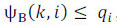
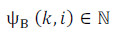
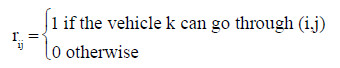
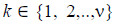
<body><![CDATA[<p lang="en-US" align="justify" style="margin-bottom: 0.21cm; line-height: 100%"> 	<font face="Verdana, sans-serif"><font size="2" style="font-size: 10pt">where 	<a name="z14"><img src="/img/revistas/cleiej/v18n2/2a09z14.jpg"></a></font></font></p> 	    <p align="justify" style="margin-bottom: 0.21cm; line-height: 100%"><font face="Verdana, sans-serif"><font size="2" style="font-size: 10pt"><span lang="en-US"><a name="z15"><img src="/img/revistas/cleiej/v18n2/2a09z15.jpg"></a> 	indicates the number of motorcycles carried by vehicle </span></font></font><font face="Verdana, sans-serif"><font size="2" style="font-size: 10pt"><span lang="en-US"><i>k</i></span></font></font> 	<font face="Verdana, sans-serif"><font size="2" style="font-size: 10pt"><span lang="en-US">to 	branch </span></font></font><font face="Verdana, sans-serif"><font size="2" style="font-size: 10pt"><span lang="en-US"><i>i</i></span></font></font><font face="Verdana, sans-serif"><font size="2" style="font-size: 10pt"><span lang="en-US">. 	Note that <a name="z16"><img src="/img/revistas/cleiej/v18n2/2a09z16.jpg"></a>, i.e., the number of motorcycles carried by 	vehicle </span></font></font><font face="Verdana, sans-serif"><font size="2" style="font-size: 10pt"><span lang="en-US"><i>k 	</i></span></font></font><font face="Verdana, sans-serif"><font size="2" style="font-size: 10pt"><span lang="en-US">to 	branch </span></font></font><font face="Verdana, sans-serif"><font size="2" style="font-size: 10pt"><span lang="en-US"><i>s</i></span></font></font><sub><font face="Verdana, sans-serif"><font size="2" style="font-size: 10pt"><span lang="en-US">i 	</span></font></font></sub><font face="Verdana, sans-serif"><font size="2" style="font-size: 10pt"><span lang="en-US">cannot 	be greater than the order <a name="z17"><img src="/img/revistas/cleiej/v18n2/2a09z17.jpg"></a> made by branch </span></font></font><font face="Verdana, sans-serif"><font size="2" style="font-size: 10pt"><span lang="en-US"><i>i</i></span></font></font><font face="Verdana, sans-serif"><font size="2" style="font-size: 10pt"><span lang="en-US">.</span></font></font></p> 	    <p lang="en-US" align="justify" style="margin-bottom: 0.21cm; line-height: 100%"> 	<font face="Verdana, sans-serif"><font size="2" style="font-size: 10pt"><u>Restriction 	2</u></font></font></p> 	    <p lang="en-US" align="justify" style="margin-bottom: 0.21cm; line-height: 100%"> 	<font face="Verdana, sans-serif"><font size="2" style="font-size: 10pt">Vehicles 	can only transit on permitted roads. </font></font> 	</p> 	    <p style="margin-bottom: 0.21cm; line-height: 100%"><font face="Verdana, sans-serif"><font size="2" style="font-size: 10pt"><span lang="en-US"><i>x</i></span><sub><span lang="en-US">kij</span></sub> 	<span lang="en-US">= 1 only if </span><span lang="en-US"><i>z</i></span><sub><span lang="en-US">kij 	</span></sub><span lang="en-US">= 1 (6)</span></font></font></p> 	    <p lang="en-US" align="justify" style="margin-bottom: 0.21cm; line-height: 100%"> 	<font face="Verdana, sans-serif"><font size="2" style="font-size: 10pt">where 	</font></font> 	</p> 	    <p align="justify" style="margin-bottom: 0.21cm; line-height: 100%"><a name="z18"><img src="/img/revistas/cleiej/v18n2/2a09z18.jpg"></a> 		</p> 	    <p align="justify" style="text-indent: 0.75cm; margin-bottom: 0.21cm; line-height: 100%"> 	<font face="Verdana, sans-serif"><font size="2" style="font-size: 10pt"><span lang="en-US">A 	solution <a name="z19"><img src="/img/revistas/cleiej/v18n2/2a09z19.jpg"></a></span> <span lang="en-US">is represented by two 	matrices with a dimension of <a name="z20"><img src="/img/revistas/cleiej/v18n2/2a09z20.jpg"></a>, where </span><span lang="en-US"><i>N</i></span><sub><span lang="en-US"><i>m&aacute;x</i></span></sub><sub> 	</sub><span lang="en-US">indicates the maximum number of branches 	that may be visited in a single trip. </span></font></font> 	</p> 	    <p align="justify" style="margin-left: 2.5cm; text-indent: -2.49cm; margin-bottom: 0.21cm; line-height: 100%"> 	<a name="z21"><img src="/img/revistas/cleiej/v18n2/2a09z21.jpg"></a> <font face="Verdana, sans-serif"><font size="2" style="font-size: 10pt"><span lang="en-US">Represents 	the </span></font></font><font face="Verdana, sans-serif"><font size="2" style="font-size: 10pt"><span lang="en-US"><i>i</i></span></font></font><font face="Verdana, sans-serif"><font size="2" style="font-size: 10pt"><span lang="en-US">-th 	branch visited by vehicle </span></font></font><font face="Verdana, sans-serif"><font size="2" style="font-size: 10pt"><span lang="en-US"><i>k</i></span></font></font><font face="Verdana, sans-serif"><font size="2" style="font-size: 10pt"><span lang="en-US">. 	</span></font></font> 	</p> 	    <p align="justify" style="margin-left: 2.49cm; text-indent: -2.49cm; margin-bottom: 0.21cm; line-height: 100%"> 	<a name="z22"><img src="/img/revistas/cleiej/v18n2/2a09z22.jpg"></a> <font face="Verdana, sans-serif"><font size="2" style="font-size: 10pt"><span lang="en-US">Represents 	the total number of motorcycles that a vehicle </span></font></font><font face="Verdana, sans-serif"><font size="2" style="font-size: 10pt"><span lang="en-US"><i>k</i></span></font></font> 	<font face="Verdana, sans-serif"><font size="2" style="font-size: 10pt"><span lang="en-US">carries 	to the branch <a name="z23"><img src="/img/revistas/cleiej/v18n2/2a09z23.jpg"></a></span></font></font> <font face="Verdana, sans-serif"><font size="2" style="font-size: 10pt"><span lang="en-US">.</span></font></font></p> 	<h1><font face="Verdana, sans-serif"><font size="2" style="font-size: 10pt"><span lang="en-US">4. 	</span></font></font><font face="Verdana, sans-serif"><font size="2" style="font-size: 10pt"><span lang="en-US">ANT 	COLONY OPTIMIZATION</span></font></font></h1> 	    ]]></body>
<body><![CDATA[<p align="justify" style="text-indent: 0.63cm; margin-bottom: 0.21cm; line-height: 100%"> 	<font face="Verdana, sans-serif"><font size="2" style="font-size: 10pt"><span lang="en-US"><i>Ant 	Colony Optimization </i></span><span lang="en-US">(ACO) is one of 	the most recognized meta-heuristics for the studied problem given 	its already known efficiency in solving routing problems <a id="br23">[</a><a href="#r23">23</a>]. The 	optimization procedure used by the </span><span lang="en-US"><i>Ant 	Colony Optimization </i></span><span lang="en-US">is inspired in the 	behavior of biological ant colonies in order to solve optimization 	problems utilizing traces of pheromones. This behavior used by 	biological ants has inspired this metaheuristic to solve 	optimization problems <a id="br30">[</a><a href="#r30">30</a>] utilizing colonies of artificial ants, 	meaning, simple computational agents working in a cooperative manner 	and indirectly communicating through artificial traces of 	pheromones. </span></font></font> 	</p> 	    <p lang="en-US" align="justify" style="text-indent: 0.63cm; margin-bottom: 0.21cm; line-height: 100%"> 	<font face="Verdana, sans-serif"><font size="2" style="font-size: 10pt">The 	ACO meta-heuristics are essentially constructive algorithms: at each 	iteration of the algorithm, each ant (or agent) builds a solution to 	the problem touring a graph of construction <a id="br26">[</a><a href="#r26">26</a>]. Every edge of the 	graph, representing every step an ant could take, has two types of 	information associated with it to guide an ant&rsquo;s movement:</font></font></p> 	<ol type="a"> 		<li/>     <p align="justify" style="margin-bottom: 0.21cm; line-height: 100%"> 		<font face="Verdana, sans-serif"><font size="2" style="font-size: 10pt"><span lang="en-US"><i>Heuristic 		Information, </i></span><span lang="en-US">that measures the 		preference of moving from node </span><span lang="en-US"><i>i </i></span><span lang="en-US">to 		another node </span><span lang="en-US"><i>j </i></span><span lang="en-US">of 		the graph, meaning, touring the link </span><span lang="en-US"><i>(i, 		j).</i></span> <span lang="en-US">This heuristic information is 		denoted as &eta;</span><sub><span lang="en-US">ij</span></sub> <span lang="en-US">and 		it is known as </span><span lang="en-US"><i>visibility</i></span><span lang="en-US">. 		</span></font></font> 		</p> 	    </ol> 	<ol type="a" start="2"> 		<li/>     <p align="justify" style="margin-bottom: 0.21cm; line-height: 100%"> 		<font face="Verdana, sans-serif"><font size="2" style="font-size: 10pt"><span lang="en-US"><i>Information 		about traces of artificial pheromones,</i></span></font></font><font face="Verdana, sans-serif"><font size="2" style="font-size: 10pt"> 		</font></font><font face="Verdana, sans-serif"><font size="2" style="font-size: 10pt"><span lang="en-US">that 		measures the &ldquo;learned desirability&rdquo; of a movement from 		a node </span></font></font><font face="Verdana, sans-serif"><font size="2" style="font-size: 10pt"><span lang="en-US"><i>i 		</i></span></font></font><font face="Verdana, sans-serif"><font size="2" style="font-size: 10pt"><span lang="en-US">to 		another node </span></font></font><font face="Verdana, sans-serif"><font size="2" style="font-size: 10pt"><span lang="en-US"><i>j, 		</i></span></font></font><font face="Verdana, sans-serif"><font size="2" style="font-size: 10pt"><span lang="en-US">deposited 		by the ants. This information is modified during the execution of 		the algorithm depending on the solutions found by the ants; 		therefore, they store the learned information during the resolution 		process. It is denoted as </span></font></font><font color="#000000"><font face="Verdana, sans-serif"><font size="2" style="font-size: 10pt"><span lang="en-US"><span style="background: #ffffff">&tau;</span></span></font></font></font><font color="#000000"><sub><font face="Verdana, sans-serif"><font size="2" style="font-size: 10pt"><span lang="en-US"><span style="background: #ffffff">ij</span></span></font></font></sub></font><font face="Verdana, sans-serif"><font size="2" style="font-size: 10pt"> 		</font></font><font face="Verdana, sans-serif"><font size="2" style="font-size: 10pt"><span lang="en-US">and 		it is known as </span></font></font><font face="Verdana, sans-serif"><font size="2" style="font-size: 10pt"><span lang="en-US"><i>pheromone</i></span></font></font><font face="Verdana, sans-serif"><font size="2" style="font-size: 10pt"><span lang="en-US">.</span></font></font></p> 	    </ol> 	    <p align="justify" style="text-indent: 0.61cm; margin-bottom: 0.21cm; line-height: 100%"> 	<font face="Verdana, sans-serif"><font size="2" style="font-size: 10pt"><span lang="en-US">Different 	versions of </span></font></font><font face="Verdana, sans-serif"><font size="2" style="font-size: 10pt"><span lang="en-US"><i>Multi 	Objective Ant Colony Optimization </i></span></font></font><font face="Verdana, sans-serif"><font size="2" style="font-size: 10pt"><span lang="en-US">(MOACO), 	differ from each other mainly in three points: the (1) pheromone 	traces, (2) solutions to be rewarded, and (3) determination of 	heuristic factors. </span></font></font> 	</p> 	    <p align="justify" style="text-indent: 0.61cm; margin-bottom: 0.21cm; line-height: 100%"> 	<font face="Verdana, sans-serif"><font size="2" style="font-size: 10pt"><span lang="en-US"><i>Pheromone 	traces</i></span><span lang="en-US">. The quantity of pheromone in a 	component represents the colony&rsquo;s experience related to 	choosing that component. When there is only one objective function, 	this experience is defined using this sole objective. However, when 	there are several objectives, at least two strategies can be 	considered. One strategy consists in a single pheromone structure, 	in which case, the quantity of pheromone left by ants is defined 	according to an aggregation of the different objectives considered 	when solving the problem at hand (each aggregation option, as a 	weighted sum, can give rise to a different algorithm). The second 	strategy tries to consider various pheromones structures, one for 	each objective function. </span></font></font> 	</p> 	    <p align="justify" style="text-indent: 0.61cm; margin-bottom: 0.21cm; line-height: 100%"> 	<font face="Verdana, sans-serif"><font size="2" style="font-size: 10pt"><span lang="en-US"><i>Solutions 	to be rewarded.</i></span> <span lang="en-US">When the pheromone 	traces are updated based on what was learned by the algorithm, it 	must be decided which of the constructed solutions will leave 	pheromones, increasing the probability of using the arcs of the 	solution reached once again. One possibility is to reward solutions 	that find the best values for each criterion within the current 	generation. Another possibility is to reward each no-dominated 	solution within the current generation. In this case, every solution 	in a Pareto set can be rewarded, or perhaps only the new solutions 	entering the Pareto set in the current generation.</span></font></font></p> 	    <p align="justify" style="text-indent: 0.61cm; margin-bottom: 0.21cm; line-height: 100%"> 	<font face="Verdana, sans-serif"><font size="2" style="font-size: 10pt"><span lang="en-US"><i>Determination 	of the heuristic factors. </i></span><span lang="en-US">When 	solutions are constructed, one candidate is chosen according to a 	probability depending on a pheromone factor and a heuristic factor 	(known as </span><span lang="en-US"><i>visibility</i></span><span lang="en-US">) 	which measures the preference of moving from one node to another. To 	define the heuristic factor, at least two strategies could be 	considered. The first assumes an aggregation of the different 	objectives within a single heuristic information. A second strategy 	requires considering each objective separately. In this case, there 	is usually a different colony for each objective. However, 	competitive results were also reported when a single colony uses a 	different visibility for each objective function <a id="br26">[</a><a href="#r26">26</a>].</span></font></font></p> 	<h1 lang="en-US" style="margin-left: 0.9cm; text-indent: -0.64cm"><font face="Verdana, sans-serif"><font size="2" style="font-size: 10pt">5. 	MOACS GENERALIZATION </font></font> 	</h1> 	    ]]></body>
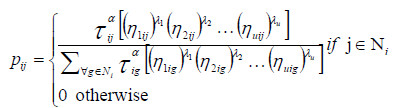
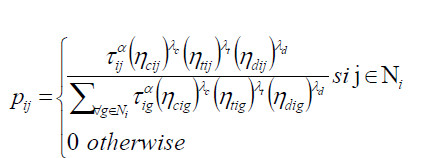
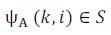
<body><![CDATA[<p align="justify" style="text-indent: 0.61cm; margin-bottom: 0.21cm; line-height: 100%"> 	<font face="Verdana, sans-serif"><font size="2" style="font-size: 10pt"><span lang="en-US">This 	work draws inspiration from the approach proposed by Baran and 	Schaerer in 2003 in order to solve the bi-objective TSP <a id="br26">[</a><a href="#r26">26</a>], which 	consists in a MOACO algorithm with a single ant colony, a single 	pheromone structure and different adaptive visibility for each 	objective function, known as MOACS (</span><span lang="en-US"><i>Multi-objective 	Ant Colony System), </i></span><span lang="en-US">considering the 	promising results from experimental tests that this algorithm 	achieves when compared with other alternatives when solving a 	multiobjective problem <a id="br33">[</a><a href="#r33">33</a>]</span><span lang="en-US"><i>.</i></span></font></font></p> 	    <p align="justify" style="text-indent: 0.61cm; margin-bottom: 0.21cm; line-height: 100%"> 	<font face="Verdana, sans-serif"><font size="2" style="font-size: 10pt"><span lang="en-US">The 	MOACS utilizes a single ant colony in order to simultaneously 	minimize every objective function, considering all objectives as 	equally important; therefore, a whole Pareto-optimal solution set 	can be found in only one run of this meta-heuristic. Every objective 	share the same pheromone trace, represented in a single matrix </span><font color="#000000"><span lang="en-US"><span style="background: #ffffff">&tau; 	= {</span></span></font><font color="#000000"><span style="background: #ffffff"> 	</span></font><font color="#000000"><span lang="en-US"><span style="background: #ffffff">&tau;</span></span></font><font color="#000000"><sub><span lang="en-US"><span style="background: #ffffff">ij</span></span></sub></font><font color="#000000"><span style="background: #ffffff"> 	</span></font><font color="#000000"><span lang="en-US"><span style="background: #ffffff">}</span></span></font><span lang="en-US">. 	The MOACS algorithm&rsquo;s central idea applied to the motorcycle 	factory problem explored in this work is to build only feasible 	solutions utilizing as many vehicles as needed, given that the 	minimization of the number of vehicles is not a desired objective. </span></font></font> 	</p> 	    <p align="justify" style="text-indent: 0.61cm; margin-bottom: 0.21cm; line-height: 100%"> 	<font face="Verdana, sans-serif"><font size="2" style="font-size: 10pt"><span lang="en-US">At 	each generation (or iteration) of the proposed algorithm, every ant 	</span><span lang="en-US"><i>h </i></span><span lang="en-US">(of a 	set of </span><span lang="en-US"><i>H </i></span><span lang="en-US">ants) 	constructs a feasible solution, beginning its tour in a warehouse 	(</span><span lang="en-US"><i>s</i></span><sub><span lang="en-US"><i>0</i></span></sub><span lang="en-US">) 	and successively choosing a following node (or warehouse to return) 	&theta;</span><sub><span lang="en-US"><i>j</i></span></sub><span lang="en-US">, 	out of the set of feasible nodes not yet visited <a name="z24"><img src="/img/revistas/cleiej/v18n2/2a09z24.jpg"></a></span> 	<span lang="en-US">where the subindex </span><span lang="en-US"><i>i 	</i></span><span lang="en-US">indicates that the ant </span><span lang="en-US"><i>h 	</i></span><span lang="en-US">is in the node &theta;</span><sub><span lang="en-US"><i>i</i></span></sub><span lang="en-US">. 	At each node &theta;</span><sub><span lang="en-US">i</span></sub><span lang="en-US">, 	the set <a name="z24"><img src="/img/revistas/cleiej/v18n2/2a09z24.jpg"></a></span> <span lang="en-US">is calculated in order 	to discover every node (or client) to which merchandise still needs 	to be taken and are not in violation of any restriction (such as a 	vehicle size, or that is too heavy to travel through a given road). 	The set <a name="z24"><img src="/img/revistas/cleiej/v18n2/2a09z24.jpg"></a></span> <span lang="en-US">does not include the 	warehouse until a tour has been finished. Naturally, when a vehicle 	cannot visit any more nodes, for instance because it is fully 	loaded, it must return to the warehouse and another vehicle starts 	choosing nodes in the same manner. This process is repeated until 	every client has been served and therefore, a solution <a name="z5"><img src="/img/revistas/cleiej/v18n2/2a09z5.jpg"></a></span> 	<span lang="en-US">has been found. </span></font></font> 	</p> 	    <p align="justify" style="text-indent: 0.61cm; margin-bottom: 0.21cm; line-height: 100%"> 	<font face="Verdana, sans-serif"><font size="2" style="font-size: 10pt"><span lang="en-US">An 	ant </span><span lang="en-US"><i>h </i></span><span lang="en-US">choses 	to move from one node &theta;</span><sub><span lang="en-US">i</span></sub> 	<span lang="en-US">to another node &theta;</span><sub><span lang="en-US">j</span></sub> 	<span lang="en-US">using both: the heuristic information and the 	pheromone traces. The heuristic information is given by the 	visibility</span> <span lang="en-US"><a name="z25"><img src="/img/revistas/cleiej/v18n2/2a09z25.jpg"></a>, while the 	pheromone information is given by </span><font color="#000000"><span lang="en-US"><span style="background: #ffffff">&tau;</span></span></font><font color="#000000"><sub><span lang="en-US"><span style="background: #ffffff">ij. 	</span></span></sub></font><span lang="en-US">To choose the next 	node &theta;</span><sub><span lang="en-US">j</span></sub> <span lang="en-US">to 	be visited by an ant </span><span lang="en-US"><i>h </i></span><span lang="en-US">which 	is found in &theta;</span><sub><span lang="en-US">i</span></sub><span lang="en-US">, 	each node or branch is assigned a probability </span><span lang="en-US"><i>p</i></span><sub><span lang="en-US"><i>ij 	</i></span></sub><span lang="en-US">giving in (7), and, in this 	manner, the next branch &theta;</span><sub><span lang="en-US">j</span></sub> 	<span lang="en-US">is chosen from <a name="z26"><img src="/img/revistas/cleiej/v18n2/2a09z26.jpg"></a></span> <span lang="en-US">at 	random using that probability. </span></font></font> 	</p> 	    <p align="justify" style="text-indent: 0.61cm; margin-bottom: 0.21cm; line-height: 100%"> 	<font face="Verdana, sans-serif"><font size="2" style="font-size: 10pt"><span lang="en-US">It 	is relevant to remember that the excellent results obtained by the 	MOACS are due in great part to the use of different visibilities, 	one for each objective function, and a mechanism for each ant </span><span lang="en-US"><i>h 	</i></span><span lang="en-US">to prioritize its search in different 	parts of the domain of feasible solutions, which is why this 	characteristic originally given for only 2 objectives must be 	generalized here for a number </span><span lang="en-US"><i>u </i></span><span lang="en-US">of 	objective functions. In consequence, the probability </span><span lang="en-US"><i>p</i></span><sub><span lang="en-US"><i>ij 	</i></span></sub><span lang="en-US">can be generalized to </span><span lang="en-US"><i>u 	</i></span><span lang="en-US">objectives in the following manner:</span></font></font></p> 	    <p lang="en-US" align="justify" style="text-indent: 0.61cm; margin-bottom: 0.21cm; line-height: 100%"> 	<font face="Verdana, sans-serif"><font size="2" style="font-size: 10pt"><a name="z27"><img src="/img/revistas/cleiej/v18n2/2a09z27.jpg"></a> 	(7)</font></font></p> 	    <p align="justify" style="margin-bottom: 0.21cm; line-height: 100%"><font face="Verdana, sans-serif"><font size="2" style="font-size: 10pt"><span lang="en-US">where, 	</span></font></font> 	</p> 	<ul> 		<li/>     <p align="justify" style="margin-bottom: 0.21cm; line-height: 100%"> 		<font face="Verdana, sans-serif"><font size="2" style="font-size: 10pt"><span lang="en-US"><i>u</i></span> 		<span lang="en-US">is the number of objective functions of the 		problem, while <a name="z28"><img src="/img/revistas/cleiej/v18n2/2a09z28.jpg"></a></span> <span lang="en-US">is the 		visibility related to the objective function </span><span lang="en-US"><i>u 		</i></span><span lang="en-US">for the link </span><span lang="en-US"><i>(i, 		j);</i></span></font></font></p> 		<li/>     <p lang="en-US" align="justify" style="margin-bottom: 0.21cm; line-height: 100%"> 		<font face="Verdana, sans-serif"><font size="2" style="font-size: 10pt">the 		variables <a name="z29"><img src="/img/revistas/cleiej/v18n2/2a09z29.jpg"></a> define the relative influence among 		visibilities; and</font></font></p> 		<li/>     <p lang="en-US" align="justify" style="margin-bottom: 0.21cm; line-height: 100%"> 		<font face="Verdana, sans-serif"><font size="2" style="font-size: 10pt">parameter 		&alpha; defines the relative influence of the pheromone traces. </font></font> 		</p> 	    ]]></body>
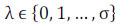
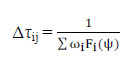
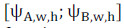
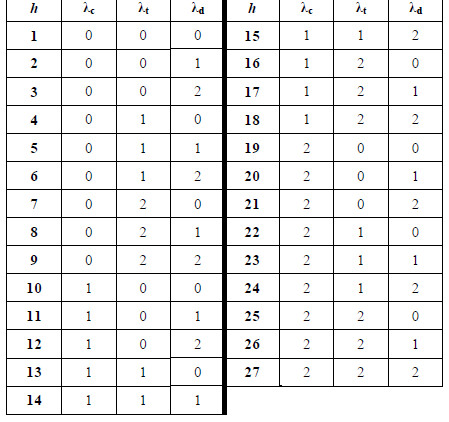
<body><![CDATA[</ul> 	    <p align="justify" style="text-indent: 0.75cm; margin-bottom: 0.21cm; line-height: 100%"> 	<font face="Verdana, sans-serif"><font size="2" style="font-size: 10pt"><span lang="en-US">When 	generalizing Baran and Schaerer&rsquo;s original proposal <a id="br26">[</a><a href="#r26">26</a>] for </span><span lang="en-US"><i>u 	</i></span><span lang="en-US">objectives (</span><span lang="en-US"><i>u 	&ge; 2</i></span><span lang="en-US">), each ant utilizes one of the 	<a name="z30"><img src="/img/revistas/cleiej/v18n2/2a09z30.jpg"></a> different combinations for the visibility, as shown in 	<a href="#t1">Table I</a>, i.e. <a name="z31"><img src="/img/revistas/cleiej/v18n2/2a09z31.jpg"></a>, in order to improve the exploration of 	the search space. Consequently, it is recommended to use <a name="z32"><img src="/img/revistas/cleiej/v18n2/2a09z32.jpg"></a></span> 	<span lang="en-US">ants in order to cover all possible variants 	found in <a href="#t1">Table I</a>. One example with <a name="z33"><img src="/img/revistas/cleiej/v18n2/2a09z33.jpg"></a></span> <span lang="en-US">is 	presented in Section VI, and it is used to solve the studied 	SD/MF-VRP problem for a motorcycle factory. </span></font></font> 	</p> 	    <p align="justify" style="text-indent: 0.75cm; margin-bottom: 0.21cm; line-height: 100%"> 	<font face="Verdana, sans-serif"><font size="2" style="font-size: 10pt"><span lang="en-US">The 	value taken by each variable of relative influence <a name="z34"><img src="/img/revistas/cleiej/v18n2/2a09z34.jpg"></a></span> 	<span lang="en-US">varies with the number </span><span lang="en-US"><i>h 	</i></span><span lang="en-US">of the ant building a solution, 	achieving in this way the desired characteristic of having each ant 	</span><span lang="en-US"><i>h</i></span> <span lang="en-US">having 	preferences on different areas of the exploration domain. This way, 	each ant </span><span lang="en-US"><i>h </i></span><span lang="en-US">potentially 	aims at different regions of the Pareto front that is being 	searched. </span></font></font> 	</p> 	    <p align="justify" style="text-indent: 0.75cm; margin-bottom: 0.21cm; line-height: 100%"> 	<font face="Verdana, sans-serif"><font size="2" style="font-size: 10pt"><span lang="en-US">In 	consequence, the proposed solution considers generations in which </span><span lang="en-US"><i>H 	</i></span><span lang="en-US">ants construct solutions, each with a 	different probability distribution, expecting in this way to improve 	the exploration of the MOACO. </span></font></font> 	</p> 	    <p align="justify" style="text-indent: 0.61cm; margin-bottom: 0.21cm; line-height: 100%"> 	<br/> <br/>  	</p> 	    <p align="center" style="margin-bottom: 0.21cm; line-height: 100%"><font face="Verdana, sans-serif"><font size="2" style="font-size: 10pt"><span lang="en-US">TABLE 	I. Possible values for the visibility parameter </span><font color="#000000"><span lang="en-US"><b>&lambda; 	</b></span></font><font color="#000000"><span lang="en-US">utilized 	by the different ants in calculating probabilities. </span></font></font></font> 	</p> 	    <p lang="en-US" align="center" style="margin-bottom: 0.21cm; line-height: 100%"> 	<font color="#000000"><font face="Verdana, sans-serif"><font size="2" style="font-size: 10pt"><a name="t1"><img src="/img/revistas/cleiej/v18n2/2a09t1.jpg"></a></font></font></font></p> 	    <p align="justify" style="text-indent: 0.61cm; margin-bottom: 0.21cm; line-height: 100%"> 	<font face="Verdana, sans-serif"><font size="2" style="font-size: 10pt"><span lang="en-US">When 	each ant </span></font></font><font face="Verdana, sans-serif"><font size="2" style="font-size: 10pt"><span lang="en-US"><i>h 	</i></span></font></font><font face="Verdana, sans-serif"><font size="2" style="font-size: 10pt"><span lang="en-US">of 	a generation </span></font></font><font face="Verdana, sans-serif"><font size="2" style="font-size: 10pt"><span lang="en-US"><i>w 	</i></span></font></font><font face="Verdana, sans-serif"><font size="2" style="font-size: 10pt"><span lang="en-US">finds 	a complete solution <a name="z35"><img src="/img/revistas/cleiej/v18n2/2a09z35.jpg"></a>, this is compared with the already 	stored solutions in the best known Pareto set approximation to 	verify if it is a no-dominated solution. If, in effect, it is a new 	optimal Pareto solution, it is included in a set </span></font></font><font face="Verdana, sans-serif"><font size="2" style="font-size: 10pt"><span lang="en-US"><i>P 	</i></span></font></font><font face="Verdana, sans-serif"><font size="2" style="font-size: 10pt"><span lang="en-US">and 	dominated solutions are erased from the current set </span></font></font><font face="Verdana, sans-serif"><font size="2" style="font-size: 10pt"><span lang="en-US"><i>P 	</i></span></font></font><font face="Verdana, sans-serif"><font size="2" style="font-size: 10pt"><span lang="en-US">of 	optimal solutions. </span></font></font> 	</p> 	    <p align="justify" style="text-indent: 0.61cm; margin-bottom: 0.21cm; line-height: 100%"> 	<font face="Verdana, sans-serif"><font size="2" style="font-size: 10pt"><span lang="en-US">After 	each generation of the proposed algorithm is finalized, an update of 	the pheromone matrix is carried on with the no-dominated solutions 	contained in the </span><span lang="en-US"><i>Pareto_</i></span><span lang="en-US">Set, 	according to the equations </span></font></font> 	</p> 	    <p style="margin-left: 2.5cm; margin-bottom: 0.21cm; line-height: 100%"> 	<font face="Verdana, sans-serif"><font size="2" style="font-size: 10pt"><font color="#000000"><span lang="en-US"><span style="background: #ffffff">&tau;&rsquo;</span></span></font><font color="#000000"><sub><span lang="en-US"><span style="background: #ffffff">ij 	</span></span></sub></font><font color="#000000"><span lang="en-US"><span style="background: #ffffff">= 	&tau;</span></span></font><font color="#000000"><sub><span lang="en-US"><span style="background: #ffffff">ij 	</span></span></sub></font><font color="#000000"><span lang="en-US"><span style="background: #ffffff">+ 	&Delta;&tau;</span></span></font><font color="#000000"><sub><span lang="en-US"><span style="background: #ffffff">ij 	</span></span></sub></font><span lang="en-US">(8)</span></font></font></p> 	    ]]></body>
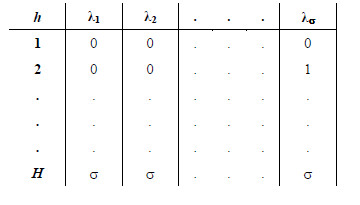
<body><![CDATA[<p style="margin-left: 1.25cm; text-indent: 1.25cm; margin-bottom: 0.21cm; line-height: 100%"> 	<font face="Verdana, sans-serif"><font size="2" style="font-size: 10pt"><span lang="en-US">&tau;&rsquo;&rsquo;</span><sub><span lang="en-US">ij</span></sub> 	<span lang="en-US">= (1 - &rho;).&tau;&rsquo;</span><sub><span lang="en-US">ij 	</span></sub><span lang="en-US">(9)</span></font></font></p> 	    <p lang="en-US" align="justify" style="text-indent: 0.61cm; margin-bottom: 0.21cm; line-height: 100%"> 	<font color="#000000"><font face="Verdana, sans-serif"><font size="2" style="font-size: 10pt"><span style="background: #ffffff">For 	this calculation, the objective functions are normalized between a 	very small value <a name="z36"><img src="/img/revistas/cleiej/v18n2/2a09z36.jpg"></a> and 1; this is, to the interval 	<a name="z37"><img src="/img/revistas/cleiej/v18n2/2a09z37.jpg"></a> for instance, utilizing the following equation:</span></font></font></font></p> 	    <p align="justify" style="margin-bottom: 0.21cm; line-height: 100%"><a name="z38"><img src="/img/revistas/cleiej/v18n2/2a09z38.jpg"></a><font face="Verdana, sans-serif"><font size="2" style="font-size: 10pt"><span lang="en-US">(10)</span></font></font></p> 	    <p align="justify" style="margin-bottom: 0.21cm; line-height: 100%"><br/> <br/>  	</p> 	    <p align="justify" style="text-indent: 0.75cm; margin-bottom: 0.21cm; line-height: 100%"> 	<font face="Verdana, sans-serif"><font size="2" style="font-size: 10pt"><span lang="en-US">Therefore, 	to calculate the value of </span><font color="#000000"><span lang="en-US"><span style="background: #ffffff">&Delta;&tau;</span></span></font><font color="#000000"><sub><span lang="en-US"><span style="background: #ffffff">ij 	</span></span></sub></font><font color="#000000"><span lang="en-US"><span style="background: #ffffff">the 	following equation may be used:</span></span></font></font></font></p> 	    <p style="margin-left: 2.5cm; margin-bottom: 0.21cm; line-height: 100%"> 	<font color="#000000"><font face="Verdana, sans-serif"><font size="2" style="font-size: 10pt"><span lang="en-US"><span style="background: #ffffff"><a name="z39"><img src="/img/revistas/cleiej/v18n2/2a09z39.jpg"></a></span></span></font></font></font><font color="#000000"><span style="background: #ffffff"> 	</span></font><font color="#000000"><font face="Verdana, sans-serif"><font size="2" style="font-size: 10pt"><span lang="en-US"><span style="background: #ffffff">(11) 	</span></span></font></font></font> 	</p> 	    <p align="justify" style="margin-bottom: 0.21cm; line-height: 100%"><font face="Verdana, sans-serif"><font size="2" style="font-size: 10pt"><font color="#000000"><span lang="en-US"><span style="background: #ffffff">where 	<a name="z40"><img src="/img/revistas/cleiej/v18n2/2a09z40.jpg"></a></span></span></font><font color="#000000"><span style="background: #ffffff"> 	</span></font><font color="#000000"><span lang="en-US"><span style="background: #ffffff">is 	a weight corresponding to the relative importance that can be 	attributed to each objective function <a name="z41"><img src="/img/revistas/cleiej/v18n2/2a09z41.jpg"></a></span></span></font><font color="#000000"><span style="background: #ffffff"> 	</span></font><font color="#000000"><span lang="en-US"><span style="background: #ffffff">and 	that can be defined at the discretion of the decision maker or at 	random each time it is used. In the actual case presented in section 	VI, the selection was done by the chief of logistics of the 	motorcycle factory that implemented the presented generalized MOACS. 	</span></span></font></font></font> 	</p> 	    <p lang="en-US" align="justify" style="text-indent: 0.61cm; margin-bottom: 0.21cm; line-height: 100%"> 	<font face="Verdana, sans-serif"><font size="2" style="font-size: 10pt">The 	objective of the proposed algorithm is to only build feasible 	solutions, utilizing the strictly necessary vehicles, until every 	client has been served or until the capacity of the vehicle fleet 	has reached a saturation point. A finite number of vehicles is 	considered for distribution, thus, it will not always be possible 	serving every branch. Indeed, the algorithm can also end when the 	capacity of all available vehicles has been met, even if there are 	still branches to visit. The unsatisfied demand from the branches 	left out will be considered as another objective function to be 	minimized, and, in the particular case of the motorcycle enterprise, 	could be satisfied the following day. </font></font> 	</p> 	    <p align="justify" style="text-indent: 0.75cm; margin-bottom: 0.21cm; line-height: 100%"> 	<font face="Verdana, sans-serif"><font size="2" style="font-size: 10pt"><span lang="en-US"><a href="#f1">Figure 	1</a> shows the general procedure for the MOACS algorithm implemented in 	this work, remembering that at each generation </span><span lang="en-US"><i>w,</i></span> 	<span lang="en-US"><i>H </i></span><span lang="en-US">ants construct 	solutions <a name="z42"><img src="/img/revistas/cleiej/v18n2/2a09z42.jpg"></a> <a name="z43"><img src="/img/revistas/cleiej/v18n2/2a09z43.jpg"></a></span><font color="#0d0d0d"><span lang="en-US">, 	calculating their respective objective functions: </span></font></font></font> 	</p> 	    <p lang="en-US" align="justify" style="text-indent: 0.75cm; margin-bottom: 0.21cm; line-height: 100%"> 	<font color="#0d0d0d"><font face="Verdana, sans-serif"><font size="2" style="font-size: 10pt"><a name="z44"><img src="/img/revistas/cleiej/v18n2/2a09z44.jpg"></a>.</font></font></font></p> 	    ]]></body>

<body><![CDATA[<p align="justify" style="text-indent: 0.61cm; margin-bottom: 0.21cm; line-height: 100%"> 	<font face="Verdana, sans-serif"><font size="2" style="font-size: 10pt"><span lang="en-US">The 	general procedure for finding no-dominated solutions with the 	proposed algorithm is put forth in <a href="#f2">Figure 2</a>. To find the 	no-dominated solutions, all solutions in a generation are compared, 	along with their respective objective functions being compared among 	themselves, as can be observed in lines 1 and 2 of the procedure 	presented in <a href="#f2">Figure 2</a>. If a solution </span><font color="#0d0d0d"><span lang="en-US"><a name="z35"><img src="/img/revistas/cleiej/v18n2/2a09z35.jpg"></a></span></font> 	<span lang="en-US">is not worse than another solution <a name="z45"><img src="/img/revistas/cleiej/v18n2/2a09z45.jpg"></a></span> 	<span lang="en-US">(line 3) in any objective function and also, the 	solution </span><font color="#0d0d0d"><span lang="en-US"><a name="z35"><img src="/img/revistas/cleiej/v18n2/2a09z35.jpg"></a></span></font> 	<span lang="en-US">is strictly better than solution <a name="z45"><img src="/img/revistas/cleiej/v18n2/2a09z45.jpg"></a></span> 	<span lang="en-US">in at least one objective (line 4), then it is 	said that the solution <a name="z45"><img src="/img/revistas/cleiej/v18n2/2a09z45.jpg"></a></span> <span lang="en-US">is 	dominated by </span><font color="#0d0d0d"><span lang="en-US"><a name="z35"><img src="/img/revistas/cleiej/v18n2/2a09z35.jpg"></a></span></font><span lang="en-US">. 	The dominated <a name="z45"><img src="/img/revistas/cleiej/v18n2/2a09z45.jpg"></a></span> <span lang="en-US">is marked and 	discarded (line 5), while the no-dominated solutions are stored in a 	set </span><span lang="en-US"><i>P</i></span> <span lang="en-US">of 	no-dominated solutions. This procedure is used in the algorithm in 	two instances: to find the no-dominated solutions at each 	generation, and then, to update the Pareto_Set with these 	no-dominated solutions. </span></font></font> 	</p> 	    <p align="justify" style="margin-bottom: 0cm; line-height: 100%"><a name="f1"><img src="/img/revistas/cleiej/v18n2/2a09f1.jpg"></a></p> 	    <p lang="en-US" align="justify" style="margin-top: 0.14cm; margin-bottom: 0.35cm; line-height: 100%"> 	<font face="Verdana, sans-serif"><font size="2" style="font-size: 10pt">Figure 	1. Optimization Algorithm implemented</font></font></p> 	<h1 lang="en-US"><font face="Verdana, sans-serif"><font size="2" style="font-size: 10pt">6. 	APPLICATION TO MOTORCYCLE DISTRIBUTION</font></font></h1> 	    <p lang="en-US" align="justify" style="text-indent: 0.64cm; margin-bottom: 0.21cm; line-height: 100%"> 	<font color="#000000"><font face="Verdana, sans-serif"><font size="2" style="font-size: 10pt"><span style="background: #ffffff">The 	method proposed in section V has been applied to an actual case 	utilizing real and historical data concerning a motorcycle 	manufacturing enterprise in Paraguay <a id="br35">[</a><a href="#r35">35</a>]. </span></font></font></font> 	</p> 	    <p align="justify" style="text-indent: 0.5cm; margin-top: 0.21cm; margin-bottom: 0.21cm; line-height: 100%"> 	<font face="Verdana, sans-serif"><font size="2" style="font-size: 10pt"><font color="#000000"><span lang="en-US"><span style="background: #ffffff">The 	motorcycle factory studied did not apply a formal method in the 	planning of its vehicle routes when distributing their products to 	the different branches, thus, this job was naturally tedious for the 	employee in charge of logistics, who was satisfied enough with being 	able to automatize the procedure as much as possible. The logistic 	area of the factory worked in the following way: the department in 	charge of logistics within the business collected weekly orders from 	their internal clients (branches) and continuously made empirical 	decisions without a mathematical model that would allow them to 	neither quantify their true costs nor take decisions that would 	allow the enterprise to optimize their distribution. In consequence, 	this work mathematically models the logistical problem with the 	distribution of motorcycles</span></span></font> <span lang="en-US">and 	proposes the utilization of the Generalized MOACS algorithm 	presented in the previous section to solve the presented 	mathematical model. </span></font></font> 	</p> 	    <p lang="en-US" align="justify" style="margin-top: 0.14cm; margin-bottom: 0.35cm; line-height: 100%"> 	<font face="Verdana, sans-serif"><font size="2" style="font-size: 10pt"><a name="f2"><img src="/img/revistas/cleiej/v18n2/2a09f2.jpg"></a>    <br> 	Figure 2. Procedure to find no-dominated solutions</font></font></p> 	    <p align="justify" style="text-indent: 0.5cm; margin-top: 0.21cm; margin-bottom: 0cm; line-height: 100%"> 	<font face="Verdana, sans-serif"><font size="2" style="font-size: 10pt"><span lang="en-US">This 	particular company has at hand a central warehouse established at 	the factory site and </span></font></font><font face="Verdana, sans-serif"><font size="2" style="font-size: 10pt"><span lang="en-US"><i>m 	</i></span></font></font><font face="Verdana, sans-serif"><font size="2" style="font-size: 10pt"><span lang="en-US">= 	58 branches that must be supplied to, from the central warehouse. 	The company, besides, has a fleet of v = 5 heterogeneous vehicles 	destined exclusively to the distribution of supplies, always leaving 	from (and returning to) the central warehouse (the factory). </span></font></font> 	</p> 	    <p lang="en-US" align="justify" style="text-indent: 0.5cm; margin-top: 0.21cm; margin-bottom: 0cm; line-height: 100%"> 	<font face="Verdana, sans-serif"><font size="2" style="font-size: 10pt">After 	talking with logistics experts, it was decided to simultaneously 	minimize the following four objective functions:</font></font></p> 	<ul> 		<li/>     <p align="justify" style="margin-top: 0.21cm; margin-bottom: 0.21cm; line-height: 100%"> 		<a name="z46"><img src="/img/revistas/cleiej/v18n2/2a09z46.jpg"></a><font face="Verdana, sans-serif"><font size="2" style="font-size: 10pt"><span lang="en-US">: 		total merchandise distribution cost,</span></font></font></p> 		<li/>     ]]></body>
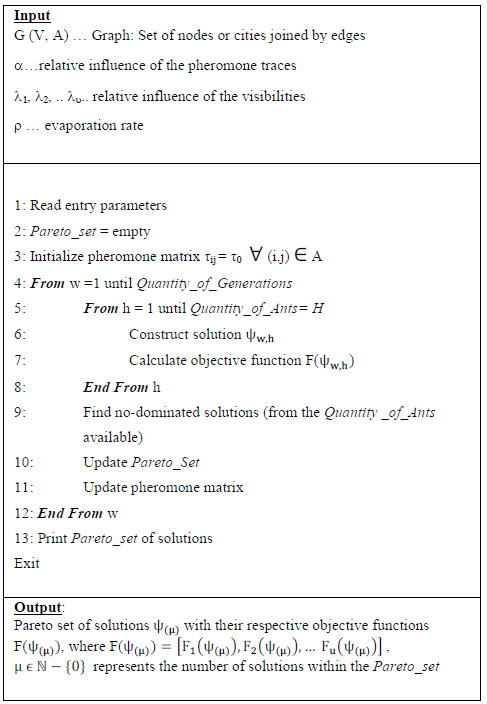
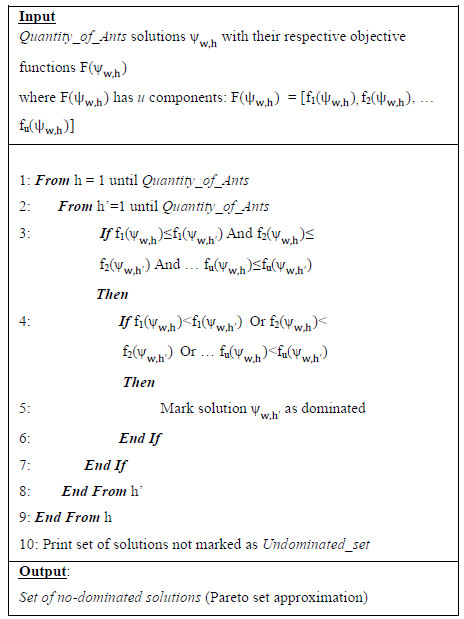
<body><![CDATA[<p align="justify" style="margin-top: 0.21cm; margin-bottom: 0.21cm; line-height: 100%"> 		<font face="Verdana, sans-serif"><font size="2" style="font-size: 10pt"><span lang="en-US"><a name="z47"><img src="/img/revistas/cleiej/v18n2/2a09z47.jpg"></a>: 		total traveled distance,</span></font></font></p> 		<li/>     <p align="justify" style="margin-top: 0.21cm; margin-bottom: 0.21cm; line-height: 100%"> 		<a name="z48"><img src="/img/revistas/cleiej/v18n2/2a09z48.jpg"></a> <font face="Verdana, sans-serif"><font size="2" style="font-size: 10pt"><span lang="en-US">: 		total travel time, and</span></font></font></p> 		<li/>     <p align="justify" style="margin-top: 0.21cm; margin-bottom: 0.21cm; line-height: 100%"> 		<a name="z49"><img src="/img/revistas/cleiej/v18n2/2a09z49.jpg"></a> <font face="Verdana, sans-serif"><font size="2" style="font-size: 10pt"><span lang="en-US">: 		unsatisfied demand in a given day.</span></font></font></p> 	    </ul> 	    <p align="justify" style="text-indent: 0.61cm; margin-bottom: 0.21cm; line-height: 100%"> 	<font face="Verdana, sans-serif"><font size="2" style="font-size: 10pt"><span lang="en-US">To 	calculate the probability that a branch </span><span lang="en-US"><i>s</i></span><sub><span lang="en-US"><i>j</i></span></sub> 	<span lang="en-US">will be visited from a branch </span><span lang="en-US"><i>s</i></span><sub><span lang="en-US"><i>i</i></span></sub><span lang="en-US">, 	equation (7) found in Section V is used. In said equation, 	<a name="z50"><img src="/img/revistas/cleiej/v18n2/2a09z50.jpg"></a> represents the set of feasible nodes or branches that 	have yet to be visited (excluding the warehouse) and not in 	violation of any restriction to the problem. In this probability 	formula, as many visibilities as there are objective functions 	considered in the formula are used; however, for the actual 	application to the motorcycle factory it was decided to use only 	three visibilities related to the objective functions of cost, 	distance, and time. This is because, for the particular case of the 	business being studied, throughout the length of a work week, demand 	can always be satisfied by hiring third party vehicles if it is 	required; therefore, the visibility corresponding to the unsatisfied 	demand was not considered. </span></font></font> 	</p> 	    <p lang="en-US" align="justify" style="text-indent: 0.75cm; margin-bottom: 0cm; line-height: 100%"> 	<font face="Verdana, sans-serif"><font size="2" style="font-size: 10pt">The 	three visibilities used to calculate the probability are defined as:</font></font></p> 	    <p align="justify" style="text-indent: 0.75cm; margin-bottom: 0cm; line-height: 100%"> 	<br/>  	</p> 	    <p align="justify" style="margin-left: 0.8cm; margin-top: 0.21cm; margin-bottom: 0.21cm; line-height: 100%"> 	<font face="Verdana, sans-serif"><font size="2" style="font-size: 10pt"><span lang="en-US"><a name="z51"><img src="/img/revistas/cleiej/v18n2/2a09z51.jpg"></a></span></font></font> 	<font face="Verdana, sans-serif"><font size="2" style="font-size: 10pt"><span lang="en-US">refers 	to the visibility related to the cost c</span></font></font><sub><font face="Verdana, sans-serif"><font size="2" style="font-size: 10pt"><span lang="en-US">ij</span></font></font></sub> 		</p> 	    <p align="justify" style="margin-left: 0.8cm; margin-top: 0.21cm; margin-bottom: 0.21cm; line-height: 100%"> 	<font face="Verdana, sans-serif"><font size="2" style="font-size: 10pt"><span lang="en-US"><a name="z52"><img src="/img/revistas/cleiej/v18n2/2a09z52.jpg"></a></span></font></font> 	<font face="Verdana, sans-serif"><font size="2" style="font-size: 10pt"><span lang="en-US">refers 	to the visibility related to time t</span></font></font><sub><font face="Verdana, sans-serif"><font size="2" style="font-size: 10pt"><span lang="en-US">ij 	</span></font></font></sub> 	</p> 	    <p align="justify" style="margin-left: 0.8cm; margin-bottom: 0.21cm; line-height: 100%"> 	<font face="Verdana, sans-serif"><font size="2" style="font-size: 10pt"><span lang="en-US"><a name="z53"><img src="/img/revistas/cleiej/v18n2/2a09z53.jpg"></a></span></font></font> 	<font face="Verdana, sans-serif"><font size="2" style="font-size: 10pt"><span lang="en-US">refers 	to the visibility related to distance d</span></font></font><sub><font face="Verdana, sans-serif"><font size="2" style="font-size: 10pt"><span lang="en-US">ij</span></font></font></sub></p> 	    ]]></body>
<body><![CDATA[<p lang="en-US" align="justify" style="text-indent: 0.61cm; margin-bottom: 0.21cm; line-height: 100%"> 	<font face="Verdana, sans-serif"><font size="2" style="font-size: 10pt">As 	was explained in the preceding section, each visibility is elevated 	to a power of &lambda;, representing the relative influence among 	visibilities. </font></font> 	</p> 	    <p align="justify" style="text-indent: 0.75cm; margin-bottom: 0.21cm; line-height: 100%"> 	<font face="Verdana, sans-serif"><font size="2" style="font-size: 10pt"><span lang="en-US">Finally, 	the formula used to calculate the probability of visiting a branch 	</span><span lang="en-US"><i>s</i></span><sub><span lang="en-US"><i>j</i></span></sub> 	<span lang="en-US">from a branch </span><span lang="en-US"><i>s</i></span><sub><span lang="en-US"><i>i</i></span></sub><span lang="en-US"><i>,</i></span> 	<span lang="en-US">is the following:</span></font></font></p> 	    <p align="justify" style="text-indent: 0.75cm; margin-bottom: 0.21cm; line-height: 100%"> 	<br/> <br/>  	</p> 	    <p style="margin-bottom: 0.21cm; line-height: 100%"><a name="z54"><img src="/img/revistas/cleiej/v18n2/2a09z54.jpg"></a> 	<font face="Verdana, sans-serif"><font size="2" style="font-size: 10pt"><span lang="en-US">where,</span></font></font></p> 	<ul> 		<li/>     <p lang="en-US" align="justify" style="margin-bottom: 0.21cm; line-height: 100%"> 		<font face="Verdana, sans-serif"><font size="2" style="font-size: 10pt">parameter 		&alpha; defines the relative influence of pheromone. For this work, 		&alpha;=1 is chosen, </font></font> 		</p> 		<li/>     <p lang="en-US" align="justify" style="margin-bottom: 0.21cm; line-height: 100%"> 		<font face="Verdana, sans-serif"><font size="2" style="font-size: 10pt">variables 		<a name="z55"><img src="/img/revistas/cleiej/v18n2/2a09z55.jpg"></a> define the relative influence among visibilities.</font></font></p> 	    </ul> 	    <p lang="en-US" align="justify" style="text-indent: 0.5cm; margin-bottom: 0.21cm; line-height: 100%"> 	<font face="Verdana, sans-serif"><font size="2" style="font-size: 10pt">For 	the tests performed, the variables <a name="z34"><img src="/img/revistas/cleiej/v18n2/2a09z34.jpg"></a> assume values of 0, 1 	y 2, that is, <a name="z56"><img src="/img/revistas/cleiej/v18n2/2a09z56.jpg"></a>, meaning that <a name="z33"><img src="/img/revistas/cleiej/v18n2/2a09z33.jpg"></a>. <a href="#t2">Table II</a> 	clearly shows all 27 combinations of the values for the parameter 	<a name="z34"><img src="/img/revistas/cleiej/v18n2/2a09z34.jpg"></a> used in the application that was implemented.</font></font></p> 	    <p align="justify" style="text-indent: 0.5cm; margin-top: 0.21cm; margin-bottom: 0.21cm; line-height: 100%"> 	<font face="Verdana, sans-serif"><font size="2" style="font-size: 10pt"><span lang="en-US">The 	value assumed by each variable of relative influence <a name="z34"><img src="/img/revistas/cleiej/v18n2/2a09z34.jpg"></a></span> 	<span lang="en-US">varies with the number </span><span lang="en-US"><i>h 	</i></span><span lang="en-US">of the ant building a solution, as it 	can be observed in <a href="#t2">Table II</a>. It is worth noting that when 	<a name="z34"><img src="/img/revistas/cleiej/v18n2/2a09z34.jpg"></a></span> <span lang="en-US">= 0, the corresponding 	visibility has no effect in the probability value.</span></font></font></p> 	    <p lang="en-US" align="justify" style="text-indent: 0.5cm; margin-top: 0.21cm; margin-bottom: 0cm; line-height: 100%"> 	<font face="Verdana, sans-serif"><font size="2" style="font-size: 10pt">In 	consequence, the solution proposed to the motorcycle factory 	considers generations in which 27 ants construct solutions, each one 	with a different probability distribution, hoping that way to 	improve the MOACO exploration.</font></font></p> 	    ]]></body>
<body><![CDATA[<p align="justify" style="text-indent: 0.5cm; margin-top: 0.21cm; margin-bottom: 0.21cm; line-height: 100%"> 	<br/> <br/>  	</p> 	    <p align="center" style="margin-bottom: 0.21cm; line-height: 100%"><font face="Verdana, sans-serif"><font size="2" style="font-size: 10pt"><span lang="en-US">TABLE 	II. </span><span lang="en-US"><i>Parameter</i></span> <font color="#000000"><span lang="en-US"><b>&lambda; 	</b></span></font><font color="#000000"><span lang="en-US">values</span></font><font color="#000000"> 	</font><font color="#000000"><span lang="en-US">used in the final 	implementation for the motorcycle factory in Paraguay</span></font></font></font></p> 	    <p align="justify" style="text-indent: 0.5cm; margin-top: 0.21cm; margin-bottom: 0cm; line-height: 100%"> 	<a name="t2"><img src="/img/revistas/cleiej/v18n2/2a09t2.jpg"></a></p> 	    <p align="justify" style="text-indent: 0.5cm; margin-top: 0.21cm; margin-bottom: 0cm; line-height: 100%"> 	<font face="Verdana, sans-serif"><font size="2" style="font-size: 10pt"><span lang="en-US">For 	the updating of the pheromone matrix </span><font color="#000000"><span lang="en-US"><span style="background: #ffffff">&tau;</span></span></font><span lang="en-US">, 	a </span><font color="#000000"><span lang="en-US"><span style="background: #ffffff">&Delta;&tau;</span></span></font><font color="#000000"><sub><span lang="en-US"><span style="background: #ffffff">ij 	</span></span></sub></font><span lang="en-US">has been considered, 	uniquely associated with the distribution cost, at the explicit 	request of the logistics expert, due to the fact that the motorcycle 	company ensures that cost minimization is their priority, denoted as 	<a name="z46"><img src="/img/revistas/cleiej/v18n2/2a09z46.jpg"></a>.</span> <span lang="en-US">Therefore:</span></font></font></p> 	    <p style="margin-left: 2.5cm; text-indent: 1.25cm; margin-bottom: 0cm; line-height: 100%"> 	<font face="Verdana, sans-serif"><font size="2" style="font-size: 10pt"><font color="#000000"><span lang="en-US"><span style="background: #ffffff"><a name="z57"><img src="/img/revistas/cleiej/v18n2/2a09z57.jpg"></a> 	(13)</span></span></font></font></font></p> 	    <p style="margin-bottom: 0cm; line-height: 100%"><br/>  	</p> 	    <p align="justify" style="text-indent: 0.75cm; margin-bottom: 0.21cm; line-height: 100%"> 	<font face="Verdana, sans-serif"><font size="2" style="font-size: 10pt"><span lang="en-US">It 	is worth noting that the choice of the method to calculate </span><font color="#000000"><span lang="en-US"><span style="background: #ffffff">&Delta;&tau;</span></span></font><font color="#000000"><sub><span lang="en-US"><span style="background: #ffffff">ij</span></span></sub></font> 	<span lang="en-US">can affect the quality of the calculated results, 	prioritizing some objectives, but under no circumstances it deletes 	from the algorithm the ability to find a set of different 	multiobjective solutions that make up the Pareto set. </span></font></font> 	</p> 	    <p lang="en-US" align="justify" style="text-indent: 0.75cm; margin-bottom: 0.21cm; line-height: 100%"> 	<font face="Verdana, sans-serif"><font size="2" style="font-size: 10pt">The 	entry parameters considered in the application of the algorithm are 	detailed next: </font></font> 	</p> 	<ul> 		<li/>     <p lang="en-US" align="justify" style="margin-bottom: 0.21cm; line-height: 100%"> 		<font face="Verdana, sans-serif"><font size="2" style="font-size: 10pt">G 		(V, A) represents a graph; that is, the set of nodes (or branches), 		linked by edges (or roads);</font></font></p> 		<li/>     <p lang="en-US" align="justify" style="margin-bottom: 0.21cm; line-height: 100%"> 		<font face="Verdana, sans-serif"><font size="2" style="font-size: 10pt">&alpha; 		defines the relative influence of the pheromone traces;</font></font></p> 		<li/>     ]]></body>
<body><![CDATA[<p lang="en-US" align="justify" style="margin-bottom: 0.21cm; line-height: 100%"> 		<font face="Verdana, sans-serif"><font size="2" style="font-size: 10pt">parameters 		<a name="z55"><img src="/img/revistas/cleiej/v18n2/2a09z55.jpg"></a> define the relative influence between visibilities; 		where <a name="z58"><img src="/img/revistas/cleiej/v18n2/2a09z58.jpg"></a>  		represents the relative influence of the cost visibility. 		Analogically,<a name="z59"><img src="/img/revistas/cleiej/v18n2/2a09z59.jpg"></a> and <a name="z60"><img src="/img/revistas/cleiej/v18n2/2a09z60.jpg"></a> represent the relative 		influence of the total travel time and total distance travelled 		visibilities respectively;</font></font></p> 		<li/>     <p lang="en-US" align="justify" style="margin-bottom: 0.21cm; line-height: 100%"> 		<font face="Verdana, sans-serif"><font size="2" style="font-size: 10pt">&rho; 		represents the evaporation rate ;</font></font></p> 	    </ul> 	<ul> 		<li/>     <p align="justify" style="margin-bottom: 0.21cm; line-height: 100%"> 		<font face="Verdana, sans-serif"><font size="2" style="font-size: 10pt"><span lang="en-US"><i>D</i></span></font></font> 		<font face="Verdana, sans-serif"><font size="2" style="font-size: 10pt"><span lang="en-US">= 		{</span></font></font><font face="Verdana, sans-serif"><font size="2" style="font-size: 10pt"><span lang="en-US"><i>d</i></span></font></font><sub><font face="Verdana, sans-serif"><font size="2" style="font-size: 10pt"><span lang="en-US">ij</span></font></font></sub><font face="Verdana, sans-serif"><font size="2" style="font-size: 10pt"><span lang="en-US">} 		is a matrix with a dimension of (</span></font></font><font face="Verdana, sans-serif"><font size="2" style="font-size: 10pt"><span lang="en-US"><i>m</i></span></font></font><font face="Verdana, sans-serif"><font size="2" style="font-size: 10pt"><span lang="en-US">+1) 		x (</span></font></font><font face="Verdana, sans-serif"><font size="2" style="font-size: 10pt"><span lang="en-US"><i>m</i></span></font></font><font face="Verdana, sans-serif"><font size="2" style="font-size: 10pt"><span lang="en-US">+1) 		that includes the central warehouse and the m company branches. 		Each element d</span></font></font><sub><font face="Verdana, sans-serif"><font size="2" style="font-size: 10pt"><span lang="en-US">ij</span></font></font></sub> 		<font face="Verdana, sans-serif"><font size="2" style="font-size: 10pt"><span lang="en-US">from 		D, indicates the distance between a branch s</span></font></font><sub><font face="Verdana, sans-serif"><font size="2" style="font-size: 10pt"><span lang="en-US">i</span></font></font></sub> 		<font face="Verdana, sans-serif"><font size="2" style="font-size: 10pt"><span lang="en-US">and 		another branch s</span></font></font><sub><font face="Verdana, sans-serif"><font size="2" style="font-size: 10pt"><span lang="en-US">j</span></font></font></sub><font face="Verdana, sans-serif"><font size="2" style="font-size: 10pt"><span lang="en-US">, 		in km. It is considered that </span></font></font><font face="Verdana, sans-serif"><font size="2" style="font-size: 10pt"><span lang="en-US"><i>d</i></span></font></font><sub><font face="Verdana, sans-serif"><font size="2" style="font-size: 10pt"><span lang="en-US">ij</span></font></font></sub> 		<font face="Verdana, sans-serif"><font size="2" style="font-size: 10pt"><span lang="en-US">= 		</span></font></font><font face="Verdana, sans-serif"><font size="2" style="font-size: 10pt"><span lang="en-US"><i>d</i></span></font></font><sub><font face="Verdana, sans-serif"><font size="2" style="font-size: 10pt"><span lang="en-US">ji</span></font></font></sub><font face="Verdana, sans-serif"><font size="2" style="font-size: 10pt"><span lang="en-US">. 		This matrix is used to calculate the objective function 		<a name="z48"><img src="/img/revistas/cleiej/v18n2/2a09z48.jpg"></a>, representing the total distance traveled in a solution 		<a name="z5"><img src="/img/revistas/cleiej/v18n2/2a09z5.jpg"></a>; also, it is used for calculating the relative 		visibility to the distance traveled <a name="z62"><img src="/img/revistas/cleiej/v18n2/2a09z62.jpg"></a>.</span></font></font></p> 	    </ul> 	<ul> 		<li/>     <p align="justify" style="margin-bottom: 0.21cm; line-height: 100%"> 		<font face="Verdana, sans-serif"><font size="2" style="font-size: 10pt"><span lang="en-US"><i>T</i></span></font></font> 		<font face="Verdana, sans-serif"><font size="2" style="font-size: 10pt"><span lang="en-US">= 		{</span></font></font><font face="Verdana, sans-serif"><font size="2" style="font-size: 10pt"><span lang="en-US"><i>t</i></span></font></font><sub><font face="Verdana, sans-serif"><font size="2" style="font-size: 10pt"><span lang="en-US"><i>ij</i></span></font></font></sub><font face="Verdana, sans-serif"><font size="2" style="font-size: 10pt"><span lang="en-US">} 		is a matrix with a dimension of (</span></font></font><font face="Verdana, sans-serif"><font size="2" style="font-size: 10pt"><span lang="en-US"><i>m</i></span></font></font><font face="Verdana, sans-serif"><font size="2" style="font-size: 10pt"><span lang="en-US">+1) 		x (</span></font></font><font face="Verdana, sans-serif"><font size="2" style="font-size: 10pt"><span lang="en-US"><i>m</i></span></font></font><font face="Verdana, sans-serif"><font size="2" style="font-size: 10pt"><span lang="en-US">+1) 		that includes the central warehouse and the </span></font></font><font face="Verdana, sans-serif"><font size="2" style="font-size: 10pt"><span lang="en-US"><i>m 		</i></span></font></font><font face="Verdana, sans-serif"><font size="2" style="font-size: 10pt"><span lang="en-US">company 		branches. Each element </span></font></font><font face="Verdana, sans-serif"><font size="2" style="font-size: 10pt"><span lang="en-US"><i>t</i></span></font></font><sub><font face="Verdana, sans-serif"><font size="2" style="font-size: 10pt"><span lang="en-US">ij</span></font></font></sub> 		<font face="Verdana, sans-serif"><font size="2" style="font-size: 10pt"><span lang="en-US">represents 		the travel time between a branch </span></font></font><font face="Verdana, sans-serif"><font size="2" style="font-size: 10pt"><span lang="en-US"><i>s</i></span></font></font><sub><font face="Verdana, sans-serif"><font size="2" style="font-size: 10pt"><span lang="en-US">i</span></font></font></sub> 		<font face="Verdana, sans-serif"><font size="2" style="font-size: 10pt"><span lang="en-US">and 		another branch </span></font></font><font face="Verdana, sans-serif"><font size="2" style="font-size: 10pt"><span lang="en-US"><i>s</i></span></font></font><sub><font face="Verdana, sans-serif"><font size="2" style="font-size: 10pt"><span lang="en-US">j</span></font></font></sub><font face="Verdana, sans-serif"><font size="2" style="font-size: 10pt"><span lang="en-US">, 		in hours. It is considered that </span></font></font><font face="Verdana, sans-serif"><font size="2" style="font-size: 10pt"><span lang="en-US"><i>t</i></span></font></font><sub><font face="Verdana, sans-serif"><font size="2" style="font-size: 10pt"><span lang="en-US">ij</span></font></font></sub> 		<font face="Verdana, sans-serif"><font size="2" style="font-size: 10pt"><span lang="en-US">= 		</span></font></font><font face="Verdana, sans-serif"><font size="2" style="font-size: 10pt"><span lang="en-US"><i>t</i></span></font></font><sub><font face="Verdana, sans-serif"><font size="2" style="font-size: 10pt"><span lang="en-US">ji</span></font></font></sub><font face="Verdana, sans-serif"><font size="2" style="font-size: 10pt"><span lang="en-US">. 		The matrix </span></font></font><font face="Verdana, sans-serif"><font size="2" style="font-size: 10pt"><span lang="en-US"><i>T</i></span></font></font> 		<font face="Verdana, sans-serif"><font size="2" style="font-size: 10pt"><span lang="en-US">is 		used for calculating the objective function <a name="z47"><img src="/img/revistas/cleiej/v18n2/2a09z47.jpg"></a></span></font></font> 		<font face="Verdana, sans-serif"><font size="2" style="font-size: 10pt"><span lang="en-US">that 		represents total travel time as well as for calculating the 		relative visibility to time <a name="z61"><img src="/img/revistas/cleiej/v18n2/2a09z61.jpg"></a>.</span></font></font>  		</p> 	    </ul> 	<ul> 		<li/>     <p align="justify" style="margin-bottom: 0.21cm; line-height: 100%"> 		<font face="Verdana, sans-serif"><font size="2" style="font-size: 10pt"><span lang="en-US"><i>R</i></span></font></font> 		<font face="Verdana, sans-serif"><font size="2" style="font-size: 10pt"><span lang="en-US">= 		{</span></font></font><font face="Verdana, sans-serif"><font size="2" style="font-size: 10pt"><span lang="en-US"><i>r</i></span></font></font><sub><font face="Verdana, sans-serif"><font size="2" style="font-size: 10pt"><span lang="en-US">ij</span></font></font></sub><font face="Verdana, sans-serif"><font size="2" style="font-size: 10pt"><span lang="en-US">} 		is a restriction matrix with a dimension of (</span></font></font><font face="Verdana, sans-serif"><font size="2" style="font-size: 10pt"><span lang="en-US"><i>m</i></span></font></font><font face="Verdana, sans-serif"><font size="2" style="font-size: 10pt"><span lang="en-US">+1) 		x (</span></font></font><font face="Verdana, sans-serif"><font size="2" style="font-size: 10pt"><span lang="en-US"><i>m</i></span></font></font><font face="Verdana, sans-serif"><font size="2" style="font-size: 10pt"><span lang="en-US">+1) 		given for each vehicle </span></font></font><font face="Verdana, sans-serif"><font size="2" style="font-size: 10pt"><span lang="en-US"><i>k 		</i></span></font></font><font face="Verdana, sans-serif"><font size="2" style="font-size: 10pt"><span lang="en-US">that 		has circulation restrictions (a single vehicle for this particular 		factory), that includes the central warehouse and the </span></font></font><font face="Verdana, sans-serif"><font size="2" style="font-size: 10pt"><span lang="en-US"><i>m 		</i></span></font></font><font face="Verdana, sans-serif"><font size="2" style="font-size: 10pt"><span lang="en-US">company 		branches considered for this work. Each element </span></font></font><font face="Verdana, sans-serif"><font size="2" style="font-size: 10pt"><span lang="en-US"><i>r</i></span></font></font><sub><font face="Verdana, sans-serif"><font size="2" style="font-size: 10pt"><span lang="en-US">ij</span></font></font></sub> 		<font face="Verdana, sans-serif"><font size="2" style="font-size: 10pt"><span lang="en-US">on 		the R matrix indicates whether a vehicle </span></font></font><font face="Verdana, sans-serif"><font size="2" style="font-size: 10pt"><span lang="en-US"><i>k 		</i></span></font></font><font face="Verdana, sans-serif"><font size="2" style="font-size: 10pt"><span lang="en-US">with 		restrictions, can tour (or not) the link (</span></font></font><font face="Verdana, sans-serif"><font size="2" style="font-size: 10pt"><span lang="en-US"><i>i,</i></span></font></font><font face="Verdana, sans-serif"><font size="2" style="font-size: 10pt"><span lang="en-US">j), 		where, </span></font></font> 		</p> 	    </ul> 	    <p align="center" style="margin-bottom: 0.21cm; line-height: 100%"><a name="z63"><img src="/img/revistas/cleiej/v18n2/2a09z63.jpg"></a>. 		</p> 	<ul> 		<li/>     ]]></body>
<body><![CDATA[<p align="justify" style="margin-bottom: 0.21cm; line-height: 100%"> 		<font face="Verdana, sans-serif"><font size="2" style="font-size: 10pt"><span lang="en-US"><i>q</i></span><sub><span lang="en-US">i</span></sub> 		<span lang="en-US">represents each branch&rsquo;s s</span><sub><span lang="en-US">i 		</span></sub><span lang="en-US">demand;</span></font></font></p> 	    </ul> 	<ul> 		<li/>     <p align="justify" style="margin-bottom: 0.21cm; line-height: 100%"> 		<font face="Verdana, sans-serif"><font size="2" style="font-size: 10pt"><span lang="en-US"><i>Cost_veh</i></span></font></font> 		<font face="Verdana, sans-serif"><font size="2" style="font-size: 10pt"><span lang="en-US">is 		a column vector, containing the parameter cost/km for each vehicle 		</span></font></font><font face="Verdana, sans-serif"><font size="2" style="font-size: 10pt"><span lang="en-US"><i>k</i></span></font></font><font face="Verdana, sans-serif"><font size="2" style="font-size: 10pt"><span lang="en-US">, 		where <a name="z64"><img src="/img/revistas/cleiej/v18n2/2a09z64.jpg"></a>. The vehicles cost/km parameter is multiplied by 		the distance traveled by each vehicle (in km), to calculate the 		objective function <a name="z46"><img src="/img/revistas/cleiej/v18n2/2a09z46.jpg"></a>, representing a solution&rsquo;s 		total cost. </span></font></font> 		</p> 	    </ul> 	    <p align="justify" style="text-indent: 0.64cm; margin-bottom: 0.21cm; line-height: 100%"> 	<font face="Verdana, sans-serif"><font size="2" style="font-size: 10pt"><span lang="en-US">To 	calculate the visibility relative to the cost, <a name="z65"><img src="/img/revistas/cleiej/v18n2/2a09z65.jpg"></a>, matrices 	</span></font></font><font face="Verdana, sans-serif"><font size="2" style="font-size: 10pt"><span lang="en-US"><i>C</i></span></font></font><sub><font face="Verdana, sans-serif"><font size="2" style="font-size: 10pt"><span lang="en-US"><i>k</i></span></font></font></sub> 	<font face="Verdana, sans-serif"><font size="2" style="font-size: 10pt"><span lang="en-US">= 	{</span></font></font><font face="Verdana, sans-serif"><font size="2" style="font-size: 10pt"><span lang="en-US"><i>c</i></span></font></font><sub><font face="Verdana, sans-serif"><font size="2" style="font-size: 10pt"><span lang="en-US"><i>kij</i></span></font></font></sub><font face="Verdana, sans-serif"><font size="2" style="font-size: 10pt"><span lang="en-US">} 	must be considered, where <a name="z64"><img src="/img/revistas/cleiej/v18n2/2a09z64.jpg"></a>. Every matrix </span></font></font><font face="Verdana, sans-serif"><font size="2" style="font-size: 10pt"><span lang="en-US"><i>C</i></span></font></font><sub><font face="Verdana, sans-serif"><font size="2" style="font-size: 10pt"><span lang="en-US">k 	</span></font></font></sub><font face="Verdana, sans-serif"><font size="2" style="font-size: 10pt"><span lang="en-US">must 	include the traveling costs between a branch </span></font></font><font face="Verdana, sans-serif"><font size="2" style="font-size: 10pt"><span lang="en-US"><i>s</i></span></font></font><sub><font face="Verdana, sans-serif"><font size="2" style="font-size: 10pt"><span lang="en-US">i</span></font></font></sub> 	<font face="Verdana, sans-serif"><font size="2" style="font-size: 10pt"><span lang="en-US">and 	another branch </span></font></font><font face="Verdana, sans-serif"><font size="2" style="font-size: 10pt"><span lang="en-US"><i>s</i></span></font></font><sub><font face="Verdana, sans-serif"><font size="2" style="font-size: 10pt"><span lang="en-US">j</span></font></font></sub><font face="Verdana, sans-serif"><font size="2" style="font-size: 10pt"><span lang="en-US">, 	when a vehicle </span></font></font><font face="Verdana, sans-serif"><font size="2" style="font-size: 10pt"><span lang="en-US"><i>k 	</i></span></font></font><font face="Verdana, sans-serif"><font size="2" style="font-size: 10pt"><span lang="en-US">is 	used. Every element </span></font></font><font face="Verdana, sans-serif"><font size="2" style="font-size: 10pt"><span lang="en-US"><i>c</i></span></font></font><sub><font face="Verdana, sans-serif"><font size="2" style="font-size: 10pt"><span lang="en-US">kij</span></font></font></sub> 	<font face="Verdana, sans-serif"><font size="2" style="font-size: 10pt"><span lang="en-US">would 	be attained by multiplying the parameter cost/km of the 	corresponding vehicle, by each element </span></font></font><font face="Verdana, sans-serif"><font size="2" style="font-size: 10pt"><span lang="en-US"><i>d</i></span></font></font><sub><font face="Verdana, sans-serif"><font size="2" style="font-size: 10pt"><span lang="en-US"><i>ij</i></span></font></font></sub> 	<font face="Verdana, sans-serif"><font size="2" style="font-size: 10pt"><span lang="en-US">in 	the distance matrix D.</span></font></font><font color="#000000"><span style="background: #ffffff"> 	</span></font> 	</p> 	<h1 lang="en-US"><a name="_GoBack"></a><font face="Verdana, sans-serif"><font size="2" style="font-size: 10pt">7. 	EXPERIMENTAL RESULTS</font></font></h1> 	    <p lang="en-US" align="justify" style="text-indent: 0.64cm; margin-bottom: 0.21cm; line-height: 100%"> 	<font color="#000000"><font face="Verdana, sans-serif"><font size="2" style="font-size: 10pt"><span style="background: #ffffff">Experimental 	testing was first conducted considering the historical orders and 	delivery records of the Paraguayan motorcycle company. In such 	records it could be found data including: order and delivery dates, 	demand from each branch, quantity of motorcycles delivered to each 	branch, and which vehicle visited each branch. For the tests next 	reported, requests from all 58 company branches were considered.</span></font></font></font></p> 	    <p lang="en-US" align="justify" style="text-indent: 0.61cm; margin-bottom: 0.21cm; line-height: 100%"> 	<font color="#000000"><font face="Verdana, sans-serif"><font size="2" style="font-size: 10pt"><span style="background: #ffffff"><a href="#f3">Figure 	3</a> indicates the weekly procedure followed by the motorcycle company 	when using the software developed to determine the distribution of 	received orders. The logistic of the company is organized in such a 	way that orders mostly arrive on Thursdays and Fridays, but 	unexpected or urgent requests may continue arriving during the first 	days of the following week. The software developed for the 	motorcycle factory is executed for each one of these days, having as 	input the demands of all branches. As a result, the software 	proposes the planning for the distribution of these orders, to be 	carried on the following day. </span></font></font></font> 	</p> 	    <p lang="en-US" align="justify" style="text-indent: 0.61cm; margin-bottom: 0.21cm; line-height: 100%"> 	<font color="#000000"><font face="Verdana, sans-serif"><font size="2" style="font-size: 10pt"><span style="background: #ffffff">Logically, 	it could happen that a day&rsquo;s demand exceeds a fleet of 	available vehicle&rsquo;s capacity, considering both, their own 	vehicles and those of a third party. In this case, unsatisfied 	demand is added to the new orders received on that day, and this new 	total demand is reentered the program to plan next day distribution. 	This process continues until every order received in the week has 	been delivered.</span></font></font></font></p> 	    <p align="justify" style="text-indent: 0.61cm; margin-bottom: 0.21cm; line-height: 100%"> 	<font face="Verdana, sans-serif"><font size="2" style="font-size: 10pt"><span lang="en-US">Tables 	<a href="#t3">III</a>, <a href="#t4">IV</a> and <a href="#t5">V</a>, present a comparison of the actual distribution 	performed by the company with a solution of the Pareto set 	calculated with the proposed method in order to emphasize the 	advantage associated with using the proposed Generalized MOACS 	metaheuristic. Comparisons are made in terms of the total cost in 	</span><span lang="en-US"><i>Gs.</i></span> <span lang="en-US">(official 	currency of Paraguay, where 1 US Dollar &asymp; 5000 Gs.), the total 	traveling time, and the total traveled distance, as well as a 	comparison of the quantity of days needed for the entire demand to 	be distributed (last column, called </span><span lang="en-US"><i>Distribution 	days</i></span><span lang="en-US">). The comparisons do not include 	unsatisfied demand due to the fact that in every test performed it 	turned out that it had no effect given that the vehicle fleet is 	large enough to satisfy the internal customers of the factory, as 	was already put forth when explaining the simplifications made in 	the algorithm having this fact in mind. All data necessary to 	reproduce the results seen in tables <a href="#t3">III</a>, <a href="#t4">IV</a> and <a href="#t5">V</a>, is available in 	<a id="br35">[</a><a href="#r35">35</a>]. </span></font></font> 	</p> 	    <p lang="en-US" align="justify" style="margin-bottom: 0.21cm; line-height: 100%"> 	<font face="Verdana, sans-serif"><font size="2" style="font-size: 10pt">For 	the first studied period (see <a href="#t3">Table III</a>), it was found that the 	distribution actually made at the factory is part of the Pareto set, 	which proves the high level of specialization of the logistics 	expert. However, with the method proposed in this work, at least one 	lower cost solution is obtained, even though, logically, the 	objective functions of time and distance are better when utilizing 	the company&rsquo;s actual distribution given it is an optimal 	Pareto solution (see <a href="#t3">Table III</a>). For the second period considered 	(see <a href="#t4">Table IV</a>), one solution found by the Generalized MOACS clearly 	dominates the distribution programmed by the company specialist. In 	fact, the calculated solution strongly dominates the human expert 	solution, i.e. the calculated solution is better in every aspect of 	<a href="#t4">Table IV</a>; clearly demonstrating the usefulness of the proposed 	method. </font></font> 	</p> 	    ]]></body>
<body><![CDATA[<p align="justify" style="text-indent: 0.61cm; margin-bottom: 0.21cm; line-height: 100%"> 	<a name="f3" href="/img/revistas/cleiej/v18n2/2a09f3.jpg">Figure 3. Weekly procedure for determining the distribution of 	orders at a Paraguayan factory of motorcycles.</a></p> 	    <p lang="en-US" align="justify" style="text-indent: 0.63cm; margin-bottom: 0.21cm; line-height: 100%"> 	<font face="Verdana, sans-serif"><font size="2" style="font-size: 10pt"><a href="#t5">Table 	V</a> shows how, in the third test carried on, the proposed method 	achieves a solution which strongly dominates the distribution 	programmed by the company, given that, once again, it is better in 	every compared aspect. In fact, for the this final studied period, 	the proposed algorithm finds a solution that significantly minimizes 	the three objectives with respect to the company&rsquo;s actual 	distribution system. On top of that, the proposed method also 	enables branches demand to be satisfied in two days less than what 	was achieved by the company&rsquo;s logistics department. </font></font> 	</p> 	    <p lang="en-US" align="center" style="margin-bottom: 0.21cm; line-height: 100%"> 	<font face="Verdana, sans-serif"><font size="2" style="font-size: 10pt">TABLE 	III. FIRST COMPARISON TEST </font></font> 	</p> 	    <p lang="en-US" align="center" style="margin-bottom: 0.21cm; line-height: 100%"> 	<font face="Verdana, sans-serif"><font size="2" style="font-size: 10pt"><a name="t3"><img src="/img/revistas/cleiej/v18n2/2a09t3.jpg"></a></font></font></p> 	    <p lang="en-US" align="center" style="margin-bottom: 0.21cm; line-height: 100%"> 	<font face="Verdana, sans-serif"><font size="2" style="font-size: 10pt">TABLE 	IV. SECOND COMPARISON TEST </font></font> 	</p> 	    <p align="center" style="margin-bottom: 0.21cm; line-height: 100%"><a name="t4"><img src="/img/revistas/cleiej/v18n2/2a09t4.jpg"></a></p> 	    <p lang="en-US" align="center" style="margin-bottom: 0.21cm; line-height: 100%"> 	<font face="Verdana, sans-serif"><font size="2" style="font-size: 10pt">TABLE 	V. THIRD COMPARISON TEST </font></font> 	</p> 	    <p align="center" style="text-indent: 0.63cm; margin-bottom: 0.21cm; line-height: 100%"> 	<a name="t5"><img src="/img/revistas/cleiej/v18n2/2a09t5.jpg"></a></p> 	    <p align="justify" style="text-indent: 0.63cm; margin-bottom: 0.21cm; line-height: 100%"> 	<br/> <br/>  	</p> 	    <p lang="en-US" align="justify" style="text-indent: 0.63cm; margin-bottom: 0.21cm; line-height: 100%"> 	<font face="Verdana, sans-serif"><font size="2" style="font-size: 10pt">The 	three experimental tests conducted demonstrate that the proposed 	Generalized MOACS method achieves good feasible solutions for the 	company&rsquo;s distribution, generally better than the actual 	solutions found with the empirical method presently used by the 	company&rsquo;s logistics expert who dedicates a considerable 	fraction of his working time to organize the motorcycle 	distribution. Also, it is worth noting that in general, most 	compared objectives are simultaneously minimizing, i.e. the total 	cost, total traveled distance, total traveled time and unsatisfied 	demand may be improved at the same time, keeping in mind that in two 	out of three conducted tests, algorithm solutions strongly dominate 	(in all objectives considered) the company&rsquo;s logistics expert 	planned distribution system. At the same time, the program found 	solutions capable of reducing costs in all three conducted tests, a 	fact that seems relevant for the company. This makes the proposed 	method highly attractive for the business, considering the owners 	priority of minimizing costs. Another important advantage of the 	proposed method is that it considerably reduces the time needed to 	plan the distribution, when going from a manual programming to a 	computerized one. </font></font> 	</p> 	<h1 lang="en-US"><font face="Verdana, sans-serif"><font size="2" style="font-size: 10pt">8. 	CONCLUSIONS AND FUTURE WORK</font></font></h1> 	    ]]></body>
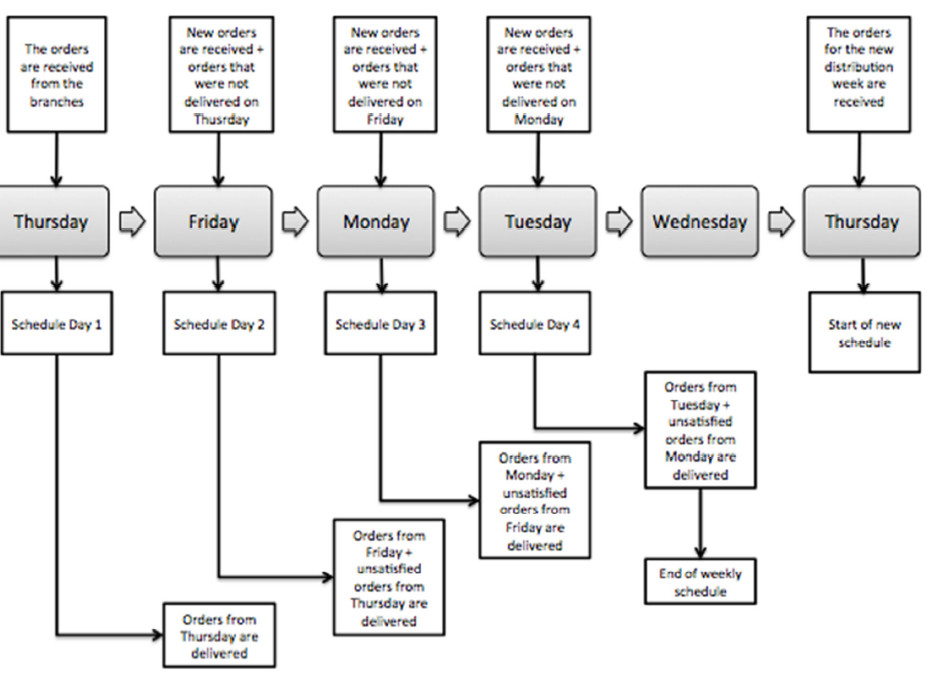
<body><![CDATA[<p align="justify" style="text-indent: 0.63cm; margin-bottom: 0.21cm; line-height: 100%"> 	<font face="Verdana, sans-serif"><font size="2" style="font-size: 10pt"><span lang="en-US">When 	trying to solve a </span><span lang="en-US"><i>Split Delivery</i></span><span lang="en-US">/ 	</span><span lang="en-US"><i>Mixed Fleet &ndash; Vehicle Routing 	Problem</i></span> <span lang="en-US">or SD/MF-VRP for a motorcycle 	distribution company in Paraguay, we found ourselves with a need to 	consider various unconventional restrictions (such as vehicles that 	cannot transit on certain roads) and to simultaneously minimize 4 	objectives: (1) the total cost, (2) total travel time, (3) total 	delivery time, and (4) unsatisfied demand, which entails solving a 	pretty complex practical problem, today known as </span><span lang="en-US"><i>many-objective 	optimization problem </i></span><span lang="en-US"><a id="br34">[</a><a href="#r34">34</a>]. In 	consequence, after carefully analyzing the state of the art, a 	well-known MOACO was chosen to solve the problem at hand, the MOACS 	<a id="br26">[</a><a href="#r26">26</a>] proposed in 2003 to solve a bi-objective TSP problem. In 	consequence, said algorithm was modified to be able to treat a 	generic number </span><span lang="en-US"><i>u</i></span> <span lang="en-US">of 	objective functions</span> <span lang="en-US">(</span><span lang="en-US"><i>u</i></span> 	&ge; <span lang="en-US">2). This generalized version of the MOACS 	explained in detailed in section V, was then successfully tested at 	a Paraguayan motorcycle factory, as explained in section VI, proving 	the viability of the proposal.</span></font></font></p> 	    <p lang="en-US" align="justify" style="text-indent: 0.63cm; margin-bottom: 0.21cm; line-height: 100%"> 	<font face="Verdana, sans-serif"><font size="2" style="font-size: 10pt">Experimental 	results using historical data and later validation at the motorcycle 	factory that requested the developed solution allow us to confirm 	that the proposed Generalized MOACS achieves good feasible 	solutions, similar or even better than the factory&rsquo;s 	empirically solutions obtained by its logistic expert. It was also 	proven in the three conducted tests that if the company had planned 	their distribution with the proposed algorithm, they could have 	achieved a significant costs savings in the distribution final cost. 	In the first and second tests, a cost savings of Gs. 660,000 could 	have been generated, while for the third test it was calculated 	that, had the company used the proposed algorithm, the saving would 	have been in the order of Gs. 3,400,000. </font></font> 	</p> 	    <p lang="en-US" align="justify" style="text-indent: 0.63cm; margin-bottom: 0.21cm; line-height: 100%"> 	<font face="Verdana, sans-serif"><font size="2" style="font-size: 10pt">After 	day to day trials at the motorcycle factory, it was also clear that 	the proposed method manages to optimize the available vehicle 	fleet&rsquo;s utilization, minimizing third party vehicles, 	increasing in this way the use of their own vehicles.</font></font></p> 	    <p lang="en-US" align="justify" style="text-indent: 0.64cm; margin-bottom: 0.21cm; line-height: 100%"> 	<font color="#000000"><font face="Verdana, sans-serif"><font size="2" style="font-size: 10pt"><span style="background: #ffffff">It 	is worth noting that the company&rsquo;s Logistics department does 	an excellent job in planning distribution routes; nevertheless, 	being an empirical planning, there is a lot more room for human 	mistakes to be made, which the proposed algorithm is capable of 	systematically avoid, reducing time and letting the expert choose 	from a set of optimal Pareto solutions, what helps the logistic 	worker to better understand the trade-off among different 	alternatives. Even the logistic expert said he learned from the 	possibility of knowing the possible trade-off solutions without the 	huge work he needed before automation using the developed system. </span></font></font></font> 	</p> 	    <p lang="en-US" align="justify" style="text-indent: 0.64cm; margin-bottom: 0.21cm; line-height: 100%"> 	<font face="Verdana, sans-serif"><font size="2" style="font-size: 10pt">Considering 	the results from the conducted tests, it is finally concluded that 	the proposed method, which programs the distribution of motorcycles 	according to the MOACO algorithm represented in <a href="#f1">Figure 1</a> and 	complemented in <a href="#f2">Figure 2</a>, constitutes an excellent alternative for 	the planning of distribution routes for the company in question, 	what clearly can be imitated by other companies with similar 	logistic distribution problems.</font></font></p> 	    <p lang="en-US" align="justify" style="text-indent: 0.61cm; margin-bottom: 0.21cm; line-height: 100%"> 	<font color="#000000"><font face="Verdana, sans-serif"><font size="2" style="font-size: 10pt"><span style="background: #ffffff">In 	order to continue with the work already under way, the following 	topics are suggested as future jobs: </span></font></font></font> 	</p> 	<ul> 		<li/>     <p lang="en-US" align="justify" style="margin-bottom: 0.21cm; line-height: 100%"> 		<font color="#000000"><font face="Verdana, sans-serif"><font size="2" style="font-size: 10pt"><span style="background: #ffffff">Considered 		that some branches could have their own, small warehouse, which 		could potentially satisfy orders made in their vicinities. Improve 		the problem&rsquo;s approach by considering that motorcycles can be 		delivered from another branch and not necessarily from the central 		warehouse. </span></font></font></font> 		</p> 	    </ul> 	<ul> 		<li/>     <p lang="en-US" align="justify" style="margin-bottom: 0.21cm; line-height: 100%"> 		<font color="#000000"><font face="Verdana, sans-serif"><font size="2" style="font-size: 10pt"><span style="background: #ffffff">Add 		new objective functions and/or restrictions, for example, 		establishing that all drivers should travel a similar amount of 		daily or weekly hours. </span></font></font></font> 		</p> 	    </ul> 	<ul> 		<li/>     ]]></body>
<body><![CDATA[<p lang="en-US" align="justify" style="margin-bottom: 0.21cm; line-height: 100%"> 		<font color="#000000"><font face="Verdana, sans-serif"><font size="2" style="font-size: 10pt"><span style="background: #ffffff">Consider 		the motorcycle stock problem. This way, before programming the 		distribution, there must be an assurance that the ordered models 		are in fact available in the warehouse. </span></font></font></font> 		</p> 	    </ul> 	<ul> 		<li/>     <p lang="en-US" align="justify" style="margin-bottom: 0.21cm; line-height: 100%"> 		<font color="#000000"><font face="Verdana, sans-serif"><font size="2" style="font-size: 10pt"><span style="background: #ffffff">Consider 		a factory where motorcycle may have different sizes. </span></font></font></font> 		</p> 	    </ul> 	<ul> 		<li/>     <p lang="en-US" align="justify" style="margin-bottom: 0.21cm; line-height: 100%"> 		<font color="#000000"><font face="Verdana, sans-serif"><font size="2" style="font-size: 10pt"><span style="background: #ffffff">Establish 		the programming period to be configurable: daily, weekly, or 		monthly. </span></font></font></font> 		</p> 	    </ul> 	<ul> 		<li/>     <p align="justify" style="margin-bottom: 0.21cm; line-height: 100%"> 		<font color="#000000"><font face="Verdana, sans-serif"><font size="2" style="font-size: 10pt"><span lang="en-US"><span style="background: #ffffff">Apply 		the Generalized MOACS algorithm to other </span></span></font></font></font><font color="#000000"><font face="Verdana, sans-serif"><font size="2" style="font-size: 10pt"><span lang="en-US"><i><span style="background: #ffffff">many-objective 		</span></i></span></font></font></font><font color="#000000"><font face="Verdana, sans-serif"><font size="2" style="font-size: 10pt"><span lang="en-US"><span style="background: #ffffff">problems 		with several objectives. Consider the generalization of other 		evolutionary algorithm, even any known MOACO, using similar 		techniques to the one presented in this work.</span></span></font></font></font></p> 	    </ul> 	<h1><font face="Verdana, sans-serif"><font size="2" style="font-size: 10pt"><span lang="en-US">REFERENCES</span></font></font></h1> 	    <p style="margin-left: 0.79cm; margin-bottom: 0cm"><font face="Verdana, sans-serif"><font size="2" style="font-size: 10pt"><span lang="en-US"><a id="r1">[</a><a href="#br1">1</a>] 	G. B. Dantzig and J. H. Ramser, &ldquo;The Truck Dispatching 	Problem,&rdquo; Management Science, vol. 6, n&ordm; 1, pp. 80-91, 	October 1959. </span></font></font> 	</p> 	    <!-- ref --><p lang="en-US" style="margin-left: 0.79cm; margin-bottom: 0cm"><font face="Verdana, sans-serif"><font size="2" style="font-size: 10pt"><a id="r2">[</a><a href="#br2">2</a>] 	P. Toth and D. Vigo, The Vehicle Routing Problem (Vol. 9), 	Philadelphia: SIAM, 1987, pp. 1-26.    </font></font></p> 	    <p style="margin-left: 0.79cm; margin-bottom: 0cm"><font face="Verdana, sans-serif"><font size="2" style="font-size: 10pt"><span lang="en-US"><a id="r3">[</a><a href="#br3">3</a>] 	M. V&aacute;squez, &ldquo;Desarrollo de un Framework para el 	Problema de Ruteo de Veh&iacute;culos,&rdquo; Thesis at Universidad 	de Chile, Santiago de Chile, 2007 	(<a href="http://www.tesis.uchile.cl/handle/2250/102934">www.tesis.uchile.cl/handle/2250/102934</a>).</span></font></font></p> 	    <p lang="en-US" style="margin-left: 0.79cm; margin-bottom: 0cm"><font face="Verdana, sans-serif"><font size="2" style="font-size: 10pt"><a id="r4">[</a><a href="#br4">4</a>] 	B. Golden, S. Raghavan and E. Wasil, &ldquo;The Vehicle Routing 	Problem Latest Advances and New Challenges,&rdquo; de Operations 	Research Computer Science Interfaces, New York, Springer, 2008. </font></font> 	</p> 	    <p lang="en-US" style="margin-left: 0.79cm; margin-bottom: 0cm"><font face="Verdana, sans-serif"><font size="2" style="font-size: 10pt"><a id="r5">[</a><a href="#br5">5</a>] 	G. Laporte, &ldquo;The vehicle routing problem: An overview of exact 	and approximate algorithms,&rdquo; European Journal of Operational 	Research, vol. 59, N&ordm; 3, pp. 345-358, 1992. </font></font> 	</p> 	    <p lang="en-US" style="margin-left: 0.79cm; margin-bottom: 0cm"><font face="Verdana, sans-serif"><font size="2" style="font-size: 10pt"><a id="r6">[</a><a href="#br6">6</a>] 	G. Laporte, M. Gendreau, J.-Y. Potvin and F. Semet, &ldquo;Classical 	and modern heuristics for the vehicle routing problem,&rdquo; 	International Transactions in Operational Research, vol. 7, n&ordm; 	4-5, pp. 285-300, 2000. </font></font> 	</p> 	    <p lang="en-US" style="margin-left: 0.79cm; margin-bottom: 0cm"><font face="Verdana, sans-serif"><font size="2" style="font-size: 10pt"><a id="r7">[</a><a href="#br7">7</a>] 	N. Christofides, &ldquo;The vehicle routing problem,&rdquo; RAIRO - 	Operations Research, vol. 10, n&ordm; 1, pp. 55-70, 1976. </font></font> 	</p> 	    <!-- ref --><p lang="en-US" style="margin-left: 0.79cm; margin-bottom: 0cm"><font face="Verdana, sans-serif"><font size="2" style="font-size: 10pt"><a id="r8">[</a><a href="#br8">8</a>] 	A. Subramanian, Heuristic, Exact and Hybrid Approaches for Vehicle 	Routing Problems, Thesis at Fluminense University - Brazil, 2012.     </font></font> 	</p> 	    <p lang="en-US" style="margin-left: 0.79cm; margin-bottom: 0cm"><font face="Verdana, sans-serif"><font size="2" style="font-size: 10pt"><a id="r9">[</a><a href="#br9">9</a>] 	C. Archetti, M. W. P. Savelsbergh and M. G. Speranza, &ldquo;Worst-Case 	Analysis for Split Delivery Vehicle Routing Problems,&rdquo; 	Transportation Science, vol. 40, pp. 226-234, 2006. </font></font> 	</p> 	    <p lang="en-US" style="margin-left: 0.79cm; margin-bottom: 0cm"><font face="Verdana, sans-serif"><font size="2" style="font-size: 10pt"><a id="r10">[</a><a href="#br10">10</a>] 	M. Dror and P. Trudeau, &ldquo;Savings by Split Delivery Routing,&rdquo; 	Transportation Science, vol. 23, n&ordm; 2, pp. 141-145, Mayo 1989. </font></font> 	</p> 	    ]]></body>
<body><![CDATA[<p lang="en-US" style="margin-left: 0.79cm; margin-bottom: 0cm"><font face="Verdana, sans-serif"><font size="2" style="font-size: 10pt"><a id="r11">[</a><a href="#br11">11</a>] 	C. Archetti, M. Savelsbergh y M. G. Speranza, &ldquo;To Split or Not 	to Split: That is the Question,&rdquo; Transportation Research Part 	E: Logistics and Transportation Review, vol. 44, pp. 114-123, Enero 	2008. </font></font> 	</p> 	    <p lang="en-US" style="margin-left: 0.79cm; margin-bottom: 0cm"><font face="Verdana, sans-serif"><font size="2" style="font-size: 10pt"><a id="r12">[</a><a href="#br12">12</a>] 	P. Mullaseril, M. Dror and J. Leung, &ldquo;Split-delivery routing 	in livestock feed distribution,&rdquo; Journal of the Operational 	Research Society, vol. 48, pp. 107-116, 1997. </font></font> 	</p> 	    <p lang="en-US" style="margin-left: 0.79cm; margin-bottom: 0cm"><font face="Verdana, sans-serif"><font size="2" style="font-size: 10pt"><a id="r13">[</a><a href="#br13">13</a>] 	G. Sierksma and G. A. Tijssen, &ldquo;Routing helicopters for crew 	exchanges on offshore locations,&rdquo; Annals of Operations 	Research, vol. 76, n&ordm; 0, pp. 261-286, 1998. </font></font> 	</p> 	    <!-- ref --><p lang="en-US" style="margin-left: 0.79cm; margin-bottom: 0cm"><font face="Verdana, sans-serif"><font size="2" style="font-size: 10pt"><a id="r14">[</a><a href="#br14">14</a>] 	L. Sui, J. Tang y S. Liu, Ant colony optimization algorithm to solve 	split delivery vehicle routing problem, Yantai, 2008, pp. 997-1001.    </font></font></p> 	    <p lang="en-US" style="margin-left: 0.79cm; margin-bottom: 0cm"><font face="Verdana, sans-serif"><font size="2" style="font-size: 10pt"><a id="r15">[</a><a href="#br15">15</a>] 	B. Golden, A. Assad, L. Levy y F. Gheysens, &ldquo;The Fleet Size 	and Mix Vehicle Routing Problem,&rdquo; Computers &amp; Operations 	Research, vol. 11, N&ordm; 1, pp. 49-66, 1984. </font></font> 	</p> 	    <!-- ref --><p lang="en-US" style="margin-left: 0.79cm; margin-bottom: 0cm"><font face="Verdana, sans-serif"><font size="2" style="font-size: 10pt"><a id="r16">[</a><a href="#br16">16</a>] 	A. Subramanian, P. Penna, E. Uchoa and L. Ochi, A Hybrid Algorithm 	for the Fleet Size and Mix Vehicle Routing Problem, Metz, 2011.     </font></font> 	</p> 	    <p lang="en-US" style="margin-left: 0.79cm; margin-bottom: 0cm"><font face="Verdana, sans-serif"><font size="2" style="font-size: 10pt"><a id="r17">[</a><a href="#br17">17</a>] 	S. Salhi and G. Rand, &ldquo;Incorporating vehicle routing into the 	vehicle fleet composition problem,&rdquo; European Journal of 	Operational Research, vol. 66, N&ordm; 3, pp. 313 - 330, 1993. </font></font> 	</p> 	    <p style="margin-left: 0.79cm; margin-bottom: 0cm"><font face="Verdana, sans-serif"><font size="2" style="font-size: 10pt"><span lang="en-US"><a id="r18">[</a><a href="#br18">18</a>] 	&Eacute;.D. Taillard, &ldquo;A heuristic column generation method 	for the heterogeneous fleet VRP,&rdquo; Lugano, Switzerland, 1996 	(<a href="http://mistic.heig-vd.ch/taillard/articles.dir/Taillard1999.pdf">http://mistic.heig-vd.ch/taillard/articles.dir/Taillard1999.pdf</a>).</span></font></font></p> 	    ]]></body>
<body><![CDATA[<p lang="en-US" style="margin-left: 0.79cm; margin-bottom: 0cm"><font face="Verdana, sans-serif"><font size="2" style="font-size: 10pt"><a id="r19">[</a><a href="#br19">19</a>] 	N. Wassan and I. Osman, &ldquo;Tabu Search Variants for the Mix 	Fleet Vehicle Routing Problem,&rdquo; The Journal of the Operational 	Research Society, vol. 53, N&ordm; 7, pp. 768-782, Julio 2002. </font></font> 	</p> 	    <p lang="en-US" style="margin-left: 0.79cm; margin-bottom: 0cm"><font face="Verdana, sans-serif"><font size="2" style="font-size: 10pt"><a id="r20">[</a><a href="#br20">20</a>] 	C.-H. Chen and C.-J. Ching, &ldquo;An Ant Colony Optimization 	Algorithm for the Heterogeneous Fleet Vehicle Routing Problem,&rdquo; 	Journal of the Eastern Asia Society for Transportation Studies, vol. 	9, pp. 631-643, 2011. </font></font> 	</p> 	    <p lang="en-US" style="margin-left: 0.79cm; margin-bottom: 0cm"><font face="Verdana, sans-serif"><font size="2" style="font-size: 10pt"><a id="r21">[</a><a href="#br21">21</a>] 	P. Belfiore and H. T. Yoshizaki, &ldquo;Heuristic methods for the 	fleet size and mix vehicle routing problem with time windows and 	split deliveries,&rdquo; Computers &amp; Industrial Engineering, 	vol. 64, N&ordm; 2, pp. 583-601, 2013. </font></font> 	</p> 	    <p lang="en-US" style="margin-left: 0.79cm; margin-bottom: 0cm"><font face="Verdana, sans-serif"><font size="2" style="font-size: 10pt"><a id="r22">[</a><a href="#br22">22</a>] 	P. Belfiore and H. T. Yoshizaki, &ldquo;Scatter search for a 	real-life heterogeneous fleet vehicle routing problem with time 	windows and split deliveries in Brazil,&rdquo; European Journal of 	Operational Research, vol. 199, N&ordm; 3, pp. 750-758, 2009. </font></font> 	</p> 	    <!-- ref --><p lang="en-US" style="margin-left: 0.79cm; margin-bottom: 0cm"><font face="Verdana, sans-serif"><font size="2" style="font-size: 10pt"><a id="r23">[</a><a href="#br23">23</a>] 	A. Hermosilla and B. Bar&aacute;n, Comparaci&oacute;n de un Sistema 	de Colonias de Hormigas y una Estrategia Evolutiva para un Problema 	Multiobjetivo de Ruteo de Veh&iacute;culos con Ventanas de Tiempo, 	Arequipa, 2005, pp. 379-388.    </font></font></p> 	    <p lang="en-US" style="margin-left: 0.79cm; margin-bottom: 0cm"><font face="Verdana, sans-serif"><font size="2" style="font-size: 10pt"><a id="r24">[</a><a href="#br24">24</a>] 	M. Dorigo, V. Maniezzo and A. Colorni, &ldquo;The ant system: An 	autocatalytic optimizing process. Technical Report 91-016,&rdquo; 	Milan, 1991.</font></font></p> 	    <p lang="en-US" style="margin-left: 0.79cm; margin-bottom: 0cm"><font face="Verdana, sans-serif"><font size="2" style="font-size: 10pt"><a id="r25">[</a><a href="#br25">25</a>] 	M. Dorigo and L. M. Gambardella, &ldquo;Ant Colony System: A 	cooperative Learning Approach to the Traveling Salesman Problem,&rdquo; 	Evolutionary Computation, IEEE Transactions, vol. 1, pp. 53-66, 	Abril 1997. </font></font> 	</p> 	    <p lang="en-US" style="margin-left: 0.79cm; margin-bottom: 0cm"><font face="Verdana, sans-serif"><font size="2" style="font-size: 10pt"><a id="r26">[</a><a href="#br26">26</a>] 	B. Bar&aacute;n and M. Schaerer, &ldquo;A Multiobjective Ant Colony 	System for Vehicle Routing Problem with Time Windows,&rdquo; de 	Applied Informatics, pp. 97-102, 2003.</font></font></p> 	    <p lang="en-US" style="margin-left: 0.79cm; margin-bottom: 0cm"><font face="Verdana, sans-serif"><font size="2" style="font-size: 10pt"><a id="r27">[</a><a href="#br27">27</a>] 	C. Lezcano, D. Pinto, and B. Bar&aacute;n, Team Algorithms Based on 	Ant Colony Optimization&ndash;A New Multi-Objective Optimization 	Approach, En Parallel Problem Solving from Nature&ndash;PPSN X. 	Springer Berlin Heidelberg, 2008. pp. 773-783.</font></font></p> 	    ]]></body>
<body><![CDATA[<p lang="en-US" style="margin-left: 0.79cm; margin-bottom: 0cm"><font face="Verdana, sans-serif"><font size="2" style="font-size: 10pt"><a id="r28">[</a><a href="#br28">28</a>] 	D. Pinto, &ldquo;Enrutamiento Multicast Multiobjetivo Basado en 	Colonia de Hormigas,&rdquo; Thesis at the National University of 	Asunci&oacute;n, Paraguay, 2005.</font></font></p> 	    <p lang="en-US" style="margin-left: 0.79cm; margin-bottom: 0cm"><font face="Verdana, sans-serif"><font size="2" style="font-size: 10pt"><a id="r29">[</a><a href="#br29">29</a>] 	A. Arteta, B. Bar&aacute;n and D. Pinto, &ldquo;Routing and 	wavelength assignment over WDM optical networks. A comparison 	between MOACOs and classical approaches,&rdquo; de IFIP/ACM 	Latin-American Networking Conference - LANC'2007, San Jos&eacute; de 	Costa Rica, 2007. </font></font> 	</p> 	    <p lang="en-US" style="margin-left: 0.79cm; margin-bottom: 0cm"><font face="Verdana, sans-serif"><font size="2" style="font-size: 10pt"><a id="r30">[</a><a href="#br30">30</a>] 	C. Lezcano, D. Pinto and B. Bar&aacute;n, &ldquo;Team Algorithms 	based on Ant Colony Optimization. A new Multi-Objective Optimization 	approach,&rdquo; de 10th International Conference on Parallel 	Problem Solving From Nature - PPSN'2008, Alemania, 2008. </font></font> 	</p> 	    <p lang="en-US" style="margin-left: 0.79cm; margin-bottom: 0cm"><font face="Verdana, sans-serif"><font size="2" style="font-size: 10pt"><a id="r31">[</a><a href="#br31">31</a>] 	D. Pinto and B. Bar&aacute;n, &ldquo;Multiobjective Multicast 	Routing with Ant Colony Optimization Approach,&rdquo; en Proceedings 	of the 3rd international IFIP/ACM Latin American conference on 	Networking. ACM, 2005. p. 11-19.</font></font></p> 	    <p lang="en-US" style="margin-left: 0.79cm; margin-bottom: 0cm"><font face="Verdana, sans-serif"><font size="2" style="font-size: 10pt"><a id="r32">[</a><a href="#br32">32</a>] 	C. Solnon and K. Gh&eacute;dira, &ldquo;Ant colony optimization for 	multi-objective optimization problems,&rdquo; 2012 IEEE 24th 	International Conference, vol. 1, pp. 450-457, 2012. </font></font> 	</p> 	    <p lang="en-US" style="margin-left: 0.79cm; margin-bottom: 0cm"><font face="Verdana, sans-serif"><font size="2" style="font-size: 10pt"><a id="r33">[</a><a href="#br33">33</a>] 	C. Garc&iacute;a-Mart&iacute;nez, O. Cord&oacute;n and F. Herrera, 	&ldquo;A taxonomy and an empirical analysis of multiple objective 	ant colony optimization algorithms for the bi-criteria TSP,&rdquo; 	European Journal of Operational Research, vol. 180, N&ordm; 1, pp. 	116-148, 2007. </font></font> 	</p> 	    <p lang="en-US" style="margin-left: 0.79cm; margin-bottom: 0cm"><font face="Verdana, sans-serif"><font size="2" style="font-size: 10pt"><a id="r34">[</a><a href="#br34">34</a>] 	C. von L&uuml;cken, B. Bar&aacute;n and C. Brizuela, &ldquo;Survey 	on multi-objective evolutionary algorithms for many-objective 	problems,&rdquo; Computational Optimization and Applications, pp. 	1-50, 2014. </font></font> 	</p> 	    <!-- ref --><p lang="en-US" style="margin-left: 0.79cm; margin-bottom: 0cm"><font face="Verdana, sans-serif"><font size="2" style="font-size: 10pt"><a id="r35">[</a><a href="#br35">35</a>] 	G. Insaurralde and M. Laufer, Tesis de grado: M&eacute;todo formal 	de planificaci&oacute;n de rutas de distribuci&oacute;n para una 	empresa paraguaya ensambladora de motocicletas, Asunci&oacute;n: 	Universidad Cat&oacute;lica &quot;Nuestra Se&ntilde;ora de la 	Asunci&oacute;n&quot;, 2013.     </font></font> 	</p> 	    <p style="margin-left: 0.79cm; margin-bottom: 0cm"><br/>  	</p> </div>     ]]></body>
<body><![CDATA[ ]]></body><back>
<ref-list>
<ref id="B1">
<label>1</label><nlm-citation citation-type="journal">
<person-group person-group-type="author">
<name>
<surname><![CDATA[Dantzig]]></surname>
<given-names><![CDATA[G. B.]]></given-names>
</name>
<name>
<surname><![CDATA[Ramser]]></surname>
<given-names><![CDATA[J. H.]]></given-names>
</name>
</person-group>
<article-title xml:lang="en"><![CDATA[The Truck Dispatching Problem]]></article-title>
<source><![CDATA[Management Science]]></source>
<year>Octo</year>
<month>be</month>
<day>r </day>
<volume>6</volume>
<numero>1</numero>
<issue>1</issue>
<page-range>80-91</page-range></nlm-citation>
</ref>
<ref id="B2">
<label>2</label><nlm-citation citation-type="">
<person-group person-group-type="author">
<name>
<surname><![CDATA[Toth]]></surname>
<given-names><![CDATA[P.]]></given-names>
</name>
<name>
<surname><![CDATA[Vigo]]></surname>
<given-names><![CDATA[D.]]></given-names>
</name>
</person-group>
<source><![CDATA[The Vehicle Routing Problem]]></source>
<year>1987</year>
<volume>9</volume>
<page-range>1-26</page-range><publisher-loc><![CDATA[Philadelphia ]]></publisher-loc>
</nlm-citation>
</ref>
<ref id="B3">
<label>3</label><nlm-citation citation-type="">
<person-group person-group-type="author">
<name>
<surname><![CDATA[Vásquez]]></surname>
<given-names><![CDATA[M.]]></given-names>
</name>
</person-group>
<article-title xml:lang="es"><![CDATA[Desarrollo de un Framework para el Problema de Ruteo de Vehículos]]></article-title>
<source><![CDATA[Thesis at Universidad de Chile]]></source>
<year>2007</year>
<publisher-loc><![CDATA[Santiago de Chile ]]></publisher-loc>
</nlm-citation>
</ref>
<ref id="B4">
<label>4</label><nlm-citation citation-type="book">
<person-group person-group-type="author">
<name>
<surname><![CDATA[Golden]]></surname>
<given-names><![CDATA[B.]]></given-names>
</name>
<name>
<surname><![CDATA[Raghavan]]></surname>
<given-names><![CDATA[S.]]></given-names>
</name>
<name>
<surname><![CDATA[Wasil]]></surname>
<given-names><![CDATA[E.]]></given-names>
</name>
</person-group>
<article-title xml:lang="en"><![CDATA[The Vehicle Routing Problem Latest Advances and New Challenges]]></article-title>
<source><![CDATA[Operations Research Computer Science Interfaces]]></source>
<year>2008</year>
<publisher-loc><![CDATA[New York ]]></publisher-loc>
<publisher-name><![CDATA[Springer]]></publisher-name>
</nlm-citation>
</ref>
<ref id="B5">
<label>5</label><nlm-citation citation-type="journal">
<person-group person-group-type="author">
<name>
<surname><![CDATA[Laporte]]></surname>
<given-names><![CDATA[G.]]></given-names>
</name>
</person-group>
<article-title xml:lang="en"><![CDATA[The vehicle routing problem: An overview of exact and approximate algorithms]]></article-title>
<source><![CDATA[European Journal of Operational Research]]></source>
<year>1992</year>
<volume>59</volume>
<numero>3</numero>
<issue>3</issue>
<page-range>345-358</page-range></nlm-citation>
</ref>
<ref id="B6">
<label>6</label><nlm-citation citation-type="journal">
<person-group person-group-type="author">
<name>
<surname><![CDATA[Laporte]]></surname>
<given-names><![CDATA[G.]]></given-names>
</name>
<name>
<surname><![CDATA[Gendreau]]></surname>
<given-names><![CDATA[M.]]></given-names>
</name>
<name>
<surname><![CDATA[Potvin]]></surname>
<given-names><![CDATA[J.-Y.]]></given-names>
</name>
<name>
<surname><![CDATA[Semet]]></surname>
<given-names><![CDATA[F.]]></given-names>
</name>
</person-group>
<article-title xml:lang="en"><![CDATA[Classical and modern heuristics for the vehicle routing problem]]></article-title>
<source><![CDATA[International Transactions in Operational Research]]></source>
<year>2000</year>
<volume>7</volume>
<numero>4-5</numero>
<issue>4-5</issue>
<page-range>285-300</page-range></nlm-citation>
</ref>
<ref id="B7">
<label>7</label><nlm-citation citation-type="journal">
<person-group person-group-type="author">
<name>
<surname><![CDATA[Christofides]]></surname>
<given-names><![CDATA[N.]]></given-names>
</name>
</person-group>
<article-title xml:lang="en"><![CDATA[The vehicle routing problem]]></article-title>
<source><![CDATA[RAIRO - Operations Research]]></source>
<year>1976</year>
<volume>10</volume>
<numero>1</numero>
<issue>1</issue>
<page-range>55-70</page-range></nlm-citation>
</ref>
<ref id="B8">
<label>8</label><nlm-citation citation-type="">
<person-group person-group-type="author">
<name>
<surname><![CDATA[Subramanian]]></surname>
<given-names><![CDATA[A.]]></given-names>
</name>
</person-group>
<source><![CDATA[Heuristic, Exact and Hybrid Approaches for Vehicle Routing Problems: Thesis at Fluminense]]></source>
<year></year>
</nlm-citation>
</ref>
<ref id="B9">
<label>9</label><nlm-citation citation-type="journal">
<person-group person-group-type="author">
<name>
<surname><![CDATA[Archetti]]></surname>
<given-names><![CDATA[C.]]></given-names>
</name>
<name>
<surname><![CDATA[Savelsbergh]]></surname>
<given-names><![CDATA[M. W. P.]]></given-names>
</name>
<name>
<surname><![CDATA[Speranza]]></surname>
<given-names><![CDATA[M. G.]]></given-names>
</name>
</person-group>
<article-title xml:lang="en"><![CDATA[Worst-Case Analysis for Split Delivery Vehicle Routing Problems]]></article-title>
<source><![CDATA[Transportation Science]]></source>
<year>2006</year>
<volume>40</volume>
<page-range>226-234</page-range></nlm-citation>
</ref>
<ref id="B10">
<label>10</label><nlm-citation citation-type="journal">
<person-group person-group-type="author">
<name>
<surname><![CDATA[Dror]]></surname>
<given-names><![CDATA[M.]]></given-names>
</name>
<name>
<surname><![CDATA[Trudeau]]></surname>
<given-names><![CDATA[P.]]></given-names>
</name>
</person-group>
<article-title xml:lang="en"><![CDATA[Savings by Split Delivery Routing]]></article-title>
<source><![CDATA[Transportation Science]]></source>
<year>Mayo</year>
<month> 1</month>
<day>98</day>
<volume>23</volume>
<numero>2</numero>
<issue>2</issue>
<page-range>141-145</page-range></nlm-citation>
</ref>
<ref id="B11">
<label>11</label><nlm-citation citation-type="">
<person-group person-group-type="author">
<name>
<surname><![CDATA[Archetti]]></surname>
<given-names><![CDATA[C.]]></given-names>
</name>
<name>
<surname><![CDATA[Savelsbergh]]></surname>
<given-names><![CDATA[M.]]></given-names>
</name>
<name>
<surname><![CDATA[Speranza]]></surname>
<given-names><![CDATA[M. G.]]></given-names>
</name>
</person-group>
<article-title xml:lang="en"><![CDATA[To Split or Not to Split: That is the Question]]></article-title>
<source><![CDATA[Transportation Research Part E: Logistics and Transportation Review]]></source>
<year>Ener</year>
<month>o </month>
<day>20</day>
<volume>44</volume>
<page-range>114-123</page-range></nlm-citation>
</ref>
<ref id="B12">
<label>12</label><nlm-citation citation-type="journal">
<person-group person-group-type="author">
<name>
<surname><![CDATA[Mullaseril]]></surname>
<given-names><![CDATA[P.]]></given-names>
</name>
<name>
<surname><![CDATA[Dror]]></surname>
<given-names><![CDATA[M.]]></given-names>
</name>
<name>
<surname><![CDATA[Leung]]></surname>
<given-names><![CDATA[J.]]></given-names>
</name>
</person-group>
<article-title xml:lang="en"><![CDATA[Split-delivery routing in livestock feed distribution]]></article-title>
<source><![CDATA[Journal of the Operational Research Society]]></source>
<year>1997</year>
<volume>48</volume>
<page-range>107-116</page-range></nlm-citation>
</ref>
<ref id="B13">
<label>13</label><nlm-citation citation-type="journal">
<person-group person-group-type="author">
<name>
<surname><![CDATA[Sierksma]]></surname>
<given-names><![CDATA[G.]]></given-names>
</name>
<name>
<surname><![CDATA[Tijssen]]></surname>
<given-names><![CDATA[G. A.]]></given-names>
</name>
</person-group>
<article-title xml:lang="en"><![CDATA[Routing helicopters for crew exchanges on offshore locations]]></article-title>
<source><![CDATA[Annals of Operations Research]]></source>
<year>1998</year>
<volume>76</volume>
<numero>0</numero>
<issue>0</issue>
<page-range>261-286</page-range></nlm-citation>
</ref>
<ref id="B14">
<label>14</label><nlm-citation citation-type="">
<person-group person-group-type="author">
<name>
<surname><![CDATA[Sui]]></surname>
<given-names><![CDATA[L.]]></given-names>
</name>
<name>
<surname><![CDATA[Tang]]></surname>
<given-names><![CDATA[J.]]></given-names>
</name>
<name>
<surname><![CDATA[Liu]]></surname>
<given-names><![CDATA[S.]]></given-names>
</name>
</person-group>
<source><![CDATA[Ant colony optimization algorithm to solve split delivery vehicle routing problem]]></source>
<year>2008</year>
<page-range>997-1001</page-range><publisher-loc><![CDATA[Yantai ]]></publisher-loc>
</nlm-citation>
</ref>
<ref id="B15">
<label>15</label><nlm-citation citation-type="journal">
<person-group person-group-type="author">
<name>
<surname><![CDATA[Golden]]></surname>
<given-names><![CDATA[B.]]></given-names>
</name>
<name>
<surname><![CDATA[Assad]]></surname>
<given-names><![CDATA[A.]]></given-names>
</name>
<name>
<surname><![CDATA[Levy]]></surname>
<given-names><![CDATA[L.]]></given-names>
</name>
<name>
<surname><![CDATA[Gheysens]]></surname>
<given-names><![CDATA[F.]]></given-names>
</name>
</person-group>
<article-title xml:lang="en"><![CDATA[The Fleet Size and Mix Vehicle Routing Problem]]></article-title>
<source><![CDATA[Computers & Operations Research]]></source>
<year>1984</year>
<volume>11</volume>
<numero>1</numero>
<issue>1</issue>
<page-range>49-66</page-range></nlm-citation>
</ref>
<ref id="B16">
<label>16</label><nlm-citation citation-type="">
<person-group person-group-type="author">
<name>
<surname><![CDATA[Subramanian]]></surname>
<given-names><![CDATA[A.]]></given-names>
</name>
<name>
<surname><![CDATA[Penna]]></surname>
<given-names><![CDATA[P.]]></given-names>
</name>
<name>
<surname><![CDATA[Uchoa]]></surname>
<given-names><![CDATA[E.]]></given-names>
</name>
<name>
<surname><![CDATA[Ochi]]></surname>
<given-names><![CDATA[L.]]></given-names>
</name>
<name>
<surname><![CDATA[Hybrid]]></surname>
<given-names><![CDATA[A]]></given-names>
</name>
</person-group>
<source><![CDATA[Algorithm for the Fleet Size and Mix Vehicle Routing Problem]]></source>
<year>2011</year>
<publisher-loc><![CDATA[Metz ]]></publisher-loc>
</nlm-citation>
</ref>
<ref id="B17">
<label>17</label><nlm-citation citation-type="journal">
<person-group person-group-type="author">
<name>
<surname><![CDATA[Salhi]]></surname>
<given-names><![CDATA[S.]]></given-names>
</name>
<name>
<surname><![CDATA[Rand]]></surname>
<given-names><![CDATA[G.]]></given-names>
</name>
</person-group>
<article-title xml:lang="en"><![CDATA[Incorporating vehicle routing into the vehicle fleet composition problem]]></article-title>
<source><![CDATA[European Journal of Operational Research]]></source>
<year>1993</year>
<volume>66</volume>
<numero>3</numero>
<issue>3</issue>
<page-range>313 - 330</page-range></nlm-citation>
</ref>
<ref id="B18">
<label>18</label><nlm-citation citation-type="">
<person-group person-group-type="author">
<name>
<surname><![CDATA[Taillard]]></surname>
<given-names><![CDATA[É.D.]]></given-names>
</name>
</person-group>
<article-title xml:lang="en"><![CDATA[A heuristic column generation method for the heterogeneous fleet VRP]]></article-title>
<source><![CDATA[Lugano]]></source>
<year>1996</year>
<publisher-loc><![CDATA[Switzerland ]]></publisher-loc>
</nlm-citation>
</ref>
<ref id="B19">
<label>19</label><nlm-citation citation-type="journal">
<person-group person-group-type="author">
<name>
<surname><![CDATA[Wassan]]></surname>
<given-names><![CDATA[N.]]></given-names>
</name>
<name>
<surname><![CDATA[Osman]]></surname>
<given-names><![CDATA[I.]]></given-names>
</name>
</person-group>
<article-title xml:lang="en"><![CDATA[Tabu Search Variants for the Mix Fleet Vehicle Routing Problem]]></article-title>
<source><![CDATA[The Journal of the Operational Research Society]]></source>
<year>Juli</year>
<month>o </month>
<day>20</day>
<volume>53</volume>
<numero>7</numero>
<issue>7</issue>
<page-range>768-782</page-range></nlm-citation>
</ref>
<ref id="B20">
<label>20</label><nlm-citation citation-type="journal">
<person-group person-group-type="author">
<name>
<surname><![CDATA[Chen]]></surname>
<given-names><![CDATA[C.-H.]]></given-names>
</name>
<name>
<surname><![CDATA[Ching]]></surname>
<given-names><![CDATA[C.-J.]]></given-names>
</name>
</person-group>
<article-title xml:lang="en"><![CDATA[An Ant Colony Optimization Algorithm for the Heterogeneous Fleet Vehicle Routing Problem]]></article-title>
<source><![CDATA[Journal of the Eastern Asia Society for Transportation Studies]]></source>
<year>2011</year>
<volume>9</volume>
<page-range>631-643</page-range></nlm-citation>
</ref>
<ref id="B21">
<label>21</label><nlm-citation citation-type="journal">
<person-group person-group-type="author">
<name>
<surname><![CDATA[Belfiore]]></surname>
<given-names><![CDATA[P.]]></given-names>
</name>
<name>
<surname><![CDATA[Yoshizaki]]></surname>
<given-names><![CDATA[H. T.]]></given-names>
</name>
</person-group>
<article-title xml:lang="en"><![CDATA[Heuristic methods for the fleet size and mix vehicle routing problem with time windows and split deliveries]]></article-title>
<source><![CDATA[Computers & Industrial Engineering]]></source>
<year>2013</year>
<volume>64</volume>
<numero>2</numero>
<issue>2</issue>
<page-range>583-601</page-range></nlm-citation>
</ref>
<ref id="B22">
<label>22</label><nlm-citation citation-type="journal">
<person-group person-group-type="author">
<name>
<surname><![CDATA[Belfiore]]></surname>
<given-names><![CDATA[P.]]></given-names>
</name>
<name>
<surname><![CDATA[Yoshizaki]]></surname>
<given-names><![CDATA[H. T.]]></given-names>
</name>
</person-group>
<article-title xml:lang="en"><![CDATA[Scatter search for a real-life heterogeneous fleet vehicle routing problem with time windows and split deliveries in Brazil]]></article-title>
<source><![CDATA[European Journal of Operational Research]]></source>
<year>2009</year>
<volume>199</volume>
<numero>3</numero>
<issue>3</issue>
<page-range>750-758</page-range></nlm-citation>
</ref>
<ref id="B23">
<label>23</label><nlm-citation citation-type="">
<person-group person-group-type="author">
<name>
<surname><![CDATA[Hermosilla]]></surname>
<given-names><![CDATA[A.]]></given-names>
</name>
<name>
<surname><![CDATA[Barán]]></surname>
<given-names><![CDATA[B.]]></given-names>
</name>
</person-group>
<source><![CDATA[Comparación de un Sistema de Colonias de Hormigas y una Estrategia Evolutiva para un Problema Multiobjetivo de Ruteo de Vehículos con Ventanas de Tiempo]]></source>
<year>2005</year>
<page-range>379-388</page-range><publisher-loc><![CDATA[Arequipa ]]></publisher-loc>
</nlm-citation>
</ref>
<ref id="B24">
<label>24</label><nlm-citation citation-type="">
<person-group person-group-type="author">
<name>
<surname><![CDATA[Dorigo]]></surname>
<given-names><![CDATA[M.]]></given-names>
</name>
<name>
<surname><![CDATA[Maniezzo]]></surname>
<given-names><![CDATA[V.]]></given-names>
</name>
<name>
<surname><![CDATA[Colorni]]></surname>
<given-names><![CDATA[A.]]></given-names>
</name>
</person-group>
<source><![CDATA[The ant system: An autocatalytic optimizing process]]></source>
<year>1991</year>
<publisher-loc><![CDATA[Milan ]]></publisher-loc>
</nlm-citation>
</ref>
<ref id="B25">
<label>25</label><nlm-citation citation-type="journal">
<person-group person-group-type="author">
<name>
<surname><![CDATA[Dorigo]]></surname>
<given-names><![CDATA[M.]]></given-names>
</name>
<name>
<surname><![CDATA[Gambardella]]></surname>
<given-names><![CDATA[L. M.]]></given-names>
</name>
</person-group>
<article-title xml:lang="en"><![CDATA[Ant Colony System: A cooperative Learning Approach to the Traveling Salesman Problem]]></article-title>
<source><![CDATA[Evolutionary Computation, IEEE Transactions]]></source>
<year>Abri</year>
<month>l </month>
<day>19</day>
<volume>1</volume>
<page-range>53-66</page-range></nlm-citation>
</ref>
<ref id="B26">
<label>26</label><nlm-citation citation-type="">
<person-group person-group-type="author">
<name>
<surname><![CDATA[Barán]]></surname>
<given-names><![CDATA[B.]]></given-names>
</name>
<name>
<surname><![CDATA[Schaerer]]></surname>
<given-names><![CDATA[M.]]></given-names>
</name>
</person-group>
<source><![CDATA[A Multiobjective Ant Colony System for Vehicle Routing Problem with Time Windows: de Applied Informatics]]></source>
<year>2003</year>
<page-range>97-102</page-range></nlm-citation>
</ref>
<ref id="B27">
<label>27</label><nlm-citation citation-type="book">
<person-group person-group-type="author">
<name>
<surname><![CDATA[Lezcano]]></surname>
<given-names><![CDATA[C.]]></given-names>
</name>
<name>
<surname><![CDATA[Pinto]]></surname>
<given-names><![CDATA[D.]]></given-names>
</name>
<name>
<surname><![CDATA[Barán]]></surname>
<given-names><![CDATA[B.]]></given-names>
</name>
</person-group>
<article-title xml:lang="en"><![CDATA[Team Algorithms Based on Ant Colony Optimization-A New Multi-Objective Optimization Approach]]></article-title>
<source><![CDATA[Parallel Problem Solving from Nature-PPSN X]]></source>
<year>2008</year>
<page-range>773-783</page-range><publisher-loc><![CDATA[BerlinHeidelberg ]]></publisher-loc>
<publisher-name><![CDATA[Springer]]></publisher-name>
</nlm-citation>
</ref>
<ref id="B28">
<label>28</label><nlm-citation citation-type="">
<person-group person-group-type="author">
<name>
<surname><![CDATA[Pinto]]></surname>
<given-names><![CDATA[D.]]></given-names>
</name>
</person-group>
<article-title xml:lang="en"><![CDATA[Enrutamiento Multicast Multiobjetivo Basado en Colonia de Hormigas]]></article-title>
<source><![CDATA[Thesis at the National University of Asunción]]></source>
<year>2005</year>
</nlm-citation>
</ref>
<ref id="B29">
<label>29</label><nlm-citation citation-type="">
<person-group person-group-type="author">
<name>
<surname><![CDATA[Arteta]]></surname>
<given-names><![CDATA[A.]]></given-names>
</name>
<name>
<surname><![CDATA[Barán]]></surname>
<given-names><![CDATA[B.]]></given-names>
</name>
<name>
<surname><![CDATA[Pinto]]></surname>
<given-names><![CDATA[D.]]></given-names>
</name>
</person-group>
<article-title xml:lang="en"><![CDATA[Routing and wavelength assignment over WDM optical networks: A comparison between MOACOs and classical approaches]]></article-title>
<source><![CDATA[IFIP/ACM Latin-American Networking Conference - LANC]]></source>
<year>2007</year>
<publisher-loc><![CDATA[San José ]]></publisher-loc>
</nlm-citation>
</ref>
<ref id="B30">
<label>30</label><nlm-citation citation-type="">
<person-group person-group-type="author">
<name>
<surname><![CDATA[Lezcano]]></surname>
<given-names><![CDATA[C.]]></given-names>
</name>
<name>
<surname><![CDATA[Pinto]]></surname>
<given-names><![CDATA[D.]]></given-names>
</name>
<name>
<surname><![CDATA[Barán]]></surname>
<given-names><![CDATA[B.]]></given-names>
</name>
</person-group>
<article-title xml:lang="en"><![CDATA[Team Algorithms based on Ant Colony Optimization: A new Multi-Objective Optimization approach]]></article-title>
<source><![CDATA[10th International Conference on Parallel Problem Solving From Nature]]></source>
<year>2008</year>
</nlm-citation>
</ref>
<ref id="B31">
<label>31</label><nlm-citation citation-type="">
<person-group person-group-type="author">
<name>
<surname><![CDATA[Pinto]]></surname>
<given-names><![CDATA[D.]]></given-names>
</name>
<name>
<surname><![CDATA[Barán]]></surname>
<given-names><![CDATA[B.]]></given-names>
</name>
</person-group>
<article-title xml:lang="en"><![CDATA[Multiobjective Multicast Routing with Ant Colony Optimization Approach]]></article-title>
<source><![CDATA[Proceedings of the 3rd international IFIP/ACM Latin American conference on Networking]]></source>
<year>2005</year>
<page-range>11-19</page-range></nlm-citation>
</ref>
<ref id="B32">
<label>32</label><nlm-citation citation-type="">
<person-group person-group-type="author">
<name>
<surname><![CDATA[Solnon]]></surname>
<given-names><![CDATA[C.]]></given-names>
</name>
<name>
<surname><![CDATA[Ghédira]]></surname>
<given-names><![CDATA[K.]]></given-names>
</name>
</person-group>
<article-title xml:lang="en"><![CDATA[Ant colony optimization for multi-objective optimization problems]]></article-title>
<source><![CDATA[2012 IEEE 24th International Conference]]></source>
<year>2012</year>
<volume>1</volume>
<page-range>450-457</page-range></nlm-citation>
</ref>
<ref id="B33">
<label>33</label><nlm-citation citation-type="journal">
<person-group person-group-type="author">
<name>
<surname><![CDATA[García-Martínez]]></surname>
<given-names><![CDATA[C.]]></given-names>
</name>
<name>
<surname><![CDATA[Cordón]]></surname>
<given-names><![CDATA[O.]]></given-names>
</name>
<name>
<surname><![CDATA[Herrera]]></surname>
<given-names><![CDATA[F.]]></given-names>
</name>
</person-group>
<article-title xml:lang="en"><![CDATA[A taxonomy and an empirical analysis of multiple objective ant colony optimization algorithms for the bi-criteria TSP]]></article-title>
<source><![CDATA[European Journal of Operational Research]]></source>
<year>2007</year>
<volume>180</volume>
<numero>1</numero>
<issue>1</issue>
<page-range>116-148</page-range></nlm-citation>
</ref>
<ref id="B34">
<label>34</label><nlm-citation citation-type="journal">
<person-group person-group-type="author">
<name>
<surname><![CDATA[Lücken]]></surname>
<given-names><![CDATA[C. von]]></given-names>
</name>
<name>
<surname><![CDATA[Barán]]></surname>
<given-names><![CDATA[B.]]></given-names>
</name>
<name>
<surname><![CDATA[Brizuela]]></surname>
<given-names><![CDATA[C.]]></given-names>
</name>
</person-group>
<article-title xml:lang="en"><![CDATA[Survey on multi-objective evolutionary algorithms for many-objective problems]]></article-title>
<source><![CDATA[Computational Optimization and Applications]]></source>
<year>2014</year>
<page-range>1-50</page-range></nlm-citation>
</ref>
<ref id="B35">
<label>35</label><nlm-citation citation-type="book">
<person-group person-group-type="author">
<name>
<surname><![CDATA[Insaurralde]]></surname>
<given-names><![CDATA[G.]]></given-names>
</name>
<name>
<surname><![CDATA[Laufer]]></surname>
<given-names><![CDATA[M.]]></given-names>
</name>
</person-group>
<source><![CDATA[Tesis de grado: Método formal de planificación de rutas de distribución para una empresa paraguaya ensambladora de motocicletas]]></source>
<year></year>
<publisher-loc><![CDATA[Asunción ]]></publisher-loc>
<publisher-name><![CDATA[Universidad Católica 'Nuestra Señora de la Asunción']]></publisher-name>
</nlm-citation>
</ref>
</ref-list>
</back>
</article>