<?xml version="1.0" encoding="ISO-8859-1"?><article xmlns:mml="http://www.w3.org/1998/Math/MathML" xmlns:xlink="http://www.w3.org/1999/xlink" xmlns:xsi="http://www.w3.org/2001/XMLSchema-instance">
<front>
<journal-meta>
<journal-id>0717-5000</journal-id>
<journal-title><![CDATA[CLEI Electronic Journal]]></journal-title>
<abbrev-journal-title><![CDATA[CLEIej]]></abbrev-journal-title>
<issn>0717-5000</issn>
<publisher>
<publisher-name><![CDATA[Centro Latinoamericano de Estudios en Informática]]></publisher-name>
</publisher>
</journal-meta>
<article-meta>
<article-id>S0717-50002015000200005</article-id>
<title-group>
<article-title xml:lang="en"><![CDATA[A Knowledge-based Environment for Software Process Performance Analysis]]></article-title>
</title-group>
<aff id="A00">
<institution><![CDATA[,Universidade Federal do Rio de Janeiro COPPE ]]></institution>
<addr-line><![CDATA[Rio de Janeiro ]]></addr-line>
<country>Brazil</country>
</aff>
<aff id="A01">
<institution><![CDATA[,Universidade Federal do Rio de Janeiro Programa de Pós-Graduação em Informática ]]></institution>
<addr-line><![CDATA[Rio de Janeiro ]]></addr-line>
<country>Brazil</country>
</aff>
<aff id="A02">
<institution><![CDATA[,Université de Valenciennes Laboratoire LAMIH ]]></institution>
<addr-line><![CDATA[Valenciennes Cedex ]]></addr-line>
<country>France</country>
</aff>
<pub-date pub-type="pub">
<day>00</day>
<month>08</month>
<year>2015</year>
</pub-date>
<pub-date pub-type="epub">
<day>00</day>
<month>08</month>
<year>2015</year>
</pub-date>
<volume>18</volume>
<numero>2</numero>
<fpage>5</fpage>
<lpage>5</lpage>
<copyright-statement/>
<copyright-year/>
<self-uri xlink:href="http://www.scielo.edu.uy/scielo.php?script=sci_arttext&amp;pid=S0717-50002015000200005&amp;lng=en&amp;nrm=iso"></self-uri><self-uri xlink:href="http://www.scielo.edu.uy/scielo.php?script=sci_abstract&amp;pid=S0717-50002015000200005&amp;lng=en&amp;nrm=iso"></self-uri><self-uri xlink:href="http://www.scielo.edu.uy/scielo.php?script=sci_pdf&amp;pid=S0717-50002015000200005&amp;lng=en&amp;nrm=iso"></self-uri><abstract abstract-type="short" xml:lang="en"><p><![CDATA[Background: Process performance analysis is a key step for implementing continuous improvement in software organizations. However, the knowledge to execute such analysis is not trivial and the person responsible to executing it must be provided with appropriate support. Aim: This paper presents a knowledge-based environment, named SPEAKER, proposed for supporting software organizations during the execution of process performance analysis. SPEAKER comprises a body of knowledge and a set of activities and tasks for software process performance analysis along with supporting tools to executing these activities and tasks. Method: We conducted an informal literature reviews and a systematic mapping study, which provided basic requirements for the proposed environment. We implemented the SPEAKER environment by integrating supporting tools for the execution of activities and tasks of performance analysis and the knowledge necessary to execute them, in order to meet the variability presented by the characteristics of these activities. Results: In this paper, we describe each SPEAKER module and the individual evaluations of these modules, and also present an example of use comprising how the environment can guide the user through a specific performance analysis activity. Conclusion: Although we only conducted individual evaluations of SPEAKER’s modules, the example of use indicates the feasibility of the proposed environment. Therefore, the environment as a whole will be further evaluated to verify if it attains its goal of assisting in the execution of process performance analysis by non-specialist people.]]></p></abstract>
<abstract abstract-type="short" xml:lang="pt"><p><![CDATA[Contexto: A análise de desempenho de processo é um passo essencial para a implementação da melhoria contínua de processos em organizações de desenvolvimento de software. No entanto, o conhecimento necessário para executar esta análise não é trivial e a pessoa responsável por executá-la deve ser apoiada adequadamente para que a organização obtenha os reais benefícios advindos desta prática. Objetivo: Este artigo apresenta um ambiente baseado em conhecimento, denominado SPEAKER, proposto para apoiar as organizações de desenvolvimento de software durante a execução da análise de desempenho de processo. O ambiente SPEAKER é composto por um corpo de conhecimento e um conjunto de atividades e tarefas para a análise de desempenho de processo de software, além de prover ferramentas que auxiliam a execução destas atividades e tarefas. Método: A partir de revisões informais da literatura e da realização de um mapeamento sistemático, foram derivados os requisitos básicos do ambiente proposto. O ambiente SPEAKER foi desenvolvido integrando as ferramentas de apoio para a execução das atividades e tarefas da análise de desempenho e o conhecimento necessário para executá-las, a fim de garantir que a variabilidade presente nestas atividades seja atendida. Resultados: Neste artigo, cada módulo do ambiente SPEAKER é descrito, as avaliações individuais destes módulos são apresentadas e um exemplo de uso do ambiente como um todo é descrito, a fim de ilustrar como o ambiente guia o usuário em uma atividade específica da análise de desempenho. Conclusão: Embora somente avaliações individuais dos módulos do ambiente SPEAKER tenham sido realizadas, o exemplo de uso indica a viabilidade do ambiente proposto. No entanto, o ambiente como um todo será avaliado posteriormente visando verificar se, de fato, atende ao seu objetivo de guiar pessoas não especialistas durante a execução da análise de desempenho de processo.]]></p></abstract>
<kwd-group>
<kwd lng="en"><![CDATA[Software Process Quality]]></kwd>
<kwd lng="en"><![CDATA[Software Process Performance Analysis]]></kwd>
<kwd lng="en"><![CDATA[High Maturity]]></kwd>
<kwd lng="en"><![CDATA[Knowledge Management]]></kwd>
<kwd lng="en"><![CDATA[Knowledge-based System]]></kwd>
<kwd lng="en"><![CDATA[Maturity Models]]></kwd>
<kwd lng="pt"><![CDATA[Qualidade de Processo de Software]]></kwd>
<kwd lng="pt"><![CDATA[Análise de Desempenho de Processo de software]]></kwd>
<kwd lng="pt"><![CDATA[Alta Maturidade]]></kwd>
<kwd lng="pt"><![CDATA[Gerência do Conhecimento]]></kwd>
<kwd lng="pt"><![CDATA[Sistema baseado em Conhecimento]]></kwd>
<kwd lng="pt"><![CDATA[Modelos de Maturidade]]></kwd>
</kwd-group>
</article-meta>
</front><body><![CDATA[ <p lang="en-GB" class="western" align="center" style="margin-bottom: 0.5cm; font-weight: normal; line-height: 0.64cm; orphans: 2; widows: 2"> <font face="Verdana, sans-serif"><font size="4" style="font-size: 14pt">A Knowledge-based Environment for Software Process Performance Analysis </font></font> </p>     <p lang="en-GB" class="western" align="center"><font face="Verdana, sans-serif">Nat&aacute;lia Chaves Lessa Schots, Rodrigo Figueiredo Magalh&atilde;es, Ta&iacute;sa Guidini Gon&ccedil;alves, Ricardo de Holanda Busquet, Ana Regina Rocha</font></p>     <p lang="en-GB" class="western" align="center"><font face="Verdana, sans-serif">COPPE, Universidade Federal do Rio de Janeiro,</font></p>     <p lang="en-GB" class="western" align="center"><font face="Verdana, sans-serif">Rio de Janeiro, Brazil</font></p>     <p lang="en-GB" class="western" align="center"><font face="Verdana, sans-serif">{<a class="western" href="mailto:natalia@cos.ufrj.br"><span style="font-style: normal">natalia</span></a>, <a class="western" href="mailto:rfmagalhaes@cos.ufrj.br">rfmagalhaes</a>, <a class="western" href="mailto:taisa@cos.ufrj.br">taisa</a>, <a class="western" href="mailto:darocha@cos.ufrj.br">darocha</a>}@cos.ufrj.br; <a class="western" href="mailto:ricardobusquet@poli.ufrj.br">ricardobusquet@poli.ufrj.br</a></font></p>     <p lang="en-GB" class="western" align="center"><font face="Verdana, sans-serif">and</font></p>     <p lang="en-GB" class="western" align="center"><font face="Verdana, sans-serif">Gleison Santos</font></p>     <p lang="en-GB" class="western" align="center"><font face="Verdana, sans-serif">Programa de P&oacute;s-Gradua&ccedil;&atilde;o em Inform&aacute;tica, Universidade Federal do Estado do Rio de Janeiro (UNIRIO)</font></p>     <p lang="en-GB" class="western" align="center"><font face="Verdana, sans-serif">Rio de Janeiro, Brazil</font></p>     <p lang="en-GB" class="western" align="center"><font face="Verdana, sans-serif"><a class="western" href="mailto:gleison.santos@uniriotec.br">gleison.santos@uniriotec.br</a></font></p>     ]]></body>
<body><![CDATA[<p lang="en-GB" class="western" align="center"><font face="Verdana, sans-serif">and</font></p>     <p lang="en-GB" class="western" align="center"><font face="Verdana, sans-serif">K&aacute;thia Mar&ccedil;al de Oliveira</font></p>     <p lang="en-GB" class="western" align="center"><font face="Verdana, sans-serif">Laboratoire LAMIH, Universit&eacute; de Valenciennes</font></p>     <p lang="en-GB" class="western" align="center"><font face="Verdana, sans-serif">Valenciennes Cedex 9, France</font></p>     <p lang="en-GB" class="western" align="center"><a class="western" href="mailto:kathia.oliveira@univ-valenciennes.fr"><font face="Verdana, sans-serif">kathia.oliveira@univ-valenciennes.fr</font></a></p>     <p lang="en-GB" class="western" align="left" style="margin-left: 1.59cm; margin-right: 1.59cm; margin-top: 0.42cm; margin-bottom: 0.21cm; font-weight: normal; orphans: 0; widows: 0"> <font face="Verdana, sans-serif"><font size="2" style="font-size: 10pt">Abstract</font></font></p>     <p lang="en-GB" class="western" align="justify" style="margin-left: 1.59cm; margin-right: 1.59cm; margin-bottom: 0.5cm; font-weight: normal"> <font face="Verdana, sans-serif"><font size="2" style="font-size: 10pt"><u>Background</u>: Process performance analysis is a key step for implementing continuous improvement in software organizations. However, the knowledge to execute such analysis is not trivial and the person responsible to executing it must be provided with appropriate support. <u>Aim</u>: This paper presents a knowledge-based environment, named SPEAKER, proposed for supporting software organizations during the execution of process performance analysis. SPEAKER comprises a body of knowledge and a set of activities and tasks for software process performance analysis along with supporting tools to executing these activities and tasks. <u>Method</u>: We conducted an informal literature reviews and a systematic mapping study, which provided basic requirements for the proposed environment. We implemented the SPEAKER environment by integrating supporting tools for the execution of activities and tasks of performance analysis and the knowledge necessary to execute them, in order to meet the variability presented by the characteristics of these activities. <u>Results</u>: In this paper, we describe each SPEAKER module and the individual evaluations of these modules, and also present an example of use comprising how the environment can guide the user through a specific performance analysis activity. <u>Conclusion</u>: Although we only conducted individual evaluations of SPEAKER&rsquo;s modules, the example of use indicates the feasibility of the proposed environment. Therefore, the environment as a whole will be further evaluated to verify if it attains its goal of assisting in the execution of process performance analysis by non-specialist people.</font></font></p>     <p lang="en-GB" class="western" align="justify" style="margin-left: 1.59cm; margin-right: 1.59cm; margin-bottom: 0.5cm; font-weight: normal"> <font face="Verdana, sans-serif"><font size="2" style="font-size: 10pt">Abstract in Portuguese:</font></font></p>     <p lang="en-GB" class="western" align="justify" style="margin-left: 1.59cm; margin-right: 1.59cm; margin-bottom: 0.5cm"> <font face="Verdana, sans-serif"><font size="2" style="font-size: 10pt"><span lang="en-GB"><span style="font-weight: normal">Contexto: A an&aacute;lise de desempenho de processo &eacute; um passo essencial para a implementa&ccedil;&atilde;o da melhoria cont&iacute;nua de processos em organiza&ccedil;&otilde;es de desenvolvimento de software. No entanto, o conhecimento necess&aacute;rio para executar esta an&aacute;lise n&atilde;o &eacute; trivial e a pessoa respons&aacute;vel por execut&aacute;-la deve ser apoiada adequadamente para que a organiza&ccedil;&atilde;o obtenha os reais benef&iacute;cios advindos desta pr&aacute;tica. Objetivo: Este artigo apresenta um ambiente baseado em conhecimento, denominado SPEAKER, proposto para apoiar as organiza&ccedil;&otilde;es de desenvolvimento de software durante a execu&ccedil;&atilde;o da an&aacute;lise de desempenho de processo. O ambiente SPEAKER &eacute; composto por um corpo de conhecimento e um conjunto de atividades e tarefas para a an&aacute;lise de desempenho de processo de software, al&eacute;m de prover ferramentas que auxiliam a execu&ccedil;&atilde;o destas atividades e tarefas. M&eacute;todo: A partir de revis&otilde;es informais da literatura e da realiza&ccedil;&atilde;o de um mapeamento sistem&aacute;tico, foram derivados os requisitos b&aacute;sicos do ambiente proposto. O ambiente SPEAKER foi desenvolvido integrando as ferramentas de apoio para a execu&ccedil;&atilde;o das atividades e tarefas da an&aacute;lise de desempenho e o conhecimento necess&aacute;rio para execut&aacute;-las, a fim de garantir que a variabilidade presente nestas atividades seja atendida. Resultados: Neste artigo, cada m&oacute;dulo do ambiente SPEAKER &eacute; descrito, as avalia&ccedil;&otilde;es individuais destes m&oacute;dulos s&atilde;o apresentadas e um exemplo de uso do ambiente como um todo &eacute; descrito, a fim de ilustrar como o ambiente guia o usu&aacute;rio em uma atividade espec&iacute;fica da an&aacute;lise de desempenho. Conclus&atilde;o: Embora somente avalia&ccedil;&otilde;es individuais dos m&oacute;dulos do ambiente SPEAKER tenham sido realizadas, o exemplo de uso indica a viabilidade do ambiente proposto. No entanto, o ambiente como um todo ser&aacute; avaliado posteriormente visando verificar se, de fato, atende ao seu objetivo de guiar pessoas n&atilde;o especialistas durante a execu&ccedil;&atilde;o da an&aacute;lise de desempenho de processo.</span></span></font></font></p> <h2 lang="en-GB" class="western" align="left" style="margin-right: 1.59cm; margin-bottom: 0.5cm; font-weight: normal"> <font face="Verdana, sans-serif"><font size="2" style="font-size: 10pt">Keywords: Software Process Quality, Software Process Performance Analysis, High Maturity, Knowledge Management, Knowledge-based System, Maturity Models.</font></font></h2> <h2 lang="en-GB" class="western" align="left" style="margin-right: 1.59cm; margin-bottom: 0.5cm; font-weight: normal"> <font face="Verdana, sans-serif"><font size="2" style="font-size: 10pt">Keywords in Portuguese: Qualidade de Processo de Software, An&aacute;lise de Desempenho de Processo de software, Alta Maturidade, Ger&ecirc;ncia do Conhecimento, Sistema baseado em Conhecimento, Modelos de Maturidade</font></font></h2> <h2 lang="en-GB" class="western" align="left" style="margin-right: 1.59cm; margin-bottom: 0.5cm; font-weight: normal"> <font face="Verdana, sans-serif"><font size="2" style="font-size: 10pt">Submitted: 2014-11-11. Revised: 2015-04-07. Accepted: 2015-07-12.</font></font></h2> <h1 lang="en-GB" class="western" align="justify" style="margin-left: 0cm; text-indent: 0cm; margin-bottom: 0.21cm"> <span style="font-variant: normal"><font face="Verdana, sans-serif"><font size="2" style="font-size: 10pt"><span lang="en-GB"><span style="font-weight: normal">1 Introduction</span></span></font></font></span></h1>     <p lang="en-GB" class="western" align="justify" style="margin-bottom: 0.5cm; font-weight: normal"> <font face="Verdana, sans-serif"><font size="2" style="font-size: 10pt">Software quality can be achieved with the adoption of methods and techniques focused both on product and process quality. Indeed, methods and techniques aimed at process quality have been attracting increased attention from software development organisations. This attention can be explained by the premise that a process executed with quality tends to yield products with more quality <a id="br1">[</a><a href="#r1">1</a>].</font></font></p>     ]]></body>
<body><![CDATA[<p lang="en-GB" class="western" align="justify" style="text-indent: 0.64cm; margin-bottom: 0.5cm"> <font face="Times New Roman, serif"><font size="3" style="font-size: 12pt"><font face="Verdana, sans-serif"><font size="2" style="font-size: 10pt"><span style="font-weight: normal">In this sense, quality standards (such as ISO/IEC 15504 <a id="br2">[</a><a href="#r2">2</a>]) and maturity models (such as CMMI-DEV <a id="br3">[</a><a href="#r3">3</a>] and MR-MPS-SW <a id="br4">[</a><a href="#r4">4</a>], which</span></font></font><sup> </sup><font face="Verdana, sans-serif"><font size="2" style="font-size: 10pt"><span style="font-weight: normal">is the Reference Model for Software of the Brazilian Software Process Improvement Program; it is fully compatible with CMMI-DEV) offer the bare requirements to define, evaluate and improve software processes. Each maturity level, on both CMMI-DEV and MR-MPS-SW, describes requirements based on which organisations should implement a specific set of Software Engineering good practices. Software organisations manage to adjust these requirements to their own characteristics and needs in order to implement processes with quality. As a result, organizations benefit from reduction of re-work, greater productivity and higher precision in estimates <a id="br5">[</a><a href="#r5">5</a>]. </span></font></font></font></font> </p>     <p lang="en-GB" class="western" align="justify" style="text-indent: 0.64cm; margin-bottom: 0.5cm; font-weight: normal"> <font face="Verdana, sans-serif"><font size="2" style="font-size: 10pt">Organisations on the higher maturity levels of CMMI-DEV and MR-MPS-SW move on to quantitatively understand the performance of their processes, which allows process performance predictability, preventive management of projects and implementation of improvements and innovations <a id="br3">[</a><a href="#r3">3</a>]<a id="br4">[</a><a href="#r4">4</a>]. The first step to achieve such levels is to adopt techniques and methods of a quantitative and statistical nature that allow process performance analysis. From such analysis, organisations can understand better their processes as well as control and predict them in line with the expectations of organisations&rsquo; high management and clients <a id="br6">[</a><a href="#r6">6</a>].</font></font></p>     <p lang="en-GB" class="western" align="justify" style="text-indent: 0.64cm; margin-bottom: 0.5cm; font-weight: normal"> <font face="Verdana, sans-serif"><font size="2" style="font-size: 10pt">The use of techniques to study process performance started in the domain of manufacturing and has been successfully introduced in other areas, including software development <a id="br7">[</a><a href="#r7">7</a>]. Literature shows several examples of importance and benefits of executing performance analysis in software processes <a id="br6">[</a><a href="#r6">6</a>]<a id="br8">[</a><a href="#r8">8</a>]<a id="br9">[</a><a href="#r9">9</a>]. However, only few organisations have adopted it, as can be seen by the number of organisations assessed on levels B and A of MR-MPS-SW (1% of valid assessments) <a id="br10">[</a><a href="#r10">10</a>] and on levels 4 and 5 of CMMI (8% of valid assessments) <a id="br11">[</a><a href="#r11">11</a>]. Apart from that, a lack of evidence is perceived on the effective application of performance analysis in the software development domain <a id="br12">[</a><a href="#r12">12</a>].</font></font></p>     <p lang="en-GB" class="western" align="justify" style="text-indent: 0.64cm; margin-bottom: 0.5cm; font-weight: normal"> <font face="Verdana, sans-serif"><font size="2" style="font-size: 10pt">Examples of difficulties in executing process performance analysis in software development organisations are: (i) lack of a procedure for adequate measures&rsquo; planning and collecting; (ii) lack of knowledge on techniques and methods to execute process performance analysis; and (iii) lack of knowledge on the data needed to carry out an adequate analysis <a id="br12">[</a><a href="#r12">12</a>]<a id="br13">[</a><a href="#r13">13</a>]<a id="br8">[</a><a href="#r8">8</a>]<a id="br7">[</a><a href="#r7">7</a>].</font></font></p>     <p lang="en-GB" class="western" align="justify" style="text-indent: 0.64cm; margin-bottom: 0.5cm; font-weight: normal"> <font face="Verdana, sans-serif"><font size="2" style="font-size: 10pt">As can be seen, most of the difficulties relate to lack of knowledge and experience in performance analysis execution by those in charge of process management activities <a id="br6">[</a><a href="#r6">6</a>]. Moreover, Sim&otilde;es et al. <a id="br14">[</a><a href="#r14">14</a>] state that the level of technical knowledge in performance analysis is a critical factor for success in implementing CMMI-DEV Level 5.</font></font></p>     <p lang="en-GB" class="western" align="justify" style="text-indent: 0.64cm; margin-bottom: 0.5cm; font-weight: normal"> <font face="Verdana, sans-serif"><font size="2" style="font-size: 10pt">Based on software engineering literature and on practical experience acquired in consultancy work on software development organisations, we believe that both technical knowledge on concepts and techniques used in performance analysis, and knowledge on the organization&rsquo;s processes and on the organisational context in which the processes are executed are necessary to accomplish an effective process performance analysis (as stated also by <a id="br15">[</a><a href="#r15">15</a>]). Therefore, knowledge becomes an important asset in the execution of performance analysis and should be adequately managed so the organisation can benefit from it.</font></font></p>     <p lang="en-GB" class="western" align="justify" style="text-indent: 0.64cm; margin-bottom: 0.5cm; font-weight: normal"> <font face="Verdana, sans-serif"><font size="2" style="font-size: 10pt">In this context, we believe that providing a body of knowledge on the concepts, activities, and techniques used in process performance analysis, as well as its maintenance, can help software development organisations adequately carry out performance analysis. We also believe that knowledge management practices can be used on this body of knowledge in order to support the execution of performance analysis by providing knowledge to the right person at the right time.</font></font></p>     <p lang="en-GB" class="western" align="justify" style="text-indent: 0.64cm; margin-bottom: 0.5cm; font-weight: normal"> <font face="Verdana, sans-serif"><font size="2" style="font-size: 10pt">An important knowledge management practice is the knowledge presentation, i.e. how knowledge will be introduced to the user, since knowledge on performance analysis is complex and extensive. An adequate presentation will help understanding the knowledge structure and finding the relevant information to perform necessary tasks more easily. Also, the person responsible for executing performance analysis must be supported during the execution of whole performance analysis process.</font></font></p>     <p lang="en-GB" class="western" align="justify" style="text-indent: 0.64cm; margin-bottom: 0.5cm; font-weight: normal"> <font face="Verdana, sans-serif"><font size="2" style="font-size: 10pt">We were not able based on informal literature reviews and a systematic mapping study <a id="br16">[</a><a href="#r16">16</a>], to identify systems or approaches that would completely help the execution of software processes performance analysis by providing the necessary knowledge to guide the user through the necessary steps. Therefore, we have developed the SPEAKER (Software Process pErformance Analysis Knowledge-based EnviRonment) environment at COPPE/UFRJ in order to support the execution of software process performance analysis using knowledge management practices. SPEAKER aims at creating, organising, and providing the necessary knowledge to execute software process performance analysis as well as to provide support to the execution of the associated activities.</font></font></p>     <p lang="en-GB" class="western" align="justify" style="text-indent: 0.64cm; margin-bottom: 0.5cm; font-weight: normal"> <font face="Verdana, sans-serif"><font size="2" style="font-size: 10pt">This article aims at describing the SPEAKER environment and its modules. Section 2 makes a brief description of the main concepts used in this work. The SPEAKER environment, as well as each one of its modules, is described in Section 3. Section 4 provides an example of use in a hypothetical setting. Related works are discussed in Section 5. Finally, Section 6 provides the final considerations.</font></font></p> <h1 lang="en-GB" class="western" align="justify" style="margin-left: 0cm; text-indent: 0cm; margin-bottom: 0.21cm"> <span style="font-variant: normal"><font face="Verdana, sans-serif"><font size="2" style="font-size: 10pt"><span lang="en-GB"><span style="font-weight: normal">2 Background</span></span></font></font></span></h1> <h2 lang="en-GB" class="western" align="justify" style="margin-bottom: 0.21cm"> <font face="Verdana, sans-serif"><font size="2" style="font-size: 10pt"><span lang="en-GB"><span style="font-weight: normal">2.1 Process Performance Analysis</span></span></font></font></h2>     ]]></body>
<body><![CDATA[<p lang="en-GB" class="western" align="justify" style="margin-bottom: 0.5cm; font-weight: normal"> <font face="Verdana, sans-serif"><font size="2" style="font-size: 10pt">Process performance analysis consists of a set of quantitative and statistical methods that enable an organisation to quantitatively understand its processes and, thus, predict their behaviour <a id="br6">[</a><a href="#r6">6</a>]. The adoption of this practice aims at support process predictability and continuous improvement.</font></font></p>     <p lang="en-GB" class="western" align="justify" style="text-indent: 0.64cm; margin-bottom: 0.5cm; font-weight: normal"> <font face="Verdana, sans-serif"><font size="2" style="font-size: 10pt">Performance analysis implementation is associated to the following benefits <a id="br6">[</a><a href="#r6">6</a>]<a id="br8">[</a><a href="#r8">8</a>]<a id="br9">[</a><a href="#r9">9</a>]<a id="br14">[</a><a href="#r14">14</a>]<a id="br17">[</a><a href="#r17">17</a>]: (i) process predictability, which leads to feasible plans, meeting costs and deadlines estimated, and the delivery of quality products; (ii) better understanding of processes, enabling better decision-making; (iii) fostering better project management by detecting deviations before they actually happen; and (iv) better estimating of future projects.</font></font></p>     <p lang="en-GB" class="western" align="justify" style="text-indent: 0.64cm; margin-bottom: 0.5cm; font-weight: normal"> <font face="Verdana, sans-serif"><font size="2" style="font-size: 10pt">A process should have a stable behaviour so that its measures can be used to predict future performance results and, thus, support continuous improvement <a id="br17">[</a><a href="#r17">17</a>]. In a stable process, performance variations are due to common causes only, i.e., variations are caused by factors inherent to the process itself. Conversely, unstable processes have variations produced by special causes, i.e., factors outside the process that do not allow its behaviour to remain within known limits nor be predictable <a id="br6">[</a><a href="#r6">6</a>]<a id="br17">[</a><a href="#r17">17</a>]. Control charts are used to characterize the stability of a process, being the most commonly used statistical method in performance analysis activities <a id="br7">[</a><a href="#r7">7</a>].</font></font></p>     <p lang="en-GB" class="western" align="justify" style="text-indent: 0.64cm; margin-bottom: 0.5cm; font-weight: normal"> <font face="Verdana, sans-serif"><font size="2" style="font-size: 10pt">According to Florac and Carleton <a id="br6">[</a><a href="#r6">6</a>], process performance analysis consists of the following activities: (i) Clarifying the business goals; (ii) Identifying and prioritising critical points in the processes; (iii) Selecting and defining measures for both process or product; (iv) Collecting, checking and storing the data on process execution; (v) Analysing process behaviour, i. e., checking the stability of the process; and (vi) Verifying process capability. Apart from these typical statistical process control activities, there is the need to create performance models that enable predicting future process execution. Performance models are important for quantitative project management <a id="br3">[</a><a href="#r3">3</a>] and comprise the identification of mathematical relationships between attributes of a process.</font></font></p>     <p lang="en-GB" class="western" align="justify" style="text-indent: 0.64cm; margin-bottom: 0.5cm; font-weight: normal"> <font face="Verdana, sans-serif"><font size="2" style="font-size: 10pt">The person responsible for the performance analysis activities must have the technical expertise on the methods and techniques that are used during each activity. However, this knowledge is not enough as several variables in the process and in the organisational context that have to be analysed to ensure the correct application of the adequate methods and techniques.</font></font></p>     <p lang="en-GB" class="western" align="justify" style="text-indent: 0.64cm; margin-bottom: 0.5cm; font-weight: normal"> <font face="Verdana, sans-serif"><font size="2" style="font-size: 10pt">For instance, the choice of control charts should be linked to the type of measure to be analysed, to the data distribution model, to the organisational question addressed etc. An incorrect choice of a control chart might lead to an error in the process analysis (e.g., incorrectly assumption of process stability) and thus harming the decision-making. In many cases, only a person with a technical knowledge and a grasp of the process may be able to see this type of error and correct it (in this case, by suggesting the use of another type of control chart). </font></font> </p> <h2 lang="en-GB" class="western" align="justify" style="margin-left: 0cm; text-indent: 0cm; margin-bottom: 0.21cm"> <font face="Verdana, sans-serif"><font size="2" style="font-size: 10pt"><span lang="en-GB"><span style="font-weight: normal">.2 Knowledge-Based Systems and Knowledge Visualization</span></span></font></font></h2>     <p lang="en-GB" class="western" align="justify" style="margin-bottom: 0.5cm; font-weight: normal"> <font face="Verdana, sans-serif"><font size="2" style="font-size: 10pt">A knowledge-based system (KBS) can be used to assist a non-expert in carrying out the process performance analysis. KBS aims to imitate human reasoning in problem-solving, providing support to decision-making <a id="br18">[</a><a href="#r18">18</a>] from a combination of Artificial Intelligence techniques and a specific knowledge database.</font></font></p>     <p lang="en-GB" class="western" align="justify" style="text-indent: 0.64cm; margin-bottom: 0.5cm; font-weight: normal"> <font face="Verdana, sans-serif"><font size="2" style="font-size: 10pt">In general terms, a KBS implements knowledge management activities such as: knowledge identification, knowledge acquisition, knowledge development, knowledge dissemination, knowledge utilisation and knowledge maintenance <a id="br19">[</a><a href="#r19">19</a>]. However, these activities may vary depending on the needs and on the operating context.</font></font></p>     <p lang="en-GB" class="western" align="justify" style="text-indent: 0.64cm; margin-bottom: 0.5cm; font-weight: normal"> <font face="Verdana, sans-serif"><font size="2" style="font-size: 10pt">According to Abecker <i>et al.</i> <a id="br19">[</a><a href="#r19">19</a>], a good knowledge-based system should handle both explicit and tacit knowledge from a hybrid solution to bridge the technology and human aspects. This type of solution gives the user relevant information about a problem and, as a result, provides better support to one's decisions. In this context, explicit knowledge (also referred to as &quot;coded knowledge&quot;) is the type of knowledge that can be easily described in a textual or symbolic manner. On the other hand, tacit knowledge is found in people minds, being difficult to express <a id="br19">[</a><a href="#r19">19</a>]. Both types of knowledge are tackled in this work, in the attempt to identify, organise, record and provide them in the proposed KBS.</font></font></p>     <p lang="en-GB" class="western" align="justify" style="text-indent: 0.64cm; margin-bottom: 0.5cm; font-weight: normal"> <font face="Verdana, sans-serif"><font size="2" style="font-size: 10pt">Knowledge visualization comprehends the use of visual representations to construct, assess or apply knowledge in a given context <a id="br20">[</a><a href="#r20">20</a>]. These visual representations are important especially in two knowledge management activities: knowledge dissemination and knowledge utilisation. Both activities concern on transmitting a specific knowledge from a person (sender) to another (recipient), aiming that the recipient could re-construct, remember and apply this knowledge correctly.</font></font></p>     ]]></body>
<body><![CDATA[<p lang="en-GB" class="western" align="justify" style="text-indent: 0.64cm; margin-bottom: 0.5cm; font-weight: normal"> <font face="Verdana, sans-serif"><font size="2" style="font-size: 10pt">There are many types of visual representations, each one (or a combination of them) can be more appropriate for a given context. In the performance analysis context, since the related knowledge is complex and extensive, the knowledge needs to be presented gradually to the user for a better understanding <a id="br20">[</a><a href="#r20">20</a>]. In this sense, mind maps are a visual representation that fits this need by presenting knowledge on demand. A mind map is a radial diagram that represents relationships between concepts hierarchically <a id="br21">[</a><a href="#r21">21</a>], in which the central concept is placed in the middle of the map and the related concepts are linked to it. In this visual representation, the more distant a concept is from the central node, the more detailed it is. For this reason, the mind map was the visual representation adopted at SPEAKER Environment to present the body of knowledge.</font></font></p> <h2 lang="en-GB" class="western" align="justify" style="margin-left: 0cm; text-indent: 0cm; margin-bottom: 0.21cm"> <font face="Verdana, sans-serif"><font size="2" style="font-size: 10pt"><span lang="en-GB"><span style="font-weight: normal">2.3 Dynamic Process Definition and Process Elements</span></span></font></font></h2>     <p lang="en-GB" class="western" align="justify" style="margin-bottom: 0.5cm; font-weight: normal"> <font face="Verdana, sans-serif"><font size="2" style="font-size: 10pt">Some performance analysis activities can be repeated more than once depending on the characteristics of the subprocess (a process that is part of a larger one <a id="br3">[</a><a href="#r3">3</a>]) to be analysed or the organizational needs. Apart from the repetition of the performance analysis activities for each subprocess that needs to be analysed, the execution of one single subprocess is not linear but interactive, allowing that a given performance analysis activity is executed more than once in one same analysis. Given this peculiarity and organisations need to reuse knowledge from such activities, defining a process for performance analysis can support organisations to implement these activities <a id="br22">[</a><a href="#r22">22</a>].</font></font></p>     <p lang="en-GB" class="western" align="justify" style="text-indent: 0.64cm; margin-bottom: 0.5cm; font-weight: normal"> <font face="Verdana, sans-serif"><font size="2" style="font-size: 10pt">According to the experimental study presented in <a id="br23">[</a><a href="#r23">23</a>], the use of process lines can reduce the effort and time required to define a process. Hence process lines and process elements are applicable to define performance analysis processes. </font></font> </p>     <p lang="en-GB" class="western" align="justify" style="text-indent: 0.64cm; margin-bottom: 0.5cm; font-weight: normal"> <font face="Verdana, sans-serif"><font size="2" style="font-size: 10pt">In the approach defined in <a id="br23">[</a><a href="#r23">23</a>] and used in this research, 'process lines' are product lines where the products are software processes, and 'process element' is an encapsulation of information items and process behaviours on a given level of granularity where the latter varies according to the intended use. Process elements comprise: (i) activities &ndash; fully defined process elements; or (ii) process components &ndash; process elements that form the basic unit for the definition of process with reuse. There are two types of process components: concrete or abstract. Concrete components do not have any variation, i.e., they are accomplished by more than one path, while abstract components have variations. Concrete components are executed as they were described whilst abstract components requires choices to be made until it reaches the level of a concrete component and, therefore, can be executed. One process line can model variations through points of variation and determine which elements are optional or mandatory. These points of variation are represented by abstract components.</font></font></p>     <p lang="en-GB" class="western" align="justify" style="text-indent: 0.64cm; margin-bottom: 0.5cm; font-weight: normal"> <font face="Verdana, sans-serif"><font size="2" style="font-size: 10pt">Given the knowledge required to execute the performance analysis process and the definition of process lines and elements, the dynamic definition of the process at hand is required as the execution will take place according to the choices aimed at each of the situations analysed.</font></font></p>     <p lang="en-GB" class="western" align="justify" style="text-indent: 0.64cm; margin-bottom: 0.5cm; font-weight: normal"> <font face="Verdana, sans-serif"><font size="2" style="font-size: 10pt">The performance analysis is executed in parts, which means that the tool executes one process element at time, based on KBS choices to instantiate a process line. This means that the result of each process element execution will be analysed in order to check the need for execution of the next element that, in this case, may be the same element executed in the first place.</font></font></p> <h1 lang="en-GB" class="western" align="justify" style="margin-left: 0cm; text-indent: 0cm; margin-bottom: 0.21cm; font-variant: normal; font-weight: normal"> <font face="Verdana, sans-serif"><font size="2" style="font-size: 10pt">3 SPEAKER Environment</font></font></h1>     <p lang="en-GB" class="western" align="justify" style="margin-bottom: 0.5cm; font-weight: normal"> <font face="Verdana, sans-serif"><font size="2" style="font-size: 10pt">As mentioned before, apart from the difficulty in identifying and collecting adequate measures, most of the difficulties faced during performance analysis are related to a lack of knowledge and experience. We believe that a body of knowledge on software process performance analysis and the support of specialized tools can help minimize these difficulties.</font></font></p>     <p lang="en-GB" class="western" align="justify" style="text-indent: 0.64cm; margin-bottom: 0.5cm; font-weight: normal"> <font face="Verdana, sans-serif"><font size="2" style="font-size: 10pt">The SPEAKER environment <a id="br24">[</a><a href="#r24">24</a>] aims at providing the body of knowledge and at supporting the process performance analysis execution. SPEAKER environment provide knowledge management practices to assist process performance analysis in software development organisations that want to reach high maturity on maturity models such as CMMI-DEV e MR-MPS-SW or that want to better understand and manage their processes. In order to use SPEAKER environment, an organisation needs to have a well-established measure program comprising adequate measures definition, consistent and periodic measures collection and proper measures repository. Besides that, the organisational process must be standardized and institutionalized. Both conditions are found in organisations that achieve CMMI level 3 or MR-MPS-SW level C.</font></font></p>     <p lang="en-GB" class="western" align="justify" style="text-indent: 0.64cm; margin-bottom: 0.5cm; font-weight: normal"> <font face="Verdana, sans-serif"><font size="2" style="font-size: 10pt">Based on literature review and on the practical experience acquired in consultancy work on software development organisations, we identified a set of requirements for the SPEAKER environment, as follows. The literature review was conducted by: (i) an informal review, which comprises traditional books in performance analysis (e.g., <a id="br6">[</a><a href="#r6">6</a>] and <a id="br17">[</a><a href="#r17">17</a>]) and experience reports in industry (although few reports have been identified, e.g., <a id="br7">[</a><a href="#r7">7</a>]<a id="br8">[</a><a href="#r8">8</a>]<a id="br9">[</a><a href="#r9">9</a>]<a id="br12">[</a><a href="#r12">12</a>]<a id="br14">[</a><a href="#r14">14</a>]); and (ii) a systematic mapping study aiming at exploring how knowledge management practices are used in software process performance analysis (more information is given in Section 5).</font></font></p> <ul> 	<li/>     <p lang="en-GB" class="western" align="justify" style="margin-bottom: 0.5cm; font-weight: normal"> 	<font face="Verdana, sans-serif"><font size="2" style="font-size: 10pt">R1 	&ndash; The environment must provide the knowledge needed to carry 	out software processes performance analysis, guiding the person 	responsible through all the activities to be undertaken &ndash; for 	executing the process performance analysis properly the user needs 	both technical knowledge and organisational knowledge; the 	environment must allow the record, storage and presentation of 	related knowledge;</font></font></p> 	<li/>     ]]></body>
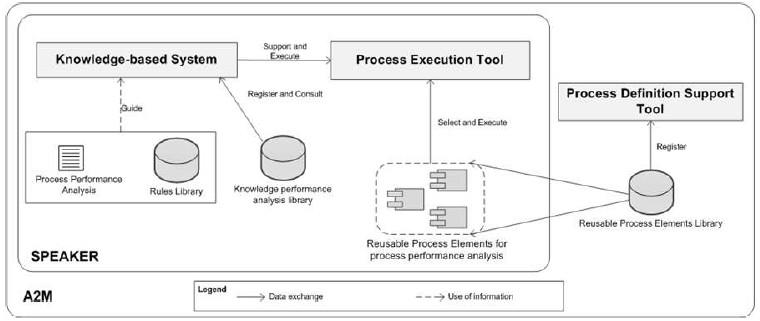
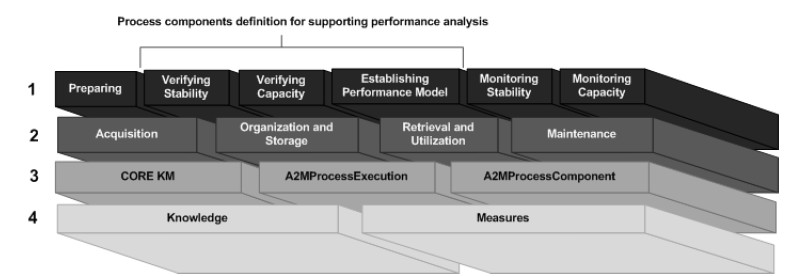
<body><![CDATA[<p lang="en-GB" class="western" align="justify" style="margin-bottom: 0.5cm; font-weight: normal"> 	<font face="Verdana, sans-serif"><font size="2" style="font-size: 10pt">R2 	&ndash; The environment must support the execution of all the 	activities planned to carry out a software processes performance 	analysis, as follows: organization&rsquo;s quantitative goals 	identification; critical subprocesses identification; evaluation of 	adequacy levels for the steps in performance analysis; process 	stability verification; process capacity verification; and 	performance models definition &ndash; all activities and tasks 	required to execute the performance analysis need support in terms 	of showing the related knowledge and presenting the proper workflow 	of this activities and tasks;</font></font></p> 	<li/>     <p lang="en-GB" class="western" align="justify" style="margin-bottom: 0.5cm; font-weight: normal"> 	<font face="Verdana, sans-serif"><font size="2" style="font-size: 10pt">R3 	&ndash; The environment must manage the execution of the activities 	in the process performance analysis along with the support of 	knowledge management &ndash; the knowledge related to each activity 	or task must be properly presented during their execution;</font></font></p> 	<li/>     <p lang="en-GB" class="western" align="justify" style="margin-bottom: 0.5cm; font-weight: normal"> 	<font face="Verdana, sans-serif"><font size="2" style="font-size: 10pt">R4 	&ndash; The environment must store the results from the execution of 	the process performance analysis activities in order to allow the 	execution of the next activities as appropriate for each scenario &ndash; 	from the obtained results of each activity, the environment must 	guide the user to the proper next activity;</font></font></p> 	<li/>     <p lang="en-GB" class="western" align="justify" style="margin-bottom: 0.5cm; font-weight: normal"> 	<font face="Verdana, sans-serif"><font size="2" style="font-size: 10pt">R5 	&ndash; The environment must comply with MR-MPS-SW level B, CMMI-DEV 	level 4, and ISO/IEC 15504 capability level 4 &ndash; the 	environment focus is to provide the initial knowledge about 	performance analysis (required in CMMI level 4 and MR-MPS level B), 	since it is the first step achieve the highest levels in these 	maturity models.</font></font></p>     </ul>     <p lang="en-GB" class="western" align="justify" style="text-indent: 0.64cm; margin-bottom: 0.5cm; font-weight: normal"> <font face="Verdana, sans-serif"><font size="2" style="font-size: 10pt">To meet these requirements, the SPEAKER environment was designed with two main tools, as depicted in <a href="#f1">Fig. 1</a>: (i) a Knowledge-based System (KBS) that contains the body of knowledge of the environment and also guides the person responsible through the performance analysis execution, presenting the knowledge required for each activity (KBS is detailed in Sections 3.1 and 3.2); and (ii) a Process Execution Tool (FIE, in the Brazilian Portuguese acronym for &lsquo;Ferramenta de Instancia&ccedil;&atilde;o e Execu&ccedil;&atilde;o do processo&rsquo;) that allows controlling the dynamic instantiation of the process in performance analysis and storing of the results attained (FIE is detailed in Section 3.4).</font></font></p>     <p lang="en-GB" class="western" align="justify" style="text-indent: 0.64cm; margin-bottom: 0.5cm; font-weight: normal"> <font face="Verdana, sans-serif"><font size="2" style="font-size: 10pt">As also shown in <a href="#f1">Fig. 1</a>, the SPEAKER environment itself is part of another environment &ndash; the High Maturity Environment (A2M, in the Brazilian Portuguese acronym for &lsquo;Ambiente de Alta Maturidade&rsquo;) &ndash; that provides it with the necessary infrastructure. The A2M aims at supporting the execution of high maturity practices in software development organisations, integrating functionalities such as <a id="br23">[</a><a href="#r23">23</a>]<a id="br25">[</a><a href="#r25">25</a>]<a id="br26">[</a><a href="#r26">26</a>]: (i) support to strategic, tactical and operating planning in software organisations; (ii) support to monitoring of the goals defined; (iii) definition of process elements and process lines; (iv) library of reusable processes; and (v) definition of standard processes for organisations. A2M has the Process Definition Support tool, which contains a library of reusable process elements that support process definition. A part of the process for performance analysis is described in this format and stored in the corresponding Library in the domain of the SPEAKER environment, as described in Section 3.3.</font></font></p>     <p lang="en-GB" class="western" align="center" style="margin-bottom: 0.21cm"> <font face="Verdana, sans-serif"><font size="2" style="font-size: 10pt"><span lang="en-GB"><span style="font-weight: normal"><a name="f1" href="/img/revistas/cleiej/v18n2/2a05f1.jpg">Figure 1: SPEAKER Environment &ndash; Architecture Depiction</a></span></span></font></font></p>     <p lang="en-GB" class="western" align="justify" style="text-indent: 0.64cm; margin-bottom: 0.5cm; font-weight: normal"> <font face="Verdana, sans-serif"><font size="2" style="font-size: 10pt">From a layered perspective, as shown in <a href="#f2">Fig. 2</a>, the SPEAKER environment can be presented as an environment that provides support to the execution of the process performance analysis activities (layer 1) from the use of a knowledge infrastructure (layer 2) and a computational infrastructure (layer 3), making use of the knowledge base and of the organizational measure database (layer 4).</font></font></p>      <p lang="en-GB" class="western" align="center" style="margin-bottom: 0.21cm; font-weight: normal"> <font face="Verdana, sans-serif"><font size="2" style="font-size: 10pt"><a name="f2" href="/img/revistas/cleiej/v18n2/2a05f2.jpg">Figure 2: SPEAKER Environment &ndash; Layered View</a></font></font></p>  <h2 lang="en-GB" class="western" align="justify" style="margin-left: 0cm; text-indent: 0cm; margin-bottom: 0.21cm; font-weight: normal"> <font face="Verdana, sans-serif"><font size="2" style="font-size: 10pt">3.1 Body of Knowledge</font></font></h2>     ]]></body>
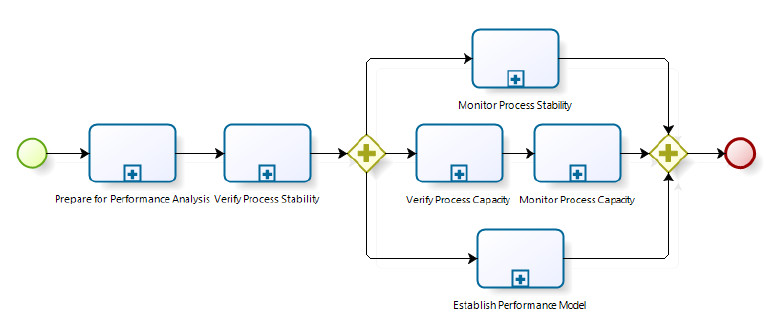
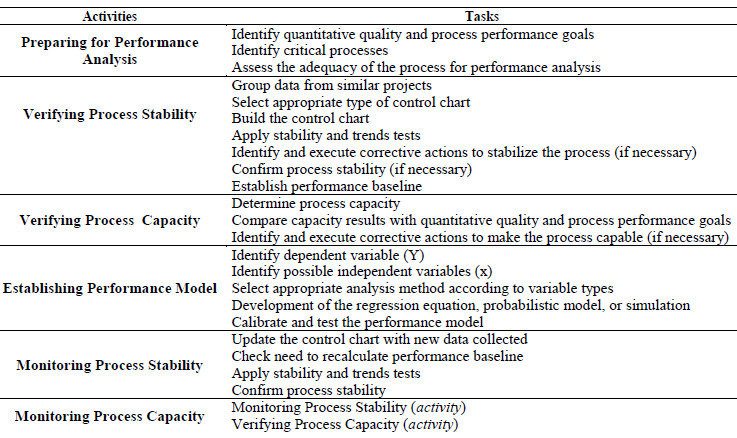
<body><![CDATA[<p lang="en-GB" class="western" align="justify" style="margin-bottom: 0.5cm; font-weight: normal"> <font face="Verdana, sans-serif"><font size="2" style="font-size: 10pt">The knowledge base is the main component of a knowledge-based system (KBS) <a id="br27">[</a><a href="#r27">27</a>]. Thus the first step to develop the KBS module for SPEAKER environment was to identify the knowledge needed to adequately execute the process performance analysis and organise it into a body of knowledge. That way we were able to build an initial body of knowledge to be integrated into the SPEAKER environment. Following the use of the environment in each organisation, the professional may update the initial body of knowledge, by adding, modifying or removing knowledge items according to their needs.</font></font></p>     <p lang="en-GB" class="western" align="justify" style="text-indent: 0.64cm; margin-bottom: 0.5cm; font-weight: normal"> <font face="Verdana, sans-serif"><font size="2" style="font-size: 10pt">SPEAKER&rsquo;s initial body of knowledge (detailed in <a id="br28">[</a><a href="#r28">28</a>]) was defined by following a methodology that consists primarily, in three steps:</font></font></p> <ol> 	<li/>     <p lang="en-GB" class="western" align="justify" style="margin-bottom: 0.5cm; font-weight: normal"> 	<font face="Verdana, sans-serif"><font size="2" style="font-size: 10pt"><i>Literature 	reviews</i>: a systematic mapping study was conducted in order to 	explore how knowledge management practices are used in software 	process performance analysis. Additionally, literature reviews in 	software (e.g. <a id="br3">[</a><a href="#r3">3</a>]<a id="br4">[</a><a href="#r4">4</a>]<a id="br6">[</a><a href="#r6">6</a>]) and non-software areas (e.g. <a id="br17">[</a><a href="#r17">17</a>]) were 	conducted to identify relevant works in performance analysis.</font></font></p> 	<li/>     <p lang="en-GB" class="western" align="justify" style="margin-bottom: 0.5cm; font-weight: normal"> 	<font face="Verdana, sans-serif"><font size="2" style="font-size: 10pt"><i>Identification 	of a set of activities and tasks related to process performance 	analysis</i>: based on literature reviews, the identification of 	activities and tasks was the first stage of the knowledge 	collection, and also triggered the identification of additional 	knowledge. Hereafter, we describe these activities and tasks and how 	they were evaluated.</font></font></p> 	<li/>     <p lang="en-GB" class="western" align="justify" style="margin-bottom: 0.5cm; font-weight: normal"> 	<font face="Verdana, sans-serif"><font size="2" style="font-size: 10pt"><i>Knowledge 	identification and organization</i>: the required knowledge to 	execute each activity and task identified in step 2 has been 	collected and organized in the body of knowledge, as described in 	Section 3.2. This documented knowledge will be evaluated by experts 	in performance analysis via peer review.</font></font></p>     </ol>     <p lang="en-GB" class="western" align="justify" style="text-indent: 0.64cm; margin-bottom: 0.5cm; font-weight: normal"> <font face="Verdana, sans-serif"><font size="2" style="font-size: 10pt">As mentioned earlier, in order to identify the required knowledge, a set of activities and tasks aimed at performance analysis was identified in the technical literature, both in the software development domain as in those not related to software (especially in the manufacturing area). These activities and tasks are summarised in <a href="#f3">Fig. 3</a> and detailed in <a href="#t1">Table I</a>. They were the basis for the identification of the necessary knowledge to execute performance analysis properly. </font></font> </p>     <p lang="en-GB" class="western" align="center" style="margin-top: 0.21cm; font-weight: normal"> <font face="Verdana, sans-serif"><font size="2" style="font-size: 10pt"><a name="f3" href="/img/revistas/cleiej/v18n2/2a05f3.jpg">Figure 3: Process Performance Analysis Activities</a></font></font></p>     <p lang="en-GB" class="western" align="center" style="margin-top: 0.78cm; margin-bottom: 0.18cm; line-height: 0.39cm; page-break-after: avoid"> <font face="Times New Roman, serif"><font size="2" style="font-size: 9pt"><a href="/img/revistas/cleiej/v18n2/2a05t1.jpg"><font face="Verdana, sans-serif"><font size="2" style="font-size: 10pt"><span style="font-weight: normal">Table 1:</span></font></font> <font face="Verdana, sans-serif"><font size="2" style="font-size: 10pt"><span style="font-weight: normal">Activities and Tasks in Process Performance Analysis</span></font></font></a></font></font></p>     <p lang="en-GB" class="western" align="justify" style="text-indent: 0.64cm; margin-bottom: 0.5cm"> <font face="Verdana, sans-serif"><font size="2" style="font-size: 10pt"><span lang="en-GB"><span style="font-weight: normal">The first activity, named &ldquo;Preparing for Performance Analysis&rdquo;, aims at identifying the critical subprocesses based on organization&rsquo;s quality and performance quantitative goals. Apart from that, this activity verifies whether the critical subprocesses meet the minimum requirements to execute performance analysis. The main knowledge items needed to carry this activity out are:</span></span></font></font></p> <ul> 	<li/>     ]]></body>
<body><![CDATA[<p lang="en-GB" class="western" align="justify" style="margin-bottom: 0.5cm; font-weight: normal"> 	<font face="Verdana, sans-serif"><font size="2" style="font-size: 10pt">Techniques 	to support the preparation or revision of the strategic planning of 	an organisation. Such as: SWOT Analysis, Porter Forces, SMART 	Criteria, and Balanced Scorecard;</font></font></p> 	<li/>     <p lang="en-GB" class="western" align="justify" style="margin-bottom: 0.5cm; font-weight: normal"> 	<font face="Verdana, sans-serif"><font size="2" style="font-size: 10pt">Manners 	to establish effective criteria to identify the critical 	subprocesses;</font></font></p> 	<li/>     <p lang="en-GB" class="western" align="justify" style="margin-bottom: 0.5cm; font-weight: normal"> 	<font face="Verdana, sans-serif"><font size="2" style="font-size: 10pt">Techniques 	to support decision-making in the selection of critical 	subprocesses. Such as: Pondered Multi-voting, Multi-Criteria 	Analysis, Pareto Analysis, and Delphi;</font></font></p> 	<li/>     <p lang="en-GB" class="western" align="justify" style="margin-bottom: 0.5cm; font-weight: normal"> 	<font face="Verdana, sans-serif"><font size="2" style="font-size: 10pt">Minimum 	requirements for a measure to be considered by performance analysis 	and how to establish corrective actions, if the measure is not 	appropriate.</font></font></p>     </ul>     <p lang="en-GB" class="western" align="justify" style="text-indent: 0.64cm; margin-bottom: 0.5cm; font-weight: normal"> <font face="Verdana, sans-serif"><font size="2" style="font-size: 10pt">From the selection of a critical subprocess and of adequate measures for performance analysis, the execution of the following activity, namely &ldquo;Verifying Process Stability&rdquo;, can start. In it, the type of control chart appropriate for the measure under analysis is chosen and built. The projects&rsquo; measures are plotted on the chart and the stability tests that correspond to the chart are applied. </font></font> </p>     <p lang="en-GB" class="western" align="justify" style="text-indent: 0.64cm; margin-bottom: 0.5cm; font-weight: normal"> <font face="Verdana, sans-serif"><font size="2" style="font-size: 10pt">If the subprocess is not stable, it is necessary to identify the cause of variation and, if possible, to eliminate it. The following knowledge items are needed to correctly execute this activity:</font></font></p> <ul> 	<li/>     <p lang="en-GB" class="western" align="justify" style="margin-bottom: 0.5cm; font-weight: normal"> 	<font face="Verdana, sans-serif"><font size="2" style="font-size: 10pt">Context 	data for the projects that are included in the analysis;</font></font></p> 	<li/>     <p lang="en-GB" class="western" align="justify" style="margin-bottom: 0.5cm; font-weight: normal"> 	<font face="Verdana, sans-serif"><font size="2" style="font-size: 10pt">Forms 	of analysis of similarity between the projects;</font></font></p> 	<li/>     <p lang="en-GB" class="western" align="justify" style="margin-bottom: 0.5cm; font-weight: normal"> 	<font face="Verdana, sans-serif"><font size="2" style="font-size: 10pt">Types 	of control chart and types of data more appropriate for use;</font></font></p> 	<li/>     ]]></body>
<body><![CDATA[<p lang="en-GB" class="western" align="justify" style="margin-bottom: 0.5cm; font-weight: normal"> 	<font face="Verdana, sans-serif"><font size="2" style="font-size: 10pt">Applicability 	of stability tests for each type of control chart;</font></font></p> 	<li/>     <p lang="en-GB" class="western" align="justify" style="margin-bottom: 0.5cm; font-weight: normal"> 	<font face="Verdana, sans-serif"><font size="2" style="font-size: 10pt">Techniques 	to support the identification of possible special causes. For 	example, the Fishbone Diagram (Ishikawa Diagram), Pareto Analysis.</font></font></p>     </ul>     <p lang="en-GB" class="western" align="justify" style="text-indent: 0.64cm; margin-bottom: 0.5cm; font-weight: normal"> <font face="Verdana, sans-serif"><font size="2" style="font-size: 10pt">Assuming the process is stable, the following activities can be independently executed: &ldquo;Verifying Process Capability&rdquo;, &ldquo;Establishing Performance Models&rdquo; and &ldquo;Monitoring Stability&rdquo;.</font></font></p>     <p lang="en-GB" class="western" align="justify" style="text-indent: 0.64cm; margin-bottom: 0.5cm; font-weight: normal"> <font face="Verdana, sans-serif"><font size="2" style="font-size: 10pt">The &ldquo;Verifying Process Capability&rdquo; activity aims at determining whether the process complies with organisation&rsquo;s quality and performance goals. If the process is considered capable, the person responsible only has to monitor it to ascertain if it remains stable and capable through time, when new project measures are added to the analysis, as described in the &ldquo;Monitoring Capability&rdquo; activity. If the process is not capable, it is necessary to identify an appropriate corrective action, which may include the process improvement or the revision of the organisation's business goals. To execute this activity, the main knowledge items required are:</font></font></p> <ul> 	<li/>     <p lang="en-GB" class="western" align="justify" style="margin-bottom: 0.5cm; font-weight: normal"> 	<font face="Verdana, sans-serif"><font size="2" style="font-size: 10pt">Techniques 	to determine the capability of the process. For example: histograms, 	capability indexes, Six Sigma;</font></font></p> 	<li/>     <p lang="en-GB" class="western" align="justify" style="margin-bottom: 0.5cm; font-weight: normal"> 	<font face="Verdana, sans-serif"><font size="2" style="font-size: 10pt">How 	to carry out a cost-benefit analysis to choose the most appropriate 	corrective action.</font></font></p>     </ul>     <p lang="en-GB" class="western" align="justify" style="text-indent: 0.64cm; margin-bottom: 0.5cm; font-weight: normal"> <font face="Verdana, sans-serif"><font size="2" style="font-size: 10pt">Once the performance baseline has been created, the &ldquo;Establishing Performance Models&rdquo; activity can be executed. This activity aims at creating a mathematical model that lists some of the subprocess attributes, allowing the prediction of its future executions. In order to establish performance models, the main knowledge items required are:</font></font></p> <ul> 	<li/>     <p lang="en-GB" class="western" align="justify" style="margin-bottom: 0.5cm; font-weight: normal"> 	<font face="Verdana, sans-serif"><font size="2" style="font-size: 10pt">Types 	of analytical methods (e.g., ANOVA, MANOVA, Chi-Square, Correlation 	Analysis, Regressive Analysis) and what types of data are most 	appropriate for each one;</font></font></p> 	<li/>     ]]></body>
<body><![CDATA[<p lang="en-GB" class="western" align="justify" style="margin-bottom: 0.5cm; font-weight: normal"> 	<font face="Verdana, sans-serif"><font size="2" style="font-size: 10pt">Simulation 	methods such as: Monte Carlo, Systems Dynamics, and Discrete Event 	Modelling.</font></font></p>     </ul>     <p lang="en-GB" class="western" align="justify" style="text-indent: 0.64cm; margin-bottom: 0.5cm; font-weight: normal"> <font face="Verdana, sans-serif"><font size="2" style="font-size: 10pt">Finally, the &ldquo;Monitoring Stability&rdquo; activity aims at monitoring the stability of the process through time when new process measures, from the execution of the projects, are added. Basically, the same knowledge needed to execute the &quot;Verifying Process Stability&quot; activity is applicable to this one.</font></font></p>     <p lang="en-GB" class="western" align="justify" style="text-indent: 0.64cm; margin-bottom: 0.5cm; font-weight: normal"> <font face="Verdana, sans-serif"><font size="2" style="font-size: 10pt">Given that the set of activities and tasks derived from literature review, we had to evaluate their adequacy according to experienced people in the field. Therefore, we conducted a peer review with people experienced in software process performance analysis aiming at answering the following questions <a id="br29">[</a><a href="#r29">29</a>]:</font></font></p> <ul> 	<li/>     <p lang="en-GB" class="western" align="justify" style="margin-bottom: 0.5cm; font-weight: normal"> 	<font face="Verdana, sans-serif"><font size="2" style="font-size: 10pt">(Q1) 	What are the activities necessary to execute a software process 	performance analysis? </font></font> 	</p> 	<li/>     <p lang="en-GB" class="western" align="justify" style="margin-bottom: 0.5cm; font-weight: normal"> 	<font face="Verdana, sans-serif"><font size="2" style="font-size: 10pt">(Q2) 	What level of difficulty do the software organisations have when 	executing the activities for process performance analysis?</font></font></p> 	<li/>     <p lang="en-GB" class="western" align="justify" style="margin-bottom: 0.5cm; font-weight: normal"> 	<font face="Verdana, sans-serif"><font size="2" style="font-size: 10pt">(Q3) 	What is the level of importance of the support provided by a 	specialist during the execution of the activities of process 	performance analysis?</font></font></p> 	<li/>     <p lang="en-GB" class="western" align="justify" style="margin-bottom: 0.5cm; font-weight: normal"> 	<font face="Verdana, sans-serif"><font size="2" style="font-size: 10pt">(Q4) 	What is the sequence of activities in software process performance 	analysis?</font></font></p> 	<li/>     <p lang="en-GB" class="western" align="justify" style="margin-bottom: 0.5cm; font-weight: normal"> 	<font face="Verdana, sans-serif"><font size="2" style="font-size: 10pt">(Q5) 	What is the dependence that exists among the activities in the 	software process performance analysis?</font></font></p>     </ul>     ]]></body>
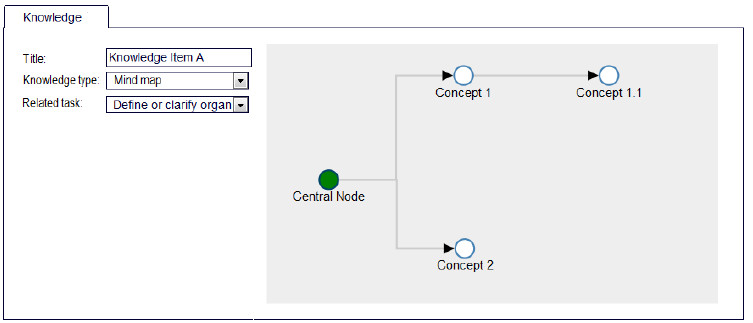
<body><![CDATA[<p lang="en-GB" class="western" align="justify" style="text-indent: 0.64cm; margin-bottom: 0.5cm; font-weight: normal"> <font face="Verdana, sans-serif"><font size="2" style="font-size: 10pt">We attempted to check whether the activities and tasks identified were necessary and sufficient, and if they were adequately described. We choose the reviewers among assessors and implementation consultants with knowledge of performance analysis of the MR-MPS-SW, as well as among members of organisations successfully assessed on MR-MPS-SW levels A or B, or that were preparing to attain such levels at the time. We sent the invitation to all possible reviewers (10 in total), 5 of them replied to the questions.</font></font></p>     <p lang="en-GB" class="western" align="justify" style="text-indent: 0.64cm; margin-bottom: 0.5cm; font-weight: normal"> <font face="Verdana, sans-serif"><font size="2" style="font-size: 10pt">In general, the reviewers said they agreed with both the activities and tasks as well as with the sequence and dependencies between them. Nonetheless, some suggestions were made, especially to better detail the &ldquo;Verifying Process Capability&rdquo; and &ldquo;Establishing Performance Models&rdquo; activities and their respective tasks. Regarding the level of difficulty and the level of importance in support, it was found that the &ldquo;Establishing Performance Models&rdquo; activity was the one associated to the highest difficulty in execution and the greater need of specialist support. However, there was no agreement among the reviewers on the evaluation of the remaining activities, which suggests that some support is needed in them as well, albeit with an emphasis on the &ldquo;Establishing Performance Models&rdquo; activity.</font></font></p>     <p lang="en-GB" class="western" align="justify" style="text-indent: 0.64cm; margin-bottom: 0.5cm; font-weight: normal"> <font face="Verdana, sans-serif"><font size="2" style="font-size: 10pt">In order to build the body of knowledge, the intent is to capture both the explicit and the tacit knowledge. In the context of this work, the explicit knowledge on performance analysis is found scattered in books, dissertations and theses and thus needs to be structured into one single structure to facilitate its access and learning. On the other hand, the tacit knowledge resides in the mind of specialists and therefore needs to be identified and captured (through interviews) to become explicit and available.</font></font></p>     <p lang="en-GB" class="western" align="justify" style="text-indent: 0.64cm; margin-bottom: 0.5cm; font-weight: normal"> <font face="Verdana, sans-serif"><font size="2" style="font-size: 10pt">The knowledge that is explicit for performance analysis to be organised in the context of this work entails: (i) the description of activities and tasks, (ii) the description of techniques and methods that can be used to support its execution, and (iii) the rules based on which the environment provides the knowledge that is adequate, according to the results of the performance analysis done previously. A catalogue of the techniques and methods to carry out the performance analysis is available in <a id="br16">[</a><a href="#r16">16</a>]. It provides information such as: method description; context for method application; characteristics of the data to which the method is applied (type of data, size of sample, data distribution, etc.); and an example of application for the method in the software domain. Posteriorly, these techniques (and other knowledge) were organised in mind maps (which is described in Section 3.2)</font></font></p>     <p lang="en-GB" class="western" align="justify" style="text-indent: 0.64cm; margin-bottom: 0.5cm; font-weight: normal"> <font face="Verdana, sans-serif"><font size="2" style="font-size: 10pt">The manner in which this knowledge is documented and presented can influence its understanding. Therefore, the KBS body of knowledge is provided in different ways, as follows: process (description of activities, as well as its sequences and dependencies), recommendations (techniques suggested according to the activity under execution), good practices (consensus amongst the specialists), and lessons learned (as done by the professionals, following the process performance analysis).</font></font></p> <h2 lang="en-GB" class="western" align="justify" style="margin-left: 0cm; text-indent: 0cm; margin-bottom: 0.21cm"> <font face="Verdana, sans-serif"><font size="2" style="font-size: 10pt"><span lang="en-GB"><span style="font-weight: normal">3.2 Knowledge-Based System Infrastructure</span></span></font></font></h2>     <p lang="en-GB" class="western" align="justify" style="margin-bottom: 0.5cm; font-weight: normal"> <font face="Verdana, sans-serif"><font size="2" style="font-size: 10pt">To provide and keep the body of knowledge needed to execute the process performance analysis, a knowledge-based system (KBS) is being developed. An initial version of this system was developed <a id="br30">[</a><a href="#r30">30</a>] and it is presented in this section.</font></font></p>     <p lang="en-GB" class="western" align="justify" style="text-indent: 0.64cm; margin-bottom: 0.5cm; font-weight: normal"> <font face="Verdana, sans-serif"><font size="2" style="font-size: 10pt">The KBS aims to manage and provide the knowledge related to the activities and tasks for performance analysis. The main KBS&rsquo; functionalities are the knowledge record (which can be done currently in two formats, textual or mind map) and the knowledge visualization (during the execution of performance analysis activities).</font></font></p>     <p lang="en-GB" class="western" align="justify" style="text-indent: 0.64cm; margin-bottom: 0.5cm; font-weight: normal"> <font face="Verdana, sans-serif"><font size="2" style="font-size: 10pt">Regarding the knowledge record, the main feature is the mind map construction, which was developed using the D3.js framework <a id="br31">[</a><a href="#r31">31</a>]. Most knowledge in SPEAKER is defined by mind map. This format was selected due the opportunity that the user has to access the knowledge gradually, according his need. The <a href="#f4">Fig. 4</a> shows the structure which a knowledge item is described by a mind map. The central node represents the main concept that will be defined, and the related nodes represent a detail or a specific aspect of this concept. For each node the user can add more information about it, which can be accessed by a double click. Each knowledge item is recorded linking it to a given activity or task of performance analysis, as shown in the left side of <a href="#f4">Fig. 4</a>. </font></font> </p>     <p lang="en-GB" class="western" align="center" style="margin-bottom: 0.21cm"> <font face="Verdana, sans-serif"><font size="2" style="font-size: 10pt"><span lang="en-GB"><span style="font-weight: normal"><a name="f4" href="/img/revistas/cleiej/v18n2/2a05f4.jpg">Figure 4: Mind map structure for a knowledge item</a></span></span></font></font></p>     <p lang="en-GB" class="western" align="justify" style="text-indent: 0.64cm; margin-bottom: 0.5cm; font-weight: normal"> <font face="Verdana, sans-serif"><font size="2" style="font-size: 10pt">Regarding the knowledge visualization, the knowledge items previously recorded are presented to the user during the execution of performance analysis, as shown in the highlight in  <a href="#f5">Fig. 5</a>. In this figure, we present how the user will interact with SPEAKER, which shows the performance analysis process (in the left side) and guides the user to a proper workflow between the activities and tasks. Besides that, the user can store the result execution of a given task by a textual description or by an attached document. Along with this process guide, the knowledge related to that specific task is shown in the right side. By clicking on a knowledge item, the mind map that describes this item will be presented and the user can see more information on demand about this item.</font></font></p>     ]]></body>
<body><![CDATA[<p lang="en-GB" class="western" align="center" style="margin-bottom: 0.21cm"> <font face="Verdana, sans-serif"><font size="2" style="font-size: 10pt"><span lang="en-GB"><span style="font-weight: normal"><a name="f5" href="/img/revistas/cleiej/v18n2/2a05f5.jpg">Figure 5: Knowledge visualization for a given task</a></span></span></font></font></p>     <p lang="en-GB" class="western" align="justify" style="text-indent: 0.64cm; margin-bottom: 0.5cm; font-weight: normal"> <font face="Verdana, sans-serif"><font size="2" style="font-size: 10pt">By means of these two functionalities of KBS, the main activities in knowledge management are run, as follows:</font></font></p> <ul> 	<li/>     <p lang="en-GB" class="western" align="justify" style="margin-bottom: 0.5cm; font-weight: normal"> 	<font face="Verdana, sans-serif"><font size="2" style="font-size: 10pt"><i>Knowledge 	Identification and Acquisition</i>: involves both explicit and tacit 	knowledge and is being done to create the initial body of knowledge 	of the SPEAKER environment, by recording it as mind maps. Later on, 	as the environment is used by the organisation, this activity should 	be undertaken by professionals in order to capture their 	understanding of performance analysis (from lessons learned) or as a 	result of the maintenance activity;</font></font></p> 	<li/>     <p lang="en-GB" class="western" align="justify" style="margin-bottom: 0.5cm; font-weight: normal"> 	<font face="Verdana, sans-serif"><font size="2" style="font-size: 10pt"><i>Organization 	and Storage</i>: the knowledge should be organised and stored so to 	provide easy access and understanding to the professionals. For that 	the SPEAKER environment will adopt different ways to present the 	knowledge; in this first version, the knowledge is organized as: 	process (in terms of activities and tasks shown during the execution 	of performance analysis), textual description and mind maps; 	posteriorly, more formats will be allowed, as glossary and concept 	maps;</font></font></p> 	<li/>     <p lang="en-GB" class="western" align="justify" style="margin-bottom: 0.5cm; font-weight: normal"> 	<font face="Verdana, sans-serif"><font size="2" style="font-size: 10pt"><i>Retrieval 	and Utilization</i>: this activity allows the knowledge to be used 	by the professionals to assist them in the execution of performance 	analysis, as shown in <a href="#f5">Fig. 5</a>.</font></font></p> 	<li/>     <p lang="en-GB" class="western" align="justify" style="margin-bottom: 0.5cm; font-weight: normal"> 	<font face="Verdana, sans-serif"><font size="2" style="font-size: 10pt"><i>Maintenance</i>: 	this activity is done in the specific domain of an organisation 	where the SPEAKER environment is being used. It allows the 	professional to record, modify or remove knowledge items according 	to one's needs. The knowledge maintenance is made in the same way as 	the knowledge record.</font></font></p>     </ul> <h2 lang="en-GB" class="western" align="justify" style="margin-left: 0cm; text-indent: 0cm; margin-bottom: 0.21cm"> <font face="Verdana, sans-serif"><font size="2" style="font-size: 10pt"><span lang="en-GB"><span style="font-weight: normal">3.3 Reusable Process Elements Library for Performance Analysis</span></span></font></font></h2>     <p lang="en-GB" class="western" align="justify" style="margin-bottom: 0.5cm; font-weight: normal"> <font face="Verdana, sans-serif"><font size="2" style="font-size: 10pt">The Reusable Process Element Library, which is a part of the A2M environment as defined in <a id="br20">[</a><a href="#r20">20</a>], presents an approach to define processes based on reuse with the use of two definition strategies: bottom-up e top-down. This approach adapts concepts on software product reuse to the domain of process definition and relies on the support of tools to define process lines and process elements.</font></font></p>     <p lang="en-GB" class="western" align="justify" style="text-indent: 0.64cm; margin-bottom: 0.5cm; font-weight: normal"> <font face="Verdana, sans-serif"><font size="2" style="font-size: 10pt">At this point, the library, which consists of two types of items, software process lines and process elements, is populated with process lines and elements (as defined in <a id="br32">[</a><a href="#r32">32</a>] and <a id="br33">[</a><a href="#r33">33</a>]) in the context of software development with acquisition. </font></font> </p>     <p lang="en-GB" class="western" align="justify" style="text-indent: 0.64cm; margin-bottom: 0.5cm; font-weight: normal"> <font face="Verdana, sans-serif"><font size="2" style="font-size: 10pt">This work defines and provides process lines and elements in this library for the process of software process performance analysis. <a href="#t2">Table 2</a> shows some of the process elements that were defined, their variability (when applicable) and the justification for defining the process element as required by MR-MPS-SW and CMMI-DEV maturity models and by ISO/IEC 15504 standard.</font></font></p>     ]]></body>
<body><![CDATA[<p lang="en-GB" class="western" align="center" style="margin-top: 0.21cm; margin-bottom: 0.18cm; line-height: 0.39cm; page-break-after: avoid"> <font face="Times New Roman, serif"><font size="2" style="font-size: 9pt"><a name="t2" href="/img/revistas/cleiej/v18n2/2a05t2.jpg"><font face="Verdana, sans-serif"><font size="2" style="font-size: 10pt"><span style="font-weight: normal">Table 2:</span></font></font> <font face="Verdana, sans-serif"><font size="2" style="font-size: 10pt"><span style="font-weight: normal">Some Process Elements for Process Performance Analysis</span></font></font></a></font></font></p>     <p lang="en-GB" class="western" align="justify" style="text-indent: 0.64cm; margin-bottom: 0.5cm; font-weight: normal"> <font face="Verdana, sans-serif"><font size="2" style="font-size: 10pt">In A2M, the process elements have the basic information of a process, such as: name, description, input and output criteria, responsible for execution, participants, support tools, and artefacts required and produced. The process components and process lines (detailed in <a id="br36">[</a><a href="#r36">36</a>]) was defined by following a methodology that consists mainly, in four steps:</font></font></p> <ol> 	<li/>     <p lang="en-GB" class="western" align="justify" style="margin-bottom: 0.5cm; font-weight: normal"> 	<font face="Verdana, sans-serif"><font size="2" style="font-size: 10pt"><i>Step 	1: Define/Select process features for process line</i> - The first 	step of the methodology is to define/select process features for 	process lines. These features serve to guide the definition of 	reusable elements and were generated from the set of needs that must 	be satisfied by the processes. The set of needs for the processes 	was based from the literature: General Guide MR-MPS-SW <a id="br4">[</a><a href="#r4">4</a>], CMMI-DEV 	<a id="br3">[</a><a href="#r3">3</a>], Wheeler and Chambers <a id="br17">[</a><a href="#r17">17</a>], Florac and Carleton <a id="br6">[</a><a href="#r6">6</a>]. From the 	set of needs were defined the features and the types of features 	associated to process lines and the process components.</font></font></p> 	<li/>     <p lang="en-GB" class="western" align="justify" style="margin-bottom: 0.5cm; font-weight: normal"> 	<font face="Verdana, sans-serif"><font size="2" style="font-size: 10pt"><i>Step 	2: Define/select and characterize process elements of the process 	line</i> - After defining the features process, the process elements 	have been defined and selected, when existing, for process lines. 	This step contains three activities: (i) define or select (if there 	are components available in Process Reusable Component Library) the 	process elements that are used to answer the features that have been 	defined; (ii) identify similarity and variability in these process 	elements, in other works, identify which parts that are common 	(concrete components or activities) for derived processes from the 	process line, and which parts may vary (abstract components); (iii) 	characterize the process components according with the process 	features selected in the step 1.</font></font></p> 	<li/>     <p lang="en-GB" class="western" align="justify" style="margin-bottom: 0.5cm; font-weight: normal"> 	<font face="Verdana, sans-serif"><font size="2" style="font-size: 10pt"><i>Step 	3: Structure and characterize the process line </i>- This step 	consists in structuring process lines from the process elements 	(process components and activities) defined in the previous step. 	For this step the following activities were carried out: (i) choice 	of optional components in the process line; (ii) definition of the 	connections between the process elements; (iii) determination of the 	mandatory or optionality of the connection; and (iv) mapping process 	characteristics directly to the process line.</font></font></p> 	<li/>     <p lang="en-GB" class="western" align="justify" style="margin-bottom: 0.5cm; font-weight: normal"> 	<font face="Verdana, sans-serif"><font size="2" style="font-size: 10pt"><i>Step 	4: Verify and approve process line </i>- The last step was to 	evaluate the process components and process lines defined are 	adequate and answer the established needs. In addition to assessing 	whether the definition applied correctly the concepts of the 	approach <a id="br20">[</a><a href="#r20">20</a>], for example, that all mandatory information has been 	fulfilled, if only abstract components have variations, etc.</font></font></p>     </ol>     <p lang="en-GB" class="western" align="justify" style="text-indent: 0.64cm; margin-top: 0.21cm; font-weight: normal"> <font face="Verdana, sans-serif"><font size="2" style="font-size: 10pt">In this work, apart from the information mentioned earlier, the process components have a script that is related to the execution of such components and that will be used by the Process Instantiation and Execution Tool of the SPEAKER environment. <a href="#f6">Figure 6</a> gives a partial example of the concrete process component &ldquo;Construct the XmR Control Chart with Minitab&rdquo;.</font></font></p>     <p lang="en-GB" class="western" align="justify" style="text-indent: 0.64cm; margin-bottom: 0.5cm; font-weight: normal"> <font face="Verdana, sans-serif"><font size="2" style="font-size: 10pt">To execute the script mentioned above, Statistica <a id="br34">[</a><a href="#r34">34</a>] and Minitab <a id="br35">[</a><a href="#r35">35</a>] tools were chosen at first, as they have functionalities related to the methods and techniques needed for process performance analysis. The script allows the generation and displaying of information that is important for performance analysis to the user, according to the needs at hand.</font></font></p>     <p lang="en-GB" class="western" align="justify" style="text-indent: 0.64cm; margin-bottom: 0.5cm; font-weight: normal"> <font face="Verdana, sans-serif"><font size="2" style="font-size: 10pt">The process elements and process lines defined were evaluated in a peer review, to which was invited an experienced MPS evaluator, accredited with SOFTEX for high maturity. The result of the review showed non-conformances related to the internal structure of the components and to the description of components and activities. Besides these non-conformances, the reviewer presented some suggestions for improvements, which caused the definition of new process components and activities.</font></font></p>     ]]></body>
<body><![CDATA[<p lang="en-GB" class="western" align="center" style="margin-top: 0.21cm; margin-bottom: 0.21cm; font-weight: normal"> <font face="Verdana, sans-serif"><font size="2" style="font-size: 10pt"><a name="f6" href="/img/revistas/cleiej/v18n2/2a05f6.jpg">Figure 6: Process component &ldquo;Construct XmR Control Chart with Minitab&rdquo; <a id="br36">[</a><a href="#r36">36</a>]</a></font></font></p>     <p lang="en-GB" class="western" align="justify" style="text-indent: 0.64cm; margin-bottom: 0.5cm; font-weight: normal"> <font face="Verdana, sans-serif"><font size="2" style="font-size: 10pt">The main suggestion for improvement refers to the description of process components and activities, adding new information to the components related to the control charts. A summary of the quantity of process elements evaluated is provided in <a href="#t3">Table 3</a>.</font></font></p>     <p lang="en-GB" class="western" align="center" style="margin-top: 0.42cm; margin-bottom: 0.18cm; line-height: 0.39cm; page-break-after: avoid"> <font face="Times New Roman, serif"><font size="2" style="font-size: 9pt"><a name="t3" href="/img/revistas/cleiej/v18n2/2a05t3.jpg"><font face="Verdana, sans-serif"><font size="2" style="font-size: 10pt"><span style="font-weight: normal">Table 3:</span></font></font> <font face="Verdana, sans-serif"><font size="2" style="font-size: 10pt"><span style="font-weight: normal">Process Elements Evaluated in Peer Review</span></font></font></a></font></font></p>     <p lang="en-GB" class="western" align="justify" style="text-indent: 0.64cm; margin-bottom: 0.5cm; font-weight: normal"> <font face="Verdana, sans-serif"><font size="2" style="font-size: 10pt">The first peer review round evaluated 42 process components, 16 activities, and 3 process lines. Of the 13 activities part of process line &ldquo;Verifying Process Stability&rdquo;, 8 activities were part of a component (<a href="#f7">Fig. 7</a>) that described stability tests for a type o specific chart and were re-structured in the process component format. These activities were re-structured in the process component format to better attend the concepts for the reuse of the approach used, as the stability tests are the same for different chart types.</font></font></p>     <p lang="en-GB" class="western" align="center" style="margin-top: 0.21cm; font-weight: normal"> <font face="Verdana, sans-serif"><font size="2" style="font-size: 10pt"><a name="f7" href="/img/revistas/cleiej/v18n2/2a05f7.jpg">Figure 7: First version of process component &ldquo;Apply Tests on Chart X&rdquo;</a></font></font></p>     <p lang="en-GB" class="western" align="justify" style="text-indent: 0.64cm; margin-bottom: 0.5cm; font-weight: normal"> <font face="Verdana, sans-serif"><font size="2" style="font-size: 10pt">In the new format (process component) the information from the stability tests are shown in the component description. Apart from these components, an additional component &ldquo;Apply complementary stability tests&rdquo; was created as a way to cover all the stability tests identified in the literature.</font></font></p>     <p lang="en-GB" class="western" align="justify" style="text-indent: 0.64cm; margin-bottom: 0.5cm; font-weight: normal"> <font face="Verdana, sans-serif"><font size="2" style="font-size: 10pt">For the &ldquo;Determine capability&rdquo; process line, 5 new components were defined to represent the new variants of the &ldquo;<font color="#000000">Determine capability&rdquo; abstract component. Apart from that, for the &ldquo;Establishing performance model&rdquo; process line the &ldquo;</font>Calibrate and test the performance model&rdquo; process component was defined<font color="#000000">. The version evaluated in the second</font> round of the review, which is the present version, has 47 process components, 8 activities, and 3 process lines, as shown in <a href="#t2">Table 2</a>.</font></font></p> <h2 lang="en-GB" class="western" align="left" style="margin-left: 2.04cm; margin-bottom: 0.21cm"> <font face="Verdana, sans-serif"><font size="2" style="font-size: 10pt"><span lang="en-GB"><span style="font-weight: normal">3.4 Process Instantiation and Execution Tool</span></span></font></font></h2>     <p lang="en-GB" class="western" align="justify" style="margin-bottom: 0.5cm; font-weight: normal"> <font face="Verdana, sans-serif"><font size="2" style="font-size: 10pt">The SPEAKER environment also provides a tool support for the instantiation and execution of the process of performance analysis. This tool receives requests from the KBS regarding the technique that should be used in the next step of the performance analysis, selects the adequate process element from the Reusable Process Element Library to build the process line, and executes the process defined.</font></font></p>     <p lang="en-GB" class="western" align="justify" style="text-indent: 0.64cm; margin-bottom: 0.5cm; font-weight: normal"> <font face="Verdana, sans-serif"><font size="2" style="font-size: 10pt">The tool for the instantiation and execution of the process (FIE) aims at supporting the instantiation and execution of the process of software processes performance analysis. For that, the tool meets the following requirements <a id="br35">[</a><a href="#r35">35</a>]:</font></font></p> <ul> 	<li/>     <p lang="en-GB" class="western" align="justify" style="margin-bottom: 0.5cm; font-weight: normal"> 	<font face="Verdana, sans-serif"><font size="2" style="font-size: 10pt">R01 	&ndash; The FIE tool must support the instantiation of the software 	process performance analysis based on process elements available in 	the Reusable Process Elements Library, and according to the analysis 	made by the KBS; </font></font> 	</p> 	<li/>     ]]></body>
<body><![CDATA[<p lang="en-GB" class="western" align="justify" style="margin-bottom: 0.5cm; font-weight: normal"> 	<font face="Verdana, sans-serif"><font size="2" style="font-size: 10pt">R02 	&ndash; The FIE tool must support the execution of the performance 	analysis activities and store the results of such execution; </font></font> 	</p> 	<li/>     <p lang="en-GB" class="western" align="justify" style="margin-bottom: 0.5cm; font-weight: normal"> 	<font face="Verdana, sans-serif"><font size="2" style="font-size: 10pt">R03 	&ndash; The FIE tool must provide the results of the execution of 	the activities to the KBS.</font></font></p> 	<li/>     <p lang="en-GB" class="western" align="justify" style="margin-bottom: 0.5cm; font-weight: normal"> 	<font face="Verdana, sans-serif"><font size="2" style="font-size: 10pt">R04 	&ndash; The FIE tool must control the execution of one single 	activity more than once, according to the characteristics of the 	subprocess analysed.</font></font></p> 	<li/>     <p lang="en-GB" class="western" align="justify" style="margin-bottom: 0.5cm; font-weight: normal"> 	<font face="Verdana, sans-serif"><font size="2" style="font-size: 10pt">R05 	&ndash; The FIE tool can only execute concrete process components. 	If the KBS send an execution request for an abstract component, the 	FIE tool will send an error message to inform about this problem.</font></font></p> 	<li/>     <p lang="en-GB" class="western" align="justify" style="margin-bottom: 0.5cm; font-weight: normal"> 	<font face="Verdana, sans-serif"><font size="2" style="font-size: 10pt">R06 	&ndash; The FIE tool only implement two levels of execution to the 	internal architecture of a component. This means that if a concrete 	component have another concrete component in your internal 	architecture and this second one have also another concrete 	component in your internal architecture the FIE tool will only 	execute the first and second component. This rule was created to 	avoid too many levels of execution.</font></font></p> 	<li/>     <p lang="en-GB" class="western" align="justify" style="margin-bottom: 0.5cm; font-weight: normal"> 	<font face="Verdana, sans-serif"><font size="2" style="font-size: 10pt">R07 	&ndash; Every process element executed in a specific execution of a 	<i>process line analysis</i> has to have a value for the attribute 	related to the use of the execution results to define the analysis 	result. This rule was created to support the generation of final 	version of the process executed.</font></font></p>     </ul>     <p lang="en-GB" class="western" align="justify" style="text-indent: 0.64cm; margin-bottom: 0.5cm; font-weight: normal"> <font face="Verdana, sans-serif"><font size="2" style="font-size: 10pt">In order to meet the requirements, the FIE has a workflow activities, shown in <a href="#f8">Fig. 8</a>. In the context of the execution of the workflow for dynamic definition of the processes, the activities are under the responsibility of the FIE and the events are carried out by the KBS.</font></font></p>     <p lang="en-GB" class="western" align="center" style="margin-top: 0.21cm; font-weight: normal"> <font face="Verdana, sans-serif"><font size="2" style="font-size: 10pt"><a name="f8" href="/img/revistas/cleiej/v18n2/2a05f8.jpg">Figure 8: Workflow of FIE activities</a></font></font></p>     <p lang="en-GB" class="western" align="justify" style="text-indent: 0.64cm; margin-bottom: 0.5cm; font-weight: normal"> <font face="Verdana, sans-serif"><font size="2" style="font-size: 10pt">After defining the FIE tool requirements, we defined the structure need to store the information about the process performance analysis and functionalities supported by the FIE tool (more detail can be checked on <a id="br37">[</a><a href="#r37">37</a>]). The three main functionalities are: (i) follow process execution, where the user can register the information about the execution and results of a process element; (ii) consult realized analysis, where the user can find all the information about the execution, and; (iii) consult final version executed, where the user can find the information about the final version executed from a specific analysis executed.</font></font></p>     ]]></body>
<body><![CDATA[<p lang="en-GB" class="western" align="justify" style="text-indent: 0.64cm; margin-bottom: 0.5cm; font-weight: normal"> <font face="Verdana, sans-serif"><font size="2" style="font-size: 10pt">The next step was to define the methods to support the integration with KBS. The methods are: (i) insertProcessElement, responsible to generate all the structure need to store the information; (ii) updateExecutionResult, responsible to update the information about the <span lang="en-US">attribute related to the use of the execution results, and; (iii) consultExecuteResult, responsible to return a list with the execute results of a process element specific.</span></font></font></p>     <p lang="en-GB" class="western" align="justify" style="text-indent: 0.64cm; margin-bottom: 0.5cm; font-weight: normal"> <font face="Verdana, sans-serif"><font size="2" style="font-size: 10pt">The execution of this workflow allows the performance analysis process to be defined dynamically, according to the organisational context and in line with the characteristics of the process under analysis. This also allows the iteractivity needed for the process of performance analysis. The workflow was modelled so that the process has more than one version executed. This happens when there is a need to execute one same process element more than once. </font></font> </p>     <p lang="en-GB" class="western" align="justify" style="text-indent: 0.64cm; margin-bottom: 0.5cm; font-weight: normal"> <font face="Verdana, sans-serif"><font size="2" style="font-size: 10pt">Apart from the workflow of activities, the functionalities of the tool were also defined. For the implementation of the functionalities and for the running of the communications made with the KBS, the FIE expects receiving the following information, as required to identify the software process to be analysed, and the choice of process element to be executed: (i) the company responsible for the definition of the software development process to be analysed; (ii) the subprocess in the software development area that will be analysed; (iii) the measure that will be analysed as related to the subprocess under study; (iv) the library element that will be executed by the FIE.</font></font></p>     <p lang="en-GB" class="western" align="justify" style="text-indent: 0.64cm; margin-bottom: 0.5cm; font-weight: normal"> <font face="Verdana, sans-serif"><font size="2" style="font-size: 10pt">The process execution begin with a request sent by KBS, after that, the FIE tool will evaluate if the information of subprocess sent (organization, subprocess, metric and process line) are already registered on the tool base. Using the information sent by KBS, the FIE tool will also verify the need to instantiate a new execution version or continue in the current version. After the evaluation, the FIE tool selects the information of process element from a database of reusable process elements and organizes then, to help the user executes the process element and store the execution results. The next step is to deliver the execution results to KBS.</font></font></p>     <p lang="en-GB" class="western" align="justify" style="text-indent: 0.64cm; margin-bottom: 0.5cm; font-weight: normal"> <font face="Verdana, sans-serif"><font size="2" style="font-size: 10pt">After those steps the FIE tool wait the answer from KBS about the use of the execution results to define the analysis result, and then update this information on its base. This information is used to generate the final version executed of the process performance analysis.</font></font></p>     <p lang="en-GB" class="western" align="justify" style="text-indent: 0.64cm; margin-bottom: 0.5cm; font-weight: normal"> <font face="Verdana, sans-serif"><font size="2" style="font-size: 10pt">Amongst the functionalities of the tool the following can be pointed:</font></font></p> <ul> 	<li/>     <p lang="en-GB" class="western" align="justify" style="margin-bottom: 0.5cm; font-weight: normal"> 	<font face="Verdana, sans-serif"><font size="2" style="font-size: 10pt">Receiving 	and evaluating the data for process execution: Responsible for 	receiving and evaluating the information that will be sent via the 	KBS. The evaluation relates to the control of execution of the same 	process element, more than once. This functionality has three 	different outputs, as shown in <a href="#f7">Fig. 7</a>.</font></font></p> 	<li/>     <p lang="en-GB" class="western" align="justify" style="margin-bottom: 0.5cm; font-weight: normal"> 	<font face="Verdana, sans-serif"><font size="2" style="font-size: 10pt">Creating 	a new Analysis and/or Version of the execution: Responsible for 	creating a new Analysis of the information items, that is, 	instantiating the process of performance analysis. The version is 	related to the instantiated process and will be used to control the 	versions of the process elements executed.</font></font></p> 	<li/>     <p lang="en-GB" class="western" align="justify" style="margin-bottom: 0.5cm; font-weight: normal"> 	<font face="Verdana, sans-serif"><font size="2" style="font-size: 10pt">Selecting 	a process Element: Responsible for seeking and select the process 	element in the Library, according to the information sent by the 	KBS.</font></font></p> 	<li/>     <p lang="en-GB" class="western" align="justify" style="margin-bottom: 0.5cm; font-weight: normal"> 	<font face="Verdana, sans-serif"><font size="2" style="font-size: 10pt">Executing 	a process Element: The execution of the process element provides the 	information recorded in the reusable process element library to help 	the execution of the task, such as: Name, Description, Input and 	Output Criteria, Input and Output Parameters, and the script 	associated to the element. From this information the user of the 	tool will be able to execute and record the information on the 	results obtained.</font></font></p> 	<li/>     ]]></body>
<body><![CDATA[<p lang="en-GB" class="western" align="justify" style="margin-bottom: 0.5cm; font-weight: normal"> 	<font face="Verdana, sans-serif"><font size="2" style="font-size: 10pt">Informing 	script parameter values: Responsible for storing the values of the 	parameters defined for the scripts associated to the elements. At 	the end of the registration the FIE provides the script with the 	parameter values filled in and ready for execution in the defined 	tool. </font></font> 	</p> 	<li/>     <p lang="en-GB" class="western" align="justify" style="margin-bottom: 0.5cm; font-weight: normal"> 	<font face="Verdana, sans-serif"><font size="2" style="font-size: 10pt">Storing 	the result of the execution and sending the information to the KBS: 	Responsible for grouping the results from the execution of process 	element activities, storing them and then sending them to the KBS.</font></font></p> 	<li/>     <p lang="en-GB" class="western" align="justify" style="margin-bottom: 0.5cm; font-weight: normal"> 	<font face="Verdana, sans-serif"><font size="2" style="font-size: 10pt">Generating 	baseline for the process executed: At the end of the process for 	performance analysis for a specific analysis, this functionality 	will be executed to store the baseline of the process executed. The 	process baseline will be based on the versions created for the 	control of process execution.</font></font></p>     </ul>     <p lang="en-GB" class="western" align="justify" style="text-indent: 0.64cm; margin-bottom: 0.5cm; font-weight: normal"> <font face="Verdana, sans-serif"><font size="2" style="font-size: 10pt">The evaluation of the FIE tool was carried out using an example adapted from the literature. Three scenarios were executed, as can be seen in <a id="br37">[</a><a href="#r37">37</a>], based on three process lines defined by <a id="br36">[</a><a href="#r36">36</a>]: (i) Verifying Process Stability; (ii) Determine Capability, and; (iii) Establishing Performance Model. We simulated the integration with the KBS, because at this moment its development is not finished yet. Despite of the scenarios are fictitious, they are very similar with the reality found on software organizations.</font></font></p> <h1 lang="en-GB" class="western" align="justify" style="margin-left: 0cm; text-indent: 0cm; margin-bottom: 0.21cm"> <span style="font-variant: normal"><font face="Verdana, sans-serif"><font size="2" style="font-size: 10pt"><span lang="en-GB"><span style="font-weight: normal">4 Example of Use</span></span></font></font></span></h1>     <p lang="en-GB" class="western" align="justify" style="margin-bottom: 0.5cm; font-weight: normal"> <font face="Verdana, sans-serif"><font size="2" style="font-size: 10pt">An example of use in a hypothetical setting is provided in order to show how the SPEAKER environment can help the execution of a performance analysis in a software development organisation. The presented scenario derived from the professional experience of the authors as well as from the results provided by the literature review. The presented example covers only the &ldquo;Verifying Process Stability&rdquo; activity (as shown in <a href="#t1">Table 1</a>).</font></font></p>     <p lang="en-GB" class="western" align="justify" style="text-indent: 0.64cm; margin-bottom: 0.5cm; font-weight: normal"> <font face="Verdana, sans-serif"><font size="2" style="font-size: 10pt">The Alfa organisation develops corrective and evolutive improvements for its software products. Each project has a mean duration of a month. The organization is appraised in CMMI level 3 and its high management decided to start the efforts to implement CMMI level 4. As the Alfa organisation has no consultant to support the improvements needed to get to CMMI level 4, some members of its Software Process Expert Group (SEPG) should start studying the concepts needed to execute performance analysis and to implement the process. To assist in this task, the SPEAKER environment is used.</font></font></p>     <p lang="en-GB" class="western" align="justify" style="text-indent: 0.64cm; margin-bottom: 0.5cm; font-weight: normal"> <font face="Verdana, sans-serif"><font size="2" style="font-size: 10pt">We assume that the &ldquo;Prepare for Performance Analysis&rdquo; activity has already been executed and therefore the organisation has already identified a set of critical subprocesses and that the adequacy of the measures of these subprocesses has already been checked. To carry out the &ldquo;Verifying Process Stability&rdquo; activity, the topmost priority subcritical process was selected (Develop software), as well as its most relevant measure (Effort to code per requirement).</font></font></p>     <p lang="en-GB" class="western" align="justify" style="text-indent: 0.64cm; margin-bottom: 0.5cm; font-weight: normal"> <font face="Verdana, sans-serif"><font size="2" style="font-size: 10pt"><a href="#t4">Table 3</a> shows the tasks and examples of the knowledge items to be made available by the SPEAKER body of knowledge to the &ldquo;Verifying Process Stability&rdquo; activity. <a href="#f9">Fig. 9</a> shows the process line related to this activity.</font></font></p>     <p lang="en-GB" class="western" align="justify" style="text-indent: 0.64cm; margin-bottom: 0.5cm"> &ldquo;<font face="Verdana, sans-serif"><font size="2" style="font-size: 10pt"><span lang="en-GB"><span style="font-weight: normal">Effort to code per requirement&rdquo; is usually collected in a spreadsheet supplied by the SPEAKER environment. The spreadsheet has data of all organisations&rsquo; projects. The following attributes are collected at each measurement: project name, data for project characterisation (project size, version of the development process used, development technology used, team profile, project complexity, client, life cycle stage), activity in the development process, artefact produced by the activity, name of the measure collected, scale of measure, type of measure (variable or attribute), date of collection and value of collection. Depending on the characteristics of the organisation, some of these attributes do not need to be advised. In the case of the Alfa Organisation, the &quot;client&quot; attribute does not have to be filled in as the organisation keeps a product, therefore, not developing it specifically for a client.</span></span></font></font></p>     ]]></body>
<body><![CDATA[<p lang="en-GB" class="western" align="center" style="margin-top: 0.42cm; margin-bottom: 0.18cm; line-height: 100%; page-break-after: avoid"> <font face="Times New Roman, serif"><font size="2" style="font-size: 9pt"><a name="t4" href="/img/revistas/cleiej/v18n2/2a05t4.jpg"><font face="Verdana, sans-serif"><font size="2" style="font-size: 10pt"><span style="font-weight: normal">Table 3B:</span></font></font> <font face="Verdana, sans-serif"><font size="2" style="font-size: 10pt"><span style="font-weight: normal">Tasks and Knowledge Items for the &ldquo;Verifying Process Stability&rdquo; activity</span></font></font></a></font></font></p>     <p lang="en-GB" class="western" align="center" style="margin-top: 0.21cm; font-weight: normal"> <font face="Verdana, sans-serif"><font size="2" style="font-size: 10pt"><a name="f9" href="/img/revistas/cleiej/v18n2/2a05f9.jpg">Figure 9: Process Line for the &quot;Verifying Process Stability&rdquo; activity</a></font></font></p>      <p lang="en-GB" class="western" align="justify" style="text-indent: 0.64cm; margin-bottom: 0.5cm; font-weight: normal"> <font face="Verdana, sans-serif"><font size="2" style="font-size: 10pt">After the user indicates the start of the &ldquo;Verifying Process Stability&rdquo; activity in the SPEAKER environment, the KBS presents the knowledge items required to execute the first task (&ldquo;Group data from similar projects&rdquo;), and signals the FIE on the start of process execution. The FIE, on its turn, starts the process line instantiation. For this task, the KBS assists the process group members to identify the need to create subgroups (presenting the concept of homogeneous subgroups and examples of when their creation is needed), and assists in the identification of similar projects (presenting concepts and techniques on project similarity).</font></font></p>     <p lang="en-GB" class="western" align="justify" style="text-indent: 0.64cm; margin-bottom: 0.5cm; font-weight: normal"> <font face="Verdana, sans-serif"><font size="2" style="font-size: 10pt">Based on the indications provided by the KBS, the process group chose not to create subgroups, the analysis goal is to check Develop Software subprocess behaviour as a whole. However, a need was found to conduct the analysis in separate for projects that use the desktop technology from projects that use a Web technology. This way, the data was split into two groups and the data on the projects that use desktop technology was studied first (as shown in <a href="#t5">Table 3C</a>). This information was recorded by the user with the FIE.</font></font></p>     <p lang="en-GB" class="western" align="center" style="margin-top: 0.21cm; margin-bottom: 0.18cm; line-height: 100%; page-break-after: avoid"> <font face="Times New Roman, serif"><font size="2" style="font-size: 9pt"><a name="t5" href="/img/revistas/cleiej/v18n2/2a05t5.jpg"><font face="Verdana, sans-serif"><font size="2" style="font-size: 10pt"><span style="font-weight: normal">Table 3C:</span></font></font> &ldquo;<font face="Verdana, sans-serif"><font size="2" style="font-size: 10pt"><span style="font-weight: normal">Effort to code per requirement&rdquo; values for desktop projects</span></font></font></a></font></font></p>     <p lang="en-GB" class="western" align="justify" style="text-indent: 0.64cm; margin-bottom: 0.5cm; font-weight: normal"> <font face="Verdana, sans-serif"><font size="2" style="font-size: 10pt">In order to execute the next &ldquo;Select appropriate type of control chart&rdquo; task it is necessary to know the measures distribution. For that, the Library provides a reusable process element, which contains a script to assist its execution. As the Alfa Organisation uses the Minitab tool, the process element chosen was the one related to this tool. By running the Minitab script, it was found that the data followed a normal distribution. Based on the data distribution information and on the scale and type of the measure (interval and variable, respectively, already indicated in the Measure Spreadsheet), the KBS presents the control chart type adequate to that context (i.e., XmR chart), informing its applicability and examples of use.</font></font></p>     <p lang="en-GB" class="western" align="justify" style="text-indent: 0.64cm; margin-bottom: 0.5cm; font-weight: normal"> <font face="Verdana, sans-serif"><font size="2" style="font-size: 10pt">After choosing the XmR chart to carry on with the analysis, the process group member execute the tasks &ldquo;Construct a Control Chart&rdquo; and &ldquo;Apply Stability and Trend Tests&rdquo;. For that, the reusable process element specific for the XmR chart provided by the Library is executed by FIE. This execution involves the calculation of the control limits and the generation of the control chart, as well as the running of the stability tests appropriate for the chart at hand. The chart generated is shown in <a href="#f10">Fig. 10</a> and the result of the stability tests is presented in a spreadsheet. In the future, the presentation of the stability tests will be streamlined to allow a better understanding.</font></font></p>     <p lang="en-GB" class="western" align="center" style="margin-bottom: 0.21cm; font-weight: normal"> <font face="Verdana, sans-serif"><font size="2" style="font-size: 10pt"><a name="f10" href="/img/revistas/cleiej/v18n2/2a05f10.jpg">Figure 10: XmR control chart for the &ldquo;Develop Software&rdquo; subprocess</a></font></font></p>     <p lang="en-GB" class="western" align="justify" style="text-indent: 0.64cm; margin-bottom: 0.5cm; font-weight: normal"> <font face="Verdana, sans-serif"><font size="2" style="font-size: 10pt">According to the results of the stability tests there are signs that the &ldquo;Develop Software&rdquo; subprocess is stable. This way, the next activity to be executed by the process group member is &ldquo;Confirm Stability&rdquo;. KBS may suggest the data to be analysed based on other control chart, according to analysis&rsquo; goal and to the data characteristics. From the suggestions presented, the process group member chooses not to carry out other analyses, as he/she did not see it as feasible for this data set.</font></font></p>     <p lang="en-GB" class="western" align="justify" style="text-indent: 0.64cm; margin-bottom: 0.5cm; font-weight: normal"> <font face="Verdana, sans-serif"><font size="2" style="font-size: 10pt">Given that the subprocess is stable, the last activity to be executed is &ldquo;Establish Performance Baseline&rdquo; from which the control limits and the centerline are stored for later use both in the remaining performance analysis activities and in the quantitative management of the organisation&rsquo;s projects .</font></font></p>     ]]></body>
<body><![CDATA[<p lang="en-GB" class="western" align="justify" style="text-indent: 0.64cm; margin-bottom: 0.5cm; font-weight: normal"> <font face="Verdana, sans-serif"><font size="2" style="font-size: 10pt"><a href="#f12">Figures 11</a> and <a href="#f12">12</a> show the support offered by FIE in the execution of the performance analysis. <a href="#f12">Fig. 12</a> shows the workflow of process elements executed, the subprocess and the measure analysed. <a href="#f13">Fig. 13</a> shows the result of executing the &ldquo;Construct XmR Chart&rdquo; component, which is a process element executed by the &ldquo;Construct XmR control Chart with Minitab&rdquo; component (<a href="#f6">Fig. 6</a>).</font></font></p> <ol> 	    <p lang="en-GB" class="western" align="center" style="margin-top: 0.21cm; margin-bottom: 0.21cm; font-weight: normal"> 	<font face="Verdana, sans-serif"><font size="2" style="font-size: 10pt"><a name="f11" href="/img/revistas/cleiej/v18n2/2a05f11.jpg">Figure 	11: Workflow with process elements as executed by the FIE</a></font></font></p>     </ol>     <p lang="en-GB" class="western" align="justify" style="text-indent: 0.64cm; margin-bottom: 0.5cm; font-weight: normal"> <font face="Verdana, sans-serif"><font size="2" style="font-size: 10pt">Each process element shown in the workflow depicted in <a href="#f12">Fig. 12</a> was executed separately according to the need of information (as described in the example of use). The results from all the executions are stored in FIE, in the format shown in <a href="#f12">Fig. 12</a>, thus allowing KBS to access this data to carry on with the workflow execution.</font></font></p>     <p lang="en-GB" class="western" align="justify" style="text-indent: 0.64cm; margin-bottom: 0.5cm; font-weight: normal"> <font face="Verdana, sans-serif"><font size="2" style="font-size: 10pt"><a href="#f11">Figure 11</a> shows the final workflow version instantiated from the process line &ldquo;Verifying Process Stability&rdquo;. It is worth notice the differences from the original version shown on <a href="#f9">Fig. 9</a>, which presents all the possible components variations. The final version depicted in <a href="#f11">Figure 11</a> presents all the concrete components and activities executed according with KBS. </font></font> </p> <ol start="2"> 	    <p lang="en-GB" class="western" align="center" style="margin-top: 0.21cm; font-weight: normal"> 	<font face="Verdana, sans-serif"><font size="2" style="font-size: 10pt"><a name="f12" href="/img/revistas/cleiej/v18n2/2a05f12.jpg">Figure 	12: Results from the execution of a process element</a></font></font></p>     </ol> <h1 lang="en-GB" class="western" align="justify" style="margin-left: 0cm; text-indent: 0cm; margin-bottom: 0.3cm; font-variant: normal; font-weight: normal"> <font face="Verdana, sans-serif"><font size="2" style="font-size: 10pt">5 Related Works</font></font></h1>     <p lang="en-GB" class="western" align="justify" style="margin-bottom: 0.5cm; font-weight: normal"> <font face="Verdana, sans-serif"><font size="2" style="font-size: 10pt">In order to characterise in the literature the use of knowledge management practices to support the performance analysis for software processes, a systematic mapping was conducted. A systematic mapping study is designed to provide a wide overview of a research area <a id="br38">[</a><a href="#r38">38</a>]. The main goal of this systematic mapping study was to identify papers that (i) report difficulties, problems or challenges regarding knowledge issues in the process performance analysis, and (ii) suggest or describe the use of knowledge management methods or techniques to deal with these difficulties, problems, or challenges. The study&rsquo;s planning and results are fully presented in <a id="br16">[</a><a href="#r16">16</a>], in this paper we present only a summary due to space limitations.</font></font></p>     <p lang="en-GB" class="western" align="justify" style="text-indent: 0.64cm; margin-bottom: 0.5cm; font-weight: normal"> <font face="Verdana, sans-serif"><font size="2" style="font-size: 10pt">In order to help the definition of the search string that led us to identify potential relevant publications we identified control papers. After executing several tests, the final search string was established as presented in <a href="#t6">Table 4</a>.</font></font></p>     <p lang="en-GB" class="western" align="center" style="margin-top: 0.21cm; margin-bottom: 0.21cm; line-height: 100%; page-break-after: avoid"> <font face="Times New Roman, serif"><font size="2" style="font-size: 9pt"><a name="t6" href="/img/revistas/cleiej/v18n2/2a05t6.jpg"><font face="Verdana, sans-serif"><font size="2" style="font-size: 10pt"><span style="font-weight: normal">Table 4:</span></font></font> <font face="Verdana, sans-serif"><font size="2" style="font-size: 10pt"><span style="font-weight: normal">Search string used during the mapping study</span></font></font></a></font></font></p>     ]]></body>
<body><![CDATA[<p lang="en-GB" class="western" align="justify" style="text-indent: 0.64cm; margin-bottom: 0.5cm"> <font face="Verdana, sans-serif"><font size="2" style="font-size: 10pt"><span lang="en-GB"><span style="font-weight: normal">The selection of studies was performed in three phases. In the first phase, we selected publications based on the application of the search string to the selected sources (Compendex <a class="western" href="http://www.engineeringvillage.com/">http://www.engineeringvillage.com</a>, IeeeXplore <a class="western" href="http://ieeexplore.ieee.org/">http://ieeexplore.ieee.org/</a>, Scopus <a class="western" href="http://www.scopus.com/">http://www.scopus.com/</a>, Web of Science <a class="western" href="http://www.isiknowledge.com/">http://www.isiknowledge.com/</a>) and manually</span></span></font></font><font face="Times New Roman, serif"><font size="3" style="font-size: 12pt"><span lang="en-GB"> </span></font></font><font face="Verdana, sans-serif"><font size="2" style="font-size: 10pt"><span lang="en-GB"><span style="font-weight: normal">(a manual search was also conducted in order to include some conferences and magazines that usually present works about process performance analysis, and are not indexed by a search engine.)</span></span></font></font><font face="Times New Roman, serif"><font size="3" style="font-size: 12pt"><span lang="en-GB"> </span></font></font><font face="Verdana, sans-serif"><font size="2" style="font-size: 10pt"><span lang="en-GB"><span style="font-weight: normal">In the second phase, the abstracts of the publications retrieved were read and analysed according to established inclusion and exclusion criteria. In the third phase, all remaining publications in scope were entirely read, for checking whether, in fact, they meet at least one of the inclusion criteria and any of the exclusion criteria.</span></span></font></font></p>     <p lang="en-GB" class="western" align="justify" style="text-indent: 0.64cm; margin-bottom: 0.5cm; font-weight: normal"> <font face="Verdana, sans-serif"><font size="2" style="font-size: 10pt">The execution of the protocol was performed in two rounds: the first one between February and April 2012, and the second in March 2013. In the first execution, we were able to identify 77 publications by using the search engines and 2 publications from manual research. After the selection phase, only 6 publications met at least one of the inclusion criteria and, thus, they were considered relevant to the study.</font></font></p>     <p lang="en-GB" class="western" align="justify" style="text-indent: 0.64cm; margin-bottom: 0.5cm; font-weight: normal"> <font face="Verdana, sans-serif"><font size="2" style="font-size: 10pt">In March 2013, we performed the same protocol for the second time, to check the existence of new publications in the area. We decide to use only the search engines due the low cost-benefit of the manual search. In this round, 13 new publications we retrieved but none met at least one of the defined criteria.</font></font></p>     <p lang="en-GB" class="western" align="justify" style="text-indent: 0.64cm; margin-bottom: 0.5cm; font-weight: normal"> <font face="Verdana, sans-serif"><font size="2" style="font-size: 10pt">Four of the publications considered relevant to the study describe the same approach applied in different contexts (<a id="br39">[</a><a href="#r39">39</a>]<a id="br40">[</a><a href="#r40">40</a>]<a id="br41">[</a><a href="#r41">41</a>]<a id="br42">[</a><a href="#r42">42</a>]). This approach is the only one identified that deals with knowledge management practice to support process performance analysis. The SPC-Framework <a id="br39">[</a><a href="#r39">39</a>] was the only approach identified in the software area that proposes some knowledge management practices to assist in the execution of performance analyses. This approach offers: (i) a set of tests to be applied to the control charts; (ii) the interpretation of the tests from a software standpoint; (iii) an inquiry process to guide the stability analysis; and (iv) a database to collect the experiences during the use of the process, by implementing decision tables.</font></font></p>     <p lang="en-GB" class="western" align="justify" style="text-indent: 0.64cm; margin-bottom: 0.5cm; font-weight: normal"> <font face="Verdana, sans-serif"><font size="2" style="font-size: 10pt">The other two publications selected in this study have provided no details about supporting knowledge in process performance analysis. In <a id="br43">[</a><a href="#r43">43</a>], an example of statistical decision-making is presented to determine when to stop software testing (also known as optimal release problem). The proposed method uses control charts (moving average), but the publication lacks information about how the control charts are interpreted or the decision is made.</font></font></p>     <p lang="en-GB" class="western" align="justify" style="text-indent: 0.64cm; margin-bottom: 0.5cm; font-weight: normal"> <font face="Verdana, sans-serif"><font size="2" style="font-size: 10pt">In <a id="br8">[</a><a href="#r8">8</a>], there is no description of using a specific approach. However, the authors describe the deployment of statistical analysis techniques in a software organization and summarize some associated difficulties. Among these difficulties, we highlight: (i) the need to supply training to all stakeholders; (ii) the identification of good processes as targets for statistical management; and (iii) the potential chances for mistakes and misunderstandings associated with statistical analysis.</font></font></p>     <p lang="en-GB" class="western" align="justify" style="text-indent: 0.64cm; margin-bottom: 0.5cm; font-weight: normal"> <font face="Verdana, sans-serif"><font size="2" style="font-size: 10pt">Based on the systematic mapping study limited results, non-structured literature reviews were executed to better ground the proposed system. These reviews considered non-related software areas. We identified some works, especially in the manufacturing area. One of these works is an expert system, proposed by Bag et al. <a id="br44">[</a><a href="#r44">44</a>], which aims to assist in the identification of instability patterns in the control charts. According to the authors this specialist system can plot control charts, identify instability patterns, calculate the capability index, identify possible root causes, and suggest actions. </font></font> </p>     <p lang="en-GB" class="western" align="justify" style="text-indent: 0.64cm; margin-bottom: 0.5cm; font-weight: normal"> <font face="Verdana, sans-serif"><font size="2" style="font-size: 10pt">Another work in the manufacturing area, focused on the capture and provision of the knowledge needed to carry out a process performance analysis is the tutor system presented in <a id="br45">[</a><a href="#r45">45</a>]. The tutor system provides knowledge to assist in the selection, construction, and interpretation of the control charts, having as its main focus the selection of the most appropriate control chart. The tutor system is based on pre-set rules that direct the user to make the selection and interpret the control charts.</font></font></p>     <p lang="en-GB" class="western" align="justify" style="text-indent: 0.64cm; margin-bottom: 0.5cm; font-weight: normal"> <font face="Verdana, sans-serif"><font size="2" style="font-size: 10pt">Besides the low number of works in this area, the works identified have some important drawbacks that can harm the execution of process performance analysis. Among the limitations are: most of them support the analysis with only one type of control chart; they not deal with the process of performance analysis as a whole but only for some activities; and they do not take into consideration the context information during the analysis. The use of the SPEAKER environment aims at supplying or minimizing these limitations.</font></font></p> <h1 lang="en-GB" class="western" align="justify" style="margin-left: 0cm; text-indent: 0cm; margin-bottom: 0.3cm"> <span style="font-variant: normal"><font face="Verdana, sans-serif"><font size="2" style="font-size: 10pt"><span lang="en-GB"><span style="font-weight: normal">6 Final Remarks</span></span></font></font></span></h1>     <p lang="en-GB" class="western" align="justify" style="margin-bottom: 0.5cm; font-weight: normal"> <font face="Verdana, sans-serif"><font size="2" style="font-size: 10pt">We expect the SPEAKER environment to support software development organisations to undertake the performance analysis of their software processes in an adequate way, considering their organisational settings and correctly applying the associated concepts and techniques. This way, the SPEAKER environment will work as a guide/assistant that will lead the professional in the execution of the performance analysis activities. In addition, with the availability of the body of knowledge from the SPEAKER environment, we expect to facilitate the learning process on performance analysis in the software domain.</font></font></p>     ]]></body>
<body><![CDATA[<p lang="en-GB" class="western" align="justify" style="text-indent: 0.64cm; margin-bottom: 0.5cm; font-weight: normal"> <font face="Verdana, sans-serif"><font size="2" style="font-size: 10pt">In this paper, we described each SPEAKER environment module. Also we presented an example of its use in executing process performance analysis. The KSB module guides the user to properly execute the activities and tasks of performance analysis based on the results of previous activities. Besides that, during the process performance analysis, it provides the knowledge needed to execute each activity and task, in a way that the professional in charge can access the knowledge in the adequate detail level needed. The Reusable Process Elements Library module contains definitions of process elements that support the instantiation of a performance analysis process based on its variability. FIE, other SPEAKER module, allows dynamic definition of the performance analysis process based on the process elements from the Library and the knowledge provided by KBS. Besides that, FIE stores the results of activities execution, allowing the KBS to decide which knowledge needs to be presented at that moment, according to the result of each execution.</font></font></p>     <p lang="en-GB" class="western" align="justify" style="text-indent: 0.64cm; margin-bottom: 0.5cm; font-weight: normal"> <font face="Verdana, sans-serif"><font size="2" style="font-size: 10pt">All SPEAKER modules are totally developed, but their integration is not completed yet; so, the integration of these modules is the main next step in this work. Furthermore, it is necessary to finalise the collection, organisation and storage of tacit and explicit knowledge in the body of knowledge. As future work, we consider the idea of generate the control charts and run the stability tests automatically in the FIE tool, instead of use externals tools. </font></font> </p>     <p lang="en-GB" class="western" align="justify" style="text-indent: 0.64cm; margin-bottom: 0.5cm; font-weight: normal"> <font face="Verdana, sans-serif"><font size="2" style="font-size: 10pt">The SPEAKER environment evaluation has been carried out via individual evaluations of its modules. Posteriorly, when the environment is entirely integrated, evaluations of the environment as a whole will be executed.</font></font></p>     <p lang="en-GB" class="western" align="justify" style="text-indent: 0.64cm; margin-bottom: 0.5cm; font-weight: normal"> <font face="Verdana, sans-serif"><font size="2" style="font-size: 10pt">As regards the evaluation of the KBS, a first assessment was done via a peer review with specialists in performance analysis for software processes to check the level of adequacy and correctness of the activities and tasks identified in this work. Following the full organisation and structuring of the body of knowledge, peer reviews will be conducted by specialists in the corresponding areas. We aim to evaluate aspects such as (i) the sufficiency of the knowledge provided when supporting non-experts in executing process performance analysis, and (ii) the adequacy of the knowledge presentation with respect to the stakeholders&rsquo; needs. The specialists will be selected due to their participation in the implementation of high maturity levels in Brazilian organisations or among the qualified assessors able to perform appraisals of such maturity levels. </font></font> </p>     <p lang="en-GB" class="western" align="justify" style="text-indent: 0.64cm; margin-bottom: 0.5cm; font-weight: normal"> <font face="Verdana, sans-serif"><font size="2" style="font-size: 10pt">Also SPEAKER environment will be evaluated as a whole to verify whether it attains the goal of assisting non-specialist people in the execution of process performance analysis. To this end, SPEAKER will be used in the real context of a software development organisation that is preparing to execute performance analysis of its software processes. We aim at qualitatively evaluating the perception of different user profiles (as regards their knowledge of process performance analysis) when executing the performance analysis activities as assisted by SPEAKER. At this end, in a specific organisational context, we will invite software process improvement consultants (who support organizations to attain of high maturity levels) and Software Engineering Process Group members (who are responsible to implement high maturity levels practices) to execute some performance analysis activities supported by SPEAKER. We will qualitatively evaluate, according the users&rsquo; perceptions: (i) the feasibility of the environment, i.e. if the time spent to execute these activities is reasonable and if the activities result is suitable; and (ii) the usability of the environment, especially due the knowledge presentation and the integration with external tool (e.g. Minitab and Statisitca).</font></font></p>     <p lang="en-GB" class="western" align="left" style="margin-right: 0.02cm; margin-top: 0.42cm; margin-bottom: 0.21cm; font-weight: normal; page-break-inside: avoid; orphans: 0; widows: 0; page-break-after: avoid"> <font face="Verdana, sans-serif"><font size="2" style="font-size: 10pt">Acknowledgements</font></font></p>     <p lang="en-GB" class="western" align="left" style="margin-right: 0.02cm; margin-top: 0.42cm; margin-bottom: 0.21cm; font-weight: normal; page-break-inside: avoid; orphans: 0; widows: 0; page-break-after: avoid"> <font face="Verdana, sans-serif"><font size="2" style="font-size: 10pt">Authors would like to thank CNPq, CAPES and FAPERJ (project E-26/110.438/2014) for their financial support.</font></font></p>     <p lang="en-GB" class="western" align="left" style="margin-right: 0.02cm; margin-top: 0.42cm; margin-bottom: 0.21cm; font-weight: normal; page-break-inside: avoid; orphans: 0; widows: 0; page-break-after: avoid"> <font face="Verdana, sans-serif"><font size="2" style="font-size: 10pt">References</font></font></p>     <!-- ref --><p lang="en-GB" class="western" align="left" style="margin-right: 0.02cm; margin-top: 0.42cm; margin-bottom: 0.21cm; font-weight: normal; orphans: 0; widows: 0"> <font face="Verdana, sans-serif"><font size="2" style="font-size: 10pt"><br/> <a id="r1">[</a><a href="#br1">1</a>] A. Fuggetta, &ldquo;Software Process: A Roadmap&rdquo;. In: The Future of Software Engineering, ICSE 2000, Ireland, 2000.<br/> <a id="r2">[</a><a href="#br2">2</a>] ISO/IEC, ISO/IEC 15504: Software Engineering &ndash; Process Assessment &ndash; Part 2: Performing an Assessment, International Organization for the Standardization and International Electrotechnical Commission, 2003.<br/> <a id="r3">[</a><a href="#br3">3</a>] CMMI Product Team, CMMI&reg; for Development (CMMI-DEV), V1.3, Software Engineering Institute, 2010. Available from <a class="western" href="http://www.sei.cmu.edu/">http://www.sei.cmu.edu/</a> . Accessed in October 2014.    <!-- ref --><br/> <a id="r4">[</a><a href="#br4">4</a>] SOFTEX, Brazilian Software Excellence Promotion Association, MR-MPS-SW &ndash; General Guide, 2013, Available from <a class="western" href="http://www.softex.br/mpsbr">http://www.softex.br/mpsbr</a> . Accessed in October 2014.<br/> <a id="r5">[</a><a href="#br5">5</a>] G. H. Travassos, M. Kalinowski, &ldquo;iMPS 2012: Evid&ecirc;ncias sobre o Desempenho das Empresas que Adotaram o Modelo MPS-SW desde 2008&rdquo;, Campinas, SP, 2013. (in Portuguese)<br/> <a id="r6">[</a><a href="#br6">6</a>] W. A. Florac, and A. D. Carleton, Measuring the Software Process: Statistical Process Control for Software Process Improvement, Addison Wesley, 1999.    <!-- ref --><br/> <a id="r7">[</a><a href="#br7">7</a>] R. Mahanti, J. R. Evans, &ldquo;Critical success factors for implementing statistical process control in the software industry&rdquo;, Benchmarking: An International Journal, vol. 19(3), pp.374 &ndash; 394, 2012.<br/> <a id="r8">[</a><a href="#br8">8</a>] D. Card, K. Domzalski, and G. Davies, &ldquo;Making Statistics Part of Decision Making in an Engineering Organization&rdquo;, IEEE Software, 25(3), pp. 37-47, 2008.<br/> <a id="r9">[</a><a href="#br9">9</a>] C. Hale, and M. Rowe, &ldquo;Do not Get Out of Control: Achieving Real-time Quality and Performance&rdquo;, CrossTalk, v. 25 (1), pp. 4-8, 2012.<br/> <a id="r10">[</a><a href="#br10">10</a>] Softex (2014) &ldquo;Avalia&ccedil;&otilde;es MPS Publicadas&rdquo;, available from <a class="western" href="http://www.softex.br/mpsbr/">www.softex.br/mpsbr/</a> .<br/> <a id="r11">[</a><a href="#br11">11</a>] CMMI Product Team. &ldquo;Maturity Profile Reports &ndash; CMMI&reg; for SCAMPI v1.2/v1.3 &ndash; Class A Appraisal Results&rdquo;, Software Engineering Institute, Carnegie Mellon University Pittsburgh, 2013. Available from <a class="western" href="http://cmmiinstitute.com/resource/process-maturity-profiles/">http://cmmiinstitute.com/resource/process-maturity-profiles/</a> .<br/> <a id="r12">[</a><a href="#br12">12</a>] A.Tarhan, and O. Demir&ouml;rs, &ldquo;Investigating Suitability of Software Process and Metrics for Statistical Process Control&rdquo;, Software Process Improvement, LNCS, vol. 4257, pp. 88-99, 2006.<br/> <a id="r13">[</a><a href="#br13">13</a>] J. L. Boria, &ldquo;What&rsquo;s Wrong With My Level 4?&rdquo;, Personal Communication, 2007.<br/> <a id="r14">[</a><a href="#br14">14</a>] C. Sim&otilde;es, M. Montoni, J. Silva, T. Anginho, V. Barbosa, &ldquo;Aplicando Controle Estat&iacute;stico de Processo em Projetos Evolutivos de Pequeno Tamanho: Resultados e Li&ccedil;&otilde;es Aprendidas na Implementa&ccedil;&atilde;o do N&iacute;vel 5 do CMMI-DEV na Synapsis&rdquo;, In:&nbsp; XII&nbsp; Simp&oacute;sio Brasileiro de Qualidade&nbsp; de&nbsp; Software (SBQS), pp. 286-293, 2013.<br/> <a id="r15">[</a><a href="#br15">15</a>] Z. Xiuxu, M. Yu-Bao, C. Rui, B. Xiao-Li, N. Lin-Yan, &ldquo;Research and Application of Intelligent Quality Control System Based on FMEA Repository&rdquo;. In Proceedings of the 2009 International Conference on Information Technology and Computer Science (ITCS '09), Vol. 2, pp. 514-517, Washington, DC, USA, 2009.<br/> <a id="r16">[</a><a href="#br16">16</a>] N. C. L. Schots, &ldquo;Um Ambiente Baseado em Conhecimento para An&aacute;lise de Desempenho de Processos de Software&rdquo;, Exame de Qualifica&ccedil;&atilde;o, Universidade Federal do Rio de Janeiro, 2013. (in Portuguese)<br/> <a id="r17">[</a><a href="#br17">17</a>] D. J. Wheeler and D. S. Chambers, Understanding Statistical Process Control, 2&ordf; ed., SPC Press, Inc, 1992.    <!-- ref --><br/> <a id="r18">[</a><a href="#br18">18</a>] J. A. Clark, and F. Soliman, &ldquo;A Graphical Method for Assessing Knowledge-based Systems Investments&rdquo;. Logistics Information Management, 12(1/2), pp. 63-77, 1999.<br/> <a id="r19">[</a><a href="#br19">19</a>] A. Abecker, A. Bernardi, K. Hinkelmann et al. &ldquo;Toward a Technology for Organizational Memories&rdquo;. IEEE Intelligent Systems, 13(3), pp.30-34, May, 1998.<br/> <a id="r20">[</a><a href="#br20">20</a>] M. J. Eppler, R. A. Burkhard, &ldquo;Visual representations in knowledge management: framework and cases&rdquo;, Journal of Knowledge Management, v.11 (4), pp. 112-122, 2007.<br/> <a id="r21">[</a><a href="#br21">21</a>] R. A. Burkhard, &ldquo;Knowledge Visualization: The Use of Complementary Visual Representations for the Transfer of Knowledge&rdquo;, Dsc dissertation, Swiss Federal Institute of Technology Zurich, 2005.<br/> <a id="r22">[</a><a href="#br22">22</a>] L. P. Gon&ccedil;alves, &ldquo;Apoio ao Controle Estat&iacute;stico de Processos de Software integrado a um ADS&rdquo;, MSc Dissertation, Universidade Federal do Par&aacute;, 2012. (in Portuguese)<br/> <a id="r23">[</a><a href="#br23">23</a>] A. Barreto, &ldquo;Uma Abordagem para Defini&ccedil;&atilde;o de Processos Baseada em Reutiliza&ccedil;&atilde;o Visando &agrave; Alta Maturidade em Processos&rdquo;, Dsc Dissertation, Universidade Federal do Rio de Janeiro, 2011. (in Portuguese)<br/> <a id="r24">[</a><a href="#br24">24</a>] N. C. L. Schots, T. G. Gon&ccedil;alves, R. F. Magalh&atilde;es, A. R. C. Rocha, G. Santos, K. Oliveira, &ldquo;Supporting Software Process Performance Analysis through a Knowledge-based Environment&rdquo;. In: Proceedings of the XL Latin American Computing Conference (CLEI 2014), p. 286-297, Montevideo, Uruguay, 2014.<br/> <a id="r25">[</a><a href="#br25">25</a>] A. S. Barreto, &ldquo;Defini&ccedil;&atilde;o e Ger&ecirc;ncia de Objetivos de Software Alinhados ao Planejamento Estrat&eacute;gico&rdquo;, Dsc Dissertation, Universidade Federal do Rio de Janeiro, 2011. (in Portuguese)<br/> <a id="r26">[</a><a href="#br26">26</a>] C. A. Sim&otilde;es, &ldquo;Reposit&oacute;rio de Medidas para Organiza&ccedil;&otilde;es de Alta Maturidade em Processos de Software&rdquo;, MSc Dissertation, Universidade Federal do Rio de Janeiro, 2011. (in Portuguese)<br/> <a id="r27">[</a><a href="#br27">27</a>] H. Huang, &ldquo;Designing a Knowledge-based System for Strategic Planning: A Balanced Scorecard Perspective&rdquo;. Expert Systems with Applications, v. 36, pp. 209&ndash;218, 2009.<br/> <a id="r28">[</a><a href="#br28">28</a>] N. C. L. Schots, A. R. C. Rocha, G. Santos, &ldquo;A Body of Knowledge for Executing Performance Analysis of Software Processes&rdquo;. In: Proceedings of the Twenty-Sixth International Conference on Software Engineering &amp; Knowledge Engineering (SEKE 2014), p. 560-565, Vancouver, Canada, 2014.<br/> <a id="r29">[</a><a href="#br29">29</a>] N. C. L. Schots, A. R. C. Rocha, G. Santos, &ldquo;An Evaluation of Software Process Performance Analysis Activities: Insights from Different Viewpoints&rdquo;. In: Euromicro Conference series on Software Engineering and Advanced Applications (SEAA 2015), Funchal, Madeira, Portugal. (to appear)<br/> <a id="r30">[</a><a href="#br30">30</a>] R. H. Busquet, &ldquo;Uma Ferramenta para Ger&ecirc;ncia do Conhecimento no Ambiente SPEAKER&rdquo;, Undergraduate Project, Universidade Federal do Rio de Janeiro, march/2015. (in Portuguese)<br/> <a id="r31">[</a><a href="#br31">31</a>] M. Bostock, &ldquo;D3.js - Data Driven Documents&rdquo;, Available from: <a class="western" href="http://d3js.org/">http://d3js.org</a> . Acessed in may/2015.<br/> <a id="r32">[</a><a href="#br32">32</a>] E. D. Nunes, &ldquo;Defini&ccedil;&atilde;o de Processos de Aquisi&ccedil;&atilde;o de Software para Reutiliza&ccedil;&atilde;o&rdquo;, MSc Dissertation, Universidade Federal do Rio de Janeiro, 2011. (in Portuguese)<br/> <a id="r33">[</a><a href="#br33">33</a>] F. S. Cardoso, &ldquo;Defini&ccedil;&atilde;o de Processos Reutiliz&aacute;veis para Projetos com Aquisi&ccedil;&atilde;o&rdquo;, MSc Dissertation, Universidade Federal do Rio de Janeiro, 2012. (in Portuguese)<br/> <a id="r34">[</a><a href="#br34">34</a>] StatSoft, &ldquo;Statistica&rdquo;, available from <a class="western" href="http://www.statsoft.com/">http://www.statsoft.com</a> . Accessed on April 2014.<br/> <a id="r35">[</a><a href="#br35">35</a>] Minitab Inc, &ldquo;Minitab&rdquo;, available from <a class="western" href="http://www.minitab.com/">http://www.minitab.com/</a> . Accessed on April 2014. <br/> <a id="r36">[</a><a href="#br36">36</a>] T. G. Gon&ccedil;alves, &ldquo;Componentes de Processo para An&aacute;lise de Desempenho de Processos de Software&rdquo;, MSc Dissertation, Universidade Federal do Rio de Janeiro, july/2014. (in Portuguese)<br/> <a id="r37">[</a><a href="#br37">37</a>] R. F. Magalh&atilde;es, &ldquo;Instancia&ccedil;&atilde;o e Execu&ccedil;&atilde;o do Processo de An&aacute;lise de Desempenho de Processos de Software no Ambiente SPEAKER&rdquo;, MSc Dissertation, Universidade Federal do Rio de Janeiro, march/2015. (in Portuguese)<br/> <a id="r38">[</a><a href="#br38">38</a>] Kitchenham, B., Charters, S. 2007. Guidelines for performing Systematic Literature Reviews in Software Engineering, Technical Report EBSE 2007-001, Keele University and Durham University Joint Report.    <!-- ref --><br/> <a id="r39">[</a><a href="#br39">39</a>] T. Baldassarre, N. Boffoli, D. Caivano, G. Visaggio, &ldquo;Managing Software Process Improvement (SPI) through Statistical Process Control (SPC)&rdquo;, In: Proceedings of 5th International Conference on Product Focused Software Process Improvement (PROFES&rsquo;04), pp. 30-46, 2004.<br/> <a id="r40">[</a><a href="#br40">40</a>] T. Baldassarre, N. Boffoli, D. Caivano, G. Visaggio, &quot;Improving dynamic calibration through statistical process control&quot;, In: Proceedings of the 21st IEEE International Conference on Software Maintenance Software Maintenance ( ICSM'05), pp. 273- 282, 2005.    <!-- ref --><br/> <a id="r41">[</a><a href="#br41">41</a>] D. Caivano, &ldquo;Continuous Software Process Improvement through Statistical Process Control&rdquo;. In: Proceedings of the Ninth European Conference on Software Maintenance and Reengineering (CSMR '05), pp. 288-293, Manchester, UK, 2005.<br/> <a id="r42">[</a><a href="#br42">42</a>] N. Boffoli, &ldquo;Non-Intrusive Monitoring of Software Quality&rdquo;. In: Proceedings of the Conference on Software Maintenance and Reengineering (CSMR'06), pp. 319-322, Bari, Italy, 2006.<br/> <a id="r43">[</a><a href="#br43">43</a>] M. Kimura, and T. Fujiwara, &quot;A New Criterion for the Optimal Software Release Problems: Moving Average Quality Control Chart with Bootstrap Sampling&quot;, Communications in Computer and Information Science (CCIS), vol. 59, pp. 280-287, 2009.    <br/> <a id="r44">[</a><a href="#br44">44</a>] M. Bag, S. K. Gauri and S. Chakraborty, &ldquo;An Expert System for Control Chart Pattern Recognition&rdquo;. International Journal of Advanced Manufacturing Technology, v. 62 (1-4), pp. 291-301, 2011.<br/> <a id="r45">[</a><a href="#br45">45</a>] S. M. Alexander, and V. Jagannathan, &ldquo;Advisory System for Control Chart Selection&rdquo;, Computers &amp; Industrial Engineering, v. 10 (3), pp. 171-177, 1986.<br/> </font></font><br/> <br/>  </p> <ol> 	    <p lang="en-GB" class="western" style="margin-bottom: 0.21cm; orphans: 0; widows: 0"> 	</p>     </ol>     <p lang="en-GB" class="western" align="justify"><br/>  </p>      ]]></body><back>
<ref-list>
<ref id="B1">
<label>1</label><nlm-citation citation-type="">
<person-group person-group-type="author">
<name>
<surname><![CDATA[Fuggetta]]></surname>
<given-names><![CDATA[A.]]></given-names>
</name>
</person-group>
<article-title xml:lang="en"><![CDATA[Software Process: A Roadmap]]></article-title>
<source><![CDATA[The Future of Software Engineering: ICSE 2000]]></source>
<year>2000</year>
</nlm-citation>
</ref>
<ref id="B2">
<label>2</label><nlm-citation citation-type="">
<collab>ISO/IEC</collab>
<source><![CDATA[ISO/IEC 15504: Software Engineering - Process Assessment: Part 2: Performing an Assessment, International Organization for the Standardization and International Electrotechnical Commission]]></source>
<year>2003</year>
</nlm-citation>
</ref>
<ref id="B3">
<label>3</label><nlm-citation citation-type="">
<collab>CMMI Product Team</collab>
<source><![CDATA[CMMI® for Development (CMMI-DEV), V1.3: Software Engineering Institute]]></source>
<year>2010</year>
</nlm-citation>
</ref>
<ref id="B4">
<label>4</label><nlm-citation citation-type="">
<collab>SOFTEX</collab>
<source><![CDATA[Brazilian Software Excellence Promotion Association, MR-MPS-SW: General Guide]]></source>
<year>2013</year>
</nlm-citation>
</ref>
<ref id="B5">
<label>5</label><nlm-citation citation-type="">
<person-group person-group-type="author">
<name>
<surname><![CDATA[Travassos]]></surname>
<given-names><![CDATA[G. H.]]></given-names>
</name>
<name>
<surname><![CDATA[Kalinowski]]></surname>
<given-names><![CDATA[M.]]></given-names>
</name>
</person-group>
<collab>iMPS</collab>
<source><![CDATA[Evidências sobre o Desempenho das Empresas que Adotaram o Modelo MPS-SW desde 2008]]></source>
<year>2012</year>
<month>20</month>
<day>13</day>
<publisher-loc><![CDATA[Campinas^eSP SP]]></publisher-loc>
</nlm-citation>
</ref>
<ref id="B6">
<label>6</label><nlm-citation citation-type="book">
<person-group person-group-type="author">
<name>
<surname><![CDATA[Florac]]></surname>
<given-names><![CDATA[W. A.]]></given-names>
</name>
<name>
<surname><![CDATA[Carleton]]></surname>
<given-names><![CDATA[A. D.]]></given-names>
</name>
</person-group>
<source><![CDATA[Measuring the Software Process: Statistical Process Control for Software Process Improvement]]></source>
<year>1999</year>
<publisher-name><![CDATA[Addison Wesley]]></publisher-name>
</nlm-citation>
</ref>
<ref id="B7">
<label>7</label><nlm-citation citation-type="journal">
<person-group person-group-type="author">
<name>
<surname><![CDATA[Mahanti]]></surname>
<given-names><![CDATA[R.]]></given-names>
</name>
<name>
<surname><![CDATA[Evans]]></surname>
<given-names><![CDATA[J. R.]]></given-names>
</name>
</person-group>
<article-title xml:lang="en"><![CDATA[Critical success factors for implementing statistical process control in the software industry: Benchmarking]]></article-title>
<source><![CDATA[An International Journal]]></source>
<year>2012</year>
<volume>19</volume>
<numero>3</numero>
<issue>3</issue>
<page-range>374 - 394</page-range></nlm-citation>
</ref>
<ref id="B8">
<label>8</label><nlm-citation citation-type="journal">
<person-group person-group-type="author">
<name>
<surname><![CDATA[Card]]></surname>
<given-names><![CDATA[D.]]></given-names>
</name>
<name>
<surname><![CDATA[Domzalski]]></surname>
<given-names><![CDATA[K.]]></given-names>
</name>
<name>
<surname><![CDATA[Davies]]></surname>
<given-names><![CDATA[G.]]></given-names>
</name>
</person-group>
<article-title xml:lang="en"><![CDATA[Making Statistics Part of Decision Making in an Engineering Organization]]></article-title>
<source><![CDATA[IEEE Software]]></source>
<year>2008</year>
<volume>25</volume>
<numero>3</numero>
<issue>3</issue>
<page-range>37-47</page-range></nlm-citation>
</ref>
<ref id="B9">
<label>9</label><nlm-citation citation-type="journal">
<person-group person-group-type="author">
<name>
<surname><![CDATA[Hale]]></surname>
<given-names><![CDATA[C.]]></given-names>
</name>
<name>
<surname><![CDATA[Rowe]]></surname>
<given-names><![CDATA[M.]]></given-names>
</name>
</person-group>
<article-title xml:lang="en"><![CDATA[Do not Get Out of Control: Achieving Real-time Quality and Performance]]></article-title>
<source><![CDATA[CrossTalk]]></source>
<year>2012</year>
<volume>25</volume>
<numero>1</numero>
<issue>1</issue>
<page-range>4-8</page-range></nlm-citation>
</ref>
<ref id="B10">
<label>10</label><nlm-citation citation-type="">
<collab>Softex</collab>
<source><![CDATA[Avaliações MPS Publicadas]]></source>
<year>2014</year>
</nlm-citation>
</ref>
<ref id="B11">
<label>11</label><nlm-citation citation-type="book">
<collab>CMMI Product Team</collab>
<article-title xml:lang="en"><![CDATA[Maturity Profile Reports - CMMI® for SCAMPI v1.2/v1.3 - Class A Appraisal Results]]></article-title>
<source><![CDATA[Software Engineering Institute]]></source>
<year>2013</year>
<publisher-loc><![CDATA[Pittsburgh ]]></publisher-loc>
<publisher-name><![CDATA[Carnegie Mellon University]]></publisher-name>
</nlm-citation>
</ref>
<ref id="B12">
<label>12</label><nlm-citation citation-type="">
<person-group person-group-type="author">
<name>
<surname><![CDATA[Tarhan]]></surname>
<given-names><![CDATA[A]]></given-names>
</name>
<name>
<surname><![CDATA[Demirörs]]></surname>
<given-names><![CDATA[O.]]></given-names>
</name>
</person-group>
<article-title xml:lang="en"><![CDATA[Investigating Suitability of Software Process and Metrics for Statistical Process Control]]></article-title>
<source><![CDATA[Software Process Improvement: LNCS]]></source>
<year>2006</year>
<volume>4257</volume>
<page-range>88-99</page-range></nlm-citation>
</ref>
<ref id="B13">
<label>13</label><nlm-citation citation-type="">
<person-group person-group-type="author">
<name>
<surname><![CDATA[Boria]]></surname>
<given-names><![CDATA[J. L.]]></given-names>
</name>
</person-group>
<article-title xml:lang="en"><![CDATA[What’s Wrong With My Level 4?]]></article-title>
<source><![CDATA[Personal Communication]]></source>
<year>2007</year>
</nlm-citation>
</ref>
<ref id="B14">
<label>14</label><nlm-citation citation-type="confpro">
<person-group person-group-type="author">
<name>
<surname><![CDATA[Simões]]></surname>
<given-names><![CDATA[C.]]></given-names>
</name>
<name>
<surname><![CDATA[Montoni]]></surname>
<given-names><![CDATA[M.]]></given-names>
</name>
<name>
<surname><![CDATA[Silva]]></surname>
<given-names><![CDATA[J.]]></given-names>
</name>
<name>
<surname><![CDATA[Anginho]]></surname>
<given-names><![CDATA[T.]]></given-names>
</name>
<name>
<surname><![CDATA[Barbosa]]></surname>
<given-names><![CDATA[V.]]></given-names>
</name>
</person-group>
<article-title xml:lang="pt"><![CDATA[Aplicando Controle Estatístico de Processo em Projetos Evolutivos de Pequeno Tamanho: Resultados e Lições Aprendidas na Implementação do Nível 5 do CMMI-DEV na Synapsis]]></article-title>
<source><![CDATA[]]></source>
<year></year>
<conf-name><![CDATA[XII Simpósio Brasileiro de Qualidade de Software]]></conf-name>
<conf-date>2013</conf-date>
<conf-loc> </conf-loc>
</nlm-citation>
</ref>
<ref id="B15">
<label>15</label><nlm-citation citation-type="">
<person-group person-group-type="author">
<name>
<surname><![CDATA[Xiuxu]]></surname>
<given-names><![CDATA[Z.]]></given-names>
</name>
<name>
<surname><![CDATA[Yu-Bao]]></surname>
<given-names><![CDATA[M.]]></given-names>
</name>
<name>
<surname><![CDATA[Rui]]></surname>
<given-names><![CDATA[C.]]></given-names>
</name>
<name>
<surname><![CDATA[Xiao-Li]]></surname>
<given-names><![CDATA[B.]]></given-names>
</name>
<name>
<surname><![CDATA[Lin-Yan]]></surname>
<given-names><![CDATA[N.]]></given-names>
</name>
</person-group>
<article-title xml:lang="en"><![CDATA[Research and Application of Intelligent Quality Control System Based on FMEA Repository]]></article-title>
<source><![CDATA[Proceedings of the 2009 International Conference on Information Technology and Computer Science]]></source>
<year>2009</year>
<volume>2</volume>
<page-range>514-517</page-range><publisher-loc><![CDATA[Washington^eDC DC]]></publisher-loc>
</nlm-citation>
</ref>
<ref id="B16">
<label>16</label><nlm-citation citation-type="book">
<person-group person-group-type="author">
<name>
<surname><![CDATA[Schots]]></surname>
<given-names><![CDATA[N. C. L.]]></given-names>
</name>
</person-group>
<source><![CDATA[Um Ambiente Baseado em Conhecimento para Análise de Desempenho de Processos de Software: Exame de Qualificação]]></source>
<year>2013</year>
<publisher-name><![CDATA[Universidade Federal do Rio de Janeiro]]></publisher-name>
</nlm-citation>
</ref>
<ref id="B17">
<label>17</label><nlm-citation citation-type="book">
<person-group person-group-type="author">
<name>
<surname><![CDATA[Wheeler]]></surname>
<given-names><![CDATA[D. J.]]></given-names>
</name>
<name>
<surname><![CDATA[Chambers]]></surname>
<given-names><![CDATA[D. S.]]></given-names>
</name>
</person-group>
<source><![CDATA[Understanding Statistical Process Control]]></source>
<year>1992</year>
<edition>2</edition>
<publisher-name><![CDATA[SPC Press]]></publisher-name>
</nlm-citation>
</ref>
<ref id="B18">
<label>18</label><nlm-citation citation-type="journal">
<person-group person-group-type="author">
<name>
<surname><![CDATA[Clark]]></surname>
<given-names><![CDATA[J. A.]]></given-names>
</name>
<name>
<surname><![CDATA[Soliman]]></surname>
<given-names><![CDATA[F.]]></given-names>
</name>
</person-group>
<article-title xml:lang="en"><![CDATA[A Graphical Method for Assessing Knowledge-based Systems Investments]]></article-title>
<source><![CDATA[Logistics Information Management]]></source>
<year>1999</year>
<volume>12</volume>
<numero>1/2</numero>
<issue>1/2</issue>
<page-range>63-77</page-range></nlm-citation>
</ref>
<ref id="B19">
<label>19</label><nlm-citation citation-type="journal">
<person-group person-group-type="author">
<name>
<surname><![CDATA[Abecker]]></surname>
<given-names><![CDATA[A.]]></given-names>
</name>
<name>
<surname><![CDATA[Bernardi]]></surname>
<given-names><![CDATA[A.]]></given-names>
</name>
</person-group>
<article-title xml:lang="en"><![CDATA[Toward a Technology for Organizational Memories]]></article-title>
<source><![CDATA[IEEE Intelligent Systems]]></source>
<year>May,</year>
<month> 1</month>
<day>99</day>
<volume>13</volume>
<numero>3</numero>
<issue>3</issue>
<page-range>30-34</page-range></nlm-citation>
</ref>
<ref id="B20">
<label>20</label><nlm-citation citation-type="journal">
<person-group person-group-type="author">
<name>
<surname><![CDATA[Eppler]]></surname>
<given-names><![CDATA[M. J.]]></given-names>
</name>
<name>
<surname><![CDATA[Burkhard]]></surname>
<given-names><![CDATA[R. A.]]></given-names>
</name>
</person-group>
<article-title xml:lang="en"><![CDATA[Visual representations in knowledge management: framework and cases]]></article-title>
<source><![CDATA[Journal of Knowledge Management]]></source>
<year>2007</year>
<volume>11</volume>
<numero>4</numero>
<issue>4</issue>
<page-range>112-122</page-range></nlm-citation>
</ref>
<ref id="B21">
<label>21</label><nlm-citation citation-type="book">
<person-group person-group-type="author">
<name>
<surname><![CDATA[Burkhard]]></surname>
<given-names><![CDATA[R. A.]]></given-names>
</name>
</person-group>
<source><![CDATA[Knowledge Visualization: The Use of Complementary Visual Representations for the Transfer of Knowledge]]></source>
<year>2005</year>
<publisher-loc><![CDATA[Zurich ]]></publisher-loc>
<publisher-name><![CDATA[Swiss Federal Institute of Technology]]></publisher-name>
</nlm-citation>
</ref>
<ref id="B22">
<label>22</label><nlm-citation citation-type="book">
<person-group person-group-type="author">
<name>
<surname><![CDATA[Gonçalves]]></surname>
<given-names><![CDATA[L. P.]]></given-names>
</name>
</person-group>
<source><![CDATA[Apoio ao Controle Estatístico de Processos de Software integrado a um ADS: MSc Dissertation]]></source>
<year>2012</year>
<publisher-name><![CDATA[Universidade Federal do Pará]]></publisher-name>
</nlm-citation>
</ref>
<ref id="B23">
<label>23</label><nlm-citation citation-type="book">
<person-group person-group-type="author">
<name>
<surname><![CDATA[Barreto]]></surname>
<given-names><![CDATA[A.]]></given-names>
</name>
</person-group>
<source><![CDATA[Uma Abordagem para Definição de Processos Baseada em Reutilização Visando à Alta Maturidade em Processos: Dsc Dissertation]]></source>
<year>2011</year>
<publisher-name><![CDATA[Universidade Federal do Rio de Janeiro]]></publisher-name>
</nlm-citation>
</ref>
<ref id="B24">
<label>24</label><nlm-citation citation-type="">
<person-group person-group-type="author">
<name>
<surname><![CDATA[Schots]]></surname>
<given-names><![CDATA[N. C. L.]]></given-names>
</name>
<name>
<surname><![CDATA[Gonçalves]]></surname>
<given-names><![CDATA[T. G.]]></given-names>
</name>
<name>
<surname><![CDATA[Magalhães]]></surname>
<given-names><![CDATA[R. F.]]></given-names>
</name>
<name>
<surname><![CDATA[Rocha]]></surname>
<given-names><![CDATA[A. R. C.]]></given-names>
</name>
<name>
<surname><![CDATA[Santos]]></surname>
<given-names><![CDATA[G.]]></given-names>
</name>
<name>
<surname><![CDATA[Oliveira]]></surname>
<given-names><![CDATA[K.]]></given-names>
</name>
</person-group>
<article-title xml:lang="pt"><![CDATA[Supporting Software Process Performance Analysis through a Knowledge-based Environment]]></article-title>
<source><![CDATA[Proceedings of the XL Latin American Computing Conference: CLEI 2014]]></source>
<year>2014</year>
<page-range>286-297</page-range><publisher-loc><![CDATA[Montevideo ]]></publisher-loc>
</nlm-citation>
</ref>
<ref id="B25">
<label>25</label><nlm-citation citation-type="book">
<person-group person-group-type="author">
<name>
<surname><![CDATA[Barreto]]></surname>
<given-names><![CDATA[A. S.]]></given-names>
</name>
</person-group>
<source><![CDATA[Definição e Gerência de Objetivos de Software Alinhados ao Planejamento Estratégico: Dsc Dissertation]]></source>
<year>2011</year>
<publisher-name><![CDATA[Universidade Federal do Rio de Janeiro]]></publisher-name>
</nlm-citation>
</ref>
<ref id="B26">
<label>26</label><nlm-citation citation-type="book">
<person-group person-group-type="author">
<name>
<surname><![CDATA[Simões]]></surname>
<given-names><![CDATA[C. A.]]></given-names>
</name>
</person-group>
<source><![CDATA[Repositório de Medidas para Organizações de Alta Maturidade em Processos de Software: MSc Dissertation]]></source>
<year>2011</year>
<publisher-name><![CDATA[Universidade Federal do Rio de Janeiro]]></publisher-name>
</nlm-citation>
</ref>
<ref id="B27">
<label>27</label><nlm-citation citation-type="journal">
<person-group person-group-type="author">
<name>
<surname><![CDATA[Huang]]></surname>
<given-names><![CDATA[H.]]></given-names>
</name>
</person-group>
<article-title xml:lang="en"><![CDATA[Designing a Knowledge-based System for Strategic Planning: A Balanced Scorecard Perspective]]></article-title>
<source><![CDATA[Expert Systems with Applications]]></source>
<year>2009</year>
<volume>36</volume>
<page-range>209-218</page-range></nlm-citation>
</ref>
<ref id="B28">
<label>28</label><nlm-citation citation-type="">
<person-group person-group-type="author">
<name>
<surname><![CDATA[Schots]]></surname>
<given-names><![CDATA[N. C. L.]]></given-names>
</name>
<name>
<surname><![CDATA[Rocha]]></surname>
<given-names><![CDATA[A. R. C.]]></given-names>
</name>
<name>
<surname><![CDATA[Santos]]></surname>
<given-names><![CDATA[G.]]></given-names>
</name>
</person-group>
<article-title xml:lang="en"><![CDATA[A Body of Knowledge for Executing Performance Analysis of Software Processes]]></article-title>
<source><![CDATA[Proceedings of the Twenty-Sixth International Conference on Software Engineering & Knowledge Engineering]]></source>
<year>2014</year>
<page-range>560-565</page-range><publisher-loc><![CDATA[Vancouver ]]></publisher-loc>
</nlm-citation>
</ref>
<ref id="B29">
<label>29</label><nlm-citation citation-type="">
<person-group person-group-type="author">
<name>
<surname><![CDATA[Schots]]></surname>
<given-names><![CDATA[N. C. L.]]></given-names>
</name>
<name>
<surname><![CDATA[Rocha]]></surname>
<given-names><![CDATA[A. R. C.]]></given-names>
</name>
<name>
<surname><![CDATA[Santos]]></surname>
<given-names><![CDATA[G.]]></given-names>
</name>
</person-group>
<article-title xml:lang="en"><![CDATA[An Evaluation of Software Process Performance Analysis Activities: Insights from Different Viewpoints]]></article-title>
<source><![CDATA[Euromicro Conference series on Software Engineering and Advanced Applications]]></source>
<year>2015</year>
<publisher-loc><![CDATA[Funchal ]]></publisher-loc>
</nlm-citation>
</ref>
<ref id="B30">
<label>30</label><nlm-citation citation-type="book">
<person-group person-group-type="author">
<name>
<surname><![CDATA[Busquet]]></surname>
<given-names><![CDATA[R. H.]]></given-names>
</name>
</person-group>
<source><![CDATA[Uma Ferramenta para Gerência do Conhecimento no Ambiente SPEAKER: Undergraduate Project]]></source>
<year>marc</year>
<month>h/</month>
<day>20</day>
<publisher-name><![CDATA[Universidade Federal do Rio de Janeiro]]></publisher-name>
</nlm-citation>
</ref>
<ref id="B31">
<label>31</label><nlm-citation citation-type="">
<person-group person-group-type="author">
<name>
<surname><![CDATA[Bostock]]></surname>
<given-names><![CDATA[M.]]></given-names>
</name>
</person-group>
<source><![CDATA[D3.js: Data Driven Documents]]></source>
<year>may/</year>
<month>20</month>
<day>15</day>
</nlm-citation>
</ref>
<ref id="B32">
<label>32</label><nlm-citation citation-type="book">
<person-group person-group-type="author">
<name>
<surname><![CDATA[Nunes]]></surname>
<given-names><![CDATA[E. D.]]></given-names>
</name>
</person-group>
<source><![CDATA[Definição de Processos de Aquisição de Software para Reutilização: MSc Dissertation]]></source>
<year>2011</year>
<publisher-name><![CDATA[Universidade Federal do Rio de Janeiro]]></publisher-name>
</nlm-citation>
</ref>
<ref id="B33">
<label>33</label><nlm-citation citation-type="book">
<person-group person-group-type="author">
<name>
<surname><![CDATA[Cardoso]]></surname>
<given-names><![CDATA[F. S.]]></given-names>
</name>
</person-group>
<source><![CDATA[Definição de Processos Reutilizáveis para Projetos com Aquisição: MSc Dissertation]]></source>
<year>2012</year>
<publisher-name><![CDATA[Universidade Federal do Rio de Janeiro]]></publisher-name>
</nlm-citation>
</ref>
<ref id="B34">
<label>34</label><nlm-citation citation-type="">
<collab>StatSoft</collab>
<source><![CDATA[Statistica]]></source>
<year>Apri</year>
<month>l </month>
<day>20</day>
</nlm-citation>
</ref>
<ref id="B35">
<label>35</label><nlm-citation citation-type="">
<collab>Minitab Inc</collab>
<source><![CDATA[Minitab]]></source>
<year>Apri</year>
<month>l </month>
<day>20</day>
</nlm-citation>
</ref>
<ref id="B36">
<label>36</label><nlm-citation citation-type="book">
<person-group person-group-type="author">
<name>
<surname><![CDATA[Gonçalves]]></surname>
<given-names><![CDATA[T. G.]]></given-names>
</name>
</person-group>
<source><![CDATA[Componentes de Processo para Análise de Desempenho de Processos de Software: MSc Dissertation]]></source>
<year>july</year>
<month>/2</month>
<day>01</day>
<publisher-name><![CDATA[Universidade Federal do Rio de Janeiro]]></publisher-name>
</nlm-citation>
</ref>
<ref id="B37">
<label>37</label><nlm-citation citation-type="book">
<person-group person-group-type="author">
<name>
<surname><![CDATA[Magalhães]]></surname>
<given-names><![CDATA[R. F.]]></given-names>
</name>
</person-group>
<source><![CDATA[Instanciação e Execução do Processo de Análise de Desempenho de Processos de Software no Ambiente SPEAKER: MSc Dissertation]]></source>
<year>marc</year>
<month>h/</month>
<day>20</day>
<publisher-name><![CDATA[Universidade Federal do Rio de Janeiro]]></publisher-name>
</nlm-citation>
</ref>
<ref id="B38">
<label>38</label><nlm-citation citation-type="">
<person-group person-group-type="author">
<name>
<surname><![CDATA[Kitchenham]]></surname>
<given-names><![CDATA[B.]]></given-names>
</name>
<name>
<surname><![CDATA[Charters]]></surname>
<given-names><![CDATA[S]]></given-names>
</name>
</person-group>
<source><![CDATA[Guidelines for performing Systematic Literature Reviews in Software Engineering]]></source>
<year>2007</year>
</nlm-citation>
</ref>
<ref id="B39">
<label>39</label><nlm-citation citation-type="confpro">
<person-group person-group-type="author">
<name>
<surname><![CDATA[Baldassarre]]></surname>
<given-names><![CDATA[T.]]></given-names>
</name>
<name>
<surname><![CDATA[Boffoli]]></surname>
<given-names><![CDATA[N.]]></given-names>
</name>
<name>
<surname><![CDATA[Caivano]]></surname>
<given-names><![CDATA[D.]]></given-names>
</name>
<name>
<surname><![CDATA[Visaggio]]></surname>
<given-names><![CDATA[G.]]></given-names>
</name>
</person-group>
<article-title xml:lang="en"><![CDATA[Managing Software Process Improvement (SPI) through Statistical Process Control (SPC)]]></article-title>
<source><![CDATA[]]></source>
<year></year>
<conf-name><![CDATA[ Proceedings of 5th International Conference on Product Focused Software Process Improvement]]></conf-name>
<conf-date>2004</conf-date>
<conf-loc> </conf-loc>
</nlm-citation>
</ref>
<ref id="B40">
<label>40</label><nlm-citation citation-type="confpro">
<person-group person-group-type="author">
<name>
<surname><![CDATA[Baldassarre]]></surname>
<given-names><![CDATA[T.]]></given-names>
</name>
<name>
<surname><![CDATA[Boffoli]]></surname>
<given-names><![CDATA[N.]]></given-names>
</name>
<name>
<surname><![CDATA[Caivano]]></surname>
<given-names><![CDATA[D.]]></given-names>
</name>
<name>
<surname><![CDATA[Visaggio]]></surname>
<given-names><![CDATA[G.]]></given-names>
</name>
</person-group>
<article-title xml:lang="en"><![CDATA[Improving dynamic calibration through statistical process control]]></article-title>
<source><![CDATA[]]></source>
<year></year>
<conf-name><![CDATA[ Proceedings of the 21st IEEE International Conference on Software Maintenance Software Maintenance]]></conf-name>
<conf-date>05</conf-date>
<conf-loc> </conf-loc>
</nlm-citation>
</ref>
<ref id="B41">
<label>41</label><nlm-citation citation-type="">
<person-group person-group-type="author">
<name>
<surname><![CDATA[Caivano]]></surname>
<given-names><![CDATA[D.]]></given-names>
</name>
</person-group>
<article-title xml:lang="en"><![CDATA[Continuous Software Process Improvement through Statistical Process Control]]></article-title>
<source><![CDATA[Proceedings of the Ninth European Conference on Software Maintenance and Reengineering]]></source>
<year>0520</year>
<month>05</month>
<page-range>288-293</page-range><publisher-loc><![CDATA[Manchester ]]></publisher-loc>
</nlm-citation>
</ref>
<ref id="B42">
<label>42</label><nlm-citation citation-type="">
<person-group person-group-type="author">
<name>
<surname><![CDATA[Boffoli]]></surname>
<given-names><![CDATA[N.]]></given-names>
</name>
</person-group>
<article-title xml:lang="en"><![CDATA[Non-Intrusive Monitoring of Software Quality]]></article-title>
<source><![CDATA[Proceedings of the Conference on Software Maintenance and Reengineering (CSMR'06)]]></source>
<year>2006</year>
<page-range>319-322</page-range><publisher-loc><![CDATA[Bari ]]></publisher-loc>
</nlm-citation>
</ref>
<ref id="B43">
<label>43</label><nlm-citation citation-type="journal">
<person-group person-group-type="author">
<name>
<surname><![CDATA[Kimura]]></surname>
<given-names><![CDATA[M.]]></given-names>
</name>
<name>
<surname><![CDATA[Fujiwara]]></surname>
<given-names><![CDATA[T.]]></given-names>
</name>
</person-group>
<article-title xml:lang="en"><![CDATA[A New Criterion for the Optimal Software Release Problems: Moving Average Quality Control Chart with Bootstrap Sampling]]></article-title>
<source><![CDATA[Communications in Computer and Information Science (CCIS)]]></source>
<year>2009</year>
<volume>59</volume>
<page-range>280-287</page-range></nlm-citation>
</ref>
<ref id="B44">
<label>44</label><nlm-citation citation-type="journal">
<person-group person-group-type="author">
<name>
<surname><![CDATA[Bag]]></surname>
<given-names><![CDATA[M.]]></given-names>
</name>
<name>
<surname><![CDATA[Gauri]]></surname>
<given-names><![CDATA[S. K.]]></given-names>
</name>
<name>
<surname><![CDATA[Chakraborty]]></surname>
<given-names><![CDATA[S.]]></given-names>
</name>
</person-group>
<article-title xml:lang="en"><![CDATA[An Expert System for Control Chart Pattern Recognition]]></article-title>
<source><![CDATA[International Journal of Advanced Manufacturing Technology]]></source>
<year>2011</year>
<volume>62</volume>
<numero>1-4</numero>
<issue>1-4</issue>
<page-range>291-301</page-range></nlm-citation>
</ref>
<ref id="B45">
<label>45</label><nlm-citation citation-type="journal">
<person-group person-group-type="author">
<name>
<surname><![CDATA[Alexander]]></surname>
<given-names><![CDATA[S. M.]]></given-names>
</name>
<name>
<surname><![CDATA[Jagannathan]]></surname>
<given-names><![CDATA[V.]]></given-names>
</name>
</person-group>
<article-title xml:lang="en"><![CDATA['Advisory System for Control Chart Selection']]></article-title>
<source><![CDATA[Computers & Industrial Engineering]]></source>
<year>1986</year>
<volume>10</volume>
<numero>3</numero>
<issue>3</issue>
<page-range>171-177</page-range></nlm-citation>
</ref>
</ref-list>
</back>
</article>