<?xml version="1.0" encoding="ISO-8859-1"?><article xmlns:mml="http://www.w3.org/1998/Math/MathML" xmlns:xlink="http://www.w3.org/1999/xlink" xmlns:xsi="http://www.w3.org/2001/XMLSchema-instance">
<front>
<journal-meta>
<journal-id>0717-5000</journal-id>
<journal-title><![CDATA[CLEI Electronic Journal]]></journal-title>
<abbrev-journal-title><![CDATA[CLEIej]]></abbrev-journal-title>
<issn>0717-5000</issn>
<publisher>
<publisher-name><![CDATA[Centro Latinoamericano de Estudios en Informática]]></publisher-name>
</publisher>
</journal-meta>
<article-meta>
<article-id>S0717-50002014000300008</article-id>
<title-group>
<article-title xml:lang="en"><![CDATA[Design and Experimentation of Activities for CS1: A Competences Oriented Approach (unpacking the Informed Design Teaching and Learning Matrix)]]></article-title>
</title-group>
<contrib-group>
<contrib contrib-type="author">
<name>
<surname><![CDATA[Adorjan]]></surname>
<given-names><![CDATA[Alejandro]]></given-names>
</name>
<xref ref-type="aff" rid="A01"/>
</contrib>
<contrib contrib-type="author">
<name>
<surname><![CDATA[Friss de Kereki]]></surname>
<given-names><![CDATA[Inés]]></given-names>
</name>
<xref ref-type="aff" rid="A01"/>
</contrib>
</contrib-group>
<aff id="A01">
<institution><![CDATA[,Universidad ORT Uruguay Facultad de Ingeniería ]]></institution>
<addr-line><![CDATA[Montevideo ]]></addr-line>
<country>Uruguay</country>
</aff>
<pub-date pub-type="pub">
<day>00</day>
<month>12</month>
<year>2014</year>
</pub-date>
<pub-date pub-type="epub">
<day>00</day>
<month>12</month>
<year>2014</year>
</pub-date>
<volume>17</volume>
<numero>3</numero>
<fpage>8</fpage>
<lpage>8</lpage>
<copyright-statement/>
<copyright-year/>
<self-uri xlink:href="http://www.scielo.edu.uy/scielo.php?script=sci_arttext&amp;pid=S0717-50002014000300008&amp;lng=en&amp;nrm=iso"></self-uri><self-uri xlink:href="http://www.scielo.edu.uy/scielo.php?script=sci_abstract&amp;pid=S0717-50002014000300008&amp;lng=en&amp;nrm=iso"></self-uri><self-uri xlink:href="http://www.scielo.edu.uy/scielo.php?script=sci_pdf&amp;pid=S0717-50002014000300008&amp;lng=en&amp;nrm=iso"></self-uri><abstract abstract-type="short" xml:lang="en"><p><![CDATA[Abstract In Introductory Computer Science courses, especially Computer Science 1 (CS1), dropout rates are generally high and results are often disappointing. In order to motivate and engage students to achieve better results in CS1, our teaching strategy is based on designing several activities using a competences oriented approach. This paper describes the use of a framework proposed by Crismond and Adams in order to create pedagogical activities for the CS1 course at Universidad ORT Uruguay. We propose to extend that framework with competences oriented activities. We present a detailed description of each activity. Our thesis is that including this kind of activities helps to obtain better results. Experimentation was done in 2012 and 2013. Teachers of the experimental group referred a high level of motivation of the students. Results show that the inclusion of those activities seems to be helpful for students and the proposed pedagogical design appears to produce better final results.]]></p></abstract>
<abstract abstract-type="short" xml:lang="es"><p><![CDATA[Spanish Abstract: En los cursos introductorios de programación las tasas de abandono y deserción son generalmente altas y los resultados son a menudo decepcionantes. Con el objetivo de motivar y comprometer a los estudiantes a lograr mejores resultados, nuestra estrategia de enseñanza se basa en el diseño de distintas actividades utilizando un enfoque orientado a competencias. En este artículo se describe el uso de un marco de trabajo propuesto por Crismond y Adams con el fin de crear actividades pedagógicas para el curso introductorio de Programación 1 en la Universidad ORT Uruguay. Nuestra propuesta es extender dicho marco con actividades orientadas a competencias. En este trabajo se presenta una descripción detallada de las actividades. Nuestra tesis es que la inclusión de este tipo de actividades ayuda a los estudiantes a obtener mejores resultados. La experimentación se llevó a cabo en 2012 y 2013. Los profesores del grupo experimental refieren a un alto nivel de motivación de los estudiantes. Los resultados finales de los cursos muestran que la inclusión de estas actividades parece ser útil para los estudiantes y el diseño pedagógico propuesto parece producir mejores resultados finales.]]></p></abstract>
<kwd-group>
<kwd lng="en"><![CDATA[Computer Science 1]]></kwd>
<kwd lng="en"><![CDATA[Programming, Competence]]></kwd>
<kwd lng="en"><![CDATA[Teaching, Learning]]></kwd>
<kwd lng="es"><![CDATA[Introducción a la Programación]]></kwd>
<kwd lng="es"><![CDATA[Programación]]></kwd>
<kwd lng="es"><![CDATA[Competencias]]></kwd>
<kwd lng="es"><![CDATA[Enseñanza]]></kwd>
<kwd lng="es"><![CDATA[Aprendizaje]]></kwd>
</kwd-group>
</article-meta>
</front><body><![CDATA[ <p lang="en-US" align="center" style="margin-bottom: 0.5cm; line-height: 0.64cm; widows: 2; orphans: 2; text-align:center"> <font size="4" face="Verdana"><b>Design and Experimentation of Activities for CS1:</b></font></p>     <p lang="en-US" align="center" style="margin-bottom: 0.5cm; line-height: 0.64cm; widows: 2; orphans: 2; text-align:center"> <font face="Verdana"><b>A Competences Oriented Approach </b></font> </p>     <p lang="en-US" align="center" style="margin-bottom: 0.5cm; line-height: 0.64cm; widows: 2; orphans: 2; text-align:center"> <font size="2" face="Verdana"><b>(unpacking the Informed Design Teaching and Learning Matrix)</b></font></p>     <div id="Secci&oacute;n1" dir="ltr"> 	    <p lang="es-ES" align="center" style="margin-bottom: 0.5cm; widows: 2; orphans: 2; text-align:center"> 	<span style="font-variant: normal"><font size="2" face="Verdana">     <span style="font-style: normal" lang="es-ES"><b>Alejandro 	Adorjan</b></span></font></span></p> 	    <p lang="es-ES" align="center" style="margin-bottom: 0.5cm; font-variant: normal; font-style: normal; widows: 2; orphans: 2; text-align:center"> 	<font size="2" face="Verdana">Universidad 	ORT Uruguay, Facultad de Ingenier&iacute;a,</font></p> 	    <p lang="en-US" align="center" style="margin-bottom: 0.5cm; font-variant: normal; font-style: normal; widows: 2; orphans: 2; text-align:center"> 	<font size="2" face="Verdana">Montevideo, 	Uruguay, 11100</font></p> 	    <p lang="es-ES" align="center" style="margin-bottom: 0.5cm; widows: 2; orphans: 2; text-align:center"> 	<a class="western" href="mailto:adorian@ort.edu.uy">     <font size="2" face="Verdana"><span lang="en-GB"><i>adorian@ort.edu.uy</i></span></font></a></p> 	    <p lang="en-US" align="center" style="margin-bottom: 0.5cm; font-variant: normal; font-style: normal; widows: 2; orphans: 2; text-align:center"> 	<font size="2" face="Verdana">and</font></p> 	    <p lang="en-US" align="center" style="margin-bottom: 0.5cm; font-variant: normal; font-style: normal; widows: 2; orphans: 2; text-align:center"> 	<font size="2" face="Verdana"><b>In&eacute;s 	Friss de Kereki</b></font></p> 	    ]]></body>
<body><![CDATA[<p lang="es-ES" align="center" style="margin-bottom: 0.5cm; font-variant: normal; font-style: normal; widows: 2; orphans: 2; text-align:center"> 	<font size="2" face="Verdana">Universidad 	ORT Uruguay, Facultad de Ingenier&iacute;a,</font></p> 	    <p lang="en-US" align="center" style="margin-bottom: 0.5cm; font-variant: normal; font-style: normal; widows: 2; orphans: 2; text-align:center"> 	<font size="2" face="Verdana">Montevideo, 	Uruguay, 11100</font></p> 	    <p lang="es-ES" align="center" style="margin-bottom: 0.5cm; widows: 2; orphans: 2; text-align:center"> 	<a class="western" href="mailto:kereki_i@ort.edu.uy">     <font size="2" face="Verdana"><span lang="en-US"><i>kereki_i@ort.edu.uy</i></span></font></a></p> </div>     <div id="Secci&oacute;n4" dir="ltr"> 	    <p lang="en-US" align="left" style="margin-left: 1.59cm; margin-right: 1.59cm; margin-top: 0.42cm; margin-bottom: 0.21cm; page-break-inside: avoid; widows: 0; orphans: 0; page-break-after: avoid"> 	<font face="Verdana" size="2"><b>Abstract</b></font></p> 	    <p lang="en-GB" align="justify" style="margin-left: 1.59cm; margin-right: 1.59cm; margin-bottom: 0.5cm"> 	<font size="2" style="font-size: 10pt" face="Verdana">In 	Introductory Computer Science courses, especially Computer Science 1 	(CS1), dropout rates are generally high and results are often 	disappointing. In order to motivate and engage students to achieve 	better results in CS1, our teaching strategy is based on designing 	several activities using a competences oriented approach. This paper 	describes the use of a framework proposed by Crismond and Adams in 	order to create pedagogical activities for the CS1 course at 	Universidad ORT Uruguay. We propose to extend that framework with 	competences oriented activities. We present a detailed description 	of each activity. Our thesis is that including this kind of 	activities helps to obtain better results. Experimentation was done 	in 2012 and 2013. Teachers of the experimental group referred a high 	level of motivation of the students. Results show that the inclusion 	of those activities seems to be helpful for students and the 	proposed pedagogical design appears to produce better final results. 	</font> 	</p> 	    <p lang="en-GB" align="justify" style="margin-left: 1.59cm; margin-right: 1.59cm; margin-bottom: 0.5cm"> 	<font size="2" style="font-size: 10pt" face="Verdana"><b>Spanish 	Abstract:</b></font></p> 	    <p lang="en-GB" align="justify" style="margin-left: 1.59cm; margin-right: 1.59cm; margin-bottom: 0.5cm"> 	<font size="2" style="font-size: 10pt" face="Verdana">En 	los cursos introductorios de programaci&oacute;n las tasas de 	abandono y deserci&oacute;n son generalmente altas &nbsp;y los 	resultados son a menudo decepcionantes. Con el objetivo de motivar y 	comprometer a los estudiantes a lograr mejores resultados, nuestra 	estrategia de ense&ntilde;anza se basa en el dise&ntilde;o de 	distintas actividades utilizando un enfoque orientado a 	competencias. En este art&iacute;culo se describe el uso de un marco 	de trabajo propuesto por Crismond y Adams con el fin de crear 	actividades pedag&oacute;gicas para el curso introductorio de 	Programaci&oacute;n 1 en la Universidad ORT Uruguay. Nuestra 	propuesta es extender dicho marco con actividades orientadas a 	competencias. En este trabajo se presenta una descripci&oacute;n 	detallada de las actividades. Nuestra tesis es que la inclusi&oacute;n 	de este tipo de&nbsp; actividades ayuda a los estudiantes a obtener 	mejores resultados. La experimentaci&oacute;n se llev&oacute; a cabo 	en 2012 y 2013. Los profesores del grupo experimental refieren a un 	alto nivel de motivaci&oacute;n de los estudiantes. Los resultados 	finales de los cursos muestran que la inclusi&oacute;n de estas 	actividades parece ser &uacute;til para los estudiantes y el dise&ntilde;o 	pedag&oacute;gico propuesto parece producir mejores resultados 	finales.</font></p> 	    <p lang="en-GB"><font size="2" style="font-size: 10pt" face="Verdana">Keywords: 	<span style="font-weight: normal">Computer Science 1, Programming, 	Competence, Teaching, Learning. </span></font> 	</p> 	    <p lang="en-GB"><font size="2" style="font-size: 10pt" face="Verdana">Spanish 	Keywords: <span style="font-weight: normal">Introducci&oacute;n a la 	Programaci&oacute;n, Programaci&oacute;n, Competencias, Ense&ntilde;anza, 	Aprendizaje.</span> </font> 	</p> 	    ]]></body>
<body><![CDATA[<p lang="en-GB"><font size="2" style="font-size: 10pt" face="Verdana"><span style="font-weight: normal">Received 	2013-11-15, Revised 2014-02-20 Accepted 2014-02-20 </span></font> 	</p> 	    <p lang="es-ES"><font face="Verdana" size="2"><br/>  	</font>  	</p> 	    <p lang="en-GB" align="justify" style="margin-bottom: 0.21cm; font-variant: normal"> 	<font size="2" face="Verdana"><b>1 	Introduction</b></font></p> 	    <p lang="en-US" align="justify" style="margin-bottom: 0.5cm"> 	<font size="2" style="font-size: 10pt" face="Verdana">Programming 	is in the heart of computer science, and therefore most Computer 	Science (CS) programs globally start with an introductory 	programming course <a name="br">[</a><a href="#r">1</a>]. Programming is certainly a complicated skill 	to master, and learning to program is correspondingly complex <a name="br">[</a><a href="#r">2</a><a name="br">,</a> <a href="#r">3</a>] 	and is understandably a key area of education research <a name="br">[</a><a href="#r">4</a>].</font></p> 	    <p lang="es-ES" align="justify" style="margin-bottom: 0.5cm"> 	<font size="2" style="font-size: 10pt" face="Verdana"><span lang="en-GB">In 	Introductory CS courses, especially CS1, dropout rates are generally 	high <a name="br">[</a><a href="#r">1</a><a name="br">,</a> <a href="#r">3</a><a name="br">,</a> <a href="#r">5</a><a name="br">,</a> <a href="#r">6</a><a name="br">,</a> <a href="#r">7</a>] and results are often disappointing <a name="br">[</a><a href="#r">1</a><a name="br">,</a> <a href="#r">3</a>]. Several 	strategies have been adopted by different institutes in the 	organization and teaching of these courses to diminish these effects 	<a name="br">[</a><a href="#r">6</a>].</span></font><font size="2" face="Verdana"> </font> 	</p> 	    <p lang="es-ES" align="justify" style="margin-bottom: 0.5cm"> 	<font size="2" style="font-size: 10pt" face="Verdana"><span lang="en-GB">Competences 	and their development have acquired a key role in many current 	teaching and training methods <a name="br">[</a><a href="#r">8</a><a name="br">,</a> <a href="#r">9</a>]. Competence means the proven 	ability to use knowledge, skills and personal, social and/or 	methodological abilities, in work or study situations and in 	professional and personal development <a name="br">[</a><a href="#r">10</a>]. Generic and specific 	competences are been proposed in Computing Engineering profiles 	through competency-based curricula models <a name="br">[</a><a href="#r">11</a>].</span></font><font size="2" face="Verdana"><span lang="es-ES"> 	</span></font> 	</p> 	    <p lang="en-GB" align="justify" style="margin-bottom: 0.5cm"> 	<font size="2" style="font-size: 10pt" face="Verdana">CS1 	course at Universidad ORT Uruguay emphasizes teaching 	problem-solving methodology that uses an Object Oriented Programming 	approach.</font></p> 	    <p lang="es-ES" align="justify" style="margin-bottom: 0.5cm"> 	<font size="2" style="font-size: 10pt" face="Verdana"><span lang="en-GB">The 	research question that motivated this study was: What kind of 	competence-oriented activities can we design to engage students and 	obtain better results?</span></font></p> 	    <p lang="es-ES" align="justify" style="margin-bottom: 0.5cm"> 	<font size="2" style="font-size: 10pt" face="Verdana"><span lang="en-GB">We 	propose unpacking the Informed Design Teaching and Learning Matrix 	proposed by Crismond and Adams <a name="br">[</a><a href="#r">12</a>], assuming the role of informed 	design teachers that propose innovative activities (oriented to 	competences in our case), in order to satisfy learning goals of the 	course, develop several competences of our students and reduce drop 	out percentages.</span></font></p> 	    <p lang="es-ES" align="justify" style="margin-bottom: 0.5cm"> 	<font size="2" style="font-size: 10pt" face="Verdana"><span lang="en-GB">This 	paper is structured as follows: Section 2 refers to competences and 	learning outcomes. Section 3 includes several teaching strategies at 	University level. Section 4 reports the Informed Design Teaching and 	Learning Matrix concepts. Section 5 deals with CS1 course. Section 6 	describes our proposal, details the unpacking of the Matrix and 	explains each of the activities proposed. Section 7 reports the 	experimentation. Section 8 presents the conclusion and future work.</span></font></p> 	    ]]></body>
<body><![CDATA[<p lang="en-GB" align="justify" style="margin-bottom: 0.21cm; font-variant: normal"> 	<font size="2" face="Verdana"><b>2 	Competences</b></font></p> 	    <p lang="en-GB" align="justify" style="margin-bottom: 0.5cm"> 	<font size="2" style="font-size: 10pt" face="Verdana">Competences 	and learning outcomes are emerging as a new teaching/learning 	paradigm where approaches centered on the learner are increasingly 	important, playing a key role in the teaching and learning process 	<a name="br">[</a><a href="#r">13</a>]. </font> 	</p> 	    <p lang="es-ES" align="justify" style="margin-bottom: 0.5cm"> 	<font size="2" style="font-size: 10pt" face="Verdana"><span lang="en-GB">Competences 	represent a dynamic combination of knowledge, understanding, skills, 	and abilities <a name="br">[</a><a href="#r">14</a>]. Most of the taxonomies of competences are 	organized into general and specific. General competences have 	acquired a special relevance in the last years <a name="br">[</a><a href="#r">15</a>]. </span></font> 	</p> 	    <p lang="es-ES" align="justify" style="margin-bottom: 0.5cm"> 	<font size="2" style="font-size: 10pt" face="Verdana"><span lang="en-GB">Transversal 	competences are usually forgotten and neglected, however competences 	in transversal skills are considered by employers thinking about 	hiring a university graduate as important as technical knowledge 	<a name="br">[</a><a href="#r">16</a>]. </span></font> 	</p> 	    <p lang="es-ES" align="justify" style="margin-bottom: 0.5cm"> 	<font size="2" style="font-size: 10pt" face="Verdana"><span lang="en-GB">Higher 	Education must provide advanced knowledge, skills and competences 	that students need for their professional life <a name="br">[</a><a href="#r">16</a>].</span></font></p> 	    <p lang="es-ES" align="justify" style="margin-bottom: 0.5cm"> 	<font size="2" style="font-size: 10pt" face="Verdana"><span lang="en-GB">The 	higher education sector is faced with several strategic decisions in 	order to maximize quality, impact, and competitiveness. In this 	context of &ldquo;engineering&rdquo; competences and learning 	outcomes, one core challenge is the inclusion of curriculum 	stakeholders in prioritizing subject-specific and generic 	competences in study programs <a name="br">[</a><a href="#r">17</a>]. </span></font> 	</p> 	    <p lang="es-ES" align="justify" style="margin-bottom: 0.5cm"> 	<font size="2" style="font-size: 10pt" face="Verdana"><span lang="en-GB">Tuning 	Latin America Project (TLAP) <a name="br">[</a><a href="#r">18</a>] refers to 27 generic competences. 	From the list of generic competences agreed for Latin America we 	selected those which apply in the context of our CS1 course: 	capacity for abstraction, analysis, and synthesis (C1), ability to 	apply knowledge in practice (C2), ability to organize and plan time 	(C3), capacity for oral and written communication (C4), ability to 	use information and communication technology (C5), ability to learn 	and update learning (C6), ability to identify, pose, and solve 	problems (C7), ability to work as part of a team (C8), interpersonal 	skills (C9) and ethical commitment (C10). These competences are 	skills that software engineering graduates must possess <a name="br">[</a><a href="#r">11</a>]. </span></font> 	</p> 	    <p lang="en-GB" align="justify" style="margin-bottom: 0.21cm; font-variant: normal"> 	<font size="2" face="Verdana"><b>3 	Teaching Strategies</b></font></p> 	    <p lang="en-GB" align="justify" style="margin-bottom: 0.5cm"> 	<font size="2" style="font-size: 10pt" face="Verdana">Good 	teaching is getting most students to use the level of cognitive 	process needed to achieve the intended outcomes that the more 	academic students use spontaneously <a name="br">[</a><a href="#r">19</a>]. Traditional teaching 	methods do not seem adequate for many students for different reasons 	<a name="br">[</a><a href="#r">3</a>]. Beyond the mastery of core CS material, good CS educators 	should also be familiar with a significant body of material that 	will expand their perspectives on the field, and consequently, 	enhance the quality of their teaching <a name="br">[</a><a href="#r">20</a>]. </font> 	</p> 	    <p lang="es-ES" align="justify" style="margin-bottom: 0.5cm"> 	<font size="2" style="font-size: 10pt" face="Verdana"><span lang="en-GB">Several 	teaching and learning concepts have been proposed in engineering 	education <a name="br">[</a><a href="#r">21</a>]. Effective teaching requires flexibility, creativity, 	and responsibility in order to provide an instructional environment 	able to respond to the learner&rsquo;s individual needs, and one of 	the ongoing challenges the university teachers are facing is related 	to matching the teaching strategies with the students&rsquo; 	learning styles in order to improve the academic results <a name="br">[</a><a href="#r">22</a>]. </span></font> 	</p> 	    ]]></body>
<body><![CDATA[<p lang="es-ES" align="justify" style="margin-bottom: 0.5cm"> 	<font size="2" style="font-size: 10pt" face="Verdana"><span lang="en-GB">Students 	have different levels of motivation, different attitudes about 	teaching and learning, and different responses to specific classroom 	environments and instructional practices, the more thoroughly 	instructors understand the differences, the better chance they have 	of meeting the diverse learning needs of all their students <a name="br">[</a><a href="#r">23</a>]. 	Activities that require students to collaborate, share solutions, 	review each others&rsquo; work, or create materials have been shown 	to be beneficial for the students <a name="br">[</a><a href="#r">24</a>].</span></font></p> 	    <p lang="es-ES" align="justify" style="margin-bottom: 0.5cm"> 	<font size="2" style="font-size: 10pt" face="Verdana"><span lang="en-GB">A 	survey of literature related to teaching of introductory programming 	reported by <a name="br">[</a><a href="#r">25</a>] concludes that there is no canonical answer to the 	question on how to teach introductory programming courses. Several 	techniques are identified by <a name="br">[</a><a href="#r">26</a>] in this courses: questionnaires, 	interviews, observations, videos, inventories, tasks, artifacts, 	tests and formal course assessments.</span></font></p> 	    <p lang="es-ES" align="justify" style="margin-bottom: 0.5cm"> 	<font size="2" style="font-size: 10pt" face="Verdana"><span lang="en-GB">In 	this context, our teaching strategy is based on designing several 	competences oriented activities that motivate and engage students in 	order to achieve better results.</span></font></p> 	    <p lang="es-ES" align="justify" style="margin-bottom: 0.21cm"> 	<span style="font-variant: normal"><font size="2" face="Verdana"><span lang="en-GB"><b>4 	The Informed Design Teaching Matrix</b></span></font></span></p> 	    <p lang="es-ES" align="justify" style="margin-bottom: 0.5cm"> 	<font size="2" style="font-size: 10pt" face="Verdana"><span lang="en-GB">Crismond 	and Adams <a name="br">[</a><a href="#r">12</a>] report the Informed Design Teaching and Learning 	Matrix (IDTLM) for engineering education that describes design 	strategies, contrasting patterns tiles, statements of how beginning 	and informed designers do those strategies, relevant goals and 	instructional approaches that teachers can use.</span></font></p> 	    <p lang="es-ES" align="justify" style="margin-bottom: 0.5cm"> 	<font size="2" style="font-size: 10pt" face="Verdana"><span lang="en-GB">Design 	Strategies presented by Crismond and Adams <a name="br">[</a><a href="#r">12</a>] describe nine design 	strategies: Understanding the Design Challenge (DS1), Building 	Knowledge (DS2), Generating Ideas (DS3), Representing Ideas for Deep 	Inquiry (DS4), Weighing Options &amp; Making Decisions (DS5), 	Conducting Test and Experiments (DS6), Troubleshooting (DS7), 	Revising /Iterating (DS8) and Reflecting on Process (DS9). </span></font> 	</p> 	    <p lang="es-ES" align="justify" style="margin-bottom: 0.5cm"> 	<font size="2" style="font-size: 10pt" face="Verdana"><span lang="en-GB">Crismond 	and Adams <a name="br">[</a><a href="#r">12</a>] argues that IDTLM acts as a framework for teaching 	and learning, including teaching strategies that instructors need to 	know to teach engineering effectively. Design activities are the 	opportunity to naturally weave together skills, processes, and 	knowledge that are typically taught separately in the discrete 	subjects of traditional curricula <a name="br">[</a><a href="#r">27</a>].</span></font></p> 	    <p lang="es-ES" align="justify" style="margin-bottom: 0.5cm"> 	<font size="2" style="font-size: 10pt" face="Verdana"><span lang="en-GB">The 	following examples of teaching strategies (TS) are presented by 	Crismond and Adams <a name="br">[</a><a href="#r">12</a>] supporting design strategies: </span></font> 	</p> 	<ul> 		<li/>     <p lang="en-GB" align="justify" style="margin-bottom: 0.5cm"> 		<font size="2" style="font-size: 10pt" face="Verdana">TS1: 		comprehending the problem statement, problem framing, and scoping. </font> 		</p> 		<li/>     <p lang="en-GB" align="justify" style="margin-bottom: 0.5cm"> 		<font size="2" style="font-size: 10pt" face="Verdana">TS2: 		focus information searches, study prior art, writing a product 		history report, research users, product dissections and reverse 		engineering. </font> 		</p> 		<li/>     ]]></body>
<body><![CDATA[<p lang="en-GB" align="justify" style="margin-bottom: 0.5cm"> 		<font size="2" style="font-size: 10pt" face="Verdana">TS3: 		divergent thinking, brainstorming, constraint relaxation, 		generative database searches, starter vs. final project challenges. 		</font> 		</p> 		<li/>     <p lang="en-GB" align="justify" style="margin-bottom: 0.5cm"> 		<font size="2" style="font-size: 10pt" face="Verdana">TS4: 		thinking with given model, building before sketching, virtual 		drawing and computational modeling, descriptions and structures 		reviews of design ideas, artifacts, and gestures as stand-ins for 		drawings. </font> 		</p> 		<li/>     <p lang="en-GB" align="justify" style="margin-bottom: 0.5cm"> 		<font size="2" style="font-size: 10pt" face="Verdana">TS5: 		explanation-based designing, decision diagrams, design values and 		guidelines, emotions and their role in design decision-makings. </font> 		</p> 		<li/>     <p lang="en-GB" align="justify" style="margin-bottom: 0.5cm"> 		<font size="2" style="font-size: 10pt" face="Verdana">TS6: 		experiment-base design advice, investigate-and-redesign task and 		product comparisons. </font> 		</p> 		<li/>     <p lang="en-GB" align="justify" style="margin-bottom: 0.5cm"> 		<font size="2" style="font-size: 10pt" face="Verdana">TS7: 		diagnostic troubleshooting, cognitive training in troubleshooting, 		troubleshooting stations.</font></p> 		<li/>     <p lang="en-GB" align="justify" style="margin-bottom: 0.5cm"> 		<font size="2" style="font-size: 10pt" face="Verdana">TS8: 		design storyboards, project and time management, instruction and 		scaffolding for systematic design, risk taking and iteration. </font> 		</p> 		<li/>     <p lang="en-GB" align="justify" style="margin-bottom: 0.5cm"> 		<font size="2" style="font-size: 10pt" face="Verdana">TS9: 		design diaries and portfolios, compare and contrast design cases, 		computer-supported structures reflections.</font></p> 	    </ul> 	    <p lang="es-ES" align="justify" style="margin-bottom: 0.5cm"> 	<font size="2" style="font-size: 10pt" face="Verdana"><span lang="en-GB">All 	the above teaching strategies could be used in teaching activities 	and support the design strategies presented in the IDTLM. Nine 	design strategies (DS1- DS9) are presented in the IDTLM, also 	contrasting patterns tiles (Informed Design Patterns) and several 	instructional approaches (TS1- TS9) that teachers can use.</span></font></p> 	    <p lang="es-ES" align="justify" style="margin-bottom: 0.5cm"> 	<font size="2" style="font-size: 10pt" face="Verdana"><span lang="en-GB">Design 	knowledge and skills is a core-learning objective in combination 	with reinforcing fundamental engineering competences <a name="br">[</a><a href="#r">28</a>]. Informed 	design is a pedagogical approach to design, and as a pedagogical 	strategy, design activities have great potential to: engage 	students, encourage pluralism thinking, reflect upon, revise and 	extend internal models <a name="br">[</a><a href="#r">29</a>].</span></font></p> 	    ]]></body>
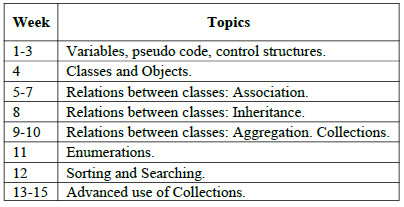
<body><![CDATA[<p lang="es-ES" align="justify" style="margin-bottom: 0.5cm"> 	<font size="2" style="font-size: 10pt" face="Verdana"><span lang="en-GB">Crismond 	and Adams <a name="br">[</a><a href="#r">12</a>] focus on teaching and learning design, arguing that 	IDTLM contains design strategies that help teachers do informed 	teaching, helping teachers design tasks while developing their own 	design pedagogical content knowledge.</span></font></p> 	    <p lang="es-ES" align="justify" style="margin-bottom: 0.5cm"> 	<font size="2" style="font-size: 10pt" face="Verdana"><span lang="en-GB">Crismond 	<a name="br">[</a><a href="#r">29</a>] argues that The &ldquo;Informed Design Teaching and Learning 	Matrix&rdquo; provides more in-depth descriptions of the design 	practices, research on misconceptions, and teaching strategies. In 	this context, unpacking the matrix and extending the IDTML in a 	pedagogical approach help us to become &ldquo;informed design 	teachers&rdquo;. </span></font> 	</p> 	    <p lang="es-ES" align="justify" style="margin-bottom: 0.21cm"> 	<span style="font-variant: normal"><font size="2" face="Verdana"><span lang="en-GB"><b>5 	CS1 Course</b></span></font></span></p> 	    <p lang="es-ES" align="justify" style="margin-bottom: 0.5cm"> 	<font size="2" style="font-size: 10pt" face="Verdana"><span lang="en-GB">Introductory 	programming courses develop several learning activities and 	programming projects in an attempt to change negative outcomes, high 	failure and drop-out rates <a name="br">[</a><a href="#r">1</a><a name="br">,</a> <a href="#r">6</a><a name="br">,</a> <a href="#r">30</a><a name="br">,</a> <a href="#r">31</a>]. Various problems 	experienced by novices were identified relating to basic program 	design and algorithm complexity. Programming courses suffer from a 	wide range of difficulties and deficits <a name="br">[</a><a href="#r">30</a>].</span></font></p> 	    <p lang="es-ES" align="justify" style="margin-bottom: 0.5cm"> 	<font size="2" style="font-size: 10pt" face="Verdana"><span lang="en-GB">Gomez 	and Mendez <a name="br">[</a><a href="#r">32</a>] argues that programming is a complex subject that 	requires effort and a special approach in the way it is learned and 	taught. To become good programmers, students must acquire several 	abilities and traditional teaching methods do not seem to be 	adequate for all students&rsquo; needs. Also, they describe 	different reasons why learning programming is inherently difficult: 	teaching is not personalized, teaching strategies do not support all 	students&rsquo; learning styles, teachers are more concentrated on 	teaching programming languages instead of promoting problem solving, 	programming demands a high level of abstraction and programming 	languages have complex syntax. </span></font> 	</p> 	    <p lang="es-ES" align="justify" style="margin-bottom: 0.5cm"> 	<font size="2" style="font-size: 10pt" face="Verdana"><span lang="en-GB">Literature 	of learning programming contains many research studies that have 	been proposed to face these problems with different approaches; for 	example: games <a name="br">[</a><a href="#r">33</a><a name="br">,</a> <a href="#r">34</a>], robots<a name="br">[</a><a href="#r">35</a>], pair programming <a name="br">[</a><a href="#r">36</a><a name="br">,</a> <a href="#r">37</a>].</span></font></p> 	    <p lang="es-ES" align="justify" style="margin-bottom: 0.5cm"> 	<font size="2" style="font-size: 10pt" face="Verdana"><span lang="en-GB">Our 	CS1 course at Universidad ORT Uruguay emphasizes teaching 	problem-solving methodology using an Object Oriented Programming 	(OOP) approach. The course prepares the learner for constructing 	simple programs using the OOP paradigm. By the end of the semester, 	the student will be ready to analyze simple situations, to design 	possible solutions and to implement them with an OOP approach. Our 	teaching strategy is based on designing activities that motivate and 	engage students in order to achieve better results.</span></font></p> 	    <p lang="es-ES" align="justify" style="margin-bottom: 0.5cm"> 	<font size="2" style="font-size: 10pt" face="Verdana"><span lang="en-GB">The 	duration of the course is 15 weeks, 4 hours of lectures and 2 hours 	for lab session per week. The programming language used is Java for 	all these assignments. A brief description of the 15-week course is 	shown in <a href="#t1">Table 1</a>.</span></font></p> 	    <p lang="es-ES" align="justify" style="margin-bottom: 0.5cm"> 	<font size="2" style="font-size: 10pt" face="Verdana"><span lang="en-GB">The 	main topics are: pseudo code, variables, and control structures, 	objects and classes, association, inheritance, aggregation and 	collections, enumeration, sorting and searching, and advanced use of 	collections. </span></font> 	</p> 	    <p lang="es-ES" align="justify" style="margin-bottom: 0.5cm"> 	<font size="2" style="font-size: 10pt" face="Verdana"><span lang="en-GB">The 	course includes two compulsory programming assignments (done in 	pairs) and a final evaluation. The first programming assignment has 	20 points; the second 30 and the final evaluation 50. If the student 	achieves 86 points or more passes the course and does not have to 	take a final exam (AP1). Between 70 and 85 the course is approved 	but the student must take a final exam (AP2). With less than 70 	points the student fail and must retake the course (FL).</span></font></p> 	    ]]></body>
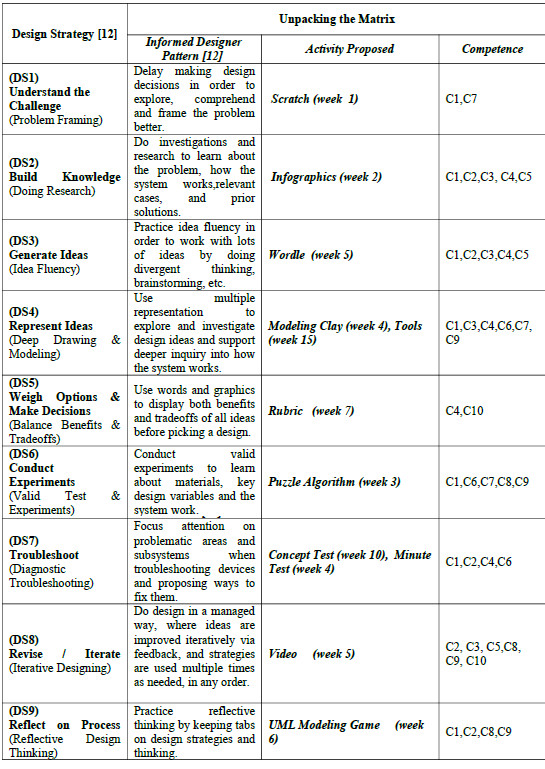
<body><![CDATA[<p lang="en-US" align="center" style="margin-top: 0.78cm; margin-bottom: 0.18cm; line-height: 0.39cm; page-break-after: avoid"> 	<font size="2" style="font-size: 10pt" face="Verdana"><b><a name="t1">Table 	1:</a></b></font><font size="2" face="Verdana"> </font>      <font size="2" style="font-size: 10pt" face="Verdana">CS1 Course 	Description</font><font face="Verdana" size="2">     <br> <img src="/img/revistas/cleiej/v17n3/3a08t1.jpg"> </font> </p> 	    <p lang="es-ES" align="left" style="margin-bottom: 0.5cm"> 	<font face="Verdana" size="2"> 	<br/> <br/>  	</font>  	</p> 	    <p lang="en-GB" align="justify" style="margin-bottom: 0.21cm; font-variant: normal"> 	<font size="2" face="Verdana"><b>6 	Proposal: Unpacking the Matrix</b></font></p> 	    <p lang="es-ES" align="justify" style="margin-bottom: 0.5cm"> 	<font size="2" style="font-size: 10pt" face="Verdana"><span lang="en-GB">IDTLM 	proposed by Crismond and Adams <a name="br">[</a><a href="#r">12</a>], suggests pedagogical strategies 	to help teachers design pedagogical content. IDTLM shows key 	concepts of what instructors needed to know to use design activities 	effectively in the classroom. </span></font> 	</p> 	    <p lang="es-ES" align="justify" style="margin-bottom: 0.5cm"> 	<font size="2" style="font-size: 10pt" face="Verdana"><span lang="en-GB">In 	this context, we unpack the IDTLM, generating informed design 	activities based on competences in order to satisfy learning goals 	and develop selected competences of TLAP. </span></font> 	</p> 	    <p lang="es-ES" align="justify" style="margin-bottom: 0.5cm"> 	<font size="2" style="font-size: 10pt" face="Verdana"><span lang="en-GB">Our 	proposal is to design pedagogical activities for CS1 using the IDTLM 	as a framework. We use several teaching strategies (TS1- TS9) 	proposed by Crismond and Adams <a name="br">[</a><a href="#r">12</a>] and we integrate a variety types 	of activities, each one designed with the IDTLM design strategy 	(DS1-DS9). </span></font> 	</p> 	    <p lang="es-ES" align="justify" style="margin-bottom: 0.5cm"> 	<font size="2" style="font-size: 10pt" face="Verdana"><span lang="en-GB">In 	particular, we propose to extend the IDTLM with concrete activities 	(<a href="#t2">Table 2</a>, Column 3) incorporating a list of selected competences 	that students should develop for each one of the proposed activities 	(<a href="#t2">Table 2</a>, Column 4). </span></font> 	</p> 	    <p lang="es-ES" align="justify" style="margin-bottom: 0.5cm"> 	<font size="2" style="font-size: 10pt" face="Verdana"><span lang="en-GB">Learning 	objectives and goals of each activity have been defined in this 	context and we ensure that each one of the selected TLAP competences 	were covered (completeness of the selected TLAP).</span></font></p> 	    <p lang="en-US" align="center" style="margin-top: 0.78cm; margin-bottom: 0.18cm; line-height: 0.39cm; page-break-after: avoid"> 	<font size="2" style="font-size: 10pt" face="Verdana"><b><a name="t2">Table 	2:</a></b></font><font size="2" face="Verdana"> </font>      <font size="2" style="font-size: 10pt" face="Verdana">Unpacking the 	Matrix</font><font face="Verdana" size="2">     ]]></body>
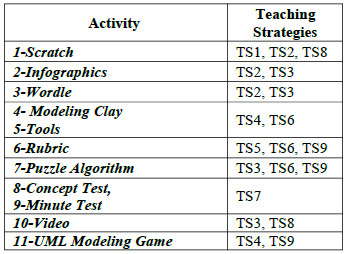
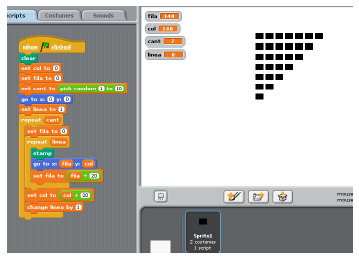
<body><![CDATA[<br> <img src="/img/revistas/cleiej/v17n3/3a08t2.jpg"> </font> </p> 	    <p lang="en-GB" align="justify" style="margin-bottom: 0.5cm"> 	<font size="2" style="font-size: 10pt" face="Verdana">In 	order to design pedagogical content we define learning outcomes in 	terms of competences and we align teaching activities with 	strategies (TS1-TS9) proposed by Crismond and Adams <a name="br">[</a><a href="#r">12</a>]. In <a href="#t3">Table 3</a> 	we map each activity with the selected teaching strategies.</font></p> 	    <p lang="en-US" align="center" style="margin-top: 0.78cm; margin-bottom: 0.18cm; line-height: 0.39cm; page-break-after: avoid"> 	<font size="2" style="font-size: 10pt" face="Verdana"><b><a name="t3">Table 	3:</a></b></font><font size="2" face="Verdana"> </font>      <font size="2" style="font-size: 10pt" face="Verdana">Activities Vs 	Teaching Strategies</font><font face="Verdana" size="2">     <br> <img src="/img/revistas/cleiej/v17n3/3a08t3.jpg"> </font> </p> 	    <p lang="en-GB" align="justify" style="margin-bottom: 0.5cm"> 	<font size="2" style="font-size: 10pt" face="Verdana">A 	detailed description of each activity proposed is given below:</font></p> 	    <p lang="es-ES" align="justify" style="margin-bottom: 0.21cm"> 	<font size="2" style="font-size: 10pt" face="Verdana"><span lang="en-GB">6.1 	Scratch</span></font></p> 	    <p lang="en-GB" align="justify" style="margin-bottom: 0.5cm"> 	<font size="2" style="font-size: 10pt" face="Verdana">We 	used Scratch <a name="br">[</a><a href="#r">38</a>] in the very first weeks with the purpose of 	improving students&rsquo; programming experiences and motivation. 	Scratch can be taken as an auxiliary tool of students&rsquo; 	learning of programming, stimulating the students&rsquo; learning 	motivation and cultivating their ability of solving practical 	problems with the computational thinking approach <a name="br">[</a><a href="#r">39</a>]. A list of 	exercices is given to students. The list includes exercises to 	develop in Scratch (like to draw a particular grid, see (<a href="#f1">Fig. 1</a>) ), 	sample codes with simple mistakes to correct and examples to 	complete.</font></p> 	    <p lang="es-ES" align="center" style="margin-top: 0.21cm"> <font face="Verdana"> <a name="f1"> <font size="2"> <img src="/img/revistas/cleiej/v17n3/3a08f1.jpg"> </font> </a> <font size="2">     <br> 	</font><font size="2" style="font-size: 10pt"><span lang="en-GB"><b>Figure 	1</b>: 	Scratch</span></font></font></p> 	    <p lang="en-GB" align="justify" style="margin-bottom: 0.21cm"> 	<font size="2" style="font-size: 10pt" face="Verdana">6.2 	Infographics</font></p> 	    ]]></body>
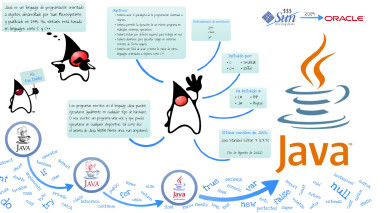
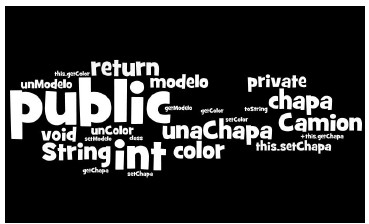
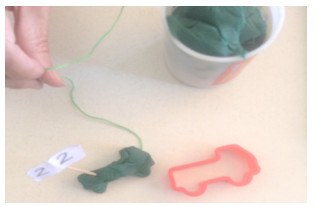
<body><![CDATA[<p lang="en-GB" align="justify" style="margin-bottom: 0.5cm"> 	<font size="2" style="font-size: 10pt" face="Verdana">Infographics 	are graphic visual representations of information, data and 	knowledge that includes text and images, narratives, descriptions, 	maps, etc. This activity aims to generate computer graphics 	containing answers to: &ldquo;What is Java?,&rdquo; &ldquo;Where?&rdquo;, 	&ldquo;Who developed it?&rdquo;, &ldquo;When?&rdquo;. As a homework, 	each student searchs the required information and develops the 	infographic. In (<a href="#f2">Fig. 2</a>) there is a sample infographic developed by 	one student. Students must bring to class the picture. In class, all 	infographics are discussed and the main topics are referred.</font></p> 	    <p lang="es-ES" align="center" style="margin-top: 0.21cm"> <font face="Verdana"> <a name="f2"> <font size="2"> <img src="/img/revistas/cleiej/v17n3/3a08f2.jpg"> </font> </a> <font size="2">     <br> 	</font><font size="2" style="font-size: 10pt"><span lang="en-GB"><b>Figure 	2</b>: 	Infographics (In Spanish)</span></font></font></p> 	    <p lang="en-GB" align="justify" style="margin-bottom: 0.21cm"> 	<font size="2" style="font-size: 10pt" face="Verdana">6.3 	Wordle</font></p> 	    <p lang="es-ES" align="justify" style="margin-bottom: 0.5cm"> 	<font size="2" style="font-size: 10pt" face="Verdana"><span lang="en-GB">Students 	are asked to create at home a &quot;word cloud&quot; from Java code 	using the Wordle tool <a name="br">[</a><a href="#r">40</a>]. The class &quot;Truck&quot; is the first 	complete design example of a Java class that is presented in the 	course. The model consists of a truck, with attributes color and 	plate number. This includes instance variables and methods of access 	and modification. Each student creates his or her own &quot;cloud&quot; 	and in the next class all must provide an explanation of the words 	that appear more prominently (<a href="#f3">Fig. 3</a>).</span></font></p> 	    <p lang="es-ES" align="center" style="margin-top: 0.21cm"> 	<font face="Verdana"> 	<a name="f3">     <font size="2"> <img src="/img/revistas/cleiej/v17n3/3a08f3.jpg"> </font> </a>     <font size="2">     <br>     </font><font size="2" style="font-size: 10pt"><span lang="en-GB"><b>Figure 	3</b>: 	Wordle (In Spanish)</span></font></font></p> 	    <p lang="en-GB" align="justify" style="margin-bottom: 0.21cm"> 	<font size="2" style="font-size: 10pt" face="Verdana">6.4 	Modeling Clay</font></p> 	    <p lang="en-GB" align="justify" style="margin-bottom: 0.5cm"> 	<font size="2" style="font-size: 10pt" face="Verdana">To 	become familiar with the concept of identifying objects, aliasing 	and message passing we use a kinesthetic learning activity modeling 	clay promoting comprehension of object oriented concepts as proposed 	in <a name="br">[</a><a href="#r">41</a>] . This activity focused on improving the comprehension on 	the difference between object and class, memory, creation of 	objects, garbage collector, aliasing and message passing (<a href="#f4">Fig. 4</a>). 	This activity takes about 20 minutes.</font></p> 	    <p lang="es-ES" align="center" style="margin-top: 0.21cm"> <font face="Verdana"> <a name="f4"> <font size="2"> <img src="/img/revistas/cleiej/v17n3/3a08f4.jpg"> </font> </a> <font size="2">     ]]></body>
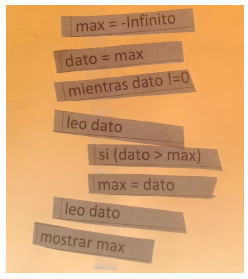
<body><![CDATA[<br> 	</font><font size="2" style="font-size: 10pt"><span lang="en-GB"><b>Figure 	4</b>: 	Modeling Clay</span></font></font></p> 	    <p lang="en-GB" align="justify" style="margin-bottom: 0.21cm"> 	<font size="2" style="font-size: 10pt" face="Verdana">6.5 	Tools</font></p> 	    <p lang="en-GB" align="justify" style="margin-bottom: 0.5cm"> 	<font size="2" style="font-size: 10pt" face="Verdana">The 	teacher brings to class various objects (eg disposable razor, 	kitchen grater, sandpaper drill, soap, bucket, cotton swabs, etc.). 	Each group of 4 students choose an object. On a sheet they must 	write: a) name of the group, b) drawing the chosen object, c) 	analysis of the object&lsquo;s characteristics: functionality, 	materials, costs, etc.).</font></p> 	    <p lang="es-ES" align="justify" style="margin-bottom: 0.5cm"> 	<font size="2" style="font-size: 10pt" face="Verdana"><span lang="en-GB">Students 	must answer: what would you like to know more about the subject? 	What new questions arise? (eg Cost?, Who makes it? Is it 	recyclable?, etc.). Students must describe how they would answer 	these questions. From the responses on the characteristics and 	properties of specific tangible objects, they must find an analogy 	to desirable properties and characteristics of the software (such as 	usability, efficiency, reliability, etc.). The activity takes about 	50 minutes.</span></font></p> 	    <p lang="es-ES" align="justify" style="margin-bottom: 0.21cm"> 	<font size="2" style="font-size: 10pt" face="Verdana"><span lang="en-GB">6.6 	Rubric</span></font></p> 	    <p lang="en-GB" align="justify" style="margin-bottom: 0.5cm"> 	<font size="2" style="font-size: 10pt" face="Verdana">In 	class we study two tasks from a previous course: one developed 	properly and one with errors. They are given to each group with the 	rubric to assess the work. The rubric contains the following areas: 	organization of documentation, writing and spelling, class diagram, 	test data, listing, coding style and execution. Work is classified 	in each area as excellent, good or poor. Each group must assess and 	justify the chosen category. The activity takes about 30 minutes.</font></p> 	    <p lang="es-ES" align="justify" style="margin-bottom: 0.21cm"> 	<font size="2" style="font-size: 10pt" face="Verdana"><span lang="en-GB">6.7 	Puzzle Algorithm</span></font></p> 	    <p lang="en-GB" align="justify" style="margin-top: 0.21cm"> 	<font size="2" style="font-size: 10pt" face="Verdana">Students 	should solve the problem of finding the maximum of a list of 	numbers. We provide students with an algorithm puzzle. Each piece of 	it is a line of code and there are some extra pieces (different 	valid solutions could be constructed). Students must select the 	lines, and recompose the algorithm. In (<a href="#f5">Fig. 5</a>) is presented an 	initial (and partially incorrect) solution proposed by one student. 	Students present their own solutions putting it on the blackboard, 	and in groups discuss and select the most appropiate. This activity 	takes about 45 minutes.</font></p> 	    <p lang="es-ES" align="center" style="margin-top: 0.21cm"> <font face="Verdana"> <a name="f5"> <font size="2"> <img src="/img/revistas/cleiej/v17n3/3a08f5.jpg"> </font> </a> <font size="2">     <br> 	</font><font size="2" style="font-size: 10pt"><span lang="en-GB"><b>Figure 	5</b>: 	Puzzle Algorithm</span></font></font></p> 	    ]]></body>
<body><![CDATA[<p lang="en-GB" align="justify" style="margin-bottom: 0.21cm"> 	<font size="2" style="font-size: 10pt" face="Verdana">6.8 	Concept Test</font></p> 	    <p lang="en-GB" align="justify" style="margin-bottom: 0.5cm"> 	<font size="2" style="font-size: 10pt" face="Verdana">Peer 	Instruction (PI) <a name="br">[</a><a href="#r">42</a>] engages students during class through 	activities that require each student to apply the core concepts 	being presented, and then to explain those concepts to their fellow 	students. A class taught with PI is divided into a series of short 	presentations of certain concepts, each focused on a central point 	and followed by a related conceptual question. We use this activity 	to develop concepts of &ldquo;Array&rdquo;. The activity takes about 	50 minutes.</font></p> 	    <p lang="en-GB" align="justify" style="margin-bottom: 0.21cm"> 	<font size="2" style="font-size: 10pt" face="Verdana">6.9 	Minute Test</font></p> 	    <p lang="en-GB" align="justify" style="margin-bottom: 0.5cm"> 	<font size="2" style="font-size: 10pt" face="Verdana">Angelo 	and Cross <a name="br">[</a><a href="#r">43</a>] suggest assigning minute papers at the end of class. 	In one minute, students answer the following questions: (1) What is 	the most significant thing you learned today?, and (2) What relevant 	question is in your mind at the end of today's session?. The answers 	are discussed in groups and the most remarkable points are selected.</font></p> 	    <p lang="es-ES" align="justify" style="margin-bottom: 0.21cm"> 	<font size="2" style="font-size: 10pt" face="Verdana"><span lang="en-GB">6.10 	Video</span></font></p> 	    <p lang="en-GB" align="justify" style="margin-bottom: 0.5cm"> 	<font size="2" style="font-size: 10pt" face="Verdana">Pair 	programming consists of two programmers sharing a single workstation 	(one screen, keyboard and mouse among the pair). The programmer at 	the keyboard is usually called the &quot;driver&quot;, the other, 	also actively involved in the programming task but focusing more on 	overall direction is the &quot;navigator&quot;; it is expected that 	the programmers swap roles every few minutes or so <a name="br">[</a><a href="#r">44</a>]. A short 	video of pair programming <a name="br">[</a><a href="#r">45</a>] is presented to discuss the concepts 	of the practice. Students discuss what is the true spirit of pair 	programming and the advantages and disadvantages of such 	methodology. The main purpose of this activity is to take into 	account the required skills and the problems of working in groups. 	This activity takes about 15 minutes.</font></p> 	    <p lang="es-ES" align="justify" style="margin-bottom: 0.21cm"> 	<font size="2" style="font-size: 10pt" face="Verdana"><span lang="en-GB">6.11 	UML Modeling Game</span></font></p> 	    <p lang="en-GB" align="justify" style="margin-bottom: 0.5cm"> 	<font size="2" style="font-size: 10pt" face="Verdana">The 	teacher brings to class several toys in their original packages 	(e.g. race car, deck of cards, puzzle), see (<a href="#f6">Fig. 6</a>). Students are 	asked to model the game in UML notation. Information of attributes 	is implicit in the packages (identification, recommended age, 	pieces, etc.). Different models are sketched on the blackboard and 	several valid options are analyzed. This activity takes about 20 	minutes.</font></p> 	    <p lang="es-ES" align="center" style="margin-top: 0.21cm"> <font face="Verdana"> <a name="f6"> <font size="2"> <img src="/img/revistas/cleiej/v17n3/3a08f6.jpg"> </font> </a> <font size="2">     <br> 	</font><font size="2" style="font-size: 10pt"><span lang="en-GB"><b>Figure 	6:</b></span></font><font size="2"> </font><font size="3" style="font-size: 12pt"> <font size="2" style="font-size: 10pt"><span lang="en-GB">UML 	Modeling Game</span></font></font></font></p> 	    ]]></body>
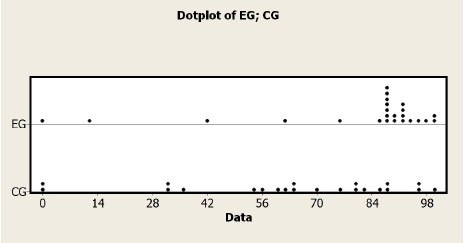
<body><![CDATA[<p lang="en-GB" align="justify" style="margin-bottom: 0.21cm; font-variant: normal"> 	<font size="2" face="Verdana"><b>7 	Experimentation</b></font></p> 	    <p lang="es-ES" align="justify" style="margin-bottom: 0.5cm"> 	<font size="2" style="font-size: 10pt" face="Verdana"><span lang="en-GB">The 	research question that motivated this study was: What kind of 	competence-oriented activities can we design to engage students and 	obtain better results?. </span></font> 	</p> 	    <p lang="es-ES" align="justify" style="margin-bottom: 0.5cm"> 	<font size="2" style="font-size: 10pt" face="Verdana"><span lang="en-GB">In 	terms of GQM <a name="br">[</a><a href="#r">46</a>] (Goal, Quality, Metrics): Our study aims to 	generate informed design activities in order to enhance the 	development of several TLAP competences, providing better results in 	CS1 course from the educational perspective in the context of 	introductory programming (CS1) course at Universidad ORT Uruguay.</span></font></p> 	    <p lang="es-ES" align="justify" style="margin-bottom: 0.5cm"> 	<font size="2" style="font-size: 10pt" face="Verdana"><span lang="en-GB">The 	independent variable chosen in the experimental design was the 	teaching method, which incorporates IDTLM design strategy and 	selected TLAP competences. The dependent variable is the course 	result.</span></font></p> 	    <p lang="es-ES" align="justify" style="margin-bottom: 0.5cm"> 	<font size="2" style="font-size: 10pt" face="Verdana"><span lang="en-GB">An 	initial experiment was conducted in the second semester of 2012. One 	random group of 20 freshmen in the experimental group (EG) was 	selected to participate in the activities and 16 students were in 	the control group (CG). </span></font> 	</p> 	    <p lang="en-GB" align="justify" style="margin-bottom: 0.5cm"> 	<font size="2" style="font-size: 10pt" face="Verdana">Students 	in the EG receive instruction though IDTLM design strategy and 	selected TLAP competences and students in CG received instruction 	through the use of traditional lecture. Common syllabus, notes, 	assignments, teachers experience and classroom were used in (CG) and 	(EG). Both groups included a high number of students who fail in 	previous course. A limitation of the study was the low number of 	freshmen. Considering only the students who take the course for 	first time, in the selected group, 44% (4/9) of them had completed 	the course and in the control group, 22% (2/9).</font></p> 	    <p lang="es-ES" align="justify" style="margin-bottom: 0.5cm"> 	<font size="2" style="font-size: 10pt" face="Verdana"><span lang="en-GB">Based 	on that experience, we designed some improvements in the activities 	and replicated the study. In the first semester of 2013, two groups 	of students corresponding to CS1 courses were randomly selected to 	participate in the experiment. In the EG were 24 students and in the 	CG were 22 students.</span></font></p> 	    <p lang="es-ES" align="justify" style="margin-bottom: 0.5cm"> 	<font size="2" style="font-size: 10pt" face="Verdana"><span lang="en-GB">An 	initial test on Java, object oriented concepts and programming was 	designed and applied in both groups. The scores showed that both 	groups were similar in terms of CS knowledge and the students were 	essentially novices.</span></font></p> 	    <p lang="en-GB" align="justify" style="margin-bottom: 0.5cm"> 	<font size="2" style="font-size: 10pt" face="Verdana">As 	we exposed, final results of assessments establish a classification 	into 3 groups according to final scores in a 0-100 scale: students 	that must retake the course (1-69) (FL), students that must take a 	final exam (70-85) (AP2) and finally the category of students that 	approve the course (86-100) (AP1). <a href="#f7">Fig. 7</a> illustrates final results 	of assessments for EG and CG. </font> 	</p> 	    <p lang="es-ES" align="justify" style="margin-bottom: 0.5cm"> 	<font size="2" style="font-size: 10pt" face="Verdana"><span lang="en-GB">The 	dot plot shows a distribution of final result of each student. In 	the EG, most of the students are in the AP1 area (86-100 points) and 	in the CG they are distributed all over the values.</span></font></p> 	    ]]></body>
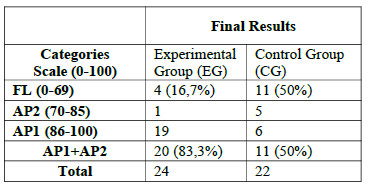
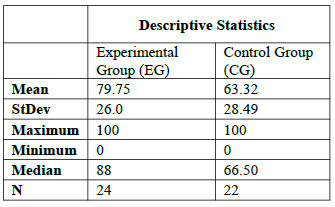
<body><![CDATA[<p lang="es-ES" align="center" style="margin-top: 0.21cm"> <font face="Verdana"> <a name="f7"> <font size="2"> <img src="/img/revistas/cleiej/v17n3/3a08f7.jpg"> </font> </a> <font size="2">     <br> 	</font><font size="2" style="font-size: 10pt"><span lang="en-GB"><b>Figure 	7:</b></span></font><font size="2"> </font><font size="3" style="font-size: 12pt"> <font size="2" style="font-size: 10pt"><span lang="en-GB">DotPlot 	(EG) and (CG)</span></font></font></font></p> 	    <p lang="es-ES" align="justify" style="margin-bottom: 0.5cm"> 	<font size="2" style="font-size: 10pt" face="Verdana"><span lang="en-GB"><a href="#t4">Table 	4</a> illustrates final results for both (EG) and (CG).</span></font></p> 	    <p lang="en-US" align="center" style="margin-top: 0.78cm; margin-bottom: 0.18cm; line-height: 0.39cm; page-break-after: avoid"> 	<font size="2" style="font-size: 10pt" face="Verdana"><b><a name="t4">Table 	4:</a></b></font><font size="2" face="Verdana"> </font>      <font size="2" style="font-size: 10pt" face="Verdana">CS1 Final 	Results</font><font face="Verdana" size="2">     <br> <img src="/img/revistas/cleiej/v17n3/3a08t4.jpg"> </font> </p> 	    <p lang="en-GB" align="justify" style="margin-bottom: 0.5cm"> 	<font size="2" style="font-size: 10pt" face="Verdana"><a href="#t5">Table 	5</a> illustrates descriptive statistics outputted by Minitab <a name="br">[</a><a href="#r">47</a>].</font></p> 	    <p lang="en-US" align="center" style="margin-top: 0.78cm; margin-bottom: 0.18cm; line-height: 0.39cm; page-break-after: avoid"> 	<font size="2" style="font-size: 10pt" face="Verdana"><b><a name="t5">Table 	5:</a></b></font><font size="2" face="Verdana"> </font>      <font size="2" style="font-size: 10pt" face="Verdana">CS1 Descriptive 	Statistics</font><font face="Verdana" size="2">     <br> <img src="/img/revistas/cleiej/v17n3/3a08t5.jpg"> </font> </p> 	    <p lang="en-GB" align="justify" style="margin-bottom: 0.5cm"> 	<font size="2" style="font-size: 10pt" face="Verdana">In 	order to evaluate the proposed pedagogical design, we tested the 	following hypotheses: </font> 	</p> 	    <p lang="en-GB" align="justify" style="text-indent: 1.25cm; margin-bottom: 0.5cm"> 	<font size="2" style="font-size: 10pt" face="Verdana">Null 	Hypothesis: H0: There is no difference in applying informed design 	activities with a competencies oriented approach in the final 	results of our students.</font></p> 	    ]]></body>
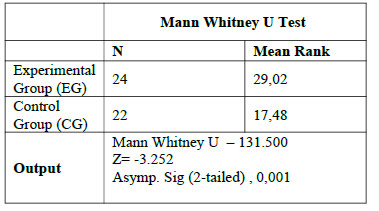
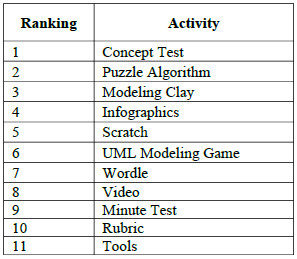
<body><![CDATA[<p lang="en-GB" align="justify" style="text-indent: 1.25cm; margin-bottom: 0.5cm"> 	<font size="2" style="font-size: 10pt" face="Verdana">Alternative 	Hypothesis: H1: There is a difference in applying informed design 	activities with a competencies oriented approach in the final 	results of our students.</font></p> 	    <p lang="es-ES" align="justify" style="margin-bottom: 0.5cm"> 	<font size="2" style="font-size: 10pt" face="Verdana"><span lang="en-GB">Different 	non-parametric methods can be applied in our experiment. We select 	Mann-Whitney U <a name="br">[</a><a href="#r">48</a>] (MWU) as the non-parametric context of the 	experiment. MWU is the non-parametric equivalent of Student&rsquo;s 	test or the t-test for two samples. <a href="#t6">Table 6</a> illustrates the 	significance level (p-value) of the Mann Whitney U Test, obtained by 	SPSS <a name="br">[</a><a href="#r">49</a>].</span></font></p> 	    <p lang="en-US" align="center" style="margin-top: 0.78cm; margin-bottom: 0.18cm; line-height: 0.39cm; page-break-after: avoid"> 	<font size="2" style="font-size: 10pt" face="Verdana"><b><a name="t6">Table 	6:</a></b></font><font size="2" face="Verdana"> </font>      <font size="2" style="font-size: 10pt" face="Verdana">Mann Whitney U 	Test</font><font face="Verdana" size="2">     <br> <img src="/img/revistas/cleiej/v17n3/3a08t6.jpg"> </font> </p> 	    <p lang="en-GB" align="justify" style="margin-bottom: 0.5cm"> 	<font size="2" style="font-size: 10pt" face="Verdana">In 	terms of statistical significance (measured by alpha (&alpha;)) a 	high level of significance (&alpha; &lt; 0.01) was found. As the 	value of p-value shown in <a href="#t7">Table 7</a> is 0,001 (less than 0.01) we 	reject H0 and accept H1. In this context, there is statistical 	evidence to conclude that the performance of the experimental group 	is significantly different. Considering the detailed final results 	of the students and the MWUT, we could infer that the proposed 	pedagogical design produce significantly better final results.</font></p> 	    <p lang="es-ES" align="justify" style="margin-bottom: 0.5cm"> 	<font size="2" style="font-size: 10pt" face="Verdana"><span lang="en-GB">Teachers 	of the experimental group referred a high level of enjoyment. In 	class, informally talking with students they show high levels of 	motivation. </span></font> 	</p> 	    <p lang="es-ES" align="justify" style="margin-bottom: 0.5cm"> 	<font size="2" style="font-size: 10pt" face="Verdana"><span lang="en-GB">Related 	to the activities, a survey was conducted among students in the 	experimental group (EG). We asked them to order the activities 	according to their preference. Each student selected their three 	preferred activities. Integrating the answers, the three activities 	preferred by all the students were: Concept Test, Puzzle Algorithm, 	and Modeling Clay. A brief description of the results of student&rsquo;s 	survey preference of proposed activities is shown in <a href="#t7">Table 7</a>. </span></font> 	</p> 	    <p lang="en-US" align="center" style="margin-top: 0.78cm; margin-bottom: 0.18cm; line-height: 0.39cm; page-break-after: avoid"> 	<font size="2" style="font-size: 10pt" face="Verdana"><b><a name="t7">Table 	7:</a></b></font><font size="2" face="Verdana"> </font>      <font size="2" style="font-size: 10pt" face="Verdana">Activities 	Survey</font><font face="Verdana" size="2">     <br> <img src="/img/revistas/cleiej/v17n3/3a08t7.jpg"> </font> </p> 	    <p lang="es-ES" align="justify" style="margin-bottom: 0.5cm"> 	<font face="Verdana" size="2"> 	<br/> <br/>  	</font>  	</p> 	    ]]></body>
<body><![CDATA[<p lang="en-GB" align="justify" style="margin-bottom: 0.21cm; font-variant: normal"> 	<font size="2" face="Verdana"><b>8 	Conclusion and Future Work</b></font></p> 	    <p lang="es-ES" align="justify" style="margin-bottom: 0.5cm"> 	<font size="2" style="font-size: 10pt" face="Verdana"><span lang="en-GB">Unpacking 	the IDTLM allowed out teachers to generate informed design 	activities based on competences in order to satisfy learning goals. 	Our findings suggest that this pedagogical design approach seems to 	be more effective in engaging students in order to achieve better 	results.</span></font></p> 	    <p lang="es-ES" align="justify" style="margin-bottom: 0.5cm"> 	<font size="2" style="font-size: 10pt" face="Verdana"><span lang="en-GB">As 	mentioned in the experimentation section, in the experimental group 	83.3% of the students approved the course and in the control 50%. 	Also, teachers referred to high motivated students in the 	experimental group. The main internal threat to validity that could 	be identified is the size of the groups. </span></font> 	</p> 	    <p lang="es-ES" align="justify" style="margin-bottom: 0.5cm"> 	<font size="2" style="font-size: 10pt" face="Verdana"><span lang="en-GB">This 	set of didactic units and activities are the outcome of the work and 	didactic units are available to all CS1 teachers at Universidad ORT 	Uruguay. A subset of these exercises obtained one of the first 	prizes in the PRECITYE Program <a name="br">[</a><a href="#r">50</a>] (Regional Program in Engineering 	Entrepreneurship and Innovation). </span></font> 	</p> 	    <p lang="es-ES" align="justify" style="margin-bottom: 0.5cm"> 	<font size="2" style="font-size: 10pt" face="Verdana"><span lang="en-GB">In 	the future we will incorporate the Informed Design Rubric <a name="br">[</a><a href="#r">51</a>] 	proposed by Crismond to assess student learning over one or more 	design activities proposed. Also, we will incorporate other 	approaches and monitoring the performance of students in the 	following courses.</span></font></p> 	    <p lang="en-US" align="left" style="margin-right: 0.02cm; margin-top: 0.42cm; margin-bottom: 0.21cm; page-break-inside: avoid; widows: 0; orphans: 0; page-break-after: avoid"> 	<font face="Verdana" size="2"><b>References</b></font></p> 	    <p lang="en-US" align="left" style="margin-left: 0.75cm; text-indent: -0.75cm; margin-bottom: 0.5cm; widows: 2; orphans: 2"> 	<font face="Verdana" size="2"><a name="r">[</a><a href="#br">1</a>] Kinnunen, P., Malmi, L., 	&ldquo;Why Students Drop Out CS1 Course?&rdquo;, ICER&rsquo; 06, 	United Kingdom, pp 97-108, 2006.</font></p> 	    <p lang="en-US" align="left" style="margin-left: 0.75cm; text-indent: -0.75cm; margin-bottom: 0.5cm; widows: 2; orphans: 2"> 	<font face="Verdana" size="2"><a name="r">[</a><a href="#br">2</a>] Jenkins, T., &ldquo;On the 	difficulty of learning to program.&rdquo;, Proceedings of the 3rd 	Annual Conf. of the LTSN Centre for Information and Computer 	Sciences. Loughborough: Univ. United Kindom, pp 53-58, 2002.</font></p> 	    <p lang="en-US" align="left" style="margin-left: 0.75cm; text-indent: -0.75cm; margin-bottom: 0.5cm; widows: 2; orphans: 2"> 	<font face="Verdana" size="2"><a name="r">[</a><a href="#br">3</a>] Gomes, A., Mendes, A.J., 	&ldquo;Learning to program- difficulties and solutions&rdquo;, 	International Conf. on Engineering Education ICEE, 2007 .</font></p> 	    <p lang="en-US" align="left" style="margin-left: 0.75cm; text-indent: -0.75cm; margin-bottom: 0.5cm; widows: 2; orphans: 2"> 	<font face="Verdana" size="2"><a name="r">[</a><a href="#br">4</a>] Sheard, J., Simon, S., 	Hamilton, M. and Lonnberg, J, &ldquo;Analysis of research into the 	teaching and learning of programming&rdquo;, Proceedings of the 	fifth International Workshop on Computing Education Research 	WorkShop ICER 09, pp.93-104, 2009.</font></p> 	    ]]></body>
<body><![CDATA[<p lang="en-US" align="left" style="margin-left: 0.75cm; text-indent: -0.75cm; margin-bottom: 0.5cm; widows: 2; orphans: 2"> 	<font face="Verdana" size="2"><a name="r">[</a><a href="#br">5</a>] Soh, L. K., Samal, A. and 	Nugent, G., An integrated framework for improved Computer Science 	Education: Strategies, implementations, and results&rdquo;. Computer 	Science Education, 17, pp 59-83, 2007.</font></p> 	    <p lang="en-US" align="left" style="margin-left: 0.75cm; text-indent: -0.75cm; margin-bottom: 0.5cm; widows: 2; orphans: 2"> 	<font face="Verdana" size="2"><a name="r">[</a><a href="#br">6</a>] Ambrosio, A.P., Costa, F.M., 	Almeida, L.,Franco, A., Macedo, J., &ldquo;Identifying cognitive 	abilities to improve CS1 outcome&rdquo;, Proc. of 41th ASEE/IEE 	Frontiers in Education Conference, pp. F3G-1 F3G-7, 2011.</font></p> 	    <p lang="en-US" align="left" style="margin-left: 0.75cm; text-indent: -0.75cm; margin-bottom: 0.5cm; widows: 2; orphans: 2"> 	<font face="Verdana" size="2"><a name="r">[</a><a href="#br">7</a>] Lahtinen E., Ala-Mutka K., 	and J&auml;rvinen H. M., &ldquo;A study of the difficulties of 	novice programmers&rdquo;. SIGCSE Bull. 37, pp 14-18, 2005. </font> 	</p> 	    <!-- ref --><p lang="en-US" align="left" style="margin-left: 0.75cm; text-indent: -0.75cm; margin-bottom: 0.5cm; widows: 2; orphans: 2"> 	<font face="Verdana" size="2"><a name="r">[</a><a href="#br">8</a>] Tovar, E. and Soto, O., &quot;Are 	new coming computer engineering students well prepared to begin 	future studies programs based on competences in the European Higher 	Education Area?&quot;, 39th IEEE Frontiers in Education Conference, 	2009. FIE '09,&nbsp; 2009.     </font> 	</p> 	    <!-- ref --><p lang="en-US" align="left" style="margin-left: 0.75cm; text-indent: -0.75cm; margin-bottom: 0.5cm; widows: 2; orphans: 2"> 	<font face="Verdana" size="2"><a name="r">[</a><a href="#br">9</a>] Ramirez, C.; Sanchez, E., 	&quot;Competences memory map: A model for the representation of 	competences applied in education,&quot; 2012 IEEE 11th Int. Conf. on 	Cognitive Informatics &amp; Cognitive Computing (ICCI*CC), 	pp.363,371, 2012.     </font> 	</p> 	    <p lang="es-ES" align="left" style="margin-left: 0.75cm; text-indent: -0.75cm; margin-bottom: 0.5cm; widows: 2; orphans: 2"> 	<font face="Verdana" size="2"><span lang="en-US"><a name="r">[</a><a href="#br">10</a>] 	Commission of the European Communities, &ldquo;Recommendation of the 	European Parliament and of the Concil on the establishment of the 	European Qualifications Framework for lifelong learning&rdquo;, 	Available at 	<a class="western" href="http://ec.europa.eu/education/policies/educ/eqf/rec08_en.pdf">http://ec.europa.eu/education/policies/educ/eqf/rec08_en.pdf</a>, 	last accessed October 15 2013. </span></font> 	</p> 	    <p lang="en-US" align="left" style="margin-left: 0.75cm; text-indent: -0.75cm; margin-bottom: 0.5cm; widows: 2; orphans: 2"> 	<font face="Verdana" size="2"><a name="r">[</a><a href="#br">11</a>] &ldquo;Software Engineering 	2004&rdquo; Curriculum Guidelines for Undergraduate Degree Programs 	in Software Engineering, The joint Task Force on computing 	Curricula, IEEE Computer Society, Association for Computing 	Machinery, August 2004. </font> 	</p> 	    <p lang="en-US" align="left" style="margin-left: 0.75cm; text-indent: -0.75cm; margin-bottom: 0.5cm; widows: 2; orphans: 2"> 	<font face="Verdana" size="2"><a name="r">[</a><a href="#br">12</a>] Crismond, D. P. and Adams, 	R. S., &ldquo;The Informed Design Teaching and Learning Matrix&rdquo;. 	Journal of Engineering Education, Vol 101, No. 4, 738&ndash;797, 	2012. </font> 	</p> 	    ]]></body>
<body><![CDATA[<!-- ref --><p lang="en-US" align="left" style="margin-left: 0.75cm; text-indent: -0.75cm; margin-bottom: 0.5cm; widows: 2; orphans: 2"> 	<font face="Verdana" size="2"><a name="r">[</a><a href="#br">13</a>] Edwards, M., Tovar, E. and 	Soto, O., &quot;Embedding a core competence curriculum in computing 	engineering,&quot; Frontiers in Education Conference, 2008. FIE 	2008, pp.S2E-15,S2E-20, 22-25 Oct. 2008.     </font> 	</p> 	    <p lang="es-ES" align="left" style="margin-left: 0.75cm; text-indent: -0.75cm; margin-bottom: 0.5cm; widows: 2; orphans: 2"> 	<font face="Verdana" size="2"><span lang="en-US"><a name="r">[</a><a href="#br">14</a>] 	Gonz&aacute;lez, J., Wagenaar, R., &ldquo;Universities contribution 	to the Bologna Process. An Introduction (2nd edition)&rdquo;. 	Publicaciones de la Universidad de Deusto, 2008 	[On-line].Available:&nbsp;&nbsp;&nbsp; 	<a class="western" href="http://www.unideusto.org/tuningeu/images/stories/Publications/ENGLISH_BROCHURE_FOR_WEBSITE.pdf">http://www.unideusto.org/tuningeu/images/stories/Publications/ENGLISH_BROCHURE_FOR_WEBSITE.pdf</a>, 	last accessed October 15 2013. </span></font> 	</p> 	    <!-- ref --><p lang="en-US" align="left" style="margin-left: 0.75cm; text-indent: -0.75cm; margin-bottom: 0.5cm; widows: 2; orphans: 2"> 	<font face="Verdana" size="2"><a name="r">[</a><a href="#br">15</a>] Tovar, E.; Soto, O., &quot;The 	use of competences assessment to predict the performance of first 	year students,&quot; Frontiers in Education Conference 2010,&nbsp; 	pp.F3J-1,F3J-4, Oct. 2010.     </font> 	</p> 	    <!-- ref --><p lang="en-US" align="left" style="margin-left: 0.75cm; text-indent: -0.75cm; margin-bottom: 0.5cm; widows: 2; orphans: 2"> 	<font face="Verdana" size="2"><a name="r">[</a><a href="#br">16</a>] Sanchez, J.L.; Gonzalez, 	C.S.; Alayon, S., &quot;Evaluation of transversal competences in the 	final year project in engineering&quot;, 2011 Proc. of the 22nd 	EAEEIE Annual Conference (EAEEIE), pp.1,5, June 2011.     </font> 	</p> 	    <!-- ref --><p lang="en-US" align="left" style="margin-left: 0.75cm; text-indent: -0.75cm; margin-bottom: 0.5cm; widows: 2; orphans: 2"> 	<font face="Verdana" size="2"><a name="r">[</a><a href="#br">17</a>]&nbsp;&nbsp; Kabicher, S.; 	Motschnig-Pitrik, R.; Figl, K., &quot;What competences do employers, 	staff and students expect from a Computer Science graduate?&quot;, 	39th Frontiers in Education Conf., pp.1,6, 18-21 Oct. 2009.    </font></p> 	    <!-- ref --><p lang="es-ES" align="left" style="margin-left: 0.75cm; text-indent: -0.75cm; margin-bottom: 0.5cm; widows: 2; orphans: 2"> 	<font face="Verdana" size="2"><span lang="en-US"><a name="r">[</a><a href="#br">18</a>]&nbsp; 	Tuning America Latina, 	<a class="western" href="http://tuning.unideusto.org/tuningal/index.php?option=com_docman&amp;Itemid=191&amp;task=view_category&amp;catid=22&amp;order=dmdate_published&amp;ascdesc=DESC">http://tuning.unideusto.org/tuningal/index.php?option=com_docman&amp;Itemid=191&amp;task=view_category&amp;catid=22&amp;order=dmdate_published&amp;ascdesc=DESC</a>, 	last accessed October 15 2013.     </span></font> 	</p> 	    <p lang="en-US" align="left" style="margin-left: 0.75cm; text-indent: -0.75cm; margin-bottom: 0.5cm; widows: 2; orphans: 2"> 	<font face="Verdana" size="2"><a name="r">[</a><a href="#br">19</a>]&nbsp; Biggs, J., &amp; 	Tang, C. , &ldquo;Teaching for quality learning at university&rdquo;, 	Open University Press., 2011.</font></p> 	    <p lang="en-US" align="left" style="margin-left: 0.75cm; text-indent: -0.75cm; margin-bottom: 0.5cm; widows: 2; orphans: 2"> 	<font face="Verdana" size="2"><a name="r">[</a><a href="#br">20</a>]&nbsp; Gal-Ezer J.and Harel 	D., &ldquo;What (Else) should CS Educators know?&rdquo;, Comm. ACM, 	vol 41, no. 9, pp 77-84, 1998.</font></p> 	    <!-- ref --><p lang="en-US" align="left" style="margin-left: 0.75cm; text-indent: -0.75cm; margin-bottom: 0.5cm; widows: 2; orphans: 2"> 	<font face="Verdana" size="2"><a name="r">[</a><a href="#br">21</a>]&nbsp; Felder R. M.,Brent R, 	The ABC's of Engineering Education: Abet, Bloom's Taxonomy, 	Cooperative Learning, and So on,&nbsp; Proc. of the 2004 American 	Society of Engineering Education annual conference and exposition, 	Session 1375, 2004.    </font></p> 	    <p lang="en-US" align="left" style="margin-left: 0.75cm; text-indent: -0.75cm; margin-bottom: 0.5cm; widows: 2; orphans: 2"> 	<font face="Verdana" size="2"><a name="r">[</a><a href="#br">22</a>]&nbsp;&nbsp; Tulbure, C. , 	&ldquo;Learning styles, teaching strategies and academic achievement 	in higher education: A cross-sectional investigation&rdquo;. 	Procedia-Social and Behavioral Sciences, 33, 398-402, 2012.</font></p> 	    <p lang="en-US" align="left" style="margin-left: 0.75cm; text-indent: -0.75cm; margin-bottom: 0.5cm; widows: 2; orphans: 2"> 	<font face="Verdana" size="2"><a name="r">[</a><a href="#br">23</a>]&nbsp; Felder, R.M. and 	Brent, R. , &ldquo;Understanding Student Differences&rdquo;, Journal 	of Engineering Education, 94(1), 57-72, 2005.</font></p> 	    <p lang="en-US" align="left" style="margin-left: 0.75cm; text-indent: -0.75cm; margin-bottom: 0.5cm; widows: 2; orphans: 2"> 	<font face="Verdana" size="2"><a name="r">[</a><a href="#br">24</a>]&nbsp; Hamer, J., 	Luxton-Reilly, A., Purchase, H. C., &amp; Sheard, J. , &ldquo;Tools 	for contributing student learning&rdquo;. ACM Inroads, 2(2), 78-91, 	2011 .</font></p> 	    <p lang="en-US" align="left" style="margin-left: 0.75cm; text-indent: -0.75cm; margin-bottom: 0.5cm; widows: 2; orphans: 2"> 	<font face="Verdana" size="2"><a name="r">[</a><a href="#br">25</a>]&nbsp; Pears A., Seidman S., 	Malmi L., Mannila L., Adams E, Bennedsen J, Devlin M., and Paterson 	J., &ldquo;A survey of literature on the teaching of introductory 	programming&rdquo;. SIGCSE 2007, 2007.&nbsp; </font> 	</p> 	    <!-- ref --><p lang="en-US" align="left" style="margin-left: 0.75cm; text-indent: -0.75cm; margin-bottom: 0.5cm; widows: 2; orphans: 2"> 	<font face="Verdana" size="2"><a name="r">[</a><a href="#br">26</a>]&nbsp;&nbsp; Sheard J., 	Simon S.,Hamilton M and L&ouml;nnberg J.. Analysis of research into 	the teaching and learning of programming. In Proceedings of the 	fifth international workshop on Computing education research 	workshop (ICER '09),&nbsp; ACM, New York, NY, USA, 93-104, 2009.    </font></p> 	    <!-- ref --><p lang="en-US" align="left" style="margin-left: 0.75cm; text-indent: -0.75cm; margin-bottom: 0.5cm; widows: 2; orphans: 2"> 	<font face="Verdana" size="2"><a name="r">[</a><a href="#br">27</a>]&nbsp; Davis, M., Hawley, 	P., McMullan, B., &amp; Spilka, G., &quot;Design as a catalyst for 	learning&quot;. Alexandria, VA: Association for Supervision and 	Curriculum Development, 1997.    </font></p> 	    <p lang="en-US" align="left" style="margin-left: 0.75cm; text-indent: -0.75cm; margin-bottom: 0.5cm; widows: 2; orphans: 2"> 	<font face="Verdana" size="2"><a name="r">[</a><a href="#br">28</a>]&nbsp; Adams, R.S.; Fralick, 	B., &quot;Work in progress &mdash; A conceptions of design 	instrument as an assessment tool,&quot; Frontiers in Education 	Conference (FIE) 2010 IEEE, pp.F2G-1,F2G-2, Oct. 2010. </font> 	</p> 	    <!-- ref --><p lang="en-US" align="left" style="margin-left: 0.75cm; text-indent: -0.75cm; margin-bottom: 0.5cm; widows: 2; orphans: 2"> 	<font face="Verdana" size="2"><a name="r">[</a><a href="#br">29</a>]&nbsp; Crismond, D., Desing 	Practices and Misconceptions, The Science Teacher, 2013.     </font> 	</p> 	    <!-- ref --><p lang="en-US" align="left" style="margin-left: 0.75cm; text-indent: -0.75cm; margin-bottom: 0.5cm; widows: 2; orphans: 2"> 	<font face="Verdana" size="2"><a name="r">[</a><a href="#br">30</a>]&nbsp; Robins, A., Rountree, 	J. and Rountree, N., &quot;Learning and teaching programming: a 	review and discussion&quot;, Computer Science Education, Vol 13, No 	2,&nbsp; pp. 137-172, 2003</font><p lang="en-US" align="left" style="margin-left: 0.75cm; text-indent: -0.75cm; margin-bottom: 0.5cm; widows: 2; orphans: 2"> 	<font face="Verdana" size="2"><a name="r">[</a><a href="#br">31</a>]&nbsp; Bennedsen, J., 	Caspersen, M., &ldquo;Failure Rates in Introductory Programming&rdquo;, 	Inroads SIGCSE Bull., Vol 39:2, , pp 32-36, 2007.</font></p> 	    <!-- ref --><p lang="en-US" align="left" style="margin-left: 0.75cm; text-indent: -0.75cm; margin-bottom: 0.5cm; widows: 2; orphans: 2"> 	<font face="Verdana" size="2"><a name="r">[</a><a href="#br">32</a>]&nbsp; Gomes A.J., Santos A. 	N. and Mendes A.J.. A study on students'behaviours and attitudes 	towards learning to program. Proceedings of the 17th ACM annual 	conference on Innovation and technology incomputer science education 	(ITiCSE '12), 2012.     </font> 	</p> 	    ]]></body>
<body><![CDATA[<!-- ref --><p lang="en-US" align="left" style="margin-left: 0.75cm; text-indent: -0.75cm; margin-bottom: 0.5cm; widows: 2; orphans: 2"> 	<font face="Verdana" size="2"><a name="r">[</a><a href="#br">33</a>]&nbsp; Cliburn D.C., Miller 	S.M. and Bowring E. , &quot;Student preferencesbetween open-ended 	and structured game assignments in CS1&quot;,Frontiers in Education 	Conference (FIE),&nbsp; pp.F2H-1-F2H-5, 2010.     </font> 	</p> 	    <!-- ref --><p lang="en-US" align="left" style="margin-left: 0.75cm; text-indent: -0.75cm; margin-bottom: 0.5cm; widows: 2; orphans: 2"> 	<font face="Verdana" size="2"><a name="r">[</a><a href="#br">34</a>]&nbsp; Smallwood G.R. and 	Black D.V. &quot;Observations on designing a computer science 	Curriculum focusing on game programming using testimonials from 	industry leaders&quot;, 2011 IEEE International Games Innovation 	Conference (IGIC), 2011, pp.126-129, 2011.    </font></p> 	    <!-- ref --><p lang="en-US" align="left" style="margin-left: 0.75cm; text-indent: -0.75cm; margin-bottom: 0.5cm; widows: 2; orphans: 2"> 	<font face="Verdana" size="2"><a name="r">[</a><a href="#br">35</a>]&nbsp; De Giusti A., Frati 	F. E., Sanchez M., De Giusti L. &quot;LIDI Multi RobotEnvironment: 	Support software for concurrency learning in CS1&quot;, 	International Conference Collaboration Technologies and Systems 	(CTS), pp.294-298, 21-25 May 2012.     </font> 	</p> 	    <!-- ref --><p lang="en-US" align="left" style="margin-left: 0.75cm; text-indent: -0.75cm; margin-bottom: 0.5cm; widows: 2; orphans: 2"> 	<font face="Verdana" size="2"><a name="r">[</a><a href="#br">36</a>]&nbsp; Radermacher A. and 	Walia G. &quot;Investigating student-instructor interactions when 	using pair programming: An empirical study&quot; , 24th IEEE-CS 	Conference Software Engineering Education and Training (CSEE&amp;T), 	pp.41-50, 2011.    </font></p> 	    <!-- ref --><p lang="en-US" align="left" style="margin-left: 0.75cm; text-indent: -0.75cm; margin-bottom: 0.5cm; widows: 2; orphans: 2"> 	<font face="Verdana" size="2"><a name="r">[</a><a href="#br">37</a>]&nbsp; Shaw A. &quot;Extending 	the Pair Programming Pedagogy to Support Remote Collaborations in CS 	Education,&quot; ITNG '09. Sixth International Conference 	Information Technology: New Generations, pp.1095-1099, 2009.    </font></p> 	    ]]></body>
<body><![CDATA[<!-- ref --><p lang="en-US" align="left" style="margin-left: 0.75cm; text-indent: -0.75cm; margin-bottom: 0.5cm; widows: 2; orphans: 2"> 	<font face="Verdana" size="2"><a name="r">[</a><a href="#br">38</a>]&nbsp; Scratch,&nbsp; 	http://scratch.mit.edu , last accessed April 10, 2013.     </font> 	</p> 	    <!-- ref --><p lang="en-US" align="left" style="margin-left: 0.75cm; text-indent: -0.75cm; margin-bottom: 0.5cm; widows: 2; orphans: 2"> 	<font face="Verdana" size="2"><a name="r">[</a><a href="#br">39</a>]&nbsp; Xiaoxia Wang; Zhurong 	Zhou, &quot;The research of situational teaching mode of programming 	in high school with Scratch,&quot; 6th IEEE Joint International 	Information Technology and Artificial Intelligence Conf.(ITAIC), 	vol.2, no., pp.488,492, 20-22 Aug. 2011.     </font> 	</p> 	    <!-- ref --><p lang="es-ES" align="left" style="margin-left: 0.75cm; text-indent: -0.75cm; margin-bottom: 0.5cm; widows: 2; orphans: 2"> 	<font face="Verdana" size="2"><span lang="en-US"><a name="r">[</a><a href="#br">40</a>]&nbsp; 	Wordle, <a class="western" href="http://www.wordle.com/">http://www.wordle.com</a>, 	last accessed October 15 2013.     </span></font> 	</p> 	    <p lang="en-US" align="left" style="margin-left: 0.75cm; text-indent: -0.75cm; margin-bottom: 0.5cm; widows: 2; orphans: 2"> 	<font face="Verdana" size="2"><a name="r">[</a><a href="#br">41</a>]&nbsp; de Kereki, I. F. 	&ldquo;Incorporation of Kinesthetic Learning Activities to Computer 	Science 1 course: Use and Results&rdquo;. CLEI Electronic Journal. 	V. 13, N.2, Paper 1, 2010.</font></p> 	    <p lang="en-US" align="left" style="margin-left: 0.75cm; text-indent: -0.75cm; margin-bottom: 0.5cm; widows: 2; orphans: 2"> 	<font face="Verdana" size="2"><a name="r">[</a><a href="#br">42</a>]&nbsp; Crouch C.H. and Mazur 	E. &ldquo;Peer Instruction: Ten years of experience and results&rdquo; 	, American Journal of Physics, vol. 69, no. 9, p. 970, 2001. </font> 	</p> 	    <p lang="en-US" align="left" style="margin-left: 0.75cm; text-indent: -0.75cm; margin-bottom: 0.5cm; widows: 2; orphans: 2"> 	<font face="Verdana" size="2"><a name="r">[</a><a href="#br">43</a>]&nbsp; Angelo, T.A., and 	Cross, K.P. &ldquo;Classroom Assessment Techniques&rdquo;, 2nd ed., 	Jossey-Bass, San Francisco, pp. 148-153, 1993.</font></p> 	    <!-- ref --><p lang="es-ES" align="left" style="margin-left: 0.75cm; text-indent: -0.75cm; margin-bottom: 0.5cm; widows: 2; orphans: 2"> 	<font face="Verdana" size="2"><span lang="en-US"><a name="r">[</a><a href="#br">44</a>]&nbsp; 	Pair Programming. Agile Alliance. 	<a class="western" href="http://guide.agilealliance.org/guide/pairing.html">http://guide.agilealliance.org/guide/pairing.html</a>, 	last accessed October 15 2013.     </span></font> 	</p> 	    <!-- ref --><p lang="es-ES" align="left" style="margin-left: 0.75cm; text-indent: -0.75cm; margin-bottom: 0.5cm; widows: 2; orphans: 2"> 	<font face="Verdana" size="2"><span lang="en-US"><a name="r">[</a><a href="#br">45</a>]&nbsp; 	Pair Programming Video,&nbsp; 	<a class="western" href="http://www.youtube.com/watch?v=oINaUu_wnqo">http://www.youtube.com/watch?v=oINaUu_wnqo</a>, 	last accessed October 15 2013.    </span></font></p> 	    <!-- ref --><p lang="en-US" align="left" style="margin-left: 0.75cm; text-indent: -0.75cm; margin-bottom: 0.5cm; widows: 2; orphans: 2"> 	<font face="Verdana" size="2"><a name="r">[</a><a href="#br">46</a>]&nbsp; Basili Victor, 	Software Modeling and Measurement: The Goal/Question/metric 	Paradigm. Technical Report. University of Maryland at College Park, 	College Park, MD, USA, 1992.     </font> 	</p> 	    <!-- ref --><p lang="es-ES" align="left" style="margin-left: 0.75cm; text-indent: -0.75cm; margin-bottom: 0.5cm; widows: 2; orphans: 2"> 	<font face="Verdana" size="2"><span lang="en-US"><a name="r">[</a><a href="#br">47</a>]&nbsp; 	Minitab, <a class="western" href="http://www.minitab.com/">http://www.minitab.com</a>, 	last accessed October 15 2013.     </span></font> 	</p> 	    <!-- ref --><p lang="es-ES" align="left" style="margin-left: 0.75cm; text-indent: -0.75cm; margin-bottom: 0.5cm; widows: 2; orphans: 2"> 	<font face="Verdana" size="2"><span lang="en-US"><a name="r">[</a><a href="#br">48</a>]&nbsp; 	SPSS, Mann Whitney- U&nbsp; Test , 	<a class="western" href="http://pic.dhe.ibm.com/infocenter/spssstat/v22r0m0/index.jsp?topic=%2Fcom.ibm.spss.statistics.help%2Fspss%2Fbase%2Ftwo_independent_samples_test_types.htm">http://pic.dhe.ibm.com/infocenter/spssstat/v22r0m0/index.jsp?topic=%2Fcom.ibm.spss.statistics.help%2Fspss%2Fbase%2Ftwo_independent_samples_test_types.htm</a>, 	last accessed October 15 2013.    </span></font></p> 	    <!-- ref --><p lang="es-ES" align="left" style="margin-left: 0.75cm; text-indent: -0.75cm; margin-bottom: 0.5cm; widows: 2; orphans: 2"> 	<font face="Verdana" size="2"><span lang="en-US"><a name="r">[</a><a href="#br">49</a>]&nbsp; 	SPSS, <a class="western" href="http://www-01.ibm.com/software/analytics/spss">http://www-01.ibm.com/software/analytics/spss</a>, 	last accessed October 15 2013.     </span></font> 	</p> 	    <!-- ref --><p lang="es-ES" align="left" style="margin-left: 0.75cm; text-indent: -0.75cm; margin-bottom: 0.5cm; widows: 2; orphans: 2"> 	<font face="Verdana" size="2"><span lang="en-US"><a name="r">[</a><a href="#br">50</a>]&nbsp; 	IngEmprendedores, <a class="western" href="http://www.ingemprendedores.org/tag/precity">http://www.ingemprendedores.org/tag/precity</a> 	last accessed October&nbsp; 15 2013.     </span></font> 	</p> 	    <!-- ref --><p lang="es-ES" align="left" style="margin-left: 0.75cm; text-indent: -0.75cm; margin-bottom: 0.5cm; widows: 2; orphans: 2"> 	<font face="Verdana" size="2"><span lang="en-US"><a name="r">[</a><a href="#br">51</a>]&nbsp; 	Informed Design Rubric, <a class="western" href="http://www.nsta.org/highschool/connections.aspx">www.nsta.org/highschool/connections.aspx</a>, 	last accessed October 15 2013 </span></font> 	<p lang="es-ES" align="left" style="margin-left: 0.75cm; text-indent: -0.75cm; margin-bottom: 0.5cm; widows: 2; orphans: 2"> 	<font face="Verdana" size="2"> 	<br/> <br/>  	</font>  	</p> </div>      ]]></body><back>
<ref-list>
<ref id="B1">
<label>1</label><nlm-citation citation-type="book">
<person-group person-group-type="author">
<name>
<surname><![CDATA[Kinnunen]]></surname>
<given-names><![CDATA[P]]></given-names>
</name>
<name>
<surname><![CDATA[Malmi]]></surname>
<given-names><![CDATA[L]]></given-names>
</name>
</person-group>
<source><![CDATA[Why Students Drop Out CS1 Course?]]></source>
<year>2006</year>
<page-range>97-108</page-range><publisher-name><![CDATA[United Kingdom]]></publisher-name>
</nlm-citation>
</ref>
<ref id="B2">
<label>2</label><nlm-citation citation-type="confpro">
<person-group person-group-type="author">
<name>
<surname><![CDATA[Jenkins]]></surname>
<given-names><![CDATA[T]]></given-names>
</name>
</person-group>
<article-title xml:lang="en"><![CDATA[On the difficulty of learning to program]]></article-title>
<source><![CDATA[]]></source>
<year></year>
<conf-name><![CDATA[ Proceedings of the 3rd Annual Conf. of the LTSN Centre for Information and Computer Sciences]]></conf-name>
<conf-date>2002</conf-date>
<conf-loc> </conf-loc>
</nlm-citation>
</ref>
<ref id="B3">
<label>3</label><nlm-citation citation-type="confpro">
<person-group person-group-type="author">
<name>
<surname><![CDATA[Gomes]]></surname>
<given-names><![CDATA[A]]></given-names>
</name>
<name>
<surname><![CDATA[Mendes]]></surname>
<given-names><![CDATA[A.]]></given-names>
</name>
</person-group>
<article-title xml:lang="en"><![CDATA[Learning to program- difficulties and solutions]]></article-title>
<source><![CDATA[]]></source>
<year></year>
<conf-name><![CDATA[ International Conf. on Engineering Education ICEE]]></conf-name>
<conf-date>2007</conf-date>
<conf-loc> </conf-loc>
</nlm-citation>
</ref>
<ref id="B4">
<label>4</label><nlm-citation citation-type="confpro">
<person-group person-group-type="author">
<name>
<surname><![CDATA[Sheard]]></surname>
<given-names><![CDATA[J]]></given-names>
</name>
<name>
<surname><![CDATA[Simon]]></surname>
<given-names><![CDATA[S]]></given-names>
</name>
<name>
<surname><![CDATA[Hamilton]]></surname>
<given-names><![CDATA[M]]></given-names>
</name>
<name>
<surname><![CDATA[Lonnberg]]></surname>
<given-names><![CDATA[J]]></given-names>
</name>
</person-group>
<article-title xml:lang="en"><![CDATA[Analysis of research into the teaching and learning of programming]]></article-title>
<source><![CDATA[]]></source>
<year></year>
<conf-name><![CDATA[ Proceedings of the fifth International Workshop on Computing Education Research WorkShop ICER 09]]></conf-name>
<conf-date>2009</conf-date>
<conf-loc> </conf-loc>
</nlm-citation>
</ref>
<ref id="B5">
<label>5</label><nlm-citation citation-type="journal">
<person-group person-group-type="author">
<name>
<surname><![CDATA[Soh]]></surname>
<given-names><![CDATA[L]]></given-names>
</name>
<name>
<surname><![CDATA[Samal]]></surname>
<given-names><![CDATA[K]]></given-names>
</name>
<name>
<surname><![CDATA[A. and Nugent]]></surname>
<given-names><![CDATA[G]]></given-names>
</name>
</person-group>
<article-title xml:lang="en"><![CDATA[An integrated framework for improved Computer Science Education: Strategies, implementations, and results]]></article-title>
<source><![CDATA[Computer Science Education]]></source>
<year>2007</year>
<volume>17</volume>
<page-range>59-83</page-range></nlm-citation>
</ref>
<ref id="B6">
<label>6</label><nlm-citation citation-type="confpro">
<person-group person-group-type="author">
<name>
<surname><![CDATA[Ambrosio]]></surname>
<given-names><![CDATA[A.P]]></given-names>
</name>
<name>
<surname><![CDATA[Costa]]></surname>
<given-names><![CDATA[F.M]]></given-names>
</name>
<name>
<surname><![CDATA[Almeida]]></surname>
<given-names><![CDATA[L]]></given-names>
</name>
<name>
<surname><![CDATA[Franco]]></surname>
<given-names><![CDATA[A]]></given-names>
</name>
<name>
<surname><![CDATA[Macedo]]></surname>
<given-names><![CDATA[J]]></given-names>
</name>
</person-group>
<article-title xml:lang="en"><![CDATA['Identifying cognitive abilities to improve CS1 outcome]]></article-title>
<source><![CDATA[]]></source>
<year></year>
<conf-name><![CDATA[ Proc. of 41th ASEE/IEE Frontiers in Education Conference]]></conf-name>
<conf-date>2011</conf-date>
<conf-loc> </conf-loc>
</nlm-citation>
</ref>
<ref id="B7">
<label>7</label><nlm-citation citation-type="journal">
<person-group person-group-type="author">
<name>
<surname><![CDATA[Lahtinen]]></surname>
<given-names><![CDATA[E]]></given-names>
</name>
<name>
<surname><![CDATA[Ala-Mutka]]></surname>
<given-names><![CDATA[K]]></given-names>
</name>
<name>
<surname><![CDATA[Järvinen]]></surname>
<given-names><![CDATA[H. M]]></given-names>
</name>
</person-group>
<article-title xml:lang="en"><![CDATA[A study of the difficulties of novice programmers]]></article-title>
<source><![CDATA[SIGCSE Bull]]></source>
<year>2005</year>
<volume>37</volume>
<page-range>14-18</page-range></nlm-citation>
</ref>
<ref id="B8">
<label>8</label><nlm-citation citation-type="confpro">
<person-group person-group-type="author">
<name>
<surname><![CDATA[Tovar]]></surname>
<given-names><![CDATA[E]]></given-names>
</name>
<name>
<surname><![CDATA[Soto]]></surname>
<given-names><![CDATA[O]]></given-names>
</name>
</person-group>
<article-title xml:lang="en"><![CDATA[Are new coming computer engineering students well prepared to begin future studies programs based on competences in the European Higher Education Area?]]></article-title>
<source><![CDATA[]]></source>
<year></year>
<conf-name><![CDATA[ 39th IEEE Frontiers in Education Conference]]></conf-name>
<conf-date>2009</conf-date><conf-date>2009</conf-date>
<conf-loc> </conf-loc>
</nlm-citation>
</ref>
<ref id="B9">
<label>9</label><nlm-citation citation-type="confpro">
<person-group person-group-type="author">
<name>
<surname><![CDATA[Ramirez]]></surname>
<given-names><![CDATA[C]]></given-names>
</name>
<name>
<surname><![CDATA[Sanchez]]></surname>
<given-names><![CDATA[E]]></given-names>
</name>
</person-group>
<article-title xml:lang="en"><![CDATA[Competences memory map: A model for the representation of competences applied in education]]></article-title>
<source><![CDATA[]]></source>
<year></year>
<conf-name><![CDATA[11th Int. Conf. on Cognitive Informatics & Cognitive Computing (ICCI*CC)]]></conf-name>
<conf-date>2012</conf-date>
<conf-loc> </conf-loc>
</nlm-citation>
</ref>
<ref id="B10">
<label>10</label><nlm-citation citation-type="">
<collab>Commission of the European Communities</collab>
<source><![CDATA[Recommendation of the European Parliament and of the Concil on the establishment of the European Qualifications Framework for lifelong learning]]></source>
<year></year>
</nlm-citation>
</ref>
<ref id="B11">
<label>11</label><nlm-citation citation-type="">
<collab>IEEE Computer Society</collab>
<source><![CDATA[Software Engineering 2004: Curriculum Guidelines for Undergraduate Degree Programs in Software Engineering]]></source>
<year>Augu</year>
<month>st</month>
<day> 2</day>
</nlm-citation>
</ref>
<ref id="B12">
<label>12</label><nlm-citation citation-type="journal">
<person-group person-group-type="author">
<name>
<surname><![CDATA[Crismond]]></surname>
<given-names><![CDATA[D. P]]></given-names>
</name>
<name>
<surname><![CDATA[Adams]]></surname>
<given-names><![CDATA[R. S]]></given-names>
</name>
</person-group>
<article-title xml:lang="en"><![CDATA[The Informed Design Teaching and Learning Matrix]]></article-title>
<source><![CDATA[Journal of Engineering Education]]></source>
<year>2012</year>
<volume>101</volume>
<numero>4</numero>
<issue>4</issue>
<page-range>738-797</page-range></nlm-citation>
</ref>
<ref id="B13">
<label>13</label><nlm-citation citation-type="confpro">
<person-group person-group-type="author">
<name>
<surname><![CDATA[Edwards,]]></surname>
<given-names><![CDATA[M]]></given-names>
</name>
<name>
<surname><![CDATA[Tovar]]></surname>
<given-names><![CDATA[E]]></given-names>
</name>
<name>
<surname><![CDATA[Soto]]></surname>
<given-names><![CDATA[O]]></given-names>
</name>
</person-group>
<article-title xml:lang="en"><![CDATA[Embedding a core competence curriculum in computing engineering]]></article-title>
<source><![CDATA[]]></source>
<year></year>
<conf-name><![CDATA[ Frontiers in Education Conference]]></conf-name>
<conf-date>2008</conf-date>
<conf-loc> </conf-loc>
</nlm-citation>
</ref>
<ref id="B14">
<label>14</label><nlm-citation citation-type="">
<person-group person-group-type="author">
<name>
<surname><![CDATA[González]]></surname>
<given-names><![CDATA[J]]></given-names>
</name>
<name>
<surname><![CDATA[Wagenaar]]></surname>
<given-names><![CDATA[R]]></given-names>
</name>
</person-group>
<article-title xml:lang="en"><![CDATA[Universities contribution to the Bologna Process]]></article-title>
<source><![CDATA[]]></source>
<year></year>
</nlm-citation>
</ref>
<ref id="B15">
<label>15</label><nlm-citation citation-type="confpro">
<person-group person-group-type="author">
<name>
<surname><![CDATA[Tovar]]></surname>
<given-names><![CDATA[E]]></given-names>
</name>
<name>
<surname><![CDATA[Soto]]></surname>
<given-names><![CDATA[O]]></given-names>
</name>
</person-group>
<article-title xml:lang="en"><![CDATA[The use of competences assessment to predict the performance of first year students]]></article-title>
<source><![CDATA[]]></source>
<year></year>
<conf-name><![CDATA[ Frontiers in Education Conference]]></conf-name>
<conf-date>Oct. 2010</conf-date>
<conf-loc> </conf-loc>
</nlm-citation>
</ref>
<ref id="B16">
<label>16</label><nlm-citation citation-type="confpro">
<person-group person-group-type="author">
<name>
<surname><![CDATA[Sanchez]]></surname>
<given-names><![CDATA[J.L]]></given-names>
</name>
<name>
<surname><![CDATA[Gonzalez]]></surname>
<given-names><![CDATA[C.S]]></given-names>
</name>
<name>
<surname><![CDATA[Alayon]]></surname>
<given-names><![CDATA[S]]></given-names>
</name>
</person-group>
<article-title xml:lang="en"><![CDATA[Evaluation of transversal competences in the final year project in engineering]]></article-title>
<source><![CDATA[]]></source>
<year></year>
<conf-name><![CDATA[ Proc. of the 22nd EAEEIE Annual Conference (EAEEIE)]]></conf-name>
<conf-date>June 2011</conf-date>
<conf-loc> </conf-loc>
</nlm-citation>
</ref>
<ref id="B17">
<label>17</label><nlm-citation citation-type="confpro">
<person-group person-group-type="author">
<name>
<surname><![CDATA[Kabicher]]></surname>
<given-names><![CDATA[S]]></given-names>
</name>
<name>
<surname><![CDATA[Motschnig-Pitrik]]></surname>
<given-names><![CDATA[R]]></given-names>
</name>
<name>
<surname><![CDATA[Figl]]></surname>
<given-names><![CDATA[K]]></given-names>
</name>
</person-group>
<article-title xml:lang="en"><![CDATA[What competences do employers, staff and students expect from a Computer Science graduate?]]></article-title>
<source><![CDATA[]]></source>
<year></year>
<conf-name><![CDATA[39th Frontiers in Education Conf]]></conf-name>
<conf-date>18-21 Oct. 2009</conf-date>
<conf-loc> </conf-loc>
</nlm-citation>
</ref>
<ref id="B18">
<label>18</label><nlm-citation citation-type="">
<collab>Tuning America Latina</collab>
<source><![CDATA[]]></source>
<year></year>
</nlm-citation>
</ref>
<ref id="B19">
<label>19</label><nlm-citation citation-type="book">
<person-group person-group-type="author">
<name>
<surname><![CDATA[Biggs]]></surname>
<given-names><![CDATA[J]]></given-names>
</name>
<name>
<surname><![CDATA[Tang]]></surname>
<given-names><![CDATA[C]]></given-names>
</name>
</person-group>
<source><![CDATA[Teaching for quality learning at university]]></source>
<year>2011</year>
<publisher-name><![CDATA[Open University Press]]></publisher-name>
</nlm-citation>
</ref>
<ref id="B20">
<label>20</label><nlm-citation citation-type="journal">
<person-group person-group-type="author">
<name>
<surname><![CDATA[Gal-Ezer]]></surname>
<given-names><![CDATA[J]]></given-names>
</name>
<name>
<surname><![CDATA[Harel]]></surname>
<given-names><![CDATA[D]]></given-names>
</name>
</person-group>
<article-title xml:lang="en"><![CDATA[What (Else) should CS Educators know?]]></article-title>
<source><![CDATA[Comm. ACM]]></source>
<year>1998</year>
<volume>41</volume>
<numero>9</numero>
<issue>9</issue>
</nlm-citation>
</ref>
<ref id="B21">
<label>21</label><nlm-citation citation-type="confpro">
<person-group person-group-type="author">
<name>
<surname><![CDATA[Felder]]></surname>
<given-names><![CDATA[R. M]]></given-names>
</name>
<name>
<surname><![CDATA[Brent]]></surname>
<given-names><![CDATA[R]]></given-names>
</name>
</person-group>
<article-title xml:lang="en"><![CDATA[The ABC's of Engineering Education: Abet, Bloom's Taxonomy, Cooperative Learning, and So on]]></article-title>
<source><![CDATA[]]></source>
<year></year>
<conf-name><![CDATA[ Proc. of the 2004 American Society of Engineering Education annual conference and exposition, Session 1375]]></conf-name>
<conf-date>2004</conf-date>
<conf-loc> </conf-loc>
</nlm-citation>
</ref>
<ref id="B22">
<label>22</label><nlm-citation citation-type="journal">
<person-group person-group-type="author">
<name>
<surname><![CDATA[Tulbure]]></surname>
<given-names><![CDATA[C]]></given-names>
</name>
</person-group>
<article-title xml:lang="en"><![CDATA[Learning styles, teaching strategies and academic achievement in higher education: A cross-sectional investigation]]></article-title>
<source><![CDATA[Procedia-Social and Behavioral Sciences]]></source>
<year>2012</year>
<volume>33</volume>
<page-range>398-402</page-range></nlm-citation>
</ref>
<ref id="B23">
<label>23</label><nlm-citation citation-type="journal">
<person-group person-group-type="author">
<name>
<surname><![CDATA[Felder]]></surname>
<given-names><![CDATA[R.M]]></given-names>
</name>
<name>
<surname><![CDATA[Brent]]></surname>
<given-names><![CDATA[R]]></given-names>
</name>
</person-group>
<article-title xml:lang="en"><![CDATA['Understanding Student Differences]]></article-title>
<source><![CDATA[Journal of Engineering Education]]></source>
<year>2005</year>
<volume>94</volume>
<numero>1</numero>
<issue>1</issue>
<page-range>57-72</page-range></nlm-citation>
</ref>
<ref id="B24">
<label>24</label><nlm-citation citation-type="journal">
<person-group person-group-type="author">
<name>
<surname><![CDATA[Hamer]]></surname>
<given-names><![CDATA[J]]></given-names>
</name>
<name>
<surname><![CDATA[Luxton-Reilly]]></surname>
<given-names><![CDATA[A]]></given-names>
</name>
<name>
<surname><![CDATA[Purchase]]></surname>
<given-names><![CDATA[H. C]]></given-names>
</name>
<name>
<surname><![CDATA[Sheard]]></surname>
<given-names><![CDATA[J]]></given-names>
</name>
</person-group>
<article-title xml:lang="en"><![CDATA[Tools for contributing student learning]]></article-title>
<source><![CDATA[ACM Inroads]]></source>
<year>2011</year>
<volume>2</volume>
<numero>2</numero>
<issue>2</issue>
<page-range>78-91</page-range></nlm-citation>
</ref>
<ref id="B25">
<label>25</label><nlm-citation citation-type="book">
<person-group person-group-type="author">
<name>
<surname><![CDATA[Pears]]></surname>
<given-names><![CDATA[A]]></given-names>
</name>
<name>
<surname><![CDATA[Seidman]]></surname>
<given-names><![CDATA[S]]></given-names>
</name>
<name>
<surname><![CDATA[Malmi]]></surname>
<given-names><![CDATA[L]]></given-names>
</name>
<name>
<surname><![CDATA[Mannila]]></surname>
<given-names><![CDATA[L]]></given-names>
</name>
<name>
<surname><![CDATA[Adams]]></surname>
<given-names><![CDATA[E]]></given-names>
</name>
<name>
<surname><![CDATA[Bennedsen]]></surname>
<given-names><![CDATA[J]]></given-names>
</name>
<name>
<surname><![CDATA[Devlin]]></surname>
<given-names><![CDATA[M]]></given-names>
</name>
<name>
<surname><![CDATA[Paterson]]></surname>
<given-names><![CDATA[J]]></given-names>
</name>
</person-group>
<source><![CDATA[A survey of literature on the teaching of introductory programming]]></source>
<year>2007</year>
<publisher-name><![CDATA[SIGCSE]]></publisher-name>
</nlm-citation>
</ref>
<ref id="B26">
<label>26</label><nlm-citation citation-type="confpro">
<person-group person-group-type="author">
<name>
<surname><![CDATA[Sheard]]></surname>
<given-names><![CDATA[J]]></given-names>
</name>
<name>
<surname><![CDATA[Simon]]></surname>
<given-names><![CDATA[S]]></given-names>
</name>
<name>
<surname><![CDATA[Hamilton]]></surname>
<given-names><![CDATA[M]]></given-names>
</name>
<name>
<surname><![CDATA[Lönnberg]]></surname>
<given-names><![CDATA[J]]></given-names>
</name>
</person-group>
<article-title xml:lang="en"><![CDATA[Analysis of research into the teaching and learning of programming]]></article-title>
<source><![CDATA[]]></source>
<year></year>
<conf-name><![CDATA[ Proceedings of the fifth international workshop on Computing education research workshop (ICER '09]]></conf-name>
<conf-date>2009</conf-date>
<conf-loc>New York NY</conf-loc>
</nlm-citation>
</ref>
<ref id="B27">
<label>27</label><nlm-citation citation-type="">
<person-group person-group-type="author">
<name>
<surname><![CDATA[Davis]]></surname>
<given-names><![CDATA[M]]></given-names>
</name>
<name>
<surname><![CDATA[Hawley]]></surname>
<given-names><![CDATA[P]]></given-names>
</name>
<name>
<surname><![CDATA[McMullan]]></surname>
<given-names><![CDATA[B]]></given-names>
</name>
<name>
<surname><![CDATA[Spilka]]></surname>
<given-names><![CDATA[G]]></given-names>
</name>
</person-group>
<source><![CDATA[Design as a catalyst for learning". Alexandria, VA: Association for Supervision and Curriculum Development]]></source>
<year>1997</year>
</nlm-citation>
</ref>
<ref id="B28">
<label>28</label><nlm-citation citation-type="confpro">
<person-group person-group-type="author">
<name>
<surname><![CDATA[Adams]]></surname>
<given-names><![CDATA[R.S]]></given-names>
</name>
<name>
<surname><![CDATA[Fralick]]></surname>
<given-names><![CDATA[B]]></given-names>
</name>
</person-group>
<article-title xml:lang="en"><![CDATA[Work in progress - A conceptions of design instrument as an assessment tool]]></article-title>
<source><![CDATA[]]></source>
<year></year>
<conf-name><![CDATA[ Frontiers in Education Conference (FIE)]]></conf-name>
<conf-date>2, Oct. 2010</conf-date>
<conf-loc> </conf-loc>
</nlm-citation>
</ref>
<ref id="B29">
<label>29</label><nlm-citation citation-type="">
<person-group person-group-type="author">
<name>
<surname><![CDATA[Crismond]]></surname>
<given-names><![CDATA[D]]></given-names>
</name>
</person-group>
<source><![CDATA[Desing Practices and Misconceptions, The Science Teacher]]></source>
<year>2013</year>
</nlm-citation>
</ref>
<ref id="B30">
<label>30</label><nlm-citation citation-type="journal">
<person-group person-group-type="author">
<name>
<surname><![CDATA[Robins]]></surname>
<given-names><![CDATA[A]]></given-names>
</name>
<name>
<surname><![CDATA[Rountree,]]></surname>
<given-names><![CDATA[J]]></given-names>
</name>
<name>
<surname><![CDATA[Rountree]]></surname>
<given-names><![CDATA[N]]></given-names>
</name>
</person-group>
<article-title xml:lang="en"><![CDATA[Learning and teaching programming: a review and discussion]]></article-title>
<source><![CDATA[Computer Science Education]]></source>
<year>2003</year>
<volume>13</volume>
<numero>2</numero>
<issue>2</issue>
<page-range>137-172</page-range></nlm-citation>
</ref>
<ref id="B31">
<label>31</label><nlm-citation citation-type="journal">
<person-group person-group-type="author">
<name>
<surname><![CDATA[Bennedsen]]></surname>
<given-names><![CDATA[J]]></given-names>
</name>
<name>
<surname><![CDATA[Caspersen]]></surname>
<given-names><![CDATA[M]]></given-names>
</name>
</person-group>
<article-title xml:lang="en"><![CDATA[Failure Rates in Introductory Programming]]></article-title>
<source><![CDATA[Inroads SIGCSE Bull]]></source>
<year>2007</year>
<volume>39</volume>
<numero>2</numero>
<issue>2</issue>
<page-range>32-36</page-range></nlm-citation>
</ref>
<ref id="B32">
<label>32</label><nlm-citation citation-type="confpro">
<person-group person-group-type="author">
<name>
<surname><![CDATA[Gomes]]></surname>
<given-names><![CDATA[A.J]]></given-names>
</name>
<name>
<surname><![CDATA[Santos]]></surname>
<given-names><![CDATA[A. N]]></given-names>
</name>
<name>
<surname><![CDATA[Mendes]]></surname>
<given-names><![CDATA[A.J]]></given-names>
</name>
</person-group>
<article-title xml:lang="en"><![CDATA[A study on students'behaviours and attitudes towards learning to program]]></article-title>
<source><![CDATA[]]></source>
<year></year>
<conf-name><![CDATA[ Proceedings of the 17th ACM annual conference on Innovation and technology incomputer science education (ITiCSE '12]]></conf-name>
<conf-date>2012</conf-date>
<conf-loc> </conf-loc>
</nlm-citation>
</ref>
<ref id="B33">
<label>33</label><nlm-citation citation-type="confpro">
<person-group person-group-type="author">
<name>
<surname><![CDATA[Cliburn]]></surname>
<given-names><![CDATA[D.C]]></given-names>
</name>
<name>
<surname><![CDATA[Miller]]></surname>
<given-names><![CDATA[S.M]]></given-names>
</name>
<name>
<surname><![CDATA[Bowring]]></surname>
<given-names><![CDATA[E]]></given-names>
</name>
</person-group>
<article-title xml:lang="en"><![CDATA[Student preferencesbetween open-ended and structured game assignments in CS1]]></article-title>
<source><![CDATA[]]></source>
<year></year>
<conf-name><![CDATA[ Frontiers in Education Conference (FIE)]]></conf-name>
<conf-date>2010</conf-date>
<conf-loc> </conf-loc>
</nlm-citation>
</ref>
<ref id="B34">
<label>34</label><nlm-citation citation-type="confpro">
<person-group person-group-type="author">
<name>
<surname><![CDATA[Smallwood]]></surname>
<given-names><![CDATA[G.R]]></given-names>
</name>
<name>
<surname><![CDATA[Black]]></surname>
<given-names><![CDATA[D.V]]></given-names>
</name>
</person-group>
<article-title xml:lang="en"><![CDATA[Observations on designing a computer science Curriculum focusing on game programming using testimonials from industry leaders]]></article-title>
<source><![CDATA[]]></source>
<year></year>
<conf-name><![CDATA[ International Games Innovation Conference (IGIC)]]></conf-name>
<conf-date>2011</conf-date>
<conf-loc> </conf-loc>
</nlm-citation>
</ref>
<ref id="B35">
<label>35</label><nlm-citation citation-type="confpro">
<person-group person-group-type="author">
<name>
<surname><![CDATA[De Giusti]]></surname>
<given-names><![CDATA[A]]></given-names>
</name>
<name>
<surname><![CDATA[Frati]]></surname>
<given-names><![CDATA[F. E]]></given-names>
</name>
<name>
<surname><![CDATA[Sanchez]]></surname>
<given-names><![CDATA[M]]></given-names>
</name>
<name>
<surname><![CDATA[De Giusti]]></surname>
<given-names><![CDATA[L]]></given-names>
</name>
</person-group>
<article-title xml:lang="en"><![CDATA[LIDI Multi RobotEnvironment: Support software for concurrency learning in CS1]]></article-title>
<source><![CDATA[]]></source>
<year></year>
<conf-name><![CDATA[ International Conference Collaboration Technologies and Systems (CTS)]]></conf-name>
<conf-date>21-25 May 2012</conf-date>
<conf-loc> </conf-loc>
</nlm-citation>
</ref>
<ref id="B36">
<label>36</label><nlm-citation citation-type="confpro">
<person-group person-group-type="author">
<name>
<surname><![CDATA[Radermacher]]></surname>
<given-names><![CDATA[A]]></given-names>
</name>
<name>
<surname><![CDATA[Walia]]></surname>
<given-names><![CDATA[G]]></given-names>
</name>
</person-group>
<article-title xml:lang="en"><![CDATA[Investigating student-instructor interactions when using pair programming: An empirical study]]></article-title>
<source><![CDATA[]]></source>
<year></year>
<conf-name><![CDATA[ 24th IEEE-CS Conference Software Engineering Education and Training (CSEE_T]]></conf-name>
<conf-date>2011</conf-date>
<conf-loc> </conf-loc>
</nlm-citation>
</ref>
<ref id="B37">
<label>37</label><nlm-citation citation-type="confpro">
<person-group person-group-type="author">
<name>
<surname><![CDATA[Shaw]]></surname>
<given-names><![CDATA[A]]></given-names>
</name>
</person-group>
<article-title xml:lang="en"><![CDATA[Extending the Pair Programming Pedagogy to Support Remote Collaborations in CS Education]]></article-title>
<source><![CDATA[]]></source>
<year></year>
<conf-name><![CDATA[ Conference Information Technology: New Generations]]></conf-name>
<conf-date>2009</conf-date>
<conf-loc> </conf-loc>
</nlm-citation>
</ref>
<ref id="B38">
<label>38</label><nlm-citation citation-type="">
<source><![CDATA[Scratch]]></source>
<year></year>
</nlm-citation>
</ref>
<ref id="B39">
<label>39</label><nlm-citation citation-type="confpro">
<person-group person-group-type="author">
<name>
<surname><![CDATA[Xiaoxia]]></surname>
<given-names><![CDATA[Wang]]></given-names>
</name>
<name>
<surname><![CDATA[Zhurong]]></surname>
<given-names><![CDATA[Zhou]]></given-names>
</name>
</person-group>
<article-title xml:lang="en"><![CDATA[The research of situational teaching mode of programming in high school with Scratch]]></article-title>
<source><![CDATA[]]></source>
<year></year>
<conf-name><![CDATA[ IEEE Joint International Information Technology and Artificial Intelligence Conf.(ITAIC]]></conf-name>
<conf-date>20-22 Aug. 2011</conf-date>
<conf-loc> </conf-loc>
</nlm-citation>
</ref>
<ref id="B40">
<label>40)</label><nlm-citation citation-type="">
<source><![CDATA[Wordle]]></source>
<year></year>
</nlm-citation>
</ref>
<ref id="B41">
<label>41</label><nlm-citation citation-type="journal">
<person-group person-group-type="author">
<name>
<surname><![CDATA[de Kereki]]></surname>
<given-names><![CDATA[I. F]]></given-names>
</name>
</person-group>
<article-title xml:lang="en"><![CDATA[Incorporation of Kinesthetic Learning Activities to Computer Science 1 course: Use and Results]]></article-title>
<source><![CDATA[CLEI Electronic Journal]]></source>
<year>2010</year>
<volume>13</volume>
<numero>2</numero>
<issue>2</issue>
</nlm-citation>
</ref>
<ref id="B42">
<label>42</label><nlm-citation citation-type="journal">
<person-group person-group-type="author">
<name>
<surname><![CDATA[Crouch]]></surname>
<given-names><![CDATA[C.H]]></given-names>
</name>
<name>
<surname><![CDATA[Mazur]]></surname>
<given-names><![CDATA[E]]></given-names>
</name>
</person-group>
<article-title xml:lang="en"><![CDATA[Peer Instruction: Ten years of experience and results]]></article-title>
<source><![CDATA[American Journal of Physics]]></source>
<year>2001</year>
<volume>69</volume>
<numero>9</numero>
<issue>9</issue>
<page-range>970</page-range></nlm-citation>
</ref>
<ref id="B43">
<label>43</label><nlm-citation citation-type="book">
<person-group person-group-type="author">
<name>
<surname><![CDATA[Angelo]]></surname>
<given-names><![CDATA[T.A]]></given-names>
</name>
<name>
<surname><![CDATA[Cross]]></surname>
<given-names><![CDATA[K.P]]></given-names>
</name>
</person-group>
<source><![CDATA[Classroom Assessment Techniques]]></source>
<year>1993</year>
<edition>2nd</edition>
<page-range>148-153</page-range><publisher-loc><![CDATA[San Francisco ]]></publisher-loc>
<publisher-name><![CDATA[Jossey-Bass]]></publisher-name>
</nlm-citation>
</ref>
<ref id="B44">
<label>44</label><nlm-citation citation-type="">
<source><![CDATA[Pair Programming: Agile Alliance]]></source>
<year></year>
</nlm-citation>
</ref>
<ref id="B45">
<label>45</label><nlm-citation citation-type="">
<source><![CDATA[Pair Programming Video]]></source>
<year></year>
</nlm-citation>
</ref>
<ref id="B46">
<label>46</label><nlm-citation citation-type="book">
<person-group person-group-type="author">
<name>
<surname><![CDATA[Basili]]></surname>
<given-names><![CDATA[Victor]]></given-names>
</name>
</person-group>
<source><![CDATA[Software Modeling and Measurement: The Goal/Question/metric Paradigm. Technical Report]]></source>
<year>1992</year>
<publisher-loc><![CDATA[^eMD MD]]></publisher-loc>
<publisher-name><![CDATA[University of Maryland at College Park]]></publisher-name>
</nlm-citation>
</ref>
<ref id="B47">
<label>47</label><nlm-citation citation-type="">
<source><![CDATA[Minitab]]></source>
<year></year>
</nlm-citation>
</ref>
<ref id="B48">
<label>48</label><nlm-citation citation-type="">
<collab>SPSS</collab>
<source><![CDATA[Mann Whitney- U Test]]></source>
<year></year>
</nlm-citation>
</ref>
<ref id="B49">
<label>49</label><nlm-citation citation-type="">
<collab>SPSS</collab>
<source><![CDATA[]]></source>
<year></year>
</nlm-citation>
</ref>
<ref id="B50">
<label>50</label><nlm-citation citation-type="">
<source><![CDATA[IngEmprendedores]]></source>
<year></year>
</nlm-citation>
</ref>
<ref id="B51">
<label>51</label><nlm-citation citation-type="">
<source><![CDATA[Informed Design Rubric]]></source>
<year></year>
</nlm-citation>
</ref>
</ref-list>
</back>
</article>