<?xml version="1.0" encoding="ISO-8859-1"?><article xmlns:mml="http://www.w3.org/1998/Math/MathML" xmlns:xlink="http://www.w3.org/1999/xlink" xmlns:xsi="http://www.w3.org/2001/XMLSchema-instance">
<front>
<journal-meta>
<journal-id>0717-5000</journal-id>
<journal-title><![CDATA[CLEI Electronic Journal]]></journal-title>
<abbrev-journal-title><![CDATA[CLEIej]]></abbrev-journal-title>
<issn>0717-5000</issn>
<publisher>
<publisher-name><![CDATA[Centro Latinoamericano de Estudios en Informática]]></publisher-name>
</publisher>
</journal-meta>
<article-meta>
<article-id>S0717-50002011000300008</article-id>
<title-group>
<article-title xml:lang="en"><![CDATA[Is it Safe to Adopt the Scrum Process Model?]]></article-title>
</title-group>
<contrib-group>
<contrib contrib-type="author">
<name>
<surname><![CDATA[Hurtado Alegría]]></surname>
<given-names><![CDATA[Julio Ariel]]></given-names>
</name>
<xref ref-type="aff" rid="A02"/>
</contrib>
<contrib contrib-type="author">
<name>
<surname><![CDATA[Bastarrica]]></surname>
<given-names><![CDATA[María Cecilia]]></given-names>
</name>
<xref ref-type="aff" rid="A01"/>
</contrib>
<contrib contrib-type="author">
<name>
<surname><![CDATA[Bergel]]></surname>
<given-names><![CDATA[Alexandre]]></given-names>
</name>
<xref ref-type="aff" rid="A01"/>
</contrib>
</contrib-group>
<aff id="A01">
<institution><![CDATA[,Universidad de Chile Santiago Computer Science Department ]]></institution>
<addr-line><![CDATA[Santiago ]]></addr-line>
<country>Chile</country>
</aff>
<aff id="A02">
<institution><![CDATA[,University of Cauca Popayán IDIS Research Group ]]></institution>
<addr-line><![CDATA[Popayán ]]></addr-line>
<country>Colombia</country>
</aff>
<pub-date pub-type="pub">
<day>00</day>
<month>12</month>
<year>2011</year>
</pub-date>
<pub-date pub-type="epub">
<day>00</day>
<month>12</month>
<year>2011</year>
</pub-date>
<volume>14</volume>
<numero>3</numero>
<fpage>8</fpage>
<lpage>8</lpage>
<copyright-statement/>
<copyright-year/>
<self-uri xlink:href="http://www.scielo.edu.uy/scielo.php?script=sci_arttext&amp;pid=S0717-50002011000300008&amp;lng=en&amp;nrm=iso"></self-uri><self-uri xlink:href="http://www.scielo.edu.uy/scielo.php?script=sci_abstract&amp;pid=S0717-50002011000300008&amp;lng=en&amp;nrm=iso"></self-uri><self-uri xlink:href="http://www.scielo.edu.uy/scielo.php?script=sci_pdf&amp;pid=S0717-50002011000300008&amp;lng=en&amp;nrm=iso"></self-uri><abstract abstract-type="short" xml:lang="en"><p><![CDATA[Abstract Scrum is a widely known agile software process model specifically designed for guiding non-technical activities in software development. This process has been formally defined in EPF and adopted by several software companies around the world. But having a process definition does not necessarily mean that it is well specified. We have developed AVISPA, a tool for localizing error patterns in software process models specified with EPF. In this paper, we analyze the public community specification of Scrum using AVISPA and we report our findings.]]></p></abstract>
<abstract abstract-type="short" xml:lang="en"><p><![CDATA[Resumen Scrum es un proceso ágil de desarrollo de software ampliamente conocido. Es un proceso especialmente apropiado para guiar las actividades no técnicas del desarrollo. Este proceso ha sido formalmente especificado en la plataforma EPF y adoptado por variadas empresas alrededor del mundo. Pero tener un proceso definido no implica necesariamente que esté bien especificado. Hemos desarrollado AVISPA, una herramienta que permite localizar ciertos patrones de errores en especificaciones EPF de procesos. En este artículo analizamos usando AVISPA la especificación formal de Scrum que está públicamente disponible para la comunidad y reportamos nuestros hallazgos.]]></p></abstract>
<kwd-group>
<kwd lng="en"><![CDATA[Software Process Model]]></kwd>
<kwd lng="en"><![CDATA[Scum]]></kwd>
<kwd lng="en"><![CDATA[Process Analysis]]></kwd>
<kwd lng="en"><![CDATA[Agile Methods]]></kwd>
<kwd lng="es"><![CDATA[procesos software]]></kwd>
<kwd lng="es"><![CDATA[modelos de proceso]]></kwd>
<kwd lng="es"><![CDATA[especificación formal]]></kwd>
</kwd-group>
</article-meta>
</front><body><![CDATA[ <p style="line-height: 0.64cm; widows: 2; orphans: 2;" align="center" lang="en-US">       <font size="5" face="Verdana"><b><font size="4">Is it Safe to Adopt the Scrum Process Model?</font></b></font></p>            <p style="line-height: 0.64cm; widows: 2; orphans: 2;" align="center" lang="en-US">       <font face="Verdana" size="2">           <br>         </font>       </p>            <p style="widows: 2; orphans: 2;" align="center" lang="en-US"> <font size="2" face="Verdana"><span style="font-style: normal;" lang="es-ES"><b>Julio                 Ariel Hurtado Alegr&iacute;a</b></span><sup><span style="font-style: normal;" lang="es-ES">1, 2</span></sup><span style="font-style: normal;" lang="es-ES"><b>, Mar&iacute;a Cecilia Bastarrica</b></span><sup><span style="font-style: normal;" lang="es-ES">1</span></sup><span style="font-style: normal;" lang="es-ES"><b>, Alexandre Bergel</b></span><sup><span style="font-style: normal;" lang="es-ES">1</span></sup></font></p>            <p style="widows: 2; orphans: 2;" align="center" lang="en-US"> <font size="2" face="Verdana"><sup><span style="font-style: normal;">1</span></sup><span style="font-style: normal;">MaTE, Computer             Science Department, Universidad de Chile</span></font></p>            <p style="widows: 2; orphans: 2;" align="center" lang="en-US"> <font size="2" face="Verdana"><span style="font-style: normal;">Santiago, Chile</span></font></p>            <p style="widows: 2; orphans: 2;" align="center" lang="en-US"> <font size="2" face="Verdana"><sup><span style="font-style: normal;">2</span></sup><span style="font-style: normal;">IDIS Research             Group, University of Cauca</span></font></p>            <p style="widows: 2; orphans: 2;" align="center" lang="en-US"> <font size="2" face="Verdana"><span style="font-style: normal;">Popay&aacute;n, Colombia</span></font></p>            <p style="widows: 2; orphans: 2;" align="center" lang="en-US"> <font size="2" face="Verdana"><i>{<a href="mailto:jhurtado@dcc.uchile.cl">jhurtado</a>,<a href="mailto:cecilia@dcc.uchile.cl">cecilia</a>,<a href="mailto:abergel@dcc.uchile.cl">abergel</a>}@dcc.uchile.cl</i></font></p>            <p style="widows: 2; orphans: 2;" align="center" lang="en-US"> <font face="Verdana" size="2">    ]]></body>
<body><![CDATA[<br>       </font>       </p>            <p style="margin: 0.42cm 1.59cm 0.21cm; page-break-inside: avoid; page-break-after: avoid;" align="left" lang="en-US">  <font face="Verdana" size="2"><b>Abstract</b></font></p>            <p style="margin-left: 1.59cm; margin-right: 1.59cm;" align="justify">       <font size="2" face="Verdana"><span lang="en-US">Scrum is               a widely known agile software process model specifically designed               for guiding non-technical activities in software development. This               process has been formally defined in EPF and adopted by several               software companies around the world. But having a process               definition does not necessarily mean that it is well specified. We               have developed <i>AVISPA</i>, a tool for localizing error patterns               in software process models specified with EPF. In this paper, we               analyze the public community specification of Scrum using <i>AVISPA</i> and we report our findings.</span></font></p>            <p style="margin-left: 1.59cm; margin-right: 1.59cm;" align="justify" lang="en-GB">  <font face="Verdana" size="2">     <br>       </font>       </p>            <p style="margin-left: 1.59cm; margin-right: 1.59cm;" align="justify" lang="en-US">  <font size="2" face="Verdana"><b>Resumen</b></font></p>            <p style="margin-left: 1.59cm; margin-right: 1.59cm;" align="justify" lang="en-US">  <font size="2" face="Verdana">Scrum es           un proceso &aacute;gil de desarrollo de software ampliamente conocido. Es un           proceso especialmente apropiado para guiar las actividades no t&eacute;cnicas           del desarrollo. Este proceso ha sido formalmente especificado en la           plataforma EPF y adoptado por variadas empresas alrededor del mundo.           Pero tener un proceso definido no implica necesariamente que est&eacute; bien           especificado. Hemos desarrollado AVISPA, una herramienta que permite           localizar ciertos patrones de errores en especificaciones EPF de           procesos. En este art&iacute;culo analizamos usando AVISPA la especificaci&oacute;n           formal de Scrum que est&aacute; p&uacute;blicamente disponible para la comunidad y           reportamos nuestros hallazgos.</font></p>            <p style="margin-left: 1.59cm; margin-right: 1.59cm;" align="justify" lang="en-US">  <font face="Verdana" size="2">     <br>       </font>       </p>            <p style="margin-left: 1.5cm; margin-right: 1.59cm;" align="justify">       <font size="2" face="Verdana"><span lang="en-GB">Keywords:             </span><span style="font-weight: normal;" lang="en-GB">Software Process               Model, Scum, Process Analysis, Agile Methods.</span><span lang="en-GB"> </span></font>     </p>            ]]></body>
<body><![CDATA[<p align="justify" lang="en-GB"><font face="Verdana" size="2">    <br>       </font>       </p>            <p style="margin-left: 1.5cm; margin-right: 1.59cm;" align="justify">       <font size="2" face="Verdana"><span lang="en-US"><b>Palabras               clave</b></span><span style="font-weight: normal;" lang="en-US">:               procesos software, modelos de proceso, especificaci&oacute;n formal</span></font></p>            <p style="margin-left: 1.5cm; margin-right: 1.59cm;" align="justify">       <font face="Verdana" size="2">           <br>         </font>       </p>            <p style="margin-left: 1.5cm; margin-right: 1.59cm;" align="justify">       <font size="2" face="Verdana">       <span style="font-weight: normal;" lang="en-US">Received: 2011-03-30 Revised:               2011-10-06 Accepted: 2011-10-06</span></font></p>            <p align="justify" lang="en-GB"> <font size="2" face="Verdana"><span lang="en-GB"><b>1. Introduction</b></span></font></p>            <p align="justify"><font size="2" face="Verdana"><span lang="en-US">Software process               definitions are relevant because they improve development               effectiveness <a href="#c4">[4]</a><a name="c4."></a>. According to Feiler and Humphrey <a href="#c3">[3]</a><a name="c3."></a> software               process definitions must be both useful for practitioners and               reasonably economical to produce. However, misconceptions or               misspecifications may be introduced during the process definition               and/or specification process with a high impact when it is applied               by teams in projects. That is why several organizations have               decided to adopt standard process models that have been already               defined and are available for use. This is the case of widely               known processes such as OpenUP <a href="#c7">[7]</a><a name="c7."></a>, XP <a href="#r2">[2]</a><a name="c2."></a> or Scrum <a href="#c13">[13]</a><a name="c13."></a>, that are               publicly available at the Eclipse web site, and also Tutelk&aacute;n <a href="#r16">[16]</a> (<a href="http://www.tutelkan.org">http://www.tutelkan.org</a>)               for the Chilean setting. Whereas we do not pretend to judge the               philosophy behind these processes, their specification deserves a               closer look. As far as we are aware of, the implementation and               definition of these processes hase not been objectively analyzed               so that companies could have an idea about the actual quality of               the process they are adopting.</span></font></p>            <p align="justify"><font size="2" face="Verdana"><span lang="en-US">Scrum is an agile software               process frequently used to rapidly develop software. It has been               defined by Jeff Sutherland and more formally elaborated by Ken               Schwaber <a href="#c12">[12]</a><a name="c12."></a>. Scrum stresses management values and practices, and               it does not include practices for technical parts (requirements,               design, and implementation). This is why it is usually used in               combination with another agile method, in most cases with XP. </span></font>     </p>            <p align="justify"><font size="2" face="Verdana"><span lang="en-US">The application of Scrum               enforces a few simple rules that have the potential to make a team               self-organize into a process that can achieve 5 to 10 times the               productivity of a waterfall-based process. However, most Scrum               teams never achieve this goal <a href="#c15">[15]</a>.<a name="c15."></a> According to Sutherland, teams               face difficulties to organize work in order to deliver working               software at the end of each sprint. Moreover, they also experience               trouble working with a Product Owner to get the backlog in a ready               state before bringing it into a sprint. Also, organizing into a               hyper-productive state during a sprint remains a challenging               issue. We believe that one of the reasons for this situation may               be an improper definition and implementation of Scrum, i.e.,               adopting the public Scum process model as it is, without paying               much attention to the quality of this specification that not               always follows all the ideas behind Scrum.</span></font></p>            ]]></body>
<body><![CDATA[<p align="justify" lang="en-US"><font face="Verdana" size="2">    <br>       </font>       </p>            <p align="justify"><font size="2" face="Verdana"><span lang="en-US">We have developed <i>AVISPA</i></span> (<a href="http://squeaksource.com/ProcessModel.html">http://squeaksource.com/ProcessModel.html</a>)<a href="#c5">[5]</a><a name="c5."></a>.</font><font size="3" face="Verdana"><font size="2"><span lang="en-US">, a software visualization tool that               helps the process engineer to localize a series of error patterns               within software process models formalized using EPF. It               automatically highlights potential errors or improvement               opportunities in different process blueprints so that it is not               only easier to localize the errors, but also less knowledge and               experience is required for analyzing them and potentially fixing               them. This paper uses <i>AVISPA</i> for analyzing the specification of the               Scrum process model</span></font><font size="2" face="Verdana"> (<a href="http://www.eclipse.org/epf/downloads/scrum/scrum%5C_downloads.php">http://www.eclipse.org/epf/downloads/scrum/scrum\_downloads.php</a>)</font><font size="2"><span lang="en-US">               published in the Eclipse Process Framework community where it has               been defined as a SPEM 2.0 model <a href="#c9">[9]</a><a name="c9."></a> using Eclipse Process               Composer</span></font><font size="2" face="Verdana"> (<a href="http://www.eclipse.org/epf/">http://www.eclipse.org/epf/</a>)</font><font size="2"><span lang="en-US">.             </span></font></font> </p>            <p align="justify" lang="en-US"><font face="Verdana" size="2">    <br>       </font>       </p>            <p align="justify"><font size="2" face="Verdana"><span lang="en-US">The rest of the paper is               structured as follows. In Sect. 2 we provide some background               concepts about software process modeling in SPEM 2.0 in general,               and a description of the Scrum process model and its specification               using SPEM 2.0. The <i>AVISPA</i> tool is introduced in Sect. 3; there               all the error patterns it is able to identify are described. Its               application for analyzing Scrum is described in Sect. 3 and a               discussion of the obtained results is presented in Sect. 4.               Finally, Sect. 5 discusses some related work and Sect. 6 includes               a series of conclusions and describes some ongoing work.</span></font></p>            <p align="justify" lang="en-GB"> <font size="2" face="Verdana"><span lang="en-GB"><b>2. Background</b></span></font></p>            <p align="justify"><font size="2" face="Verdana"><span lang="en-GB"><i>AVISPA</i> is a tool for analyzing software               process models specified in SPEM 2.0, and in this paper we apply               it to the specification of Scrum. In this section we describe what               SPEM 2.0 is, what Scrum is, and how Scrum is formalized using SPEM               2.0.</span></font></p>            <p style="font-weight: bold;" align="justify" lang="en-GB"> <font size="2" face="Verdana"><span lang="en-GB">2.1             Software Process Modeling with SPEM 2.0</span></font></p>            <p align="justify"><font size="2" face="Verdana"><span lang="en-US">Modeling a software process               refers to its definition as a model <a href="#c1">[1]</a><a name="c1."></a>. Different model               representations may describe, at different levels of abstraction               and with different notations, the organization of the elements of               a current or planned process. They provide definitions about the               process to be used, instantiated, enacted and/or executed. So, a               process model can be analyzed, validated, simulated or executed if               it is defined with any of these goals. However, if we want to               automatically analyze, validate, simulate or execute the process               model, it must be defined using a formal notation.</span></font></p>            ]]></body>
<body><![CDATA[<p align="justify"><font size="2" face="Verdana"><span lang="en-US">Software and systems               Process Engineering Metamodel (SPEM 2.0) <a href="#c9">[9]</a> is the OMG standard               for process modeling. SPEM provides a standardized and managed               representation of method libraries in order to allow reuse of               method content. It aims to support development practitioners in               defining a knowledge base for software development and               maintenance. </span></font> </p>            <p align="justify"><font size="2" face="Verdana"><span lang="en-US">The SPEM 2.0 metamodel               separates reusable method contents and their application in               specific processes to promote reusability. Method content provides               step-by-step explanations, describing how specific development               goals are achieved independently of the placement of these steps               within a particular development life cycle. Processes take these               method content elements and relate them into partially ordered               sequences that are customized to specific types of projects. </span></font>     </p>            <p align="justify"><font size="2" face="Verdana"><span lang="en-US">SPEM 2.0 is structured in               seven packages:</span></font></p>        <ul>             <li>                       <p align="justify"><font size="2" face="Verdana"><span lang="en-US"><b>Core Package</b> contains classes and abstractions                   that build the basis for all other packages.</span></font></p>         </li>             <li>                       <p align="justify"><font size="2" face="Verdana"><span lang="en-US"><b>Process Structure Package</b> defines the basis for defining                   process models as a breakdown of nested Activities with the                   related performing Roles, as well as input/output Work                   Products.</span></font></p>         </li>             <li>                       <p align="justify"><font size="2" face="Verdana"><span lang="en-US"><b>Process Behavior Package</b> extends the static structures of                   the process models with externally defined behavioral models,                   e.g. UML state and/or activity diagrams.</span></font></p>         </li>             <li>                       ]]></body>
<body><![CDATA[<p align="justify"><font size="2" face="Verdana"><span lang="en-US"><b>Managed Content Package</b> introduces concepts for managing                   content of development processes documented and managed as                   natural language descriptions. These concepts can either be                   used as standalone or in combination with process structure                   concepts.</span></font></p>         </li>             <li>                       <p align="justify"><font size="2" face="Verdana"><span lang="en-US"><b>Method Content Package</b> adds concepts for defining life                   cycles and process independent reusable method content                   elements that provide a basis of documented knowledge of                   software development methods, techniques, and concrete                   realizations of best practices. Method content describes how                   to achieve fine-grain development goals, by which roles, with                   which resources and results, independently of the placement of                   these elements within a specific development life cycle. The                   basic concepts are Role, Task, Work Product and Guidance.</span></font></p>         </li>             <li>                       <p align="justify"><font size="2" face="Verdana"><span lang="en-US"><b>Process with Methods Package</b> facilitates integrating processes                   defined with Process Structure with instances of Method                   Content. Whereas Method Content defines fundamental methods                   and techniques for software development, processes place these                   methods and techniques into the context of a life cycle model. </span></font> </p>         </li>             <li>                       <p align="justify"><font size="2" face="Verdana"><span lang="en-US"><b>Method Plug-in Package</b> introduces concepts for designing                   and managing maintainable, reusable, and configurable                   libraries of method content and processes. The concepts                   introduced in this package allow arranging different parts of                   such a library based on different layers of concern.</span></font></p>         </li>            </ul>            <p align="justify" lang="en-GB"><font face="Verdana" size="2">    <br>       </font>       </p>            ]]></body>
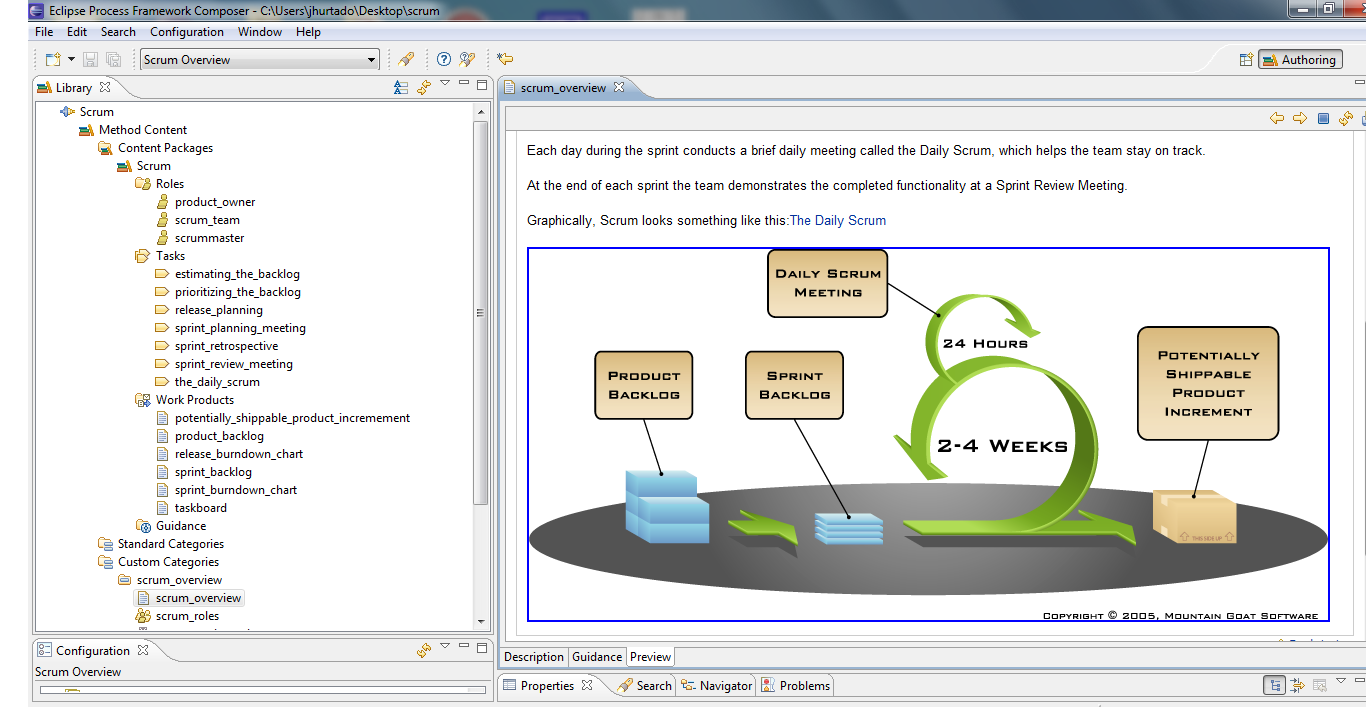
<body><![CDATA[<p style="text-align: left;"><font size="2" face="Verdana"><span lang="en-GB">2.2 The Scrum Development Process</span></font></p>            <p align="justify"><font size="2" face="Verdana"><span lang="en-GB">Scrum is an agile software               development method that is based on the idea that software               processes are incompletely defined. So, Scrum assumes that the               analysis, design, and programming processes are inherently               unpredictable. Therefore, a control mechanism is used to manage               this unpredictability and control the corresponding risk improving               the process flexibility, responsiveness, and reliability <a href="#c12">[12]</a>.               Scrum is not a process or a technique for building software               products, it is rather a rule based framework where various               processes and techniques may be applied. The goal of Scrum is to               optimize the efficacy in applying development practices while               providing a framework where complex products can be developed </span><a href="#c14">[14]</a><a name="c14."></a> </font> </p>             <p style="margin-bottom: 0.35cm;" align="center"><font face="Verdana" size="2"><a name="_Ref283213878"></a>       </font> <font color="#000000" style="font-size: 10pt" size="2" face="Verdana"> <span style="font-weight: normal;" lang="en-US"> <a name="f1"></a><a href="/img/revistas/cleiej/v14n3/3a08f1.png">Figure 1 : Scrum Process Model</a></span></font></p>            <p align="justify"><font size="2" face="Verdana"><span lang="en-GB">The Scrum framework is               formed by a set Scrum teams, time-boxes, artefacts and rules, as               shown in <a href="#f1">Figure 1.</a></span></font></p>       <p align="justify"><font size="2" face="Verdana"><span lang="en-GB"><b>Scrum teams</b> are designed to maximize flexibility               and productivity; Scrum teams are self-organizing and               cross-functional, and they work in iterations. Each Scrum team has               three roles: the <i>Scrum                 Master</i>, who               is responsible for ensuring that the process is understood and               followed; the <i>Product                 Owner</i>, who               is responsible for maximizing the value of the work that the Scrum               Team does; and the <i>Team</i>, which does the work. The <i>Team</i> is formed by developers with all the skills required               to transform the <i>Product                 Owner</i>'s               requirements into a potentially releasable piece of the product by               the end of the <i>Sprint</i>.</span></font></p>       <p align="justify"><font size="2" face="Verdana"><span lang="en-GB"><b>The time-boxed elements</b> are the release of the <i>Planning Meeting</i>, the <i>Sprint Planning Meeting</i>, the <i>Sprint</i>, the <i>Daily Scrum</i>, the <i>Sprint                 Review</i>, and               the <i>Sprint                 Retrospective</i>.               Scrum employs time boxes to create regularity. The focus of Scrum               is a <i>Sprint</i>, which is an iteration of one month or               less that is of consistent length throughout a development effort.               All <i>Sprint</i>s use the same Scrum framework, and all <i>Sprint</i>s deliver an increment of the final               product that is potentially releasable.</span></font></p>       <p align="justify"><font size="2" face="Verdana"><span lang="en-GB"><b>Scrum artefacts.</b> The <i>Product Backlog</i> is a prioritized list of features required in the               product. The <i>Sprint                 Backlog</i> is a               list of tasks to perform in a <i>Sprint</i>,               producing an increment of a potentially shippable product from the <i>Product Backlog</i>. A <i>burndown</i>               is the measure of remaining <i>Backlog</i> over time. A <i>release burndown</i> measures the remaining of the <i>Product Backlog</i> in the context of a release plan. A <i>Sprint burndown</i> measures the remaining of the <i>Sprint Backlog</i> in the context of a <i>Sprint</i>.</span></font></p>       <p align="justify"><font size="2" face="Verdana"><span lang="en-GB"><b>Scrum life cycle</b> is defined by the <i>Sprint</i> and by three groups of phases: <i>pregame</i>, <i>game</i> and <i>postgame</i>.               In the <i>pregame</i>, the <i>planning</i>               and <i>architecture</i> phases are performed. In the <i>planning</i> phase a new release is defined according to the               current <i>Product                 Backlog</i>,               including an estimation of its schedule and cost. In the <i>architecture</i> phase an architectural and a high level design are               generated in order to determine how the backlog items will be               implemented. In the <i>game</i> phase, the <i>Sprint</i>s               are performed. There are multiple, iterative development <i>Sprint</i>s that are used to develop the system. In the <i>postgame</i> the <i>Closure</i> phase is performed. The release is               prepared including final documentation, pre-release staged               testing, and the release itself.</span></font></p>       <p align="justify"><font face="Verdana" size="2"><a href="#f2">Figure 2 </a></font> <font size="2" face="Verdana"><span lang="en-GB">  shows               the integration of Scrum elements into a complete process.</span></font></p>       <p style="page-break-after: avoid;" align="center"> <font face="Verdana" size="2">    ]]></body>
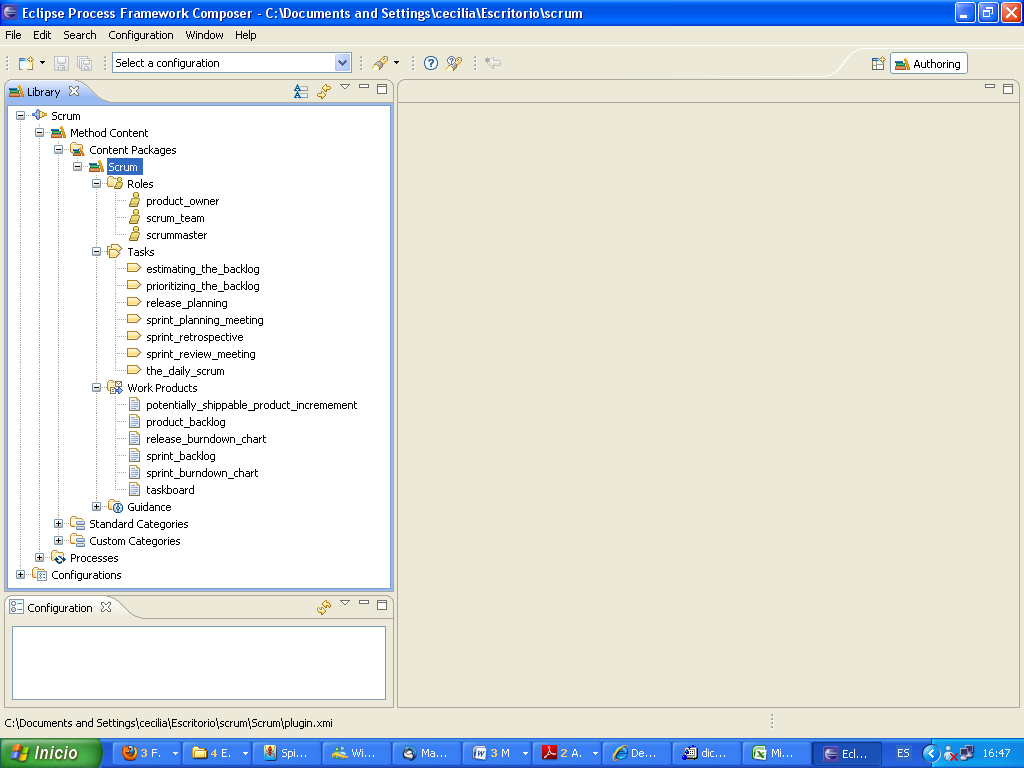
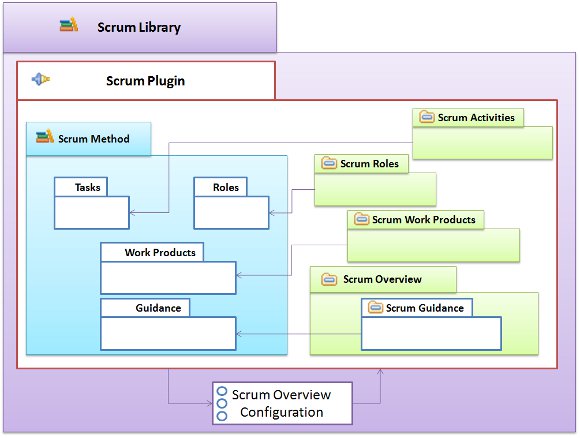
<body><![CDATA[<br>       </font></p>       <p style="margin-bottom: 0.35cm;" align="center"><font face="Verdana" size="2"><a name="_Ref283384467"></a>       </font> <font style="font-size: 10pt;" size="2" face="Verdana" color="#4f81bd"><b><font color="#00000a"><span lang="en-US"><a name="f2"></a><a href="/img/revistas/cleiej/v14n3/3a08f2.png">Figure 2 : The                   Publicly Available Scrum Process Model</a></span></font></b></font></p>       <p align="justify" lang="en-GB"><font face="Verdana" size="2">    <br>       </font></p>       <p style="text-align: left;"><font size="2" face="Verdana"><span lang="en-GB">2.3 Scrum Process Model Specified in SPEM             2.0</span></font></p>       <p align="justify"><font size="2" face="Verdana"><span lang="en-GB">The Scrum process model               presented by the Eclipse Process Framework Community has been               defined as a SPEM 2.0 method plug using Eclipse Process Framework.               This definition includes roles, work products and tasks, and a set               of guidance, and is organized only in method packages and               categories as shown in <a href="#f3">Figure 3</a>. The process structure has not               been defined because Scrum is inherently incomplete as a process               and it is considered as a process framework more than a complete               process itself. As a consequence, the EPF community has defined               Scrum life cycle as a Supporting Material element (a specific               Guidance) where it is graphically and textually described.               Although, this definition does not include all the phases defined               in <a href="#c12">[12]</a>, the Scrum life cycle could be defined and customized in a               Delivery Process by each organization adopting the Scrum plug-in.               The method package elements have been defined and linked according               to a Scrum description as was presented above. However, the               question that still remains is if the method elements will match               this or other adapted life cycle. For example, are the tasks               outputs and inputs consistent among the tasks within a value flow?               These are relevant questions mainly when the model is used for the               first time, or for comparing or combining it with other process               models.</span></font></p>       <p align="justify" lang="en-GB"><font face="Verdana" size="2">    <br>       </font></p>       <p style="page-break-after: avoid;" align="center"> <font face="Verdana" size="2"><a name="f3"><img src="/img/revistas/cleiej/v14n3/3a08f3.jpg" align="bottom" border="0" height="259" width="343"></a></font></p>       <p style="page-break-after: avoid;" align="center"> <font face="Verdana" size="2">    ]]></body>
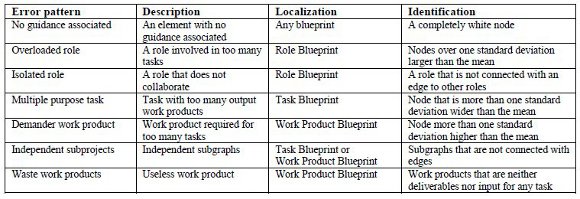
<body><![CDATA[<br>       </font></p>       <p style="margin-bottom: 0.35cm;" align="center"><font face="Verdana" size="2"><a name="_Ref283214176"></a>       </font> <font style="font-size: 10pt;" size="2" face="Verdana" color="#4f81bd"><font color="#00000a"> <span style="font-weight: normal;" lang="en-US">Figure                   3 : Scrum specified as a SPEM 2.0 model</span></font></font></p>       <p align="justify" lang="en-GB"><font face="Verdana" size="2">    <br>             <br>       </font></p>       <p style="text-align: left;"><font size="2" face="Verdana"><span lang="en-GB"><b>3. The </b><i><b>AVISPA</b></i></span><span lang="en-GB"><b> Tool</b></span></font></p>       <p align="justify" lang="en-GB">&nbsp;</p>       <p align="justify"><font size="2" face="Verdana"><span lang="en-GB">Process model blueprints               are graphical representations meant to help process designers to               assess the quality of software process models and suggest               potential anomalies <a href="#c6">[6]</a><a name="c6."></a>. The essence of these blueprints is to               facilitate the comparison between elements using a graph metaphor,               composed of nodes and edges. The size of a node tells us about               their relative importance, and the existence of an edge tells us               about relationships between nodes. We have defined three               blueprints that help identifying opportunities for improving               software process models, each one focusing on a particular process               element: roles, tasks and work products, namely <i>Role Blueprint</i>, <i>Task                 Blueprint</i>,               and <i>Work                 Product Blueprint</i>. </span></font></p>       <p align="justify"><font size="2" face="Verdana"><span lang="en-GB">In the <i>Role Blueprint</i>, nodes are roles whose size represents               the number of tasks in which they are involved, and edges between               two nodes indicate role collaboration (two roles working together               in a task). In the <i>Task                 Blueprint</i>,               nodes are tasks whose height and width represent the number of               input and output work products of the task, respectively. Edges               between two nodes represent precedence: a task T1 precedes another               task T2 if there is an output work product of T1 that is an input               work product of T2. In the <i>Work Product                 Blueprint</i>               nodes represent work products whose dimensions represent the               number of tasks that write and read the work product,               respectively. An edge between two work products WP1 and WP2               implies that there is a task that consumes WP1 and produces WP2.</span></font></p>       <p align="justify"><font size="2" face="Verdana"><span lang="en-GB">The approach has been               complemented with the <i>AVISPA</i> tool (Analysis and VIsualization for               Software Process Assessment) <a href="#c5">[5]</a>, a visualization tool built on               Mondrian, Moose and Glamour. This tool imports process models               defined in SPEM 2.0 from EPF and automatically produces               specialized blueprints where empirically found error patterns are               localized and highlighted. Error patterns are identified               structurally as either disconnected elements or elements whose               relative size is beyond one standard deviation from the mean.               These error patterns have been empirically found to occur               frequently in industrial software process model conceptualization               and specification. They include: having no guidance associated to               certain element, having roles that have too many responsibilities               or that do not collaborate with others, tasks that are not               specific enough in their specification, work products that are               required for too many tasks, independent subprojects, and useless               work products. Table 1 summarizes these error patterns and briefly               describes in which blueprint they can be identified.</span></font></p>       ]]></body>
<body><![CDATA[<p align="justify"><font size="2" face="Verdana"><span lang="en-GB">The <i>AVISPA</i>               tool was used for analyzing the Scrum process model defined by the               EPF process community. It is exported from EPF as an XML file and               imported in <i>AVISPA</i>. The analysis is guided by the kind of               error patterns we are trying to identify and localize, so the               analysis is presented accordingly.</span></font></p>       <p style="margin-bottom: 0.35cm; page-break-after: avoid;" align="center"> <font face="Verdana" size="2"><a name="_Ref283214834"></a> </font> <font color="#00000a" style="font-size: 10pt" size="2" face="Verdana"> <span style="font-weight: normal;" lang="en-US">Table 1 : Error patterns                   identified by </span><span lang="en-US"><i><span style="font-weight: normal;">AVISPA</span></i></span></font></p>   <font face="Verdana" size="2">    <a name="t1"><img src="/img/revistas/cleiej/v14n3/3a08t1.jpg"></a>     </font>     <p align="justify" lang="en-GB"><font face="Verdana" size="2">    <br>       </font></p>       <p style="text-align: left;"><font face="Verdana" size="2"><em><span lang="en-US">No           guidance associated</span></em></font></p>       <p align="justify"><font size="2" face="Verdana"><span lang="en-GB">Roles, tasks or work               products with no associated guidance leave too much freedom for               interpreting the purpose of each element within the process. Scrum               provides guidance, but we have found that they are not always               associated with the corresponding nodes. In the <i>Role Blueprint</i> we found that absolutely no guidance is               provided for any role ( <a href="#f4">Figure 4 (a)</a>). In the <i>Work Product                 Blueprint</i>,               the <i>Taskboard</i> and the <i>PotentiallyShippableProductIncrement</i> have no guidance either (<a href="#f4">Figure            4 (b)</a>). This situation is even worse               in the <i>Task                 Blueprint</i>               because the <i>Sprint                 Retrospective</i>, <i>Sprint Planning                 Meeting</i>, <i>Sprint Review Meeting</i> and the <i>Daily Scrum</i> do not have associated guidance (<a href="#f4">Figure           4 (c)</a>). This situation is               particularly serious for Scrum because of its agility: if neither               methods nor guidance is provided, it is difficult to achieve the               expected results. Moreover, the lack of guidance is especially               dangerous for newcomers, making it less safe to adopt Scrum as it               is specified.</span></font></p>       <p align="justify" lang="en-GB"><font face="Verdana" size="2">    <br>       </font></p>   <font face="Times New Roman, serif">     <table border="0" cellpadding="7" cellspacing="0" width="649">         <colgroup><col width="202"><col width="202"><col width="203"></colgroup>       </font>   <font face="Verdana">           <tbody>           <tr>             <td width="202">                               <p align="center"><a name="f4"><font size="2"><img src="/img/revistas/cleiej/v14n3/3a08f4.png" align="bottom" border="0" height="142" width="127"></font></a></p>             </td>             <td valign="top" width="202">                               <p align="center"><font size="2"><img src="/img/revistas/cleiej/v14n3/3a08f5.png" align="bottom" border="0" height="236" width="108"></font></p>             </td>             <td valign="top" width="203">                               ]]></body>
<body><![CDATA[<p align="center"><font size="2"><img src="/img/revistas/cleiej/v14n3/3a08f6.png" align="bottom" border="0" height="232" width="169"></font></p>             </td>           </tr>       </font>   <font face="Times New Roman, serif">               <tr>             <td width="202">                               <p align="center"><font size="2" face="Verdana">(a)</font></p>             </td>             <td valign="top" width="202">                               <p align="center"><font size="2" face="Verdana">(b)</font></p>             </td>             <td valign="top" width="203">                               <p align="center"><font size="2" face="Verdana">(c)</font></p>             </td>           </tr>           <tr valign="top">             <td width="202">                               <p align="center"><font size="2" face="Verdana">Roles without guidance</font></p>             </td>             <td width="202">                               <p align="center"><font size="2" face="Verdana">Work products without guidance</font></p>             </td>             <td width="203">                               <p style="page-break-after: avoid;" align="center">       <font size="2" face="Verdana">Tasks                     without guidance</font></p>             </td>           </tr>               </tbody>      </table>       </font>     <p style="font-weight: normal;" align="center"><font face="Verdana" size="2">    <br>       </font></p>       <p style="margin-bottom: 0.35cm;" align="center"><font face="Verdana" size="2"><a name="_Ref283307306"></a>       </font> <font style="font-size: 10pt;" size="2" face="Verdana" color="#4f81bd"><font color="#00000a"> <span style="font-weight: normal;" lang="en-US">Figure                   4 : Model elements without guidance</span></font></font></p>       ]]></body>
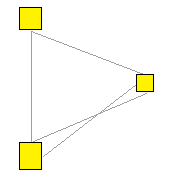
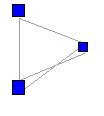
<body><![CDATA[<p align="justify" lang="en-GB"><font face="Verdana" size="2">    <br>       </font></p>       <p style="text-align: left;"><font face="Verdana" size="2"><em>Overloaded role and         Isolate role</em></font></p>       <p align="justify"><font size="2" face="Verdana"><span lang="en-GB">Generating the <i>Role Blueprint</i>, we found that there are neither               overloaded nor isolated roles, as shown in <a href="#f5">Figure 5</a>: all nodes are               similar in size and they are fully connected. Thus, we can               conclude that there are no problems in the specification of Scrum               with respect to these error patterns referring roles.</span></font></p>       <p align="justify" lang="en-GB"><font face="Verdana" size="2">    <br>       </font></p>       <p style="page-break-after: avoid;" align="center"> <font face="Verdana" size="2"><a name="f5"><img src="/img/revistas/cleiej/v14n3/3a08f7.png" align="bottom" border="0" height="180" width="179"></a></font></p>       <p style="page-break-after: avoid;" align="center"> <font face="Verdana" size="2">    <br>       </font></p>       <p style="margin-bottom: 0.35cm;" align="center"><font face="Verdana" size="2"><a name="_Ref283215561"></a>       </font> <font style="font-size: 10pt;" size="2" face="Verdana" color="#4f81bd"><font color="#00000a"> <span style="font-weight: normal;" lang="en-US">Figure                   5                   : Identifying overloaded and isolated roles</span></font></font></p>       ]]></body>
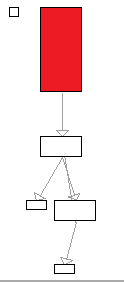
<body><![CDATA[<p align="justify" lang="en-GB"><font face="Verdana" size="2">    <br>       </font></p>       <p style="text-align: left;"><font face="Verdana" size="2"><em><span lang="en-US">Multiple           purpose tasks</span></em></font></p>       <p align="justify"><font size="2" face="Verdana"><span lang="en-GB">A task that is too wide in               the <i>Task                 Blueprint</i>               will be </span><span lang="en-US">colored</span><span lang="en-GB"> in red in order to call the attention               of the process engineer. A task with too many output work products               does not have one clear goal, so it may be better to divide it               into more specific subtasks. In <a href="#f6">Figure 6</a>, we can see that the <i>Daily Scrum</i> task is significantly wider than the others. This is               expected because this task is defined as a black box hiding the               complexity of the software development in Scrum, due to the fact               that each <i>Daily                 Scrum</i> is               implemented according to the technicalities of another process               model. But, as a software development process in itself, the               specification of Scrum is not detailed enough. This is consistent               with the literature and the fact that Scrum should be combined               with other methods.</span></font></p>       <p align="justify" lang="en-GB"><font face="Verdana" size="2">    <br>       </font></p>       <p style="page-break-after: avoid;" align="center"> <font face="Verdana" size="2"><a name="f6"><img src="/img/revistas/cleiej/v14n3/3a08f8.png" align="bottom" border="0" height="254" width="164"></a></font></p>       <p style="margin-bottom: 0.35cm;" align="center"><font face="Verdana" size="2"><a name="_Ref283215644"></a>       </font> <font style="font-size: 10pt;" size="2" face="Verdana" color="#4f81bd"><font color="#00000a"> <span style="font-weight: normal;" lang="en-US">Figure 6:                   Localizing tasks without a clear purpose</span></font></font></p>       <p align="justify" lang="en-GB"><font face="Verdana" size="2">    <br>       </font></p>       ]]></body>
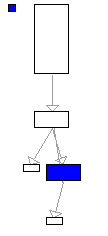
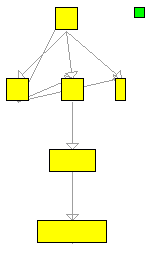
<body><![CDATA[<p style="text-align: left;"><font face="Verdana" size="2"><em><span lang="en-US">Independent           subprojects</span></em></font></p>       <p align="justify"><font size="2" face="Verdana"><span lang="en-GB">Having independent               subprojects reveals a misspecification in the process model               because all tasks and work products should be useful for the               project&acirc;&euro;&trade;s goals, and as such they should be connected in both, the <i>Task Blueprint</i> and the <i>Work Product Blueprint</i>. This error pattern may be seen in either blueprint.               In <a href="#f7">Figure 7 (a)</a>               we show how independent subgraphs have different colors in the <i>Work Product Blueprint</i>, and in <a href="#f7">Figure 7(b</a> the <i>Task                 Blueprint</i>               also shows the existence of independent subgraphs. The work               product in yellow, <i>Potentially Shippable                 Product Increment</i>,               belongs to an independent graph. This implies that this work               product is neither defined as an input nor as an output of any               task in Scrum. A similar situation occurs in the green task <i>Sprint Retrospective</i> that is disconnected in the <i>Task Blueprint</i>.</span></font></p>       <p align="justify" lang="en-GB"><font face="Verdana" size="2">    <br>       </font></p>   <font face="Times New Roman, serif">     <table border="0" cellpadding="7" cellspacing="0" width="649">         <colgroup><col width="311"><col width="311"></colgroup>       </font>   <font face="Verdana">           <tbody>           <tr valign="top">             <td width="311">                               <p align="center"><a name="f7"><font size="2"><img src="/img/revistas/cleiej/v14n3/3a08f9.png" align="bottom" border="0" height="246" width="112"></font></a></p>             </td>             <td width="311">                               <p align="center"><font size="2"><img src="/img/revistas/cleiej/v14n3/3a08f10.png" align="bottom" border="0" height="253" width="156"></font></p>             </td>           </tr>       </font>   <font face="Times New Roman, serif">               <tr valign="top">             <td width="311">                               <p align="center"><font size="2" face="Verdana">(a)</font></p>             </td>             <td width="311">                               <p align="center"><font size="2" face="Verdana">(b)</font></p>             </td>           </tr>           <tr valign="top">             <td width="311">                               <p align="center"><font size="2" face="Verdana"><span lang="en-GB">Independent                       subprojects in the Work Product Blueprint</span></font></p>             </td>             <td width="311">                               <p style="page-break-after: avoid;" align="center">       <font size="2" face="Verdana"><span lang="en-GB">Independent subprojects in the Task Blueprint</span></font></p>             </td>           </tr>   <font face="Verdana">               <tr valign="top">             <td width="311">                               ]]></body>
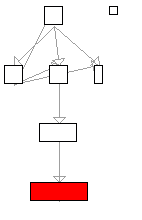
<body><![CDATA[<p align="center" lang="en-GB"><font size="2">    <br>               </font>               </p>             </td>             <td width="311">                               <p style="page-break-after: avoid;" align="center" lang="en-GB">               <font size="2">                   <br>                 </font>               </p>             </td>           </tr>               </tbody>      </table>       </font>       </font>     <p style="margin-bottom: 0.35cm;" align="center"><font face="Verdana" size="2"><a name="_Ref283215941"></a>       </font> <font style="font-size: 10pt;" size="2" face="Verdana" color="#4f81bd"><font color="#00000a"> <span style="font-weight: normal;" lang="en-US">Figure&nbsp; 7:                   Localizing independent subprojects</span></font></font></p>       <p align="justify" lang="en-GB"><font face="Verdana" size="2">    <br>       </font></p>       <p align="justify"><font face="Verdana" size="2"><em><span lang="en-US">Demanded work           products</span></em></font></p>       <p align="justify"><font size="2" face="Verdana"><span lang="en-GB">A work product required for               the execution of too many tasks could become a bottleneck, so a               work product that is too demanded reveals a problem in the process               conceptualization. A node in the <i>Work Product Blueprint</i> that is too high identifies this kind of problem.               This is the case of the <i>Product                 backlog</i> that               can be clearly identified in red in <a href="#f8">Figure 8</a>.</span></font></p>       <p align="justify" lang="en-GB"><font face="Verdana" size="2">    ]]></body>
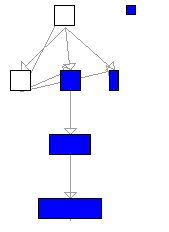
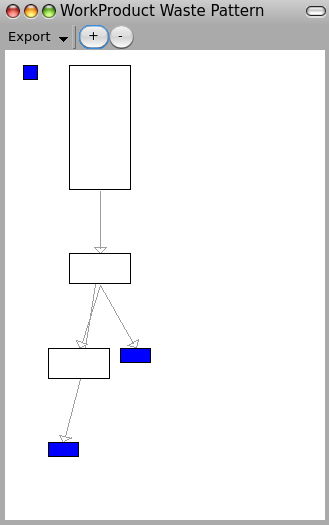
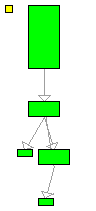
<body><![CDATA[<br>       </font></p>       <p style="page-break-after: avoid;" align="center"> <font face="Verdana" size="2"><a name="f8"><img src="/img/revistas/cleiej/v14n3/3a08f11.png" align="bottom" border="0" height="251" width="112"></a></font></p>       <p style="page-break-after: avoid;" align="center"> <font face="Verdana" size="2">    <br>       </font></p>       <p style="margin-bottom: 0.35cm;" align="center"><font face="Verdana" size="2"><a name="_Ref283216019"></a>       </font> <font style="font-size: 10pt;" size="2" face="Verdana" color="#4f81bd"><font color="#00000a"> <span style="font-weight: normal;" lang="en-US">Figure 8:                   Localizing too demanded work products</span></font></font></p>       <p align="justify" lang="en-GB"><font face="Verdana" size="2">    <br>       </font></p>       <p align="justify"><font face="Verdana" size="2"><em><span lang="en-US">Waste work           product</span></em></font></p>       <p align="justify"><font size="2" face="Verdana"><span lang="en-GB">Deliverables are those               artefacts that need to be delivered to the customer as part of the               final product. For example, a user requirements document and the               source code are typical deliverable work products. In SPEM 2.0,               some work products can be defined as deliverables so they could be               easily identified. Therefore, work products may be either               deliverable work products or intermediate work products that are               needed mainly for coordinating successive tasks. However, if there               are work products that are neither deliverables nor input for any               other task within the process, they are waste. All leaves in the <i>Work Product Blueprint</i>, i.e., nodes with no successor, should               represent deliverable work products. <i>AVISPA</i>               highlights in blue all those leaves that are not deliverables. The               process engineer then needs to analyze all highlighted nodes so               that he/she could determine if they are actually required as input               of a task, and thus they are not leaves, if they should have been               defined as deliverables and thus they should not have been               highlighted, or if they are actually waste in the process. <a href="#f9">Figure 9</a> shows three potential waste work               products in the Scrum process model: <i>Potentially Shippable Product Increment</i>, <i>Release                 Burndown Chart</i>,               and <i>Sprint                 Burndown Chart</i>.               Analyzing them we find that they are all underspecifications and               the Scurm process model does not include waste work products, as               is expected from an agile method.</span></font></p>       <p align="justify" lang="en-GB"><font face="Verdana" size="2">    ]]></body>
<body><![CDATA[<br>       </font></p>       <p style="page-break-after: avoid;" align="center"> <font face="Verdana" size="2"><a name="f9"><img style="border: 0px solid ; width: 111px; height: 257px;" alt="" src="/img/revistas/cleiej/v14n3/3a08f12.png"></a></font></p>       <p style="margin-bottom: 0.35cm;" align="center"><font face="Verdana" size="2"><a name="_Ref283220642"></a>       </font> <font style="font-size: 10pt;" size="2" face="Verdana" color="#4f81bd"><font color="#00000a"> <span style="font-weight: normal;" lang="en-US">Figure                   9: Potential waste work products</span></font></font></p>       <p align="left" lang="en-GB"><font size="2" face="Verdana"><span lang="en-GB"><b>Analysis and Discussion</b></span></font></p>       <p align="justify"><font size="2" face="Verdana"><span lang="en-GB">In general no conceptual               errors were identified in the Scrum process model. However, a               series of incompleteness was found. An improved version can be               completed as follows:</span></font></p>   <ol type="i">     <font face="Times New Roman, serif">          <li>                       <p align="justify"><font size="2" face="Verdana"><span lang="en-GB">Guidance available in the Scrum                   definition should be associated to each role. For instance <i>Product Backlog</i> Example, <i>Story Points</i> Key Concept and <i>Priorization of the Backlog</i> guideline should be associated to                   the <i>Product                     Owner</i>                   Role, and the <i>Taskboard</i> Work Product should be completed                   with a <i>Taskboard</i> example. </span></font>         </p>         </li>             <li>                       <p align="justify"><font size="2" face="Verdana"><span lang="en-GB">Some tasks need to be completed                   associating them with their required and produced work                   products. For instance, because the <i>Sprint Burn Down</i> and the <i>Taskboard</i> Work Products are used and modified                   in the <i>Spring                     Retrospective</i>                   task, they need to be associated as input and output,                   respectively, and the <i>Potentially                     Shippable Product Increment</i> should be defined as an output of the <i>Sprint Review Meeting</i> task.</span></font></p>         </li>             <li>                       ]]></body>
<body><![CDATA[<p align="justify"><font size="2" face="Verdana"><span lang="en-GB">The <i>Potentially Shipable Product Increment </i>should be specified as an input of                   the <i>Integration</i> task; the <i>Release Burndown Chart</i> and the <i>Sprint Burndown Chart</i> are clear inputs for the <i>Development</i> task and they should be specified as so.</span></font></p>         </li>       </font>     </ol>       <p align="justify"><font size="2" face="Verdana"><span lang="en-GB">Both, the <i>Daily Scrum</i> task that was found to be defined with too little               detail, and the <i>Product                 backlog</i> that               was found to be too demanded, are consistent with the agile               philosophy behind Scrum, and should not be considered as errors.               They are rather warnings that caution should be taken with them.</span></font></p>       <p align="justify" lang="en-GB"><font size="2" face="Verdana"><span lang="en-GB"><b>5. Related Work</b></span></font></p>       <p align="justify"><font size="2" face="Verdana"><span lang="en-GB">A close work by Osterweil               and Wise <a href="#c10">[10]</a><a name="c10."></a> presents an analysis of Scrum using Little-JIL. This               analysis determines a weak point when the product is integrated in               each development work. So, because continuous integration is not               part of Scrum, it can fall in long periods of development without               integration, generating a bottleneck. Their approach consists of               analyzing the whole process directly and this requires knowledge               and experience for being effective, whereas <i>AVISPA</i>               focuses in analyzing process models using a strategy based on               metrics, a visual metaphor, and error patterns, and thus               encapsulating the necessary knowledge. Therefore, our approach               needs less experienced process engineers. </span></font></p>       <p align="justify"><font face="Verdana"><font size="2"><span lang="en-GB">The Agile Software Solution               Framework (ASSF) <a href="#c11">[11]</a> <a name="c11."></a>has been used to evaluate Scrum along six               aspects of an agile software development methodology: agility,               process, people, product, tools and abstraction</span> (ASSF is also employed to              evaluate <i>Knowledge</i>             and <i>IT governance</i>.             We restrict the scope of our comparison to <i>Method               core</i>.) </font> <font size="2"><span lang="en-GB">. Their result shows that Scrum has a higher level of               agility for its practices compared to other agile methods. This is               consistent with our findings about not having any useless work               product included. But the study realized by ASSF is orthogonal to               ours. We focus on a publicly available and widely used process               model specification of Scrum, and we analyze how good it is, not               necessarily on the benefits of applying Scrum in particular, or               applying other agile methods in general either.</span></font></font></p>       <p align="left" lang="en-GB"><font size="2" face="Verdana"><span lang="en-GB"><b>6. Conclusion</b></span></font></p>       <p align="justify"><font size="2" face="Verdana"><span lang="en-GB">A software process model               definition can be left incomplete for different reasons, as is the               case of some features of Scrum that need to be left as agile as               possible. However, if a relevant principle of the process is not               included, it could be applied in an inappropriate way. In this               paper we have analyzed the Scrum process model with the <i>AVISPA</i> tool and we have found that the specification that               is widely used by the community has been incompletely defined in               some aspects. This may explain, at least in part, the gap between               the expected and the reported productivity in projects that apply               Scrum. Obtaining similar results than previous analyses of Scrum               that have followed different methods gives us confidence on the               effectiveness of our tool.</span></font></p>       <p align="justify"><font size="2" face="Verdana"><span lang="en-GB">We are currently applying <i>AVISPA</i> also for analyzing industrial software process               models that have been defined by Chilean companies. In this               context the number and variety of errors identified is much larger               since standard processes, as is the case o Scrum, have generally               been improved over time with the collaboration of a user               community. In the case of proprietary processes, evaluation can               only come from trial and error if there is no analysis tool. This               makes <i>AVISPA</i> much more useful. As part of this work               we have been able to prove its usefulness for process engineers as               a means for aiding their work mainly when the process evolves. We               have also been able to validate and refine the error patterns that               have been originally identified. We have recently added new error               patterns such as having tasks without any role assigned to it,               among others.</span></font></p>       <p style="margin-left: 0.75cm;" align="justify"><font size="2" face="Verdana"><span lang="en-GB">    ]]></body>
<body><![CDATA[<br>             </span><span lang="en-GB"><b>References</b></span></font></p>       <!-- ref --><p style="margin-bottom: 0.21cm;" lang="en-US"><font face="Verdana"><a name="c1"> <font size="2"></font></a><font size="2">[<a href="#c1.">1</a>] <span lang="es-ES">Silvia Teresita Acu&Atilde;&plusmn;a and Xavier Ferr&eacute;. </span>Software         process modeling. In World Multiconference on Systemics, Cybernetics and         Informatics, ISAS-SCIs 2001, July 22-25, 2001, Orlando, Florida, USA,         Proceedings, Volume I: Information Systems Development, pages 237-242,         2001.    </font></font></p>       <!-- ref --><p style="margin-bottom: 0.21cm;" lang="en-US"><font face="Verdana"><a name="c2"> <font size="2"></font></a><font size="2"><a href="#c2.">[2] </a>Kent         Beck and Cynthia Andres. Extreme Programming Explained: Embrace Change.         Addison-Wesley Professional, 2nd edition, November 2004.    </font></font></p>       <!-- ref --><p style="margin-bottom: 0.21cm;" lang="en-US"><font face="Verdana"><a name="c3"> <font size="2"></font></a><font size="2">[<a href="#c3.">3</a>] Peter         H. Feiler and Watts S. Humphrey. Software Process Development and         Enactment: Concepts and Definitions. In ICSP, International Conference         of Software Process, pages 28{40, Berlin, Germany, 1993. IEEE Computer         Society.    </font></font></p>       <!-- ref --><p style="margin-bottom: 0.21cm;" lang="en-US"><font face="Verdana"><a name="c4"> <font size="2"></font></a><font size="2">[<a href="#c4.">4</a>] Watts         S. Humphrey. Managing the software process. Addison-Wesley Longman         Publishing Co., Inc., Boston, MA, USA, 1989.    </font></font></p>       <!-- ref --><p style="margin-bottom: 0.21cm;" lang="en-US"><font face="Verdana"><a name="c5"> <font size="2"></font></a><font size="2">[<a href="#c5.">5</a>] <span lang="es-ES">Julio A. Hurtado, Mar&iacute;a Cecilia Bastarrica, and Alexandre           Bergel. </span>AVISPA: Localizing Improvement Opportunities in         Software Process Models. Technical Report TR/DCC-2010-6, Computer         Science Department, Universidad de Chile, July 2010.    </font></font></p>       <!-- ref --><p style="margin-bottom: 0.21cm;" lang="en-US"><font face="Verdana"><a name="c6"> <font size="2"></font></a><font size="2"><a href="#c6.">[6]</a> <span lang="es-ES">Julio A. Hurtado, Alejandro Lagos, Alexandre Bergel, and           Mar&iacute;a Cecilia Bastarrica. </span>Software Process Model Blueprints. In M&Atilde;&frac14;nch et al. J&Atilde;&frac14;rgen M&Atilde;&frac14;nch, Ye Yang, and Wilhelm Sch&Atilde;&curren;fer, editors. New Modeling Concepts for Today's Software Processes, International Conference on Software Process, ICSP 2010, Paderborn, Germany, July 8-9, 2010. Proceedings, volume 6195 of Lecture Notes in Computer Science. Springer, 2010., pages 285-296.    </font></font></p>       <!-- ref --><p style="margin-bottom: 0.21cm;" lang="en-US"><font face="Verdana"><a name="c7"> <font size="2"></font></a><font size="2">[<a href="#c7.">7</a>] Ivar         Jacobson. The Road to the Unified Software Development Process.         Cambridge University Press, July 2000.    </font></font></p>       <!-- ref --><p style="margin-bottom: 0.21cm;" lang="en-US"><font face="Verdana"><a name="c8"> <font size="2"></font></a><font size="2">[8] J&Atilde;&frac14;rgen         M&Atilde;&frac14;nch, Ye Yang, and Wilhelm Sch&Atilde;&curren;fer, editors. New Modeling Concepts for         Today's Software Processes, International Conference on Software         Process, ICSP 2010, Paderborn, Germany, July 8-9, 2010. Proceedings,         volume 6195 of Lecture Notes in Computer Science. Springer, 2010.    </font></font></p>       <!-- ref --><p style="margin-bottom: 0.21cm;" lang="en-US"><font face="Verdana"><a name="c9"> <font size="2"></font></a><font size="2">[<a href="#c9.">9</a>] OMG.         Software Process Engineering Metamodel SPEM 2.0 OMG Specification.         Technical Report ptc/07-11-01, OMG, 2008.    </font></font></p>       <!-- ref --><p style="margin-bottom: 0.21cm;" lang="en-US"><font face="Verdana"><a name="c10"> <font size="2"></font></a><font size="2">[<a href="#c10.">10</a>] Leon J. Osterweil and Alexander E. Wise.         Using Process Definitions to Support Reasoning about Satisfaction of         Process Requirements. In M&Atilde;&frac14;nch et al. J&Atilde;&frac14;rgen M&Atilde;&frac14;nch, Ye Yang, and Wilhelm         Sch&Atilde;&curren;fer, editors. New Modeling Concepts for Today's Software Processes,         International Conference on Software Process, ICSP 2010, Paderborn,         Germany, July 8-9, 2010. Proceedings, volume 6195 of Lecture Notes in         Computer Science. Springer, 2010., pages 2-13.    </font></font></p>       <!-- ref --><p style="margin-bottom: 0.21cm;" lang="en-US"><font face="Verdana"><a name="c11"> <font size="2"></font></a><font size="2">[<a href="#c11.">11]</a> A. Qumer and B. Henderson-Sellers. A         framework to support the evaluation, adoption and improvement of agile         methods in practice. Journal of Systems and Software, 81(11):1899-1919,         2008.    </font></font></p>       <!-- ref --><p style="margin-bottom: 0.21cm;" lang="en-US"><font face="Verdana"><a name="c12"> <font size="2"></font></a><font size="2">[<a href="#c12.">12</a>] Ken Schwaber. SCRUM Development Process.         In Proceedings of the 10th Annual ACM Conference on Object Oriented         Programming Systems, Languages, and Applications (OOPSLA), pages         117-134, 1995.    </font></font></p>       <!-- ref --><p style="margin-bottom: 0.21cm;" lang="en-US"><font face="Verdana"><a name="c13"> <font size="2"></font></a><font size="2">[<a href="#c13.">13</a>] Ken Schwaber. Agile Project Management         with Scrum. Microsoft Press, 1st edition, February 2004.    </font></font></p>       <!-- ref --><p style="margin-bottom: 0.21cm;" lang="en-US"><font face="Verdana"><a name="c14"> <font size="2"></font></a><font size="2">[<a href="#c14.">14]</a> Ken Schwaber and Jeff Sutherland. Scrum,         February 2010. <a href="http://www.scrum.org/storage/scrumguides/Scrum">http://www.scrum.org/storage/scrumguides/Scrum</a>.    </font></font></p>       <!-- ref --><p style="margin-bottom: 0.21cm;" lang="en-US"><font face="Verdana"><a name="c15"> <font size="2"></font></a><font size="2">[<a href="#c15.">15</a>] Jeff Sutherland, Scott Downey, and Bjorn         Granvik. Shock Therapy: A Bootstrap for Hyper-Productive Scrum. In Yael         Dubinsky, Tore Dyb&Atilde;&yen;, Steve Adolph, and Ahmed Samy Sidky, editors, AGILE,         pages 69-73. IEEE Computer Society, 2009.    </font></font></p>       <!-- ref --><p style="margin-bottom: 0.21cm;" lang="en-US"><font face="Verdana"><a name="c16"> <font size="2"></font></a><font size="2">[16] Gonzalo Vald&eacute;s, Hern&aacute;n Astudillo, Marcello         Visconti, and Claudia L&oacute;pez. The Tutelk&aacute;n SPI Framework for Small         Settings: A Methodology Transfer Vehicle. In Proceedings of the 17th         European Conference on SPI, EuroSPI 2010, Systems, Software and Services         Process Improvement, volume 99, pages 142-152, Grenoble, France,         September 2010. Communications in Computer and Information Science.    </font></font></p>        ]]></body><back>
<ref-list>
<ref id="B1">
<label>1</label><nlm-citation citation-type="">
<person-group person-group-type="author">
<name>
<surname><![CDATA[AcuÃ±a]]></surname>
<given-names><![CDATA[Silvia Teresita]]></given-names>
</name>
<name>
<surname><![CDATA[Ferré]]></surname>
<given-names><![CDATA[Xavier]]></given-names>
</name>
</person-group>
<article-title xml:lang="en"><![CDATA[Software process modeling]]></article-title>
<source><![CDATA[In World Multiconference on Systemics, Cybernetics and Informatics: ISAS-SCIs 2001]]></source>
<year>July</year>
<month> 2</month>
<day>2-</day>
<volume>I</volume>
<page-range>237-242</page-range><publisher-loc><![CDATA[Orlando^eFlorida Florida]]></publisher-loc>
</nlm-citation>
</ref>
<ref id="B2">
<label>2</label><nlm-citation citation-type="book">
<person-group person-group-type="author">
<name>
<surname><![CDATA[Beck]]></surname>
<given-names><![CDATA[Kent]]></given-names>
</name>
<name>
<surname><![CDATA[Andres]]></surname>
<given-names><![CDATA[Cynthia]]></given-names>
</name>
</person-group>
<source><![CDATA[Extreme Programming Explained: Embrace Change]]></source>
<year>Nove</year>
<month>mb</month>
<day>er</day>
<edition>2</edition>
<publisher-name><![CDATA[Addison-Wesley Professional]]></publisher-name>
</nlm-citation>
</ref>
<ref id="B3">
<label>3</label><nlm-citation citation-type="">
<person-group person-group-type="author">
<name>
<surname><![CDATA[Feiler]]></surname>
<given-names><![CDATA[Peter H]]></given-names>
</name>
<name>
<surname><![CDATA[Humphrey]]></surname>
<given-names><![CDATA[Watts S]]></given-names>
</name>
</person-group>
<article-title xml:lang="en"><![CDATA[Software Process Development and Enactment: Concepts and Definitions]]></article-title>
<collab>IEEE Computer Society</collab>
<source><![CDATA[In ICSP, International Conference of Software Process]]></source>
<year>1993</year>
<page-range>28{40</page-range><publisher-loc><![CDATA[^eBerlin Berlin]]></publisher-loc>
</nlm-citation>
</ref>
<ref id="B4">
<label>4</label><nlm-citation citation-type="book">
<person-group person-group-type="author">
<name>
<surname><![CDATA[Humphrey]]></surname>
<given-names><![CDATA[Watts S]]></given-names>
</name>
</person-group>
<source><![CDATA[Managing the software process]]></source>
<year></year>
<publisher-loc><![CDATA[Boston^eMA MA]]></publisher-loc>
<publisher-name><![CDATA[Addison-Wesley Longman Publishing Co]]></publisher-name>
</nlm-citation>
</ref>
<ref id="B5">
<label>5</label><nlm-citation citation-type="">
<person-group person-group-type="author">
<name>
<surname><![CDATA[Hurtado]]></surname>
<given-names><![CDATA[Julio A]]></given-names>
</name>
<name>
<surname><![CDATA[Bastarrica]]></surname>
<given-names><![CDATA[María Cecilia]]></given-names>
</name>
<name>
<surname><![CDATA[Bergel]]></surname>
<given-names><![CDATA[Alexandre]]></given-names>
</name>
</person-group>
<article-title xml:lang="en"><![CDATA[AVISPA: Localizing Improvement Opportunities in Software Process Models]]></article-title>
<collab>Universidad de Chile</collab>
<source><![CDATA[Technical Report TR/DCC]]></source>
<year>July</year>
<month> 2</month>
<day>01</day>
</nlm-citation>
</ref>
<ref id="B6">
<label>6</label><nlm-citation citation-type="book">
<person-group person-group-type="author">
<name>
<surname><![CDATA[Hurtado]]></surname>
<given-names><![CDATA[Julio A]]></given-names>
</name>
<name>
<surname><![CDATA[Lagos]]></surname>
<given-names><![CDATA[Alejandro]]></given-names>
</name>
<name>
<surname><![CDATA[Bergel]]></surname>
<given-names><![CDATA[Alexandre]]></given-names>
</name>
<name>
<surname><![CDATA[Bastarrica]]></surname>
<given-names><![CDATA[María Cecilia]]></given-names>
</name>
</person-group>
<article-title xml:lang="en"><![CDATA[Software Process Model Blueprints]]></article-title>
<person-group person-group-type="editor">
<name>
<surname><![CDATA[MÃ¼nch]]></surname>
<given-names><![CDATA[In]]></given-names>
</name>
<name>
<surname><![CDATA[MÃ¼nch]]></surname>
<given-names><![CDATA[JÃ¼rgen]]></given-names>
</name>
<name>
<surname><![CDATA[Yang]]></surname>
<given-names><![CDATA[Ye]]></given-names>
</name>
<name>
<surname><![CDATA[SchÃ¤fer]]></surname>
<given-names><![CDATA[Wilhelm]]></given-names>
</name>
</person-group>
<source><![CDATA[New Modeling Concepts for Today's Software Processes: International Conference on Software Process, ICSP 2010]]></source>
<year>July</year>
<month> 8</month>
<day>-9</day>
<volume>6195</volume>
<page-range>285-296</page-range><publisher-loc><![CDATA[Paderborn ]]></publisher-loc>
<publisher-name><![CDATA[Springer]]></publisher-name>
</nlm-citation>
</ref>
<ref id="B7">
<label>7</label><nlm-citation citation-type="book">
<person-group person-group-type="author">
<name>
<surname><![CDATA[Jacobson]]></surname>
<given-names><![CDATA[Ivar]]></given-names>
</name>
</person-group>
<source><![CDATA[The Road to the Unified Software Development Process]]></source>
<year>July</year>
<month> 2</month>
<day>00</day>
<publisher-name><![CDATA[Cambridge University Press]]></publisher-name>
</nlm-citation>
</ref>
<ref id="B8">
<label>8</label><nlm-citation citation-type="book">
<person-group person-group-type="author">
<name>
<surname><![CDATA[MÃ¼nch]]></surname>
<given-names><![CDATA[JÃ¼rgen]]></given-names>
</name>
<name>
<surname><![CDATA[Yang]]></surname>
<given-names><![CDATA[Ye]]></given-names>
</name>
<name>
<surname><![CDATA[SchÃ¤fer]]></surname>
<given-names><![CDATA[Wilhelm]]></given-names>
</name>
</person-group>
<article-title xml:lang="en"><![CDATA[New Modeling Concepts for Today's Software Processes]]></article-title>
<source><![CDATA[International Conference on Software Process, ICSP 2010]]></source>
<year>July</year>
<month> 8</month>
<day>-9</day>
<volume>6195</volume>
<publisher-loc><![CDATA[Paderborn ]]></publisher-loc>
<publisher-name><![CDATA[Springer]]></publisher-name>
</nlm-citation>
</ref>
<ref id="B9">
<label>9</label><nlm-citation citation-type="">
<collab>OMG</collab>
<article-title xml:lang="en"><![CDATA[Software Process Engineering Metamodel SPEM 2.0]]></article-title>
<source><![CDATA[Technical Report]]></source>
<year>07-1</year>
<month>1-</month>
<day>01</day>
</nlm-citation>
</ref>
<ref id="B10">
<label>10</label><nlm-citation citation-type="book">
<person-group person-group-type="author">
<name>
<surname><![CDATA[Osterweil]]></surname>
<given-names><![CDATA[Leon J]]></given-names>
</name>
<name>
<surname><![CDATA[Wise]]></surname>
<given-names><![CDATA[Alexander E]]></given-names>
</name>
</person-group>
<article-title xml:lang="en"><![CDATA[Using Process Definitions to Support Reasoning about Satisfaction of Process Requirements]]></article-title>
<person-group person-group-type="editor">
<name>
<surname><![CDATA[MÃ¼nch]]></surname>
<given-names><![CDATA[In]]></given-names>
</name>
<name>
<surname><![CDATA[MÃ¼nch]]></surname>
<given-names><![CDATA[JÃ¼rgen]]></given-names>
</name>
<name>
<surname><![CDATA[Yang]]></surname>
<given-names><![CDATA[Ye]]></given-names>
</name>
<name>
<surname><![CDATA[SchÃ¤fer]]></surname>
<given-names><![CDATA[Wilhelm]]></given-names>
</name>
</person-group>
<source><![CDATA[New Modeling Concepts for Today's Software Processes: International Conference on Software Process]]></source>
<year>July</year>
<month> 8</month>
<day>-9</day>
<volume>6195</volume>
<page-range>2-13</page-range><publisher-loc><![CDATA[Paderborn ]]></publisher-loc>
<publisher-name><![CDATA[Springer]]></publisher-name>
</nlm-citation>
</ref>
<ref id="B11">
<label>11</label><nlm-citation citation-type="journal">
<person-group person-group-type="author">
<name>
<surname><![CDATA[Qumer]]></surname>
<given-names><![CDATA[A]]></given-names>
</name>
<name>
<surname><![CDATA[Henderson-Sellers]]></surname>
<given-names><![CDATA[B]]></given-names>
</name>
</person-group>
<article-title xml:lang="en"><![CDATA[A framework to support the evaluation, adoption and improvement of agile methods in practice]]></article-title>
<source><![CDATA[Journal of Systems and Software]]></source>
<year>2008</year>
<volume>81</volume>
<numero>11</numero>
<issue>11</issue>
<page-range>1899-1919</page-range></nlm-citation>
</ref>
<ref id="B12">
<label>12</label><nlm-citation citation-type="">
<person-group person-group-type="author">
<name>
<surname><![CDATA[Schwaber]]></surname>
<given-names><![CDATA[Ken]]></given-names>
</name>
</person-group>
<article-title xml:lang="en"><![CDATA[SCRUM Development Process]]></article-title>
<source><![CDATA[In Proceedings of the 10th Annual ACM Conference on Object Oriented Programming Systems: Languages, and Applications (OOPSLA)]]></source>
<year>1995</year>
<page-range>117-134</page-range></nlm-citation>
</ref>
<ref id="B13">
<label>13</label><nlm-citation citation-type="book">
<person-group person-group-type="author">
<name>
<surname><![CDATA[Schwaber]]></surname>
<given-names><![CDATA[Ken]]></given-names>
</name>
</person-group>
<source><![CDATA[Agile Project Management with Scrum]]></source>
<year>Febr</year>
<month>ua</month>
<day>ry</day>
<edition>1</edition>
<publisher-name><![CDATA[Microsoft Press]]></publisher-name>
</nlm-citation>
</ref>
<ref id="B14">
<label>14</label><nlm-citation citation-type="book">
<person-group person-group-type="author">
<name>
<surname><![CDATA[Schwaber]]></surname>
<given-names><![CDATA[Ken]]></given-names>
</name>
<name>
<surname><![CDATA[Sutherland]]></surname>
<given-names><![CDATA[Jeff]]></given-names>
</name>
</person-group>
<source><![CDATA[]]></source>
<year>Febr</year>
<month>ua</month>
<day>ry</day>
<publisher-name><![CDATA[Scrum]]></publisher-name>
</nlm-citation>
</ref>
<ref id="B15">
<label>15</label><nlm-citation citation-type="book">
<person-group person-group-type="author">
<name>
<surname><![CDATA[Sutherland]]></surname>
<given-names><![CDATA[Jeff]]></given-names>
</name>
<name>
<surname><![CDATA[Downey]]></surname>
<given-names><![CDATA[Scott]]></given-names>
</name>
<name>
<surname><![CDATA[Granvik]]></surname>
<given-names><![CDATA[Bjorn]]></given-names>
</name>
</person-group>
<article-title xml:lang="en"><![CDATA[Shock Therapy: A Bootstrap for Hyper-Productive Scrum]]></article-title>
<person-group person-group-type="editor">
<name>
<surname><![CDATA[DybÃ¥]]></surname>
<given-names><![CDATA[Tore]]></given-names>
</name>
<name>
<surname><![CDATA[Adolph]]></surname>
<given-names><![CDATA[Steve]]></given-names>
</name>
<name>
<surname><![CDATA[Sidky]]></surname>
<given-names><![CDATA[Ahmed Samy]]></given-names>
</name>
</person-group>
<collab>IEEE Computer Society</collab>
<source><![CDATA[In Yael Dubinsky]]></source>
<year>2009</year>
<page-range>69-73</page-range><publisher-name><![CDATA[AGILE]]></publisher-name>
</nlm-citation>
</ref>
<ref id="B16">
<label>16</label><nlm-citation citation-type="book">
<person-group person-group-type="author">
<name>
<surname><![CDATA[Valdés]]></surname>
<given-names><![CDATA[Gonzalo]]></given-names>
</name>
<name>
<surname><![CDATA[Astudillo]]></surname>
<given-names><![CDATA[Hernán]]></given-names>
</name>
<name>
<surname><![CDATA[Visconti]]></surname>
<given-names><![CDATA[Marcello]]></given-names>
</name>
<name>
<surname><![CDATA[López]]></surname>
<given-names><![CDATA[Claudia]]></given-names>
</name>
</person-group>
<article-title xml:lang="en"><![CDATA[The Tutelkán SPI Framework for Small Settings: A Methodology Transfer Vehicle]]></article-title>
<source><![CDATA[In Proceedings of the 17th European Conference on SPI: EuroSPI 2010, Systems, Software and Services Process Improvement]]></source>
<year>Sept</year>
<month>em</month>
<day>be</day>
<volume>99</volume>
<page-range>142-152</page-range><publisher-loc><![CDATA[Grenoble ]]></publisher-loc>
<publisher-name><![CDATA[Communications in Computer and Information Science]]></publisher-name>
</nlm-citation>
</ref>
</ref-list>
</back>
</article>