<?xml version="1.0" encoding="ISO-8859-1"?><article xmlns:mml="http://www.w3.org/1998/Math/MathML" xmlns:xlink="http://www.w3.org/1999/xlink" xmlns:xsi="http://www.w3.org/2001/XMLSchema-instance">
<front>
<journal-meta>
<journal-id>1688-4221</journal-id>
<journal-title><![CDATA[Ciencias Psicológicas]]></journal-title>
<abbrev-journal-title><![CDATA[Cienc. Psicol.]]></abbrev-journal-title>
<issn>1688-4221</issn>
<publisher>
<publisher-name><![CDATA[Universidad Católica del Uruguay.]]></publisher-name>
</publisher>
</journal-meta>
<article-meta>
<article-id>S1688-42212014000100009</article-id>
<title-group>
<article-title xml:lang="es"><![CDATA[DETALLES SEDUCTORES RELEVANTES E IRRELEVANTES EN UN TEXTO EXPOSITIVO: EFECTOS SOBRE LA COMPRENSIÓN Y EL RECUERDO EN LECTORES CON BAJO CONOCIMIENTO PREVIO]]></article-title>
<article-title xml:lang="en"><![CDATA[RELEVANT AND IRRELEVANT SEDUCTIVE DETAILS IN EXPOSITORY TEXT: EFFECTS ON RECALL AND COMPREHENSION IN READERS WITH LOW PRIOR KNOWLEDGE]]></article-title>
</title-group>
<contrib-group>
<contrib contrib-type="author">
<name>
<surname><![CDATA[Saux]]></surname>
<given-names><![CDATA[Gastón]]></given-names>
</name>
<xref ref-type="aff" rid="A01"/>
</contrib>
<contrib contrib-type="author">
<name>
<surname><![CDATA[Irrazabal]]></surname>
<given-names><![CDATA[Natalia]]></given-names>
</name>
<xref ref-type="aff" rid="A02"/>
</contrib>
<contrib contrib-type="author">
<name>
<surname><![CDATA[Burin]]></surname>
<given-names><![CDATA[Debora I.]]></given-names>
</name>
<xref ref-type="aff" rid="A03"/>
</contrib>
</contrib-group>
<aff id="A01">
<institution><![CDATA[,Universidad Católica Argentina  ]]></institution>
<addr-line><![CDATA[ ]]></addr-line>
</aff>
<aff id="A02">
<institution><![CDATA[,CONICET  ]]></institution>
<addr-line><![CDATA[ ]]></addr-line>
<country>Argentina</country>
</aff>
<aff id="A03">
<institution><![CDATA[,Universidad de Buenos Aires  ]]></institution>
<addr-line><![CDATA[ ]]></addr-line>
<country>Argentina</country>
</aff>
<pub-date pub-type="pub">
<day>00</day>
<month>05</month>
<year>2014</year>
</pub-date>
<pub-date pub-type="epub">
<day>00</day>
<month>05</month>
<year>2014</year>
</pub-date>
<volume>8</volume>
<numero>1</numero>
<fpage>89</fpage>
<lpage>100</lpage>
<copyright-statement/>
<copyright-year/>
<self-uri xlink:href="http://www.scielo.edu.uy/scielo.php?script=sci_arttext&amp;pid=S1688-42212014000100009&amp;lng=en&amp;nrm=iso"></self-uri><self-uri xlink:href="http://www.scielo.edu.uy/scielo.php?script=sci_abstract&amp;pid=S1688-42212014000100009&amp;lng=en&amp;nrm=iso"></self-uri><self-uri xlink:href="http://www.scielo.edu.uy/scielo.php?script=sci_pdf&amp;pid=S1688-42212014000100009&amp;lng=en&amp;nrm=iso"></self-uri><abstract abstract-type="short" xml:lang="es"><p><![CDATA[Se estudió el impacto de incluir detalles seductores sobre el recuerdo y la comprensión de un texto expositivo de ciencias, de contenidos poco familiares para los participantes. 94 estudiantes leyeron un texto expositivo sin detalles seductores, con un detalle seductor irrelevante (sin relación causal explícita con el resto del texto), o con un detalle seductor relevante (relacionado causalmente de modo explícito con el texto). La relevancia causal y el nivel de interés asociados al detalle fueron analizados en un pre-testeo inicial de los materiales. Los resultados indicaron que la condición que recibió el detalle en versión irrelevante tuvo más dificultades que el resto para recordar los contenidos y para contestar afirmaciones derivadas del texto. La condición que recibió el detalle seductor en versión relevante, por su parte, presentó el puntaje de recuerdo más alto. Estos resultados son interpretados atendiendo a su aplicación en el uso de textos en ámbitos educacionales]]></p></abstract>
<abstract abstract-type="short" xml:lang="en"><p><![CDATA[The effect of including seductive details on the recall and comprehension of an expository structured, scientific text was examined. 94 students with low prior knowledge on the subject read a text in one of following three conditions: without seductive details, with an irrelevant seductive detail (no causal relation with the rest of the message), or with a relevant seductive detail (with an explicit causal relation with the rest of the message). Causal relevance and the level of interest associated to the detail were analyzed prior to experimental activity. Results indicated that the Irrelevant Seductive Detail condition showed the poorest recall and the highest error rate in a sentence verification task. Relevant Seductive Detail condition, on the other hand, showed the best recall for text contents. These results are interpreted considering their potential applications in educational fields]]></p></abstract>
<kwd-group>
<kwd lng="es"><![CDATA[comprensión de texto expositivo]]></kwd>
<kwd lng="es"><![CDATA[detalle seductor]]></kwd>
<kwd lng="es"><![CDATA[relevancia causal]]></kwd>
<kwd lng="en"><![CDATA[expository text comprehension]]></kwd>
<kwd lng="en"><![CDATA[seductive detail]]></kwd>
<kwd lng="en"><![CDATA[causal relevance]]></kwd>
</kwd-group>
</article-meta>
</front><body><![CDATA[ <div class="Section1">      <p class="western" style="margin: 5pt 51.15pt 0.0001pt 1cm; text-align: center; line-height: 120%;" align="center"><b><span style="font-family: &quot;Arial&quot;,&quot;sans-serif&quot;;">DETALLES SEDUCTORES RELEVANTES E IRRELEVANTES EN UN TEXTO EXPOSITIVO: EFECTOS SOBRE LA COMPRENSI&Oacute;N Y EL RECUERDO EN LECTORES CON BAJO CONOCIMIENTO PREVIO</span></b></p>       <p class="western" style="margin: 5pt 51.15pt 0.0001pt 1cm; text-align: center; line-height: 120%;" align="center"><o:p>&nbsp;</o:p></p>       <p class="western" style="margin: 5pt 51.15pt 0.0001pt 1cm; text-align: center; line-height: 120%;" align="center"><b><span style="font-size: 10pt; line-height: 120%; font-family: &quot;Arial&quot;,&quot;sans-serif&quot;;" lang="EN-US">RELEVANT AND IRRELEVANT SEDUCTIVE DETAILS IN EXPOSITORY TEXT: EFFECTS ON RECALL AND COMPREHENSION IN READERS WITH LOW PRIOR KNOWLEDGE</span></b><span style="" lang="EN-US"><o:p></o:p></span></p>       <p class="western" style="margin: 5pt 51.15pt 0.0001pt 1cm; text-align: justify; line-height: 120%;"><span style="" lang="EN-US"><o:p>&nbsp;</o:p></span></p>       <p class="western" style="margin: 5pt 51.15pt 0.0001pt 1cm; text-align: center; line-height: 120%;" align="center"><b><i><span style="font-size: 10pt; line-height: 120%; font-family: &quot;Arial&quot;,&quot;sans-serif&quot;;">Gast&oacute;n Saux</span></i></b></p>       <p class="western" style="margin: 5pt 51.15pt 0.0001pt 1cm; text-align: center; line-height: 120%;" align="center"><i><span style="font-size: 9pt; line-height: 120%; font-family: &quot;Arial&quot;,&quot;sans-serif&quot;;">Universidad Cat&oacute;lica Argentina</span></i></p>       <p class="western" style="margin: 5.65pt 51.15pt 0.0001pt 1cm; text-align: center; line-height: 120%;" align="center"><b><i><span style="font-size: 10pt; line-height: 120%; font-family: &quot;Arial&quot;,&quot;sans-serif&quot;;">Natalia Irrazabal</span></i></b></p>       <p class="western" style="margin: 5pt 51.15pt 0.0001pt 1cm; text-align: center; line-height: 120%;" align="center"><i><span style="font-size: 9pt; line-height: 120%; font-family: &quot;Arial&quot;,&quot;sans-serif&quot;;">CONICET, Argentina</span></i></p>       <p class="western" style="margin: 5.65pt 51.15pt 0.0001pt 1cm; text-align: center; line-height: 120%;" align="center"><b><i><span style="font-size: 10pt; line-height: 120%; font-family: &quot;Arial&quot;,&quot;sans-serif&quot;;">Debora I. Burin</span></i></b></p>       ]]></body>
<body><![CDATA[<p class="western" style="margin: 5pt 51.15pt 0.0001pt 1cm; text-align: center; line-height: 120%;" align="center"><i><span style="font-size: 9pt; line-height: 120%; font-family: &quot;Arial&quot;,&quot;sans-serif&quot;;">Universidad de Buenos Aires, Argentina</span></i></p>       <p class="western" style="margin: 5pt 51.15pt 12pt 1cm; text-align: justify;"><o:p>&nbsp;</o:p></p>       <p style="margin: 5pt 51.15pt 0.0001pt 1cm; text-align: justify; line-height: 120%;"><b><i><span style="font-size: 9pt; line-height: 120%;" lang="ES-UY">Resumen: </span></i></b><span style="font-size: 9pt; line-height: 120%;" lang="ES-UY">Se estudi&oacute; el impacto de incluir detalles seductores sobre el recuerdo y la comprensi&oacute;n de un texto expositivo de ciencias, de contenidos poco familiares para los participantes. 94 estudiantes leyeron un texto expositivo sin detalles seductores, con un detalle seductor irrelevante (sin relaci&oacute;n causal expl&iacute;cita con el resto del texto), o con un detalle seductor relevante (relacionado causalmente de modo expl&iacute;cito con el texto). La relevancia causal y el nivel de inter&eacute;s asociados al detalle fueron analizados en un pre-testeo inicial de los materiales. Los resultados indicaron que la condici&oacute;n que recibi&oacute; el detalle en versi&oacute;n irrelevante tuvo m&aacute;s dificultades que el resto para recordar los contenidos y para contestar afirmaciones derivadas del texto. La condici&oacute;n que recibi&oacute; el detalle seductor en versi&oacute;n relevante, por su parte, present&oacute; el puntaje de recuerdo m&aacute;s alto. Estos resultados son interpretados atendiendo a su aplicaci&oacute;n en el uso de textos en &aacute;mbitos educacionales.</span></p>       <p style="margin: 5pt 51.15pt 0.0001pt 1cm; text-align: justify; line-height: 120%;"><b><i><span style="font-size: 9pt; line-height: 120%;" lang="ES-UY">Palabras Clave: </span></i></b><i><span style="font-size: 9pt; line-height: 120%;" lang="ES-UY">comprensi&oacute;n de texto expositivo, detalle seductor, relevancia causal</span></i></p>       <p style="margin: 5pt 51.15pt 0.0001pt 1cm; text-align: justify; line-height: 120%;"><span style="" lang="ES-UY"><o:p>&nbsp;</o:p></span></p>       <p style="margin: 5pt 51.15pt 0.0001pt 1cm; text-align: justify; line-height: 120%;"><b><i><span style="font-size: 9pt; line-height: 120%;" lang="EN-US">Abstract: </span></i></b><span style="font-size: 9pt; line-height: 120%;" lang="EN-US">The effect of including seductive details on the recall and comprehension of an expository structured, scientific text was examined. 94 students with low prior knowledge on the subject read a text in one of following three conditions: without seductive details, with an irrelevant seductive detail (no causal relation with the rest of the message), or with a relevant seductive detail (with an explicit causal relation with the rest of the message). Causal relevance and the level of interest associated to the detail were analyzed prior to experimental activity. Results indicated that the Irrelevant Seductive Detail condition showed the poorest recall and the highest error rate in a sentence verification task. Relevant Seductive Detail condition, on the other hand, showed the best recall for text contents. These results are interpreted considering their potential applications in educational fields. </span><span style="" lang="EN-US"><o:p></o:p></span></p>       <p style="margin: 5pt 51.15pt 0.0001pt 1cm; text-align: justify; line-height: 120%;"><b><i><span style="font-size: 9pt; line-height: 120%;" lang="EN-US">Keywords: </span></i></b><i><span style="font-size: 9pt; line-height: 120%;" lang="EN-US">expository text comprehension, seductive detail, causal relevance </span></i><span style="" lang="EN-US"><o:p></o:p></span></p>       <p class="western" style="margin: 5pt 51.15pt 12pt 1cm; text-align: justify;"><span style="" lang="EN-US"><o:p>&nbsp;</o:p></span></p>       <p style="margin: 5pt 51.15pt 0.0001pt 1cm; text-align: justify; line-height: 120%;"><i><span style="font-size: 8pt; line-height: 120%;">Correspondencia: Gast&oacute;n Saux. Universidad Cat&oacute;lica Argentina, Buenos Aires. Correo Electr&oacute;nico: <a href="mailto:gsaux@psi.uba.ar">gsaux@psi.uba.ar</a></span></i></p>       <p style="margin: 5pt 51.15pt 0.0001pt 1cm; line-height: 120%;"><i><span style="font-size: 8pt; line-height: 120%; font-family: &quot;Arial&quot;,&quot;sans-serif&quot;;">Recibido: 11/2013</span></i></p>       ]]></body>
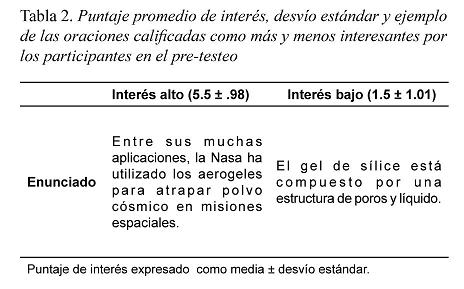
<body><![CDATA[<p style="margin: 5pt 51.15pt 0.0001pt 1cm; line-height: 120%;"><i><span style="font-size: 8pt; line-height: 120%; font-family: &quot;Arial&quot;,&quot;sans-serif&quot;;">Revisado: 12/2013</span></i></p>       <p class="western" style="margin: 5pt 51.15pt 0.0001pt 1cm; line-height: 150%;"><i><span style="font-size: 8pt; line-height: 150%; font-family: &quot;Arial&quot;,&quot;sans-serif&quot;;" lang="ES-UY">Aceptado: 02/2014</span></i><span style="" lang="ES-UY"><o:p></o:p></span></p>       <p class="western" style="margin: 5pt 51.15pt 0.0001pt 21.25pt; line-height: 150%;"><o:p>&nbsp;</o:p></p>       <p class="western" style="margin: 5pt 51.15pt 0.0001pt 1cm; text-align: justify; line-height: 150%;"><b><span style="font-size: 10pt; line-height: 150%; font-family: &quot;Arial&quot;,&quot;sans-serif&quot;;">Introducci&oacute;n</span></b></p>       <p class="western" style="margin: 5pt 51.15pt 0.0001pt 1cm; text-align: justify; text-indent: 19.85pt; line-height: 150%;"><o:p>&nbsp;</o:p></p>       <p class="western" style="margin: 5pt 51.15pt 0.0001pt 1cm; text-align: justify; text-indent: 19.85pt; line-height: 150%;"><span style="font-size: 10pt; line-height: 150%; font-family: &quot;Arial&quot;,&quot;sans-serif&quot;;">Comprender los textos producidos por otros es ciertamente tarea frecuente del cient&iacute;fico y tambi&eacute;n de quien aprende ciencia. El presente trabajo se centra en las caracter&iacute;sticas de dichos textos y en su relaci&oacute;n con los procesos cognitivos de extracci&oacute;n de significado a nivel discursivo. Se atiende especialmente al caso de los &aacute;mbitos educacionales, en los que lectores, todav&iacute;a novatos en un cierto dominio tem&aacute;tico, deben ser capaces de asimilar los mensajes transmitidos y construir representaciones coherentes de los mismos. En particular, el presente estudio se interesa por examinar c&oacute;mo los agregados que tienen por objetivo interesar al lector pueden influir sobre la comprensi&oacute;n y el recuerdo del resto de la informaci&oacute;n. </span></p>       <p class="western" style="margin: 5pt 51.15pt 9.9pt 1cm; text-align: justify; line-height: 150%;"><span style="font-size: 10pt; line-height: 150%; font-family: &quot;Arial&quot;,&quot;sans-serif&quot;;">Representada predominantemente en libros de texto, art&iacute;culos cient&iacute;ficos y de divulgaci&oacute;n, la exposici&oacute;n es la forma textual que suelen tomar las explicaciones cient&iacute;ficas. Un exposici&oacute;n se caracteriza por describir y explicar contenidos generalmente nuevos que se fundamentan en evidencia, haciendo referencia a fen&oacute;menos y sus partes componentes, sus funciones y sus mecanismos causales (<a name="Leon_"></a><a href="#Leon">Le&oacute;n</a> y Pe&ntilde;alba, 2002). De acuerdo con C. <a name="Padilla_"></a><a href="#Padilla07">Padilla</a>, S. Douglas y E. L&oacute;pez (2007), la exposici&oacute;n se diferencia de otros tipos de texto tanto por sus funciones comunicativas como por sus rasgos formales predominantes. En el nivel de funci&oacute;ncomunicativa, el texto expositivo intenta hacer comprensible un tema considerado como v&aacute;lido o relativamente consensuado a nivel te&oacute;rico, proponiendo una organizaci&oacute;n conceptual de modo &ldquo;neutro&rdquo;, desde la posici&oacute;n de quien sabe a quien no sabe. De esta forma, la exposici&oacute;n se diferencia en la intenci&oacute;n comunicativa respecto de textos que se centran en la mera presentaci&oacute;n de informaci&oacute;n (descripciones), textos que intentan convencer al lector de una posici&oacute;n adoptada frente a un tema opinable (argumentaciones), textos que indican procedimientos (instrucciones) o textos que relatan episodios (narraciones). En el nivel formal, por su parte, la exposici&oacute;n se caracteriza por recurrir a enunciados gen&eacute;ricos, evidencias y relaciones l&oacute;gicas entre las ideas, haciendo uso de marcas de impersonalidad que producen un efecto de objetividad, la preferencia del modo verbal indicativo y el uso de citas de autoridad. </span></p>       <p class="western" style="margin: 5pt 51.15pt 0.0001pt 1cm; text-align: justify; text-indent: 19.85pt; line-height: 150%;"><span style="font-size: 10pt; line-height: 150%; font-family: &quot;Arial&quot;,&quot;sans-serif&quot;;">A modo de ejemplo, consid&eacute;rese el siguiente extracto expositivo utilizado en un reciente estudio por <a name="J._Braasch"></a><a href="#Braash">J. Braasch</a>, S. Goldman y J. Wiley (2013): </span></p>       <p class="western" style="margin: 5pt 51.15pt 0.0001pt 1cm; text-align: justify; text-indent: 2.85pt; line-height: 150%;"><span style="font-size: 10pt; line-height: 150%; font-family: &quot;Arial&quot;,&quot;sans-serif&quot;;">(&hellip;) Un gradiente de presi&oacute;n hace que las mol&eacute;culas de aire se muevan de zonas de presi&oacute;n alta a zonas de presi&oacute;n baja. Este movimiento es experimentado como viento. Cuanto mayor sea el gradiente, m&aacute;s fuertes son los vientos que se producen (p. 577, trad. propia).</span></p>       <p class="western" style="margin: 5pt 51.15pt 0.0001pt 1cm; text-align: justify; text-indent: 19.85pt; line-height: 150%;"><span style="font-size: 10pt; line-height: 150%; font-family: &quot;Arial&quot;,&quot;sans-serif&quot;;">N&oacute;tese la intenci&oacute;n del texto por esclarecer o explicar el funcionamiento de un mecanismo a partir de una postura experta (nivel de funci&oacute;n de uso). Para hacerlo, recurre a una relaci&oacute;n l&oacute;gica causal entre las ideas: el movimiento de mol&eacute;culas de aires se produce porque &eacute;stas pasan de zonas de alta presi&oacute;n a zonas de baja presi&oacute;n (nivel formal-global), mediante el uso del presente indicativo y un estilo gen&eacute;rico, refiriendo a t&eacute;rminos t&eacute;cnicos (nivel formal-local). La <a href="#t1">Tabla 1</a> presenta en modo resumido las caracter&iacute;sticas del texto expositivo.</span></p>       ]]></body>
<body><![CDATA[<p class="western" style="margin: 5pt 51.15pt 0.0001pt 1cm; text-align: justify; text-indent: 19.85pt; line-height: 150%;"><o:p>&nbsp;</o:p></p>       <p class="western" style="margin: 5pt 51.15pt 0.0001pt 1cm; text-align: justify; line-height: 150%;"><a name="t1"></a><img style="width: 443px; height: 384px;" alt="" src="/img/revistas/cp/v8n1/1a09t1.jpg"><span style=""></span><span style="" lang="ES-UY"><o:p></o:p></span></p>       <p class="western" style="margin: 5pt 51.15pt 0.0001pt 1cm; text-align: justify; text-indent: 19.85pt; line-height: 150%;"><o:p>&nbsp;</o:p></p>       <p class="western" style="margin: 5pt 51.15pt 0.0001pt 1cm; text-align: justify; text-indent: 19.85pt; line-height: 150%;"><o:p>&nbsp;</o:p></p>       <p class="western" style="margin: 5pt 51.15pt 0.0001pt 1cm; text-align: justify; text-indent: 19.85pt; line-height: 150%;"><span style="font-size: 10pt; line-height: 150%; font-family: &quot;Arial&quot;,&quot;sans-serif&quot;;">De acuerdo con las investigaciones en el &aacute;rea, la exposici&oacute;n cient&iacute;fica resulta menos familiar en contenido y en forma que otros tipos textuales, como la narraci&oacute;n, de uso m&aacute;s frecuente en &aacute;mbitos cotidianos e informales (<a name="Wiley_"></a><a href="#Wiley">Wiley</a>, Ash, Sanchez y Jaeger, 2011). A ello se suma que, dado que las exposiciones intentan alcanzar una explicaci&oacute;n formal ideal, el tipo de relaciones que utilizan para organizar su prosa es de tipo abstracto (<a name="Meyer"></a><a href="#Mayer">Meyer</a>, 1985). Como resultado, la exposici&oacute;n cient&iacute;fica corre el riesgo de ser vista por quien intentar&aacute; comprenderla como un material potencialmente &ldquo;&aacute;rido&rdquo;. </span></p>       <p class="western" style="margin: 5pt 51.15pt 0.0001pt 1cm; text-align: justify; text-indent: 19.85pt; line-height: 150%;"><span style="font-size: 10pt; line-height: 150%; font-family: &quot;Arial&quot;,&quot;sans-serif&quot;;">Frente a este escenario, resulta natural recurrir a estrategias que aumenten el atractivo de estos textos, en particular cuando se dirigen a lectores que no cuentan con un elevado nivel de experticia en el tema. Por ejemplo, <a name="Perales_02"></a><a href="#Perales02">F.J. Perales</a> y J. Jim&eacute;nez (</span><span style="font-size: 10pt; line-height: 150%; font-family: &quot;Arial&quot;,&quot;sans-serif&quot;;" lang="ES-UY">2002</span><span style="font-size: 10pt; line-height: 150%; font-family: &quot;Arial&quot;,&quot;sans-serif&quot;;">) realizaron un an&aacute;lisis de 727 ilustraciones en nueve libros de texto de f&iacute;sica de editoriales consolidadas en el mercado de habla castellana. Los investigadores hallaron la utilizaci&oacute;n dominante de fotograf&iacute;as e im&aacute;genes figurativas (en lugar de representaciones pict&oacute;ricas abstractas) y una tendencia al uso de las im&aacute;genes para el realce decorativo. Esto constituye un potencial problema, puesto que se ha demostrado que la capacidad de una cierta informaci&oacute;n para atraer y motivar al lector, no presenta ninguna relaci&oacute;n directa con su capacidad para promover la asimilaci&oacute;n y adquisici&oacute;n de nuevos conocimientos (e.g. <a name="Levie_"></a><a href="#Levie">Levie</a> &amp; Lentz, 1982; <a name="Mayer_"></a><a href="#Mayer">Mayer</a>, Griffith, Jurkowitz y Rothman, 2008).</span><span style="" lang="ES-UY"><o:p></o:p></span></p>       <p class="western" style="margin: 5pt 51.15pt 0.0001pt 1cm; text-align: justify; text-indent: 19.85pt; line-height: 150%;"><span style="font-size: 10pt; line-height: 150%; font-family: &quot;Arial&quot;,&quot;sans-serif&quot;;">Una estrategia frecuente para capturar la atenci&oacute;n del lector es agregar detalles seductores<i> </i>(DS) en el texto. Un DS se define como un agregado breve, interesante pero irrelevante, es decir, un agregado que busca capturar el inter&eacute;s del lector, pero s&oacute;lo est&aacute; tangencialmente relacionado con el resto del texto (<a name="Harp_97"></a><a href="#Harp97">Harp</a> y Mayer, 1997). Desde el sentido com&uacute;n, la estrategia de agregar DS resulta l&oacute;gica, pues se asume que el inter&eacute;s logrado ayudar&aacute; a que el lector se centre en el mensaje, aumentando su predisposici&oacute;n para comprender el texto restante. Sin embargo, la investigaci&oacute;n en el &aacute;rea ha se&ntilde;alado que la presencia de los DS se asocia con un efecto negativo, consistente en una disminuci&oacute;n en las mediciones de recuerdo, comprensi&oacute;n y aprendizaje de los contenidos relevantes del texto, en comparaci&oacute;n con materiales sin DS.</span><span style="" lang="ES-UY"><o:p></o:p></span></p>       <p class="western" style="margin: 5pt 51.15pt 0.0001pt 1cm; text-align: justify; text-indent: 19.85pt; line-height: 150%;"><span style="font-size: 10pt; line-height: 150%; font-family: &quot;Arial&quot;,&quot;sans-serif&quot;;">El apelativo DS fue introducido por primera vez por <a name="R._Garner"></a><a href="#Garner">R. Garner</a>, M. Gillingham y C. White (1989) quienes compararon el recuerdo de un texto expositivo con y sin an&eacute;cdotas interesantes, pero poco relacionadas con el contenido principal. Por ejemplo, si el texto versaba sobre la vida solitaria o en grupo de los escarabajos, el texto pod&iacute;a incluir una referencia al particular modo que tienen los escarabajos de &ldquo;girar en el aire&rdquo; y producir &ldquo;chasquidos&rdquo; con este movimiento (p. 47). De modo sint&eacute;tico, los autores hallaron que: (1) los participantes calificaron este tipo de oraciones como muy interesantes pero poco relevantes, y (2) los participantes que leyeron estas oraciones recordaron menos ideas principales que los participantes que no las leyeron. Garner y colaboradores (1989) calificaron a este tipo de agregados tangenciales como detalles seductores (debido al inter&eacute;s despertado en los participantes) y concluyeron que su inclusi&oacute;n en el texto resultar&iacute;a en un efecto negativo, tambi&eacute;n llamado efecto seductor, sobre el recuerdo de informaci&oacute;n textual importante (debido a las diferencias observadas entre las condiciones que leyeron o no la oraci&oacute;n en cuesti&oacute;n). Posteriormente, el efecto seductor ha sido extendido a mediciones de comprensi&oacute;n inferencial y de transferencia de los contenidos aprendidos a partir del texto, encontr&aacute;ndose en materiales que versan sobre diversos temas, tanto en exposiciones escritas como orales. De modo caracter&iacute;stico, los participantes &ldquo;seducidos&rdquo; muestran un desempe&ntilde;o bajo con materiales que incluyen DS y no obstante eval&uacute;an estos materiales como m&aacute;s interesantes que los materiales de control sin DS (e.g. <a href="#Harp97"><span style="" lang="EN-US">Harp</span></a></span><span style="font-size: 10pt; line-height: 150%; font-family: &quot;Arial&quot;,&quot;sans-serif&quot;;" lang="EN-US"> &amp; Mayer, 1997; </span><a name="Ivanov_"></a><span style="font-size: 10pt; line-height: 150%; font-family: &quot;Arial&quot;,&quot;sans-serif&quot;;"><a href="#Ivanov"><span style="" lang="EN-US">Ivanov</span></a></span><span style="font-size: 10pt; line-height: 150%; font-family: &quot;Arial&quot;,&quot;sans-serif&quot;;" lang="EN-US">, 2010; </span><a name="Lehman_"></a><span style="font-size: 10pt; line-height: 150%; font-family: &quot;Arial&quot;,&quot;sans-serif&quot;;"><a href="#Lehman"><span style="" lang="EN-US">Lehman</span></a></span><span style="font-size: 10pt; line-height: 150%; font-family: &quot;Arial&quot;,&quot;sans-serif&quot;;" lang="EN-US">, Schraw, McCrudden &amp; Hartley, 2007; </span><a name="Park_07"></a><span style="font-size: 10pt; line-height: 150%; font-family: &quot;Arial&quot;,&quot;sans-serif&quot;;"><a href="#Park07"><span style="" lang="EN-US">Park</span></a></span><span style="font-size: 10pt; line-height: 150%; font-family: &quot;Arial&quot;,&quot;sans-serif&quot;;" lang="EN-US"> &amp; Lim, 2007; </span><a name="Sanchez_"></a><span style="font-size: 10pt; line-height: 150%; font-family: &quot;Arial&quot;,&quot;sans-serif&quot;;"><a href="#Sanchez"><span style="" lang="EN-US">Sanchez</span></a></span><span style="font-size: 10pt; line-height: 150%; font-family: &quot;Arial&quot;,&quot;sans-serif&quot;;" lang="EN-US"> &amp; Wiley, 2006).</span><span style="" lang="EN-US"><o:p></o:p></span></p>       <p class="western" style="margin: 5pt 51.15pt 0.0001pt 1cm; text-align: justify; text-indent: 19.85pt; line-height: 150%;"><span style="font-size: 10pt; line-height: 150%; font-family: &quot;Arial&quot;,&quot;sans-serif&quot;;">En forma resumida, los estudios han hallado que los DS pueden distorsionar o interrumpir los procesos de comprensi&oacute;n, dirigiendo las capacidades de procesamiento de quien recibe el mensaje hacia los elementos anecd&oacute;ticos del texto (<a name="Harp_98"></a><a href="#Harp98">Harp</a> y Mayer, 1998; <a href="#Mayer">Mayer</a> et al., 2008). </span></p>       <p class="western" style="margin: 5pt 51.15pt 0.0001pt 1cm; text-align: justify; text-indent: 19.85pt; line-height: 150%;"><span style="font-size: 10pt; line-height: 150%; font-family: &quot;Arial&quot;,&quot;sans-serif&quot;;">C. Harp y R. Mayer (<a href="#Harp97">1997</a>, <a href="#Harp98">1998</a>) explicaron el efecto perjudicial de los DS a partir de la distinci&oacute;n propuesta por W. Kintsch (1980) entre inter&eacute;s cognitivo e inter&eacute;s emocional. El inter&eacute;s emocional se asocia con el mayor valor afectivo que, de modo t&iacute;pico, despierta cierta informaci&oacute;n (e.g. un dato curioso, un evento amenazante, etc.). El inter&eacute;s cognitivo, por otra parte, es el resultado de que el lector comprenda el texto estructuralmente y, como resultado, se implique en el proceso de lectura. De acuerdo con esta explicaci&oacute;n, los DS aumentan el inter&eacute;s emocional, llevando al lector a sentir que disfruta de la actividad, pero no se asocian con el inter&eacute;s cognitivo. Los lectores seducidos tender&aacute;n a concentrar las capacidades limitadas de procesamiento en los detalles, en desmedro de la informaci&oacute;n menos seductora. Esta hip&oacute;tesis ha sido extendida a mediciones de comprensi&oacute;n inferencial y de transferencia de los contenidos aprendidos a partir del texto, en los que los participantes muestran un de- sempe&ntilde;o bajo con materiales que incluyen DS y no obstante eval&uacute;an estos materiales como m&aacute;s interesantes que los materiales de control, sin DS (e.g. <a href="#Mayer">Mayer</a> et al., 2008; <a href="#Lehman">Lehman</a> et al., 2007; <a href="#Park07">Park</a> &amp; Lim, 2007; <a name="Peshkam_"></a><a href="#Peshkam">Peshkam</a>; Mensink, Putnam, &amp; Rapp, 2011; <a name="Skolknik-Weisberg_"></a><a href="#Skolnick">Skolknik-Weisberg</a>, Keil, Goodstein, Rawson y Gray, 2008). </span></p>       ]]></body>
<body><![CDATA[<p class="western" style="margin: 5pt 51.15pt 0.0001pt 1cm; text-align: justify; text-indent: 19.85pt; line-height: 150%;"><span style="font-size: 10pt; line-height: 150%; font-family: &quot;Arial&quot;,&quot;sans-serif&quot;;">Recientemente, G. <a name="Rey_12"></a><a href="#Rey12">Rey</a> (2012) realiz&oacute; un meta-an&aacute;lisis sobre 39 mediciones experimentales y hall&oacute; un efecto significativo de los DS, tanto en las medidas de retenci&oacute;n, como de comprensi&oacute;n y aprendizaje del texto, por lo que podr&iacute;a asumirse que el efecto perjudicial de los DS es s&oacute;lido. Sin embargo, el concepto de DS no est&aacute; exento de cr&iacute;ticas (e.g. <a name="Goetz_"></a><a href="#Goetz">Goetz</a> y Sadoski, 1995; <a name="Park_11"></a><a href="#Park11">Park</a>, Moreno, Seufert, y Br&uuml;nken, 2011; <a name="Rey_11"></a><a href="#Rey11">Rey</a>, 2011; <a name="Towler_"></a><a href="#Towler">Towler</a>, 2009). Parte de estas cr&iacute;ticas se basan en una falta de criterio unificado sobre qu&eacute; debe considerarse informaci&oacute;n seductora en cada caso. En concreto, un agregado es considerado DS cuando se observa la co-ocurrencia de tres atributos b&aacute;sicos: brevedad, alto inter&eacute;s y baja relevancia. La brevedad refiere a la extensi&oacute;n relativa del detalle respecto del resto del texto. El inter&eacute;s refiere a la curiosidad que despierta la informaci&oacute;n, asociada al grado de activaci&oacute;n general (arousal) experimentado por el lector (<a href="#Harp97">Harp</a> y Mayer, 1997). La relevancia refiere al grado de vinculaci&oacute;n causal del detalle con el resto del texto (<a href="#Harp98">Harp</a> y Mayer, 1998).</span></p>       <p class="western" style="margin: 5pt 51.15pt 9.9pt 1cm; text-align: justify; line-height: 150%;"><span style="font-size: 10pt; line-height: 150%; font-family: &quot;Arial&quot;,&quot;sans-serif&quot;;">Estudios recientes han intentado paliar estas cr&iacute;ticas, realizando an&aacute;lisis pormenorizados de los atributos que caracterizan a los DS y analizando su peso espec&iacute;fico dentro del efecto general observado. El foco ha sido puesto en la extensi&oacute;n de los detalles verbales (<a href="#Goetz">Goetz</a> y Sadoski, 1995; <a href="#Park11">Park</a> et al., 2011), as&iacute; como en la manipulaci&oacute;n del nivel de inter&eacute;s (bajo vs. alto) asociado a cada detalle (e.g. <a href="#Ivanov">Ivanov</a>, 2010; <a href="#Mayer">Mayer</a> et al, 2008; <a name="Mikk_"></a><a href="#Mikk10">Mikk</a> y Kukemelk, 2010). En t&eacute;rminos generales, estos estudios han hallado que: a) los DS no deber&iacute;an exceder el treinta por ciento de la cantidad total de informaci&oacute;n de las condiciones control, puesto que el argumento del efecto seductor pierde fuerza luego de este l&iacute;mite. En particular, se ha planteado que la desviaci&oacute;n de los procesos de comprensi&oacute;n con DS demasiado extensos podr&iacute;a atribuirse a que los lectores consideran que esta informaci&oacute;n debe ser recordada debido al espacio que ocupa (<a href="#Park11">Park</a> et al, 2011). Asimismo, estudios previos han propuesto que: (b) s&oacute;lo los detalles con alto inter&eacute;s para los lectores resultan consistentes con el efecto seductor (<a href="#Mayer">Mayer</a> et al. 2008). El estudio del inter&eacute;s cuenta con una larga tradici&oacute;n en la psicolog&iacute;a educacional. Normalmente, se ha asumido que a mayor inter&eacute;s, mejor desempe&ntilde;o del aprendiz. No obstante, como se ha mencionado, en el caso de un DS el alto inter&eacute;s puede llevar a un bajo desempe&ntilde;o. Esta aparente contradicci&oacute;n puede resolverse a partir de la distinci&oacute;n propuesta por W. Kintsch (1980) entre inter&eacute;s emocional e inter&eacute;s cognitivo. El inter&eacute;s emocional resulta de informaci&oacute;n que apela a generar un estado afectivo en el lector (i.e. humor, miedo, etc.). El inter&eacute;s cognitivo, por su parte, resulta de la formaci&oacute;n de una actitud positiva hacia la lectura que es causada por una comprensi&oacute;n profunda del material. Se ha propuesto que el inter&eacute;s asociado a un DS es espec&iacute;ficamente de tipo emocional, mientras que el inter&eacute;s asociado a los procesos educacionales es de tipo cognitivo (<a href="#Harp97">Harp</a> &amp; Mayer, 1997).</span></p>       <p class="western" style="margin: 5pt 51.15pt 0.0001pt 1cm; text-align: justify; text-indent: 19.85pt; line-height: 150%;"><span style="font-size: 10pt; line-height: 150%; font-family: &quot;Arial&quot;,&quot;sans-serif&quot;;">El papel espec&iacute;fico de la irrelevancia del DS respecto del resto del texto, por otra parte, ha sido menos investigado. De acuerdo con <a href="#Harp97">Harp</a> y Mayer (1997), la irrelevancia de un DS radica en que, aunque relacionado con el t&oacute;pico general del texto, el detalle no presenta v&iacute;nculos causales con el resto de la exposici&oacute;n. El establecimiento de v&iacute;nculos causales (la detecci&oacute;n de que algo es consecuencia de otra cosa) resulta particularmente importante para dotar de coherencia al texto expositivo (e.g. <a name="Graesser_03"></a><a href="#Graesser03">Graesser</a>, McNamara, y Louwerse, 2003; <a name="Sanders_"></a><a href="#Sanders">Sanders</a> y Mulder, 2012). Al presentar contenidos abstractos y t&eacute;cnicos, la exposici&oacute;n parece servirse especialmente de las relaciones causales, puesto que no siempre cuenta con otros par&aacute;metros b&aacute;sicos, como las dimensiones espacial, temporal, emocional e interpersonal, presentes en otro tipo de textos (<a name="Zwaan_"></a><a href="#Zwaan">Zwaan</a> y Radvansky, 1998; <a href="#Leon">Le&oacute;n</a> y Pe&ntilde;alba, 2002). </span></p>       <p class="western" style="margin: 5pt 51.15pt 0.0001pt 1cm; text-align: justify; text-indent: 19.85pt; line-height: 150%;"><span style="font-size: 10pt; line-height: 150%; font-family: &quot;Arial&quot;,&quot;sans-serif&quot;;">A pesar de la importancia del factor causal en la explicaci&oacute;n de la comprensi&oacute;n del texto cient&iacute;fico, muy pocos estudios han explorado este componente en relaci&oacute;n con los DS. Algunos autores han sugerido que la irrelevancia de los DS producir&iacute;a rupturas en la organizaci&oacute;n causal del texto expositivo, dificultando la construcci&oacute;n de representaciones coherentes de la informaci&oacute;n cient&iacute;fica (<a href="#Lehman">Lehman</a> et al., 2007; <a name="Schraw_"></a><a href="#Schraw">Schraw</a>, 1998). <a href="#Lehman">S. Lehman</a> et al. (2007), por ejemplo, presentaron a sus participantes un texto sobre la formaci&oacute;n de los rel&aacute;mpagos en condici&oacute;n control (sin DS) o en condici&oacute;n seductora (el mismo texto m&aacute;s once oraciones seductoras). Los autores recolectaron los tiempos de lectura de las oraciones y luego solicitaron la producci&oacute;n de un ensayo sobre los contenidos del texto. En primer t&eacute;rmino, Lehman et al. hallaron que los participantes de la condici&oacute;n seductora tardaron m&aacute;s tiempo en leer las oraciones siguientes a los DS, en comparaci&oacute;n con la condici&oacute;n control. En segundo t&eacute;rmino, los autores hallaron que la condici&oacute;n seductora present&oacute; una comprensi&oacute;n significativamente m&aacute;s pobre de las relaciones causales propuestas en el texto (basada en un an&aacute;lisis causal del ensayo). Estos resultados fueron interpretados como evidencia de que la irrelevancia del detalle respecto del resto del texto (la falta de relaci&oacute;n causal entre el DS y otros segmentos) hab&iacute;a generado quiebres en la comprensi&oacute;n. Por esta raz&oacute;n, los lectores hab&iacute;an tenido que reconducir sus recursos de procesamiento luego de cada ruptura en la cohesi&oacute;n textual provocada por los DS, lentificando la lectura y generando representaciones menos organizadas. <a href="#Lehman">Lehman</a> et al. (2007) concluyeron entonces que, si el texto fuese editado para que los DS presentasen mayor relaci&oacute;n causal con el resto del texto, el efecto seductor podr&iacute;a mitigarse. Sin embargo, esta posibilidad no fue explorada.</span></p>       <p class="western" style="margin: 5pt 51.15pt 0.0001pt 1cm; text-align: justify; text-indent: 19.85pt; line-height: 150%;"><span style="font-size: 10pt; line-height: 150%; font-family: &quot;Arial&quot;,&quot;sans-serif&quot;;">Al respecto, s&oacute;lo un estudio ha examinado los efectos de manipular la relevancia causal del DS, controlando el nivel de inter&eacute;s y la extensi&oacute;n del detalle. En concreto, I. <a href="#Ivanov">Ivanov</a> (2010) realiz&oacute; un estudio en el que registr&oacute; indicadores separados para el grado de inter&eacute;s, relevancia y otros factores asociados al material textual utilizado. Este autor hall&oacute; que s&oacute;lo el indicador de inter&eacute;s correlacionaba con el mejor recuerdo de la informaci&oacute;n seductora (a mayor inter&eacute;s consignado por el participante, mejor el recuerdo). Sin embargo, el estudio de <a href="#Ivanov">Ivanov</a> (2010) presenta dos limitaciones importantes. En primer lugar, dicho estudio utiliz&oacute; s&oacute;lo una medida de recuerdo como indicador del resultado de la tarea de lectura. Desde la psicoling&uuml;&iacute;stica del texto, se ha se&ntilde;alado una diferencia importante entre las mediciones de recuerdo y de comprensi&oacute;n, as&iacute; como la necesidad de recolectar m&aacute;s de una medici&oacute;n del proceso, debido a su complejidad (e.g. <a name="Irrazabal_"></a><a href="#Irrazabal">Irrazabal</a> y Molinari, 2005). Adem&aacute;s, las revisiones han propuesto que el efecto seductor es m&aacute;s fuerte para medidas de comprensi&oacute;n y aprendizaje que para medidas de recuerdo (<a href="#Rey12">Rey</a>, 2012; <a href="#Peshkam">Peshkam</a> et al. 2011). Es posible entonces que la falta de significancia en los resultados reportados por <a href="#Ivanov">Ivanov</a> (2010), en relaci&oacute;n con la relevancia causal del DS, sea atribuible al tipo de medida utilizada. En segundo lugar, la relevancia fue operacionalizada en el mencionado estudio como la calificaci&oacute;n dada por los participantes en una escala tipo Likkert a cada oraci&oacute;n, en referencia a la relaci&oacute;n percibida por el lector entre esa oraci&oacute;n y el resto del texto. Los problemas de los reportes subjetivos como indicadores del grado de comprensi&oacute;n de textos han sido consistentemente documentados (<a href="#Wiley">Wiley</a> et al., 2011; <a name="McNamara_07"></a><a href="#McNamara07">McNamara</a>, de Vega y O&rsquo;Reilly, 2007), indicando la necesidad de complementar este tipo de mediciones con otros indicadores de la relevancia causal del DS para el resto del texto.</span></p>       <p class="western" style="margin: 5pt 51.15pt 0.0001pt 1cm; text-align: justify; text-indent: 19.85pt; line-height: 150%;"><span style="font-size: 10pt; line-height: 150%; font-family: &quot;Arial&quot;,&quot;sans-serif&quot;;">En s&iacute;ntesis, las investigaciones m&aacute;s recientes se han interesado por analizar qu&eacute; componentes de los DS se asocian con el efecto seductor. Si bien muchos estudios han dado cuenta de la importancia del inter&eacute;s generado por el DS, el papel de la irrelevancia del detalle respecto del resto del texto ha sido menos estudiado. Las razones para estudiar el papel de la irrelevancia de los DS son dos. En primer lugar, en la mayor&iacute;a de los estudios no es claro si el efecto negativo sobre la comprensi&oacute;n y el aprendizaje puede ser atribuido a la irrelevancia del DS, es decir, a su falta de relaci&oacute;n con el resto texto, o se asocia principalmente con el alto inter&eacute;s que &eacute;stos despiertan. En segundo lugar, si se encontrase que el efecto negativo de los DS se ve mitigado al aumentar su relaci&oacute;n con el resto del texto, el potencial da&ntilde;o del DS a la comprensi&oacute;n del resto del texto podr&iacute;a paliarse, conservando su capacidad para interesar al lector.</span></p>       <p class="western" style="margin: 5pt 51.15pt 0.0001pt 1cm; text-align: justify; text-indent: 19.85pt; line-height: 150%;"><span style="font-size: 10pt; line-height: 150%; font-family: &quot;Arial&quot;,&quot;sans-serif&quot;;">Teniendo esto en cuenta, el presente estudio se propuso examinar la comprensi&oacute;n y el recuerdo de un texto expositivo-cient&iacute;fico que pod&iacute;a incluir o no un DS, variando su nivel de relevancia (i.e. vinculaci&oacute;n causal) con el resto del texto y manteniendo fijo su nivel de inter&eacute;s. El supuesto fue que, si el efecto seductor es atribuible en parte a que la irrelevancia del detalle conduce a rupturas en la construcci&oacute;n de la coherencia, esto deber&iacute;a reflejarse en mayores dificultades para comprender y recordar el texto cuando los participantes recibiesen el detalle seductor en versi&oacute;n irrelevante, en comparaci&oacute;n con el mismo detalle asociado de modo expl&iacute;cito con la organizaci&oacute;n causal del resto del texto. </span></p>       <p class="western" style="margin: 5pt 51.15pt 0.0001pt 1cm; text-align: justify; text-indent: 19.85pt; line-height: 150%;"><o:p>&nbsp;</o:p></p>       <p class="western" style="margin: 5pt 51.15pt 0.0001pt 1cm; text-align: justify; line-height: 150%;"><o:p>&nbsp;</o:p></p>       <p class="western" style="margin: 5pt 51.15pt 0.0001pt 1cm; text-align: justify; line-height: 150%;"><b><span style="font-size: 10pt; line-height: 150%; font-family: &quot;Arial&quot;,&quot;sans-serif&quot;;">M&eacute;todo</span></b></p>       ]]></body>
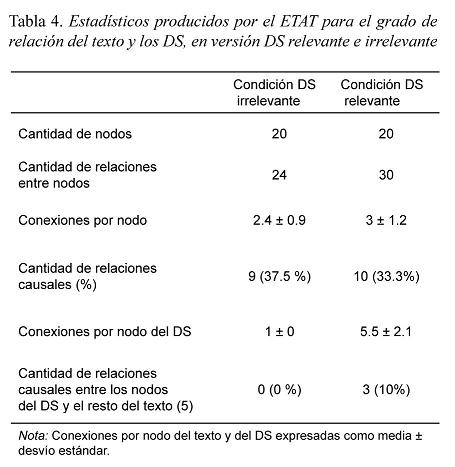
<body><![CDATA[<p class="western" style="margin: 5pt 51.15pt 0.0001pt 1cm; text-align: justify; line-height: 150%;"><o:p>&nbsp;</o:p></p>       <p class="western" style="margin: 5pt 51.15pt 0.0001pt 1cm; text-align: justify; text-indent: 19.85pt; line-height: 150%;"><i><span style="font-size: 10pt; line-height: 150%; font-family: &quot;Arial&quot;,&quot;sans-serif&quot;;">An&aacute;lisis preliminar del inter&eacute;s. </span></i><span style="font-size: 10pt; line-height: 150%; font-family: &quot;Arial&quot;,&quot;sans-serif&quot;;">Previo a la realizaci&oacute;n del estudio, se realiz&oacute; un pre-testeo del inter&eacute;s despertado en la poblaci&oacute;n por el material que ser&iacute;a utilizado en el experimento, que consisti&oacute; en un texto expositivo sobre el proceso f&iacute;sico-qu&iacute;mico requerido para producir un aerogel de s&iacute;lice (el contenido y estructura de los materiales ser&aacute; explicado en detalle en el apartado Materiales).</span><span style="" lang="ES-UY"><o:p></o:p></span></p>       <p class="western" style="margin: 5pt 51.15pt 0.0001pt 1cm; text-align: justify; text-indent: 19.85pt; line-height: 150%;"><span style="font-size: 10pt; line-height: 150%; font-family: &quot;Arial&quot;,&quot;sans-serif&quot;;">El objetivo de este pre-testeo fue determinar el nivel de inter&eacute;s asociado a las ideas que ser&iacute;an presentadas en el texto. Los participantes del pre-testeo fueron 35 estudiantes de 1er. a&ntilde;o de psicolog&iacute;a. Siguiendo un procedimiento similar al utilizado por <a href="#Mayer">Mayer</a> et al. (2008), se confeccion&oacute; un cuadernillo con las oraciones del texto, incluyendo tambi&eacute;n la que ser&iacute;a usada como DS, en orden aleatorio. Puesto que en esta instancia las oraciones fueron presentadas como ideas aisladas (y no como texto), algunas fueron levemente modificadas para conservar un sentido que no requiriese la referencia a otra oraci&oacute;n. Por ejemplo, las an&aacute;foras pronominales o nominales fueron reemplazadas por el sustantivo que ocupaba el lugar del antecedente. 18 participantes recibieron las oraciones resultantes en una determinada secuencia y los 17 restantes en la secuencia inversa. Se indic&oacute; a los participantes que leer&iacute;an una serie de enunciados relativos a un tema cient&iacute;fico y se les solicit&oacute; que, independientemente de su conocimiento del tema, calificasen cada oraci&oacute;n en funci&oacute;n de cu&aacute;n interesante le resultaba la idea expresada, indicando en una escala un valor entre 1 (nada interesante) a 7 (muy interesante). </span></p>       <p class="western" style="margin: 5pt 51.15pt 0.0001pt 1cm; text-align: justify; text-indent: 19.85pt; line-height: 150%;"><span style="font-size: 10pt; line-height: 150%; font-family: &quot;Arial&quot;,&quot;sans-serif&quot;;">Se computaron los promedios de nivel de inter&eacute;s asignado para cada oraci&oacute;n. En promedio, los participantes encontraron a las ideas del texto de nada a levemente interesantes (<i>M</i> = 2.6, <i>SD</i> = .46), mientras que la idea que ser&iacute;a utilizada como DS en el experimento fue </span><span style="" lang="ES-UY"><o:p></o:p></span></p>       <p class="western" style="margin: 5pt 51.15pt 0.0001pt 1cm; text-align: justify; line-height: 150%;"><span style="font-size: 10pt; line-height: 150%; font-family: &quot;Arial&quot;,&quot;sans-serif&quot;;">calificada con un puntaje superior al doble del promedio del resto del material (de levemente a algo interesante, <i>M</i> = 5.5, <i>SD</i> = .98). </span><span style="" lang="ES-UY"><o:p></o:p></span></p>       <p class="western" style="margin: 5pt 51.15pt 0.0001pt 1cm; text-align: justify; text-indent: 19.85pt; line-height: 150%;"><span style="font-size: 10pt; line-height: 150%; font-family: &quot;Arial&quot;,&quot;sans-serif&quot;;">Se asumi&oacute; entonces que, en el experimento, el DS producir&iacute;a mayor inter&eacute;s en los participantes que el resto del texto, por lo que, de encontrar diferencias asociadas a variaciones de la relevancia del detalle, &eacute;stas no podr&iacute;an ser atribuidas directamente al nivel de inter&eacute;s, que, aunque alto, se mantuvo fijo en todas las condiciones. La <a href="#t2">Tabla 2</a> muestra, a modo de ejemplo, las oraciones calificadas como m&aacute;s y menos interesantes por los participantes.</span></p>       <p class="western" style="margin: 5pt 51.15pt 0.0001pt 1cm; text-align: justify; text-indent: 19.85pt; line-height: 150%;"><o:p>&nbsp;</o:p></p>       <p class="western" style="margin: 5pt 51.15pt 0.0001pt 1cm; text-align: justify; line-height: 150%;"><a name="t2"></a><img style="width: 464px; height: 289px;" alt="" src="/img/revistas/cp/v8n1/1a09t2.jpg"><span style=""></span><span style="" lang="ES-UY"><o:p></o:p></span></p>       <p class="western" style="margin: 5pt 51.15pt 0.0001pt 1cm; text-align: justify; text-indent: 19.85pt; line-height: 150%;"><o:p>&nbsp;</o:p></p>       <p class="western" style="margin: 5pt 51.15pt 0.0001pt 1cm; text-align: justify; line-height: 150%;"><b><i><span style="font-size: 10pt; line-height: 150%; font-family: &quot;Arial&quot;,&quot;sans-serif&quot;;">Participantes</span></i></b></p>       ]]></body>
<body><![CDATA[<p class="western" style="margin: 5pt 51.15pt 0.0001pt 1cm; text-align: justify; text-indent: 19.85pt; line-height: 150%;"><o:p>&nbsp;</o:p></p>       <p class="western" style="margin: 5pt 51.15pt 0.0001pt 1cm; text-align: justify; text-indent: 19.85pt; line-height: 150%;"><span style="font-size: 10pt; line-height: 150%; font-family: &quot;Arial&quot;,&quot;sans-serif&quot;;">Participaron voluntariamente 94 estudiantes de Psicolog&iacute;a de primer a&ntilde;o de la carrera (Edad M = 22.43, DS = 6.21). La muestra estuvo compuesta por 64 mujeres (68%) y 30 varones (32%). Los participantes fueron informados acerca del prop&oacute;sito del estudio y del procedimiento experimental y prestaron su consentimiento por escrito. Una vez concluido el experimento, las hip&oacute;tesis y los resultados esperados fueron transmitidos grupalmente.</span></p>       <p class="western" style="margin: 5pt 51.15pt 0.0001pt 1cm; text-align: justify; text-indent: 19.85pt; line-height: 150%;"><o:p>&nbsp;</o:p></p>       <p class="western" style="margin: 5pt 51.15pt 0.0001pt 1cm; text-align: justify; line-height: 150%;"><b><i><span style="font-size: 10pt; line-height: 150%; font-family: &quot;Arial&quot;,&quot;sans-serif&quot;;">Dise&ntilde;o y Materiales</span></i></b></p>       <p class="western" style="margin: 5pt 51.15pt 0.0001pt 1cm; text-align: justify; text-indent: 19.85pt; line-height: 150%;"><o:p>&nbsp;</o:p></p>       <p class="western" style="margin: 5pt 51.15pt 0.0001pt 1cm; text-align: justify; text-indent: 19.85pt; line-height: 150%;"><span style="font-size: 10pt; line-height: 150%; font-family: &quot;Arial&quot;,&quot;sans-serif&quot;;">Se crearon tres condiciones, en las que se vari&oacute; la modalidad de presentaci&oacute;n del texto: </span></p>       <p class="western" style="margin: 5pt 51.15pt 0.0001pt 1cm; text-align: justify; line-height: 150%;"><span style="font-size: 10pt; line-height: 150%; font-family: &quot;Arial&quot;,&quot;sans-serif&quot;;">Texto sin DS (condici&oacute;n control), </span></p>       <p class="western" style="margin: 5pt 51.15pt 0.0001pt 1cm; text-align: justify; line-height: 150%;"><span style="font-size: 10pt; line-height: 150%; font-family: &quot;Arial&quot;,&quot;sans-serif&quot;;">Texto con un DS sin relaci&oacute;n causal con el resto del material (condici&oacute;n DS irrelevante), y </span></p>       <p class="western" style="margin: 5pt 51.15pt 0.0001pt 1cm; text-align: justify; line-height: 150%;"><span style="font-size: 10pt; line-height: 150%; font-family: &quot;Arial&quot;,&quot;sans-serif&quot;;">Texto con un DS causalmente relacionado con el resto del material (condici&oacute;n DS relevante). </span></p>       <p class="western" style="margin: 5pt 51.15pt 0.0001pt 1cm; text-align: justify; text-indent: 19.85pt; line-height: 150%;"><o:p>&nbsp;</o:p></p>       ]]></body>
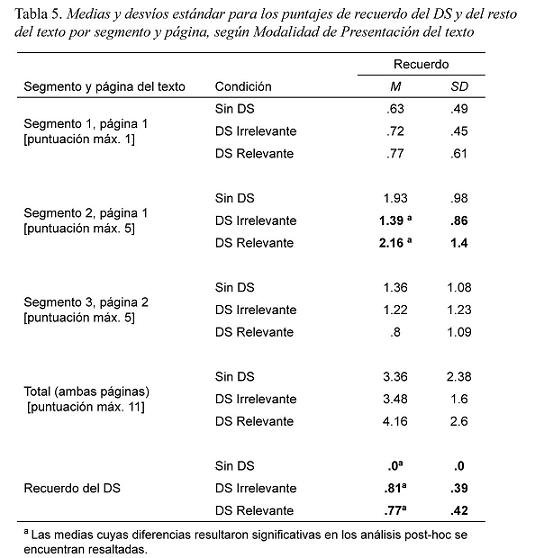
<body><![CDATA[<p class="western" style="margin: 5pt 51.15pt 0.0001pt 1cm; text-align: justify; text-indent: 19.85pt; line-height: 150%;"><i><span style="font-size: 10pt; line-height: 150%; font-family: &quot;Arial&quot;,&quot;sans-serif&quot;;">Texto</span></i><span style="font-size: 10pt; line-height: 150%; font-family: &quot;Arial&quot;,&quot;sans-serif&quot;;">. El material consisti&oacute; en un texto de estructura expositiva sobre el proceso f&iacute;sico qu&iacute;mico requerido para producir un aerogel de s&iacute;lice. El texto fue originalmente extra&iacute;do de una revista de divulgaci&oacute;n cient&iacute;fica y fue posteriormente adaptado en longitud y estructura de la exposici&oacute;n con el objeto de ser utilizado en el presente estudio. Adicionalmente, se reordenaron algunas oraciones, se agreg&oacute; informaci&oacute;n de otras fuentes y se quit&oacute; el t&iacute;tulo. La versi&oacute;n final del texto tuvo una extensi&oacute;n de 217 palabras (sin contar el DS), no incluy&oacute; t&iacute;tulo ni sub-t&iacute;tulos y fue dividido en 22 l&iacute;neas, presentadas en dos p&aacute;ginas. Cada p&aacute;gina present&oacute; sub-temas espec&iacute;ficos dentro del t&oacute;pico principal. La primera p&aacute;gina (12 l&iacute;neas) tuvo como objetivo introducir el tema a partir de una breve definici&oacute;n y descripci&oacute;n de los aerogeles (4 l&iacute;neas) y explicar los pasos del proceso de secado utilizado para la creaci&oacute;n de los mismos (8 l&iacute;neas). En la segunda p&aacute;gina (10 l&iacute;neas) se expuso el concepto de punto cr&iacute;tico (niveles espec&iacute;ficos de temperatura y presi&oacute;n requeridos para crear aerogeles). La <a href="/img/revistas/cp/v8n1/1a09t3.jpg">Tabla 3</a> presenta el material utilizado.</span><span style="" lang="ES-UY"><o:p></o:p></span></p>       <p class="western" style="margin: 5pt 51.15pt 0.0001pt 1cm; text-align: justify; text-indent: 19.85pt; line-height: 150%;">&nbsp;</p>       <p class="MsoNormal" style="margin-right: 51.15pt;"><span style="color: windowtext;"><o:p>&nbsp;</o:p></span></p>       <p class="western" style="margin: 5pt 51.15pt 0.0001pt 1cm; text-align: justify; text-indent: 19.85pt; line-height: 150%;"><span style="font-size: 10pt; line-height: 150%; font-family: &quot;Arial&quot;,&quot;sans-serif&quot;;">En las condiciones seductoras, se agreg&oacute; un DS, consistente en dos oraciones relativas al uso de los aerogeles en misiones espaciales por la NASA (ver<a href="#t1"> tabla 1</a>). La informaci&oacute;n fue considerada DS debido a: (1) su corta longitud (menos del 30% del material original), (2) el elevado inter&eacute;s consignado por los participantes por esta informaci&oacute;n (ver Pre-testeo de los materiales m&aacute;s arriba), y (3) su poca relaci&oacute;n con el resto del texto, centrado en la explicaci&oacute;n del proceso f&iacute;sico qu&iacute;mico de obtenci&oacute;n de los aerogeles. Medido en cantidad de palabras, el detalle agregado represent&oacute; entre el 14% (DS Relevante) y 16% (DS Irrelevante) de la extensi&oacute;n total del material (32 y 34 palabras, respectivamente). El DS fue presentado siempre en la quinta l&iacute;nea de la primera p&aacute;gina y represent&oacute; el 6% de la extensi&oacute;n total del material (medido en cantidad de palabras). La decisi&oacute;n de incluir el DS en la parte inicial del texto se bas&oacute; en estudios previos que sugieren que el efecto seductor es m&aacute;s claro cuando los detalles se encuentran al comienzo del texto (<a href="#Harp98">Harp</a> y Mayer, 1998; <a name="Rowland_"></a><a href="#Rowland">Rowland</a>-Bryant et al., 2008). No se incluyeron DS en la segunda p&aacute;gina, con el objeto de poder comparar el posterior recuerdo y comprensi&oacute;n del texto como un todo (ambas p&aacute;ginas juntas), o en segmentos con y sin informaci&oacute;n seductora (p&aacute;g. 1 vs. p&aacute;g. 2).</span></p>       <p class="western" style="margin: 5pt 51.15pt 0.0001pt 1cm; text-align: justify; text-indent: 19.85pt; line-height: 150%;"><span style="font-size: 10pt; line-height: 150%; font-family: &quot;Arial&quot;,&quot;sans-serif&quot;;">La relevancia del DS fue manipulada creando dos versiones similares de la informaci&oacute;n, pero modificando su relaci&oacute;n causal expl&iacute;cita con el resto del texto. En la condici&oacute;n DS irrelevante, las dos oraciones (el DS) fueron presentadas de forma descontextualizada, sin hacer referencia expl&iacute;cita a su relaci&oacute;n con el resto del texto. En la condici&oacute;n DS relevante, se vari&oacute; una de las oraciones para, de modo expl&iacute;cito, vincular causalmente la descripci&oacute;n de la estructura porosa del areogel con su utilidad para capturar polvo espacial. La variaci&oacute;n consisti&oacute; en reemplazar una de las dos oraciones del DS por otra que permitiese ver la relaci&oacute;n entre la estructura f&iacute;sico-qu&iacute;mica del aerogel y sus posibilidades de uso como recolector de polvo (ver <a href="#t2">Tabla 2</a>). </span></p>       <p class="western" style="margin: 5pt 51.15pt 0.0001pt 1cm; text-align: justify; text-indent: 19.85pt; line-height: 150%;"><i><span style="font-size: 10pt; line-height: 150%; font-family: &quot;Arial&quot;,&quot;sans-serif&quot;;">An&aacute;lisis de la relaci&oacute;n causal DS &ndash; resto del texto</span></i><span style="font-size: 10pt; line-height: 150%; font-family: &quot;Arial&quot;,&quot;sans-serif&quot;;">. Previo a la realizaci&oacute;n del estudio, las dos versiones seductoras del texto fueron analizadas y comparadas con el software Expository Text Analysis Tool (ETAT, <a name="Vidal-Abarca_"></a><a href="#Vidal">Vidal-Abarca</a> et al., 2002). El ETAT es un software que permite analizar el grado de coherencia de los textos expositivos. Su uso para la revisi&oacute;n de textos expositivos en espa&ntilde;ol ha sido documentado en diferentes oportunidades (e.g. <a name="Gilabert_"></a><a href="#Gilabert">Gilabert</a>, Martinez y Vidal-Abarca, 2005). Al igual que programas y modelos similares de an&aacute;lisis de textos (e.g. <a name="Graesser_81"></a><a href="#Graesser81">Graesser</a>, 1981; <a name="van_den_Broek_"></a><a href="#van_den_Broek">van den Broek</a>, Young, Tzeng y Linderholm, 1998) el ETAT busca representar la organizaci&oacute;n sem&aacute;ntica o conceptual de un texto. El procedimiento de an&aacute;lisis en el ETAT sigue tres pasos: la segmentaci&oacute;n del texto en nodos (oraciones simples o compuestas subordinadas), la clasificaci&oacute;n de los nodos en una de tres categor&iacute;as (&ldquo;estado&rdquo;, &ldquo;evento&rdquo; o &ldquo;meta&rdquo;; en el caso de oraciones subordinadas, la cl&aacute;usula principal es la que gu&iacute;a la clasificaci&oacute;n) y el establecimiento de relaciones entre los distintos nodos del texto por medio de la comparaci&oacute;n de pares de nodos sobre la base de seis categor&iacute;as o tipos de relaciones (&ldquo;inicia&rdquo;, &ldquo;resultado&rdquo;, &ldquo;raz&oacute;n&rdquo;, &ldquo;causa&rdquo;, &ldquo;descripci&oacute;n&rdquo; y &ldquo;ejemplo&rdquo;) y sobre la base del car&aacute;cter expl&iacute;cito (indicado por el texto) o impl&iacute;cito (no indicado) de la relaci&oacute;n (para una descripci&oacute;n pormenorizada de la herramienta y su aplicaci&oacute;n, se sugiere ver <a href="#Vidal">Vidal-Abarca</a> et al., 2002).</span><span style="" lang="ES-UY"><o:p></o:p></span></p>       <p class="western" style="margin: 5pt 51.15pt 0.0001pt 1cm; text-align: justify; text-indent: 19.85pt; line-height: 150%;"><span style="font-size: 10pt; line-height: 150%; font-family: &quot;Arial&quot;,&quot;sans-serif&quot;;">Una vez realizado el an&aacute;lisis, el ETAT produce autom&aacute;ticamente varios estad&iacute;sticos descriptivos de los nodos del texto y sus interrelaciones, junto con un grafo (representaci&oacute;n gr&aacute;fica) de los mismos. En el presente estudio, el material textual fue analizado por separado, atendiendo a las dos versiones seductoras. En t&eacute;rminos generales, los resultados arrojados por el ETAT mostraron una buena relaci&oacute;n entre los nodos del texto, con una media de entre </span></p>       <p class="western" style="margin: 5pt 51.15pt 0.0001pt 1cm; text-align: justify; line-height: 150%;"><span style="font-size: 10pt; line-height: 150%; font-family: &quot;Arial&quot;,&quot;sans-serif&quot;;">2.4 (condici&oacute;n DS irrelevante) y 3 (condici&oacute;n DS relevante) relaciones por nodo. En relaci&oacute;n con el DS, los an&aacute;lisis confirmaron diferencias importantes en el grado de conexi&oacute;n causal del DS respecto del resto del texto entre las condiciones relevante e irrelevante. En concreto, en la condici&oacute;n DS irrelevante, los dos nodos del DS presentaron el n&uacute;mero m&aacute;s bajo de relaciones con el resto del texto (1 relaci&oacute;n por cada nodo, en promedio). En la condici&oacute;n DS relevante, por su parte, la cantidad de relaciones para los nodos del DS subi&oacute; a 5.5 relaciones, en promedio. De esta manera, se busc&oacute; garantizar la mayor o menor relevancia asumida para el DS en cada condici&oacute;n. La <a href="#t4">Tabla 4</a> muestra los estad&iacute;sticos producidos por el ETAT para el texto en sus dos versiones seductoras.</span></p>       <p class="western" style="margin: 5pt 51.15pt 0.0001pt 1cm; text-align: justify; text-indent: 19.85pt; line-height: 150%;"><o:p>&nbsp;</o:p></p>       <p class="western" style="margin: 5pt 51.15pt 0.0001pt 1cm; text-align: justify; text-indent: 19.85pt; line-height: 150%;"><a name="t4"></a><img style="width: 455px; height: 467px;" alt="" src="/img/revistas/cp/v8n1/1a09t4.jpg"><span style=""></span></p>       ]]></body>
<body><![CDATA[<p class="western" style="margin: 5pt 51.15pt 0.0001pt 1cm; text-align: justify; text-indent: 19.85pt; line-height: 150%;"><o:p>&nbsp;</o:p></p>       <p class="western" style="margin: 5pt 51.15pt 0.0001pt 1cm; text-align: justify; text-indent: 19.85pt; line-height: 150%;"><o:p>&nbsp;</o:p></p>       <p class="western" style="margin: 5pt 51.15pt 0.0001pt 1cm; text-align: justify; text-indent: 19.85pt; line-height: 150%;"><i><span style="font-size: 10pt; line-height: 150%; font-family: &quot;Arial&quot;,&quot;sans-serif&quot;;">Medidas de recuerdo y comprensi&oacute;n. </span></i><span style="font-size: 10pt; line-height: 150%; font-family: &quot;Arial&quot;,&quot;sans-serif&quot;;">Se recolectaron dos indicadores post-lectura del recuerdo y la comprensi&oacute;n y un indicador del nivel de conocimiento previo. Para obtener estos indicadores se prepar&oacute; un cuadernillo con las siguientes consignas:</span><span style="" lang="ES-UY"><o:p></o:p></span></p>       <p class="western" style="margin: 5pt 51.15pt 0.0001pt 1cm; text-align: justify; line-height: 150%;"><span style="font-size: 10pt; line-height: 150%; font-family: &quot;Arial&quot;,&quot;sans-serif&quot;;">Redactar lo relativo al recuerdo</span></p>       <p class="western" style="margin: 5pt 51.15pt 0.0001pt 1cm; text-align: justify; line-height: 150%;"><span style="font-size: 10pt; line-height: 150%; font-family: &quot;Arial&quot;,&quot;sans-serif&quot;;">Redactar lo relativo a escala de valores</span></p>       <p class="western" style="margin: 5pt 51.15pt 0.0001pt 1cm; text-align: justify; line-height: 150%;"><span style="font-size: 10pt; line-height: 150%; font-family: &quot;Arial&quot;,&quot;sans-serif&quot;;">Redactar lo relativo a la tarea de verificaci&oacute;n.</span></p>       <p class="western" style="margin: 5pt 51.15pt 0.0001pt 1cm; text-align: justify; text-indent: 19.85pt; line-height: 150%;"><span style="font-size: 10pt; line-height: 150%; font-family: &quot;Arial&quot;,&quot;sans-serif&quot;;">En primer lugar, el cuadernillo solicit&oacute; a los participantes escribir toda la informaci&oacute;n que recordasen del texto (10 l&iacute;neas m&aacute;x.). En segundo lugar, se solicit&oacute; a los participantes que seleccionasen en una escala con valores entre 1 (&lsquo;nada&rsquo;) y 9 (&lsquo;todo&rsquo;), el nivel de conocimiento previo sobre los contenidos del texto. Finalmente, el cuadernillo present&oacute; una tarea de verificaci&oacute;n de 16 frases. Los participantes deb&iacute;an responder si la frase presentada era verdadera, falsa, o si no sab&iacute;an la respuesta. La mitad de las afirmaciones se bas&oacute; en contenido de la primera p&aacute;gina del texto, la otra mitad se bas&oacute; en contenidos de la segunda p&aacute;gina. Adicionalmente, la mitad fueron afirmaciones literales (id&eacute;nticas a oraciones del texto), y la otra mitad fueron afirmaciones inferidas (informaci&oacute;n que puede derivarse del texto aunque no est&eacute; mencionada expl&iacute;citamente). De este modo, los participantes debieron contestar cuatro afirmaciones literales y cuatro afirmaciones inferidas para cada p&aacute;gina del texto. El orden de los &iacute;tems presentados en la tarea de verificaci&oacute;n fue variado en las presentaciones. Se crearon 8 sets, compuestos de 2 &iacute;tems cada uno, seleccionados al azar. Se rot&oacute; el orden de los sets, creando 8 combinaciones de orden. Cada participante recibi&oacute; los &iacute;tems en alguna de las combinaciones. </span></p>       <p class="western" style="margin: 5pt 51.15pt 0.0001pt 1cm; text-align: justify; text-indent: 19.85pt; line-height: 150%;"><o:p>&nbsp;</o:p></p>       <p class="western" style="margin: 5pt 51.15pt 0.0001pt 1cm; text-align: justify; line-height: 150%;"><b><i><span style="font-size: 10pt; line-height: 150%; font-family: &quot;Arial&quot;,&quot;sans-serif&quot;;">Procedimiento</span></i></b><i><span style="font-size: 10pt; line-height: 150%; font-family: &quot;Arial&quot;,&quot;sans-serif&quot;;"> </span></i><span style="" lang="ES-UY"><o:p></o:p></span></p>       <p class="western" style="margin: 5pt 51.15pt 0.0001pt 1cm; text-align: justify; text-indent: 19.85pt; line-height: 150%;"><o:p>&nbsp;</o:p></p>       ]]></body>
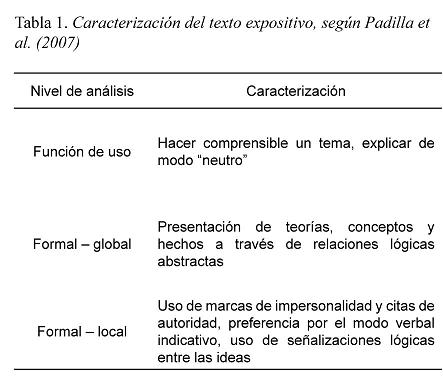
<body><![CDATA[<p class="western" style="margin: 5pt 51.15pt 0.0001pt 1cm; text-align: justify; text-indent: 19.85pt; line-height: 150%;"><span style="font-size: 10pt; line-height: 150%; font-family: &quot;Arial&quot;,&quot;sans-serif&quot;;">Se realizaron sesiones de grupos de 30 participantes aproximadamente. Primero, los participantes leyeron el texto en alguna de las tres condiciones. Luego, los participantes entregaron el texto y recibieron a cambio el cuadernillo junto con las instrucciones para las actividades. </span></p>       <p class="western" style="margin: 5pt 51.15pt 0.0001pt 1cm; text-align: justify; line-height: 150%;"><o:p>&nbsp;</o:p></p>       <p class="western" style="margin: 5pt 51.15pt 0.0001pt 1cm; text-align: justify; line-height: 150%;"><o:p>&nbsp;</o:p></p>       <p class="western" style="margin: 5pt 51.15pt 0.0001pt 1cm; text-align: justify; line-height: 150%;"><b><span style="font-size: 10pt; line-height: 150%; font-family: &quot;Arial&quot;,&quot;sans-serif&quot;;">Resultados</span></b></p>       <p class="western" style="margin: 5pt 51.15pt 0.0001pt 1cm; text-align: justify; text-indent: 19.85pt; line-height: 150%;"><o:p>&nbsp;</o:p></p>       <p class="western" style="margin: 5pt 51.15pt 0.0001pt 1cm; text-align: justify; text-indent: 19.85pt; line-height: 150%;"><span style="font-size: 10pt; line-height: 150%; font-family: &quot;Arial&quot;,&quot;sans-serif&quot;;">Los datos fueron analizados con el Paquete Estad&iacute;stico para Ciencias Sociales -SPSS- versi&oacute;n 17 para Windows (<a name="IBM_"></a><a href="#IBM">IBM</a>, 2009). El punto de corte para la significancia de los <i>p</i> valores reportados fue de .05. </span><span style="" lang="ES-UY"><o:p></o:p></span></p>       <p class="western" style="margin: 5pt 51.15pt 0.0001pt 1cm; text-align: justify; text-indent: 19.85pt; line-height: 150%;"><i><span style="font-size: 10pt; line-height: 150%; font-family: &quot;Arial&quot;,&quot;sans-serif&quot;;">Familiaridad con el tema: </span></i><span style="font-size: 10pt; line-height: 150%; font-family: &quot;Arial&quot;,&quot;sans-serif&quot;;">En primer lugar, se analiz&oacute; el grado de familiaridad con el tema reportado por los participantes en la escala de 1 a 9, incluida en el cuadernillo. El texto recibi&oacute;, en l&iacute;neas generales, puntajes bajos en familiaridad, tanto en la condici&oacute;n Sin DS (<i>M</i> = 1.18, <i>DS</i> = .58), como en las condiciones DS Irrelevante (<i>M</i> = 1.7, <i>DS</i> = 1.4) y DS Relevante (<i>M</i> = 1.64, <i>DS</i> = 1.3). A continuaci&oacute;n, se analiz&oacute; el efecto de la Modalidad de Presentaci&oacute;n del material sobre los puntajes de Familiaridad, mediante un an&aacute;lisis de varianza de un factor para grupos independientes. El efecto del Tipo de Presentaci&oacute;n no fue significativo [<i>F </i>(2, 91) = 1.99, <i>MS<sub>e</sub></i> = 1.4, <i>p</i> = .14]. Por lo tanto se asumi&oacute; que los grupos: a) no eran expertos en el tema presentado por el texto, y b) no difer&iacute;an entre s&iacute; en el nivel de conocimiento previo reportado. </span><span style="" lang="ES-UY"><o:p></o:p></span></p>       <p class="western" style="margin: 5pt 51.15pt 0.0001pt 1cm; text-align: justify; text-indent: 19.85pt; line-height: 150%;"><i><span style="font-size: 10pt; line-height: 150%; font-family: &quot;Arial&quot;,&quot;sans-serif&quot;;">Tarea de recuerdo: </span></i><span style="font-size: 10pt; line-height: 150%; font-family: &quot;Arial&quot;,&quot;sans-serif&quot;;">Para poder analizar los protocolos de recuerdo, se dividi&oacute; el texto en tres segmentos y se identificaron las ideas contenidas en cada segmento. Para el an&aacute;lisis del recuerdo, se asign&oacute; un punto por cada idea presente en el protocolo y 0 por cada idea no mencionada. En el primer segmento (introducci&oacute;n del texto, cuatro primeras l&iacute;neas de la primera p&aacute;gina), se identific&oacute; una idea. En los dos segmentos restantes (8 l&iacute;neas restantes de la primera p&aacute;gina y 10 l&iacute;neas de la segunda p&aacute;gina) se identificaron 5 ideas, respectivamente. Adicionalmente, se registr&oacute; el recuerdo del DS. </span><span style="" lang="ES-UY"><o:p></o:p></span></p>       <p class="western" style="margin: 5pt 51.15pt 0.0001pt 1cm; text-align: justify; text-indent: 19.85pt; line-height: 150%;"><span style="font-size: 10pt; line-height: 150%; font-family: &quot;Arial&quot;,&quot;sans-serif&quot;;">Se realizaron ANOVAs de una v&iacute;a sobre la cantidad de ideas recordadas, tomando la Modalidad de Presentaci&oacute;n del Material como factor. Los an&aacute;lisis mostraron un efecto altamente significativo para el recuerdo del DS [<i>F</i> (2,91) = 57.2, <i>MSe</i> = .11, <i>p</i> = .0001]. Comparaciones post-hoc pareadas (<i>HSD de Tukey</i>) revelaron que, como era esperable, las condiciones DS irrelevante y DS relevante mencionaron significativamente m&aacute;s veces el DS en sus protocolos, en comparaci&oacute;n con la condici&oacute;n sin DS (<i>p</i> &lt; .0001). No se encontraron diferencias entre ambas condiciones seductoras (<i>p</i> = .86). Respecto al recuerdo del resto del texto, los an&aacute;lisis indicaron un efecto significativo s&oacute;lo para el segundo segmento de la primera p&aacute;gina del texto (la parte del texto en la que se incluy&oacute; el DS) [<i>F</i> (2, 91) = 3.2, <i>MSe</i> = 1.5, <i>p</i> = .04]. La observaci&oacute;n de las medias indic&oacute; que la condici&oacute;n DS Relevante present&oacute; el promedio de recuerdo m&aacute;s alto (<i>M</i> = 2.1, <i>SD</i> = 1.4), seguida por la condici&oacute;n Sin DS (<i>M</i> = 1.9, <i>SD</i> = 1.38), seguida por la condici&oacute;n DS Irrelevante     <br>  (<i>M</i> = 1.3, <i>SD</i> = .86). Sin embargo, los an&aacute;lisis post-hoc indicaron que s&oacute;lo la comparaci&oacute;n entre extremos (DS Irrelevante vs. DS Relevante) result&oacute; significativa. En otros t&eacute;rminos, el grupo que recibi&oacute; el DS sin relaci&oacute;n expl&iacute;cita con el resto del texto record&oacute; menos unidades de la p&aacute;gina que incluy&oacute; dicho detalle, en comparaci&oacute;n con el grupo que recibi&oacute; el mismo detalle pero integrado causalmente al resto del texto (<i>p</i> = .04). Las comparaciones restantes para el segmento no mostraron diferencias significativas. La <a href="#t5">Tabla 5</a> presenta los estad&iacute;sticos descriptivos del recuerdo y del DS por segmento para las tres condiciones experimentales.</span><span style="" lang="ES-UY"><o:p></o:p></span></p>       ]]></body>
<body><![CDATA[<p class="western" style="margin: 5pt 51.15pt 0.0001pt 1cm; text-align: justify; line-height: 150%;"><o:p>&nbsp;</o:p></p>       <p class="western" style="margin: 5pt 51.15pt 0.0001pt 1cm; text-align: justify; line-height: 150%;"><a name="t5"></a><img style="width: 535px; height: 558px;" alt="" src="/img/revistas/cp/v8n1/1a09t5.jpg"><span style=""></span><span style="" lang="ES-UY"><o:p></o:p></span></p>       <p class="western" style="margin: 5pt 51.15pt 0.0001pt 1cm; text-align: justify; line-height: 150%;"><o:p>&nbsp;</o:p></p>       <p class="western" style="margin: 5pt 51.15pt 0.0001pt 1cm; text-align: justify; text-indent: 19.85pt; line-height: 150%;"><i><span style="font-size: 10pt; line-height: 150%; font-family: &quot;Arial&quot;,&quot;sans-serif&quot;;">Verificaci&oacute;n de frases. </span></i><span style="font-size: 10pt; line-height: 150%; font-family: &quot;Arial&quot;,&quot;sans-serif&quot;;">Se realizaron ANOVAs de una v&iacute;a con la Modalidad de Presentaci&oacute;n del material como factor sobre la cantidad de errores en la tarea de verificaci&oacute;n de frases, teniendo en cuenta el car&aacute;cter literal o inferido de la afirmaci&oacute;n y si la misma hab&iacute;a sido formulada sobre la base de los contenidos de la primera o la segunda p&aacute;gina del texto. Todos los an&aacute;lisis fueron realizados sobre las proporciones de errores. Se encontr&oacute; un efecto significativo de la Modalidad del Texto sobre la cantidad de errores en la verificaci&oacute;n de frases asociadas a la primera p&aacute;gina del texto [<i>F </i>(2, 91) = 3.2,<i> MS<sub>e</sub></i> = .04, <i>p</i> = .04]. Las pruebas post-hoc mostraron que la condici&oacute;n Sin DS present&oacute; una cantidad significativamente menor de errores en la verificaci&oacute;n de enunciados (<i>M</i> = .14, <i>SD</i> = .16), en comparaci&oacute;n con la condici&oacute;n DS Irrelevante (<i>M</i> = .26, <i>SD</i> = .2, <i>p</i> = .05). La condici&oacute;n DS Relevante present&oacute; una tasa de errores intermedia (<i>M</i> = .16, <i>SD</i> = .17), que no alcanz&oacute; a diferenciarse de las dos condiciones restantes (<i>p</i> &gt; .05). Los an&aacute;lisis sobre el total de los errores, y sobre los errores para la segunda p&aacute;gina no mostraron efectos significativos (<i>p</i> &gt; .05). </span><span style="" lang="ES-UY"><o:p></o:p></span></p>       <p class="western" style="margin: 5pt 51.15pt 0.0001pt 1cm; text-align: justify; text-indent: 19.85pt; line-height: 150%;"><o:p>&nbsp;</o:p></p>       <p class="western" style="margin: 5pt 51.15pt 0.0001pt 1cm; text-align: justify; line-height: 150%;"><b><span style="font-size: 10pt; line-height: 150%; font-family: &quot;Arial&quot;,&quot;sans-serif&quot;;">Discusi&oacute;n</span></b></p>       <p class="western" style="margin: 5pt 51.15pt 0.0001pt 1cm; text-align: justify; text-indent: 19.85pt; line-height: 150%;"><o:p>&nbsp;</o:p></p>       <p class="western" style="margin: 5pt 51.15pt 0.0001pt 1cm; text-align: justify; text-indent: 19.85pt; line-height: 150%;"><span style="font-size: 10pt; line-height: 150%; font-family: &quot;Arial&quot;,&quot;sans-serif&quot;;">El objetivo del presente estudio fue examinar la comprensi&oacute;n y el recuerdo de un texto expositivo de contenidos cient&iacute;ficos que pod&iacute;a incluir o no un DS, variando su nivel de relevancia (i.e. vinculaci&oacute;n causal) con el resto del texto y manteniendo fijo el nivel de inter&eacute;s del detalle. El supuesto fue que, si la irrelevancia juega alg&uacute;n papel en el efecto negativo asociado a los DS, esto deber&iacute;a reflejarse en mayores dificultades para comprender y recordar el texto en condiciones en que el texto presentara el DS de modo irrelevante, es decir, con poca relaci&oacute;n con el resto del texto, en comparaci&oacute;n con el mismo detalle asociado causalmente de modo expl&iacute;cito con la organizaci&oacute;n del texto. </span></p>       <p class="western" style="margin: 5pt 51.15pt 0.0001pt 1cm; text-align: justify; text-indent: 19.85pt; line-height: 150%;"><span style="font-size: 10pt; line-height: 150%; font-family: &quot;Arial&quot;,&quot;sans-serif&quot;;">En t&eacute;rminos generales, los resultados obtenidos permiten sostener el efecto negativo sobre el procesamiento del texto, atribuible a detalles interesantes e irrelevantes (DS). Sin embargo, la manipulaci&oacute;n de la contextualizaci&oacute;n causal del DS parece haber reducido sustancialmente dicho efecto negativo. Esta afirmaci&oacute;n se basa en que, mientras que la condici&oacute;n que ley&oacute; el texto con el DS en versi&oacute;n irrelevante present&oacute; el &iacute;ndice m&aacute;s bajo de recuerdo y la mayor proporci&oacute;n de errores en la tarea de verificaci&oacute;n, los participantes en la condici&oacute;n DS Relevante tuvieron el mejor desempe&ntilde;o en el recuerdo de los contenidos del texto. </span></p>       <p class="western" style="margin: 5pt 51.15pt 0.0001pt 1cm; text-align: justify; text-indent: 19.85pt; line-height: 150%;"><span style="font-size: 10pt; line-height: 150%; font-family: &quot;Arial&quot;,&quot;sans-serif&quot;;">En relaci&oacute;n con la tarea de recuerdo, cabe destacar que, aunque ambas condiciones seductoras tuvieron una tasa elevada y similar de recuerdo del DS, presentaron diferencias en el recuerdo del resto del material. En concreto, el mejor recuerdo de la condici&oacute;n DS Relevante se focaliz&oacute; exclusivamente en la secci&oacute;n del material en la que se incluy&oacute; el DS (segundo segmento de la primera p&aacute;gina) y no en los dem&aacute;s segmentos texto. Este patr&oacute;n de resultados ser&iacute;a consistente con la hip&oacute;tesis de que la irrelevancia de los DS produce rupturas en la cohesi&oacute;n del texto, y esto afecta los procesos de organizaci&oacute;n mental de la informaci&oacute;n y, en consecuencia, su recuerdo (<a href="#Lehman">Lehman</a> et al., 2007). En concreto, los presentes resultados permitir&iacute;an sostener que el efecto negativo sobre el recuerdo, atribuible a rupturas en la cohesi&oacute;n textual, queda restringido a los sectores del material en los que se incluye el DS, sin observarse efectos sobre otros pasajes textuales. </span></p>       ]]></body>
<body><![CDATA[<p class="western" style="margin: 5pt 51.15pt 0.0001pt 1cm; text-align: justify; text-indent: 19.85pt; line-height: 150%;"><span style="font-size: 10pt; line-height: 150%; font-family: &quot;Arial&quot;,&quot;sans-serif&quot;;">Cabe destacar, a su vez, la falta de diferencias hallada entre la condici&oacute;n control sin DS y las condiciones seductoras en la tarea de recuerdo. Se considera que este dato requiere de mayor an&aacute;lisis, puesto que la observaci&oacute;n de las medias indic&oacute; una tendencia de la condici&oacute;n control a ubicarse en una posici&oacute;n a mitad de camino entre las condiciones seductoras. Por lo tanto, si manteniendo dicha tendencia, se lograsen establecer diferencias significativas entre el desempe&ntilde;o de la condici&oacute;n control y una o ambas condiciones seductoras, podr&iacute;a afirmarse que la mayor relevancia del DS no s&oacute;lo reduce el efecto negativo, sino que supone adem&aacute;s una facilitaci&oacute;n del recuerdo, en comparaci&oacute;n con una condici&oacute;n sin DS. Futuras investigaciones deber&aacute;n establecer el peso de estas consideraciones.</span></p>       <p class="western" style="margin: 5pt 51.15pt 0.0001pt 1cm; text-align: justify; text-indent: 19.85pt; line-height: 150%;"><span style="font-size: 10pt; line-height: 150%; font-family: &quot;Arial&quot;,&quot;sans-serif&quot;;">Con respecto a la tarea de verificaci&oacute;n, los resultados indican que la condici&oacute;n DS Irrelevante cometi&oacute; m&aacute;s errores al contestar afirmaciones de la primera p&aacute;gina (la p&aacute;gina que incluy&oacute; el DS), en comparaci&oacute;n con la condici&oacute;n sin DS. Estos datos resultan consistentes con el desempe&ntilde;o de la condici&oacute;n DS Irrelevante, observado en la tarea de recuerdo. Al igual que en aquella medida, se encontr&oacute; que la condici&oacute;n que ley&oacute; el DS sin nexos causales expl&iacute;citos con el resto del texto fue la que tuvo mayores dificultades para realizar la tarea. Sin embargo, cabe preguntarse por qu&eacute; el patr&oacute;n de mejor desempe&ntilde;o en esta tarea (atribuido a la condici&oacute;n Sin DS) no se corresponde con el patr&oacute;n de mejor desempe&ntilde;o observado en la tarea de recuerdo (atribuido a la condici&oacute;n DS Relevante). Una posible explicaci&oacute;n ser&iacute;a que la tarea de recuerdo podr&iacute;a estar reflejando mejor los efectos del inter&eacute;s despertado por el DS. En concreto, el testeo previo de los materiales indic&oacute; que los participantes encontraron el agregado seductor mucho m&aacute;s interesante (m&aacute;s del doble) que el resto de la informaci&oacute;n. Entonces, ser&iacute;a posible que, en la tarea de recuerdo, los participantes en las condiciones seductoras hayan tenido facilitado el acceso a la informaci&oacute;n sobre el DS. Esto ser&iacute;a compatible, por otra parte, con el alto nivel de recuerdo del detalle en ambas condiciones seductoras. En el caso de la condici&oacute;n DS Relevante, las conexiones expl&iacute;citas entre esta informaci&oacute;n y el resto, podr&iacute;a haber llevado a los participantes, adem&aacute;s, a recordar la informaci&oacute;n asociada al detalle. De asumirse esta explicaci&oacute;n, deber&iacute;a aceptarse, sin embargo, que el efecto del elevado inter&eacute;s del detalle no fue suficiente para producir una mejora sobre la verificaci&oacute;n de afirmaciones, en comparaci&oacute;n con la condici&oacute;n control (sin DS).</span></p>       <p class="western" style="margin: 5pt 51.15pt 0.0001pt 1cm; text-align: justify; text-indent: 19.85pt; line-height: 150%;"><span style="font-size: 10pt; line-height: 150%; font-family: &quot;Arial&quot;,&quot;sans-serif&quot;;">Finalmente, debe tenerse en cuenta que los resultados y conclusiones te&oacute;ricas derivadas de este estudio s&oacute;lo deber&iacute;an generalizarse, como lo indica el an&aacute;lisis del &iacute;ndice de conocimiento previo recolectado durante la actividad, a lectores con bajo conocimiento previo en el tema. Desde la psicoling&uuml;&iacute;stica del texto, se ha se&ntilde;alado que la alta coherencia de un texto (en el sentido en que explicita muchas de las relaciones entre sus ideas) no siempre es mejor. En el caso de lectores expertos, se ha observado que un grado elevado de coherencia textual puede llevar a un procesamiento m&aacute;s superficial (e.g. <a name="McNamara_96"></a><a href="#McNamara96">McNamara</a>, Kintsch, Songer y Kintsch, 1996). Por lo tanto, ser&iacute;a posible que el aumento de la relevancia del DS produjese efectos muy diferentes a los aqu&iacute; reportados, si los lectores fuesen expertos en el tema. </span></p>       <p class="western" style="margin: 5pt 51.15pt 0.0001pt 1cm; text-align: justify; text-indent: 19.85pt; line-height: 150%;"><o:p>&nbsp;</o:p></p>       <p class="western" style="margin: 5pt 51.15pt 0.0001pt 1cm; text-align: justify; text-indent: 19.85pt; line-height: 150%;"><o:p>&nbsp;</o:p></p>       <p class="western" style="margin: 5pt 51.15pt 0.0001pt 1cm; text-align: justify; line-height: 150%;"><b><span style="font-size: 10pt; line-height: 150%; font-family: &quot;Arial&quot;,&quot;sans-serif&quot;;">Conclusiones</span></b></p>       <p class="western" style="margin: 5pt 51.15pt 0.0001pt 1cm; text-align: justify; text-indent: 19.85pt; line-height: 150%;"><o:p>&nbsp;</o:p></p>       <p class="western" style="margin: 5pt 51.15pt 0.0001pt 1cm; text-align: justify; text-indent: 19.85pt; line-height: 150%;"><span style="font-size: 10pt; line-height: 150%; font-family: &quot;Arial&quot;,&quot;sans-serif&quot;;">Los resultados del presente trabajo indican que la presentaci&oacute;n de DS modula el procesamiento de textos expositivos de contenidos cient&iacute;ficos, en lectores con bajo conocimiento previo. En particular, la relevancia del DS constituir&iacute;a un factor a tener en cuenta a la hora de dise&ntilde;ar textos en contextos educacionales que incluir&aacute;n agregados breves e interesantes, con miras a capturar la atenci&oacute;n de un aprendiz todav&iacute;a novato en el tema. </span></p>       <p class="western" style="margin: 5pt 51.15pt 0.0001pt 1cm; text-align: justify; text-indent: 19.85pt; line-height: 150%;"><span style="font-size: 10pt; line-height: 150%; font-family: &quot;Arial&quot;,&quot;sans-serif&quot;;">A partir de los resultados obtenidos, puede afirmarse que el efecto negativo de tales detalles puede mitigarse variando la relevancia de los mismos en funci&oacute;n del resto del mensaje. Esto se deber&iacute;a, de acuerdo a los resultados obtenidos, a que parte de la influencia de los DS sobre la actividad mental radica en la falta de conexi&oacute;n expl&iacute;cita de dichos detalles respecto a la organizaci&oacute;n del texto. La explicitaci&oacute;n de conexiones causales entre el agregado interesante y el resto del mensaje permitir&iacute;a, entonces, reducir su potencial influencia.</span></p>       <p class="western" style="margin: 5pt 51.15pt 0.0001pt 1cm; text-align: justify; text-indent: 19.85pt; line-height: 150%;"><span style="font-size: 10pt; line-height: 150%; font-family: &quot;Arial&quot;,&quot;sans-serif&quot;;">En los contextos aplicados, la eliminaci&oacute;n de agregados breves pero interesantes de las exposiciones cient&iacute;ficas conlleva el riesgo de desinteresar al aprendiz, que tiende a ver al libro de texto cient&iacute;fico como poco interesante y aburrido (e.g. <a name="Hidi_"></a><a href="#Hidi">Hidi</a> y Renninger, 2006). Teniendo esto en cuenta, el presente trabajo de investigaci&oacute;n ha intentado ser un aporte al estudio de los factores que modulan el impacto de incluir DS en el texto cient&iacute;fico.</span></p>       ]]></body>
<body><![CDATA[<p class="western" style="margin: 5pt 51.15pt 0.0001pt 1cm; text-align: justify; text-indent: 14.2pt; line-height: 150%;"><o:p>&nbsp;</o:p></p>       <p class="western" style="margin: 5pt 51.15pt 0.0001pt 1cm; text-align: justify; line-height: 150%;"><b><span style="font-size: 10pt; line-height: 150%; font-family: &quot;Arial&quot;,&quot;sans-serif&quot;;" lang="EN-US">Referencias<o:p></o:p></span></b></p>       <p class="western" style="margin: 5pt 51.15pt 0.0001pt 1cm; text-align: justify; line-height: 150%;"><span style="" lang="EN-US"><o:p>&nbsp;</o:p></span></p>       <!-- ref --><p class="western" style="margin: 5pt 51.15pt 0.0001pt 1cm; text-align: justify; line-height: 150%;"><a name="Braash"></a><span style="font-size: 8pt; line-height: 150%; font-family: &quot;Arial&quot;,&quot;sans-serif&quot;;" lang="EN-US"><a href="#J._Braasch">Braash</a>, J., Goldman, S. &amp; Wiley, J (2003). Effects of working memory capacity on learning from ilustrated texty. <i>Memory &amp; Cognition, 34</i>(2), 344-355.    </span><span style="" lang="EN-US"><o:p></o:p></span></p>       <p class="western" style="margin: 5pt 51.15pt 0.0001pt 1cm; text-align: justify; line-height: 150%;"><a name="Garner"></a><span style="font-size: 8pt; line-height: 150%; font-family: &quot;Arial&quot;,&quot;sans-serif&quot;;" lang="EN-US"><a href="#R._Garner">Garner</a>, R., Gillingham, M. G., &amp; White, C. S. (1989). </span><span style="font-size: 8pt; line-height: 150%; font-family: &quot;Arial&quot;,&quot;sans-serif&quot;;" lang="EN-GB">Effects of &ldquo;seductive details&rdquo; on macroprocessing and microprocessing in adults and children. <i>Cognition and Instruction</i>, 6, 41-57.</span><span style="" lang="EN-US"><o:p></o:p></span></p>       <!-- ref --><p class="western" style="margin: 5pt 51.15pt 0.0001pt 1cm; text-align: justify; line-height: 150%;"><a name="Gilabert"></a><span style="font-size: 8pt; line-height: 150%; font-family: &quot;Arial&quot;,&quot;sans-serif&quot;;" lang="EN-US"><a href="#Gilabert_">Gilabert</a>, R., Martinez, G., &amp; Vidal-Abarca, E. (2005). Some good texts are always better: Text revision to foster inferences of readers with high and low prior background knowledge. <i>Learning and Instruction 15, </i>45-68.    </span><span style="" lang="EN-US"><o:p></o:p></span></p>       <!-- ref --><p class="western" style="margin: 5pt 51.15pt 0.0001pt 1cm; text-align: justify; line-height: 150%;"><a name="Goetz"></a><span style="font-size: 8pt; line-height: 150%; font-family: &quot;Arial&quot;,&quot;sans-serif&quot;;" lang="EN-US"><a href="#Goetz_">Goetz</a>, E., &amp; Sadoski, M. (1995). The perils of seduction: Distracting details or incomprehensible abstractions? <i>Reading Research Quarterly</i>, <i>30</i>, 518-519.    </span><span style="" lang="EN-US"><o:p></o:p></span></p>       ]]></body>
<body><![CDATA[<!-- ref --><p class="western" style="margin: 5pt 51.15pt 0.0001pt 1cm; text-align: justify; line-height: 150%;"><a name="Graesser81"></a><span style="font-size: 8pt; line-height: 150%; font-family: &quot;Arial&quot;,&quot;sans-serif&quot;;" lang="EN-US"><a href="#Graesser_81">Graesser</a>, A. (1981). <i>Prose comprehension beyond the word.</i> New York: Springer-Verlag.    </span><span style="" lang="EN-US"><o:p></o:p></span></p>       <!-- ref --><p class="western" style="margin: 5pt 51.15pt 0.0001pt 1cm; text-align: justify; line-height: 150%;"><a name="Graesser03"></a><span style="font-size: 8pt; line-height: 150%; font-family: &quot;Arial&quot;,&quot;sans-serif&quot;;" lang="EN-US"><a href="#Graesser_03">Graesser</a>, A., McNamara, D. &amp; Louwerse, M. (2003). What do readers need to learn in order to process coherent relations in narrative and expository text. En A. Sweet &amp; C. Snow (Eds.) <i>Rethinking reading comprehension </i>(pp 82-98). New York: Guilford Publications.    </span><span style="" lang="EN-US"><o:p></o:p></span></p>       <!-- ref --><p class="western" style="margin: 5pt 51.15pt 0.0001pt 1cm; text-align: justify; line-height: 150%;"><a name="Harp97"></a><span style="font-size: 8pt; line-height: 150%; font-family: &quot;Arial&quot;,&quot;sans-serif&quot;;" lang="EN-US"><a href="#Harp_97">Harp</a>, S. F., &amp; Mayer, R. E. (1997). The role of interest in learning from scientific text and illustrations: On the distinction between emotional and cognitive interest. <i>Journal of Educational Psychology, 89, </i>92-102.    </span><span style="" lang="EN-US"><o:p></o:p></span></p>       <!-- ref --><p class="western" style="margin: 5pt 51.15pt 0.0001pt 1cm; text-align: justify; line-height: 150%;"><a name="Harp98"></a><span style="font-size: 8pt; line-height: 150%; font-family: &quot;Arial&quot;,&quot;sans-serif&quot;;" lang="EN-US"><a href="#Harp_98">Harp</a>, S. F., &amp; Mayer, R.E. (1998). How seductive details do their damage: A theory of cognitive interest in science learning. <i>Journal of Educational Psychology, 90</i>, 414-434.    </span><span style="" lang="EN-US"><o:p></o:p></span></p>       <!-- ref --><p class="western" style="margin: 5pt 51.15pt 0.0001pt 1cm; text-align: justify; line-height: 150%;"><a name="Hidi"></a><span style="font-size: 8pt; line-height: 150%; font-family: &quot;Arial&quot;,&quot;sans-serif&quot;;" lang="EN-US"><a href="#Hidi_">Hidi</a>, S., &amp; Renninger, K. A. (2006). The four-phase model of interest development. <i>Educational Psychologist, 41</i>(2), 111-127.    </span><span style="" lang="EN-US"><o:p></o:p></span></p>       ]]></body>
<body><![CDATA[<!-- ref --><p class="western" style="margin: 5pt 51.15pt 0.0001pt 1cm; text-align: justify; line-height: 150%;"><a name="IBM"></a><span style="font-size: 8pt; line-height: 150%; font-family: &quot;Arial&quot;,&quot;sans-serif&quot;;" lang="EN-US"><a href="#IBM_">IBM</a> (2009) Statistical Package for Social Science (18) [<i>Software </i>de computaci&oacute;n]. </span><span style="font-size: 8pt; line-height: 150%; font-family: &quot;Arial&quot;,&quot;sans-serif&quot;;">Chicago: SPSS Inc.    </span><span style="" lang="ES-UY"><o:p></o:p></span></p>       <!-- ref --><p class="western" style="margin: 5pt 51.15pt 0.0001pt 1cm; text-align: justify; line-height: 150%;"><a name="Irrazabal"></a><span style="font-size: 8pt; line-height: 150%; font-family: &quot;Arial&quot;,&quot;sans-serif&quot;;" lang="ES-UY"><a href="#Irrazabal_">Irrazabal</a>, N. &amp; Molinari, C. (2005). T&eacute;cnicas experimentales en la investigaci&oacute;n de la comprensi&oacute;n del lenguaje. </span><i><span style="font-size: 8pt; line-height: 150%; font-family: &quot;Arial&quot;,&quot;sans-serif&quot;;" lang="EN-US">Revista Lat. de Psicolog&iacute;a, 37</span></i><span style="font-size: 8pt; line-height: 150%; font-family: &quot;Arial&quot;,&quot;sans-serif&quot;;" lang="EN-US">, 581-594.    </span><span style="" lang="EN-US"><o:p></o:p></span></p>       <!-- ref --><p class="western" style="margin: 5pt 51.15pt 0.0001pt 1cm; text-align: justify; line-height: 150%;"><a name="Ivanov"></a><span style="font-size: 8pt; line-height: 150%; font-family: &quot;Arial&quot;,&quot;sans-serif&quot;;" lang="EN-US"><a href="#Ivanov_">Ivanov</a>, I. (2010). <i>Predictors of recall and reading time for seductive and nonseductive text segments</i>. </span><span style="font-size: 8pt; line-height: 150%; font-family: &quot;Arial&quot;,&quot;sans-serif&quot;;" lang="ES-UY">(Tesis de maestr&iacute;a no publicada), University of Nevada, USA.Kintsch, W. (1980). </span><a name="Learning"></a><span style="font-size: 8pt; line-height: 150%; font-family: &quot;Arial&quot;,&quot;sans-serif&quot;;" lang="EN-US">Learning from text, levels of comprehension, or: Why anyone would read a story anyway. <i>Poetics, 9, </i>87-98.    </span><span style="" lang="EN-US"><o:p></o:p></span></p>       <!-- ref --><p class="western" style="margin: 5pt 51.15pt 0.0001pt 1cm; text-align: justify; line-height: 150%;"><a name="Lehman"></a><span style="font-size: 8pt; line-height: 150%; font-family: &quot;Arial&quot;,&quot;sans-serif&quot;;" lang="EN-US"><a href="#Lehman_">Lehman</a>, S., Schraw, G., McCrudden, M. T., &amp; Hartley, K. (2007). Processing and recall of seductive details in scientific text. <i>Contemporary Educational Psychology, 32</i>, 569-587.    </span><span style="" lang="EN-US"><o:p></o:p></span></p>       <!-- ref --><p class="western" style="margin: 5pt 51.15pt 0.0001pt 1cm; text-align: justify; line-height: 150%;"><a name="Leon"></a><span style="font-size: 8pt; line-height: 150%; font-family: &quot;Arial&quot;,&quot;sans-serif&quot;;" lang="EN-US"><a href="#Leon_"><span style="" lang="ES">Le&oacute;n</span></a></span><span style="font-size: 8pt; line-height: 150%; font-family: &quot;Arial&quot;,&quot;sans-serif&quot;;">, J.A. &amp; Pe&ntilde;alba, G. (2002). </span><span style="font-size: 8pt; line-height: 150%; font-family: &quot;Arial&quot;,&quot;sans-serif&quot;;" lang="EN-US">Understanding causality and temporal sequence in scientific discourse. En J. Otero, J. A. Le&oacute;n &amp; A. Graesser (Comps.), <i>The psychology of science text comprehension </i>(pp 155-178). Mahwah, New Jersey: Lawrence Erlbaum Associates.    </span><span style="" lang="EN-US"><o:p></o:p></span></p>       ]]></body>
<body><![CDATA[<!-- ref --><p class="western" style="margin: 5pt 51.15pt 0.0001pt 1cm; text-align: justify; line-height: 150%;"><a name="Levie"></a><span style="font-size: 8pt; line-height: 150%; font-family: &quot;Arial&quot;,&quot;sans-serif&quot;;" lang="EN-US"><a href="#Levie_">Levie</a>, W. H. y Lentz, R. (1982). Effects of text illustrations: A review of research. <i>Journal of Educational Communication and Technology, 30,</i> 195-232.    </span><span style="" lang="EN-US"><o:p></o:p></span></p>       <!-- ref --><p class="western" style="margin: 5pt 51.15pt 0.0001pt 1cm; text-align: justify; line-height: 150%;"><a name="Mayer"></a><span style="font-size: 8pt; line-height: 150%; font-family: &quot;Arial&quot;,&quot;sans-serif&quot;;" lang="EN-US"><a href="#Mayer_">Mayer</a>, R., Griffith, E., Jurkowitz, I., &amp; Rothman, D. (2008) Increased interestingness of extraneous details in a multimedia science presentation leads to decreased learning. <i>Journal of Experimental Psychology: Applied, 14, </i>329-339.    </span><span style="" lang="EN-US"><o:p></o:p></span></p>       <p class="western" style="margin: 5pt 51.15pt 0.0001pt 1cm; text-align: justify; line-height: 150%;"><a name="McNamara07"></a><span style="font-size: 8pt; line-height: 150%; font-family: &quot;Arial&quot;,&quot;sans-serif&quot;;" lang="EN-US"><a href="#McNamara_07">McNamara</a>, D., de Vega, M. &amp; O&rsquo;Reilly, T. (2007). Comprehension skill, inference making, and the role of knowledge. En F. Schmalhofer &amp; C.A. Perfetti (Eds.), <i>Higher level language processes in the brain: Inference and comprehension processes </i>(pp. 233-253). Mahwah, NJ: Erlbaum.</span><span style="" lang="EN-US"><o:p></o:p></span></p>       <!-- ref --><p class="western" style="margin: 5pt 51.15pt 0.0001pt 1cm; text-align: justify; line-height: 150%;"><a name="McNamara96"></a><span style="font-size: 8pt; line-height: 150%; font-family: &quot;Arial&quot;,&quot;sans-serif&quot;;" lang="EN-US"><a href="#McNamara_96">McNamara</a>, D., Kintsch, E., Songer, N.B., &amp; Kintsch, W. (1996). Are good texts always better? <i>Cognition and Instruction, 14</i>, 1-43.    </span><span style="" lang="EN-US"><o:p></o:p></span></p>       <!-- ref --><p class="western" style="margin: 5pt 51.15pt 0.0001pt 1cm; text-align: justify; line-height: 150%;"><a name="Meyer85"></a><span style="font-size: 8pt; line-height: 150%; font-family: &quot;Arial&quot;,&quot;sans-serif&quot;;" lang="EN-US"><a href="#Mayer_">Meyer</a>, B. (1985). Prose analysis: Purposes, procedures, and problems. En B.K. Britton &amp; J. Black (Eds.), <i>Analyzing and understanding expository text, </i>(pp. 269-304). Hillsdale, New Jersey: Lawrence Erlbaum Associates.    </span><span style="" lang="EN-US"><o:p></o:p></span></p>       <!-- ref --><p class="western" style="margin: 5pt 51.15pt 0.0001pt 1cm; text-align: justify; line-height: 150%;"><a name="Mikk10"></a><span style="font-size: 8pt; line-height: 150%; font-family: &quot;Arial&quot;,&quot;sans-serif&quot;;" lang="EN-US"><a href="#Mikk_">Mikk</a>, H., &amp; Kukemelk, H. (2010). The relationship of text features to the level of interest in science texts. </span><i><span style="font-size: 8pt; line-height: 150%; font-family: &quot;Arial&quot;,&quot;sans-serif&quot;;" lang="ES-UY">Trames, 14, </span></i><span style="font-size: 8pt; line-height: 150%; font-family: &quot;Arial&quot;,&quot;sans-serif&quot;;" lang="ES-UY">54-70.     </span><span style="" lang="ES-UY"><o:p></o:p></span></p>       <!-- ref --><p class="western" style="margin: 5pt 51.15pt 0.0001pt 1cm; text-align: justify; line-height: 150%;"><a name="Padilla07"></a><span style="font-size: 8pt; line-height: 150%; font-family: &quot;Arial&quot;,&quot;sans-serif&quot;;" lang="ES-UY"><a href="#Padilla_">Padilla</a>, C., Douglas, S. &amp; L&oacute;pez, E. (2007). <i>Yo expongo. Taller de pr&aacute;cticas de comprensi&oacute;n y producci&oacute;n de textos expositivos</i>. </span><span style="font-size: 8pt; line-height: 150%; font-family: &quot;Arial&quot;,&quot;sans-serif&quot;;" lang="EN-US">C&oacute;rdoba: Comunicarte.    </span><span style="" lang="EN-US"><o:p></o:p></span></p>       <!-- ref --><p class="western" style="margin: 5pt 51.15pt 0.0001pt 1cm; text-align: justify; line-height: 150%;"><a name="Park07"></a><span style="font-size: 8pt; line-height: 150%; font-family: &quot;Arial&quot;,&quot;sans-serif&quot;;" lang="EN-US"><a href="#Park_07">Park</a>, S., &amp; Lim, J. (2007). Promoting positive emotion in multimedia learning using visual illustrations. <i>Journal of Educational Multimedia and Hypermedia, 16</i>(2), 141-162.    </span><span style="" lang="EN-US"><o:p></o:p></span></p>       <p class="western" style="margin: 5pt 51.15pt 0.0001pt 1cm; text-align: justify; line-height: 150%;"><a name="Park11"></a><span style="font-size: 8pt; line-height: 150%; font-family: &quot;Arial&quot;,&quot;sans-serif&quot;;" lang="EN-US"><a href="#Park_11">Park</a>, B., Moreno, R., Seufert, T., &amp; Br&uuml;nken, R. (2011). Does cognitive load moderate the seductive details effect? A multimedia study. </span><i><span style="font-size: 8pt; line-height: 150%; font-family: &quot;Arial&quot;,&quot;sans-serif&quot;;">Computers in Human Behavior</span></i><span style="font-size: 8pt; line-height: 150%; font-family: &quot;Arial&quot;,&quot;sans-serif&quot;;">, <i>27</i>, 5&ndash;10.</span></p>       <!-- ref --><p class="western" style="margin: 5pt 51.15pt 0.0001pt 1cm; text-align: justify; line-height: 150%;"><a name="Perales02"></a><span style="font-size: 8pt; line-height: 150%; font-family: &quot;Arial&quot;,&quot;sans-serif&quot;;" lang="EN-US"><a href="#Perales_02"><span style="" lang="ES">Perales</span></a></span><span style="font-size: 8pt; line-height: 150%; font-family: &quot;Arial&quot;,&quot;sans-serif&quot;;">, F. J. &amp; Jim&eacute;nez, J. (2002). </span><span style="font-size: 8pt; line-height: 150%; font-family: &quot;Arial&quot;,&quot;sans-serif&quot;;" lang="ES-UY">Las ilustraciones en la ense&ntilde;anza-aprendizaje de las ciencias. An&aacute;lisis de libros de texto. <i>Ense&ntilde;anza de las Ciencias, 20</i>(3), 369-386.    </span></p>       <!-- ref --><p class="western" style="margin: 5pt 51.15pt 0.0001pt 1cm; text-align: justify; line-height: 150%;"><a name="Peshkam"></a><span style="font-size: 8pt; line-height: 150%; font-family: &quot;Arial&quot;,&quot;sans-serif&quot;;" lang="EN-US"><a href="#Peshkam_"><span style="" lang="ES">Peshkam</span></a></span><span style="font-size: 8pt; line-height: 150%; font-family: &quot;Arial&quot;,&quot;sans-serif&quot;;">, A., Mensink, M. C., Putnam, A. L., &amp; Rapp, D. N. (2011). </span><span style="font-size: 8pt; line-height: 150%; font-family: &quot;Arial&quot;,&quot;sans-serif&quot;;" lang="EN-US">Warning readers to avoid irrelevant information: When being vague might be valuable. Contemporary Educational Psychology, 36, 219-231.    </span><span style="" lang="EN-US"><o:p></o:p></span></p>       ]]></body>
<body><![CDATA[<!-- ref --><p class="western" style="margin: 5pt 51.15pt 0.0001pt 1cm; text-align: justify; line-height: 150%;"><a name="Rey11"></a><span style="font-size: 8pt; line-height: 150%; font-family: &quot;Arial&quot;,&quot;sans-serif&quot;;" lang="EN-US"><a href="#Rey_11">Rey</a>, G. D. (2011). Seductive details in multimedia messages. <i>Journal of Educational Multimedia and Hypermedia, 20, </i>283-314.    </span><span style="" lang="EN-US"><o:p></o:p></span></p>       <!-- ref --><p class="western" style="margin: 5pt 51.15pt 0.0001pt 1cm; text-align: justify; line-height: 150%;"><a name="Rey12"></a><span style="font-size: 8pt; line-height: 150%; font-family: &quot;Arial&quot;,&quot;sans-serif&quot;;" lang="EN-US"><a href="#Rey_12">Rey</a>, G. D. (2012). A review of research and a meta-analysis of the seductive detail effect. <i>Educational Research Review, 7</i>, 216-237.    </span><span style="" lang="EN-US"><o:p></o:p></span></p>       <!-- ref --><p class="western" style="margin: 5pt 51.15pt 0.0001pt 1cm; text-align: justify; line-height: 150%;"><a name="Rowland"></a><span style="font-size: 8pt; line-height: 150%; font-family: &quot;Arial&quot;,&quot;sans-serif&quot;;" lang="EN-US"><a href="#Rowland_">Rowland</a>-Bryant, E., Skinner, C. H., Davis-Richards, K., Saudargas, R., &amp; Robinson, D. H. (2008). An investigation of placement and type of seductive details: The primacy effect of seductive details on text recall.<i> Research in the Schools, 15</i>, 80-90.    </span><span style="" lang="EN-US"><o:p></o:p></span></p>       <!-- ref --><p class="western" style="margin: 5pt 51.15pt 0.0001pt 1cm; text-align: justify; line-height: 150%;"><a name="Sanders"></a><span style="font-size: 8pt; line-height: 150%; font-family: &quot;Arial&quot;,&quot;sans-serif&quot;;" lang="EN-US"><a href="#Sanders_">Sanders</a>, T.J.M. &amp; Mulder, G. (2012). Causal relations and levels of discourse representation. <i>Discourse Processes</i>, 49(6), 501-522.    </span><span style="" lang="EN-US"><o:p></o:p></span></p>       <!-- ref --><p class="western" style="margin: 5pt 51.15pt 0.0001pt 1cm; text-align: justify; line-height: 150%;"><a name="Sanchez"></a><span style="font-size: 8pt; line-height: 150%; font-family: &quot;Arial&quot;,&quot;sans-serif&quot;;" lang="EN-US"><a href="#Sanchez_">S&aacute;nchez</a>, C.A., Wiley, J. (2006). The influences of text and reader characteristics of learning from refutations science texts. <i>Journal of Educational Psychology, 105, </i>561-568.    </span><span style="" lang="EN-US"><o:p></o:p></span></p>       ]]></body>
<body><![CDATA[<p class="western" style="margin: 5pt 51.15pt 0.0001pt 1cm; text-align: justify; line-height: 150%;"><a name="Schraw"></a><span style="font-size: 8pt; line-height: 150%; font-family: &quot;Arial&quot;,&quot;sans-serif&quot;;" lang="EN-US"><a href="#Schraw_">Schraw</a>, G. (1998). Processing and recall differences among seductive details. <i>Journal of Educational Psychology, 90,</i> 3&ndash;12.</span><span style="" lang="EN-US"><o:p></o:p></span></p>       <!-- ref --><p class="western" style="margin: 5pt 51.15pt 0.0001pt 1cm; text-align: justify; line-height: 150%;"><a name="Skolnick"></a><span style="font-size: 8pt; line-height: 150%; font-family: &quot;Arial&quot;,&quot;sans-serif&quot;;" lang="EN-US"><a href="#Skolknik-Weisberg_">Skolnick-Weisberg</a>, D., Keil, F., Goodstein, J., Rawson, E., &amp; Gray, J. (2008). The seductive allure of neuroscience explanations.<i> Journal of Cognitive Neuroscience, 20,</i> 470-477.    </span><span style="" lang="EN-US"><o:p></o:p></span></p>       <!-- ref --><p class="western" style="margin: 5pt 51.15pt 0.0001pt 1cm; text-align: justify; line-height: 150%;"><a name="Towler"></a><span style="font-size: 8pt; line-height: 150%; font-family: &quot;Arial&quot;,&quot;sans-serif&quot;;" lang="EN-US"><a href="#Towler_">Towler</a>, A. (2009). Effects of trainer expressiveness, seductive details, and trainee goal orientation on training outcomes. <i>Human Resource Development Quarterly, 20,</i> 65-84.    </span><span style="" lang="EN-US"><o:p></o:p></span></p>       <!-- ref --><p class="western" style="margin: 5pt 51.15pt 0.0001pt 1cm; text-align: justify; line-height: 150%;"><a name="van_den_Broek"></a><span style="font-size: 8pt; line-height: 150%; font-family: &quot;Arial&quot;,&quot;sans-serif&quot;;" lang="EN-US"><a href="#van_den_Broek_">van den Broek</a>, P. , Young, M., Tzeng, Y. &amp; Linderholm, T. (1998). The landscape model of reading. En H. van Oostendorp &amp; S. Goldman (Eds.), <i>The construction of mental representations during reading</i> (pp. 71-98). Mahwah, New.Jersey: Lawrence Erlbaum.    </span><span style="" lang="EN-US"><o:p></o:p></span></p>       <!-- ref --><p class="western" style="margin: 5pt 51.15pt 0.0001pt 1cm; text-align: justify; line-height: 150%;"><a name="Vidal"></a><span style="font-size: 8pt; line-height: 150%; font-family: &quot;Arial&quot;,&quot;sans-serif&quot;;" lang="EN-US"><a href="#Vidal-Abarca_">Vidal-Abarca</a>, E., Reyes, H., Gilabert, R., Calpe, J., Soria, E. &amp; Graesser, A. (2002). ETAT: Expository Text Analysis Tool. <i>Behavior Research Methods, Instruments and Computers, 34</i>, 93-107.    </span><span style="" lang="EN-US"><o:p></o:p></span></p>       <p class="western" style="margin: 5pt 51.15pt 0.0001pt 1cm; text-align: justify; line-height: 150%;"><a name="Wiley"></a><span style="font-size: 8pt; line-height: 150%; font-family: &quot;Arial&quot;,&quot;sans-serif&quot;;" lang="EN-US"><a href="#Wiley_">Wiley</a>, J., Ash, I.K., Sanchez, C.A. &amp; Jaeger, A.J. (2011). Clarifying readers&rsquo; goals for learning from expository science texts. En M. McCrudden, J. Magliano, &amp; G. Schraw (Eds.), <i>Text relevance and learning from text </i>(pp. 353-374). Greenwich, CT: Information Age Publishing.</span><span style="" lang="EN-US"><o:p></o:p></span></p>       ]]></body>
<body><![CDATA[<!-- ref --><p class="western" style="margin: 5pt 51.15pt 0.0001pt 1cm; text-align: justify; line-height: 150%;"><a name="Zwaan"></a><span style="font-size: 8pt; line-height: 150%; font-family: &quot;Arial&quot;,&quot;sans-serif&quot;;" lang="EN-US"><a href="#Zwaan_">Zwaan</a>, R. A. &amp; Radvansky, G. A. (1998). Situation models in language comprehension and memory. <i>Psychological Bulletin, 123,</i> 162-185.    </span><span style="" lang="EN-US"><o:p></o:p></span></p>       <p style="margin: 5pt 51.15pt 0.0001pt 1cm; text-align: justify; line-height: 120%;"><span style="font-size: 9pt; line-height: 120%; font-family: &quot;Arial&quot;,&quot;sans-serif&quot;;" lang="EN-US"><o:p>&nbsp;</o:p></span></p>       <p style="margin: 5pt 51.15pt 0.0001pt 1cm; text-align: justify; line-height: 120%;"><span style="font-size: 9pt; line-height: 120%; font-family: &quot;Arial&quot;,&quot;sans-serif&quot;;" lang="EN-US">Para citar este art&iacute;culo: </span><span style="" lang="EN-US"><o:p></o:p></span></p>       <p style="margin: 5pt 51.15pt 0.0001pt 1cm; text-align: justify; line-height: 120%;"><span style="font-size: 9pt; line-height: 120%; font-family: &quot;Arial&quot;,&quot;sans-serif&quot;;" lang="EN-US">Saux, G., Irrazabal, N. &amp; Burin, D. I. (2014). </span><span style="font-size: 9pt; line-height: 120%; font-family: &quot;Arial&quot;,&quot;sans-serif&quot;;">Detalles seductores relevantes e irrelevantes en un texto expositivo: efectos sobre la comprensi&oacute;n y el recuerdo en lectores con bajo conocimiento previo. <i>Ciencias Psicol&oacute;gicas VIII </i>(1): 89 - 100.</span></p>   </div>        ]]></body><back>
<ref-list>
<ref id="B1">
<nlm-citation citation-type="journal">
<person-group person-group-type="author">
<name>
<surname><![CDATA[Braash]]></surname>
<given-names><![CDATA[J.]]></given-names>
</name>
<name>
<surname><![CDATA[Goldman]]></surname>
<given-names><![CDATA[S.]]></given-names>
</name>
<name>
<surname><![CDATA[Wiley]]></surname>
<given-names><![CDATA[J.]]></given-names>
</name>
</person-group>
<article-title xml:lang="en"><![CDATA[Effects of working memory capacity on learning from ilustrated texty]]></article-title>
<source><![CDATA[Memory & Cognition]]></source>
<year>2003</year>
<volume>34</volume>
<numero>2</numero>
<issue>2</issue>
<page-range>344-355</page-range></nlm-citation>
</ref>
<ref id="B2">
<nlm-citation citation-type="journal">
<person-group person-group-type="author">
<name>
<surname><![CDATA[Garner]]></surname>
<given-names><![CDATA[R.]]></given-names>
</name>
<name>
<surname><![CDATA[Gillingham]]></surname>
<given-names><![CDATA[M. G.]]></given-names>
</name>
<name>
<surname><![CDATA[White]]></surname>
<given-names><![CDATA[C. S.]]></given-names>
</name>
</person-group>
<article-title xml:lang="en"><![CDATA[Effects of &ldquo;seductive details&rdquo; on macroprocessing and microprocessing in adults and children]]></article-title>
<source><![CDATA[Cognition and Instruction]]></source>
<year>1989</year>
<volume>6</volume>
<page-range>41-57</page-range></nlm-citation>
</ref>
<ref id="B3">
<nlm-citation citation-type="journal">
<person-group person-group-type="author">
<name>
<surname><![CDATA[Gilabert]]></surname>
<given-names><![CDATA[R.]]></given-names>
</name>
<name>
<surname><![CDATA[Martinez]]></surname>
<given-names><![CDATA[G.]]></given-names>
</name>
<name>
<surname><![CDATA[Vidal-Abarca]]></surname>
<given-names><![CDATA[E.]]></given-names>
</name>
</person-group>
<article-title xml:lang="en"><![CDATA[Some good texts are always better: Text revision to foster inferences of readers with high and low prior background knowledge]]></article-title>
<source><![CDATA[Learning and Instruction]]></source>
<year>2005</year>
<volume>15</volume>
<page-range>45-68</page-range></nlm-citation>
</ref>
<ref id="B4">
<nlm-citation citation-type="journal">
<person-group person-group-type="author">
<name>
<surname><![CDATA[Goetz]]></surname>
<given-names><![CDATA[E.]]></given-names>
</name>
<name>
<surname><![CDATA[Sadoski]]></surname>
<given-names><![CDATA[M.]]></given-names>
</name>
</person-group>
<article-title xml:lang="en"><![CDATA[The perils of seduction: Distracting details or incomprehensible abstractions?]]></article-title>
<source><![CDATA[Reading Research Quarterly]]></source>
<year>1995</year>
<volume>30</volume>
<page-range>518-519</page-range></nlm-citation>
</ref>
<ref id="B5">
<nlm-citation citation-type="book">
<person-group person-group-type="author">
<name>
<surname><![CDATA[Graesser]]></surname>
<given-names><![CDATA[A.]]></given-names>
</name>
</person-group>
<source><![CDATA[Prose comprehension beyond the word]]></source>
<year>1981</year>
<publisher-loc><![CDATA[New York ]]></publisher-loc>
<publisher-name><![CDATA[Springer-Verlag]]></publisher-name>
</nlm-citation>
</ref>
<ref id="B6">
<nlm-citation citation-type="book">
<person-group person-group-type="author">
<name>
<surname><![CDATA[Graesser]]></surname>
<given-names><![CDATA[A.]]></given-names>
</name>
<name>
<surname><![CDATA[McNamara]]></surname>
<given-names><![CDATA[D.]]></given-names>
</name>
<name>
<surname><![CDATA[Louwerse]]></surname>
<given-names><![CDATA[M.]]></given-names>
</name>
</person-group>
<article-title xml:lang="en"><![CDATA[What do readers need to learn in order to process coherent relations in narrative and expository text]]></article-title>
<person-group person-group-type="editor">
<name>
<surname><![CDATA[Sweet]]></surname>
<given-names><![CDATA[A]]></given-names>
</name>
<name>
<surname><![CDATA[Snow]]></surname>
<given-names><![CDATA[C.]]></given-names>
</name>
</person-group>
<source><![CDATA[Rethinking reading comprehension]]></source>
<year>2003</year>
<page-range>pp 82-98</page-range><publisher-loc><![CDATA[New York ]]></publisher-loc>
<publisher-name><![CDATA[Guilford Publications]]></publisher-name>
</nlm-citation>
</ref>
<ref id="B7">
<nlm-citation citation-type="journal">
<person-group person-group-type="author">
<name>
<surname><![CDATA[Harp]]></surname>
<given-names><![CDATA[S. F.]]></given-names>
</name>
<name>
<surname><![CDATA[Mayer]]></surname>
<given-names><![CDATA[R. E.]]></given-names>
</name>
</person-group>
<article-title xml:lang="en"><![CDATA[The role of interest in learning from scientific text and illustrations: On the distinction between emotional and cognitive interest]]></article-title>
<source><![CDATA[Journal of Educational Psychology]]></source>
<year>1997</year>
<volume>89</volume>
<page-range>92-102</page-range></nlm-citation>
</ref>
<ref id="B8">
<nlm-citation citation-type="journal">
<person-group person-group-type="author">
<name>
<surname><![CDATA[Harp]]></surname>
<given-names><![CDATA[S. F.]]></given-names>
</name>
<name>
<surname><![CDATA[Mayer]]></surname>
<given-names><![CDATA[R.E.]]></given-names>
</name>
</person-group>
<article-title xml:lang="en"><![CDATA[How seductive details do their damage: A theory of cognitive interest in science learning]]></article-title>
<source><![CDATA[Journal of Educational Psychology]]></source>
<year>1998</year>
<volume>90</volume>
<page-range>414-434</page-range></nlm-citation>
</ref>
<ref id="B9">
<nlm-citation citation-type="journal">
<person-group person-group-type="author">
<name>
<surname><![CDATA[Hidi]]></surname>
<given-names><![CDATA[S.]]></given-names>
</name>
<name>
<surname><![CDATA[Renninger]]></surname>
<given-names><![CDATA[K. A.]]></given-names>
</name>
</person-group>
<article-title xml:lang="en"><![CDATA[The four-phase model of interest development]]></article-title>
<source><![CDATA[Educational Psychologist]]></source>
<year>2006</year>
<volume>41</volume>
<numero>2</numero>
<issue>2</issue>
<page-range>111-127</page-range></nlm-citation>
</ref>
<ref id="B10">
<nlm-citation citation-type="book">
<collab>IBM</collab>
<source><![CDATA[Statistical Package for Social Science]]></source>
<year>2009</year>
<volume>18</volume>
<publisher-loc><![CDATA[Chicago ]]></publisher-loc>
<publisher-name><![CDATA[SPSS Inc]]></publisher-name>
</nlm-citation>
</ref>
<ref id="B11">
<nlm-citation citation-type="journal">
<person-group person-group-type="author">
<name>
<surname><![CDATA[Irrazabal]]></surname>
<given-names><![CDATA[N.]]></given-names>
</name>
<name>
<surname><![CDATA[Molinari]]></surname>
<given-names><![CDATA[C.]]></given-names>
</name>
</person-group>
<article-title xml:lang="es"><![CDATA[Técnicas experimentales en la investigación de la comprensión del lenguaje]]></article-title>
<source><![CDATA[Revista Lat. de Psicología]]></source>
<year>2005</year>
<volume>37</volume>
<page-range>581-594</page-range></nlm-citation>
</ref>
<ref id="B12">
<nlm-citation citation-type="journal">
<person-group person-group-type="author">
<name>
<surname><![CDATA[Kintsch]]></surname>
<given-names><![CDATA[W.]]></given-names>
</name>
</person-group>
<article-title xml:lang="en"><![CDATA[Learning from text, levels of comprehension, or: Why anyone would read a story anyway]]></article-title>
<person-group person-group-type="editor">
<name>
<surname><![CDATA[Ivanov]]></surname>
<given-names><![CDATA[I.]]></given-names>
</name>
</person-group>
<source><![CDATA[PoeticsPredictors of recall and reading time for seductive and nonseductive text segments]]></source>
<year>2010</year>
<month>19</month>
<day>80</day>
<volume>9</volume>
<page-range>87-98</page-range><publisher-name><![CDATA[University of Nevada]]></publisher-name>
</nlm-citation>
</ref>
<ref id="B13">
<nlm-citation citation-type="journal">
<person-group person-group-type="author">
<name>
<surname><![CDATA[Lehman]]></surname>
<given-names><![CDATA[S.]]></given-names>
</name>
<name>
<surname><![CDATA[Schraw]]></surname>
<given-names><![CDATA[G.]]></given-names>
</name>
<name>
<surname><![CDATA[McCrudden]]></surname>
<given-names><![CDATA[M. T.]]></given-names>
</name>
<name>
<surname><![CDATA[Hartley]]></surname>
<given-names><![CDATA[K.]]></given-names>
</name>
</person-group>
<article-title xml:lang="en"><![CDATA[Processing and recall of seductive details in scientific text]]></article-title>
<source><![CDATA[Contemporary Educational Psychology]]></source>
<year>2007</year>
<volume>32</volume>
<page-range>569-587</page-range></nlm-citation>
</ref>
<ref id="B14">
<nlm-citation citation-type="book">
<person-group person-group-type="author">
<name>
<surname><![CDATA[León]]></surname>
<given-names><![CDATA[J.A.]]></given-names>
</name>
<name>
<surname><![CDATA[Peñalba]]></surname>
<given-names><![CDATA[G.]]></given-names>
</name>
</person-group>
<article-title xml:lang="en"><![CDATA[Understanding causality and temporal sequence in scientific discourse]]></article-title>
<person-group person-group-type="editor">
<name>
<surname><![CDATA[Otero]]></surname>
<given-names><![CDATA[J.]]></given-names>
</name>
<name>
<surname><![CDATA[León]]></surname>
<given-names><![CDATA[J. A.]]></given-names>
</name>
<name>
<surname><![CDATA[Graesser]]></surname>
<given-names><![CDATA[A.]]></given-names>
</name>
</person-group>
<source><![CDATA[The psychology of science text comprehension]]></source>
<year>2002</year>
<page-range>155-178</page-range><publisher-loc><![CDATA[Mahwah, New Jersey ]]></publisher-loc>
<publisher-name><![CDATA[Lawrence Erlbaum Associates]]></publisher-name>
</nlm-citation>
</ref>
<ref id="B15">
<nlm-citation citation-type="journal">
<person-group person-group-type="author">
<name>
<surname><![CDATA[Levie]]></surname>
<given-names><![CDATA[W. H.]]></given-names>
</name>
<name>
<surname><![CDATA[Lentz]]></surname>
<given-names><![CDATA[R.]]></given-names>
</name>
</person-group>
<article-title xml:lang="en"><![CDATA[Effects of text illustrations: A review of research]]></article-title>
<source><![CDATA[Journal of Educational Communication and Technology]]></source>
<year>1982</year>
<volume>30</volume>
<page-range>195-232</page-range></nlm-citation>
</ref>
<ref id="B16">
<nlm-citation citation-type="journal">
<person-group person-group-type="author">
<name>
<surname><![CDATA[Mayer]]></surname>
<given-names><![CDATA[R.]]></given-names>
</name>
<name>
<surname><![CDATA[Griffith]]></surname>
<given-names><![CDATA[E.]]></given-names>
</name>
<name>
<surname><![CDATA[Jurkowitz]]></surname>
<given-names><![CDATA[I.]]></given-names>
</name>
<name>
<surname><![CDATA[Rothman]]></surname>
<given-names><![CDATA[D.]]></given-names>
</name>
</person-group>
<article-title xml:lang="en"><![CDATA[Increased interestingness of extraneous details in a multimedia science presentation leads to decreased learning]]></article-title>
<source><![CDATA[Journal of Experimental Psychology: Applied]]></source>
<year>2008</year>
<volume>14</volume>
<page-range>329-339</page-range></nlm-citation>
</ref>
<ref id="B17">
<nlm-citation citation-type="book">
<person-group person-group-type="author">
<name>
<surname><![CDATA[McNamara]]></surname>
<given-names><![CDATA[D.]]></given-names>
</name>
<name>
<surname><![CDATA[de Vega]]></surname>
<given-names><![CDATA[M.]]></given-names>
</name>
<name>
<surname><![CDATA[O&rsquo;Reilly]]></surname>
<given-names><![CDATA[T.]]></given-names>
</name>
</person-group>
<article-title xml:lang="en"><![CDATA[Comprehension skill, inference making, and the role of knowledge]]></article-title>
<person-group person-group-type="editor">
<name>
<surname><![CDATA[Schmalhofer]]></surname>
<given-names><![CDATA[F.]]></given-names>
</name>
<name>
<surname><![CDATA[Perfetti]]></surname>
<given-names><![CDATA[C.A.]]></given-names>
</name>
</person-group>
<source><![CDATA[Higher level language processes in the brain: Inference and comprehension processes]]></source>
<year>2007</year>
<page-range>233-253</page-range><publisher-loc><![CDATA[Mahwah, NJ ]]></publisher-loc>
<publisher-name><![CDATA[Erlbaum]]></publisher-name>
</nlm-citation>
</ref>
<ref id="B18">
<nlm-citation citation-type="journal">
<person-group person-group-type="author">
<name>
<surname><![CDATA[McNamara]]></surname>
<given-names><![CDATA[D.]]></given-names>
</name>
<name>
<surname><![CDATA[Kintsch]]></surname>
<given-names><![CDATA[E.]]></given-names>
</name>
<name>
<surname><![CDATA[Songer]]></surname>
<given-names><![CDATA[N.B.]]></given-names>
</name>
<name>
<surname><![CDATA[Kintsch]]></surname>
<given-names><![CDATA[W.]]></given-names>
</name>
</person-group>
<article-title xml:lang="en"><![CDATA[Are good texts always better?]]></article-title>
<source><![CDATA[Cognition and Instruction]]></source>
<year>1996</year>
<volume>14</volume>
<page-range>1-43</page-range></nlm-citation>
</ref>
<ref id="B19">
<nlm-citation citation-type="book">
<person-group person-group-type="author">
<name>
<surname><![CDATA[Meyer]]></surname>
<given-names><![CDATA[B.]]></given-names>
</name>
</person-group>
<article-title xml:lang="en"><![CDATA[Prose analysis: Purposes, procedures, and problems]]></article-title>
<person-group person-group-type="editor">
<name>
<surname><![CDATA[Britton]]></surname>
<given-names><![CDATA[B.K.]]></given-names>
</name>
<name>
<surname><![CDATA[Black]]></surname>
<given-names><![CDATA[J.]]></given-names>
</name>
</person-group>
<source><![CDATA[Analyzing and understanding expository text]]></source>
<year>1985</year>
<page-range>269-304</page-range><publisher-loc><![CDATA[Hillsdale, New Jersey ]]></publisher-loc>
<publisher-name><![CDATA[Lawrence Erlbaum Associates]]></publisher-name>
</nlm-citation>
</ref>
<ref id="B20">
<nlm-citation citation-type="journal">
<person-group person-group-type="author">
<name>
<surname><![CDATA[Mikk]]></surname>
<given-names><![CDATA[H.]]></given-names>
</name>
<name>
<surname><![CDATA[Kukemelk]]></surname>
<given-names><![CDATA[H.]]></given-names>
</name>
</person-group>
<article-title xml:lang="en"><![CDATA[The relationship of text features to the level of interest in science texts]]></article-title>
<source><![CDATA[Trames]]></source>
<year>2010</year>
<volume>14</volume>
<page-range>54-70</page-range></nlm-citation>
</ref>
<ref id="B21">
<nlm-citation citation-type="book">
<person-group person-group-type="author">
<name>
<surname><![CDATA[Padilla]]></surname>
<given-names><![CDATA[C.]]></given-names>
</name>
<name>
<surname><![CDATA[Douglas]]></surname>
<given-names><![CDATA[S.]]></given-names>
</name>
<name>
<surname><![CDATA[López]]></surname>
<given-names><![CDATA[E.]]></given-names>
</name>
</person-group>
<source><![CDATA[Yo expongo: Taller de prácticas de comprensión y producción de textos expositivos]]></source>
<year>2007</year>
<publisher-loc><![CDATA[Córdoba ]]></publisher-loc>
<publisher-name><![CDATA[Comunicarte]]></publisher-name>
</nlm-citation>
</ref>
<ref id="B22">
<nlm-citation citation-type="journal">
<person-group person-group-type="author">
<name>
<surname><![CDATA[Park]]></surname>
<given-names><![CDATA[S.]]></given-names>
</name>
<name>
<surname><![CDATA[Lim]]></surname>
<given-names><![CDATA[J.]]></given-names>
</name>
</person-group>
<article-title xml:lang="en"><![CDATA[Promoting positive emotion in multimedia learning using visual illustrations]]></article-title>
<source><![CDATA[Journal of Educational Multimedia and Hypermedia]]></source>
<year>2007</year>
<volume>16</volume>
<numero>2</numero>
<issue>2</issue>
<page-range>141-162</page-range></nlm-citation>
</ref>
<ref id="B23">
<nlm-citation citation-type="journal">
<person-group person-group-type="author">
<name>
<surname><![CDATA[Park]]></surname>
<given-names><![CDATA[B.]]></given-names>
</name>
<name>
<surname><![CDATA[Moreno]]></surname>
<given-names><![CDATA[R.]]></given-names>
</name>
<name>
<surname><![CDATA[Seufert]]></surname>
<given-names><![CDATA[T.]]></given-names>
</name>
<name>
<surname><![CDATA[Brünken]]></surname>
<given-names><![CDATA[R.]]></given-names>
</name>
</person-group>
<article-title xml:lang="en"><![CDATA[Does cognitive load moderate the seductive details effect?: A multimedia study]]></article-title>
<source><![CDATA[Computers in Human Behavior]]></source>
<year>2011</year>
<volume>27</volume>
<page-range>5-10</page-range></nlm-citation>
</ref>
<ref id="B24">
<nlm-citation citation-type="journal">
<person-group person-group-type="author">
<name>
<surname><![CDATA[Perales]]></surname>
<given-names><![CDATA[F. J.]]></given-names>
</name>
<name>
<surname><![CDATA[Jiménez]]></surname>
<given-names><![CDATA[J.]]></given-names>
</name>
</person-group>
<article-title xml:lang="es"><![CDATA[Las ilustraciones en la enseñanza-aprendizaje de las ciencias: Análisis de libros de texto]]></article-title>
<source><![CDATA[Enseñanza de las Ciencias]]></source>
<year>2002</year>
<volume>20</volume>
<numero>3</numero>
<issue>3</issue>
<page-range>369-386</page-range></nlm-citation>
</ref>
<ref id="B25">
<nlm-citation citation-type="journal">
<person-group person-group-type="author">
<name>
<surname><![CDATA[Peshkam]]></surname>
<given-names><![CDATA[A.]]></given-names>
</name>
<name>
<surname><![CDATA[Mensink]]></surname>
<given-names><![CDATA[M. C.]]></given-names>
</name>
<name>
<surname><![CDATA[Putnam]]></surname>
<given-names><![CDATA[A. L.]]></given-names>
</name>
<name>
<surname><![CDATA[Rapp]]></surname>
<given-names><![CDATA[D. N.]]></given-names>
</name>
</person-group>
<article-title xml:lang="en"><![CDATA[Warning readers to avoid irrelevant information: When being vague might be valuable]]></article-title>
<source><![CDATA[Contemporary Educational Psychology]]></source>
<year>2011</year>
<volume>36</volume>
<page-range>219-231</page-range></nlm-citation>
</ref>
<ref id="B26">
<nlm-citation citation-type="journal">
<person-group person-group-type="author">
<name>
<surname><![CDATA[Rey]]></surname>
<given-names><![CDATA[G. D.]]></given-names>
</name>
</person-group>
<article-title xml:lang="en"><![CDATA[Seductive details in multimedia messages]]></article-title>
<source><![CDATA[Journal of Educational Multimedia and Hypermedia]]></source>
<year>2011</year>
<volume>20</volume>
<page-range>283-314</page-range></nlm-citation>
</ref>
<ref id="B27">
<nlm-citation citation-type="journal">
<person-group person-group-type="author">
<name>
<surname><![CDATA[Rey]]></surname>
<given-names><![CDATA[G. D.]]></given-names>
</name>
</person-group>
<article-title xml:lang="en"><![CDATA[A review of research and a meta-analysis of the seductive detail effect]]></article-title>
<source><![CDATA[Educational Research Review]]></source>
<year>2012</year>
<volume>7</volume>
<page-range>216-237</page-range></nlm-citation>
</ref>
<ref id="B28">
<nlm-citation citation-type="journal">
<person-group person-group-type="author">
<name>
<surname><![CDATA[Rowland-Bryant]]></surname>
<given-names><![CDATA[E.]]></given-names>
</name>
<name>
<surname><![CDATA[Skinner]]></surname>
<given-names><![CDATA[C. H.]]></given-names>
</name>
<name>
<surname><![CDATA[Davis-Richards]]></surname>
<given-names><![CDATA[K.]]></given-names>
</name>
<name>
<surname><![CDATA[Saudargas]]></surname>
<given-names><![CDATA[R]]></given-names>
</name>
<name>
<surname><![CDATA[Robinson]]></surname>
<given-names><![CDATA[D. H.]]></given-names>
</name>
</person-group>
<article-title xml:lang="en"><![CDATA[An investigation of placement and type of seductive details: The primacy effect of seductive details on text recall]]></article-title>
<source><![CDATA[Research in the Schools]]></source>
<year>2008</year>
<volume>15</volume>
<page-range>80-90</page-range></nlm-citation>
</ref>
<ref id="B29">
<nlm-citation citation-type="journal">
<person-group person-group-type="author">
<name>
<surname><![CDATA[Sanders]]></surname>
<given-names><![CDATA[T.J.M.]]></given-names>
</name>
<name>
<surname><![CDATA[Mulder]]></surname>
<given-names><![CDATA[G.]]></given-names>
</name>
</person-group>
<article-title xml:lang="en"><![CDATA[Causal relations and levels of discourse representation]]></article-title>
<source><![CDATA[Discourse Processes]]></source>
<year>2012</year>
<volume>49</volume>
<numero>6</numero>
<issue>6</issue>
<page-range>501-522</page-range></nlm-citation>
</ref>
<ref id="B30">
<nlm-citation citation-type="journal">
<person-group person-group-type="author">
<name>
<surname><![CDATA[Sánchez]]></surname>
<given-names><![CDATA[C.A.]]></given-names>
</name>
<name>
<surname><![CDATA[Wiley]]></surname>
<given-names><![CDATA[J.]]></given-names>
</name>
</person-group>
<article-title xml:lang="en"><![CDATA[The influences of text and reader characteristics of learning from refutations science texts]]></article-title>
<source><![CDATA[Journal of Educational Psychology]]></source>
<year>2006</year>
<volume>105</volume>
<page-range>561-568</page-range></nlm-citation>
</ref>
<ref id="B31">
<nlm-citation citation-type="journal">
<person-group person-group-type="author">
<name>
<surname><![CDATA[Schraw]]></surname>
<given-names><![CDATA[G.]]></given-names>
</name>
</person-group>
<article-title xml:lang="en"><![CDATA[Processing and recall differences among seductive details]]></article-title>
<source><![CDATA[Journal of Educational Psychology]]></source>
<year>1998</year>
<volume>90</volume>
<page-range>3-12</page-range></nlm-citation>
</ref>
<ref id="B32">
<nlm-citation citation-type="journal">
<person-group person-group-type="author">
<name>
<surname><![CDATA[Skolnick-Weisberg]]></surname>
<given-names><![CDATA[D.]]></given-names>
</name>
<name>
<surname><![CDATA[Keil]]></surname>
<given-names><![CDATA[F.]]></given-names>
</name>
<name>
<surname><![CDATA[Goodstein]]></surname>
<given-names><![CDATA[J.]]></given-names>
</name>
<name>
<surname><![CDATA[Rawson]]></surname>
<given-names><![CDATA[E.]]></given-names>
</name>
<name>
<surname><![CDATA[Gray]]></surname>
<given-names><![CDATA[J.]]></given-names>
</name>
</person-group>
<article-title xml:lang="en"><![CDATA[The seductive allure of neuroscience explanations]]></article-title>
<source><![CDATA[Journal of Cognitive Neuroscience]]></source>
<year>2008</year>
<volume>20</volume>
<page-range>470-477</page-range></nlm-citation>
</ref>
<ref id="B33">
<nlm-citation citation-type="journal">
<person-group person-group-type="author">
<name>
<surname><![CDATA[Towler]]></surname>
<given-names><![CDATA[A.]]></given-names>
</name>
</person-group>
<article-title xml:lang="en"><![CDATA[Effects of trainer expressiveness, seductive details, and trainee goal orientation on training outcomes]]></article-title>
<source><![CDATA[Human Resource Development Quarterly]]></source>
<year>2009</year>
<volume>20</volume>
<page-range>65-84</page-range></nlm-citation>
</ref>
<ref id="B34">
<nlm-citation citation-type="book">
<person-group person-group-type="author">
<name>
<surname><![CDATA[van den Broek]]></surname>
<given-names><![CDATA[P.]]></given-names>
</name>
<name>
<surname><![CDATA[Young]]></surname>
<given-names><![CDATA[M.]]></given-names>
</name>
<name>
<surname><![CDATA[Tzeng]]></surname>
<given-names><![CDATA[Y.]]></given-names>
</name>
<name>
<surname><![CDATA[Linderholm]]></surname>
<given-names><![CDATA[T.]]></given-names>
</name>
</person-group>
<article-title xml:lang="en"><![CDATA[The landscape model of reading]]></article-title>
<person-group person-group-type="editor">
<name>
<surname><![CDATA[van Oostendorp]]></surname>
<given-names><![CDATA[H.]]></given-names>
</name>
<name>
<surname><![CDATA[Goldman]]></surname>
<given-names><![CDATA[S.]]></given-names>
</name>
</person-group>
<source><![CDATA[The construction of mental representations during reading]]></source>
<year>1998</year>
<page-range>71-98</page-range><publisher-loc><![CDATA[Mahwah, New.Jersey ]]></publisher-loc>
<publisher-name><![CDATA[Lawrence Erlbaum]]></publisher-name>
</nlm-citation>
</ref>
<ref id="B35">
<nlm-citation citation-type="journal">
<person-group person-group-type="author">
<name>
<surname><![CDATA[Vidal-Abarca]]></surname>
<given-names><![CDATA[E.]]></given-names>
</name>
<name>
<surname><![CDATA[Reyes]]></surname>
<given-names><![CDATA[H.]]></given-names>
</name>
<name>
<surname><![CDATA[Gilabert]]></surname>
<given-names><![CDATA[R.]]></given-names>
</name>
<name>
<surname><![CDATA[Calpe]]></surname>
<given-names><![CDATA[J.]]></given-names>
</name>
<name>
<surname><![CDATA[Soria]]></surname>
<given-names><![CDATA[E.]]></given-names>
</name>
<name>
<surname><![CDATA[Graesser]]></surname>
<given-names><![CDATA[A.]]></given-names>
</name>
</person-group>
<article-title xml:lang="en"><![CDATA[ETAT: Expository Text Analysis Tool]]></article-title>
<source><![CDATA[Behavior Research Methods, Instruments and Computers]]></source>
<year>2002</year>
<volume>34</volume>
<page-range>93-107</page-range></nlm-citation>
</ref>
<ref id="B36">
<nlm-citation citation-type="book">
<person-group person-group-type="author">
<name>
<surname><![CDATA[Wiley]]></surname>
<given-names><![CDATA[J.]]></given-names>
</name>
<name>
<surname><![CDATA[Ash]]></surname>
<given-names><![CDATA[I.K.]]></given-names>
</name>
<name>
<surname><![CDATA[Sanchez]]></surname>
<given-names><![CDATA[C.A.]]></given-names>
</name>
<name>
<surname><![CDATA[Jaeger]]></surname>
<given-names><![CDATA[A.J.]]></given-names>
</name>
</person-group>
<article-title xml:lang="en"><![CDATA[Clarifying readers&rsquo; goals for learning from expository science texts]]></article-title>
<person-group person-group-type="editor">
<name>
<surname><![CDATA[McCrudden]]></surname>
<given-names><![CDATA[M.]]></given-names>
</name>
<name>
<surname><![CDATA[Magliano]]></surname>
<given-names><![CDATA[J.]]></given-names>
</name>
<name>
<surname><![CDATA[Schraw]]></surname>
<given-names><![CDATA[G.]]></given-names>
</name>
</person-group>
<source><![CDATA[Text relevance and learning from text]]></source>
<year>2011</year>
<page-range>. 353-374</page-range><publisher-loc><![CDATA[Greenwich, CT ]]></publisher-loc>
<publisher-name><![CDATA[Information Age Publishing]]></publisher-name>
</nlm-citation>
</ref>
<ref id="B37">
<nlm-citation citation-type="journal">
<person-group person-group-type="author">
<name>
<surname><![CDATA[Zwaan]]></surname>
<given-names><![CDATA[R. A.]]></given-names>
</name>
<name>
<surname><![CDATA[Radvansky]]></surname>
<given-names><![CDATA[G. A.]]></given-names>
</name>
</person-group>
<article-title xml:lang="en"><![CDATA[Situation models in language comprehension and memory]]></article-title>
<source><![CDATA[Psychological Bulletin]]></source>
<year>1998</year>
<volume>123</volume>
<page-range>162-185</page-range></nlm-citation>
</ref>
</ref-list>
</back>
</article>