



 Inglés (pdf)
 Articulo en XML
 Referencias del artículo
 Traducción automática
 Permalink

1. Introduction
Uruguay has promoted sustainable regional development aligned with the United Nations Sustainable Development Goals (SDGs), through a comprehensive territorial approach that includes initiatives such as agroecology, precision agriculture, and integrated watershed management (Oficina de Planeamiento y Presupuesto, 2023).
Agroecology has shown strong potential to enhance the sustainability of production systems by addressing structural challenges such as the intensive use of agrochemicals, small-scale operations, and market concentration (Altieri & Nicholls, n.d.; Gliessman, 2018). It offers an approach that integrates a science, a set of practices, and a social movement applied to agri-food systems (Francis et al., 2003; Méndez et al., 2013; Wezel et al., 2009). Sustainability, from an agroecological perspective, should be understood as a continuous process of adaptation to ecological, economic and social changes (Altieri & Nicholls, n.d.; Gliessman, 2018).
Although agroecological approaches have gained much greater visibility through United Nations (UN) and FAO reports (Food and Agriculture Organization of the United Nations (FAO), 2015, 2018), they have a long history in South America and worldwide that should be considered (Altieri, 2015; Wezel & Soldat, 2009). In Uruguay, agroecological family farming holds a history of over thirty years and has recently been validated as an alternative to transform the food system (Gómez Perazzoli et al., 2024).
Gazzano Santos and Gómez Perazzoli (2017) reported that in 2017 there were 90 certified farmers in the National Agroecology Network (Red de Agroecología del Uruguay, RAU), and about 400 extensive beef farms certified organic. Organic land accounted for 7% of the country’s total agricultural area. In addition, a large non-certified sector includes rural and urban producers, seed conservation networks, schools, and community projects that apply agroecological principles, such as those supported by the UNDP Small Grants Programme (with about 6,300 people and 5,100 ha directly involved) (Programa de Pequeñas Donaciones, 2025).
Even though the sector is growing, significant barriers remain: limited access to fair markets, low institutional visibility, excessive workload, scarce youth involvement, and a weak support to sustain alternative practices. These challenges reflect a structural tension between the agroecological paradigm and the dominant agri-food model (Gazzano et al., 2021; Rieiro Castiñeira & Karageuzián, 2020).
Strengthening short supply chains, access to common goods, and territorial learning networks emerge as key strategies (Altieri & Nicholls, n.d.). Within this framework, digitalization, driven by recent technological revolutions (FAO, 2023), offers new opportunities to enhance direct marketing, visibility, traceability, and management.
Digitalization refers to the process through which organizations, sectors and communities adopt digital technologies to improve their operations and develop new management models (Alm et al., 2016). Beyond devices or platforms, it represents a structural shift in how information is produced, shared, and used (Brennen & Kreiss, 2016), with impacts across the entire agri-food value chain (Andersen et al., 2021; FAO, 2023; Schroeder et al., 2021). Despite rapid progress, many people still face barriers to effectively adopt digital tools, which contributes to unequal digital inclusion (Da Silva, 2019) reinforced by high implementation costs (Klerkx et al., 2019).
Uruguay presents a favorable yet uneven environment for digital innovation in agriculture. Public policies have promoted connectivity, renewable energy and digital literacy through initiatives such as Plan Ceibal (in 2009) and the growth of the Information and Communication Technologies (ICT) sector, which now leads regional software exports. Digitalization efforts are coordinated by the agency for electronic government and information (Agencia de Gobierno Electrónico y Sociedad de la Información, AGESIC) and the Ministry of Agriculture (Ministerio de Ganadería, Agricultura y Pesca, MGAP) through a national agricultural information system (Sistema Nacional de Información Agropecuaria, SNIA) (Bianco & Sierra Pereiro, 2024).
Recent programs such as AgroTIC and Desafío AgTech illustrate two complementary policy directions: one focused on accelerating technological innovation and another on promoting digital inclusion. Nevertheless, important gaps persist in connectivity, data governance, and digital skills (especially among family farmers in rural areas) (Kreimerman & Cattivelli, 2023; Ministerio de Ganadería, Agricultura y Pesca (MGAP), 2021).
International debates now seek to reconcile digitalization and agroecology as complementary pathways for inclusion and equity (Ajena et al., 2020; Bellon-Maurel et al., 2022; Ferrante, 2023). While both have been recognized as key drivers in the transition toward sustainable food systems (European Commission, 2024), there remains limited empirical evidence on how digital tools are integrated into family-based agroecological systems or how they interact with local knowledge, organization and territorial sustainability.
Recent literature warns that digitalization for agroecology may follow two opposing trajectories: open and collaborative models versus closed and proprietary ones (Wolfert et al., 2017). Bossard (2020) identifies tensions within the organic farming community between those eager to replace costly labor with new technologies (“Digital Organic”) and those maintaining a small-scale, artisanal approach rooted in manual work and agrarian culture (“Artisanal Organic”). These differences raise ethical and philosophical debates.
Ajena et al. (2020) emphasize that the compatibility of digital technologies with agroecological principles (FAO, 2018) must be evaluated case by case, ensuring their relevance to specific contexts and communities.
In this context, this study focuses on two family farms in eastern Uruguay (“Domo Tortuga” and “Granja Mibro”) which combine agroecological practices with digital innovation. We address their contribution, as innovative local experiences, to the sustainability of enterprises and regions. The cases shared three relevant aspects: being family-based with experience in agroecology; digital adoption driven by their own motivation and practical needs; willingness to engage in action research and collective reflection. Both were repeatedly recognized by local actors (such as neighbors and institutions) for their strong educational and territorial impact.
Grounded in these experiences, we advocate for an ethical, participatory, and context-sensitive approach to the adoption of ICT (Da Silva, 2019; Frigerio, 2008), one that aligns with local values and knowledge systems (Frigerio, 2008; Salemink et al., 2017; Van Dijck, 2013). In line with Bossard (2020) and Tisselli (2020), this perspective observes both tensions and synergies between local knowledge and technology, emphasizing the capacity of actors to reinterpret and adapt tools to their own contexts and values. A thoughtful integration of digital tools, together with the reinforcement of agroecology and rural social networks, is expected to foster a more inclusive and sustainable transformation (Gliessman, 2018; Tittonell, 2014).
In this sense, we intend to offer an original contribution to the academic field, to public policies and development networks that aim to support the digital inclusion of Uruguayan small farmers.
2. Methodology
We selected two family farms in eastern Uruguay, “Domo Tortuga” and “Granja Mibro”, as innovative local experiences that combine agroecology and digital tools, emphasizing their contribution to the sustainability of their enterprises and surrounding regions. These cases emerged from a broader mapping of innovative initiatives in the fruit and vegetable sector, carried out through a snowball sampling process involving 59 actors and 19 experiences of digital innovation across the country (Marques Berrutti et al., 2023, 2024).
Both farms were consistently identified by peers and local representatives from institutions such as MGAP and the Ministry of Education and Culture (MEC) for their strong territorial and educational impact. Recognized as model farms in their regions (located in areas of degraded or low-productivity soils), they promote agroecological and innovative practices shared with neighbors, young farmers and new entrepreneurs. Through their openness to learning and collaboration, these experiences offer collective educational spaces that contribute to youth involvement and to co-innovation processes in agriculture.
The study adopted a multi-method and participatory approach, grounded in Soft Systems Thinking (Midgley, 2000) and Action Research (Fals Borda, 1999). The development of both cases was followed closely, with a focus on sustainability and digitalization processes.
The methodological strategy combined three interrelated components:
(i) Field visits and meetings records: A total of 15 encounters per farm were held (5 or 6 virtually) between April 2023 and March 2025. Activities included site visits, workshops, and systematization sessions at three key moments (August 2023, August 2024, and March 2025).
(ii) Sustainability evaluation through agroecological performance: The Tool for Agroecology Performance Evaluation (TAPE) (FAO, 2019) was applied to measure progress in relation to the Ten Elements of Agroecology (Figure 1) (FAO, 2018), using a concise set of indicators rated on a scale from 0 to 4 (from lowest to highest performance; Table 1). Scores were then converted into a percentage reflecting the degree of transition toward an optimal agroecological model. Prior to and throughout the evaluation process, the local context and production systems were characterized using both primary and secondary sources.
(iii) Digitalization monitoring: Pilot initiatives for the integration of digital tools were implemented with the active involvement of farmers, community members, researchers, and technical staff. Semi-structured interviews were conducted to explore participants’ motivations, expectations, technological skills, perceived barriers, and preferences regarding digital platforms. The analysis was guided by frameworks established by FAO (2016), Instituto Interamericano de Cooperación para la Agricultura (ICCA, 2022), and Martínez Garza Fernández et al. (2020).
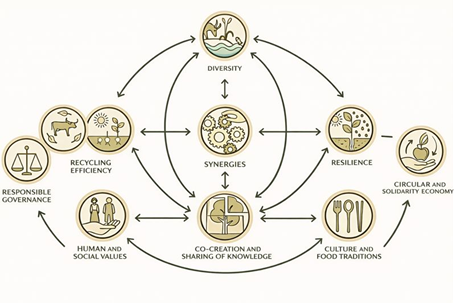
Table 1: The ten elements of agroecology and their guiding values or indicators
| Diversity | Variety and balance among crops, animals, trees, and activities, products and services. |
| Synergies | Integration and cooperation among system components, fostering interactions between crops, livestock, trees, soil and landscapes. |
| Efficiency | Improve resource use and self-sufficiency by reducing external inputs and optimizing soil fertility, pest management and household productivity. |
| Recycling | Reuse and circulation of resources via biomass recycling, water conservation, local seed practices and renewable energy use. |
| Resilience | Strengthen the system’s ability to adapt and recover, focusing on income stability, vulnerability reduction and autonomy from debt. |
| Culture and food traditions | Healthy and culturally rooted food systems, including local diets, food identities and traditional knowledge in preparation practices. |
| Co-creation and sharing of knowledge | Collective learning and innovation through horizontal knowledge sharing and engagement with agroecological networks. |
| Social and human values | Fairness, empowerment and community well-being, promoting inclusion of women and youth, and ensuring decent working conditions. |
| Circular and solidarity economy | Local and fair markets, farmers networks and fair connections between producers, consumers, and intermediaries. |
| Responsible governance | Collective organization and participation in decision-making, empowering farmers and ensuring fair management of land and resources. |
3. Results
3.1 Systematization of Meetings at Granja Mibro
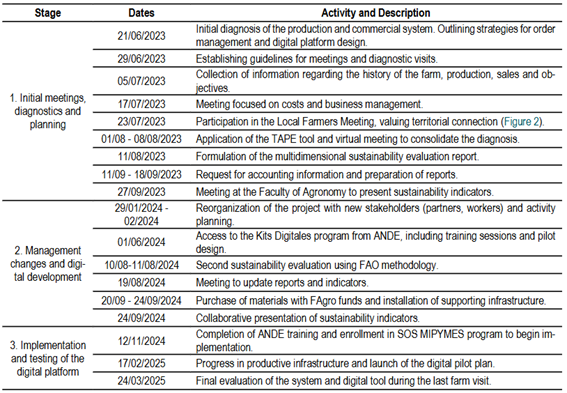
Since June 2023, a series of meetings accompanied the innovation processes at Granja Mibro, addressing transformations in management practices, technological adoption, and the strengthening of community and institutional linkages. The main activities are outlined below (Table 2).
3.2 Systematization of Meetings at Domo Tortuga
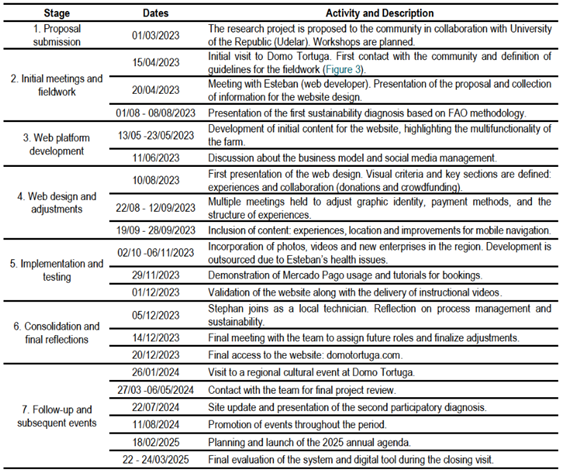
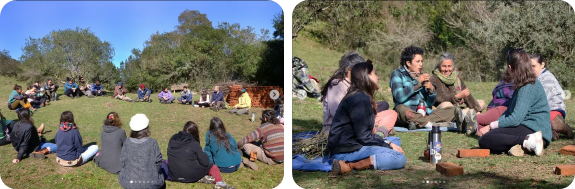
Meetings are summarized in stages of the digitalization process along with their associated changes (Table 3).
3.3 Agroecological Performance for the Two Studied Systems
Table 4 presents a summary of the agroecological performance for the two evaluated systems across three phases: initial (Aug-23), mid-term (Aug-24) and final (Mar-25). Performance scores between 50% and 74% indicate a system transitioning toward agroecology, while values of 75% or higher reflect advanced agroecological systems (FAO, 2019).
Table 4: Performance of Mibro and Domo Tortuga in 2023, 2024 and 2025 according to the elements of agroecology

Mibro’s performance increased from 64% at the initial stage to 84% at the final stage (Table 4), indicating a transition from an emerging to an advanced agroecological system. Domo Tortuga started higher and maintained its status as an advanced system throughout the study (with performance consistently around 80%). Overall, both systems show sustained adoption of agroecological practices, with Mibro exhibiting notable improvement over time, while Domo Tortuga demonstrates stability in performance.
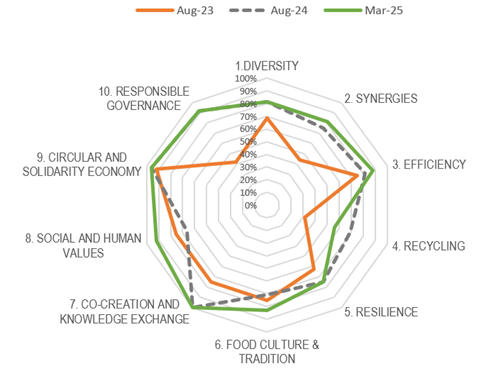
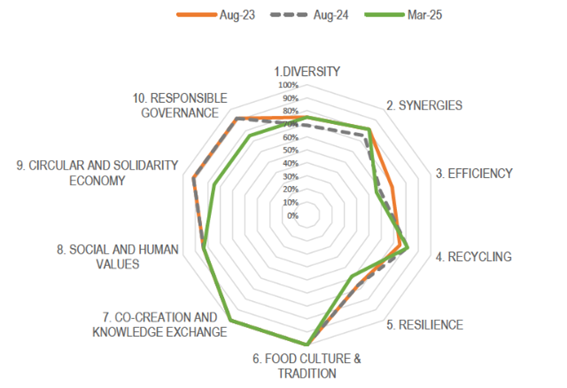
Details about the elements that make up these performances can be seen in Figures 4 and 5.
3.4 Diagnosis Based on the Agroecological Performance of Granja Mibro
The agroecological characterization, based on the main outlined elements, is presented below.
Mibro started with a moderate agroecological performance (64% in Aug-23) and showed steady improvement over time, reaching 84% by Mar-25. Key elements driving this progress (Figure 4) included increasing diversity (from 69% to 81%), enhanced synergies (from 44% to 81%) and remarkable progress in recycling (from 31% to 56%). Efficiency also showed steady improvement, reaching 88% by the final stage. The circular economy dimension remained consistently strong and stable (92-96%). Cultural and traditional practices, together with knowledge co-creation, maintained high performance across all evaluation stages (75-100%). Social values improved significantly (from 75% to 92%), while governance showed the most remarkable increase (from 42% to 92%).
3.4.1 Diversity
Increasing diversity (from 69% to 81%) is clearly reflected in Mibro’s broad range of productive activities and continuous diversification efforts. The farm occupies 20 hectares of agroecological farmland, managed and owned by the family of Juan Miraballes and his partner, Victoria Nieves. Every year, they grow a large number of vegetable crops (between 20 and 50 varieties depending on the season), along with emerging fruit production and the introduction of beehives (in 2024) to improve pollination and obtain honey for household consumption.
Animal diversity also expanded (since mid-2024) with the incorporation of a rotational cattle grazing system through partnership and new mobile chicken coop projects supported by the Ministry of Agriculture (MGAP) (MGAP, n.d.), integrating animal and vegetable production.
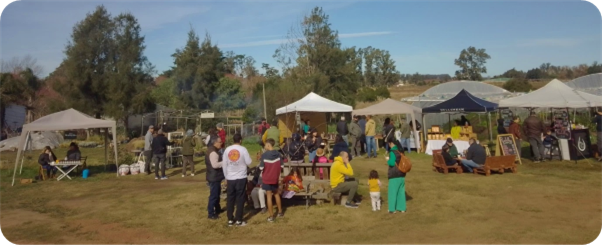
Diversity also extends to services and marketing channels: home delivery orders, a local shop, and the on-farm market “Encuentros de la Granja.” There, they offer vegetables, seedlings and flowers, homemade preserves made by Victoria under the brand “La Peregrina,” as well as eggs and fermented products made by neighbors.
3.4.2 Synergies
Synergies are strengthened (from 44% to 81%, during the evaluation period) through the integration of the soil-plant system, plant and animal production, and overall connectivity within the agroecosystem. The soil is continuously protected using organic residues and cover crops, with regular rotations and minimal disturbance. Vegetables are arranged in association according to their architecture, and since 2023, fruit trees have been planted between rows every 5 meters, alongside “biological corridors” of aromatic plants that support biological pest control. Animal integration is further enhanced by the legal authorization for on-farm slaughter (Law No. 20.097) (Poder Legislativo, 2022) and by government support to implement a combined system of vegetables and poultry.
3.4.3 Efficiency
Efficiency is reflected in the low use of external inputs and a level of productivity that meets the household’s needs.
Since its early days, the farm has leaned more toward a commercial model than a purely productive one. Of the total income, 55 to 65% comes from the sale of vegetables (60% of which are produced on-site), 20% from preserves ("La Peregrina"), and another 20-25% from the resale of chickens and eggs, with a small share from fermented products. Since 2024, the number of weekly customers has ranged from 40 to 70, depending on the season. In 2025, while the number of clients has declined, the average value of each order has increased.
Approximately 20 to 30% of inputs are produced on the farm itself, with the rest sourced from nearby suppliers. As a step forward, in 2025 the farm is working on its own bio-input production facility and a protocol of practices based on daily record-keeping.
3.4.4 Recycling
Initially, recycling levels on the farm were considered low because plastic waste was disposed of through the conventional waste system. However, in 2024, Mibro became a collection center for plastic “ecobricks” in partnership with the organization Sembrando Conciencia. They also made progress in implementing a drip irrigation system for both fruit trees and vegetables. In 2025, the organization responsible for waste management ceased its operations, and Victoria and Juan are currently seeking alternative solutions.
3.4.5 Resilience
Sustained annual economic growth of about 10% has enabled the household to meet its needs and continue investing in infrastructure and housing. This resilience has been reinforced by institutional support, including an MGAP subsidy for structural conversion (MGAP, n.d.), and training in management and digitalization provided by ANDE (Agencia Nacional de Desarrollo, 2023).
Although production remained variable in 2025, partly due to evolving goals and system adjustments, the farm has begun implementing strategies to address these challenges. These include expanding protected crop areas and building customer loyalty through the enhancement of both the on-farm store and the local market, where added value is created through their own line of artisanal food products.
3.4.6 Culture and Knowledge Exchange
Mibro received support from the local municipality to become a cultural hub, so to host courses, workshops, craft demonstrations, and other community activities. Since October 2022, the farm has held over ten editions of the “Encuentros de la Granja” (farm gatherings) with neighboring farmers, each attracting 300 to 400 participants.
By late 2024, Juan and Victoria decided to focus more on their own farm market, expanding their product range and adding value through locally inspired gastronomy. Their connection with the local community extends beyond commerce, fostering relationships based on trust and mutual support.
Social media (especially Instagram and WhatsApp) has played a key role in their interactions with visitors, consumers and producers who share their philosophy or are curious about their work.
A major milestone in 2024 was the reactivation of the regional Agroecology Network in Maldonado, where Mibro took a leading role and now represents the group in monthly meetings held in the capital.
In 2025, the farmers were featured on the national television program De la Tierra al Plato, hosted by chef Hugo Soca. Initiatives like this connect largely urban audiences to the value of local food production.
3.4.7 Social and Human Values
In 2024, Mibro struggled to maintain a stable workforce as several employees of the region migrated to the city. However, by the end of the year they successfully established a more consistent team of two permanent workers (each working 6-hour shifts) and one seasonal worker.
Work planning was reorganized: at the end of each month, tasks for the upcoming month are scheduled, supported by weekly goals aligned with the biodynamic calendar, which guides daily agricultural practices and crop management.
3.4.8 Circular and Solidarity Economy
Mibro’s main strength and appeal comes from its direct connection with consumers, both online and in person, and gradually improved through hands-on experience. The business promotes values of a circular economy and the “zero-kilometer” movement (Ecoembes, 2022), which helps build strong ties with socially and environmentally conscious consumers.
3.4.9 Responsible Governance
Before 2024, the farmers felt that the effort to maintain agroecological or organic production was mainly driven by individual consumers and partners committed to ethical consumption. Over time, these actors have gained more influence in local decision-making. Currently, farmers recognize growing institutional support, particularly due to the reactivation of the regional Agroecology Network and new partnerships with public agencies such as MGAP and ANDE.
3.4.10 Digitalization and Sustainability at Mibro
Mibro began its digitalization journey in 2023 with the goal of enhancing direct-to-consumer sales through digital tools. This effort was guided by a territorial approach and collaborative planning process, which led to:
The design of an app for online sales and technical support.
A shared platform co-created with neighbors and local technicians.
Crowdfunding and membership strategies to foster customer loyalty and generate stable income.
A commercial model focused on long-term relationships rather than sales volume.
In 2024, Mibro joined ANDE’s Kits Digitales program (Modo Digital, 2024), which provided:
Ten hours of training in digital tools and strategies.
The development of a pilot plan envisioning automated order processing via WhatsApp, a customer database, automatic invoicing, a membership system, and collective investment.
Assessment of resource needs to apply for ANDE’s program SOS PYMES, through which they obtained non-repayable funds.
With funding received, the first phase was launched in October 2024: an e-commerce website, advanced purchase options, a logistics tablet, and improved data management using available software. However, the funds were insufficient to fully implement the original plan, resulting in a gap between the intended design and the real outcome (see Table 5).
Table 5: Comparison between original plan and actual outcomes achieved
| Plan Element | Original Plan | What was actually achieved |
|---|---|---|
| Sales channel | Personalized web application for online sales. | Functional website for orders and advance payments. |
| Order automation | Integration with WhatsApp for automatic order management. | Manual or semi-automated methods using previous tools (spreadsheets). |
| Data and customer management | Software that creates customer databases and profiles. | Improved internal organization, but without specific new software. |
| Automatic invoicing and reporting | Automatic generation of invoices and reports. | Not implemented. |
| Membership and crowdfunding system | Platform for memberships and the possibility of collective investments. | Idea in development, not yet implemented. |
| Technical consulting | 10 hours of consulting as part of Kits Digitales. | Consulting provided during the design of the pilot plan. |
| Estimated investment | USD 8,000 to 10,000. | Around USD 3,000. |
| Technological infrastructure | Advanced software, integrated system. | Tablet for delivery. |
| Digital marketing | Strengthened by updated strategies and targeted segmentation. | Still through Instagram, Facebook, and WhatsApp. |
3.5 Diagnosis Based on the Agroecological Performance of Domo Tortuga
In Domo Tortuga, diversity remained stable at 69-75%, while synergies stayed consistently stronger (75-81%). Efficiency decreased over time (69% to 56%), reflecting some challenges in profitability. Recycling was consistently high (75-81%), and resilience showed a small decline (67% to 58%). Cultural and traditional practices, knowledge co-creation and social values remained very high and stable (83-100%), reflecting sustained community engagement and local practices (Figure 5). Circular economy and governance decreased slightly (92% to 75%). Overall, Domo Tortuga remained an advanced agroecological system.
3.5.1 Diversity
The family farm, managed by Isabel Paravis, Miguel Fernández and their daughter Iara, is part of two communities located between Sierras de Rocha and Sierras de Maldonado that actively promote biodiversity conservation, native forest regeneration, and the collective management of water resources.
Since 2020, they cultivate an agroecological edible forest spanning over 2,500 m², with support from Eccosur (Proyecto ECCOSUR, n.d.). More than 200 trees have been planted, including a diverse mix of fruit-bearing and native species such as pitanga, arazá, guayabo del país and yerba mate. In 2024, the focus shifted toward expanding fruit production through the addition of new trees and the installation of a modern irrigation system, while gradually reducing vegetable-growing areas.
By 2023, their 15-meter circular garden grew a variety of crops, including zucchini, tomatoes, leafy greens, medicinal herbs, and ornamentals. The harvest supports household consumption and community-based exchanges.
The property also operates as a cultural and social center, with backing from the MEC (Ministerio de Educación y Cultura, 2022). It hosts weekly activities such as yoga, dance and martial arts, along with weekend workshops on regenerative gardening, cooking and events for women and children. Accommodation facilities are currently under construction, with a view to developing ecotourism opportunities in the near future.
This agroecological system stands out for its biological and social diversity, supporting native wildlife, encouraging intergenerational learning, and including people with diverse abilities.
3.5.2 Synergies
The farm, like others in the region, follows a permaculture approach, which emphasizes landscape design that replicates natural patterns and ecological relationships (Ferguson & Lovell, 2014). This is reflected in the combination of productive and conservation areas, the use of perennial species, and the integration of fruit trees, vegetables and flowers to boost biodiversity and pollination. Landscape diversity is also maintained through ongoing negotiations of the families with nearby industrial forestry operations, helping to protect the two highland communities that actively safeguard biodiversity and the shared use of local water sources. The associations Mborayú and Quebradas del Yerbal have achieved formal recognition from the government for their environmental contributions, including tax reductions on land contributions.
Community members actively participate in maintaining the ecosystem by regularly removing invasive weeds (such as blackberry) and to reforest with native and multipurpose species. Farmers identify themselves as part of an ecological corridor that extends from the Sierras de Carapé to the coast, committed to its protection.
3.5.3 Efficiency
No chemical products are used for pest or disease control, nor for fertilization. The use of external inputs is limited to industrial materials, tools, seedlings and similar items, many of which are exchanged within the community.
The efficiency of the enterprise is still considered low, with production currently meeting only part of the household’s needs. Most of the family’s income comes from off-farm work. The income generated on the farm (mainly through activities and workshops), along with support from organizations, is reinvested into the project and helps covering basic living costs.
The family aims for the farm to become their main source of income within the next three years. For now, their priority is supporting Iara as she begins high school.
3.5.4 Recycling
Organic materials are consistently reused in the production process, many times for making on-farm inputs. Plastic waste goes to Rocha for proper disposal, while bottles are creatively reused in construction. Seed and seedling exchanges among neighbors are common.
Water conservation practices include ecological toilets and a rainwater harvesting system. With support from the MEC, the irrigation system is being fully upgraded (with new ponds and natural filtration) and should be almost complete by 2025. Energy is supplied by four solar panels.
3.5.5 Resilience
The design implemented at Domo Tortuga aims to build resilience and adaptability. However, income and production remain irregular, as new investments are required each year. Continued support from the community and visitors plays a key role in sustaining the initiative, mainly through task-sharing and assistance with site maintenance.
3.5.6 Culture, Food Traditions and Knowledge Exchange
The initiative celebrates local food culture by preparing simple, seasonal meals with organic ingredients sourced from the nearby Saturday market. Neighbors are welcomed with homemade dishes like stews, and the space frequently hosts cooking workshops and activities focused on preserving Guaraní cultural traditions, such as traditional corn planting cycles and yerba mate ceremonies.
Since 2020, with the support of the Eccosur project (Proyecto ECCOSUR, n.d.), the farm offers seasonal ecological workshops, open to people of all ages and backgrounds. The community in Sierras de Rocha continues to grow, attracting families interested in sustainable living and in enrolling their children in local schools like La Colmena and School No. 86.
3.5.7 Social and Human Values
The family manages the economy internally, exchanging labor with trusted community members, mostly neighbors. Most of the work has focused on construction projects and recreational activities. Women in the region hold key leadership roles, while children actively enjoy and engage in the family’s initiatives and events.
3.5.8 Circular and Solidarity Economy
Regional exchange and local collaboration are at the heart of the project’s economy. Most products and services are traded within the region, promoting mutual support and short supply chains, while staying open to visitors and new partnerships.
Over the past year, connections with urban consumers and institutions have grown. Domo Tortuga’s visibility has increased through active participation in online (Instagram and WhatsApp) and face-to-face networks that encourage knowledge exchange. Part of the resources and institutional support received are reinvested in the surrounding communities, what reinforces local reciprocity and shared benefits.
During the last evaluation period, the economy scores slightly decreased (from 92% to 75%), mainly due to work overload and the family’s challenge to balance rising external demand with their own needs.
3.5.9 Responsible Governance
Farmers’ rights are upheld through strong family networks, and government programs help strengthen the region while encouraging sustainable initiatives. The associations Mborayú and Quebradas del Yerbal have received official recognition for their environmental contributions, including tax discounts.
From the beginning, land acquisition was guided by a community-focused approach, with clear rules regarding access and use. However, issues of equity in decision-making started to emerge, especially with the arrival of new residents who bring different perspectives.
3.5.10 Digitalization and Sustainability at Domo Tortuga
Between 2023 and 2024, a web platform was created and launched to present Domo Tortuga along with other regional initiatives. The platform brings together the project’s philosophy, activities and products developed since 2020, and introduces new ways for users to get engaged, such as booking visits and experiences, making donations to support the water system renovation (including a crowdfunding campaign) and completing purchases or reservations via Mercado Pago. The main stages of this digital development process are summarized below (Table 6).
Table 6: Phases of the digital strengthening process at Domo Tortuga
| Phase | Period | Main Actions | Results and Learnings |
|---|---|---|---|
| 1. Project systematization | 2020-2022 | Gathering productive and exchange experiences. | The project’s identity takes shape through relationships and shared experiences, even without a formal digital presence. |
| 2. Initial design and objectives | 2023 | Website development -writing texts and selecting images. | The website reflects the philosophy of the project and includes reservation and donation features (Figure 6). |
| 3. Launch and implementation | 2024 | Website launch with payments and bookings via Mercado Pago. | While the platform is used for internal planning, broader public use is still needed to unlock its full potential. |
| 4. Evaluation and adjustments | 2024-2025 | Evaluation of digital use and tensions with in-person activities. | The strategic importance of the website grows, though generational gaps in its use are evident. |
| 5. Consolidation and next steps | Ongoing (2025+) | Growing public interest in more visits and experiential activities. | Opportunities for new income digital offers are explored, despite some operational challenges. |
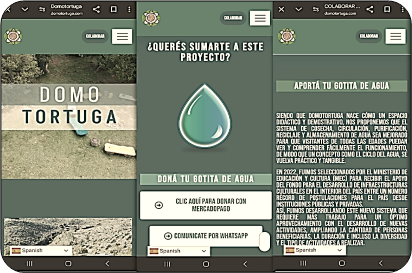
Evaluations helped identify key themes and outcomes across the digital project’s main components (Table 7).
Table 7: Perspectives on the digital project components
| Evaluated Aspect | Outcome |
|---|---|
| Project representation on the website | Accurate, clear and appreciated by the team. |
| Functionality as a booking platform | Functional but underutilized. |
| Donations and crowdfunding | Potential yet to be fully realized. |
| Communication and digital marketing | Word of mouth and direct communication prevail; social media used sporadically. |
| Generational usage differences | Iara takes a more active role in digital engagement, while Isabel and Miguel use digital tools selectively. |
| Operational limitations | Limited time available to meet external demand. |
| Identified opportunities | Income generated from experiences; with the website supporting outreach and future planning. |
The projects of Domo Tortuga and Granja Mibro (Figure 7) can be placed along a continuum, which ranges from open and collaborative systems to closed and proprietary ones (Wolfert et al., 2017), depending on how they organize, share knowledge and use digital tools. A second continuum contrasts those ready to adopt technologies to replace costly labor (the “Digital” profile) with those who aim to preserve small-scale, manual farming and maintain a critical view of automation (the “Artisanal” profile) (Bossard, 2020).
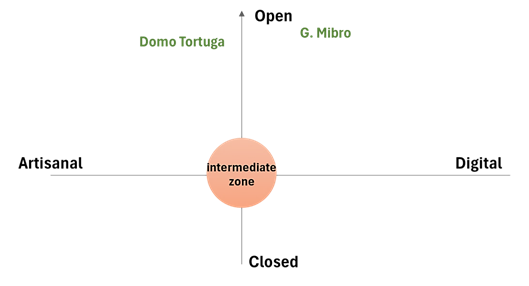
In this framework, Granja Mibro is in the open-collaborative quadrant and moves along the continuum between the artisanal and digital poles, as it integrates simple digital tools that gradually evolve into more complex management models within agroecological systems.
Domo Tortuga is positioned in the artisanal and open quadrant, as it integrates very simple digital tools prioritizing community learning, manual work and soil regeneration.
4. Discussion
4.1 Systematization of Meetings
The number and duration of meetings were essential for building trust and delving into the structural and functional challenges of the agroecosystems, issues that would not emerge spontaneously. Establishing a flexible agenda based on farmers’ availability proved effective, as did the combination of participatory methodologies (Fals Borda, 1999; Midgley, 2000) that ensured a respectful and productive collaboration.
This approach facilitated the caption of tensions, trajectories and meanings that are often overlooked. It reveals how local actors appropriate or reinterpret digital technologies according to their values, priorities and capacities, often generating educational processes in the meantime (Salemink et al., 2017; Van Dijck, 2013). It also sheds light on concrete forms of resistance, creativity and adaptation that can inspire similar initiatives elsewhere, contributing to broader debates on rural development, sustainability and techno-politics from a critical and situated perspective.
4.2 Performance of Granja Mibro
The agroecological performance of Mibro (see Figure 4 and Table 4) demonstrates growth within a complex system that integrates soil quality, productivity and resilience, aiming to balance both production and commercial activities. Despite progress in diversification, management, governance and social connections, these processes do not follow linear paths and are not free from tensions (Altieri & Nicholls, n.d.).
A key aspect is the synergy between different types of production and the use of surpluses to add value. This improves resource-use efficiency and strengthens the agroecosystem against disturbances (Gliessman, 2018). However, it requires careful planning and stable markets that support such diversification (Wezel et al., 2020). Maintaining practices like recycling also plays a central role in moving toward self-sufficiency (Tittonell, 2014).
The adoption of digital technologies can boost efficiency and support better decision-making (Brennen & Kreiss, 2016), although it also presents challenges related to access and costs (Klerkx et al., 2019). In Mibro’s case, the digitalization of the commercial system had to be adjusted (and simplified) to the available budget constraints and supported through public funding (Modo Digital, 2024).
Collaborative work with institutions proves essential for reducing vulnerabilities, empowering farmers and strengthening territorial governance, thereby fostering co-innovation and resilience-building processes (Darnhofer, 2020; Ostrom, 2009).
The overall analysis shows an improvement in agroecological performance, although it remains dynamic and conditioned by both internal decisions and external contexts (Altieri & Nicholls, n.d.; Gliessman, 2018).
4.3 Digitalization and Sustainability at Mibro
Aiming to optimize time and communication with customers, Mibro started the automation of order management and the development of a web platform, recognizing the potential of digitalization to improve logistics and the consumer experience in agri-food systems (Klerkx et al., 2019). This strategy aligns with trends that see customer loyalty and product differentiation as key to economic sustainability in agroecological markets (Smith et al., 2013; Van der Ploeg, 2003).
The conceptual map about current debates on agricultural digitalization (Figure 7) locates Mibro in the open-collaborative quadrant and moving along the continuum between the artisanal and digital poles, as it integrates simple digital tools (social media, communication apps) that gradually evolve into more complex management models within agroecological systems. This reflects a form of digitalization in which technology complements (rather than replaces) traditional knowledge and the relational dimension of work.
The initial financial investment and the increased workload associated with managing digital tools revealed that digital transformation requires more than just adopting new technologies; it involves rethinking production, commercial processes and data management (Eastwood et al., 2019). Therefore, access to affordable, open-source technologies and digital training tailored to rural contexts becomes essential (FAO, 2016).
On an organizational level, redistributing responsibilities within the team and building partnerships with academic institutions (Udelar, UTEC, CURE) and tech incubators (LATU, ANII) may support more sustainable pathways for adopting new technologies. Furthermore, farmers’ active participation in research projects fosters knowledge networks and territorial governance, strengthening an inclusive and context-appropriate innovation model (Bellon-Maurel et al., 2022; Ostrom, 1990, 2009; Tisselli, 2020).
4.4 Performance of Domo Tortuga
Domo Tortuga stands out for its strong local identity, expressed through cultural practices that are deeply rooted in and shared with the surrounding community (Figure 5). This sense of identity, combined with the development of territorial networks, supports a model of collaborative governance where internal rules contribute to sustainability and autonomy (Ostrom, 1990).
As Borrini-Feyerabend et al. (2004) point out, participatory governance involves continuous negotiation and strategic interaction among actors with diverse priorities and worldviews, an experience that shaped the progress of this project. While this diversity presented challenges, it also enriched the action-research process, echoing Negri and Hardt (2004) notion of “the common” as a space of encounter shaped by difference.
The consolidation of Domo Tortuga as a rural cultural center places identity and heritage as key drivers of local sustainable development (Escobar, 1995; Gliessman, 2018). Yet, achieving long-term economic sustainability remains a major concern (Champredonde & Gonzalez Cosiorovski, 2016). Accordingly, current priorities include improving infrastructure and selectively integrating communication technologies to extend the project’s outreach, always in line with the family’s evolving capacities.
4.5 Digitalization and Sustainability at Domo Tortuga
The relationship with digital technology revealed several nuances. Although farmers acknowledge its usefulness, they continue to prioritize face-to-face interactions, word of mouth and trust. Social media platforms like Instagram, WhatsApp and email play a complementary role, without a clear strategy. According to the dimensions of the digitalization debate (Figure 7) (Bossard, 2020; Wolfert et al., 2017), Domo Tortuga is positioned in the artisanal and open quadrant, as it integrates very simple digital tools (social media, communication apps) within an agroecological model that values community learning, manual work and soil regeneration.
The generational gap between Isabel and Iara in web usage highlights disparities in technological adoption (Lee & Coughlin, 2016), although participatory spaces have fostered meaningful learning experiences.
Farmers expressed concern that social networks may lead to internal disconnection by focusing on external relationships. This issue has been explored by Salemink et al. (2017) and Van Dijck (2013), who warn about the potential negative effects of ICTs on community cohesion. Such concerns emphasize the importance of adopting an ethical approach to technology adoption (Da Silva, 2019) and recognizing the limits of digitalization in specific local contexts (Frigerio, 2008; Salemink et al., 2017; Van Dijck, 2013).
In this regard, the family carefully selects tools that align with the project’s philosophy, embracing the concept of “appropriate technology” (Schumacher, 1973). Evaluations from 2024 and 2025 indicate that the web platform fulfills basic functions for institutional presentation and documentation.
It is evident that digitalization is not a one-size-fits-all solution. Its impact will depend on how well it integrates with cultural identity and the local economy to foster a sustainable model over the medium term.
In light of these findings, Agroecological Digitalization (AD) can be conceptualized as a situated, critical, and selective way of using digital technologies in agroecological systems to strengthen sustainability. From basic communication tools to more advanced management practices, it includes different levels and purposes of digital use, without displacing the practices, values, and community relationships that support these systems. It shows an ongoing and negotiated process, shaped by economic, generational, institutional, and symbolic tensions, and unfolds along an artisan-digital continuum that preserves local autonomy and context-based decision-making.
5. Conclusions and Reflection
This document examines the cases of Domo Tortuga and Granja Mibro, two family farms in eastern Uruguay that combine agroecological practices with digital technologies, exploring their potential contributions to local sustainability. These cases illustrate rural innovation as a dynamic process shaped by internal factors (such as family choices and community organization) and external influences (like funding, institutions, markets and technology).
The use of plural, participatory and qualitative methodologies contributed to empower family farmers in their decision-making processes on their farms and within their regions during the study period. Their potential to generate valuable information stands out in contexts where there is some resistance to sharing data or where concrete data is lacking.
While the findings cannot be applied to every context, they offer a grounded and meaningful understanding of the situations studied. Both projects face common challenges in the agroecological transition, yet they also demonstrate resilience and adaptability. Mibro focuses more on efficiency improvements; whereas Domo Tortuga highlights social and cultural aspects, together illustrating diverse pathways to sustainability from an agroecological approach.
Both initiatives incorporated digital tools, including social media and web platforms, but faced implementation challenges. Strengthening the weaker aspects of these systems demands extra effort, often difficult for family farmers to sustain on their own. Therefore, connections with local institutions and networks of producers and consumers become essential to support the process without overwhelming participants.
The pilot experiences received support from ANDE and Udelar. In a close future, it will be crucial to diversify funding sources, strengthen internal capacities, improve infrastructure and provide tailored training. Knowledge co-creation among diverse stakeholders, based on respect for local values, can inspire future interventions (from both policy or academic perspectives) in rural areas.
Based on the synthesis of findings, it is possible to outline some exploratory recommendations for other territorial projects with similar visions:
a) Innovate from territory and practice.
Digitalization becomes meaningful when it responds to concrete needs (such as direct marketing, information management, or communication with clients and networks) rather than being a goal. It can be better to start small, test, adapt and share. Technological appropriation is stronger when grounded in daily experience and shared in collective spaces.
b) Ensure coherence between technology and agroecological values.
Digitalization can support sustainability, but it cannot replace community bonds or regenerative practices. It is essential to prioritize open, collaborative and accessible technologies that strengthen productive autonomy (e.g., free software, cooperative platforms, direct farmer-consumer communication).
c) Foster intergenerational learning spaces.
Younger people often contribute with stronger digital skills, while older ones can bring management experience. Intergenerational exchange proved crucial in the learning process.
d) Promote artisanal work as added value.
Both cases emphasize manual, time-intensive and careful production processes as part of their identity and market differentiation. Artisanal and digital practices should not be seen as opposites but as complementary. Digital tools can help communicate and expand the artisanal dimension.
Future research could continue to explore:
a) Differential impacts of digitalization among actors.
There is a need for evidence on how digital tools affect profitability, workload, mental strain and gendered division of labor across different production units and regions.
b) Emerging forms of “agroecological digitalization.”
The cases reveal unique hybrids of technology, autonomy and local knowledge. Future research should examine how co-designed technologies create new networks of knowledge.
c) Effects of digital networks on rural social organization.
Digitalization transforms not only production but also social relations: cooperation, reciprocity and territorial identity.
d) Assessing the limits and risks of the digital model.
The cases display caution toward automation and technological dependence. Long-term impacts on autonomy, technological sovereignty and intergenerational knowledge transmission should be examined further.
Some technical and economic aspects require complementary analysis using quantitative or comparative tools. Farms and regions could also benefit from more structured longitudinal monitoring. Future research and technical assistance programs will be essential to address these gaps. The value (and limitation) of this study lies in following the adaptation processes during a specific period (2022-2025), shaped by post-pandemic dynamics, globalization and climate crisis, as well as by history and subjective experience.
Future research should delve deeper into the gaps, learning processes and forms of resistance that accompany technological adoption in rural agroecological contexts, as this study focused mainly on current uses of digital tools.
To guide public policies and strengthen territorial networks, it is important to consider:
a) Public support programs could include training and technological accompaniment modules framed within agroecological principles.
b) Both cases demonstrate the need for intermediary spaces among farmers, academia and the State, to test technologies, systematize learning and scale experiences without losing local identity.
c) Connectivity, access to devices and technical training continue to be critical gaps. Strengthening rural connectivity policies, training “digital extensionists” and funding for basic technological adoption should be prioritized.
d) The systematization or documentation of experiences is a powerful tool for learning and achieving local recognition. Support, communication and dissemination of local initiatives for sustainability are essential to foster territorial development.
Through this process, we are pleased to have contributed to making visible and sharing the value of territorial experiences that embody not only useful productive practices but also valuable forms of knowledge, cooperation and inspiration.
We hope to make a meaningful contribution to current debates, even though the fast pace of change makes it difficult to fully process and integrate emerging information. Digitalization processes both shape and reflect these broader transformations. Focusing on a specific post-pandemic moment, when initiatives like those studied were just emerging, we highlight the resilience and courage of local actors who experiment with solutions in times of crisis, often unseen in wider discussions. We value the opportunity to witness and share the experiences of a sector in transformation.

