




 Inglés (pdf)
 Articulo en XML
 Referencias del artículo
 Traducción automática
 Permalink

Introduction
The revolution of the digital era has impacted educational practice, requiring the incorporation of technological tools into teacher education courses. Technology opens up new avenues for English as a Foreign Language (EFL) instruction by making lessons more efficient, engaging students more effectively, and thereby enhancing their language learning. The quality of instruction increases with the use of student-led and interactive digital environments (Choi et al., 2025; Lee & Jeon, 2024).
A core pillar of this transformation resides in the Technological Pedagogical Content Knowledge (TPACK) model, which emphasizes the intersection of technology, pedagogy, and content knowledge for effective instruction (Mishra & Koehler, 2006). The ability of EFL teachers to integrate digital tools into language instruction remains critical for cultivating communication skills and learner engagement. However, empirical evidence indicates that many pre-service teachers lack the necessary TPACK competencies, which hinders the successful implementation of educational technologies (Ma et al., 2024; Muslimin, 2024).
At the same time, reflective practice has long been regarded as a keystone of teacher education and professional development. Educators use formal reflection to analyze instructional practices, identify areas for improvement, and refine teaching strategies (Rodgers, 2002; Schön, 1983). The use of electronic reflection tools such as Padlet opens new possibilities for developing self-awareness, metacognitive skills, and professional growth. Recent research suggests that digital reflection tools enhance teachers’ self-assessment abilities, enabling them to analyze and adapt instructional practices to better meet student needs (Kurniasari et al., 2024; Molaoa, 2024).
In this context, the present study seeks to explore the integration of Padlet, a multi-purpose web platform, with reflective practices to enhance the instructional capabilities of EFL student teachers at a leading public university in Vietnam. Specifically, the study explores: (1) the relationship between Padlet-mediated reflection and the development of TPACK; (2) the perceptions of EFL student teachers regarding the use of Padlet in classroom practices; and (3) the effects of reflection on self-awareness and professional identity development. With the present study, it is anticipated that the discussion of the effectual use of web platforms for teacher education shall be enhanced with new knowledge that can guide the courses with the purpose of increasing the pedagogic ability of the teachers of the future.
Literature Review
Technological Pedagogical Content Knowledge (TPACK) in EFL Teacher Education
The TPACK framework informs the integration of technology in teacher education by emphasizing that teachers must become proficient in three broad domains of knowledge: Content Knowledge (CK), Pedagogical Knowledge (PK), and Technological Knowledge (TK) (Koehler & Mishra, 2009). The framework encompasses the subdomains of Technological Pedagogical Knowledge (TPK) and Technological Content Knowledge (TCK), which reflect the complex influence of technology on teaching and learning processes (Choi et al., 2025).
Recent studies indicate that TPACK enhances the instruction of EFL by increasing teachers' skills in designing engaging lessons, using multimodal resources for learning, and promoting student participation through electronic tools (Gozali, 2024; Lee & Jeon, 2024). Yet, pre-service teachers find it challenging with the implementation of TPACK, especially the knowledge of using technology appropriately within language instruction practices (Molaoa, 2024). The research points out that teacher education courses need to directly cover the development of TPACK using well-designed practices and reflection with the guidance of instructors (Ma et al., 2024; Muslimin, 2024).
Reflective Practice in Teacher Education
Reflective practice constitutes a critical component of teacher education, fostering self-awareness, critical thinking, and continuous improvement (Schön, 1983; Dewey, 1933). Gibbs’s (1988) reflective cycle provides a structured framework through which teachers can analyze and refine their instructional practices by engaging in systematic self-examination.
Recent studies have underscored the significance of reflection tools in teacher education, as they promote self-exploration, the development of a professional identity, and pedagogical enhancement (Molaoa, 2024; Kurniasari et al., 2024). Research suggests that English as a Foreign Language (EFL) teachers are more likely to adapt to dynamic classroom environments, experiment with innovative instructional strategies, and tailor learning experiences to student needs when engaged in reflective practice (Choi et al., 2025; Ma et al., 2024).
A particularly valuable aspect of digital reflection is the use of collaborative online platforms, which enable peer review, the exchange of best practices, and constructive feedback from mentors and colleagues (Muslimin, 2024). Incorporating reflection into teacher education curricula supports the development of adaptive expertise and fosters a culture of continuous professional learning within educational institutions.
The Role of Padlet in EFL Teacher Education
One of the reflection tools that has proven effective in enhancing teacher education is Padlet. This digital platform enables teachers to document their experiences, engage in dialogue with colleagues, and track their professional growth over time. Recent studies indicate that Padlet supports the development of TPACK by offering a space for collaborative reflection, feedback exchange, and the sharing of pedagogical knowledge (Choi et al., 2025; Ma et al., 2024).
In the context of EFL instruction, Padlet has demonstrated high utility for facilitating interactive discussions, multimedia-based reflection, and asynchronous collaborative engagement among pre-service teachers (Lee & Jeon, 2024). Empirical evidence suggests that the platform encourages teachers to critically evaluate their instructional approaches, experiment with new teaching strategies, and actively participate in reflective dialogue with peers (Kurniasari et al., 2024; Molaoa, 2024).
Nevertheless, several challenges persist. Technical difficulties, limited digital literacy, and teacher resistance have been identified as key barriers to the effective implementation of Padlet and similar web-based tools (Muslimin, 2024). Furthermore, meaningful reflective practice may be difficult for pre-service teachers to achieve without appropriate mentoring and scaffolding (Molaoa, 2024).
TPACK and Reflective Practice: A Synergistic Approach
The integration of reflective practice and the TPACK framework within teacher education has been widely advocated as a strategic response to persistent challenges in teacher preparation (Ma et al., 2024). Evidence indicates that combining technology-enhanced reflection with targeted TPACK training equips teachers to integrate digital tools effectively into classroom instruction (Choi et al., 2025; Molaoa, 2024).
Fostering habits of reflection enables teachers to develop critical thinking skills, pedagogical flexibility, and a deeper understanding of the potential of technology to enhance instructional impact (Kurniasari et al., 2024). Empirical research underscores the importance of embedding structured reflective practice, guided discussions, and collaborative learning spaces into teacher education programs in order to maximize the synergy between TPACK and reflection (Muslimin, 2024).
Technology and reflective practice are both essential components in preparing teachers to meet the demands of contemporary classrooms. Recent scholarship highlights the significance of developing TPACK, the transformative power of reflective thinking, and the strategic use of tools such as Padlet in teacher education. Despite existing challenges, the path forward lies in designing teacher education programs that purposefully integrate guided reflection, collaborative engagement, and technological innovation.
The primary objective of this study is to examine the efficacy of integrating digital platforms-particularly Padlet-with reflective practices to enhance the pedagogical skills of EFL teachers at a major public university in Vietnam. Two theoretical frameworks inform the study: the Technological Pedagogical Content Knowledge (TPACK) model and Reflective Practice theory. TPACK, originally conceptualized by Mishra and Koehler (2006), further validated by Schmidt et al. (2009), and expanded by Koehler et al. (2014), captures the dynamic interplay between teachers’ knowledge of content, pedagogy, and technology-three core domains essential for effective instruction. In parallel, Reflective Practice theory draws on Dewey’s (1933) concept of “reflection-on-action” and Schön’s (1983) notion of “reflection-in-action,” emphasizing critical reflection as a core mechanism for teacher development (Rodgers, 2002).
This study seeks to explore the impact of integrating Padlet and reflective practices within an English language-teaching course for EFL student teachers. The research is guided by the following questions:
1.To what extent is the integration of Padlet and reflective practices, within an English language-teaching course, related to the development of Technological Pedagogical Content Knowledge (TPACK), as perceived by EFL student teachers?
2.What are EFL student teachers’ perceptions regarding the use of Padlet for various pedagogical purposes, including lesson planning, feedback exchange, and lesson plan adaptation?
3.In what specific ways do reflective practices contribute to student teachers’ processes of self-assessment and professional growth?
By addressing these research questions, the study aims to shed light on the pedagogical value and practical implications of incorporating digital platforms and reflective approaches in EFL teacher education. In particular, the findings are expected to offer valuable insights for teacher preparation programs in contexts where student teachers may have limited prior experience with critical self-reflection as a structured component of professional development.
Scientific significance
The proposed study aims to provide comprehensive insights into the integration of digital platforms and reflective practices in language teacher education, with a specific focus on EFL contexts in Vietnam. In particular, the study addresses three significant gaps in the existing literature:
1.The limited number of studies investigating the use of digital platforms (e.g., Padlet) in Vietnamese EFL teacher education.
2.The relative neglect of reflective practices in the training of EFL teachers in Vietnam.
3.The lack of integration of diverse data sources to gain a holistic understanding of student teachers’ perceptions and professional growth.
While digital platforms such as Padlet have gained increasing popularity in Vietnamese educational settings-especially during and after the COVID-19 pandemic-there is still a scarcity of research examining their specific benefits and challenges within EFL teacher education at the tertiary level. This gap is particularly relevant in relation to the development of pedagogical and technological competencies among pre-service teachers (Aamri et al., 2023; Alharbi & Khalil, 2022; Chan, 2022; Do et al., 2023; Jehad Ali & Ahmad, 2022; Sadry, 2022; Shoecraft, 2023). By exploring the potential of digital platforms to enhance EFL teaching skills and reflective engagement, the present study contributes to filling this critical gap in the Vietnamese context.
Although reflective practice has been consistently emphasized and adopted in teacher education programs in Western countries such as the United States (Dewey, 1933; Gibbs, 1988; Rodgers, 2002; Schön, 1983), it has been relatively underutilized in EFL teacher education in Vietnam. This limitation is particularly evident in the official lesson plan templates mandated by the Ministry of Education and Training of Vietnam (2020a, 2020b, 2022), which notably lack space for structured reflection. The absence of reflection within formal teacher training frameworks risks becoming a systemic omission passed down across generations, potentially contributing to persistent issues such as low teacher quality (Nguyen & Javorsky, 2025; Ministry of Education and Training, 2023).
While previous studies have examined the effects of individual reflective tools-such as journal writing or peer feedback-on teaching practices (Chiang, 2008; Do et al., 2023; Donyaie & Afshar, 2019; Park, 2022; Phan, 2019; Pow & Lai, 2021; Tavil, 2014), few have investigated the combined use of multiple reflective data sources. There is a gap in the literature concerning the integration of varied tools-such as weekly reflective journals, teaching philosophy statements, end-of-course surveys, and semi-structured interviews-to offer a more holistic understanding of how reflectivity fosters self-assessment and teacher development when mediated by a digital platform (Abednia et al., 2013).
Methods
Research Context
This study was carried out within the framework of the compulsory course Teaching Language Skills, part of the MA in TESOL program at a large public university in South Vietnam. The course integrated core components centered on the use of Padlet to support student teachers’ professional development. These components included weekly readings and discussions on language teaching methodologies, lesson planning activities, microteaching sessions, and the development of individual teaching philosophy statements. All assignments were aligned with the course’s overarching objectives, which emphasized learner-centered pedagogy, reflective practice, and the integration of digital tools for instruction.
In addition to the Padlet-based activities, student teachers were required to maintain reflective journals throughout the semester. While Padlet was employed for many collaborative tasks, the reflective journals were submitted independently through alternative platforms and served as a complementary space for deeper individual reflection.
The course enrolled 15 student teachers, of whom 14 voluntarily agreed to participate in the study. These participants had teaching experience ranging from one month to over a year and expressed similar aspirations to pursue careers in language teaching post-graduation. Among them, 73.3% had more than one year of teaching experience, and 71.4% identified as female. In terms of age, 80% of participants were between 20 and 24 years old. Based on the Common European Framework of Reference for Languages (CEFR), 93.3% demonstrated intermediate-to-advanced English proficiency.
Furthermore, over half of the participants (53.3%) were concurrently engaged in teaching across diverse educational settings-including private tutoring, language centers, and public K-12 schools. These varied professional contexts influenced how they adopted and engaged with Padlet. For instance, those teaching in larger classes or in environments with limited technological infrastructure reported greater challenges in implementing collaborative Padlet activities. In contrast, participants working in more flexible or technologically equipped settings used Padlet more creatively and with greater frequency. These contextual factors likely shaped the participants’ perceptions of Padlet’s usefulness and feasibility within their own teaching environments.
Additional demographic information is summarized in Table 1.
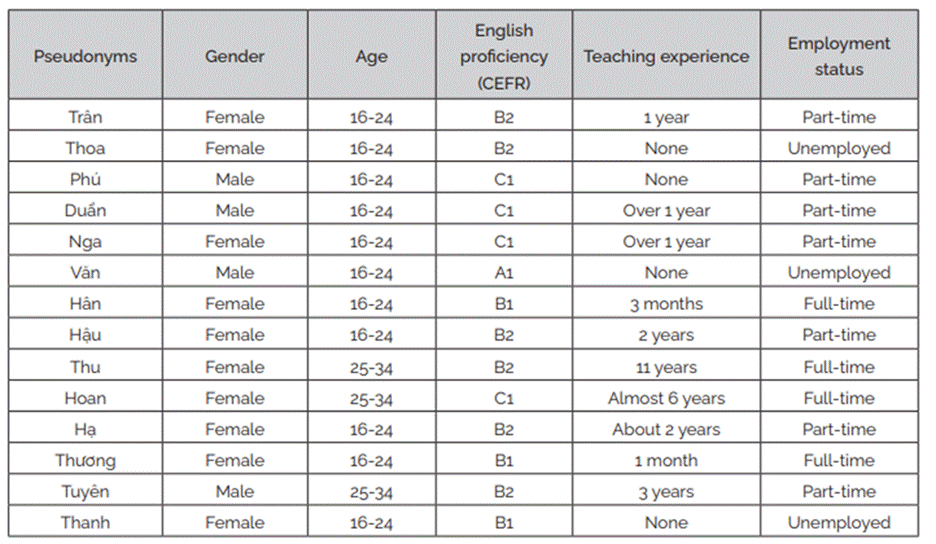
Since most participants had prior experience teaching EFL and were actively engaged in further developing their instructional skills through both theoretical coursework and practical training, they are referred to as student teachers, reflecting their dual role as both graduate-level learners and practicing educators in this study. Prior to data collection, all ethical considerations were taken into account, and informed consent was obtained from the participants.
Research Design
This study employed a mixed methods research design, incorporating both qualitative and quantitative approaches to comprehensively assess the impact of integrating Padlet (Waltemeyer et al., 2021) and reflective practice on students’ TPACK development. The quantitative phase analyzed end-of-course survey data to examine the association between course components (e.g., Padlet, reflective practices) and students' professional growth. Given the small sample size (n = 14), Spearman's rank correlation coefficient was used to measure the relationships among variables, complemented by descriptive statistics. The qualitative phase involved thematic analysis of student-generated data, including weekly journal reflections, teaching philosophy statements, and semi-structured interviews. These data sources were triangulated to identify participants’ perceptions, beliefs, and instructional development. The triangulation of results aimed to establish meaningful trends, highlight areas for instructional improvement, and underscore the perceived value of reflection and technology integration in teacher preparation.
Data Sources
Data were collected for the study from an English language education class of university students in the southern region of Vietnam. Padlet was the platform that the course instructor utilized for sharing materials, lesson plans, videos of the student teachers' microteachings, feedback, and amendments. Relevant materials and supplementary resources were uploaded weekly by the course instructor on Padlet. Assignments for the class and classwork were conducted using the platform as well. For example, the student teacher had to upload the lesson plan assigned to them at least a week before their microteaching for classmates' feedback. The video of the microteaching lesson was uploaded subsequently for classmates' viewing and feedback on Padlet. The student teacher was then expected to reflect upon the class lesson that they taught, read their classmates' feedback, and revise the lesson plan before the final submission for assessment.
In addition to lesson planning and microteaching, each student teacher composed weekly reflective journals that incorporated readings, lectures, discussions, and personal insights. To support reflective practices, Gibbs’ (1988) reflective cycle was introduced, providing a step-by-step structure with clear guidance to navigate the reflective process effectively. This approach was particularly suitable for inexperienced student teachers new to reflective practices, as it encouraged them to revisit and describe classroom experiences and issues they encountered, especially during their teaching practice. In addition, the course instructor provided feedback to foster deeper reflection.
Additionally, student teachers created teaching philosophy statements, completed an end-of-course survey, and participated in structured interviews. The survey employed a 1-5 Likert scale to gauge student teachers’ perceptions of the course components, with 1 representing “Strongly Disagree” and 5 “Strongly Agree.” Structured interviews with the 14 student teachers explored their beliefs, the perceived benefits of Padlet, and the ways in which reflective practices supported their growth as EFL teachers.
Data analysis
Data analysis involved both quantitative and qualitative examination, guided by the TPACK framework (Mishra & Koehler, 2006; Koehler et al., 2014; Schmidt et al., 2009) and Reflective Practice theory (Dewey, 1933; Gibbs, 1988; Rodgers, 2002; Schön, 1983). Quantitative data from the end-of-course survey underwent Spearman rank correlation analysis to explore relationships between students' TPACK perceptions and course components-specifically the use of Padlet and reflective practices.
Qualitative data from structured interviews, journal entries, and teaching philosophy statements were reviewed through thematic coding. Reflective Practice theory informed the analysis of the student teachers’ reflective journals, evolving teaching philosophy statements, and interview transcripts, examining the extent to which these reflections contributed to self-awareness, problem-solving abilities, and continuous improvement in their English language teaching skills. A color-coded codebook ensured coding consistency. Initially, a priori coding based on TPACK categories and Reflective Practice theory was applied; however, new codes emerged iteratively, expanding the coding scheme. These codes were then integrated into the analytical framework, resulting in the synthesis of two themes related to Padlet integration and three themes regarding the impact of reflective practices on teacher development.
Findings and Discussion
The integration of Padlet and reflective practices in the English language teaching course was positively associated with the student teachers’ development of TPACK. Over the duration of the course, participants demonstrated growth in TPACK knowledge, pedagogical skills, and instructional awareness, indicating evidence of professional learning. The findings of this study are discussed in light of the following research questions:
Research Question 1: Is the integration of Padlet and reflective practices within an English language teaching course related to the development of technological pedagogical content knowledge, as perceived by EFL student teachers?
To address this, a Spearman rank correlation was performed to explore the relationship between students’ TPACK development and course components, particularly how the use of reflective journal entries was organized on the Padlet platform. A moderate, positive monotonic correlation was found between students’ TPACK and course components (rₛ = .54, n = 14, p = .046, two-tailed).
Descriptive analysis further indicates that the integration of Padlet and reflective practices contributed to enhanced TPACK development. Most students self-rated their effort in the course-specifically reflective journaling on the Padlet platform-as excellent (85.7%). Course activities comprising reflection entries, lesson planning, microteaching videos, lesson plan modifications, and teaching philosophy statements delivered via Padlet were also highly rated, with 78.6% of students considering them very good or excellent in contributing to their TPACK development at the end of the course. Students’ TPACK levels were self-rated as satisfactory (42.9%), very good (35.7%), and excellent (14.3%). These findings align with previous research, which highlights the positive influence of technology in enriching students’ TPACK and class-wide interaction (Aamri et al., 2023; Alotumi, 2020; Chan, 2022; Do et al., 2023; Graham, 2011; Koh et al., 2010; Sadry, 2022; Sari, 2019; Shoecraft, 2023; Ta et al., 2023; Zainuddin et al., 2020).
Research Question 2: What are the perceptions of student teachers concerning the employment of Padlet for various activities, such as lesson planning, feedback exchange, and modifying lesson plans?
Two condensed themes emerged from students' reflective journal entries, the end-of-course survey, and individual interviews. These themes illuminate their perspectives on learning experiences and technology integration.
Enhanced Learning Experiences
Padlet integration revealed the extent of the benefits, which included engagement, feedback mechanisms, and class communication, highlighting the ability of the students to utilize technology for efficient language instruction. This ability was observed in their reflections on peer-created lesson plans, goals, accommodations, and inclusive instruction. For example, in her journal, Thu expressed enjoyment in using warm-up procedures and video incorporation within lesson plans that were shared on Padlet (All student teacher names are pseudonyms). This demonstrates her appreciation for multimedia and interactive components in lesson planning. Similarly, Hoan commended Padlet for enabling the sharing of ideas and collaboration, underscoring how the platform promoted community-building in classroom interactions. Thoa imagined an innovative classroom scenario using Padlet to encourage anonymous poem sharing:
My idea is to let the students put their poems anonymously on a platform that allow (sic) comment (sic) like Padlet, and ask them to give some meaningful and positive thought about others’ works. This way it can create some chucklesome time if the poems are funny and provide an opportunity for shy or introverted students to know what other people really think of them through the poem - which are just positive comments and can hopefully in some way help them feel more confident and open up to their friends.
This quote reveals how Thoa valued Padlet as a psychologically safe space for creativity and peer validation, especially for more introverted learners. These findings align with those of Jehad Ali and Ahmad (2022), who highlighted the efficiency of Padlet for class-wide participation and meaningful discussion within the classroom context. These findings underscore the capability of Padlet to support collaborative and inclusive learning environments aligned with new learning goals.
Technology Integration
Reflective thinking revealed complex understandings of the integration of technology that encapsulated Padlet's pros and cons. Qualitative analysis highlighted the active participation of students with Padlet as a flexible technology, particularly its easy, practical, and engaging nature, which aided in improving students’ learning processes throughout the course. The ability of the students to utilize the technology for collaborative and interactive learning indicated the maturation of their TPACK. Hậu best illustrated this by expressing: “Padlet helped me post my lessons and my classmates gave me a lot of useful suggestions.” This statement reflects the reciprocal learning facilitated by Padlet, where peer feedback enhanced the instructional design process. These findings are consistent with previous research that revealed positive learner attitudes toward the integration of Padlet (Aamri et al., 2023; Alotumi, 2020; Chan, 2022; Do et al., 2023; Sadry, 2022; Sari, 2019; Shoecraft, 2023; Ta et al., 2023; Zainuddin et al., 2020).
Despite its appreciated benefits, the students openly reported challenges and suggested improvements to increase the usability of Padlet, with similar strategies for overcoming challenges also reported in Sadry’s (2022) study. For instance, while Tuyên appreciated Padlet’s usefulness, he noted that its interface could become overwhelming: “Very helpful, but it can look confusing as many people comment and post things, which makes it hard to find the necessary information.” This comment indicates a need for better information management within collaborative digital platforms. To address this issue, Duẩn proposed a feature improvement: “It’s good, but we should have a sorting function to prevent things from becoming messy.” This practical suggestion highlights students’ capacity for critically evaluating technological tools. Additionally, Thoa reported difficulties related to reading peer feedback due to small font sizes, and Hạ emphasized the need for faster uploading and downloading speeds, especially when sharing large media files from microteaching sessions. These concerns underscore the technical constraints that may impede effective learning when using digital tools.
Nevertheless, Padlet's integration provided a unique avenue for students to foster positive relationships within the community of student teachers. This aligns with Garrison et al. (2000) "community of inquiry" framework, highlighting cognitive, social, and teaching presence in virtual learning environments. Students recognized educators' multifaceted role, promoting engagement, valuing diverse perspectives, empowering peers, and reflecting on technology's practical dimensions (Jehad Ali & Ahmad, 2022). Notably, 42.9% of students planned to use Padlet in their future classrooms. Hạ, for instance, shared her anticipation, “It (Padlet) with (sic) help me to show ideas with my students and play a (sic) essential role in my teaching in the future.” This forecast reflects students’ long-term valuation of Padlet, not merely as a tool but as a pedagogical ally in fostering participatory and reflective learning. Students' perceptions of Padlet transcended its role as a mere technology, elevating it to a pivotal instrument in enhancing PCK (Mishra & Koehler, 2006; Koehler et al., 2014; Schmidt et al., 2009).
Research Question 3: In what specific ways do reflective practices contribute to the process of self-assessment and professional growth among student teachers?
Reflective practices in the course played a critical role in nurturing self-assessment and fostering students’ professional growth, aligning with findings from previous literature (Abednia et al., 2013; Dewey, 1933; Donyaie & Afshar, 2019; Gibbs, 1988; Park, 2022; Rodgers, 2002; Schön, 1983; Tavil, 2014). Data from reflective journaling, teaching philosophy statements, and interviews revealed three key themes: student-centered teaching, challenges and strategies in language instruction, and the development of teacher identity.
Student-Centered Teaching
Reflective practices encouraged students to self-assess their teaching practices and adopt various non-traditional, innovative teaching approaches, fostering dynamic changes in their instructional methods, which aligns with student-centered approaches. For instance, Thoa’s reflection detailed plans to diversify writing activities by encouraging creative writing through technology integration and showcasing student-voted best works to boost motivation. Phú stressed the importance of fostering creativity, while Thanh used music, podcasts, and movies to enrich learning. Thanh also shared her daily writing routine, emphasizing the teacher’s role in inspiring creativity.
We (teachers) inspire them (learners) to be creative and active to write. We give them the opportunity to practice their writing. We show them the beauty of language, help them make their feelings clear by writing, or show their gratitude to their parents, their family, and teachers, for example.
This quote reflects the belief in teaching as a vehicle for personal expression and emotional intelligence. Other students also demonstrated "reflection-in-action" (Schön, 1983). For example, Trân emphasized using diverse approaches to enhance students’ writing skills, while Thoa tackled challenges by suggesting engaging activities.
Moreover, reflective practices drive student teachers to acknowledge students’ diverse learning styles and accordingly provide differentiated instruction to meet their needs. For example, Thu's teaching philosophy promoted curiosity through tactile learning, while Thương tailored methods to align with students’ goals. Thoa emphasized the use of visual aids and the importance of creating a stress-free class environment. Hân, Hậu, and Trân advocated for student-centered approaches to cater to diverse learning preferences. Nga fostered a comfortable environment, and Hạ used motivation and positive reinforcement. Tuyên compared English learning to sports, emphasizing practicality and comfort
I believe learning English is just like playing sport, and it should be fun and practical. My goals when teaching English is to get my students motivated and capable of using the language in different contexts... Additionally, an English classroom should be stress-free, so students feel comfortable and confident to speak up their voice with the least fear of making mistakes.
This analogy underscores his belief in reducing affective barriers to language learning and making instruction meaningful and experiential. Similarly, Hân acknowledged varied learning styles, noting, "Some people can learn quickly from visual images or games, but others absorb immediately by writing down, repeating, or practicing what they have just learned." This reflection reveals a growing awareness of the need for differentiated instruction. Thu stressed sensory experiences for young learners, using real objects and images, while Hoan valued uniqueness and sought to build confidence in a stimulating environment. She believed:
(1) every student is a unique person with different characters and motivations, (2) the classroom should become a stimulating environment to build up their confidence and learning ability, and (3) assessment is not to categorize good or bad students but to reflect the students’ progress,… every student is not the same and not all are born to learn the English language. For me, all of my students don’t need to be good students at English but I want them to be aware that they can learn the language and every of their progress is counted.
Hoan aimed to empower all students by emphasizing individuality and celebrating progress, which aligns with a student-centric approach that fosters accomplishment beyond uniform standards. The qualitative data above, from participants’ reflective journal entries, evolving teaching philosophy statements, and individual structured interviews illustrate their professional growth in terms of innovative teaching strategies and student-centered approaches.
Challenges and Strategies in Language Instruction
Challenges in language instruction, as explored by Donyaie and Afshar (2019) and Phan (2019), were evident in students' reflective entries. This theme highlighted metacognition, showcasing students' reflections on their teaching practices and outcomes. Feedback and effective methods were highly valued, affirming students’ commitment to self-assessment and professional growth (Jehad Ali & Ahmad, 2022). Tuyên identified speaking as an anxiety-inducing task-a “heart-fainted activity”-and stressed the need for confidence-building strategies. Thanh acknowledged that grammar-focused teaching can be intimidating and proposed fostering a safe space for student input. Tuyên emphasized the importance of motivating students to write, while Nga recognized the complexity of writing and called for restructuring the writing process.
Student teachers' awareness of these challenges and their coping strategies indicated their metacognitive thinking and commitment to enhancing their pedagogical skills. For instance, Trân emphasized the importance of engaging the audience and providing support for writing, echoing Do et al. (2023). Trân highlighted the role of teachers as motivators, resources, and feedback providers, which helps build students’ writing confidence. Thoa contrasted traditional and collaborative writing approaches, finding the latter more effective for generating ideas and exploring new styles:
Compared to the traditional way which was used in both my secondary and high school year, where students are asked to finish a story on their own from head to toe, today’s activity is much more effective in the aspects of helping students generate ideas and explore other styles of writing. Since nobody had to suffer individual responsibility for the final versions, it made way for us to follow the impulses of our own minds, as well as allow thoughts and inspiration to appear without premeditation.
Her reflection supports the benefits of collaboration in creative processes and instructional design. Collaborative dialogues, as noted by Trân, facilitated multifaceted comprehension and knowledge exchange. In terms of vocabulary development, Hậu expressed concerns about the restrictive impact of smartphones on creativity and learning unfamiliar words. Addressing L1 (i.e., the mother tongue) use in language classrooms, Hoan recognized its challenges and committed to balancing L1 and L2 (i.e., English in this study) usage. Similarly, Thu contemplated the interplay between L1 and L2 in low-proficiency classrooms. These reflections demonstrate students' commitment to refining their teaching methods and practices, continually adapting to address the challenges in EFL instruction.
Construction of Teacher Identity
This theme underscores student teachers’ self-assessment and growth, echoing Abednia et al. (2013). Reflective journaling illustrates this evolution, starting with structured guidance, as seen in Trân's initial entry-merely recounting events-and gradually progressing to more advanced analysis, in line with Gibbs's (1988) reflective cycle. This evolution parallels the literature (Abednia et al., 2013; Donyaie & Afshar, 2019; Suphasri & Chinokul, 2021). Thoa's entries also showcased this transition, with “self-observation” and “self-evaluation,” leading to teacher growth through improved analytical skills, observation, and teaching practices:
… writing a reflective journal, where I can have the opportunity to look at what we do in the classroom, how we do it, think about why we do it and question whether it works or not so. In other words, this is a process of self-observation and self-evaluation.
This quote captures the deepening of metacognitive awareness and the foundation of teacher identity formation. Reflective practices extended to broader pedagogical perspectives, addressing issues such as World Englishes and the native/non-native teacher debate. Thanh, for instance, challenged the preference for native English teachers and called for systemic change:
Even now in Vietnam, we could see a lot of English centers pay a lot of money to hire a blond-haired and blue-eyed teacher though they are not from English-speaking countries. In my view, we need to change our mind before changing the educational system.
Her comment reflects a maturing professional philosophy that values equity and challenges superficial markers of language proficiency. As student teachers engaged in reflective practices and continuously self-assessed their existing practices, their pedagogical philosophies evolved, shaping their teacher identities. Tuyên's philosophy statement emphasized language exposure and practices, while Duẩn and Văn advocated for authentic learning through the use of visuals and real-life connections. Thanh questioned traditional assessment methods, advocating for alternative ones, and Hoan shifted focus from assessing “product” to evaluating student progress. Hoan's philosophy exemplified this transformation from knowledge providers to learning facilitators: “Teaching is not the process of imposing your decisions on the students’ as a knowledge provider, but rather it’s a process of harmonizing and meeting the students’ needs and facilitating the students’ learning process.”
Students embraced authenticity, creativity, and empowerment in their narratives, aiming to inspire future generations. Thoa, for example, emphasized the importance of providing the best education for all children: “all children are unique and have a lot to give, in other words, they are the future of the world and they should be given the best education possible.” Her philosophy reflects a profound commitment to student well-being and educational equity.
This growth journey involved developing balanced and engaging approaches while maintaining a deep commitment to students' education and futures. The student teachers' dedication to lifelong learning and professional growth was also evident in their reflections and teaching statements. They viewed continuous improvement and philosophical introspection as vital for refining teaching skills and promoting autonomous learning within their community. This reflects the "community of inquiry" concept (Garrison et al., 2000; Pow & Lai, 2021), as illustrated by Thoa:
I believe that it's important for students to ask big questions and never stop looking for the answers because true learning never stops. It doesn't matter where they are from, it doesn't matter what kind of education they have gotten, it doesn't matter how many years of experience they have had, there is always some extra room to learn something, and there is always room for a teacher’s presence.
Thoa's belief in perpetual learning echoed the idea that authentic learning is a continuing process. She also highlighted the impact of wise teachers on expanding students’ horizons in the final version of her teaching philosophy statement. Hậu, meanwhile, focused on student autonomy, and Thanh recalled an influential teacher who guided her own learning journey.
Overall, the data from journaling, teaching philosophy statements, and individual interviews documented how reflection practices led student teachers to self-assess their current beliefs of the EFL learning process, teaching challenges and strategies, technology integration, and subsequently shifted to tailored innovative instruction within student-centric approaches, which demonstrates student teachers’ professional growth as educators with lifelong learning mindsets. In other words, the integration of reflective practices positively influenced their perceptions of technology use, adaptability, and engagement in self-assessment and ongoing teacher learning (Moon, 2004; Tondeur et al., 2012).
Pedagogical Insights and Recommendations
Incorporation of Padlet into curriculums has proved successful in shaping positive attitudes for university students (Jehad Ali & Ahmad, 2022). Even though it enhances participation and motivation and facilitates lesson sharing of lesson schemes and sharing of feedback (Sari, 2019), teachers need to be careful of the challenges that include technical glitches and coping with increased class sizes (Sadry, 2022). To offset these challenges, teachers are able to offer clear and concise guidelines for the duration of the technical orientation such that the students are well accustomed with the functionalities of Padlet. The capability of tracking progress in real-time solves technical challenges at the point of occurrence. Leveraging the advantages of Padlet and the other technology tools assists in generating more desired learning outcomes (Shoecraft, 2023).
Reflective journaling, though beneficial to student growth, posed a challenge to the students in this study, in alignment with the results of previous research (Abednia et al., 2013; Donyaie & Afshar, 2019; Suphasri & Chinokul, 2021). The majority of the students found reflective journaling difficult to undertake, primarily as a result of previous exposure to more traditional education systems that were teacher-centered, placed much value on the reproduction of knowledge by rote, and involved minimal critical thinking. That environment limited the potential of the students to conduct critical reflection on teaching practice and to engage in deep reflection. The students’ preparedness for critical and in-depth reflection was underdeveloped in most cases, resulting in superficial generalizations and opinions instead of the insight necessary for deep reflection. During the first few weeks of the course, student teachers’ reflections tended to merely recount class events, rather than being written at the level of reflection expected by the instructor.
Accordingly, instructors should provide clear instructions regarding the aim and objectives of reflective journals. Direct instruction on the nature of reflective thinking should be delivered using samples that distinguish between surface-level reflection and critical reflection. The utilization of Gibbs’ (1988) reflection model can support students’ ability to cope with the complexity of the reflective process by guiding them through the various phases of reflection (i.e., description, feelings, evaluation, analysis, conclusion, and action plan), thus increasing the depth of reflection and insight into teaching practices.
Study Limitations and Future Directions
The use of structured interviews in this study and its localized research context present certain limitations. The structured interviews constrained participants from fully elaborating on their views, potentially limiting the depth of insights. The study was conducted in a mandatory teacher preparation course at a public university in South Vietnam. When interpreting the findings, it is important to consider various factors from this setting, including the educational environment and local socio-cultural context.
In order to counter these restrictions, subsequent research should utilize more unstructured or semi-structured interview techniques, focus groups, and observation. These tools could allow for deeper insight into the opinions and thinking of the participants. Replication of the study in different educational environments is suggested to verify or challenge the results obtained.
Another area of inquiry lies in the viability and challenges of employing digital spaces and reflection practices with more teacher candidates. Extending the population study to different cultural environments-alternative TESOL contexts-could provide insight into the setting-specific features or the universality of teacher development practices and challenges.
While short-term gains of combining Padlet and reflection were addressed, further research is needed on the impact of these practices on teacher candidates' instructional skills beyond the duration of the one-semester course. Exploring the long-term consequences may provide valuable insight into their sustained impact on teacher education.
Conclusion
Combining the use of Padlet and reflection practices within the course on English language instruction has yielded desirable outcomes for both student TPACK and teacher learning. The research findings highlight the importance of integrating the use of digital tools and reflective practices within courses on teacher education in order to better teach and engender a culture of continual improvement among future teaching professionals.
The various themes that emerged from the incorporation of Padlet are representative of the transformation in students' knowledge and pedagogical skills. The use of technology-more specifically, Padlet-has contributed substantially toward engaging the students and providing constructive peer feedback that enhances the quality of language learning experiences. Simultaneously, the incorporation of reflection practices within the technology-enhanced classroom environment has led to the transformation of instructional paradigms. The students adopted student-centered practices that address the diverse learning needs of individuals and foster positive classroom environments.
The obstacles and solutions for language instruction were identified through the implementation of successful techniques suggested for overcoming these challenges. Most prominently, the integration of reflection practices promoted the development of teacher identity and a lifelong commitment to learning and improvement. Future teacher education programs may consider adapting the same methodology using Padlet or other collaborative platforms such as Google Jamboard. These tools, when paired with guided reflection and peer feedback, can foster similar outcomes in professional learning and identity development.
One of the PSTs, Văn, best articulated this sentiment in the final draft of the teaching philosophy statement:
Teaching is an honorable profession, many can help those in need or hardship develop into polish gems of society, however, even though the importance of education is held by the teacher, the potential hidden inside every student is the target for the teacher to invoke.
This perspective encapsulates the essence of teaching, extending beyond the mere imparting of knowledge to fostering personal growth and empowerment. 44 Văn's words echo the wisdom of William Arthur Ward (Ward, n.d.), "The mediocre teacher tells. The good teacher explains. The superior teacher demonstrates. The great teacher inspires". Ultimately, teaching's true essence lies in its power to inspire, shaping lives and futures with each enlightening encounter

