




 Inglés (pdf)
 Articulo en XML
 Referencias del artículo
 Traducción automática
 Permalink

Introduction
Language teaching materials have been studied extensively from various perspectives. Tomlinson (2023) highlights a growing recognition of the importance of pedagogical material development in recent years. These materials can be classified as (1) curriculum artifacts, which facilitate learning, and (2) cultural artifacts, which encompass the socially constructed meanings of semiotic resources and communicative modes in language and social interaction (Yassine, 2014; Tomlinson, 2023). When materials are viewed solely as curriculum artifacts, analyses may overlook essential connections between teaching practices, learning experiences, and their sociocultural contexts. By assessing materials through a socio-semiotic lens, where learning emerges from opportunities for students to interact with their sociocultural and physical environments, we can better evaluate the affordances and limitations for knowledge construction.
As such, this study adopts a sociocultural-based approach to evaluating materials, exploring their diverse semiotic resources and communicative modes within the context of meaning-making (social semiotics). Specifically, the article focuses on the interplay of these resources and modes in an English as a Foreign Language (EFL) learning platform, examining how these interrelations present both affordances and limitations for instruction and learning processes.
To achieve this, we delve into the relationships among social semiotics, instruction, and learning. We then outline our framework for semiotic analysis within a case study, followed by a data-driven discussion of the identified affordances and limitations for culturally sensitive communication and learning-conducive practices through the use of the platform. Finally, we draw conclusions regarding the pedagogical implications for EFL instruction and learning.
We assert that learning results from participative communication and communicative action; therefore, effective instruction should aim to create proactive, equitable, and safe communicative environments that empower students to advocate for their own learning (Escobar-Alméciga, 2022; Escobar-Alméciga & Brutt-Griffler, 2022; Rojas & Escobar-Alméciga, 2023). Additionally, we argue that a virtual learning platform introduces complexities that challenge the nature of culture, communication, participation, collaboration, and actions conducive to effective learning.
Meaning-making, Instruction, and Learning within a Social-semiotic Perspective
Human interaction and communicative behavior have been profoundly influenced by technological advances, resulting in significant and rapid changes over the past few decades. The constant flow of information and the growing opportunities for digitally mediated interaction have led to the emergence of new communicative channels, modes, and approaches. Today, communication occurs within a complex interplay of historical, cultural, intellectual, affective, and social (semiotic) resources among individuals (Escobar-Alméciga, 2015, 2022; Escobar-Alméciga & Brutt-Griffler, 2022; Rojas & Escobar-Alméciga, 2023), frequently mediated by technology. This dynamic interplay encompasses a variety of communicative modes, including writing, color, images, gestures, speech, silence, layout, and the like. In all instances, meaning-making is both emergent and governed by sociocultural factors (Escobar-Alméciga, 2020).
Multimodality in Social Semiotics
Social semiotics examines the systems of signs and their role in shaping and transforming meaning within the sociocultural and situational contexts of communication (Callow, 2013; Escobar-Alméciga & Brutt-Griffler, 2022; Rojas & Escobar-Alméciga, 2023). This framework facilitates the analysis of various types of signs, the semiotic work of designers, and the potential opportunities and limitations for meaning-making, knowledge construction, and appropriation. It underscores the importance of two primary factors: form (the sign itself) and concept (what the sign represents).
According to Van Leeuwen (2005) and Kress (2010), signs do not exist in isolation; rather, they are embedded within individual and collective referents shaped by historical, intellectual, social, cultural, and emotional backgrounds. The interconnection of the sign’s appearance and its representation is influenced by the contexts in which it operates. Therefore, understanding signs is better accomplished in light of their broader sociocultural conditions.
Consequently, it is essential to shift the focus from the sign itself to the ways in which individuals collectively create, transform, use, and interpret sign systems through interaction. This perspective emphasizes the dynamic nature of meaning-making, revealing how context and collaboration play crucial roles in the semiotic process. By recognizing these interactions, we can better understand the complexities of communication and the construction of meaning in various sociocultural settings.
This analytical shift -from viewing signs as isolated entities to understanding them within contextual and relational frameworks-profoundly changes our understanding of meaning in communication and how this is accomplished through a multiplicity of modes rather than only speech (Christensen, 2016; Paskaleva, 2024; Yi, 2024). In this view, meanings are constructed, shared, and rearranged through a multitude of modes, including writing, speech, images, color, layout, and auditory elements (Callow, 2013).
Analyzing multimodality through a social semiotic lens, however, involves not only examining these modes individually but also recognizing their sociocultural grounding. Different societies employ specific modes for distinct purposes, and Kress (2010) identifies three crucial factors to consider: (1) the social and cultural domains a mode covers, (2) the capabilities and constraints of the mode within these domains, and (3) the presence or absence of certain semiotic features within the mode. Addressing these factors deepens our understanding of the potential and limitations inherent in various modes and provides insight into how they come to be and are interpreted across cultures.
To expand its scope, Fairclough (2003) shifted from using the term discourse to semiosis, which he defines as encompassing “language and other semiotic modes such as visual images,” while employing text to describe the semiotic components of social events, whether written, spoken, or multimodal, as in the case of television texts (p. 226). Within this framework, analyzing texts through Fairclough’s perspective involves uncovering how they naturalize, challenge, or reproduce knowledge, ideologies, beliefs, attitudes, and values (Fairclough, 2003).
Fairclough (2011), Gee (2011), and Kress (2011) emphasize the importance of equitable access to educational semiotic resources, raising critical questions about whether everyone can effectively navigate digital environments, for instance. They highlight how such ability is shaped by various factors, including socio-economic conditions, educational background, technological skills and even the geographical characteristics that the user inhabits. In a similar concern, Escobar-Alméciga (2020) expands the discussion by exploring the ways in which layout, in its broadest sense, has a role in virtually mediated class interaction. In his explanation, layout is a communicative mode that integrates visual elements, written texts, learning-teaching activities, and discourses, all of which contribute to the process of meaning-making and student engagement.
In educational contexts, the cause-and-effect relationship of texts and modes requires careful analysis. Each interplay of modes and resources within teaching and learning experiences influences students’ discourse, behavior, and overall communicative possibilities. Hence, teaching and learning quality can better assessed by examining the opportunities created for connecting to previous knowledge and experience, to partake in the social and emotional negotiations, and acting autonomously in pursuit of learning.
In conclusion, multimodality offers a comprehensive framework for understanding communication as an intricate system of semiotic resources and communicative modes, with meanings shaped, shared and negotiated within communities. Thus, multimodality serves as a powerful lens for analyzing the relationships among modes in their sociocultural contexts, shedding light on the complex dynamics of meaning construction in human communication. In the particular case of pedagogical materials, it helps us understand the nature of interactions among texts, images, colors, and similar semiotic resources they are arranged and deployed in communication in pursuit of teaching and learning.
Methodology
This is a qualitative multimodal semiotic analysis (Callow, 2013; Unsworth, 2006) on an online English-learning platform. The platform caters to adult learners in advanced English proficiency levels (C1 according to the Common European Framework of Reference for Languages - CEFR). It comprises twelve units, including an online coursebook and workbook, along with video activities, tests, and grammar references. This language-learning material is used in a bilingual education teaching credentialing undergraduate program . More precisely, at a private University located in the North of Bogotá, Colombia. This particular study inquiries into the platform’s layout as a mode of communication (Escobar-Alméciga, 2020) and the ways that semiotic resources and communicative modes therein interact with one another in their affordances and limitations for promoting (or not) aspects like participation, collaboration, interaction, investment, agency, solidarity, communication, and production.
Data and Data Analysis
The aforementioned online platform, referred to as the LicBi platform is organized in twelve units (with a checkpoint section every three units), each one containing four language lessons (two focused on grammar/vocabulary and two focused on skills) and two additional sections, one for writing and the other for vocabulary. Each unit is designed as a stand-alone section that can be studied independently from the others. The units cover a variety of topics, including technology, society, and history, among others.
The structure of each grammar, vocabulary, or skills lesson follows a sequence that typically begins with outlining the lesson aims and then develops grammatical and lexical content in context, with spaces for practice and consolidation. There are also activities that aim at developing both receptive and productive skills such as reading/listening comprehension exercises and reflective blogs and discussion forums. In addition to the language-focused lessons, there is one devoted entirely to developing writing skills and another focused on vocabulary building.
The previously outlined components are part of a scope and sequence in which contents are categorized into the following areas: (1) functions/topics, (2) grammar, (3) vocabulary, (4) conversation strategies, and (5) speaking naturally. Additionally, there is a comprehensive skills section that includes: (1) listening, (2) reading, (3) writing, (4) vocabulary notebook, and (5) grammar extra. This organizational structure is consistent across all units, enabling users to develop language skills in an integrated manner.
The data collected involve the diversity of modes encompassed in the different sections of the LicBi platform. Furthermore, the study analyzes the platform’s layout as a mode of communication and the ways that semiotic resources interact with one another throughout the different modes present in the material. Hence, the study takes into account the relationship between different meaning-making elements while exploring their pedagogical implications and communicative potential for learners.
Exploring how different modes and resources are configured within the platform-and how such configurations may afford or constrain meaning-making in the learner’s communicative action-is essential to understanding the possibilities students have for participation, interaction, collaboration, and, consequently, learning. To this end, a set of a priori codes was developed to analyze the potential effects of text-image arrangements on the viewer/reader (i.e., the student). Three of the twelve units (Units 1, 6, and 12) were selected to ensure an evenly distributed sample across the platform. These units-representing the beginning, middle, and end of the course-were chosen to examine how modes function and evolve throughout the material.
Coding Processes and Procedures
The coding process integrates the frameworks proposed by Callow (2013) and Unsworth (2006), drawing on a priori codes related to the multimodal analytical tasks outlined in their work. As a starting point, Callow’s (2013) framework provides both the codes and the coding cycle used to identify and discuss how semiotic resources and communicative modes interact in the construction of meaning within the platform, as illustrated in Table 1.
Table 1: The effect of text-image arrangements on the reader or viewer
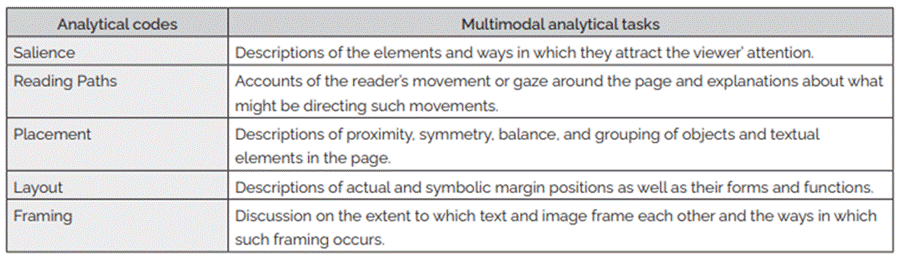
Note. Based on Callow (2013).
In this first coding process, we examined the different sections of the platform, looking at the ways in which the above conceptual categories happen or fail to occur. Diving deeper into the way semiotic resources and modes in the platform collectively construct meaning, a subsequent coding procedure involved Unsworth’s (2006) framework, in which we analyzed the metafunctional organizations of meaning-making resources and modes. Here, we analyzed the ways in which verbal and visual resources come to represent the nature of events, people, objects, and the types of relationships that are made possible within the contextual and sociocultural conditions provided.
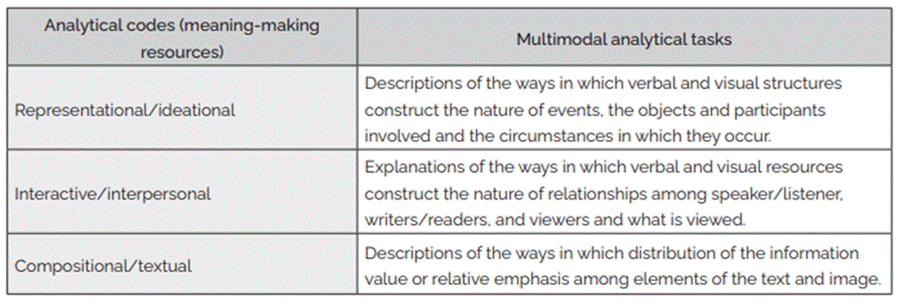
The last level of analysis was concerned with looking at the ways in which the arrangement of semiotic resources and modes (see Table 1) unveiled metafunctional organizations (see Table 2), and how that may have resulted in interpersonal meaning (see Table 3).
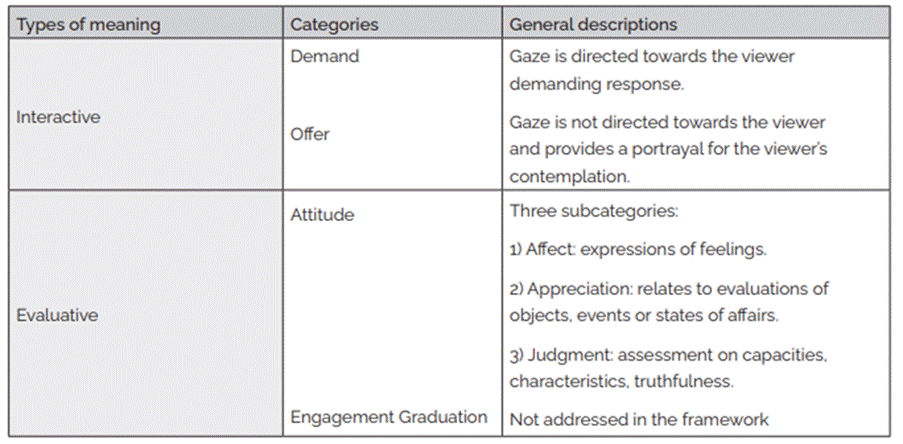
In short, there were three broad levels of analysis in this study: (1) First, an examination of the ways in which design has an effect on the user, and hence, on meaning. (2) Second, an analysis of the relationships established between text and image at the ideational, interpersonal, and compositional levels and the affordances and limitations it could present for the viewer/reader. A final level of analysis delved into the ways in which the first and the second levels of analysis unveiled aspects related to sociocultural relevance and sensitivity, and how that may have an effect on the interaction, production, and collaboration of the students.
Findings and Discussion
Semiotic resources are configured and deployed in a multiplicity of communicative modes in the quest for meaning-making. At different levels, communicative modes give way to endless denotative and connotative layers of meaning within an intricate interplay of the individual, collective, physical, emotional, emergent, sociocultural, contextual, situational, historical, and cognitive domains of human life when the right conditions are afforded. That is, when communicative environments welcome, cherish, and benefit from the person’s particularities, backgrounds, and cosmogonies in the exchange of knowledge, feelings, identities, cultures, histories, stories, and so on, people have greater opportunities to participate and to learn (Escobar-Alméciga, 2022; Escobar-Alméciga & Brutt-Griffler, 2022; Rojas & Escobar-Alméciga, 2023). As such, this section accounts for the ways in which semiotic resources and modes in the platform act and interact in the meaning-making process, and whether those interactions generate affordances or limitations for participation and learning. In this regard, two comprehensive categorical themes derived from the cyclical coding process described above. The first one, Intermodal relations in instructional design, addresses the way in which semiotic resources and communicative modes are created, transformed, configured, used, and interpreted, and how such arrangements promote or inhibit interaction, participation, collaboration, and production in pursuit of learning. The second one, cultural sensitivity, addresses the relevance, appropriateness, and pertinence of the subjectivities that conform this virtual environment, and whether the population to whom the material caters has possibilities to relate to, act in, and interact with its contents and participants therein.
Intermodal Relations in Instructional Design for Learning
Instructional design is the principles-based creation of courses: resource selection, learning activities, assessment and evaluation strategies, communicative environments, and all other instructional-related procedures for class implementation in specific contexts and with particular goals. It requires ongoing reflection and adaptation, and entails the selection, organization, and delivery of class materials, as well as the design of ways in which students can grapple with such materials in social interaction. It is concerned with the ways students can make evident their ways of understanding, ways of knowing, and ways of using such knowledge for their own benefit as they relate to their social and physical environments (Botturi, 2003; Ragan & Smith, 1999). Examining the LicBi platform as an instructional design unveils ways in which its creators conceptualize learning and teaching processes, and the extent to which it could potentially cater to or fall short in addressing the users’ needs. As such, this analysis begins with a description of the general features of the units, using the three units selected to speak to the affordances and limitations of the platform in terms of interactions, participation, collaboration, students’ background knowledge, and cultural relevance and sensitivity. Figure 1 below presents the illustrations of the selected units and kick-starts a discussion on the ways codes emerged and developed into broader, comprehensive heuristic narratives.
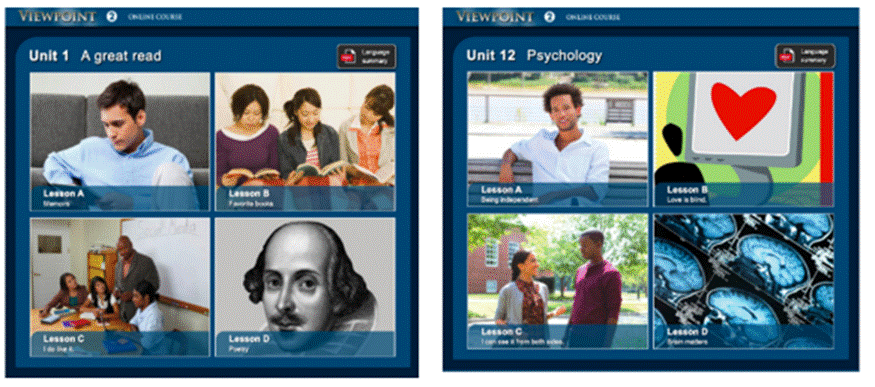
The instructional design of the units features a consistent and structured layout, using a four-quadrant grid as margins that visibly organize textual and visual elements across all units. Through deliberate placement, text and images achieve balance and symmetry, enhancing visual coherence throughout the material. Each lesson is distinctly framed, visually segmenting sections to guide learners’ reading paths, enabling them to predict and navigate smoothly through upcoming content. This recurring organizational pattern reinforces familiarity and flow. Such an arrangement also strategically creates salience, capturing the learners' attention and orienting toward their interaction to desired elements within the materials.
Zooming in on the sections, in Unit 12 toward the right of Figure 1, for instance, we observe how its structured layout organizes four lessons (A, B, C, and D), each featuring paired text-image elements. In Lesson A, a young man is positioned centrally within the quadrant, effectively framed by neutral-tone background colors that enhance visual contrast and draw immediate attention to his upper body and smiling expression (salience). His open posture further guides the viewer’s reading path, first drawing attention toward his relaxed shoulders and outward-facing arms, then gently directing the gaze outward and downward along the natural lines created by his posture. This subtle directional cue invites viewers to linger, suggesting openness, receptiveness, and an implicit invitation for interaction or engagement with the image and accompanying text. However, the visual framing of the image and the lesson’s textual label, "Being Independent," do not fully or directly convey the intended meaning of “independence”.
Lesson B presents a digitally created image that uses bold, contrasting colors to immediately draw the viewer’s attention. A solid black silhouette of a person is positioned on the left-hand side of the fram; while a computer screen on the right displays a bright red heart in the center. This placement creates a strong sense of balance within the composition, while the direction of the figure’s implied gaze helps guide the viewer’s reading path across the image-from left to right, toward the heart. Salience is established through color contrast: the red heart and black silhouette stand out sharply against the soft-colored background, while other elements are subdued to maintain focus on these central figures. The image is also neatly framed, with each element occupying its own defined space, contributing to overall clarity and cohesion. While the visual composition suggests a symbolic relationship between the silhouette and the heart, the connection to the accompanying phrase “Love is Blind” remains general and somewhat ambiguous. The image hints at emotional focus or desire, but it does not visually unpack the layered or metaphorical meaning of the phrase, which may limit the depth of interpretation.
Lesson C portrays a man and a woman engaged in conversation in a park. The central placement of these two figures highlights their interaction as the main focal point. The man’s expressive hand gestures and the woman’s attentive gaze effectively establish salience, immediately attracting the viewer’s attention to their exchange. Their interactive posture and gestures guide the viewer’s reading path, first toward the man’s active communication and subsequently to the woman’s responsive and thoughtful listening, suggesting a reciprocal flow of the conversation. The subtle framing created by their proximity indicates mutual engagement and openness, offering space for the viewer/reader to feel potentially included in the dialogue. The layout incorporates contextual elements, such as trees and buildings in the background, enhancing the scene without diverting attention from the central figures. The visual composition aligns with the accompanying textual label, "I can see it from both sides," implying diverse viewpoints within the depicted conversation.
Turning now to Unit 1, located on the left side of Figure 1, we observe that it maintains the same multimodal structure as Unit 12, following a consistent design logic. Clearly defined framing presents each lesson as a distinct yet cohesive segment, while salience is established through contrast and positioning to draw attention to key elements. Reading paths are guided by strategic placement of elements and their spatial flow, as well as body orientation, supporting intuitive navigation. Although this uniformity ensures visual clarity and cohesion, it also introduces inflexibility in the structure of themes and activities, potentially generating a monotonous experience. The repetition of layout and interaction types may limit the expressive potential of image-text relationships and reduce opportunities for deeper engagement.
This consistency in multimodal structure not only shapes the presentation of lesson content, but also extends to how learning outcomes are communicated at the end of each unit. The same principles of visual organization-such as layout, framing, and salience-continue to guide the design of these sections, ensuring coherence across the material. With this in mind, we now turn to Figure 2, which illustrates how the outcomes for Lesson A in Units 1, 6, and 12 are presented, offering insight into how the platform aligns visual and textual elements to reinforce intended learning goals.

Figure 2 presents the outcome sections displayed at the end of each lesson, highlighting Lesson A from Units 1, 6, and 12. The stated goals focus on listening and reading skills, the use of language strategies, and personal reflection. The layout organizes this information using bullet points, contributing to visual clarity and navigability. Below the outcomes, links to an online workbook and grammar activities are included to reinforce key language points. Each outcome section also features an accompanying image that aligns thematically with the lesson content, maintaining consistent placement and clear framing. For Unit 1, a person reading represents "Memoirs"; for Unit 6, a group of individuals in a professional setting aligns with "Case Study"; and for Unit 12, a young man on a bench corresponds with "Being Independent." These images create salience by visually reinforcing the lesson themes and drawing the viewer's attention to the end-of-lesson reflection. However, the listed learning expectations are framed more as instructional procedures than measurable learning outcomes. For example, Unit 1 includes statements such as "you listened, talked about, recorded, wrote," which describe classroom activities but do not clearly define communicative goals or expected student performance. This is also the case in Units 6 and 12, where verbs like learn are the only indicators of intended outcomes. Thus, while the visual presentation of this section is cohesive and well-organized, the content functions more as a summary of completed tasks than as a set of clearly articulated learning objectives.
To conclude our discussion on the interaction between semiotic resources and communicative modes in the platform’s meaning-making processes, we wish to emphasize two key aspects that lay the groundwork for the discussion ahead.
First, although the interplay between resources and modes is both complex and deliberate, it often falls short of effectively realizing semiotic representations of the concepts being presented.
Second, while the articulation of these resources and modes appears strategic and designed to complement each other in support of meaning-making and student understanding, it does not necessarily communicate learning goals, content, or explanations with sufficient clarity. This reduces their instructional value and leaves learners without a clear sense of progress or achievement.
Cultural and Emotional Dimensions of Communication and Learning
This section examines the cultural layers embedded in the selected instructional materials through the lens of Unsworth’s (2006) multimodal framework and a set of a priori analytical codes associated with the representational, interactive, and compositional metafunctions. These codes were systematically applied to analyze how meaning is constructed through the interplay of visual and textual modes across the materials. Their application enabled a critical reading of the ways in which cultural representations are embedded and sustained throughout the content, often reflecting underlying values and ideologies. Through this coding scheme, the analysis identifies how specific worldviews are conveyed-sometimes implicitly-through recurring multimodal patterns. The structure of the analysis is organized into three main subsections: Conventional Portrayals of Social Interaction, which explores how interpersonal scenarios reproduce familiar cultural norms; Normative Cultural Frames, which examines how everyday themes encode specific ideological assumptions; and Gender Representations, which analyzes how gendered roles and behaviors are constructed through both language and imagery.
Conventional Portrayals of Social Interaction
The material draws on conventional portrayals of social interactions, particularly within professional and consumer contexts, thereby reinforcing traditional norms and hierarchical structures. In Unit 6, shown in Figure 3, the visual content focuses on the business world across its four lessons, each introducing phrases or questions aligned with business-related themes. In Lesson A, the image depicts a formal meeting setting in which a presenter stands at the whiteboard. He is prominently positioned and brightly illuminated, standing out against a more subdued background and the darker clothing of the seated participants-an arrangement that shapes the viewer’s understanding of roles and identities within the scene through representational choices. The presenter looks older than everyone else and occupies a standing position while addressing a mixed-gender group of seven individuals seated attentively around a table. Their posture and collective gaze toward the speaker contribute to the construction of a coherent and unified social event, again reflecting representational meaning-making. The use of natural light enhances the prominence of the presenter, guiding the viewer’s gaze and creating a visual flow that fosters interpersonal connection-a feature associated with the interactive metafunction. This composition leads the eye from the speaker to the horizontal line of participants, allowing the viewer to trace the relational dynamics within the group. While the presenter’s elevated and central position conveys authority, the symmetrical arrangement of the participants also communicates a sense of collaboration, reinforcing the visual narrative’s balance of hierarchy and teamwork, both constructed through representational features. Furthermore, the whiteboard and the participants’ orientation toward it create a cohesive link between textual and visual elements, exemplifying compositional coherence. The inclusion of business attire and formal posture reinforces a familiar and conventional framing of professionalism, creating a stereotypical depiction of Western corporate interaction through representational design.

In Lesson B, the focus shifts to a retail setting in which a woman is centrally depicted as she interacts with jewelry in a brightly lit store, visually constructing her as an active participant within a familiar consumer scenario. The use of vivid colors-seen in both the merchandise and surrounding floral elements-strategically guides the viewer’s attention, enhancing the sense of engagement between the subject and her environment. Her focused look and hand movements highlight purposeful action, showing her control in the scene. The arrangement leads the viewer’s eyes from her face to her hand and then to the products, creating a natural visual flow. Her inward gaze adds depth, making the viewer feel like a silent observer rather than an active participant. This design choice fosters a contemplative stance, inviting observation without interaction-a feature associated with the interactive metafunction. The overall coherence of the image, particularly the alignment between the visual elements and the lesson title “Bringing in the customers,” reflects a well-structured integration of meaning across modes. However, the visual representation of shopping where a female shopper is in a retail store may erroneously enforce a direct association between femininity and the act of shopping. While effective in illustrating customer engagement, this scene ultimately relies on naturalized assumptions on gender roles, for instance and reinforce damaging overgeneralizations.
Lesson C presents two men in formal business attire engaged in what appears to be a professional conversation over a meal in a semi-formal setting. The scene conveys a familiar configuration of roles and social expectations within the business world. The image draws attention through the contrast between the dark suits and the warm, textured red-brick background, which subtly guides the viewer’s focus toward the interaction between the two figures. Their expressions and hand gestures convey mutual attentiveness and involvement. Neither of the men meets the viewer’s gaze, which establishes a viewing relationship that positions the observer outside the exchange, invited to watch rather than participate. The framing centers both individuals equally, suggesting the thematic focus on dialogue and shared presence within the composition. However, small shifts in posture-such as one man leaning in while the other sits more upright-introduce visual nuances that may subtly indicate differing levels of engagement or authority. These bodily cues shape how the viewer interprets social dynamics, even in the absence of clear status markers. Despite its polished design, the connection between the image and the accompanying phrase “Don’t you think...?” is ambiguous, as the image lacks explicit visual indicators of rhetorical or persuasive intent. The mismatch between text and image creates uncertainty about the message's purpose, reducing the clarity of the lesson. Although the scene shows informal interaction in a professional context, its lack of visual detail limits its support for the intended language function.
Building on the previous examples, Figure 4 also reflects the material’s reliance on conventional portrayals of social interactions, particularly within consumer contexts. These portrayals tend to reinforce misrepresentative patterns of communication and social behavior, often drawing from oversimplified depictions of communicative dynamics and what they should look like. In this case, the shopping environment is used once again as a backdrop to illustrate interpersonal engagement. The scene depicts a routine activity while also showing a structured interaction shaped by visual composition and body language. This type of representation aligns with the tendency of the instructional material to construct meaning through socially normative scenarios that are easily identifiable, yet rarely questioned.

The image above depicts a retail scenario in which two women appear to be sharing a moment of decision-making, illustrating a culturally recognizable interaction based on consumer behavior. One woman, standing on the left, holds a purple dress while smiling, and the other, on the right, gazes attentively at the garment-a composition that reflects collaboration and mutual engagement within a modern shopping context. Their physical closeness and mirrored body orientation convey an ongoing dialogue and a shared focus, visually capturing a moment of interpersonal connection. Both women direct their gaze toward each other and the object of interest rather than outward, structuring the interaction in a way that encourages the viewer to watch rather than to join in and, in doing so, framing the audience as external observers. The visual path is clearly structured, leading the eye from the dress to the second woman, aided by the prominence of the garment and the balanced lighting across the frame. The inclusion of neatly arranged clothing racks, shelves, and other store elements further anchors the setting in a socially familiar environment, reinforcing shared cultural norms associated with consumerism.
Despite the scene’s accessibility and visual coherence, its engagement with culture remains superficial. The image conveys cultural meaning through familiar visual elements tied to consumer lifestyles, presenting social practices and values that align with dominant norms while leaving little room for alternative ways of being, acting, and interacting.
Although the inclusion of ethnically diverse figures may be intended to signal inclusivity, the absence of contextual explanation or accompanying text reduces these representations to surface-level gestures, limiting their capacity to foster intercultural understanding. As a result, the interaction depicted in the image reinforces standard social roles and expectations, rather than offering learners an opportunity to reconsider or challenge them. The visual content aligns with the lesson’s communicative objectives; however, it presents cultural norms in a way that appears fixed and unproblematic, offering no cues for alternative perspectives or reflective engagement.
Across the platform, cultural instruction appears predominantly framed through a single lens, one that closely aligns with dominant values from an American English-speaking context, thus presenting a narrow and often unexamined cultural perspective. Visual and textual elements tend to position cultural content as static knowledge to be received, offering few opportunities for learners to grapple with it in a critical manner or to draw connections with their own lived experiences. Even in lessons where culture is not directly addressed, the selection of everyday themes-such as shopping, independence, driving, or blogging-implicitly promotes particular worldviews and lifestyle norms, framing them as universally relevant rather than culturally specific. While these topics may seem neutral, they subtly convey cultural assumptions that shape how learners come to understand social roles, behaviors, and language use. The material rarely invites alternative interpretations or connections to diverse cultural contexts, limiting opportunities for learners to engage in intercultural reflection or dialogue. Overall, the platform’s communicative strategies reinforce a reduced and uniform view of reality, leaving little room for learners to question, reinterpret or to see themselves represented in the cultural depictions therein.
Normative Cultural Frames
The instructional material consistently conveys normative values by framing everyday themes as universally applicable. However, these themes often encode implicit assumptions grounded in specific sociocultural ideals. A clear illustration of this appears in Unit 12 (Figure 5), where the concept of independence is introduced through a split visual-textual design. On the left, a checklist titled Grammar in context: Independence prompts learners to evaluate their ability to complete tasks like leaving home, keeping appointments, and finding part-time employment-practices that are positioned as milestones of maturity and personal growth. The checklist’s binary format (“Yes/No”) further shapes the learner’s role, encouraging alignment with a fixed model of autonomy rather than allowing for diverse interpretations of independence. On the right side of the screen, a photograph shows a smiling young person behind the wheel of a car, accompanied by a passenger. The layout clearly separates text and image into distinct visual zones, establishing a parallel structure that reinforces the visual message while maintaining functional clarity. This image serves to visualize independence through the lens of individual mobility and self-direction, promoting a specific understanding of freedom directly associated with driving a car.
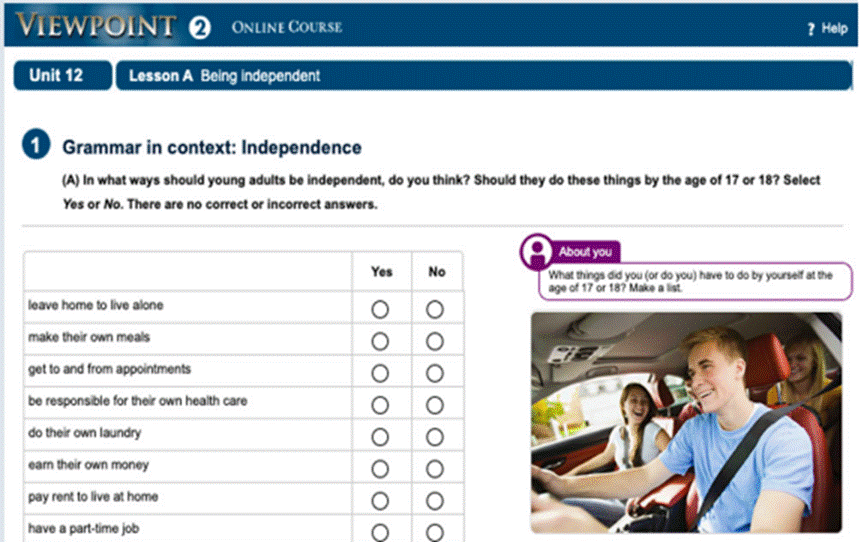
However, in contexts shaped by different histories and cultural values, the depiction of independence through driving may not carry the same significance for all learners. The image in Unit 12 draws on specific cultural symbols-such as car ownership and individual mobility-to convey autonomy in a way that reflects Western ideals, yet these symbols may not resonate universally. In many societies, the concept of independence is shaped by alternative milestones, including caregiving responsibilities, community engagement, or financial contributions, indicating that the visual narrative overlooks culturally diverse understandings of self-reliance. While the accompanying checklist task prompts reflection on various practical responsibilities, such as managing finances or doing laundry, the image offers no visual cues to reinforce these broader dimensions, resulting in a misalignment between visual and textual content. The learner is placed in the role of a passive viewer, observing a scenario that may feel disconnected from their lived experiences, which may reduce the potential for meaningful engagement with the theme. Although the checklist structure effectively encourages active learner participation through direct prompts, the image’s cultural and emotional ambiguity limits its ability to foster critical reflection or intercultural comparison, weakening its pedagogical impact.
Gender Representations
The material not only conveys normative values in everyday contexts but also reinforces gender stereotypes through the framing of behaviors and social roles embedded in task design. Figure 6 exemplifies how skills-based activities can contribute to the normalization of power dynamics and cultural assumptions, particularly around gendered behavior. Beyond informing learners through statistical reporting, the material constructs expectations by embedding implicit value judgments into its presentation of data. The focal task is a reading and analysis activity titled Writing: Twice as Likely, which features a brief report on teenage driving habits. This report draws on data from the American Automobile Association and the Centers for Disease Control, whose logos are placed on the right-hand side of the layout, a design choice that visually elevates the credibility of the text and structures the reader’s perception of its legitimacy. The report outlines increased risks associated with teen drivers, including accident frequency, mobile phone distractions, and heightened risk-taking in peer settings, producing a generalized portrayal of youth behavior shaped by statistical abstraction. Positioned below, a true/false comprehension task prompts learners to extract factual information from the report, while a nearby speech bubble encourages subjective engagement by inviting learners to articulate their personal views on the issue, thus shaping a dual mode of participation through both recall and opinion.
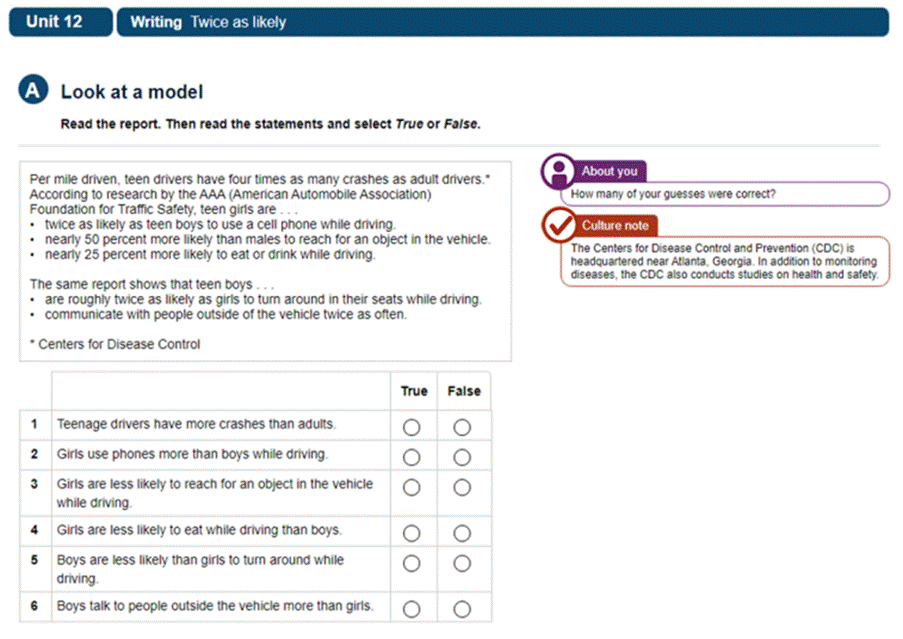
Although the task may initially appear straightforward, the way information is framed contributes to the reinforcement of gendered representations. The report adopts a generalized tone and omits contextual nuance, thereby constructing male and female teenagers as inherently distinct in their driving behaviors, which reflects stereotypical categorizations. Even in the absence of imagery, the textual portrayal of risk linked to gender shapes the learner’s perception of adolescent drivers, fostering implicit associations between gender identity and driving competence. While the task invites learners to engage through personal opinion and critical evaluation, it lacks instructional support that would enable learners to question the assumptions within the statistical data, limiting opportunities for deeper inquiry. The layout further reinforces these imbalances: the report is visually separated from the learner's response section, creating a clear distinction in informational hierarchy that privileges the report as objective and renders student input as subjective or secondary. In this way, the activity risks perpetuating dominant narratives rather than challenging them, reducing the potential for learners to critically engage with gender norms and their influence on public discourse.
Conclusions
The instructional design of the LicBi platform integrates a multiplicity of semiotic resources and communicative modes for teaching and learning. While the platform’s multimodal structure offers a visually coherent and organized presentation of content, it is not without its shortcomings. The consistent use of layout and design elements, such as framing and salience, provides clarity and helps guide learners’ reading paths. However, this consistency can lead to inflexibility in terms of engagement and expression, which may hinder deeper interaction with the material. Despite the organized visual elements, the platform’s pedagogical approach falls short of achieving true depth and accuracy in the representation of concepts, and fails in creating opportunities for students to see themselves or their own knowledge or experiences therein.
A critical observation is that while the LicBi platform utilizes a structured, grid-based approach to organize lessons, it does not always succeed in conveying the intended meanings of the visual and textual elements. For instance, the pairing of images with textual labels often falls short of clearly expressing the underlying concepts, such as "independence" or "love is blind." These images, although visually engaging, do not fully unpack the complex, layered meanings behind the phrases they represent.
Moreover, the platform’s focus on visual clarity and coherence sometimes oversimplifies the learning goals. The outcome sections at the end of each unit provide a summary of activities rather than clearly articulated measurable learning objectives. This weakens the platform’s ability to communicate what students are expected to achieve and how they can track their progress. The inclusion of links to additional resources, such as workbooks and grammar exercises is a positive asset, but without clear, explicit learning outcomes, these resources lack sufficient guidance for students to understand the broader objectives of the course.
Additionally, the platform’s design could benefit from a more flexible and dynamic approach to instructional delivery. While the repetitive structure across units provides a sense of uniformity, it also risks making the learning experience monotonous. The rigid format does not allow for diverse forms of interaction, participation, and collaboration that are essential for engaging students from varying backgrounds and with diversified learning styles. The failure to incorporate more varied pedagogical strategies could limit the platform’s appeal and effectiveness for a wide range of learners.
The cultural and emotional dimensions of communication within instructional design play a pivotal role in shaping learners' perceptions and understanding of social norms, behaviors, and values. As previously discussed, the LicBi platform's instructional design often reflects a narrow, culturally specific worldview, predominantly influenced by dominant Western norms and ideologies. Through a multimodal lens, as outlined in the analysis, we observe how visual and textual elements work in tandem to convey cultural messages, sometimes implicitly embedding stereotypes, gender roles, and normative cultural assumptions. This alignment between instructional material and cultural values requires careful consideration, as it can either enrich or limit the learning experience, depending on how inclusive and reflective the content is of diverse cultural perspectives.
Similar to the previously identified limitations in the platform’s design, the materials analyzed here reinforce established cultural frames-such as the framing of independence through driving or the depiction of gendered behavior-without inviting students to critically engage with these norms. By offering only one-sided portrayals, the content restricts learners from questioning or exploring alternative social roles, especially in non-Western contexts. In this sense, the instructional materials fail to acknowledge the dynamic and diverse ways in which cultural experiences shape identity, knowledge, and social participation.
Additionally, the platform's use of gendered representations, as seen in scenarios such as the portrayal of women in retail settings or the stereotypical depiction of teenage driving habits, highlights how instructional materials can perpetuate harmful stereotypes. Just as the rigid structure of the LicBi platform may constrain deeper engagement with the content, the gendered portrayals in the materials limit the opportunity for students to explore gender roles critically. By not addressing the inherent biases within these portrayals, the materials unintentionally reinforce the status quo, discouraging reflection on how gender norms influence not only personal identities but also societal interactions.
The absence of contextual explanations, or opportunities for critical engagement, means that students may passively absorb these portrayals rather than engage with them actively and reflectively. This lack of interaction with the content limits the platform’s ability to support the development of critical thinking skills and a broader understanding of diverse cultural contexts.
To conclude, our analysis of the LicBi platform highlights the importance of evaluating instructional materials from a multimodal perspective to fully uncover the affordances and limitations embedded within them. The predominant limitations we identified underscore the urgent need for educators and materials developers to consider not only the overt content but also the implicit messages, cultural assumptions, and ideologies present in learning materials. In an era where language teaching must equip students with both linguistic and intercultural competencies, the design of instructional materials must evolve. By doing so, we can ensure that learners are not just passive receivers of knowledge, but active participants in their learning process-engaged, motivated, and critically aware of the cultural narratives shaping their education

